Why is one plant outperforming the other tomatoes?
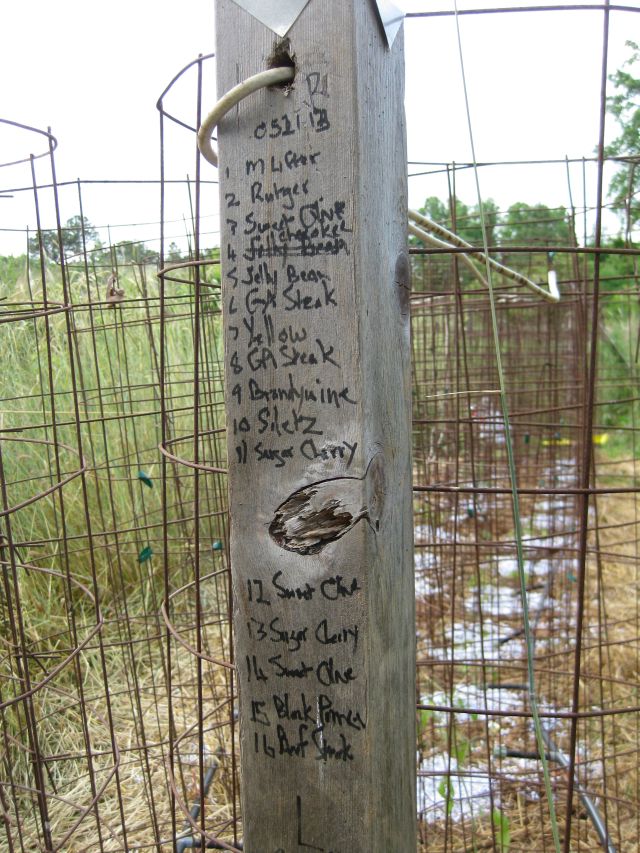
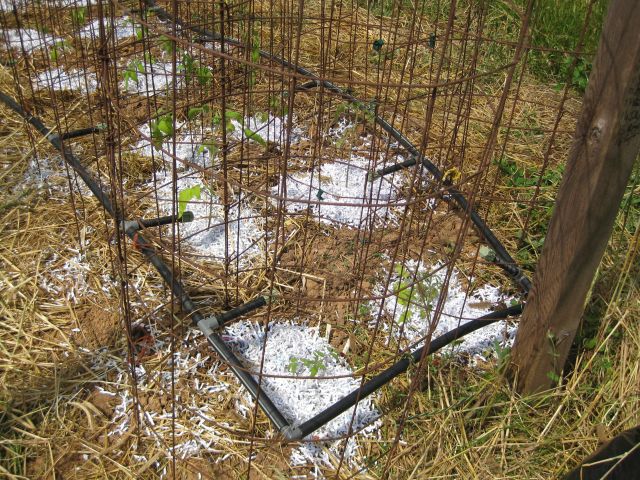
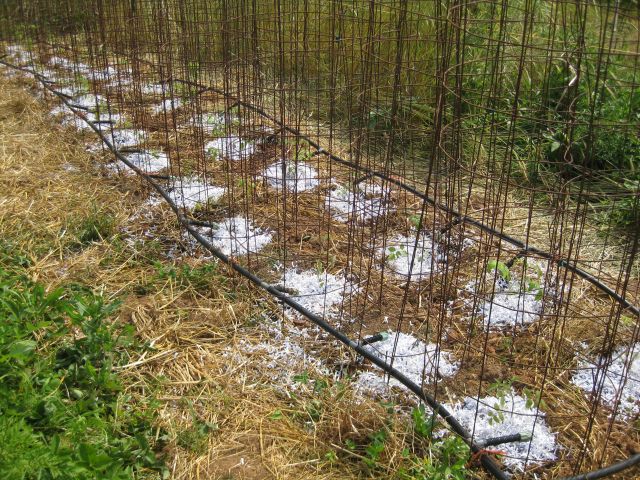
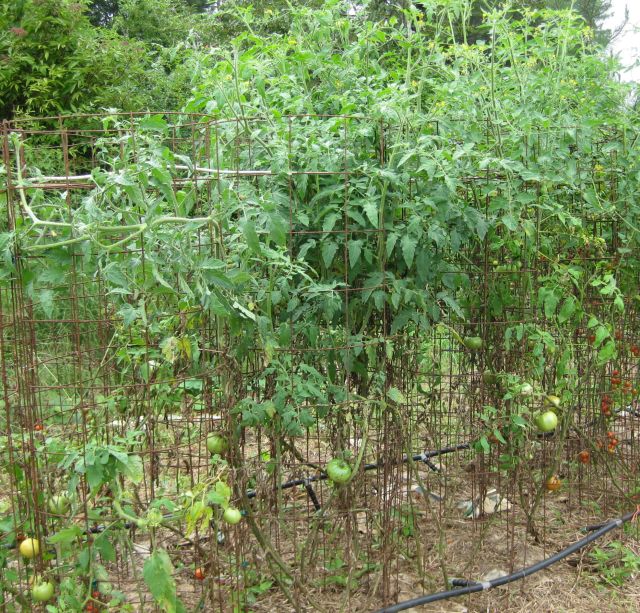
This year, as in other years, I grew several varieties of tomatoes in my greenhouse and in May planted out 32 tomatoes in wire cages in a new growing area. We had heavy rains and this set the tomatoes back but now they are producing, though with average/poor yields.
In a nearby 4ft sq raised bed I planted a few vegetables including a tomato and a cucumber plant. Both have been growing gangbusters.
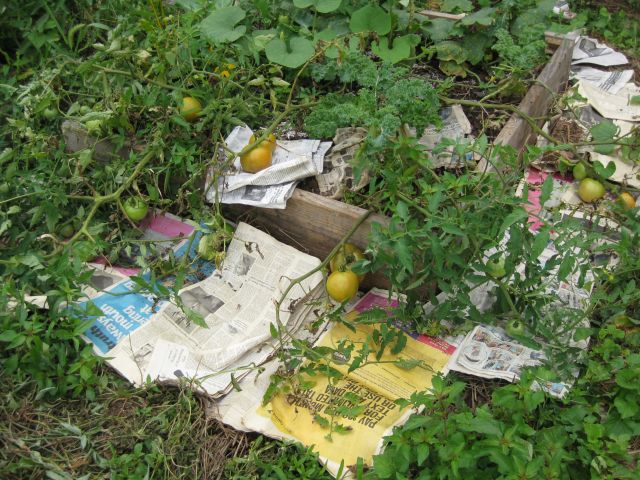
I pick 3 to 4 large tomatoes each day from this plant. But why the difference in yield? The soil, compost, sun exposure and watering are similar. This plant was an afterthought and I did not record its variety though it appears it could be a Mortgage Lifter. Perhaps the plants in the wire cages resent their imprisonment (just read D Chamovitz’s book “What a Plant Knows”) or they don’t like being crowded together and relish the opportunity to spread without competition from other tomatoes. Or there may be a companion plant synergy at work? Or maybe it has to do with the raised bed – drainage is better in a raised bed and the tomatoes may prefer that, but then I remember that tomato plant roots extend deep into the ground so an 8 inch raised bed would not make that much difference. A way out thought is this is not the plant I planted but it seeded from the compost, in which case I must certainly save its seeds. I am developing a theory that although my 4 year old tomato seeds still germinate they may not be as vigorous as fresh seeds? And now a solution occurs to me – although all the tomatoes get full sun, their exposure is different – a plant in a cage surrounded by other cages only gets direct sun at the top (which is why in the first photo there is so much growth at the top), but the plant in the raised bed sprawls horizontally and so each stem and leaf enjoys its own direct sunlight. If this is the case then there is little point growing tomatoes in adjacent wire cages – if I do use wire cages they should be separated to permit full sun exposure on all sides. But even this will not be as efficient as allowing the plant to spread horizontally. The problem with horizontal growth has been the increased contact with the soil and potential transmission of disease from the soil, which has not happened this year.
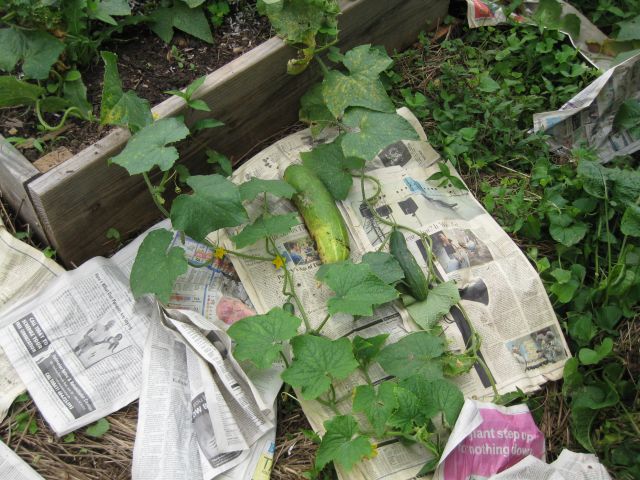
I have notice much less pest pressure. Last year most of my cucumbers were afflicted with a pickel worm (see post dd 081212) and this year, so far, not a sign of them. Here is an oversized cucumber which I discovered in the raised bed – if it is like its even larger sibling which I found nearby a couple days ago, the inside will be crunchy nice.
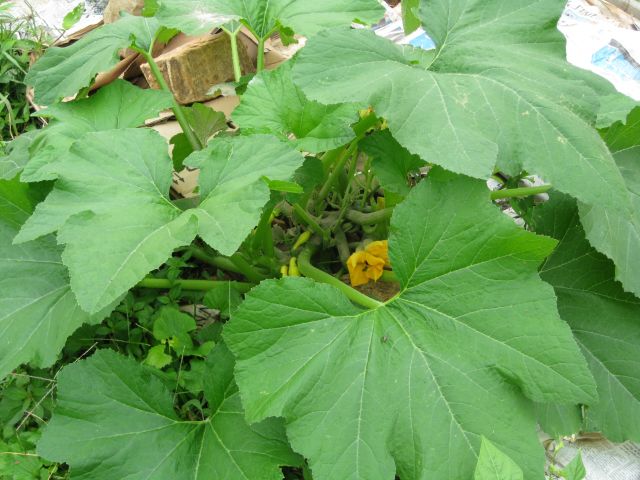
And the notorious stink bugs are absent – maybe the heavy rains had something to do with that. My squash plants are growing well – usually at this stage they are felled by the notorious borer and this may well happen during the next few weeks. But if it doesn’t then I will be drawing some happy conclusions about the improved biodiversity and the activities of the Brown Thrasher (our state bird) which I have seen hard at work in the vegetable area. Still early days.
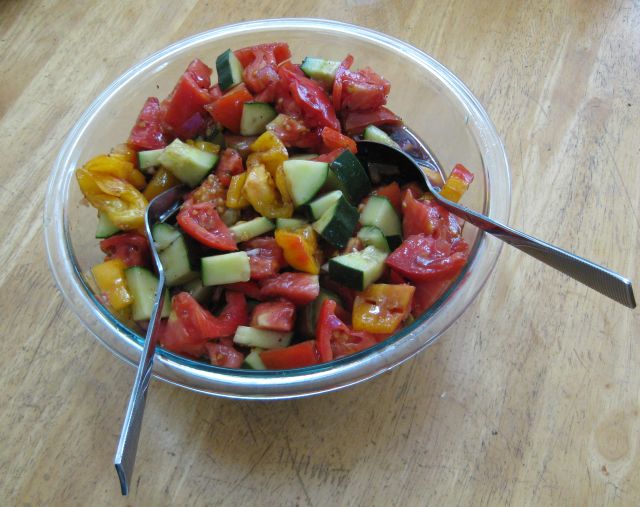
And now back to the salad of organic tomatoes and cucumbers!