Monterey and Carmel, CA

It seems to me that the areas north and south of San Francisco are ideally located for organic growing – excellent growing conditions and the wealth of San Francisco provides great consumer demand for the more expensive organic produce.   My son lives and works in the San Francisco area and on previous trips we visited the redwood forests and organic growing areas of Marin county to the north of San Francisco.  This time we headed for Monterey with its striking, natural and unspoiled shoreline.

The Pacific Grove area north of Monterey also known as the Asilomar marine reserve, offers sandy paths for walkers and joggers between the road and the sea, and numerous, convenient parking areas.  The accessibility to the public, the unspoiled surroundings evidenced by seaweed bestrewn beaches and teeming wildlife, including incongruously a party of 5 deer, is reminiscent of a similar stretch between Trigg and Hillary’s in Perth, Australia.   How wonderful as you amble along to see nothing but the restless ocean, its fringes of rock, kelp and spray and immerse in the roar and shush of water and rock accompanied by the shriek of gulls, pelicans and cormorants.  The shoreline may not be as rugged as say the Cape of Good Hope, South Africa, or the cliffs of Tintagel in Cornwall, but to my mind are just as beautiful.

Pacific Grove Asilomar shoreline
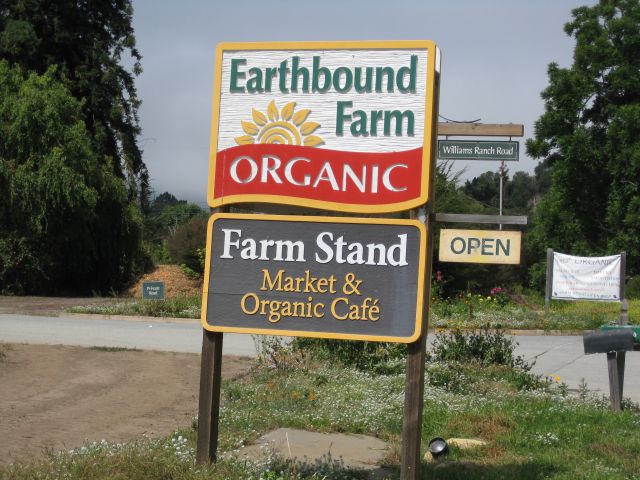
Earthbound Farm stand, Carmel Valley


Our first day trip was to the south along “17 mile drive” through the scripted Spanish Bay and Pebble Beach areas to Carmel and then to Carmel Valley to visit the biggest name in organic produce “Earthbound Farm”.  We quickly learned we were visiting not the farm but the farm stand, and that Earthbound Farm certified organic produce is grown by some 150 farmers on farms ranging in size from 5 acres to 680 acres.   My biggest impression was the excellent growing conditions – the soil is rich black, the valley provides level open sun exposed terrain, there is ample water for irrigation and temperatures are mild and consistent.  Nasturtiums proliferated in cultivated and uncultivated areas – in Georgia I struggle to keep them viable.  I was mildly discouraged as I thought of my own plot – the intense heat and humidity, the cycles between drought and heavy rains, the hard Georgian red clay, which becomes so slippery  when wet.  Then I recalled the words of a former defense secretary:  “you go to war with the army you have … not the army you might want” and resolved to keep pressing forward.
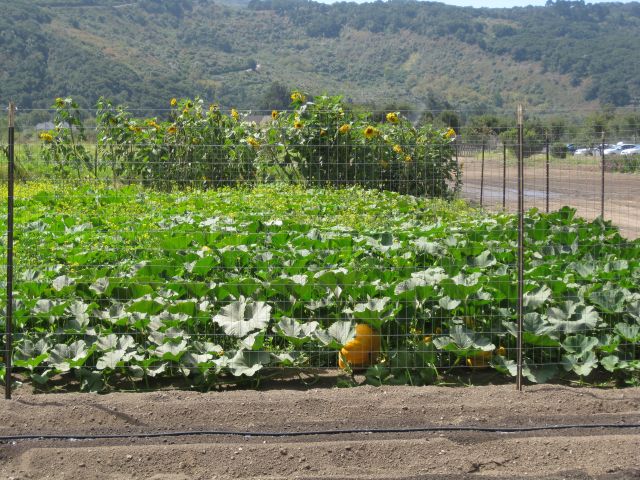

 

lush Carmel Valley growing conditions
CA organic certification

holdup

Highway robbers did holdups – stopped travelers under threat of violence to lighten their possessions. I was heldup for several days and only today was I released and able to continue my blog journey. The ethereal robber slipped through the internet highways and abruptly hijacked my laptop. It was not a baldfaced “stand and deliver” instead a more nuanced demand for protection money – the intruder announced it had identified serious virus threats and upon activation and payment of a ransom it would protect me from them and, by inference, allow me to continue to operate my laptop. To assist me with this decision it paralyzed the laptop.

In my typical and instinctive self-reliance mode I embarked on (in hindsight amateurish) attempts to foil the intruder, like searching and deleting all recently downloaded files or trying to locate its hiding place or trying to remove it from the Windows startup protocol. To no avail.

We are visiting my son who lives in San Francisco and develops software and, when I described my failed strategies, he sighed and said it was unlikely that in a few hours I could circumvent the ingenuity of individuals who were devoting their lives to entrap the likes of me. So I took a second seat and enlisted him to raise the siege. In my layman’s language I will try describe what he did – I have probably omitted some of the steps because he moved at a brisk clip and I didn’t comprehend all that was happening.

He first moved the documents via filezilla ftp to another computer in case we lost complete control of the computer. He was not concerned that he might be moving the virus along with the documents since the second computer runs on linux which he was confident was immune to the virus. He then googled and searched his developers’ links for information on, and counter strategies to, the pernicious (my adjective) invader. Then in “safe mode” he downloaded “rkill” to momentarily break the virus induced paralysis. Then he initiated the computer’s regular anti-virus software to scan and locate the virus, but the virus prevented the scan from running. So he downloaded “malwarebytes anti-malware” software to locate and destroy the virus, which seemed to help. He also identified an antivirus software program on the computer which refused to uninstall. After several attempts and with the help of CCleaner he was able to uninstall this software. But the regular antivirus software still wouldn’t run, so he used “CCleaner” to search and cleanse the registry where fragments of the virus were hiding. With the virus(es) finally removed, he updated and ran the regular antivirus software and for good measure installed “spybot” for extra protection.

So I now have a compliant laptop and, in the next few posts, will describe our visits to the organic growing regions and food related activities in the San Francisco area.

2nd chicken coop done

Arrival of the egg laying chicken

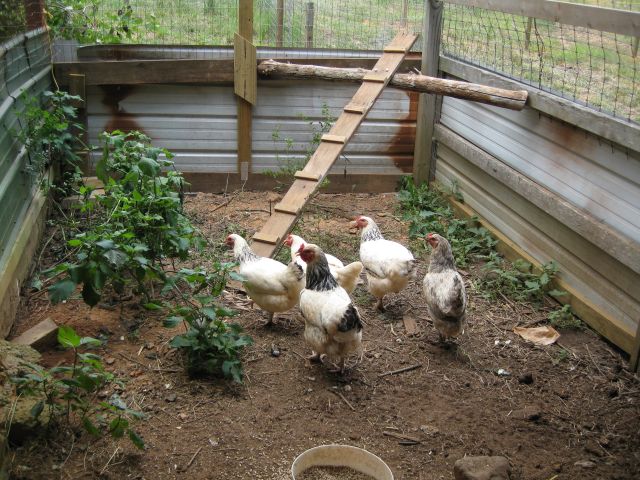
My neighbor offered me her 6 chicken and nesting boxes and metal waterer for a reasonable price and, because of the age and size difference between her mature egg laying chicken and my youngsters, I built a second chicken coop to receive them as well as a separate fenced outdoor exercise and grazing area.

chicken
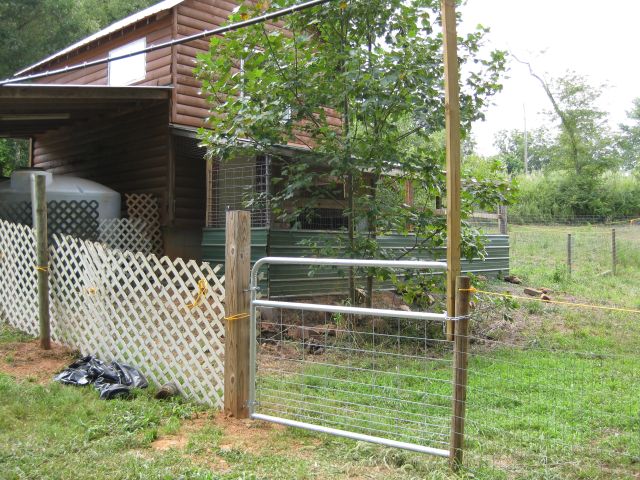
6ft gate to fenced range with coop at rear

I refurbished a horse stall into a chicken coop using scrap lumber and wire fence leftovers.  I used screws rather than nails since it is easier to undo a mistake with screws and screws, altho’ costlier, hold better than nails.  My preference for the lighter joints was “star drive” screws to “phillips” screws because turning power is better, and for the heavier joints I used hex lag screws and occasional bolts and nuts.  To secure the metal sheeting to the sides I used hex metal roofing/siding screws.

Chicken coop construction

chicken
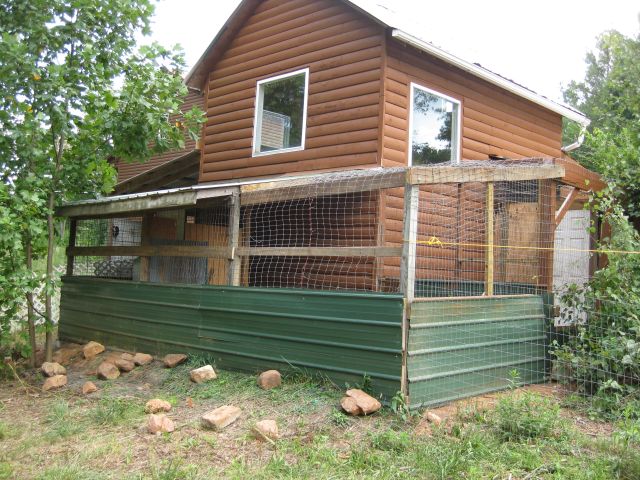
exterior view of coop

I worked from the ground up –

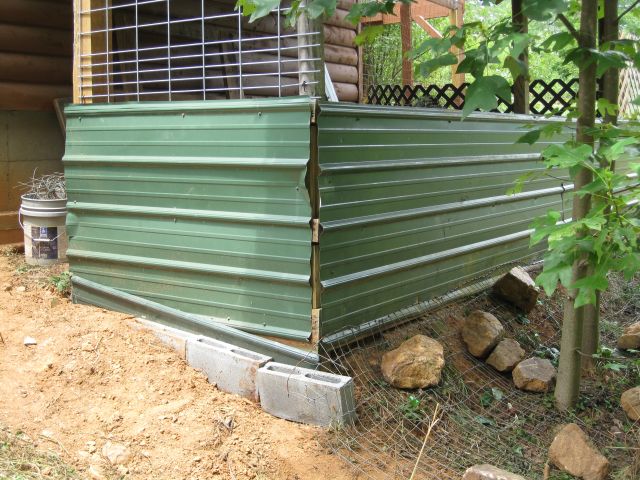
  • first dug trenches for implanting narrow cinder blocks to thwart tunnel attacks;
  • along the downhill sloping side laid surplus 4 ft wire fence on the exterior ground surface anchored by flat rocks and 10″ tent pins to also deter tunnelers;
  • framed the sides and roof with old but solid 2″ x 6″ and 2″ x 4″ lumber assortments;
  • secured surplus green roof sheeting to the sides to waist height;
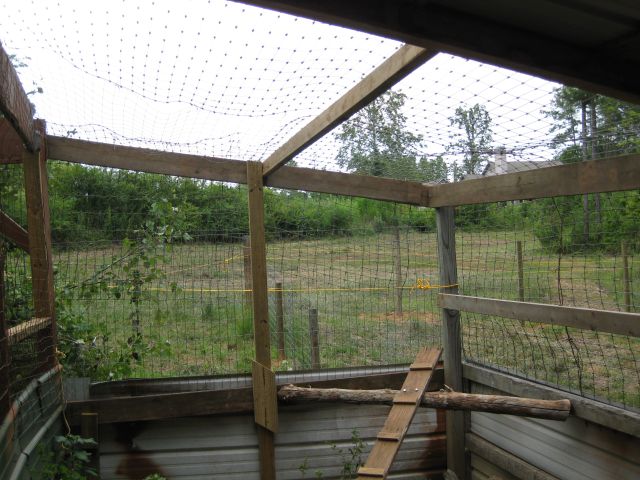
  • used surplus fence wire (welded or woven) to close in the sides and the “courtyard” roof;
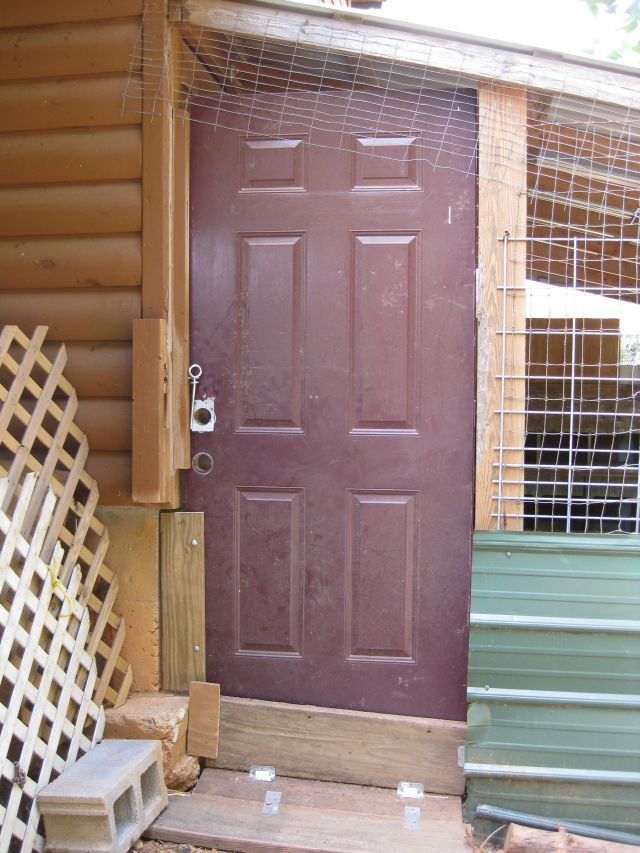
  • a battered front door was recycled to become the chicken coop entrance;
  • a partition using wood and sheet metal scraps was constructed between the roofed in area and the courtyard;
  • a tree limb secured by lag bolts to the sides became a roosting perch;
  • a plank with screwed on footholds became the stairway to the chicken roosting perch; and
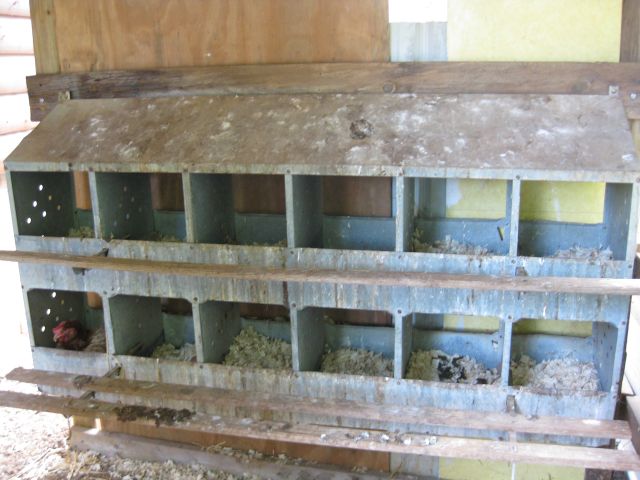
  • finally the nesting box and the metal waterer were installed and thechicken introduced to their new home.
chicken
door entrance to coop

chicken

nesting box secured to partition in coop
chicken
courtyard with roosting perch, stairway and 5 occupants
chicken
view of fully enclosed "courtyard"


To acclimatize the new residents, treats were provided.

chicken
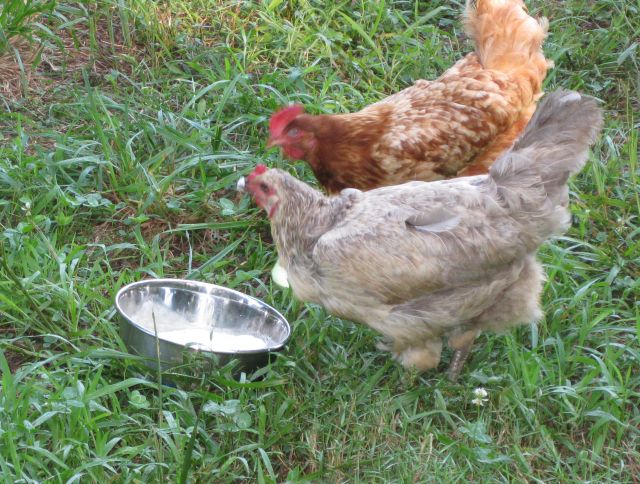
some yogurt for the new occupants
chicken
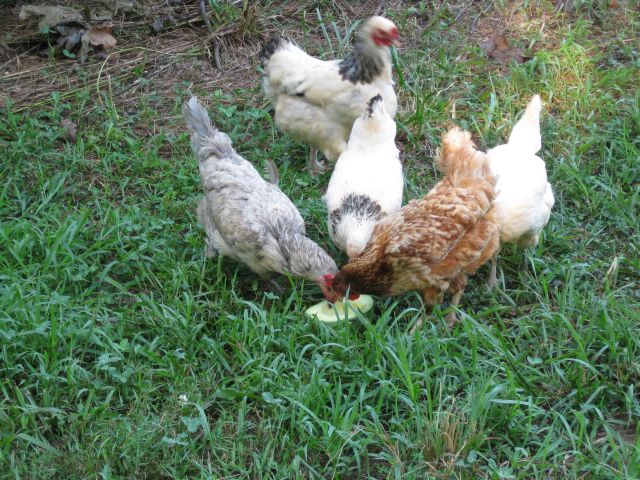
as well as a melon treat

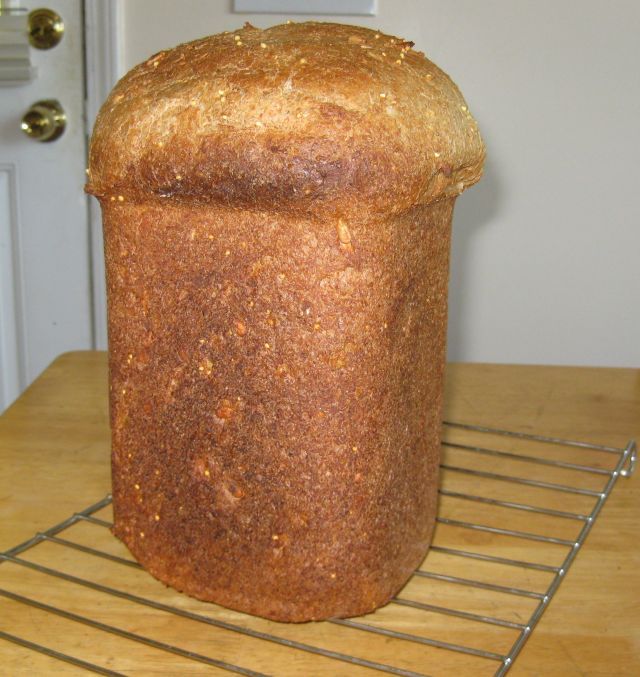
the perfect loaf (of whole wheat bread)

How we achieved the perfect whole wheat loaf

whole wheat
whole wheat loaf

After considerable trial and error we produced a perfect loaf of whole wheat bread.  Previous iterations experienced fallen tops or were short and heavy.  Here is the recipe:

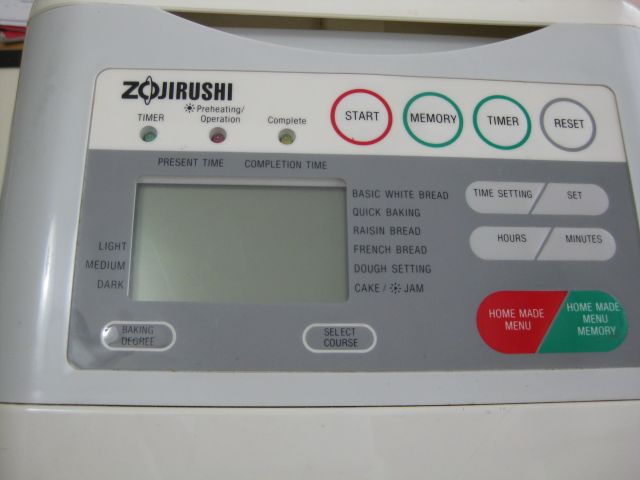
Add to the baking pan of Zojirushi (model BBCC-S15 which has capacity of 1 loaf of approximately 1.0 to 1.5 lbs with height 6″ to 8″):

  • 1.5 cups warm water (not too hot);
  • 1/3 cup pure canola oil including a dash of olive oil;
  • 1/3 cup raw honey;
  • 2 tsp salt;
  • 1 free range egg;
  • 2 tbs lecithin;
  • 1 tbs gluten (the original recipe called for 1 tsp but increased to 1 tbs);
  • 1 tbs yeast

Stir and let sit for 5 minutes, then:

  • 4.5 cups freshly ground hard red whole wheat (organic);
  • 1/2 cup flax seed (ground in coffee blender);
  • 1/2 cup sunflower seed (not ground);
  • 1/5 cup millet seed (not ground);

Mix whole wheat flour and other ingredients with spatula and then  insert baking pan in Zojirushi and then with the custom home made memory option follow this timetable:

  • preheat (time determined by machine);
  • Knead 1 for  10 minutes;
  • Rest – 5 minutes;
  • Knead 2 for  10 minutes;
  • Rise 1 for  45 minutes;
  • Stir down – done by machine automatically;
  • Rise 2 for 25 minutes;
  • Bake – 45 minutes;
  • Cool – 10 minutes.

The whole wheat loaf looked and tasted great throughout.  I followed the recipe carefully using knife leveled teaspoon and tablespoon quantities.  I think the water, salt, yeast and gluten are critical quantities and I measured them extra carefully.  Also warm, not hot water, and allowing the yeast to brew for 5 minutes were, I think, important.  The chicken particularly delight in left over scraps of the whole wheat bread.

supplementary feeding

Usually in the middle of the summer season some of the tomatoes begin to flag and need supplementary feeding.  At this stage I like to add some bone meal.  The roots of tomato plants typically grow vertically (unlike my muscadines where their roots head out horizontally and, like the vines, seem to extend for considerable distances, to suck up the nutrients intended for neighboring plants).

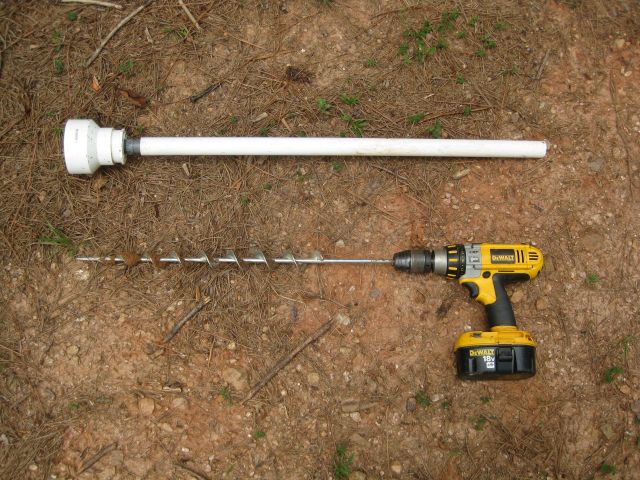
the drill, arbor, and pipe attached to funnel

My tomatoes are enclosed in tomato cages and are mulched with layers of newspaper and tree chippings and the irrigation pipes are secured to the base of the cages.  Which means it would be a lot of work to add bone meal powder to the surface soil surrounding the plant.  Two further negatives are that bone meal attracts dogs and carnivorous animals and it would take time for the bone meal to migrate to the roots more than 1 ft below the soil surface.


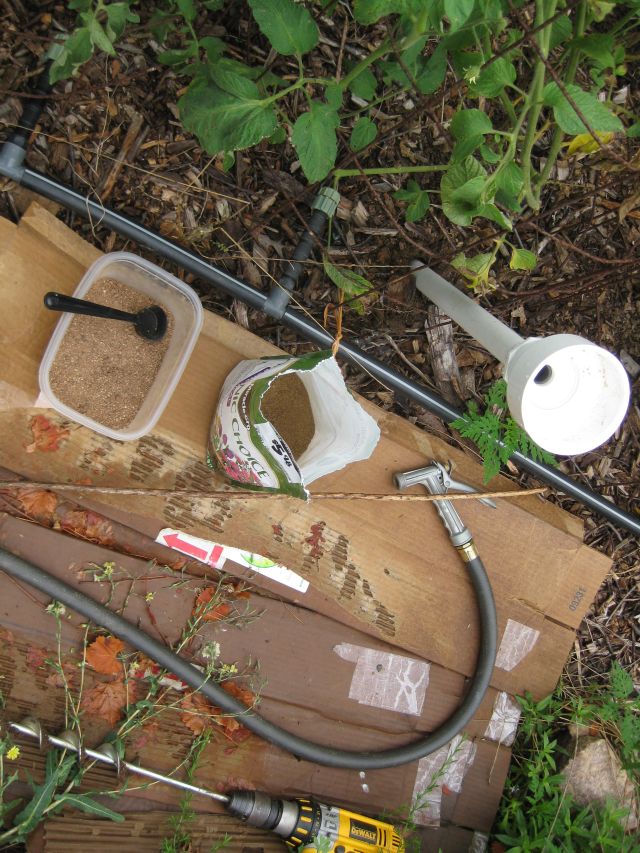
shows pipe in place, bone meal powder, magnesium lime with spoon, hose and stick to clear blockages

I decided to simplify the task by introducing the nutrients directly to the roots.  The process is: a) using a root arbor attached to a portable drill, drill a 1.5 ft hole about 8″ from the plant angled vertically towards the base of the plant; b) attach a 2.5ft length of 1″ pipe to a 4″ funnel (see ‘photo); c) insert the 1″ pipe fully into the hole; d) spoon the bone meal into the funnel attached to the pipe; e) use hose water to convey the nutrients down the hole; f) use a slender long stick to clear the pipe when its jams.

This methods works adequately and I subsequently use the hole made by the arbor for watering the plant, which helps to dissolve the nutrients at the base of the plant.


lifting things

Heavy items can be a challenge to lift when you are single handed and no longer in your 20’s or 30’s.

Installing an island oven/range hood

I recently had to install an island oven/range hood – this is the hood which fits above an island range in a kitchen. If the range was located against an exterior wall it would be a simpler matter to install a wall vent. However, an island range hood is more complicated because the hood has to be suspended from the ceiling.

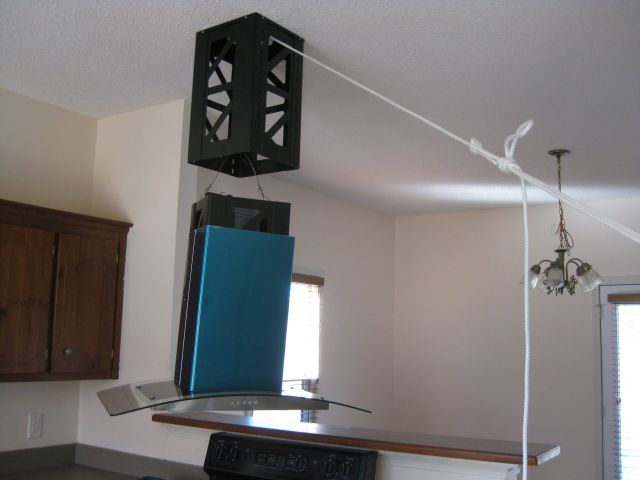
I cut a hole in the ceiling above the range, then framed the hole, then installed the black upper support frame to the ceiling.  I attached the blower box and covers to the lower support frame (collectively called “the hood”).  The hood weighs more than 60lbs and it is difficult to single handed raise and secure it to the upper support frame, which is suspended from the ceiling.  Ideally 3 people are required – two to raise the hood and hold it horizontally in position while the third person bolts the hood to the upper frame.

Initially I tried using the packing carton, in which the hood arrived, as a platform located above the range and although this reduced the lifting distance to just a few inches, because the fitting of the two frames is concise, I was unable to horizontally lift and secure the components by myself.
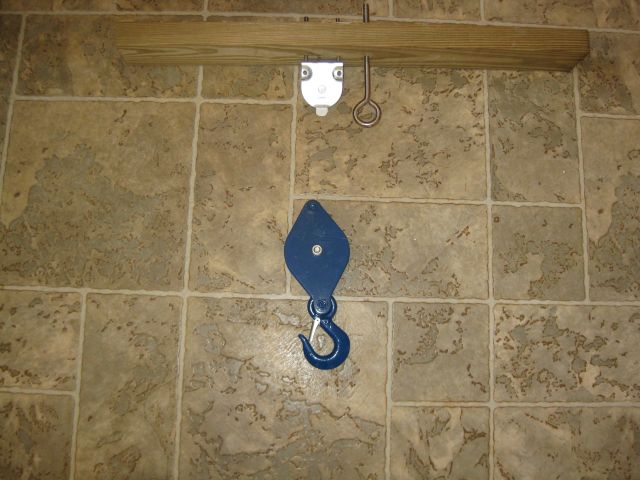
block and tackle components
So I decided to use a block and tackle setup to hoist the hood vertically up into the frame suspended from the ceiling.   The ‘photo shows the components – a) a  2 ft length of 2×4 wood which was located across the joists above the hole cut into the ceiling; b) a silver pulley attached to the wood; c) a ring bolt attached to the wood; d) a blue pulley with a hook. Rope was knotted to the ring bolt then went round the blue pulley then up and around the silver pulley and then to me.  The hook of the blue pulley lifted wires attached to the hood.


I pulled on the rope and the hood ascended to the upper frame attached to the ceiling.  When the lower frame approached the upper frame I anchored the rope to a door handle, located the lower  frame into the upper frame and then pulled on the rope to move the lower frame well into the upper frame.  I again tied down the rope and bolted the frames together.  This achieved, I removed the pulleys, wires and ropes and the rest of the installation was relatively easy.


Lifting a generator into the bed of a pickup truck

I recently acquired adjacent property on the top of a hill which has a water well.  The well pump requires 240 volts to operate.  Through Craigs list I acquired an old generator which has 240 volts output.  I try to meet all my irrigation requirements using harvested rainwater.  Occasionally, I have to supplement the water supply and then I use the generator to power the well pump.  The problem is lifting the generator into the bed of the pickup truck since the generator and gas weigh more than 200 lbs.

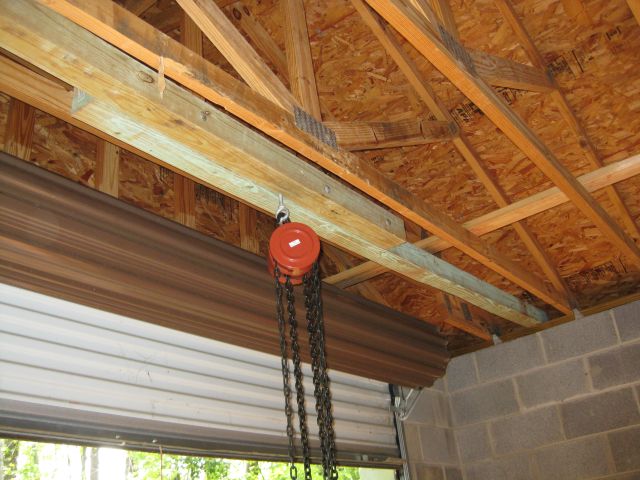
beam and chain hoist for generator

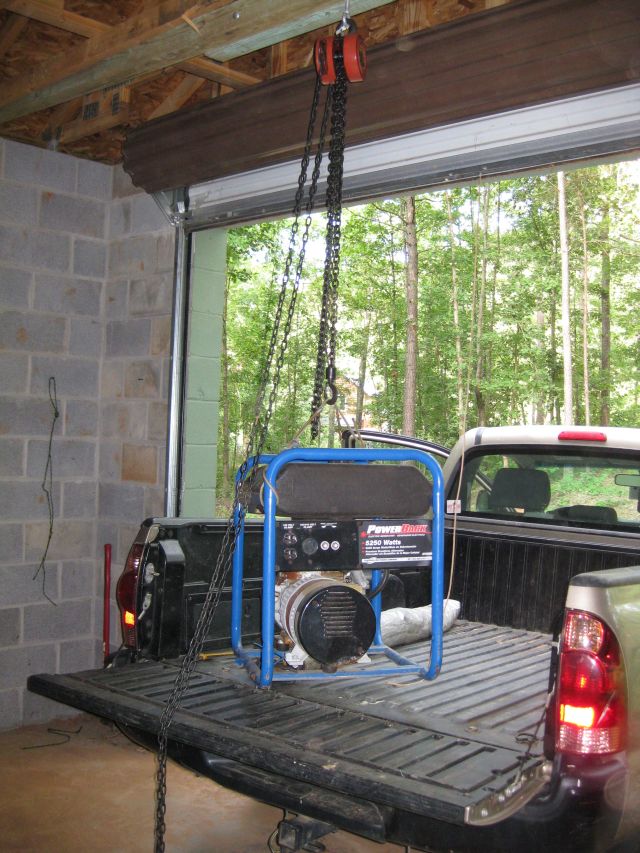
My first solution was to span the 16 ft width of the tractor building with two 10 ft 4″x4″ posts bolted together where they overlapped. I then bolted a manual gear chain hoist to the beam. I stored the generator on a furniture dolly in a corner of the building and when I needed to load the generator, I pushed the dolly below the chain hoist, hoisted it above the height of the truck bed and reversed the truck into place and then lowered the generator into the truck.

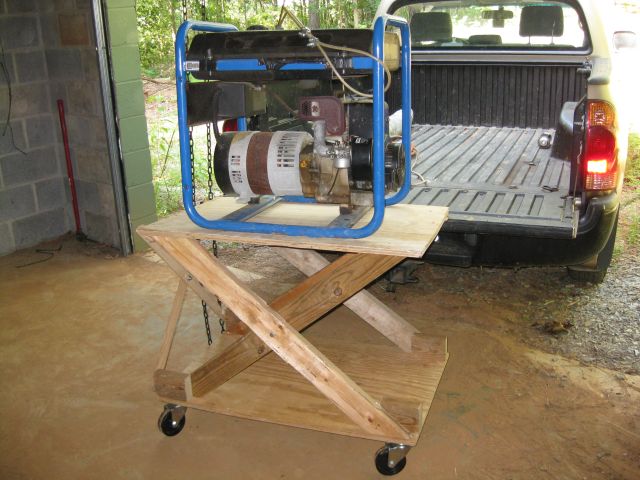
This worked fine for a while but it took time to hoist and lower the generator from the dolly to the truck bed. So I decided to accelerate the process by storing the generator on a portable stand which I made from scrap lumber and 4 purchased wheels. The portable stand is the same height as the truck bed and it is easy to lug the generator from the one to the other. When not in use, the generator on the stand is wheeled into a corner of the building.

generator being loaded into truck bed
portable generator stand


trying to get smarter

A few evenings ago, after locking the chicks in the pen, I heard an unusual noise and went to investigate.  The coop is divided by an inner partition.  The two Golden Comets were on the one side on the roosting perch, which didn’t surprise me since from the get go they were ostracized and even though now they appear to be accepted, they still act independently.  On the other side of the partition I saw an unusual sight – the other six chicks appeared to be shoving and tugging to get into a corner of the coop.  It appeared each one’s efforts was to get to the bottom of the scrum for even when one climbed on top of the melee it wasn’t satisfied until it had dislodged those below it and was situate on the bottom in the corner.  What was just as interesting was that the two Golden Comets, who had followed me, immediately joined in the proceedings.  It was a continuously revolving spectacle.  I dislodged them momentarily and examined the corner and there was nothing unusual about it, to explain their intense need to access it.

As I pondered, there came to mind a similar event which occurred the previous December.  On a mild winter’s day I had examined the hive to check their food situation and inadvertently dislodged some 40 bees which immediately formed a cluster on a plank.  I placed the plank at the hive entrance and expected them to move the 6 inches or so into the hive.  But they stayed in their cluster, which I saw when I moved closer, was in continuous motion with bees underneath coming to the surface to be replaced by the bees on the surface.  I left them there assuming, when they had concluded their activities, they would move into the hive.  The next morning, the little cluster of bees was still on the plank, frozen in place.  I did not realize they were desperately trying to keep themselves warm, as they do in their hive during the winter, and that what I was watching was desperation and panic.

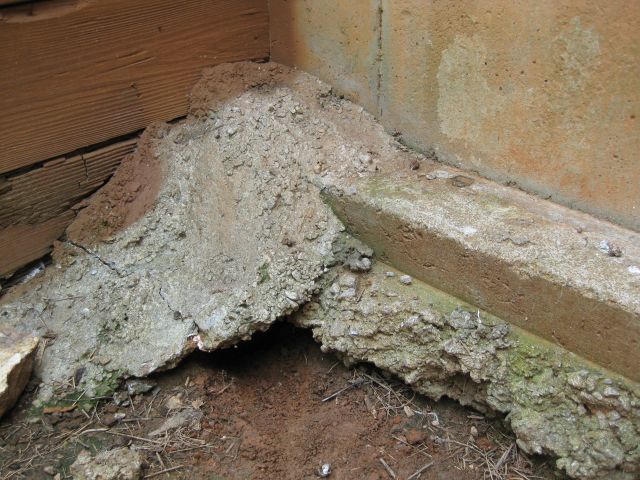
tunnel under concrete layer, into coop


So with this lesson in mind, I continued to study the chicks and came to the conclusion that the reason each one was struggling to get to the bottom of the corner was because this was the safest place to be from a predator.  So something had spooked them.  I reexamined their little fully enclosed courtyard and decided that the hole under a piece of concrete which I had assumed they had made  for sunbathing or dusting purposes, should be more closely examined.  In fact it turned out to be a tunnel and on the outside of the coop I found the entrance hole to the tunnel.  The tunnel was some 4 feet in length and maybe 6″ to 8″ in diameter.  My fortuitous visit had interrupted what may have been a disastrous evening.  I plugged the tunnel and placed cinder blocks all round the coop perimeter.  I had known predators are motivated and can and will dig, but had assumed that the 4″ depth of the perimeter wall/fence would have provided adequate protection.

cinder block and horizontal fencing protection

My neighbor who introduced me to chickens has agreed to give me her 6 mature girls – 4 hybrids, 1 Americauna and 1 Rhode Island Red.  Since her girls, which regularly produce 4 eggs daily, are much larger than my 14 week flock, I must keep them separate, which means building them their own coop and outdoor exercise area. With my enhanced respect for the wiles of predators, I am reinforcing the adjoining woodshed which will become the new coop. Because it is situated on a slope, which means even if I put down a 1 ft vertical barrier the invader could probably tunnel under, I have decided to lay horizontally a 4 ft wire wrought fence, which is held in place by surplus 10″ steel tent stakes and rocks. Much work still remains before the coop is ready for service.

hawk protection?

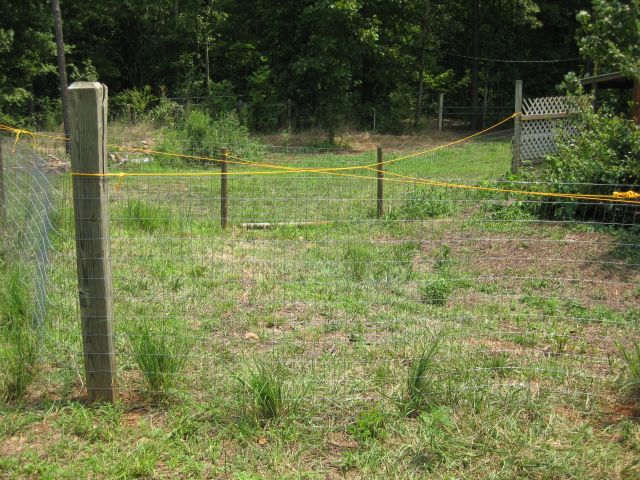
While walking the adjacent woods early in the morning we startled a Great Horned Owl. This got me thinking about the need to protect the chicks from aerial attack by hawks or this big owl. So I cross laced the fenced exercise area with yellow rope which I hope will complicate and deter any aerial strategies.


the weak and the strong

I walk through the woods after a storm. A number of trees have fallen. They are smaller than the trees which remain standing – smaller in girth and smaller in height, though of the same type. The woods were harvested about 30 years ago so most of these trees began growing at the same time. The trees which grew faster won more sunlight which enabled them to grow even faster.

The trees which fall down after strong winds couldn’t compete with the stronger trees. Even among the stronger trees there are some which will outgrow the others and get more sunlight and survive until eventually, instead of a thicket of trees there will just be a few large specimens. I suppose I could alter this natural progression. I could select a weaker tree and nurture it with water and nutrients and cut down the surrounding trees and it will respond by growing bigger and stronger.


After walking through the woods I walk through the apple orchard. I come across an apple tree which was weak at the time of purchase and when planted grew crooked. So at the time of planting I staked it upright. I decide that now that it is larger it probably does not need the stake and will probably grow better if the binding which ties it to the stake is removed. I remove the stake. The next day it is windy and when I revisit the orchard the tree is no longer upright. Today I shall stake it again. I wonder if it would have been better off never to have been staked – it would have developed its own strength to resist the winds and would have grown, albeit slightly crooked but independently.

making whole wheat bread

A wise man once told me “You are what you eat”.  At the time I ate whatever I wished and being in my mid- 20’s and healthy, I saw little need to change my eating habits.  Nowadays I eat “healthy” which includes whole wheat bread and, noting the cost of 100% whole wheat bread and wishing to be as self-reliant as possible, I decided to venture down the bread making route.

Acquiring a whole wheat bread maker

wheat breadFirst stop was a bread making machine (I could have tried hand kneading but I like machines) and my preference was for a good quality used machine.  Craig’s list showed a make “zojirushi” and some research indicated this is a durable, well regarded but pricey item.  I was able to buy, for a reasonable price, the model “BBCC-S15” which is at least 10 years old and was made in Japan (more recent models I believe are made in China). The  manual included recipes for whole wheat bread so that closed the deal.

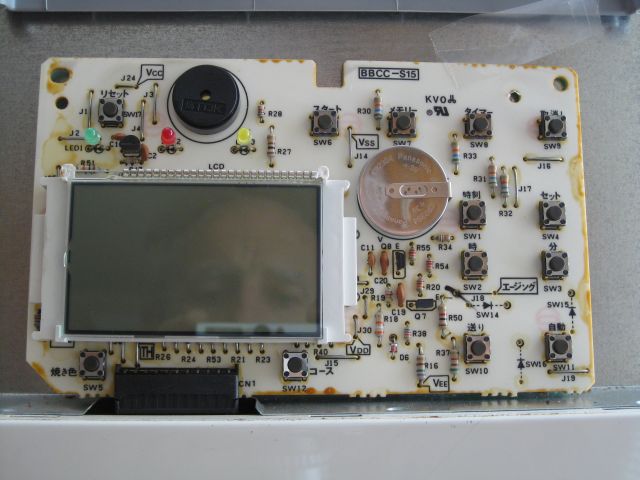
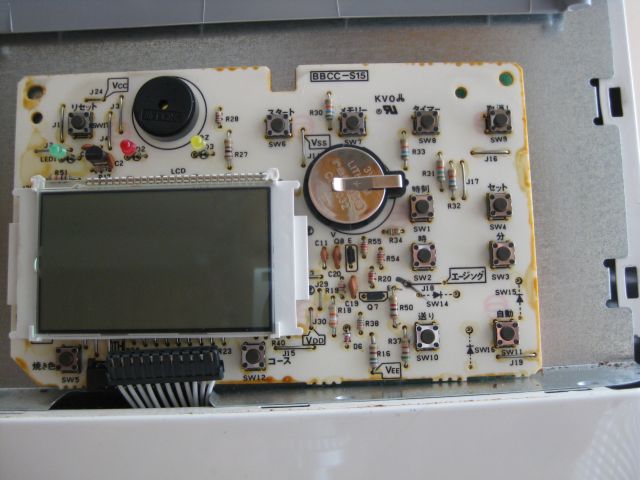
The machine worked fine except the battery, which keeps the date, had expired.  From the internet I learned that the battery is soldered to the circuit board but can, with care, be replaced.  This I was able to do.

wheat bread
circuit board showing original battery soldered to the board
wheat bread
new battery inserted in a battery holder


Grinding whole wheat kernel/berry

The seller mentioned to me she also had a grain mill (brand name “Whisper Mill”) which I also purchased, and that she acquired her whole wheat and other ingredients and advice from Bread Beckers company, which fortuitously is located en route to  my property.

The family members who operate the business are most knowledgeable and helpful, and I acquired hard red wheat, lecithin, gluten, flax seed and yeast.  The Whisper Mill ground the red whole wheat well and I used a coffee grinder for the flax seed.  I experimented with their Ezekiel bread mix, but the result was too dense for me.  However, the whole wheat loaves are delicious.  I include in the mix a free range egg,  my harvested honey and 1/4 cup of unground sunflower seed.

There is one area for improvement – the top rises and then falls a little.  I have experimented with increasing the gluten above the recommended amounts to compensate for moisture and will try out differing combinations to arrive at an unblemished loaf of whole wheat bread.  In the meantime, the fallen top goes to the chicks.