brake shimmy and a dishwasher fix

When not using the truck to transport materials, I use M’s 2007 Camry which now has 155k miles.  It is more comfortable and uses less gas.  Apart from regular maintenance it has required little extra expenditures – new front rotors @ 98k; new upper engine mount @ 138k; new alternator @141k. 

But for some time brake vibration has been an issue- the brake pedal pulsates and the steering wheel shakes when I forcefully apply the brakes.  Because the steering wheel shakes this indicates the problem is the front rotors and I had replaced both rotors at 98k.   I decided that rather than again replace both rotors (new ones cost about $25 each), I would identify which was the problem and try determine why this was re-occurring.

The brake rotor, also known as the disc, (therefore the term “disc brakes”), is mounted just inside the wheel and rotates with the wheel.  The rotor rotates between 2 brake pads held in place by a caliper and braking occurs when the piston in the caliper applies pressure to one of the pads.  Since the caliper can move laterally (but not with the rotation of the rotor) the pressure is effectively applied evenly to both pads, which engage the rotor and slow its rotation and vehicle movement.  The vibration occurs because there is variation in the face of the rotor on one or both of its sides.  This is called runout and for lighter vehicles such as the Camry,  runout should not exceed a few thousandths of an inch.

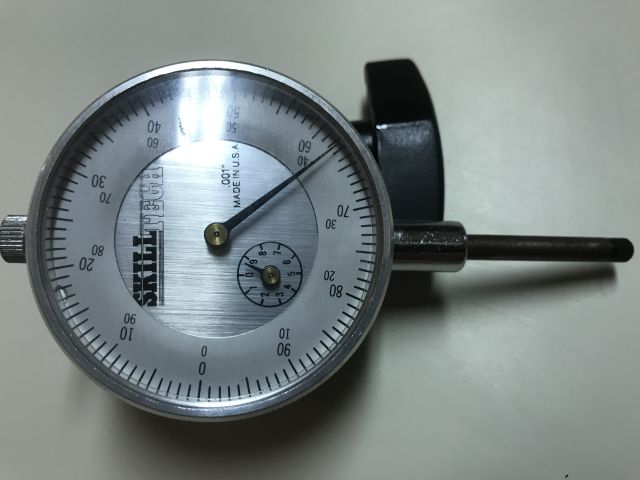
I have a read out gauge -see above and below pictures.
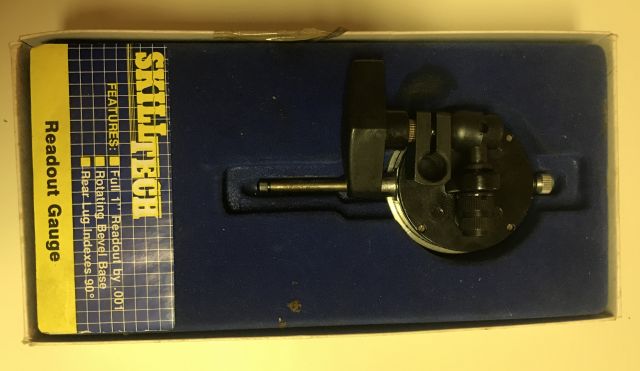
purchased some years ago for $23. the picture shows how it can be connected to a rod for vertical or horizontal mounting

The setup (after some experimentation) is simple – I found a rod to which the gauge could attach, and I secured the rod with a clamp to an axle stand.
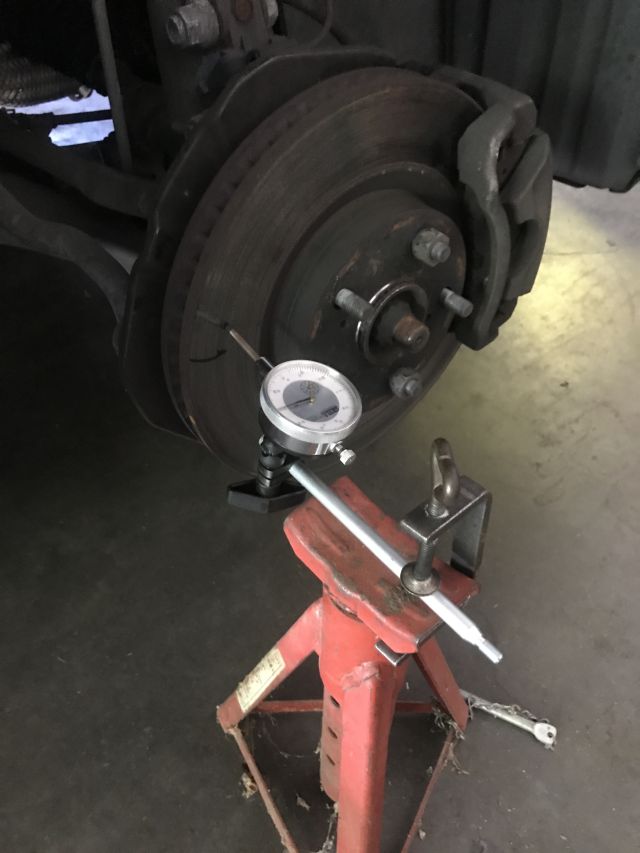
you can clearly see the rotor, against which the tip of the gauge is pressing and the brake caliper near the top right corner

I ensured the vehicle was safely and securely supported by an axle stand in addition to the car jack.  The left rotor had no runout, which means I rotated the rotor 360 degrees and the gauge needle did not move by even a thousandth of an inch.  However, the front right rotor had 4/1000″ run out.  Instead of ordering a $25 rotor I splurged and ordered a $40 replacement rotor.  And I removed, cleaned and greased the two caliper pins on each caliper which enable the caliper to move and center on the rotor – perhaps this is the reason why one rotor went bad – too much heating from a recalcitrant caliper.

The new rotor arrived, I installed it and the brakes are now fine.

Dishwasher machine fix

Some time ago M. informed me the dishwasher was not fully draining.  Since it appeared to be otherwise ok, I ignored the issue.  Then M. told me there were particles on the plates.  New machine or fix the old? 

Youtube has excellent videos for working on the Kenmore Elite dishwasher (model 665), which were easy to follow.  Remember to first disconnect power at the breaker panel/distribution board.  I used a shop vacuum to suck out the water in the sump so I could locate and remove the sump parts.  I removed the detergent gunk and, following the video, located and removed the sump check valve.  Except it was broken – the top half came out easily, the bottom half took a lot of fishing to locate and retrieve.
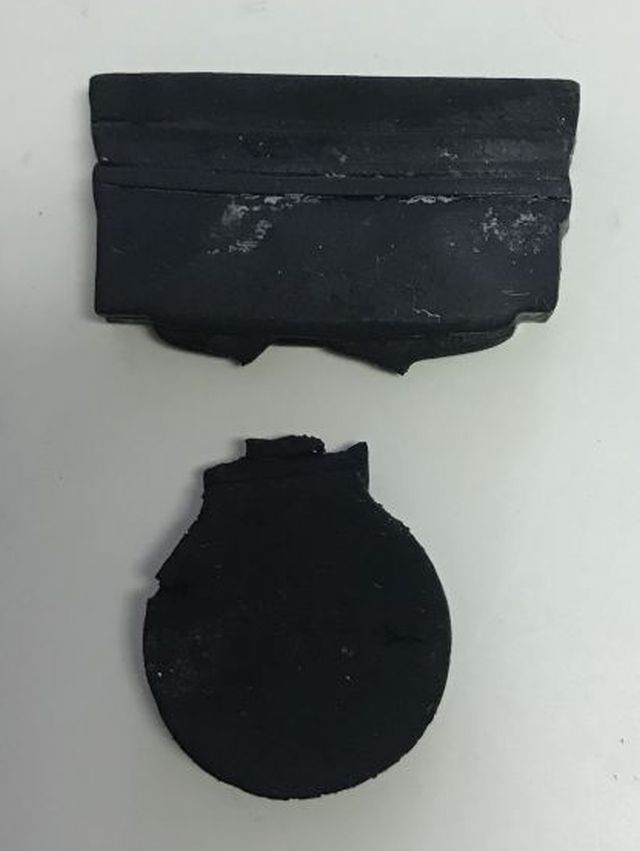
severed sump check valve. circular flapper flexes to allow pumped water out and re-seats to prevent water returning to sump

I ordered a new part (cost $14 before taxes) and installed and the old dishwasher now works ok.  I believe that over time water in the sump which was not pumped out, deposited detergent sludge and so enabled the build up which became troublesome.
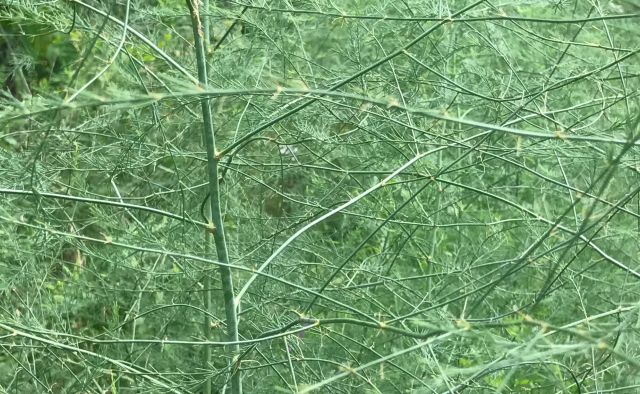
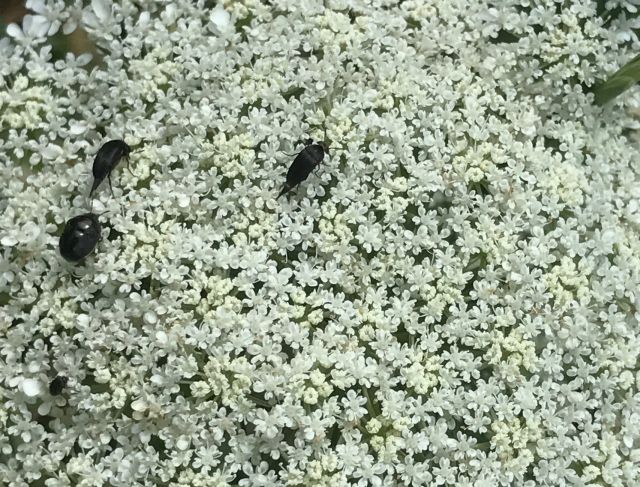
what’s growing

Despite plentiful rains and cooler temperatures, the transition to summer continues and cool season crops yield to Georgia summer varieties.  Asparagus season is over and those which were not harvested have matured and festoon their delicate tracery in the above picture.

I grow for our plate and friends and can indulge allocating growing space to attractive non producers.  The yarrow’s shimmering tapestry attracts visitors.

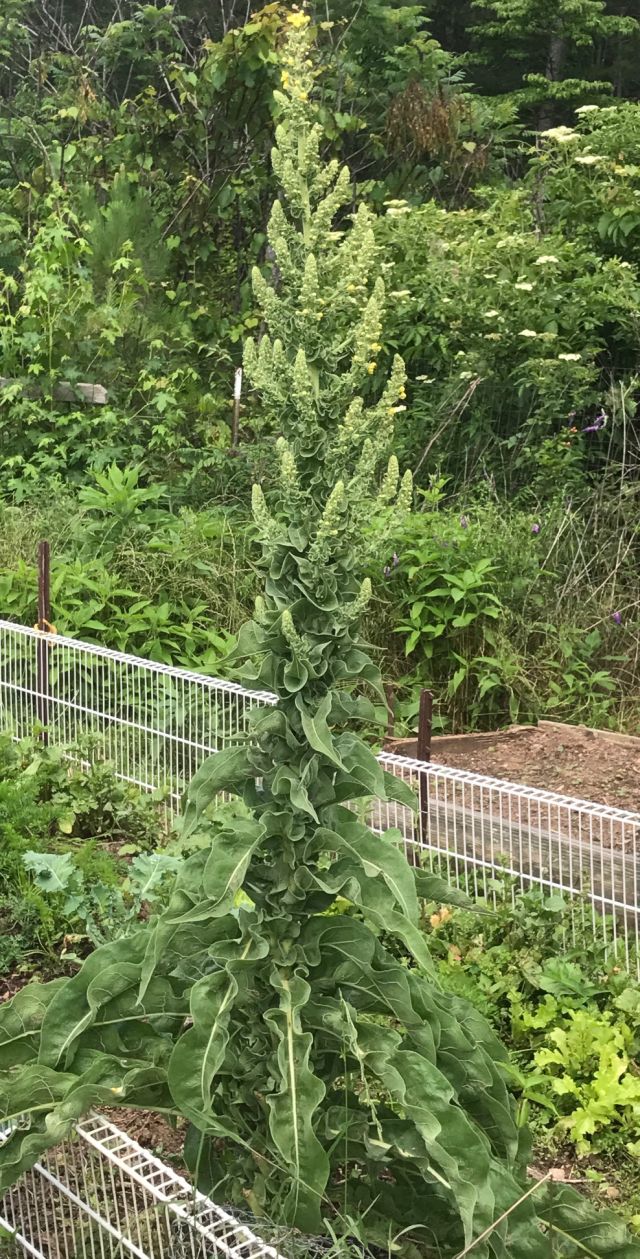
And mullein thrives where it is allowed.

the lower leaves provide mulch for tomato plants. this specimen >6 feet.  it has grown back in the same spot where it was 4 years ago – see my post dated June 13, 2013

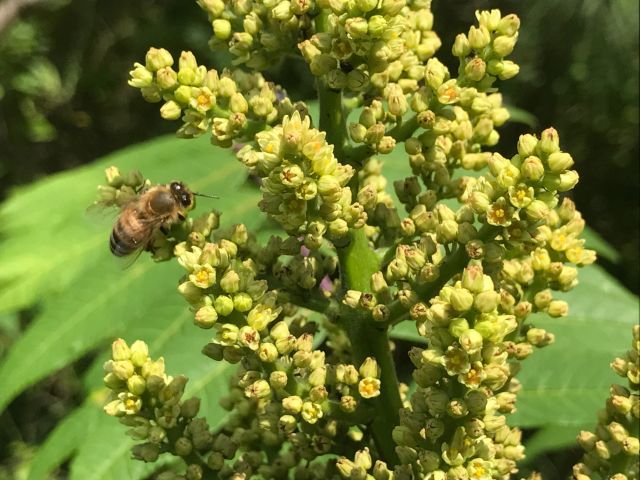
And a nearby sumac is favored by bees and bumblebees.

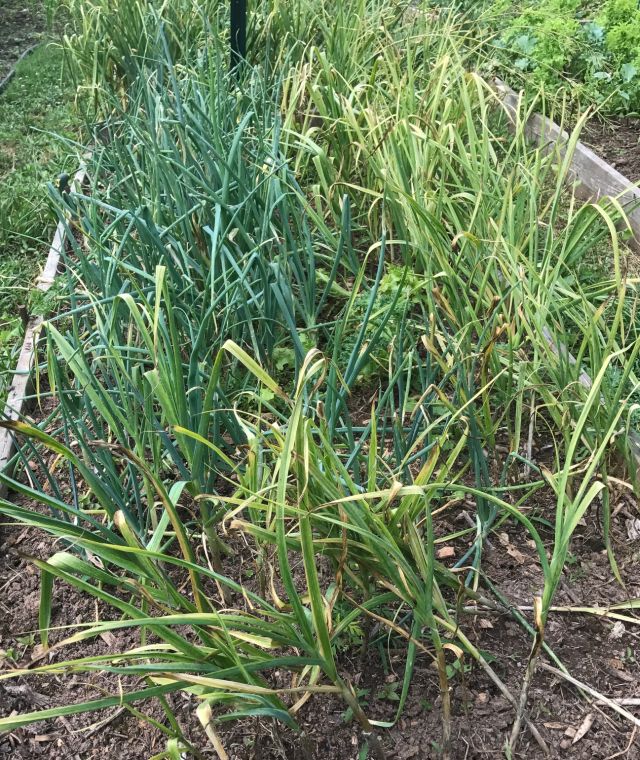
The lettuce is bolting and kale has passed its prime.  Garlic and onions are maturing.
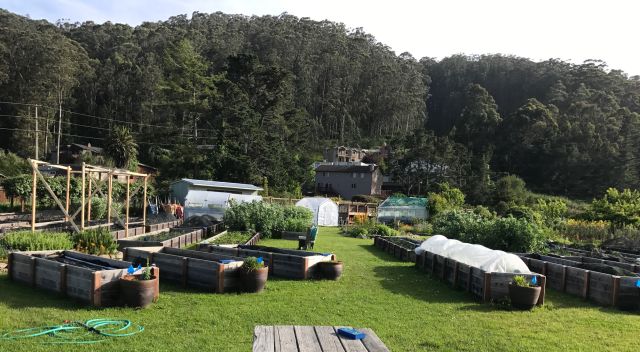
I have several beds of garlic plantings. This bed is almost ready for picking.

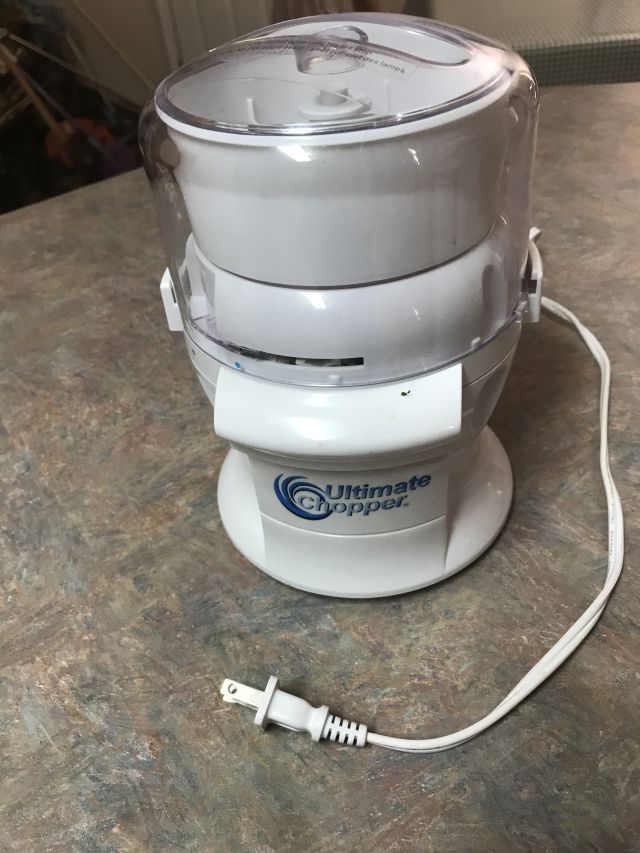
In the past I produced more garlic than we could consume, gift or replant.  M. said preparing garlic was tedious. I found an Ultimate Chopper in v. good condition at the Thrift Store for $3.  The lid was jammed and with the assistance of a helpful shopper we freed it.  And it works great for chopping garlic and we have upped daily garlic consumption.

Apparently there was a 2005 safety recall so we will be mindful of our fingers when operating

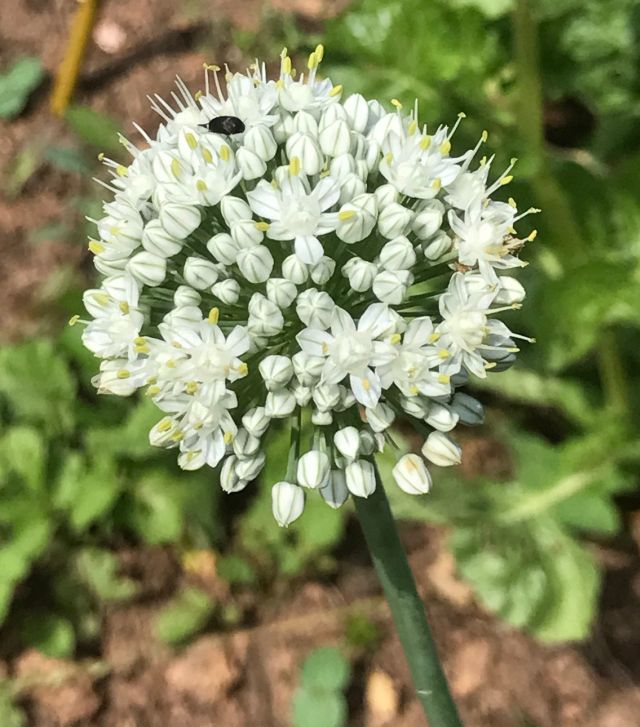
Some of the onion is also going to seed.

the alium flower is attractive

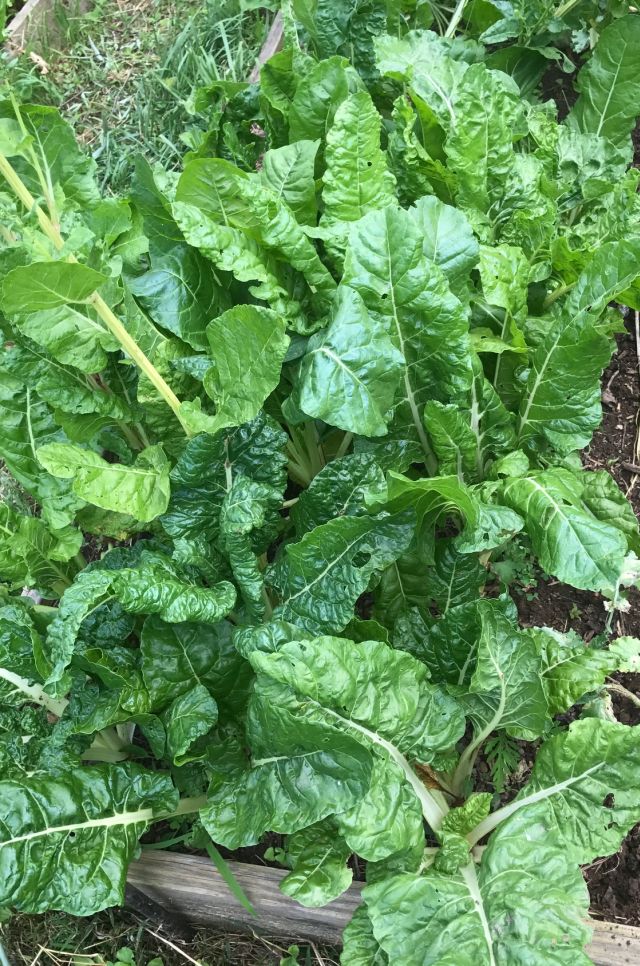
A favorite dish (and healthy too) is a saute of chard, onion and garlic.

the chard seems resistant to pests and luxuriates from recent rain and cooler temps

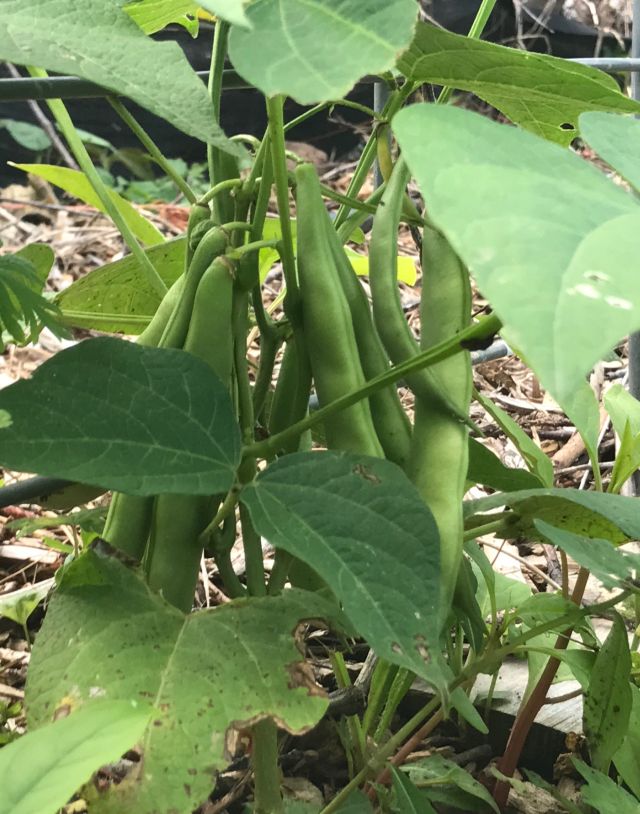
Beans are growing well but it is disconcerting to see severed stalks which I attribute to mindless foraging of rabbits.

I plant lots of beans and hope enough will escape rabbit predation

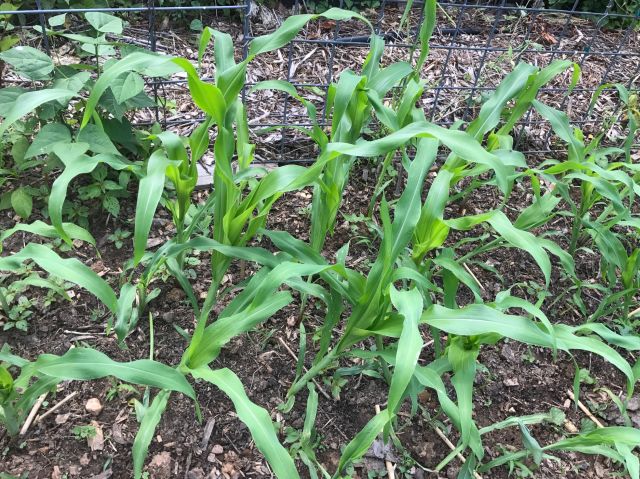
I have not done well with corn so I plant just a few this year and will observe.
a few corn planted and I try steer Trudy and the hose clear of the bed

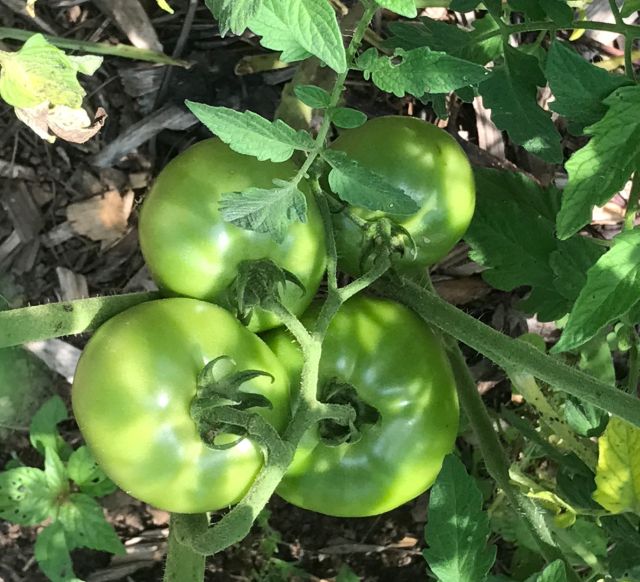
The big summer crops for me are tomato, okra, sweet pepper, squash and melon varieties.  The tomatoes were planted early and are doing well so far with no blossom rot (a problem last year) or pests.
I have >30 plants and should have edible tomatoes before July 4, my annual target

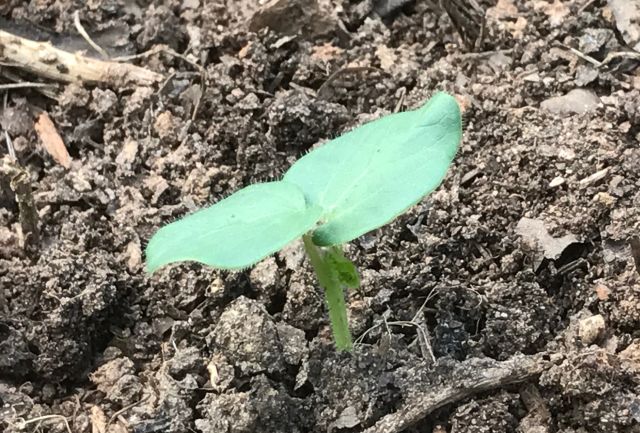
But I probably should have planted okra and squash earlier.  Okra grows prodigiously and this little plant should be robust within a few weeks.

I have some 10 okra plants and if they make it to maturity we will have lots to grill on the Foreman electric grill

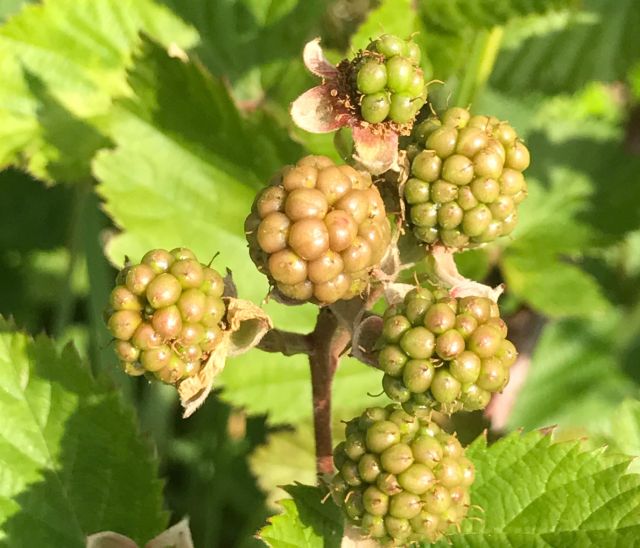
Cucumbers are growing well, I neglected the blueberries and we should have some in a few weeks but not prolific, and the blackberries, of which there are many, are still some weeks from maturing.

blackberry plants have some way to go

And, all my rainwater tanks are full including the 2,100 gallon tank I installed a few weeks ago.   Despite a warm winter and late freeze most of the pears and apple trees are bearing well.  And my single peach tree has peaches – we are further north than most of the Georgia peach orchards and my tree must have received its quotient of chill hours.


3 visitors near carport

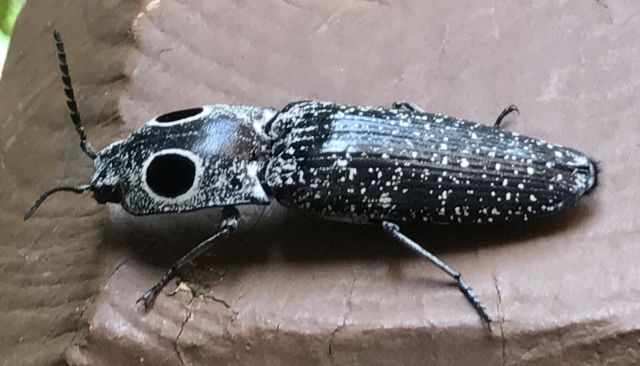
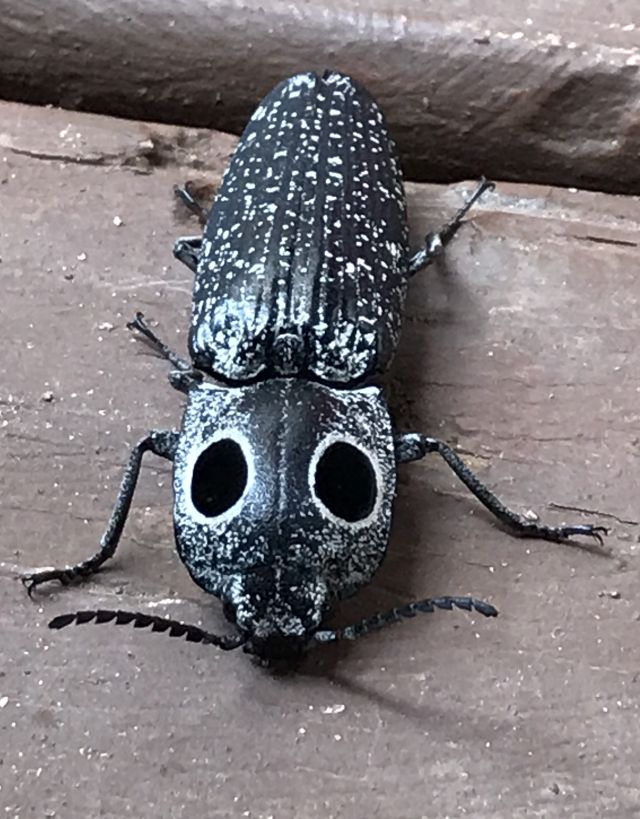
Previously I mentioned my new bee watering station.  I am pleased to see more and more bees visiting.  I discovered if I increase the frequency of the water drops such that the water surface has continuing ripples they discover it more easily.  Otherwise they scout around the compost area and a couple today were investigating the liquid nitrogen drop off area and one had to be rescued (the container is now covered).  On my return to the house as I passed the post balustrade I noticed on it what appeared to be a metallic brooch – see picture above.  M assured me it was not her jewelry (she isn’t into jewelry) but her research identified it as an Eastern-Eyed Click Beetle which is distinguished by its two large black eyespots surrounded by a thick white ring.  

head on

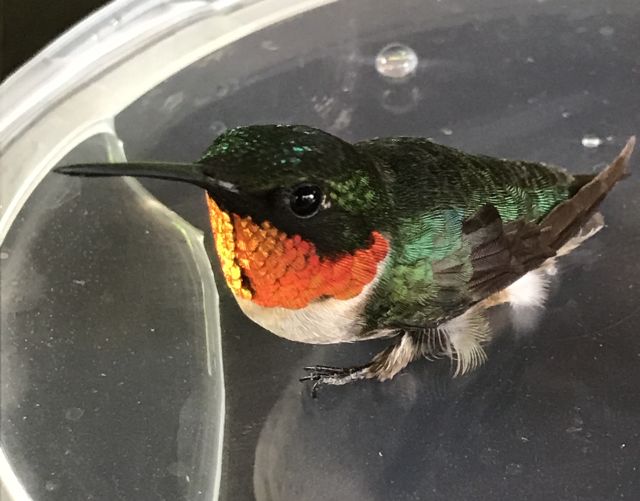
Attached to the carport is a small greenhouse which I rarely visit in summer.  However, I wished to set out some basil seedlings and on entering the greenhouse heard a loud buzzing sound.  It was a hummingbird.  I did not expect it to find its own way out and tried to catch it with a butterfly net.  With little success, until exhausted, it settled on a spot and I was able to gently pick it up.  I placed it on the car hood and it rolled over on its side.  We made a sugar water solution and placed it in the upturned lid of a yogurt container lid.  And I placed the hummingbird also on the lid.  And it lay collapsed on its side until I righted it and dipped its beak into the solution.  And then its long, long tongue flashed out and I watched its throat glug glug down the energy drink and its puffed out its red chest and its tongue flickered out again and again.  And it just stood there so I took the picture below.

thank you for the drink!

M. said it was mortally wounded.  I said, wait.  And suddenly its wings thrummed and it was off.

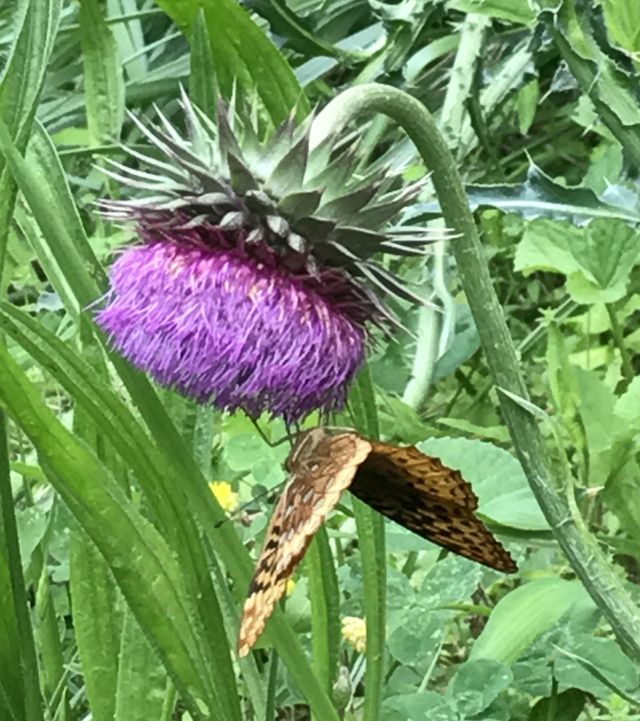
Adjacent to the house is a thistle flower and we have watched it mature.  Today it opened up and was visited by a butterfly.

And finally, I have mentioned the aquifer fed pond in the woods, which almost ensnared my bobcat some years ago.  We have watched the tadpoles spawn and grow.  Usually they dart below the leaves when we approach but today a number continued to swim near the surface.

and soon they will be off

milkweed in the woods & a new bee watering station

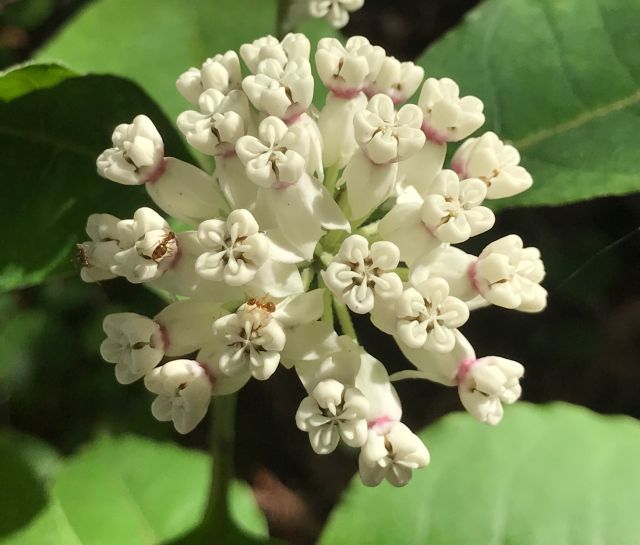
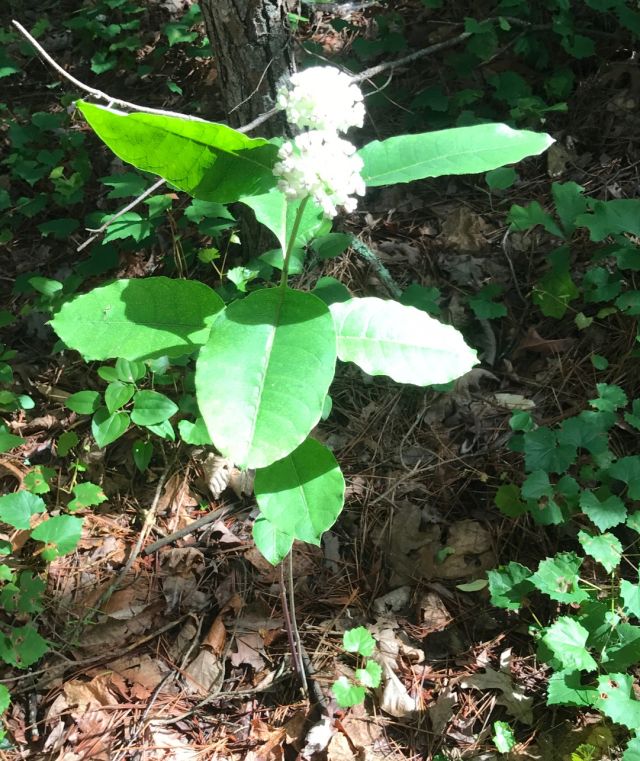
It was M. who noticed them while I, deep in thought, walked right past.   From our book “Forest Plants of the Southeast and their Wildlife Uses” (Miller & Miller) she identified it as Asclepias variegata – white milkweed. See picture above showing its distinctive showy 5-lobed petal crown. Milkweed is a favorite of the Monarch butterfly.  This is the only one we have seen in the woods and we resolved to collect its seeds and try extend its presence.

per our reference: “All milkweeds are excellent producers of nectar that is attractive to numerous butterflies and other insects”

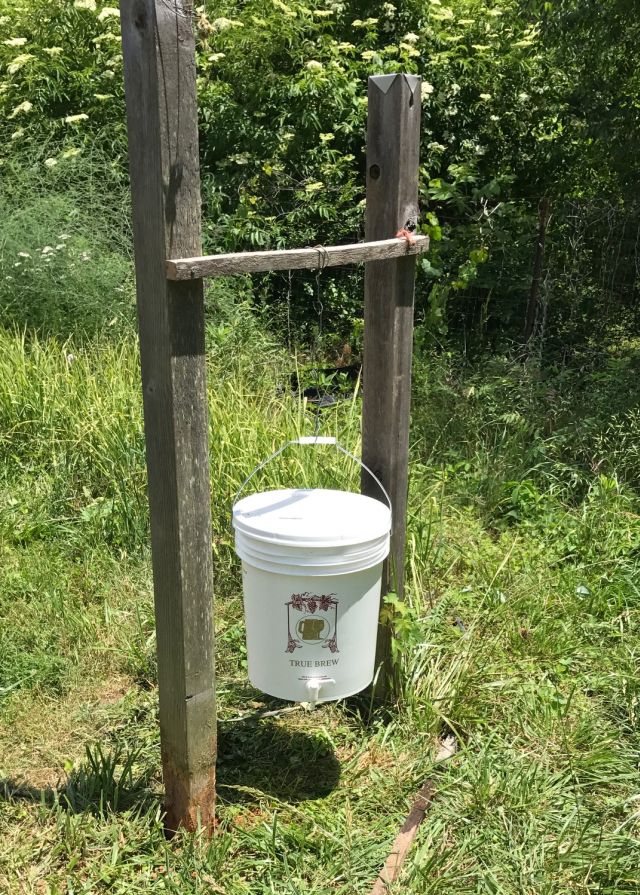
Bees need water and I have not been a good provider.  Filling a tray with water and rocks (landing platforms) works as long as I diligently keep the tray full.  I am trying a new method – suspend a 5 gal bucket with valve above the tray and set it to drip regularly.

my first location was in the growing area, with the 5 gal container suspended between 2 cedar posts, but it has full sun exposure most of the day

I noticed the water fetching bees were concentrating on the compost area where puddles remained from recent rains. 

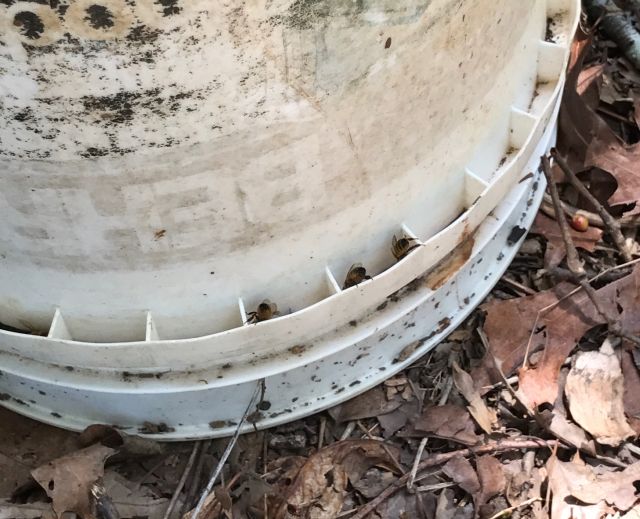
an overtuned 5 gal bucket was receiving a lot of attention – rain had collected in the pockets of the rim and bees were tanking up

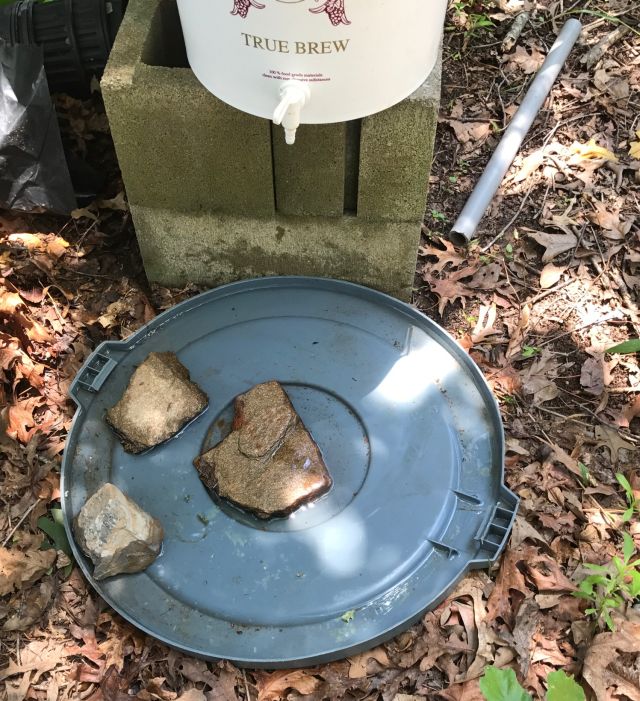
The compost heap is much closer to the house and is well shaded for most of the day.  I relocated the watering station to the compost area and to entice the bees dabbed some honey on the rocks in the tray.

word must have gotten to base and now the new water spot is regularly visited


wood chipper repair

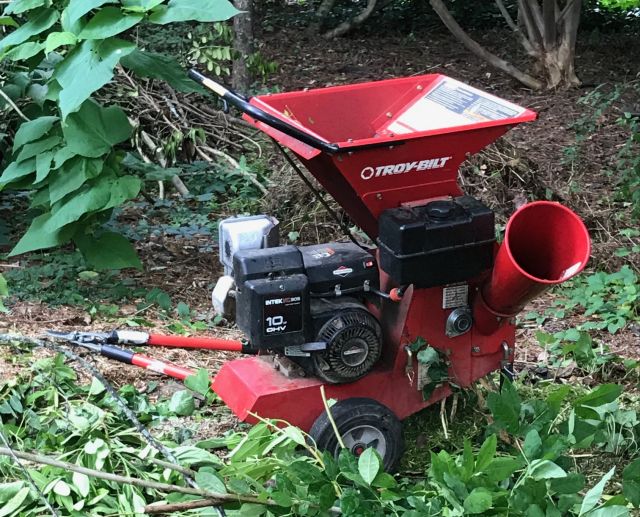
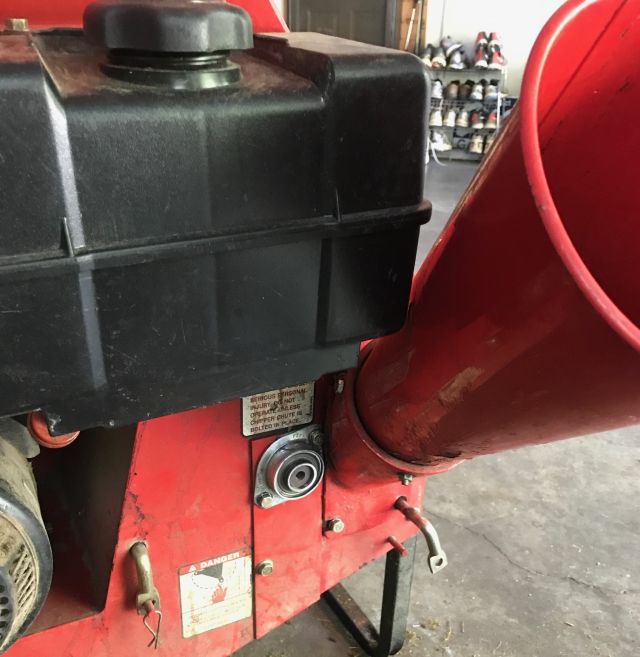
I extend the life of appliances so they can age gracefully as I am also attempting to do.  But they need attention and repair.  I previously posted how I repaired (or had someone repair) the circuit boards of the wall oven, fridge and treadmill all of which are >15 years old and still work fine.  In August 2013 I posted how I rebuilt the engine of my chipper/shredder (see picture above) after the oil plug came off, the oil escaped and the engine seized.  I believe I bought the chipper new in the 90’s and have used it regularly.  Other than the engine repair, I also replaced the fuel tank (costly part), the drive belt, and the axle bearing.

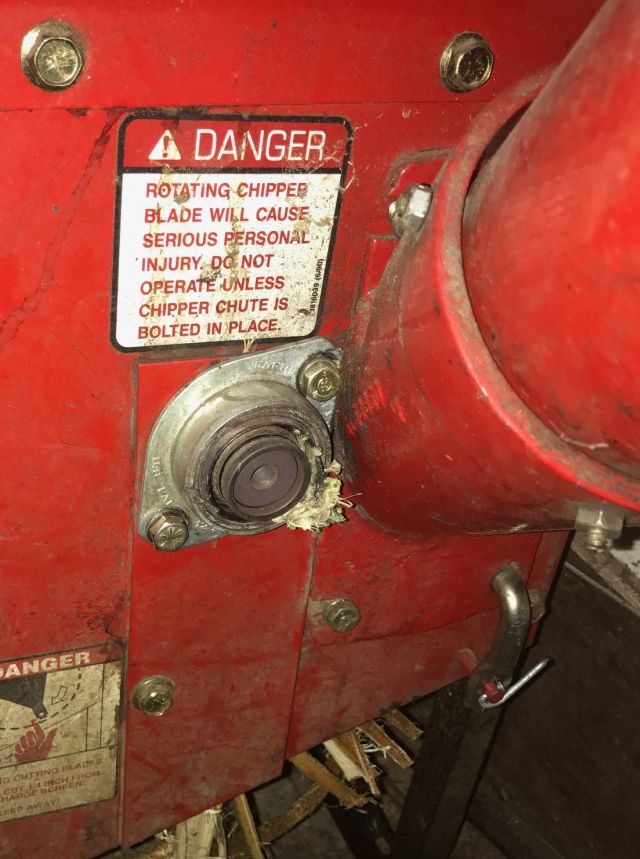
I heard loud thunking from the chipper this week and noticed that the axle bearing was broken and again needed replacement after some 10 year’s use. 

you can see the damaged bearing and the end of the axle which rotates the chipper and the shredder and needs a heavy duty bearing to service it.  some debris has pierced the bearing brace and replacement is long overdue

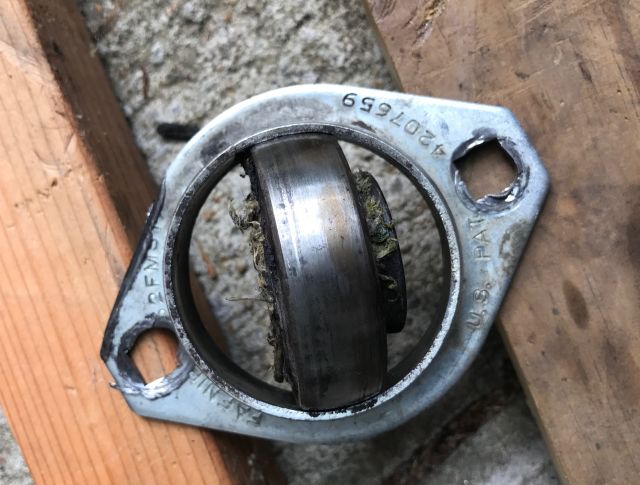
What I refer to as the “bearing” is actually 2 components – a housing, and a bearing inserted into the housing.

with heavy hammer and steel chisel I was able to dislocate the bearing and you see it edgewise in the housing

When I last replaced the assembly some 10 years ago I am sure the price was <$20.  Today the price >$60 on all the websites I visited.  Seems a lot.  To find lower prices it helps to use a generic sku (part #) and not the manufacturer’s sku.  I had no success.  But it occurred to me that since the housing was ok, why not just buy the bearing separately?

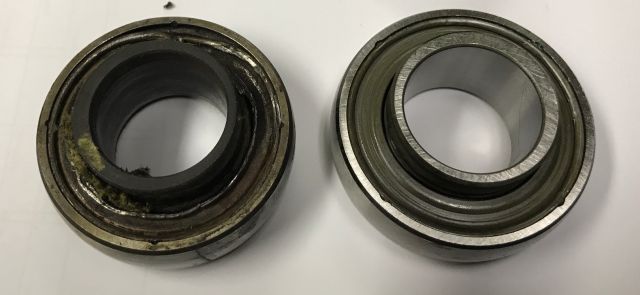
By magnifying the website picture of the >$60 replacement assembly I was able to identify most of the part number of the bearing.  And by googling various combinations of the number I located the standalone bearing (Timken RA100RRB wheel bearing) and on Amazon prime it was available (including tax) for $17.19.  It arrived a couple days later and matched the defective bearing.

old bearing and new bearing side by side

However, I could not press the bearing into the housing.  Youtube guidance suggested I freeze the bearing and heat the housing.  Just freezing didn’t work and I was under increasing pressure from M. to chip the accumulating pile of branches and to “”just pay the $65 and get the right part”.  So I put pride aside and visited the local tractor dealer and they fitted the 2 together, and refused payment.  With hindsight I realize I was using the wrong technique.  Instead of trying to align the bearing with the housing and then force the bearing into the housing, I should have forced it in edgewise and then rotated it.  My lesson for next time. 

new bearing in old housing installed on chipper.  you can also see the fuel tank I replaced a few years ago, since the old one leaked at the horizontal seam

It was quick work to reinstall the bearing on the chipper and today I chipped >2 hours and the new bearing appears fine.  I should mention this is the chipper I use at the Atlanta house.  North of Atlanta where I have my growing operations I use a large chipper driven by the PTO of my 60hp Case 585 tractor.

additional rainwater storage, at last

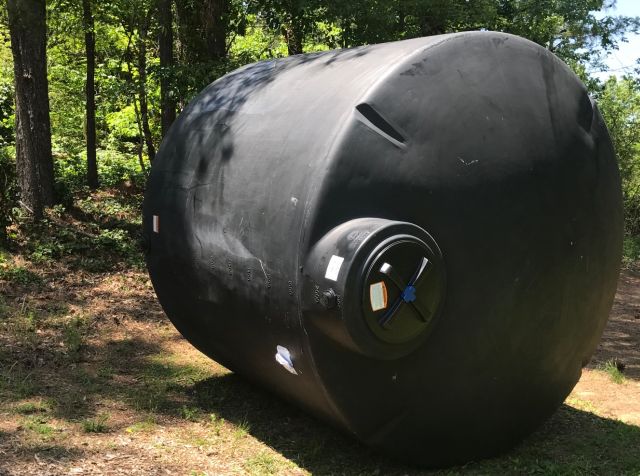
I have storage capacity for about 6,000 gals of rainwater.  Last November the drought was so bad I was transporting 35 gals of water from Atlanta to my farm each visit – see “making do” post dated Nov 15, 2016.  Additional water storage was needed.  I have a 2,500 gal tank and would like to have ordered another (cost $860 ) but was told shipping cost would be very high.  It was recommended I order the 2,100 gal tank for $920 (yes the smaller one costs more) and the freight would be $220.  So I placed the order before my Pacifica trip and yesterday it arrived.  See pic above.

The tank is 90″ high and 87″ wide and weighs 290 lbs.  Of course there was drama with its delivery.  I stressed, when I placed the order that the one lane bridge off the highway when approaching from the east, could not take a big trailer.  They said the driver would call well before he reached the house and I could then instruct him on which road to use.  He called me after he had reached the one lane bridge, was exasperated, and had to back his humongous trailer all the way up the hill and then approach from the west.  The tank was at the end of the trailer closest to the cab and we 2 battled to hoist the tank over some other orders, but we succeeded, slid it onto the road and he and I rolled it up the driveway to its overnight resting spot which you see in the pic above.

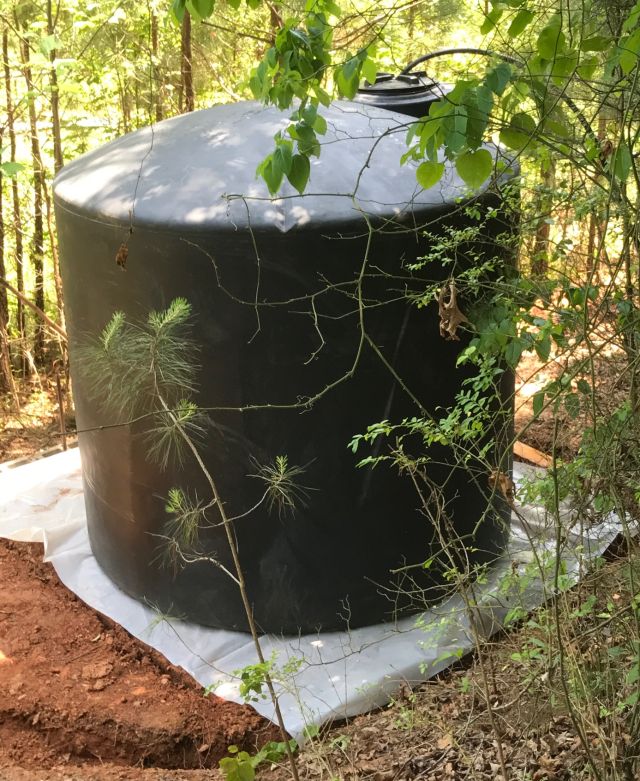
Prior to its delivery I had much deliberated where to place it and decided it should go on a ledge below higher ground.  With my bobcat I had pulled out the small pine trees and removed the topsoil and then with shovel and pick I leveled the 8ft by 8ft  staging area and dug a half circle drainage trench on the high side to prevent water eroding its base.    I laid plastic sheeting on the staging area also to prevent water eroding its base and this morning my neighbor helped me roll and place the tank in position.

in this pic you can see the cinder blocks holding soil in place on the downside of the site (with metal rods securing the blocks), the plastic sheeting and drainage trench.  I may not connect the overflow fitting since I will be filling this tank to order from the other tanks

I stopped at Tractor Supply this morning to buy a 2″ valve which you can see at the bottom of the tank.  The 1″ pipe at the top is moving water from my other tanks to this new storage area.  It is expected to rain tomorrow and I want to relocate at least 1,500 gals today so my other tanks can accept the rain.

another pic from above – you can see I have removed the vent plug in the screw in lid so the 1″ pipe can enter snugly from the top

My neighbor who is a house builder has surplus lumber and metal roofing and I will contract with him to help me build a roof above this tank to which I will add a gutter and so capture any rainwater which lands on this area as well. 

So I hope this all works out well and, from transporting 35 gals a day during the dry season I now hope to have an additional 2,100 gals of storage.

a week in Pacifica

Pacifica is a community of about 40,000 extending 6 miles of beaches and hills along the Pacific ocean south of San Francisco.  We are regular annual visitors since 2 sons and better halves and now a grand child live in the area.  And Pacifica is undergoing stress of change as new money moves into a once lower middle class area.

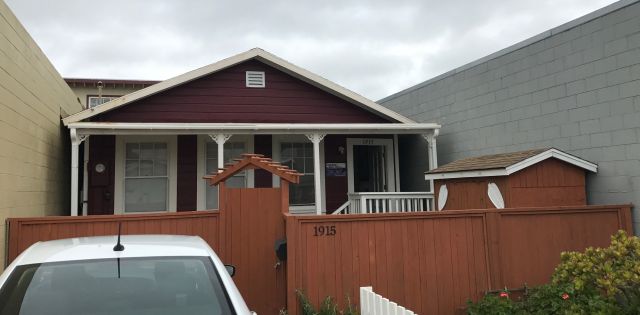
Nudged by my sons we now use uber for airport trips and airbnb for lodging and this time we rented a delightful beach house just one block (say 80 yards) from the ocean.  It came with 2 bedrooms and all amenities. Though M described is as basic, it was a more pleasant way to spend some days in one location. 

our beach house squeezed between 2 shops a short distance from the beach, with space in front for our car rental

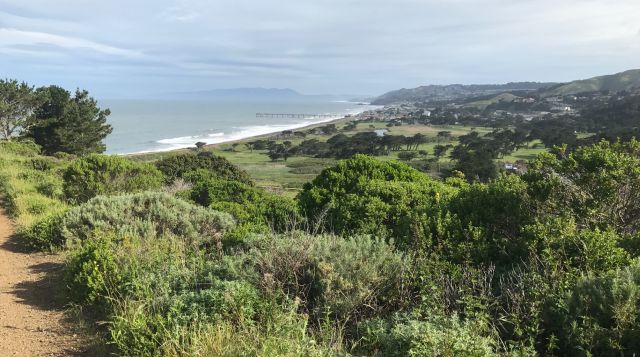
We have a regular morning schedule – jog a few miles along the shore and cliffs to our coffee shop.

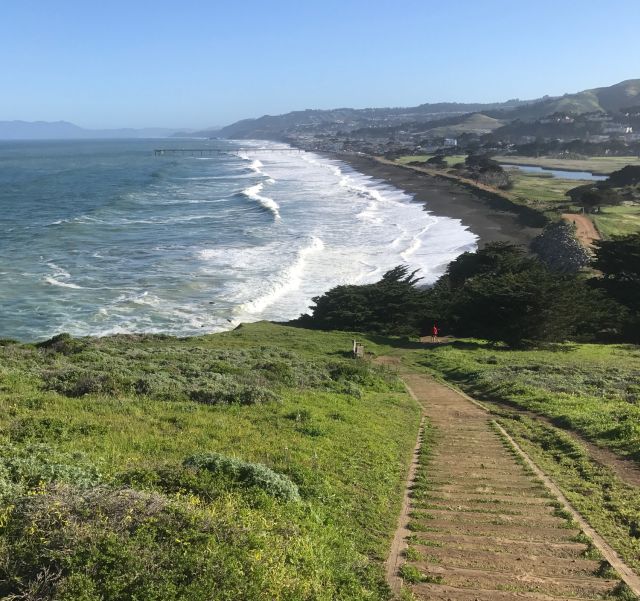
a view from our trail of one of the beaches, and the pier
our caboose coffee shop

It was at the coffee shop I purchased the local weekly Pacifica Tribune and became aware of a gnawing community issue.  In fall 2016 the owner of xxx mobile home park decided to evict every tenant claiming there was a plan to do upgrades.  Many residents had lived there for decades; many were low-income people, including veterans, elderly and disabled people, with few affordable options for other rentals.  At the Council meeting the Council majority refused to help and as a result 77 households were evicted.  Subsequently a proposal for rent stabilization was developed and efforts are underway to make it effective.  It will cost money to implement and opponents say this money could be better spent on physical improvements.

I wonder how this will be resolved.  There are no upmarket restaurants or shops on the high street where our rented beach house is located.  There is Florey’s bookstore which we religiously visit each year and which hosts weekly meetings for the book club, writers group, grieving pet owners group and others.  If renters can be ejected then more expensive housing and buildings will arrive, property values will increase even more (prices already appear astronomical), property tax revenues will increase and the simple charm of the place will be dissipated.  Some will call that progress.  Much the same happened in Sandy Springs, Atlanta where we have lived for many years.  It gained cityhood and then the mayor who was smart and frugal passed on and now big civic structures and apartments and shops are choking the center, and traffic and sales taxes have increased, and this is progress.

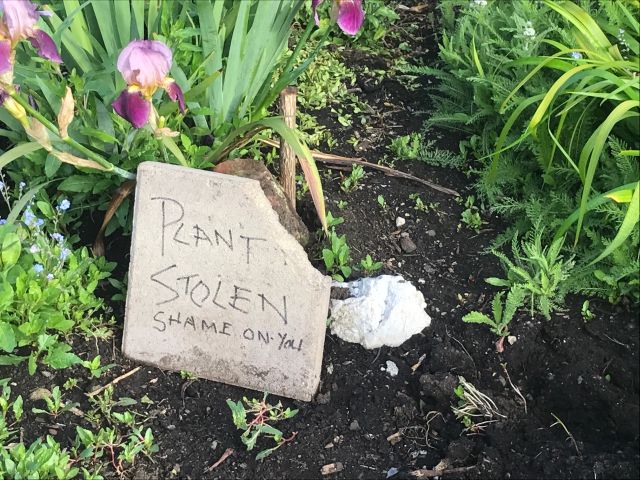
Close to the caboose is the Memorial Gardens established and maintained by Mike Mooney which now has notices about plant thefts.

We again, coincidentally, met with Mike and wondered aloud why people would steal plants.  No avid gardener surely will look at a lovely plant in their garden and think “that’s the one I stole!”.  Probably thieves for commercial re-sale.

But back to the delights of Pacifica. It has community gardens with weekly bio-intensive growing classes.

Pacifica Gardens – Educate, Cultivate, Inspire

And a history of rum smuggling during the Prohibition.

Bootleggers’ Steps Trail at Mori Point

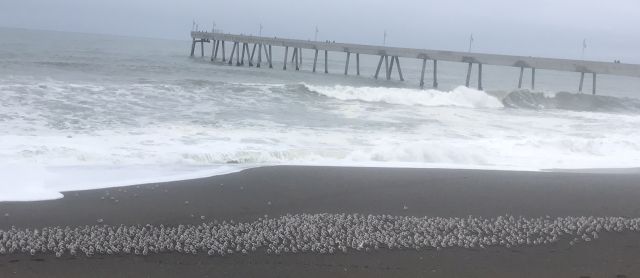
And unusual beach sights.

masses of birds gathered on the shore

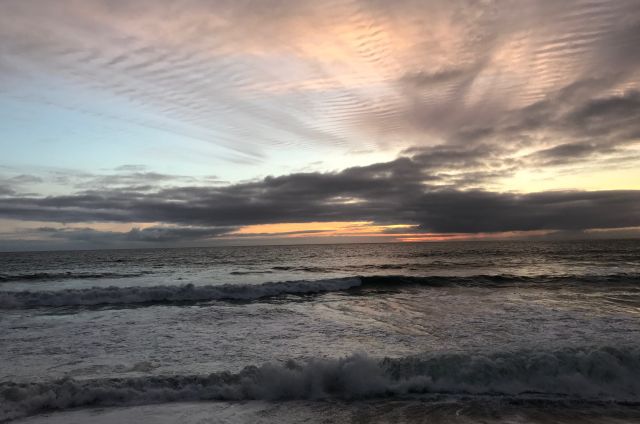
And often brilliant sunsets

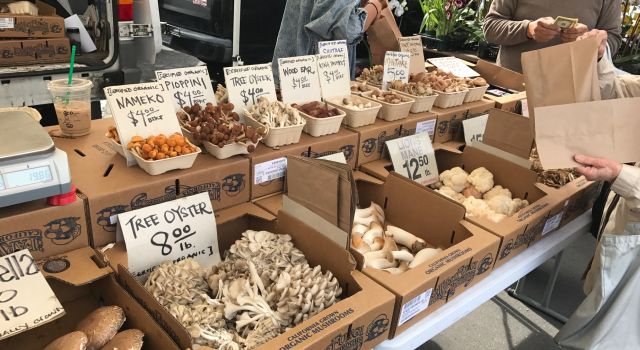
And nearby interesting places to visit such as the Farmer’ Market Serramonte, Daly City.

seeing these mushrooms motivates me to get back to growing shiitake

And finally our favorites places to eat, including this tofu shop

Mom’s Tofu House, a Korean restaurant in South San Francisco has delectable stone pot dishes

And of course the attractions of San Francisco where the technology money is making it culturally competitive with NYC.  We visited and enjoyed its MOMA (museum of modern art). 


back from week in San Francisco

Prior to my west coast trip I considered how best protect my plantings.  In my April 12 post I described planting out 33 tomato plants and my concern for frost damage.  There was no frost and my new concern was whether the plants would survive without irrigation for 8 days.   I deposited wood chips round the base of each tomato and watered deeply.  The 12 surplus tomato plants in the greenhouse I moved to the shade of the carport.  And I planted out 8 sweet pepper plants.  And hoped they would survive till my return.

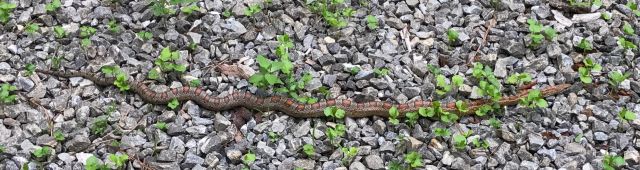
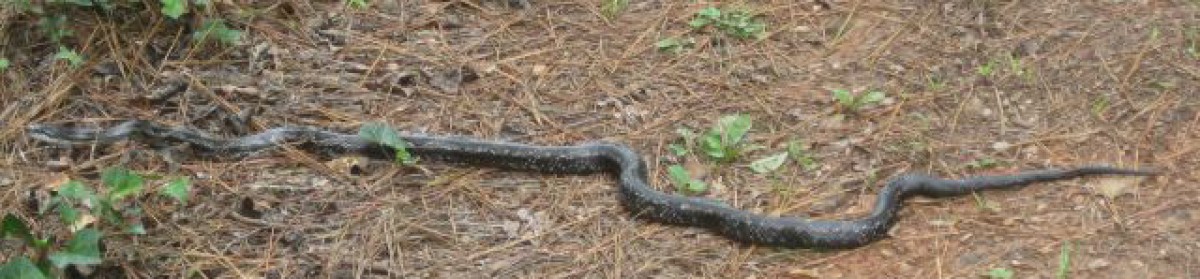
My first greeting as I approached the carport was this long rat snake (see pic above), or at least that’s what I think it is.  M. thought it was a copperhead but I thought not and let it be.  And it was quickly gone.

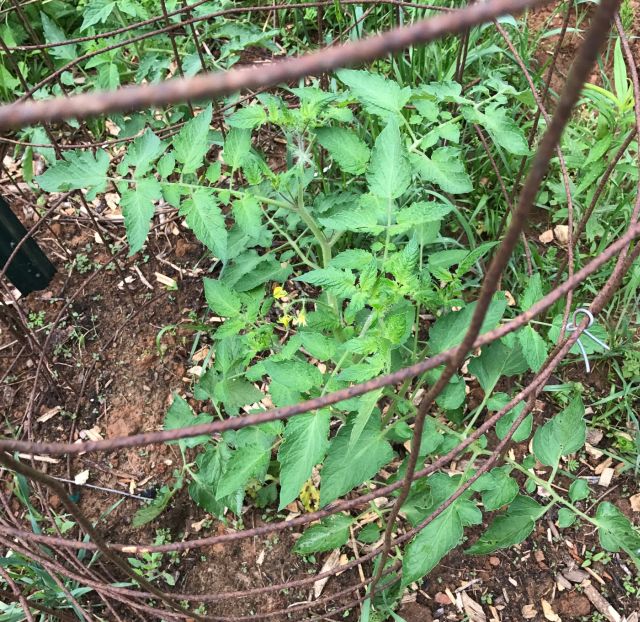
I noted from upturned containers there must have been at least 3 inches rain during my absence.  Great.  Vegetation was lush and the young planted tomato plants looked vigorous and already had some flowers. 

small tomato plant bearing flowers in wire cage. btw the white blotches noted in my 4/12 post have disappeared

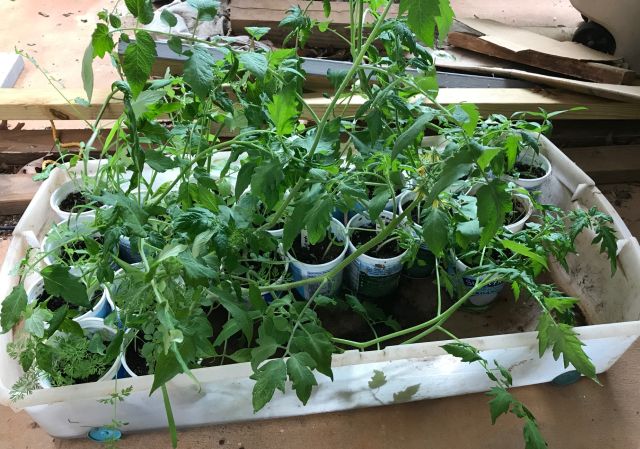
The reserve plant supply under the carport also looked fine. 

these plants did well in the car port

Not surprising they had grown fast and leggy and when I transplant them I shall have to be careful.  But they still had water in the tray in which their pots were placed – water level down from say 3.5″ to 0.75″.

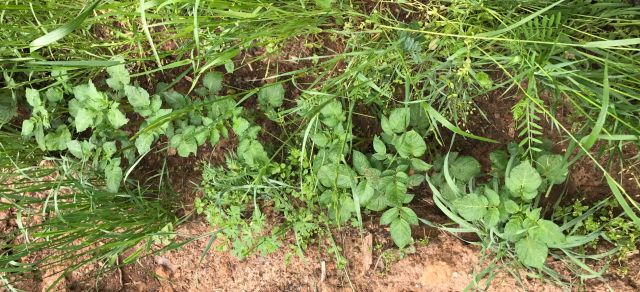
I had planted out potatoes in a trench some while back and  had filled in the trench with soil to the height of the leaves before I left.  During the week there was much more growth. 

I have never done well with potatoes

And the greens had filled out.

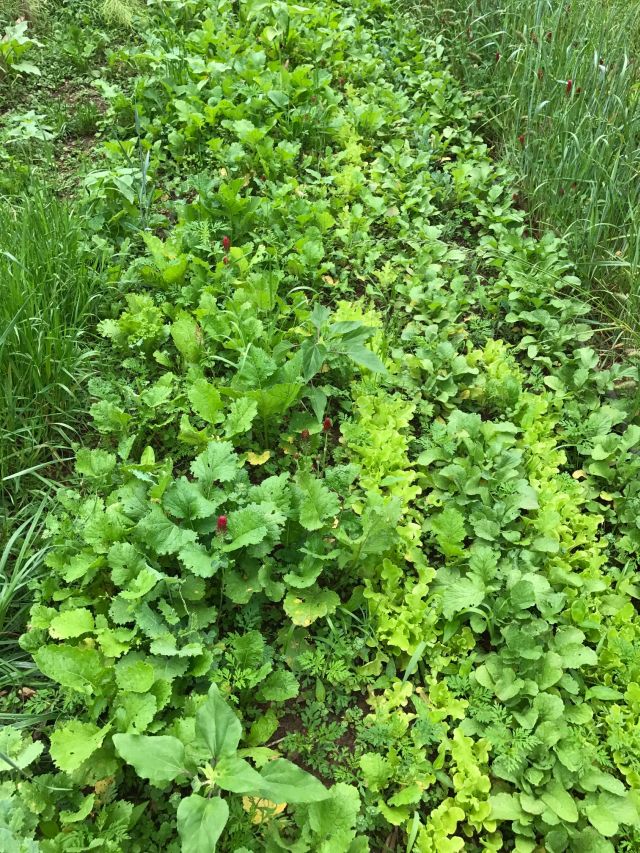
this bed of radishes, lettuce, kale and other greens accelerated during the week.  Interspersed are some sunflowers and crimson clover.

And my 2 bee hives seem ok, more activity at one.  I should open them and take a look.

recent reads

Since my post last August I read some good books, at least by my tastes.

China interests me and I read Soul Mountain (a slow read in between other books) by Gao Xingjian, 1st Chinese recipient of Nobel Prize in literature; and the Wild Swans by Jung Chang, a good successor to her book on Mao: The Unknown Story.  When I travel to Australia I look for books which have not yet surfaced in the United States and I enjoyed Easternisation by Rachman – succinct and gripping.  As is the Hundred-Year Marathon by Pillsbury.  I completed the Cixin Liu science fiction trilogy – The Dark Forest and Death’s End, very imaginative and mind twisting. And a fascinating book on the challenges of manufacturing in China is The Hardware Hacker: Adventures in Making and Breaking Hardware by Andrew “bunnie” Huang published in March 2017.

From the U.K. I enjoyed Surviving the Future by David Fleming edited by Chamberlain.  A good analysis though I do not agree with all of it.

And then I read mass fiction which I enjoy for the sugar high and for a bit of escapism.   And I am now reading Hero of the Empire about Winston Churchill by Millard, which brings back memories of the country where I lived for 28 years.

growing update – tomatoes and bees

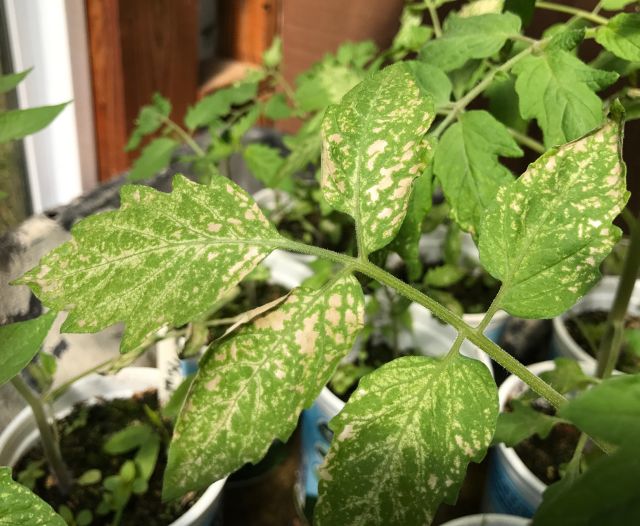
I noticed the leaves of my tomato plants in the greenhouse had white blotches.

white blotches – a fungal attack or too much sun for young plants?

It has warmed up a lot and I suspect greenhouse heat and light is too much for the plants.  I could shade them or plant them.  A quandary is the average last frost day for Canton, a town to the south, is 4/21 to 4/30 and for Jasper, a town to the north, is 5/1 to 5/10.  So on April 10, what should I do?  The forecast anticipates no cold weather for the next 10 days.  I decided to chance it and planted out 33 tomatoes.  If they are not injured by cold them I should have tomatoes before July 4, which is my annual goal.  If some are injured, I have plants in reserve.  The varieties are: Black Krim (4); Black Cherry (3); Whopper (6); Cherokee Purple (8); German Johnson (5); Juliette(5) and Misc – unidentified (2).  So most are heirlooms.  The Whopper is a stalwart hybrid producer which was both the first and last to produce in 2016 and, although not as tasty as the heirlooms, does extend the season.  The Juliette I collected from last year’s seed and will be interesting to see how they do.  The seed for the Black Cherry was purchased in 2015, the remainder in 2016 or 2017.  This will be my first tryout of German Johnson tomatoes.

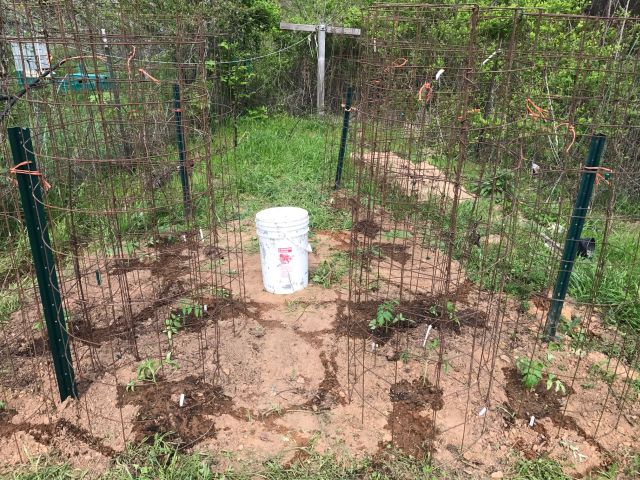
different wire cage configurations

I use different locations each year for the tomatoes and I experiment with different layout techniques.  Last year I spread black plastic and inserted the plants in slits in the plastic.  Now this may work if you have irrigation lines beneath the plastic which enable diffuse watering, but with my method the water inflow was concentrated where the plant slit was and I had problems with blossom rot which occurs with uneven watering.  After introducing additional water inlets the problem was solved.  I previously minimized weeding with use of mulches (especially newspaper), but this year I will weed.  I use wire cages which I made in April 2012 from rolls of wire remesh (5ft by 150ft) – see my post dated 4/12/2012.  They have held up well and this will be my 6th year of use.  In the pic above I formed a half circle with double cages along 2 of the edges.

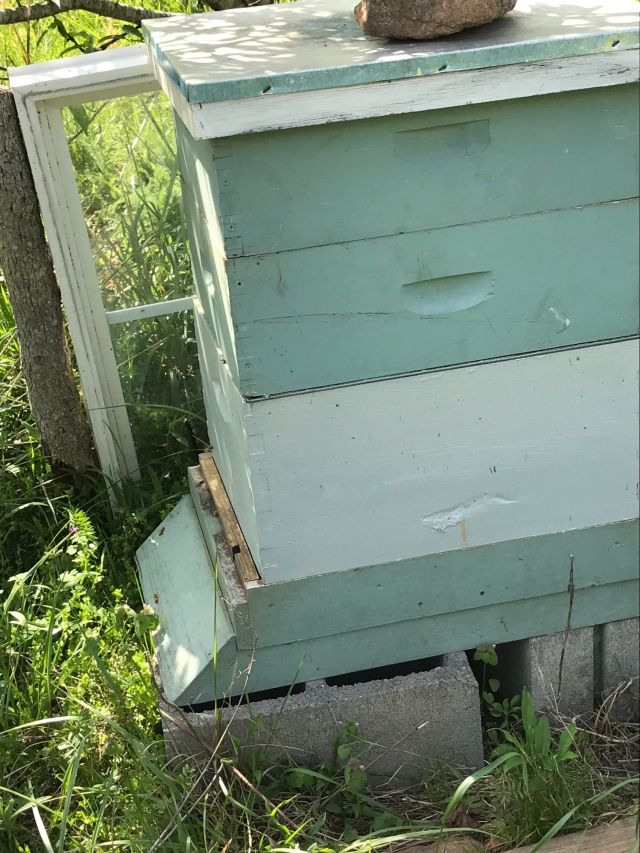
you can see the 2 supers added to the brood box. the entrance is restricted since this hive was previously robbed by bees from the other hive. when numbers build I will remove the entrance restriction

In my March 17, 2017 post I mentioned installing 2 packages of bees.   I opened up the hives a week ago not to look for the queens but to look for evidence that they were functioning ok.  And I was pleased to see bee larvae in the comb of each hive.  Now even worker bees can produce eggs but these will all become drones who do not contribute to the nutrition or maintenance of the hive.   So how to tell if the larvae are produced by a real queen or by worker bees?  The latter do not uniformly fill all the cells with eggs, so if all the adjacent cells are filled with larvae this is a good sign they were deposited by a queen.  And they all were.

With new worker bees on the way it was time to expand the size of the hive from the brood box, where the queen resides, to a couple of added supers where the bees can produce honey, which you can see in the above picture.

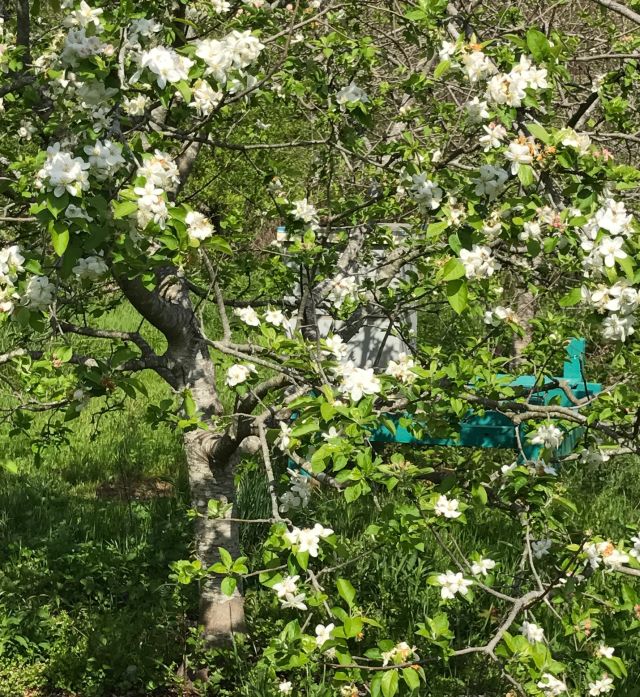
this apple tree is the earliest to bear fruit and its foliage will protect the hive (barely discernible) from the afternoon sun

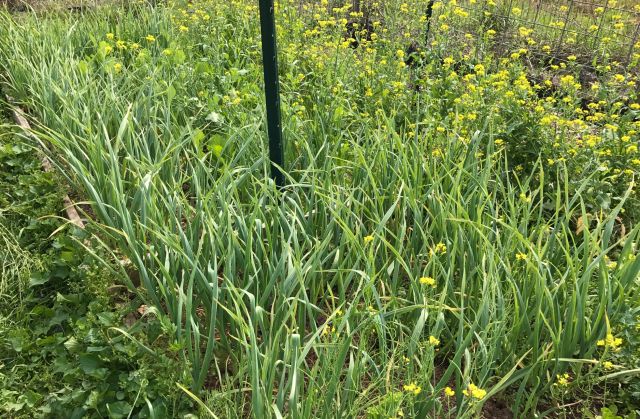
I allowed some of the vegetables to flower and their yellow flowers provide food for the bees and are attractive.

in the foreground garlic is growing well from the recent rains.  I met a well traveled ecologist who makes insect sprays from garlic, hot peppers and wood ash.  I should learn more since I have an abundance of the first and last

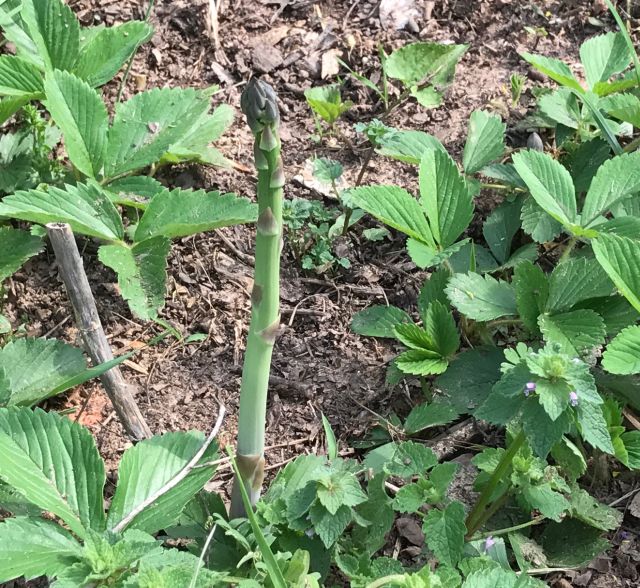
And asparagus are beginning to surface.  As an experiment I have added strawberry plants to the asparagus bed and will see how they do together.

asparagus have been delivering in this bed for 5 years

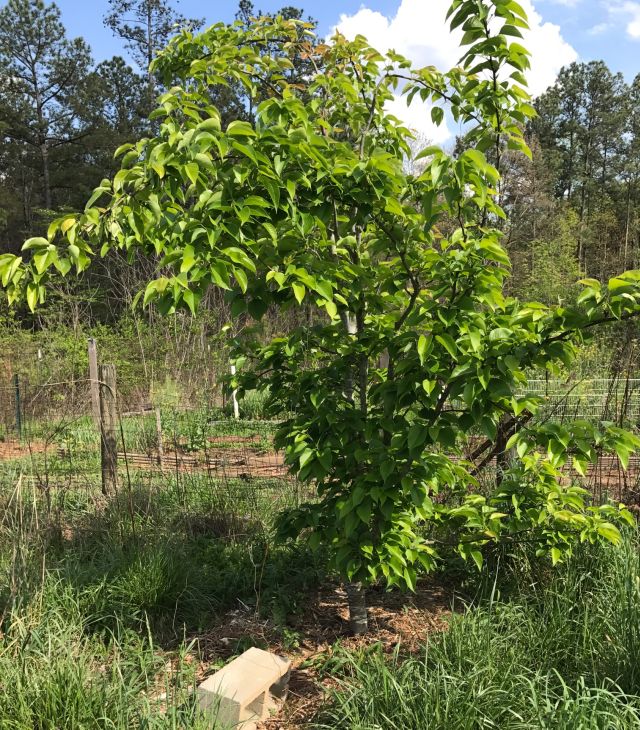
Finally, our most prized fruit tree, the Giant Korean pear which has never disappointed and seems immune to pests.  Since all my pears have an upright habit I train them to horizontal with wires stretched to the ground.

this pear tree is looking good and you may notice some of the wires, which are pulling down on the branches, attached to the cement block