the Takeuchi bobcat saga (part 1)

This is a long discourse on engine repair- so if you aren’t interested in this subject you should skip or you will find it incredibly boring.

It began a few weeks ago.  My Takeuchi TL26 track bobcat has always had an iffy battery.  Even with a new alternator it often struggled to start the engine and the last few occasions I had to charge it before it would start the engine.  I bit the bullet and bought a new tractor size battery from the local Tractor Supply Store.  The next couple days were flawless (in terms of starting the bobcat), and I cleared an area of brush and privet in preparation for a planting of chestnut and hazelnut – yes I know chestnut is plagued by blight and Georgia is probably too hot for hazelnut but what the heck, so I bought 15 of each from Badgersett Research Corporation and will take my chances.

Now I digress again – I remove small trees, roots and all,  by winding a chain round the trunk at the bottom and securing with a clevis slip hook – it’s a hook which allows the chain to slip through as you pull on the other end of the chain, thus tightening the grip. I secure the other end of the chain to the bobcat loader about 4 ft off the ground and I then drag the tree out.  I keep the loader high off the ground so that if the chain snaps it will go over the bobcat not at me.  I was using a lighter chain than usual and it did snap (first time for me) but it did not whiplash.  My buddy, who was an engineer with the army in Germany, told me of men being killed when cables used for dragging heavy equipment snapped.  Both a cable and a chain stretch however when a cable snaps it shrinks like an elastic band and that creates the whiplash.  When a chain snaps the links which are stretched retain their shape so it appearsthere is little or less whiplash.  I tried this theory on my buddy and he understood the argument but said stretched chains can be very dangerous, so be careful.

Anyhow, my bobcat was performing so well I decided to switch it off while I did some cleanup before heading back to base.  Big mistake, I should just have left it idling.  When I tried to start it for the ride back to the house nothing happened, zilch.  Absolutely dead.  Even the gas gauge did not move.
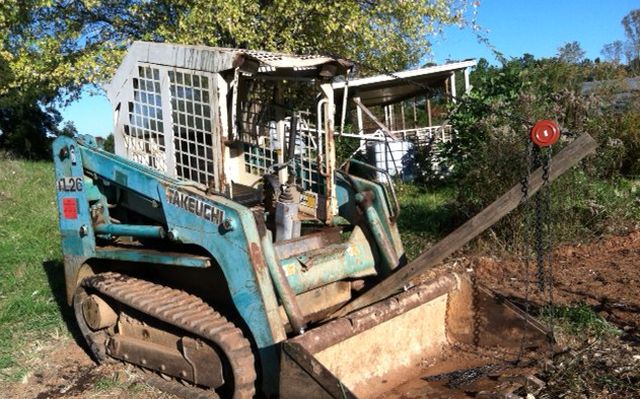
lifting the cab
raising the cab requires 2 average sized guys and since I work alone, I devised a winching system using a fence post wedged between the body and the loader

Over the next 3 days I tried everything.  First thoughts were the wires to the ignition switch had come loose.  I unbolted the control panel and inspected the wiring, all screwed tight.  Then I thought a fuse had blown, so I pulled out all the individual fuses and tested them for continuity and they were fine.  Then I thought the battery cables might be loose, but they were fine.  So I visited the local Kobota distributor and discussed the problem with an obliging workshop foreman, Jeff.  He said it was obviously electrical and I should recheck the battery cables for cleanliness and the functioning of the ignition switch.  He also gave the ‘phone number of Steve, a local mechanic experienced with Takeuchi.  I disconnected the battery cables and checked the functioning of the ignition switch with a continuity tester – it was fine.  I thought I might have a bad earth so I connected a jump start cable from the negative terminal of the battery to the chassis – nothing.  Next day I brought out with me a battery tester which applies a load across the battery, thinking the battery may have suddenly failed.  The battery was fine.
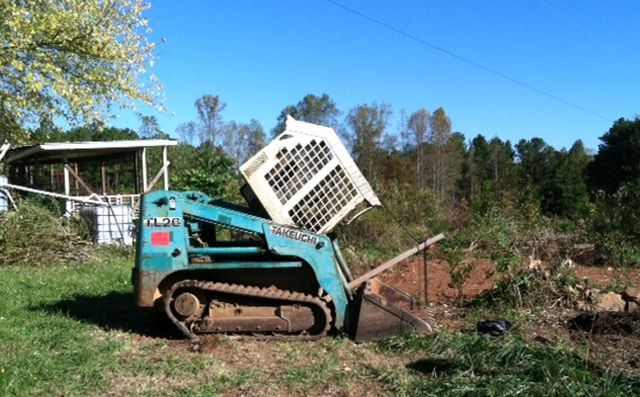
here is a snap of the cab raised forward which exposes the engine, hydraulics and battery (but not the starter motor)

So time to call Steve,  First thing he said was he had a 2 week backlog.  But he was prepared to listen.  When I told him the battery was fine he said check the fusible link in the wire which leads to the starter solenoid and if this was ok then apply a hot wire (wire direct from the positive battery terminal) to the starter solenoid.  I couldn’t find the fusible link but I tried and retried various ideas to no avail.  To get smart I decided I needed a workshop manual.  There are typically 3 types of manuals – operator’s manual, parts manual and workshop manual.  Parts manuals are easy to come by and have a wealth of information and are provided free by several online parts sellers.  The operator’s manual is usually available free from the manufacturer.  I had both of those.  I mulled signing up with a website in Asia which offered the workshop manual under a bonus points plan.  But I fortuitously discovered, before I went down that road that 3 years ago I had purchased a workshop manual which had been gathering dust for some time.  (Memory, memory?) So I pored over the workshop manual for advice.  Unlike the Chilton/Haynes auto manuals this one did not provide procedures on how to do things.  It had a perfunctory troubleshooting section on electrics and a lot more on hydraulics, which was not the problem.  So that was Friday, Saturday and Sunday gone.

Monday, my buddy Mike was between jobs and came out to visit.  I dug around the wiring near the starter and found the fusible link, hooray – it looked fine and I tested it with the continuity tester and it was fine.  This was a setback since I had hoped I had a bad fuse which had deteriorated with age.  No such luck. I did not want the engine to suddenly start while I was perched above the engine compartment below the raised cab so I devised two long wires with alligator clips at the ends connected via a 15 amp fuse to a press switch.   Then I connected one of the wires to the battery positive terminal and the other to the wire to the starter solenoid.  I stood back and pressed the switch and expected it to start – zilch.  Then Mike and I thought the wire might not be thick enough and we used a lower gauge (thicker wire) – nothing.  I retested the battery with the battery tester – it was now a bit weak.  I had noticed that when I turned the ignition key occasionally the gas gauge needle would move and once I heard a click.  So I was now coming to the conclusion that I had a bad solenoid or starter.  The solenoid is attached to the starter and its main function is to take the current from a small wire from the ignition switch and use that to connect the big wire from the positive terminal of the battery to the main terminal of the starter.  The problem could be the solenoid was not working or it was working but the teeth of the starter were jammed or the brushes of the starter were faulty.  What intrigued me was that I had never had a problem with the starter and when they start to fail there is usually good warning, so this seemed unusual.  Anyhow – what to do next.

I thought extra current might help so I drove my truck up and tried jump starting the bobcat.  I heard a click and that was all.  My neighbor across the road, Greg,  is an automobile bodywork specialist and he said tapping the starter with a hammer might loosen a jammed part and get the starter to work so I could drive it back to the house.  I used a steel hammer to hit a 2 by 6″ piece of wood onto the starter – nothing happened.  Greg later that afternoon said it had to be steel on steel not wood on steel, and not too hard.  But I had  had enough for the day.

Greg suggested I contact a wrecking service and have them lift the bobcat onto the back of a truck and move it to my house where I could work on it at my leisure.  So I called Steve, the local mechanic expert, and he still had a 2 week backlog but, on questioning said that the starter could be replaced in the field and it did not have to be done in a workshop.  He also said that if/when he came out he would have the starter repaired rather than buy a new one.  I asked him about towing and he said that the tracks do not move if the engine is not running and while it could be winched onto the back of a truck, getting it off could be difficult.   I contacted a wrecking service and they initially declined thinking the bobcat was out in a field but agreed when told it was easily accessible from a gravel road.  They said they had lots of experience loading and unloading track bobcats.

(continued in part 2)
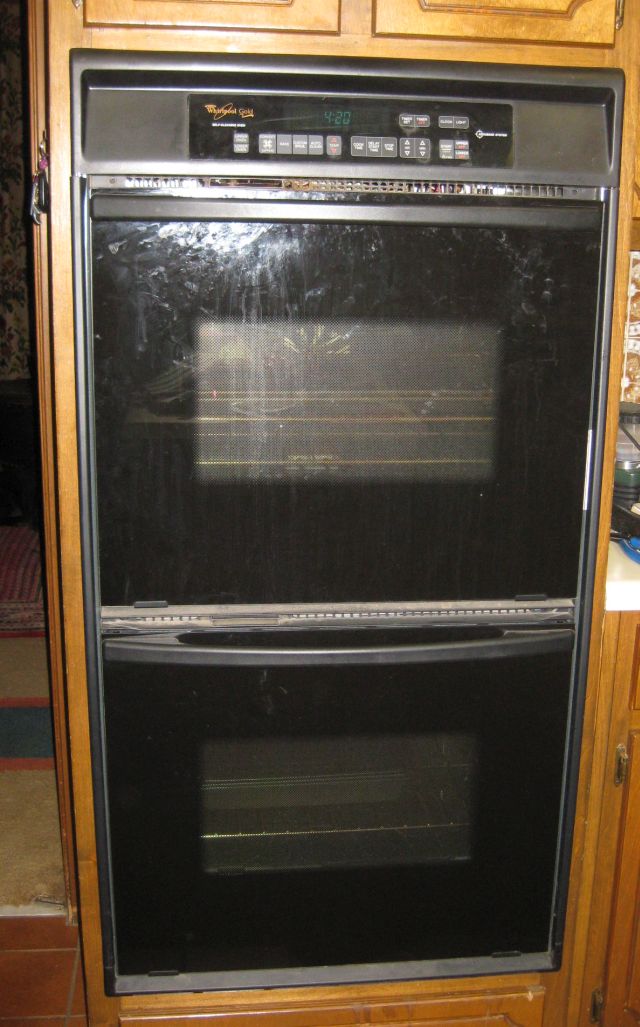


repair of double electric wall oven

Growing my own food, harvesting rainwater, using a well are part of being self sufficient, and so too is maintaining and repairing the house, automobiles and appliances.  So when, a couple weeks ago,  the wall oven showed no sign of life, no beeps, no noise, no lights, nada, I began thinking why.  And with me about to leave for Australia and the Thanksgiving meal fast approaching, I felt pressured.

the wall oven which went dead

Usually there are warning signs before a shut down,  but not in this case.  I checked the fuse box – it was fine.  I located the paperwork – purchased October 1999 and the control panel was replaced within a year of purchase under warranty because of intermittent problems.  And since then, for the past 14 years, it had been fine.  I checked current prices and figured a new one would cost >$1,800.  I scoured the internet and concluded the problem must be with the power supply to the control panel or the control panel itself.

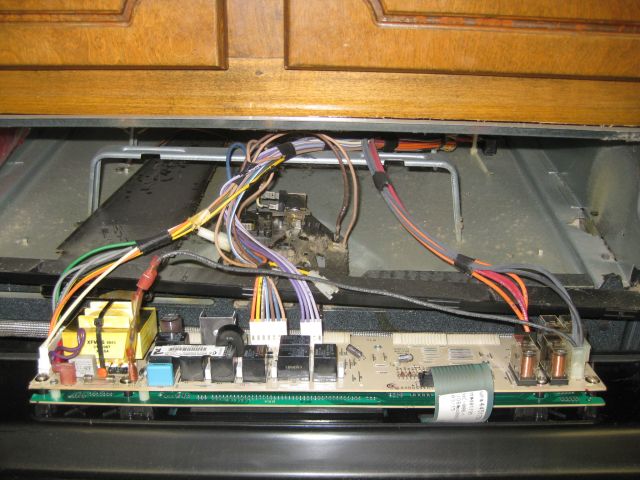
Before I go further – WARNING -this can be dangerous stuff – the oven uses 240 volts which is lethal so if you are not competent with electricity, leave well alone.  I noted that there was 120 volts at the panel, so power to the panel was ok.  A panel operates on 24 volts and often there is a transformer separate from the panel which steps down from 120v to 24v, but there was no separate transformer.  I noted that the transformer was located on the panel.

control panel with transformer on left

So probably the transformer or the connections had failed.   If I was not leaving for Australia within 4 days and if Thanksgiving was not less than 3 weeks away I would have tried to locate and fix the problem myself.  But I did not have this option.  Buy a new one?  No such luck no new panels were offered anywhere on the internet.  And then I found an interesting website “fixyourboard.com” where they specialize in repairing control panels.  Lots of good references supporting their work.

My panel model # was not listed on their website so I emailed and within a few hours they replied they could fix it for a flat fee of $190 which included a 2 year warranty and return shipping.  The day of my departure to Australia I sent it off via UPS, 2 days later they emailed they had received it, and within 3 working days they emailed it was on its way back.  I received the panel today (mailed Tuesday and received Friday of the following week).  It was accompanied with an analysis stating their diagnosis (failure in power supply circuit), and that they had replaced additional components “shown to be failure prone as a preventative measure” and had fully tested the control board.  I attached the cables, reinstalled and switched on at the fuse box and it works.  And the atmosphere of dread in the house has lifted.

quick visit to Australia

My Mother, two brothers and their families live in Perth, Australia and now my nephews and nieces have reached the marrying age, so trips to attend weddings occur frequently.  I was in Perth in January for a wedding and I just returned y’day from attending another delightful wedding.  Perth is on the other side of the world from Atlanta and it takes about 34 hours to reach there door to door.  There and back takes 68 hours and if you call it 72 hours then it is 3 days travel.  I was gone a week so 3 days travel for a 4 day visit.  But well worth it.

You cannot make a threat with impunity and Australia’s prime minister learned this when he said he would “shirt front” (grab a guy by the front of his shirt) Russian president Putin over the destruction of the Malaysian airplane which carried > 30 Australians.  This threat was intended for Putin’s visit to Brisbane for the G20 summit last weekend.  But when I arrived 2 days before the summit, Australia was distracted by the sudden appearance of a Russian flotilla including a nuclear armed cruiser, a heavily armed destroyer, a large tug boat and supply ship, and maybe a submarine.  There was much discussion and some anxiety about their purpose, whether  they would enter Australian waters etc.  In the event nothing happened but I don’t think Putin will be verbally threatened again by an Australian PM.

Australia is a beautiful country and with wealth derived over the past decade from its natural resource sales to China, an excellent infrastructure.  In Perth real estate is highly priced and more relevant to me is the cost of more than AU$4 for  a “flat white” coffee (similar to a latte).  But the big decline in iron ore, coal and copper prices as a result of the slow down in China, has hurt the economy, produced budget deficits and weakened the currency from more than US$1 a few years ago to US 0.86 per Australian dollar on my recent visit.  Which made the high prices more swallowable.

Australia, the birthplace of Permaculture, after much agonizing took a tack away from regulating CO2 emissions.  With the recent U.S./China agreement on steps to combat climate change, it was caught wrong footed and there was some embarrassment.  It has to  manoeuvre adroitly to keep both its banker (China) and its bodyguard (U.S.) happy.  A day after it was censored by the U.S. for not doing enough about climate change, it was happy to report a new free tariff agreement with China.

I like to find an Australian book to read on the journey back – fiction or non fiction, I don’t mind.  A nephew mentioned Monash and I bought the paperback “Monash – the outsider who won the war” by Roland Perry.  Monash was an Australian general and is credited with organizing and executing the fierce attacks on the German positions in the first world war, which broke the German army and ended the war.  I was unaware of this.  He is described as an “outsider” for good reason.  He was a volunteer not regular army, he was from Australia not Britain, his family was from Germany (though he was born in Australia) and in WWI anyone of German descent was regarded with suspicion, and finally he was Jewish.  Who would have thought that someone with this background would achieve such power and regard.

I have fired up the wood stove and wait for this early Arctic chill to abate.  Some say it will be a harsh winter.  My greens are holding up and the chicken were cheered when I tossed them some scratch.  No sign of life from the bee hive – hopefully they will emerge when it warms up the next couple days.

Muscadine grape juice

With my bobcat I excavated a level terrace along the slope of the hill, then I dug a ditch down the middle of it, filled it with logs and ran a single cable about 5 ft high on either side of the ditch.  The cables are threaded through posts planted every  35ft for a total length of about 110 ft.  Then I relocated my muscadine vines from the vegetable growing area to the terrace where they have thrived.  The problem with muscadine vines is their roots can extend up to 50 ft so they were mining nutrients from my raised vegetable beds and had to be re-sited.  On the hillside I have left them to their own devices confident they will find the moisture and nutrients they need and they have – another example of the problem being the solution.  So apart from occasional trimming of the vines I have not watered them at all through the summer (nor sprayed or fertilized, so they are organic in the true sense),  and now their grapes are bursting with sweetness.

I am not the only visitor.  I previously posted about stepping on a yellow jacket nest, actually a 3 inch diameter hole in the ground guarded by sentries who went after me.  I read in the local paper a K9 patrol (dog handler and dog) were in pursuit of a suspect, stumbled on a yellow jacket nest and both were stung, the handler 50 times, and needed urgent care.  I treat yellow jackets with respect.  And now they are all over the vines.

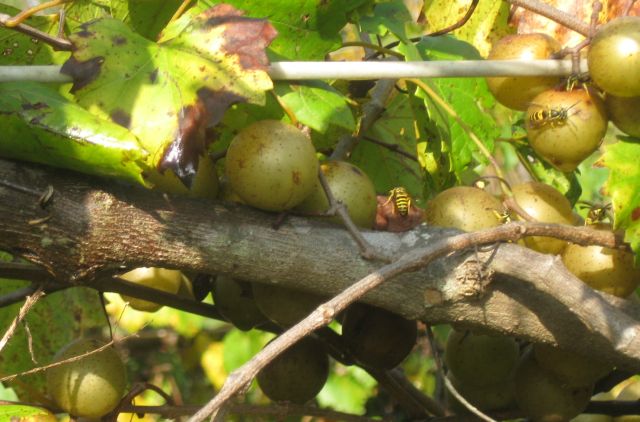
you can see 3 yellow jackets on the scuppernong

The green grapes I call scuppernong, the black grapes simply muscadine, though there are numerous varieties of each.

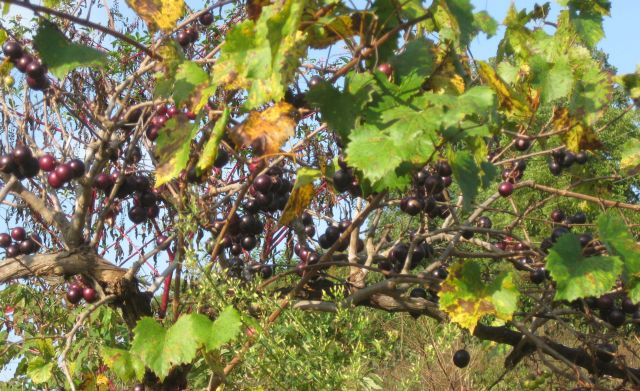
some muscadine - they are sweet and ready to eat when their color has changed from deep red to black. Alternatively, when they are soft to the touch
some muscadine – they are sweet and ready to eat when their color has changed from deep red to black. Alternatively, when they are soft to the touch

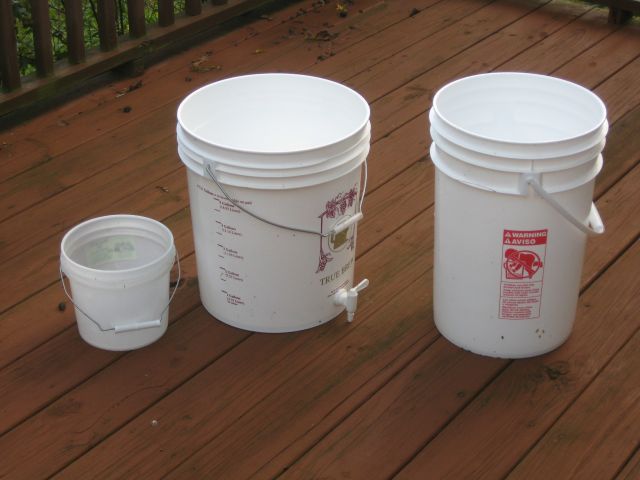
Last year I picked the grapes individually doing the press test to confirm softness.  This year I decided to change the technique after I press tested one grape and, because it was surprisingly soft, examined more closely and found I was pressing on a yellow jacket which was as much startled as I.  Individual selection is best when there are ripe and unripe grapes in a bunch but now I simply  select the ripe looking bunches, position my collection bucket below and snip the bunch which falls intact into the bucket.  So I get them all instead of losing some to the ground.  Also there is less vibration to the vine which keeps the other visitors happy.  And it is much quicker.  When my collection bucket is full I simply tip it into the 5 gal bucket.  When the 5 gal bucket is about half full I call it a day and head to the faucet.  I simply fill the  5 gal bucket with water until the grapes are covered and observe.  This morning 2 yellow jackets, a large wasp, stink bugs and a spider all surfaced.  Usually I squash the stink bugs between thumb and finger but since i had a good collection, unstung, I helped them all out of the water and to safety.  I took grapes out of the bucket, separated them from their stems and vines,  discarded a few unworthy specimens, and dropped them into the second 5 gal bucket.  A fairly quick process.

my collection containers - the small one I position below the bunch prior to snipping, then tip the contents into one of the 5 gal buckets and, after washing and selection transfer the good grapes to the other large bucket
my collection containers – the small one I position below the bunch prior to snipping, then tip the contents into one of the 5 gal buckets and, after washing and selection, transfer the good grapes to the other large bucket4

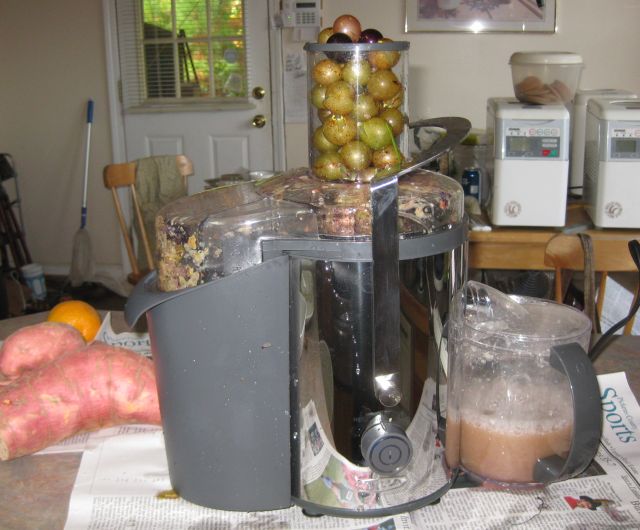
The operation then moves indoors.  Our preference is to eat grapes rather than juice them since with juicing the pulp goes to waste (actually to the compost heap but much better if it were digested).  However we have too many grapes.  Next year I will make muscadine wine.  This year the dilemma was what to do with the grapes? I gave away some but still had a surplus.  So I decided to juice them.  The masticating juicers will extract more juice but my intention is limited juicing so I bought a cheaper centrifugal juicer, Bella, which I thought was made in Italy (Europe is suffering and I am happy to support its products) but actually is made in China and comes with English and Italian instructions.  It has two speeds, a 1,000 watt motor and at slow speed quickly works its way through the grapes.

my Bella juicer hard at work
my Bella juicer hard at work.  on the left is a 1.75lb sweet potato which sets the record weight for my growing this season

The residual pulp is pretty moist so I simply placed it in a pot and let gravity remove more juice and got an additional 2 full glasses which I promptly drank.

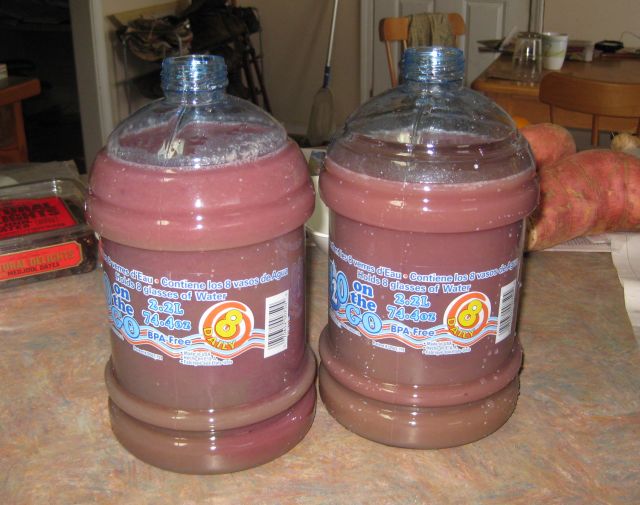
And the result.  From this morning’s harvesting I ended with 2 2.2L containers.

over 4 litres of muscadine grape juice - it has a pinkish color resulting from the blending of the white and black grapes
over 4 litres of muscadine grape juice – it has a mauve color resulting from the blending of the white and black grapes

The taste is intense, sweet and slightly acidic.  I can only guess how much commercial grape juice has been diluted when I compare the thin, filtered, pasteurized commercial grape juice with this muscadine grape juice.  The real question is how long will it store before it goes off.  I have read 3 days mentioned.  I hope it will be more since it will take some time, even with help, to enjoy drinking the juice.


sweet potato, pests, a broody hen

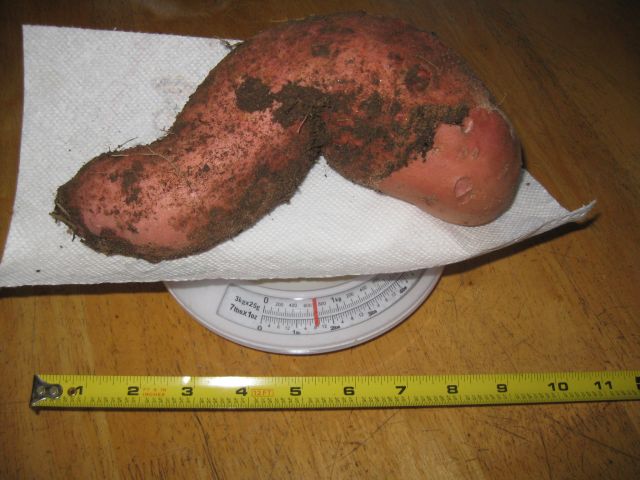
I had my best harvests this year.  Everything did well and while the weather, rains and fewer pests all helped, mostly I think is I am getting better at growing.  (I mention rains because all my irrigation is with rainwater).  Last year, my first with sweet potatoes, I produced finger sized specimens.  This year, tho I left it a bit late, they are big.

Sweet potato for lunch today - weighing >1.6 lbs and about 10" long
Sweet potato for lunch today – weighing >1.6 lbs and about 10″ long

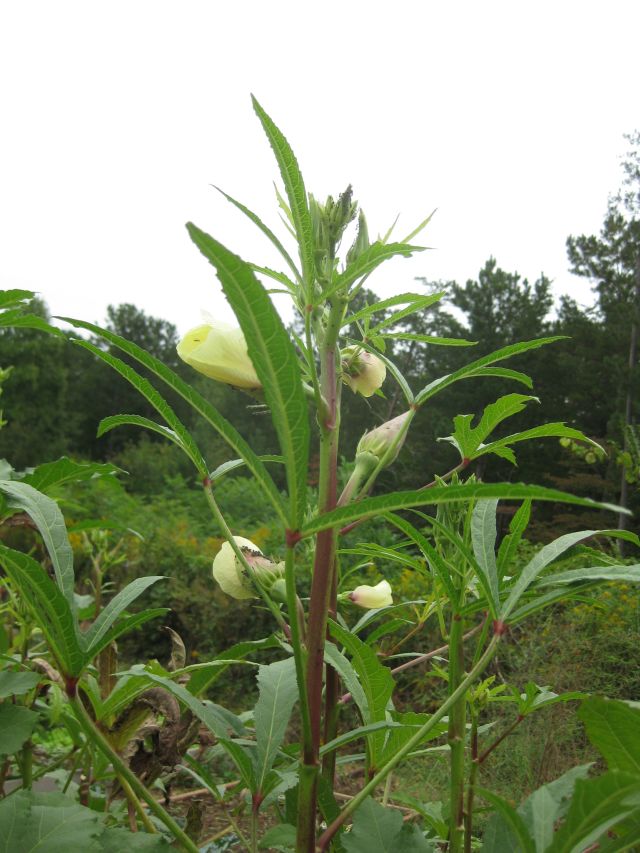
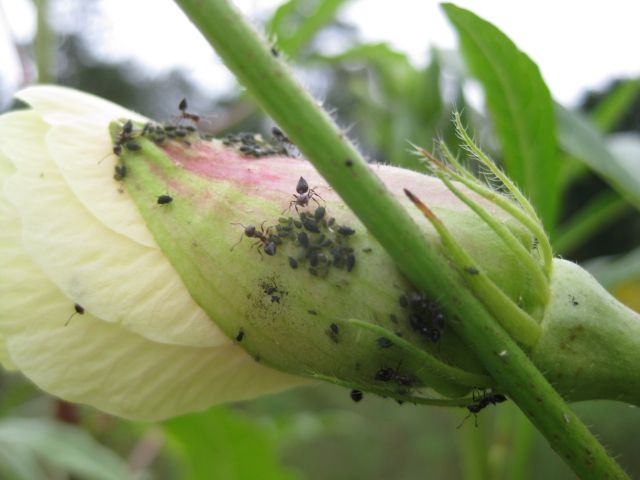
Pest pressure has been minimal which I attribute to increased biodiversity and natural predators etc. tho this week I noticed two instances – aphids on an okra plant and caterpillars on a blueberry bush.

only 1 okra plant was affected and then only at the top and late in the season

The ants guard and farm the aphids zealously and when my finger strayed too close it was promptly nipped.

aphids and a few patrolling ants

I let them be hoping to see natural defenses kick in but over the past few days I only spotted on lady bug.  The aphids have not spread and so it is a localized minor issue.

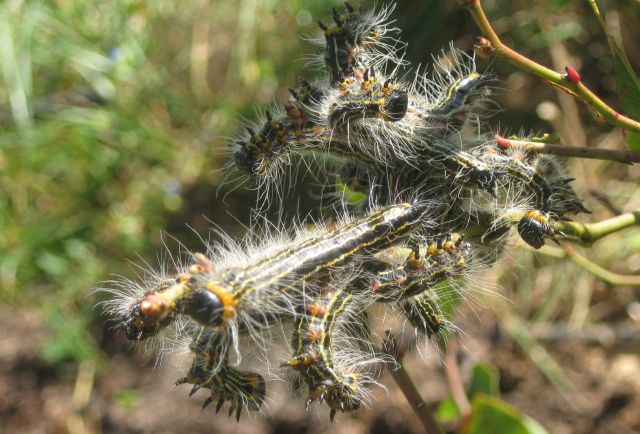
My blueberries produced well and I am motivated to care for them and so I often hand water with a hose.  The pressure of the water jiggled the blueberry and a sudden writhing motion on leaves caught my attention.

a cluster of young caterpillars
a cluster of young  caterpillars

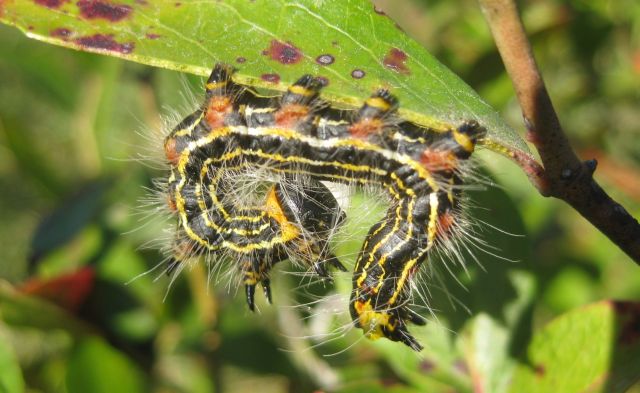
There were several such clusters and at first I thought I would leave them be and see if birds or other predators would step up.  However I noticed an individual hard at work.

a solitary eater, curled up because I disturbed it

So I snipped off the stems and dropped them into a 5 gal bucket partially filled with water and, when they were no more, added them to the compost heap.

At the beginning of the season we had two broody hens.  One sat in the nest boxes throughout the day and tho she was partially cured by a few days of solitary, she is back at it again.  The other, Randa, is more interesting.  She is a flier and is smart.  Throughout the year, while the others dig around in the paddocks, Randa flies over the 5ft perimeter fence and works over the compost heap and visits below the deck for bird seed.

In May she disappeared for two weeks and only emerged, briefly, after a weekend of heavy rains, thoroughly bedraggled.  I found she had a nest in the brush with 15 eggs.  We did not want more chicken specially as half would be roosters and we don’t want to do in young roosters.  So we  ended that process.

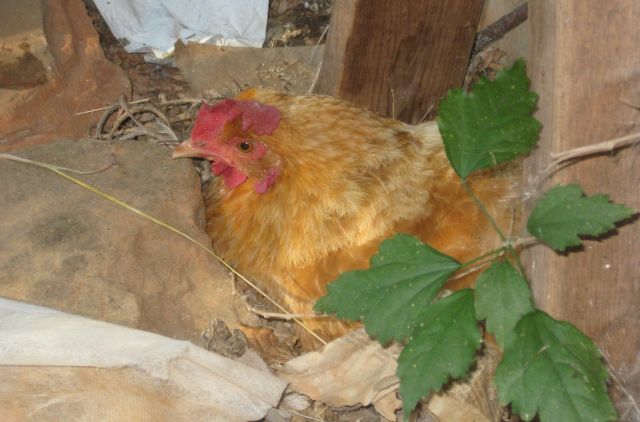
Then a week ago she disappeared and we looked in the brush but no Randa.  Where is Randa? Eventually I looked in the greenhouse, and there she was.

Randa in the greenhouse
Randa in the greenhouse. Being smart she chose this time an indoor location for her nest

And she was atop 13 eggs, almost as many as her last nest of 15 eggs.

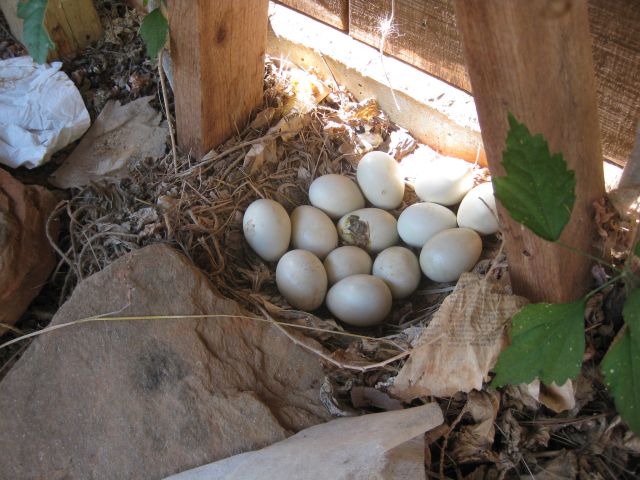
Randa's nest of 13 eggs
Randa’s nest of 13 eggs which are olive green reflecting her mixed parentage af Americauna mom and Buff Orpington dad

And the same dilemma as last time – she wants to hatch eggs and I do not want any roosters or more hens.  So I will probably end this process, for my needs irrespective of hers.  I have a neighbor in Atlanta who loves cats and had them declawed and keeps them indoors thus denying them their natural inclinations.  But am I any better when I move Randa from her eggs and destroy them and bury the remains in a hole beside a fruit tree?


the worth of a civilization

I just received the Audubon special issue:  “Birds & Climate Change”.  I was forewarned of its depressing contents by news articles and recent podcasts.  Paging through it steered my mind to a discussion last weekend with one of my running buddies.

He said it was surprising how long the Sunni-Shiite divide had persisted especially considering the advances and scientific knowledge of the  Islamic Golden Age.  I replied this brought to mind my history studies of the tribal warfare which persisted among the tribes of southern African culminating with the conquests by the Zulus.  And then I added a comment I had read, that notwithstanding the killings and destruction, those events paled in comparison with the savagery amongst the so called civilized Western countries during the First and Second World Wars. So it is all about perspective, I said.

He  said “good point” and then added “we should leave the world in as good a condition as we find it”, thinking this was innocuous and would not occasion much discussion.  But this brought me to my next theme.  This is a worthy objective for an individual and for a society and civilization as well, but when we accept this as the primary yardstick for a nation’s or civilization’s contribution  (let’s ignore medical advances, rule of law, democracy, the technological revolution) the results of the analysis are disturbing.

For instance it can well be argued that the American Indians tended to and enhanced their natural surroundings.  This is the unavoidable conclusion you reach after reading “Tending the Wild:  Native American Knowledge and the Management of California’s Natural Resources” by Kat Anderson.  I have heard similar comments on the role of Australian aboriginals before they were largely obliterated.  So these native peoples left their environment as good as or better than when they found it.  And if this is the worth of a civilization then our accomplished civilization is doing poorly indeed.

helping a buddy – push mower repair

I have spent time with 3 organic growers in the area and hope to expand my circle when I am able to participate in the local Saturday morning markets.  I visit often with one grower who, tho good at growing, is less interested in repairing equipment.  His riding mower and his push mower are both out of action.  Though I use a scythe in the hilly and restricted areas, I also make frequent use of a riding mower (see my posts on various repairs) so I sympathized with him.  I tried starting his push mower with starting fluid and the engine fired and then immediately cut off.  Must be carburetion I said and suggested he could find full repair instructions on the internet.  He was not enthusiastic, so several weeks later I volunteered to fix the mower for him.

With the push mower in my basement I made a start – first thing is to find the model # and google for parts diagrams and utube videos.  But the part # related to the mower frame not the engine, so I then found the Briggs Stratton model # concealed under a shroud.  The model #  10H902 tells you a lot about the engine.  The “10” is the cubic inch displacement, the “H” is the design series, and of most interest the “9” tells you it has a vertical shaft pulsa jet carburetor.  “Pulsa jet” I thought, I wonder how it operates?  Well, with the resources of the web you can download detailed information on the pulsa jet carburetor, which is very simple but clever in operation.

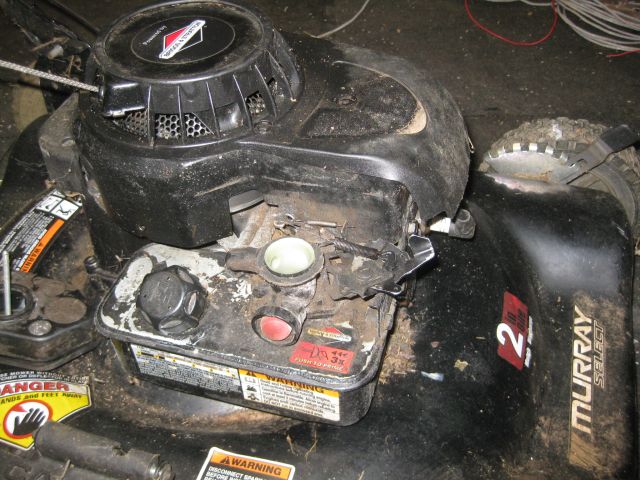
here is the mower with the air filter cover removed

The carburetor and fuel tank are removed as one unit.

the carburetor and fuel tank before disassembly
the carburetor and fuel tank before disassembly,  still looking dirty after I removed several coats of grime

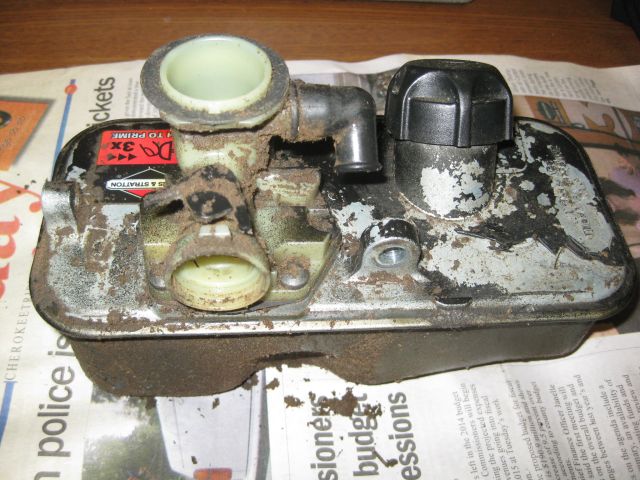
And here is the carburetor separated from the fuel tank, with the tank mating surface facing the camera.

the red button is the primer button which you press a few times to fill the carburetor with gas.

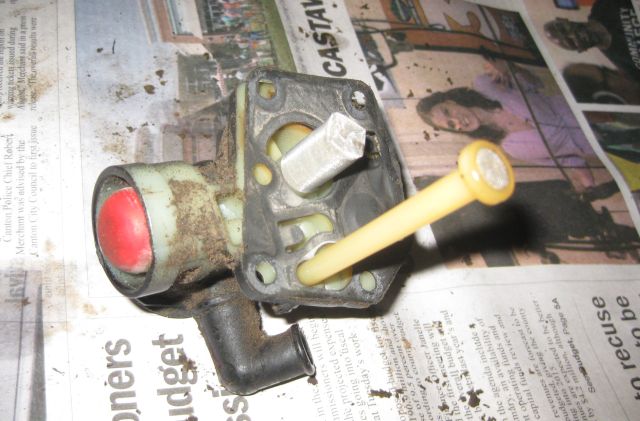
The long yellow tube is immersed in the fuel tank and when you press the primer button, gas is sucked into the carburetor.  The short silver tube interested me – what was this for?

When the engine is running, the downwstroke of the piston lowers air pressure in the carburetor and this causes a diaphragm to move which sucks gas liquid into the carburetor and also fills a little reservoir above the gas tank.  This reservoir maintains constant fuel supply to the engine because if it was not there then as the level of the gas fell in the tank, the flow of gas would be affected.  And the silver tube  sits in this reservoir and the silver color is actually a fine strainer filter for the gas.  Knowing how and where the fuel moved in the carburetor I was able to blow all the passages clean with carburetor cleaner fluid.  There are no jets to disassemble, it is a simple carburetor.  The diaphragm appeared in good condition, so, after cleaning out particles in the gas tank as well, I put everything back together again and started up the mower.  And it worked.

jujube, 3 Canadian aids, a feral bee colony

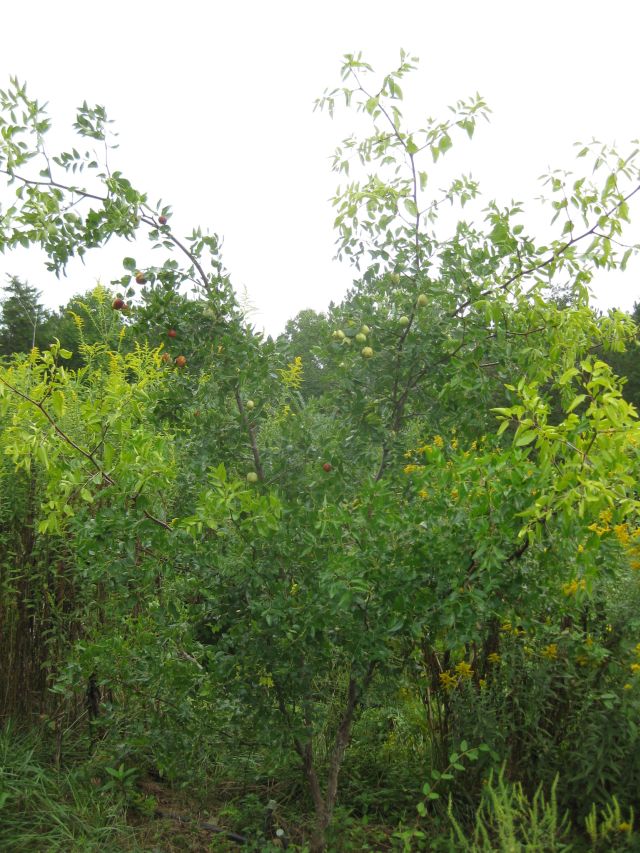
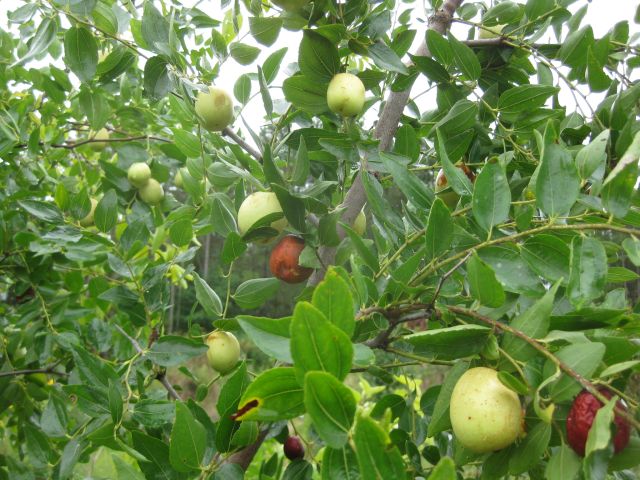
With unexpectedly cooler weather here in N Georgia in September, I am spending more time in the vegetable garden and orchards.  I had planted jujube saplings a few years ago in the terraced orchard and neither irrigated nor tended them until recently I noticed small round fruit.  At the time they were green and tasteless.  Now they are brown or red with wrinkled skins and a delicate flavor, a bit like an apple.  There are two small jujube trees – the Li Jujube provided just one fruit, the Lang Jujube is plentiful.  Both were planted in February 2011 opposite each other.

the Lang Jujube, barely discernible from its surroundings

The fruit is smaller than it looks, in the photo below.

jujube fruit.  if you wait too long the fruit rots and tastes acidic
jujube fruit. if you wait too long the fruit rots and tastes acidic

I mentioned in the caption, 3 great Canadian aids:  1) my EyesOn addition to my surveillance systems (designed in Canada, made in Taiwan) which I previously posted, is invaluable.  It texts and messages me whenever there is a change in the security system.  This can mean being woken in the middle of the night when the text message beep goes off, but I have security of mind knowing the premises are continuously monitored, not by neighbors who may not hear a siren, but by the flow of electrons (I am taking a circuit & electronics course with edX and electrons are on my mind).

2)  is the excellent organic growing book – “the market gardener” by J M Fortier from Canada.  He uses covers to exclude pests, a move I will have to make.  Recently in Marin county near San Francisco at the weekly organic growers market, I asked a farmer if she sprayed (meaning organic sprays) and she said no.  So I asked the obvious follow up question – how come no pest damage?  She mentioned the usual – beneficials, healthy plants etc. but then said the produce was from a green house.  Which to me was the solution – unless you have a controlled environment I believe after a while (in the first year they may not yet have discovered you) there will be some pest damage.

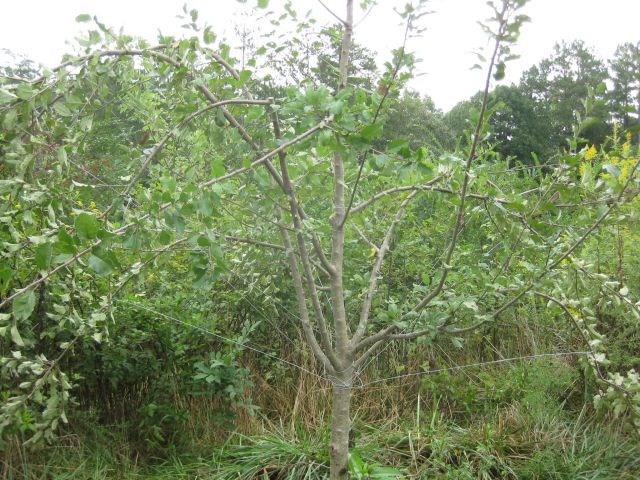
3) my third great aid is the DVD “the permaculture orchard:  beyond organic” by Stefan Sobkowiak, Canada.  Lots of insights.  I am adopting many of them and right now I am following the pruning and training suggestions.  One of them is that upright branches want to keep growing wood and leaves, but if you can train them to stay horizontal they will focus on bearing fruit.  So below is my Ein Shemer apple tree, planted at the same time as the jujube and also bearing fruit this year and you can see I have attached wires to the branches to bring them down.

the Ein Shemer apple trees with branches trained toward horizontal

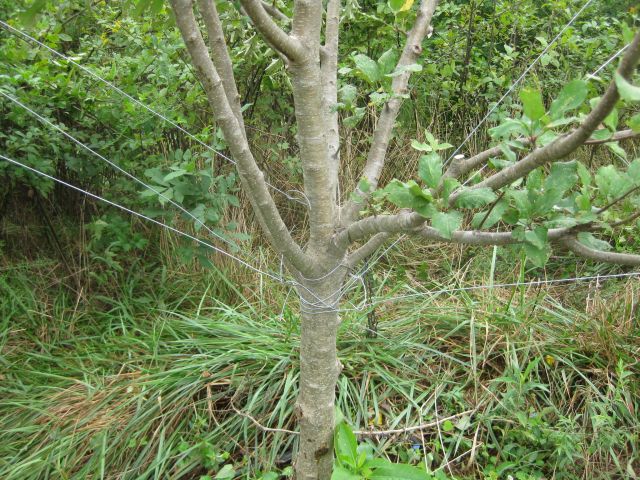
The training is with wires which I hope to remove soon – I have seen too much damage done when bindingse were left to strangle a trunk.

wires around the trunk of the apple tree pulling the branches down

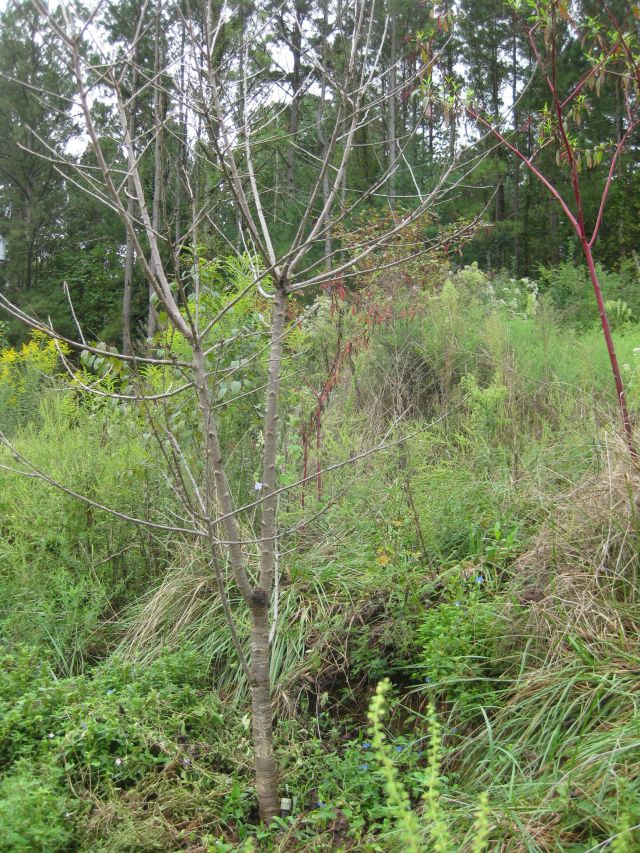
My Stellar cherry tree (planted at the same time as the jujube and Ein Shemer) has lost all its leaves.

leafless cherry tree

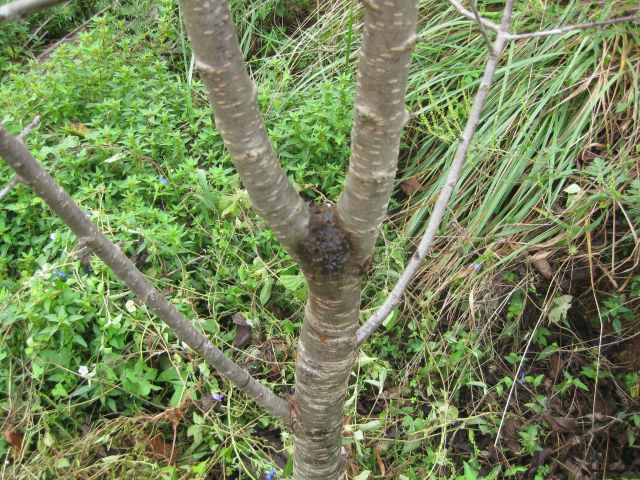
Incidentally, a forester told me how to identify cherry trees – they have horizontal lenticils.  Casual observation shows a dark brown gum substance at the crotch of the two limbs.

you can see the problem - likely a borer infestation to which the tree responded by producing sticky pitch to discourage the invaders
you can see the problem – likely a borer infestation to which the tree responded by producing sticky pitch to discourage the invaders

The DVD recommends eliminating any branch off the main trunk which has a diameter 50% or more of the trunk.  Had I done this I might not have the current problem.

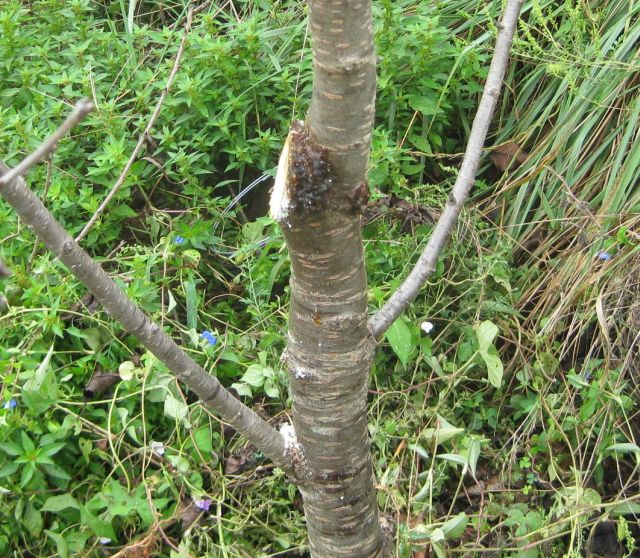
I have cut off the other limb

After removing one limb and spraying my handsaw with alcohol and then oil, I decided to apply a neem treatment to the wound.  Some 5 paces from the tree I was stung twice successively with little yellow buzzers chasing after me as I took off.  With more control and presence of mind,  I may have paused to observe if these were bees or wasps, but when you are attacked, the first instinct is to get away.   noticed a stinger on my arm and thought they could be bees since wasps don’t leave a stinger.  I put on my bee suit and went back to the assault location.  After a short while I saw bees going into and out of an underground location.  I must have stood on the entrance.  Armored with bee suit and gloves I sprayed the cherry tree  wound with the neem and will watch developments with interest while treading carefully.  And the bees I will leave – good luck to them, and they may provide the drones to fertilize my next queen.   And with close on 3 gallons of honey  harvested in August, I am good until next year.

Postscript – after more thought I decided that the little yellow insects were not honey bees and they were a risk to me or any visitors.  One of the stings I received, tho not much swelling, nonetheless entertained me between 2am and 3am the next morning.  So I determined to eradicate them which I did early one morning, regretfully.

chaos, determinism and health

I am harvesting carrots, okra, muscadine, carrots, peppers and the occasional non insect damaged kale, collard and chard.  I am hoping for a decent crop of sweet potatoes – here is my first unearthed specimen:

my first sweet potato of the season - tasted good, not too sweet
my first sweet potato of the season – tasted good, not too sweet (much, much better than the “organic” sweet potato we purchased)

I am also clearing the beds of tomato plants and weeds and layering on compost, and seeding for fall.  Gives me time to mull on past conversations.  We just returned from a West coast visit where I met an old acquaintance and we began discussing climate change.  He said no one can predict the climate and exampled the so called “butterfly effect” as evidence of the existence of chaos.  When I challenged the concept of chaos he gave as proof, the double pendulum example.  Think of a pendulum swinging back and forth and attach a second pendulum to the first pendulum.  As of now no one can predict how the second pendulum will swing.  My friend said this proved there is chaos out there such that where things are influenced by chaos we cannot predict the outcome.

And this is where I disagree.  Pendulums swinging back and forth are mechanical operations and therefore deterministic, by which I mean if we can identify  (know and measure) all the factors which influence the movement of the pendulum (friction, temperature, wind movement, gravitational pulls etc.) and if we have the technology and know how to compute all these factors, then we can predict the movement of the second pendulum.  I do not accept that with mechanical operations there is some wreaking force out there which confounds predictions.  Similarly one day we should be able to better predict climate change and weather.

The concept of determinism sidled into a different conversation.  I have varied discussions with my runner/walker buddies (more of the latter as the years advance) and since I cannot participate in the college football discussions (don’t have the environmental conditioning or background) I become more vocal when they veer to health (interest in health waxes as running wanes).  And also in this area I encounter strong views such as that genetics determines most health outcomes (e.g. “my son and I both have GERD, it is genetic” – GERD =gastro esophageal reflux disease).   So here in a non-mechanistic environment where we are dealing with immense complexity, variability and unpredictable genetic evolutions, a deterministic approach is adopted. And in the previous example where we describe a mechanistic setup uncomplicated by life forms, a non-deterministic, chaos theory is proposed.  What gives?

For the health scenario, probably when things go wrong we accept the event better if we can convince ourselves that we are in no way responsible for the outcome – it was either someone or something else that caused it or the genes we inherited.

My runner/walker buddies exercise weekly and avoid junk foods,  and look out for the happy combination of fine dining and healthy eating, with the emphasis on the former.  We always breakfast after our run/walk and as they tucked into their ornate egg omelets, and me my oatmeal, I was asked me casually if the “food Nazis” had yet attacked eggs.  So even for the well informed, guidance on healthy eating is not welcomed.

PS – I enjoy eggs produced by my free range, untreated chicken, tho I will admit, if pressed, that the grain which supplements their browse, does have GMO content.

a 2nd use for old beer

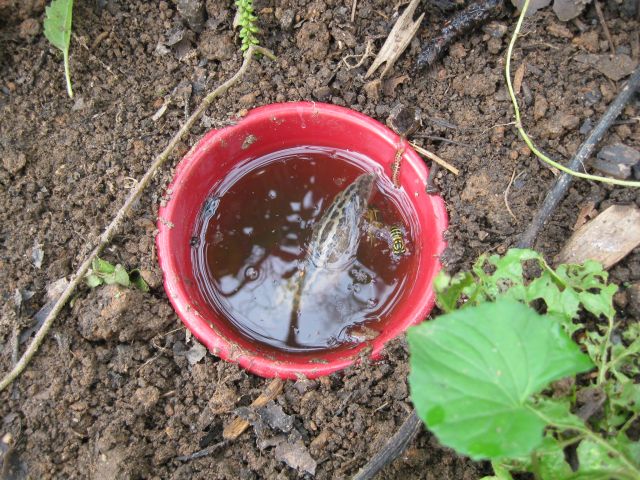
In the past week I noticed my chard and toscano kale were being ravaged by slugs/snails or caterpillars, and I discovered in a cupboard, packs of beer with a January 2011 expiration date.  Adopting the permaculture mantra, the problem is the solution, last evening I buried an old cup at rim level in between the victimized chard and filled it with beer.  And this morning I was pleased to find a large slug:

slug drunk to demise
slug drunk to demise on stale beer

I scooped out the slug and small wasp and will visit the site again tomorrow.  And if the beer no longer attracts, well I have plenty more.

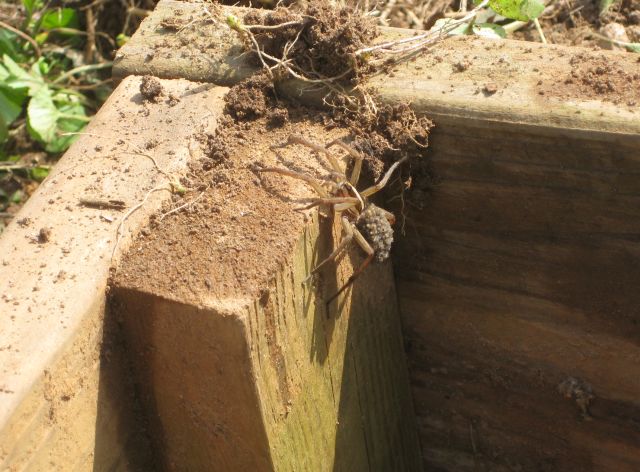
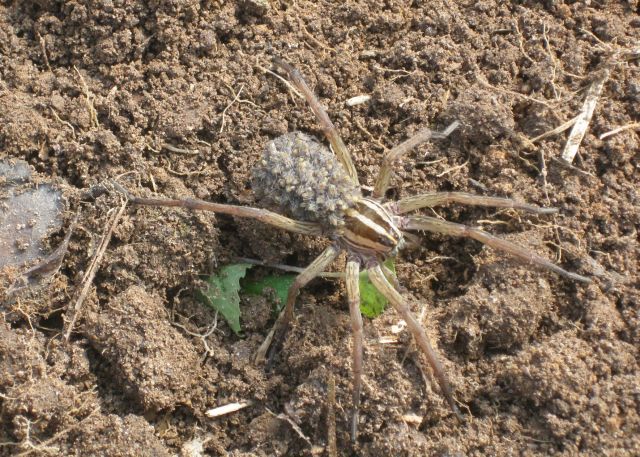
Some ideas don’t pan out.  I thought siting a raised vegetable bed in the chicken paddock would be a good idea, give the birds something to snack on.  After I noticed the chicken demolish the seedlings the instant they surfaced, I screened above the soil with chicken wire until I had a healthy crop of vegetables.  It took just one morning for the chicken to eradicate the whole bed of vegetables.  So I decided to dismantle the bed and relocate in my fenced in vegetable growing area.  And while I was weeding the area, I noticed a large spider, a really large spider.  It is on a 2×4 stud, with 3.5″ being the actual dimension of the side it is standing on.  I know there are much larger spiders in the world, but for where I am this guy/gal is large.

large spider
large spider

Another view:

large spider on the ground

I am having much more success with sweet peppers this year.  I planted them fairly close together and now, latish in the season, they are producing lots of peppers.

close neighboring pepper plants producing well with no signs of disease or pests
close neighboring pepper plants producing well with no sign of disease or pests

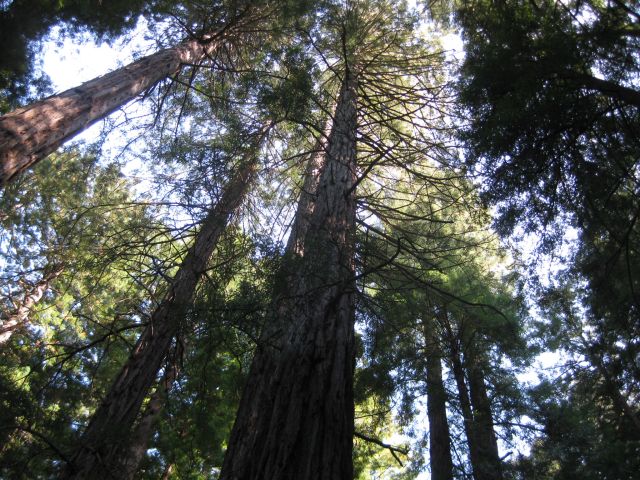
Finally, we just returned from our annual west coast visit, and no trip in Marin County can be complete without a visit to Muir Woods and its inspiring redwoods.

an upward view of the giants

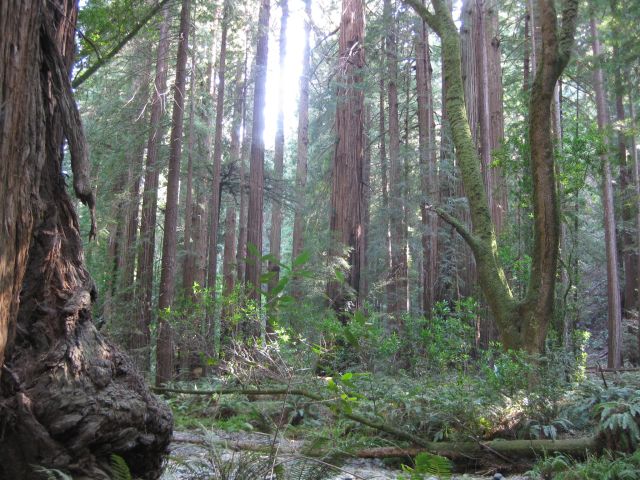
The day of our visit coincided with National Park Service Birthday so there were no fees.  Here is a horizontal pic of the neighborhood.

Muir Woods redwoods
Muir Woods redwoods