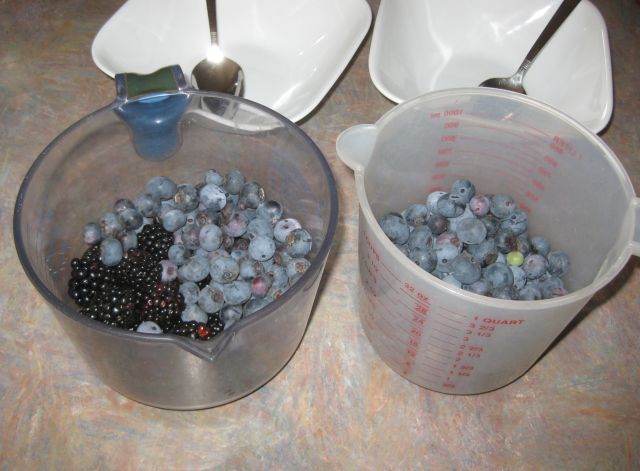
Breakfast this morning (Father’s Day) was a simple affair. We wandered to the top of the hill and picked a couple containers of blueberries and blackberries.
freshly picked blueberries and blackberries
The other ingredients were steel cut oats (pressure cooked 7 mins), flax for omega 3 fats, soy milk and a spoon of my own honey.
the ingredients
And it tasted good and was filling.
a bowl of oatmeal
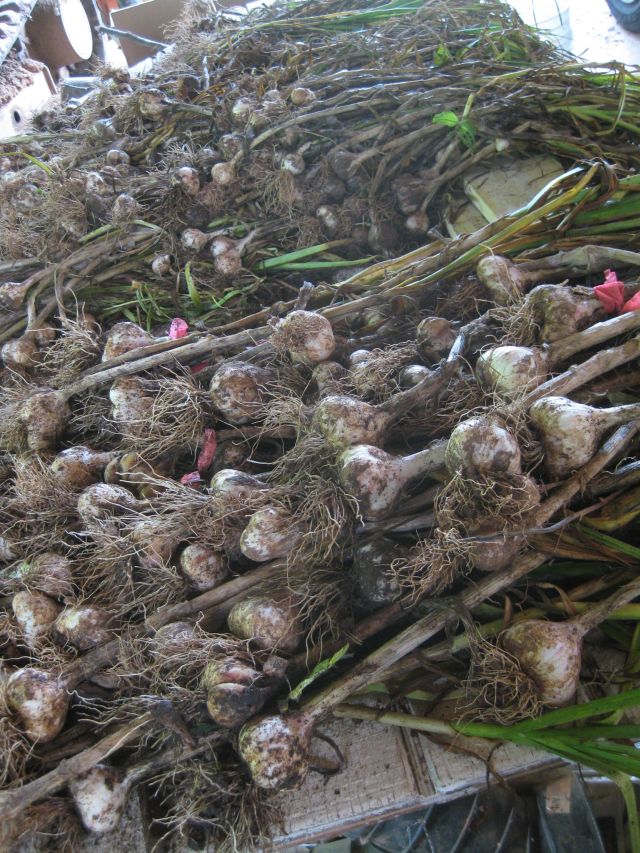
Also this morning, early, I finished harvesting my garlic. May have left it a bit late since some of the stalks had detached and there are now garlic cloves in the ground for next year. I segregated the larger garlic (includes hard- and soft-neck) and these are not for eating but for planting in the fall.
larger garlic is closest for seeding in the fall, the remainder is for eating and friends
I will allow the garlic to dry under cover of the carport and then, as I did last year, I will string them up in bundles and hang from the carport rafters. I had less rotten garlic this way than when I had stored in mesh bags in the basement.
We generally accept responsibility for our actions but not for our circumstances. When I told a nonagenerian I was fortunate to have good health and to retire in my early 60’s, I was told “that’s not luck, that’s decisions made”.
Food plays a big role in people’s lives, and I don’t mean survival. To quote: “some eat to live and some live to eat”. I am (mostly) in the first category. Folks with health problems usually resist changing their diet – food is one of their chief enjoyments. And they rationalize that diet isn’t that important anyhow – more important are the genes you are born with. So accept your gene determined health and soldier on. And why bother when medication will fix the problem?
Try telling parents whose kids have digestive problems that they should consult a registered dietitian. Their reaction is “I give my kids good food” i.e. I am a good parent and it has nothing to do with the food they eat, must be the genes. Then you hear the apocryphal story of the athlete who ate and exercised meticulously and nonetheless had a major health problem. Must be the genes. The accepted wisdom was if you lived to your 80’s that was from good lifestyle but to live through the 90’s depended on genes. Until recent findings that exercise, diet and community are also important determining factors.
A buddy “Bob” in his early 60’s recently had a pulmonary embolism (lung blockage). He survived and was examined by a raft of medical specialists. I asked if the topic of diet surfaced. He said he was never asked about his diet nor were there any diet recommendations. The tests have not revealed an overt cause and so it must be his genes. Again.
Another buddy suffers from gird and his son suffers from gird and he explained to me it is obvious that his son inherited his genes. The fact they lived in the same household and ate the same food is not relevant.
Why change if change makes no difference? As one obese patient assured the hospital dietitian “don’t worry I’m on a sea food diet” and then, seeing the smile on her face he added “I eat what I see”.
However, nutrition science must step up its game. When I ran distance in the 60’s I sucked salt tablets. Not because it was pleasant but because I perspire easily and this was the recommendation for replenishing lost salt and reducing cramps. Seemed logical. Then salt became BAD. Now it is not so bad. Fats were BAD now not so much. Sugar is now the culprit – last year fruit juice was not good but eating raw fruit was ok. Now eating raw fruit high in sugars is not ok, according to some. And then the faddists – avoid grain and go for meat or maybe do the reverse. And the platitude – “everything in moderation”, is another cop-out. I know diet is complicated and compromised guts make it more so, but these turnarounds and banalities produce skepticism, not confidence.
And what is the message? Research indicates that cardiovascular disease, cancer and diabetes, which are chronic diseases that account for most deaths, are largely preventable. And four lifestyle decisions – never smoking, maintaining a healthy weight ( BMI<30 ), exercising at least 3.5 hours weekly, and having a healthy diet (large amounts of fruits and vegetables and reduced meat intake) appear to be associated with almost an 80% reduction of developing deadly chronic diseases. So I watch what I eat and accept responsibility for my health, just as I do with relationships and financial circumstances.
I didn’t post this site at all in May. Not because I had stopped my growing activities or lost interest but because I was completing 2 demanding courses on electronics and programming and am in the middle of a new course on Python programming.
College education of your choosing at your convenience with the world’s best colleges for free! If you are interested and can make time available, this is a bonanza.
My education in South Africa and England was in law, accounting, business and the humanities. So, since life is a one time experience and I have interest and time, I am taking and completing courses – lots of them. My >10 courses with Coursera include: Sustainability; Animal Behavior; What a Plant Knows; How Things Work; Introductory Biology; Science from Superheroes to Global Warming; Pre-Calculus; Calculus One; A Brief History of Humankind; Introduction to Electronics; and Linear Circuits. Two courses I have completed with edX are Electronic Interfaces; and Embedded Systems- Shape the World. I am currently taking a course on Interactive Programming with Python.
So my interest is focusing on technology – both the hardware (electronics) and the software. Technology is such a major factor in our lives we cannot ignore it. Even in farming, smart conventional farmers are using technology to monitor field growing conditions and apply with precision just the right amount of water, fertilizer and ‘cide treatments. We have to conserve water and minimize toxic runoffs and technology can do this for us.
My studies of electronics help me with diagnosing and understanding the repairs I make, which I have described on this site, and thereby achieve more self-reliance, minimize inconvenience and save money. My first practical software project will be an automatic chicken coop door which will open the door in the morning, count the chickens entering and exiting throughout the day and close the door in the evening when they are all berthed. My current device, which runs on a time switch (details posted on this site), just opens the door each morning. Then I will develop enhanced security measures beyond my current setup, where I interact with cameras and security system on the internet. Finally, when solar panels are more efficient, transition to solar power and grid independence.
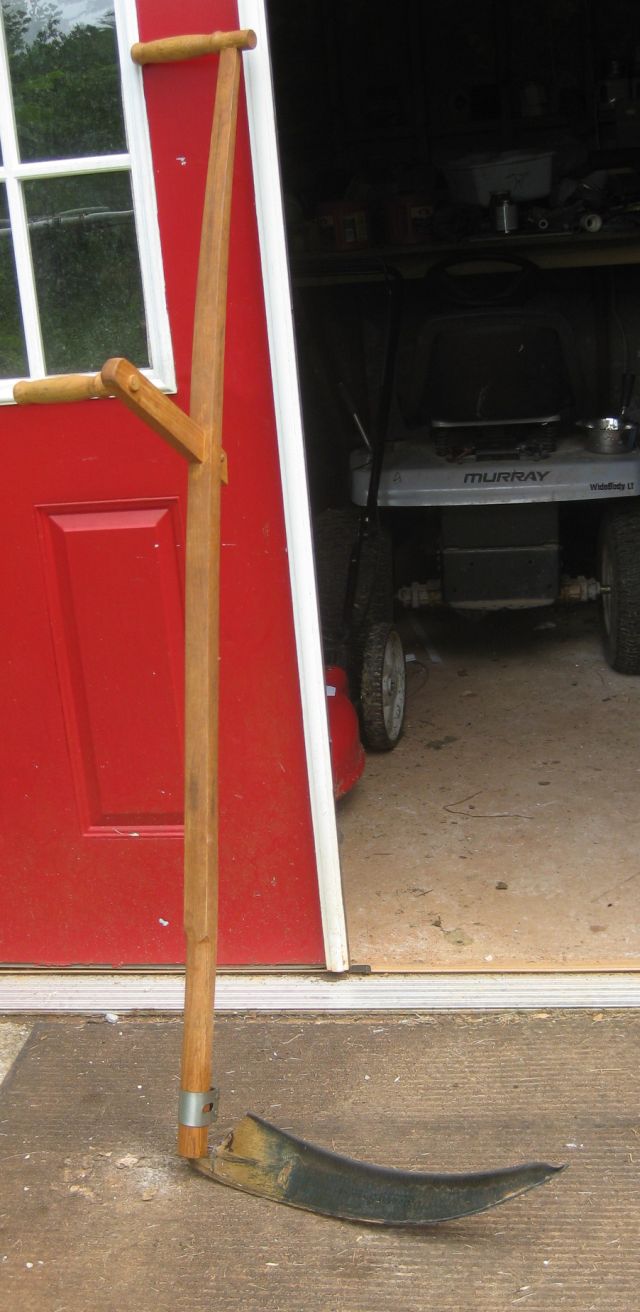
I have 4 mowers. I use a scythe (21″ blade) to clear the growth under fruit trees for which it is ideal. Extend the blade to the near side of the trunk and pull sharply toward you and the weeds are leveled, all while standing a distance away without worries of snagging branches or snakes (I refer to the venomous ones – copperheads or occasional rattler). It is also useful on a hillside where riding a mower is iffy. For how I peen my scythe and hand sickle, search “peen” on this site.
scythe good for clearing fields, if you are up to it, otherwise handy for difficult to access spots
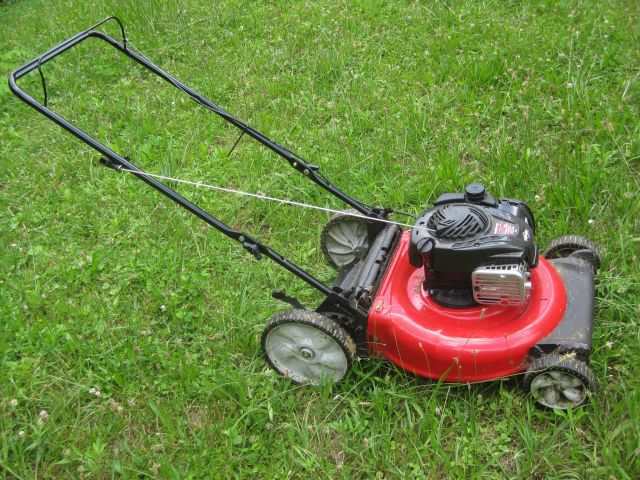
Next up is my 21″ push mower, basic model purchased new this year from a big DIY store. Note the large rear wheels for rough ground. I use it for cutting and mulching the walkways between the raised beds. It has a sophisticated Briggs Stratton motor which does not require use of a choke and starts (so far) on first pull.
handy gas powered push mower
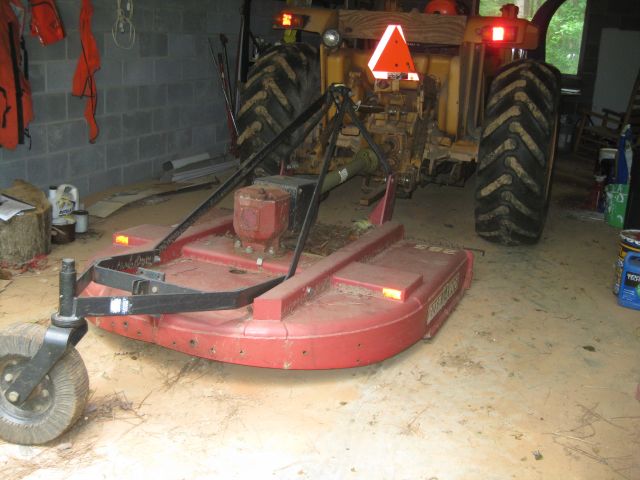
The biggest mower is the Bush Hog, which is 5 ft wide and shown here attached to my tractor. I bought it used and use it to clear fields and heavy growth and it seems indestructible.
Bush Hog attached to Case tractor
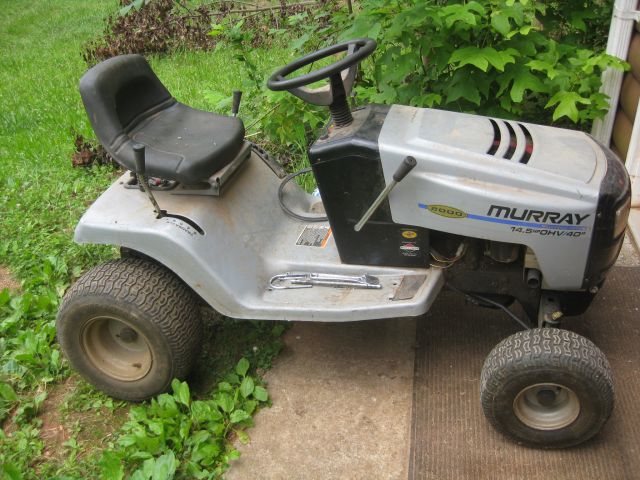
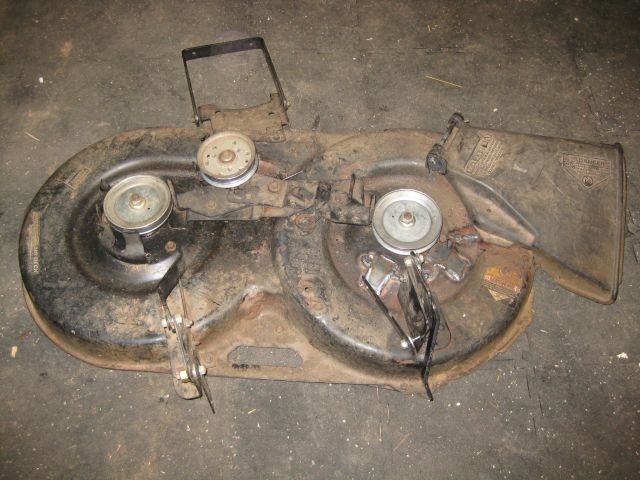
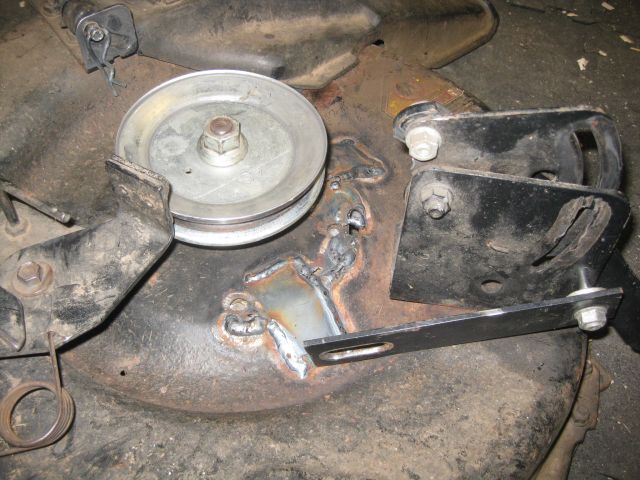
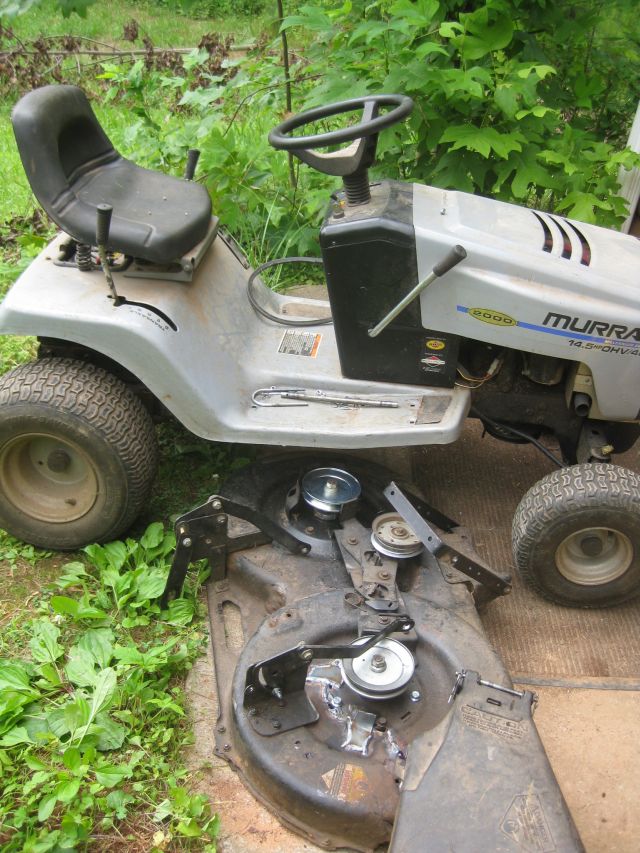
Finally, and the topic for this post, the Murray 40508×92 40″ mower which I bought used and damaged 7 years ago from a neighbor and have kept going with occasional ad hoc repairs and replacements. Until last week when the mower drive belt kept slipping off the pulleys and all came to a halt. The engine turns the drive belt and the belt turns two pulleys which are connected to the two blades which do the cutting. So what was the problem? Each pulley turns a jackshaft which turns a blade. The shaft is held in position by a mandrel secured by 5 bolts to the mower housing/deck. 3 bolts on one mandrel were missing and the 4th was loose. So when the belt applied torque to the pulley the pulley lifted and the belt slipped off. Replacing the bolts wouldn’t work – it was apparent that as individual bolts loosened the vibration of the blade had torn the metal housing to which the other bolts were attached, and as each bolt came off the vibration and damage increased. A stitch in time would have saved nine.
Murray mower with mower housing removed
It seemed I had several options – buy a new deck; buy a used deck; buy a replacement mower or have the deck fixed. Internet search showed no new decks matching this part #, though comparable new decks >$400 before shipping. On Craigslist I could buy a newer more powerful mower for $400. eBay showed similar decks used for $70 to $100 before shipping cost of say $70. And they probably would not fit and would have to be adapted. So, could it be repaired? Welding, regrettably, is a skill I do not (yet) have. But there is a local shop which I previously used which does good work for reasonable cost. I took it in and they said sure. I asked cost and they said $30 if it took 30 mins. but not to exceed $60.
Two days later it was ready. They decided that in addition to welding the torn housing together it was prudent to weld on two plates – total cost $55.
a view of the mower housing removed from the lawn tractor.
The welding was done to the housing to which the right pulley is attached.
this close up shows the 2 plates and the stitching of the torn material
I really felt foolish for having allowed this damage to progress but the welder, noting my embarrassment, said he does 4 to 5 mower decks a week and he showed me a newly arrived patient. This was larger than mine with 3 pulleys driving 3 blades and the housing for the one pulley had completely disintegrated and major welding plate surgery was now needed. So I felt a bit better.
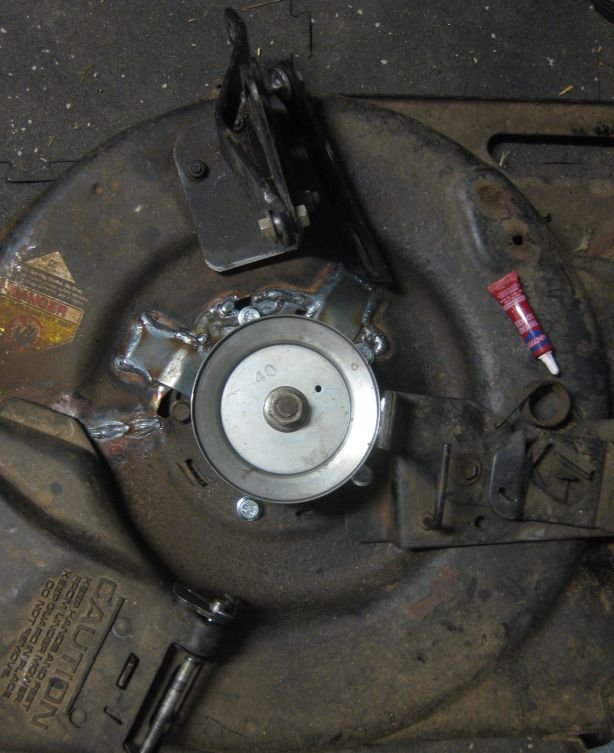
I purchased new bolts and coated the threads with Loctite to discourage them from loosening.
close up showing all the bolts in place, there are 5 of them
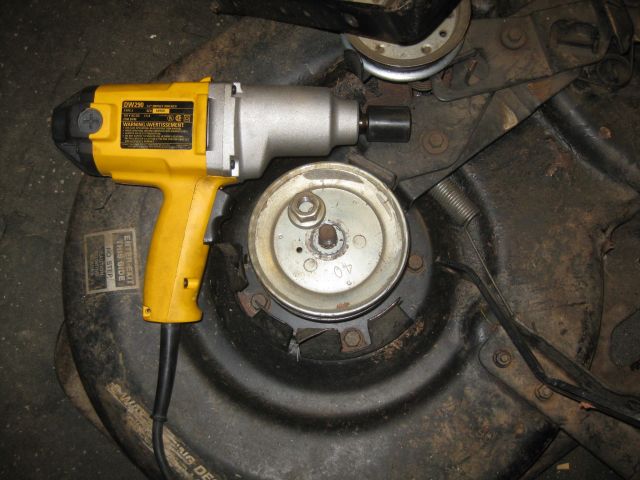
The other drive pulley was distorted and so, while I was at it, I installed a new pulley. The nut on a pulley can be difficult to remove because the pulley shaft turns as you apply pressure on the nut. I remember in the 90’s I was unable to undo the nut on a generator so I took it to an auto shop and in a few seconds it was off – they used an impact wrench. I bought an electric impact wrench and it has been invaluable for removing nuts on shafts.
impact wrench, loosened nut and new pulley
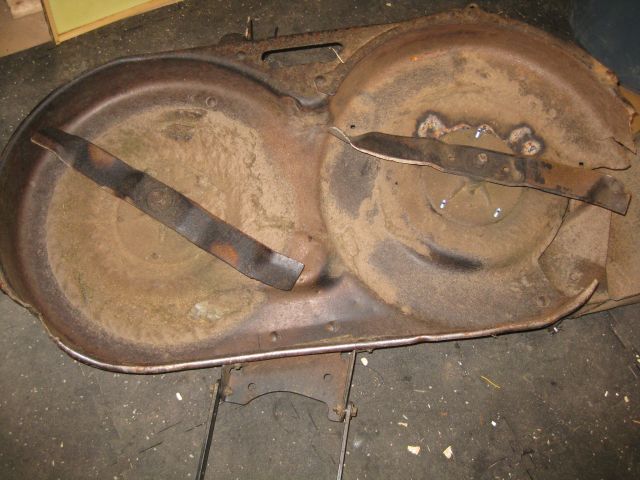
So I decided to also examine and sharpen the mower blades.
underside of mower housing with blades revealed
The impact wrench loosened the two nuts securing the blades. Since I had a balancing jig I decided to use it.
a jig to test if the weight of the blade is balanced, otherwise undue vibration
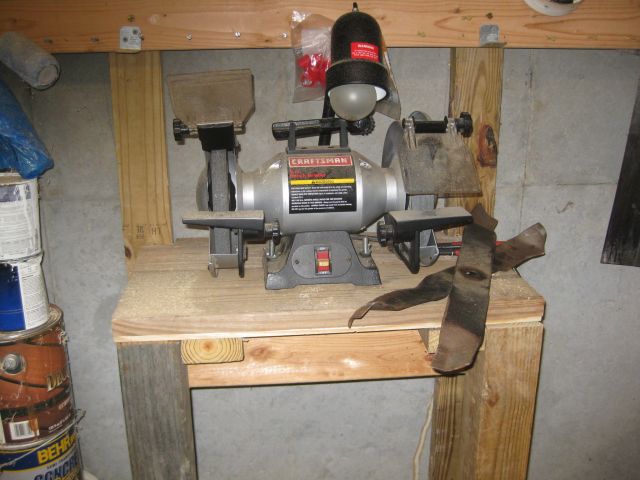
My father-in-law bought me my first bench grinder and instructed me how to use it. They can be very dangerous if misused – if a fast revolving grindstone shatters, there will be injury. I always wear extensive eye protection from my experience some years ago when I was grinding the valves of an Accord and a metal speck flew under my conventional glasses and lodged in my eye and this necessitated a visit to the emergency room.
my bench grinder mounted on a platform in the basement
All that remained was to re-install the mower housing.
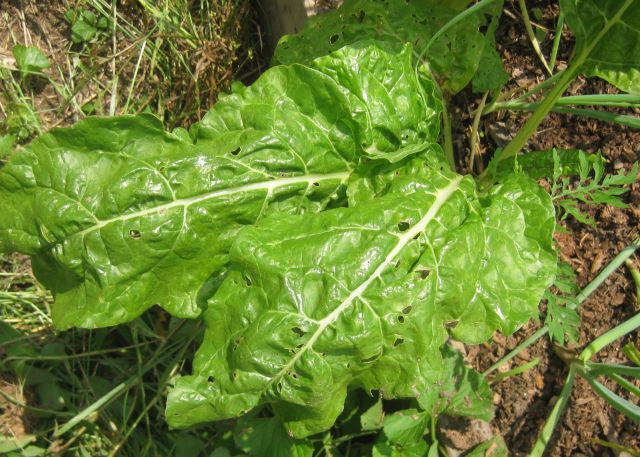
It’s been a good April and May – frequent rain showers to minimize hose watering and keep my +6,000 gal storage tanks fully topped. Lettuce, onions and garlic have grown well though the lettuce is now bolting. My lettuce, kale, chard and turnip greens taste real, they have a flavor missing from store bought greens, a lot of which are raised in greenhouses or insect free conditions. Now I am wondering if there is some advantage to eating kale, chard and turnip greens on which insects previously snacked. No aesthetic advantage to be sure but perhaps a nutritional advantage?
chard tends to grow well throughout the year, tho subject to insect predations
In the excellent Coursera course “What a plant Knows (and other things you didn’t know about plants)” given by D Chamowitz of Tel Aviv University, which I took in 2013, examples are given of how plants communicate with each other when they are attacked by insects and how the recipients of the warning produce increased levels of chemicals including toxic phenolic and tannic compounds to deter predators. See also his very readable book – “What a Plant Knows”. The focus was on how the signalling occurs including apparently smell (who knew plants could smell?). Of interest to me is whether the chemically enhanced plants are better for eating.
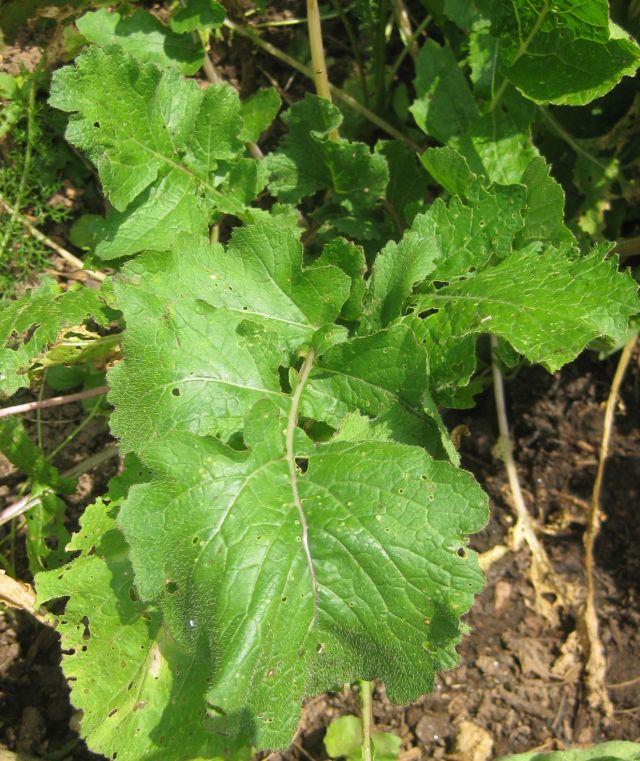
turnip greens are loaded with taste and when sliced and cooked no evidence of prior munchers remains
In “Eating on the Wild Side” the author Jo Robinson suggests (p. 30) that tearing up the lettuce before storing it increases its antioxidant value because the plant produces chemicals just as if it was being eaten by an insect or animal.
my kale leaves are small, my bad I bought the dwarf variety, but it is my favorite and mostly insect resistant
Which gets me back to my insect chewed vegetables – perhaps the reason they taste better is not only because they are freshly picked but also because they have endured and responded to chewing insects?
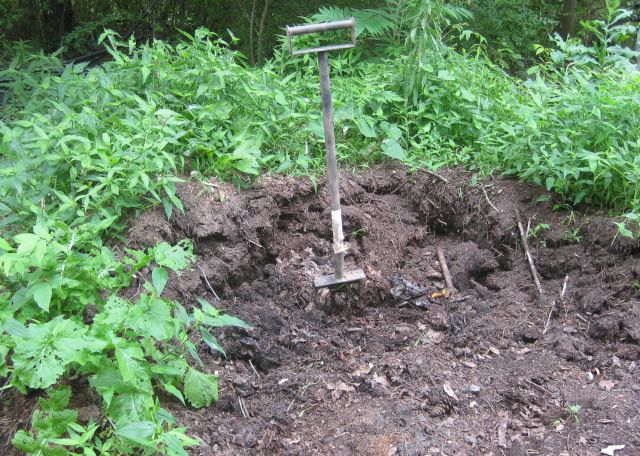
my compost is the growth driver, not for me store purchased supplements. plus a handy strong fork
In the past 2 weeks I have removed lettuce which was bolting, seeded okra (a Southern treat which I eat raw from the plant), more onion bulbs (there can never be enough onions), and the three sisters – actually there are 4 – corn, squash, beans and peas (yes the local seed store said I could now plant peas). The apple trees are laden and my Giant Korean pear (prized above all other producers) has more pears than ever. My two hives look healthy though I am concerned about varroa mites. I haven’t checked and won’t use chemicals but varroa concern is large nationally and amongst local beekeepers. I planted about 50 tomato plants (mostly heirloom varieties though some hybrid) and if these do well, I will take them to market. Potato plants look healthy and include a few sweet potato, which vines I saved last year.
I still have all 11 chicken (1 rooster and 10 hens) and they look fine apart from some broody ones, which are isolated for a few days to recover, some mites, which I treat with diatomaceous earth, and some rats raiding the coop for food. Muscadines, blueberry, blackberry and raspberry all doing fine. Asparagus produced and is now mainly out of season. My one regret is I discontinued the strawberries which were so sweet in the past, something to consider for next year.
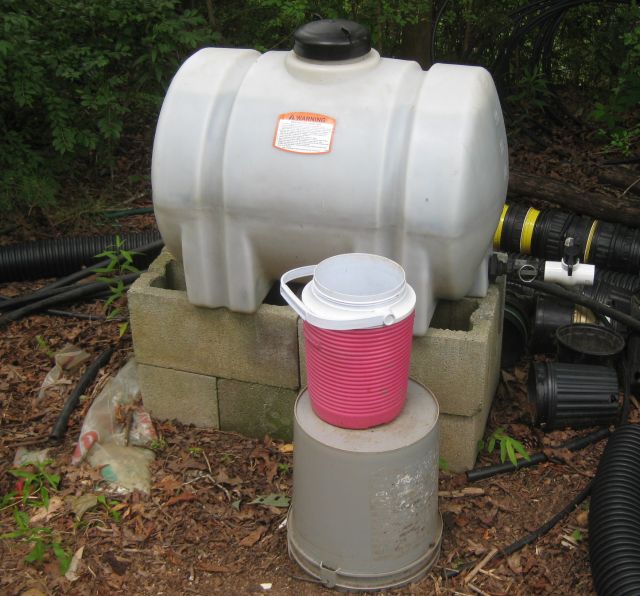
with so much comfrey around I decided to again produce a tea in this 30 gal container with a small capture unit for liquid human contributions
The Ameraucana has been less energetic lately. Though she eats with relish there is little determination and if even a junior hen approaches her bowl she moves away. Therefore she eats separately from the others. She has been looking bedraggled and this morning she was in the nest box though she no longer lays eggs nor was she being pestered by the rooster.
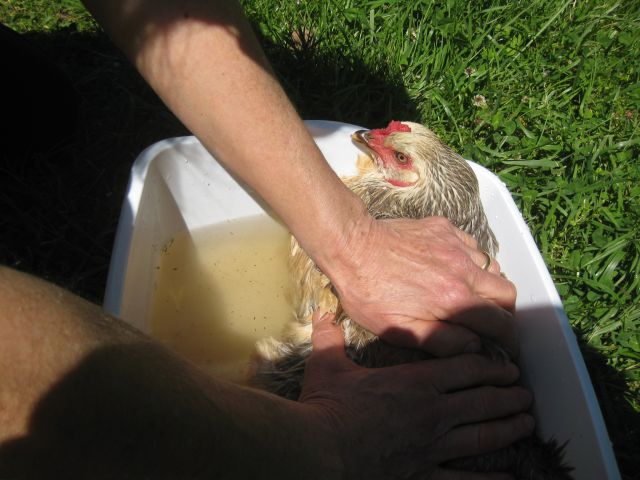
Time for an epsom salt (magnesium sulphate) bath.
a henly treat – warm water, gentle caresses, a time to reflect
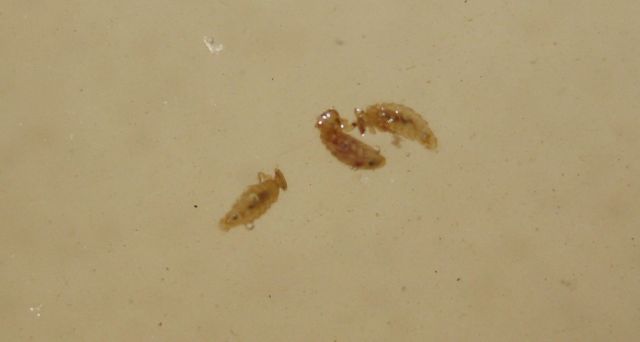
But why so many brown flecks of dust in the water? Or I assumed they were dust since they were not moving. I snapped with the close up setting and only later did I see what the camera saw.
bath water and brown specs but this picture reveals their identity
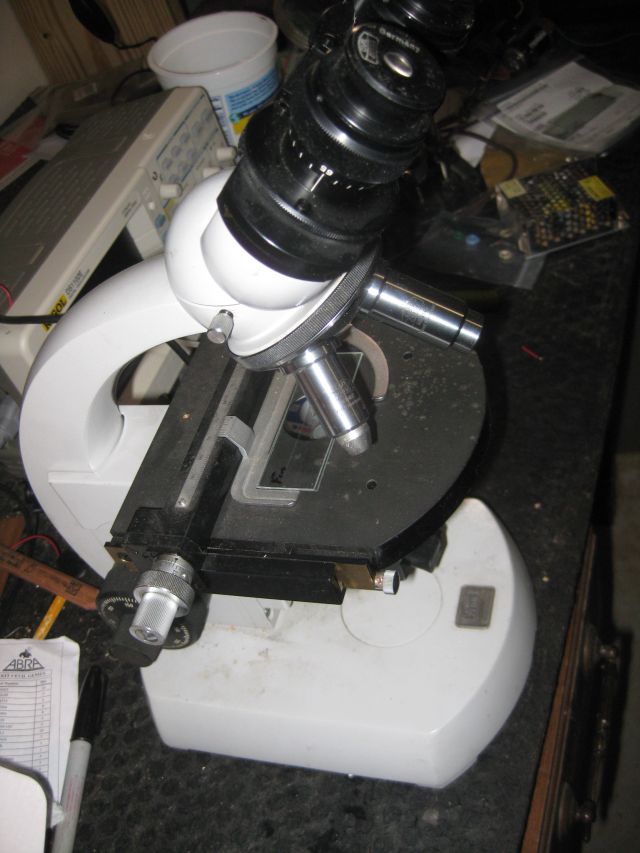
Unaware the camera had solved the mystery I prepared a slide for the old Zeiss microscope.
microscope in our possession for > 40 years
Since the samples were large I used the lowest possible magnification – it was like looking at an extraterrestrial being. I purchased an electronic magnifier last year when I was recording soil life. Around $30 and easy to use.
a simple to use microscope imager
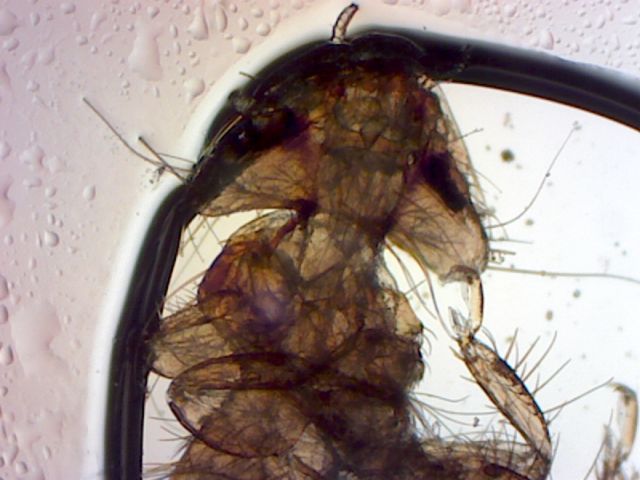
I inserted the sensor in place of one of the two eyepieces and clicked on the screen software. And had a problem – even with the lowest magnification possible the mite was so large it would take 4 pictures to capture its extent. Here is the head.
a nasty looking predator
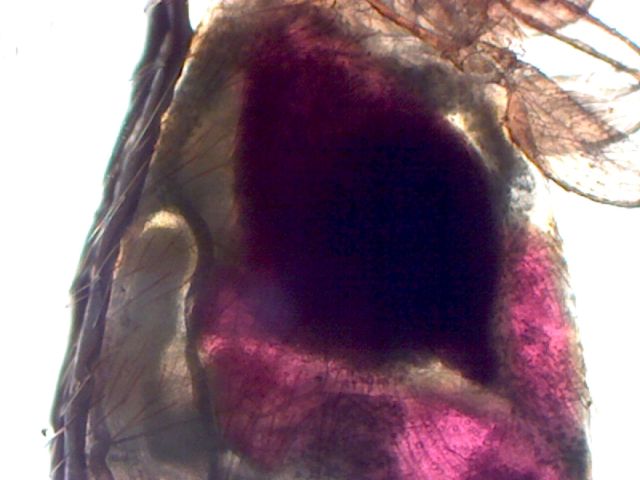
And here is heart/lung/stomach colored with the Ameraucana’s blood.
the mite’s body
And for treatment – our stock remedy, neem oil, may be too irritating for her skin. Initially we thought dusting with diatomaceous earth but read that wood ash works well. And I have lots of wood ash in my wood stove from the recent winter.
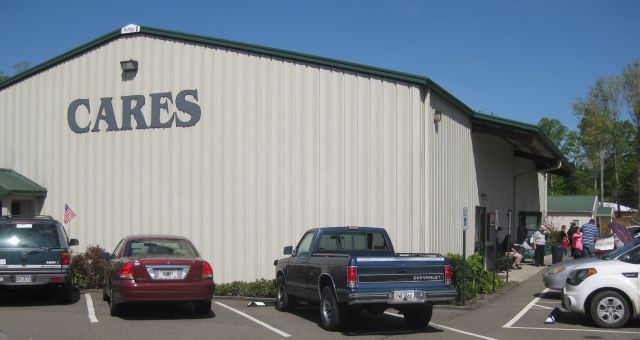
Spring is production season and my hens are producing 6-7 eggs a day. Although there are 10 hens, 2 are retired (Gimpie and Ameracauna) and 2 are matrons (Onyx and Lady MacBeth) so the main producers are the 6 offspring. My running group certainly enjoy the free range eggs with deep orange colored yolks, as do my neighbors who watch out for me when I am elsewhere. But we had 5 dozen extra and this morning we tripped to CARES (Community Assistance Resources and Emergency Services) a local charitable organization, which was happy to receive our contribution.
a local community food bank
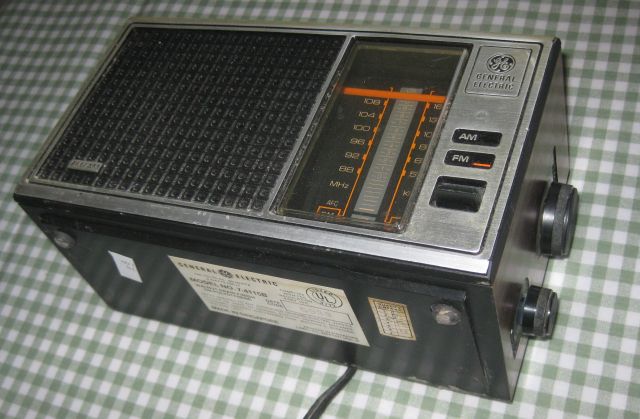
And, whilst in the area why not visit the Thrift Store which has revolving usual and unusual items. Today’s visit resulted in a General Electric FM/AM radio model 7-4115B circa 1981 which cost $1. When I have time on my hands I will explore and test the circuitry and rehabilitate it.
an older radio to tinker with, which will be much easier than today’s devices
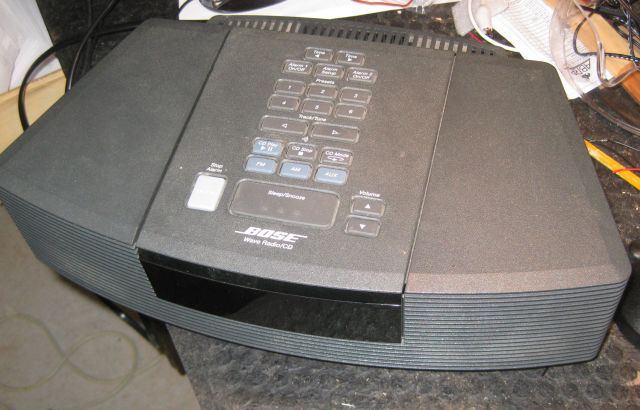
In July 2014 a power surge incapacitated a bunch of electronic equipment – see my tale of 2 destroyed desktops. One of the affected items was our Bose Wave Radio – a small package with good sound, for which Bose is well known.
the Bose radio/CD player
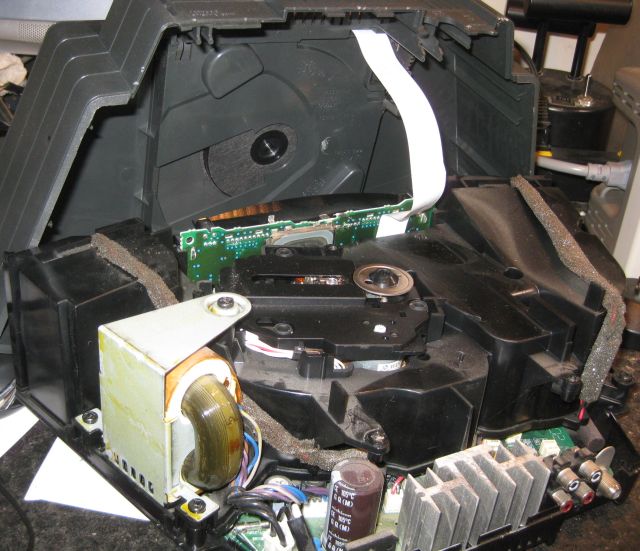
I stored the radio in the basement until I was ready to work on it. Caution – if you are not competent working with electricity, leave well alone. I was prepared for the worst – having to test and replace defective components but was hoping for the best – a shorted fuse. I removed the 3 top screws and carefully lifted the cover taking care not to pull on the ribbon which, if damaged, would substantially increase repair costs.
with the cover lifted the inside is revealed
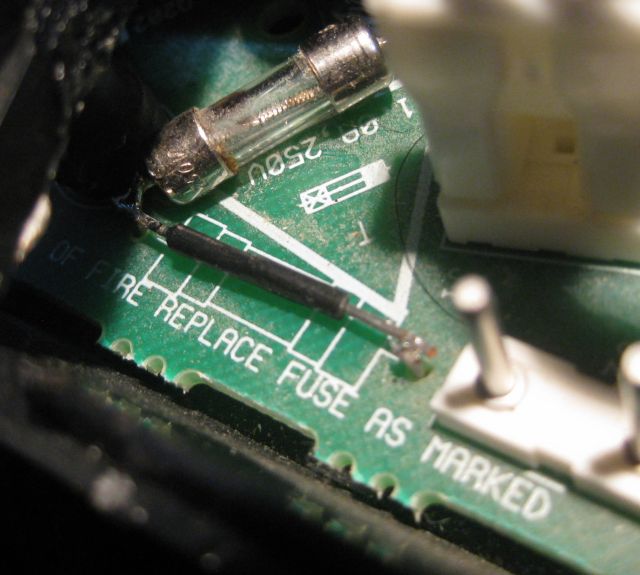
But where is the fuse. I found it front left. I tested it and it was defective. It was soldered to the board. Some dismantling of components was required to access it. I snipped one end of the fuse and rotated it out of the way and soldered a short piece of wire (22AWG) to connect the 2 points which the fuse had bridged.
you can see the old fuse and the new wire shunt
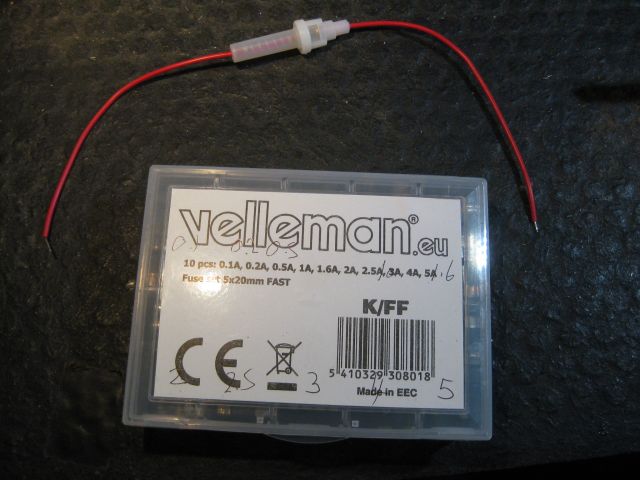
I reassembled the Bose and it played fine. But I was bothered – it no longer had a fuse and would be damaged if there was another power surge. So I ordered a fuse holder and a box of replacement fuses.
a fuse holder and replacement fuses
And I again opened the Bose, disconnected the shunt wire and soldered the fuse holder in place together with an appropriately sized fuse. And it still works fine and is now protected from power fluctuations.
I first planted garlic in fall 2010 – 4 varieties 1) organic California Early White – softneck ($4.99 lb); 2) Elephant garlic – very mild like a leek ($4.99 lb); 3) organic Music Garlic – hardneck ($12,99 lb.) – the only reason I bought this more expensive variety is because my family is into music; 4) organic Dujansky – hardneck ($9.99 lb). They grew well, I harvested them and each fall I planted out the cloves for the next year’s harvest. In fall 2014 I must have planted out >200 cloves and they are all doing well. But most of the cloves were small. And then it occurred to me, a sudden insight, that I had been selecting down. During my meal gathering forays I always picked the best looking garlic plants and after the harvest when they were strung up to dry, my better part/chef always picked the biggest garlic because they were “less labor intensive”. This human selection process inevitably resulted in the smallest, least desirable garlic surviving into the fall and becoming the forbears of the next year’s crop. This was real dumbing down.
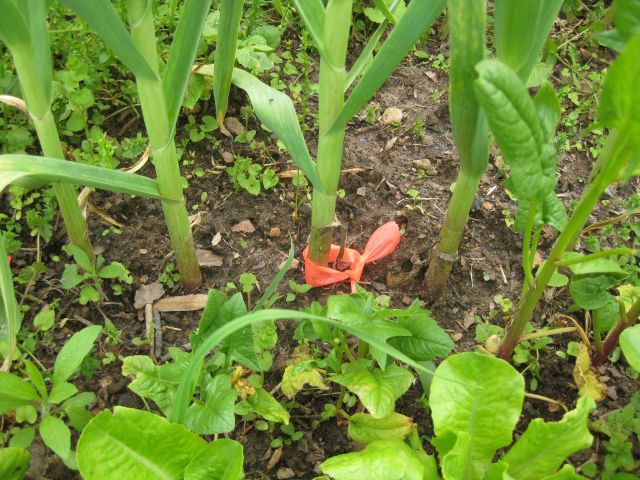
So this spring I made a change. With surveyor’s bright colored tape I made gentle nooses around the best looking biggest garlic. These will not be picked for eating and will be separately stored for next fall planting. Additionally I will intentionally first pick for eating the garlic plants closest to the selected few so they will have access to more light and nutrients and grow even better.
one of 20 garlic selected for special attention
My other lesson pertained to the chicken coop I built in October 2011. If you follow the link and look at the photos of the interior you will see that the wooden walls rested on cinder blocks and to cover the hollow centers I ran wood boards over the exposed blocks with part of the board extending over the dirt floor. My logic at the time was I didn’t want poop falling into the hollow centers or onto any dirt and rocks used to fill the centers. Pity.
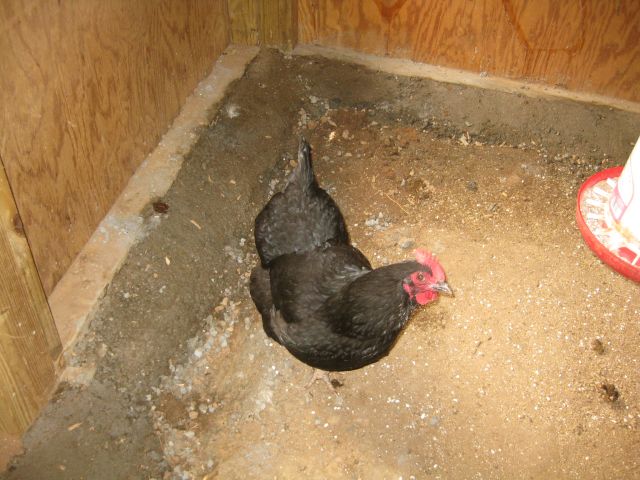
Fast forward a few years and the coop is home not only to a happy rooster and his 10 consorts but to numerous rats which hide under the boards and have built tunnels and chambers under the dirt floor. Initially I tried filling the chambers with stones but these were excavated by the following morning. The only solution I learned was to add concrete mix and then water into the chambers and this solidified mass defied the rats best efforts. And the boards. I decided they had to go. So I unscrewed them, filled the hollow centers with stones and dirt and then applied a thick layer of concrete troweled smooth to enable easy removal of chicken poop. Here is Onyx, a Black Jersey giant and behind her you can see the concrete application. Still a bit rough but as I worked my way round the perimeter I became more adept and the concrete finish on later stages looks almost professional. Another mistake identified, corrected and lesson learned.
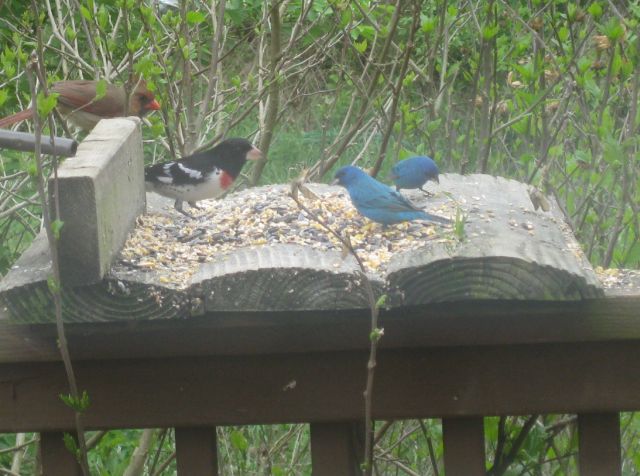
This time of year we have at our feeder the residents (northern red cardinal, blue jay, mourning dove, chipping sparrow, indigo bunting, tufted titmouse, and our state bird the brown thrasher which has as many calls as a mockingbird) and the visitors (dark eyed junko, white breasted sparrow). And this year a striking new visitor – the rose breasted grosbeak.
the striking grosbeak, the shimmering blue buntings and a female cardinal
I count the grosbeak and buntings among the beautiful.
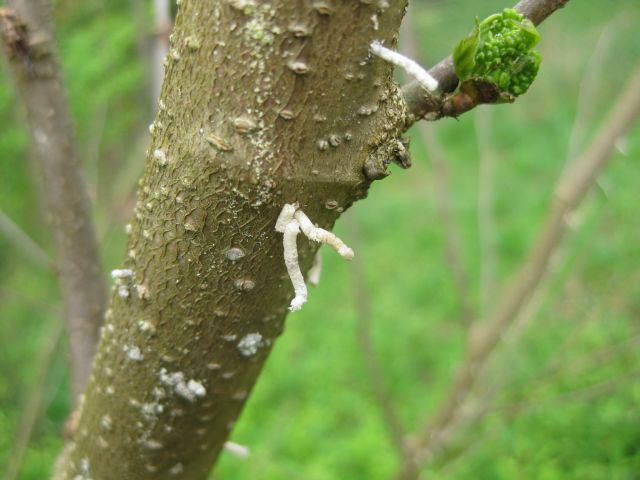
Next to the chicken coop is a mulberry I planted some 4 years ago and, tho it’s supposed to be adaptable, it has never thrived or produced fruit. Maybe I noticed this last year and paid no attention, but this year I decided to follow up.
evidence of the Asian Ambrosian beetle
This infestation is difficult to resolve organically. I cut the 8 ft tree into small pieces, placed them in a garbage bag and will drop off at the local waste disposal site. I left a few inches of trunk at ground level which shows no sign of attack and will see what develops next year. Tho some distance away I did not want my fruit orchard to receive the attention of the female beetle.