new camera old lens (continued)

In my previous post I mentioned the challenges of crisp focusing, the flatness produced by the flash directly above the camera (it should be to the side), camera shake and the need for a tripod.  I discovered among our possessions an old tripod (a Velbon VE-3, >30 years old) and today I returned to the field.  When using a macro lens the slightest jarring of the body blurs the image.  One answer could be to increase the speed of the shutter.  But then less light reaches the sensor.  So I could open the aperture of the lens to allow more light to reach the sensor but depth of field (clearness of image in front and behind the point of focus) is sacrificed.  Or I could increase the sensor ISO speed but this results in “noise”.  So if I want to shoot with a small aperture (say f22) and a slow film speed (say ISO 400) on a cloudy day (to avoid bright sunlight bleaching) I have to use a tripod.

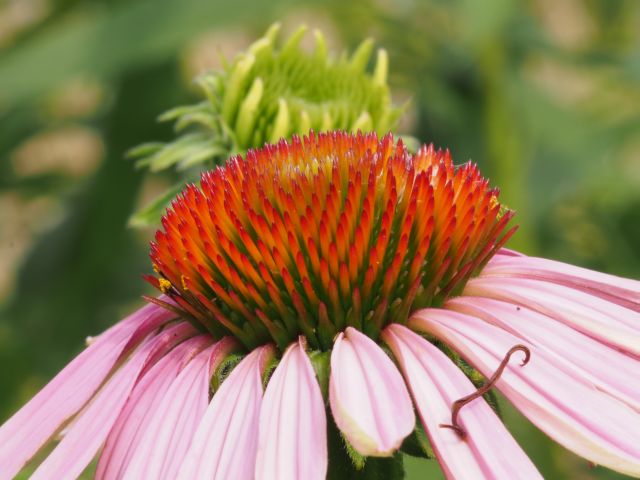
flower with some depth of field

flower with some depth of field

 I also have to choose a time when there is no wind since the slightest movement of the flower produces blurring.

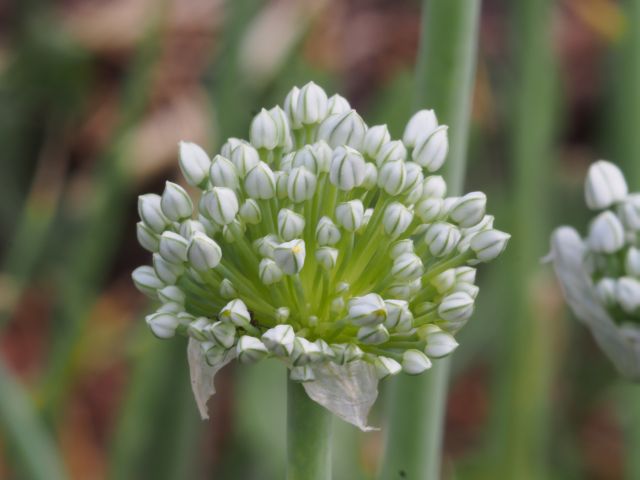
some varieties of onion are going to seed and I am leaving a few heads to see if they can self seed

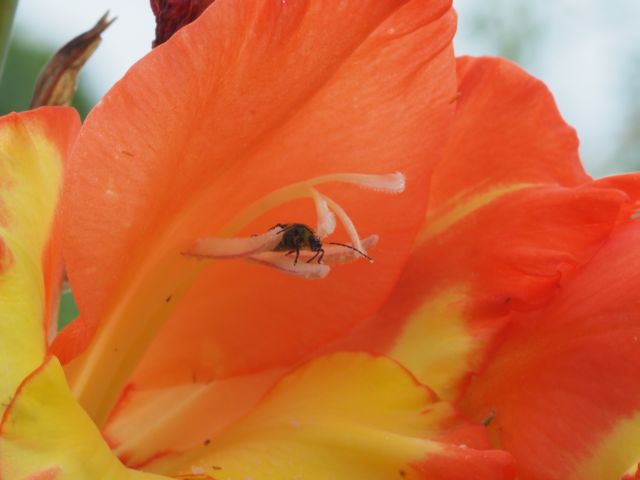
Now I am looking at flowers more carefully, I am noticing lots of small pollinators I had not seen before.

OLYMPUS DIGITAL CAMERA
a small visitor I had not previously noticed

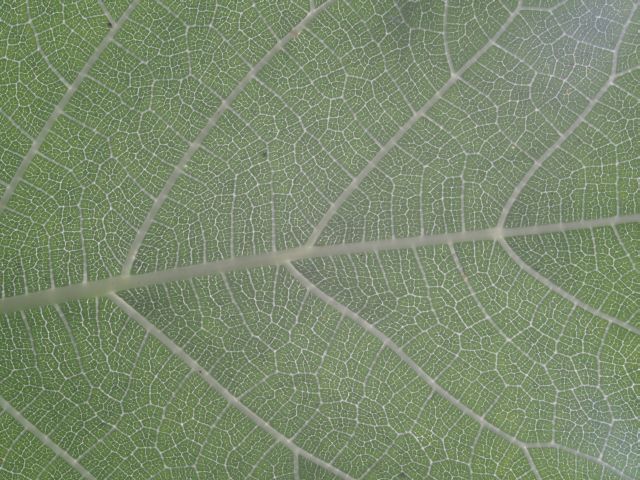
I continue to be attracted to patterns – here the pattern of a fig leaf.

fig leaf with the clouded sun behind it

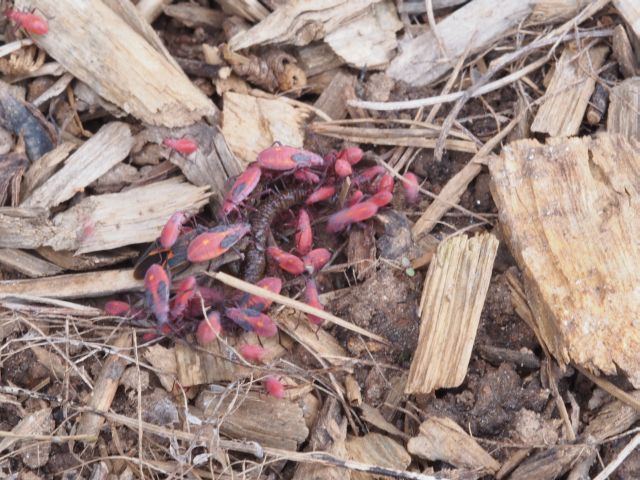
I took several snaps of small red bugs which are teeming around a vegetable growing area.  Never saw them on the plants but they parade everywhere else.  They gather in clusters and one of my pics reveals why.

OLYMPUS DIGITAL CAMERA
they probably did not kill the centipede so they may be scavengers rather than predators?

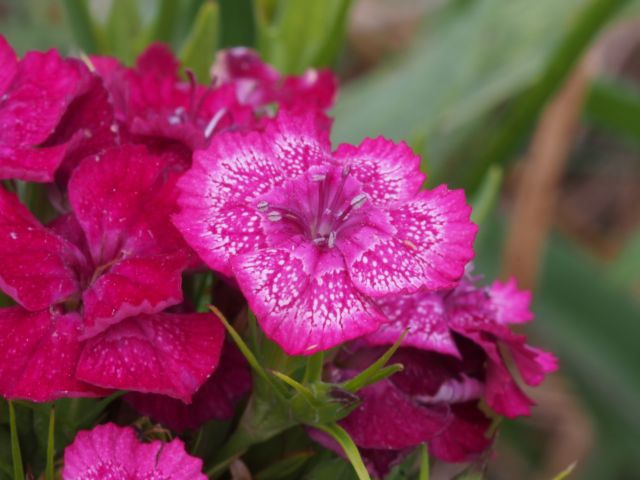
This flower stood out from the others so I had to take a snap.

a luminescent attractive offering

I notice that my tripod, which is sturdy, is still unsteady – this is because the tripod feet rest on mulch and soft soil.  So the slightest touch can move the platform – I may need a shutter release cable in due course.  Also the pics on my website are compressed, typically as in those above, below 100 kilobytes.  The original pics are >3 megabytes so the compression is more than 30 times and yet the pics look decent, but there is an inevitable loss of definition.

new camera and old lens

I have taken photographs since I was a kid.  Initially with a box camera, then my Dad’s Zeiss Ikon f2.8 bellows camera, then a single lens reflex and then most recently for this website a Canon PowerShot SD1100.  The PowerShot has been fine but it has limitations for good close up pictures.  I recently found a boxed assortment of Pentax lenses, one of which is an Asahi SMC Macro Takumar f4 100mm, which is about 40 years old.  This lens should be great for close ups I thought, so why not pair it with a modern digital camera.  After considerable research I decided to buy the Olympus EPL-5, which arrived this week and I snapped a few pictures.  Using an older lens has some disadvantages – there is no automatic focusing, you have to do it yourself.  Also the aperture does not automatically open for focusing and the stop down for exposure, you have to manually step it down.  So it takes time to develop these lost skills.  But I don’t take action photos and I will try master these techniques.

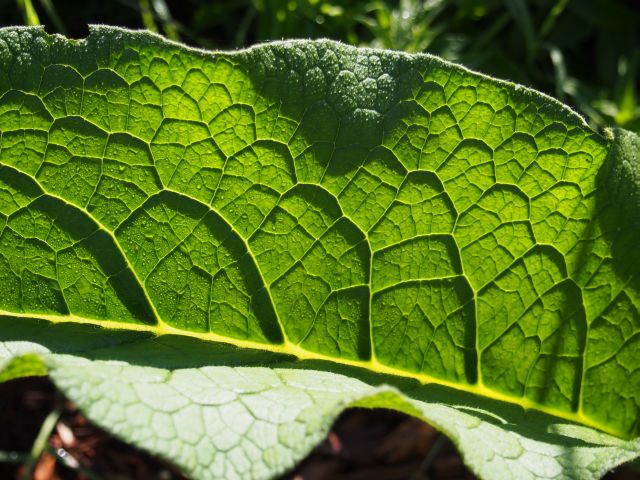
comfrey leaf early morning rain backlit by sun

I should mention that for this website I compress photos considerably, so if they are not razor sharp attribute this to compression or user error, but not the equipment.

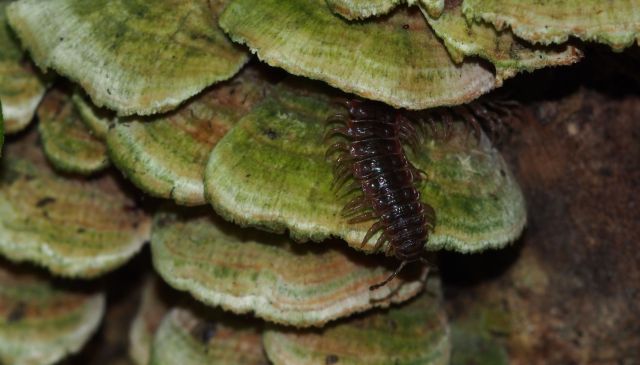
The photographs were taken using a monopod but this is not stable for long exposures.  I will use a more rigid platform and then I will be able to stop using a flash which tends to flatten the subject.  The centipede appeared suddenly as I was focusing on the log oyster mushrooms.

millipede amongst oyster mushrooms
centipede amongst oyster mushrooms

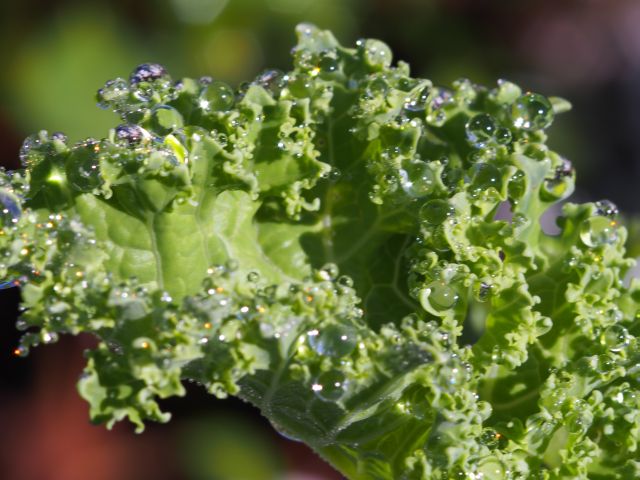
With all the recent rains (my property is fortunate it receives rain from the Gulf  i.e. the southwest and also the northwest) the kale was sparkly with raindrops.kale leaf with raindrops

kale leaf with raindrops

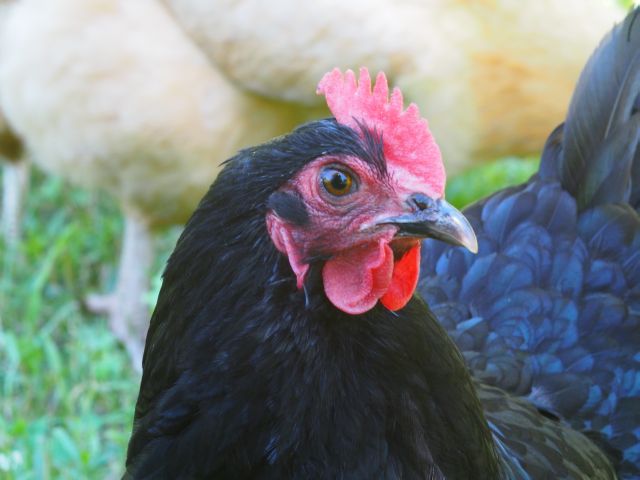
The only chicken to co-operate with my slow manual focusing requirements was the New Jersey Giant who was attracted to the distinctive click of the Olympus.

New Jersey Giant attracted to the sound of the camera


restocking the little pond

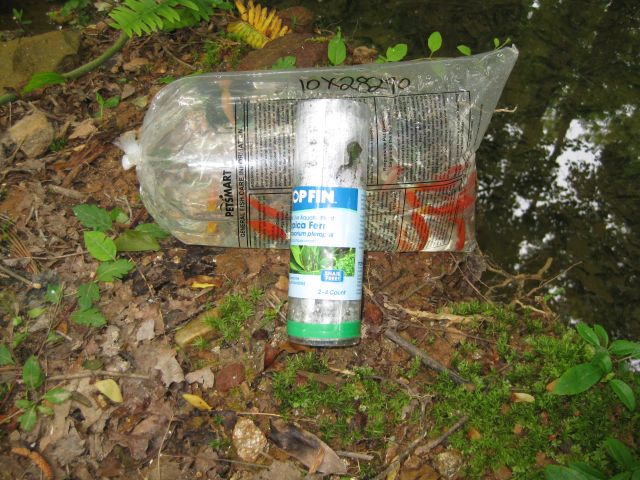
In June last year I dug a small pond in the woods where a spring emerges from the hillside.  I stocked it with a few goldfish and minnows – see my post on the little pond and by July I was sure the frogs had eaten all of them.  Then later in the year I noticed one fish, about 6 inches along, and then two fish and in January, the same two fish and a small fish.  Somehow a couple had survived and apparently propagated.

In my post in February this year I mentioned the frogspawn in the pond and, it would not surprise me if the surviving fish snacked on some of the frogspawn – what goes around comes around.  All was good until we recently had really heavy long lasting rains.  The spring became a gusher and the 3 fish may have opted to explore the overflow pipe rather than endure the silted waters of the pond.  It appears they are no longer in the pond though they can be skilful at camouflage.  Today I purchased a conical filter for the 4″ overflow pipe and 10 small goldfish at 14 cents each from PetSmart and a small aquatic flower for the shallow end.

the 10 goldfish are in a plastic bag container of water which was filled with oxygen.  in front is the aquatic plant
the 10 goldfish are in a plastic bag container of water which was filled with oxygen. in front is the aquatic plant

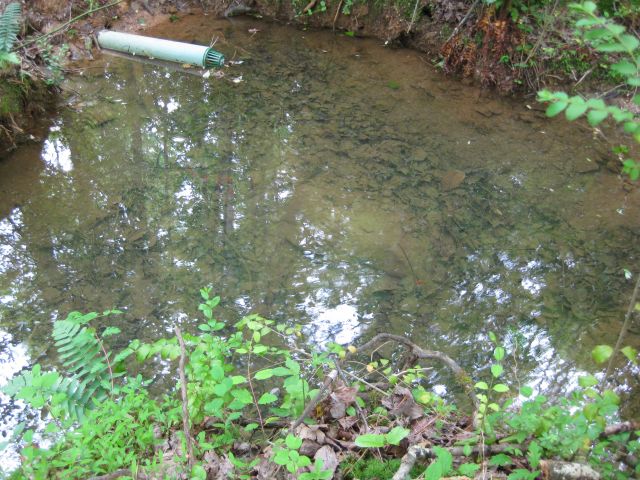
The pond outflow pipe now has a conical filter to prevent the new residents from taking off.

the pond with outflow pipe and filter.  it's about 3 feet deep at its deepest
the pond with outflow pipe and filter. it’s about 3 feet deep at its deepest

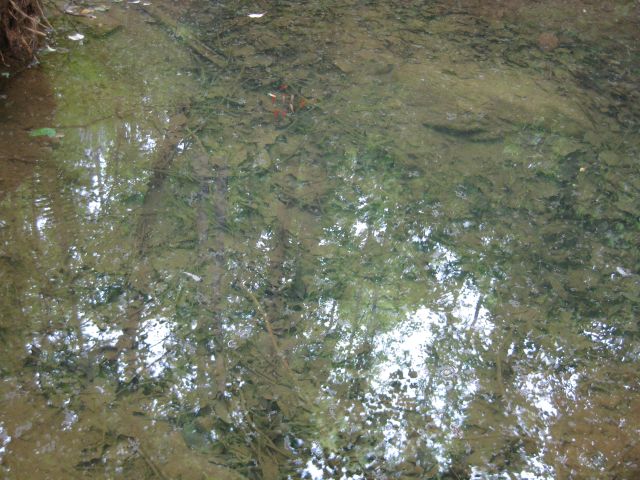
And if you look carefully you may spot the little group of ten.

pond goldfish
the 10 goldfish are in the center towards the top of the picture


neighborly chat

Every so often I meet my neighbor (I will call him Thomas) and we catch up on local goings on.  Not a Robert Frost walk the line and set the wall event but courteous enough.  He hailed me as he backed his truck out his drive (I learned later he was on his way to the insurance company) and we got chatting.  I mentioned I heard his chainsaw the previous day hard at work followed by a loud crash.  He explained that he was taking down a rotten tree some of whose limbs had fallen on and made ineffective the electric fence which enclosed his 10+ dogs.  This explained why I had seen 5 of his larger dogs sprinting around the unfenced areas of my property (and why I had cut a sturdy oak club in anticipation of a meeting).  Apparently his dogs attacked and killed chicken belonging to another neighbor who had promptly called the sheriff on him.  A kindly neighbor, since a few miles north another resident simply shot the offending dogs.

Thomas had (past tense) a Kubota utility atv, which is an upmarket item costing >$10k.  It is usually parked in front of his house and was stolen last Saturday night when he was home.  He surmises that a red pickup he noticed the previous week driving slowly up and down the public gravel road was casing the neighborhood and that they arrived in the early hours with a trailer and pushed his Kubota onto the trailer and departed.  This occasioned a second meeting with the sheriff in the same week.  Although it was insured there is a large deductible.

The third tidbit of information was Thomas decided to alert the neighbors to safeguard their items stored outdoors and he met with another neighbor (who also adjoins my property) who informed him that he had noticed a fox with 4 young in a den on my property.  I had seen the fox on several occasions when it was eyeing my chicken and got my rooster excited, which alerted Trudy and brought us both rushing out.  Now with 4 young to feed I can expect to see her more frequently – but what will happen when Trudy and I are not on hand.  Thomas suggested to the neighbor (now without chicken) that the fox was to blame not his dogs, but that didn’t fly.


favorite bloomings

In early summer my two favorite blooms are the Cherokee rose and the Grancy Graybeard.  The Cherokee rose is not a sophisticated rose.

0424 cherokee roseb
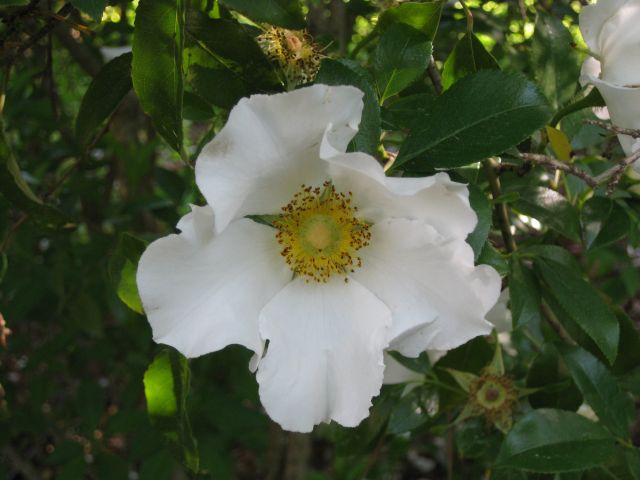
Cherokee rose

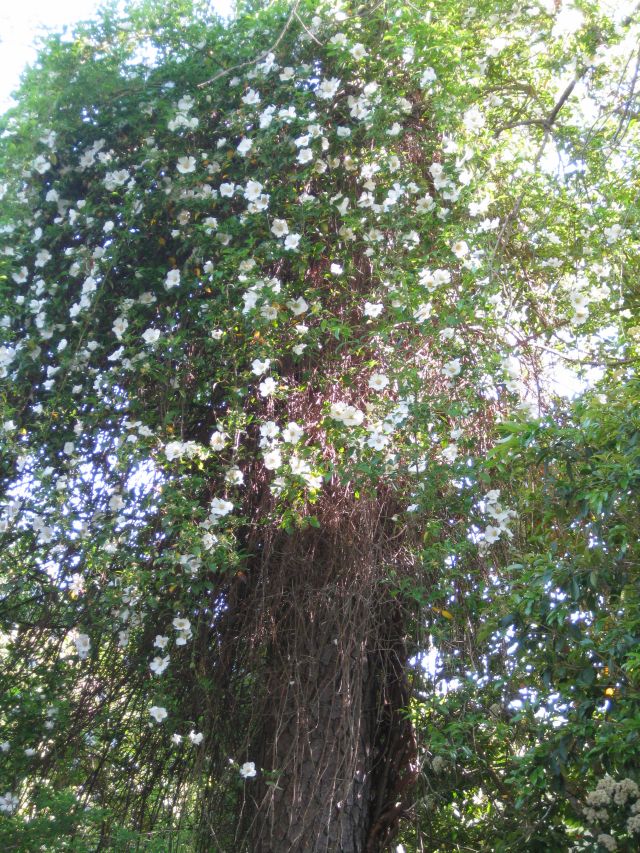
Like the dogwood it has simple bright white petals.  It has vicious thorns, dark green leaves and thrives in the humidity of Georgia.  It is tough, independent, requires no nurturing and is our state flower.  It is an ambitious climber.  I nailed several cable hoops around a tall pine and after pointing it in the right direction it took off and now has a great 20+ ft view of its surroundings.

Cherokee rose on pine tree

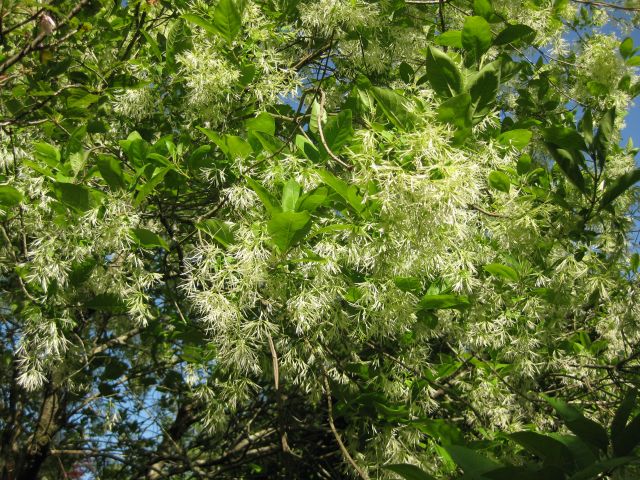
My other favorite is the Grancy Graybeard or Old Man’s Beard (I won’t bother with the Latin names).  It shows its beard for only a few days before it leaves become dominant – perhaps the reversion from old to young is what appeals to me.  You can see I am already a couple days too late.

Grancy Graybeard
Grancy Graybeard


Activity in the yard

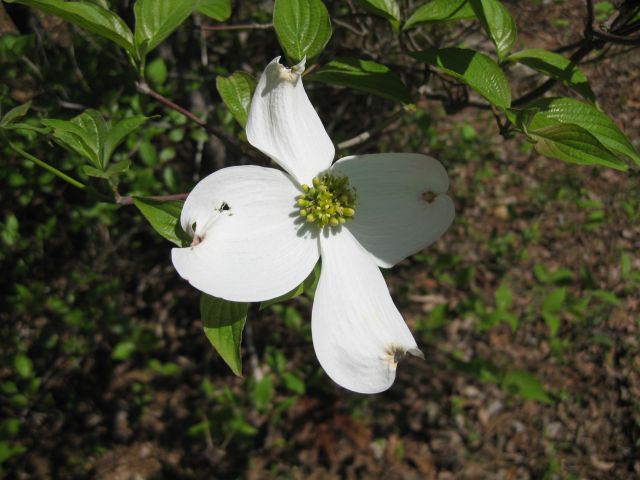
In the woods the splashes of white are the dogwoods. They have a striking, bright white flower.

the unpretentious dogwood flower

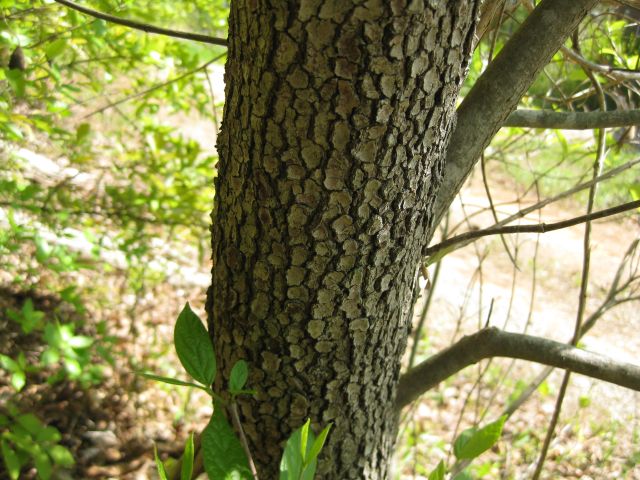
The dogwood tree trunk is also unusual.  It looks like the hide of an alligator.

dogwood tree trun
dogwood tree trunk

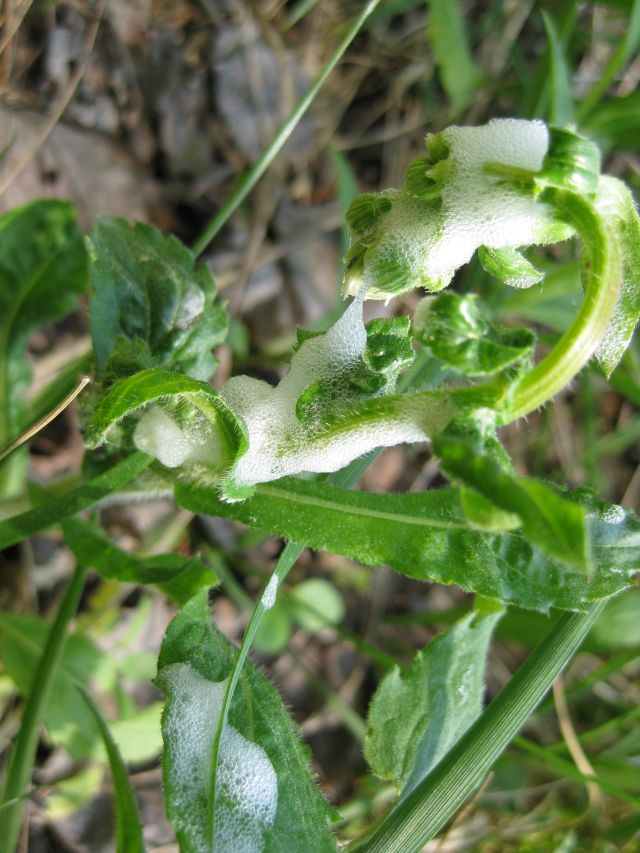
Lots of white foam on stems and leaves everywhere.

white foam on leaves

If you probe gently with a twig and look carefully you will see the odd looking spittle bug emerge.

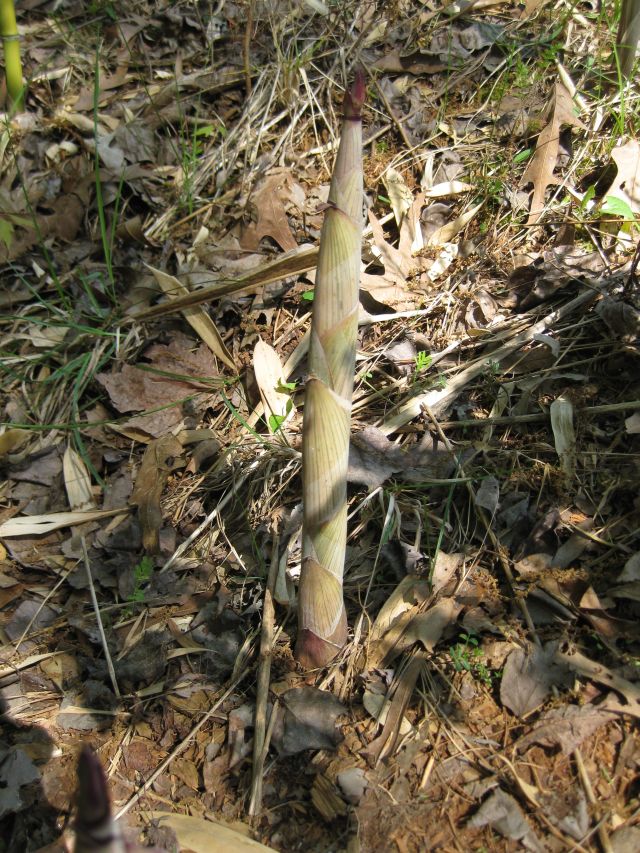
The bamboo patch is producing offspring.

new bamboo shoot
new bamboo shoot

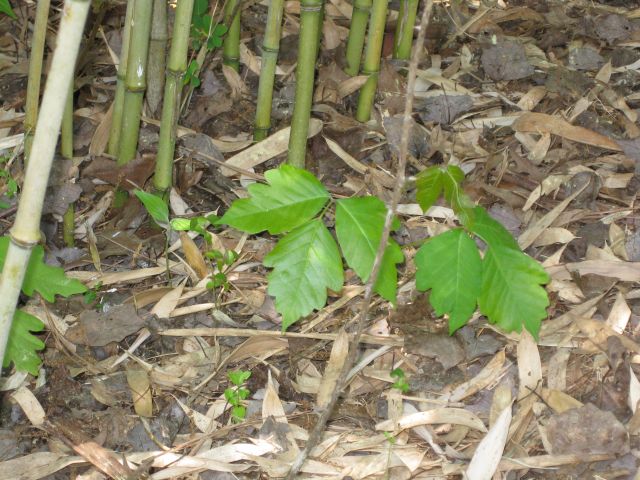
And of course, with the good comes the nasty – the ever lurking poison ivy.

poison ivy amongst bamboo

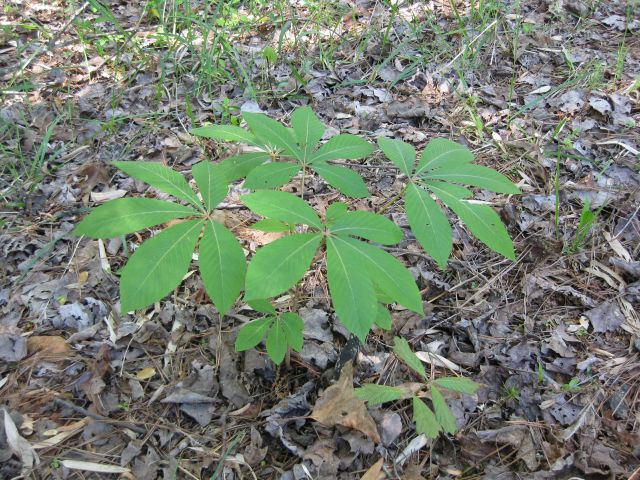
I thought the ohio buckeye plants, which I grew from nuts, had all succumbed.  So good to see survivors.

small ohio buckeye plant

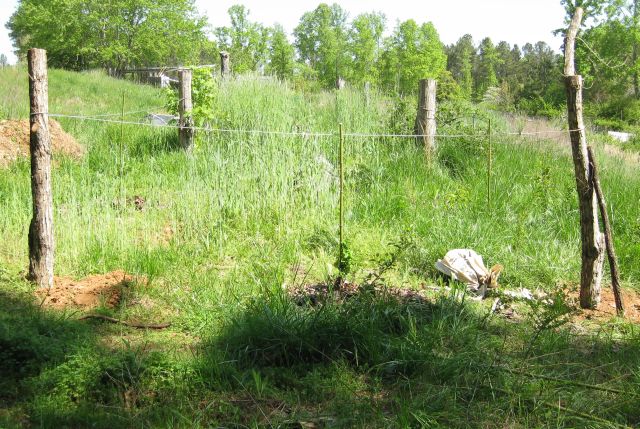
And the male kiwi and two females planted last fall made it safely through the winter.  I sectioned off 8ft lengths of an oak tree, dug >30″ post holes, and with cable threaded through, I made a trellis for my kiwi vines which are trained vertically on bamboo from my bamboo patch (the oak club leaning against the right post is for my neighbor’s large dogs which escaped their enclosure).

oak posts support cable for kiwi vines

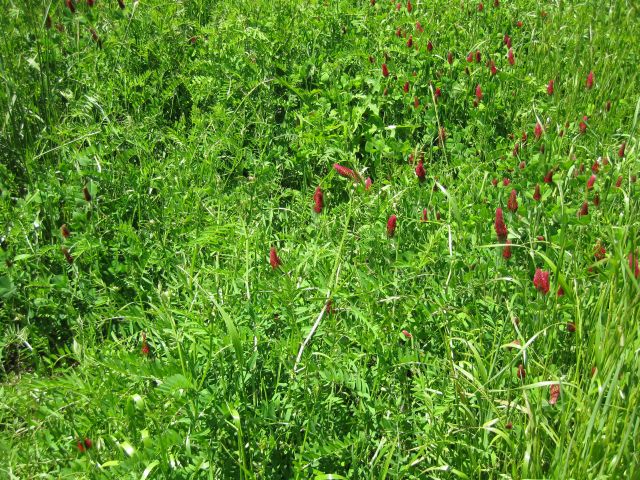
My groundcovers run rife.  In the orchard I have crimson clover and hairy vetch and will probably let them go to seed since they stall the spread of bermudagrass and their self propagation simplifies my life.

groundcover run rife

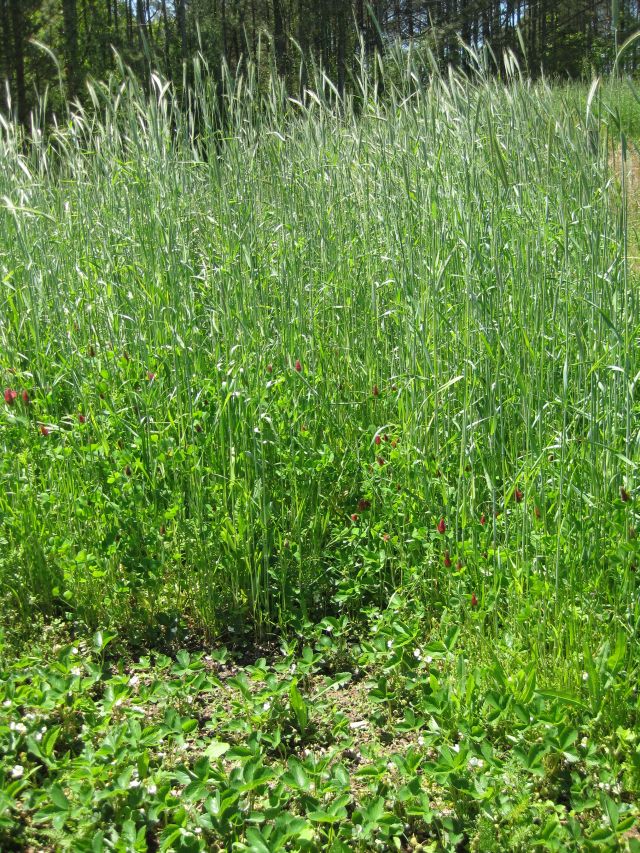
My winter rye in the vegetable area stands 6 ft tall.  I just received an email that my sweet potato slips have been shipped so this patch will soon be leveled.

winter rye standing guard behind my early season strawberries

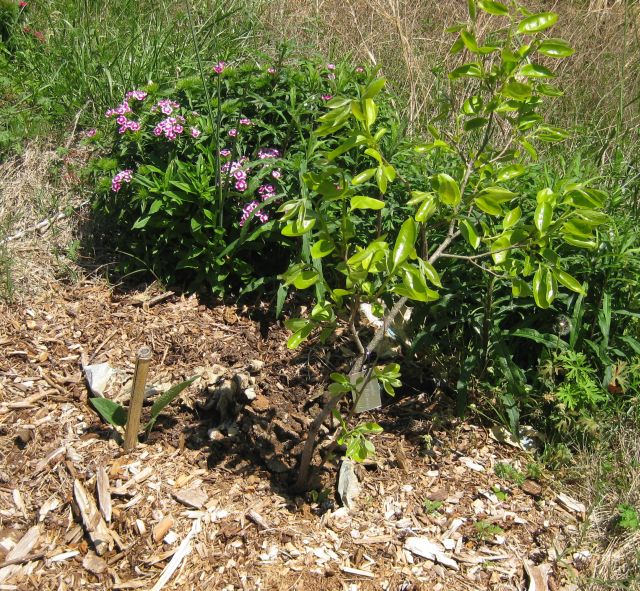
I find persimmon difficult to grow.  My Asian persimmon looks good next to its wildflower neighbors.

Asian persimmon with wildflower neighbors and a small comfrey appearing

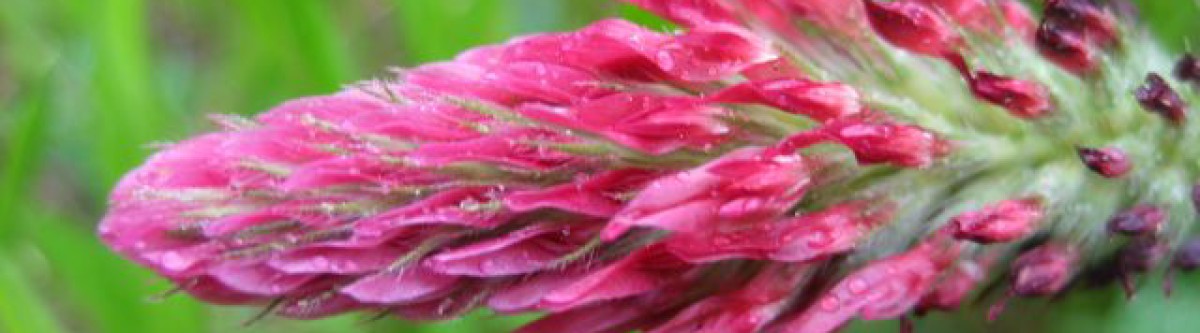
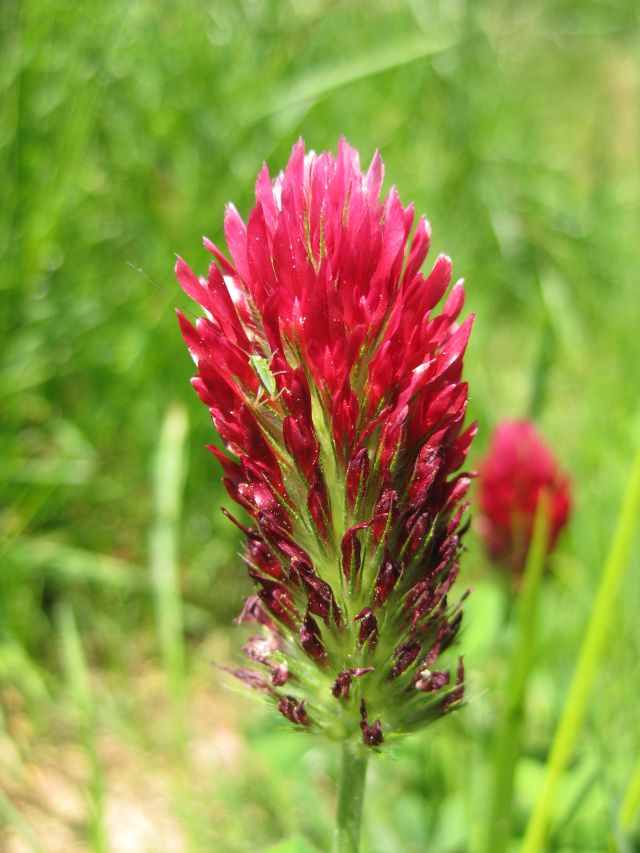
Crimson clover now lines the highway and surfaces in all my growing areas.  It is attractive to me, my bees, the bumblebees and even this small green hopper.

little hopper on crimson clover


Aldo Leopold – Green Fire

The local weekly gazette mentioned that the Mountain Conservation Trust of Georgia (MCT) was screening a new documentary on Aldo Leopold.  I was interested that Pickens county, where my property is, was the HQ of MCT an environmental group and I wanted to learn more about it.  Also, I vaguely knew the name Aldo Leopold but was unsure what he had done.

Last Saturday at the event I met with several board representatives.  Their mission, as I understand it, is to encourage large local landowners to place conservation easements on their land, which will protect the watershed and wild life, and also confer a tax benefit to the owner.  These easements do not provide public access.  Commendable.

I then watched the documentary and, though I have a tendency to doze off, I stayed awake throughout its 1 hour plus length.  And learned how a forester/hunter came to appreciate the significance of wild life and importance of caring for the land.  The latter is referred to as the “land ethic”.  The former gave rise to the title “green fire” which was the fading green light in the eyes of a wolf he had shot, the import of which only evolved within him many years later.  The documentary catalogs the wide scale elimination of wolves, which were considered destructive predators (this opinion later revised) as well as the elimination of the passenger pigeon of which there were billions in huge migratory flocks until hunting and habitat destruction made them extinct.  We have little to be proud of when our talents and needs extinguish a species.  But now some of us are learning our errors and making redress.


cuddling a peach tree

I have 2 peach trees and last year their blossoms were freeze damaged and I had no fruit.  I really shouldn’t have any peach trees because they are difficult to produce fruit using organic methods and they blossom very early in the spring.  But Georgia is known as the “Peach state” and Peachtree is a very popular street name in Georgia, and the Peachtree 10K Road Race is the world’s largest 10k race (I have run it 20 times), so my enthusiasm got the better of prudence.

Freeze damage occurs differently based on the type of fruit tree and its stage of development.  For the peach at first bloom stage, where is where my one tree is, 10% of the blossoms will be destroyed at 26 deg F and 90% at 21 deg F.  My second tree is at the first calyx red stage where the relevant temperatures are 23 deg F and 9 deg F, so I was not too worried about it.  I decided that if I do not get any peaches this year I will replace the peach trees.  With this ultimatum issued, I feel I have to do my best to help them along.  With freeze warnings in place for most of the past week, I took the initiative and wrapped my most vulnerable tree with Agribon row covers which give about 6 deg F protection.  I have never wrapped a tree before.  Rather than web the technique, I decided to try figure it out myself.  The covers are 7 ft wide so I took covers from my raised bed and wrapped them round the tree.

my first attempt was amateurish, I wrapped the tree and hoped for the best

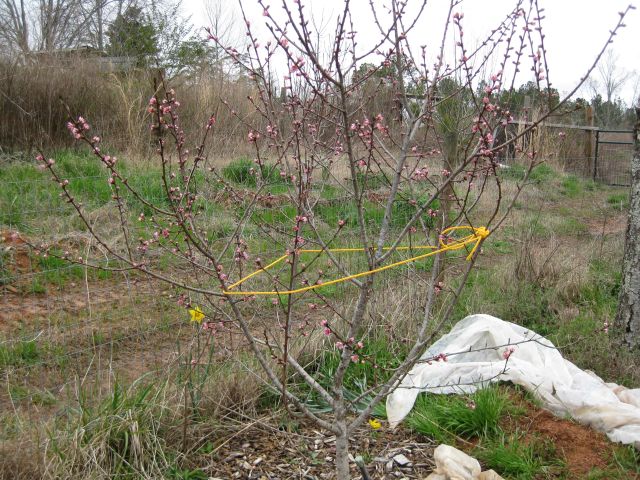
The wind was gusting >15mph and in a very short time the covers were undone and the tree looked like a weird ghost with flapping garments.  So I decided to be more deliberate.  I pruned off the taller branches and with a rope belted the limbs closer together.

the yellow roped served as a belt or girdle to pull in the tree's waistline
the yellow rope served as a belt or girdle to pull in the tree’s waistline

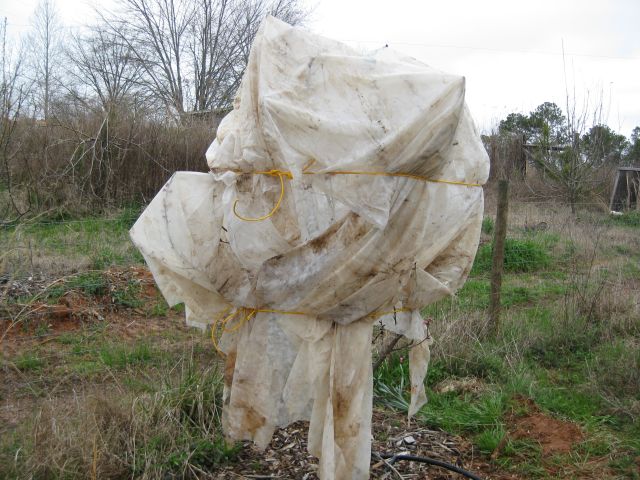
I again wrapped the tree in row covers and added two encircling ropes to hold them in place.

the shrouded tree with 2 securing ropes

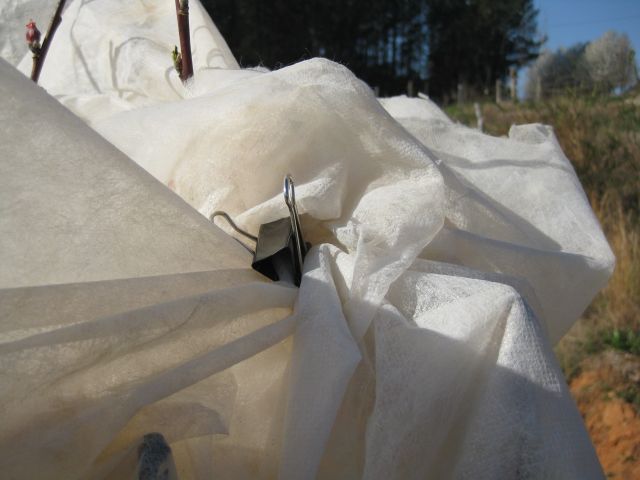
I thought this would do it, but the wind increased in intensity and was persistent.  So I remembered I had several bulldog clips on hand and used them to secure the loose ends of the covers together.

bulldog clip securing loose ends of the covers

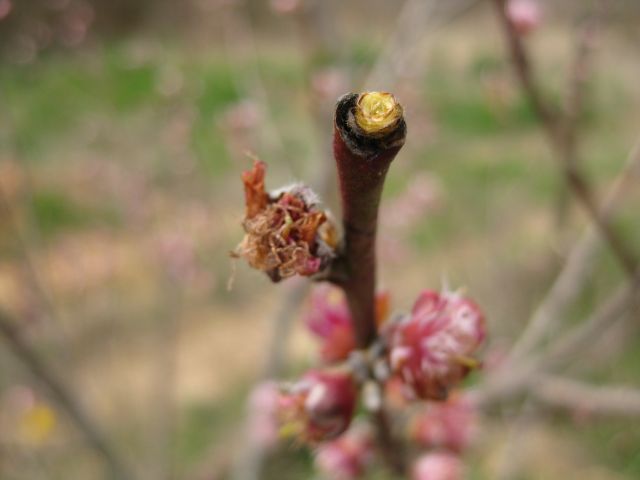
This seemed to do the trick and the covers stayed pretty much in place.  Now, with no freeze forecast for next week I removed the covers to inspect the damage.  All the blossoms were ok except for a few at the extremities which probably had poked through the covers.

a damaged blossom, the ones below are ok

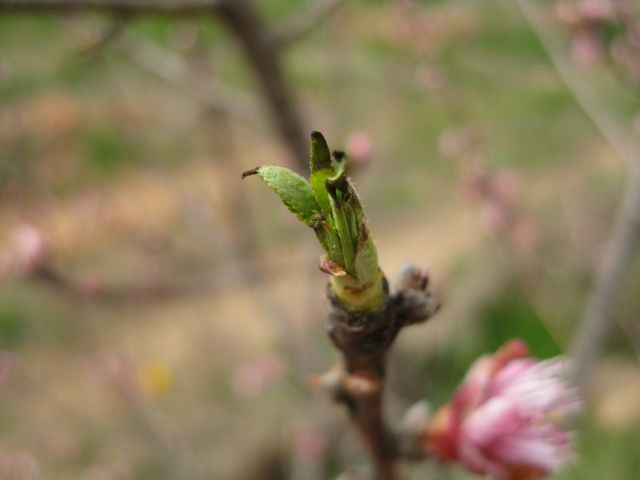
And interestingly, a budding leaf also appeared partly damaged.

the tips of the leaf bud are also damaged

Beats me why the peach tree insists on producing blossoms first and then leaves while with most of my other trees it is the other way round.  So, for now, the peach blossoms are ok.  But as I consult my notes from last year I see there was a late frost in April which wiped out the blossoms of both peach trees.


Down Under takes a stand – almost

Hurricane Sandy late last year hammered the northeast.  I read the articles and listened carefully to NPR for a consensus from the scientific community attributing the cause of the hurricane to global warming (I use “global warming” and “climate change” interchangeably). There was no consensus nor did I hear a scientific expert unequivocally say that global warming caused Hurricane Sandy.  No shortage of laypeople expressing their views, including Mayor Bloomberg, but it seemed the scientific community was silent.

While there is agreement that the climate is changing and that man has a lot to do with this, only generalities have been offered as to the impact of all this on the weather.  Weather is the short term state of the atmosphere, while climate describes the typical or average atmospheric conditions.

It really is important for the scientific community to determine if the droughts in the mid-west and the severe storms we are bearing are caused by human activity.  If the droughts persist, and once the reservoirs have been drained, prime farmland will no longer be good for growing food and there will be huge loss in asset values and food shortages.  I view this not emotionally but pragmatically – if human activity is causing massive degradation in our environment which will seriously impact us, then the experts must expedite their research and step up and say so.

So I was very interested to read in the NYT yesterday that “Report Blames Climate Change for Extremes in Australia” (March 5, 2013: http://www.nytimes.com/2013/03/05/world/asia/australian-government-blames-climate-change-for-angry-summer.html?_r=0).

The Australian summer over the past few months has been brutal.  On almost every weekly chat with my Mom, who lives in Perth, the temperature was mentioned.  Many days it was in the low to mid- 40’s Celsius (for comparison 43 degrees Celsius equates to 109 degrees Fahrenheit).  This is truly HOT!

The report, issued by the Climate Commission (per the NYT “an independent panel of experts that issues reports on behalf of the government but is not subject to its direction or oversight”) is titled “The Angry Summer”.  It includes a slide which has catchy titles:  “Hottest January on record”, “Hottest Summer on Record”, “Hottest Day on record for Australia as a whole” etc.   A quick reading of the NYT article leads you to think that the Commission was saying that climate change caused the record setting temperatures and bush fires.  That is a problem with quick readings since you tend to merge the quotes from interviews with quotes from the report.  The interview quotes had good stuff such as the probability the heat was caused by natural events is  500:1 and “Not too many people would want to put their life savings on a 500-to-1 horse” or an analogy that the climate is like an athlete on steroids.  Persuasive images, but not in the report.

The report’s wording is more cautious such as: “All weather, including extreme weather events, is influenced by climate change”  and “It is highly likely that extreme hot weather will become even more frequent and severe in Australia and around the globe over the coming decades” and, finally as to causation “The decisions we make this decade will largely determine the severity of climate change and its influence on extreme events for our grandchildren”.

“Influenced by”, “Highly likely” and “Largely determine” are hardly words which will catalyze action.  But still, a step in the right direction.

a silver lining to faltering memory, also BMSB and IPM

I find that my memory does not work as well as in the past.  As a student I could easily memorize hundreds of law cases, now the labels I read one day are gone the next.  So where is the silver lining consolation?

I believe we have different skill sets and we compensate for those we lack.  The kid who can analytically unravel and reassemble complicated concepts  tends to be independent and does not require and consequently does not develop, good social skills.  The ambitious kid, who does not have this intellectual firepower, develops intuitive and empathy skills and thus can effectively recruit others to assist with or perform the tasks he/she finds difficult.  Perhaps it is our innate intellectual and physical abilities that fashion to a large extent our personalities?

So I am now more interested in how and why things happen than in the fact of their happening.  If I can link causation with result then my mind can re-navigate the route without having to remember the start or end point or even the directions taken.  An example from the recent GO conference (see previous post) was the excellent session on organic insect control by two entomologists from Auburn university.  I was particularly interested in their comments on the BMSB (brown marmorated stink bug) which is becoming the organic growers nightmare.  Not all stink bugs are pests and there are predatory stink bugs which are beneficial and whose prey are the pests we wish to eliminate.  You can google and find descriptions of the difference between the good and the bad stink bugs perhaps the shape of their shield or certain colorations.  But these are facts which must be memorized, not my strong point.  Much more helpful was the comment by one of the entomologists – look at their jaws/mandibles.  A powerful apparatus is for munching prey, a pointed beak type is for piercing and sucking out plant nutrients.  Now that logic I can recall without having to memorize.  As for eliminating this pesky pest they advocate trap crops and perhaps a vacuuming device tonguetwister titled “backpac bug vac”.  Worth pondering as I await the onslaught in late summer.

IPM (integrated pest management) was mentioned in several sessions and I found the schematic in the session on organic management of diseases easy to follow and remember.  At the base of the triangle are “preplant considerations” which includes soil fertility; site selection (for sun exposure, soil drainage); site preparation; rotation; using disease free seed and disease free planting material, timing of planting, spacing of plantings, plant selection (if a disease is blighting your crops then choose a disease resistant variety) and diversity of plantings. These are all logical first steps for before and at the time of planting.

Next level up are the biological controls which includes beneficials (this pm I transferred more lady beetles from the bathroom to the cold frames), Bt, and other ecologically sustainable techniques.

Another level includes physical and cultural controls such as row covers, lure traps, cultivation of weeds, sanitation,  and adequate irrigation (but not overhead spraying because of  foliar disease, especially in the hot humid Southeast).

And all the while observing and monitoring and if a certain threshold of pest/disease invasion is reached, then resorting as a last resort to nastier remedies which, while organic, will impact not only the bad guys but the good guys as well.  The basic premise is that healthy strong plants, which are not stressed (lack of watering is a big culprit) or injured, will be able to resist pests and diseases adequately.  If you grow organic you should be prepared to share, but not too much.

So this is all logical and dovetails with my growing experiences and this is one reason why I enjoy growing.  I sense that among sports enthusiasts recalling and recounting the details of past games and greats and scores is part of the pleasure.  Or the opera enthusiast who happily describes to those unfortunates within earshot how this particular aria though well delivered, does not compare with soprano A, in opera house B, in year C.  These feats are beyond me and I settle for the simple pleasure of trying to better understand, without committing labels to memory, what is going on in the outside spaces.