season update – what grew, is growing, and still to come

This morning the sun ducked behind clouds and instead of retreating before the heat I took some pics of growing activity.

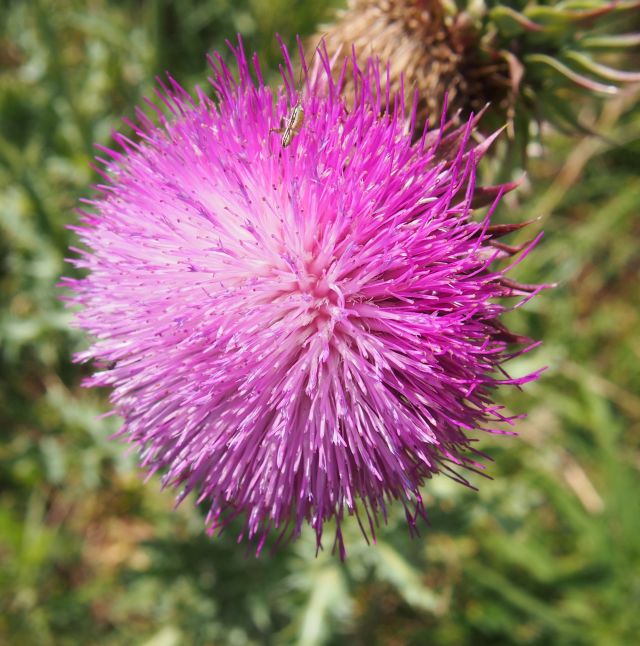
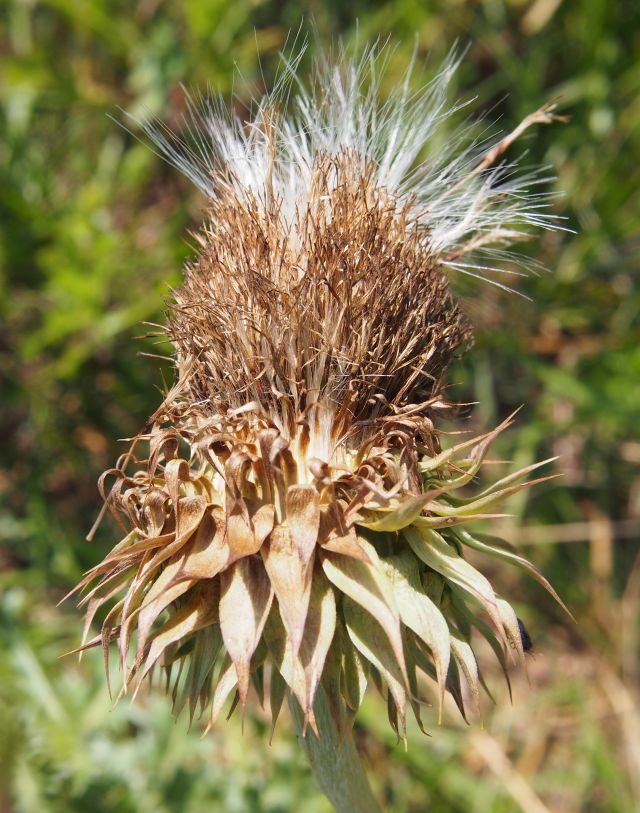
At the top of the hill stands a solitary thistle. Thistle, a symbol of Scotland, brings back memories of vacations in the Highlands. And the pipes of the Black Watch swirling through our living room when my Dad, who fought in a Scottish regiment in WW2, would play our favorite record.  Not that it is universally admired – here is a quote from Botanical.com: In agriculture the Thistle is the recognized sign of untidiness and neglect, being found not so much in barren ground, as in good ground not properly cared for.
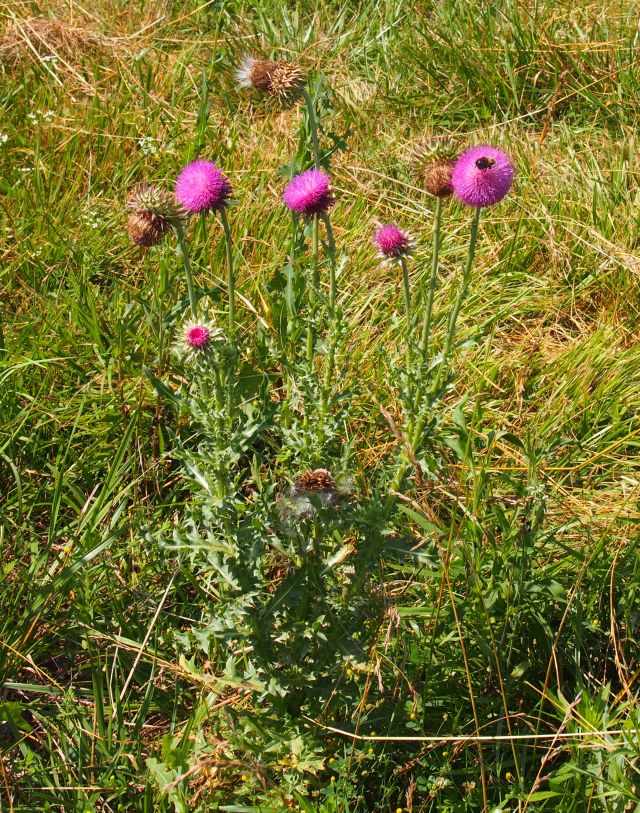
OLYMPUS DIGITAL CAMERAand here are 2 closeups

OLYMPUS DIGITAL CAMERAOLYMPUS DIGITAL CAMERAThe savage January lows doomed all my fig trees and some blueberries and a hardy citrus.  But the figs, ever optimistic are growing again (and will likely be again felled in January).
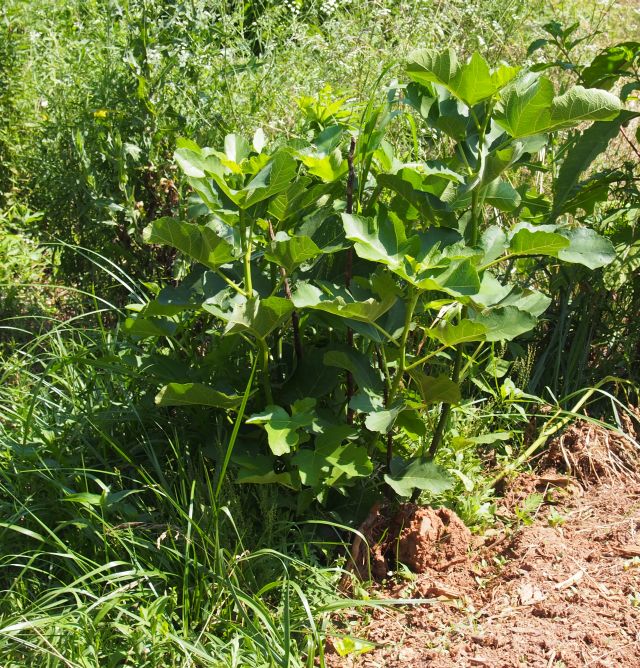
OLYMPUS DIGITAL CAMERANow is blueberry and blackberry picking time and each morning I fill a couple yogurt 1 qt containers with fresh pickings in between scoffing down healthy helpings.
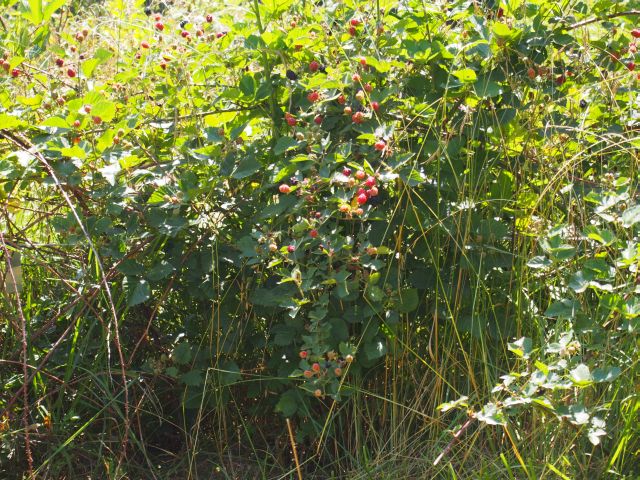
blackberry
blackberry

I walk slowly through the high grass to give snakes time to move out of the way, but I was unprepared for the silent yellow wasp attack.  No buzz warning or preliminary fly around, just a quick landing and nasty bite/sting.  And when I returned having lost the contents of 1 container in the hasty exit, they were still there and gave me a 2nd lesson.  I shall have to better time my visits to this blackberry patch.

I ordered and just received 15 chestnut and 15 hazelnut trees and, since it is hot now and some hazelnut were suffering, I am nursing them in my tree nursery next to the deck which provides afternoon sun shade.
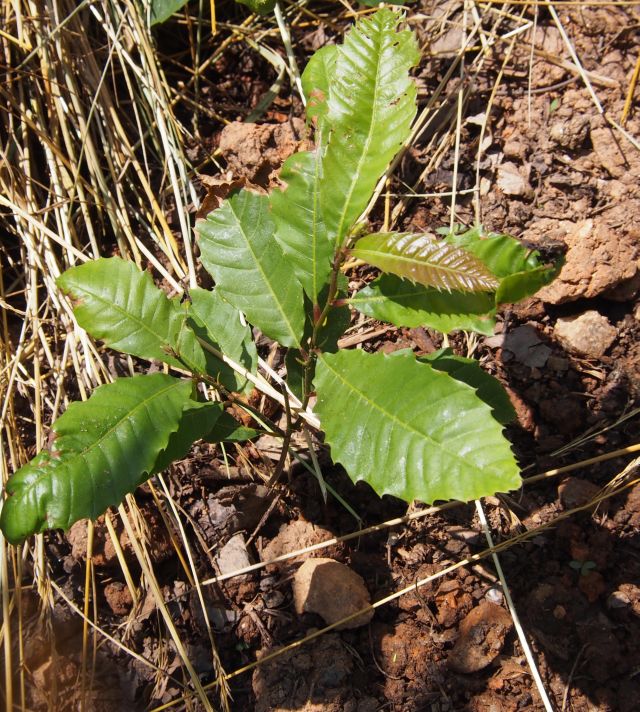
a small chestnut - whether it will survive our weather and the inevitable blight attack will be seen
a small chestnut – whether it will survive our weather and the inevitable blight attack will be seen

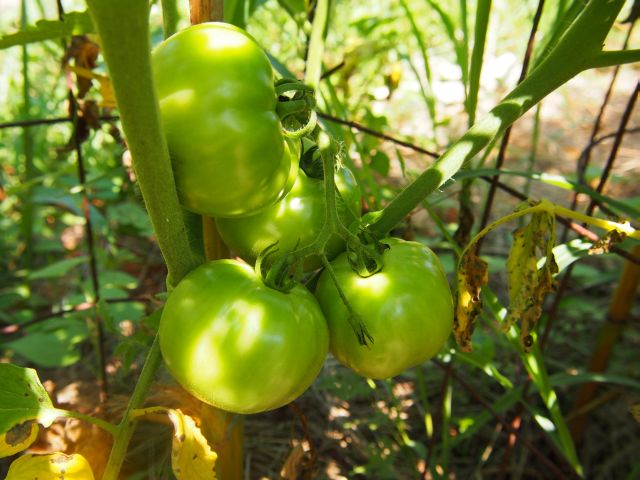
I have introduced several new features to my tomato growing and will not enumerate on them until I see whether they produce a measurable difference.  There are lots of green tomatoes and, at this time, they are looking good.
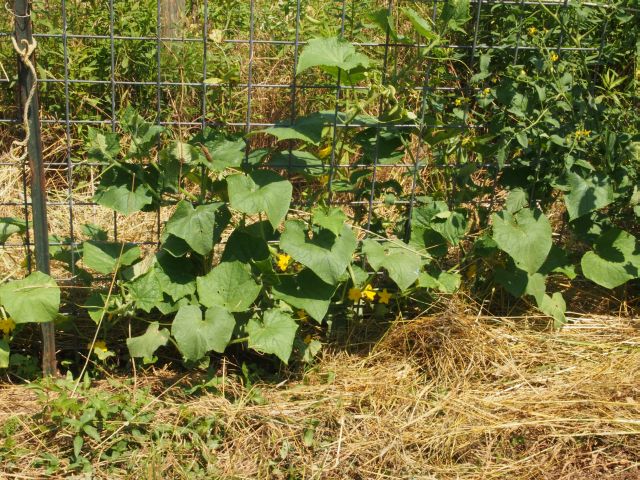
OLYMPUS DIGITAL CAMERAThis season has been good, so far – lots of lettuce (tho next year I will do more Cherokee than Black Seeded Simpson which have been insipid), radish, kale etc.  A pleasant surprise has been the size and quality of my   onions – I planted several varieties from bulbs and they all tasted mild and great.  Next on will be cucumbers, okra,  beans, squash, potatoes.  My cucumber plants are growing well.
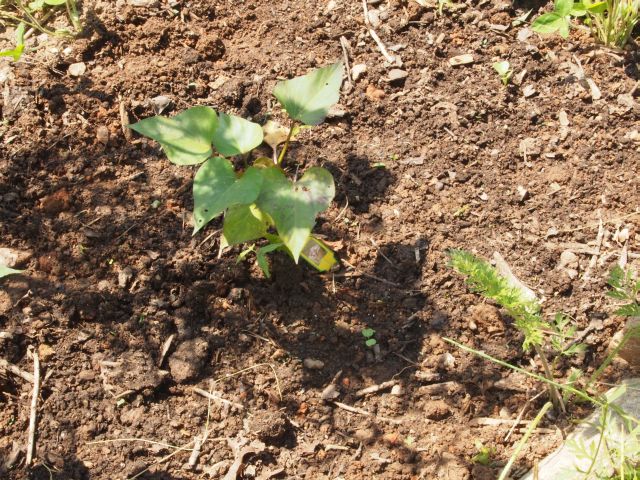
OLYMPUS DIGITAL CAMERAAnd this week I bought 9 Beuregard sweet potato vines which I planted out in the areas cleared of onions and lettuce.
OLYMPUS DIGITAL CAMERA

In my orchard, which is acquiring more permaculture trappings, I earlier planted a strip of 4 rows of different corn plus beans and squash.  The corn is looking good.
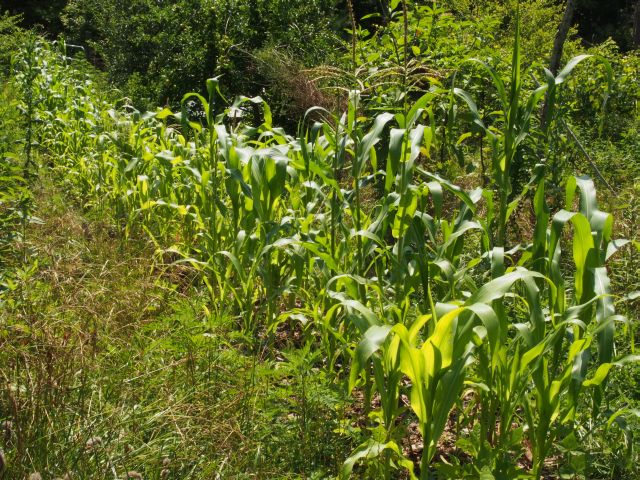
OLYMPUS DIGITAL CAMERAAnd if you look carefully you will see the small squash and bean plants which have some catching up to do.
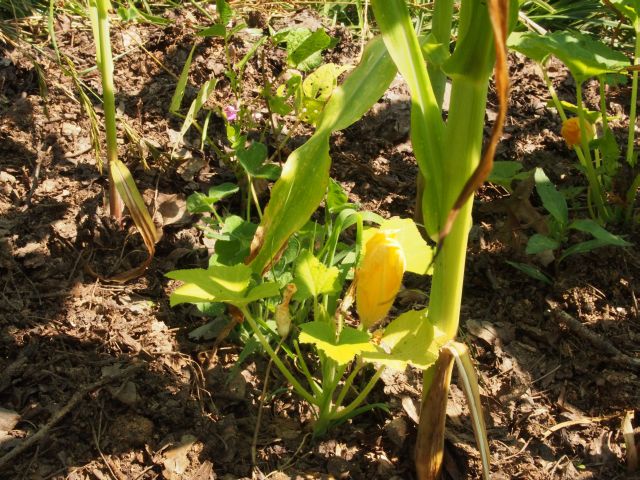
the three sisters
the three sisters

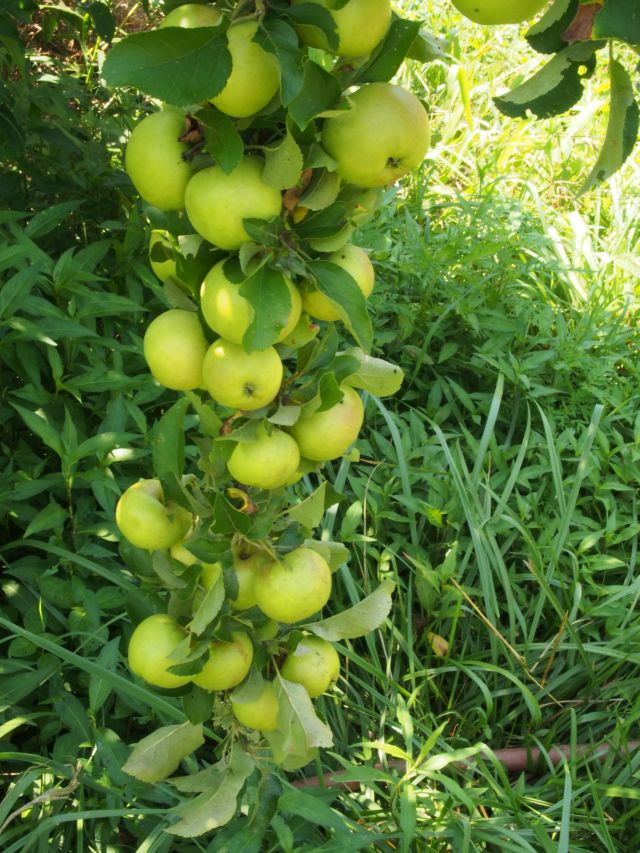
The late April 15 freeze harmed a number of my apple trees and the peach tree.  However, most importantly, my best apple tree with the sweetest apples was not affected and is bearing heavily.  Here is just one down laden branch (which I really should thin).
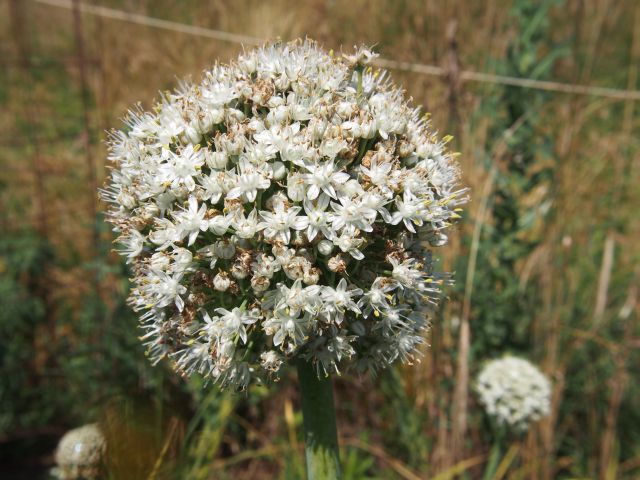
OLYMPUS DIGITAL CAMERAThere are so many contenders for imaging – the hop plant reaching greater heights, the muscadine vines ever multiplying.  I shall have to be selective and show one of my onion plant heads which I am allowing to go to seed and provide for next year.
OLYMPUS DIGITAL CAMERA

young life abounds

In the past week I have seen many instances of young life.  I became aware that this was the season from a local news report about a 5 year old kid bitten by a young copperhead – he survived, the snake did not.  The ranger said that young venomous snakes are the most dangerous because they have not yet learned to get out of the way.

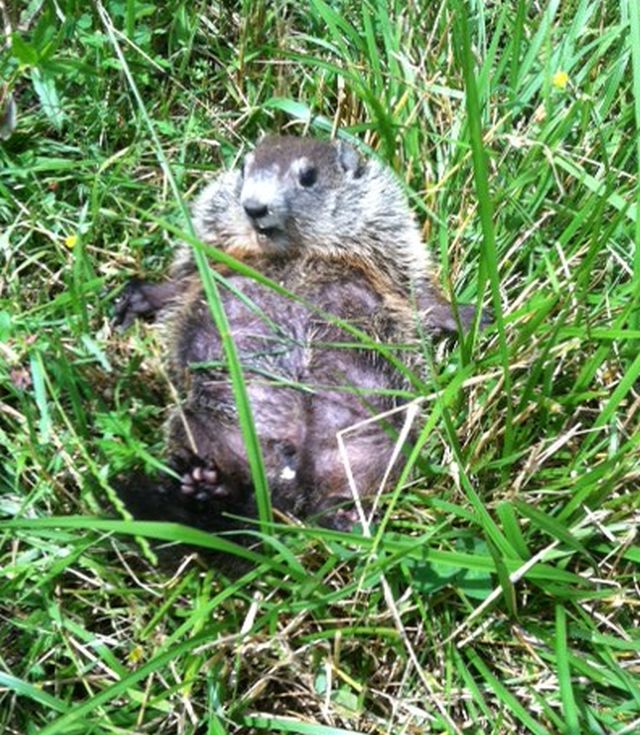
The next day my companion, Trudy, barked furiously as I worked my 3 sister row (corn, bean & squash) and there was a blur of something large moving ungainly to a niche alongside the fence.  Trudy’s incessant barking spurred it to flight again and Trudy quickly caught it and I, just as quickly (almost), freed it and took a snap.

a baby groundhog

With Trudy removed, the groundhog disappeared after a few moments.  Then later that day while I was replenishing water in the coop, I saw a small rat in the middle of the coop.  It didn’t know what to do.  I seized a shovel to bash it and it ran to the corner but could not climb the wall.  I saw its chest and heart heaving below the ribcage.  I felt this was too one sided and guided it toward the door and when it saw the sunlight it ran out past the squawking chicken.

Then I saw a most pleasing sight.  I noticed a large wasp on a kale leaf.  I wondered why it was there.  And peered closer and saw it was straddling a small green caterpillar.  I have seen a mass of yellow jackets attack a large caterpillar which I had unearthed during digging but never a solitary wasp.  Here was evidence that my no spray regimen was working – a beneficial predator at work.  A couple days earlier I had read Michael Crichton’s  “Micro” which featured a wasp stinging and paralyzing a victim for subsequent feeding to its young, and the moment had poignancy for me.

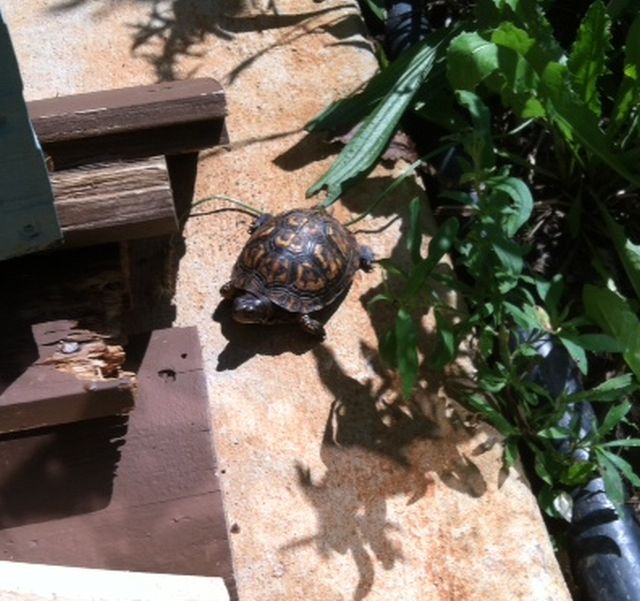
And I was to see more young over the next few days.  The baby squirrel at the bird feeder and the baby birds including a bright blue baby bunting.  The turtle on the carport pad.

baby turtle visiting

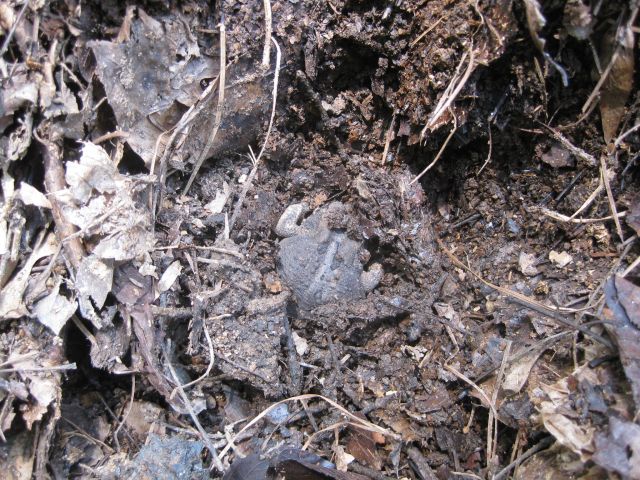
And just a few minutes ago, during a visit to the compost heap, a movement caught our attention.

babt toad on compostDo you spot it?  A baby toad.


leveling my fig tree and preparing the tree nursery

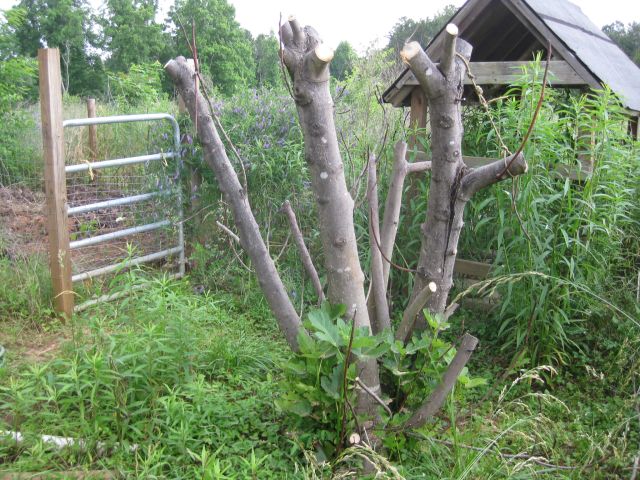
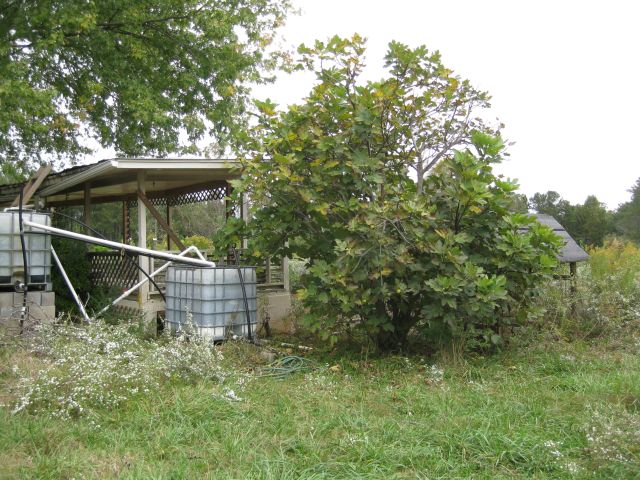
The property came with a big fig tree about 15 ft high and 15 ft broad which bore delicious figs each year for the wasps and me.  Then came the cold January weather when the temperature fell close to 0 deg F, which is cold for this area and unaccustomedly cold for fig trees which had not seen less than 10 deg F in the past 30 years.  Most of the fig tree died and, as they will do, it has produced growth at the foot of the tree.  My neighbor came by and nicked the tree in various places and suggested I prune the dead wood and leave the green tissue bearing trunks.  Which I did.

the still live trunks of the fig tree

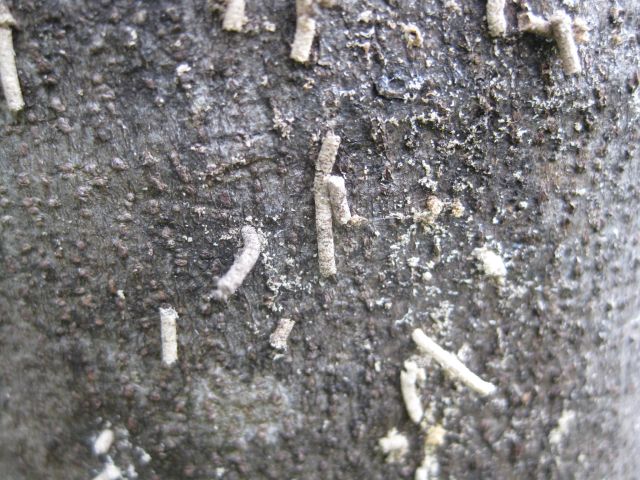
But the trunks did not sprout any growth and the activity which I noticed was not what I wanted to see.

excrement from borer attack on fig tree trunks

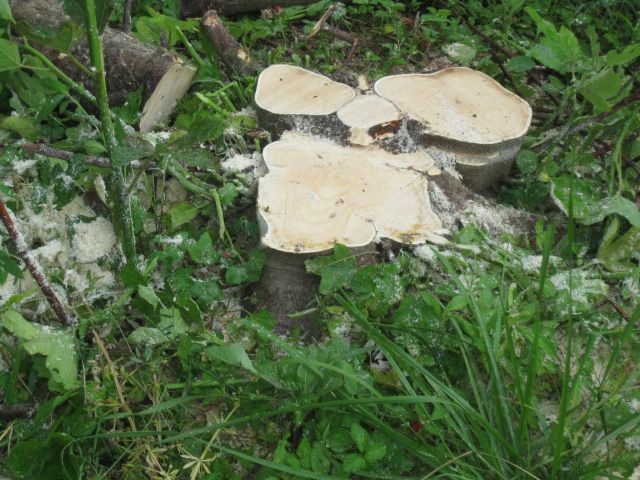
So the nutrition provided by the roots was feeding borer insects.  Another neighbor confirmed that all the fig trees in the area had died and the advice he had received was to cut them down to ground level.  Which I did.

my decapitated fig tree

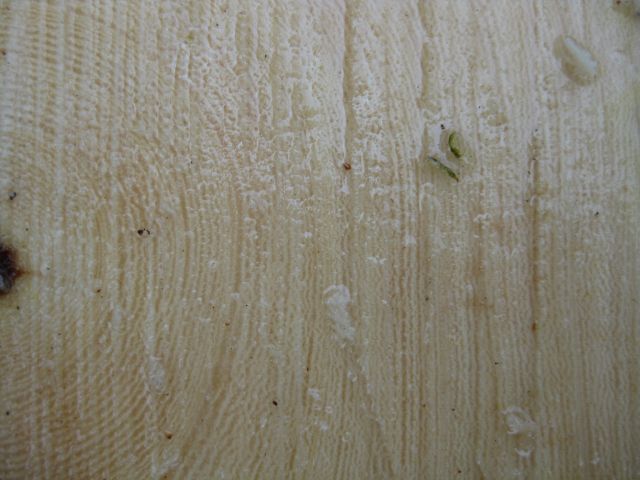
I was curious as to the age of the tree and looked at the annual rings but could not make sense of them – there appeared to be over 80 rings, perhaps they were not all annual rings.

many many tree rings - surely the tree was not that old!?
many many tree rings – surely the tree was not that old!?

And what to do with the trunks.  A few paces from the fig tree site is my tree nursery – I call it so because when I receive (purchase or cultivate) trees after early spring I grow them in this area until the fall when, with cooler weather, they have a better chance of surviving.  I am preparing the site for 40 nut trees expected in June.  This area is shaded from the setting sun by a huge maple tree.

the "tree nursery" is to the right (east) of the deck and the large maple tree
the “tree nursery” is to the right (east) of the deck and the large maple tree

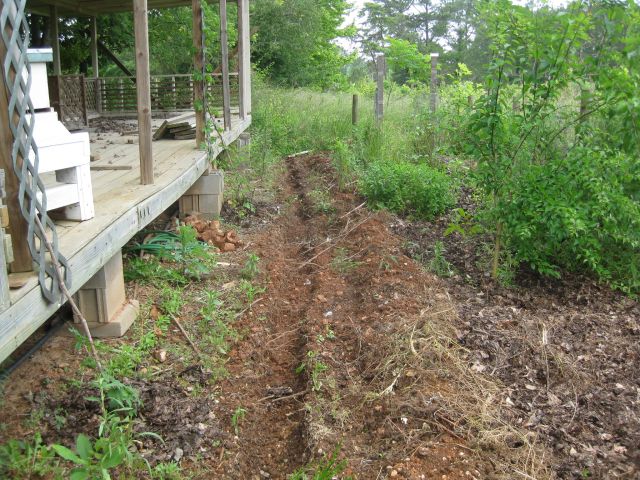
Only problem with the maple tree is its roots which sneak in and feed on my composted soil.  So I dug a trench between the growing area and the maple tree and severed offending roots.

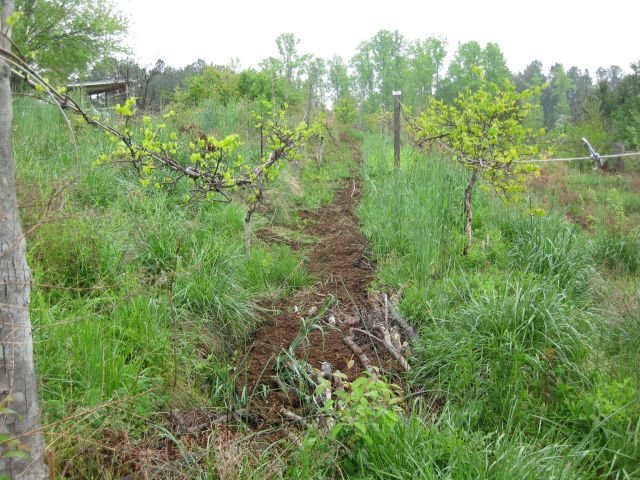
to the right of the trench are a couple of black locust saplings - their roots are supposed to fix nitrogen and I am leaving them in place
to the right of the trench are a couple of black locust saplings – their roots are supposed to fix nitrogen and I am leaving them in place

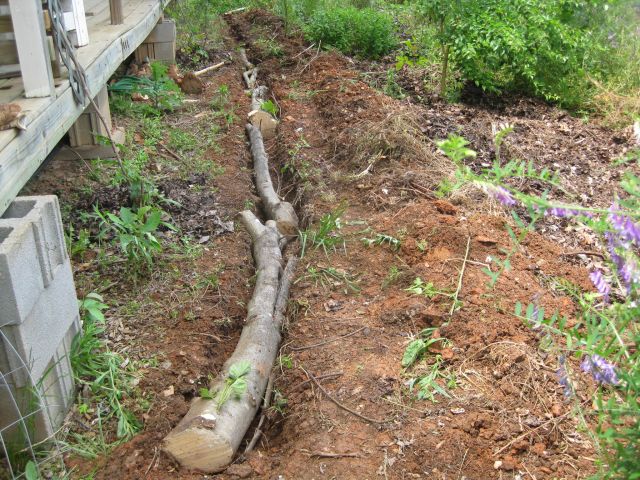
And then I placed the fig tree trunks in the trench where they will keep soil out of the trench, prevent weed growth, provide stepping stones for easy movement, absorb rainwater coming down the slope and add nutrients to the soil.

ditch partially filled with fig tree members

And while I was doing this I mulled over the events which produced such a cold winter with a polar vortex during an otherwise warming cycle.  My more conservative friends have explained to me that there is a silver lining to the warming in that mineral and fossil reserves in formerly ice covered lands will now be available for our benefit (I would say exploitation) as well as sea passages previously barred by ice (let’s ignore Miami, Florida and other low lying areas for the moment).  And even gardening enthusiasts have found solace from the expectation of growing less hardy trees such as citrus further and further north.  But if we have severe cold every few years then these southern transplants will be nailed.  It seems ironical and no cause for celebration, and perhaps nature is saying “if you f**k with me, I will with you”.


late freeze, black locust, a broody hen, frass and swarm lure

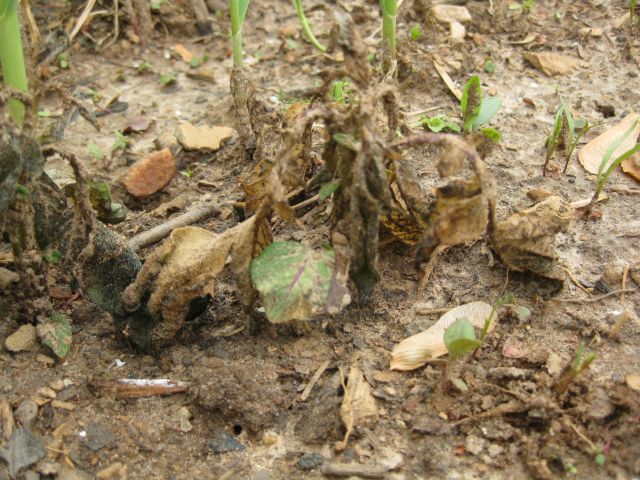
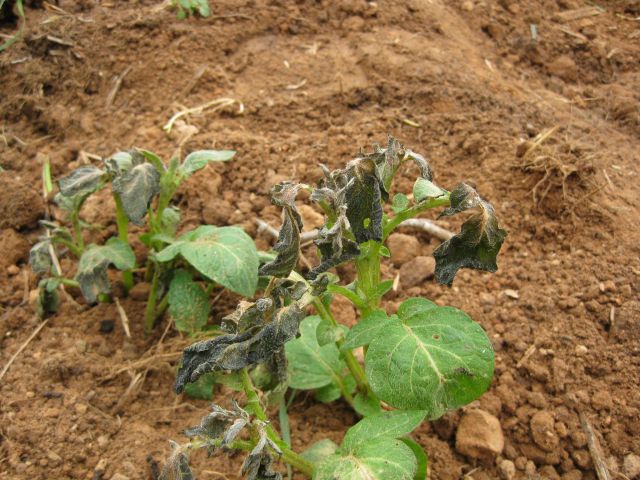
The average date for last spring freeze where I grow  should be after March 30 and before April 10 based on a map provided by the National Weather Service.  On April 16 the temperature in our area fell to 30 deg F and caused some damage.  The potato plants suffered – the volunteers on the ground surface were almost wiped out –

freeze damaged potato plant

While the potatoes I had planted in a trench had less extensive damage –

potato plant in trench showing some freeze damage

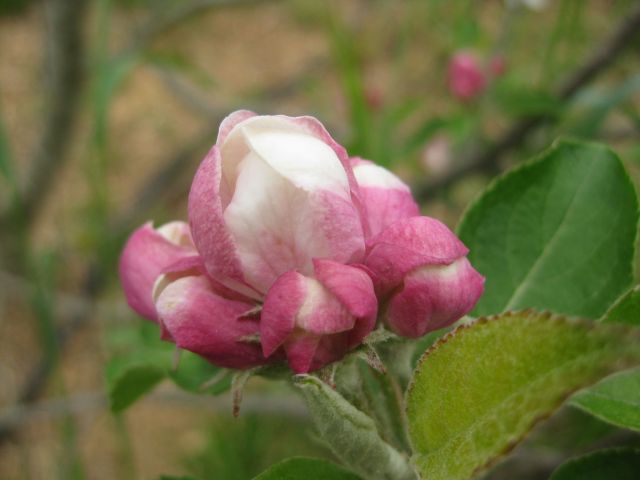
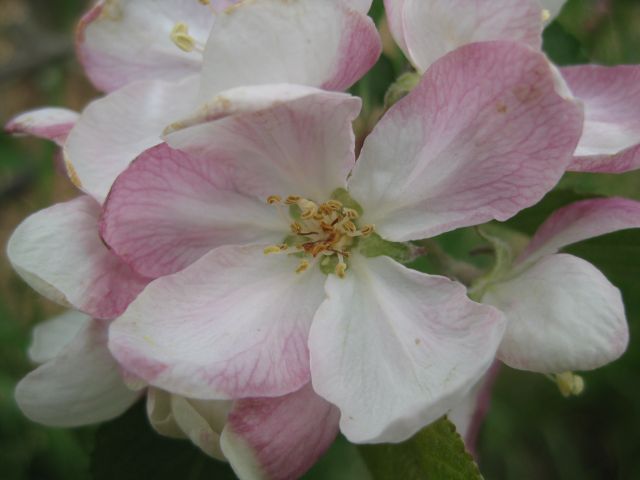
I was concerned about my apple trees some of which are in blossom but they seem fine –

this apple blossom a couple of days after the freeze was unaffected
and this apple blossom seems happy too

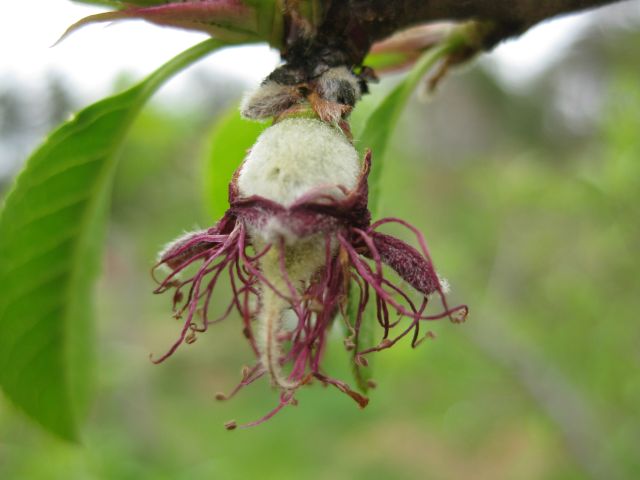
But there were many signs elsewhere of freeze damage such as kale plants showing whitened or yellowed leaves.  My pears and peach had already blossomed and set so they were past danger.

usually my peaches are nailed by late frosts/freezes but this time the freeze was too late and this will be a peach in the summer

And my blueberries appear unaffected, tho some gardeners in Atlanta complained of damage.  And my muscadine are now accelerating growth.

muscadine are hardy, greening well and with long growing horizontal roots seem to do well anywhere in this area

Black locust

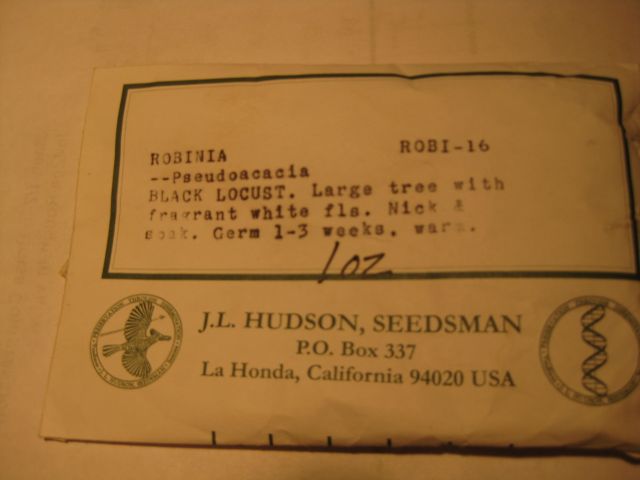
A couple years ago I bought Black Locust seed and germinated 10 seeds.  I decided a few weeks ago to transplant the saplings to my orchard where I am increasing the diversity.  The roots fix nitrogen and the tree is popular with bees.  There must have been 100 seeds in the packet I received.

my source for unusual seeds including recently 3 varieties of Amarinth, and stinging nettle,quinoa and
my source for unusual seeds including recently quinoa, stinging nettle, epizote and 3 varieties of Amarinthe

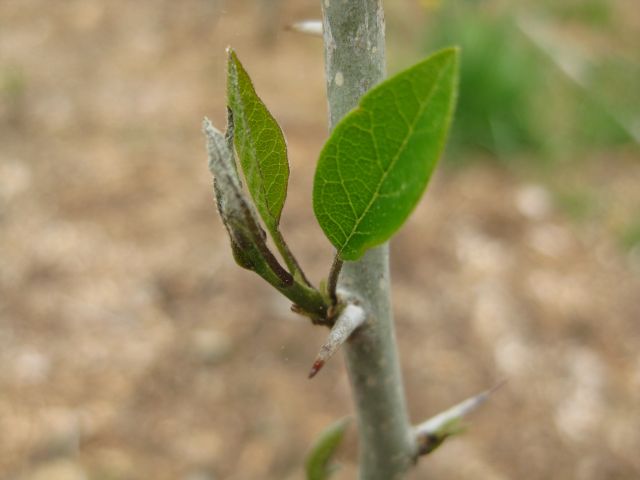
I decided to try germinating more black locust since I have spots on the hill which I seldom visit where they will thrive.  The “seldom visit” caveat is important – they have nasty thorns as you can see on this young specimen.

Young black locust with thorny protection

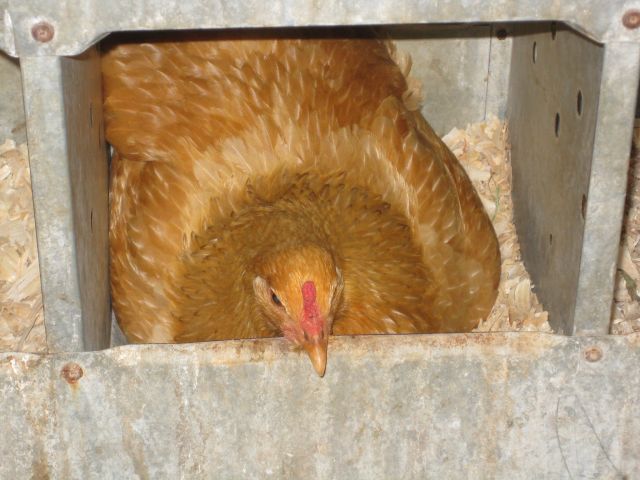
Broody hen

I have kept chicken for several years but this was my first encounter with a broody hen.

broody hen
broody hen

She refused to leave the eggs she was guarding, pecked sharply, fluffed out her feathers and made an unusual warning sound.  I was undecided what to do.  Part of me recognized this is natural and far more natural than incubating the eggs which I have done successfully on two occasions.  But there were other considerations.  When I incubated the eggs four viable chicken of which one was a rooster, were produced each time.  I was lucky there were only two roosters and doubly lucky that a nearby farm agreed to take them  both and I now see them in the field whenever I drive past the farm.  But what to do with more roosters?  Our one rooster takes good care of his 10 hens and a 2nd rooster will create considerable stress as occurred previously.  A second factor is the hen is the daughter of the rooster and the eggs she was sitting on were hers or her sisters so with this inbreeding there is an increased likelihood of non viable chicken.  In the end I removed the broody hen from the 5 eggs she was guarding and cracked them open over the compost heap.  Four of the 5 eggs would have produced chicken – my bad – I should not have waited as long as I did.    I temporarily separated the broody hen but as soon as I released her she gobbled down some food and headed to the nest box to sit on more eggs.  I shall have to keep an eye on her and remove her from the eggs each day until the habit is broken.

Other hen news

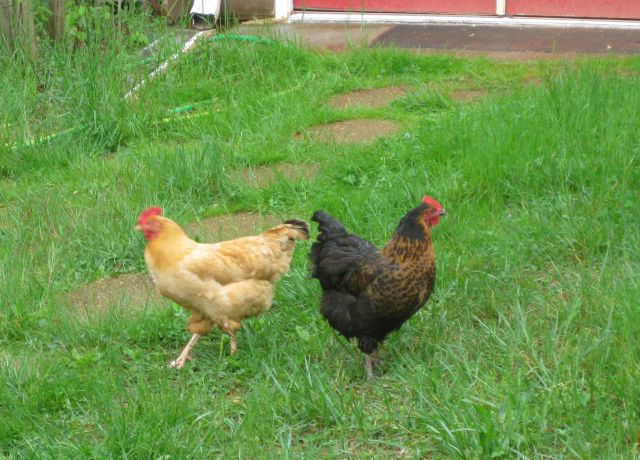
Two of the hens are fliers and wanderers.  They have discovered the grass is greener on the other side and they regularly fly over the 5ft fence.  The first to do so was the black hen who we call Wanda being a wanderer and the second is named Randa.

Wanda and Randa
Wanda and Randa

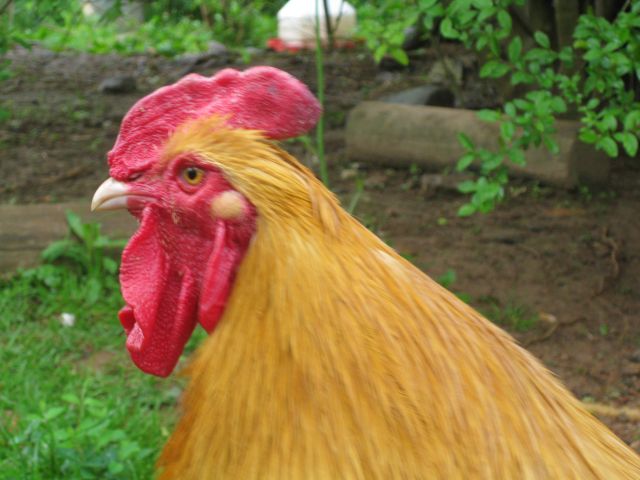
The cold weather did not affect the chicken except that the points of the rooster’s comb turned black.  I massaged them with vaseline – since he has fierce spurs you have to grab him quickly when he is eating and grip him between the knees – he seemed to appreciate the ministrations and quickly forgot the indignity when released.  When spring arrived the black tips either fell off or were removed by one of the hens.  He now has a rounded comb.

rooster with rounded comb

Frass

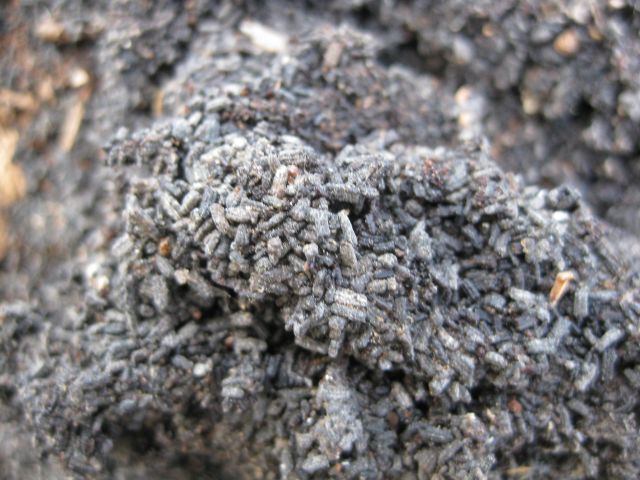
Frass is poop of insects.  In this case the larva of the wax moths which colonized the honey frames I put into storage.  I had placed the honey frames in contractor grade black bags securely tied.  Didn’t help.  What I should have done was to freeze the frames and then place in storage – next time.  The black bags were ripped in many places and the wax on the frames mainly gone and replaced with black frass on the lowest surface.  The frass I collected and added to the compost heap, maybe it will do some good there.

frass
frass derived from wax and honey

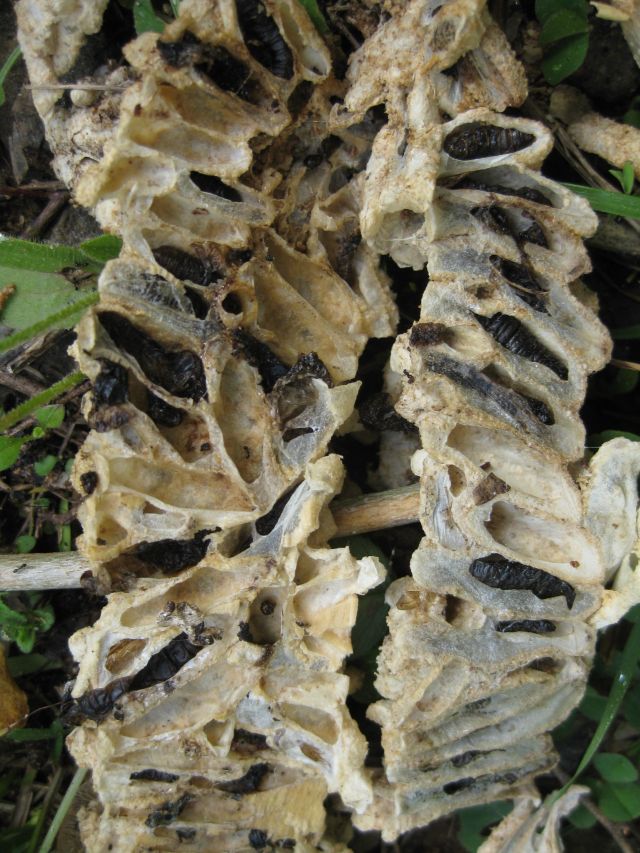
The frames were covered with cocoons and in each one there was a black slug, maybe from the larva as it grew – reminded me of a belt for machine gun bullets.

underside of larva cocoons scraped off my honey frames

I removed the plastic foundation from the frames and spent considerable time scraping and scrubbing them clean.  I decided to discard some of the badly damaged wood frames.

I used a salvaged deep, 9 frames and foundation to make a swarm lure hive.  I bought swarm lure last year and had a couple surplus refrigerated vials.  I added the contents of one vial to a small piece of paper towel inserted in a small ziplock bag held open by a stone at one end.   Hopefully this hive will attract a swarm.

swarm lure hive on a deck away from humans

at last some growing activity

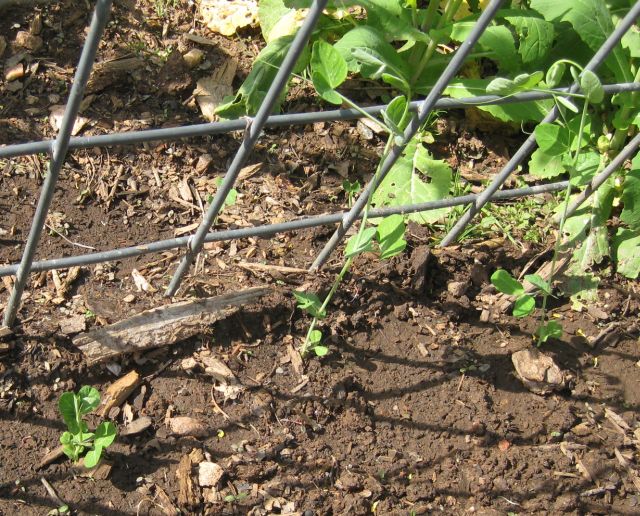
The occasional cold temperatures in March dissuaded the plants from growing.  This was evident from an experiment with peas.  I moistened the peas and those which appeared to be growing the fastest I planted outdoors and  the remainder I planted in a soil container in the greenhouse.  Until a week ago very few of the peas planted outdoors had broken surface.  Those in the greenhouse grew steadily.  Today I transplanted the greenhouse peas.

the pea plant on the left was planted in March, on the right are two siblings from the greenhouse planted today

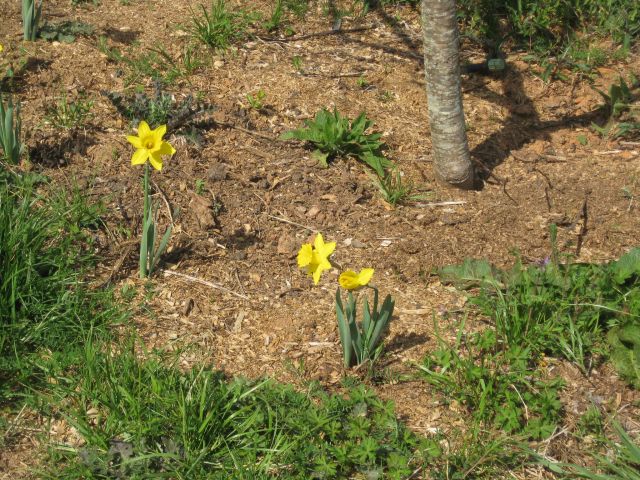
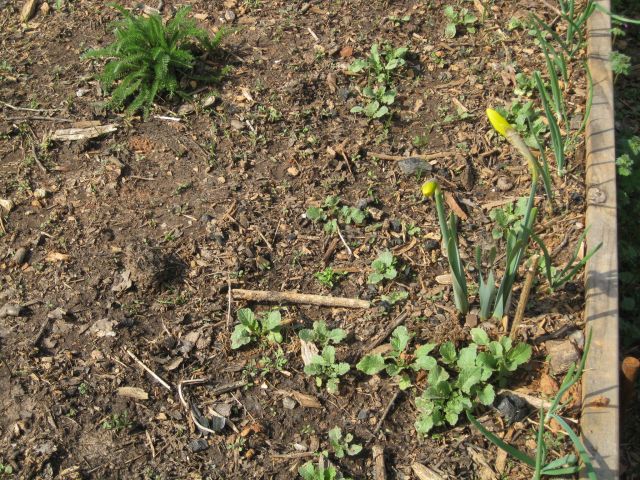
Of course the daffodils are out and my comfrey plants have surfaced from the root fragments I planted in December.

the comfrey is the small plant to the left of the apple tree trunk

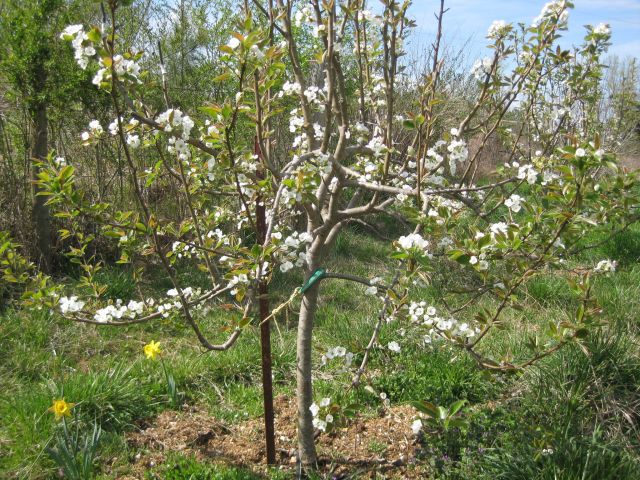
The pear and peach trees are the first to blossom – here is a well bedecked pear tree.

white blossomed pear tree

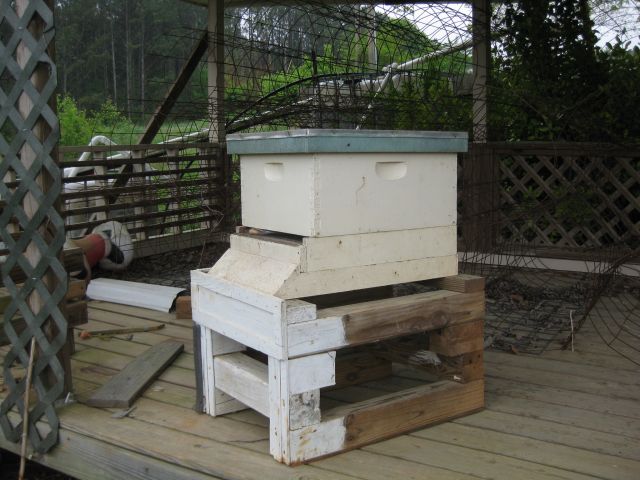
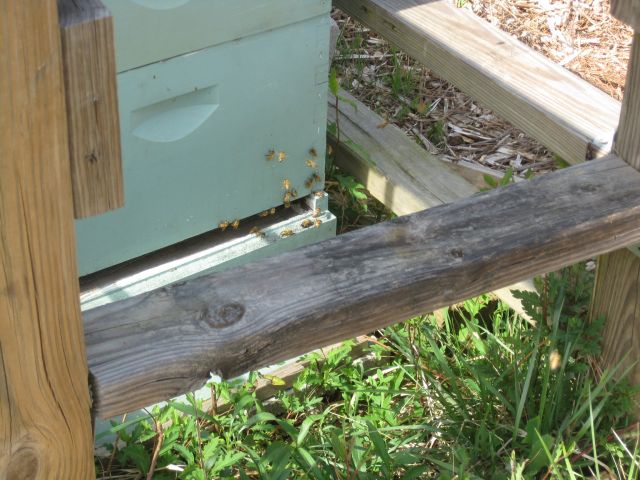
A couple days ago I again sprayed the trunks of the fruit trees, but not the blossoms, with neem oil and will keep a good look out for pests.  I probably mentioned that my bees survived the winter.  They are now very active together with many other types of pollinators.

busy bees arriving and departing

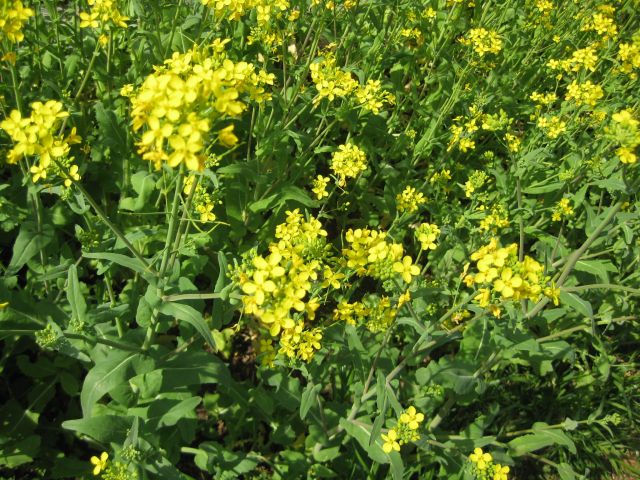
The precocious kid next door looked at them and said “buzzy bees” and then with a smile looked at me and said “get it?”  Some of the greens are flowering.

a mass of yellow flowers beckoning pollinators

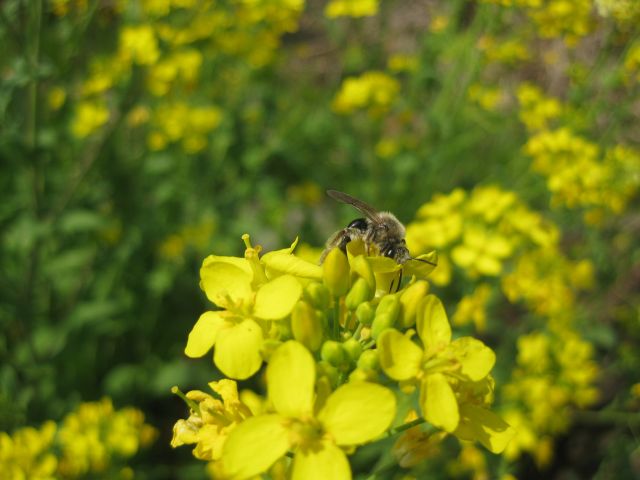
And if you step closer you see the pollinators.

a bee at work
a bee at work

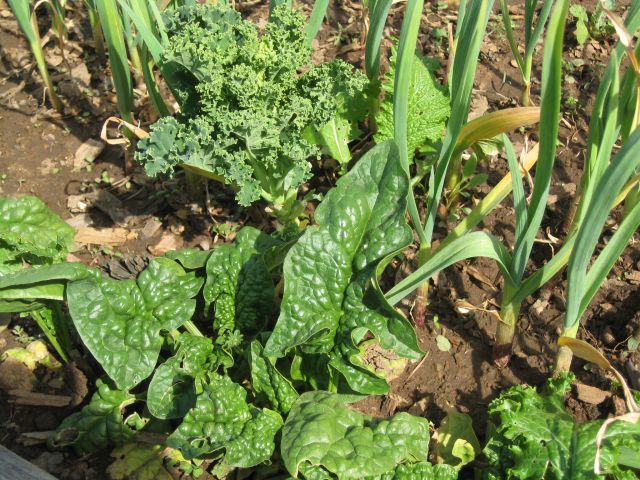
The spinach, kale, mustard and garlic are now beginning to grow.

spinach kale and garlic are stepping up,  all are transplants
spinach kale and garlic are stepping up, all are transplants

Of the vegetables seeded this year, the radishes are doing best.  Here they can be seen with yarrow and some daffodils to add cheer to the scene.

a sparse array, though many other vegetables such as lettuce and collard have now germinated in the soil

Last year I grew yarrow from seed and it did so well in January I took root segments and planted them in each of the raised beds.  They have all surfaced and are growing well.  Plus the many onion bulbs I planted out in January.  I will replant the daffodils.  A big annual event for me is releasing the ladybirds.  For whatever reason each year they hibernate in the one bathroom – they disappear in the crevices and then suddenly one day, there they are.  I collect them by tipping/knocking them into a yogurt container and then I cap the container and walk them to the vegetable area.  The photo below is horribly blurred but I kept it since it records the date the ladybirds arrived – all of them within a two day period.

some of the ladybirds in a yogurt container

I made 5 trips and with approx 20 ladybirds in each container, I guess I added 100 beneficials and I was pleased to see one of them this morning sunning on a leaf.

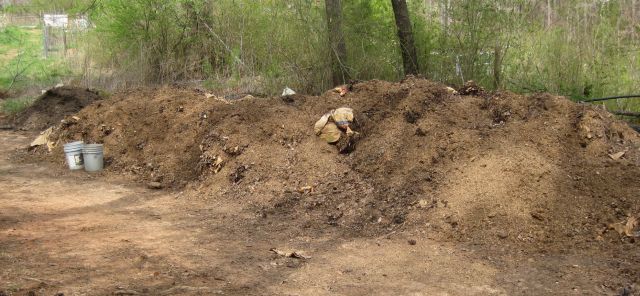
I built a large compost heap this year from approximately 200 leaf bags.  I previously commented that I have too much brown and too little green ingredients, so I added horse manure which comes with straw to help balance it out.

assembled compost heap - it should be ready by August and then look like the finished heap at the end
assembled compost heap – it should be ready by August and then look like the finished heap at the end

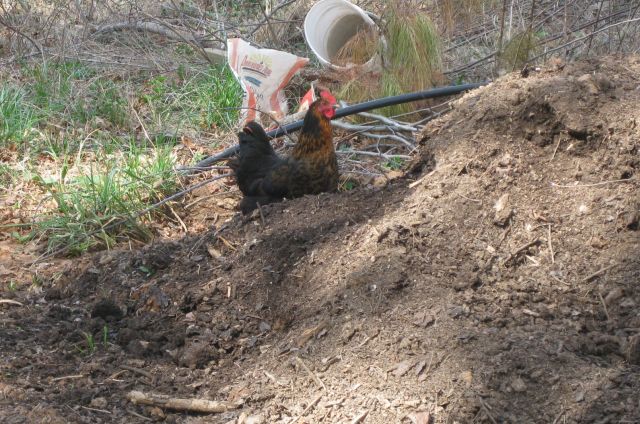
And the chicken are producing – an average of 8 eggs a day from 10 hens two of which are seniors.   Two of the younger hens frequently fly over the paddock fencing to explore and feed.  Today I noticed Wanda (abbreviated from wanderer) had discovered the compost heap.  She is the daughter of our Buff Orpington rooster and her mum is a New Jersey giant.  The only trace of dad is the gold coloring on her neck.

Wanda the wandering hen


starting the tomatoes

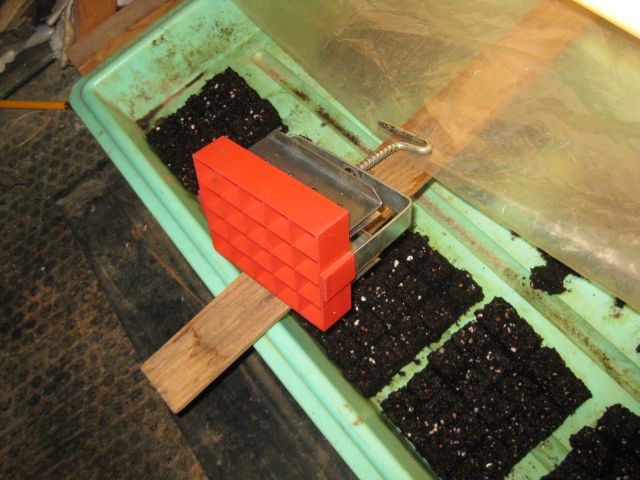
The annual ritual commences – germinating tomato seeds for the summer.  I have a number of varieties stored in their original paper packets in a ziplock bag (but not zipped) in the basement.  And each year I select 4 of each variety for growing.  I moisten commercial seed starter mix and with my mould produce a 20 block rectangle of  0.75″ individual soil blocks.

the mould for producing the rectangle of 20 .75" soil blocks,
the mould for producing the rectangle of 20 .75″ soil blocks,

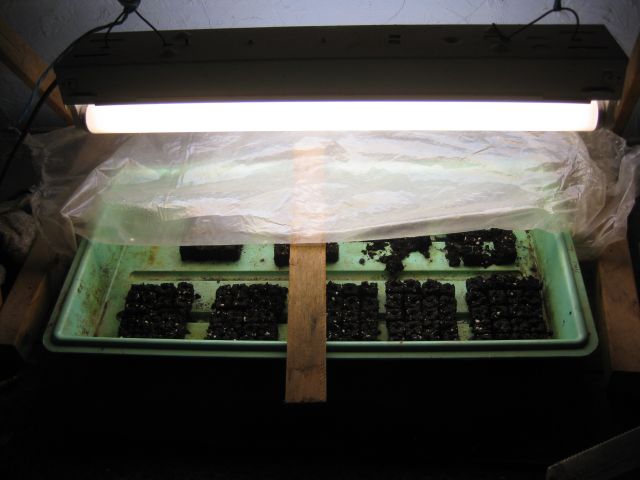
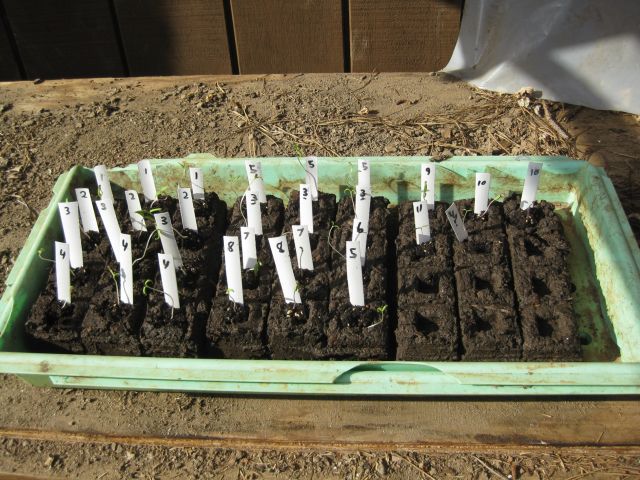
Into each block I insert a single tomato seed on the tip of a moistened pencil.  The seedling tray sits on a heating pad below a timed fluorescent light in the basement.


the germinating set up - a tray with seeded soil blocks; a plastic sheet to maintain humidity, a heating pad below the seed tray, and a time fluorescent light started about 4 days after seeding
the germinating set up – a tray with seeded soil blocks; a plastic sheet to maintain humidity, a heating pad below the seed tray, and a timed fluorescent light started about 4 days after seeding

On 1/13/14 I seeded the blocks and by 1/22/14 the seedlings were ready for relocation to 2″ soil blocks made from my compost, play sand and other additives.  Now the cold has departed (for the time being) I locate the 2″ blocks in the greenhouse where they benefit from real sunlight and where they will develop to be transplanted later to pots and then to the growing areas.


2 inch soil blocks in the greenhouse.  rather than naming each variety I provide the # I assigned to each variety
2 inch soil blocks in the greenhouse. rather than naming each variety I provide the # I assigned to each variety

All my varieties germinated with at least 3 out of every 4 seeds (75%) except for Big Beef and Brandy Wine, and the Sugar Cherry only has 1 germination tho more are indicated.  Here are the vital stats:

Good germination:  Beefsteak – American Meadows purchased Jan ’10; Mortgage Lifter – Southern Exposure Seed Exchange Feb ’12; Jelly Bean Hybrid – Ferry-Morse Mar ’13; Yellow Pear – Burpee Signature Mar ’13;  Black Prince – Johnny’s Feb ’11; Cherokee Purple – Johnny’s Feb ’11; Rutgers – Ferry-Morse ’10; Georgia Streak – Southern Expos Seed Exchange Feb ’12; Siletz – Peaceful Valley Sep ’10; Sweet Olive – Johnny’s Feb ’11; Cherokee Purple – Botanical Interests Feb ’10.

I notice that the Big Beef which did not germinate is a pelleted seed and this is probably too large for starting in a 0.75″ block.  It was purchased in Mar ’13 and I will try again and bury it in a small pot.  The Brandywine was purchased in Dec ’08 more than 5 years ago, so the seed is probably no longer viable.  The Sugar Cherry was purchased in Feb ’12.  Gratifying that tomato seed purchased in 2010 is still viable.

In addition to the old tomato seed, I made 4 acquisitions.  I googled tomatoes for the southeast (heat and humidity) and, of the varieties recommended 3 stocked by Johnny’s caught my interest  – all are hybrids – Juliet, Big Beef and Mountain Fresh Plus.

My 4th acquisition was Ukranian Purple – I took a pinch from a packet on a table at a seed exchange day hosted by the town of Decatur on National Seed Swap Day on Jan 25.  We had a representative from the Seed Exchange present who provided useful tips on saving seed, with a focus on tomatoes.  Apparently tomato is largely self pollinating and so long as the varieties are 15 ft apart, the seed saved should be true to variety.  The gift of Ukranian Purple,the advice proffered and the challenge, have now resolved me  to save heirloom seed this year.  And so, instead of a my usual mass tomato planting I will plant the heirlooms in separate groups by variety.  The hybrids can be planted together since I will not bother with their seed or, maybe I will.
why I feel better about the appearance of my organic veggies

I recently attended an open house event at a  local organic farm trending to permaculture.  I wandered the fields with the manager and we discussed many topics.  It was only later when I was by myself and walking his rows that I noticed how perfect his vegetables looked.  No weeds – well I could manage that too if I was doing an open house, but not a single insect chewed leaf!   By that time the manager was busy with other visitors and not accessible.

I thought long on what I had seen.  Their compost heap was far from humming which made me think their organic growing skills were still on the uptake.  Now when I build a new compost heap it also looks pretty rough but I always keep finished compost on the side to provide a bio-organic boost.  They did not have any finished compost in sight and their heap didn’t look that new either.  So it seemed to me unlikely that they could have mastered pest free organic growing, which incidentally if you use a tight definition for “organic” , I regard as an impossible goal.  I mean think about it – if your system is in balance with well nourished high immune level plants and beneficials on the standby to consume pests as soon as they appear, then yes, the pests will not get to first base on the first leaf.  But this is an improbable assumption – the beneficials depend on pests for sustenance (that’s why pests precede beneficials in the march of Spring) and cannot survive and be on red alert if there is not a continuous supply of pests and for pests to be around they have to snack and so you gotta have chewed leaves.

So how could this relatively new farm have perfect looking vegetables?  Yesterday the manager visited my outpost and I casually raised the topic and the answer – a well known pyrethrin spray.  It is an effective and expensive knock down spray and is OMRI approved which means you can use it and say you are organic growing.  I suppose because it is derived from natural ingredients (chrysanthemum) this means it is natural.  It will take out all insects including honey bees and beneficials, so as for honey bees you spray when they are not around and as for beneficials, since your spraying killed the lot of them, then per the instructions “plan to reapply them” 1 to 2 days after the spraying.  We have reached the stage where beneficials are applied just like a chemical!  It seems that once you go down this route you probably going to end up doing a lot of spraying.

So is this really organic growing?  Depends on how tight your definition is.  Are natural ingredients empowered by human ingenuity that much different from synthetic ingredients?  Are pesticide sprays from natural ingredients less toxic to humans than synthetic sprays? For me, growing organic is assisting but not enforcing – I encourage beneficials, I make compost, I want nature to run its course and I am perfectly happy with sharing some veggies with pests.  And my take away is that with the exception of some veggies which seem to grow perfectly with little pest pressure (lettuce, radish and garlic come to mind) the next time I see perfect looking organic vegetables I will wonder if spraying was used.

as the season winds down

It has been some time since my last post.  Coursera, the online education system, has absorbed a lot of my time.  I can spend 10 to 15 hours a week just on the calculus course with The Ohio State University. Plus I am enjoying Animal Behavior with the University of Melbourne, Australia, and What a Plant Knows with Tel Aviv University.  And for an unconventional outlook there is A Brief History of Humankind from the Hebrew University of Jerusalem.  Plus I am busy with Fall tasks.

This summer has been good for me – plentiful rains, good food and limited pest issues.  My apple trees were bountiful and the Giant Korean pear outperformed everyone else.  As the season winds down there are still figs to be picked.

still some figs remaining tho the best are gone

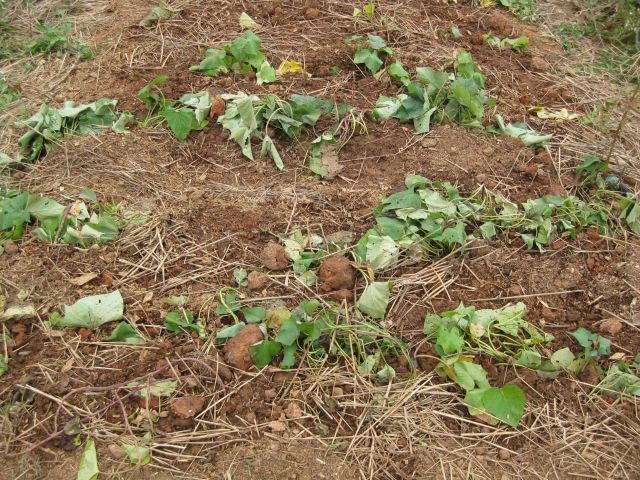
This fig tree is at the top of the hill with 2 small tanks which gravity feed to the plantings.  The higher tank provides water for the fig tree level – the pressure is unsatisfactory and I have devised a method using several valves to have the pumps at the base of the hill directly pressure irrigation at the top level.  This additional pressure now makes hose watering feasible and I am relocating strawberry and sweet potato plantings to the top of the hill.  My first year of sweet potato production was meager but the microwaved sweet potatoes were delicious.  I hope to do better next year with more sun at the top of the hill.  Below are some of the sweet potato leaves I trenched and will cover later with hay.


3 varieties of sweet potatoes which I hope will provide starter stock next year

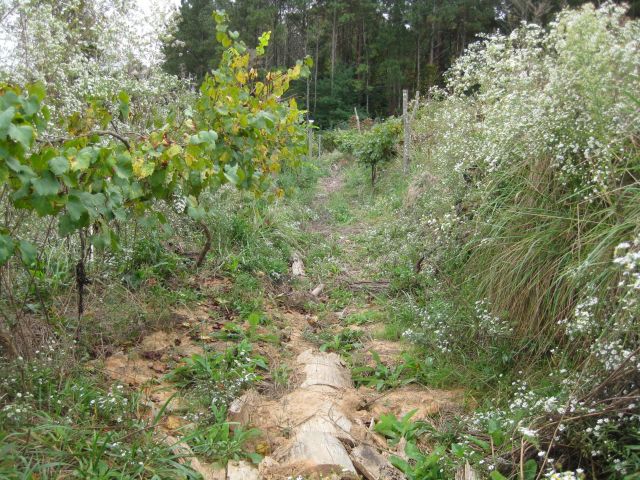
Last weekend was a muscadine pickers delight – one vine was overladen with large delicious scuppernong.  I have muscadine at several locations.  The best performing are those on the hillside.

these muscadine did well - notice the central contour ditch filled with logs
these muscadine did well – notice the central contour ditch filled with logs which store water and provide nutrition

I allow wildflowers to run rampant and now the daisy and goldenrod are filled with my honeybees.

101513 wildflowers
a field where I bush hogged a path. I have planted out various saplings grown from local nuts and in a few years hope for a more foresty look

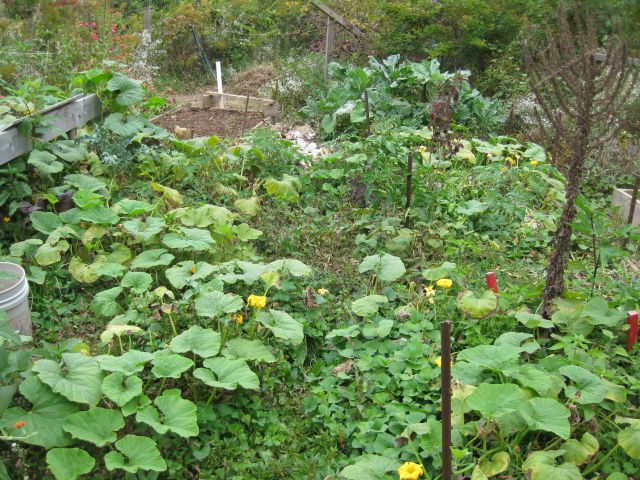
In my vegetable area I am allowing the squash plants to have a last fling – this is the first year I actually had such plants since previously they were leveled by the squash borer.  Probably attributable to increased diversity of flowers whose nectar may have attracted borer predators.


squash and melons on the run - the squash is not great but the chicken like it
squash and melons on the run – the squash is not great but the chicken like it

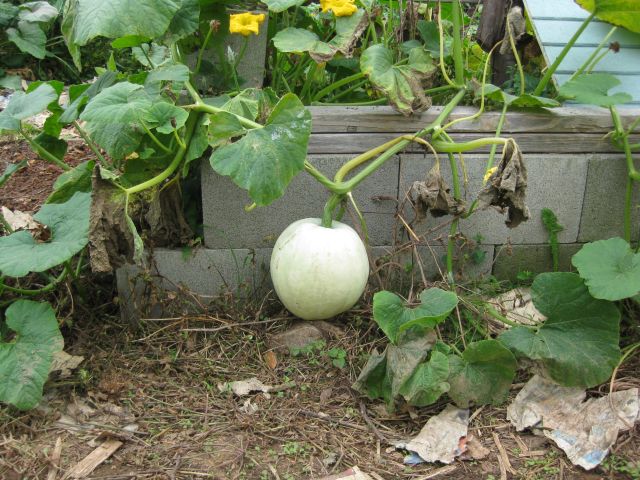
And here is a candidate soon for harvesting.

a melon soon for the table

Elsewhere I am clearing raised beds, composting and planting out lots of garlic as well as kale, radish, lettuce etc.

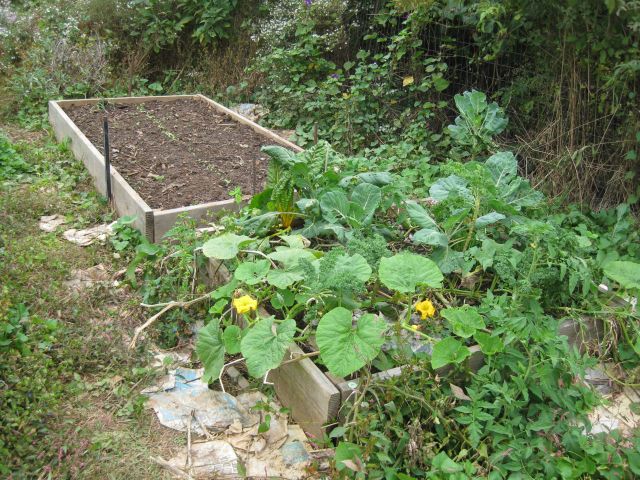
the bed at the rear has been seeded, the closest bed has been an excellent producer throughout the year

the bed at the rear has been seeded, the closest bed has been an excellent producer throughout the year probably due to liberal doses of my compost

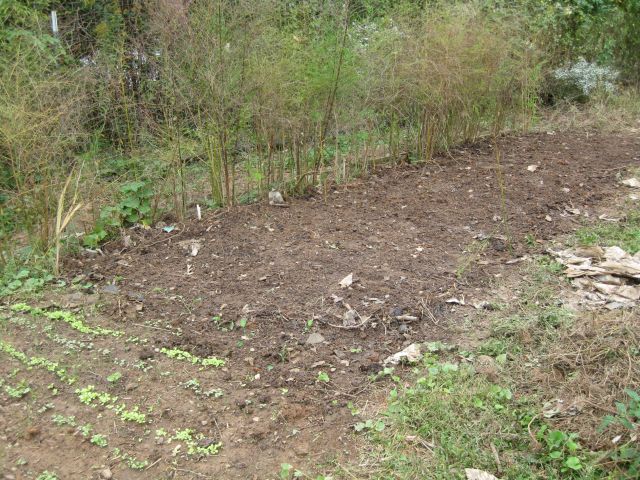
I have had most success with raised beds though here, alongside the asparagus I am seeding directly into the ground.

mainly seeded with garlic cloves tho lots of cool season vegetables have been included

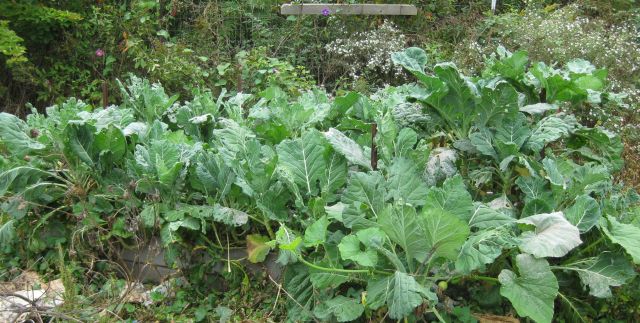
My collard performed well throughout the year.  They were healthy and grew strongly and even when attacked by pests there was always some for me.
some collard plants were relatively unscathed.  I did do occasional dustings with diatomaceous earth
some collard plants were relatively unscathed. I did do occasional dustings with diatomaceous earth

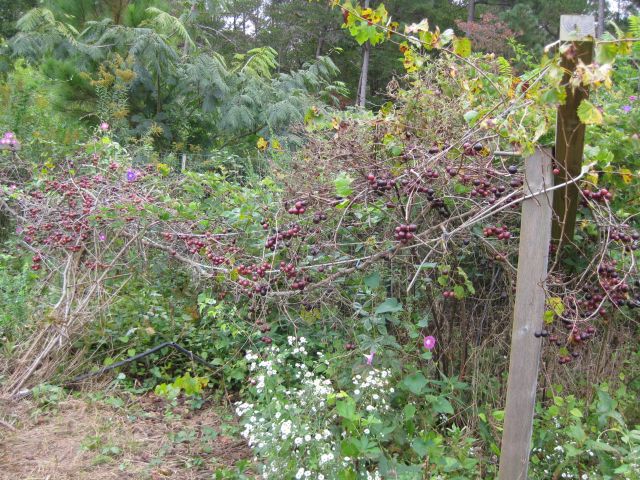
I mentioned my best muscadine was on the hillside.  Altho these vines at the base of the hill have produced large grapes they are not tasty.  Next year I will prune more severely and feed with lots of compost and stable manure and try again.


muscadine looks good but really isn't
muscadine looks good but really isn’t

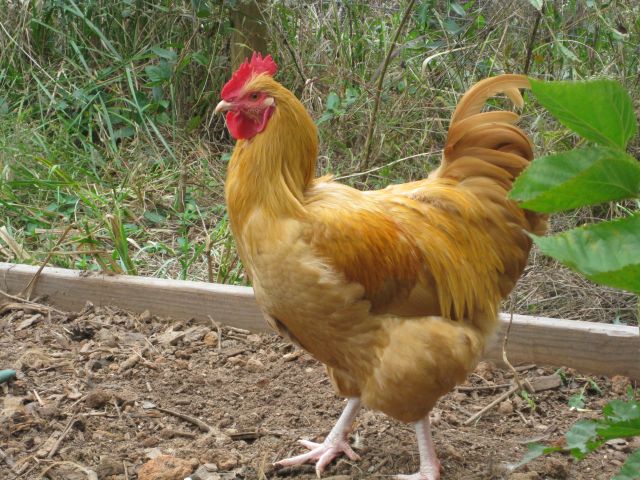
All my chicken are doing well.  The four I incubated in June have grown largely, though the hens are not yet laying eggs – may have to wait for the spring.  And the young rooster is bigger than his dad, tho he has no spurs (yet) and is somewhat timorous (soon to change, I am sure).

young rooster on the raised bed for plantings for the chicken.
young rooster on the raised bed for plantings for the chicken which they have demolished

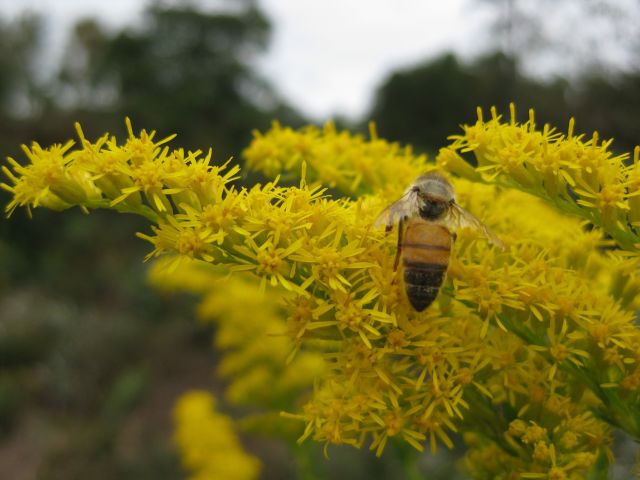
And finally one of my busy unpaid workers on goldenrod.


goldenrod with a bee worker


erupting fungi

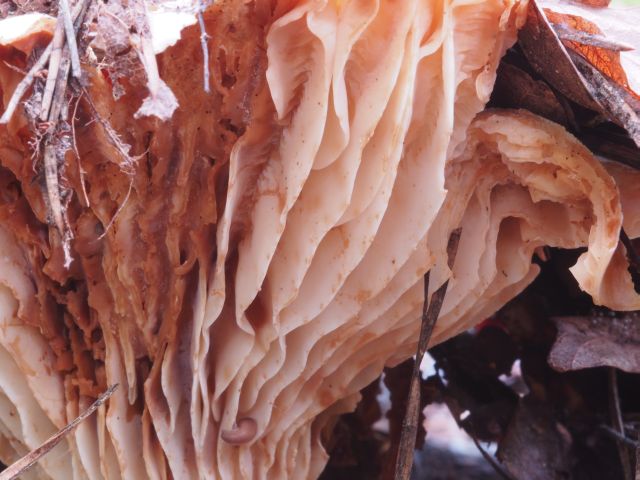
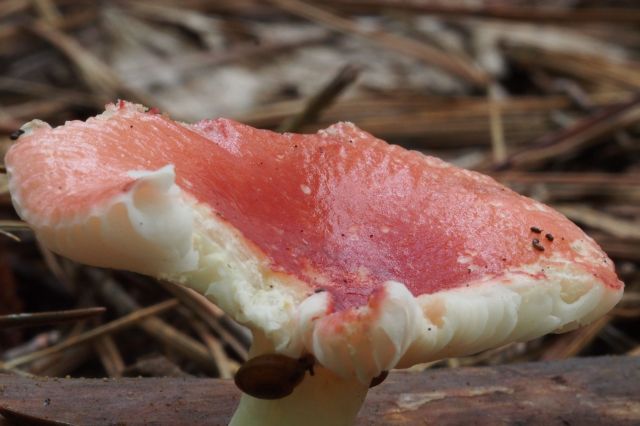
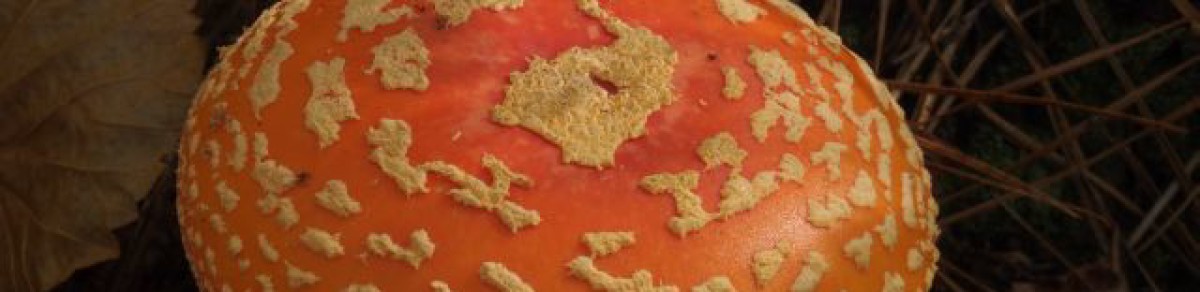
Rain continues to drench our region and, unsurprisingly fungi are erupting in the woods.  Domes up to 1 ft diameter shoulder aside pine needles and mulch.  The underside where new life is stored and released is mysterious and almost cavernous when you get close enough and small enough.

underside of a large ageing mushroom

There is no shortage of feasters – here is a slug at work

a small slug continuing where others left off

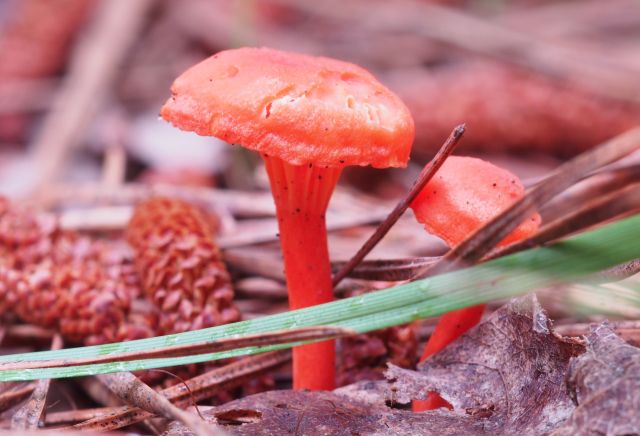
And no shortage of color, sizes and shapes


bright colored small mushroom

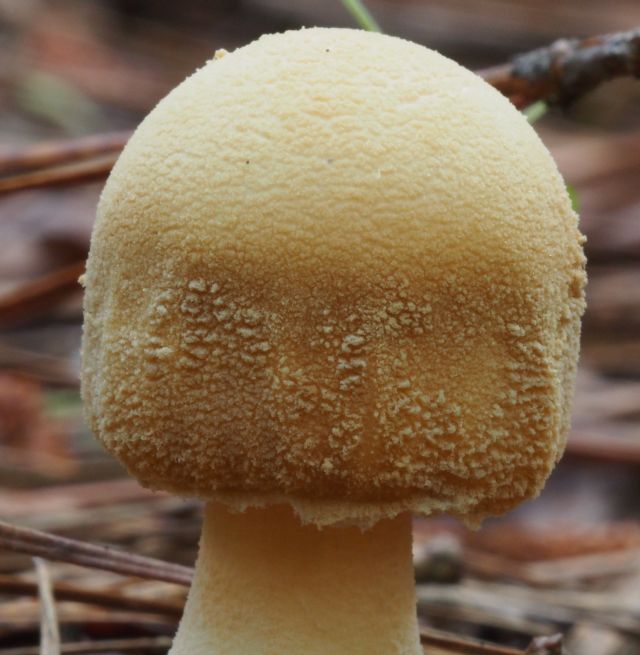
Some seem a bit drab


drab but stolid
drab but stolid

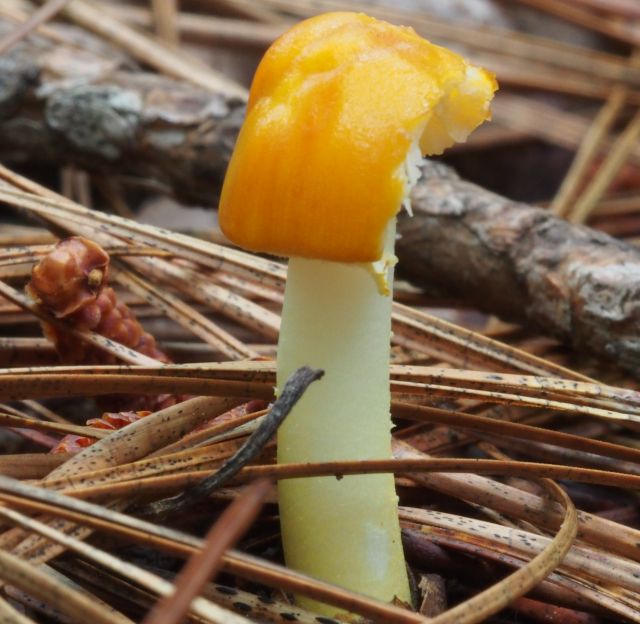
And some are half eaten


half eaten snack
half eaten snack

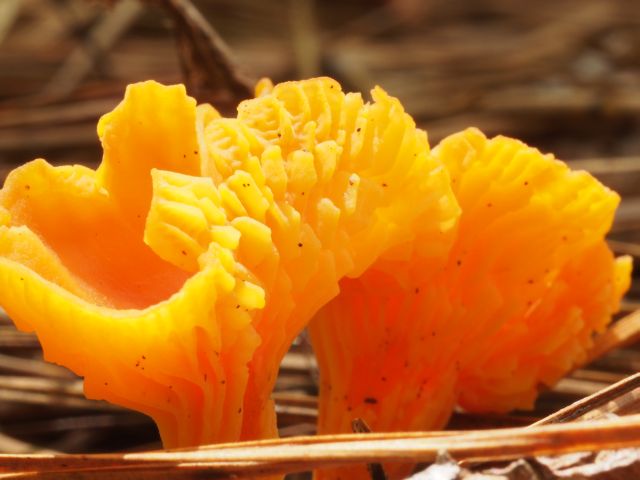
And some are all frilly and dressed for dancing


frilly eye catching
frilly eye catching

All of which adds to the pleasure of walking in the woods after days of rain.


mullein is an unusual plant

The Permies permaculture website recommended mullein.  So last year I bought seeds of 3 varieties and grew them.  In their first year they are low lying with large very soft leaves.  The leaves can be used for various purposes and apparently the plant has some medicinal uses.  But they appeared to contribute little to my vegetable garden.  Unlike comfrey (one of my favorites which sends its roots deep to mine nutrients) the mullein roots run horizontal and suck the nutrients out of the adjoining soil.  True I cut the leaves and drop them as a mulch and they will return nutrients to the soil but this seems to add little for the work involved.

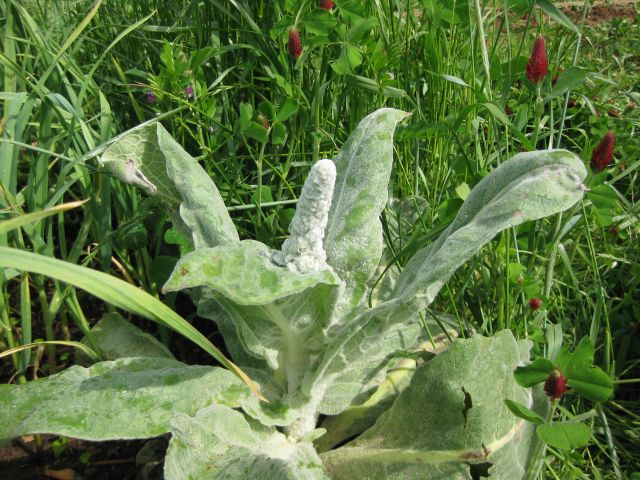
But in the second year they are a spectacle. A central stem emerges all soft and downy.

mullein in its 2nd year taken 4/26

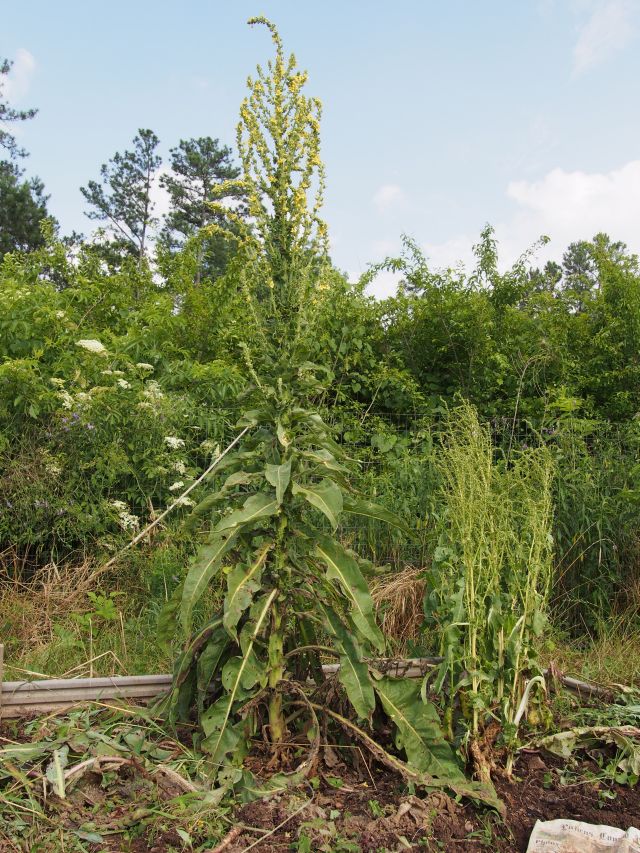
Then little yellow buds appear on the stem and it begins rapid growth. I heard it would grow to 5 feet, which I thought implausible but the tip of the specimen below is almost 6.5 feet above the ground.


a tall mullein plant

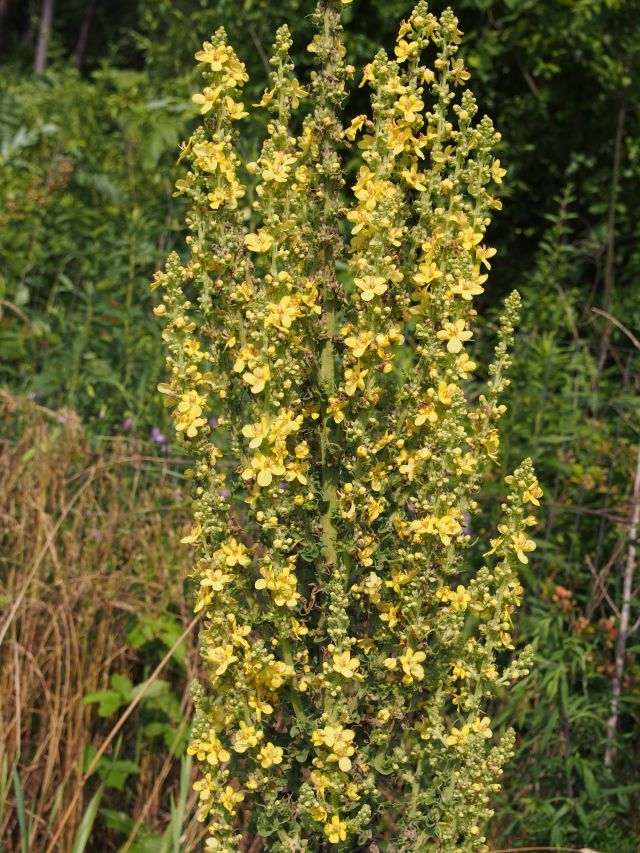
And the yellow buds develop into a complex maze of flowers.

masses of little yellow mullein flowers

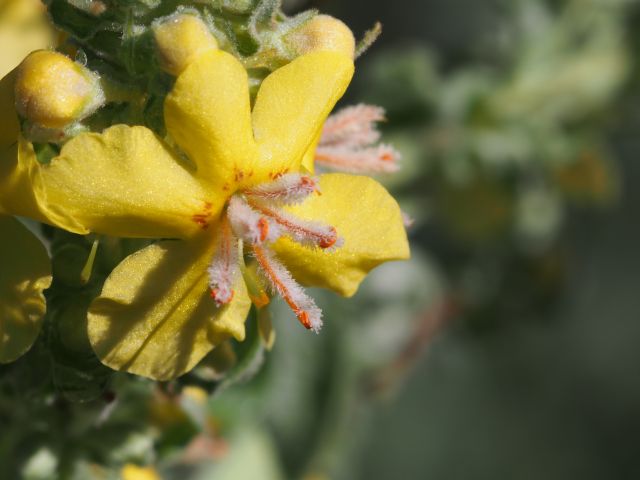
The flowers are small but attractive.

a single mullein flower

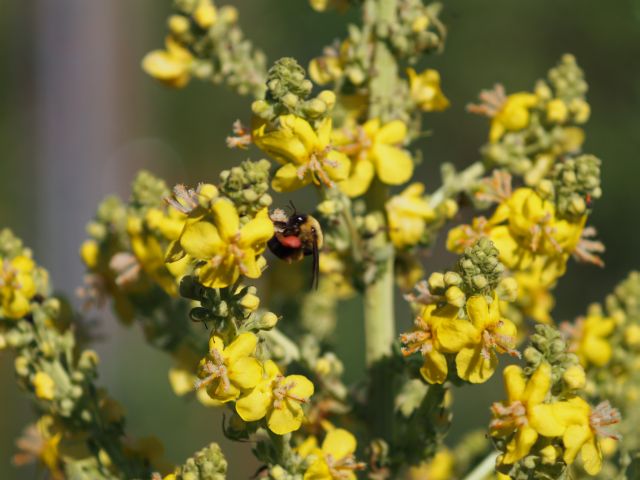
And attract hosts of visitors.

a bumble bee at work

Then suddenly it is over and all the central stem is a skeleton of its former self, and the mullein is gone.  Perhaps to return next year?