when things go wrong

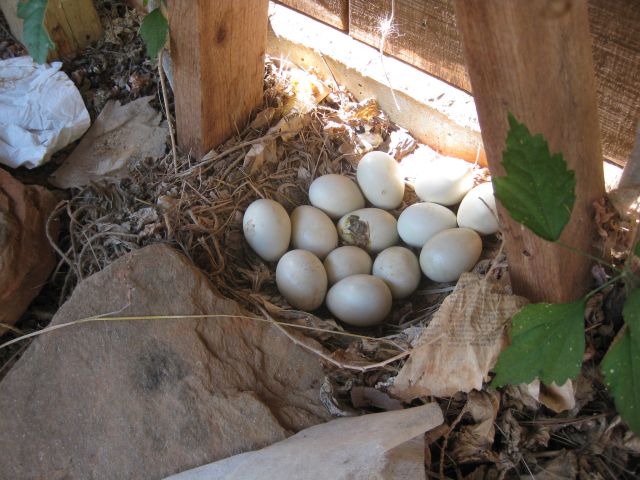
When I last mowed the grass/growth in the main chicken paddock, I left the center unmowed because the clover was in bloom and pollinators were busy.  So on Tuesday I fired up the lawn tractor (see prior posts on various repairs including welding of deck) and as I did the first outer loop happened to notice a clutch of eggs in a hollow at the base of a pine tree.
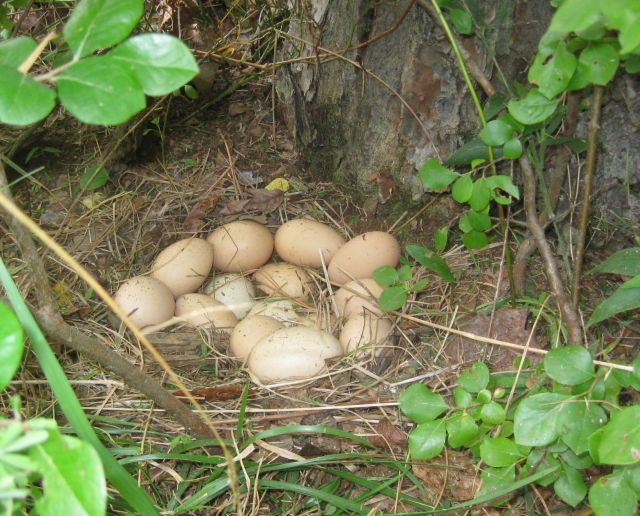
16 eggs including 2 dropped a foot away

Three hens participated and since no one was on patrol I assume convenience and the summer heat contributed to the decision – why sit in a hot coop with no view when you can enjoy an occasional breeze in a natural setting?  I decided the eggs were not usable and buried them in a hole close to my Giant Korean pear, the most prized of my fruit trees.
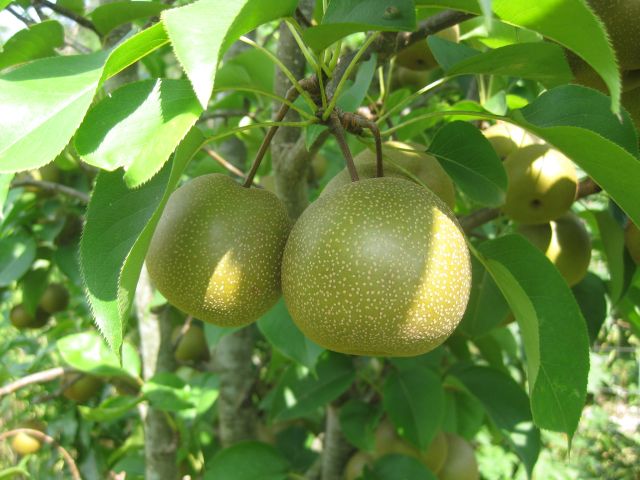
the pear tree has more pears than ever and seems immune to predation and disease
my Asian pear tree has more pears than ever and seems immune to predation and disease

The next setback was to recklessly steer the lawn tractor into some high grass, reckless because I had vowed after each repair that I would nurture the tractor and not risk abuse.  There was a large rock in the grass and the tractor came to a jarring stop.  It started ok but made a high pitched noise when I engaged the mowing action and after I parked it in the basement I noticed that the blades had chewed up the outdoor entrance mat.
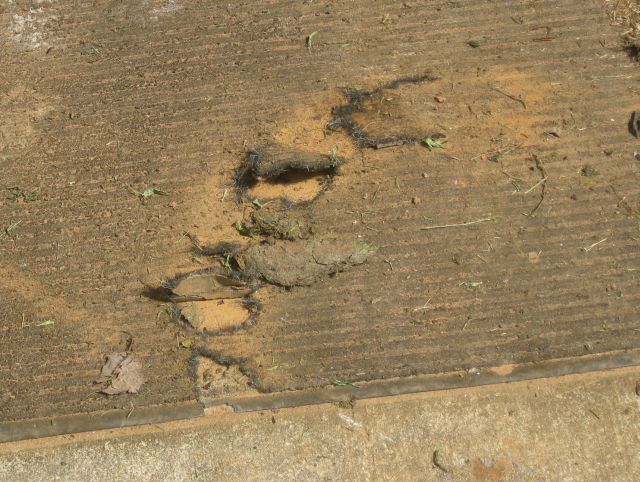
payback for abusing the lawn tractor from either bent blade or damaged housing

I removed the mower deck and noticed that the blade was bent.
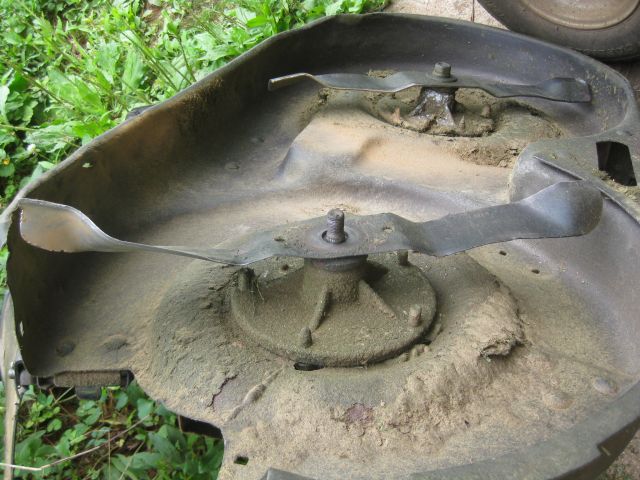
bent blade from striking a rock

But the damage was not confined to a bent blade.  The blade is mounted on a jackshaft which is seated in a mandrel which is bolted to the mower deck.  The jackshaft was bent.
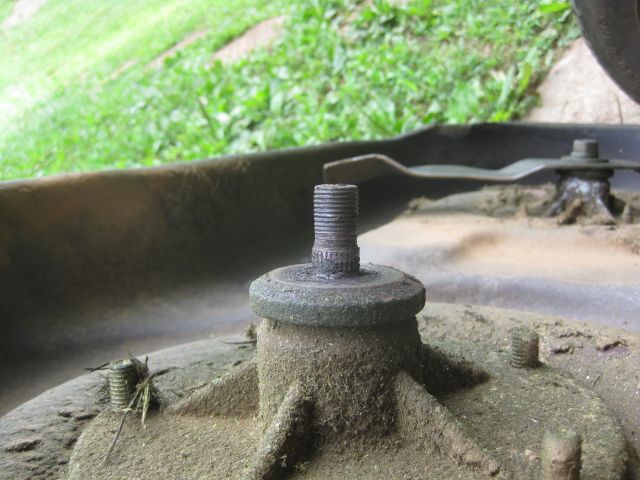
not easily apparent but the shaft on which the blade is mounted is bent

I had no illusions that I could straighten a bent shaft.  I rummaged through my workshop and found,  as I vaguely recollected would be there, a new jackshaft and new mandrel which I had purchased some years ago.  I installed the new jackshaft in the new mandrell and then realized that the pulley, which is seated on the jackshaft at one end (the mower blade is at the other end) required a spacer.  Easy I thought, I will re-use the spacer on the old jackshaft.  But I could not remove the old jackshaft from the old mandrell, despite some hefty blows with a heavy hammer.  So, with a reciprocating saw I had to cut off the end of the jackshaft to release the spacer.
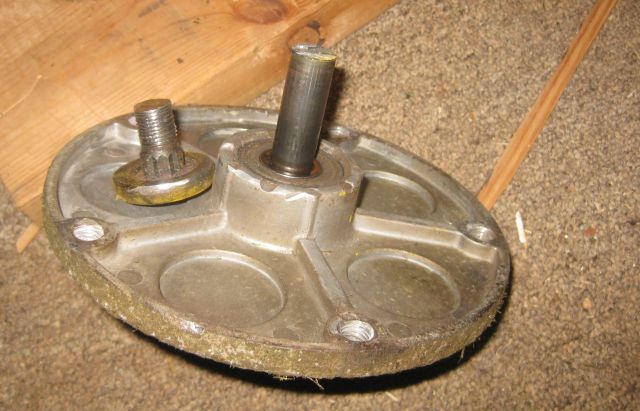
severed jackshaft


And then it was just a matter of putting it all together again, a familiar task.  And a quick drive and mow indicated all was in order.

So what else could go wrong on a Tuesday afternoon.  I happened to notice that the recently replaced attic fan was not sounding and I visited the coop and the fan was broken –  the motor was dead and the propeller had detached from the shaft.  Now what caused that?
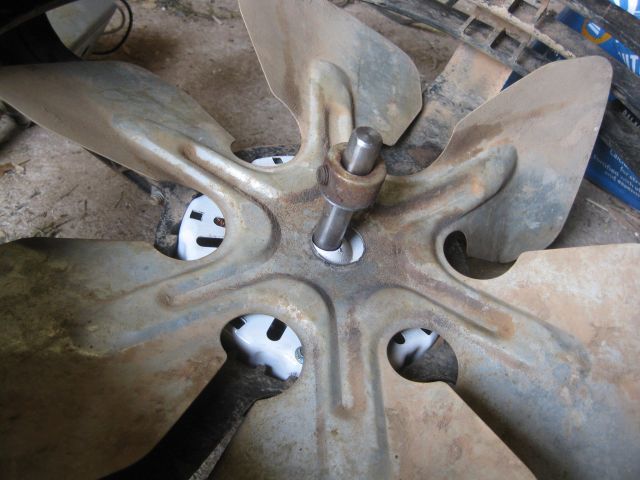
fan detached from shaft
fan blade detached from shaft

I was tired and went for a quick fix – I relocated a house fan to the coop and secured it with a wire round the roof rafter.
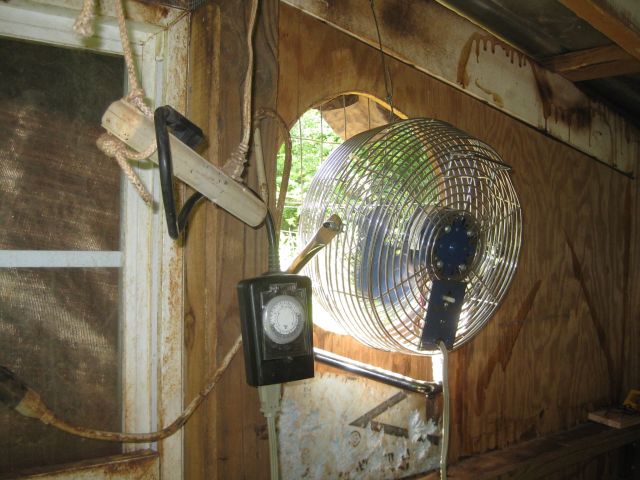
replacement fan with timer

The fan’s plug has 3 prongs and most timers only accommodate a 2 prong plug.  But I have a 3 prong timer which I use with my seed heating pad and germination lights,  so it was also commissioned.  The house fan is remarkably quiet which I am sure the roosting chickens appreciate, but it has a lower rotation speed and will have to do for now.

So that was a busy Tuesday afternoon.  And as luck would have it on Wednesday night a violent storm hit the area and a semi-tornado uprooted 2 of my oak trees which fell across the road and brought down the power line and caused a 3 hour neighborhood blackout.  It also leveled most of my corn and did other damage, but that may be a post for another day.  On the upside, I will have fire wood for winter.
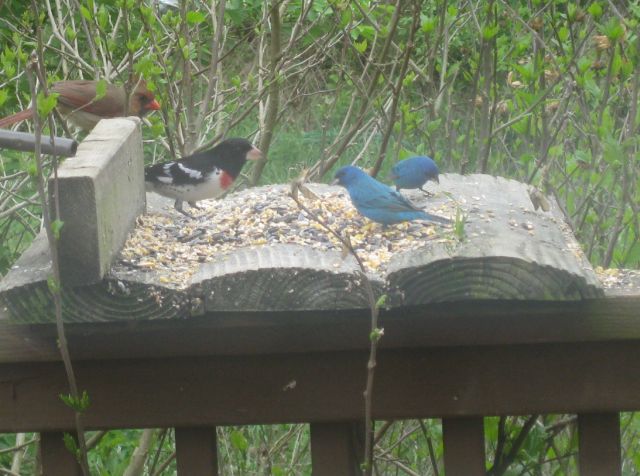
the beautiful and the ugly

This time of year we have at our feeder the residents (northern red cardinal, blue jay, mourning dove, chipping sparrow, indigo bunting, tufted titmouse, and our state bird the brown thrasher which has as many calls as a mockingbird) and the visitors (dark eyed junko, white breasted sparrow).  And this year a striking new visitor – the rose breasted grosbeak.

the striking grosbeak, the shimmering blue buntings and a female cardinal

I count the grosbeak and buntings among the beautiful.

Next to the chicken coop is a mulberry I planted some 4 years ago and, tho it’s supposed to be adaptable, it has never thrived or produced fruit.  Maybe I noticed this last year and paid no attention, but this year I decided to follow up.

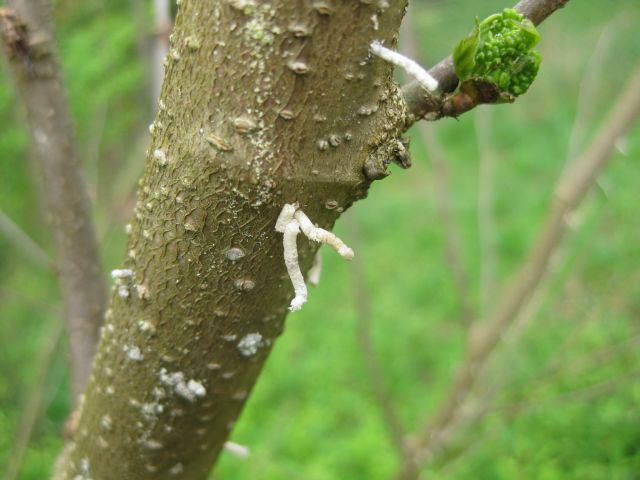
evidence of a beetle borer - the Asian Ambrosian beetle
evidence of the Asian Ambrosian beetle

This infestation is difficult to resolve organically.  I cut the 8 ft tree into small pieces, placed them in a garbage bag and will drop off at the local waste disposal site.  I left a few inches of trunk at ground level which shows no sign of attack and will see what develops next year.  Tho some distance away I did not want my fruit orchard to receive the attention of the female beetle.


ferry service and spring seeding

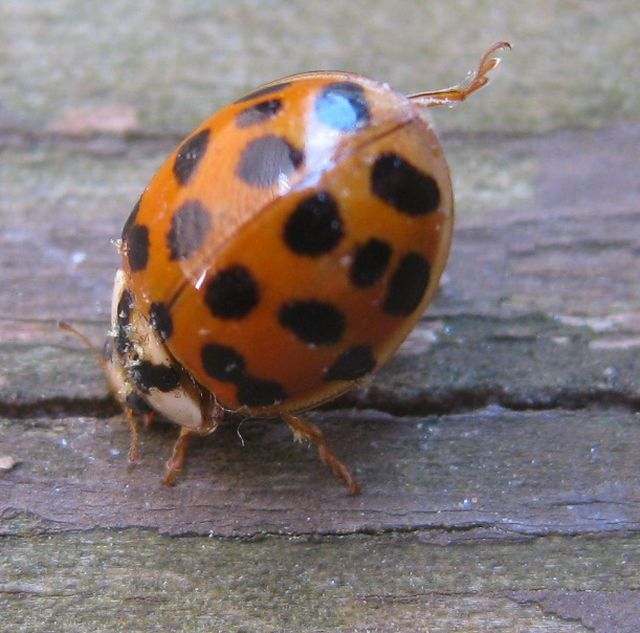
Past week I have operated a ferry service for the ladybugs/ladybirds which hibernate each winter in the northeast bathroom.  Each day about 20 new ones appear and since the windows are screened it is easier for me to collect them in a small glass jar and carry them to the raised beds area where I release them.  It is easiest to catch them when they are on the ceiling – simply hold the jar below them and nudge them with paper and they topple into the jar where they may momentarily play dead before climbing to the rim.  More care and luck is needed for those on walls or windows and a square container would make it easier.  I notice I wrote a similar article on April 2, 2014, so they may be a couple weeks earlier this year.

this fellow/gal seems to be doing a headstand prior to takeoff

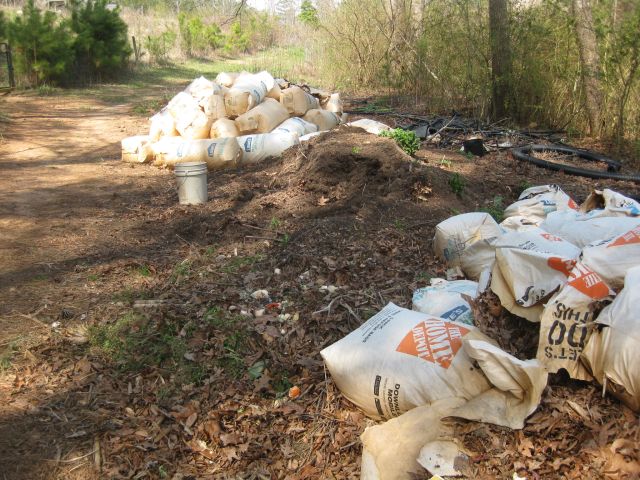
My compost powers my growing – each year I collect >100 leaf bags and add various ingredients and it is usually ready the following fall.

compost between two piles of leaf bags.  once I sort out the electrical problem plaguing my bobcat I will amalgamate and turn the bags and add horse manure
compost between two piles of leaf bags. once I sort out the electrical problem plaguing my bobcat I will amalgamate and turn the bags and add horse manure


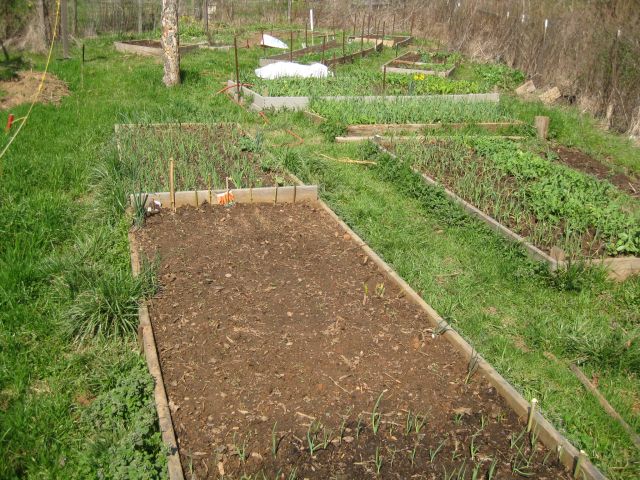
I have a number of raised beds for vegetable growing and past couple weeks with return of good weather I have been assiduously weeding and preparing the beds and seeding.  Weeding is a chore but I seen no way around  it.  I pluck and drop and the areas between the beds now have good soil. The yellow rope on the left is my deer discourager, the theory being it will dissuade the deer from leaping the 5ft fence.  So far no deer incursions.


some of my raised bed.  the little branches/twigs at the end of the row inform me that space has been seeded
some of my raised beds. the little branches/twigs at the end of the row inform me that space has been seeded

The winter clover cover crops helped protect areas from weeds but the beds I neglected are covered in weeds which I individually remove.  And the spaces between the garlic have to be weeded as well.  Once weeded I rest the bed for a week allowing weeds I missed to surface and then be removed. Running the weeder spike over the surface each day uncovers weeds and their white roots and prevents them from gaining a foothold.

After about a week I add compost and maybe ash from the wood stove, then I scribe long parallel rows into which I drop the seed.  Then mound the soil over the rows and pat it down and I am done.  I used to place plastic strips notated with the veg name and date of seeding at the head of each row.  I now simply insert a stick at the head of the row to remind me that this area has been seeded. I alternate the rows with radish (4 kinds), purple top turnip and chantenay carrots and black seeded simpson lettuce.  In the greenhouse I have kale, cabbage, collard and lettuce which I will transplant this week.

I purchased good quality 1020 starting tray flats about 5 years ago but with continuous exposure they have become brittle and crack easily.  For the far gone cases I have used sized 3/4″ plywood as a secure base for moving them around and have doubled up trays as well.

chipped tray with plywood base.  I label the tomatoes and peppers but usually not the greens
chipped tray with plywood base. I label the tomatoes and peppers but usually not the greens

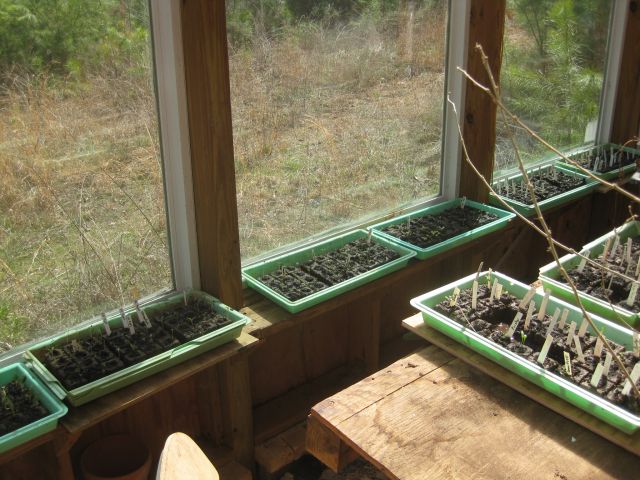
Another view of my small greenhouse which functions primarily as a tomato staging area.

south facing greenhouse

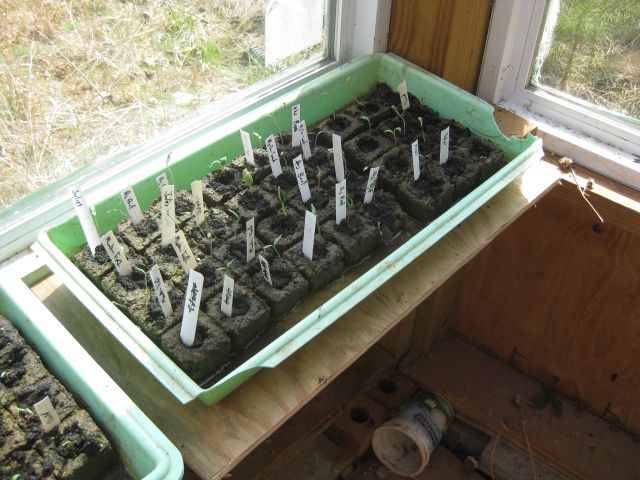
Most of my tomato seeds have germinated and I am transplanting them into the 2″ soilblocks in the greenhouse.  I have cut old venetian blinds into strips on which I write the name of the tomato and label each block individually.  Two interesting newcomers are seeds I prepared myself last year.  The one I have labeled MOS (my own seed) which was a Rutgers possibly cross fertilized with Cherokee purple or Ukraine purple – will be interesting to see how it turns out.  A friend gave me a large red tomato last year and said it was an oxhead and urged me to keep the seed.  I have several now growing in soil blocks but research on the internet  reveals no oxhead though there are oxhearts so wait and see.

cold weather returns

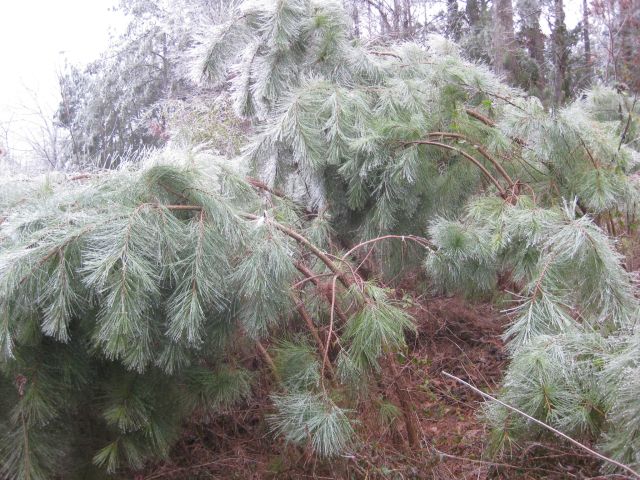
I won’t complain about the cold, not when I know what is going down in the north east, I will just comment on conditions and how I am responding.  We had freezing rain 2 days ago and the result was more aggravated where my farm is 50 miles north of Atlanta, than Atlanta itself.  The trees off the highway look normal as you head north on the 515 from Atlanta until you pass Canton and then you notice a silvery, icy sheen on the branches.  Georgia has lots of pine trees and the pine needles are adapt at catching the freezing drops and making icicles, the weight of which bows down the younger trees and snaps the branches of the older trees.

I wonder if these youngsters will be able to right themselves

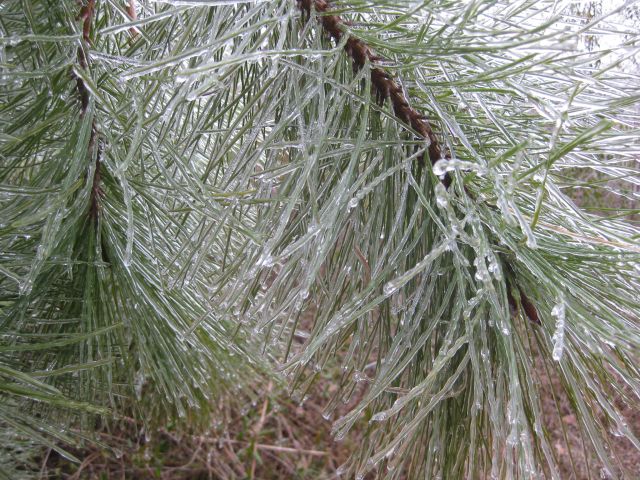
And when you look closer you see the icy fingers.

thoroughly ice coated

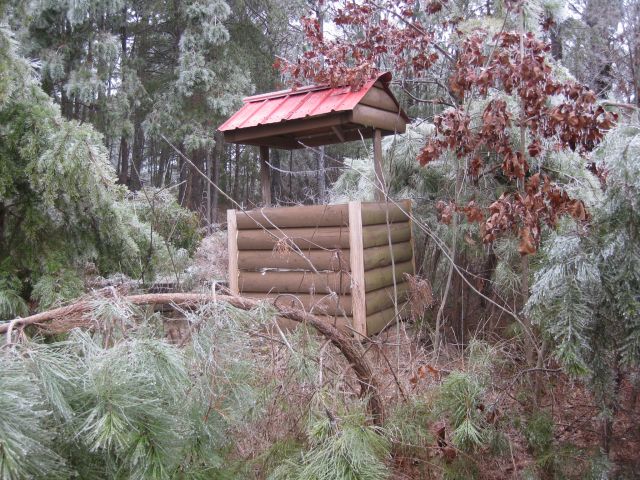
In the coop I have a water heater and each day of freezing temps I have to refill the 2 gal container which sits on a thermostat controlled warming base.  Monday night during the freezing rain, the log cabin and surrounding area had an 8 hour power outage.  I know the hours because my security system emails and texts me with unusual events such as the dsl modem losing power.  Since there was extensive black ice on the hilly road to the farm,  I did not visit on Tuesday and my neighbor let the chicken out of the coop and locked them in the evening.  A wonderful neighbor.  My coop door is set to open automatically at 9am and I texted her in the evening whether she had reset the timer.  She had not and went back to the coop and the door had opened after she had cooped the chicken.  Whatever can go wrong will go wrong and an open coop door in the night is how I lost my favorite chicken a couple years ago.  Another consequence of a power outage is the lamp bulb in the well house no longer warms the well pipes.  This is my well house.

well house, you can see the corner uprights I replaced last year

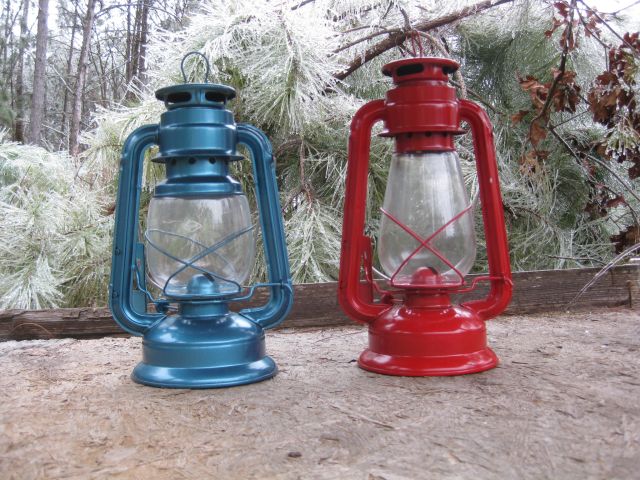
From the inside of the well house I noticed chinks of light and I caulked every occurrence to make the structure more air tight.  A savvy neighbor tells me that because of power outages he uses oil lamps for heating his well house.  He bought his at an estate sale.  I traversed Amazon and found two 12″ lamps, one for $11 (red) and one for $15 (blue).

2 paraffin powered hurricane lamps

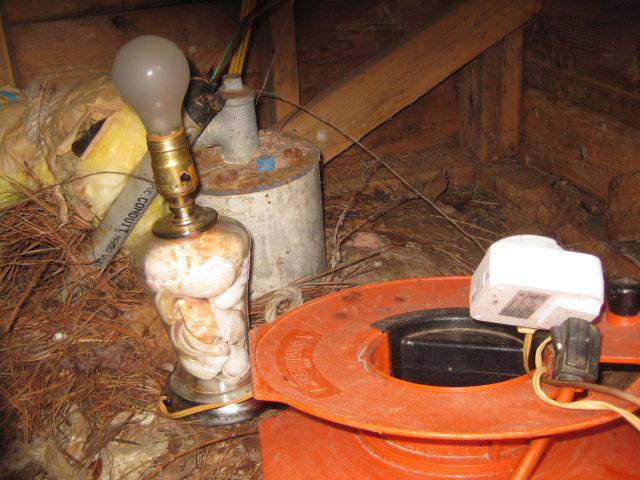
I tried them both out and the blue one was still burning the following morning, the red one was extinguished (there was still oil in the base).  So, when I am at the property and the temp will fall below say 15 F the next morning, then I light an oil lamp.  If I will be away for several days, then I use a light bulb (base 50c at the Thrift store) and a timer to switch current on during the cold hours.

my electric lamp heater in the well house with timer and cable run from the house

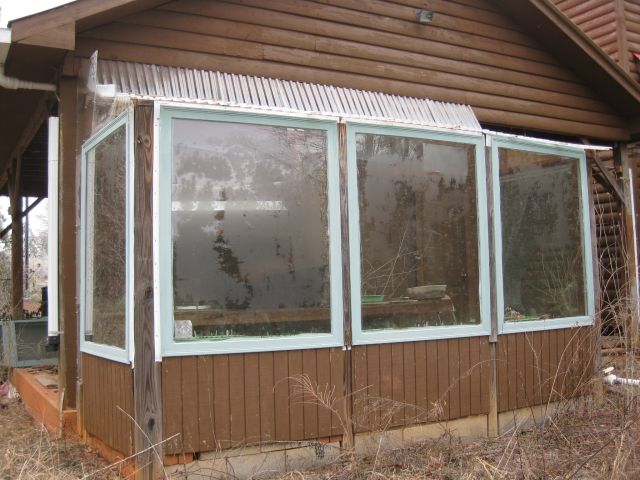
I have a small greenhouse I built on the south side of the carport.  It is passive heated (sun only) and the cold temps have hammered some of my seedlings.  The warm weather vegetables (pepper, cucumber, eggplant) have been annihilated, but the cool season (kale, collard, lettuce etc.) are holding on.  The situation is exacerbated by an uninvited guest, a feral cat which ripped a hold through some sheeting near the top and beds in a pine straw box (I use the pine straw for my bee smoker).  I have not the heart to deny the visitor entrance and I do not have a rodent problem (except in the coop), but when the weather improves I will make the greenhouse cat proof.

small greenhouse for developing vegetables,  especially later, tomatoes
small greenhouse for developing vegetables,especially later, tomatoes

And finally, my wood stove, which was installed last year, is a boon – it has some mass and really helps out in the living room and keeps my utility bill down.

efficient wood stove in living room

mystery of the trees

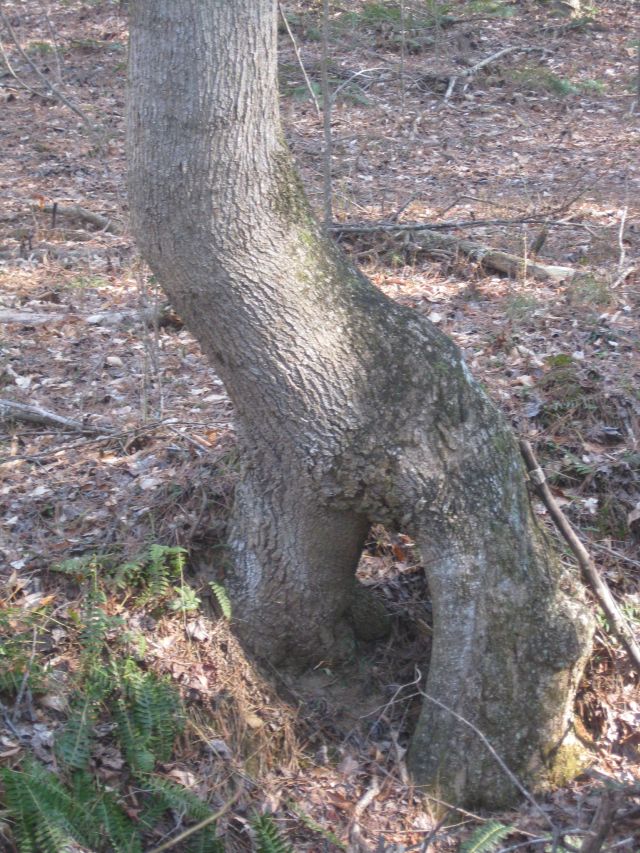
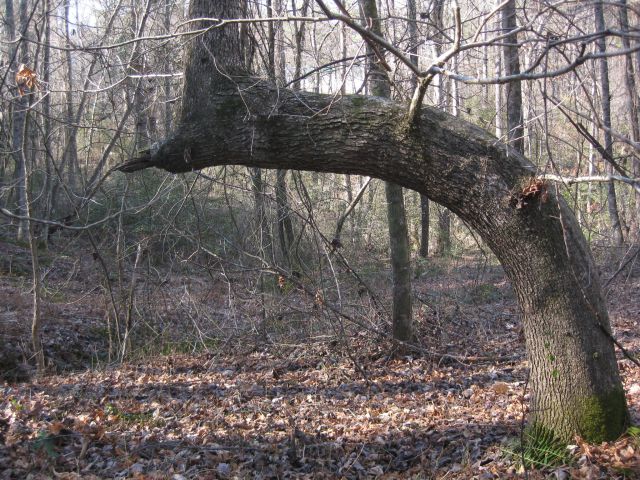
Last night I attended the premiere of the 1 hour documentary Mystery of the Trees which is about so-called “bent”, “thong” or “marker trees” left behind by the Cherokee indians in north Georgia.   Young trees were bent horizontal by thongs before being allowed to resume vertical growth and many examples still abound in the area.

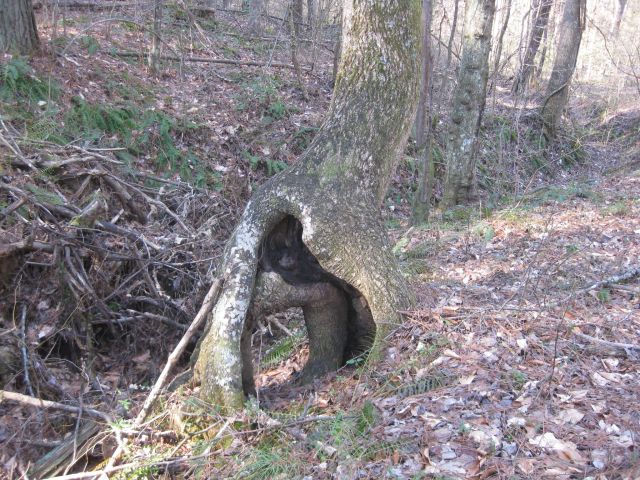
I had noticed a horizontal shaped tree in the adjoining woods but assumed it was from natural causes, just like the tulip poplars I have previously posted which also look unusual.  Here is an unusual looking tulip poplar.

umusual tulip poplar
unusual tulip poplar

.And here is the other side of it.

unusual base, but could humans have been involved?

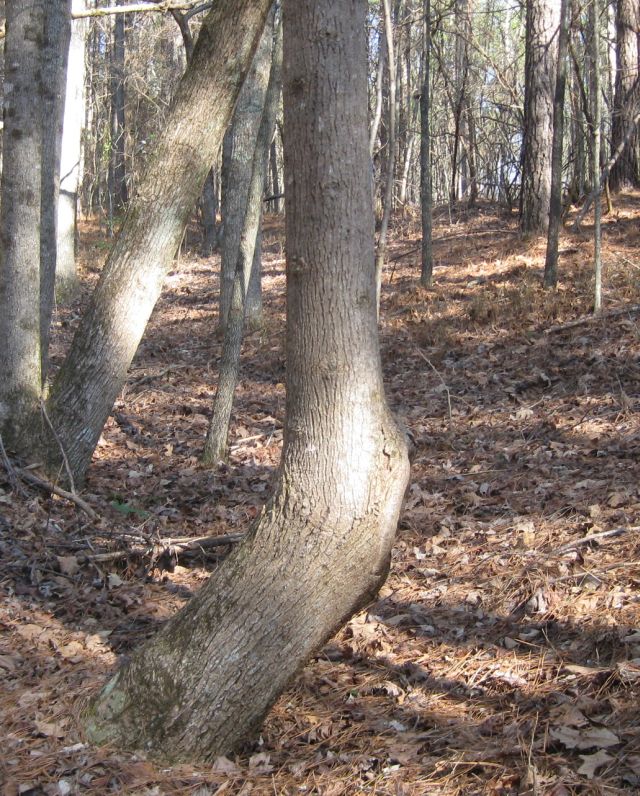
Now a bent tree is not a tree that initially grew at an angle and then turned vertical, like this one.

this is not unusual
this is not unusual

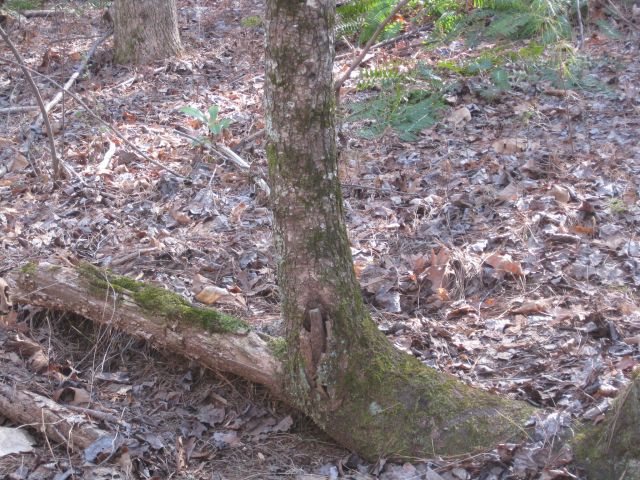
Nor is it a tree felled in a storm that began growing again, like this one.

this tree was knocked over in a storm, is lying on the ground and has resumed vertical growth

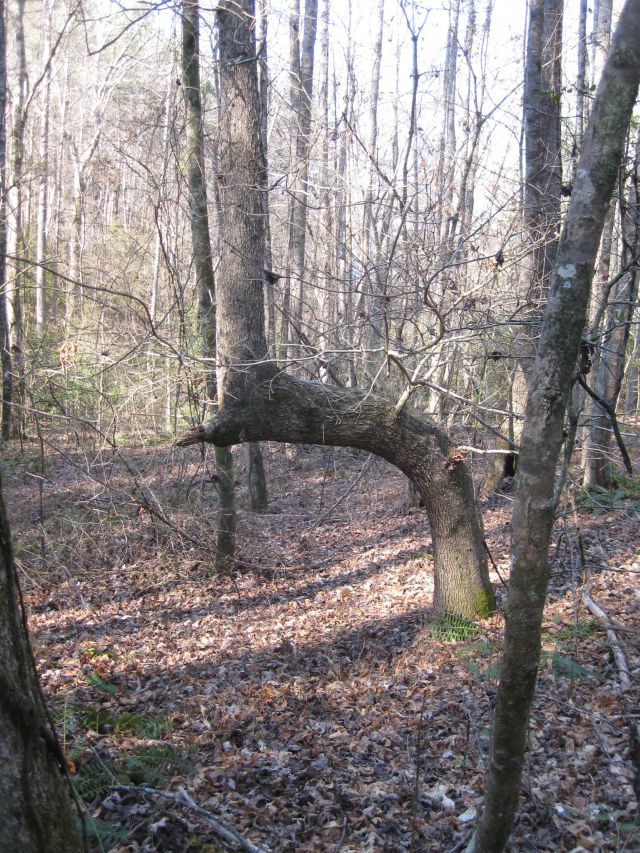
But how about my mystery tree which seems so unusual you gotta wonder if man was involved.

the bend is chest height off the ground and it points due south

The bent trees had significance to the Native Americans who created them, perhaps to mark the location of springs or areas of significance.  Here is another shot of my mystery tree.

my mystery tree
my mystery tree

I watched the documentary with mounting interest but had a question which I posed to one of the producers.  I know the woods were harvested about 30 years ago.  If this is a marker tree it would have to be very old and my question was whether such trees were avoided during logging operations.  The producer said that often the logging crews included Native Americans and they spared the marker trees.  I really do not think this tree can be that old but it is intriguing and has heightened my awareness of the land and those who lived before.


sweet potato, pests, a broody hen

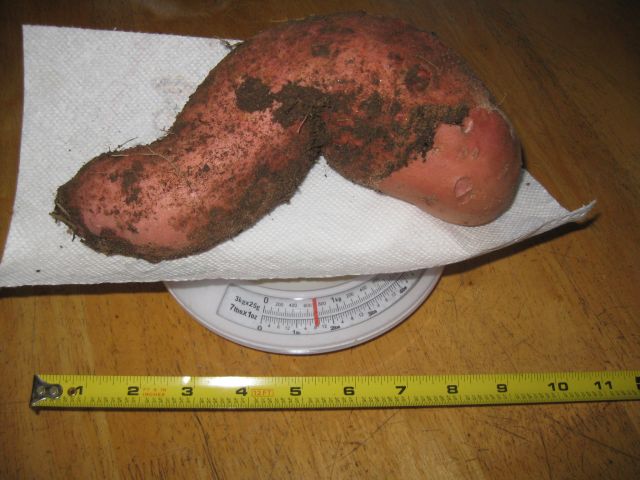
I had my best harvests this year.  Everything did well and while the weather, rains and fewer pests all helped, mostly I think is I am getting better at growing.  (I mention rains because all my irrigation is with rainwater).  Last year, my first with sweet potatoes, I produced finger sized specimens.  This year, tho I left it a bit late, they are big.

Sweet potato for lunch today - weighing >1.6 lbs and about 10" long
Sweet potato for lunch today – weighing >1.6 lbs and about 10″ long

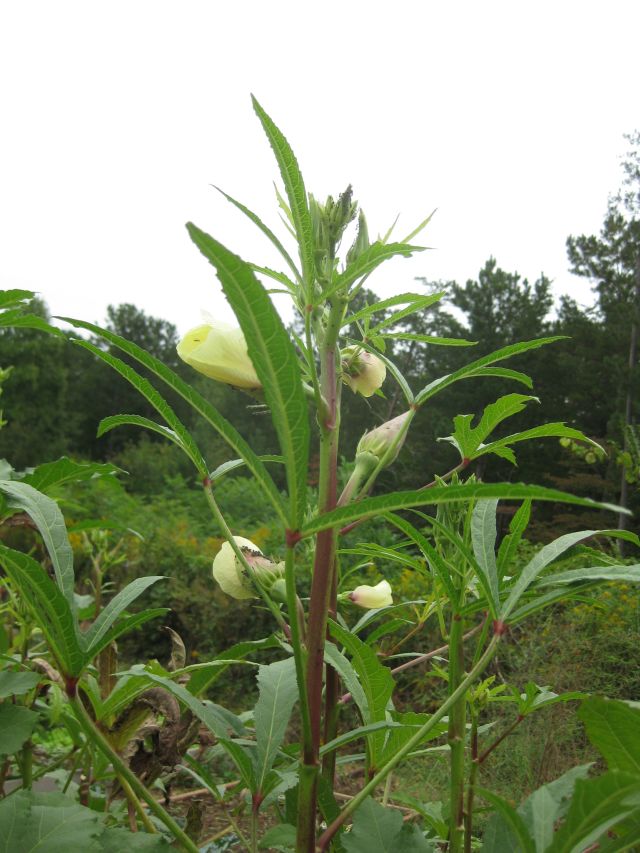
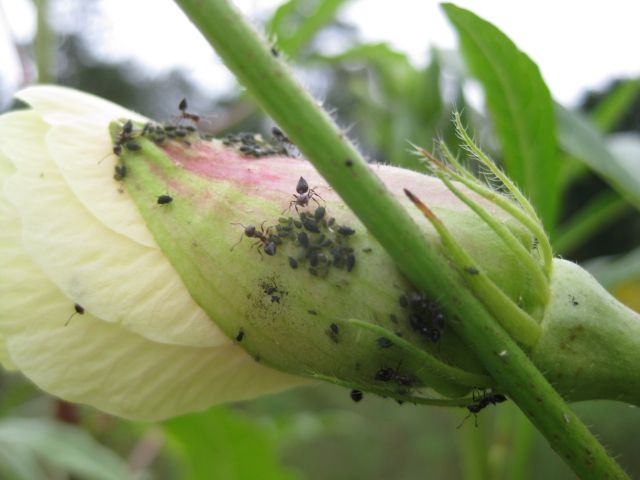
Pest pressure has been minimal which I attribute to increased biodiversity and natural predators etc. tho this week I noticed two instances – aphids on an okra plant and caterpillars on a blueberry bush.

only 1 okra plant was affected and then only at the top and late in the season

The ants guard and farm the aphids zealously and when my finger strayed too close it was promptly nipped.

aphids and a few patrolling ants

I let them be hoping to see natural defenses kick in but over the past few days I only spotted on lady bug.  The aphids have not spread and so it is a localized minor issue.

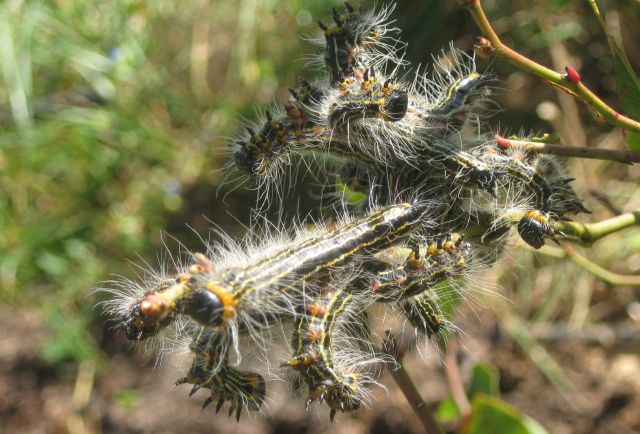
My blueberries produced well and I am motivated to care for them and so I often hand water with a hose.  The pressure of the water jiggled the blueberry and a sudden writhing motion on leaves caught my attention.

a cluster of young caterpillars
a cluster of young  caterpillars

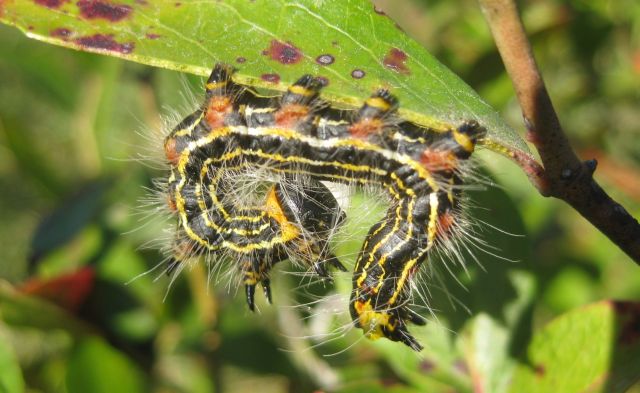
There were several such clusters and at first I thought I would leave them be and see if birds or other predators would step up.  However I noticed an individual hard at work.

a solitary eater, curled up because I disturbed it

So I snipped off the stems and dropped them into a 5 gal bucket partially filled with water and, when they were no more, added them to the compost heap.

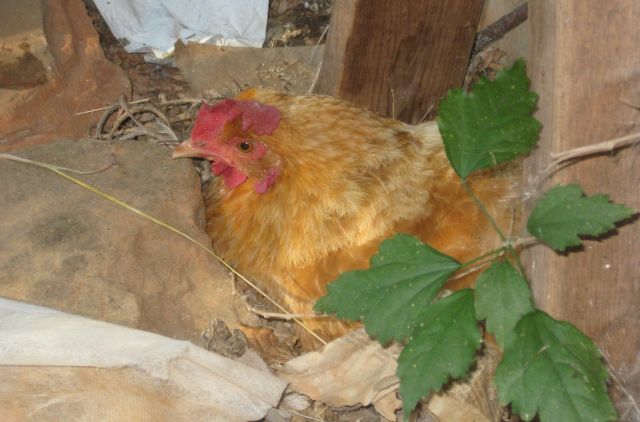
At the beginning of the season we had two broody hens.  One sat in the nest boxes throughout the day and tho she was partially cured by a few days of solitary, she is back at it again.  The other, Randa, is more interesting.  She is a flier and is smart.  Throughout the year, while the others dig around in the paddocks, Randa flies over the 5ft perimeter fence and works over the compost heap and visits below the deck for bird seed.

In May she disappeared for two weeks and only emerged, briefly, after a weekend of heavy rains, thoroughly bedraggled.  I found she had a nest in the brush with 15 eggs.  We did not want more chicken specially as half would be roosters and we don’t want to do in young roosters.  So we  ended that process.

Then a week ago she disappeared and we looked in the brush but no Randa.  Where is Randa? Eventually I looked in the greenhouse, and there she was.

Randa in the greenhouse
Randa in the greenhouse. Being smart she chose this time an indoor location for her nest

And she was atop 13 eggs, almost as many as her last nest of 15 eggs.

Randa's nest of 13 eggs
Randa’s nest of 13 eggs which are olive green reflecting her mixed parentage af Americauna mom and Buff Orpington dad

And the same dilemma as last time – she wants to hatch eggs and I do not want any roosters or more hens.  So I will probably end this process, for my needs irrespective of hers.  I have a neighbor in Atlanta who loves cats and had them declawed and keeps them indoors thus denying them their natural inclinations.  But am I any better when I move Randa from her eggs and destroy them and bury the remains in a hole beside a fruit tree?


jujube, 3 Canadian aids, a feral bee colony

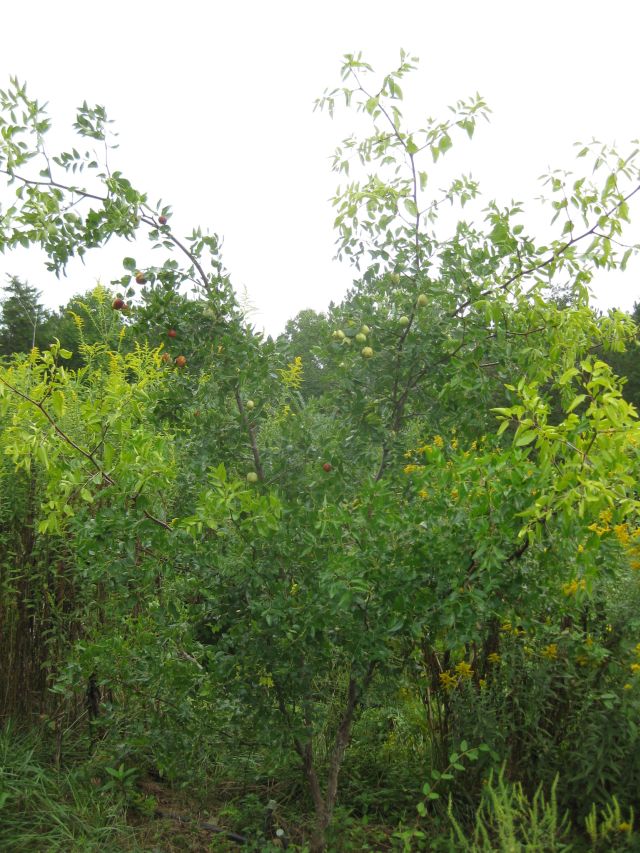
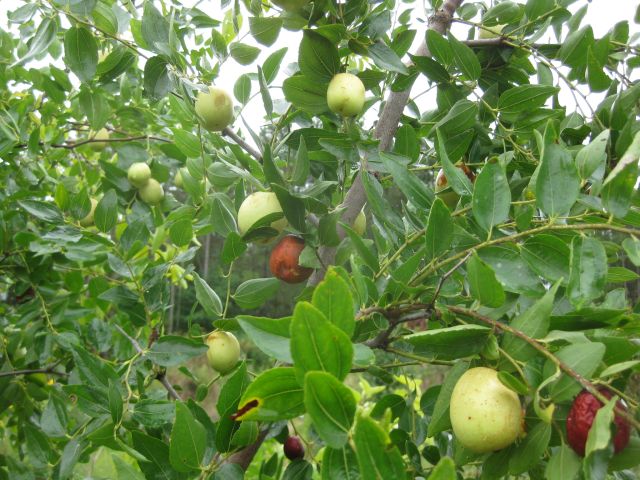
With unexpectedly cooler weather here in N Georgia in September, I am spending more time in the vegetable garden and orchards.  I had planted jujube saplings a few years ago in the terraced orchard and neither irrigated nor tended them until recently I noticed small round fruit.  At the time they were green and tasteless.  Now they are brown or red with wrinkled skins and a delicate flavor, a bit like an apple.  There are two small jujube trees – the Li Jujube provided just one fruit, the Lang Jujube is plentiful.  Both were planted in February 2011 opposite each other.

the Lang Jujube, barely discernible from its surroundings

The fruit is smaller than it looks, in the photo below.

jujube fruit.  if you wait too long the fruit rots and tastes acidic
jujube fruit. if you wait too long the fruit rots and tastes acidic

I mentioned in the caption, 3 great Canadian aids:  1) my EyesOn addition to my surveillance systems (designed in Canada, made in Taiwan) which I previously posted, is invaluable.  It texts and messages me whenever there is a change in the security system.  This can mean being woken in the middle of the night when the text message beep goes off, but I have security of mind knowing the premises are continuously monitored, not by neighbors who may not hear a siren, but by the flow of electrons (I am taking a circuit & electronics course with edX and electrons are on my mind).

2)  is the excellent organic growing book – “the market gardener” by J M Fortier from Canada.  He uses covers to exclude pests, a move I will have to make.  Recently in Marin county near San Francisco at the weekly organic growers market, I asked a farmer if she sprayed (meaning organic sprays) and she said no.  So I asked the obvious follow up question – how come no pest damage?  She mentioned the usual – beneficials, healthy plants etc. but then said the produce was from a green house.  Which to me was the solution – unless you have a controlled environment I believe after a while (in the first year they may not yet have discovered you) there will be some pest damage.

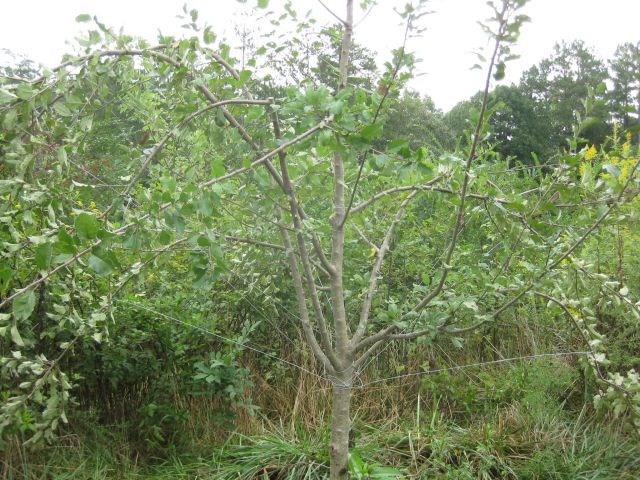
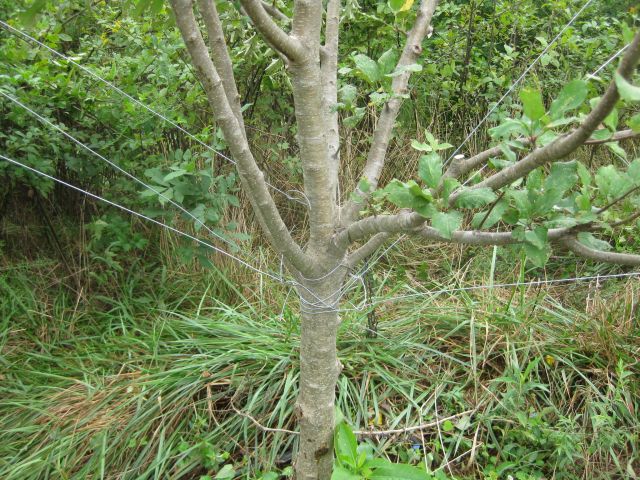
3) my third great aid is the DVD “the permaculture orchard:  beyond organic” by Stefan Sobkowiak, Canada.  Lots of insights.  I am adopting many of them and right now I am following the pruning and training suggestions.  One of them is that upright branches want to keep growing wood and leaves, but if you can train them to stay horizontal they will focus on bearing fruit.  So below is my Ein Shemer apple tree, planted at the same time as the jujube and also bearing fruit this year and you can see I have attached wires to the branches to bring them down.

the Ein Shemer apple trees with branches trained toward horizontal

The training is with wires which I hope to remove soon – I have seen too much damage done when bindingse were left to strangle a trunk.

wires around the trunk of the apple tree pulling the branches down

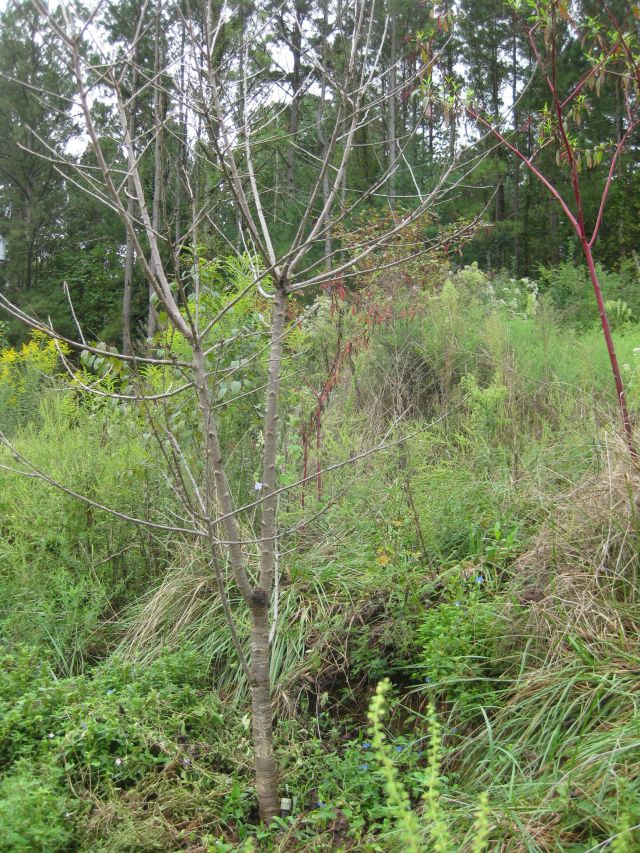
My Stellar cherry tree (planted at the same time as the jujube and Ein Shemer) has lost all its leaves.

leafless cherry tree

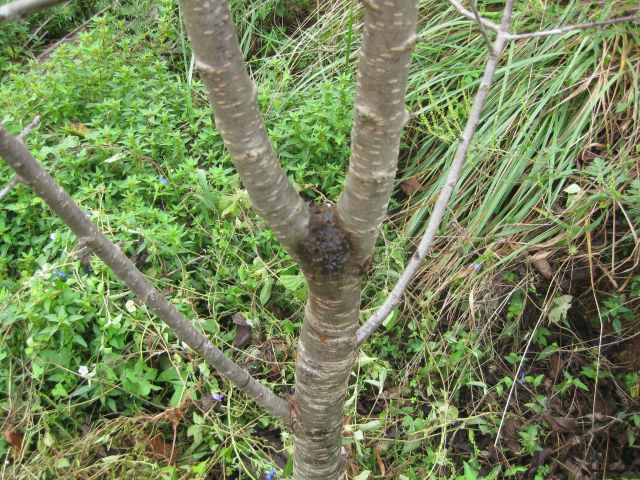
Incidentally, a forester told me how to identify cherry trees – they have horizontal lenticils.  Casual observation shows a dark brown gum substance at the crotch of the two limbs.

you can see the problem - likely a borer infestation to which the tree responded by producing sticky pitch to discourage the invaders
you can see the problem – likely a borer infestation to which the tree responded by producing sticky pitch to discourage the invaders

The DVD recommends eliminating any branch off the main trunk which has a diameter 50% or more of the trunk.  Had I done this I might not have the current problem.

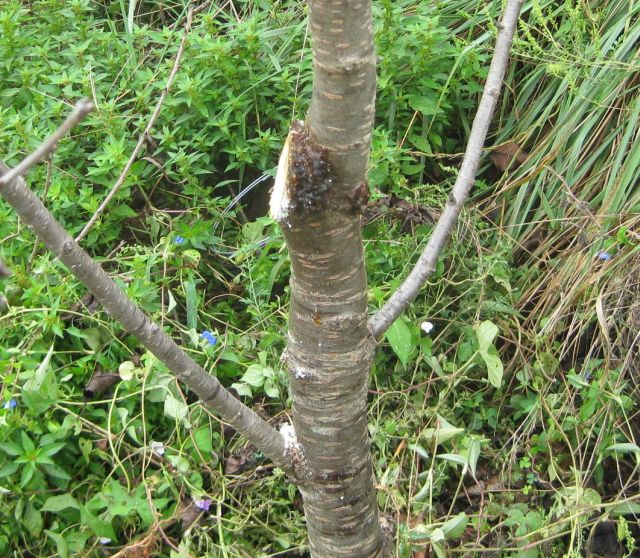
I have cut off the other limb

After removing one limb and spraying my handsaw with alcohol and then oil, I decided to apply a neem treatment to the wound.  Some 5 paces from the tree I was stung twice successively with little yellow buzzers chasing after me as I took off.  With more control and presence of mind,  I may have paused to observe if these were bees or wasps, but when you are attacked, the first instinct is to get away.   noticed a stinger on my arm and thought they could be bees since wasps don’t leave a stinger.  I put on my bee suit and went back to the assault location.  After a short while I saw bees going into and out of an underground location.  I must have stood on the entrance.  Armored with bee suit and gloves I sprayed the cherry tree  wound with the neem and will watch developments with interest while treading carefully.  And the bees I will leave – good luck to them, and they may provide the drones to fertilize my next queen.   And with close on 3 gallons of honey  harvested in August, I am good until next year.

Postscript – after more thought I decided that the little yellow insects were not honey bees and they were a risk to me or any visitors.  One of the stings I received, tho not much swelling, nonetheless entertained me between 2am and 3am the next morning.  So I determined to eradicate them which I did early one morning, regretfully.

a 2nd use for old beer

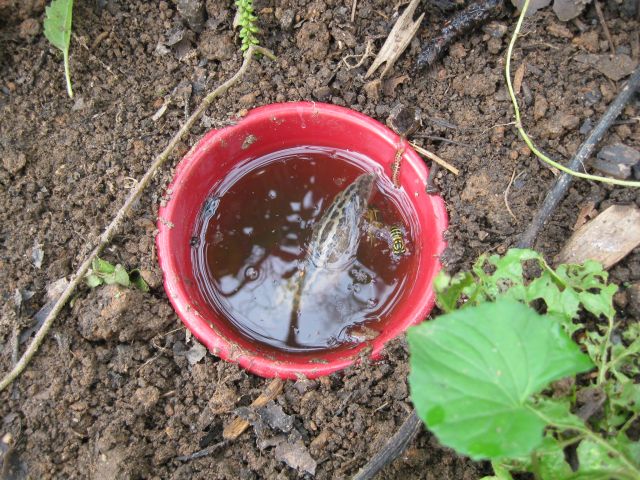
In the past week I noticed my chard and toscano kale were being ravaged by slugs/snails or caterpillars, and I discovered in a cupboard, packs of beer with a January 2011 expiration date.  Adopting the permaculture mantra, the problem is the solution, last evening I buried an old cup at rim level in between the victimized chard and filled it with beer.  And this morning I was pleased to find a large slug:

slug drunk to demise
slug drunk to demise on stale beer

I scooped out the slug and small wasp and will visit the site again tomorrow.  And if the beer no longer attracts, well I have plenty more.

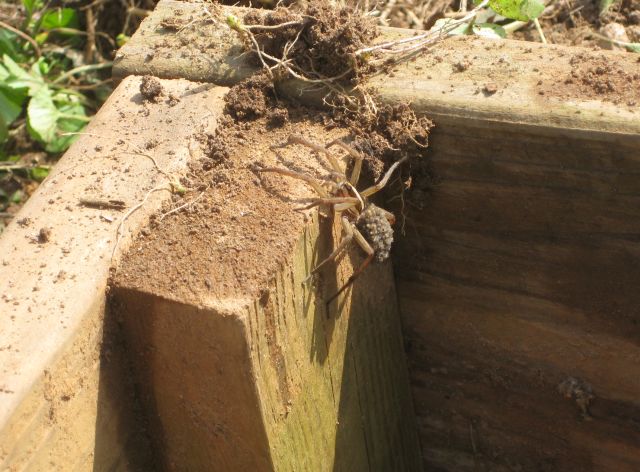
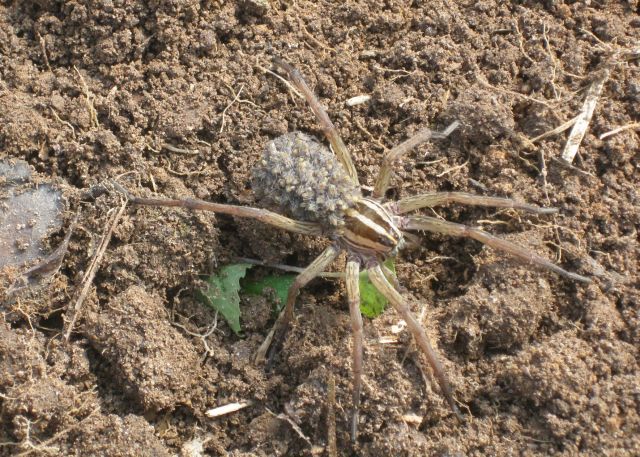
Some ideas don’t pan out.  I thought siting a raised vegetable bed in the chicken paddock would be a good idea, give the birds something to snack on.  After I noticed the chicken demolish the seedlings the instant they surfaced, I screened above the soil with chicken wire until I had a healthy crop of vegetables.  It took just one morning for the chicken to eradicate the whole bed of vegetables.  So I decided to dismantle the bed and relocate in my fenced in vegetable growing area.  And while I was weeding the area, I noticed a large spider, a really large spider.  It is on a 2×4 stud, with 3.5″ being the actual dimension of the side it is standing on.  I know there are much larger spiders in the world, but for where I am this guy/gal is large.

large spider
large spider

Another view:

large spider on the ground

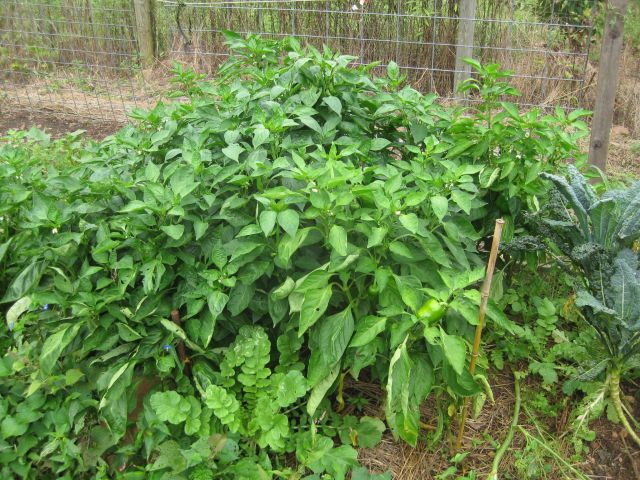
I am having much more success with sweet peppers this year.  I planted them fairly close together and now, latish in the season, they are producing lots of peppers.

close neighboring pepper plants producing well with no signs of disease or pests
close neighboring pepper plants producing well with no sign of disease or pests

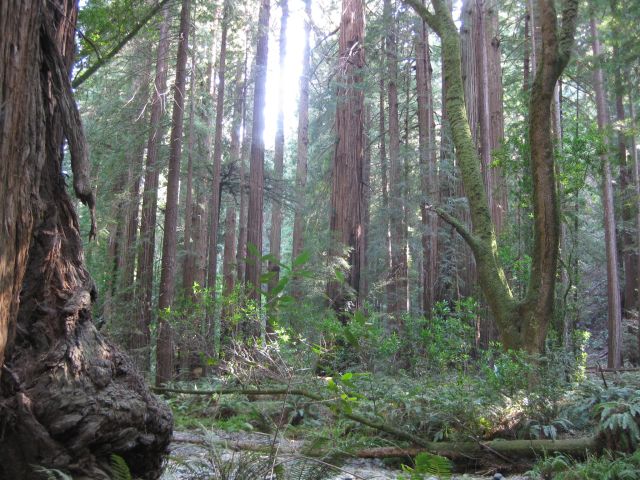
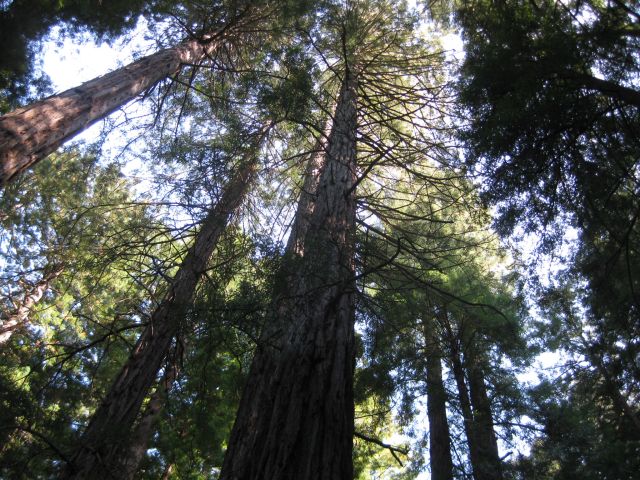
Finally, we just returned from our annual west coast visit, and no trip in Marin County can be complete without a visit to Muir Woods and its inspiring redwoods.

an upward view of the giants

The day of our visit coincided with National Park Service Birthday so there were no fees.  Here is a horizontal pic of the neighborhood.

Muir Woods redwoods
Muir Woods redwoods


what’s coming in

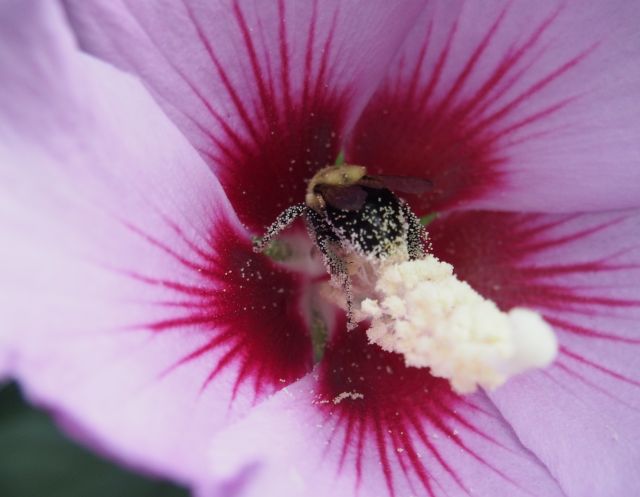
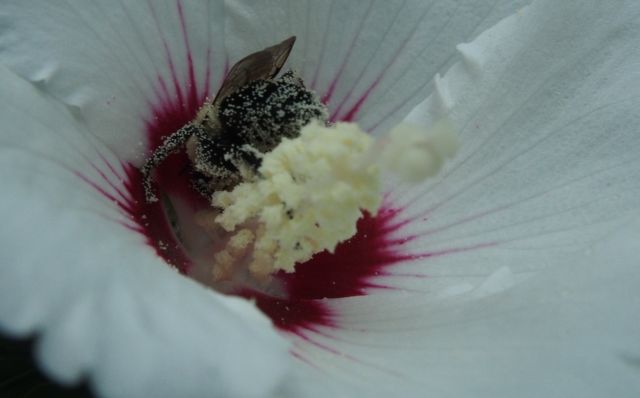
Before the harvesting roundup I must return to my favorite – the industrious bumblebee.    The Rose of Sharon, hibiscus, thrives alongside the deck and each morning their pollen offerings bring in the bumblebees.

pollen covered worker

They scramble deep into the flowers and their activity sprays the air with pollen which bespeckles them.

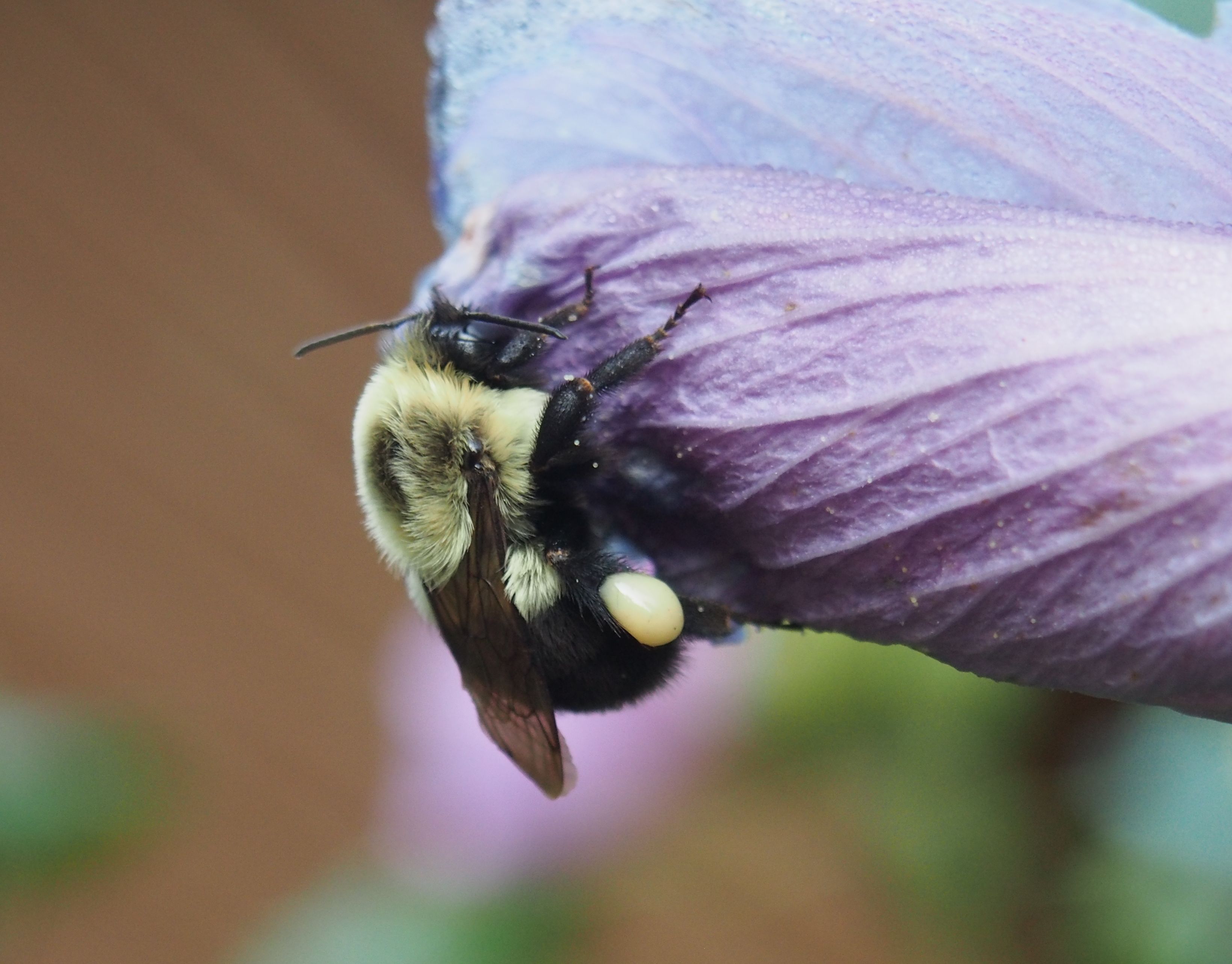
OLYMPUS DIGITAL CAMERAAnd they load their saddlebags with food.

OLYMPUS DIGITAL CAMERAMuch as I like my honey bees and appreciate their excellent honey, the bumblebees cannot be supplanted in my affections.

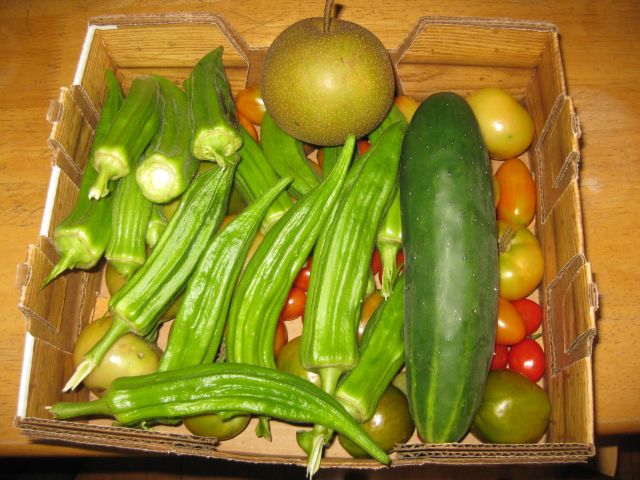
The tomato season will soon end.  What a luxury it has been eating delicious tomatoes at every opportunity specially tomato, cucumber and onion salad seasoned with vinaigrette.  And tomato sauce is in the freezer for the winter months.  A favorite in this region, but perhaps less well known elsewhere, is okra.  Best to pick them when small and they can be eaten off the plant or we grill them since we are not into frying.

some of these okra were picked too late, but the smaller ones were delicious

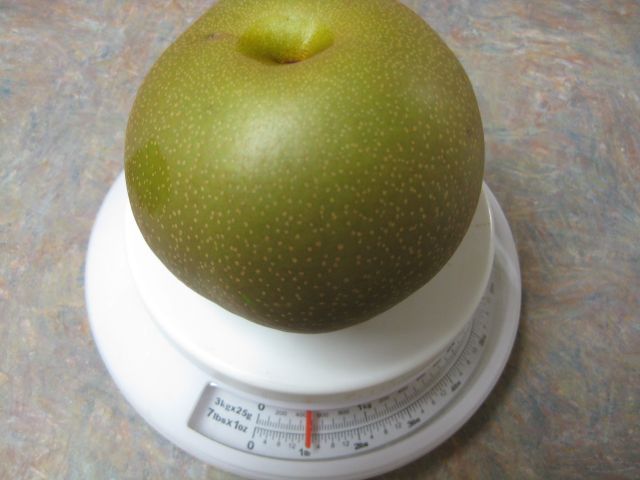
My apples are staggered throughout the season and there is always a tree with offerings, though up to 50% must be shared with the smaller apple lovers.  The one fruit tree which to date has been complete immune to pest pressure and which provides the best fruit of all is the Giant Korean Pear.  Unlike the regular pears which are soft and sweet, this has a firmer texture and a haunting delicate sweetness.  The pears are the size of baseballs and weigh around 1lb each, as shown below.

Giant pear on the scales

The pear tree is modest sized and provides about 20 pears a year, but they are all delicious.  The corn was disappointing probably because it was the first time I had grown corn in the area and I had under watered.  Cucumbers were delicious, the beans are still coming in, and a pleasant surprise has been the carrots which took their time to appear on the scene.  Unusual have been the purple carrots which I understand was their original color before they were re-colored for the House of Orange.  Next up will be the muscadine of which the scuppernong is the sweetest and most delectable.  And now too, my thoughts turn to fall planting and I am preparing the beds and provisioning the seeds.

a surfeit of tomatoes

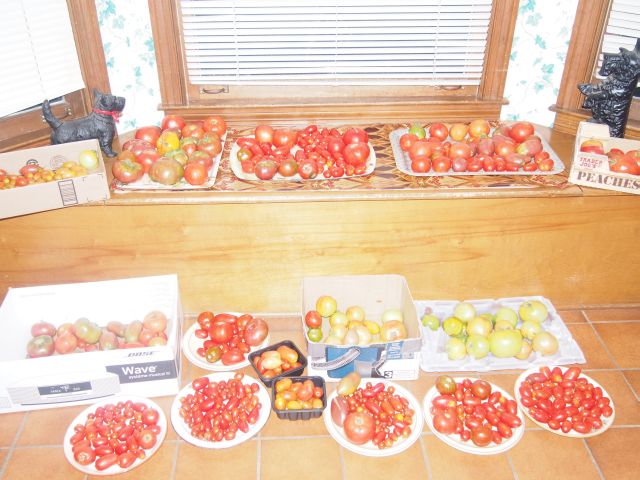
This has been a good tomato year for me.  I made several big changes to the way I grow tomatoes and perhaps this helped.  The big challenge right now is to use them all.

tomatoes in the kitchen to be pasted, gifted or eaten
tomatoes in the kitchen to be pasted, gifted or eaten.  we had a scotty and momentoes remain

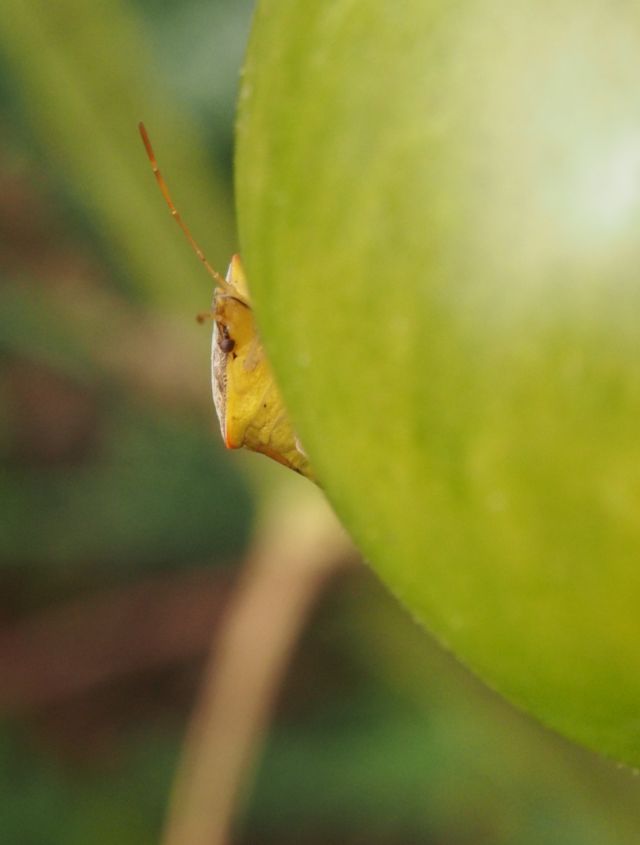
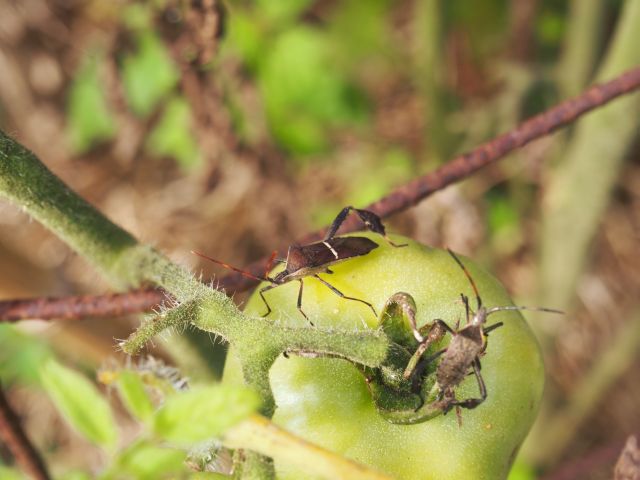
I pick the tomatoes a little early when they show an orange or yellow tinge and allow them a couple days to ripen, therefore the green ones in the picture.  I may sacrifice some taste but this puts me ahead of the line.  Of whom you may ask?

just a glimpse if you are looking hard

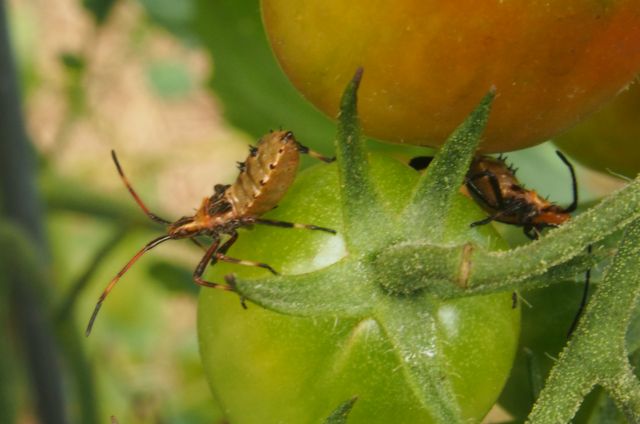
These are the secretive ones which, like a squirrel, quickly move to the other side of the tomato or tree.  And only by circling the other side, do you see them.

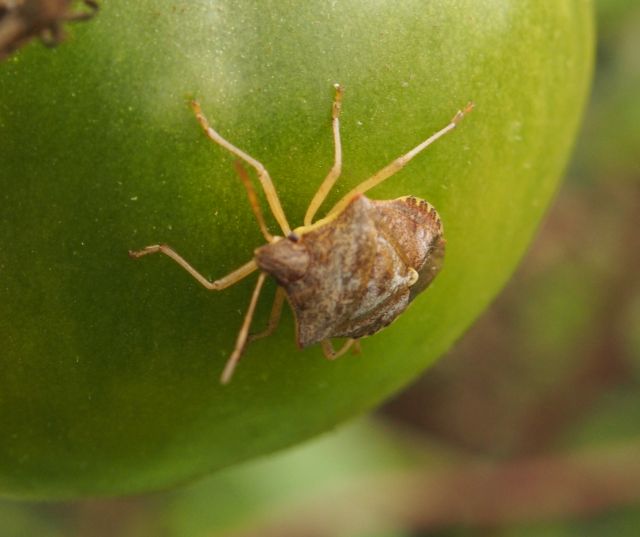
though they look frail, they do a lot of damage

They are slow moving and have soft bodies and a quick jab with thumb or finger squishes them and squirts their fluids.  Quicker footed and less easily squashed are these guys.

there are 2 in this pic
there are 2 in this pic, perhaps a courting couple, and it is possible to hand catch them but then you have to crush hard, a quick squeeze will not suffice

And finally the fleet footed.

the uncatchables
the uncatchables

I now try hew the permaculture way which, unlike organic growing, means no spray.  Can there be exceptions?  Probably not.  Occasionally however I do spot spray with neem, which seems effective.

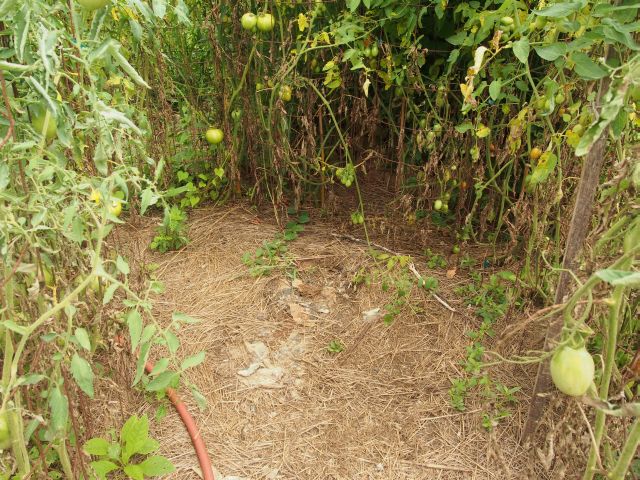
So what were the growing changes.  This year I will save tomato seed so my one thought was, rather than a group gathering, I would physically separate various heirloom types so they would be pollinated from the same variety and their seed would grow true.  Distancing them also complicates the smorgasbord for the pests.  A second change was to hand water with a hose rather than my gravity fed dripper irrigation system.  Therefore I was on hand to observe and respond to activities round the tomatoes.  I also applied compost teas and comfrey teas with a watering can, which may have helped.  Some plantings were on a north south axis, some on a east west axis and 14 plants were in a keyhole design.

a truncated view of the keyhole planting - tomato plants in a circle with access from the south east and south west
a truncated view of the keyhole planting – tomato plants in a circle with access from the south east and south west

This design worked fairly well.  You can see my 3/4″ hose and the mulched center.  Watering and harvesting was much easier since rather than going down a line you just rotate yourself in a circle.  I was concerned there would be less sun exposure but the plants were apparently not affected – though remember this is at the top of a hill with full Georgia sun exposure.    For watering at the top of the hill I did not use gravity feed, it would have taken too long.  Rather through a combination of various valves (see separate post on totes) I used the pump at the foot of the hill to provide the pressure, so watering was not a chore and was speedy.
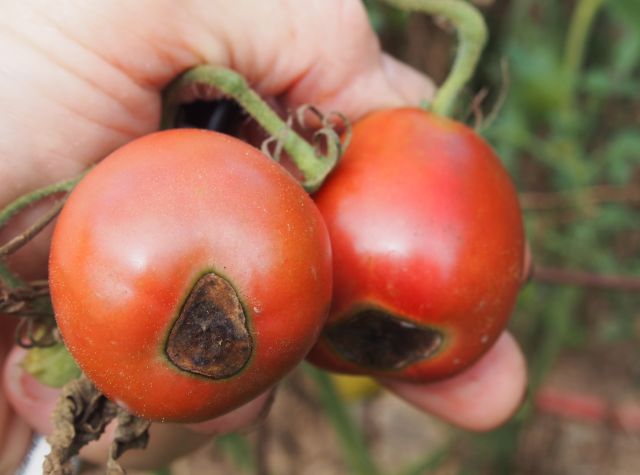
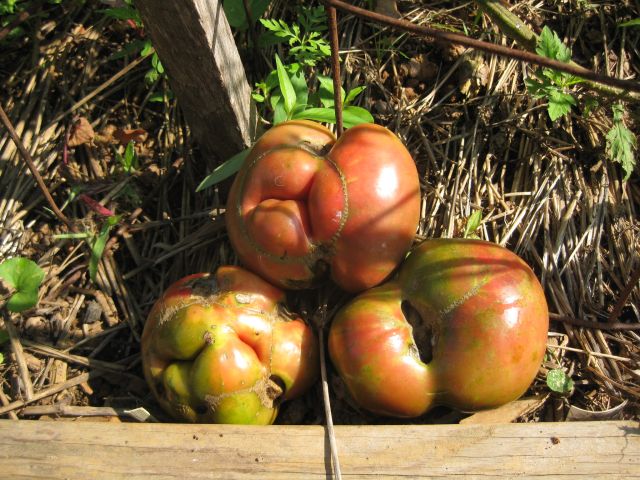
Which varieties worked best.  Of my heirlooms, Rutgers again performed solidly.  My other heirlooms did not.  Remember it is humid and blighty down here.  I was given Ukrainian Purple seeds and followed them with interest.  A large percentage got a black rot at the bottom, which did not affect any other varieties.

Purple Ukraine tomatoes with black rot disease.
Ukrainian Purple tomatoes with black rot disease.

Otherwise they taste fine and have a distinctive shape.

Purple Ukraine - not yet purple but it gets there in stages
Ukrainian Purple  – not yet purple but it gets there in stages

A number varieties which did well in previous years failed miserably this year including Cherokee (heirloom), yellow pear and sweet olive.  Their seed was several years old and I wonder if there is degradation with older seed.  I researched varieties recommended for the southeast and bought 3 hybrids from Johnny’s and they all did well – Juliet F1, Big Beef F1, and Mountain Fresh Plus F1.   So, as an Italian  electrical goods advert from my UK days would say – you need “an appliance of science”.B

But – when it comes to taste, then the Cherokee purple heirloom triumphed.  So the hybrids produce well but the heirlooms generally taste better and perhaps that’s why I had to share so many with discerning insect tomato lovers.

they may not look great but these Cherokee tomatoes taste great


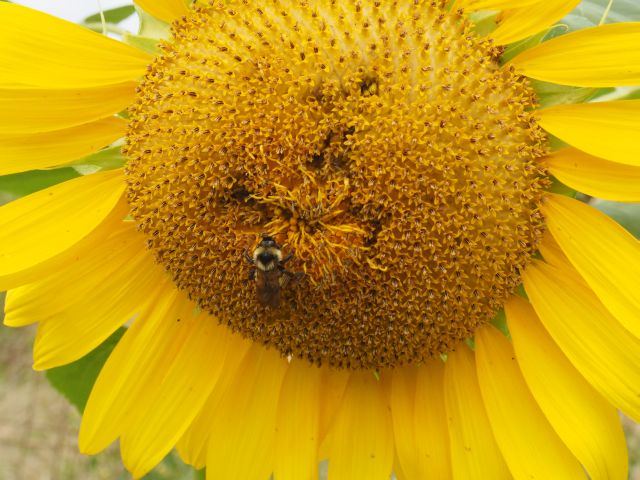
And finally a couple of shots of my favorite insect.

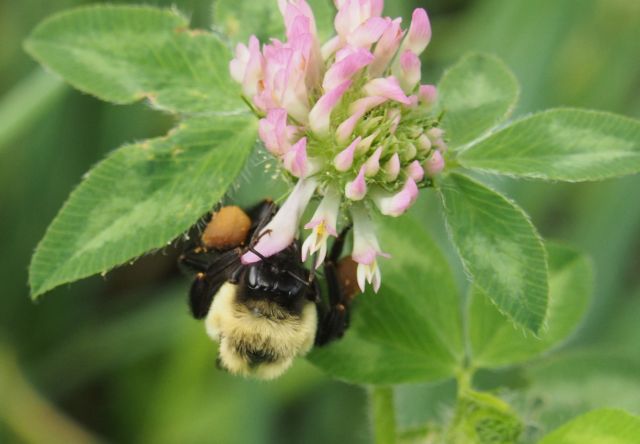
the bumblebee ever hard at work
and the sunflowers look gorgeous