a week in Pacifica

Pacifica is a community of about 40,000 extending 6 miles of beaches and hills along the Pacific ocean south of San Francisco.  We are regular annual visitors since 2 sons and better halves and now a grand child live in the area.  And Pacifica is undergoing stress of change as new money moves into a once lower middle class area.

Nudged by my sons we now use uber for airport trips and airbnb for lodging and this time we rented a delightful beach house just one block (say 80 yards) from the ocean.  It came with 2 bedrooms and all amenities. Though M described is as basic, it was a more pleasant way to spend some days in one location. 
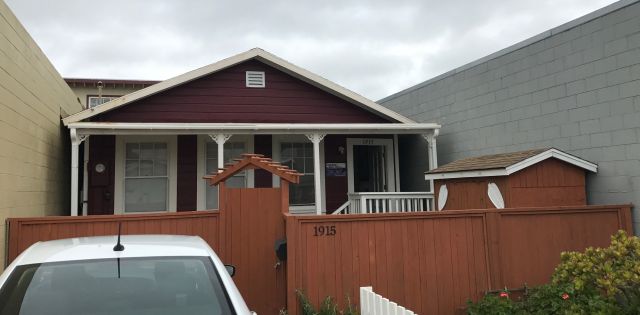
our beach house squeezed between 2 shops a short distance from the beach, with space in front for our car rental

We have a regular morning schedule – jog a few miles along the shore and cliffs to our coffee shop.
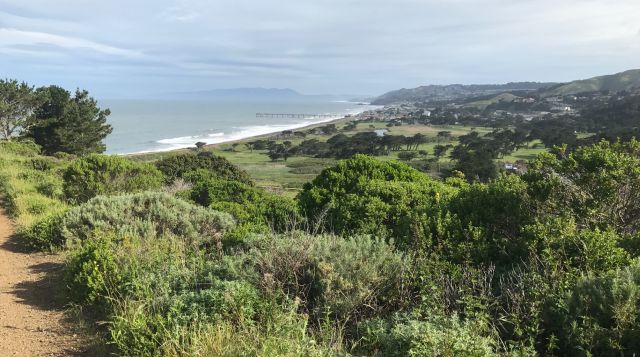
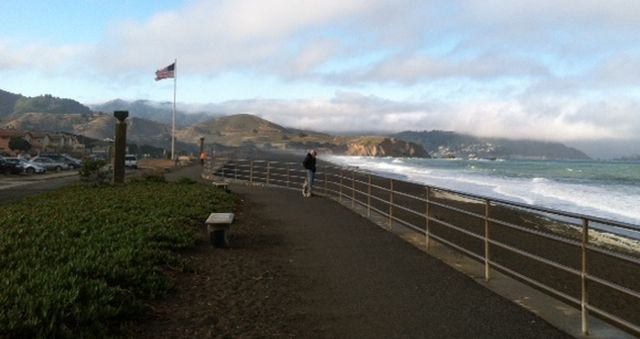
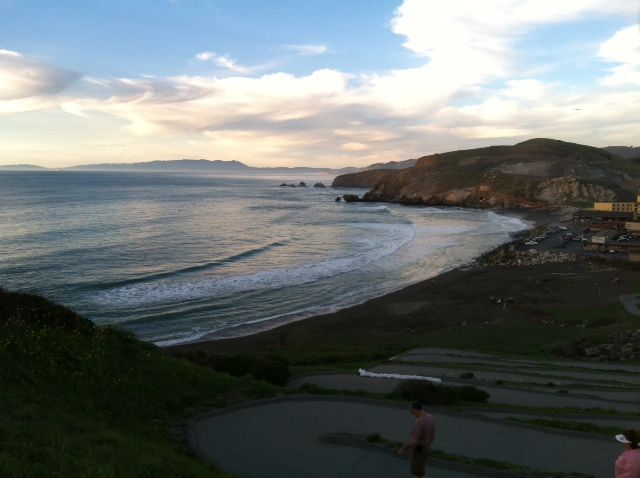
a view from our trail of one of the beaches, and the pier
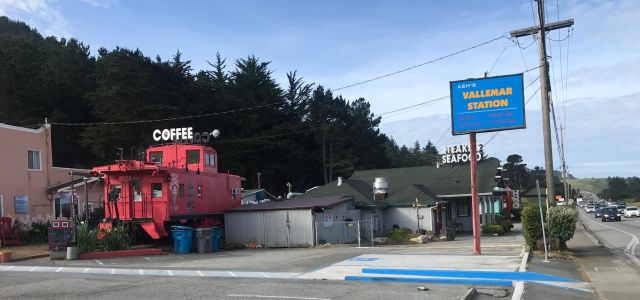
our caboose coffee shop

It was at the coffee shop I purchased the local weekly Pacifica Tribune and became aware of a gnawing community issue.  In fall 2016 the owner of xxx mobile home park decided to evict every tenant claiming there was a plan to do upgrades.  Many residents had lived there for decades; many were low-income people, including veterans, elderly and disabled people, with few affordable options for other rentals.  At the Council meeting the Council majority refused to help and as a result 77 households were evicted.  Subsequently a proposal for rent stabilization was developed and efforts are underway to make it effective.  It will cost money to implement and opponents say this money could be better spent on physical improvements.

I wonder how this will be resolved.  There are no upmarket restaurants or shops on the high street where our rented beach house is located.  There is Florey’s bookstore which we religiously visit each year and which hosts weekly meetings for the book club, writers group, grieving pet owners group and others.  If renters can be ejected then more expensive housing and buildings will arrive, property values will increase even more (prices already appear astronomical), property tax revenues will increase and the simple charm of the place will be dissipated.  Some will call that progress.  Much the same happened in Sandy Springs, Atlanta where we have lived for many years.  It gained cityhood and then the mayor who was smart and frugal passed on and now big civic structures and apartments and shops are choking the center, and traffic and sales taxes have increased, and this is progress.

Close to the caboose is the Memorial Gardens established and maintained by Mike Mooney which now has notices about plant thefts.
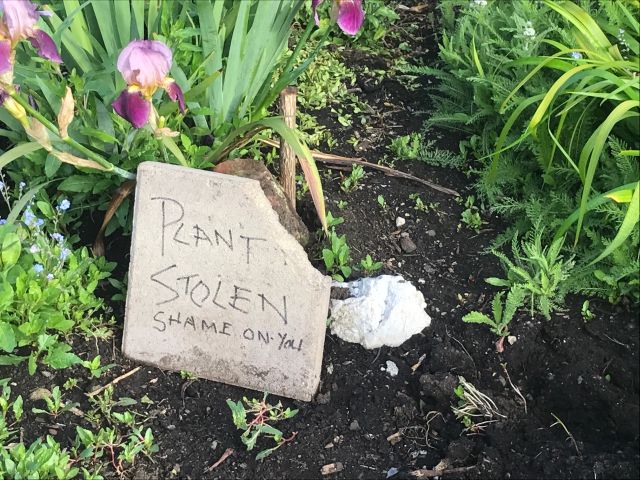
We again, coincidentally, met with Mike and wondered aloud why people would steal plants.  No avid gardener surely will look at a lovely plant in their garden and think “that’s the one I stole!”.  Probably thieves for commercial re-sale.

But back to the delights of Pacifica. It has community gardens with weekly bio-intensive growing classes.
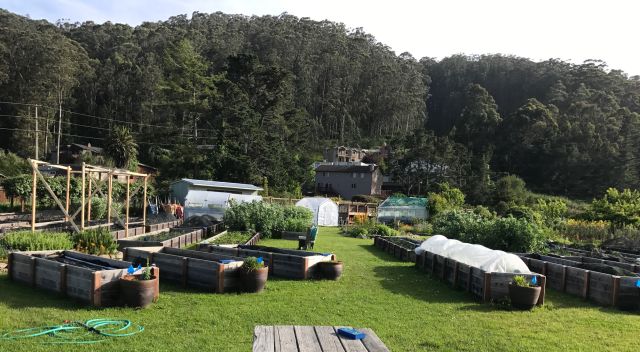
Pacifica Gardens – Educate, Cultivate, Inspire

And a history of rum smuggling during the Prohibition.
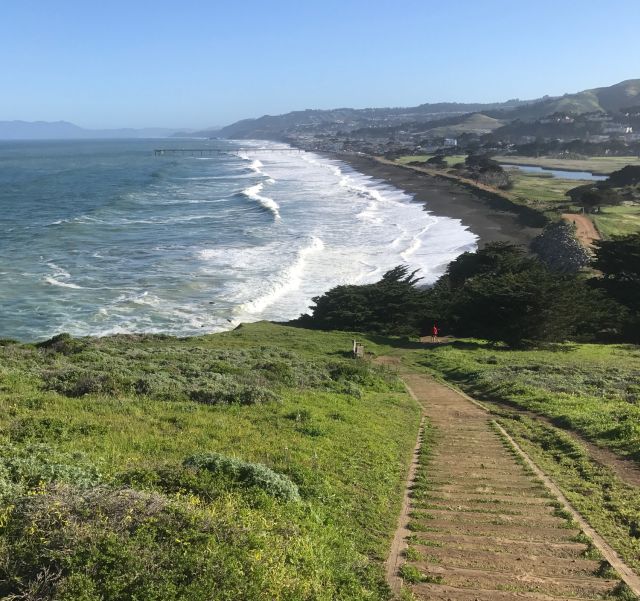
Bootleggers’ Steps Trail at Mori Point

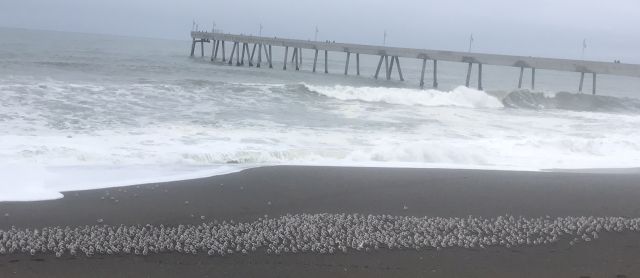
And unusual beach sights.

masses of birds gathered on the shore

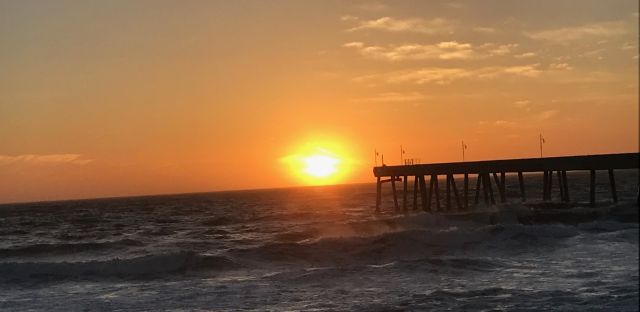
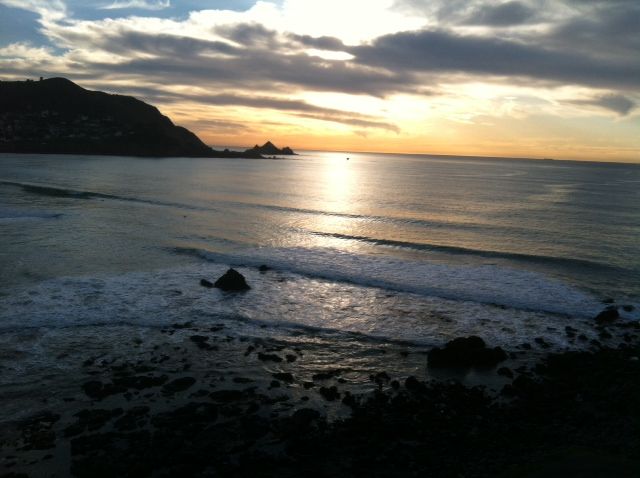
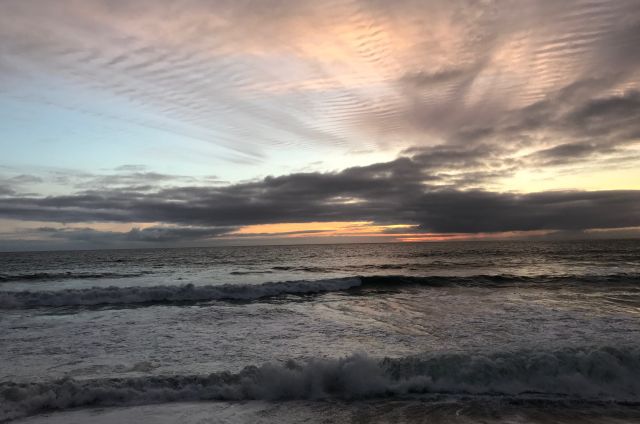
And often brilliant sunsets

And nearby interesting places to visit such as the Farmer’ Market Serramonte, Daly City.
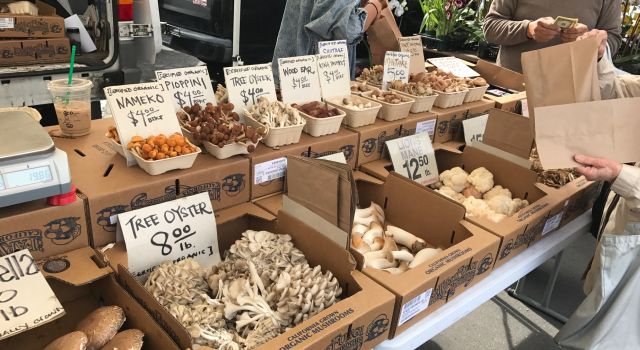
seeing these mushrooms motivates me to get back to growing shiitake

And finally our favorites places to eat, including this tofu shop
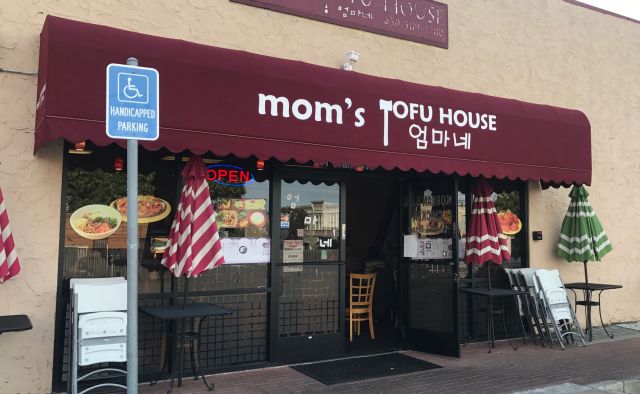
Mom’s Tofu House, a Korean restaurant in South San Francisco has delectable stone pot dishes

And of course the attractions of San Francisco where the technology money is making it culturally competitive with NYC.  We visited and enjoyed its MOMA (museum of modern art). 
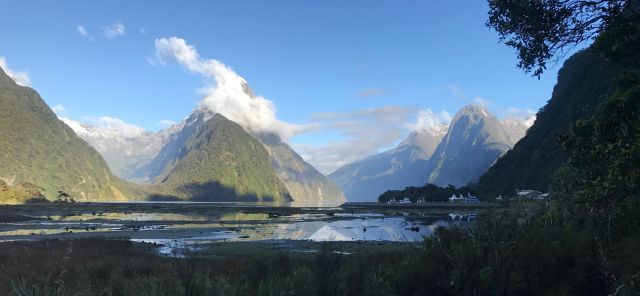


Australia and New Zealand

I just returned from a trip to Australia and New Zealand.  Perth to attend a nephew’s wedding and New Zealand because a) the cheapest tickets were via Auckland; b) I have never been to NZ.

I have visited Perth numerous times since the 90’s and seen it grow on the mining roller coaster to a significant city.  Australia has also grown and was rated best country in 2014.  As it made more money from mining (iron ore, petroleum, etc.) sales to China  its labor costs increased and manufacturing became less competitive.  Ford ceased production in 2016 and Holden (GM) and Toyota will stop manufacturing in 2017.  It seems that Australia is becoming more dependent on China.  Reminds me of stories of some big farmers – as they chase more revenues, they need more expensive equipment and continuing big harvests and the cost is loss of their resilience and perhaps, independence.

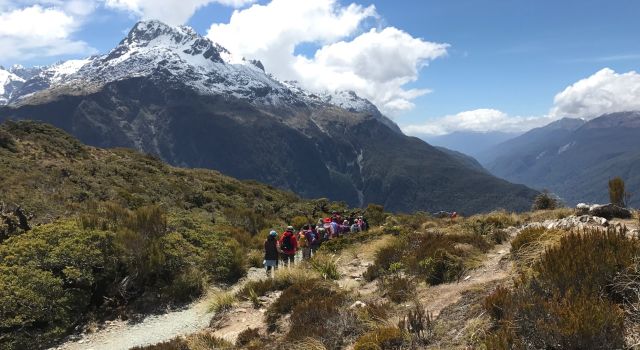
We only had 3 full days in NZ and decided to spend them on the South Island in the Fiordland area.  A fjord is created by glaciers sliding down to the sea and by erosion creating steep sided cliffs.  We flew from Auckland to Queenstown and rented a car for the drive to Te Anau (170km) where we lodged.  Our main activities were to hike parts of the Kepler Track and Routeburn Track, take a nature cruise on Milford Sound (120km from Te Anau) and visit the Te Anau Wildlife Centre.  Tourism is the main revenue generator of NZ and all the tracks and facilities were immaculate and everyone was friendly.

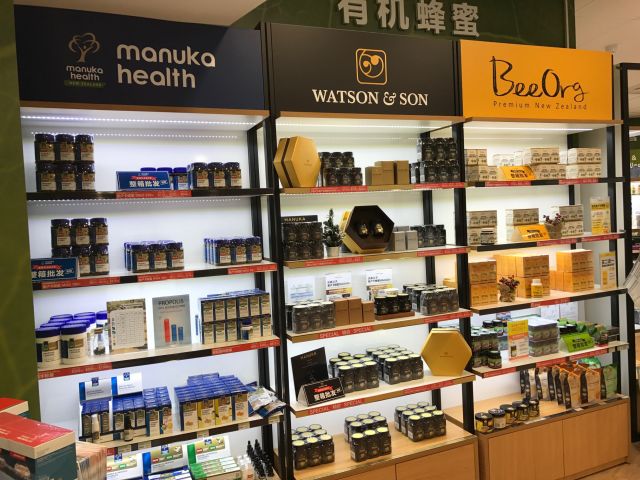
Manuka honey is a big deal in NZ and there were numerous honey stores.  Manuka honey has beneficial ingredients which are assessed by a UMF rating system – so you can get UMF 5+, UMF 10+, UMF 15+ and UMF 18+ with exponential increases in price.

Manuka honey sales
Manuka honey sales

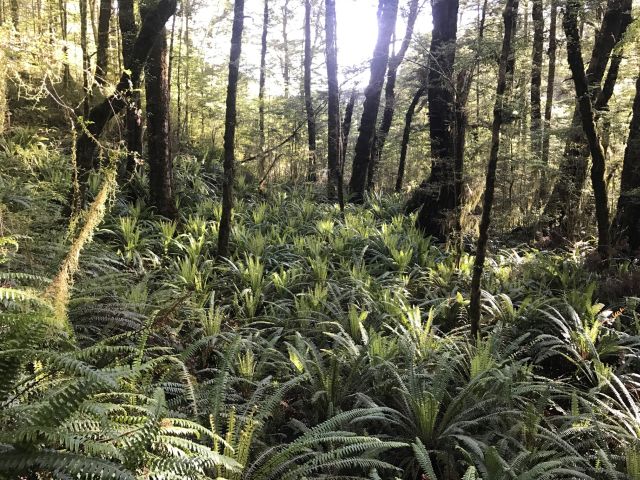
Rainfall in the Fiordland is staggering – an average of 7 meters (about 23 feet) so there is lots of growth in the forests:

deep luscious forests

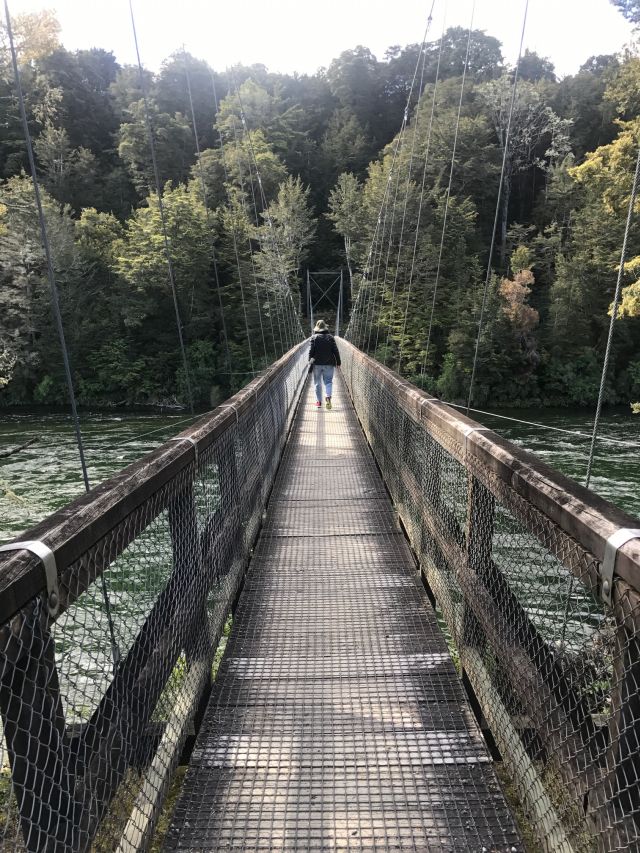
and rivers to cross:

well maintained bridges and trails

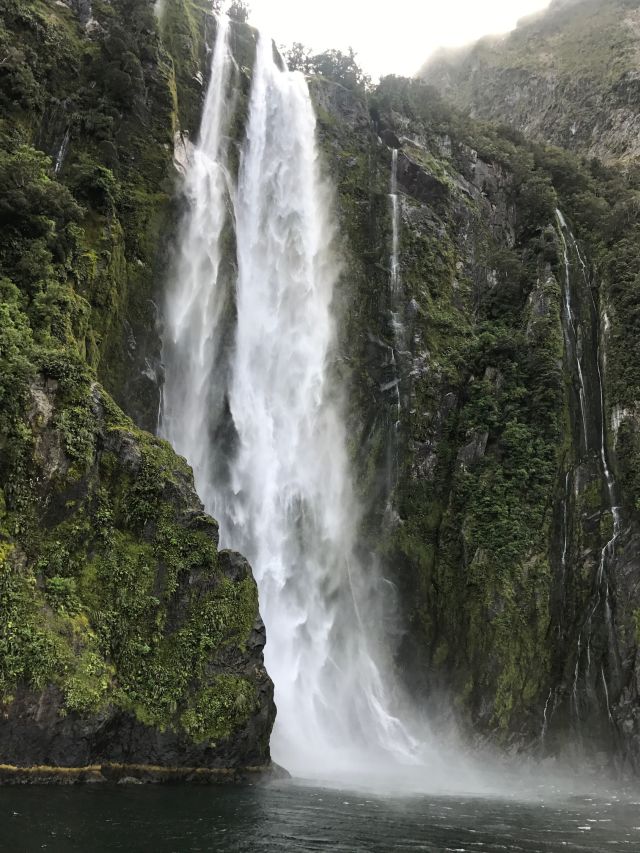
and stupendous waterfalls:

this is much higher than it appears to be

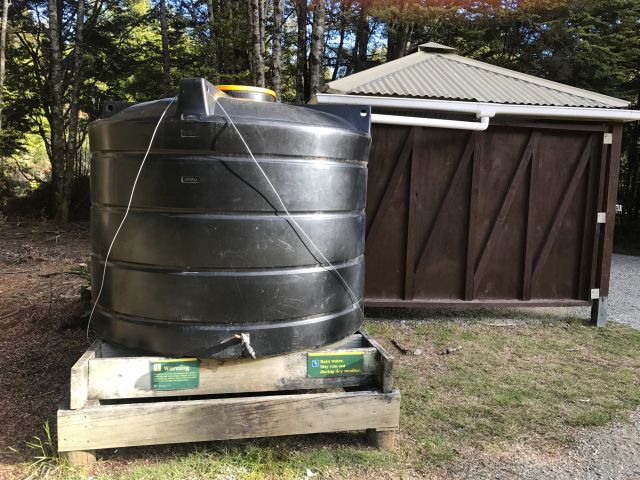
And surprisingly, given the excessive rainfall, there was also a rainwater harvesting system:

the 2 notices read: "Rain water may run out during dry weather." and "Warning! In general the water provided at this facility is clean and able to be drunk without treatment. But users may prefer to boil or treat the water before use, for their own protection."
the 2 notices read: “Rain water may run out during dry weather.” and “Warning! In general the water provided at this facility is clean and able to be drunk without treatment. But users may prefer to boil or treat the water before use, for their own protection.”

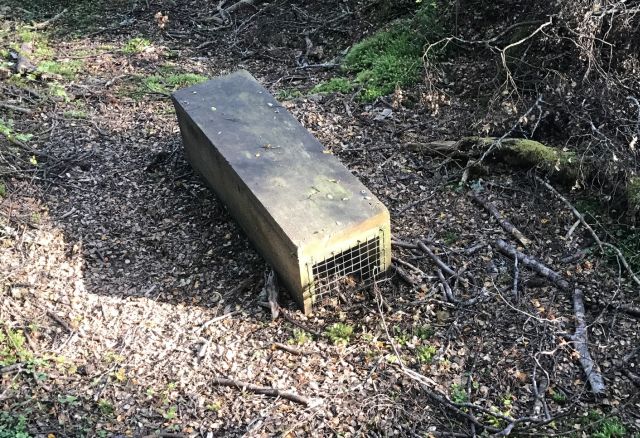
In the absence of predators NZ’s bird population became flightless and thrived until, with humans there also arrived stoats, weasels, rodents and possums.  And many birds became extinct.  The stoat was introduced in the 1880’s to control rabbits and hares and is considered “public enemy number one” for NZ birds.  Stoats are controlled with biodegradable 1080 poison and traps.

numerous rodent traps are stationed along the trails
numerous  traps are stationed along the trails

We took the Routeburn Track to the Key Summit and passed several groups of fast striding, cheerful Japanese sightseers.

they like us were exhilarated by the surroundings

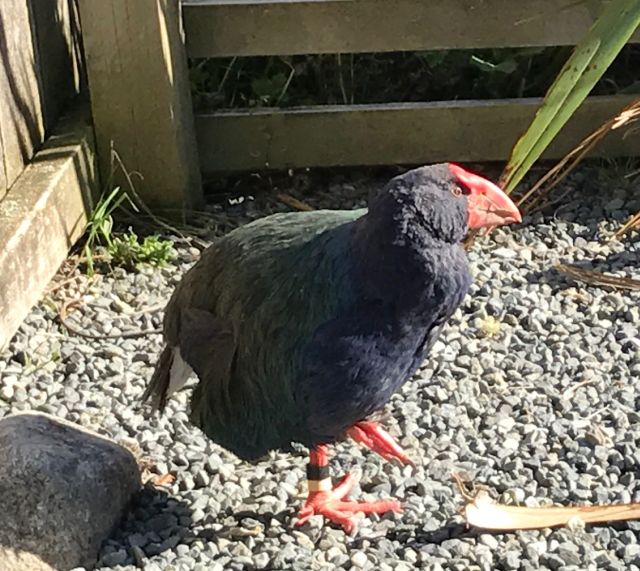
We visited the local Te Anau bird sanctuary during feeding hour and saw the rare flightless tekahe.

an elderly bachelor, but we also glimpsed a couple who had been given a chick to foster

and many other unusual birds.

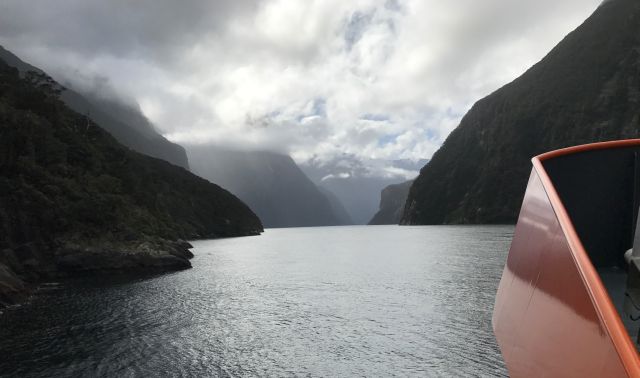
And the boat ride in Milford Sound was spectacular:

we were lucky it wasn't raining since it rains most days
we were lucky it wasn’t raining since it rains most days.  we saw penguins and seals and powerful waterfalls.

And then, after a quick tour of Auckland on the Hop On, Hop Off Explorer bus and the excellent NZ Maritime Museum, we were back home in Georgia.  And it was raining and all my storage tanks were filled and life had returned to the soils.

ah, Sebastopol!

With our first (and only) grandchild in San Francisco we visit San Francisco (actually the city of South San Francisco) more frequently and like to lodge in the town of Pacifica which has high cliffs overlooking the ocean.

the cliffs have jogging paths and the setting is natural
the cliffs have jogging paths and a natural setting

Our 2 must visits are Florey’s 2nd hand book store and Mike Mooney’s Memorial Gardens.

in remembrance of the victims of September 11

We marvel that Florey’s still survives with all paperbacks priced $1 and all hardcovers $2, and no customers present other than ourselves.  But each year it is there and we make requisite purchases, since we are the dinosaur people and though ebooks accompany our trips, paper books are what we are about. 

 North of SF lies the problem. North of Golden Gate bridge, the redwoods of John Muir Woods and Point Reyes lighthouse is Sonoma County with Bodega Bay, Red Russian River and Sebastopol.  Ah, Sebastopol!  Each visit inveigles me this is where we belong. Vineyards and Gravenstein apple trees line the approaches, and the local Santa Rosa paper is aptly named  “The Press Democrat”.  But Sebastopol (population <10k) is on SF radar and real estate prices and rents increase relentlessly. The downtown area  is renovated and now boasts The Barlow area, a 12 acres open air market place.

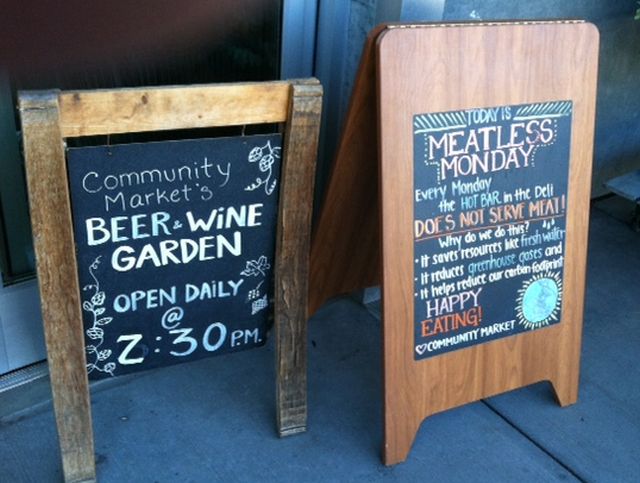
the community market features Meatless Mondays, a trend strong resisted by the meat producers
the community market features Meatless Mondays, a trend strongly resisted by meat producers elsewhere

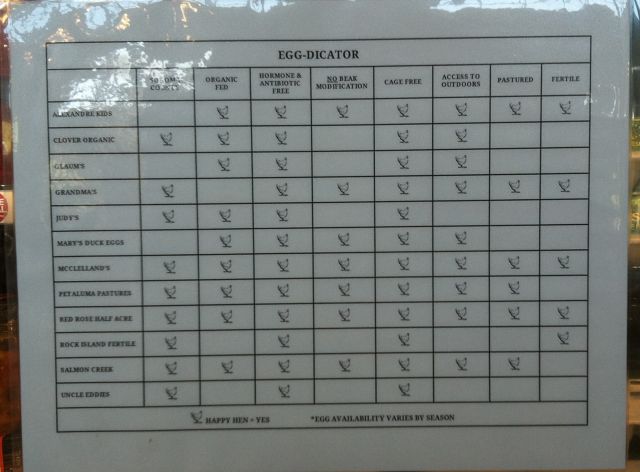
Since the demise of our chickens we monitor egg offerings, vainly trying to replicate the orange yolks our hens produced, and were intrigued by the egg-dicator below.

bb
the checklist includes organic feed; local production; hormone and antibiotic free; no beak modification; access to outdoors; pastured and fertile

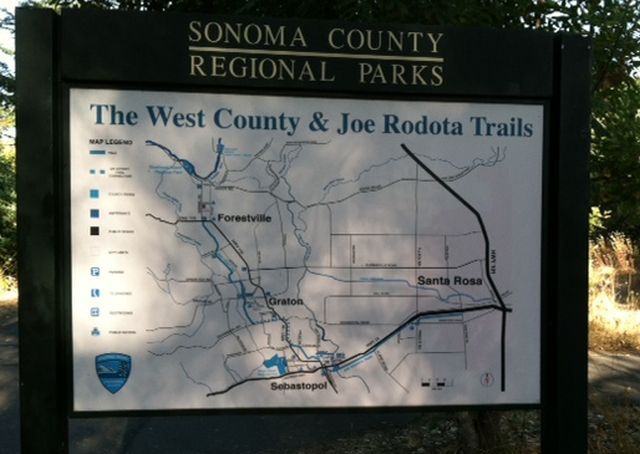
It is easy to decry the upmarket symbols such as art studios and gourmet restaurants,  and conclude the area is just too elitist. But then you happen on the unexpected such as the Joe Rodota trail next to our old fashioned but very comfortable Sebastopol Inn. 

gg

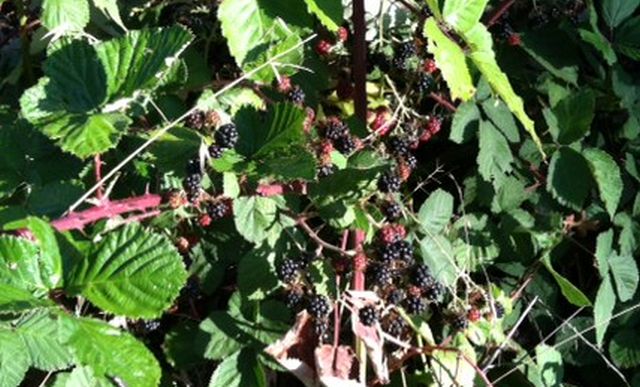
The trail runs to Santa Rosa through marshlands which may flood in the rainy winter season. It was a  rail track now paved for 3.5 miles. And as you try rationalize that Sebastopol is not for you, you notice the wild blackberries crowding the trail, and they are plump and sweet.

succulent sweet wild blackberries

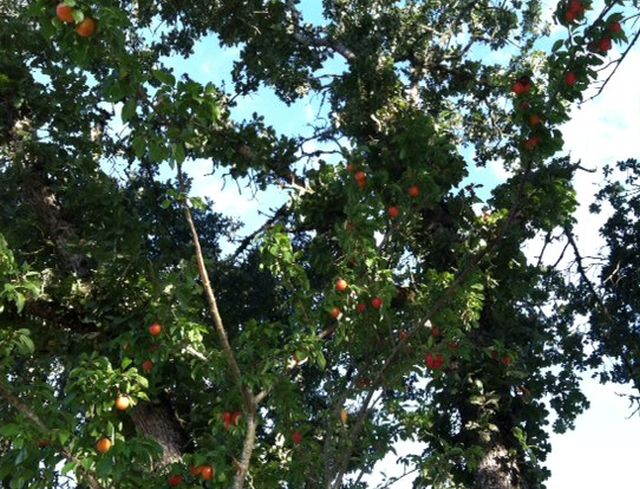
And along the trail are wild sweet cherries and plums.

at times difficult to reach, but worth the effort

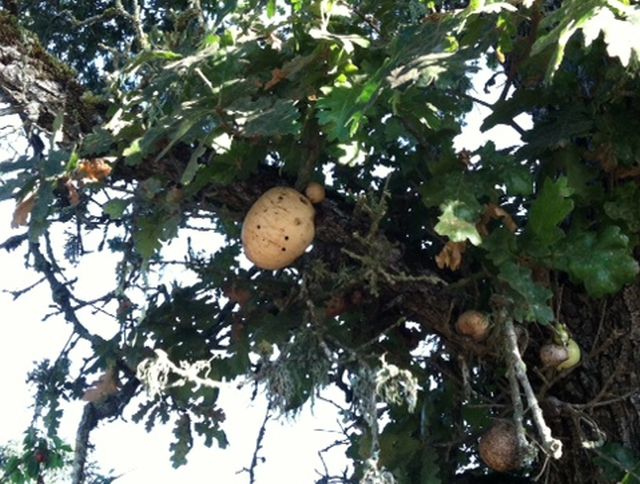
And wild dill and puff balls on the oak trees

puff balls on the trees
puff balls on oak trees

Nature bursts through and gives lie to our civilizing veneer. 

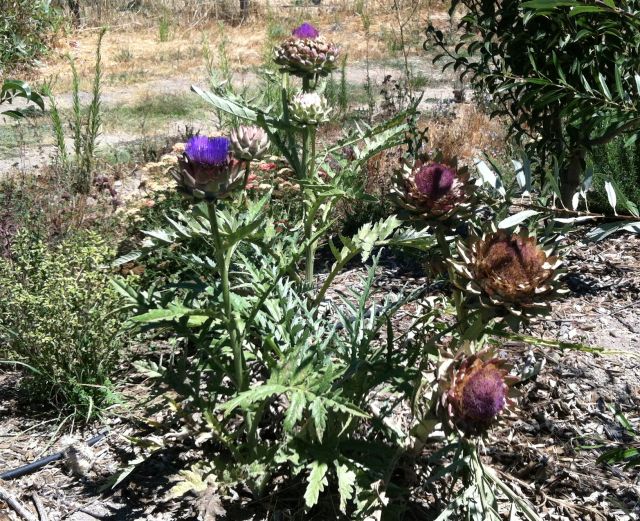
There are several commercial organic growers and I would like to have visited one well rated with the permaculture crowd. Their website mentioned public tours for CSA members $10 each or private visits $250 each.  I emailed asking if we could join a public tour or make a quick visit for less than $500.   Never heard back.  I guess viability is a continuing challenge for the small grower and pleasantries fall by the way. However on the way out of Sebastopol we spotted a permaculture training establishment and they were welcoming and encouraged us to walk and look. Their crops were healthy and we marveled the artichokes (Monterey just south of SF is the artichoke Mecca of the world). 
aa
notice the dry surroundings, no rain in summer and drip irrigation is a must – unlike Georgia which bursts with green after torrential downpours (when they finally arrive)

So we visited Sebastopol and enjoyed and will include future visits when in SF.  Though uprooting from Georgia and moving there – probably not on the cards. 
visit to the west coast

One of the big life events occurred for me in February – I became a grandfather (for the 1st time) and this occasioned a visit to San Francisco.  Actually South San Francisco which is a town south of San Francisco, fairly close to the airport and really close to Pacifica.  Pacifica is a small town on the Pacific with great walking/running trails and views of the ocean.

this is the middle bay with a helpful serpentine path to the top of the cliff

There is one bookstore to which we make our annual pilgrimage.  This time for $1 I purchased “Guns, Germs and Steel” by Jared Diamond a much referenced and fascinating read.  Especially for me with my interest in the development of agriculture and communities across the world.  Also an organic cafe with good coffee to mark the halfway point of the morning run.

this overlooks the 3rd and northern bay with its pier and nearby cafe
this overlooks the northern bay with its pier and nearby cafe and, in the distance, Marin county

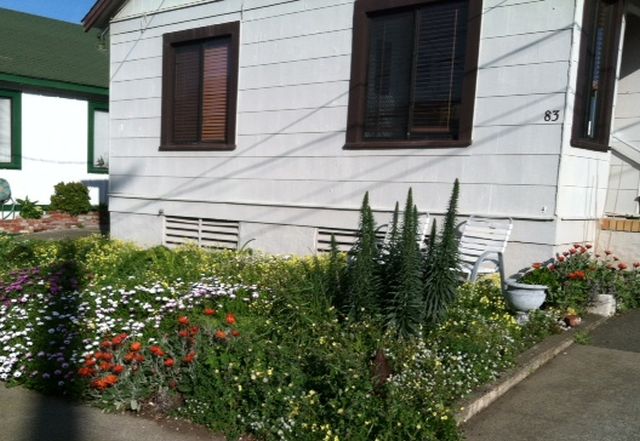
And to reach the cafe we pass small houses with flowerful front yards.

one of many front yards, none of which had grass lawns

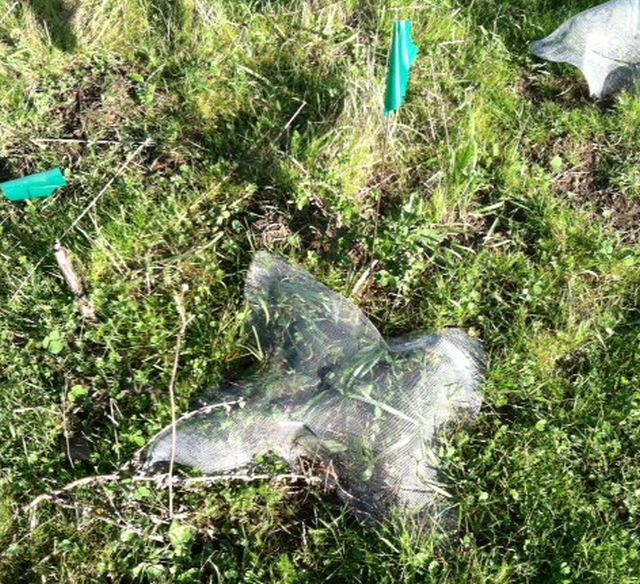
Although the paths cross rugged natural terrain you cannot but notice extensive work protecting the cliffs and reintroducing plants to the landscape.

this unusual object is wire mesh stapled around and protecting a tender plant with little flags dotted around signifying protected species

We had a great time with family and look forward to more visits to the area.

west coast trip – Bodega Bay area and Burbank

Most towns in Bodega Bay area are small and each has a general store with canned goods and occasional fresh vegetables.

our heritage hotel in the small town of Tomales
our heritage hotel in the small town of Tamales

Gas stations are sparse and you have to travel several towns to find one. You can measure resident size by the number of gas stations – Bodega (where “Birds” by Hitchcock was filmed) has none, Bodega Bay one.  Sebastopol however, has 3 plus a Safeways a Whole Foods and two bookstores!

I felt very at home in Sebastopol which reminds me of Asheville NC. A street is named after the Gravenstein apple, and the town is surrounded by apple orchards and vineyards. A mile from the town center is a remnant of Gold Ridge Farm, an experimental nursery established by Luther Burbank, a plant breeding genius, in 1885.

Gold Ridge farm
the barn and nursery at Gold Ridge farm

We were fortunate to have extended discussions with the current curator and the former curator, Steve. Steve used to keep bees until he found empty hives with food stores, classic colony collapse disorder. Made me realize this idealized growing area came with attendant problems of industrialized agriculture. Steve described his 30+ nationwide tour of organic farms including Lovell’s biodynamic farm in N. Georgia, not too far from my location. His objective is to write a book on his life experiences with plant growing. Steve recommended we visit the Occidental Arts & Ecology Center in nearby Occidental.

Much of the original farm was converted to senior residential housing but the area that was saved has magnificent specimens of fruit trees (apples, cherries, quince, pear) and berries, walnuts, chestnuts etc. The trees are well established and there is little need for irrigation, fertilizer (llama), or spraying ( dormant) oils. Activities include pruning, grafting and general care. I noted how skilled pruning opened the inside area of their fruit trees.

an open pruned tree
an open pruned tree

They weave sticks to form sides for their compost heap.

compost heap with woven sides

The local residents support farm activities and at the nursery we were educated on the naked ladies.

bright colored naked ladies

We had noticed them, attractive and beckoning along the roadsides in their gaudy pink at the end of 20″ stems without any leaves, hence the term “naked”. The leaves die in spring. One of Burbank’s achievements was to cross a naked lady Amaryllis belladonna with another genus the wild Crinum from the swamps of Florida to produce the hybrid Amarcrinum memoriacorsi.

Before leaving Sebastopol I met with a realtor to discuss local practices, with a view to a possible relocation, one day.  Rainwater harvesting is not approved. The houses use wells some with just 1 gal per minute flow others with up to 30 gpm.  He was interested in my efficient wood stove and said if we were buying we should purchase a house north of a line demarcation where smoke emissions were not subject to controls. Of course this can change as can the flow rate of an apparently healthy well. Rainfall in the area exceeds 30″ pa, mostly between November and March.

I wanted to visit the Occidental permaculture establishment recommended by Steve and left several messages, unreturned. Their website discourages “drop ins”. We visited the town of Occidental which is in a forest setting with a well provisioned general store and an enticing cafe where the staff is attractive, hip and casual, as you would expect of a town located on “Bohemian Highway”. Our server suggested we visit the center but the well posted signs discouraging drop ins discouraged me too. Perhaps for our next visit.

Heading north on the Bohemian Highway we reach Guerneville once called Stumptown for the clear-cut giant redwood stumps left by logging operations for the rebuilding of San Francisco after the 1906 earthquake and fire. A few miles north is the Armstrong Redwoods reserve, 800 acres of magnificent specimens many well over a 1,000 years age.

one of the large redwoods, diameter>14', age>1,400 years, height>300'
one of the large redwoods, diameter>14′, age>1,400 years, height>300′

When the trees topple their root mass is striking.

redwood roots spread wide but not very deep

Our destination was Timber Cove a remote hotel on the Pacific cliffs, about 15 miles of cliff twisting road beyond the Russian River Valley and a few miles from Fort Ross founded in 1812 by Russian settlers. A spectacular sunset crowned the day’s end.

sunset from the hotel

west coast trip – fulfillment outdoors (part 2)

Larry
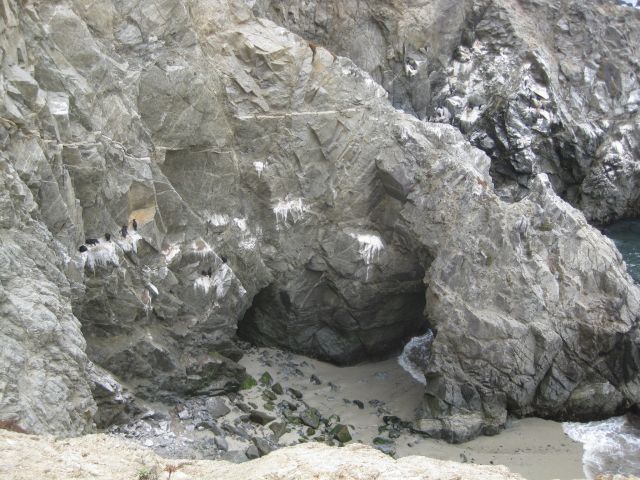
North of SanFran is Marin county and north of it is Sonoma county and Bodega Bay. The promontory called Bodega Head has craggy cliffs overlooking the ocean with crowds of cormorants and seagulls soaring and calling.

rocky cliff with cormorants (middle left), guano sketches and a steep drop to the sea

On a rocky guano caked outpost flecked with salt foam, squadrons of Pelicans have gathered. And then they pitch forward and off and with powerful wings thrumming they beat above the foaming sea and ascend higher and higher in broad V wave formations until they disappear around the headlands.

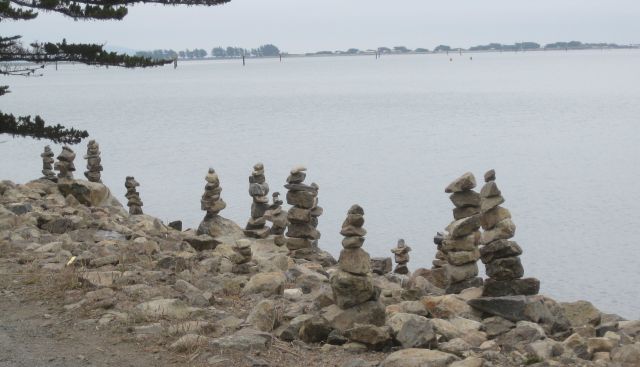
On the drive back we notice on the shoreline small piles of balanced rocks. We have seen them before in Vancouver’s Stanley Park and even in Atlanta along the ‘Hooch river, but this is different – clusters and clusters of stone towers up to a foot high.

some of Larry's creations
some of Larry’s creations

I stop for a photo and notice a lean tanned man walking toward me. Suddenly he scrambles down the side of the embankment and begins gathering stones. I greet him and ask if he knows why people build these stone piles. He glares at me – there are no people building these he says, I built all of them and there are now, and he waves across the bay, about 170 of them.

But why I persist. For good luck for the sailors he says.

His name is Larry, 72 years and retired and the idea came from his time in Hawaii. Is skill required? With time you get the feel of balance. As to size he has built small and big piles and the only injury was when he struggled to balance a large boulder and it tipped and sliced his foot and toe. He has a regular routine walking the shoreline caring for his creations and then on to the marine laboratory for a visit. Had we visited the cliffs? Take care he says – it was a foggy day when a 12 year old wandered too close and fell 200 ft to the rocks below and has never fully recovered. Now follow stories of large family reunions and driving a Sherman tank over the dunes. He punctuates his reminiscences with hand greetings to passing locals. And then it is time and he vigorously shakes our hands and moves on.
So, two retired guys, Mike and Larry with outdoor pastimes bringing pleasure to others.

west coast trip – fulfillment outdoors (part 1)

Mike

We just visited 2 sons in the San Francisco area and as usual lodged at Pacifica.  On the BART train we passed the houses clustered on the hillsides of Daly City which inspired:

Little boxes on the hillside,
Little boxes made of ticky tacky,
Little boxes on the hillside,
Little boxes all the same.

There are green ones and pink ones and yellow ones and blue ones and today they all cost a lot of money.

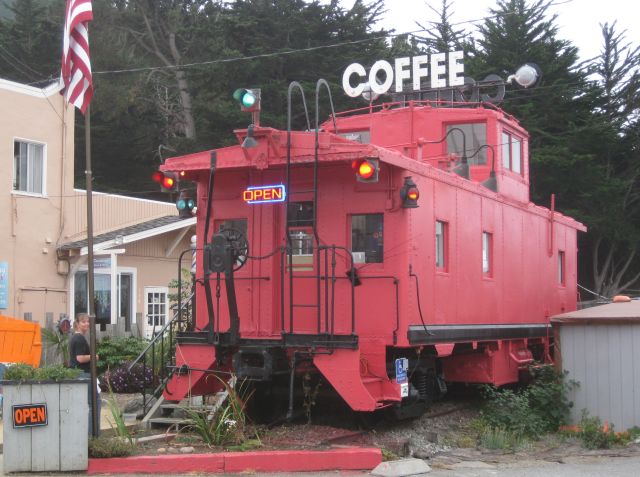
Pacifica is a small town with undistinguished buildings overlooking the ocean and has lovely cliffs and walk/jog trails . The cost of shoreside hotel accommodation has increased rapidly over recent years as technology sourced wealth laps outlying areas. Each morning we follow a gentle trail to our coffee shop train.

early morning coffee stop

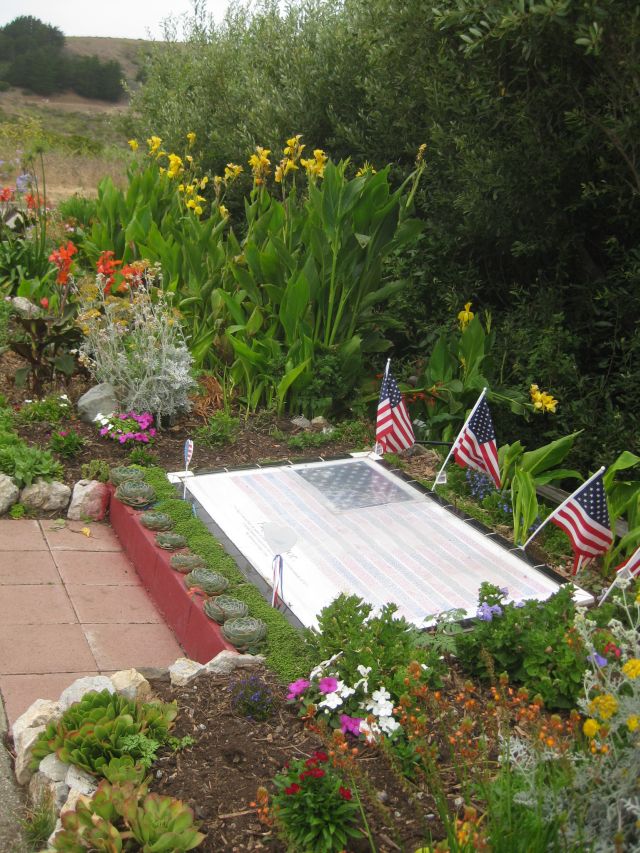
Along the path is a floral memorial to the victims of Sep 2001.

floral memorial
green and color amidst the dry grass shore line

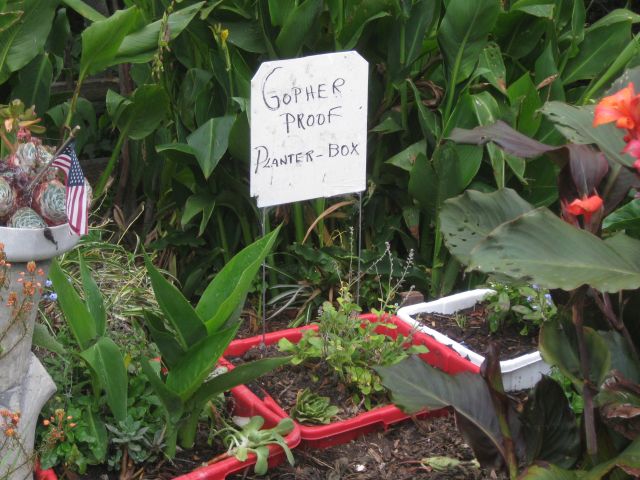
This time I noticed red plant tubs marked “gopher proof”.

gopher proof tubs
gopher proof tubs

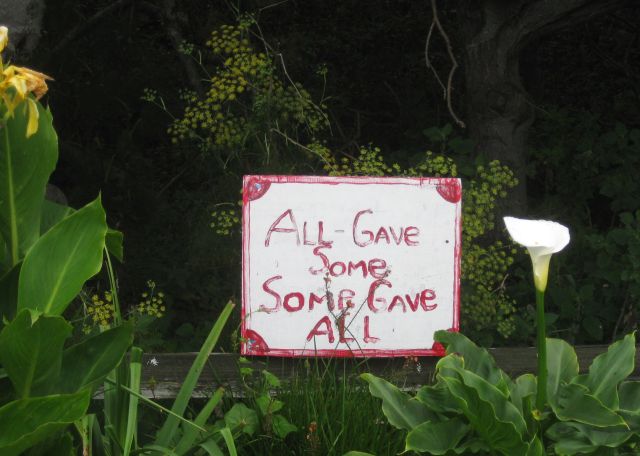
Interesting concept and as I paused for a photo an elderly man appeared and asked my interest. He Introduced himself as Mike Mooney and we later discovered he is a celebrity in the area and the founder of the community gardens. He told us the history of the tubs. The previous recycling company had issued to every resident 3 color coded tubs for different materials. The new recycling company provided one man size container for all recyclables and had a contest with a $500 charity award for the best idea for repurposing the old tubs. Mike entered and suggested gopher proof planting containers and won. I asked what diameter holes should be drilled in the bottom of the tubs for water drainage and he said the diameter was not important, just lots of them. He said gophers tunnel horizontally and not from the bottom. His eyes moistened when he discussed September 2001 – if the 3,000 were going to war and were killed that’s one thing, but these were people going to work and did not come home at the end of the day, and that’s wrong, he said gently.

a tribute to the victims

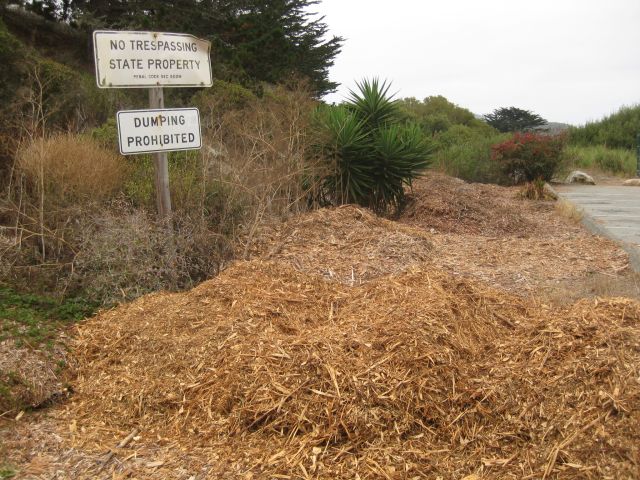
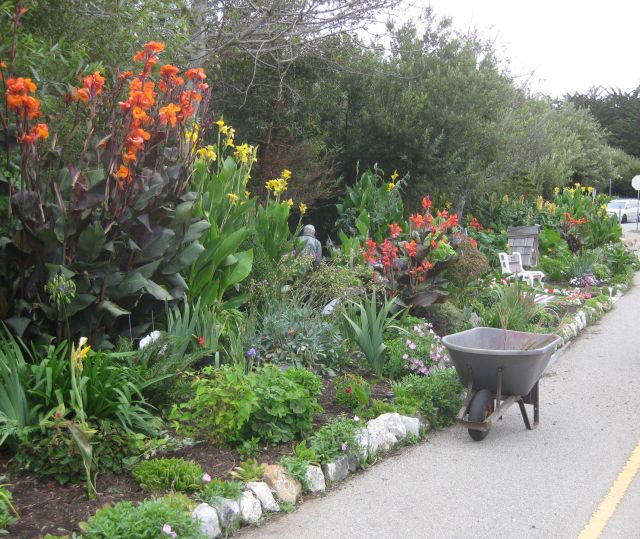
He maintains the gardens alongside the path and they are beautiful. He applies lots of mulch from the nearby disposal site.

mulch for Mike's garden
mulch for Mike’s garden

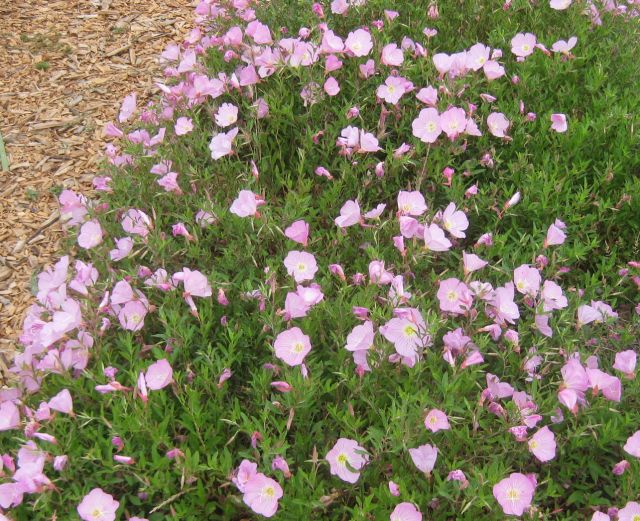
His cap and jacket said “go native”. I asked about invasives and he laughed and said he was given the apparel. But as to invasives he said the Mexican primrose can be a problem.

Mexican primrose
Mexican primrose

He suddenly reached down and pulled out two large bunches of primrose. Look at their large root structure they are survivors, he said. Lot’s of people try to transplant them but few succeed. The trick he said is to wrap the roots in soft paper, place them in a pot of earth and place the pot in a bucket of water and when the roots have regrown then transplant the roots and soil to their final location. He gave us several bunches of primrose plus a succulent for our son’s garden. He then retrieved his wheelbarrow and with his small dog following, returned to his mission.

the oasis
the oasis


San Francisco – from food market to food truck

Saturday, August 20, was a good day to visit San Francisco foodwise – first a visit to the Ferry Plaza Farmers’ Market and then the 3rd annual La Cocina Food Festival in the Mission District. The Ferry Plaza market is considered one of the top farmers’ markets in the country.
 

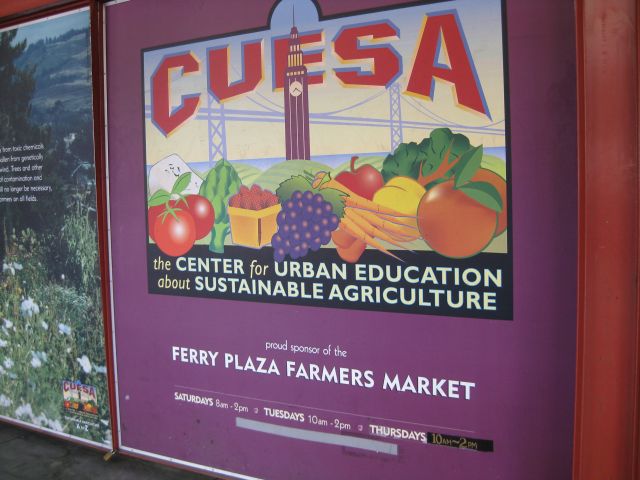
The market is organized by CUESA (the Center for Urban Education about Sustainable Agriculture) which envisions a food system that is environmentally sound; socially just; humane; and, economically viable. Large educational posters inform passersby on the issues at stake. On Saturday’s the market is held both in the front of the ferry building and on the rear plaza overlooking the Bay. There are fruits, vegetables, herbs, flowers, meats and eggs from small regional farmers and ranchers, many of whom are certified organic, as well as breads, cheeses, honey and more. An extensive array with lots of samples to whet the appetite. The produce seemed unusually large and wholesome and pricey too. The technology industry has made San Francisco a wealthy city well able to lap up the organic offerings.

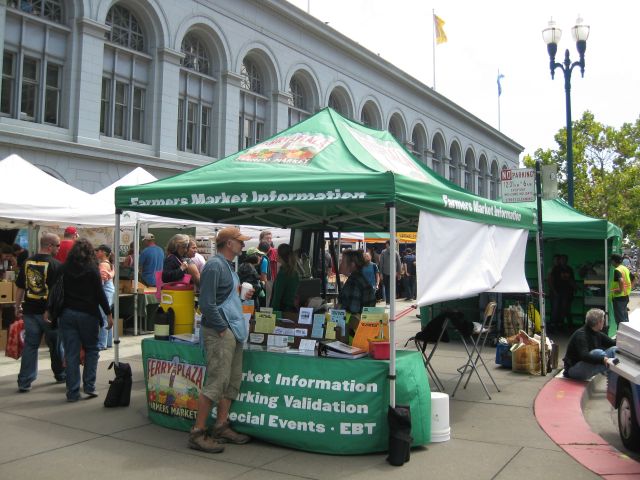
the Ferry Plaza food market
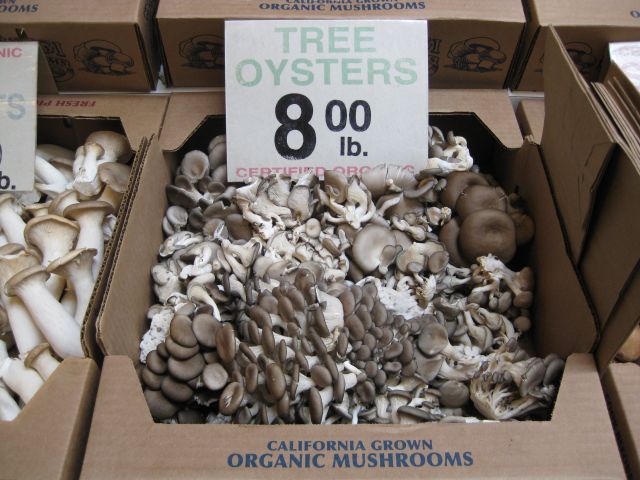
mushrooms for sale
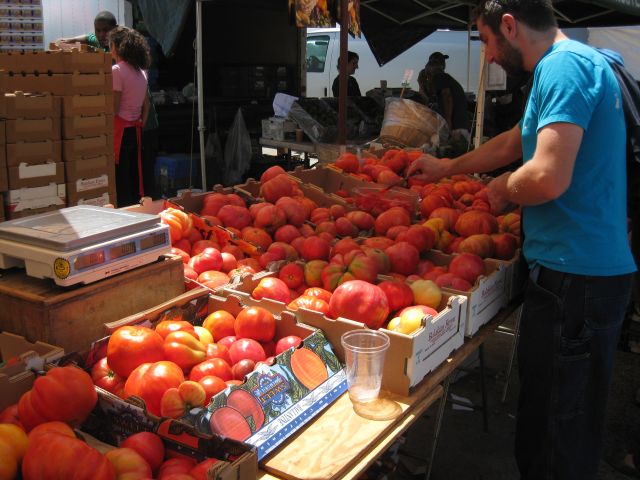
tomatoes galore
at the Ferry Plaza market


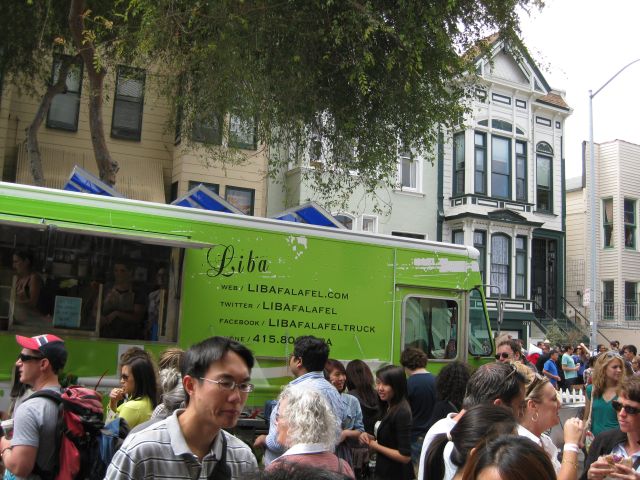
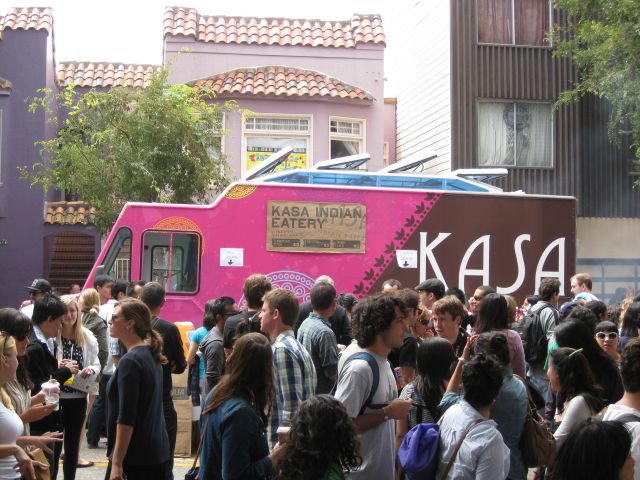
A different ensemble was available in the Mission District and we were introduced to the food truck revolution. These mobile trucks offer entrepreneurs a way to get started in the restaurant business. The food is varied, relatively inexpensive and convenient if you don’t mind lines and eating from a paper plate. TRUX is a website which provides information on the routes and includes twitters from the operators on when they will hit a street intersection. Other websites provide a top ten food truck listing. Conventional restaurateurs are uniting against their mobile competitors.

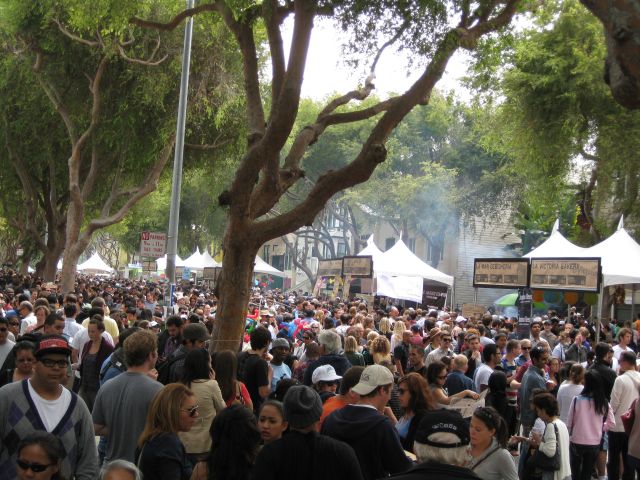
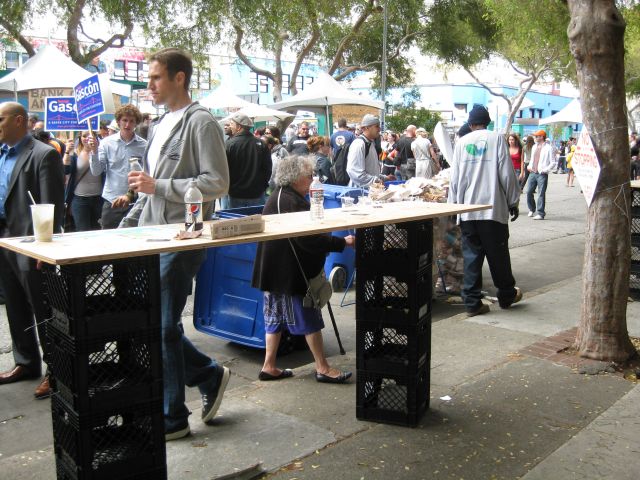
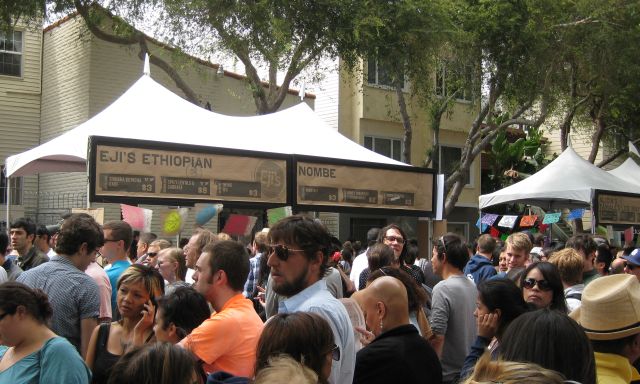
La Cocina, which assists low-income food entrepreneurs, organized the street food festival we attended. Folsom Street was cordoned off for several blocks and an alley of food stalls and food trucks was thronged by long lines of hungry consumers. Planks across stacked crates were the tables and continually emptying garbage sacks handled the trash. A roped in biergarten kept spirits high. A fun event.

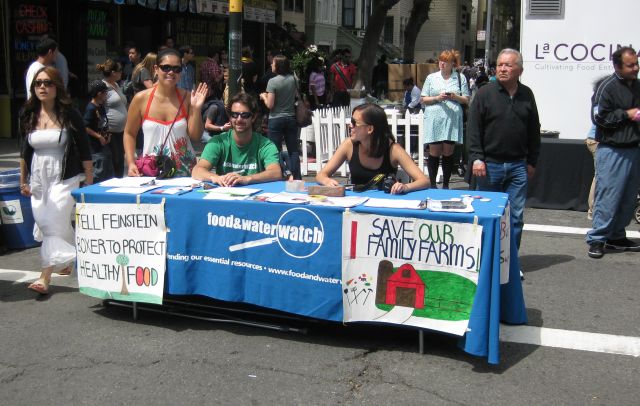
the La Cocina street food festival
a falafel food truck
an Indian food truck
well attended festival
makeshift tables for the hungry
street cart vendors

Salinas, CA

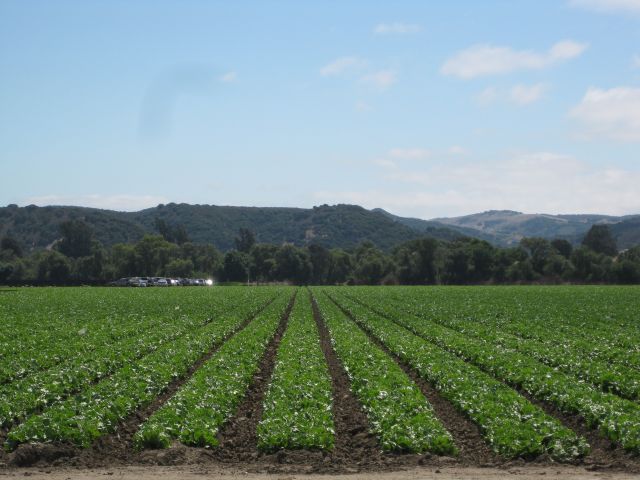
On the way from Monterey to San Francisco we paused in the Salinas Valley. If anything can trump Carmel Valley it is this valley, known as “the salad bowl of the United States”. Salinas was the hometown of John Steinbeck and the national John Steinbeck museum brings to life his books on the region. I chuckled on his comments when he revisited Carmel later in life: “And Carmel, begun by starveling writers and unwanted painters, is now a community of the well-to-do and the retired. If Carmel’s founders should return, they could not afford to live there, but it wouldn’t go that far. They would be instantly picked up as suspicious characters and deported over the city line.” (Travels with Charley: in search of America circa 1960). Little has changed during the intervening past 50 years.


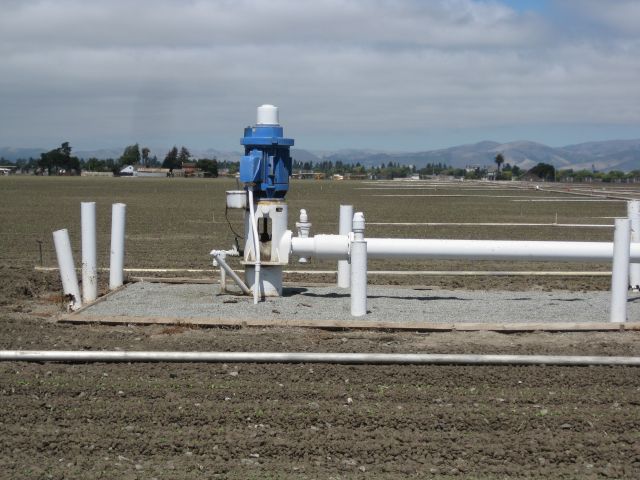
Apparently over 80% of the lettuce grown in the United States is grown in the Salinas Valley. Temperatures are cool and moderate with typical daily highs ranging from around 52 F in the winter to around 72 F in the summer – who could ask for more? Although rainfall is modest, irrigation needs are provided by the Salinas River. Nearby Castroville is known as the artichoke center of the world. Though there may be some puffery in the salad bowl and artichoke claims, the magnificence of these growing locations cannot be refuted.


great growing in Salinas Valley
irrigation infrastructure in Salinas Valley

Monterey and Carmel, CA

It seems to me that the areas north and south of San Francisco are ideally located for organic growing – excellent growing conditions and the wealth of San Francisco provides great consumer demand for the more expensive organic produce.   My son lives and works in the San Francisco area and on previous trips we visited the redwood forests and organic growing areas of Marin county to the north of San Francisco.  This time we headed for Monterey with its striking, natural and unspoiled shoreline.

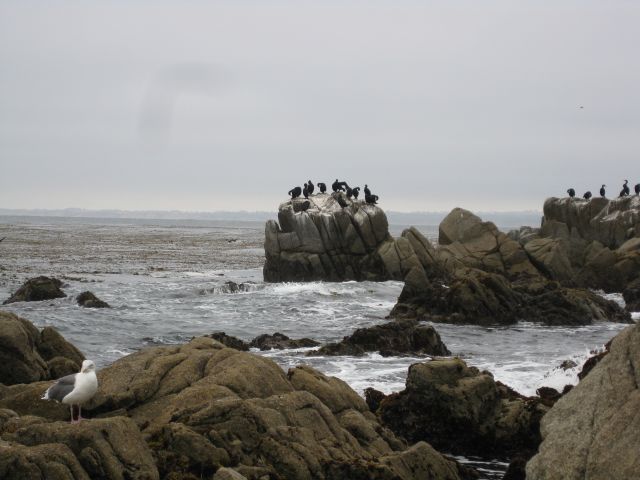
The Pacific Grove area north of Monterey also known as the Asilomar marine reserve, offers sandy paths for walkers and joggers between the road and the sea, and numerous, convenient parking areas.  The accessibility to the public, the unspoiled surroundings evidenced by seaweed bestrewn beaches and teeming wildlife, including incongruously a party of 5 deer, is reminiscent of a similar stretch between Trigg and Hillary’s in Perth, Australia.   How wonderful as you amble along to see nothing but the restless ocean, its fringes of rock, kelp and spray and immerse in the roar and shush of water and rock accompanied by the shriek of gulls, pelicans and cormorants.  The shoreline may not be as rugged as say the Cape of Good Hope, South Africa, or the cliffs of Tintagel in Cornwall, but to my mind are just as beautiful.

Pacific Grove Asilomar shoreline
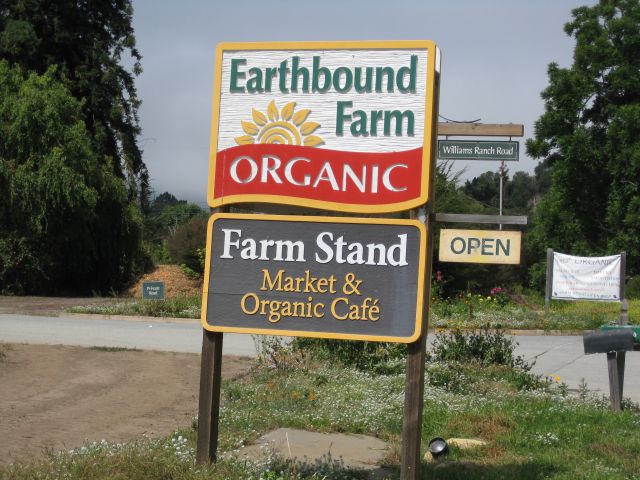
Earthbound Farm stand, Carmel Valley


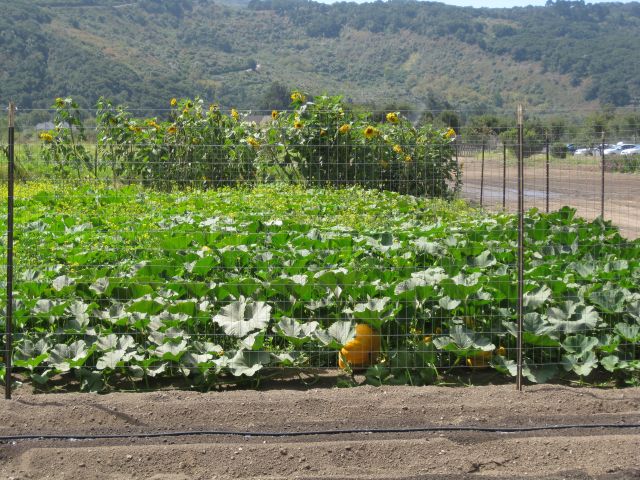
Our first day trip was to the south along “17 mile drive” through the scripted Spanish Bay and Pebble Beach areas to Carmel and then to Carmel Valley to visit the biggest name in organic produce “Earthbound Farm”.  We quickly learned we were visiting not the farm but the farm stand, and that Earthbound Farm certified organic produce is grown by some 150 farmers on farms ranging in size from 5 acres to 680 acres.   My biggest impression was the excellent growing conditions – the soil is rich black, the valley provides level open sun exposed terrain, there is ample water for irrigation and temperatures are mild and consistent.  Nasturtiums proliferated in cultivated and uncultivated areas – in Georgia I struggle to keep them viable.  I was mildly discouraged as I thought of my own plot – the intense heat and humidity, the cycles between drought and heavy rains, the hard Georgian red clay, which becomes so slippery  when wet.  Then I recalled the words of a former defense secretary:  “you go to war with the army you have … not the army you might want” and resolved to keep pressing forward.


lush Carmel Valley growing conditions
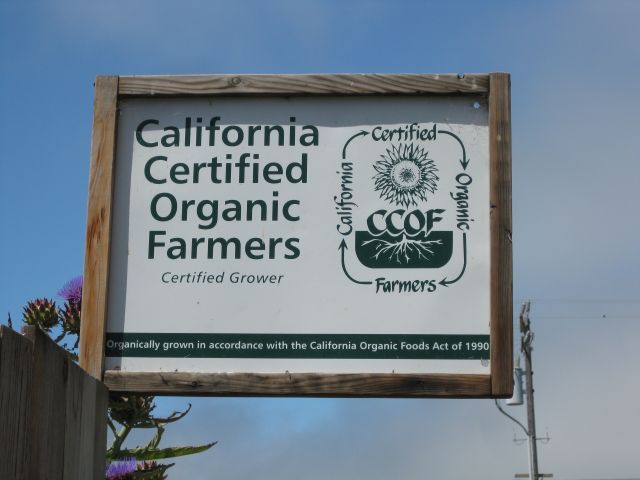
CA organic certification