well, that was not difficult – alternator replacement

My trusty Toyota Tacoma 2005 2.7L at 218k miles was doing fine, until recently I noticed a high pitched whine from the engine area, even when the truck was not moving.  The whine was pronounced some days, less so others.  It did not seem to come from the engine block (good) but one of the accessories.  The serpentine belt is a long belt driven by the engine crankshaft which turns the alternator (charges the battery), the power steering pump, the water pump and the A/C compressor and is held under constant pressure by a tensioner.  I found lots of guidance on the internet and, as suggested in one blog, my first stop was at Harbor Freight for a stethoscope ($5).
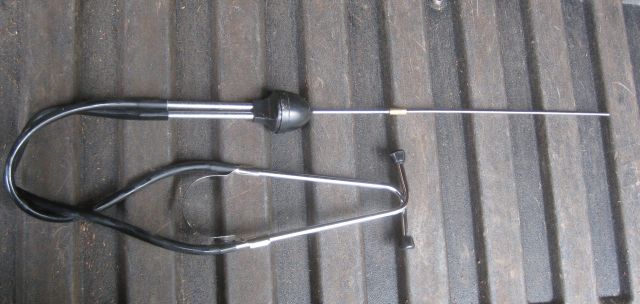
stethoscope for locating unusual engine noises

As luck would have it, when I reached my destination the whine had almost disappeared – isn’t this always the case when you go to the mechanic and the noise cannot be replicated?  However  when I listened carefully I could just discern it.  With the engine running and with care to avoid the spinning radiator fan and the serpentine belt, I carefully probed the reachable accessories and determined the offending noise was loudest with the probe on the alternator.

I had two ways forward – I could replace the bearings on the old alternator or buy a replacement alternator.  I watched an excellent youtube video on how to replace the bearings and it seemed well within my abilities.  However, I have spent very little to date on repairs and decided to buy a new unit.  And “new” could mean OEM reconditioned or non OEM new.  I wanted a good quality replacement.   Now for some research.  Usually Amazon or eBay have the best prices but not this time.  In addition to price you need to figure shipping and tax and website probity.  I located what appeared a good site for a highish price.  And then I thought, why not check out O’Reilly.  It would be quicker to pick up the part, easier to return the old part for a core credit and, if a problem with the part, easier to rectify with a visit.  They had the part for a competitive price with pulley attached and proposed shipping to my home because their closest store did not carry it.  However, most days I drive from Atlanta to the farm and one of their other stores en route carried it.  So I ordered it online yesterday and this morning I picked it up  and the manager told me it has a lifetime warranty – great.

At the store was a younger guy looking for new lights for his ’08 Tundra.  I asked him how many miles he had on it and he said 360k – put my 218k in the shade.  He needs to replace his automatic transmission but his engine goes fine.  Which is good news and I hope my engine can achieve a similar life.  My truck has a manual transmission and no clutch work has been needed to date.

Though my serpentine belt looks fine it is 10 years old and I decided to replace it as well.

Removing the old and installing the new alternator was fairly easy.  I first used my voltmeter to read the charging volts i.e. how much electricity the old alternator was producing, which was 14.16 volts.

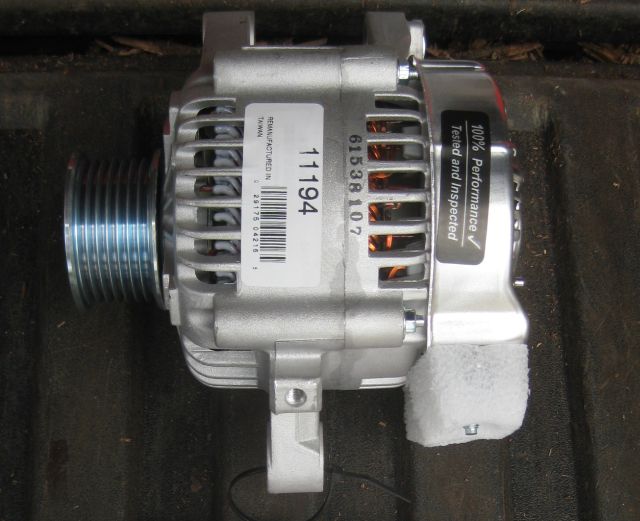
Then I followed Haynes Manual instructions – disconnect negative cable from battery, remove the serpentine belt, remove the wires connected to the terminal and then remove the 2 securing bolts.  I compared the old and the new alternators and they appeared identical.
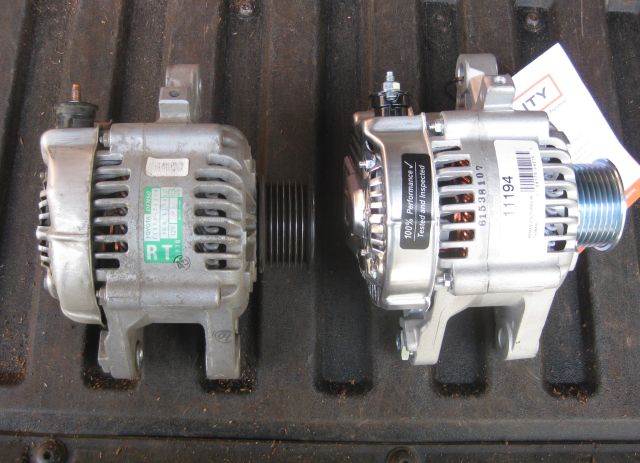
new and old alternators, side by side

Installing the new alternator followed the above in reverse.  Removing and replacing the belt takes some manipulation and co-ordination.  I checked the charging voltage and it was 14.29 – great.
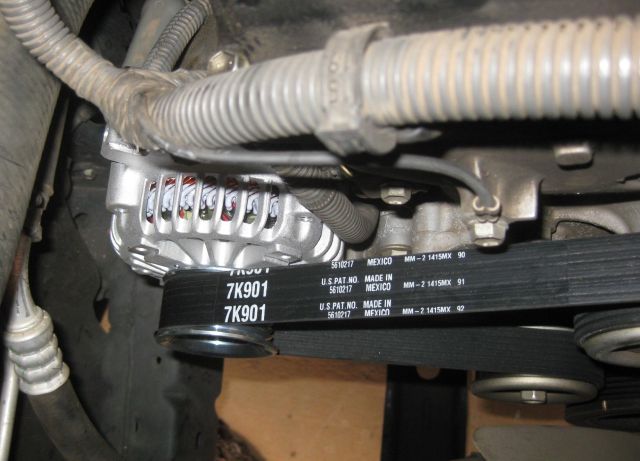
new alternator and new drive belt in situ

And, most important of all, the whining noise has gone.

update

After I replaced the alternator the car idled poorly.  I suspected this was because I had disconnected the battery and recalled that when we had the battery in M.’s car replaced, the auto store assistant connected a small battery to the car (either via OBD or cigarette lighter, I forget) before disconnecting the battery.  This also maintains the radio settings and keeps the clock time current.  Apparently the problem is more pronounced with older cars and it occurs because the car’s computer makes adjustments for the car’s inefficiencies (throttle body deposits?) as it ages and when the battery is disconnected the computer’s memory is wiped clean and it has to relearn the adjustments.  My car is relearning quickly and the idle is almost back to normal.

When I returned the old alternator for the $35 core credit I noticed there is a $20 rebate coupon for the purchase, so I am even happier with the purchase.
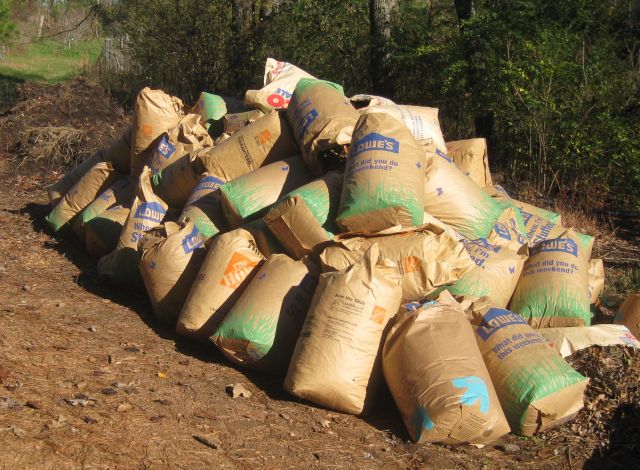

leaf bag experiment and a cable sizing conundrum

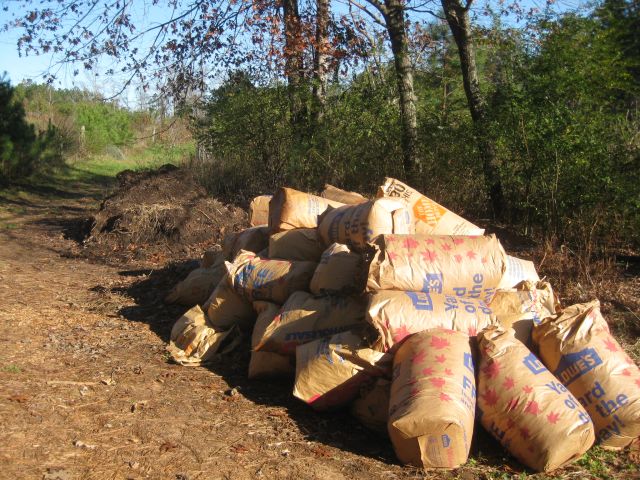
My leaf bag collecting operations produce confusion for some neighbors and emulation with others.  A close neighbor, whose current preoccupation is the recent resignation of Mark Richt, the UGA football coach, was unclear whether I was collecting the leaf bags in order to keep the paper bags or for the leaves, and if the latter, why?  On a more pleasing but also disconcerting note some, or at least one  neighbor, has also begun removing leaf bags from the curbside – new competition for next year?.  However, this year I have amassed at least 100 bags and much good compost will result.

lots of leaves, and more on the way

When I have collected all the bags I need, I will break the bags and mix the leaves with other organic materials and compost.  In the meantime the dry leaves are enclosed in the bags, protected from rain and wind and achieving little.  It occurred to me – why not make a slit at the top of each bag and pump stored rainwater via a hose into each bag.   The leaves would be saturated and the bag would prevent evaporation and retain heat produced by the leaves and so the decomposition process could begin even before I mix up all the materials with the bobcat.  I will see in a few weeks if this makes any difference.

the cable sizing conundrum

I need an extension cord for 12 volt dc 3amp power and referred to online calculators which produced very different recommendations.  So I tried doing the calculation myself and was pleased that one of the websites has similar calculation  results though 2 others recommend much thicker cable.  This is not my area of expertise so you should go with the recommendations of a reputable site, but for interest only, my calculations are under the self reliance tab/ups.

update on growing, blueberries, leaf bag collection, shoe repair & ups

Today is Nov 20 and, after lots of rain earlier in the week the past few days have been in the 60’s and 70’s and no freezing temps yet.  So my fall greens (collard, kale, turnip greens and radishes) have been doing really well with minimal pest evidence.

raised growing beds filled with green or garlic

Each year I get a little better.  I pull the weeds early and cover the growing areas with growth.  Garlic is different since it does not provide shading leaves and does poorly with weeds so I weed carefully before planting garlic and then keep the area clear of weeds.  I am trying to upgrade my garlic and as mentioned earlier this year, I kept the larger garlic cloves for replanting, rather than consuming them first.

comfrey, radish and others

Radish is so easy to grow I grow plenty of it, tho I know with the first hard freeze the radish will become soft and inedible.  I had my neighbors over to help with picking and eating the greens.  My neighbor’s wife is industrious and grows many vegetables during the summer (conventionally) and cans them (in bottles) for year round consumption.  I think she may decide to do fall crops as well.  They were intrigued with the comfrey and I promised them some root cuttings.  It grows very well in our area.

Blueberries

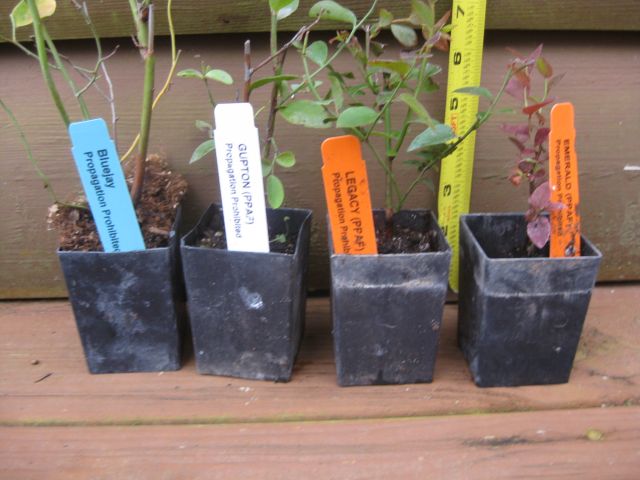
I have a reasonable annual yield of blueberries but nothing like the orchards (if that’s the right word) of blueberries I saw in south Georgia and Oregon.  Most of mine are Rabbiteye which is a southern variety.  They seem fastidious with a predeliction for acid conditions and because of their small roots they need food and moisture close to hand.  I decided to branch out and bought 2 Southern Highbush and 2 Northern Highbush.

small
rather small Highbush varieties

Compost

My compost growing is now well established with organisms which thrive on my local mix of leaves and greens.  This year I excluded horse manure from the mix out of concern for the lurking ‘cides which may have been given to the fields and horses.  Now is leaf bag season and my Tacoma pickup makes the Atlanta subdivision rounds gathering good bags which I stockpile at the Atlanta house and transfer to the farm, 12 bags  each trip.  The pickup has >216k miles and is >10 years old and performs very well.  However, rather than wear it out I purchased an alternative more fuel efficient vehicle which I will use when there are no loads to be transported.

leaf bags for the new compost heap and behind is the old heap

shoe repair

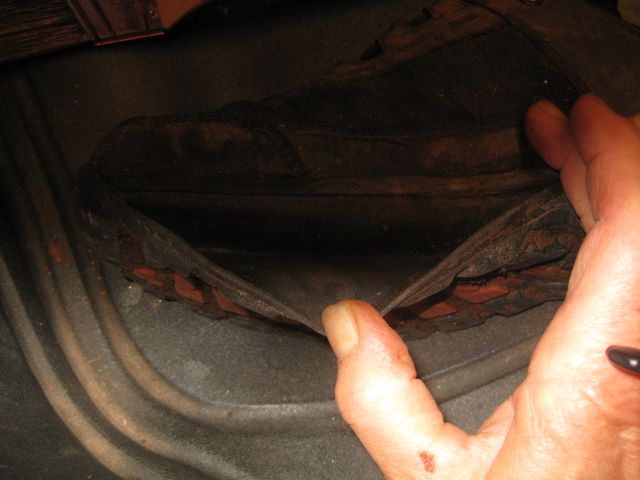
I was disappointed when the sole of my very comfortable, relatively new outdoor shoe detached from the upper.  My bad really since I was sideswiping the gravel (see post on gravel drive) into place and they were not designed for this.

right shoe with detached sole

This was the second pair with a detached sole and I decided to try repair them.  I ordered shoe goo and used it for both pairs and it seems to have done a good job.

my tube of shoe goo which is working for me

update – the shoe repair has not held up as well as I had hoped.  I will not malign the glue I used since the cause could be the surfaces being glued were not in pristine condition or my technique was faulty.

ups

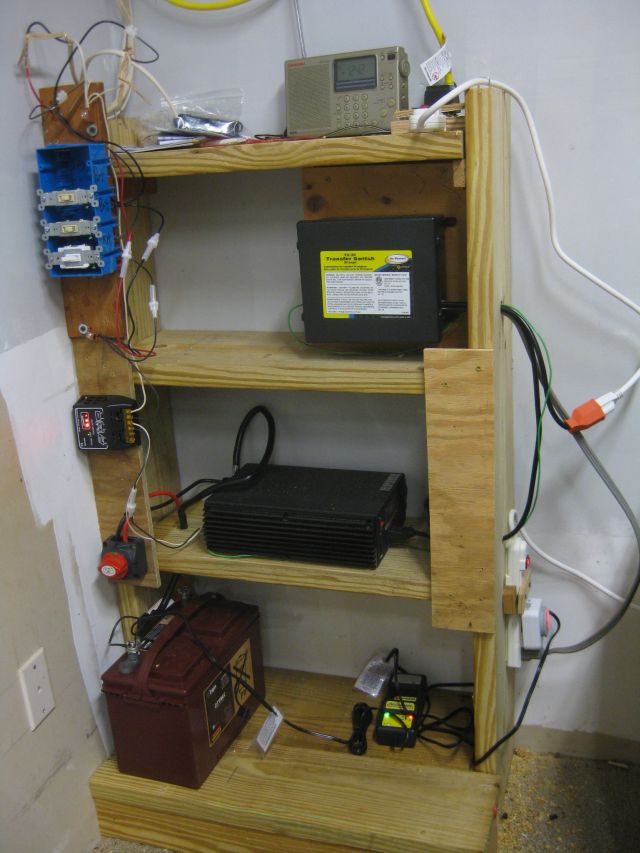
No, not the shipping company but uninterruptible power supply.  For both security and convenience.  Security because if there is a local power outage or if bad guys simply switch off the power supply (after breaking through the locked steel cover) and wait 30 mins for the backup security battery to run out, then the house is defenceless – no security system, no internet connection, no security cameras.  And if I am in the house and the power goes out then no internet access since the modem and wireless router will be off.    Below is a pic of my system which I will amend and expand and eventually connect to solar panels.

my ups system
my ups system

I will provide more info on the system at a later date under the “self reliance” tab on the website.  It has several components:

  • a deep cycle battery and smart charger on the bottom shelf with a marine on/off dc switch;
  • the second shelf has an inverter which converts dc power to 120ac household current and a solar power controller.  The controller is to prevent the 3 dc led lights from excessively draining the battery;
  • the 3rd shelf has an automatic transfer switch.  While utility power is on it powers the load (security system, security cameras, modem, wireless router).  When utility power is off, the battery powers the load.  You can also see switches for each of the 3 dc led lights and numerous fuse links – it took some time to figure the best fuse size.
  • the yellow cable on the top shelf goes to the load – it is 12/3 size and I did cable sizing calculations to determine a size which has acceptable resistance loss.

I will provide more info and calculations in the self reliance tab over the next few weeks.

gravel drive

My drive is 220 ft long and is a gravel drive with most of the original gravel buried, worn or washed away.  Time for a new face.  I contacted the local trucking company and dispatch was not available but the accounting lady, who acknowledged she was not very knowledgeable about gravel, suggested that #34 gravel would work and that it costs $30.50 a ton.  A ton is 2,000 lbs which is what she was referring to, though there is also a metric ton which is defined as 1,000 kg which equates to 2,204.6 lbs.  The trucking company uses 17 ton trucks so a truck load would be approximately $518.50 (17 * $30.50).  I asked her to check with dispatch for a shipping date and to confirm that #34 was the right grade gravel.  She called back with a shipping date and said dispatch also mentioned #57 gravel but she wasn’t sure which grade dispatch recommended.  Time for research  – and I found that #34 is  2″- 3″ diameter, and #57 is 0.75″ to 1.5″ diameter and is the recommended grade for drives.  (Larger sized gravel can be used as the base on which #57 is packed, but my drive does not need a base.)  So I ordered 2 truck loads of #57, which costs $28.50 per ton.

The drive is reasonably smooth and on a hill and I previously dealt with crossing rainwater by digging a diversion ditch on the uphill side of the drive.  Delivery day it was raining incessantly and continued for the next day and until lunchtime the day after.  Which is when the trucking company called and said they would really like to deliver the 2 loads.  When the truck arrived I asked the driver if he could spread the load as I have seen often done by slowly raising the bed as he drives slowly forward.  He said this needed chains and, after a pause, that he had chains in his cab.  Clearly this was a favor.  And I tend to be independent, eschewing favors.  I said do the best you can without chains.  To do this he said he would have to angle across the drive and his left rear wheels skewed off the drive and began churning up mud.  I said to forget spreading and just dump the load on the drive.  Which he did and took off for the next load.

And now to spread the 35,000 lbs of gravel (17 tons*2,000lbs) I fired up my bobcat which I repaired painfully slowly earlier this year (see posts).  It worked fine and I had almost all the gravel spread when the dump truck arrived with the second load.  Total delivered was 35.94 tons at $28.50 for a total of $1,024.29.

I will not say it was easy spreading the gravel since it has a tendency to slide off to the sides of the drive and my objective was to do all the work with the bobcat and minimal work with a shovel.  So it took time and looked a bit disheveled when I was done.  But next day I started packing it down with my Murray lawn tractor and it is looking better.  Some collateral damage – the large wheel ruts on the side of the drive are still prominent and the raised truck bed ripped away a large branch leaving half behind which I sized down safely with my powered pole saw.  And, I hope with time, the gravel will pack down nicely and give years of service.

podcasts and technical issues

I travel almost daily to north Georgia and the roundtrip is about 2 hours and tho NPR often has topics of interest, what I really enjoy is listening to the podcasts I have downloaded.  In the early days I burned the podcasts onto cd’s which I played in the truck’s cd player, then I acquired a Sansa Clip mp3 player and played the podcasts back over a portable battery powered speaker positioned close to my ear.

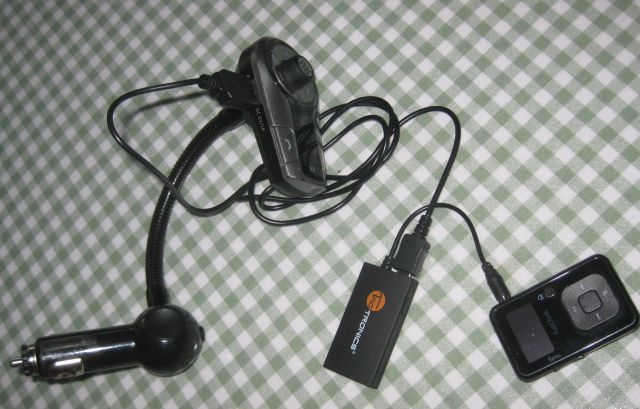
One of my tech savvy sons gave me a Go Groove x2  – a bluetooth device which plugs into the cigarette lighter of my 10 year old truck and responds to bluetooth communications and wirelessly sends them to the radio on a preselected radio band, and the sound plays through the truck’s audio system.

I have a model 4 iPhone and Apple has a great podcast app which enables me to subscribe to various shows and automatically downloads details of recent podcasts so I can choose and download the full version.  I can then classify the podcasts as “On-The-Go” which means they will play in the order selected.  When I start up the truck the iPhone syncs with Groove which syncs with the radio and I can play, pause and advance my way through the recorded podcasts.  What could be better?

And life was fine until my 8GB iPhone ran out of storage space.  I did all the usual tricks – cleared out the emails, cleared out the photos, deleted unnecessary apps, deleted the error data by syncing to the desktop.  And for a while I staggered on.  But whenever new Apple updates were released and downloaded on the iPhone more of my available storage was sucked up and net result, I have v.little storage for new podcasts ( postscript – for my solution, which freed up 4gb of space, see update at end of blog).

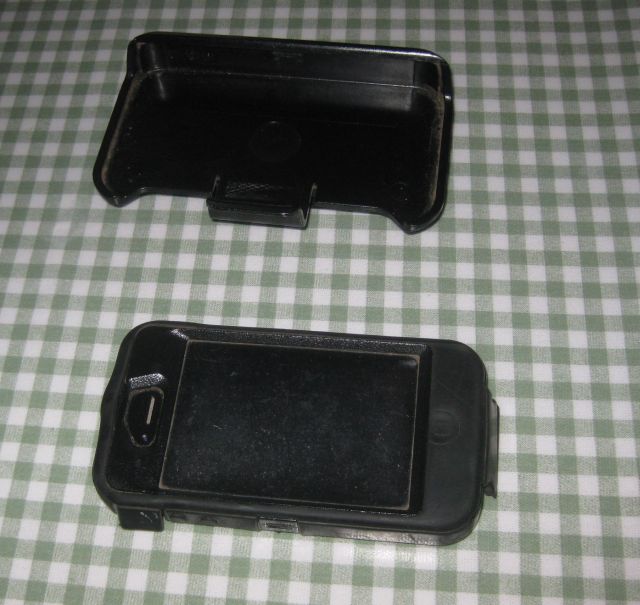
So why not buy one of the more recent models which have way more storage.  Well I like the Apple brand and its current model 6 is considerably bigger.  Even with the weatherproof, shock absorbing, Oyster tough shell, my model 4 fits comfortably in my pocket, which will not be the case with the iPhone 6.

my current iPhone in weatherproof shell plus holster, both of which fit in my pocket

I scrounged around and found the Sansa Clip I previously used.  It has 3.6GB and can store many podcasts.  I connected it directly to the Groove device and played a podcast.  Barely audible.  Hmm I thought, maybe it would work better with bluetooth transmission to the Groove device (silly me).  I purchased a portable bluetooth transmitter for $16, connected it to the Sansa and synced with the Groove.  And played a podcast and the volume was equally poor.  Must be something stupid I am doing.  I reviewed the Sansa settings to no avail.  And then I looked on the side of the Sansa and there was volume control.  Turned up the volume and sound was great – on both the bluetooth transmitter and the direct connection.

the groove, bluetooth transmitter connected to Sansa and also powered by Groove
the Groove, bluetooth transmitter connected to Sansa and also powered by Groove
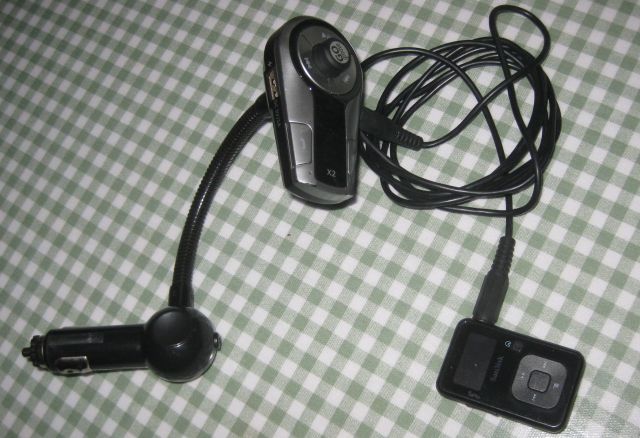
my current setup - Sansa with long lead to Groove. Sansa clipped to pocket lip
my current setup – Sansa with long lead to Groove. Sansa clipped to pocket lip when in use

But it is not the same as using an iPhone.  With an iPhone the bluetooth works both ways – the phone sends data to the Groove and the Groove can send instructions to the phone.  So when you press stop or advance to next track on the Groove the phone obeys these commands.  However the Sansa is unidirectional since the sound is sent through an output port.  So pressing the buttons on the Groove which are large and easy to find has no effect on the Sansa.  It keeps playing.  And if you want to pause or advance to another track then you have to locate the small Sansa and press the correct buttons, which is ok once you have the feel of it, though you cannot rewind but have to go to the beginning of the track if you missed something important.  An advantage of using Sansa rather than iPhone is the battery life of the iPhone is preserved since it is not in bluetooth mode and not transmitting.

Now how to get the latest podcasts.  For a while I used gPodder freeware to locate the podcasts, then I transferred them to Windows Media Player and synced WMP with the Sansa.  Some of the podcasts appear in the music section and play sequentially.  However, if the podcasts are identified as “Podcast” they are thus classified by Sansa and placed in a separate folder which is difficult to access while driving.  So the trick I have learned is to review the WMP classification of the podcast and if it says “Podcast” then edit to remove this description so it appears as “Unknown Genre” and when synced it will go to the general music folder and play sequentially.

For almost 2 months gPodder worked well for me.  And then I experienced problems.  An uninvited screen appeared to inform me that a new podcast was available for downloading, and the screen kept appearing and ignored all my changes to preferences to make it go away.  And next the downloading function ceased operating.  So I spent some time familiarizing myself with iTunes and now it works great for me and automatically populates the folder used by WMP.

So, with Sansa connected directly to Groove with a long cable and clipped to the inside of my top pocket I can reach for it with one hand and pause and play and advance the tracks without taking my eyes off the road.  Happy days have returned.

Update (October 2015)

And finally I figured how to increase capacity/storage on my Apple 4s (md439ll/a).  I had tried everything and was deleting apps just to allow the phone to function.  It didn’t make sense – what was using all the capacity?  The phone is described as having 8GB and I had just a few apps and had <50MB available.  The solution I eventually found, was quite simple.  First I backed up all my data to iTunes -my contacts were being saved in the Cloud and I changed this to iTunes.  Then I did a restore where I erased all content and settings.  Then I synced with iTunes and downloaded all the data from iTunes back to the phone.  And I miraculously had>4GB available.  I downloaded the apps I had erased and as of now there is 5.2GB available of which about 1GB has been used, so I now have 4.2GB additional capacity.  I surmise that whenever I did an IOS update the phone saved a copy of the superseded IOS and when I did the recent restore all these obsolete versions were deleted.  Just a guess.  But the phone  is now fine for my needs and yes, I will continue using Sansa for my podcasts.


3 sisters, a new brush, problem = solution, food from the garden

3 sisters

3 sisters refers to the practice of growing corn, climbing beans and squash closely together with the corn providing scaffolding for the beans, the beans providing nitrogen fixing and their hairy stems dissuading insects, and the squash shading out weeds and enabling water retention by the soil.  My 3 sisters appear to be doing ok, though I now realize some fine tuning is needed for next year.

corn reaching for the sky

You can see the beans wrapping round the stalks.

bean vines growing on the corn

But is the corn handy scaffolding, or are the beans strangling the corn?

in some cases the aggressive been runners have encircled the corn tassels and pulled them down, hampering corn pollination

Next year I will give the corn a head start rather than plant the beans simultaneously with the corn.

a new brush

I have 2 water pumps for my rainwater harvesting operations and a couple days ago the one pump was very hesitant on the first go round and refused to start when I needed it a second time.  I remember in South Africa how it was well known that women could fix electrical appliances by giving them a kick – the floor polisher doesn’t work, kick it.  A well aimed kick could even start a car.  So I thought what the heck and I kicked the pump and it started up and ran for a bit.  And then stopped.  Must be the brushes I thought.  There are 2 brushes to a motor and they are easily replaced.

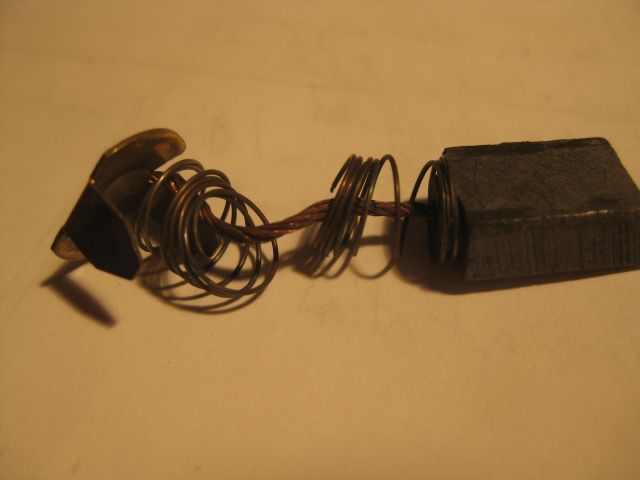
towards the top of the pic in the middle you can see the plug, easily undone with a screwdriver, behind which a brush resides

The first brush appeared fine with much remaining life.  Could it really be the brushes I thought since the 2nd brush presumably replicated the condition of the first.

But the 2nd brush it was, u can see the broken spring which disabled the brush

I cannibalized a disabled pump (see previous posts on ice damage to water pumps) and the pump started easily.  A quick inexpensive repair.

problem = solution

Transforming the problem into the solution is a permaculture mantra and discovering instances are pleasing to the audience and more so the discoverer.  I have a problem with rats and mice in my coop.  They are experienced tunnelers and prefer to live in chambers below the dirt floor because they are there protected from the elements, have easy access to food and water, less threatened by snakes and lots of bedding material like pine shavings and snips of plastic bags.  They are fastidious home proud family members and unfairly branded rodents and vermin.  However they are unwelcome in my coop and I tire of their telltale poop strewn on ledges and even in the chicken feed, so I want them out.

In the beginning I refilled their holes with excavated dirt; then I hammered stones into the hole entrances; then I bought sacks of concrete and concreted the holes.  In 1 week I used the entire contents of a 60 lb bag of concrete.  I then became a bit more creative.  I poured water into their holes and once, a bedraggled rat charged out the hole.  On other occasions, who knows, an inhabitant may have been trapped inside to a watery end.  Some chambers were large and absorbed 4 gallons of water before the entrance brimmed.  I know moth balls would have been effective, or so I have been told, but I did not want  anything noxious in the coop.  And then as I was shoveling chicken poop into a bucket – a brain wave.  Save the haul to the fruit tree and just slide it into the hole.  Followed by a good water drenching and a concrete cap.  Maybe it will work and the labor of chicken poop disposal engineered into a triumph over the inveterate tunnelers.

food from the garden

Lots to eat these days.

here squash, beans, onions, okra and tomatoes

Supplemented with soy patties, mango chutney and sweet potato.  And several glasses of zin.  However, the melon which looked promising on the outside.

water melon looks promising

Was picked too early.

was picked too early.  soft and nice texture but not sweet enough
was picked too early. soft and nice texture but not sweet enough

Wait maybe another week.


when things go wrong

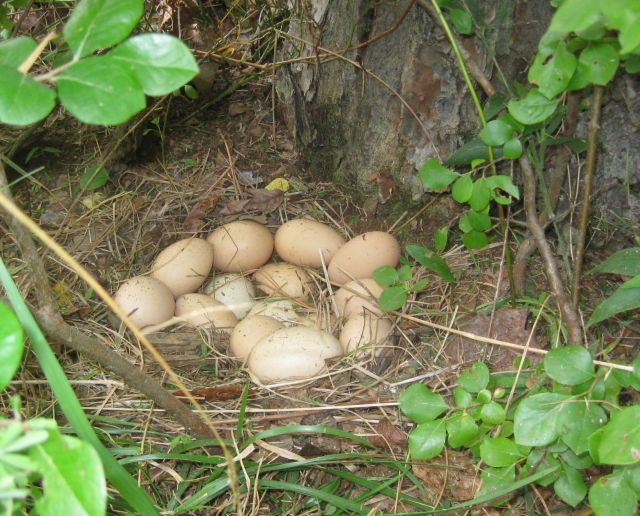
When I last mowed the grass/growth in the main chicken paddock, I left the center unmowed because the clover was in bloom and pollinators were busy.  So on Tuesday I fired up the lawn tractor (see prior posts on various repairs including welding of deck) and as I did the first outer loop happened to notice a clutch of eggs in a hollow at the base of a pine tree.

16 eggs including 2 dropped a foot away

Three hens participated and since no one was on patrol I assume convenience and the summer heat contributed to the decision – why sit in a hot coop with no view when you can enjoy an occasional breeze in a natural setting?  I decided the eggs were not usable and buried them in a hole close to my Giant Korean pear, the most prized of my fruit trees.

the pear tree has more pears than ever and seems immune to predation and disease
my Asian pear tree has more pears than ever and seems immune to predation and disease

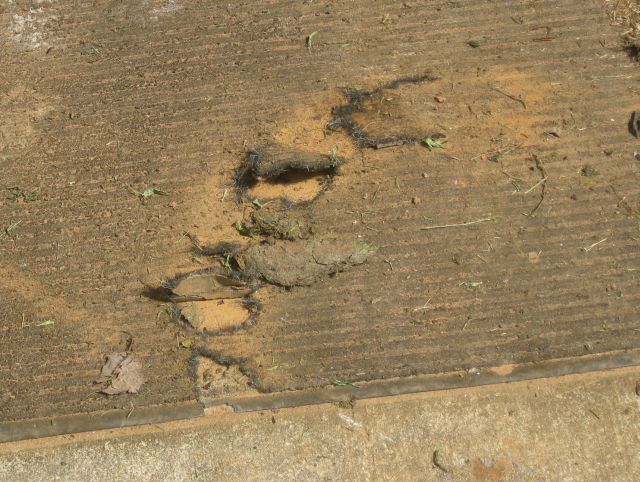
The next setback was to recklessly steer the lawn tractor into some high grass, reckless because I had vowed after each repair that I would nurture the tractor and not risk abuse.  There was a large rock in the grass and the tractor came to a jarring stop.  It started ok but made a high pitched noise when I engaged the mowing action and after I parked it in the basement I noticed that the blades had chewed up the outdoor entrance mat.
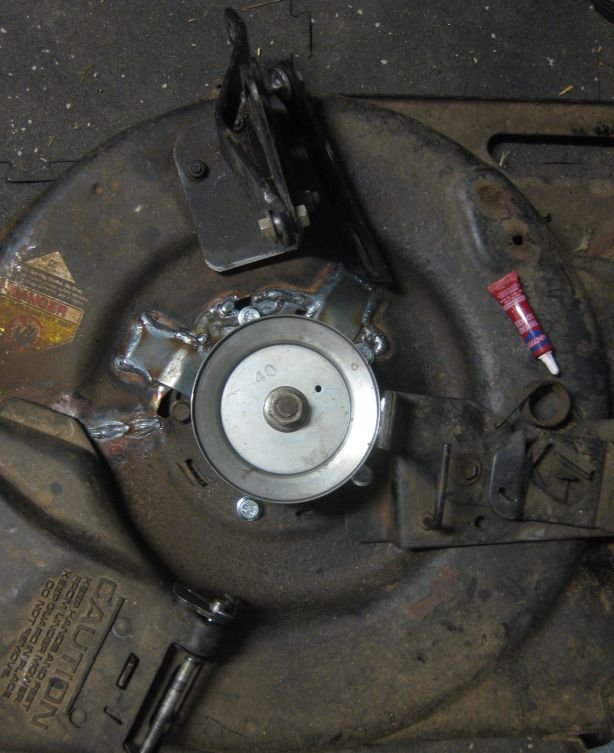
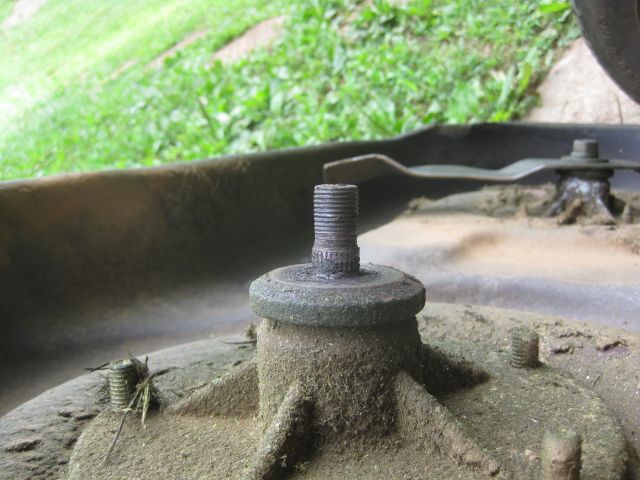
payback for abusing the lawn tractor from either bent blade or damaged housing

I removed the mower deck and noticed that the blade was bent.

bent blade from striking a rock

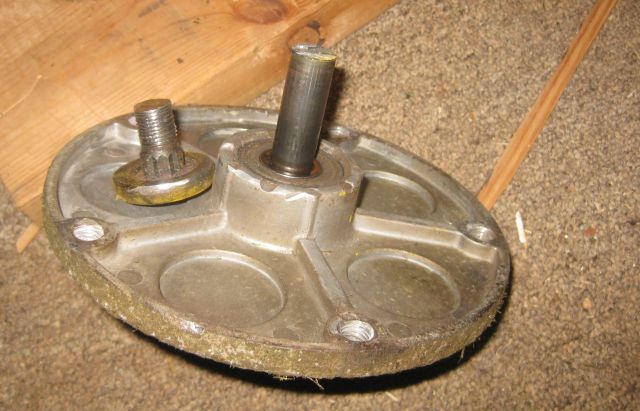
But the damage was not confined to a bent blade.  The blade is mounted on a jackshaft which is seated in a mandrel which is bolted to the mower deck.  The jackshaft was bent.
not easily apparent but the shaft on which the blade is mounted is bent

I had no illusions that I could straighten a bent shaft.  I rummaged through my workshop and found,  as I vaguely recollected would be there, a new jackshaft and new mandrel which I had purchased some years ago.  I installed the new jackshaft in the new mandrell and then realized that the pulley, which is seated on the jackshaft at one end (the mower blade is at the other end) required a spacer.  Easy I thought, I will re-use the spacer on the old jackshaft.  But I could not remove the old jackshaft from the old mandrell, despite some hefty blows with a heavy hammer.  So, with a reciprocating saw I had to cut off the end of the jackshaft to release the spacer.

severed jackshaft


And then it was just a matter of putting it all together again, a familiar task.  And a quick drive and mow indicated all was in order.

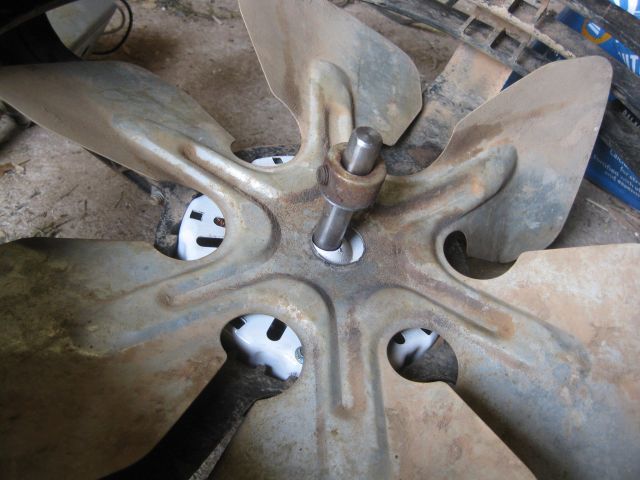
So what else could go wrong on a Tuesday afternoon.  I happened to notice that the recently replaced attic fan was not sounding and I visited the coop and the fan was broken –  the motor was dead and the propeller had detached from the shaft.  Now what caused that?

fan detached from shaft
fan blade detached from shaft

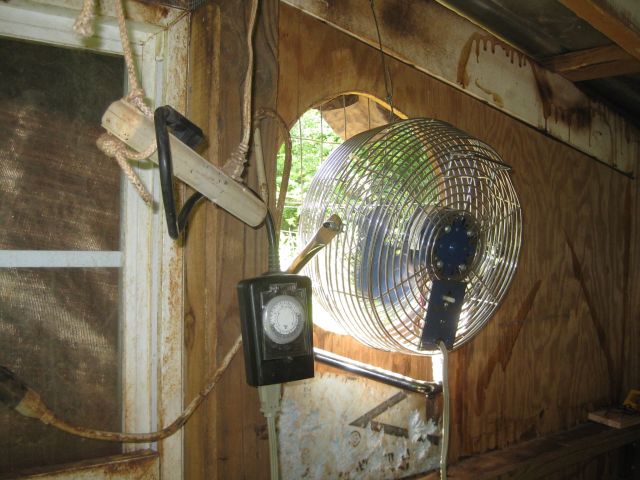
I was tired and went for a quick fix – I relocated a house fan to the coop and secured it with a wire round the roof rafter.

replacement fan with timer

The fan’s plug has 3 prongs and most timers only accommodate a 2 prong plug.  But I have a 3 prong timer which I use with my seed heating pad and germination lights,  so it was also commissioned.  The house fan is remarkably quiet which I am sure the roosting chickens appreciate, but it has a lower rotation speed and will have to do for now.

So that was a busy Tuesday afternoon.  And as luck would have it on Wednesday night a violent storm hit the area and a semi-tornado uprooted 2 of my oak trees which fell across the road and brought down the power line and caused a 3 hour neighborhood blackout.  It also leveled most of my corn and did other damage, but that may be a post for another day.  On the upside, I will have fire wood for winter.

catch me if I let you

A senior credit manager once told me:  “Catch me once, shame on you, catch me twice, shame on me.”  Which may be fine in the world of relationships but for the consumer in this  information filled internet world the maxim should be:  “Catch me once, shame on me!”  Last week 2 incidents when I was almost caught and by “caught” I mean taken advantage of.

Ever since I rebuilt my Troy Bilt chipper shredder engine (model # 47330) in August 2013- see post on seized engine repair it has performed flawlessly.  Except that prior to the seizure the gas tank leaked when filled>50% and I solved this my keeping gas levels down until it began  leaking at the bottom where the fuel hose is and stank out the garage.  I did my research and the cheapest replacement for the same tank was $76 ouch! for a plastic 4 qt fuel tank!  But I bought it because fuel on your hands and vapor in the air is not good and complaints were mounting.  I could have cobbled something together with another fuel tank but didn’t want to mess with it.  That was the cheapest price new and it fitted perfectly and quickly and was done.  And I wasn’t caught – a vendor can charge whatever and the consumer can buy or not buy.

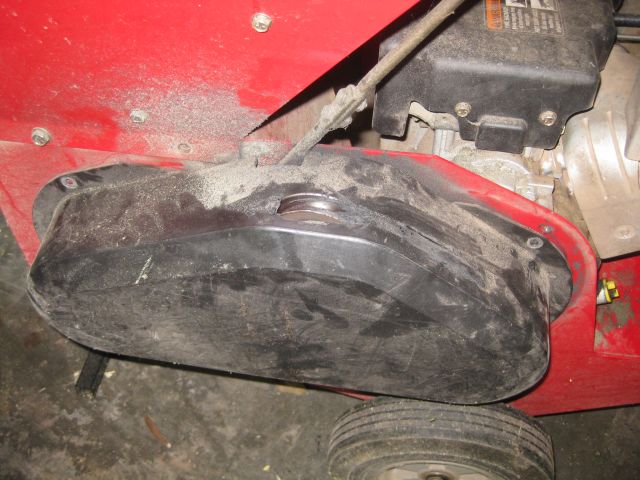
I was chipping the remains of a poplar tree – soft wood and easy going, and noticed the chipper was not as chipper (sorry – cheerful) as usual.  When using equipment, if something ails, I now  investigate early.  The drive belt had stretched with use and the top pulley was carving a hole through the cover creating a lot of heat and slowing the engine down.

at the top of the cover you can see the hole carved by the pulley

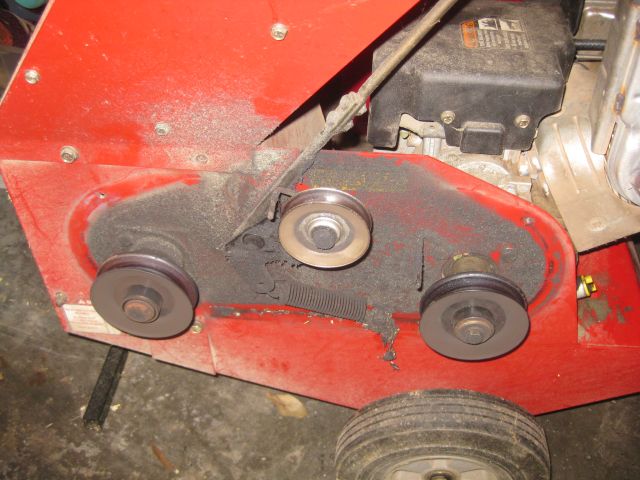
Below is shown the arrangement of the pulleys.  The right pulley is the drive pulley connected to the engine, the left pulley turns the shredder/chipper mechanism and the top pulley is spring loaded and takes up the slack as the belt lengthens.

3 pulleys - the top, spring loaded pulley carved the hole in the cover
3 pulleys – the top, spring loaded pulley carved the hole in the cover

I input the model # and located the part # and googled it and found prices for a new 38″ belt ranging north of $25, delivered.  Seemed a lot for a belt?  So I googled some more and a helpful poster in response to a question on the belt, said Gates V-Belt #6838 was an acceptable replacement.  Per  belt specs, outside circumference was 38″ and outside circumference of my used belt was 40″, which made sense since my belt had stretched.  The width of the new belt was 0.5″ which corresponded to my belt.  My favorite auto store wanted $15.99 and WalMart advertised for $11.17.  I visited the local WalMart, where I buy my oil and filters, and discovered it does not carry belts.  The big internet retailer “A” offered the part for $11.17 (after tax $11.95) and I ordered using my prime account with delivery in 2 days.  My point is that a lot of manufacturers use standard parts.  If you buy the part using the manufacturers part # it will often cost more than if you can locate the standard part’s part #.  This may void the warranty but for me, with my old, old equipment this is not an issue.  And Gates is a well known belt manufacturer so the quality of the replacement is not an issue either.

The second situation was the remote car key was not working.  The car is 8 years old and I replaced the key just a couple years ago.  CR2016 is the battery #.  The local Publix carries watch batteries but was out.  The local Kroger doesn’t.  We are mid 90’s now in Georgia and this was getting frustrating.  I visited the local shoe repair store to have my favorite shoes repaired.  My better half said this was ridiculous, I should just buy a new pair.  And then a recent WSJ article 060315 said having good shoes repaired  was sound strategy.  So I felt good with this endorsement and while in the store noticed it had a watch repair section.  I asked the guy behind the counter if he carried this battery.  He found a battery and as to price said $10.  Noting my reaction, he said $10 was when he replaced the battery in a watch and for just the battery – $7.  Now I want to support the small guy but $7 is too much.  As I headed for the door he said $5.

So back to the big internet retailer “A”,  where some diligence was needed.  Lots of CR2016 battery suppliers but how many came in shrink wrapped, date stamped packs?  Apparently the life should be around 10 years and I figure the reason the last replacement faded after 2 years was it might have been old stock to start with.  (I did not check for a date when I purchased it).  So I ordered a Sony 20 piece, blister packed and apparently date stamped package, from a high rated supplier for $8.40 with 2 day delivery.   I would have been happy to pay $3 for a battery but $7 was being caught and I was not in the desert desperate for water.

the new battery, date stamped 2024! from a well known manufacturer!

At this point you may be saying – “much ado about nothing, what’s in a few dollars?”  So a snippet from last Saturday’s run at the river where we are training, sort of, for the July 4, 10k in Atlanta, which is the largest attended 10k in the world.  My buddy “Jack” a former engineer now retired, objected when I said there was minimal inflation today.  A few days earlier a new capacitor for the outside compressor unit of his a/c cost him $190.  I asked if that included the labor and Jack said with labor included, the cost was $350.  I mentioned I had replaced several caps on outdoor compressors and each one cost <$30.  To which Jack said they just got back from a trip, temps were in the 90’s and wife insisted on an immediate repair.  Which is fine but the price of caps has not increased, though the cost of an emergency repair may well have.  My point is, if you can make repairs safely (and this is a big IF) then watch the pennies and the dollars will take care of themselves.

the wonderful world of free internet college courses

I didn’t post this site at all in May.  Not because I had stopped my growing activities or lost interest but because I was completing 2 demanding courses on electronics and programming and am in the middle of a new course on Python programming.

College education of your choosing at your convenience with the world’s best colleges for free!  If you are interested and can make time available, this is a bonanza.

My education in South Africa and England was in law, accounting, business and the humanities.  So, since life is a one time experience and I have  interest and time, I am taking and completing courses – lots of them.  My >10 courses with Coursera include:  Sustainability; Animal Behavior; What a Plant  Knows; How Things Work; Introductory Biology; Science from Superheroes to Global Warming; Pre-Calculus; Calculus One; A Brief History of Humankind; Introduction to Electronics; and Linear Circuits.  Two courses I have completed with edX are Electronic Interfaces; and Embedded Systems- Shape the World.  I am currently taking a course on Interactive Programming with Python.

So my interest is focusing on technology – both the hardware (electronics) and the software.  Technology is such a major factor in our lives we cannot ignore it.  Even in farming, smart conventional farmers are using technology to monitor field growing conditions and apply with precision just the right amount of water, fertilizer and ‘cide treatments.  We have to conserve water and minimize toxic runoffs and technology can do this for us.

My studies of electronics help me with diagnosing and understanding the repairs I make, which I have described on this site, and thereby achieve more self-reliance, minimize inconvenience and save money.  My first practical software project will be an automatic chicken coop door  which will open the door in the morning,  count the chickens entering and exiting throughout the day and close the door in the evening when they are all berthed.  My current device, which runs on a time switch (details posted on this site),  just opens  the door each morning.  Then I will develop  enhanced security measures beyond my current setup, where I interact with cameras and security system on the internet.  Finally, when solar panels are more efficient, transition to solar power and grid independence.

my 4 mowers, and mower deck repair

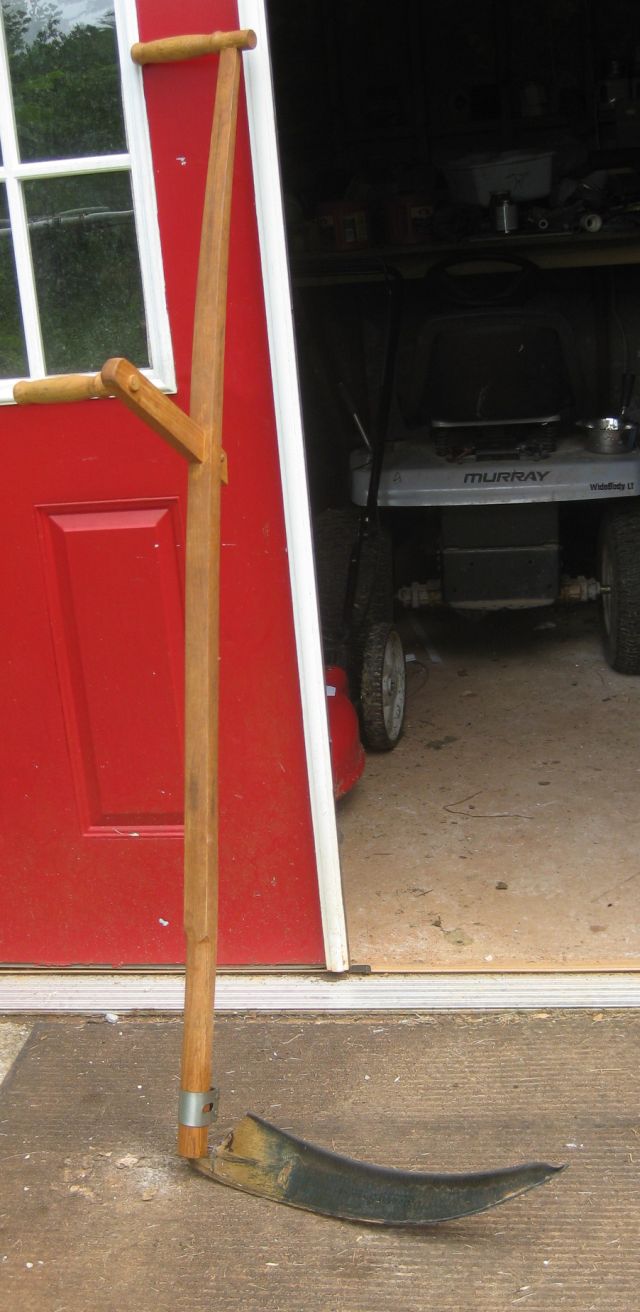
I have 4 mowers.  I use a scythe (21″ blade)  to clear the growth under  fruit trees for which it is ideal.  Extend the blade to the near side of the trunk and pull sharply toward you and the weeds are leveled, all while standing a distance away without worries of snagging branches or snakes (I refer to the venomous ones – copperheads or occasional rattler).  It is also useful on a hillside where riding a mower is iffy. For how I peen my scythe and hand sickle, search “peen” on this site.

scythe
scythe good for clearing fields, if you are up to it, otherwise handy for difficult to access spots

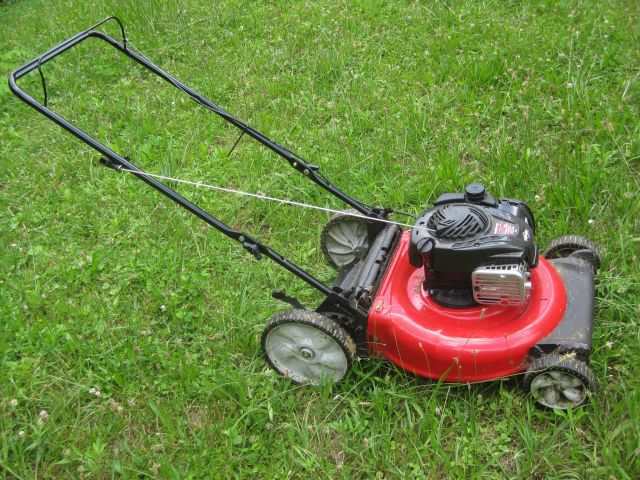
Next up is my 21″ push mower, basic model purchased new this year from a big DIY store.  Note the large rear wheels for rough ground.  I use it for cutting and mulching the walkways between the raised beds.  It has a sophisticated Briggs Stratton motor which does not require use of a choke and starts (so far) on first pull.

handy gas powered push mower

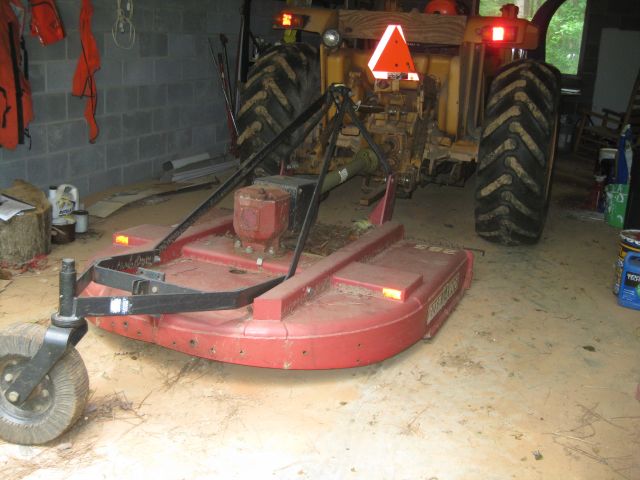
The biggest mower is the Bush Hog, which is 5 ft wide and shown here attached to my tractor.  I bought it used and use it to clear fields and heavy growth and it seems indestructible.

Bush Hog attached to Case tractor

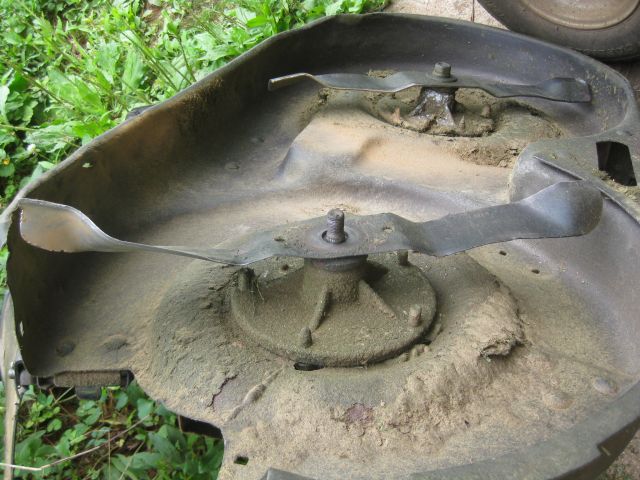
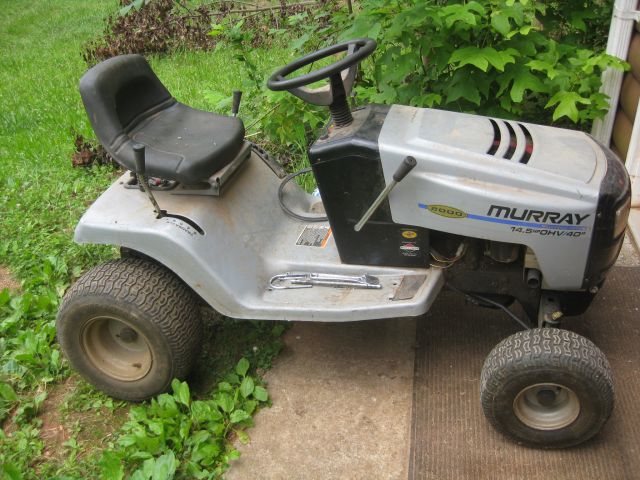
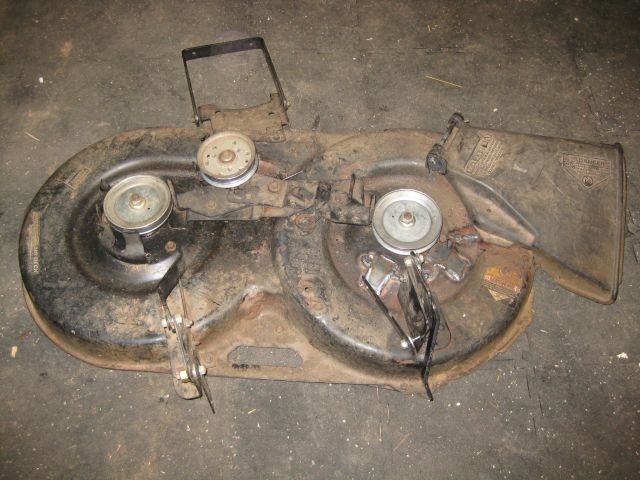
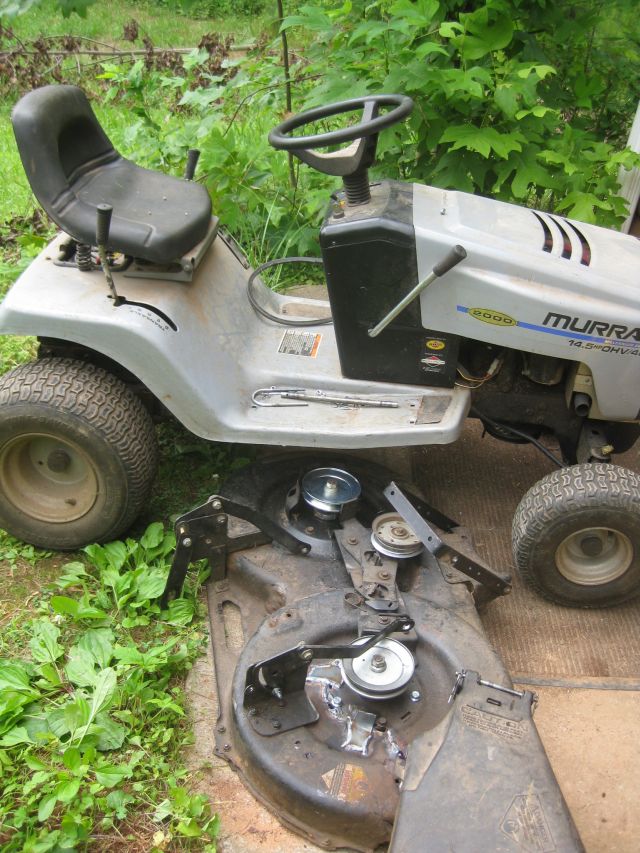
Finally, and the topic for this post, the Murray 40508×92  40″ mower which I bought used and damaged 7 years ago from a neighbor and have kept going with occasional ad hoc repairs and replacements.  Until last week when the mower drive belt kept slipping off the pulleys and all came to a halt.  The engine turns the drive belt and the belt turns two pulleys which are connected to the two blades which do the cutting.  So what was the problem?  Each pulley turns a jackshaft which turns a blade.  The shaft is held in position by a mandrel secured by 5 bolts to the mower housing/deck.  3 bolts on one mandrel were missing  and the 4th was loose.  So when the belt applied torque to the pulley the pulley lifted and the belt slipped off.  Replacing the bolts wouldn’t work – it was apparent that as individual bolts loosened the vibration of the blade had torn the metal housing to which the other bolts were attached, and as each bolt came off the vibration and damage increased.  A stitch in time would have saved nine.

Murray mower with mower housing removed

It seemed I had several options – buy a new deck; buy a used deck; buy a replacement mower or have the deck fixed.  Internet search showed no new decks matching this part #, though comparable new decks >$400 before shipping.  On Craigslist I could buy a newer more powerful mower for $400.   eBay showed similar decks used for $70 to $100 before shipping cost of say $70.  And they probably would not fit and would have to be adapted.  So, could it be repaired?  Welding, regrettably, is a skill I do not (yet) have.  But there is a local shop which I previously used which does good work for reasonable cost.  I took it in and they said sure.  I asked cost and they said $30 if it took 30 mins. but not to exceed $60.

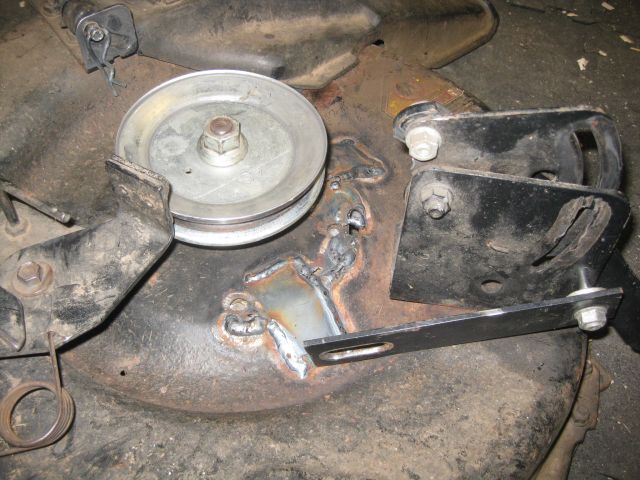
Two days later it was ready.  They decided that in addition to welding the torn housing together it was prudent to weld on two plates – total cost $55.

a view of the mower housing removed from the lawn tractor.

The welding was done to the housing to which the right pulley is attached.

this close up shows the 2 plates and the stitching of the torn material

I really felt foolish for having allowed this damage to progress but the welder, noting my embarrassment, said he does 4 to 5 mower decks a week and he showed me a newly arrived patient.  This was larger than mine with 3 pulleys driving 3 blades and the housing for the one pulley had completely disintegrated and major welding plate surgery was now needed.  So I felt a bit better.

I purchased new bolts and coated the threads with Loctite to discourage them from loosening.

close up showing all the bolts in place
close up showing all the bolts in place, there are 5 of them

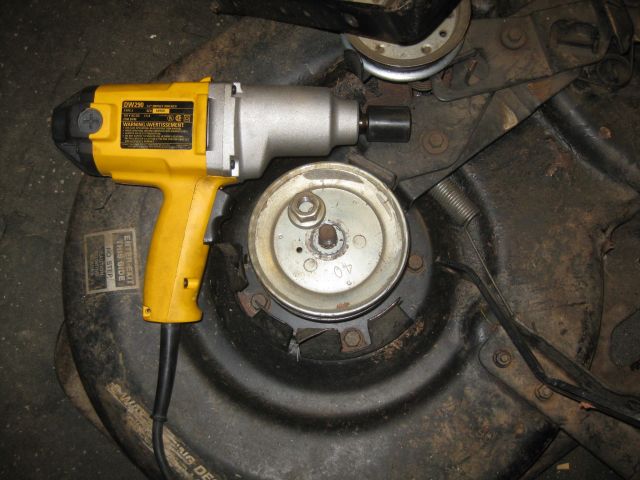
The other drive pulley was distorted and so, while I was at it, I installed a new pulley.  The nut on a pulley can be difficult to remove because the pulley shaft turns as you apply pressure on the nut.  I remember in the 90’s I was unable to undo the nut on a generator so I took it to an auto shop and in a few seconds it was off – they used an impact wrench.  I bought an electric impact wrench and it has been invaluable for removing nuts on shafts.

impact wrench, loosened nut and new pulley

So I decided to also examine and sharpen the mower blades.

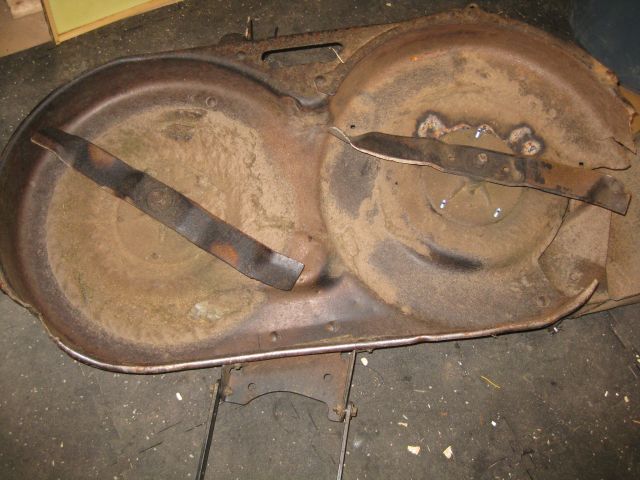
underside of mower housing with blades revealed

The impact wrench loosened the two nuts securing the blades.  Since I had a balancing jig I decided to use it.

a jig to test if the weight of the blade is balanced, otherwise undue vibration

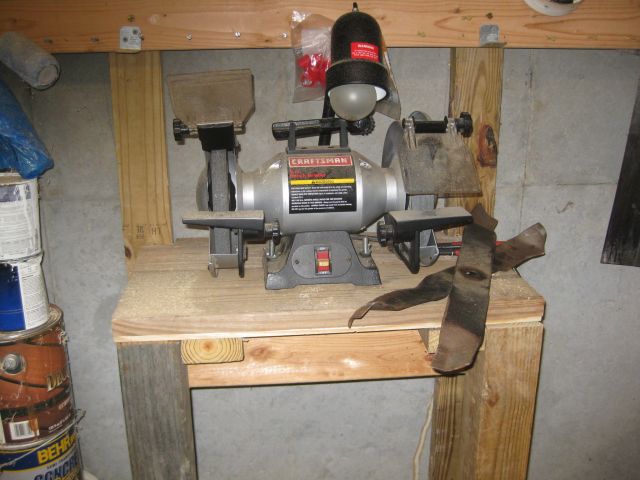
My father-in-law bought me my first bench grinder and instructed me how to use it.  They can be very dangerous if misused – if a fast revolving grindstone shatters, there will be injury.  I always wear extensive eye protection from my experience some years ago when I was grinding the valves of an Accord and a metal speck flew under my conventional glasses and lodged in my eye and this necessitated a visit to the emergency room.

my bench grinder - if a fast revolving grindstone shatters, there will be injury
my bench grinder mounted on a platform in the basement

All that remained was to re-install the mower housing.

re-installing the housing

And it works just fine!