support the little guy!

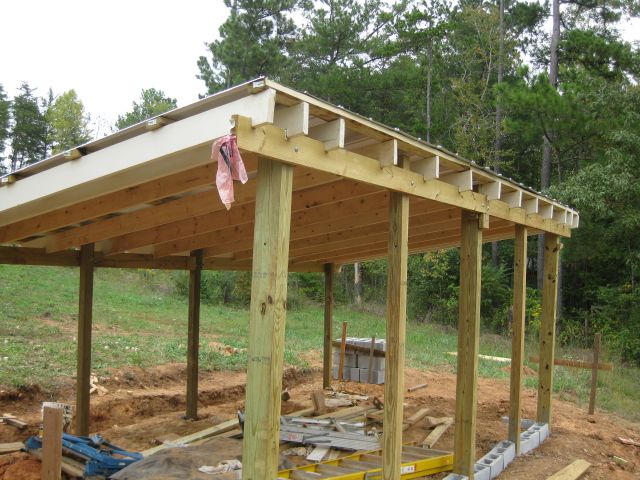
the roof is on the future coop - underside view showing rafters and purlins
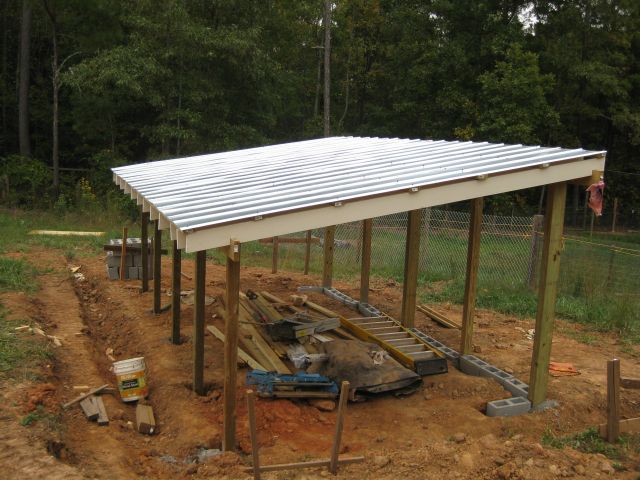
topside view of future coop

Today I finished installing the roof of the future coop.  For the rafters I used 2″x6″x12 ft kiln dried wood, not pressure treated; for the purlins I used 2″x4″ pressure treated, and for the roofing 2ft x12ft galvanized steel crimp roof panels.  I painted with exterior enamel paint those parts of the rafters which would be exposed to either rain or carpenter bees.

I deliberated long on how to transport the 12 ft lengths of wood and roof panels.  My pickup has a 6 ft bed so either I would have had 6 ft hanging out the back of the truck, or I could have slanted it over the cab, but I was concerned I would further scratch and dent the cab roof (not the first time I have transported 12 ft lengths of material) and that the roof panels could buckle from wind pressure as I was driving.  So I thought I might rent a truck from one of the two big box DIY chains.

I priced the materials at both chains and they were identical and, to my mind, expensive.  So I thought I would visit a local family owned builder supply store.  There used to be two such stores within 15 miles of my property and both were dependent on building contractors for their business.  And then one, which have been operating for over 80 years, closed down in 2009.  So I visited the remaining store.  They were very friendly and said they would ship the lumber and roof panels to my property for a $20 delivery charge.  An even bigger surprise was their prices – the lumber was about 3% less than the price at the big chains and the roof panels were 20% less.  And they were so knowledgeable and helpful!  I decided to make additional purchases at their store and all the prices were competitive. 

Which brings me back to my heading – where possible we should support the little guys, not because we want to be nice or considerate but because it is in our own self interest to do so.  We benefit from the price competition which whittles out the independents but, once they are gone through either liquidation or consolidation, and there are just a few big operators left, as is happening with the airlines, the telecom industry, the banks, the consumer retail stores etc. etc. then we become the victims as the few remaining competitors abandon price competition and gradually price up.  So, support the little guy when you can.
new chicken coop

I am making slow progress with construction of the new chicken coop.  The present coops are well located for summer weather since they are at the bottom of the hill with large trees to the east and west and well screened from the sun, except when it is overhead.  The coops are enclosed by walls on two sides and netting/fencing on two sides, so cold winter winds will easily find the residents.  I considered closing in the remaining sides, but decided an extra coop will be handy in the future and, since it will have many windows,  a portion may be hived off and pressed into service as a greenhouse.  My new location is on slightly higher ground and has much better sun exposure.  Since it is on a slope my first task was to level the ground  with my bobcat and create a level pad.  I dug a perimeter trench between the pad and the two higher sides of the slope so the rain water coming down the hill will be diverted around the pad.

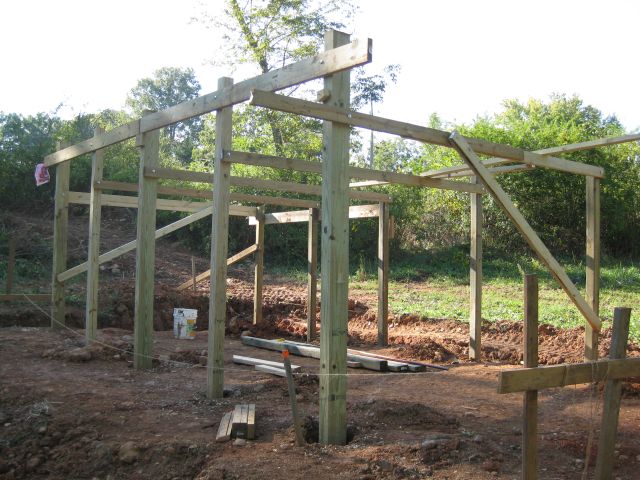
I determined the width by examining roofing materials and noting that most are either 8ft or 12 ft long.  Since I would like an overhang of approximately 1 ft on each side, I decided to use 12 ft long roofing over a 10 ft wide coop.  The coop is on an east-west axis and the higher side faces south.   The most difficult part was digging some of the post holes since there were large rocks in the ground, some bigger than a foot wide, which had to be removed.   Below is a photo of the framing which I installed.  The horizontal braces between the high side and the lower side are to hold them in place until I can install the roof rafters at which time they will be removed.

Click on these links to follow progress:  roof installation and final completion.

framing for new chicken coop

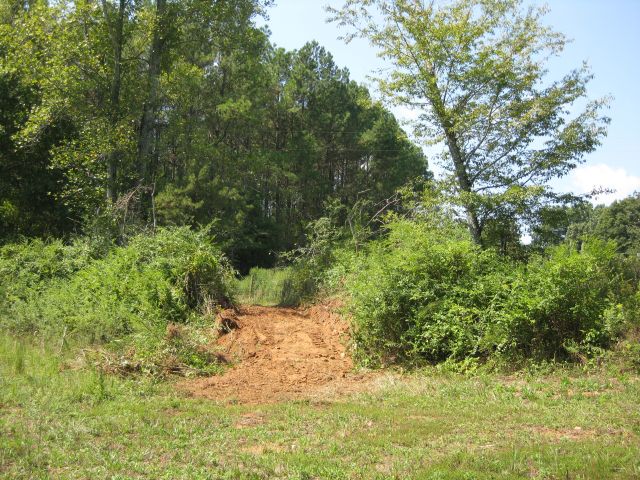
cutting a ramp with Takeuchi

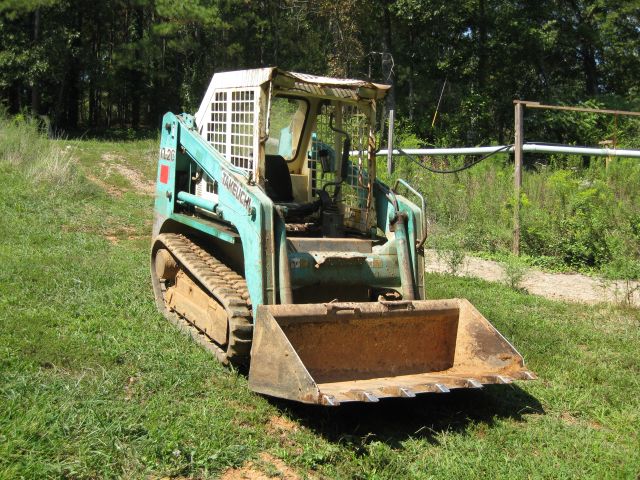
Last year I bought a Takeuchi TL26 track loader.  This machine was made in the 90’s and because it has tracks rather than wheels is ideal for grading or re-shaping the ground surface.  It has 61hp, which makes it a mid-size loader and just right for my limited needs. In the article on the fading battery I mention some of the repairs I have made to it.
Since the temperature tomorrow is expected to be back in the 90’s and today we are only in the 80’s, I decided to cut a ramp down to the lower field.  My tractor access to the lower field is blocked by the fences I installed for the chicken coop and I figured it would be cheaper to make a new road to the field than to purchase two 10 ft gates for access through the chicken free range.

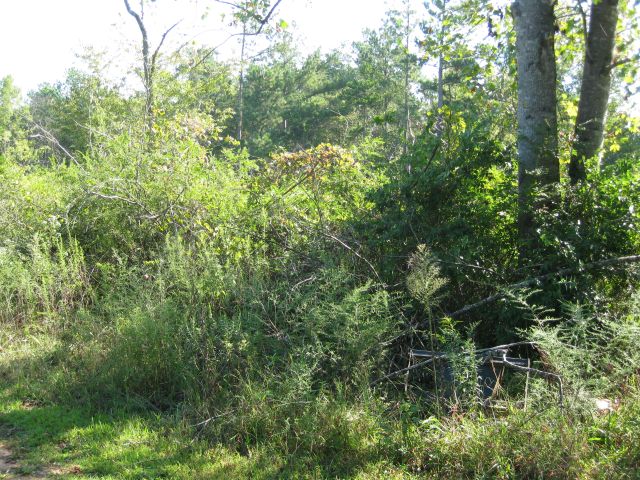
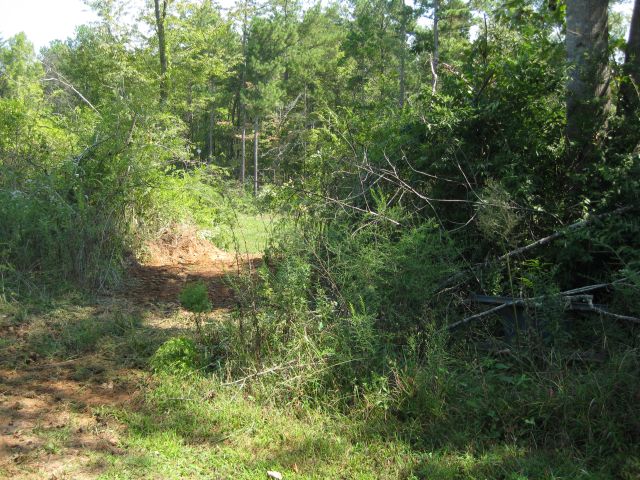
I like thickets for the cover and food they provide to the wildlife.  However, this morning it was necessary to cut a road through vegetation.  The process took less than a couple hours.  I placed the cutting edge of the loader’s tooth bucket a few inches below ground surface and ripped the bushes and small trees out of the ground. Once the roots were free I climbed out of the loader and manually pulled the branches out of the way and stacked them in a pile to be chipped at a later date.  The roots will be stacked in a pile for slow decomposition and to be added to the compost heap.

top of hill before grading
top of hill after grading


Grading the hill i.e. cutting a ramp down to the lower field was more of a challenge. I work by myself and try to avoid situations where I get into trouble, though I always keep my cell phone at my side in case I have to call for help. So I proceeded with care filling the bucket of the loader with soil as I cut a decline into the ground and then advancing to the edge and dumping the contents down the hill. In this way I fashioned a road down the hill. Then it was a matter of leveling the ramp and removing some of the boulders embedded in the hill. My loader is 5ft wide and the tractor is 7ft wide (it has wide rear wheels which increase the width from 6ft to 7ft), so I widened the ramp a bit for future access by the tractor and pickup truck. After it has rained and the soil re-settled I will smooth out the ramp one more time with the loader and then bring the tractor down to bushog the field, chip the branches and small trees, and augur post holes for the new insulated coop I will be building towards the top of the field where it catches the winter sun.

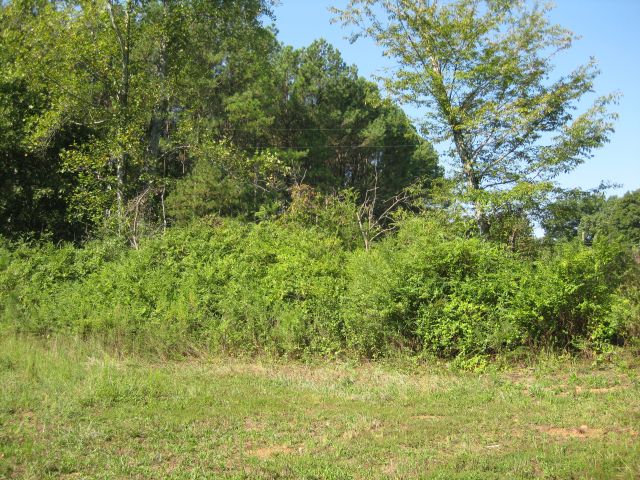
bottom of hill before grading
bottom of hill after grading

shear bolts

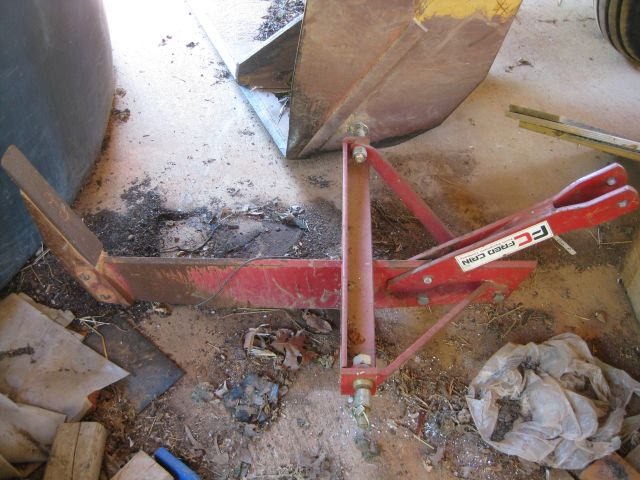
recumbent subsoiler, flanges on right had twisted

When I first began using my tractor I did not appreciate the importance of shear bolts or patience.

I have a Case 585 tractor, which was built in the late eighties and has a 60hp 4 cylinder diesel engine.  I needed to dig a small rain catchment ditch along the gravel driveway to catch rainwater as it streamed down the hill.  Georgia clay in summer is difficult to work, even with a pickaxe.  I decided to facilitate the job with a subsoiler (sometimes also called a chisel plow) attached to the rear of the tractor.  Problem was I went too fast and too deep and I heard a wrangled snap.  The flanges of the subsoiler which attached to the tractor were twisted.  My sledgehammer made no impression on straightening the metal so, reluctantly, I took the subsoiler to the local tractor dealer (where I had purchased it), and within a few minutes all was straightened out (for no charge and probably with the help of a machine press) and I more cautiously completed the job at hand.  The point about this incident is that the subsoiler should not have been damaged, the shear bolt should have snapped first.

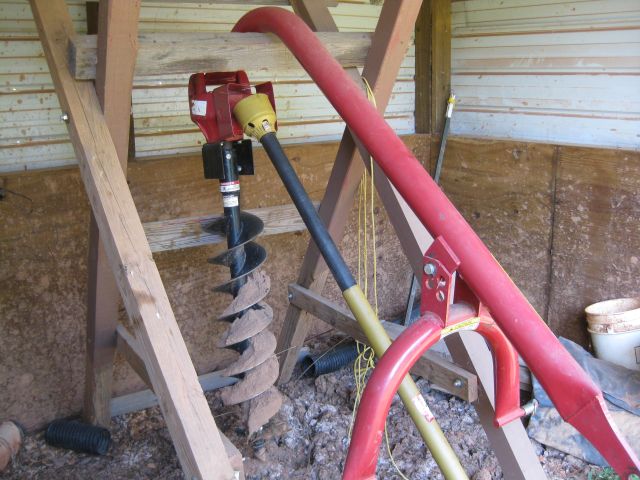
post-hole auger in home made frame

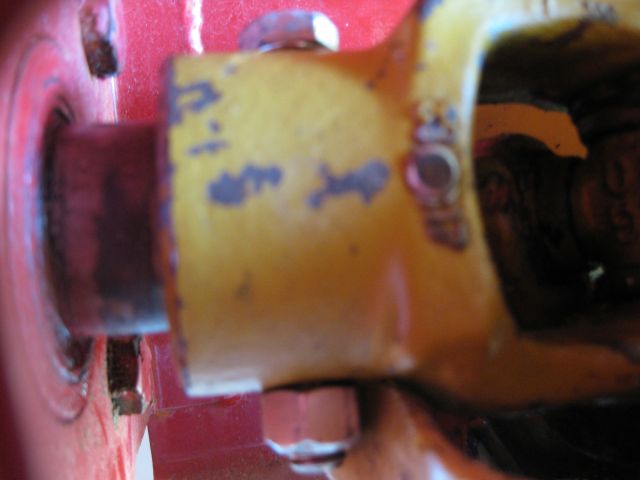
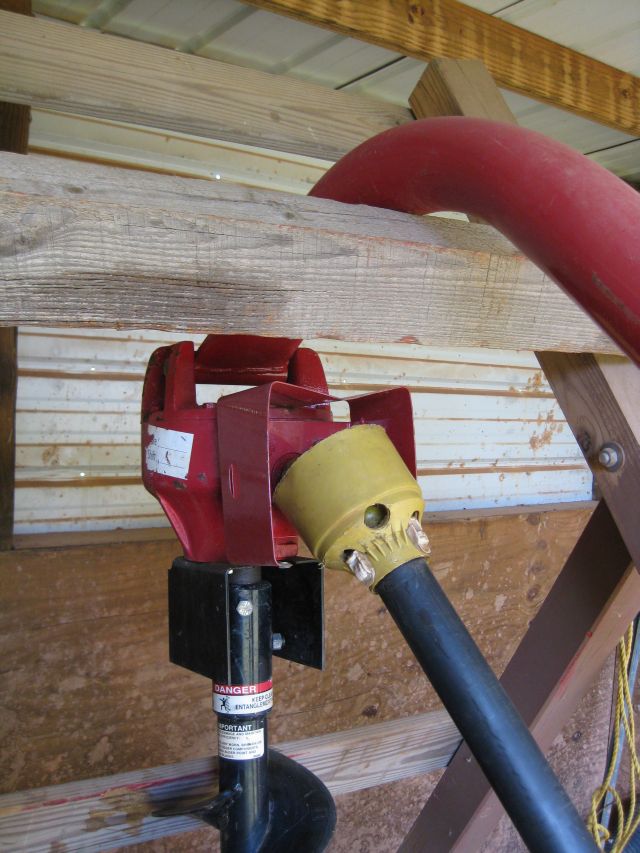
The shear bolt is the safety mechanism, like the safety valve on a pressure cooker, which releases the pressure before any real damage is done.  I have a Bush Hog auger which I regularly use for drilling holes for posts (9″ auger) or tree plantings (19″ auger).  When the cutting edge hits a large rock the sudden impact causes the shear bolt to snap.  This is cheaper to replace than fixing a stripped gear box or damaged drive line.  The shear bolts for this auger are tapered (one hole in the yoke is 3/8 and the opposing hole is slightly narrower) which presented a problem a few weeks ago, when I needed a replacement shear bolt and my usual source, the local tractor dealer just a 4 mile drive, had gone out of business.  The next closest dealer is about 30 miles away and instead of making the drive, I wandered fruitlessly around the local and big box hardware stores as well as an autoparts store looking for tapered 3/8 bolts which would fit the yoke.  My solution was to purchase a 3/8 drill bit intended for hard steel and I drilled out the hole in the yoke so that it could accommodate a 3/8 bolt.  Having sidestepped an intended safety feature, this got me wondering whether I could be facing a bigger repair bill than a shear bolt further down the road, when I hit the next big rock.

auger shear bolt in place
pto shaft (black with yellow guard) attached to gear box


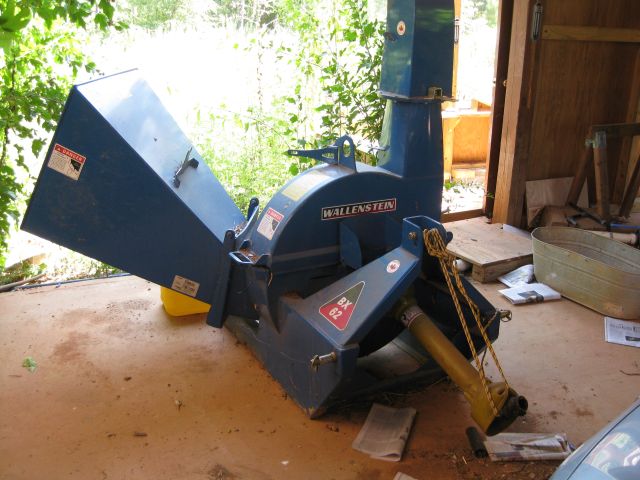
I have read the online manuals for the various implements I use and although they refer to shear bolts or shear pins, they don’t specify the grade you should use.  Perhaps the intention is you should buy your shear bolts from the dealer instead of from a cheaper source.  Anyhow, the word on the online blogs is to use grade 2 or grade 5.  The higher the grade the tougher the bolt.  I suppose start off with grade 2 and, if it keeps snapping when the equipment is used prudently, then migrate to grade 5.  You can tell the grade of the bolt from the markings on the head of the bolt.  No markings indicate grade 2 and 3 radial lines indicates grade 5.  I shall apply this advice next time I use the auger or my Wallenstein chipper.  My Bush Hog rotary mower has not had a shear bolt snap and this may be because it has a slip clutch which cushions the gearbox and driveline from sudden impacts.

wood chipper
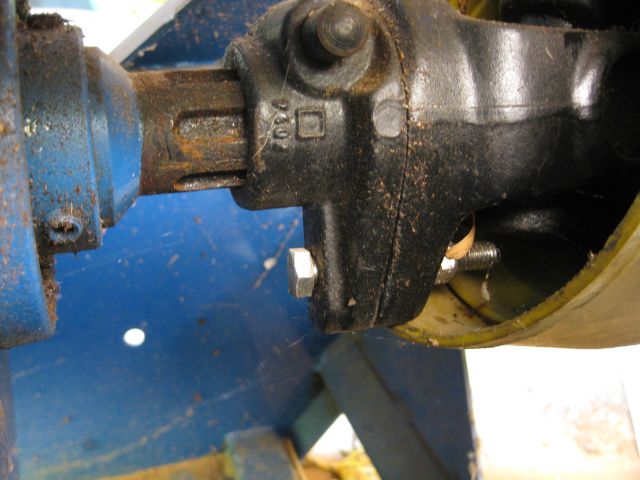
chipper shear bolt (bit too long)


rainwater harvesting – making every drop count

Blockages in the rainwater harvesting system

With rainwater harvesting whatever can go wrong does.  After fall I cleared my gutter of leaf debris and left it at that.  Silly me!  I didn’t consider that the 2″ pipe from the downspout outlet to the storage tank might be clogged with leaves.  It was only when rainwater collection by the one tank was less than expected and when, during a downfall, I saw rainwater cascading over the gutter, that I figured I had a problem.

Clearing the blockage was not too difficult.  I removed what I could by hand and then expelled the rest with water pressure from the hose.  I decided in future to use a mesh screen in the outlet to catch leaves before they enter the pipe.  However, I also needed a simple means for identifying and preventing the recurrence of future blockages.

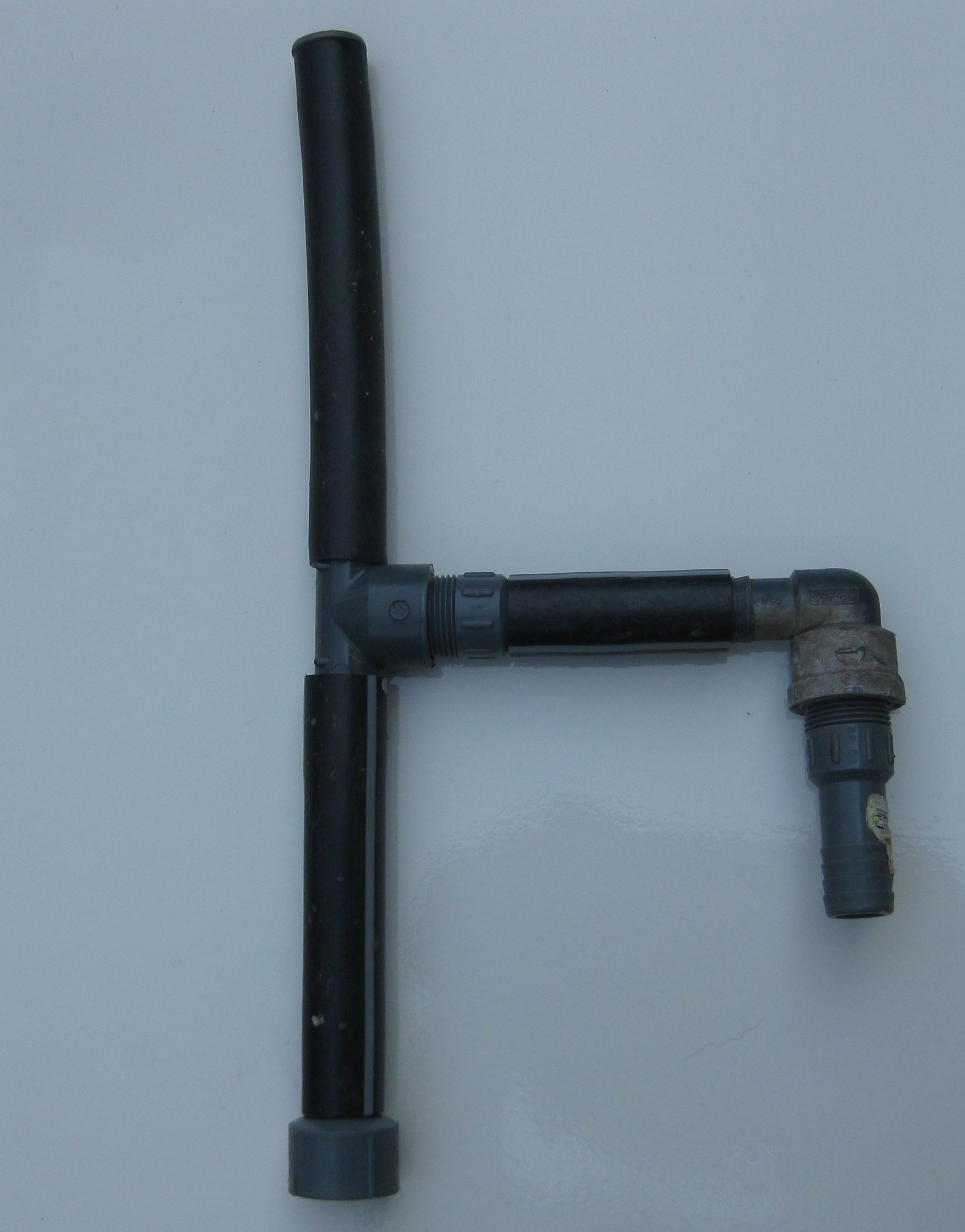
rainwater

Rather than spray water from the hose onto the roof and let it dribble into the gutter I cobbled together a simple fixture which is attached to a hose and, with the aid of a long stick (or broom), hoisted in place over the gutter. The hose is switched on and water enters the gutter, the downspout and then (audibly) the tank. The bottom left link (in the picture) is attached to the hose. The top left link is sealed and its purpose is probably redundant. Water enters from the bottom left, veers right at the tee and then down at the elbow into the gutter.


How a drip of rainwater produces a flood

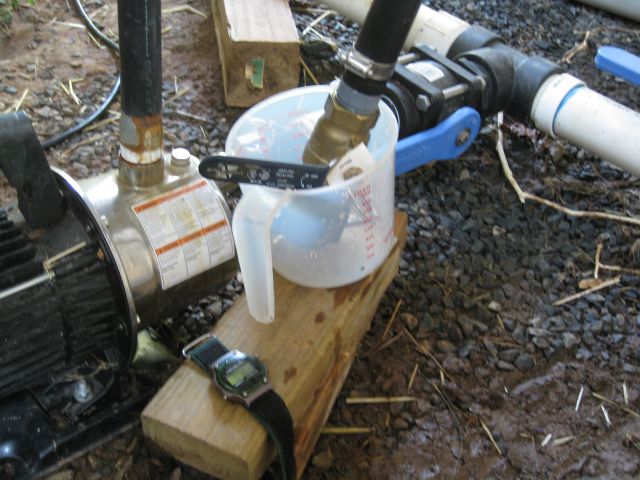
The other problem I encountered with my rainwater harvesting was unexpected rainwater loss.  During my 7 day vacation to the West Coast there was 0.5″ of rain.  I expected all my catchment tanks to rise.  However, the carport tank level did not go up, in fact it fell.  I did not give this too much thought until I noticed how wet the gravel was around the lower level storage tanks and I then noticed that a connector at the lower level was copiously leaking rainwater from the higher level carport tank.  I measured the rainwater loss and it was 250ml in 1 minute (metric is so much easier to use).  Which equates to 1 litre in a 4 minutes and therefore 15 litres in an hour.  I was gone 7 days which is 168 hours (7×24) which is 2,520 litres (168×15) which is 665 gallons (2,520x.264).  So in 1 week I lost approximately 670 gallons of rainwater.

The carport has a length of 27 ft and a width of 24 ft.  So the capture/catchment area is 648 sq. ft (27×24).  There are 7.48 gallons of water per cubic ft.  The recent 0.5″ of rainfall on the carport produced 27 cubic ft of rainwater (648 sq ft x 0.5″/12) which equates to 202 gallons (27 cu ft x 7.48 gal/cubic ft).  When I left on vacation I had approximately 500 gals and with the rainfall there should have been say 700 gals and when I returned there was barely any water because I had lost almost 700 gals from leakage.

rainwater
measuring water loss with graduated beaker + stopwatch
rainwater
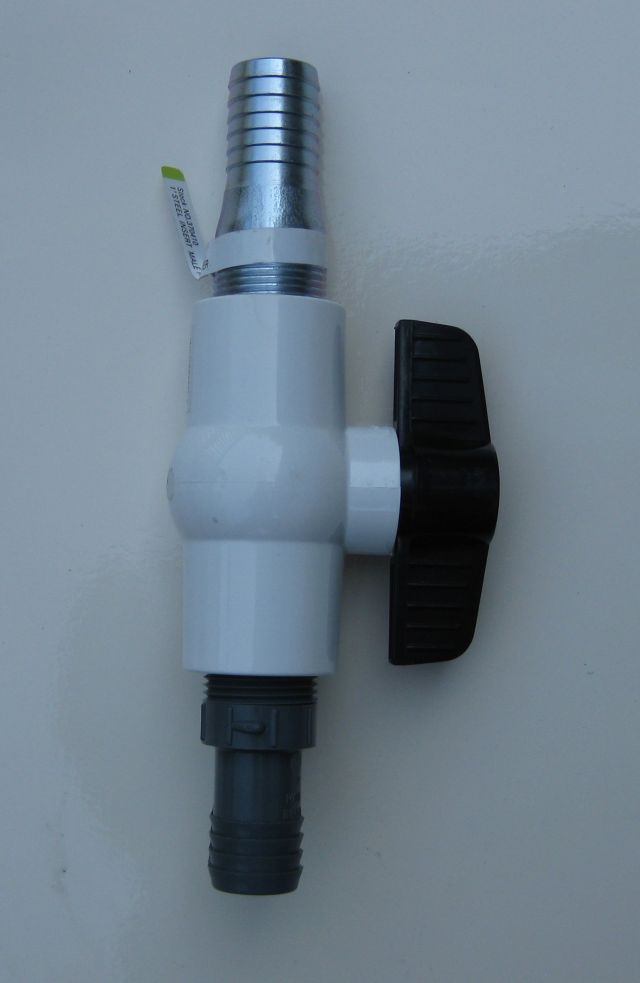
new valve components before ptfe tape assembly


My solution was two fold: 1) tighten the clamp  at the fitting; 2) since the fitting was at the bottom of the hill where water pressure is greatest, I inserted a second valve at the top of the hill where psi is less and therefore there is less pressure to force a leak.  For the second valve I used a steel insert into the high pressure end rather than a plastic insert since steel inserts are longer and provide a tighter fit.  Hopefully this ends my rainwater losses and my rainwater harvesting will be more efficient.


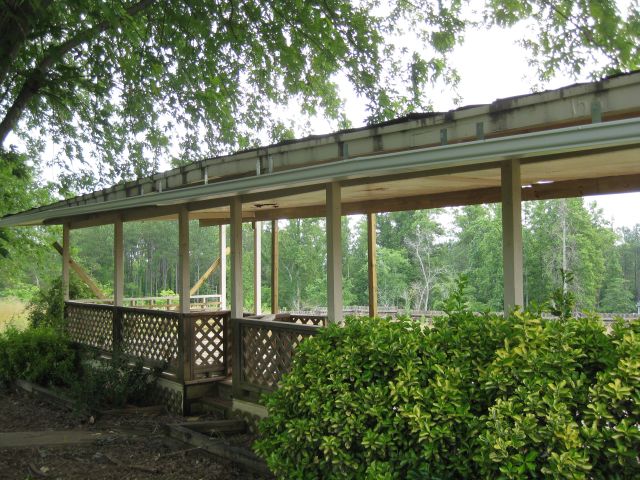
rainwater harvesting from an old deck

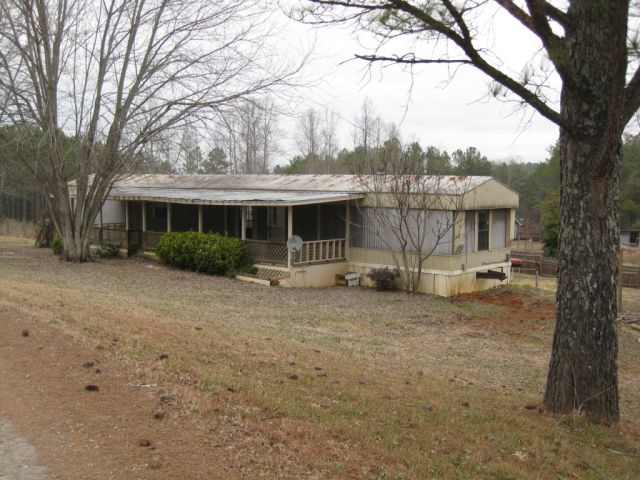
I acquired an adjoining piece of land which had an old mobile home and, attached to it, an old deck.  The land was uphill of my property with full sun exposure and well suited for growing and rainwater harvesting.  The timbers of the deck were protected from the rain by the roof of the deck and from the sun by an overtowering maple and were therefore in good condition.  I decided to sell the mobile home and keep the deck, though for what purpose was unclear to me at the time.

The purchaser of the mobile home sent a professional crew to move it.  Since the deck was not self standing and was attached to the mobile home, it was necessary to separate the two.

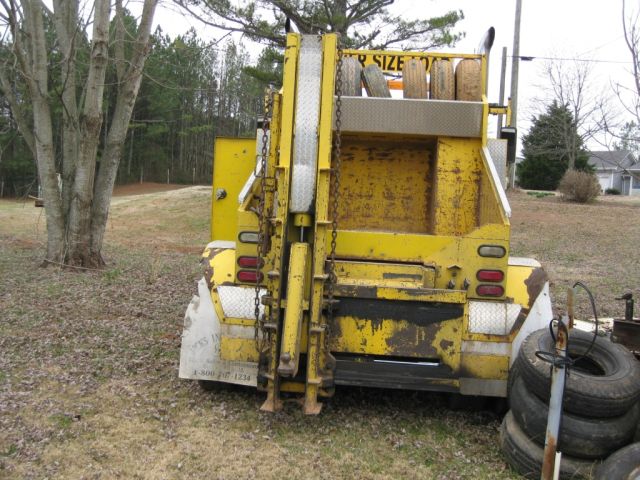
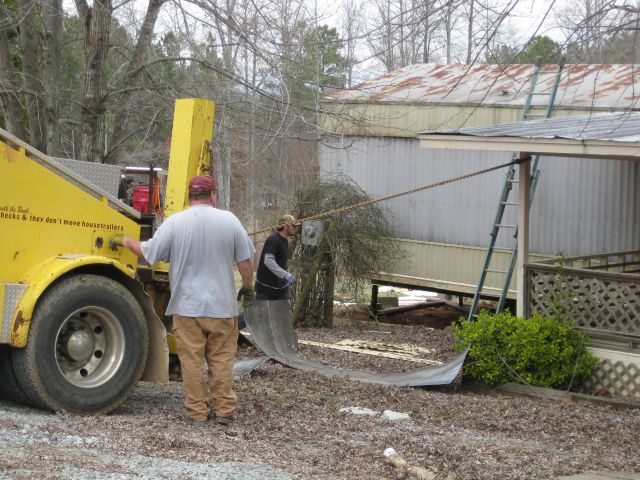
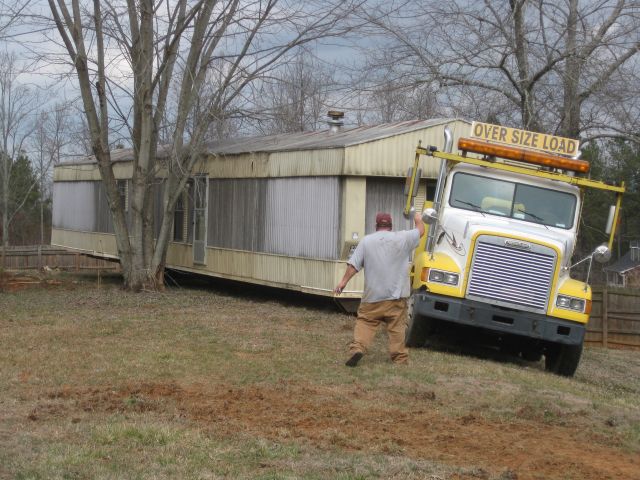
The moving truck has a powered hitch and when this was attached via chain to the deck uprights, it was easy for the crew to pull the deck away from the mobile. Then, after narrowly sliding past another maple tree, the truck and the mobile were on the road and gone.

mobile home and attached deck
rear of moving truck showing adj. hitch
hitch with chain separates deck from mobile
after bypassing a tree, the mobile was on its way


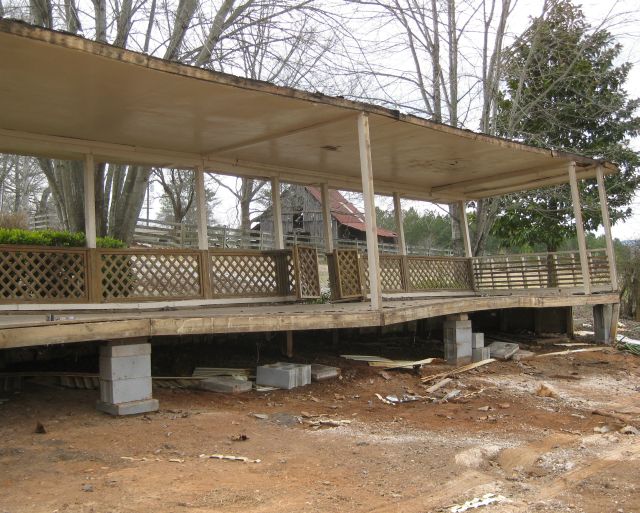
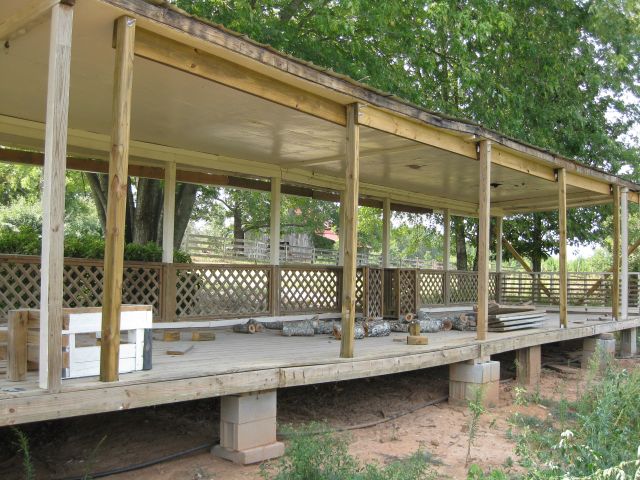
My next steps were to repair the deck. The flooring sagged in the middle as did the roof. With the assistance of a bottlejack and odd lengths of 4×4 the base was levelled and supported with cinder blocks. Similarly, after the base was stabilized, the roof was jacked up and secured horizontally with 2×6’s and vertically with 4×4 posts, all bolted together. To keep the structure upright the ends were buttressed with diagonal 2×4’s.

deck before repairs
deck after repairs


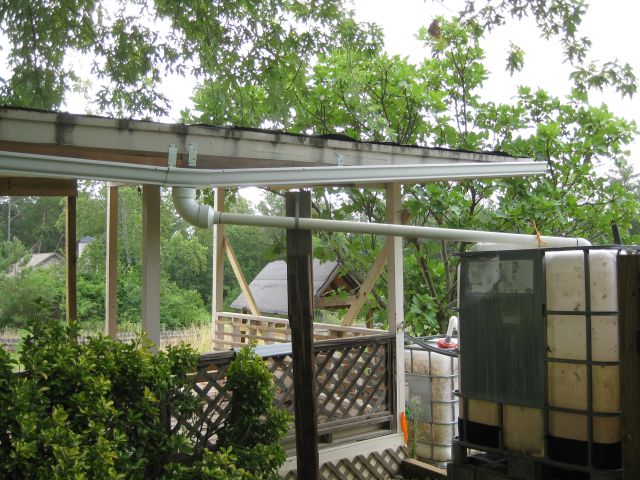
Finally to the rain capture system. Although the east facing roof was horizontal as a result of the repairs, the west facing roof which was lower and to which the water drained, sagged in the middle. Since the storage tank was at the south end, the question was how to move all the rainwater to the storage tank. I decided to attach a lower fascia board (cedar fence plank) to the existing fascia boards and this enabled me to slant the gutters to a common low point from which I ran the downpipe to the storage tank.

gutter attached to extended fascia boards
downpipe with reducers to sloping pipe to storage tank


The rainwater harvesting system works well and, since it is at the top of the hill, no pumping is required for irrigation. Now I have a use for the roof of the deck I must still find one for the deck itself. Perhaps a chicken coop?

holdup

Highway robbers did holdups – stopped travelers under threat of violence to lighten their possessions. I was heldup for several days and only today was I released and able to continue my blog journey. The ethereal robber slipped through the internet highways and abruptly hijacked my laptop. It was not a baldfaced “stand and deliver” instead a more nuanced demand for protection money – the intruder announced it had identified serious virus threats and upon activation and payment of a ransom it would protect me from them and, by inference, allow me to continue to operate my laptop. To assist me with this decision it paralyzed the laptop.

In my typical and instinctive self-reliance mode I embarked on (in hindsight amateurish) attempts to foil the intruder, like searching and deleting all recently downloaded files or trying to locate its hiding place or trying to remove it from the Windows startup protocol. To no avail.

We are visiting my son who lives in San Francisco and develops software and, when I described my failed strategies, he sighed and said it was unlikely that in a few hours I could circumvent the ingenuity of individuals who were devoting their lives to entrap the likes of me. So I took a second seat and enlisted him to raise the siege. In my layman’s language I will try describe what he did – I have probably omitted some of the steps because he moved at a brisk clip and I didn’t comprehend all that was happening.

He first moved the documents via filezilla ftp to another computer in case we lost complete control of the computer. He was not concerned that he might be moving the virus along with the documents since the second computer runs on linux which he was confident was immune to the virus. He then googled and searched his developers’ links for information on, and counter strategies to, the pernicious (my adjective) invader. Then in “safe mode” he downloaded “rkill” to momentarily break the virus induced paralysis. Then he initiated the computer’s regular anti-virus software to scan and locate the virus, but the virus prevented the scan from running. So he downloaded “malwarebytes anti-malware” software to locate and destroy the virus, which seemed to help. He also identified an antivirus software program on the computer which refused to uninstall. After several attempts and with the help of CCleaner he was able to uninstall this software. But the regular antivirus software still wouldn’t run, so he used “CCleaner” to search and cleanse the registry where fragments of the virus were hiding. With the virus(es) finally removed, he updated and ran the regular antivirus software and for good measure installed “spybot” for extra protection.

So I now have a compliant laptop and, in the next few posts, will describe our visits to the organic growing regions and food related activities in the San Francisco area.

2nd chicken coop done

Arrival of the egg laying chicken

My neighbor offered me her 6 chicken and nesting boxes and metal waterer for a reasonable price and, because of the age and size difference between her mature egg laying chicken and my youngsters, I built a second chicken coop to receive them as well as a separate fenced outdoor exercise and grazing area.

chicken
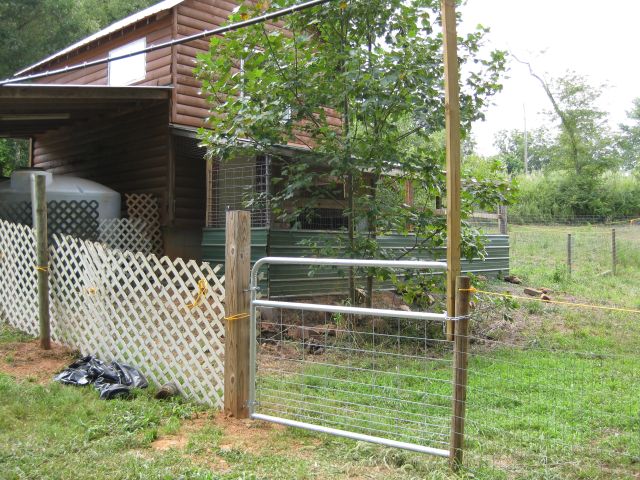
6ft gate to fenced range with coop at rear

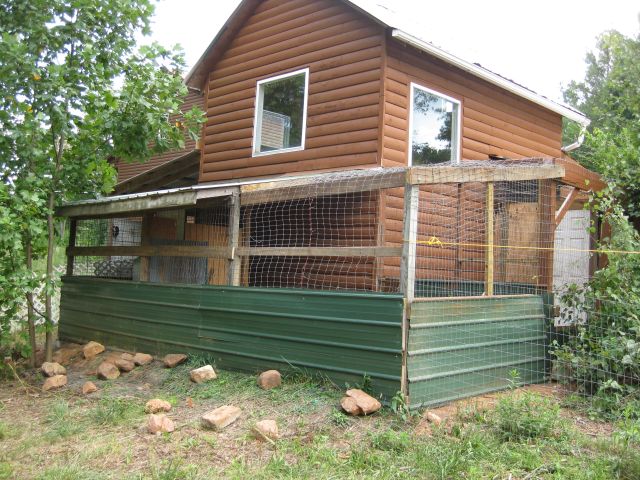
I refurbished a horse stall into a chicken coop using scrap lumber and wire fence leftovers.  I used screws rather than nails since it is easier to undo a mistake with screws and screws, altho’ costlier, hold better than nails.  My preference for the lighter joints was “star drive” screws to “phillips” screws because turning power is better, and for the heavier joints I used hex lag screws and occasional bolts and nuts.  To secure the metal sheeting to the sides I used hex metal roofing/siding screws.

Chicken coop construction

chicken
exterior view of coop

I worked from the ground up –

  • first dug trenches for implanting narrow cinder blocks to thwart tunnel attacks;
  • along the downhill sloping side laid surplus 4 ft wire fence on the exterior ground surface anchored by flat rocks and 10″ tent pins to also deter tunnelers;
  • framed the sides and roof with old but solid 2″ x 6″ and 2″ x 4″ lumber assortments;
  • secured surplus green roof sheeting to the sides to waist height;
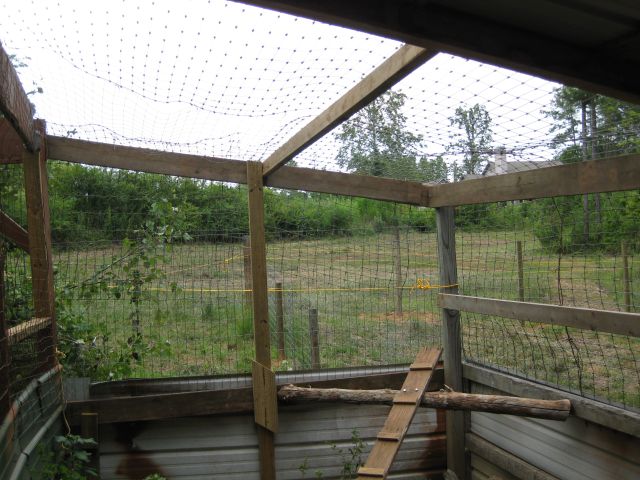
  • used surplus fence wire (welded or woven) to close in the sides and the “courtyard” roof;
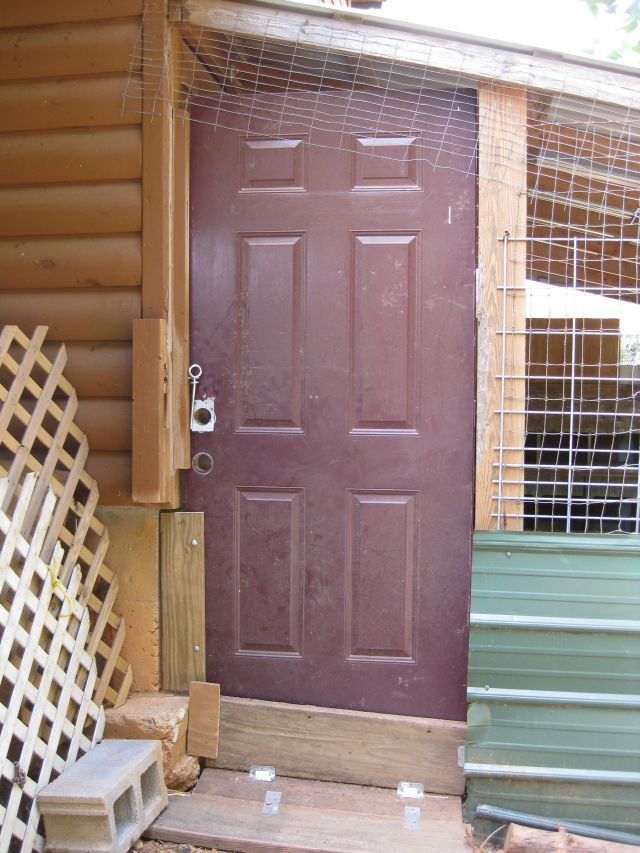
  • a battered front door was recycled to become the chicken coop entrance;
  • a partition using wood and sheet metal scraps was constructed between the roofed in area and the courtyard;
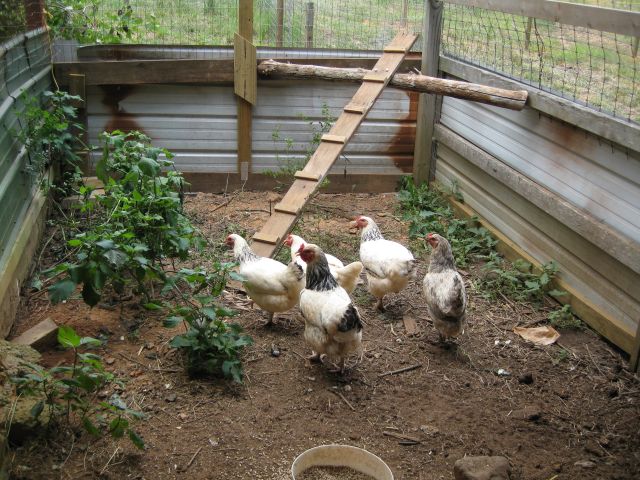
  • a tree limb secured by lag bolts to the sides became a roosting perch;
  • a plank with screwed on footholds became the stairway to the chicken roosting perch; and
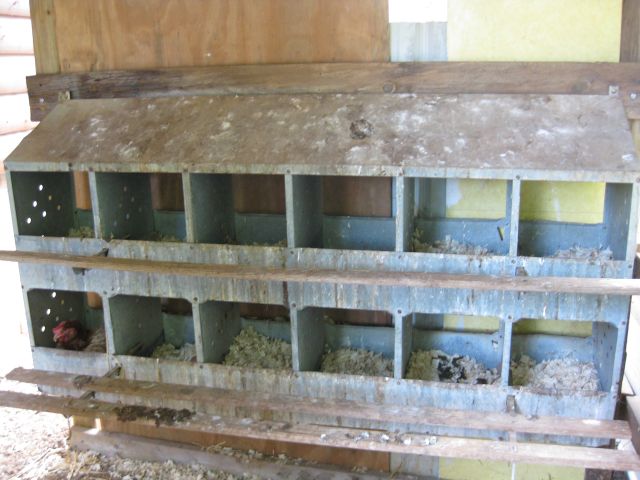
  • finally the nesting box and the metal waterer were installed and thechicken introduced to their new home.
chicken
door entrance to coop

chicken

nesting box secured to partition in coop
chicken
courtyard with roosting perch, stairway and 5 occupants
chicken
view of fully enclosed "courtyard"


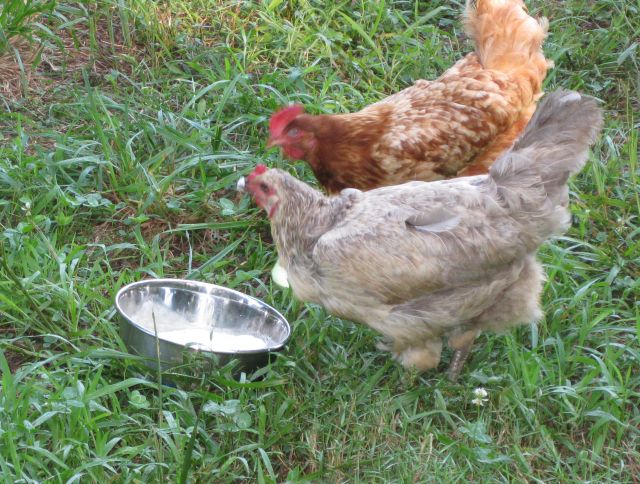
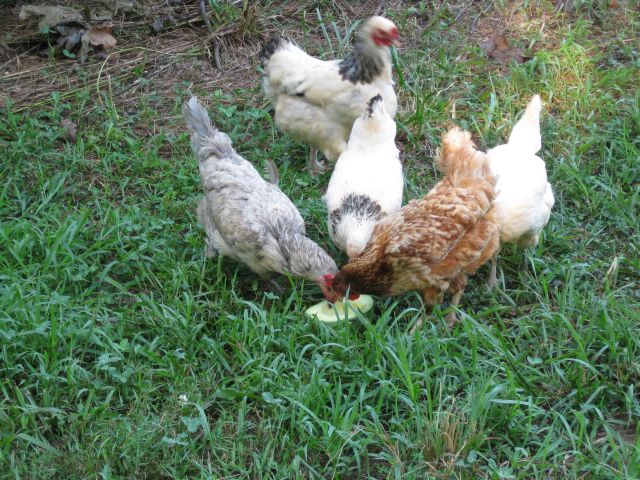
To acclimatize the new residents, treats were provided.

chicken
some yogurt for the new occupants
chicken
as well as a melon treat

lifting things

Heavy items can be a challenge to lift when you are single handed and no longer in your 20’s or 30’s.

Installing an island oven/range hood

I recently had to install an island oven/range hood – this is the hood which fits above an island range in a kitchen. If the range was located against an exterior wall it would be a simpler matter to install a wall vent. However, an island range hood is more complicated because the hood has to be suspended from the ceiling.

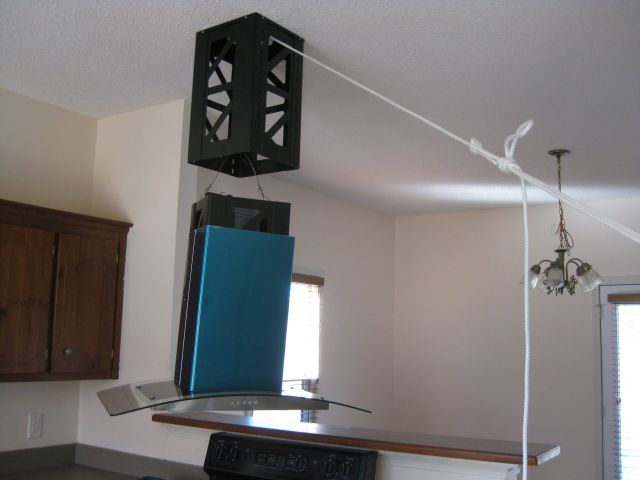
I cut a hole in the ceiling above the range, then framed the hole, then installed the black upper support frame to the ceiling.  I attached the blower box and covers to the lower support frame (collectively called “the hood”).  The hood weighs more than 60lbs and it is difficult to single handed raise and secure it to the upper support frame, which is suspended from the ceiling.  Ideally 3 people are required – two to raise the hood and hold it horizontally in position while the third person bolts the hood to the upper frame.

Initially I tried using the packing carton, in which the hood arrived, as a platform located above the range and although this reduced the lifting distance to just a few inches, because the fitting of the two frames is concise, I was unable to horizontally lift and secure the components by myself.
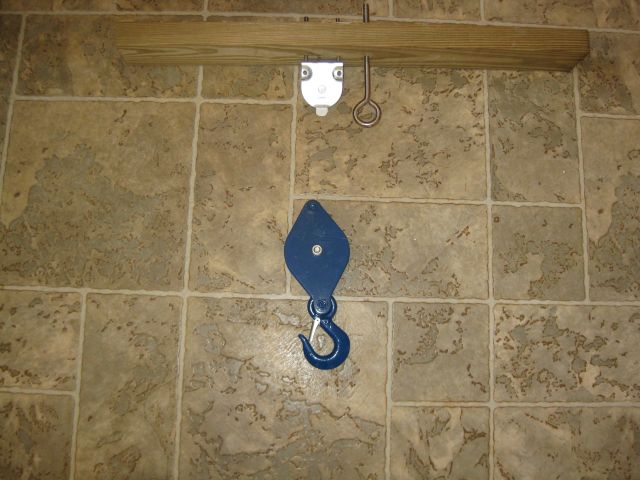
block and tackle components
So I decided to use a block and tackle setup to hoist the hood vertically up into the frame suspended from the ceiling.   The ‘photo shows the components – a) a  2 ft length of 2×4 wood which was located across the joists above the hole cut into the ceiling; b) a silver pulley attached to the wood; c) a ring bolt attached to the wood; d) a blue pulley with a hook. Rope was knotted to the ring bolt then went round the blue pulley then up and around the silver pulley and then to me.  The hook of the blue pulley lifted wires attached to the hood.


I pulled on the rope and the hood ascended to the upper frame attached to the ceiling.  When the lower frame approached the upper frame I anchored the rope to a door handle, located the lower  frame into the upper frame and then pulled on the rope to move the lower frame well into the upper frame.  I again tied down the rope and bolted the frames together.  This achieved, I removed the pulleys, wires and ropes and the rest of the installation was relatively easy.


Lifting a generator into the bed of a pickup truck

I recently acquired adjacent property on the top of a hill which has a water well.  The well pump requires 240 volts to operate.  Through Craigs list I acquired an old generator which has 240 volts output.  I try to meet all my irrigation requirements using harvested rainwater.  Occasionally, I have to supplement the water supply and then I use the generator to power the well pump.  The problem is lifting the generator into the bed of the pickup truck since the generator and gas weigh more than 200 lbs.

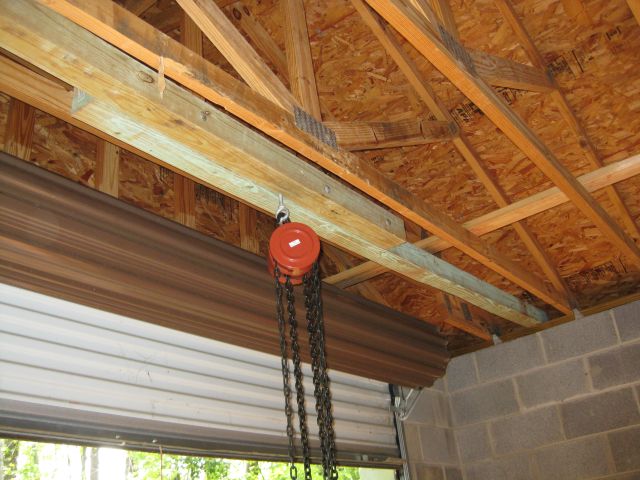
beam and chain hoist for generator

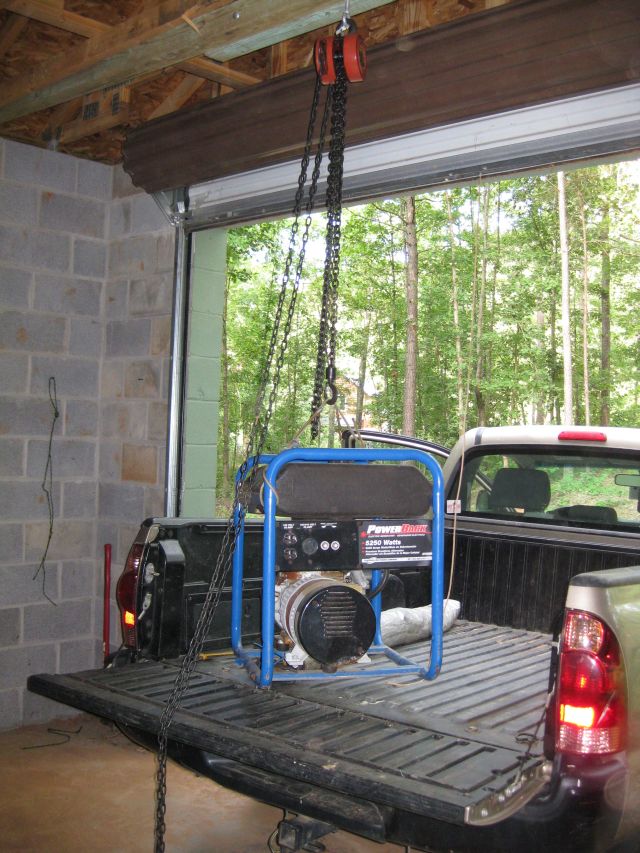
My first solution was to span the 16 ft width of the tractor building with two 10 ft 4″x4″ posts bolted together where they overlapped. I then bolted a manual gear chain hoist to the beam. I stored the generator on a furniture dolly in a corner of the building and when I needed to load the generator, I pushed the dolly below the chain hoist, hoisted it above the height of the truck bed and reversed the truck into place and then lowered the generator into the truck.

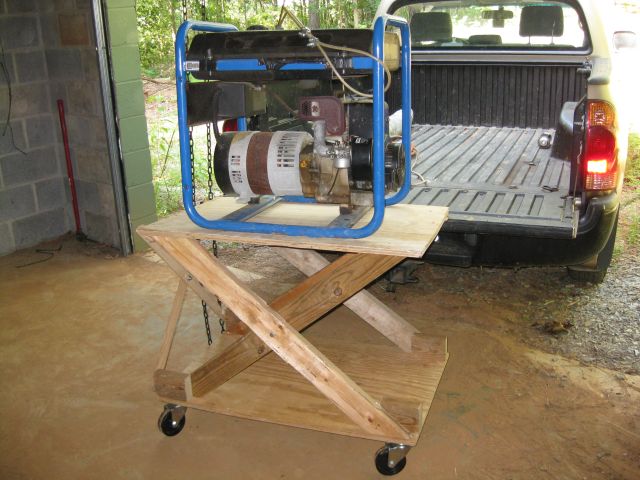
This worked fine for a while but it took time to hoist and lower the generator from the dolly to the truck bed. So I decided to accelerate the process by storing the generator on a portable stand which I made from scrap lumber and 4 purchased wheels. The portable stand is the same height as the truck bed and it is easy to lug the generator from the one to the other. When not in use, the generator on the stand is wheeled into a corner of the building.

generator being loaded into truck bed
portable generator stand


making whole wheat bread

A wise man once told me “You are what you eat”.  At the time I ate whatever I wished and being in my mid- 20’s and healthy, I saw little need to change my eating habits.  Nowadays I eat “healthy” which includes whole wheat bread and, noting the cost of 100% whole wheat bread and wishing to be as self-reliant as possible, I decided to venture down the bread making route.

Acquiring a whole wheat bread maker

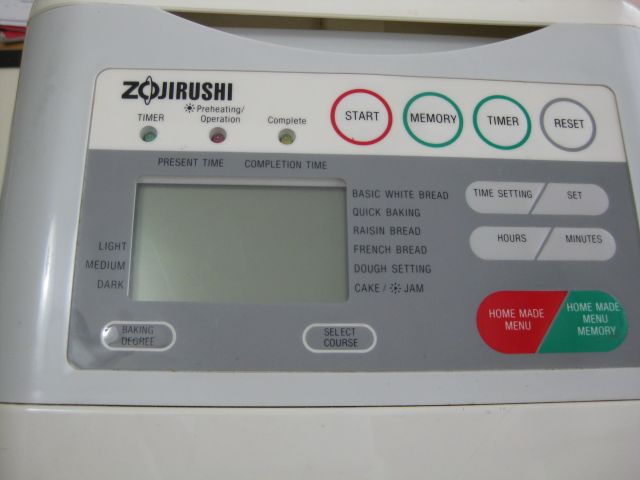
wheat breadFirst stop was a bread making machine (I could have tried hand kneading but I like machines) and my preference was for a good quality used machine.  Craig’s list showed a make “zojirushi” and some research indicated this is a durable, well regarded but pricey item.  I was able to buy, for a reasonable price, the model “BBCC-S15” which is at least 10 years old and was made in Japan (more recent models I believe are made in China). The  manual included recipes for whole wheat bread so that closed the deal.

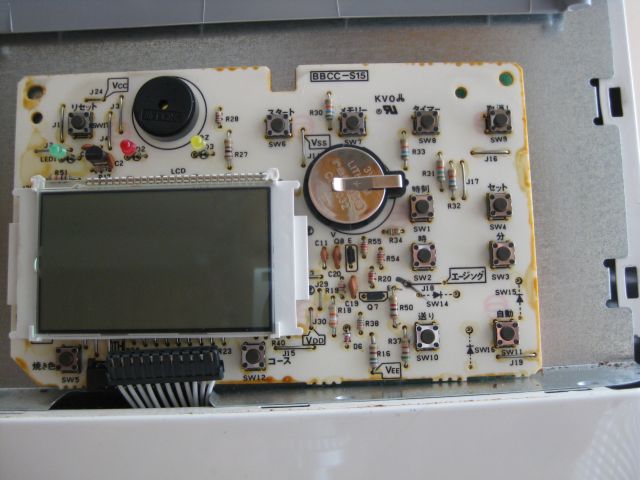
The machine worked fine except the battery, which keeps the date, had expired.  From the internet I learned that the battery is soldered to the circuit board but can, with care, be replaced.  This I was able to do.

wheat bread
circuit board showing original battery soldered to the board
wheat bread
new battery inserted in a battery holder


Grinding whole wheat kernel/berry

The seller mentioned to me she also had a grain mill (brand name “Whisper Mill”) which I also purchased, and that she acquired her whole wheat and other ingredients and advice from Bread Beckers company, which fortuitously is located en route to  my property.

The family members who operate the business are most knowledgeable and helpful, and I acquired hard red wheat, lecithin, gluten, flax seed and yeast.  The Whisper Mill ground the red whole wheat well and I used a coffee grinder for the flax seed.  I experimented with their Ezekiel bread mix, but the result was too dense for me.  However, the whole wheat loaves are delicious.  I include in the mix a free range egg,  my harvested honey and 1/4 cup of unground sunflower seed.

There is one area for improvement – the top rises and then falls a little.  I have experimented with increasing the gluten above the recommended amounts to compensate for moisture and will try out differing combinations to arrive at an unblemished loaf of whole wheat bread.  In the meantime, the fallen top goes to the chicks.