locating a buried 4″ drainage pipe

About 20 years ago I dug a 100 ft trench for a 4″ drain pipe, which led from a concave area of the yard where the rainwater gathered, to a nearby creek.  Over the years I planted many trees and shrubs in this area.  The pipe worked well until the past few months when it completely ceased functioning.  With downpours seemingly more intense than ever, I decided I had to fix the problem.

I have a 50 ft plumber’s snake and I inserted it in the hole and it moved along easily for 45 ft and then hit a blockage.  I pulled the snake and inserted a contractor grade hose to the blockage and turned on the faucet thinking/hoping the water pressure would clear the blockage.  To no avail, even after several days attempts.  I concluded I should dig up and replace the blocked section of the pipe.
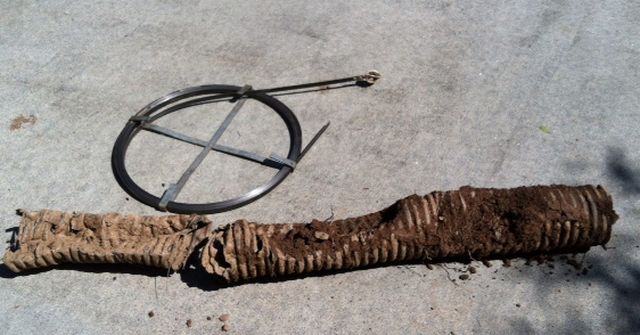
plumber's snake and damaged pipe
plumber’s snake at top and the blocked pipe. section on left had completely collapsed and section on right was a few feet further downline and was partially collapsed, all from roots of the same tree

Problem was I didn’t know exactly where the pipe ran under the ground since, over the past 2 decades the landscape had changed.  I tried digging a 5ft trench perpendicular to the supposed run of the pipe, but did not find it.  The pipe is about 1 ft underground and digging a 1ft deep trench should not take much effort or time.  Problem is the whole area is interlaced with the roots of good trees including a Japanese maple,  Harry Lauder’s walking stick, and other worth preserving species.  Plus some pretty thick pine roots as well.

How to locate the underground pipe?  Plumbers use a transmitter on their underground probes, but they are expensive for a one time use.  I googled personal locator devices and saw there are two options for the absent minded – with the cheaper device you attach a transmitter to your keys or other often lost items (not a cell phone because you just dial your # and it will ring) and, when lost, you press a button on the locator and the transmitter will flash and make a noise and you should find it.  This wouldn’t work for an underground scenario.  So I had to spring for the more expensive device (loc8tor lite) which has red and green directional lights on the locator as well as a beeper.  You press the button, the locator calls the transmitter, the transmitter responds and then, with the locator in your hand you do a little circle and when you are nearer to the location of the transmitter, the locator becomes excited and even more excited with red and green lights glowing and noisier as you get nearer to the transmitter.
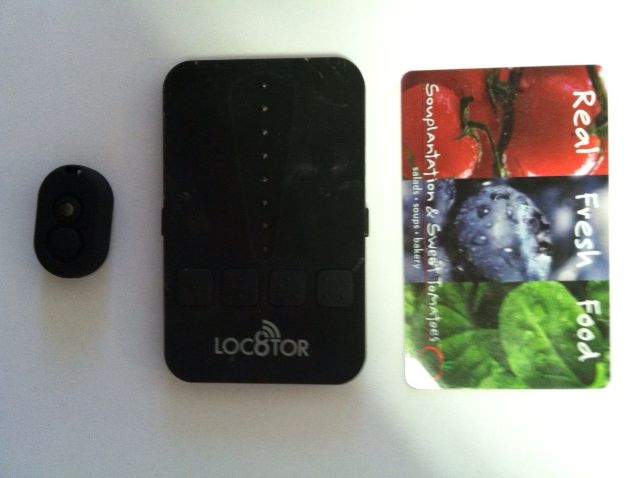
the locator is credit card sized and the transmitter on the left much smaller and worked for locating buried pipe
the locator is credit card sized and the transmitter on the left much smaller

I placed the transmitter in a secure waterproof container (actually an old cylindrical 35mm film container) secured it with duct tape to the end of the plumber’s snake and sent it down the pipe.  Initially my locator failed completely to detect the transmitter.  So I figured its range must be limited when the transmitter is underground and to ensure I had the locator as close as possible to the position of the transmitter, I pushed the snake exactly 10 ft down the hole and measured exactly 10ft ground distance and, after removing some topsoil, I  was able to locate the transmitter when it was directly below the locator separated by about 8″ of soil.  The cheerful chirping and flashing green lights after hours of fruitless work was recompense enough.  From there on it was easy going – measure out 10 ft distance on the ground, advance the snake 10 ft, clear the soil and the magical beeping and light flashing re-commenced.  And so I continued until I located the blockage which was about 10 ft away from where I had thought the pipe ran and also much deeper than I had imagined.  A worthwhile $68 investment and no doubt it will be handy for locating my often lost keys.
“Paradise Lost”?

So, some time has passed since my last post and that’s because my focus has been distracted.  Reality has a way of intruding on the cocoon we build around us.  It may be sudden severe ill health.  Or, as in my case, an intrusion.

In my “battle of wits” post last month I mentioned the advent of the fox which seized my favorite chicken.  A predator from the outside.  Well, a few weeks ago, another predator surfaced – the human kind, and one evening, when I was away from the property, they broke into the log cabin and stole (I was going to say “removed” but why mince words?) a bunch of items.  Although I am at the property every day, I am not there every night.  In the beginning, in anticipation of such an event, I resolved to not keep any valuable/significant items at the log cabin.  And then, as the months rolled by uneventfully, complacency set it and I began leaving (for convenience sake) more and more tools and possessions.

When I first purchased my pickup truck I acquired a large tool box, which fits over the truck bed, and each day I selected the tools I needed and transported them in the tool box to and from the property.  For the past few years the tool box was unused in storage.  It is now back in commission and I will continue using it until I have better secured the property.

To secure the property I have been working on several fronts:

  • the excessive vegetation, which provided privacy, comes with a cost – lack of security because it impedes surveillance by neighbors and may even give the impression that the house is abandoned or rarely visited.  So a lot has been cut back.
  • neighbors are important for deterrence and detection and I am lucky to have two supportive neighbors who are keeping an eye on things.
  • gates.  It is not enough to chain gates since they can be lifted off their hinges, which actually happened to me.  So I have cabled secured the hinge side of the gates.
  • lighting.  I have sprung for the very efficient LED dawn to dusk lights and dawn to dusk fluorescent lights.  Initially I used halogen  300W lights, which are very inefficient, and I was going to transition to halide or sodium until I decided to spend a bit more for LED.
  • when I purchased the log cabin I replaced all the external locks with Kwikset SmartKey locks, which can be easily rekeyed – less than a minute to rekey each lock.
  • alarm system.  I have installed internal motion detectors and a siren and will in due course include a monitoring system.
  • surveillance cameras.  These are being expanded and upgraded.
  • I re-sited my outside motion detectors, which were intended to locate the fox, to the exterior of the house to provide early warning of human visitors.

In future posts I will provide more information on the various techniques.  Of course the proof is in the pudding, so will wait and see how matters proceed.

To return to normalcy, today I replaced the shattered window, which provided access to the intruders.  It was actually a fairly simple operation.  The key was to find the exact replacement and I was lucky that Lowe’s carried the match, which came with a few extra features, for a reasonable price.  Replacement windows do not have “nail fins” which are on the original windows.  So the first step is to cut off the nail fins which secure the old window to the opening.  I have an old, good quality reciprocating saw (fortunately never stored at the log cabin) and I was able to cut through the plastic nail fins on all four sides of the damaged window without too much hassle.  The window came out easily, I then cleaned the frame, applied caulk, inserted the new window and screwed it secure.  My other step towards normalcy was to post to this website.

I have some catching up to do – a recent good honey harvest, squash which are producing and have not yet fallen victim to the borers, a decent garlic harvest, and more – for future posts.

2nd chicken coop door installed

Last week I designed, constructed and installed my first coop door opener – it has operated flawlessly the past week automatically opening the door at about 8am and then late afternoon I reverse the current and close it when I feed the chickens and settle them for the night.

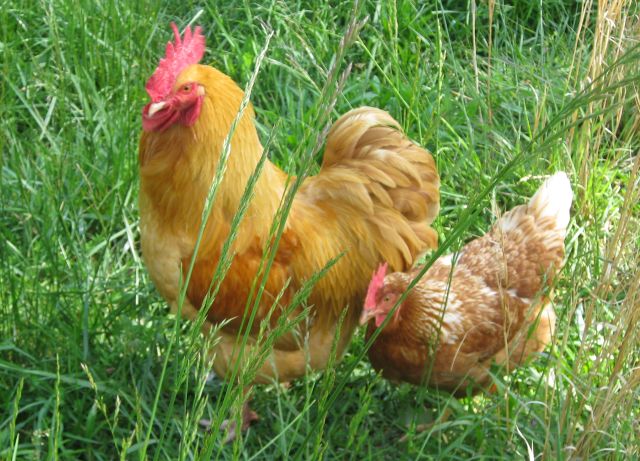
An ongoing issue has been the aggressiveness of the Buff Orpington rooster  to his Buff Orpington sister.  The coop has a partition door and, prior to the advent of the door opener, I would house Lady Macbeth (such a fierce sounding name yet such a timid bird) and the gentle New Jersey Giants and the two Golden Comets on the one side, and the rooster and the other birds on the other.  But since I now arrive later and the door is opened by my new gadget they all have to have access to the exit door, which means no partition.  So the drill the past few evenings was to enforce the partition while Lady Macbeth ate and then, when she had had her fill, I opened the partition door, the rooster charged in and she hopped onto the roost for the night where she was safe from him.  I notice it takes her longer to fill her crop than the other birds and I surmise that, unlike her companions who snack the feed during the day, she probably doesn’t because she does not wish to be cornered by the rooster.  So each evening I wait about 10 minutes while she eats.  Time for a second door.

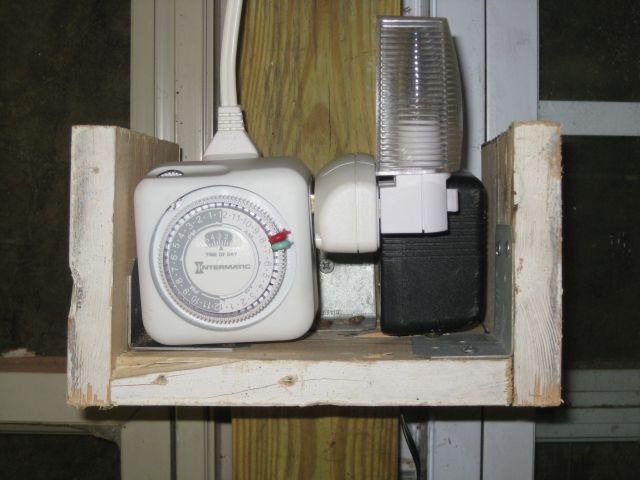
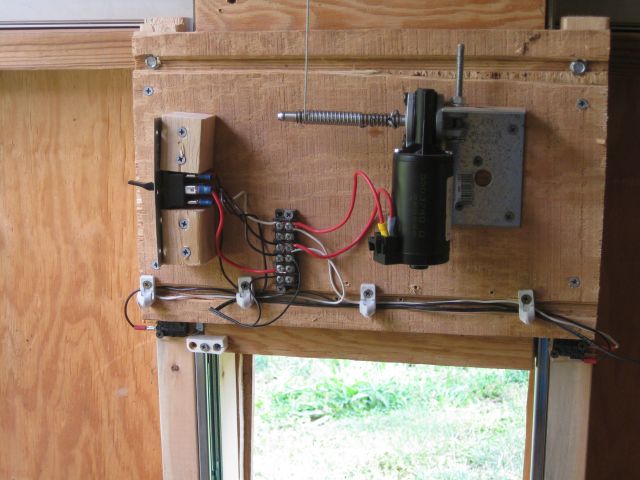
My second door follows the same design as the first with a few refinements.  I acquired a sturdy double pole double throw automotive switch from Radio Shack, which is easier to use than the two separate switches I used on version 1.  I ordered a transformer 10VDC with an advertised 1.5 amps on the internet but it was a puny affair and could not turn the motor and certainly did not deliver 1.5amps, even though the specs  made this claim.  It was cheap and the adage “cheap is costly” applied in this case.  I rummaged and found a 10VDC transformer rated at 0.8amps and it works just fine.  Again I used an inexpensive timer and a night light to remind me at the end of the day   to switch the live circuit to timer circuit.  So tonight Lady Macbeth can sup at her leisure with her 4 docile companions and the rooster can rant and rave to no avail.

Buffy, the rooster, with a Golden Comet


the "summerized" coop (the tarps exclude the light and keep it cool), and the two recently installed coop door openers
simple housing for timer, night lite and transformer
simplified design, one DPDT switch to reverse door direction, contact switches on either side


chicken coop door opener

After several weeks spinning my thoughts, I finally got down to it and built and installed an automatic chicken coop door opener.  For the time being it is half automatic – it will open the coop door in the morning (time set for 7.30am) and I will close it in the evening after I have housed and fed the chicken.  Cost of components, excluding scrap wood, hardware, and the transformer which was laying around, was less than $50.

I have included full details and photos under the “Self reliance” tab at the top of this website or just click here.

I previously mentioned how I had summerized the coop by adding a powered vent and insulation.  The rooster did not like the  sound of the vent when it was at full blast and there were no controls to slow it down since its intended location is in the attic of a house where its noise is less obvious.  The rooster’s concerns were resolved with the addition of a fan speed switch so, until he is more at ease, I have set it to spin at about half speed, which does not upset him.

preparing for winter

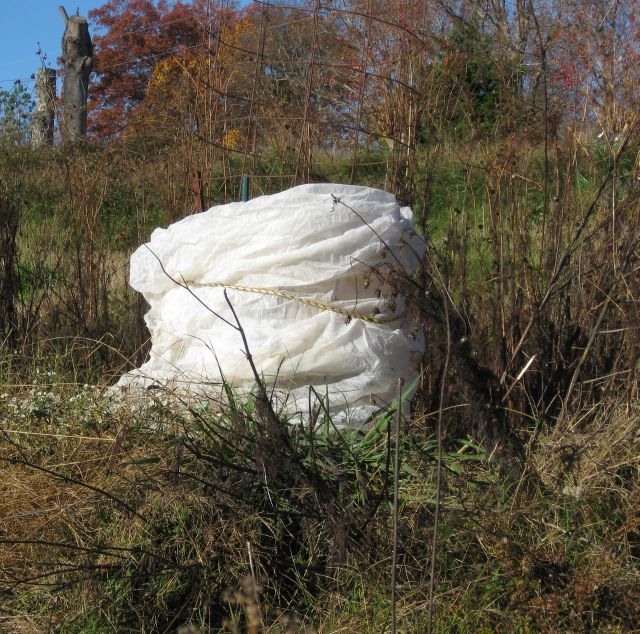
Yesterday morning I did not need a weather forecast to know cold was incoming and that it was time to protect some of the plantings.  Of the 12 fruit trees installed earlier this year, the Gold Nugget loquat was the most vulnerable.  The loquat is suited for sub-tropical to mild temperate zones and freezing temperatures will kill the buds if not the tree.  My loquat did not do very well this summer, probably too hot for it, but I will do what I can to help it and first steps was to winterwrap it.  Since it is only a few feet tall, it fitted easily into one of my tomato cages, which I had made from welded steel wire re-mesh.  I then wrapped the cage and the space above the tree with agripon AG-30 row cover, as shown below.

loquat in tomato cage wrapped with row cover

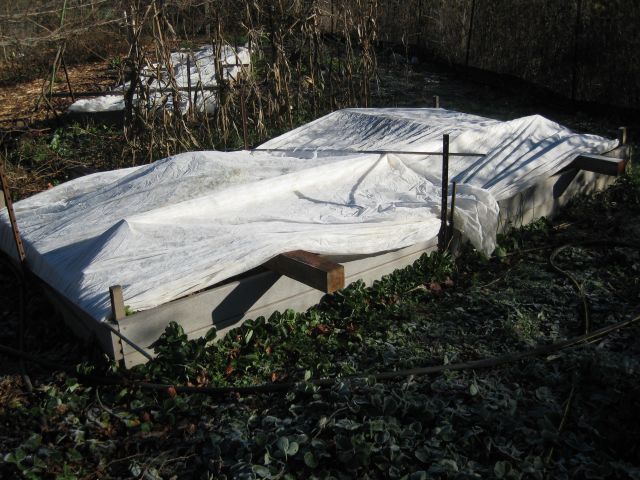
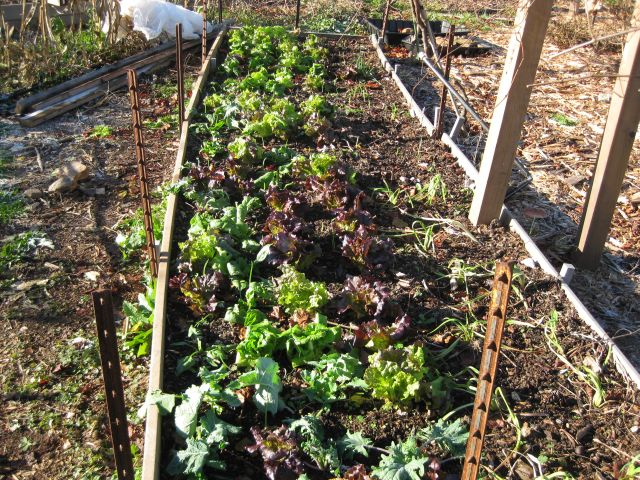
Next to the vegetables.  I have two raised beds where I am growing several varieties of lettuce as well as spinach, kale etc.  Rather than using a hoop system my thought is to drape row covers over the beds just above the vegetables.  This should be less vulnerable to strong winds and may offer better protection.  For my first bed I bridged the long sides of the bed with two cedar posts and then strapped a 4″ pvc drain pipe to the posts and draped the row crop over this.  Below is the finished product as it appeared this morning (you can see the frost on the adjacent strawberries):

raised vegetable bed covered with row cover

If the description was difficult to follow, here is a shot with the row cover removed:

raised vegetable bed with fixtures for row cover

Only half of this bed is being used for vegetables.  I have extensively planted the other half and also the spaces between the vegetables with garlic.  For my second bed I simply placed the row cover over the vegetables and secured with 3 2×4 untreated planks, as shown below:

vegetable bed covered against frost

The temperature fell to 22 degrees and the vegetables did fine, though it was not a heavy frost.  Since temperatures are predicted to stay above freezing for the next five days, I removed the covers this morning, a simple task which took just a few minutes.

long raised vegetable bed with lettuce interplanted with garlic

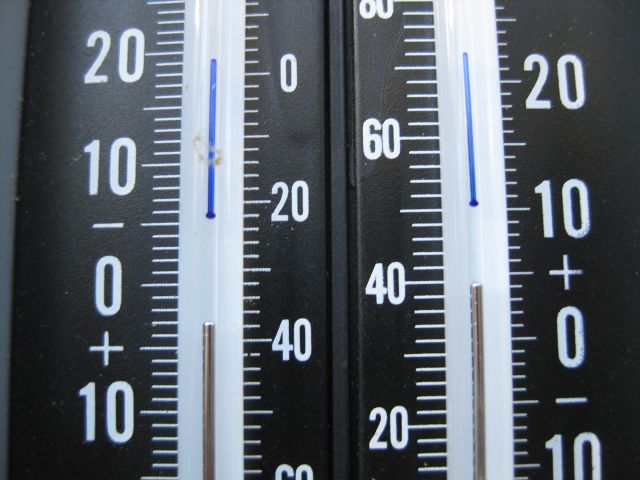
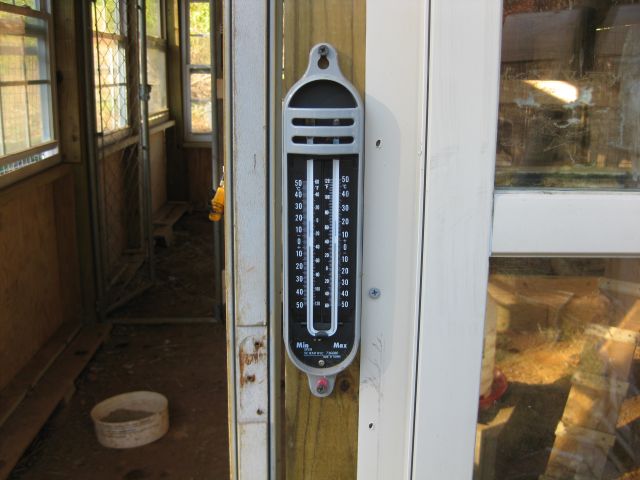
My new chicken coop is working out great.  Air can flow freely out the rafters at the top and I leave two of the windows slightly ajar. I was curious to learn how cold it really gets.  I transplanted my two min max thermometers from my greenhouse to the coop and sited one outside at the door and the other on the partition which divides the coop into the old flock and new flock areas.  This morning the outside temperature was 22 degrees and the inside temperature was 36 degrees, higher mostly I would think because of the heat of the birds.  My greenhouse, which is fully enclosed, only provides a differential of about 10 degrees between outside cold and inside temperatures.

thermometer reading 22 degrees
min max thermometer on coop door


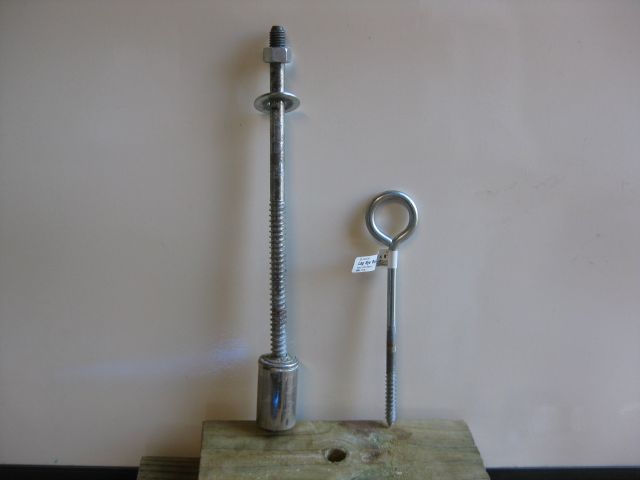
Since power outages may be expected, I checked my flashlights and found that my large 4 cell mag-lite was not functioning. Two of the 4 batteries had leaked and corroded the inside. Removing the batteries proved near impossible. I decided to drill a hole into the bottom of the battery and screw a large lag eye bolt into the battery and, with the assistance of a helper, pull them apart. After much tugging the bolt separated from the battery and the battery remained, unmoved, in the flashlight body. I then located a larger diameter hanger bolt and screwed this into the battery.

hanger bolt on left shown inserted in a battery, and lag eye bolt on right

I no longer had my helper but additional help was unnecessary since, with a assortment of 2×4’s I established a platform for the nut on the hanger bolt to leverage against. It was then a simple matter to tighten the hanger bolt nut with a wrench and slowly extricate the two damaged batteries. After rinsing out and scrubbing the flashlight interior with a liquid mix of baking soda (sodium bicarbonate) and installing new, and a better brand of, batteries, the flashlight is good to go.

tighten the nut and the bad battery comes out (slowly)

holdup

Highway robbers did holdups – stopped travelers under threat of violence to lighten their possessions. I was heldup for several days and only today was I released and able to continue my blog journey. The ethereal robber slipped through the internet highways and abruptly hijacked my laptop. It was not a baldfaced “stand and deliver” instead a more nuanced demand for protection money – the intruder announced it had identified serious virus threats and upon activation and payment of a ransom it would protect me from them and, by inference, allow me to continue to operate my laptop. To assist me with this decision it paralyzed the laptop.

In my typical and instinctive self-reliance mode I embarked on (in hindsight amateurish) attempts to foil the intruder, like searching and deleting all recently downloaded files or trying to locate its hiding place or trying to remove it from the Windows startup protocol. To no avail.

We are visiting my son who lives in San Francisco and develops software and, when I described my failed strategies, he sighed and said it was unlikely that in a few hours I could circumvent the ingenuity of individuals who were devoting their lives to entrap the likes of me. So I took a second seat and enlisted him to raise the siege. In my layman’s language I will try describe what he did – I have probably omitted some of the steps because he moved at a brisk clip and I didn’t comprehend all that was happening.

He first moved the documents via filezilla ftp to another computer in case we lost complete control of the computer. He was not concerned that he might be moving the virus along with the documents since the second computer runs on linux which he was confident was immune to the virus. He then googled and searched his developers’ links for information on, and counter strategies to, the pernicious (my adjective) invader. Then in “safe mode” he downloaded “rkill” to momentarily break the virus induced paralysis. Then he initiated the computer’s regular anti-virus software to scan and locate the virus, but the virus prevented the scan from running. So he downloaded “malwarebytes anti-malware” software to locate and destroy the virus, which seemed to help. He also identified an antivirus software program on the computer which refused to uninstall. After several attempts and with the help of CCleaner he was able to uninstall this software. But the regular antivirus software still wouldn’t run, so he used “CCleaner” to search and cleanse the registry where fragments of the virus were hiding. With the virus(es) finally removed, he updated and ran the regular antivirus software and for good measure installed “spybot” for extra protection.

So I now have a compliant laptop and, in the next few posts, will describe our visits to the organic growing regions and food related activities in the San Francisco area.