a surfeit of tomatoes

This has been a good tomato year for me.  I made several big changes to the way I grow tomatoes and perhaps this helped.  The big challenge right now is to use them all.
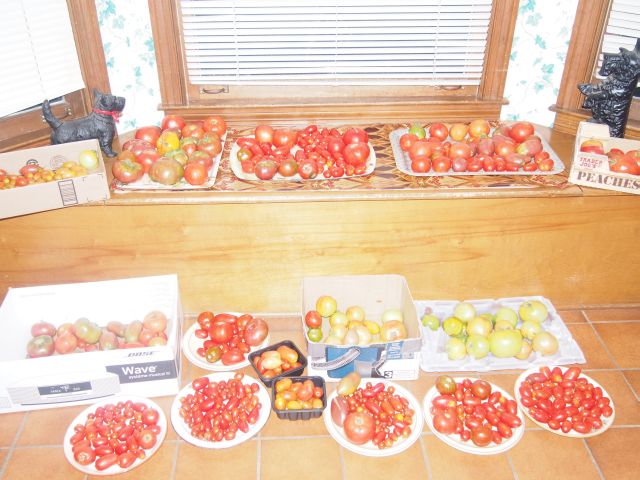
tomatoes in the kitchen to be pasted, gifted or eaten
tomatoes in the kitchen to be pasted, gifted or eaten.  we had a scotty and momentoes remain

I pick the tomatoes a little early when they show an orange or yellow tinge and allow them a couple days to ripen, therefore the green ones in the picture.  I may sacrifice some taste but this puts me ahead of the line.  Of whom you may ask?
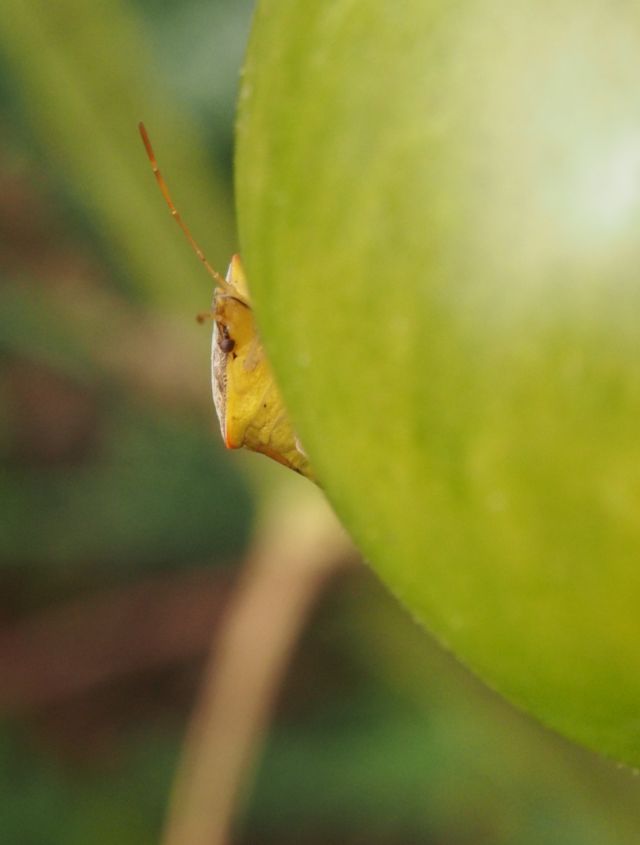
just a glimpse if you are looking hard

These are the secretive ones which, like a squirrel, quickly move to the other side of the tomato or tree.  And only by circling the other side, do you see them.
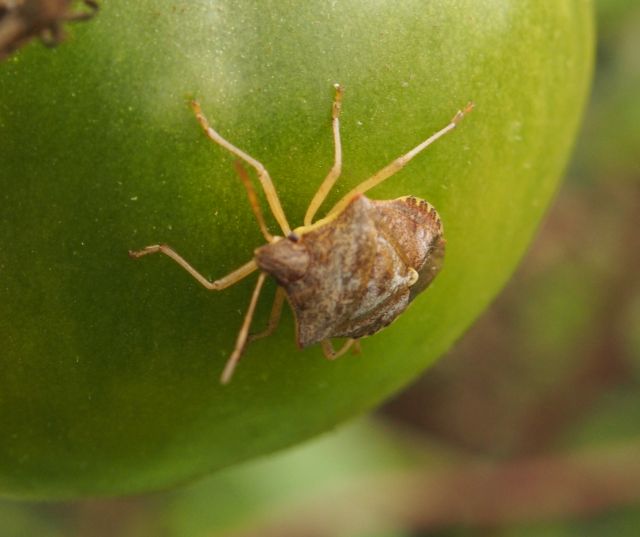
though they look frail, they do a lot of damage

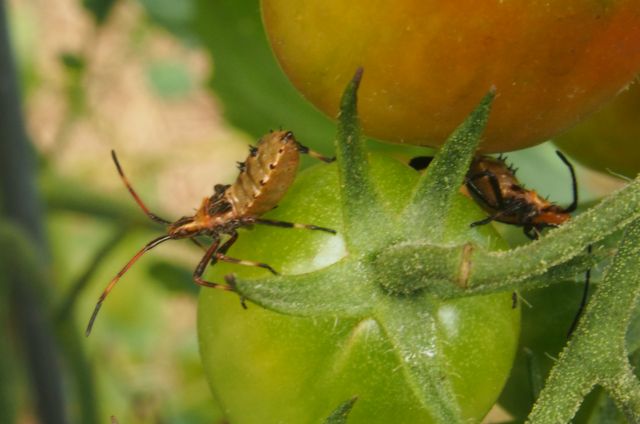
They are slow moving and have soft bodies and a quick jab with thumb or finger squishes them and squirts their fluids.  Quicker footed and less easily squashed are these guys.
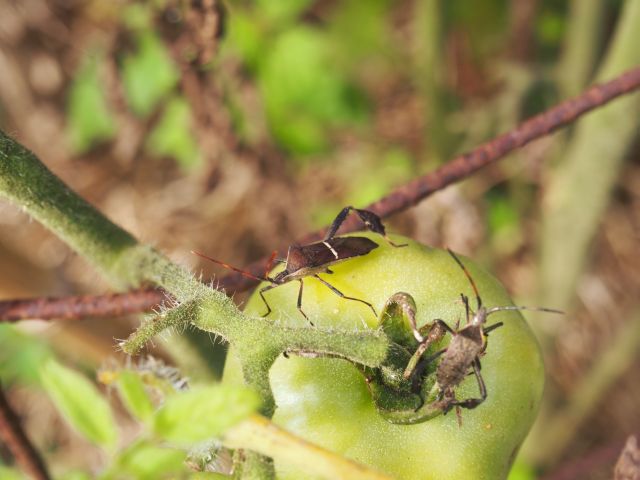
there are 2 in this pic
there are 2 in this pic, perhaps a courting couple, and it is possible to hand catch them but then you have to crush hard, a quick squeeze will not suffice

And finally the fleet footed.

the uncatchables
the uncatchables

I now try hew the permaculture way which, unlike organic growing, means no spray.  Can there be exceptions?  Probably not.  Occasionally however I do spot spray with neem, which seems effective.

So what were the growing changes.  This year I will save tomato seed so my one thought was, rather than a group gathering, I would physically separate various heirloom types so they would be pollinated from the same variety and their seed would grow true.  Distancing them also complicates the smorgasbord for the pests.  A second change was to hand water with a hose rather than my gravity fed dripper irrigation system.  Therefore I was on hand to observe and respond to activities round the tomatoes.  I also applied compost teas and comfrey teas with a watering can, which may have helped.  Some plantings were on a north south axis, some on a east west axis and 14 plants were in a keyhole design.
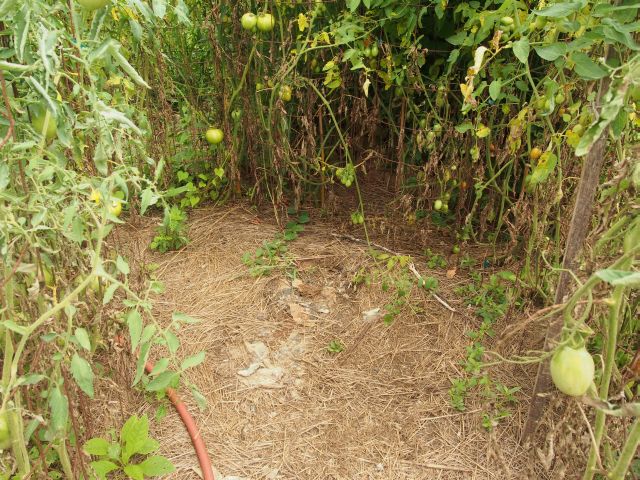
a truncated view of the keyhole planting - tomato plants in a circle with access from the south east and south west
a truncated view of the keyhole planting – tomato plants in a circle with access from the south east and south west

This design worked fairly well.  You can see my 3/4″ hose and the mulched center.  Watering and harvesting was much easier since rather than going down a line you just rotate yourself in a circle.  I was concerned there would be less sun exposure but the plants were apparently not affected – though remember this is at the top of a hill with full Georgia sun exposure.    For watering at the top of the hill I did not use gravity feed, it would have taken too long.  Rather through a combination of various valves (see separate post on totes) I used the pump at the foot of the hill to provide the pressure, so watering was not a chore and was speedy.

Which varieties worked best.  Of my heirlooms, Rutgers again performed solidly.  My other heirlooms did not.  Remember it is humid and blighty down here.  I was given Ukrainian Purple seeds and followed them with interest.  A large percentage got a black rot at the bottom, which did not affect any other varieties.
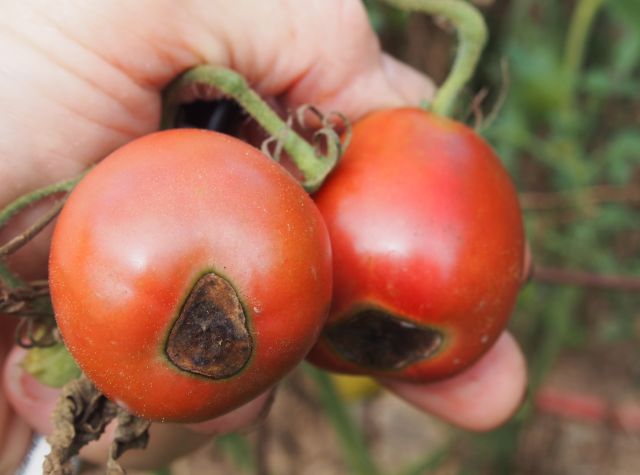
Purple Ukraine tomatoes with black rot disease.
Ukrainian Purple tomatoes with black rot disease.

Otherwise they taste fine and have a distinctive shape.
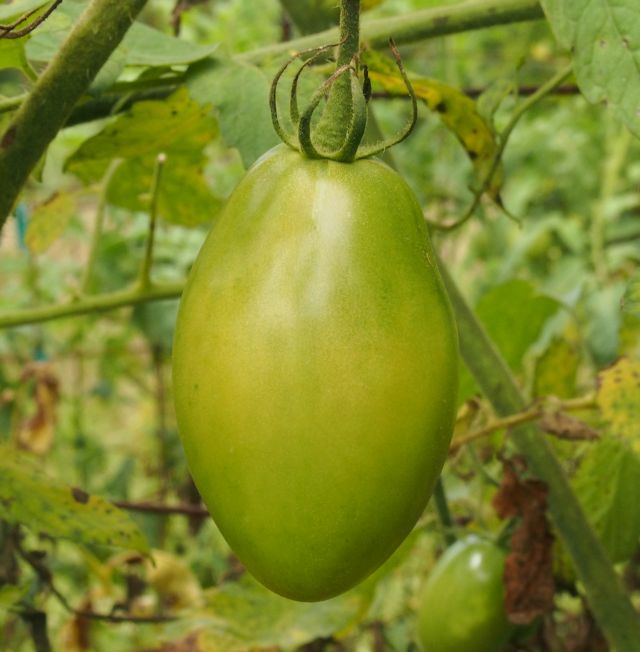
Purple Ukraine - not yet purple but it gets there in stages
Ukrainian Purple  – not yet purple but it gets there in stages

A number varieties which did well in previous years failed miserably this year including Cherokee (heirloom), yellow pear and sweet olive.  Their seed was several years old and I wonder if there is degradation with older seed.  I researched varieties recommended for the southeast and bought 3 hybrids from Johnny’s and they all did well – Juliet F1, Big Beef F1, and Mountain Fresh Plus F1.   So, as an Italian  electrical goods advert from my UK days would say – you need “an appliance of science”.B

But – when it comes to taste, then the Cherokee purple heirloom triumphed.  So the hybrids produce well but the heirlooms generally taste better and perhaps that’s why I had to share so many with discerning insect tomato lovers.
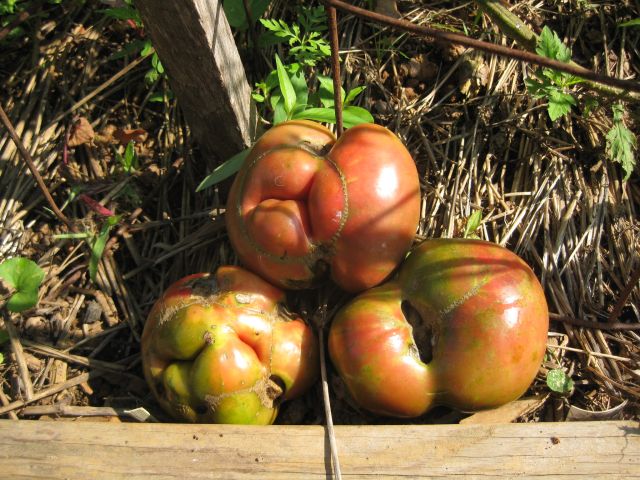
they may not look great but these Cherokee tomatoes taste great


And finally a couple of shots of my favorite insect.
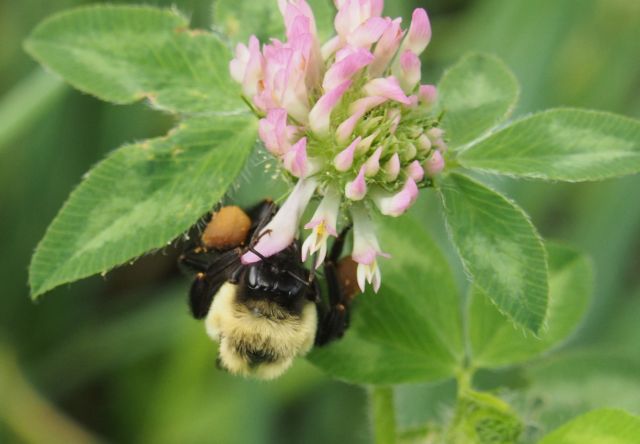
the bumblebee ever hard at work
and the sunflowers look gorgeous


permaculture pdc

I first heard of permaculture in the early 90’s when my father-in-law, who was a serious organic grower, showed me his copy of the Designer’s Manual.  I subsequently acquired a copy, began reading it and then gave up.  It was too much information for me at the time and my priority  was earning a living.  Since I acquired my property I have become much more interested.  My daily car trips provide me lots of time to listen to the many different podcast sources.  I am attracted to permaculure at several levels -Intuitively, intellectually and ethically.

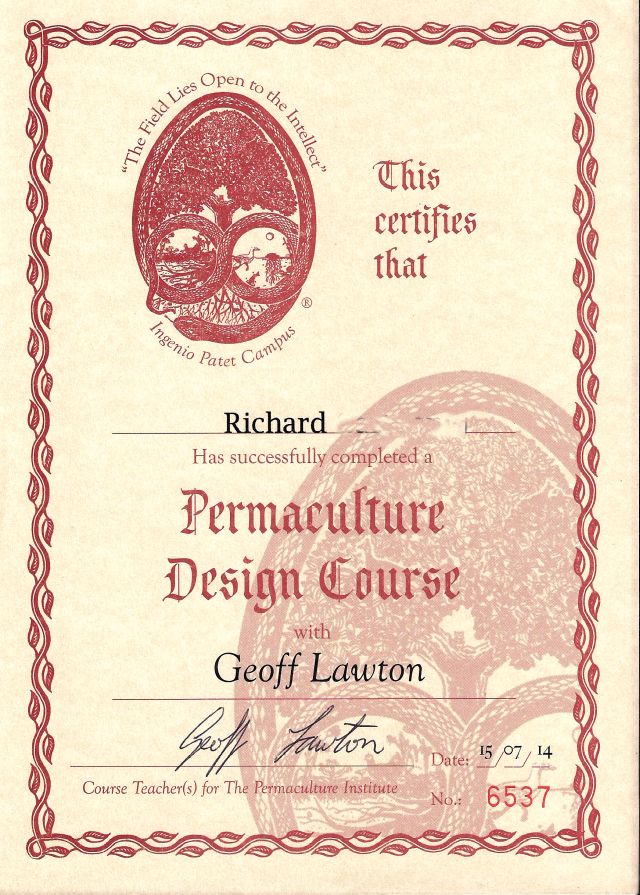
I have mentioned on this website several permaculture designs I have installed but did not dwell on them since I did not wish to hold myself out as knowledgeable on the underpinnings.  But now I may be more forthcoming since I have taken and completed Geoff Lawton’s permaculture design course (“pdc”), and yesterday I received my certificate in the mail from Australia.

my pdc certificate (last name omitted)

I thought the course was excellent.  Geoff Lawton, other than Mollison himself, is probably the best qualified practitioner to instruct on the application of permaculture across the world from the tropics to deserts to high altitude to cold regions.  His 2014 permaculture class had students from numerous, widely differing countries.  The format was weekly video lectures following the chapter sequence in the designer’s manual.  The cost, just under $1k, was steepish for an internet course and I, being accustomed to the excellent Coursera courses, hemmed and hawed before taking the plunge.  But having made the financial commitment I worked hard at the course and basically read the whole designer’s manual as I watched and absorbed the videos.

Finally we had to submit a permaculture design and, for me this also took a lot of time.  Not the writing up of the design since in my earlier life I used to issue financial/investigative reports, but in learning how to manipulate images.  Which meant learning gimp and inkscape – two very powerful and free programs.  A “veteran”  (ours was the 2nd year the course was offered, the veterans were the students who took it in the first year and volunteered to help us) provided detailed excellent tutorials on how to produce designs digitally.  I worked hard on my design and submitted it early July and was pleased to receive the certificate yesterday.

I won’t delve deeply into what permaculture is about.  However, if you look at the certificate you read “The field lies open to the intellect” and so it is not about mysticism or idealism but observing the complexity and patterns of the natural world and then developing a design whether for growing or housing or whatever, which aligns and uses natural forces.  And then there are the 3 ethics and I would say these are more pragmatic than idealistic – 1) care for the earth; 2) care for each other; 3) share the surplus, which can have several interpretations but generally means do not exploit and reinvest the surplus in the system.

Enough said, for the time being.