wanting to trust – concerns about honey

We think of honey as nutritious and pure, but it ain’t necessarily so.  Most of us want to trust others, and then we get burned and keep our guards up and become cynical.   Recently my emotions oscillated back and forth and I still don’t know where I come out.

I produced just under 5 gallons of honey last year, which should have been sufficient to carry me through the winter and spring until my next honey harvesting sessions.  But it tasted so good and so many wanted a bottle that I ran out of honey early spring and decided to buy some to carry me over.

I bought a container labelled “North American Honey” which tasted ok, not great.  (stage 1 – trust, does not contain honey from China).

One day I scrutinized the label more carefully and read the statement “May contain product of the U.S.A and Canada”.  This caution surprised me – I thought it would say “Contains product of the U.S.A or Canada”.  To me “may contain” means it may or it may not contain.  (stage 2 – cynicism).

So the question for me was what percentage if any of the honey was from North America. I visited the packager’s website (to keep my life simple I will not identify the producer) and it extolled the wonders of their honey.  I did some googling and found they had some years ago filed a petition against alleged honey dumping from China.  My hopes began to rise – these must be the good guys.  (stage 3 – neutral)

So I emailed the packager and, to my pleasant surprise, within a few days received a reply that said: “The North American Honey you purchased is 100% USA. Our labels allow us to use Canada Honey in the product, but we have not done so for a few years.”  Great news, but why not make this clearer in the label by saying “Contains product of the U.S.A or Canada”.  Anyhow, issue resolved as far as I was concerned.  (stage 4 – trust, again).

I must clarify my antipathy for honey from China – not because it is sold at a very low price which undercuts U.S. producers – that’s life (actually I have very strong views on the trade deficit and will one day get onto this topic).  No, the reason is there are health concerns about Chinese honey as detailed in the American Bee Journal (“ABJ”), June 2011 p.593.  So how can you tell from which country the honey originates?  By analyzing the pollen in the honey – so called melissopalynology.  And what would make it impossible to determine the country of origin?  If all the pollen in the honey is filtered out.  California and Florida passed laws prohibiting the removal of pollen except where this was necessary to eliminate foreign inorganic or organic matter.  Well, recent tests found that a lot of honey sold as U.S. honey has been filtered to remove all the pollen – see ABJ June 2012 p.554.   And, guess what, the packager which I have been following is named as one of the producers which has filtered out the pollen from their honey.   (stage  – heading to cynicism, again).

Now the producers have reasons for filtering out the pollen – the honey looks clearer because it has been filtered to remove particles which make it cloudy, and is less likely to crystallize, etc.  But, given all the concerns about country of origin, why not leave the pollen in the honey so everyone knows what they are buying?

Now you may say I am unduly cynical but my experience goes back to a time when my family represented in South Africa one of the best known Bordeaux wine producers, which seeped class and prestige from every pore.  Until one day when the wine inspectors made a surprise visit, found cheap wine from another country in their cellars, and instantaneously this famous house was scandalized and destroyed.   So I want to trust all the representations and soothing explanations about the origin of  some purchased honey, but am not there yet.
observation and analysis

I used to think observation was the key talent.  On trips through the Kruger game reserve in South Africa my siblings and I competed to spot the lion, cheetah, leopard or unusual game first.  On a river boat trip through north Australia we competed to be the first in the launch to spot the saltwater crocs (“salties”) lazing on the banks.  And for such contests a sharp eye was all that was needed.

But in my interactions with nature, observing the discordant object is only the first step.  Understanding why is equally important.

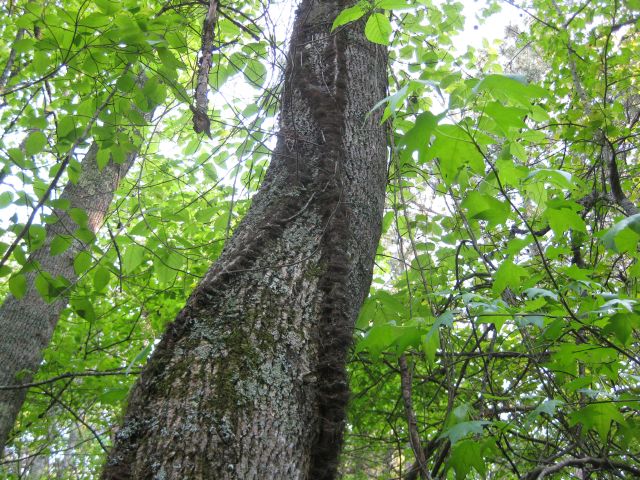
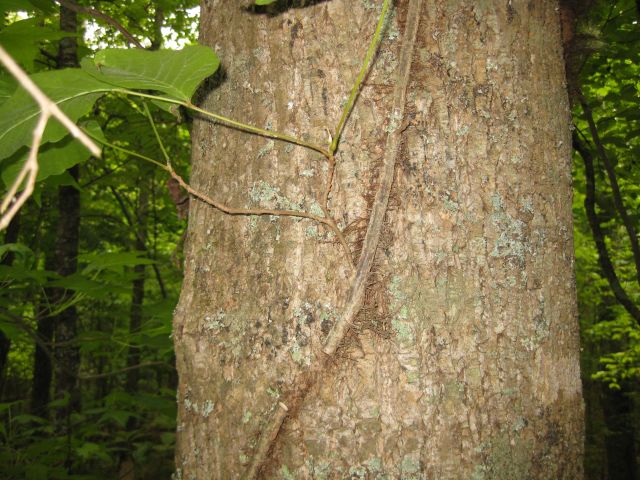
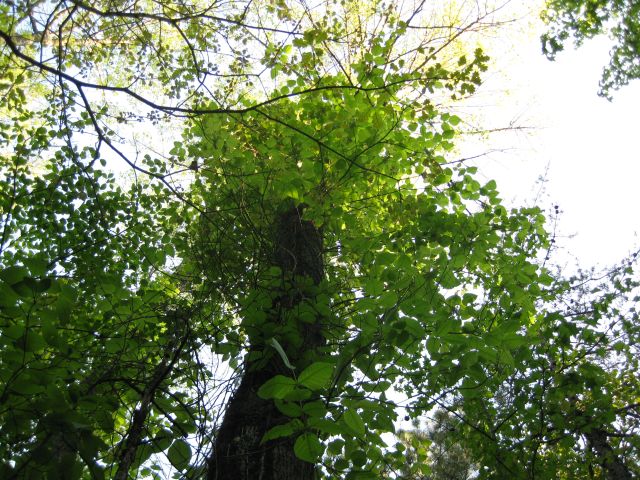
For several years my spring routine has been to spray roundup on the poison ivy alongside my walking paths in the woods.  I believe in live and let live, but my dog is an investigator which requires her to explore scents and droppings off the trail, which are often in the poison ivy patches, and she then transfers the poison to all who contact her.  So I use roundup for this purpose and this purpose alone.  There is a glade alongside the trail where poison ivy thrives, despite repeated attentions from the sprayer.  I observe the poison ivy, I drench and then later in the season spray again and the next year, there it is again, and more spraying.  This year, as I was about to spray, I received a cell call and so lingered at the spot longer than usual and then happened to notice two snake like vines heading up a tree.  Yes, they were poison ivy vines, which explains why, despite my ministrations, the poison  ivy continually resurfaced sponsored by seed from overhead.  Had I reflected on the persistence of the poison ivy I may have thought to look up and not always down.

poison ivy high in a tree
poison ivy vines climbing a tree

Of course, once you know about it, it is a simple matter to identify it elsewhere, as in this other tree, 10 ft away.

a smaller poison ivy vine

But often more is needed than just knowing what to look for.  Analyzing what you are looking at and being aware of the changing environment is a necessary skill.

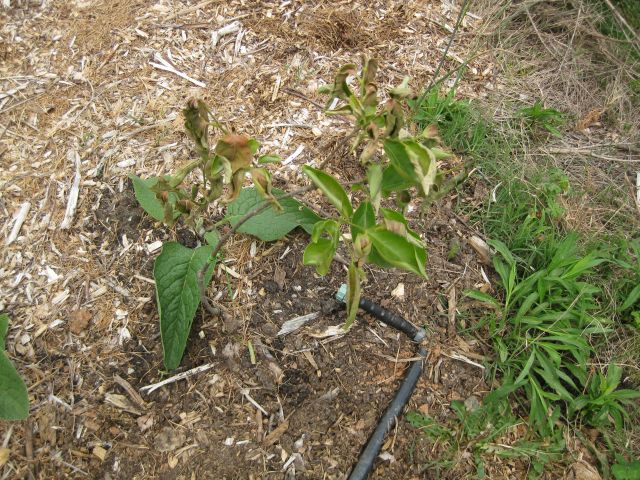
A couple weeks ago as I passed my new orchard I happened to notice that one of the small trees (tanenashi persimmon) was suffering.  Half of its leaves had turned brown.  I remembered that I hadn’t watered this area for a week and, except for the previous day which had been cold, the spring weather had been in the 80’s.  None of the other trees was afflicted but I reasoned this particular tree was probably more susceptible to lack of water, so I promptly irrigated the orchard.  I did notice I had planted Russian comfrey too close to the small tree but reasoned this could not be the cause since comfrey is not allelopathic.  Then a little later that morning, I noticed that my tomato and cucumber seedlings were also afflicted – in their case I had watered every day, except the previous day which was cold.  This seemed unusual hardship for one day’s missed watering.  My mind wandered idly over these facts – perhaps there were root nemitodes attacking the one fruit tree and the tomatoes and cucumbers – such selective treatment seemed unlikely.  Then I noticed, in a separate planting the cucumbers were doing fine and they also had not been watered the previous day because it had been cold.  So why was the one lot ok and the other lot disaster.  Then it dawned on me – the previous day had been cold, but how cold – had there been a freeze?  I happened to meet my neighbor and he said the water in his hose had frozen the previous morning.

Now it made sense – the fig tree and the tomatoes and cucumbers are cold sensitive and had been hammered by the freeze.  And the reason the other cucumber planting was ok was because it is on the crest of a hill with no obstructions below it, so the frost, like water, slid down the hill away from it, which was not the case with the other planting which was on level ground.

frost damaged tanenashi persimmon alongside comfrey

All of this conjecturing and misdiagnosing could have been avoided had I, the previous day, just glanced at my min/max outdoor thermometer, which would have told me how cold it had been and then, with this knowledge I would have understood the changes.  So I need to remove distractions and attune myself better to my surroundings.

Or pursue a more analytical approach as Bill Mollison suggests in “Permaculture – A Designers’ Manual”: first make value-free non interpretative notes about what is seen; then select some observations and prepare a list of speculations; then confirm or deny the speculations by research, asking others, and/or devising more observations to test the hypothesis; then make a final examination of all the information to hand to arrive at a conclusion; and finally decide how to use the knowledge gleaned.  A disciplined approach for me to consider.

something new every day

I learn new things every day.  If I was an attorney I would be studying up on the impact of new legislation and recently decided cases.  An accountant – the impact of new GAAP and the merging with international standards; a business executive – new moves by competitors as they strive for competitive advantage.  For me, my classroom is observing what’s going on around me.

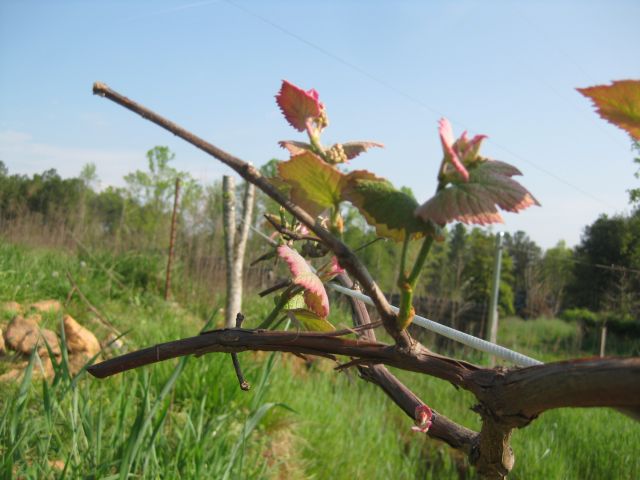
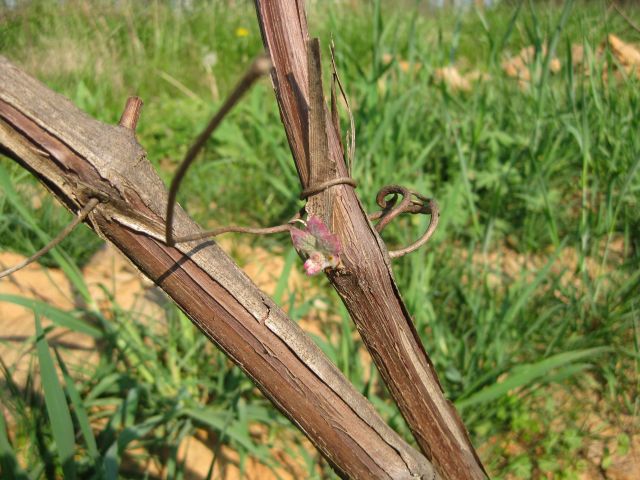
In my post of February 23 I noted that one of twelve muscadines (grape vines) I transplanted did not survive and I provided a sensible (to me) explanation for the failure.  My test for viability (the universal test) is to scrape the trunk and if there is green underneath then it is ok.  Eleven vines had green, this did not and its trunk was peeling and a piece at the end of the vine had broken off.  So it was dead, or so I thought.  This morning as I tended the vines, I noticed it was leafing.

my “dead” muscadine is alive

the trunk certainly appeared dead, but now there is a leaf

So I learn the slow way through trial and observation.

ps – it occurs to me that I planted 11 muscadine and one grape vine and the specimen above is the grape vine, which is why it looked so different/dilapidated compared with the others.  It still failed my scrape test – perhaps I didn’t scrape deep enough or this is a characteristic of grape vines?

I have a constant companion for the ride to the farm and throughout the day – Trudy.  She is a Heinz 57 who awaited us at the dog shelter after trying out and, presumably, rejecting two other families.  A real cutie.  At times I think of the dismissive comment of the Nearings in “Living the Good Life” (1954 page 28, one of my favorite books):”Cats and dogs live dependent subservient lives under the table tops of humans.  Domestic pets kill and drive away wild creatures, whose independent, self-respecting lives seem far more admirable than those of docile, dish-fed retainers.”

Can this be my Trudy they are referring to?  When we return to the house after working the fields she waits patiently for her snack.  I usually hold it in my hand and she gently takes it from me.  Once, being in a rush I dropped it on the floor for her to eat.  She was not happy and ignored it.  On another occasion she waited a bit and then ate it.  And then it occurred to me, my second learning of the day.  When she takes the food from my hand this is not an act of subservience but acceptance of reward for work performed, which in her case involves diligent searching for rabbits and rats and keeping an eye on me at all times.  I think she views it as a fair exchange for services provided.  I could go on about her and I will, together with pictures, at a future date.

to thine own self be true

I was forking the compost into a new bed (better to use a fork than shovel to save the earth worms) and my mind as usual was galloping along revisiting past scenarios, themes and friends. And the phrase from Hamlet “to thine own self be true” hovered into view.

Of all the bandied guidelines such as “a good name is better than great riches” or “love your neighbor as yourself” being true to our own self is for me the most difficult. And the difficult part is figuring out my own self.

I worked for major professional firms in London and New York in pressured environments where the mantra often was “you eat what you kill”. The body is immensely adaptable. And yes, physically, you can de-stress  – for me running was the quickest, cheapest and healthiest de-stressor. But you lose something along the way and the loss occurs when you have conflicts. You have to pitch for an engagement/complete a critical project on a child’s birthday, or concert event, or family sporting event. I think the stress arises because you cannot control the options -two are in conflict and, absent deft footwork, a compromise or sacrifice must occur. For some there can be other conflicts too, where what they believe is right may not be right for the situation. And rationalization comes to the rescue – I must do this because my first responsibility is to put bread on the table for my family and if I do not then our source of income is at risk. And so it goes on and so we become more desensitized.

Along the way our value set also changes – worth and success are measured by income, and status is measured by possessions. These are easy yardsticks and do not require careful analysis. Also, self defeating, because enough is never enough and the bar for income and new goodies is continuously raised.

And with desensitization we lose touch with whom we once were – sensitive, optimistic, believing. So as I work with nature I am re-tuning myself to the draw of life, its cycles, infinite complexities and complete lack of pretense. And perhaps along the way I shall rediscover my own self.

wood and veneers

When I buy furniture, and right now I am accumulating desks in the basement for work stations, I only buy real wood.  Most furniture is particle board (or chipboard) covered with a wood veneer or melamine based overlays.  Veneer furniture is  cheaper to make than real wood furniture and the veneer looks more impressive (at least to the untutored eye).  But it is not as resilient – it appears sturdy but when relocated it is prone to chipping and, once the veneer is chipped, you see the particles underneath.  A sudden transition from a sleek sophisticated appearance to something vulnerable and quite ordinary.  It is very difficult to repair.  It also does not tolerate reworking – I can sand down the scars and dents in real wood and then stain and varnish it and it assumes a new persona, not so the wood veneers.

Different from the veneers are the plywoods  – a tough resilient breed made from thin sheets of veneer glued with their grain at right angles for greater strength.  Plywood has several advantages over wood – resists warping, greater strength, and often less expensive.  Takes stress well and keeps going, but is fabricated and does not have the depth and integrity of real wood.  I prefer authencity and so I choose the oak or even the pine furniture when I visit the thrift store.

Which makes me think of our approaches to living.  My NuTrac journey certainly is not  glossy but, I hope, will be resilient to the knocks of life.


responsibility to animals

I had a good time at the Georgia Organics annual conference – its 15th and my 7th.  The Friday workshops and farm visit and the Saturday educational sessions were excellent and the two keynote speakers have national repute and lived up to expectations.  At my breakfast table on Friday morning was an organic livestock farmer.  I asked him a question which was triggered by the assistance I am providing to two ailing chickens:  “What do you do when one of your animals get sick?”  His answer was simple and to the point:  “If they get sick it means they do not fit in my system and I eliminate them.”

Later that day during the farm visit the same topic came up when the farmer was asked how often he deworms his sheep.  He deworms them all at the beginning of the season and then if one sheep needs deworming he will deworm it a second time and if it is still wormy (if that is the word) he eliminates it – “three strikes and you’re out” he said.  I am interested in dairy goats so I attended a session on keeping goats.  The presenter was from the west coast (interestingly several presenters had moved from the west coast to Georgia or Alabama) and her stance was different.  She stressed the importance of good management practices and prevention but, if a sheep or goat gets ill and is non responsive to organic treatments, she will use conventional medicine.  She felt she has a responsibility to the animal and cannot let it suffer.  The final viewpoint was expressed by a DVM (doctor of veterinary medicine) who said he would cull the animal to avoid the problem spreading and because its genetics were wrong.  His only exception was if the animal was a pet and then he would do whatever to save it.  So four commercial practitioners came to a three to one vote.

Some decisions are not simple.  If you hew to the organic road then conventional treatments should have no place.  I also understand the “genetics” argument – it is no surprise in humid summers that the tomatoes with inbred resistance to the various blights do far better than the regular tomatoes.  So to travel the organic path you must select robust partners.  I would probably have done much better with hybrid chickens than some of the gorgeous looking birds we bought, a few of which are struggling, which also makes me wonder if perhaps there was some inbreeding down the road.   One chicken has a persistent sour crop, which means the food she eats is not being processed properly by her body.  I watch her closely – she is the only one who won’t eat the occasional greens or yogurt which I provide, which would have helped avoid her condition.   After a couple visits to the vet I am now medicating her with nystatin (using a feeding tube down her throat to administer the medicine) and she may (believe it or not) have to wear a bra to help her crop regain its regular shape.  This is going to extremes, I agree, but I am also interested in how it all works – what causes things to go wrong and how you can fix them.

If you have to make a living from organic farming then culling the inferior specimens seems the way to go.  But then it gets back to why you are doing this anyhow – if it is to experience all the manifestations of life it is hard to let one depart when you could (presumably) have saved it, or at least made the attempt.


propagation

Winter is a good time to turn my thoughts to propagating plants.  Although I live in the south (Georgia) some days are really miserably cold, windy and rainy.  What better time to learn up on new propagation techniques.

Oaks

Oaks do not transplant easily.  Even young oaks seem to have interminably long tap roots.  And it is difficult to tell a small sapling young oak from a 5 or 10 year old sapling old oak since oaks are content to bide their time in the shade of larger trees until the umbrella is pierced and growth giving light encourages them to get going.  I walked the woodland yesterday looking for acorns and found none though there are many >20 year old white and red oaks.  At first I thought they may not be producing acorns since they are hemmed in on all sides by pines and tulip poplars.  But then I remembered all the oak saplings surrounding these trees and concluded that squirrel or deer had been feasting on the mast (as it is called).  Too late to the party.  However, in Sandy Springs, Atlanta near our suburban home there is a huge oak tree which has littered the sidewalk with thousands of acorns.  I collected 100 this morning and seeded them 25 rows, 4 each, 1″ depth, in a new long raised bed I have built.  I shall water, keep an eye on them and, with some luck in early summer there may be signs of life.

Fruit tree cuttings

I mentioned in an earlier blog that I am new to cuttings and a reader gently nudged me to a better understanding of the mechanics, for which I am thankful.  You have to establish first if you are dealing with hardwood or softwood cuttings.  Hardwood is not necessarily harder than softwood and an example frequently quoted is balsa wood, which is a very light wood but is classified as a hardwood.  The distinction is based on the seed and the seed of hardwoods has a covering, such as fruit or the hard shell of an acorn.  For hardwood cuttings you take the samples in fall or early winter.

My neighbor agreed that I could take cuttings from her many fruit trees, so this morning, with my alcohol sterilized secateurs, I took snips from a number of her trees which include mulberry, cherry, pear and apple.  From these snips I prepared >20 cuttings and rather than using a heated tray and remembering to water and bothering the cuttings with weekly inspections to see if the roots had arrived, I simply prepared a V trench in my outdoor raised bed (which has frost cover protection) and planted them and watered them.  And I will look for buds in the spring.

I know that apple trees should be grafted on appropriate stock but what I want to achieve, rather than a formal orchard, which I already have, is an informal association of fruit trees interspersed with edible or useful perennials.  Since the cuttings are from trees which have thrived in this area, they should be able to take good care of themselves.

Seed germination

My real pursuit has been learning more about seed germination.  Through the comments of MikeH on this website I learned of “Seed Germination Theory and Practice” second edition by Professor Norman Deno (“Deno”) published in 1993 and available for free download. For anyone interested in this topic, this book is great.

Previously I didn’t understand why, although most seed germinated in warm moist conditions, other seed needed cold to germinate and some seed seemed completely indifferent to my efforts.

Deno germinated nearly 2,500 species and the processes he used were relatively simple – he did not use pots and growing media, instead paper towels and polyethylene sandwich bags (thin bags not sealed too tightly so as to maintain aerobic conditions). For some species he used gibberillic acid. He conducted his germination tests at just two temperatures 40 or 70 deg F. Based on the results of his research he developed a number of principles such as all species have mechanisms to delay germination until the seed has been dispersed.  There can be multiple mechanisms such as required sequences of hot and cold temperatures, or cold and hot temperatures, or oscillating temperatures as well as a time clock and/or the need for light or dark etc.

I find interesting why species have particular delay mechanisms and it seems the mechanisms are about ensuring survival of the species. If seed dropped in summer were to germinate in summer, the tender offspring would be killed by winter, hence a programmed requirement that there must be cold (i.e. winter) before the seed can germinate. Apparently for plants growing in swamps or woodland, where having enough light is a bigger problem than having sufficient water, the seeds require light to germinate. Apparently for plants in cold desert areas where moisture is only available in the spring, the seed will germinate at low temperatures in order to be sufficiently developed to benefit from the spring rains. Some species produce quantities of seed coats which are empty and Deno speculates that this is also a survival mechanism – predators which exert themselves to open the seed coats and then find nothing there will lose interest in that particular seed. Some seed require cold then warmth then cold i.e. two winters. The survival mechanism here could be that if all the seed germinated the following year and conditions were bad – drought, fire etc, then the entire species could be destroyed. So requiring two winters appears to double the chances that the species will survive. Fascinating!

I now understand why if you cut a flower before it has seeded, taking care to leave buds on the stalk, the plant will flower again, and if cut, again.  A survival mechanism requires the plant to keep trying to flower so that it will be pollinated and produce seed.  Once it has produced seed it has achieved its mission.  Not to say plants are indifferent to human desires.  Another survival mechanism could be to look beautiful to humans (in addition to the pollinating insects) so that humans will favor them and propagate them.

succession

“Succession” has been in the news, more so in England than the United States, when last week (October 28) the rules for succession to the British throne were amended to ensure that the first born of any future monarch, whether male or female will inherit the crown. However, though related, this is not the succession I have in mind when I look at my yard, which previously was regularly scalped by a lawn mower, now transforming itself into an impenetrable mass of “weeds”.

When we selected a house in the suburbs of Atlanta I wisely ensured there were no neighborhood covenants requiring all houses conform to a manicured appearance. I guess my priorities are different from most homeowners who stress curbside appearance by which is meant that the house should look good to passersby. For me this entails a loss of privacy – I would rather my dwelling be obscured to passing traffic. So I displaced the rolling lawn between the house and the street with many tree plantings. There still is some lawn and, yes I do mow it, especially when the weeds are about to seed since it would be unfair for my neighbors’ yards to become infested with my “weeds”. These changes did not pass without comment from the subdivision and I became aware of the common sentiment when a visiting teenager said she loved the wildflowers and I should not be influenced by what everyone was saying about my yard (up till that time I didn’t know that anyone was saying anything). I heard more directly when, at a neighborly New Year’s party, after some quaffing of the spirits, and when everyone was encouraged to make a new year wish, someone said they hoped Disney would use our yard as their site for the next Tarzan movie – the guffaws, in which I participated, showed that most everyone knew about our yard.

Succession doesn’t really work in a suburban setting because at some point the local authorities will become involved as complaints escalate. But it is great for my rural property. Basically, succession means stepping back and doing nothing and letting nature take over the yard. The grasses which used to be mowed are taken over by more aggressive annuals (pioneer plants) which thrive in an untended natural setting. In time the annuals will be shaded out and displaced by larger perennials, which in turn, some years later, will be displaced by natural seeded trees (in my case pine trees and tulip poplars). Succession is a natural process and maintaining an immaculate lawn is an unnatural process i.e. we are going against nature, which is why so much effort and dollars are expended on herbicides (pre-emergent, post-emergent), pesticides, fertilizer, mowing, spiking, irrigating and leaf clearing operations – we are trying to hold the lawn at an early stage of development while nature is trying to progress matters (my neighbors will quibble with the word “progress”).

So I am allowing succession to occur on my rural property in the areas where I am not growing food. Actually, in some cases I am doing accelerated succession, which means that in addition to allowing the pines and poplars, maples et al. to seed and grow, I visit the woods and extricate white and red oak seedlings and plant them amidst the growing host. Oaks are very difficult to transplant – they send down long tap roots and success is only possible if you select a seedling which means some trial and error since what may appear to be a small oak seedling could be a specimen which has been waiting in the understory for 5 or more years and has a 4 ft taproot. However success is possible.

Perhaps my succession is not that different from the new rules for the British monarchy – whoever arrives first rules (for the time being).

succession
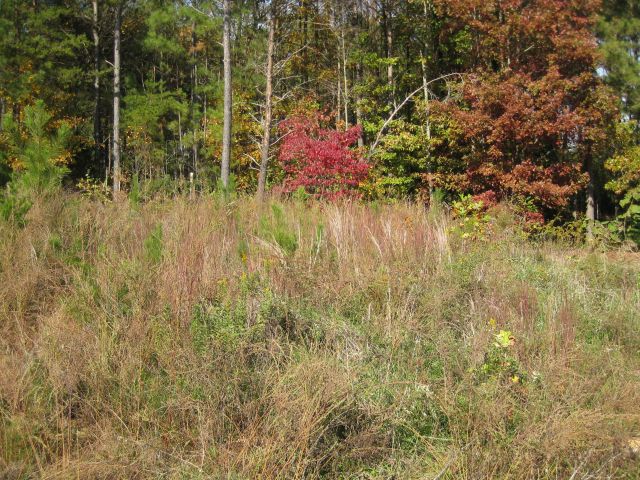
previously mowed area - you can spot pine, tulip poplar and a transplanted oak
succession
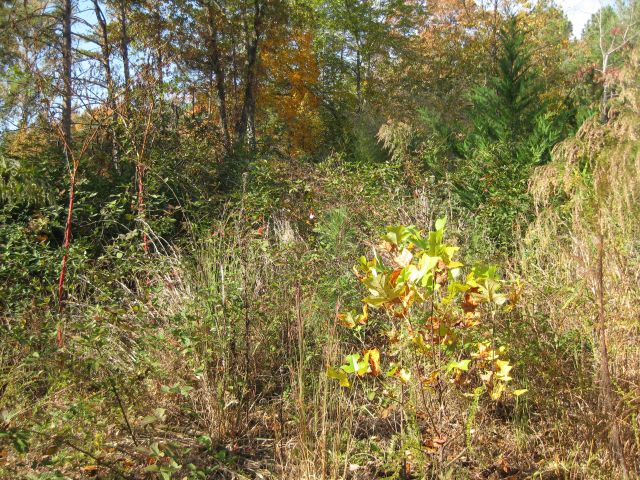
previously mowed area, now pine, tulip poplar, and perennials including pokeberry
succession
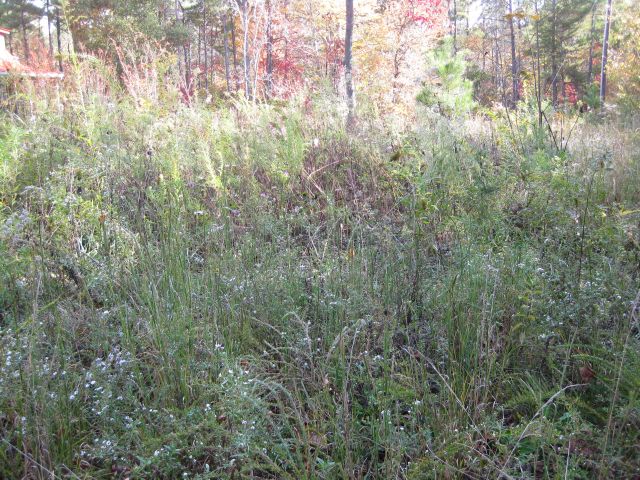
this looks a mess, but within various saplings are growing and will one day take over

the weak and the strong

I walk through the woods after a storm. A number of trees have fallen. They are smaller than the trees which remain standing – smaller in girth and smaller in height, though of the same type. The woods were harvested about 30 years ago so most of these trees began growing at the same time. The trees which grew faster won more sunlight which enabled them to grow even faster.

The trees which fall down after strong winds couldn’t compete with the stronger trees. Even among the stronger trees there are some which will outgrow the others and get more sunlight and survive until eventually, instead of a thicket of trees there will just be a few large specimens. I suppose I could alter this natural progression. I could select a weaker tree and nurture it with water and nutrients and cut down the surrounding trees and it will respond by growing bigger and stronger.


After walking through the woods I walk through the apple orchard. I come across an apple tree which was weak at the time of purchase and when planted grew crooked. So at the time of planting I staked it upright. I decide that now that it is larger it probably does not need the stake and will probably grow better if the binding which ties it to the stake is removed. I remove the stake. The next day it is windy and when I revisit the orchard the tree is no longer upright. Today I shall stake it again. I wonder if it would have been better off never to have been staked – it would have developed its own strength to resist the winds and would have grown, albeit slightly crooked but independently.