Since my post last August I read some good books, at least by my tastes.
China interests me and I read Soul Mountain (a slow read in between other books) by Gao Xingjian, 1st Chinese recipient of Nobel Prize in literature; and the Wild Swans by Jung Chang, a good successor to her book on Mao: The Unknown Story. When I travel to Australia I look for books which have not yet surfaced in the United States and I enjoyed Easternisation by Rachman – succinct and gripping. As is the Hundred-Year Marathon by Pillsbury. I completed the Cixin Liu science fiction trilogy – The Dark Forest and Death’s End, very imaginative and mind twisting. And a fascinating book on the challenges of manufacturing in China is The Hardware Hacker: Adventures in Making and Breaking Hardware by Andrew “bunnie” Huang published in March 2017.
From the U.K. I enjoyed Surviving the Future by David Fleming edited by Chamberlain. A good analysis though I do not agree with all of it.
And then I read mass fiction which I enjoy for the sugar high and for a bit of escapism. And I am now reading Hero of the Empire about Winston Churchill by Millard, which brings back memories of the country where I lived for 28 years.
I have taken several MOOCs (internet courses) given by University of Illinois on 3D printing and the most recent was on 3D printing software. The software, which was free to students, was provided by Autodesk and included Sketchbook (for sketching), Tinkercad (an easy to use CAD design tool) and Fusion 360 (sophisticated computer design, modeling, etc. software).
Tinkercad and Fusion 360 convert ideas into 3D models. Scanning creates a 3D model from a physical object such as if you wished to make a replacement part or copy an artifact in a museum or a miniature bust of friends. Once you have the 3D model you create a physical replica by printing it with a 3D printer. The scan can be made with sophisticated structured light scanners or by photogrammetry using photographs taken with a regular camera. I will outline how I proceeded with my iPhone, but to do it yourself you should take the course, which is free, or $79 if you wish to participate in the assignments and earn a certificate, which is what I did.
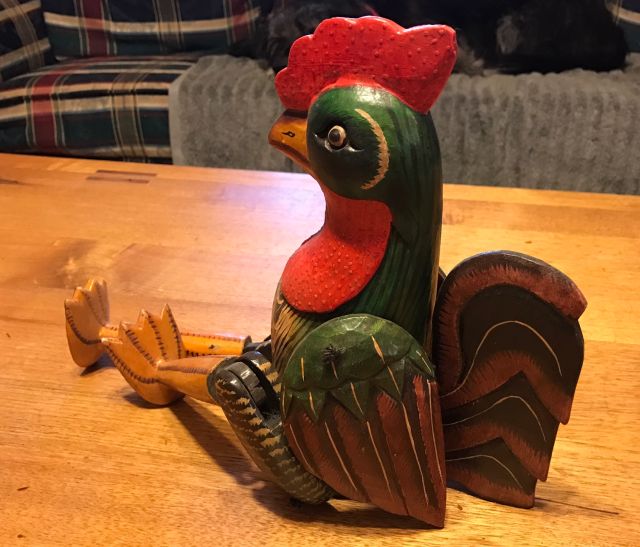
The picture at the top of the post shows the rooster model which I scanned to produce a 3D print. If you follow this link –
you will see the 3D model I produced. You can rotate and look at from all directions.
I took 44 pictures of the rooster with my iphone from all angles except from underneath. Important not to move the rooster or change the lighting or lens zoom, so that the software which stitches all the pics together can use the constant background to figure from where the pics were taken. Since I could not take pics from below, the bottom of the model appears unfinished.
I uploaded the pics to Agisoft Photoscan Pro, which is available free for 30 day trial. There are several steps – align the photos, build a sparse point cloud, delete extraneous background, build a dense point cloud, delete extraneous material, build a mesh and build texture. I then exported to NetFabb for more procedures and then exported to Sketchfab where I published it, which means it can be seen by anyone with the internet link.
The MOOC was fun (relatively easy assignments) and interesting and I will use the techniques for my own 3D printer.
I just completed the 4th and final semester of BJC MOOC via edX hosted by Berkeley, San Francisco. What a great course! And I learned so much about basic programming, computer science and technology trends. All for free if you wish, though I contributed some. For teaching purposes it uses blocks which you re-arrange called Snap! which is based on Scratch developed by MIT. A fun exercise was the Tower of Hanoi puzzle.
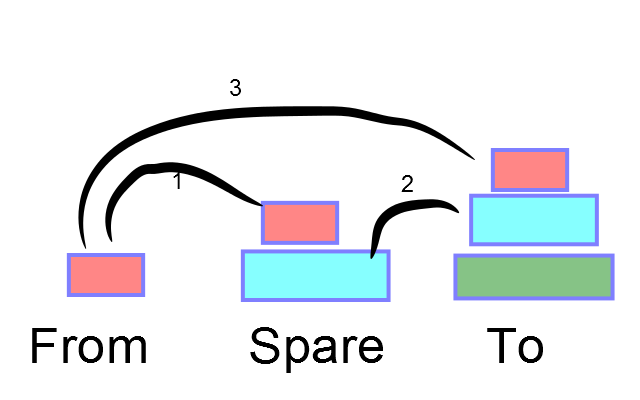
The rules are simple. There are 3 pegs labelled left to right “From”, “Spare” and “To”. The puzzle begins with various sized disks, smallest on top, stacked on the leftmost “From” peg. The object is to move the disks over to the rightmost “To” peg subject to 3 rules: 1) only move 1 disk at a time; 2) take the top disk from one peg and place it on top of another peg; 3) you can never place a bigger disk on a smaller disk.
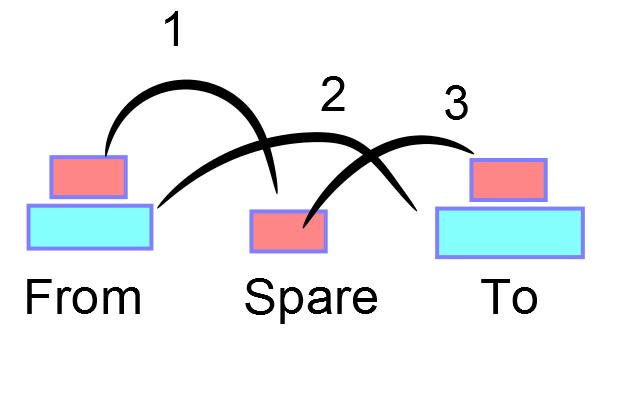
So if there are just 2 disks on the “From” peg, the solution is simple – just move top disk to “Spare” peg, next disk to “To” peg and then disk on “Spare” peg to “To” peg.
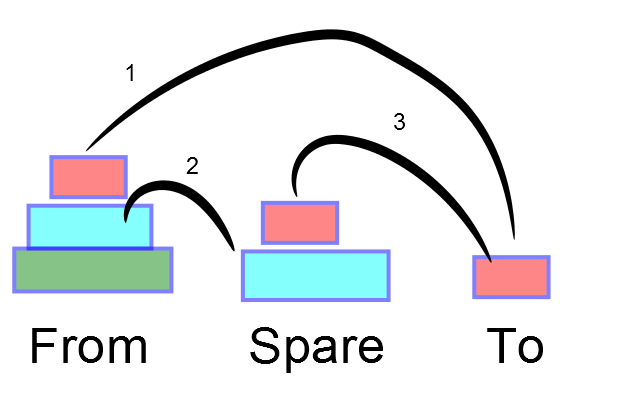
With 3 disks it is a bit more complicated. First:
Then with red and blue at “Spare”, green is moved to “To”. The final step is:
I cut wood rectangles of descending sizes and practiced the puzzle beginning with a few pieces and progressing to 5 pieces. When I found the recurring sequences I used a technique called recursion to implement the sequences. Berkeley provided the backdrop and software to move the disks, all I had to do was figure which disks to move when and where. My program is not fully automated (a remaining challenge) but it works and here is a video showing the solution to a 5 block puzzle.
So what has this to do with growing and sustainable living? During the very cold and very hot months when outside work is unpleasant or unfruitful and you have time to spare, a MOOC on basic electronics or programming should be a good investment. Once you understand a bit about electronics and software you will feel confident to install and program your own security system; install strategically placed cameras connected to a DVR to which you set up remote access via a smart phone; and with the expanding world of IoT (internet of things) you can also install perimeter sensors to provide early intruder warning, or an automated chicken coop door opener. And you can diagnose and repair things which you might otherwise have tossed. And becoming self reliant makes you feel good.
I didn’t post this site at all in May. Not because I had stopped my growing activities or lost interest but because I was completing 2 demanding courses on electronics and programming and am in the middle of a new course on Python programming.
College education of your choosing at your convenience with the world’s best colleges for free! If you are interested and can make time available, this is a bonanza.
My education in South Africa and England was in law, accounting, business and the humanities. So, since life is a one time experience and I have interest and time, I am taking and completing courses – lots of them. My >10 courses with Coursera include: Sustainability; Animal Behavior; What a Plant Knows; How Things Work; Introductory Biology; Science from Superheroes to Global Warming; Pre-Calculus; Calculus One; A Brief History of Humankind; Introduction to Electronics; and Linear Circuits. Two courses I have completed with edX are Electronic Interfaces; and Embedded Systems- Shape the World. I am currently taking a course on Interactive Programming with Python.
So my interest is focusing on technology – both the hardware (electronics) and the software. Technology is such a major factor in our lives we cannot ignore it. Even in farming, smart conventional farmers are using technology to monitor field growing conditions and apply with precision just the right amount of water, fertilizer and ‘cide treatments. We have to conserve water and minimize toxic runoffs and technology can do this for us.
My studies of electronics help me with diagnosing and understanding the repairs I make, which I have described on this site, and thereby achieve more self-reliance, minimize inconvenience and save money. My first practical software project will be an automatic chicken coop door which will open the door in the morning, count the chickens entering and exiting throughout the day and close the door in the evening when they are all berthed. My current device, which runs on a time switch (details posted on this site), just opens the door each morning. Then I will develop enhanced security measures beyond my current setup, where I interact with cameras and security system on the internet. Finally, when solar panels are more efficient, transition to solar power and grid independence.
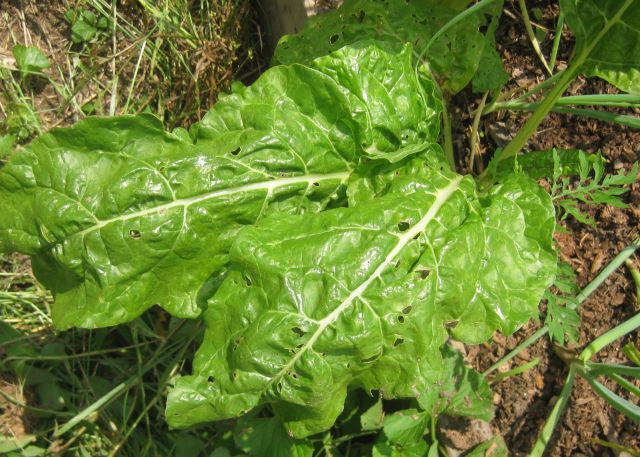
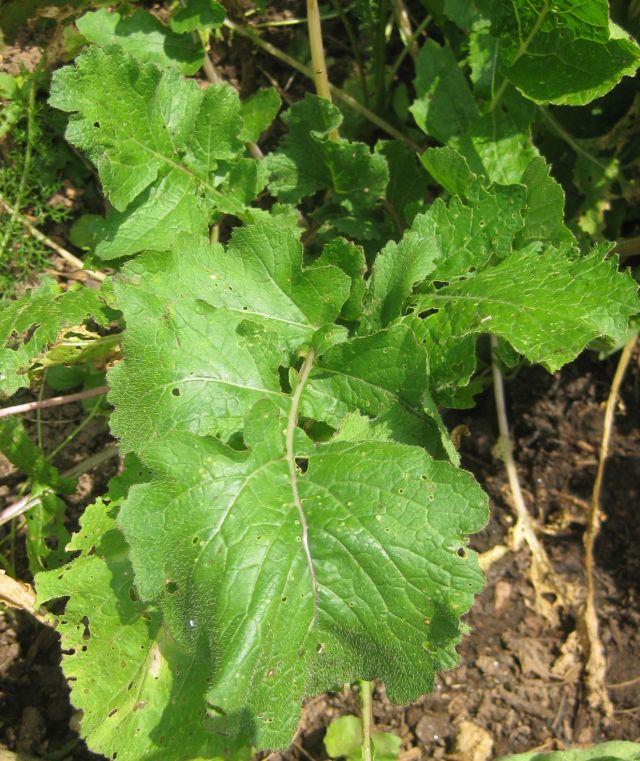
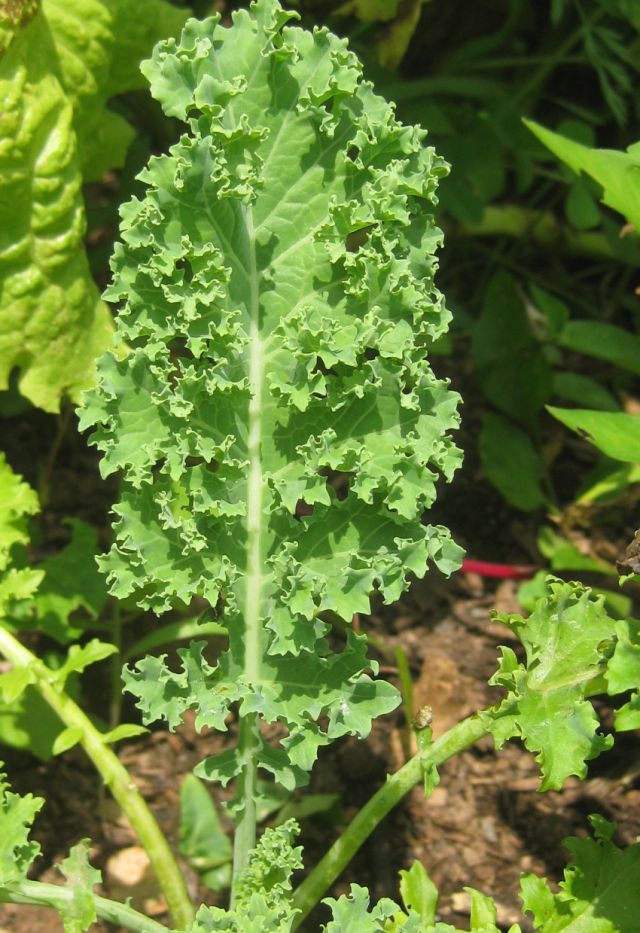
It’s been a good April and May – frequent rain showers to minimize hose watering and keep my +6,000 gal storage tanks fully topped. Lettuce, onions and garlic have grown well though the lettuce is now bolting. My lettuce, kale, chard and turnip greens taste real, they have a flavor missing from store bought greens, a lot of which are raised in greenhouses or insect free conditions. Now I am wondering if there is some advantage to eating kale, chard and turnip greens on which insects previously snacked. No aesthetic advantage to be sure but perhaps a nutritional advantage?
chard tends to grow well throughout the year, tho subject to insect predations
In the excellent Coursera course “What a plant Knows (and other things you didn’t know about plants)” given by D Chamowitz of Tel Aviv University, which I took in 2013, examples are given of how plants communicate with each other when they are attacked by insects and how the recipients of the warning produce increased levels of chemicals including toxic phenolic and tannic compounds to deter predators. See also his very readable book – “What a Plant Knows”. The focus was on how the signalling occurs including apparently smell (who knew plants could smell?). Of interest to me is whether the chemically enhanced plants are better for eating.
turnip greens are loaded with taste and when sliced and cooked no evidence of prior munchers remains
In “Eating on the Wild Side” the author Jo Robinson suggests (p. 30) that tearing up the lettuce before storing it increases its antioxidant value because the plant produces chemicals just as if it was being eaten by an insect or animal.
my kale leaves are small, my bad I bought the dwarf variety, but it is my favorite and mostly insect resistant
Which gets me back to my insect chewed vegetables – perhaps the reason they taste better is not only because they are freshly picked but also because they have endured and responded to chewing insects?
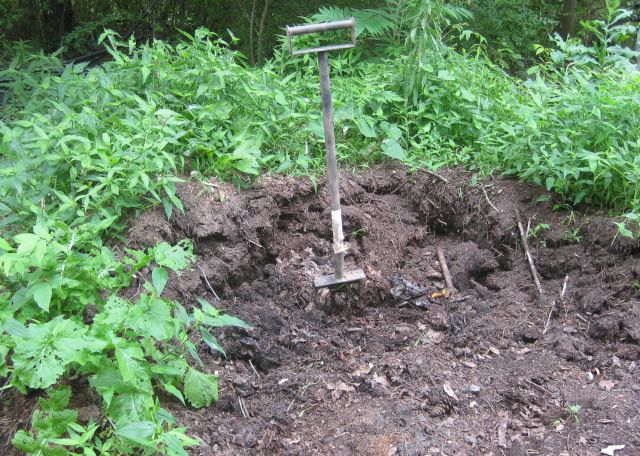
my compost is the growth driver, not for me store purchased supplements. plus a handy strong fork
In the past 2 weeks I have removed lettuce which was bolting, seeded okra (a Southern treat which I eat raw from the plant), more onion bulbs (there can never be enough onions), and the three sisters – actually there are 4 – corn, squash, beans and peas (yes the local seed store said I could now plant peas). The apple trees are laden and my Giant Korean pear (prized above all other producers) has more pears than ever. My two hives look healthy though I am concerned about varroa mites. I haven’t checked and won’t use chemicals but varroa concern is large nationally and amongst local beekeepers. I planted about 50 tomato plants (mostly heirloom varieties though some hybrid) and if these do well, I will take them to market. Potato plants look healthy and include a few sweet potato, which vines I saved last year.
I still have all 11 chicken (1 rooster and 10 hens) and they look fine apart from some broody ones, which are isolated for a few days to recover, some mites, which I treat with diatomaceous earth, and some rats raiding the coop for food. Muscadines, blueberry, blackberry and raspberry all doing fine. Asparagus produced and is now mainly out of season. My one regret is I discontinued the strawberries which were so sweet in the past, something to consider for next year.
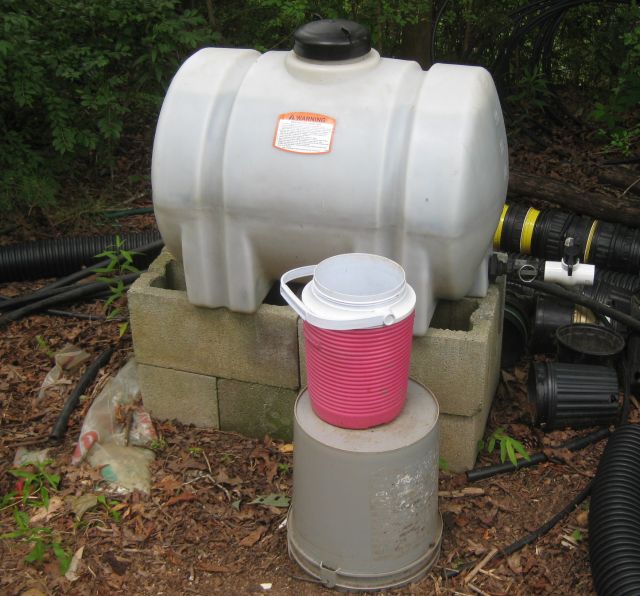
with so much comfrey around I decided to again produce a tea in this 30 gal container with a small capture unit for liquid human contributions
My last post was November 25. As we moved into winter my growing activities were largely shelved.
In November/December I cleared and weeded some beds and planted out, closely spaced, several 100 garlic cloves. They are all descended from 3 varieties of garlic I purchased from California 4 years ago. After harvesting last year I strung them together and hung them from joists in the carport. Fewer rotted compared with previous years where I had stored them in laundry bags hung in the basement. So this is the way for me to go in the future.
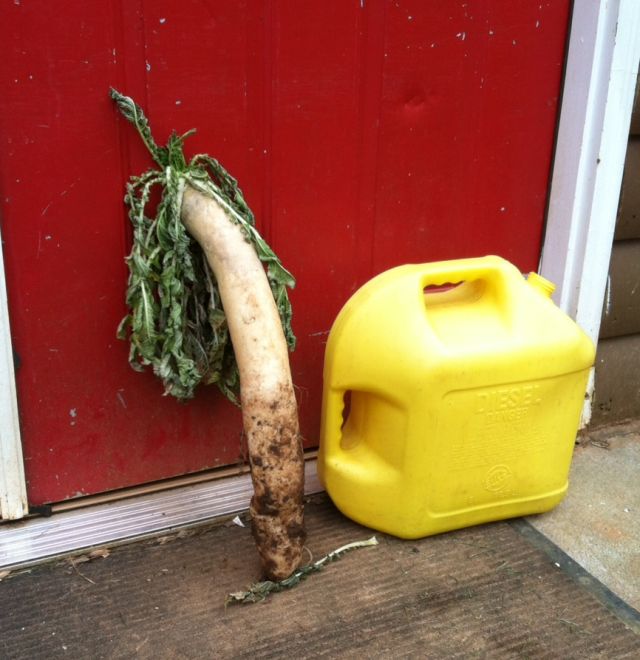
Although I was not actively growing, there was always something to harvest. Initially the radishes did well but as cold weather and rains set in, most became soft and lost their taste. The daikon radish also held up well and then deteriorated with the cold weather (below 15 degrees F). When my family visited over Thanksgiving, I dug up this specimen to show off.
a daikon radish next to a 5 gal container
While we enjoyed eating the small daikon radish we found the big guy above indigestible. What we should have done is pickled or fermented it, but it was Thanksgiving and it went to compost. This year I would like to do fermenting and will be planting out more cabbage for sauer kraut, and more daikon.
Apart from some large carrots I unearthed, the main winter crop was purple top turnips which survived the weather well. Plus, in the leafy greens area, turnip greens, mustard, kale and collard. I planted out the spinach too late in the season but they and lettuce are holding on and should do well in the next few weeks.
In the orchard I have tried new pruning techniques and used wires to train the branches horizontal or downward so the fruit will be easier to reach. There is a theory that when the branches are horizontal or downward sloping, the tree concentrates more on fruit production than vegetative growth.
Past few years I lost my young fig trees to cold weather (below say 12 deg F). Actually I lost only the above ground parts because after each winter the roots, which survived, produced new growth. This year for the few days when it was really cold, I pruned the trees to a few ft and enclosed them in commercial grade large trash bags weighted down with stones at the bottom. I hope the trees survived.
My chicken, 10 hens and a rooster, are all still around. The two oldest require special attention. Gimpie has a bad hip and she struggles out to the paddock in the morning with the others and in the evening she waits for me to carry her back. The Ameracauna, who used to be assertive is now timorous when it comes to eating and so I have a routine where I enclose the others in one section of the coop and allow her to eat undisturbed in the other section until she is done. I think part of the problem is the rooster, who acts aggressively to her, and she often goes into a nest box to avoid him when they are locked up for the night.
I built the coop a couple years ago and it is robust and immune from drafts. However on the colder nights, of which there were only a few, I treated them to a heat lamp and a water heater.
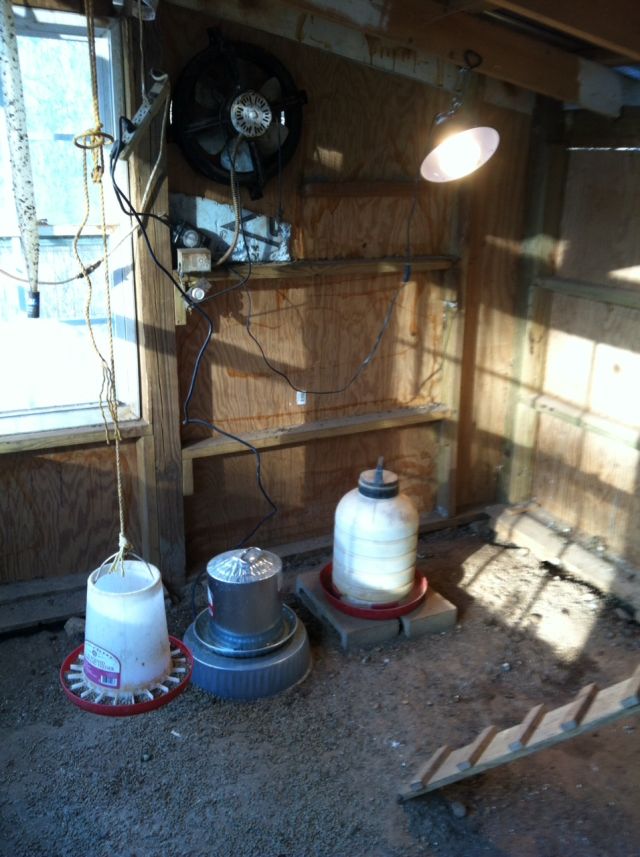
heat lamp and water heater for the cold nights
The heat lamp is on a timer to operate only in the night. The water heater is on continuously during the cold spells. The summer ventilator has an external cover to prevent drafts and you can see I have raised the feed dispenser fairly high off the ground which reduces the flicking of feed onto the ground. During winter I supplement the pellets with scratch.
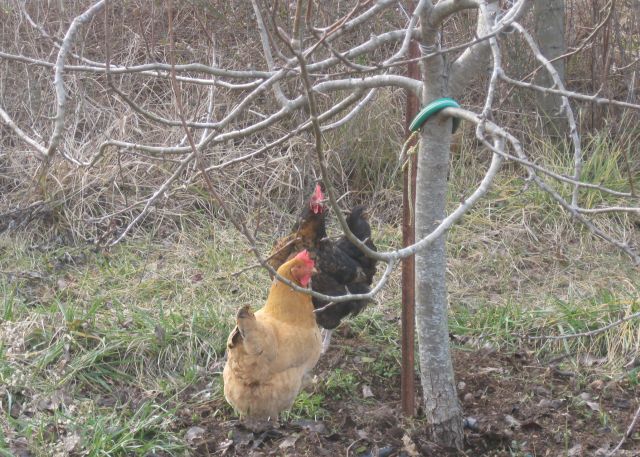
Two of the hens (Wanda and Randa) are fliers and each day they fly over the fence and go everywhere and I will often see them hard at work on the compost heap. I was very happy to see they now visit the base of the fruit trees and dig up the overwintering pests which despoil and then drop off the fruit in the summer, hibernate over the winter in the ground and climb the trunk early spring for the next summer’s feast. I must figure a reliable way to get all the chicken out there.
here are Wanda and Randa at the base of a pear tree
Egg production is recommencing. Apart from the occasional use of the heat lamp I do not use artificial lighting so egg production shuts down for the short days. From the occasional 1 egg a day we are now up to 4 or 5 and I have now begun supplementing their feed with oyster shells.
I spent much time during the winter months working my way through an electronics course provided by Georgia Tech on the Coursera MOOC, which was excellent. In January I began a second course with Georgia Tech and also one on simple robot building offered by Berkeley on Edx. Since I do not have a background in these areas they require much work and focus. And the endgame? I have plans for microprocessors for various of my growing activities. The first one will be using an arduino controller to keep a tally on the chicken during the day so it will know when they have all returned in the evening and will then lower the coop door. Presently, the coop door opens on a timer in the morning and must be human lowered in the evening. Other applications for the future, in addition to enhancing security routines, will be sensors to monitor humidity, temperatures and maybe ph as well. To my mind, all part of becoming more self sufficient and using electrons to simplify daily tasks.
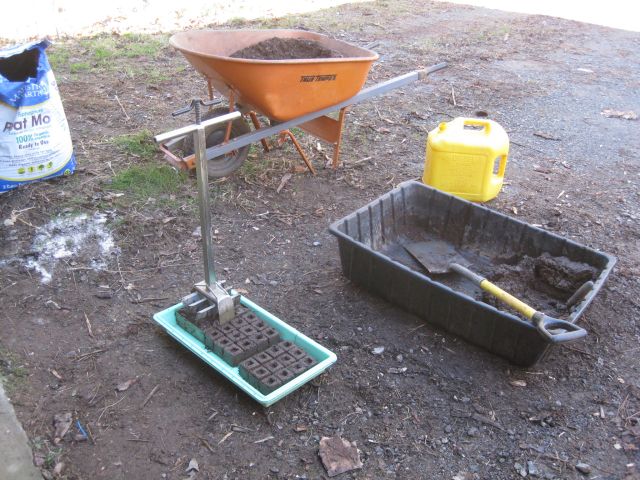
I forgot to mention what transitioned the end of my hibernation. Last week I seeded a germination tray and now a few days later the kale, lettuce and beet have germinated and I needed to get outside and prepare the 2″ soil blocks for the vegetables to continue growing in the greenhouse.
making soil blocks for new vegetables
So making the soil blocks has galvanized me back into the growing mode. Here I mixed my compost with soil, peat, building sand and, because I had no lime, ash from the wood stove. You can see the mold for making the 2″ blocks of which 36 fit in each tray. I bought more seed at the big DIY stores and specialty/glamor/fancy looking vegetable seed from Johnny’s. So I am now switched on and looking forward to spring.
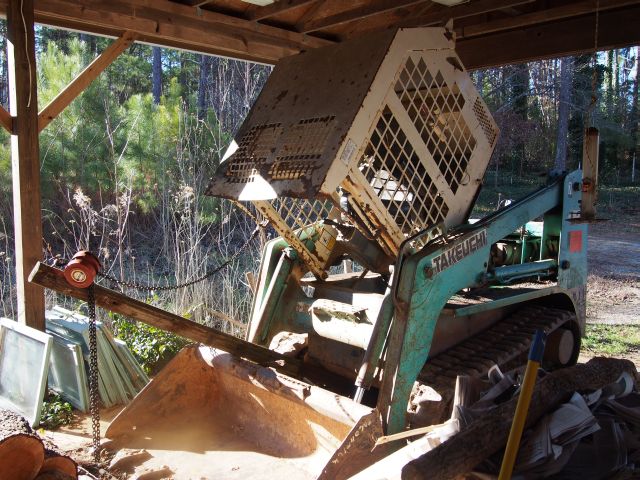
After some cold nights (12 below freezing) my Takeuchi bobcat refused to start. Cold and tired battery. The best way to charge the battery is to pull the cab forward on its hinges and then you have direct access to the battery. It is heavy and best done with an assistant. In the past I had an anchor point in front of the Take and winched the cab forward. However, there was no anchor point for the Take this time just a 2,400 gal rainwater tank. The last time I had no anchor point I attached the negative charging wire to the body and the positive to a nail which I inserted into a slot in the fusebox. I really didn’t want to do this again. So I pondered and created my own anchor point. I found an 8ft fence post, located it between the loader and the body of the Take, attached a hook and winched the cab up. Effortless and the charging was uneventful.
raising the cab of the Take
work in the orchard
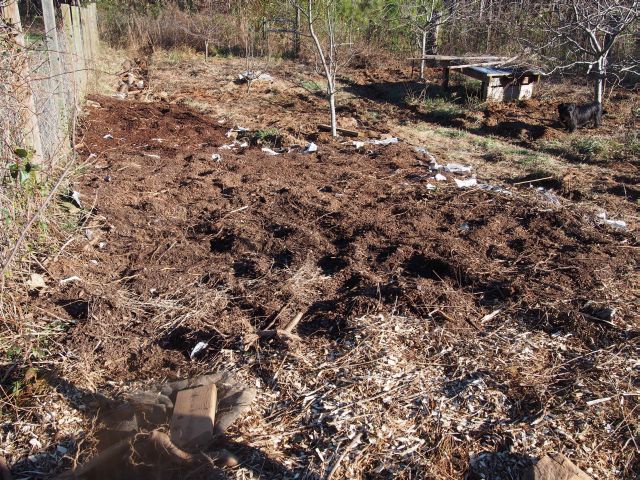
This year, for the first time, my first row of apple trees produced apples but the second row which is nearest my neighbor’s fence did not, and the trees appeared lackluster. I diagnosed this to competition from vines, shrubs and small trees, some of which have thick roots 10ft long which have been out competing my apple trees for compost nutrients. I am avidly reading The Holistic Orchard by Michael Phillips in order to thwart the pests that nourished on many of my apples. He makes the interesting point that wood chips from hardwood trees create beneficial fungus for fruit trees. So I have worked hard to clear the growth between my trees with an eyehoe (what a wonderful invention). I then spread manure from the stables, layer newspapers thickly and now, with my Take recharged I ferry loads of woodchips and dump and spread over the newspapers.
mulching the orchard
When the orchard is respectable I will bring in a flock of helpers to scratch and turn up over wintering pests. A couple years ago I improvised a simple chicken shelter which has a couple of nestboxes and I will clean it up for my chickens.
simple chicken shelter in the orchard
water and nutrient infiltration
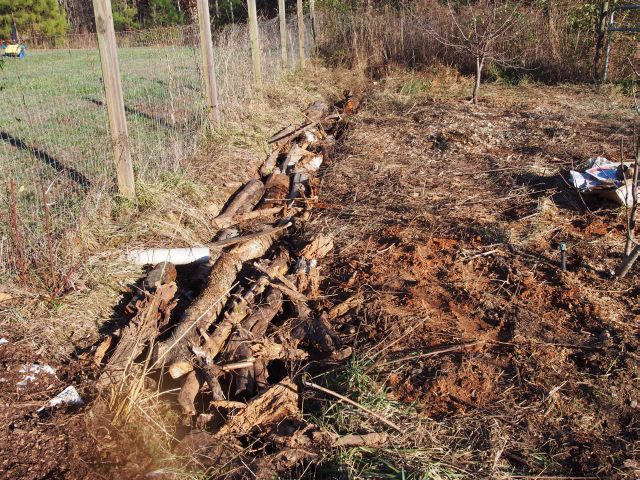
I dug a trench alongside part of the orchard to capture and infiltrate rainwater run off. I am now filling it with hardwood (mainly) logs, the idea is that the wood will decompose and the nutrients and fungi will benefit my fruit trees along the lines suggested in The Holistic Orchard book (and will also physically block the growth of tall weeds in the ditch).
various logs stacked in the rainwater ditch
clearing the slope bordering the vegetable growing area
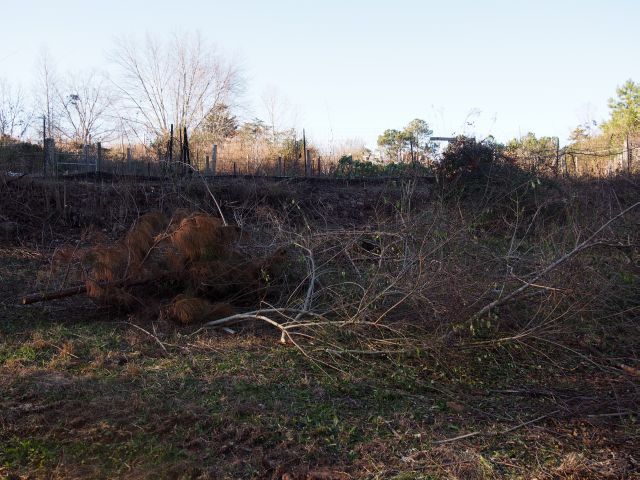
My main vegetable growing area is fenced in and along the southeast border a thicket of privet and briar sprung up over the past several years. I tolerated the growth since I reasoned it provided vantage points and shelter for insect loving birds which were helping me control pests in the vegetables. However there were two problems – a) the roots invaded my raised beds – there is one type of small tree which has very long wily roots which evaded all my attempts to obstruct it; b) in the winter, when sunlight is dear, the wild hedge blocked the sun from my frost ridden beds. So I worked hard to cut down and remove the growth and have been chipping away with the chipper, carried and powered by my tractor. This mulch I have also been adding to the orchard. Some chipping remains and when the clay soil has dried I will bring out the tractor again and chip away.
some of the small trees awaiting chipping in the foreground and the fenced growing area at the top of the slope
winter hive protection
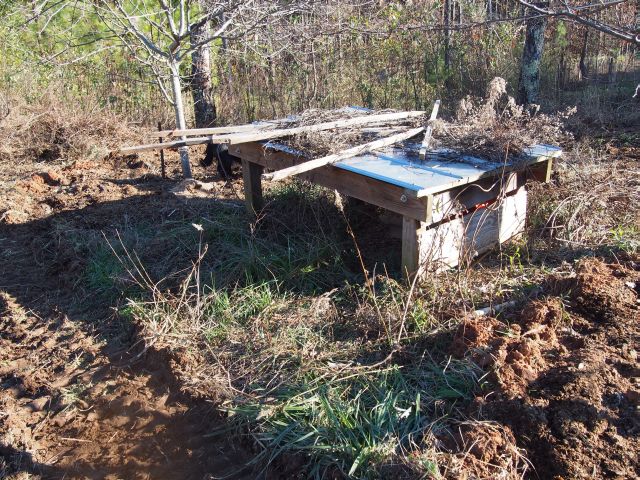
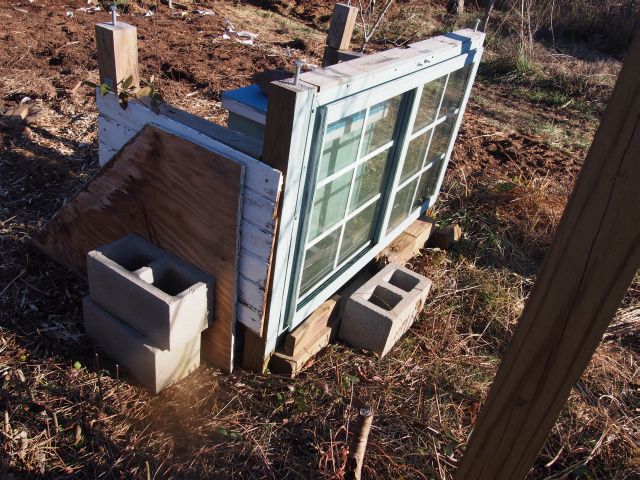
My bee hive faces south. Chilling winds tend to come from the west and north. On the west side I have a window which allows the sun but not the wind access to the hive, and on the north side I have plywood protection.
the sheltered winter protected bee hive
how the clover fares
I recently installed a 20ft by 4ft raised bed and sowed half of it with crimson clover and the other half with white (ladino) clover. The crimson clover is larger but both seemed to germinate equally well. However, following the recent cold, the ladino clover almost disappeared while the crimson is holding on well. Will be interesting to see how they comparatively perform in the spring.
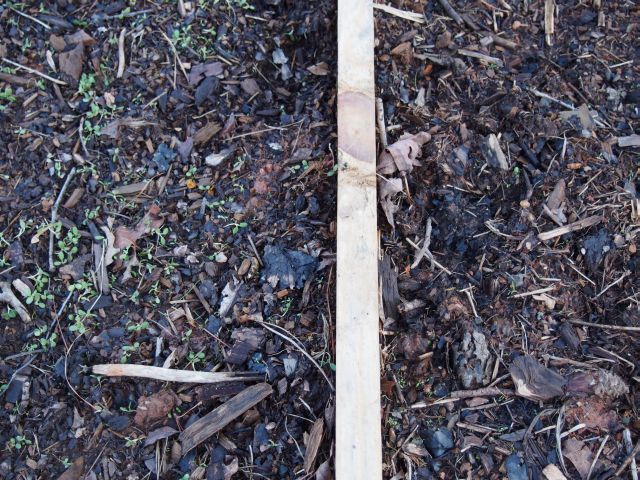
the crimson clover is on the left of the divider and the barely surviving ladino clover is on the right
veggies for eating
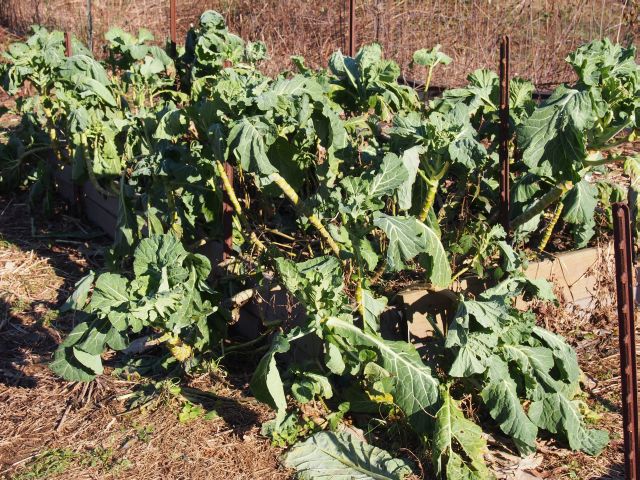
.I am not using crop covers right now and my collard and turnip and mustard greens are surviving, tho at time the collard looks a little bedraggled.
tasty collard for the picking
A tasty (and healthy) dish is newly hatched eggs (yes my younger hens are laying in the winter without artificial lighting), collard, greens and garlic stir heated, eaten with home made whole wheat bread.
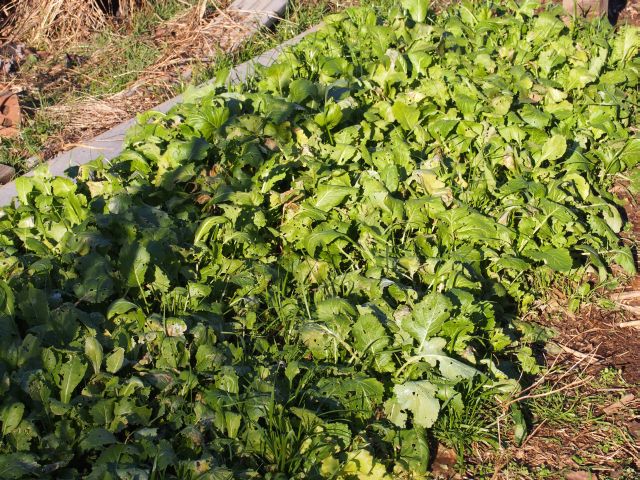
lots of winter greens which keep growing in the winter
So these are some of my winter tasks. And on the inclement days, Coursera, the free online college course compendium, awaits. I just completed calculus, precalculus and a fascinating history on mankind from 250,000 years ago to the present.
Coursera, the MOOC (massive open online course), has kept me very busy. Last year I took the sustainability course and earlier this year, 2 physics introductory courses. My background is accounting, business and the humanities. Now, with access to excellent tuition from top flight college lecturers, all for free, I am greedily imbibing the sciences. I am currently taking 4 courses: Animal Behavior (University of Melbourne, Australia), Preparation for Introductory Biology – DNA to organisms (University of California, Irvine); Calculus One (The Ohio State University); and the most intriguing A Brief History of Mankind (Hebrew University of Jerusalem).
The biology course is unusual in that it is provided for 2 levels of students – I am taking the basics level while first year students at the college are required to take the scholars level which involves considerable additional research and peer assessments. We all watch the same videos and take the same quizzes. I am content to receive a basic understanding of the functioning of the cell and DNA, alleles etc.
Animal Behavior answers so many of the questions you would have from watching wild animals. Good videos and additional reading material – a fun course.
Calculus can be fun but I struggled mightily in the beginning and only pride prevented me from un-enrolling. The problem is I never did calculus at school and my algebra and trig was at a basic level and a long time ago, so from the get go I was adrift with almost all the terms tossed about (radical #’s, rational #’s, real #’s, polynomial etc.). I borrowed a couple precalculus books and have been working hard to catchup. Why mess with calculus? I like #’s and often competed against the clock to solve internet sudoku problems – grappling with calculus is a more worthwhile use of leisure time and more challenging.
The most intriguing course is not about science but is listed under the humanities section of coursera and is a brief history of mankind by Dr. Harari. He speaks directly and effectively and traces our history to to the different homo species (such as homo erectus and then Neanderthal man) and describes how between 70k to 100k years ago, unaccountably, homo sapiens developed superior communication skills and emerged victorious over the other homo species. From being a scavenger of the bones of victims of predators, homo sapiens became triumphant over all animals. For anyone interested in the palio diet or the advantages of hunter gatherer culture over the lives of humans in the subsequent agricultural revolution, this is a must see course. We just covered the onset of the agricultural revolution – lesson 5 titled “History’s Biggest Fraud” and I eagerly await new installments.
So the above have taken much time. But the growing season has been good for me – my Giant Asian Pears are excellent – they are huge (bigger than a baseball) crunchy and sweet and plentiful. Muscadines are ripening now but not as plentiful as they were when sited in my vegetable growing area where they could tap into my compost rich beds. I have a prolific apple tree producing though the apples are not as sweet as some of my other apple trees. They need selective slicing to remove visitors but are entirely toxin free. Squash are plentiful and some have visitors in which case my chicken receive a treat, and some are fine. Tomatoes are still coming in and, as always, there is lots of kale and collards. I have begun seeding and planting out kale for the fall and as soon as the tomatoes and squash are past I will commence in earnest, together with garlic, which again did very well this year and is the easiest of all vegetables to grow.
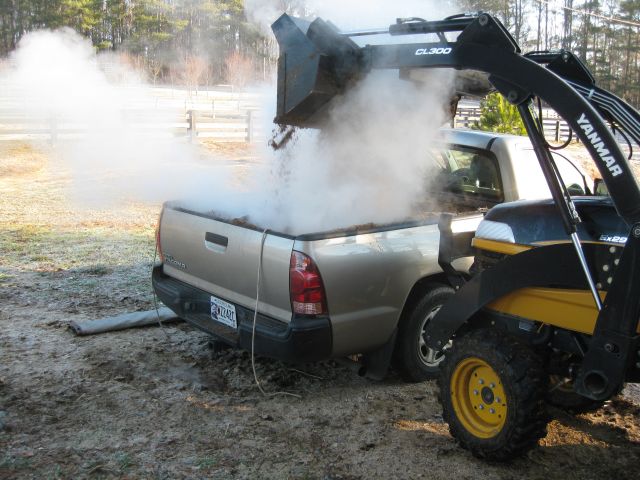
In March 2012 I performed a simple test to get some confidence that the horse manure I was collecting was not harmful to my plants. The test indicated that my plants would not be harmed but the effect on worms was undetermined. I had not visited the stables for some time until early this January I headed their way. One of the immediate changes was the password controlled electric gate. The new owners, a husband and wife team were welcoming, and when I mentioned I usually paid $20 per load of horse manure, the husband fired up his Yanmar tractor and we together headed for the manuring area. The previous owners used a John Deere tractor (30hp) which was occasionally aggravating. Kenny says he is very happy with his Yanmar. Coincidentally, my Takeuichi bobcat has a Yanmar engine with untold hours (the hour gauge stopped working at 2,500 hours) and it works very well.
steaming horse manure from the stables
As the manure was being dumped into the pickup bed I noticed that they now use shavings in the stalls instead of straw/hay. I preferred the latter though I am sure the shavings are cheaper.
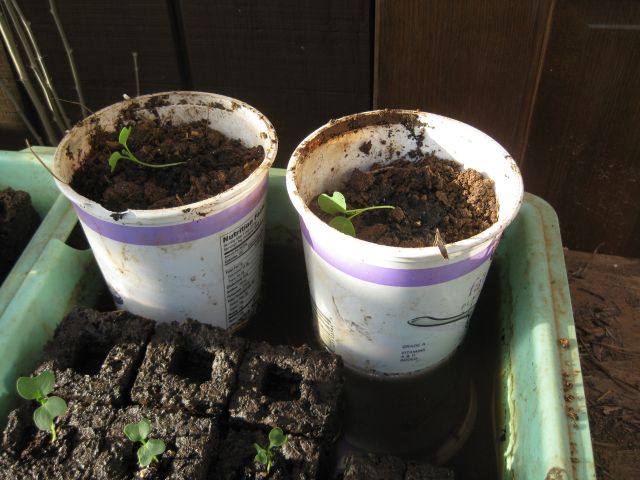
my simple test – a kale seedling planted in horse manure vs. compost
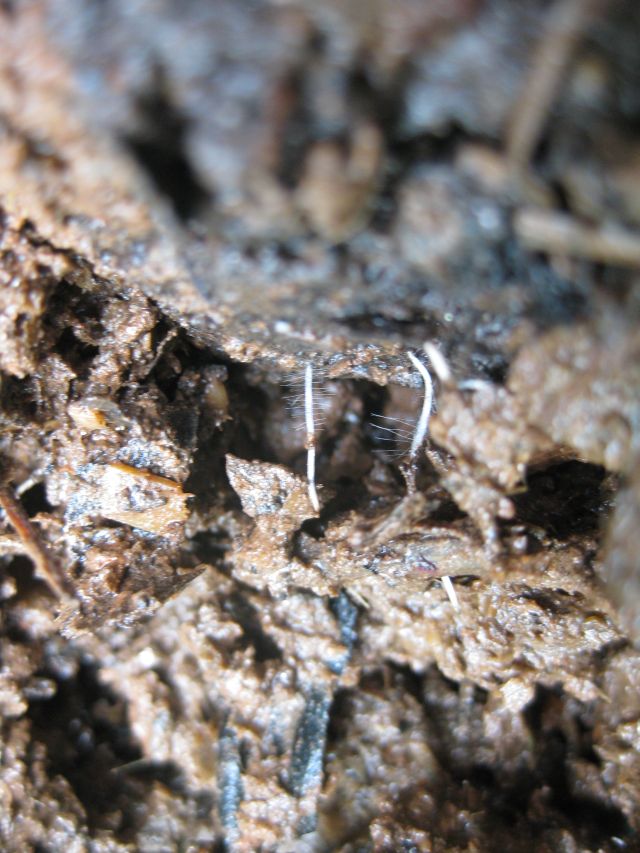
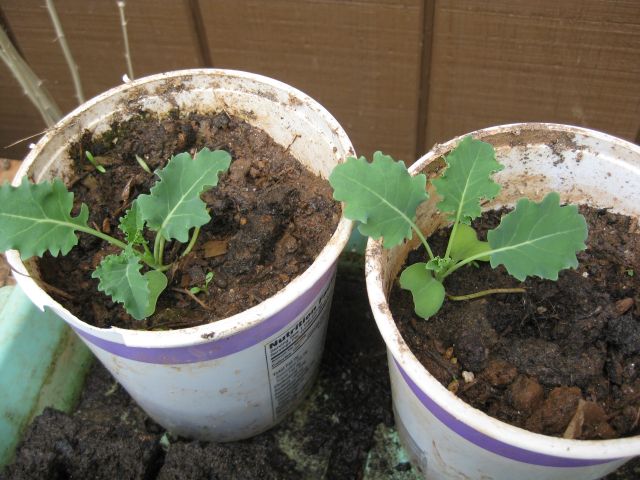
I decided to again test the manure. I filled one yoghurt container with manure and the other with compost and inserted a 2″ soil block containing a kale seedling into each, plus a 3″ worm. And waited about a month. And then examined the contents. Both seedlings had grown at about the same rate and I was pleased to see their roots had extended well beyond the soil block so they had sampled their surroundings.
white roots of seedling extending into the horse manure. note the fine horizontal roots I had not noticed until this photo
And as for the worms – both had disappeared. I should have learned my lesson and included other soil life such as centipedes and millipedes. Worms do tend to wander.
similarly sized seedlings a month later alternatively in horse manure and compost
So where does this leave me. The Feb/Mar 2013 issue of Mother Earth News has an article “Killer Compost Update Herbicide Damage Still a Major Problem”. The gist is that persistent herbicides remain potent in composted manures and will damage crops to which they are applied. The article did not focus on insecticides applied to pastures or dewormers or other chemicals given to livestock.
I recently read “Bringing Nature Home” by D Tellamy who makes a compelling case that we should protect and sustain all insects, including herbivore insects which are the ones which eat my vegetables. His view is that these insects and particularly their larvae, provide food to predator insects and birds and thereby promote diversity of these species. The book is very well written and castigates alien plants not only because they are invasive but also because it takes a long time for native insects to adapt to eating them and so they provide little nutrition and without natural enemies become more invasive. To test whether the horse manure is safe for insects I will now add centipedes and millipedes of which I have an abundance to the two containers and see how they fare.
Last Thursday was the monthly meeting of the Cherokee Beekeepers’ Club meeting and the speaker was a MD who specializes in medical emergencies and is also a beekeeper. Well qualified in all respects. He outlined the differences between a local reaction to a bee sting (swelling, pain, redness) which is normal; a large local reaction where the symptoms persist for up to a week; and an allergic reaction of which anaphylaxis is the most serious and is life threatening. He said less than 5% of allergic reactions are anaphylaxis, that less than 50 people die each year from bee stings and for most this occurs within 30 minutes of being stung and usually from asphyxiation from swelling of the breathing passages. He outlined symptons and treatments and when and how to use epipen. Cost without insurance exceeds $300 and with the right insurance may cost approximately $30, it requires a prescription and expires after 1 year but has some efficacy thereafter. There were a lot of cautions and good advice including the difficulty of distinguishing between a panic attack and a serious allergic reaction. This for me was the most interesting part and he brought a practice epipen syringe which I tried out and heard the click as it pressed into my thigh. His key take aways were to remove the bee stinger as soon as possible by scraping not gripping, to stay calm and not panic, and to get to the emergency room as soon as possible.
the American Chestnut
Friday evening was a cocktail reception and talk by the southern science coordinator of the American Chestnut Foundation (“TACF”). I arrived early at the Kendeda Center HQ of Trees Atlanta, which is south of downtown in an area which during my London accommodation hunting days would have been described as “not salubrious”. The premises however are impressive – about 30 varieties of trees planted around the car park which you are challenged to identify, large rainwater collection tanks, water infiltration techniques and a large well equipped building. I found some like minded guys and had good discussions. A spirited anti-exotic animus prevailed and I was encouraged, and have now ordered, the book by Tellamy “Bringing Nature Home”. After the reception we settled in the auditorium where the speaker passionately outlined the history and attributes of the American chestnut and the program the past 30 years to develop a blight resistant American chestnut.
Until 100 years ago the American chestnut dominated the eastern forests and accounted for up to 40% of the canopy. Fast growing up to 100ft high and 5 ft diameter (though up to 10ft diameter could be achieved), a straight, rot resistant, light weight valuable timber trees for siding, split rails, shingles and furniture. It was a large annual producer of chestnuts (mast) for wildlife and humans. with apparently three times the mast of oak trees. Plus the chestnuts could be ground to flour for bread making. The iconic chestnut was to the east as the redwood is to the west. The blight from Chinese chestnuts arrived in NYC in 1904 and by 1940 in Georgia, and wiped out about 4 billion chestnut trees. Because the wood is rot resistant the stumps persisted and continue to produce sprouts, which die after a few years when attacked by the blight.
The TACF was founded in 1983 and the approach is to transfer the blight resistance of Chinese chestnuts to American chestnut trees by using the backcross breeding technique where you keep the American chestnut phenotype (physical characteristics) but breed in the blight resistance of the Chinese chestnut. An objective is to have diversity in blight resistance strains so as the blight changes the trees can respond. The Chinese chestnut is low and sprawling like an apple tree and quite unlike the tall straight limbed American chestnut. The speaker showed a picture of himself in a bucket truck manually pollinating trees. There are TACF chapters in 21 states and trees are grown in 300 orchards. The “Restoration Chestnut 1.0” has at least moderate blight resistance and is being planted out in national forests and strip mined areas. The hope is it will have enough resistance and sexually reproduce. Work is continuing to develop an even better chestnut. 8,000 trees have been planted out which is a significant but small step to achieving their goal of re-establishing the 4 billion trees which once existed. The speaker now works in Georgia which he says is one of the best chapters (maybe this was a comment just for our ears only) and he said an additional challenge in GA is developing chestnut resistance not only to Chinese blight but also to a root rot (phytophthora ) which occurs in clay soils such as found in middle and south Georgia.
If one joins TACF and makes a $300 donation you receive 5 Restoration Chestnut 1.0 seeds/seedlings. For successful growing the site must be well drained, good sun, a deer fence and you must irrigate, monitor for beetles and voles and manage weeds. And with some luck you may have an American chestnut.