whats growing

By September the large tomatoes have passed their prime, tho the small varieties – Juliet, Black Cherry (our favorite), Jelly Bean, Sweet Cherry – are still producing.
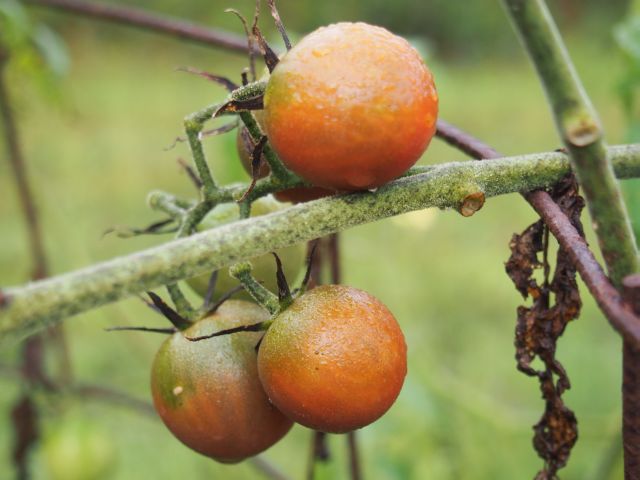
Black Cherry is an heirloom with an explosive authentic tomato taste

The Juliet is a hybrid and also grows well and tastes good.
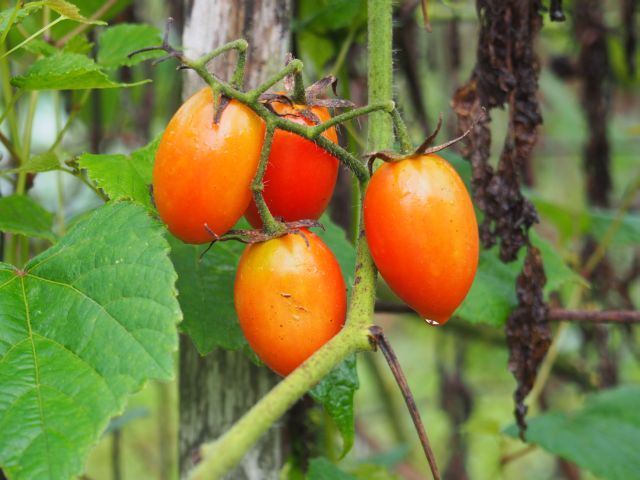
a resilient producer

The burgundy okra is producing well – the smaller okra can be eaten raw off the plant, the oversized are tough and the covering is stringy even after grilling (we grill rather than fry) and the transition from small to oversized happens within a few days, so daily okra picking visits are necessary.
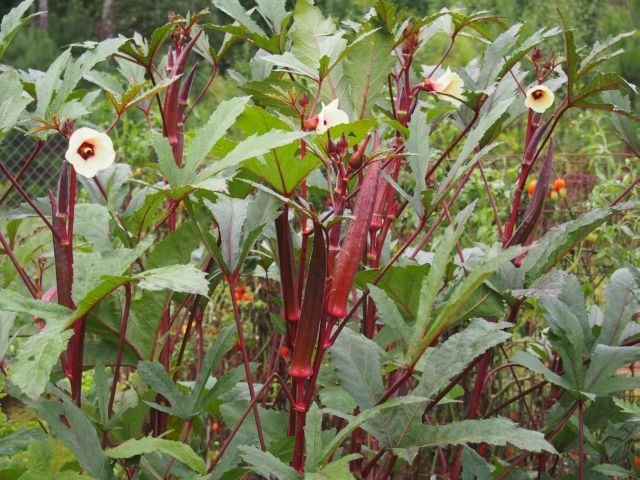
the okra flower is always striking

A big hit this season are the rattlesnake beans so called for their coloring which progresses in stripes from green to black and their distinctive rattle.  They seem immune to diseases and pests and grow prolifically.  If not picked tender they must be shelled, a task I quite enjoy.
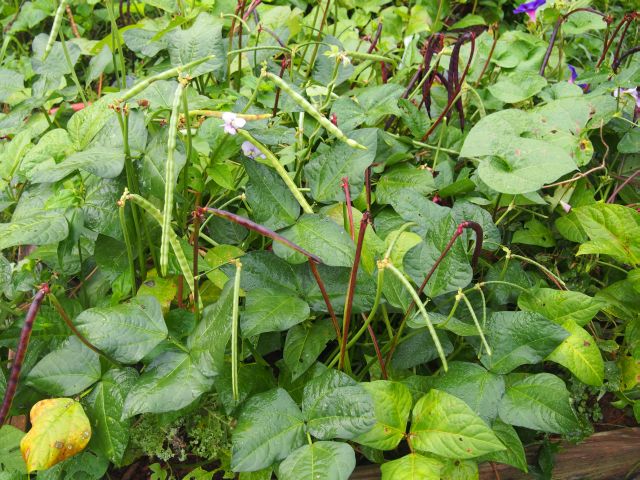
each vertical stalk produces, 2, 3 or even 4 beans

With plentiful rains and cooler temps the arugula is thriving.
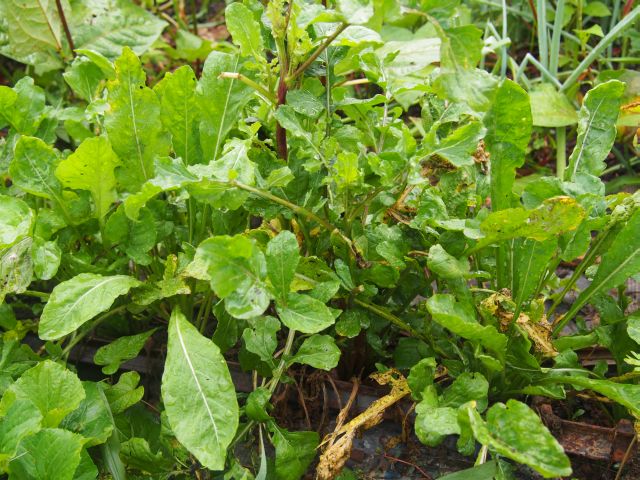
arugula growing confidently

Basil and the other herbs – mint, organo, rosemary – are doing fine.  Another first for me this season is water melon and, now I have allowed it to ripen, it tastes great.
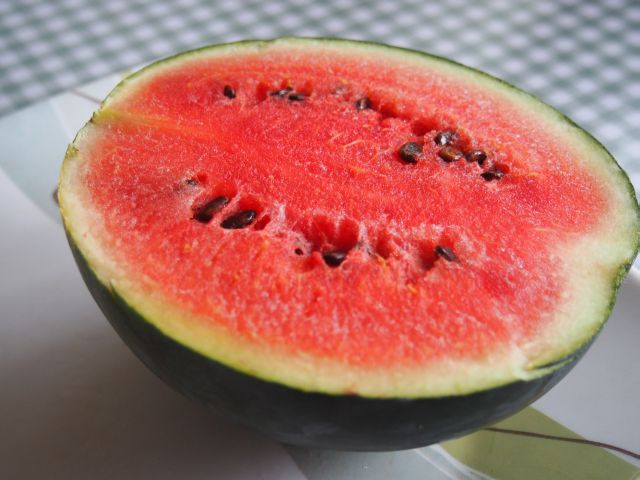
the melon is about 6" diameter and has lots of pits but is sweet
the melon is about 6″ diameter and has lots of pits but is sweet

The Morning Glory vine is intertwining my fences, bean plants and trees.
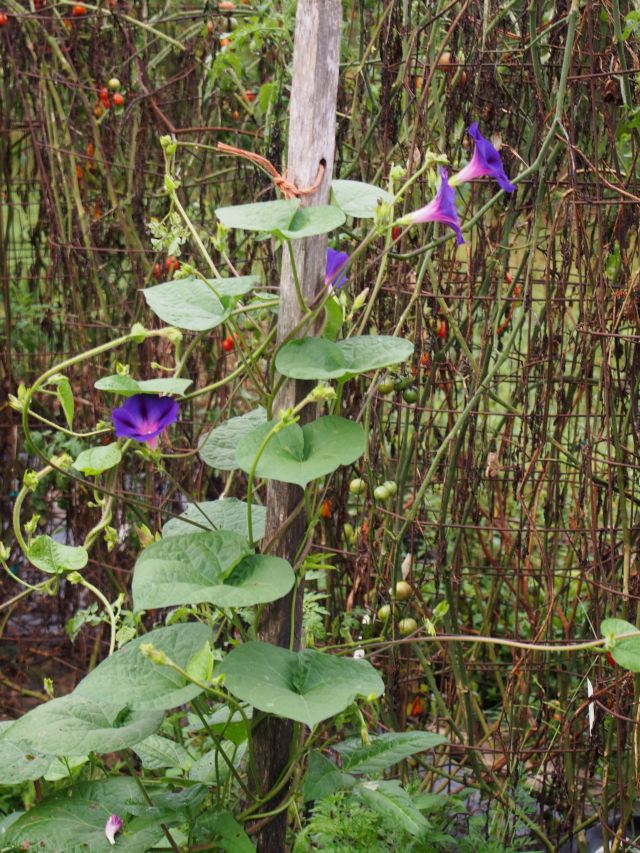
an attractive weed
an attractive weed

I don’t mind the”weeds” and trim them back just enough to allow light to reach my shrubs and smaller trees.  Diversity is good and now in my hillside orchard you hear the bees working the weeds.
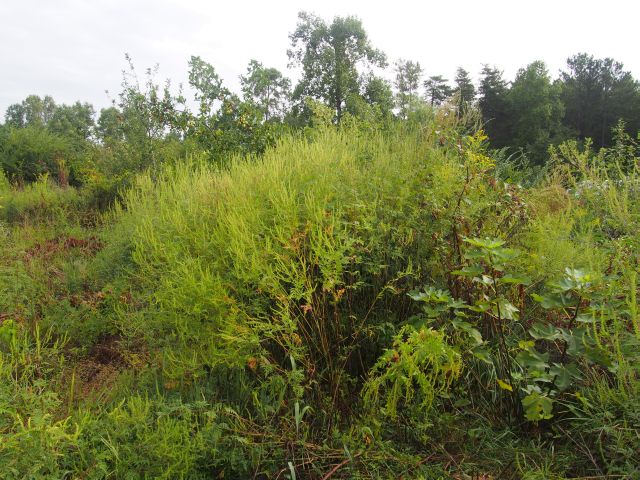
in the foreground is a small fig tree and behind the growth is my young jujube tree

And step closer and you see the bees hard at work.
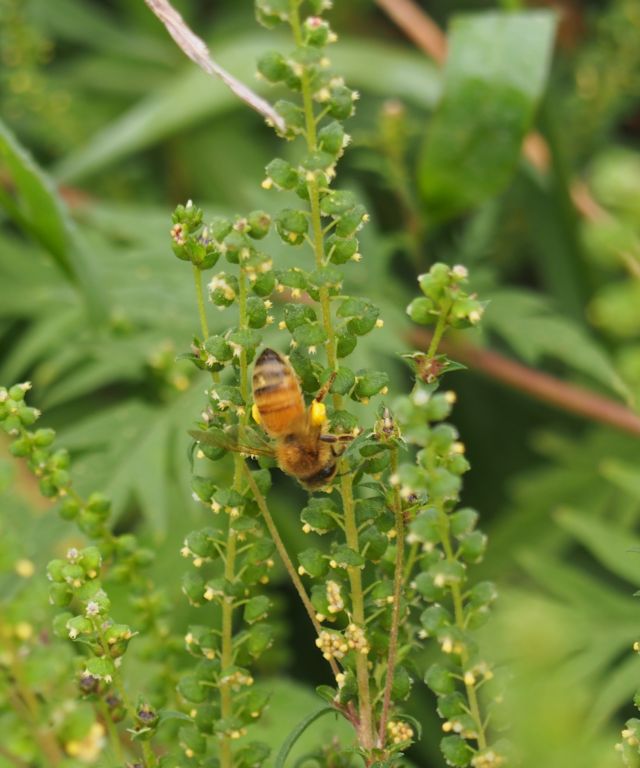
stocking up for winter

I have several fig varieties and each year they die to the ground but since their roots are intact and larger each year, the above ground fig grows more rapidly and larger too.  I hope that when they reach a certain mass they will be able to withstand a winter with min temps of say 12 deg F.  The winter a few years ago when temps reached close to zero is what did them in.

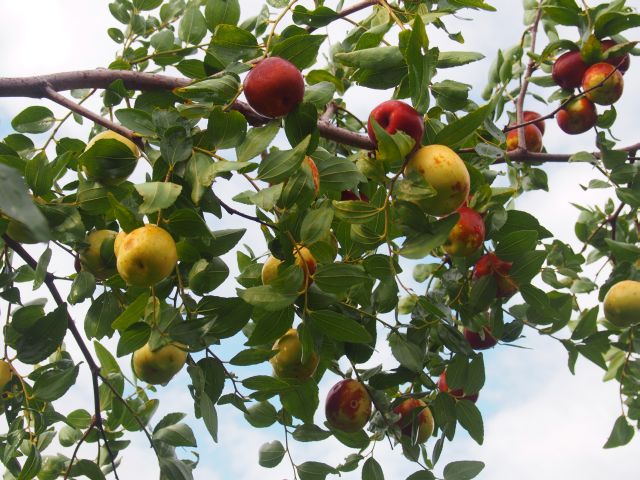
The jujube tree is producing more fruit each year.
OLYMPUS DIGITAL CAMERA
tho they look largish in the pic, the largest is 1.5″

Jujube ripens in September and is fragrant and sweetish when the yellow green skin has turned completely brown.  I am pleased to see several small jujube trees close to the parent.  Whether from root or seed I will only know when I transplant them in October.  But a bonanza since the jujube seems immune from disease and pests but not appreciative birds.

September is also ripen time for my Gold Rush apple tree.  The apples are pleasant to eat altho only 30% to 40% is available due to pest presence.  With my chickens graduated this year to yard range from paddock range and turning compost assiduously, I will next move them to the orchard to deal with the overwintering pests.
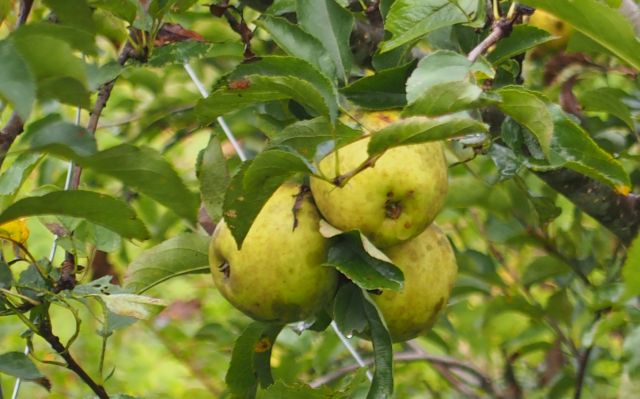
the Gold Rush apple so named because of the yellow gold coloring or the rush of flavor when you bite in

Comfrey is luxuriating in the cooler weather after a tough summer.
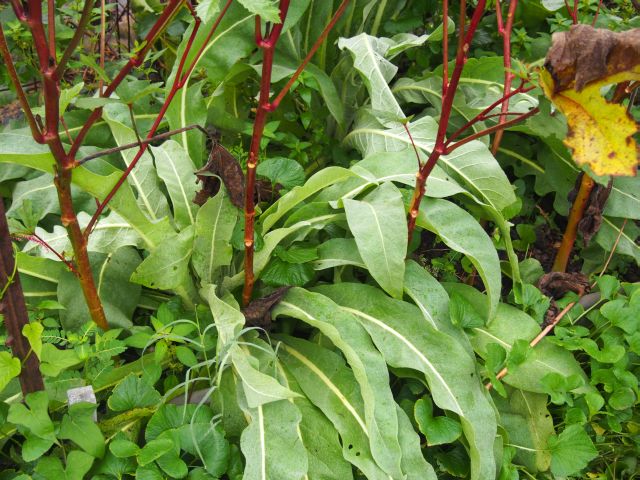
I like comfrey and compost its leaves at the end of the season

In the woods the rains have produced many different mushrooms which are devoured quickly by wildlife or overtaken by secondary growths.
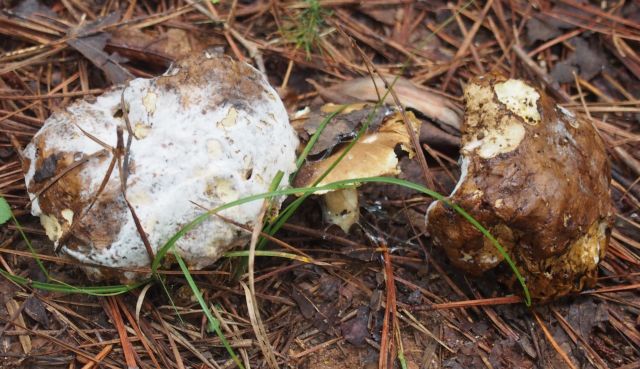
a disintegrating mushroom

And my dog Trudy who was afflicted and unable to walk a few posts ago, is now back to normal, on patrol among the vegetable beds and locating scents on the walks in the woods.
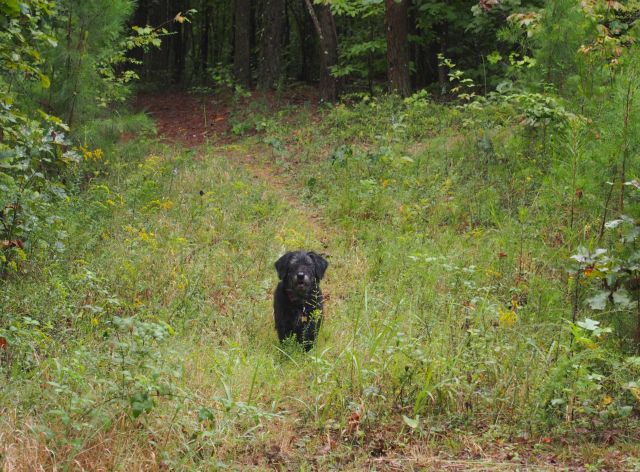
I thought her hearing was worsening but I believe it to be selective and occasionally she responds as here
I thought her hearing was worsening but I believe it to be selective and occasionally she responds, as here

Yesterday was honey harvest day.  I have 2 hives – the one somnolent where almost all the occupants gather at the entrance to while away the day.  It had no honey for the taking.  The second hive is more vigorous and has swarmed several times, that I have seen.  September is a bit late for harvesting so I left a lot of honey behind but still gathered about 2.5 gallons.
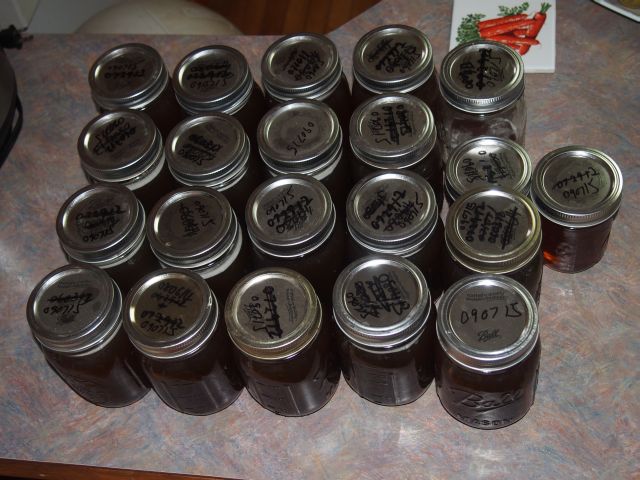
18 pts, 2 half pints and a partially filled jar

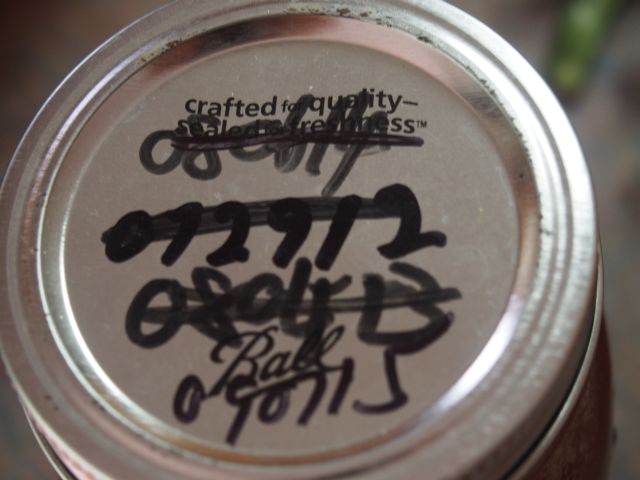
Since I record the date of harvesting I can keep track of prior year dates.
OLYMPUS DIGITAL CAMERA
this cap sealed honey collected 7/29/12, 8/4/13, 8/6/14 and y’day 9/7/15

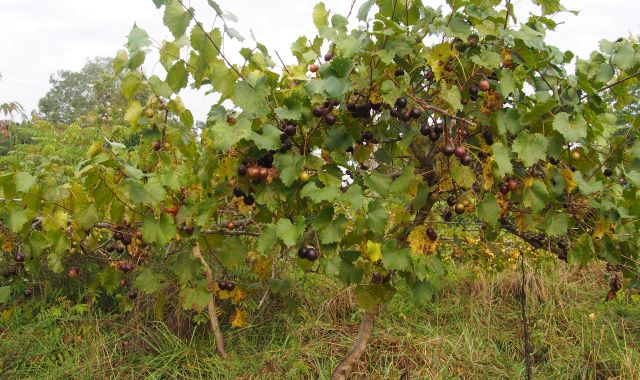
I almost forgot to mention the muscadine which has ripened just the past few days.
OLYMPUS DIGITAL CAMERA
the black muscadine must be non reflective black and soft to touch, and then you have delectable sweetness
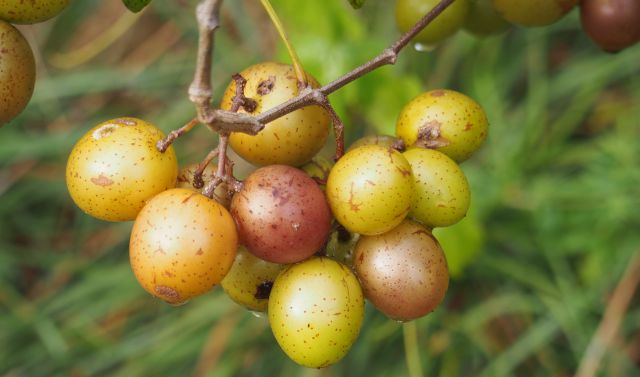
the scuppernong graduates from green to yellow to gold to bronze, and then it is ready

And the chickens, the rooster and his 10 hens, are doing fine.  3 to 5 eggs daily and occasionally I uncover a cache of secreted eggs from several hens – probably couldn’t be bothered to make the trip back to the coop when they forage more widely across the yard.

ps – I was wondering where the rats and mice which frequent the coop had gone to and thought maybe a seasonal thing, or late summer vacation.  And then this afternoon after refilling the 5 gal water container in the coop, I saw on the outside of the coop,  heading for the entrance, a gorgeous black at least 5 ft long, rat snake.  Disturbed, it reversed direction and headed away but I hope it will return and do its duty, as long as that does not include polishing off the eggs.
 

2 good books, water sustainability, okra & butterfly season

I never used to read science fiction.  But technology and sustainability hold my attention and I read good futuristic books on these topics.  “Ghost Fleet” a technothriller on the next world war portends problems with technology and is well researched with extensive footnotes.  Now I have completed my interactive Python programming course with Rice University via Coursera, I have begun my next read, the Water Knife about a water starved west beset with dust clouds and violence.  Both are excellent reads.

Which brings me to water sustainability.  I store about 6k gallons rainwater and I restrict my growing activities to get by on rain and harvested rainwater.  This would not be possible in California (we make our annual visit to San Francisco in a few weeks) where Summer rainfall is minimal.  But here in north Georgia it is possible, with some luck.  My stored water is sufficient for about 3 weeks and then I need rain.  And so far the rains have arrived timely.  I hand water with a 3/4″ hose – takes time but for me is the most efficient method.  My water is gravity fed and though it goes thro a gauze filter before entering the tanks it grows algae and would not work with drip feed unless I installed filters and increased the water pressure, which I am not prepared to do.  When water runs low I have to choose where to best use it and so some will thrive while others have to endure.  And it is enjoyable to see what is growing, how the pests are doing, and admire the butterflies.

look good but not so their offspring
looks good but not so the offspring

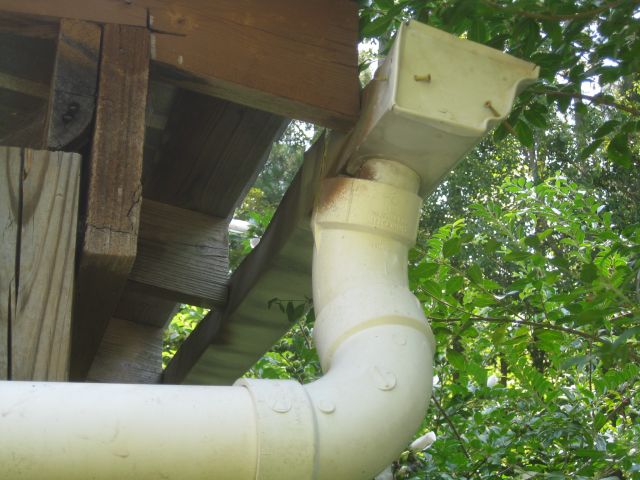
But things go wrong with the collection system and I have to watch that everything is connected and blockages removed.  An endcap I had  fitted to a gutter installed on a shed kept coming loose.  So, effective but not attractive, I used a couple screws to hold it in place.

note the 2 screws in the endcap

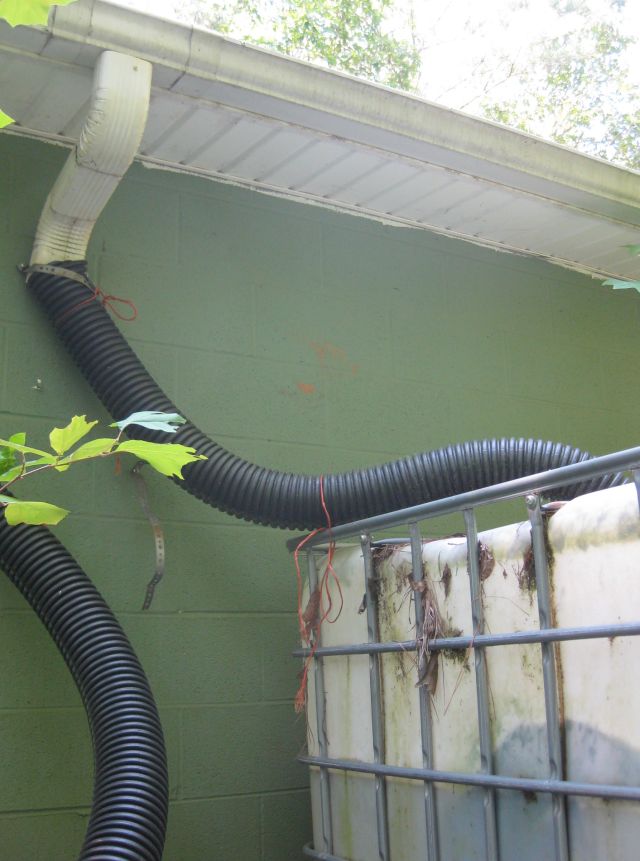
At my tractor building a 4″ corrugated pipe formed a u-bend, then filled with water, and broke loose.  Now with screws and straps I have secured it again and tried to prevent another u-bend forming.

ignore the hose at the bottom, that feeds a lower tank with water captured from the other side of the building
ignore the pipe at the bottom which feeds a lower tank with water captured from the other side of the building

Previously I used my heavy portable drill for inserting screws.  Now I use a real handy portable screwdriver which fits in my pocket and is easy to use.

a big time saver and easy to use
a big time saver and powerful enough

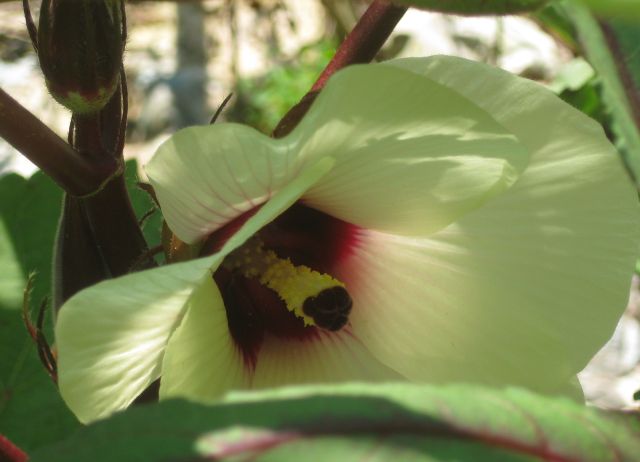
Tomatoes are a plenty and now the unusual okra plant is beginning to produce.  It has a striking flower.

the striking okra flower
the shadowed flower and behind it, small okra pods

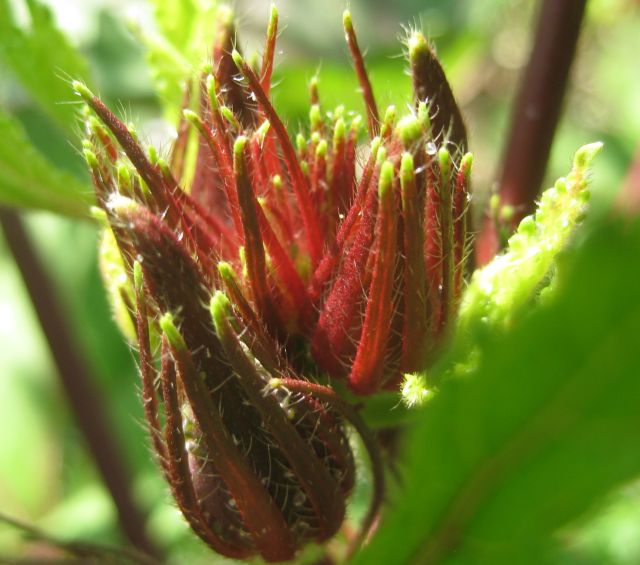
The flower transforms into future pods.

baby okras
baby okras

Which then grow into regular okra which we eat off the plant, when small, or grill with squash.

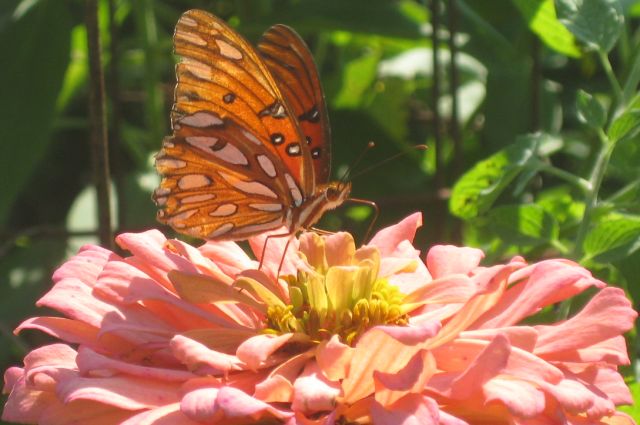
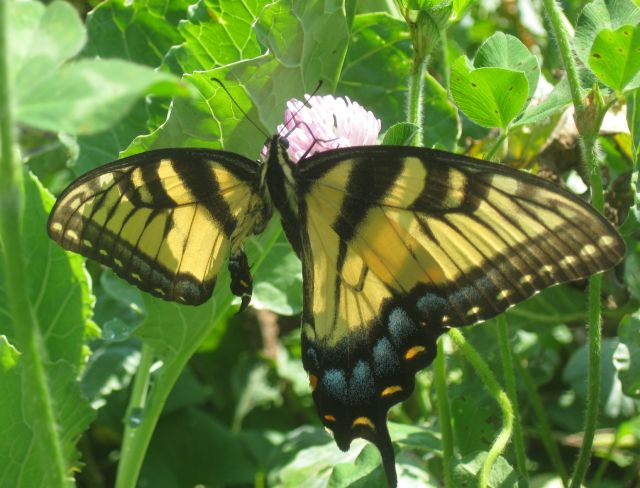
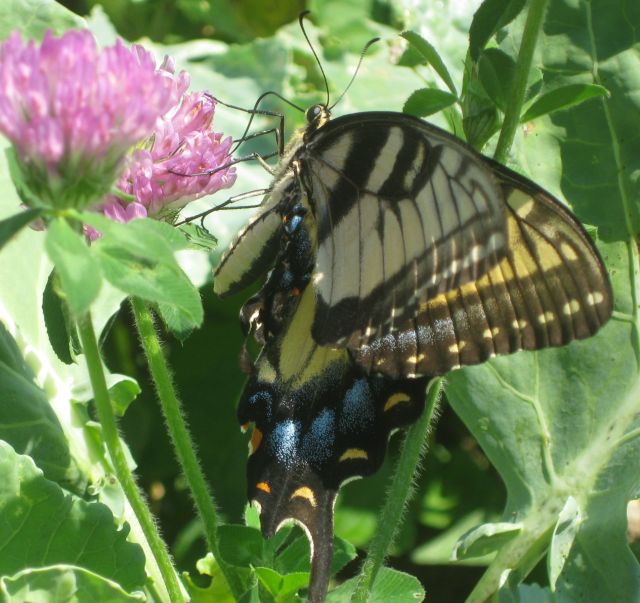
And, finally some more butterflies.

my decorative flowers in the growing area, pleasing to the eye and visitors
and my greens will soon harbor caterpillars

3 sisters, a new brush, problem = solution, food from the garden

3 sisters

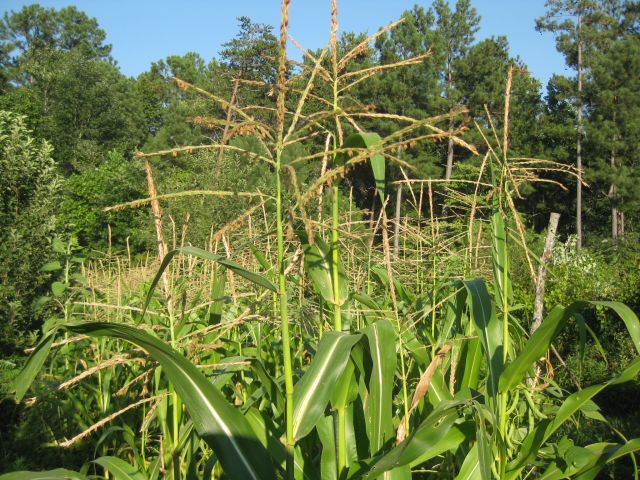
3 sisters refers to the practice of growing corn, climbing beans and squash closely together with the corn providing scaffolding for the beans, the beans providing nitrogen fixing and their hairy stems dissuading insects, and the squash shading out weeds and enabling water retention by the soil.  My 3 sisters appear to be doing ok, though I now realize some fine tuning is needed for next year.

corn reaching for the sky

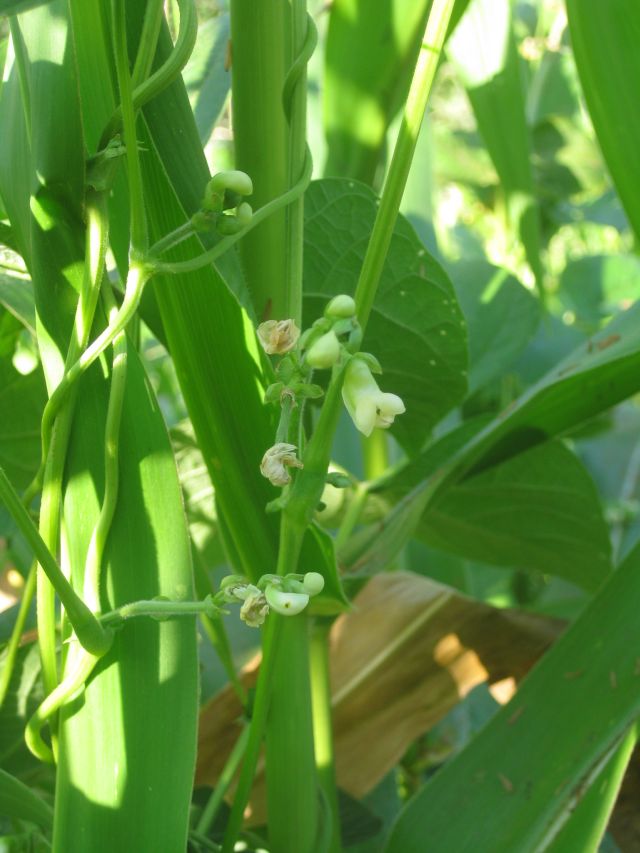
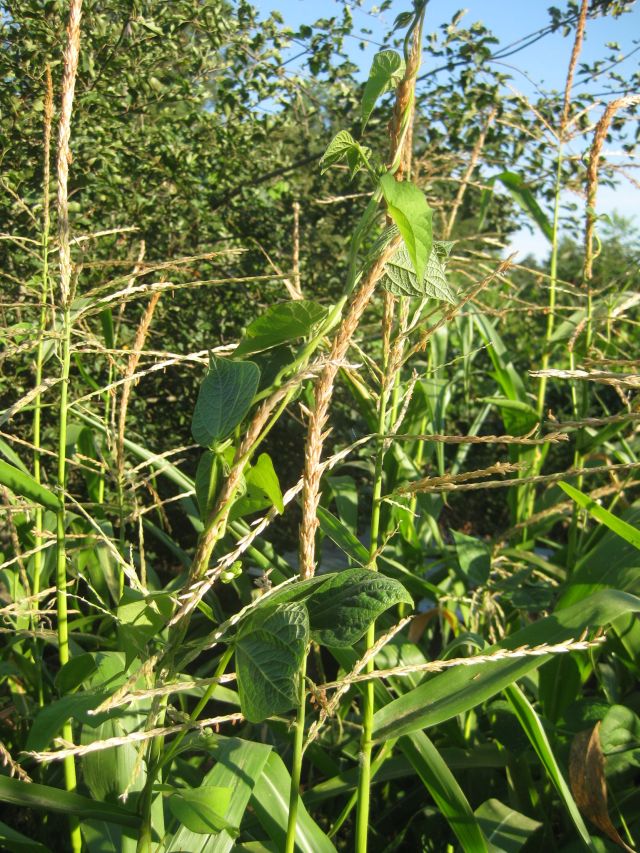
You can see the beans wrapping round the stalks.

bean vines growing on the corn

But is the corn handy scaffolding, or are the beans strangling the corn?

in some cases the aggressive been runners have encircled the corn tassels and pulled them down, hampering corn pollination

Next year I will give the corn a head start rather than plant the beans simultaneously with the corn.

a new brush

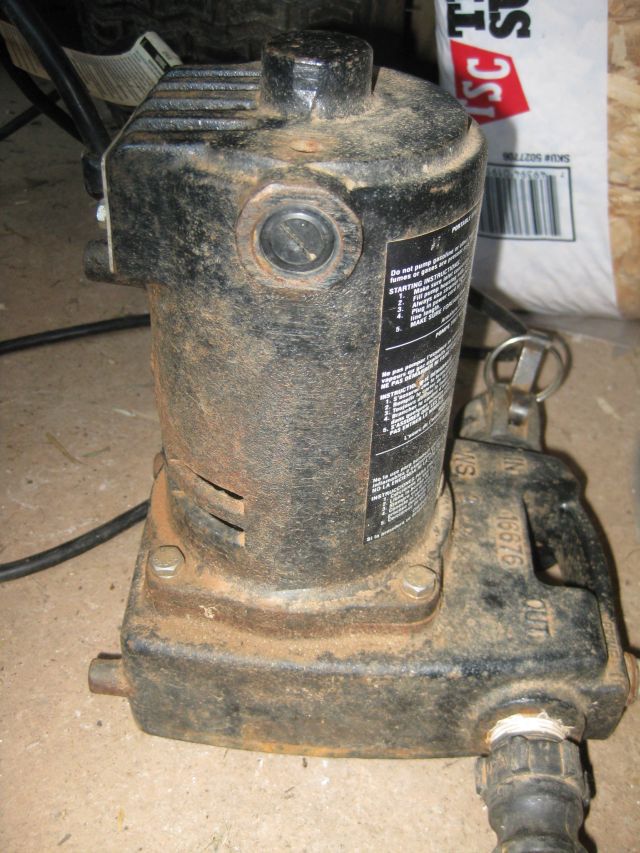
I have 2 water pumps for my rainwater harvesting operations and a couple days ago the one pump was very hesitant on the first go round and refused to start when I needed it a second time.  I remember in South Africa how it was well known that women could fix electrical appliances by giving them a kick – the floor polisher doesn’t work, kick it.  A well aimed kick could even start a car.  So I thought what the heck and I kicked the pump and it started up and ran for a bit.  And then stopped.  Must be the brushes I thought.  There are 2 brushes to a motor and they are easily replaced.

towards the top of the pic in the middle you can see the plug, easily undone with a screwdriver, behind which a brush resides

The first brush appeared fine with much remaining life.  Could it really be the brushes I thought since the 2nd brush presumably replicated the condition of the first.

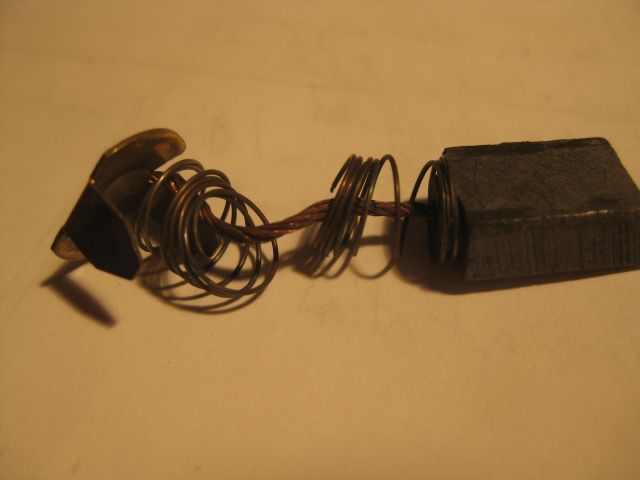
But the 2nd brush it was, u can see the broken spring which disabled the brush

I cannibalized a disabled pump (see previous posts on ice damage to water pumps) and the pump started easily.  A quick inexpensive repair.

problem = solution

Transforming the problem into the solution is a permaculture mantra and discovering instances are pleasing to the audience and more so the discoverer.  I have a problem with rats and mice in my coop.  They are experienced tunnelers and prefer to live in chambers below the dirt floor because they are there protected from the elements, have easy access to food and water, less threatened by snakes and lots of bedding material like pine shavings and snips of plastic bags.  They are fastidious home proud family members and unfairly branded rodents and vermin.  However they are unwelcome in my coop and I tire of their telltale poop strewn on ledges and even in the chicken feed, so I want them out.
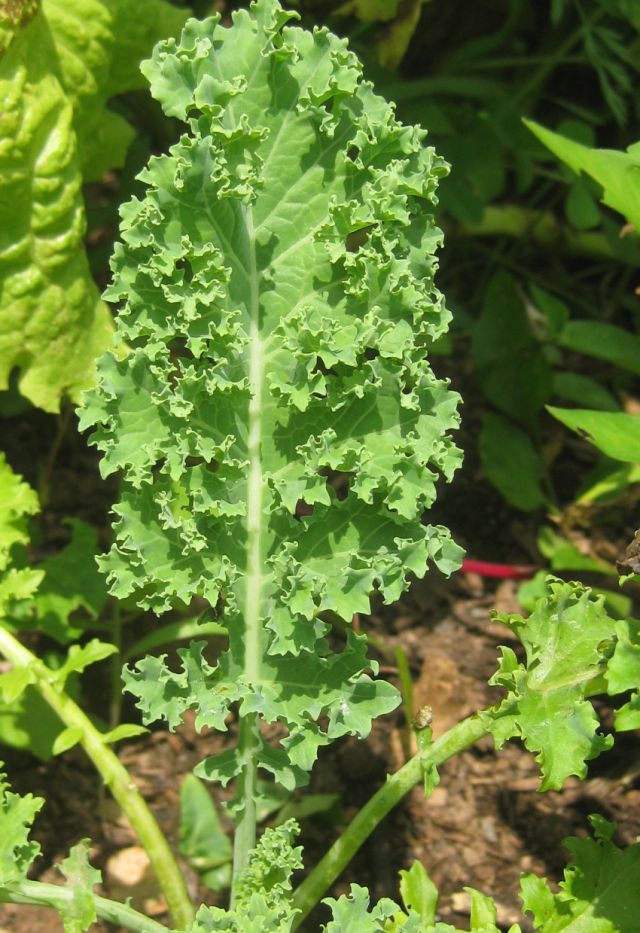
In the beginning I refilled their holes with excavated dirt; then I hammered stones into the hole entrances; then I bought sacks of concrete and concreted the holes.  In 1 week I used the entire contents of a 60 lb bag of concrete.  I then became a bit more creative.  I poured water into their holes and once, a bedraggled rat charged out the hole.  On other occasions, who knows, an inhabitant may have been trapped inside to a watery end.  Some chambers were large and absorbed 4 gallons of water before the entrance brimmed.  I know moth balls would have been effective, or so I have been told, but I did not want  anything noxious in the coop.  And then as I was shoveling chicken poop into a bucket – a brain wave.  Save the haul to the fruit tree and just slide it into the hole.  Followed by a good water drenching and a concrete cap.  Maybe it will work and the labor of chicken poop disposal engineered into a triumph over the inveterate tunnelers.
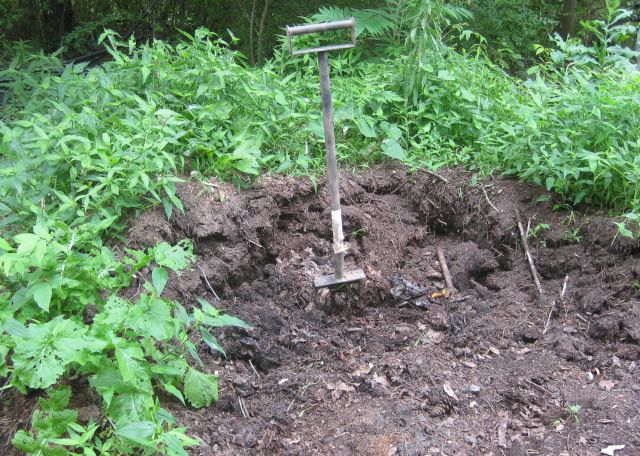
food from the garden

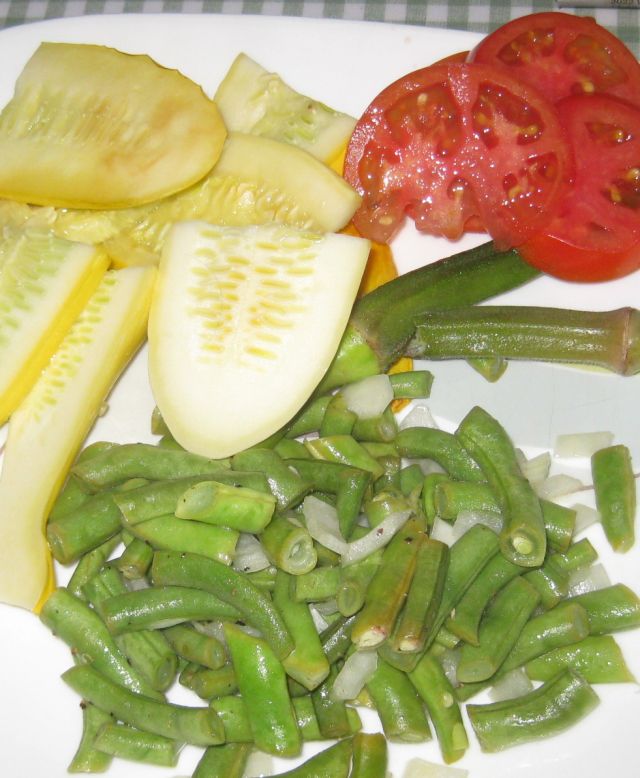
Lots to eat these days.

here squash, beans, onions, okra and tomatoes

Supplemented with soy patties, mango chutney and sweet potato.  And several glasses of zin.  However, the melon which looked promising on the outside.

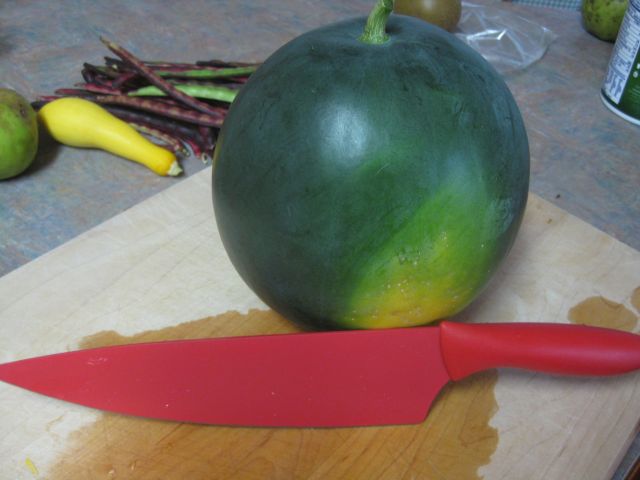
water melon looks promising

Was picked too early.

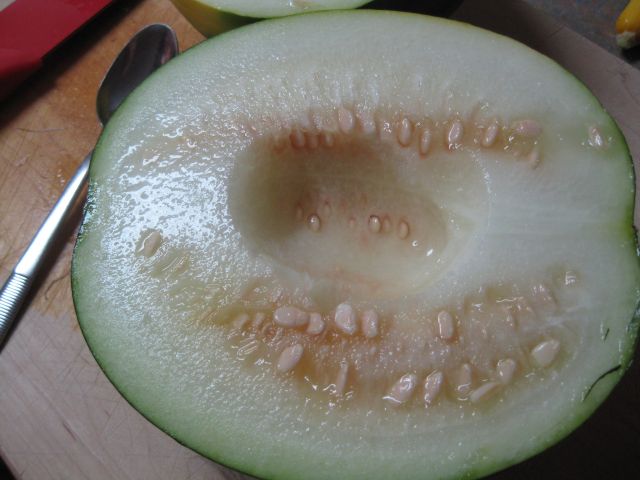
was picked too early.  soft and nice texture but not sweet enough
was picked too early. soft and nice texture but not sweet enough

Wait maybe another week.


what’s growing

An unending bonanza of tomatoes.

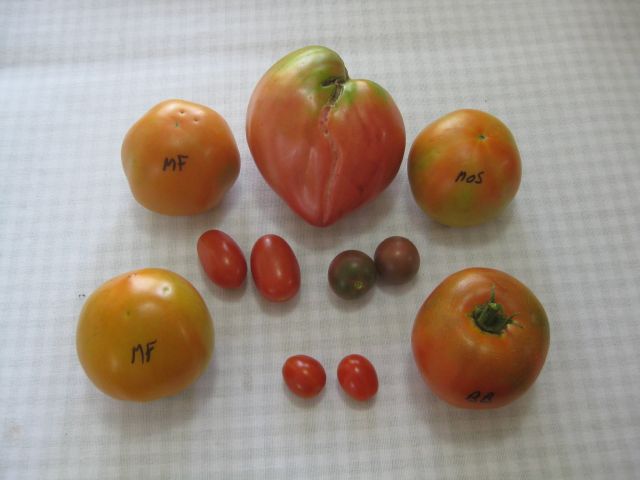
some tomatoes in season - small ones are jelly bean, juliet and black cherry - large ones
some tomatoes in season – small ones are jelly bean, juliet and black cherry; – large ones are mountain fresh, mortgage lifter (mislabeled), oxheart, my own seed and big beef

The small one are more intensively flavored with black cherry (the round dark ones) leading the way.  So far very little pest pressure,  My recollection is the stink bugs and other tomato lovers proliferate toward the end of the season.

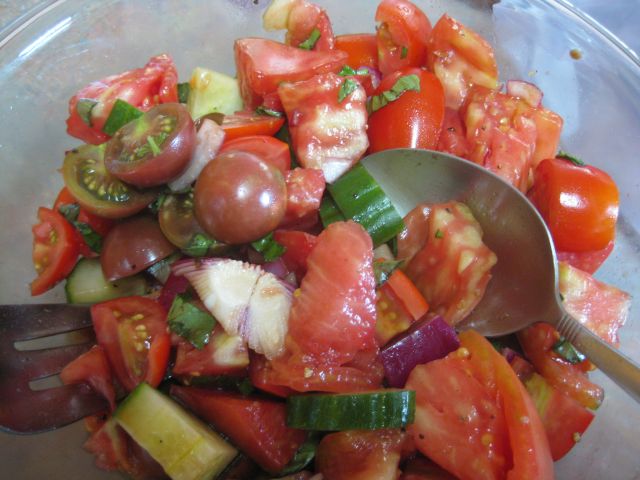
tomato salad with cucumbers, onions and basil

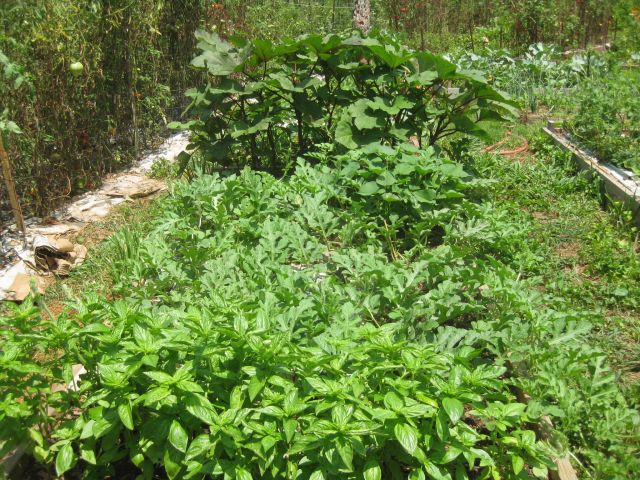
Basil are growing strongly and in the pic below you can see watermelon vines spreading in all directions and burgundy okra which have some weeks to go.

basil, water melon and okra
basil, water melon and okra, with some sweet potato intermixed

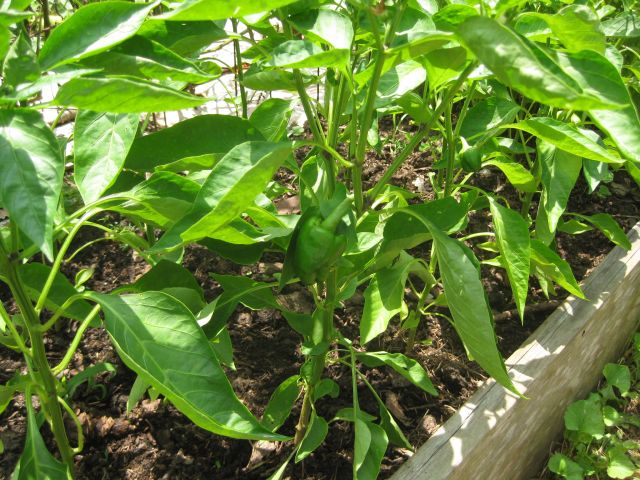
I again planted my peppers late (the first batch were freeze killed in the unheated greenhouse), but they are now growing well and a pepper has appeared.

the first small pepper

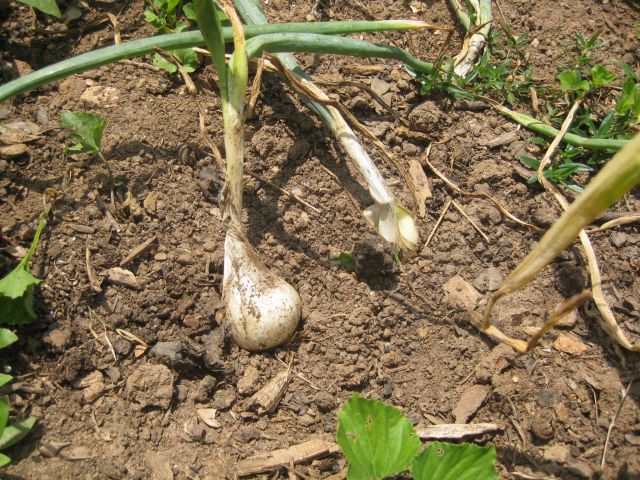
I love onions and I cycle plant them every few weeks- white, yellow, purple, whatever is available.

small white onion, mild flavored.
small white onion, mild flavored, crisp texture

Beans and apples are producing well tho many of the apples have been invaded, which means less for me and the chicken, but enough.


a walk round the yard

The week of rains around July 4 really helped me out.  My rainwater tanks with capacity of 6,000 gals were empty and I was planning to pump from a disused well, when the rains arrived.  Solid drenching rains and my tanks are full.

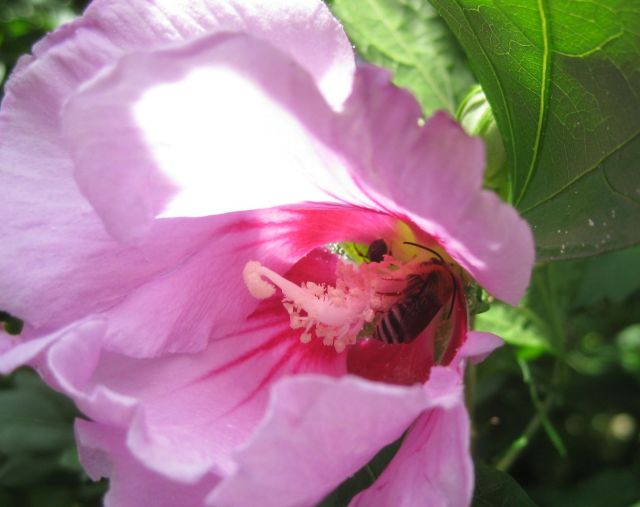
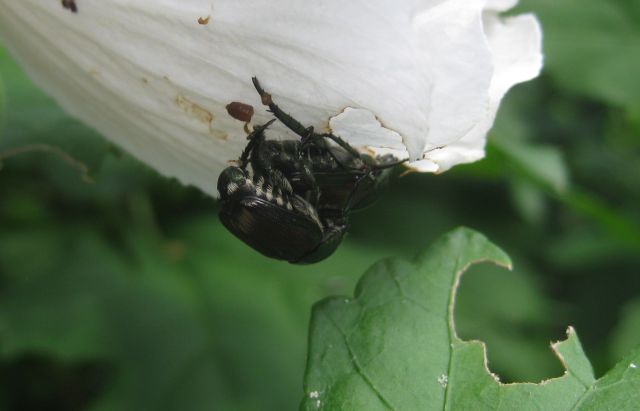
The Rose of Sharon hibiscus is in flower again – it must produce prolific pollen since all types of insects visit it, though the most industrious as usual are the bumblebee.  I was sorry to read that raised temps are adversely affecting them.

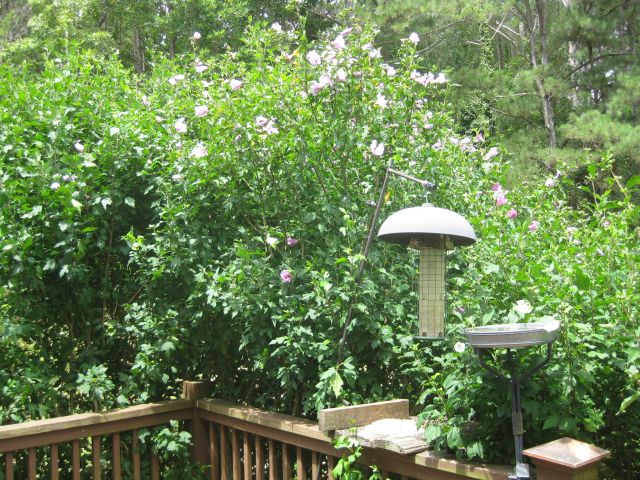
Rose of Sharon grows promiscuously around the deck and provides cover for feeding birds
no shortage of visitors when in bloom
hibiscus d
and a perch for seeding offspring

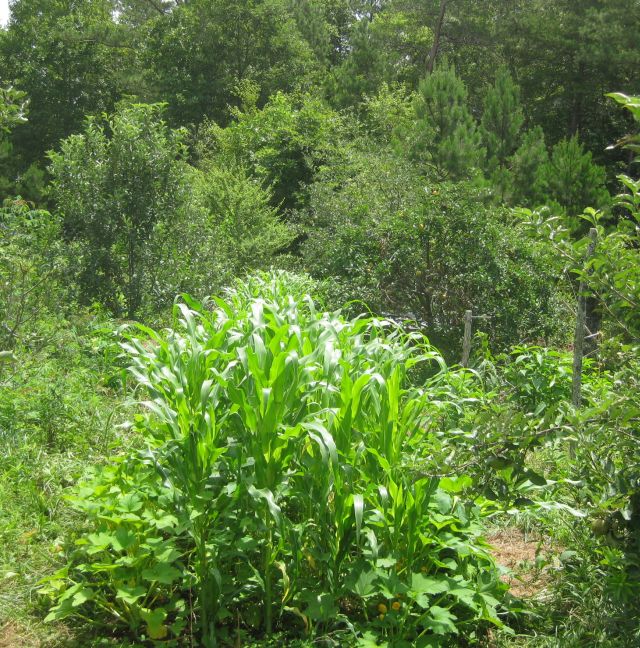
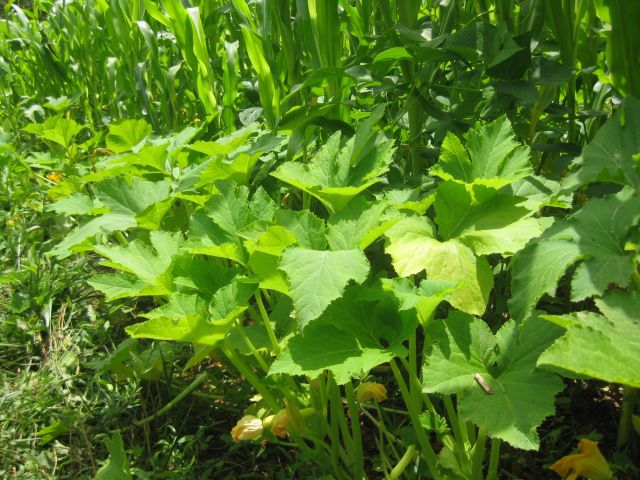
Between my apple trees I have a growing strip perhaps 5ft wide and 60ft long.  This is my second year and results are looking better.  My pattern for the “3 sisters” (actually 4 since I have corn, squash, beans and peas) is to have the squash on the outside where they catch the sun and the corn rows intermingled with rows of beans/peas.

the corn is still young but a pyrmadical shape with squash squatting on the sides
squash snaring the sun, behind is the corn

Every year my squash are felled by a nasty base borer and this year will probably be no different.  However each day we pick and enjoy the young squash and hope for more.

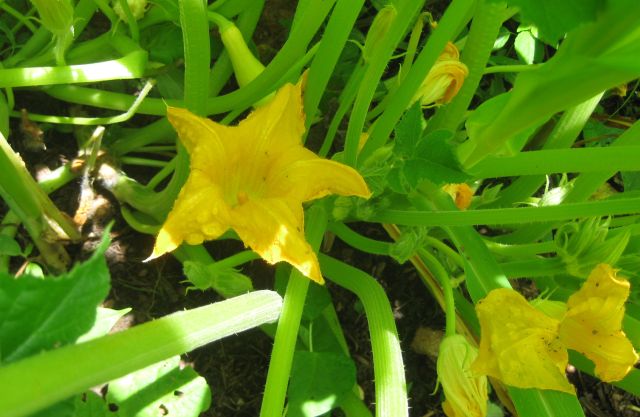
and the squash flower tempting all who pass

Tomatoes are doing well.  No surprise that the heirloom varieties taste the best and at this time the Black Cherry is delicious.  Ukraine Purple which did well last year is off to a poor start, though it is early days.  I am pleased to see that MOS (my own variety – from seed collected last year) is looking strong, though still some time away from harvesting.

MOS tomato - my own seed is growing well
MOS tomato – my own seed is growing well

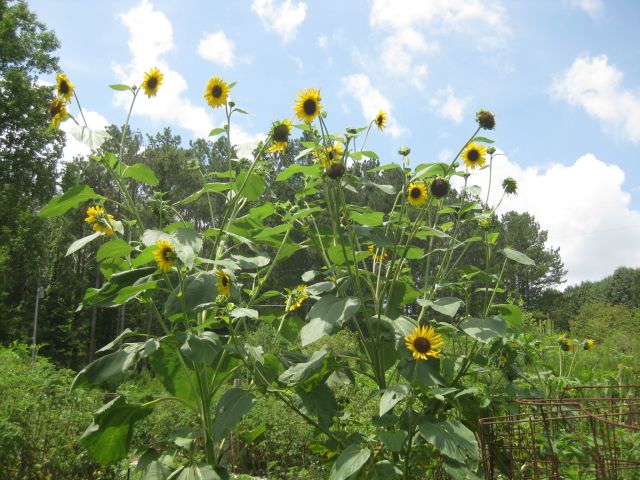
And to keep things cheerful and not take myself too seriously I always intersperse the beds with sunny sunflowers, the taller the better.  I remove their lower leaves so the food producers can access the sun.

sunflowers reaching for the sky

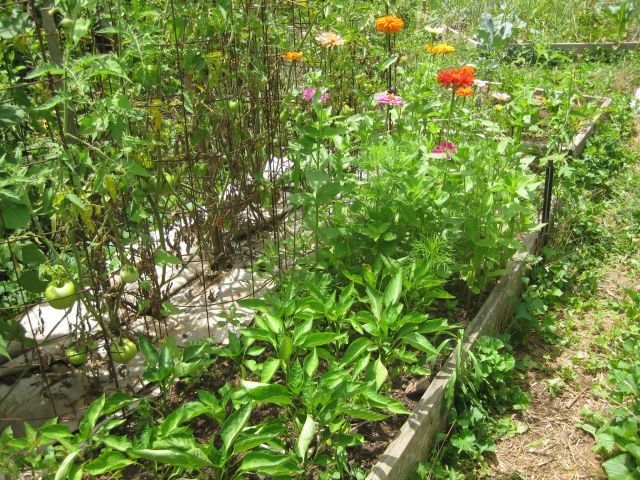
And finally in a bed with a few tomatoes and California peppers, I planted some flower seed, and how cheerful they look.

some gracious flowers, not to promote bio diversity but because they are nice

breakfast and garlic harvest

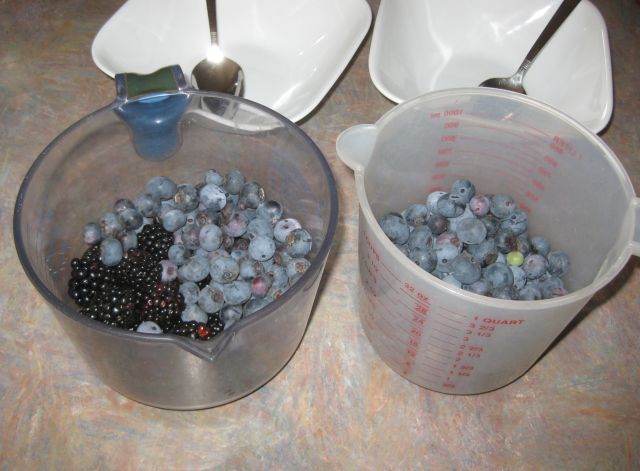
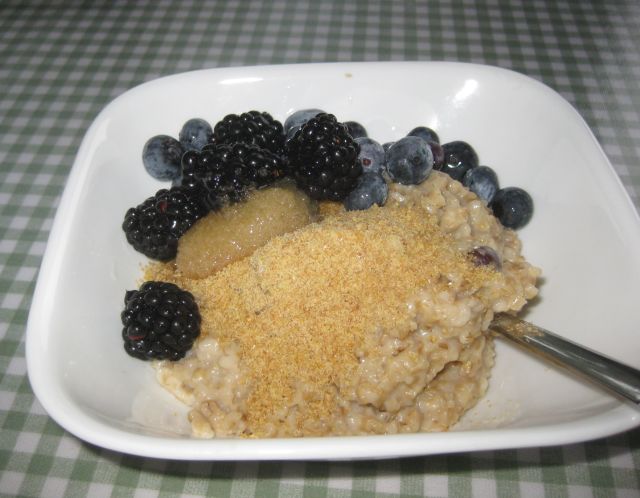
Breakfast this morning (Father’s Day) was a simple affair.  We wandered to the top of the hill and picked a couple containers of blueberries and blackberries.

freshly picked blueberries and blackberries

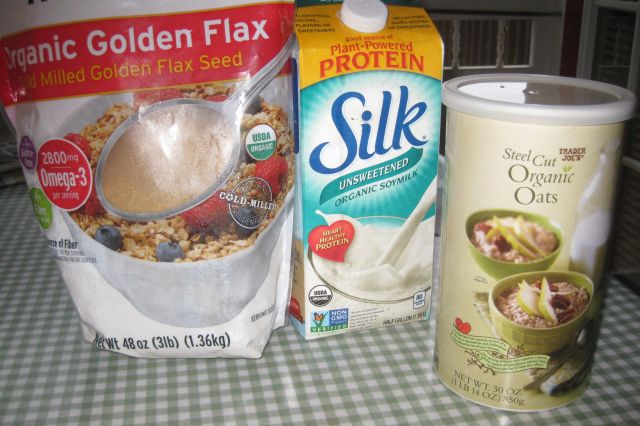
The other ingredients were steel cut oats (pressure cooked 7 mins), flax for omega 3 fats, soy milk and a spoon of my own honey.

the ingredients
the ingredients

And it tasted good and was filling.

a bowl of oatmeal
a bowl of oatmeal

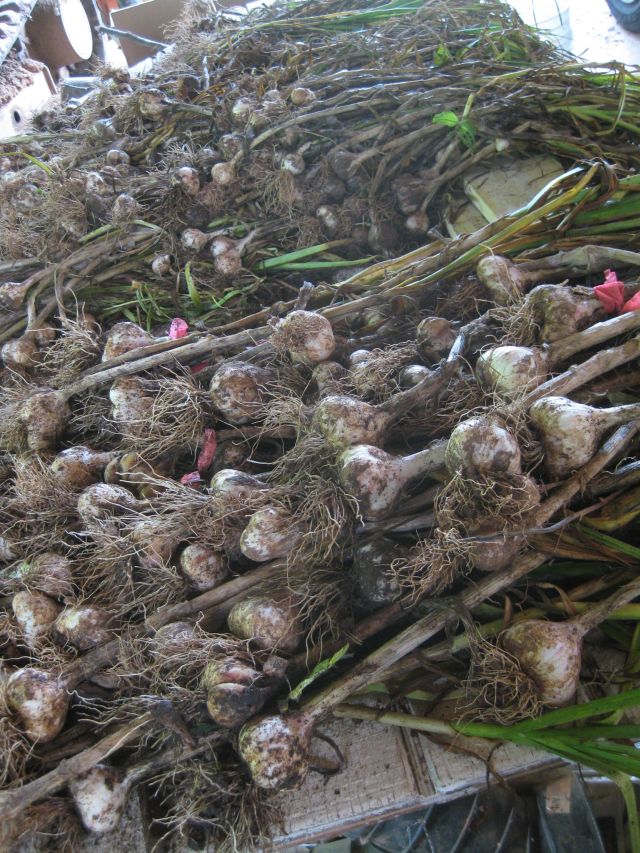
Also this morning, early, I finished harvesting my garlic.  May have left it a bit late since some of the stalks had detached and there are now garlic cloves in the ground for next year.  I segregated the larger garlic (includes hard- and soft-neck) and these are not for eating but for planting in the fall.

larger garlic is closest for  seeding in the fall, the remainder is for eating and friends
larger garlic is closest for seeding in the fall, the remainder is for eating and friends

I will allow the garlic to dry under cover of the carport and then, as I did last year, I will string them up in bundles and hang from the carport rafters.  I had less rotten garlic this way than when I had stored in mesh bags in the basement.

early summer activity

It’s been a good April and May – frequent rain showers to minimize hose watering and keep my +6,000 gal storage tanks fully topped.  Lettuce, onions and garlic have grown well though the lettuce is now bolting.  My lettuce, kale, chard and turnip greens taste real, they have a flavor missing from store bought greens, a lot of which are raised in greenhouses or insect free conditions.   Now I am wondering if there is some advantage to eating kale, chard and turnip greens on which insects previously snacked.  No aesthetic advantage to be sure but perhaps a nutritional advantage?

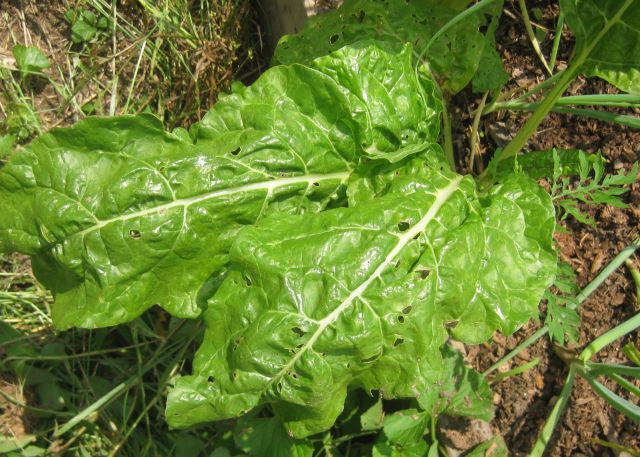
chard tends to grow well throughout the year, tho subject to insect predations

In the excellent Coursera course “What a plant Knows (and other things you didn’t know about plants)” given by D Chamowitz of Tel Aviv University, which I took in 2013, examples are given of how plants communicate with each other when they are attacked by insects and how the recipients of the warning produce increased levels of chemicals including toxic phenolic and tannic compounds to deter predators.  See also his very readable book – “What a Plant Knows”.  The focus was on how the signalling occurs including apparently smell (who knew plants could smell?).  Of interest to me is whether the chemically enhanced plants are better for eating.

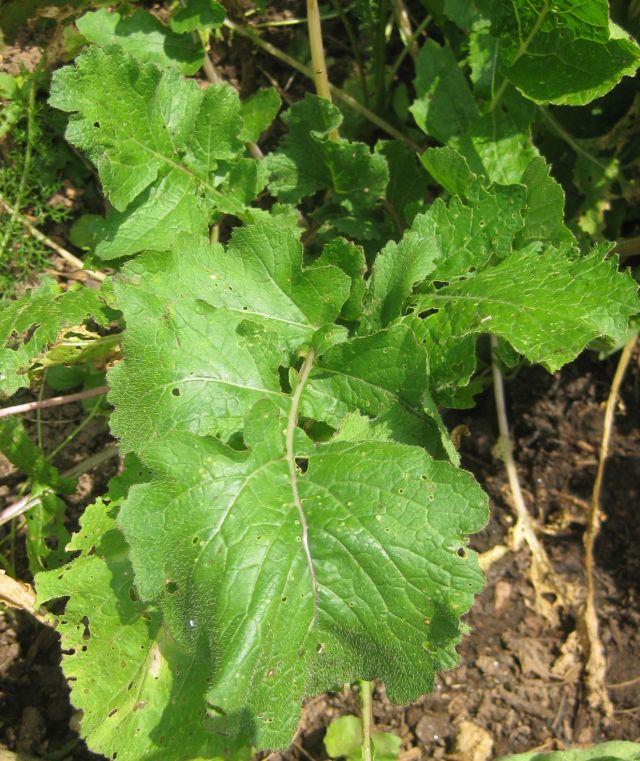
turnip greens are loaded with taste and when sliced and cooked no evidence of prior munchers
turnip greens are loaded with taste and when sliced and cooked no evidence of prior munchers remains

In “Eating on the Wild Side” the author Jo Robinson suggests (p. 30) that tearing up the lettuce before storing it increases its antioxidant value  because the plant produces chemicals just as if it was being eaten by an insect or animal.

my kale leaves are small, my bad I bought the dwarf variety, but it is my favorite and pretty insect resistant
my kale leaves are small, my bad I bought the dwarf variety, but it is my favorite and mostly insect resistant

Which gets me back to my insect chewed vegetables – perhaps the reason they taste better is not only because they are freshly picked but also because they have endured and responded to chewing insects?


my compost is the driver for growth, not for me store purchased supplements. plus a handy strong fork
my compost is the  growth driver, not for me store purchased supplements. plus a handy strong fork

In the past 2 weeks I have removed lettuce which was bolting, seeded okra (a Southern treat which I eat raw from the plant), more onion bulbs (there can never be enough onions), and the three sisters – actually there are 4 – corn, squash, beans and peas (yes the local seed store said I could now plant peas).   The apple trees are laden and my Giant Korean pear (prized above all other producers) has more pears than ever.  My two hives look healthy though I am concerned about varroa mites.  I haven’t checked and won’t use chemicals but varroa concern is large nationally and amongst local beekeepers.  I planted about 50 tomato plants (mostly heirloom varieties though some hybrid) and if these do well, I will take them to market.  Potato plants look healthy and include a few sweet potato, which vines I saved  last year.

I still have all 11 chicken (1 rooster and 10 hens) and they look fine apart from some broody ones, which are isolated for a few days to recover, some mites, which I treat with diatomaceous earth, and some rats raiding the coop for food.  Muscadines, blueberry, blackberry and raspberry all doing fine.  Asparagus produced and is now mainly out of season.  My one regret is I discontinued the strawberries which were so sweet in the past, something to consider for next year.

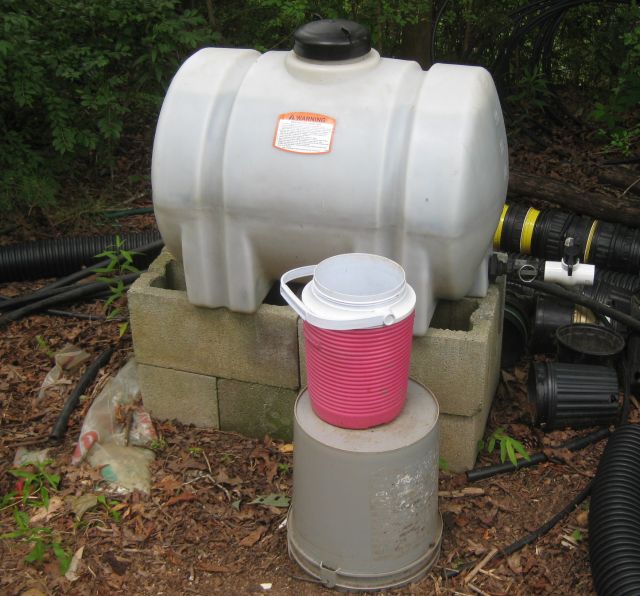
with so much comfrey around I decided to again produce a tea in this 30 gal container with a small capture unit for liquid human contributions

2 simple lessons learned – garlic and the chicken coop

I first planted garlic in fall 2010 – 4 varieties 1) organic California Early White – softneck ($4.99 lb); 2) Elephant garlic – very mild like a leek ($4.99 lb);  3) organic Music Garlic – hardneck  ($12,99 lb.) – the only reason I bought this more expensive variety is because my family is into music; 4) organic Dujansky  – hardneck ($9.99 lb).   They grew well, I harvested them and each fall I planted out the cloves for the next year’s harvest.  In fall 2014 I must have planted out >200 cloves and they are all doing well.  But most of the cloves were small.  And then it occurred to me, a sudden insight, that I had been selecting down.  During my meal gathering forays I always picked the best looking garlic plants and after the harvest when they were strung up to dry, my better part/chef always picked the biggest garlic because they were “less labor intensive”.  This human selection process inevitably resulted in the smallest, least desirable garlic surviving into the fall and becoming the forbears of the next year’s crop.  This was real dumbing down.

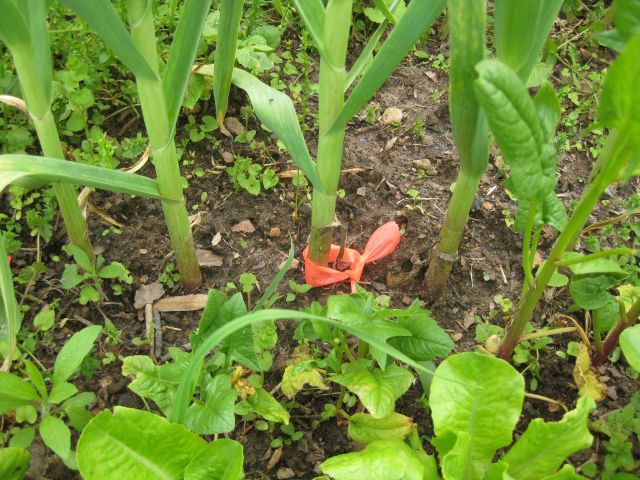
So this spring I made a change.  With surveyor’s bright colored tape I made gentle nooses around the best looking biggest garlic.  These will not be picked for eating and will be separately stored for next fall planting.  Additionally I will intentionally first pick for eating the garlic plants closest to the selected few so they will have access to more light and nutrients and grow even better.

one of the 20 garlic selected for special attention
one of 20 garlic selected for special attention

My other lesson pertained to the chicken coop I built in October 2011.  If you follow the link and look at the photos of the interior you will see that the wooden walls rested on cinder blocks and to cover the hollow centers I ran wood boards over the exposed blocks with part of the board extending over the dirt floor.  My logic at the time was I didn’t want poop falling into the hollow centers or onto any dirt and rocks used to fill the centers.  Pity.

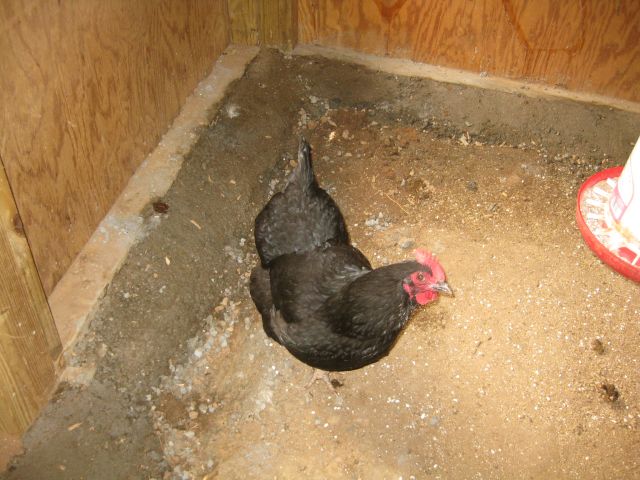
Fast forward a few years and the coop is home not only to a happy rooster and his 10 consorts but to numerous rats which hide under the boards and have built tunnels and chambers under the dirt floor.  Initially I tried filling the chambers with stones but these were excavated by the following morning.  The only solution I learned was to add concrete mix and then water into the chambers and this solidified mass defied the rats best efforts.  And the boards.  I decided they had to go.  So I unscrewed them, filled the hollow centers with stones and dirt and then applied a thick layer of concrete troweled smooth to enable easy removal of chicken poop.  Here is Onyx, a Black Jersey giant  and behind her you can see the concrete application.  Still a bit rough but as I worked my way round the perimeter I became more adept and the concrete finish on later stages looks almost professional.  Another mistake identified, corrected and lesson learned.

a concreted corner inspected by Onyx

the beautiful and the ugly

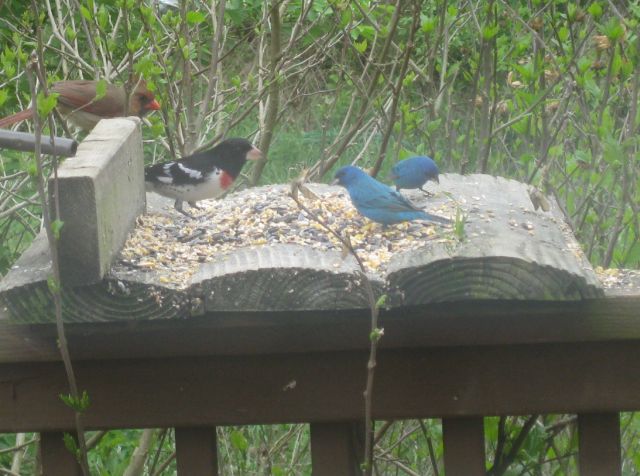
This time of year we have at our feeder the residents (northern red cardinal, blue jay, mourning dove, chipping sparrow, indigo bunting, tufted titmouse, and our state bird the brown thrasher which has as many calls as a mockingbird) and the visitors (dark eyed junko, white breasted sparrow).  And this year a striking new visitor – the rose breasted grosbeak.

the striking grosbeak, the shimmering blue buntings and a female cardinal

I count the grosbeak and buntings among the beautiful.

Next to the chicken coop is a mulberry I planted some 4 years ago and, tho it’s supposed to be adaptable, it has never thrived or produced fruit.  Maybe I noticed this last year and paid no attention, but this year I decided to follow up.

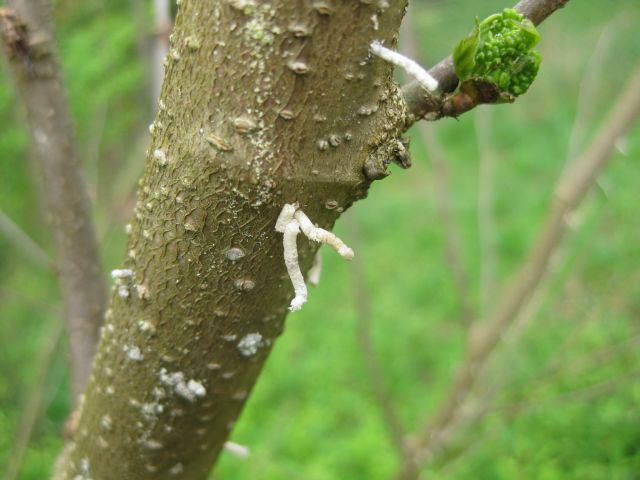
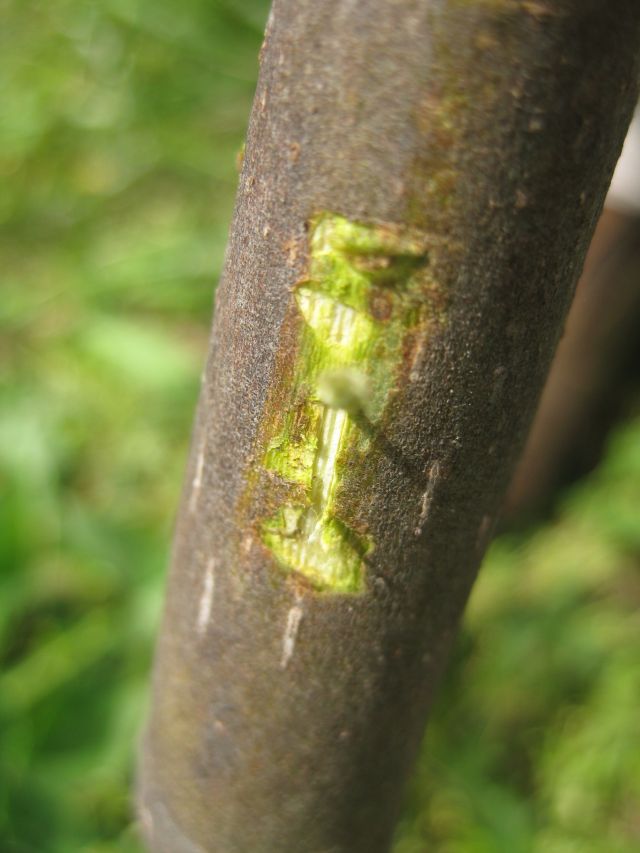
evidence of a beetle borer - the Asian Ambrosian beetle
evidence of the Asian Ambrosian beetle

This infestation is difficult to resolve organically.  I cut the 8 ft tree into small pieces, placed them in a garbage bag and will drop off at the local waste disposal site.  I left a few inches of trunk at ground level which shows no sign of attack and will see what develops next year.  Tho some distance away I did not want my fruit orchard to receive the attention of the female beetle.


spring activity and some lessons learned

The garden is beginning to respond to spring.  Interestingly my diary (postings on this website) indicate activity is about 2 weeks behind where it was in 2012 – see my post on March 26, 2012 where growing was further advanced.  Attributable of course to the unusually cold periods in February and March.

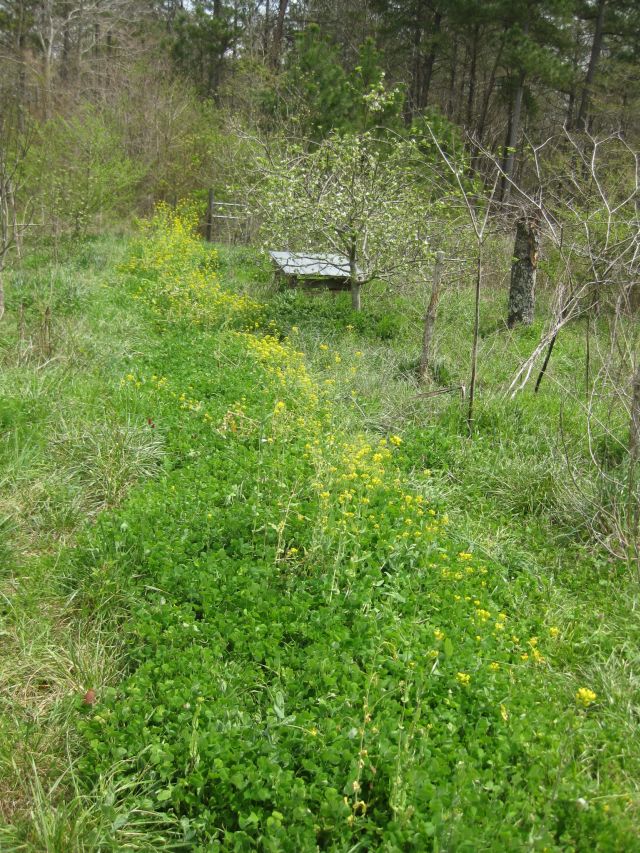
Last year I cultivated a strip between my apple trees for corn.  Not very successful but in the fall I seeded with turnip and clover and winter pea and it is thriving now.

a pretty sight - maybe corn will grow better this year?
a pretty sight – maybe corn will grow better this year?

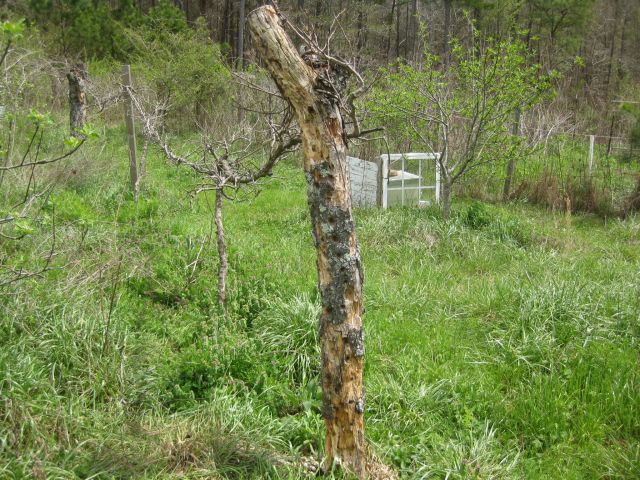
I am learning not to be too idealistic.  For posts for my muscadine vines I used steel posts and cedar posts but also the trunk of a felled cherry tree.  I did not wish to use pressure treated wood posts.  Well, grubs invaded the cherry post and then the wood pecker got busy and the result is a much weakened post which must now be replaced.  And I will probably use a 4×6 pt wood post – not organic I know, and a strong steel post would be preferable for this anchor position.

the pitted post which must be replaced

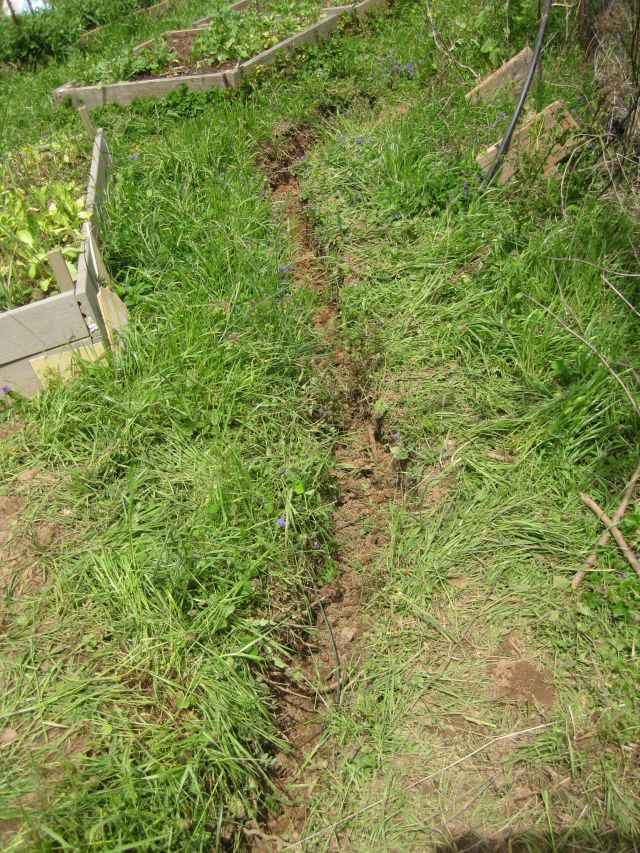
Another lesson learned is the importance of keeping tree roots out of the growing beds.  Last year I invested much effort hacking down the bushes and small trees growing along the east side of the vegetable growing area.  The rationale was this would take care of their roots which invaded my vegetable beds.  Well it did for a time but there were two negatives – it removed shelter for the insect loving birds and, since I did not pull out the roots or roundup them ( which I will not do on principle) the growth and roots came back.  This year I am using the trenching method – a 1 ft deep trench dug alongside the growing beds which severs the roots.  Though I am learning that the roots will dive deeper so vigilance and deeper trenches will be required.

portion of the long trench. it involves work but also provides good soil for beds and potting
portion of the long 1 foot deep trench. it involves work but also provides good soil for beds and potting


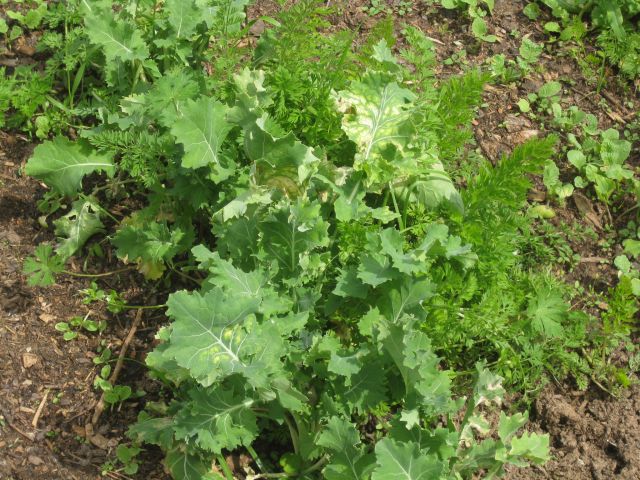
Some of the vegetable leaves lost their green not because of nutrient deficiency but the result of the cold weather.

cold damaged kale leaves. the younger leaves look fine
cold damaged blanched kale leaves. the younger leaves look fine

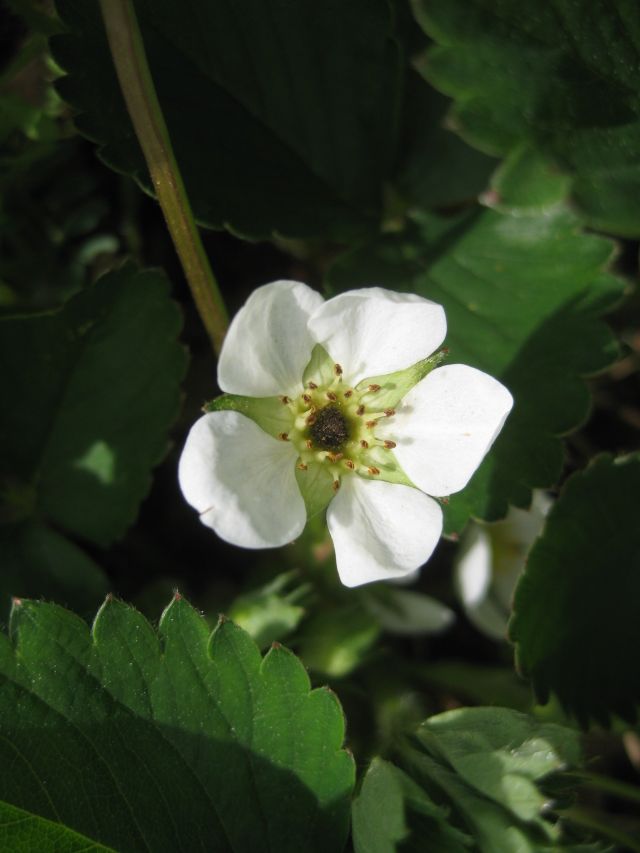
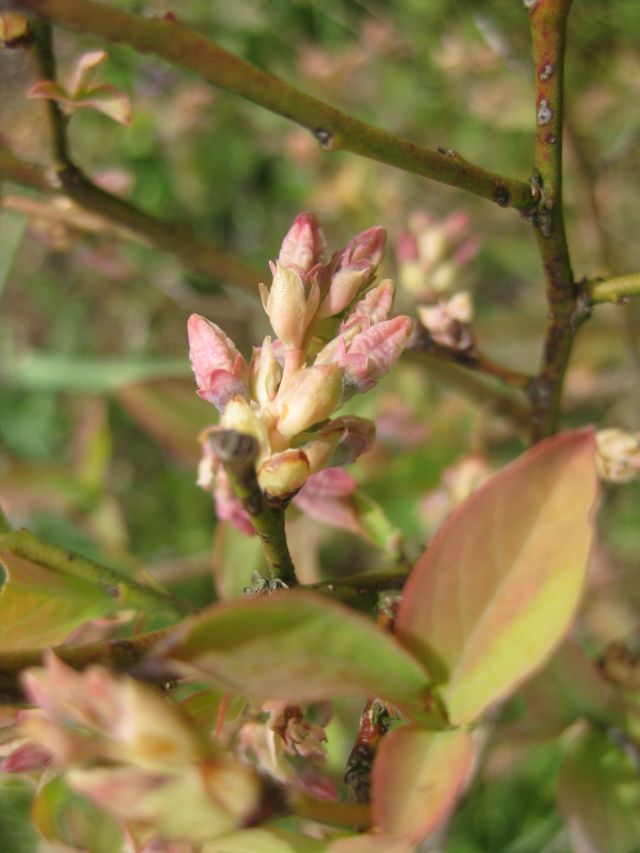
Strawberries and blueberries now have flowers.

strawberry
strawberry
blueberry
blueberry


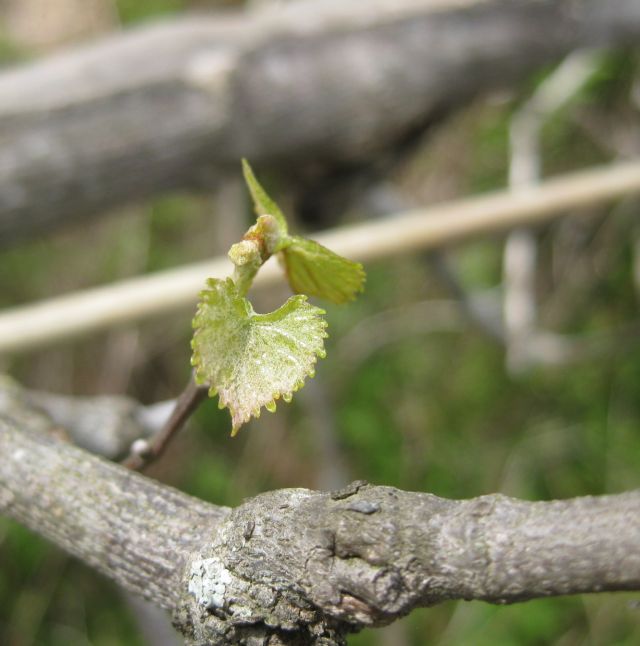
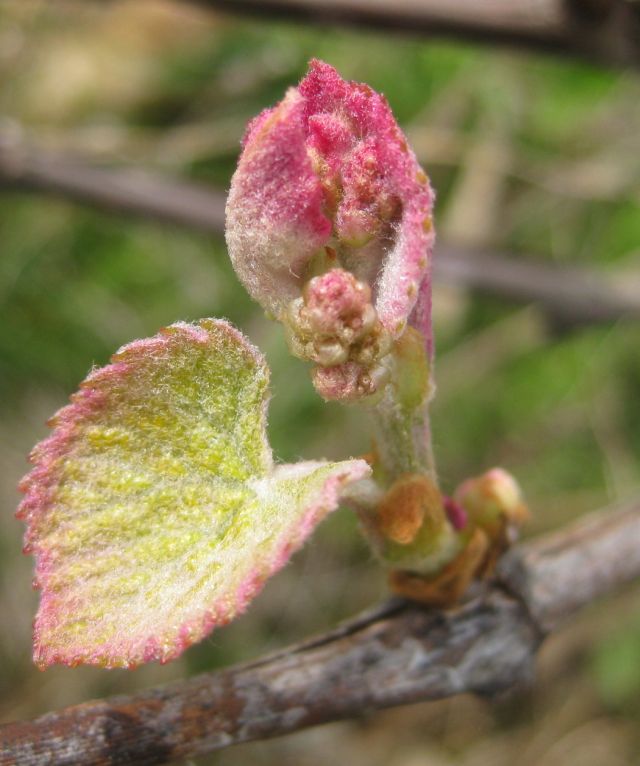
And my muscadine (v. important crop) and grape (paltry producer) are now in leaf.

the prolific disease free nectar tasting muscadine now in leaf
this grape looks promising but history is it will taste lousy


As for my figs – I enclosed them in plastic bags during the v. cold nights but again it looks like most of the above surface areas died from the cold.  However this small fig partially survived.

some welcome green on the trunk