low tech shortcuts

There is something about us amateurs that either through haste, ignorance or a desire to perfect, we usually take too long to complete tasks.  An example of haste is not setting up carefully before painting and then afterwards spending extra time removing the splash paint from borders or wooden floors or carpet.  Our desire to perfect often compels us to give extra effort  to behind the scene details which the pro bypasses.

Not that the pros get it right all the time – when I purchased the log cabin I decided to have the exterior professionally painted since some of the siding is more than 40 ft from the ground and, as I work alone, I didn’t want a fall with no one around.  The west facing sides of the cabin are exposed to the sun and had black mold.  The painters pressure washed with chlorine and then painted.  I questioned whether the surface shouldn’t be scraped clean before painting and they assured me the chlorine and pressure wash had killed the mold and the surface was good.  I painted the barn and I similarly applied chlorine (and in the process spotted and destroyed a perfectly good shirt), but went a step further and, with a large scrubbing brush, physically removed the mold from the wood surface before painting  with a similar type but cheaper paint.  Fast forward 3 years – every year the pros have had to “touch up” the sun facing areas where the paint flaked off.  Since I have a 5 year guarantee the cost to me for their annual visits has been limited to the cost of a pressure wash.  And my paint job with the cheaper paint –  no sign of flaking at all.

But it is always gratifying to find a legitimate short cut.  I hope the shortcut I am about to describe will prove, over the next year to be a legitimate short cut.
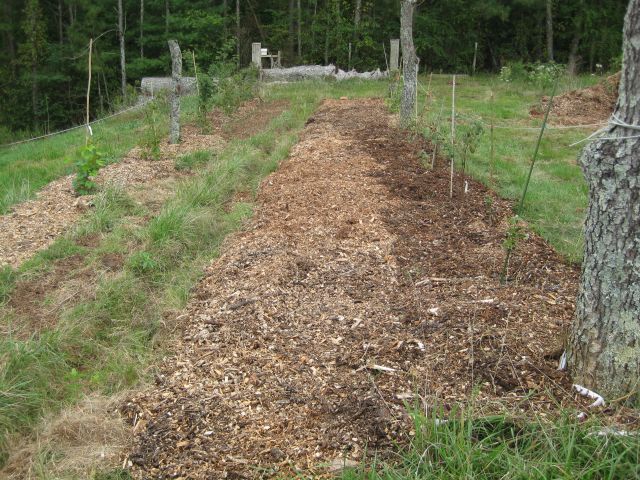
manured, papered & mulched future growing area

I have two rows of berry plants 12 ft apart and each 66 ft long.  The 12 ft separation consists of a 4ft border, a 2 ft contour ditch and a 6 ft border.  Both borders are populated with thick local grass interspersed with bermuda grass.  I want to transplant my strawberry plants (Earliglo – early season) which seem to thrive in local conditions, produce medium size very sweet strawberries and spread aggressively, to the 6 ft wide 65 ft long border area.  So how to prepare the area for planting the strawberries.  I decided to spread horse manure 2 inches deep along the area, then cover the grass and manure with thick builders’ paper (purchased 140 ft, 3ft wide for approx $11) and then cover it all with mulch.  My hope is that in 6-8 weeks time the grass will have died from lack of sunlight, the manure will accelerate the decomposition of the grass, and the mixture of manure, dead grass and topsoil will provide a healthy welcome for the transplanted strawberries.  The mulch should enable the strawberries to thrive without weed competition.  I would not have attempted this shortcut earlier in the year when the grass grows strongly but now, in the second half of September, with shortening daylight and with even the poson ivy faltering, it seems a reasonable bet.  The long way round would have been to remove the grass but to do this I would have had to remove the topsoil as well and then have had to add back compost to provide nutrition.  A lot of work even if I had used the bobcat.
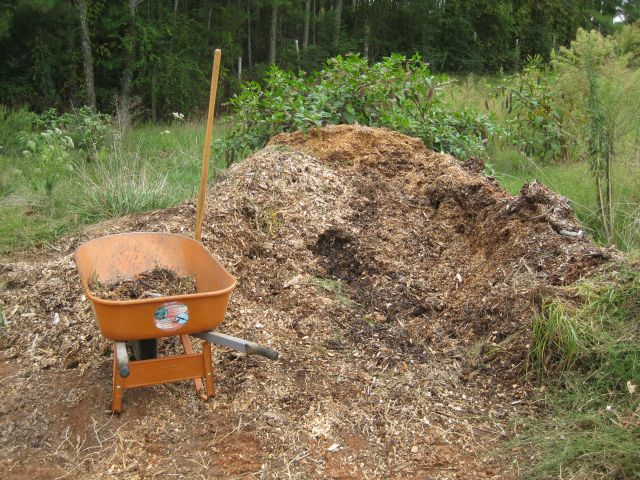
handy heap of mulch, 6 months old

Incidentally, talking of manure, there is manure and manure.  In the 1800’s before the advent of modern fertilizers, much experimentation was done on different types of manure and how manure should be stored.  Books were written on the topic and these are available free for download at www.Gutenberg.org.  An interesting conclusion is that the best manure is that stored outside in a heap, second best is manure stored in a heap under cover, and worst is manure spread on the ground outside.  See chapter XV of Talks on Manure by Joseph Harris dated 1919.  I mention this because there is new management at the horse stables I visit and, instead of piling the manure in a heap and loading my pickup directly, they have have spread it out on the ground and then drive around in their tractor to gather it up and load it.  It seems the weight is half what it used to be (in the past I had to adjust the rearview mirror because the weight at the back depressed the truck significantly, now no adjustment is required) and, from my perspective, I am getting half the nutrients I used to get.  Though it requires much less effort to offload, the maxim “no gain without pain” is again validated.  Maybe I should find a new source of supply!
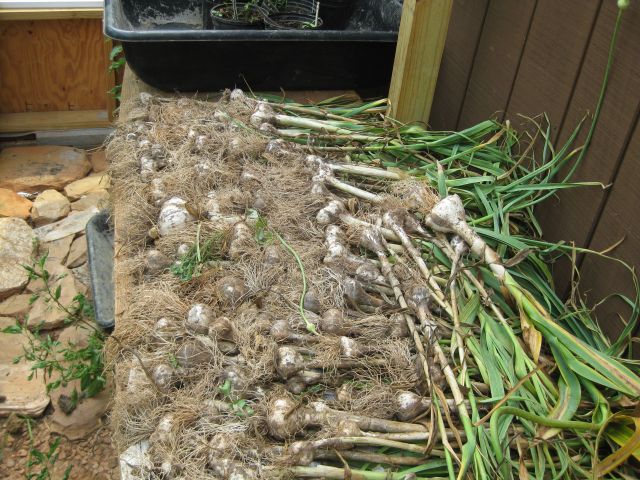
 

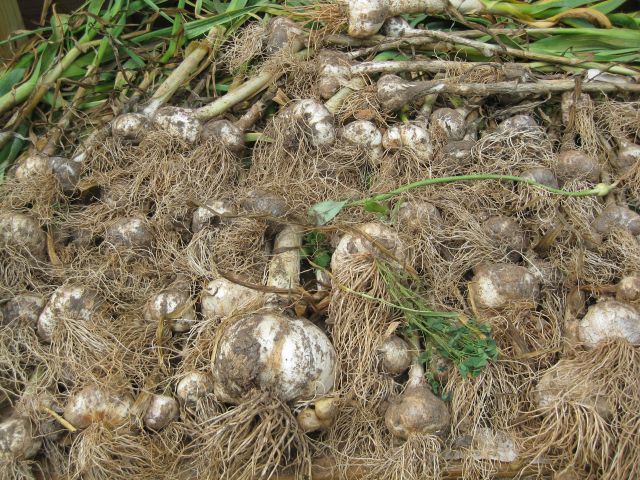
garlic

As the heat subsides it will soon be time to plant garlic again.  Last year, influenced by several fall articles, I bought four varieties of garlic and planted them in October.  They were: 1) organic California Early White – softneck ($4.99 lb); 2) Elephant garlic – very mild like a leek ($4.99 lb);  3) organic Music Garlic – hardneck  ($12,99 lb.) – the only reason I bought this more expensive variety is because my family is into music; 4) organic Dujansky  – hardneck ($9.99 lb).

I know that my raised beds drain well (because they are raised) and I had read it is important to have good drainage,  I did most of my plantings in two 8x4ft raised beds and the balance in a long bed alongside the fruit trees.  The bed is an excavated trench filled to surface level with compost.  The raised beds are in the main growing area encircled by a fence, the trench bed is accessible to footed wildlife.  The instructions from Peaceful Valley, the supplier, referenced gophers and, although we do not have these, I was concerned about subterranean attacks and enclosed some of the plantings in hardware cloth.  I watered the raised beds regularly but only occasionally watered the trench bed.  All the cloves grew, those in the raised beds grew better.  There was no evidence of pest damage to any of the garlic.

When the scapes appeared I removed them and in mid-June I harvested all the garlic.  Initially I left them to dry in the greenhouse but it was too hot so I stored them in the open carport until they had dried.  I then placed them in mesh bags which I have suspended in the basement.  The garlic tastes great and we especially like the elephant garlic.  This garlic was for personal consumption and friends and we have a lot left over.  The elephant garlic is our favorite and I will plant out all the elephant garlic cloves and just some of the other garlic.  Next year I shall add garlic to my list of produce to sell at the local market.

The Peaceful Valley planting guide says to avoid planting garlic in the same place where I previously grew garlic, onions or other alliums, so I will have to prepare new beds, perhaps at the top of the hill where there is good sun exposure and drainage.

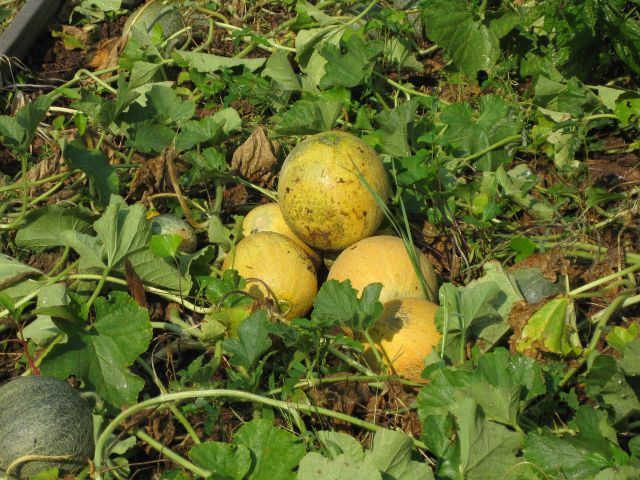
cantaloupe

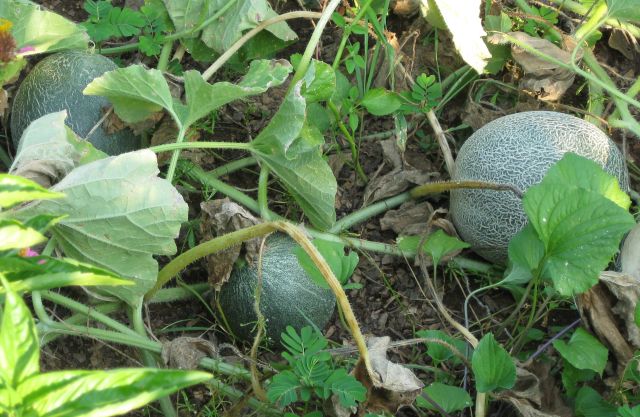
cantaloupe in raised bed

During the past week the cantaloupe have shown they are ready for picking.  Quite suddenly their color changes from green to yellow, their stem withers and they exude a strong musk aroma.

I planted the seeds directly into a raised bed (8ft x 4ft) on Sunday 6/26.  I had purchased a packet of Burpee’s Ambrosia Hybrid which cost $1.89 (before taxes) and I was disappointed there were only 12 seeds in the packet.  I formed two hills in the bed and placed 6 seed in each hill.  Previously I had harvested my garlic from the bed and I just added some more compost before planting the cantaloupe seed.  I watered well and often with a hose and initially did some light weeding.  All seeds became seedlings and, with watering, developed into strong plants.  Unlike my struggle with squash, the cantaloupe plants were not visibly visited by any pests.

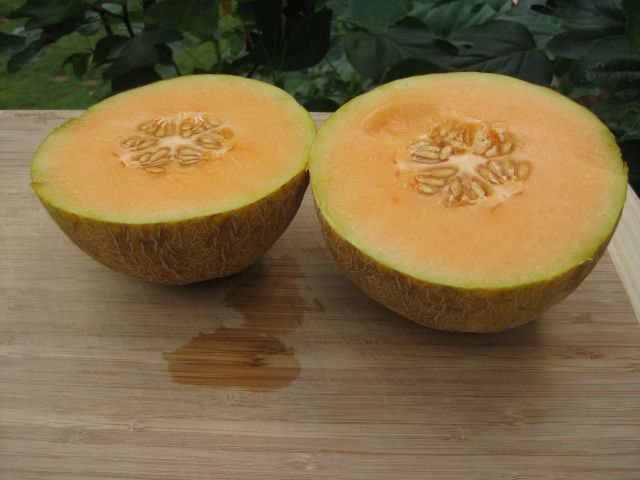
The melons are well formed and look great.  Of course there is usually a snag and it is the taste which is tending to neutral and only slightly sweet.  I wonder if that has to do with their nutrition or growing conditions or perhaps I should have planted them earlier in the season, as suggested by the packet.  However, the most recently picked are sweeter to the extent we are enjoying them ourselves and not giving them to the chicken.  I have decided to save seed from the sweeter melons for next year.

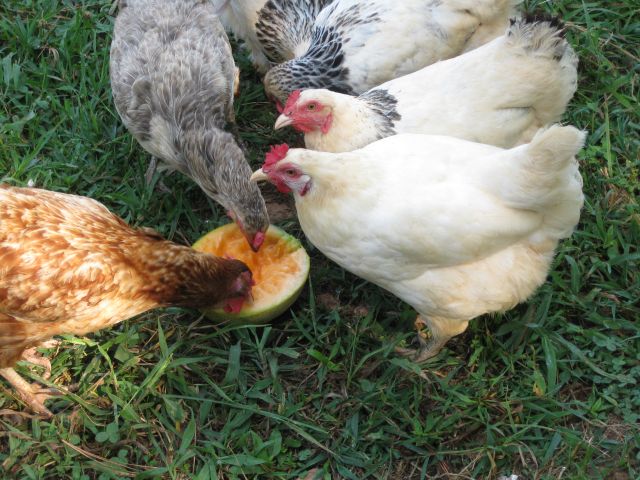
The chicken, both flocks, love the melons which I provide after removing all the seed.  Interestingly, only the older birds like bananas.

cantaloupe
chicken like cantaloupe


organic grown – what does it mean?

For me to say I grow organic requires me, at a minimum, to understand what this means.  The simple definition from the EPA website is “Organically grown” food is food grown and processed using no synthetic fertilizers or pesticides.

But what about the use of horse manure in my compost, or my chicken patrolling the growing area, or preservative treated posts to anchor the cables for muscadine, tomato cages, berry plants?

I am not an attorney or expert in this area and the following are my layperson’s understanding of some of the regulations – so don’t rely on this!

The National Organic Program (“NOP”) states that organic production must comply with the Organic Foods Production Act of 1990 (“OFPA”) and title 7 part 205 of the Federal Regulations.  Part 205 includes very detailed requirements for processes, record keeping, inspections and state certifications.

For my particular situation, where my gross annual agricultural income from organic produce is less than $5,000, I do not require certification but must nonetheless comply with the applicable organic production, handling and labeling requirements.  However, at the local market where I sold my lettuce earlier this year, as well as at a larger market in Atlanta where I had preliminary discussions, the organizers made it clear they would not permit anything to be labeled organic in the absence of organic certification.

Section 205.202  clarifies that there is a 3 year look back period i.e.the field which produces the crop must have had no prohibited substances applied during the 3 years immediately preceding harvest of the crop.

Section 205.203 requires nutrients and soil fertility be managed through rotations, cover crops, and the application of plant and animal materials.  Raw animal manure (my chicken manures?) cannot be incorporated into the soil within less than 120 days from the harvesting of a product whose edible portion has direct contact with the soil surface (carrots or onions?) or 90 days  for a product where the edible portion does not have direct contact with the soil (tomatoes?).   As for composting horse manure, there are required initial Carbon:Nitrogen ratios and temperature ranges and duration.

Section 205.236 for chicken to be organic they must have been under continuous organic management from the second day of their life; and cows producing organic milk products must have been under continuous organic management for 1 year prior to the production of the milk.  The inputs such as the seeds or food consumed by the animals must,  with some exceptions, be organic and not have come into contact with prohibited substances.  Therefore, according to my understanding, no treated posts in the planting areas.

There is a debate about whether honey can be organic since to qualify, the inputs, which are the nectar producing flowers visited by the bees, must be organic and since bees have a flying radius of up to 5 miles can anyone confidently assert they did not visit a chemically treated plant?

Just a culling of some of the provisions and my potted understanding of them!

I should add that I have been a member of Georgia Organics for at least the past 5 years and they have excellent materials on their website on organic farming as well as “sustainable agriculture.”

recycling, scuppernong and the first crow

Recycling

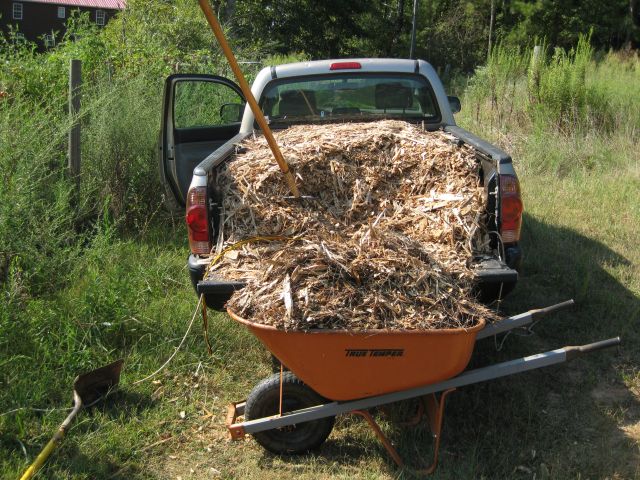
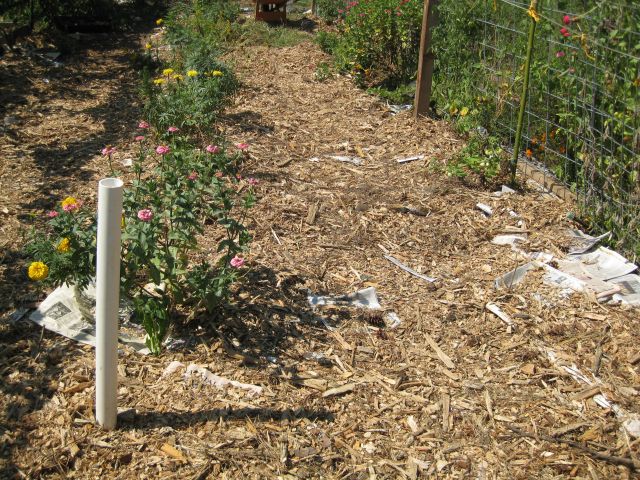
I recycle whenever possible.  Two favorites are newspapers and woodchips.  I was able to twice load my pickup with pine tree woodchips and these, together with bundles of accumulated newspapers, gave me the incentive to weed the overgrown walkways in my vegetable garden.

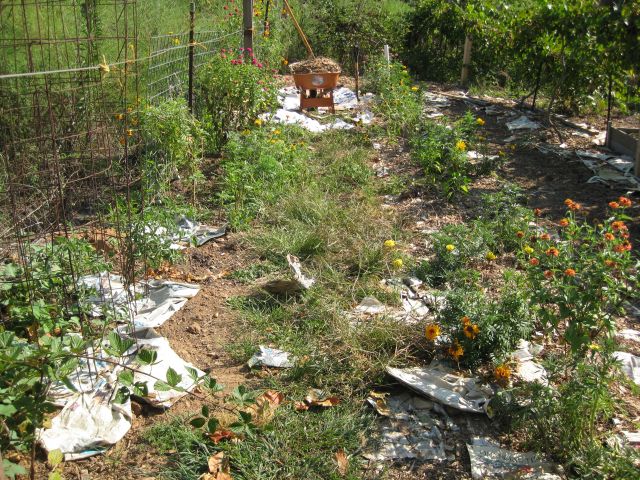
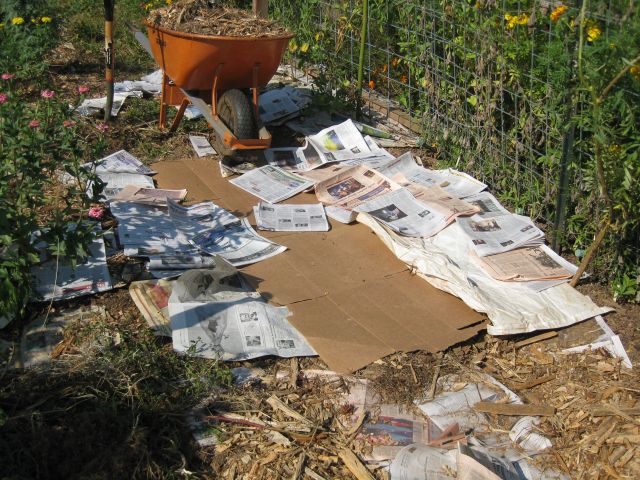
I first remove the weeds, then lay down the newspapers (typically open the newspaper at the middle and ensure plenty of overlap to block the sunlight), and then cover with a thick layer of woodchips.   In addition to newspaper (glossy inserts removed), I also use cardboard and paper sacks provided they do not have a plastic film on any surface. This heavy mulching prevents weeds, conserves moisture in the soil, provides food for the earthworms, and removes competition from weeds for the scarce water.  I think it also removes habitat for some of the pest insects and the bonus is the garden looks more attractive to visitors.

woodchips load easily into wheelbarrow
dishevelled area before the mulching
newspaper, cartons and paper sacks
after the mulching


Scuppernong

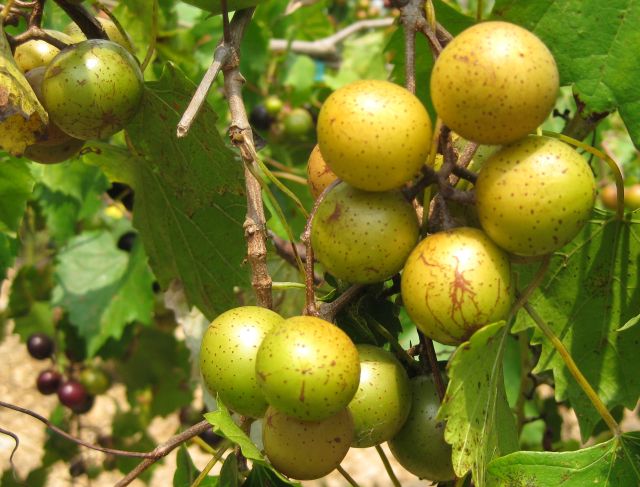
Scuppernong are my favorite muscadine (a type of grape native to the southeastern United States). When the scuppernong turn a golden bronze color they are ready for the eating – as you bite down on this large grape your mouth is filled with an indescribable sweetness. Since I do not use chemicals there is no need for washing the scuppernong. However, there are many eager consumers and as you reach for the muscadine a large wasp may be disturbed and fly noisily away. Last year there were lots of stink bugs around but, so far, they are not in evidence.


The First Crow
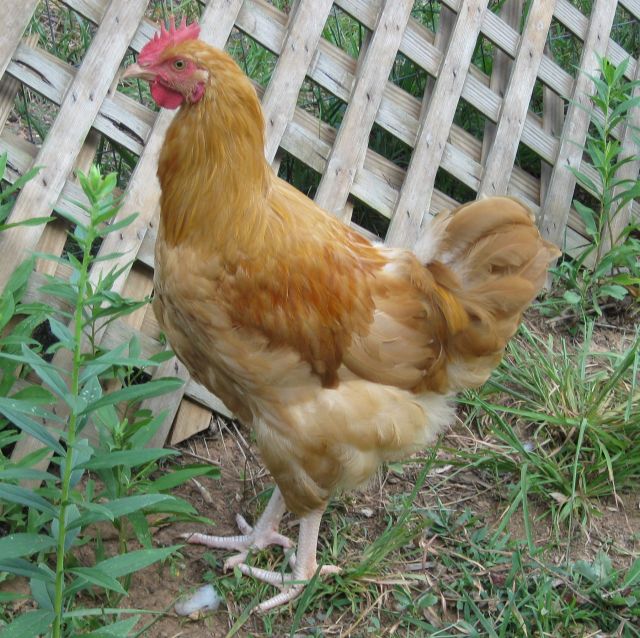
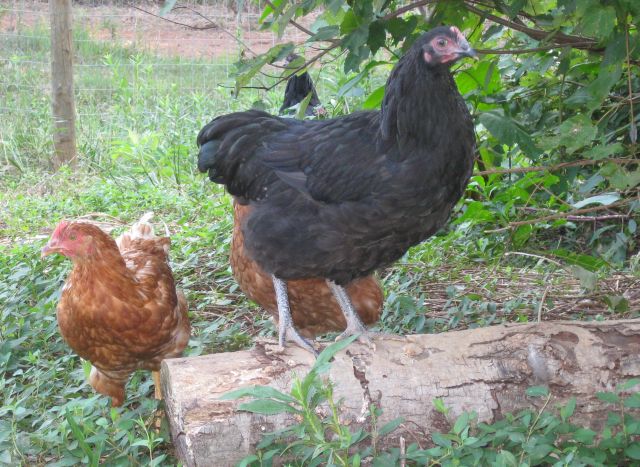
I was surprised this morning, as I approached the hen coops, to hear an unmistakable rooster crow. We have two coops and fenced outdoor areas – one for the 6 older egg laying girls I inherited from my neighbor, and another for the youngsters – 7 hens and a rooster. “Buffy” is a Buff Orpington rooster and he certainly has filled out in recent weeks. He has even taken to trying to intimidate the two Black Jersey Giant hens, who are not sure (yet) what to make of him. Although there was a trifle uncertainty it definitely was a crow, repeated a couple of times as he tuned and validated it.

Buffy - Buff Orpington rooster


Black Jersey Giant and Golden Comet

growing activities 082411

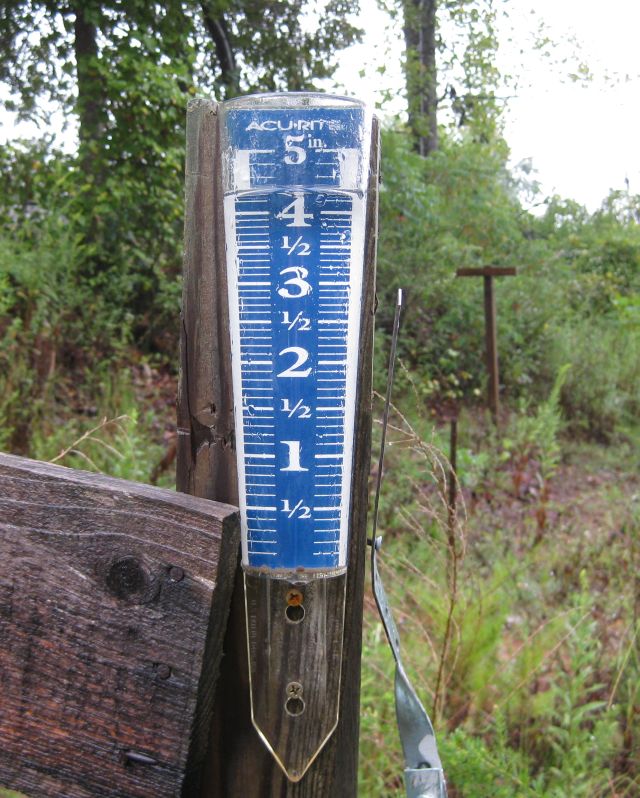
Just returned from a 7 day vacation on the west coast. My neighbor’s daughter cared for the two flocks in my absence – released at 7.30am each morning from the coop and re-cooped at 5pm each evening with plenty of food and water. All 14 were in great spirits when I greeted them this morning and enthusiastically beaked down their yogurt probiotics. My rain gauge said 0.5″ of rain during the past 7 days, so nothing had died off and I gave a good watering (500 gals) to the vegs, berries and fruit tree saplings.

tomato wilt


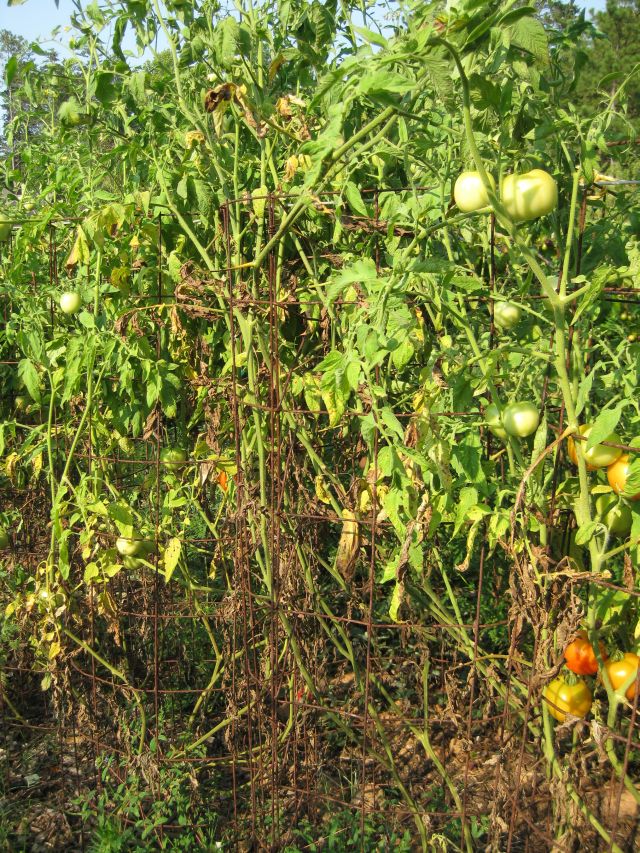
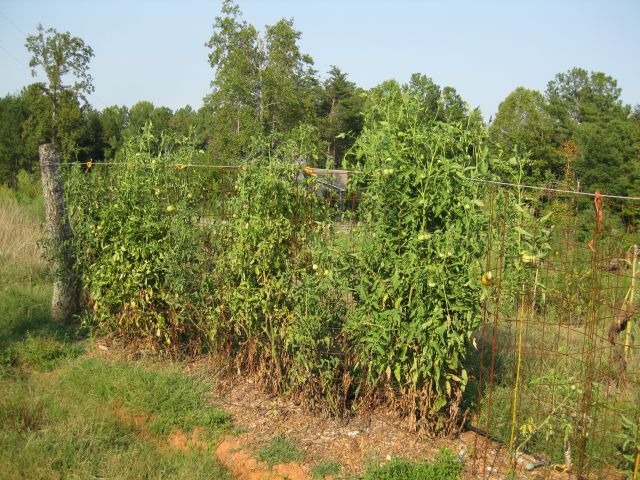
tomatoes at top of hill with some wilt


My tomatoes are doing poorly. Each year I rotate the tomato growing area and during the past 3 years my tomatoes have been excellent – strong plants, plentiful, good looking, good tasting tomatoes. This year not so. The 20+ plantings close to the muscadines struggled with yellowing leaves and poor growth and poor fruit (fusarium wilt?). The 18 plantings outside the vegetable enclosure did better but because the area was not enclosed, they were attacked by squirrels and other animals. The 10 plantings at the top of the hill did best and are producing well but the wilt is attacking the lower levels. Interestingly, a batch of younger plants are not yet affected by the wilt, so a contributing factor could be the growing conditions earlier in the season.

My conclusions: 1) More than 50% of my plants were heirloom tomatoes – I just got carried away with heirlooms. The hybrids with disease resistance have done much better than the heirlooms and next year I will grow fewer heirlooms: 2) planting close to the muscadines was not a good idea. Although I dug a trench to amputate the muscadine roots which grow vigorously and long, I probably missed a few. Also the muscadines, which are to the east of the tomatoes, deprived them of some sun exposure; 3) drainage may also have been a problem at the main location, which is at the foot of the hill; and 4) I may have contaminated the compost heap with last years wilted tomatoes – so must improve hygienic practices, and when I clear this year’s tomatoes at the end of the season, I must compost them separately.

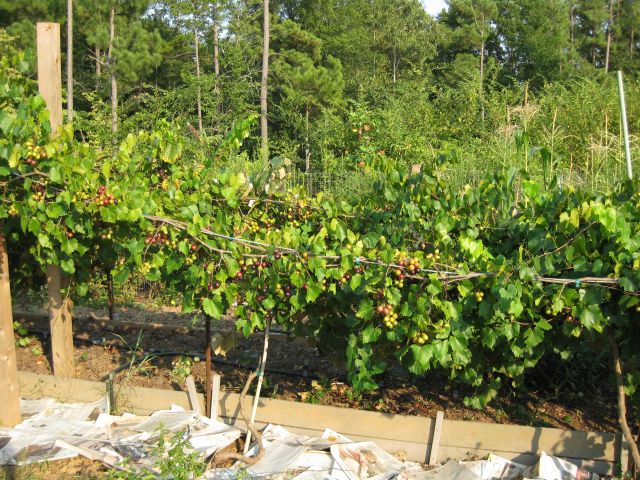
My muscadine are doing very well, as they did last year, and the scuppernong should be ready soon. I also have a good patch of healthy looking melons which should be ripe in the next week or so.

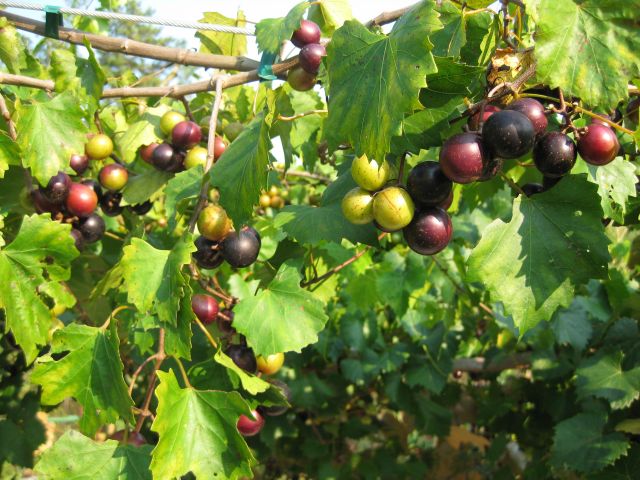
ripening muscadine
even the grapes were sweeter this year


The weather is less oppressive though still in the low 90’s – probably due to less humidity, some cooling breezes and intermittent cloud cover, which means I am tackling long neglected weeding. There appeared to be much less activity at the bee hive. Could be the cooler weather means less congregating at the entrance. However, could also be the case that they may have swarmed. I will open up the hive and investigate and see if there are 3 full frames for one last harvesting for the season.

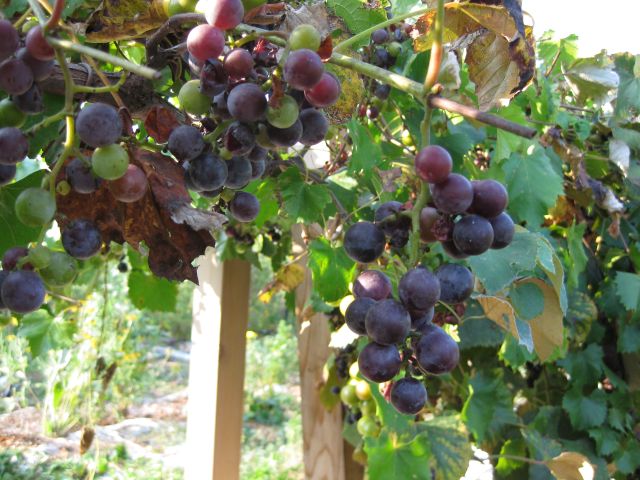
muscadine and scuppernong
the melons should be ripe soon

San Francisco – from food market to food truck

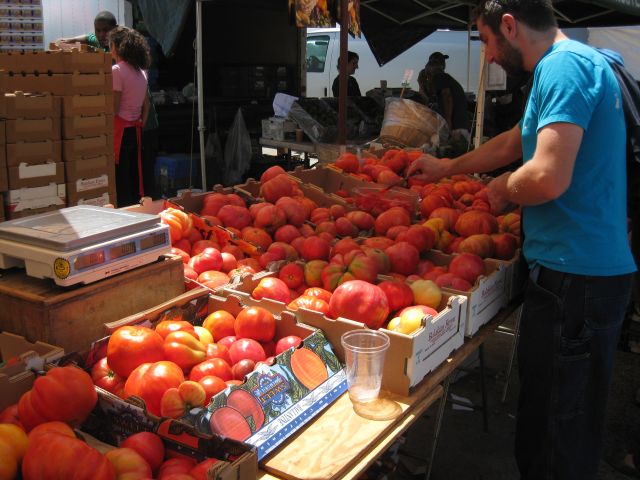
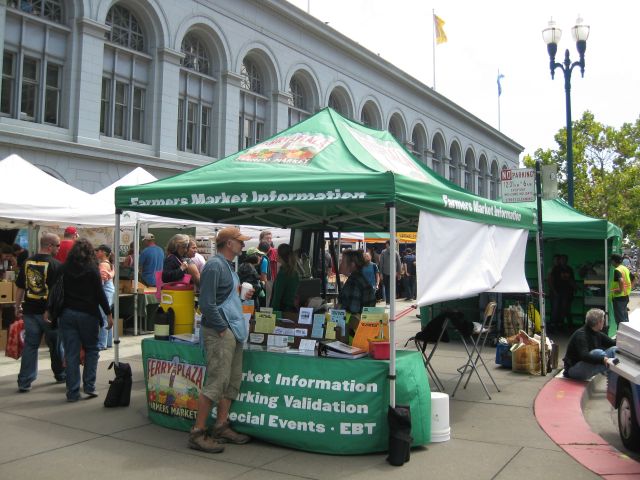
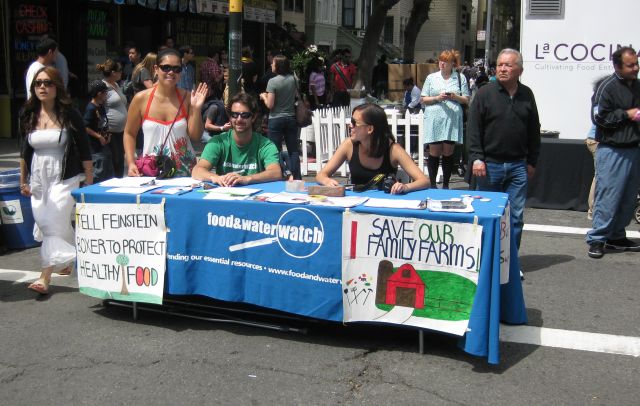
Saturday, August 20, was a good day to visit San Francisco foodwise – first a visit to the Ferry Plaza Farmers’ Market and then the 3rd annual La Cocina Food Festival in the Mission District. The Ferry Plaza market is considered one of the top farmers’ markets in the country.
 

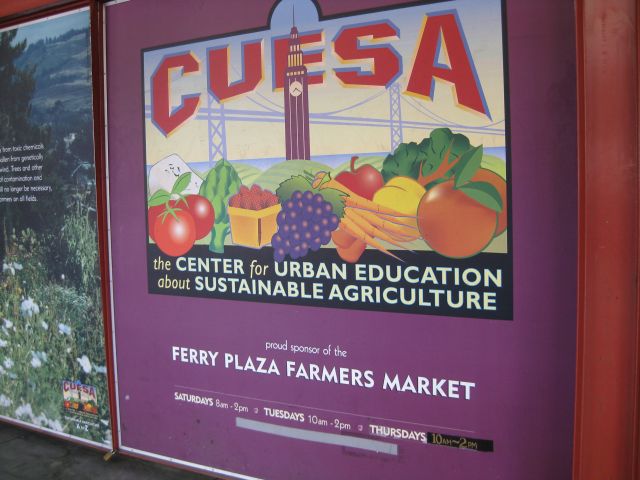
The market is organized by CUESA (the Center for Urban Education about Sustainable Agriculture) which envisions a food system that is environmentally sound; socially just; humane; and, economically viable. Large educational posters inform passersby on the issues at stake. On Saturday’s the market is held both in the front of the ferry building and on the rear plaza overlooking the Bay. There are fruits, vegetables, herbs, flowers, meats and eggs from small regional farmers and ranchers, many of whom are certified organic, as well as breads, cheeses, honey and more. An extensive array with lots of samples to whet the appetite. The produce seemed unusually large and wholesome and pricey too. The technology industry has made San Francisco a wealthy city well able to lap up the organic offerings.

the Ferry Plaza food market
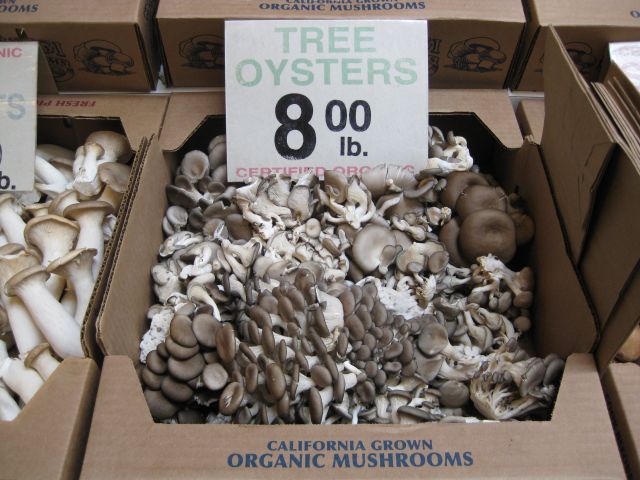
mushrooms for sale
tomatoes galore
at the Ferry Plaza market


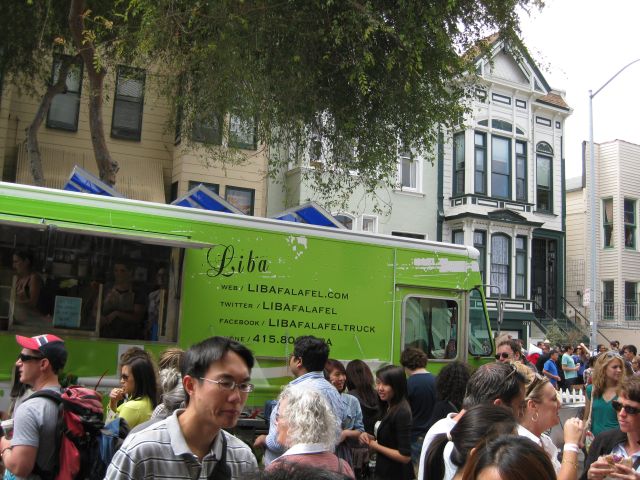
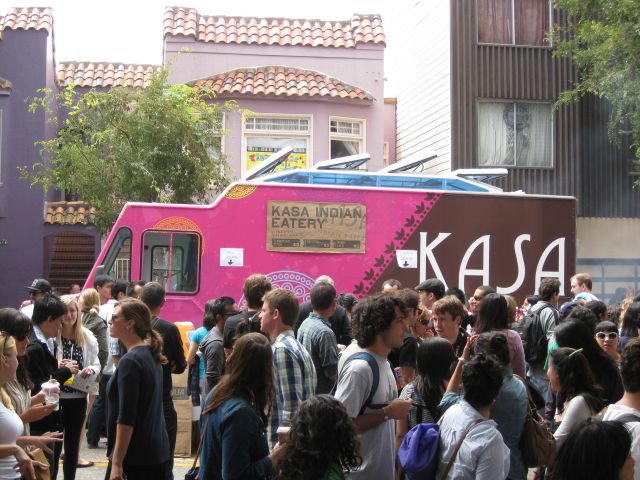
A different ensemble was available in the Mission District and we were introduced to the food truck revolution. These mobile trucks offer entrepreneurs a way to get started in the restaurant business. The food is varied, relatively inexpensive and convenient if you don’t mind lines and eating from a paper plate. TRUX is a website which provides information on the routes and includes twitters from the operators on when they will hit a street intersection. Other websites provide a top ten food truck listing. Conventional restaurateurs are uniting against their mobile competitors.

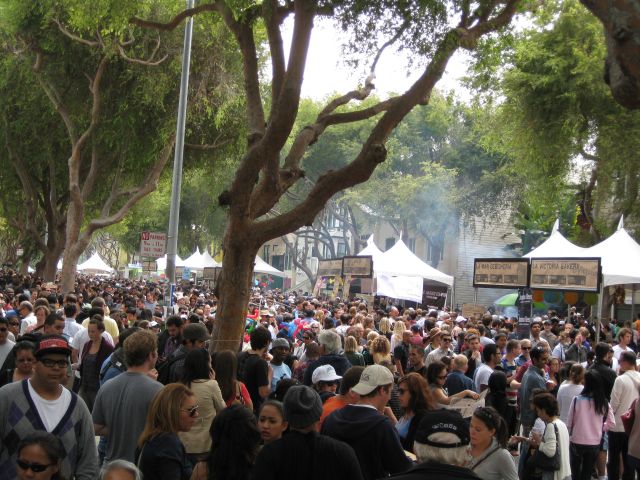
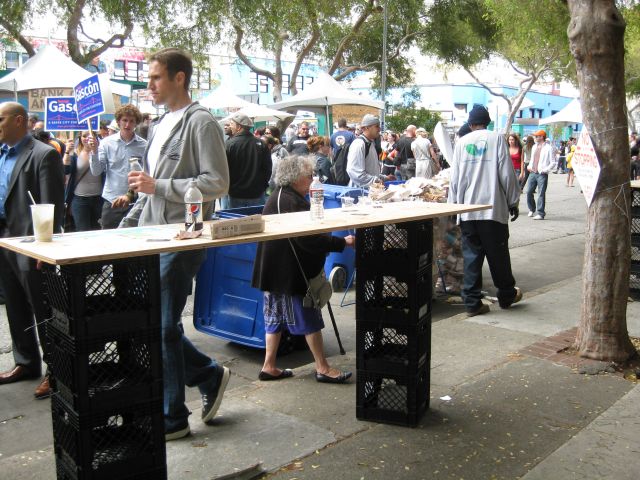
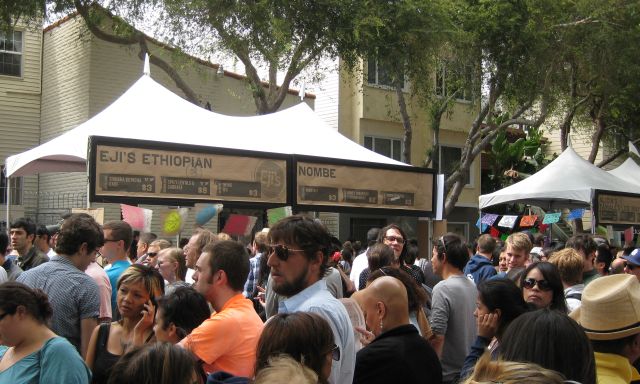
La Cocina, which assists low-income food entrepreneurs, organized the street food festival we attended. Folsom Street was cordoned off for several blocks and an alley of food stalls and food trucks was thronged by long lines of hungry consumers. Planks across stacked crates were the tables and continually emptying garbage sacks handled the trash. A roped in biergarten kept spirits high. A fun event.

the La Cocina street food festival
a falafel food truck
an Indian food truck
well attended festival
makeshift tables for the hungry
street cart vendors

Salinas, CA

On the way from Monterey to San Francisco we paused in the Salinas Valley. If anything can trump Carmel Valley it is this valley, known as “the salad bowl of the United States”. Salinas was the hometown of John Steinbeck and the national John Steinbeck museum brings to life his books on the region. I chuckled on his comments when he revisited Carmel later in life: “And Carmel, begun by starveling writers and unwanted painters, is now a community of the well-to-do and the retired. If Carmel’s founders should return, they could not afford to live there, but it wouldn’t go that far. They would be instantly picked up as suspicious characters and deported over the city line.” (Travels with Charley: in search of America circa 1960). Little has changed during the intervening past 50 years.


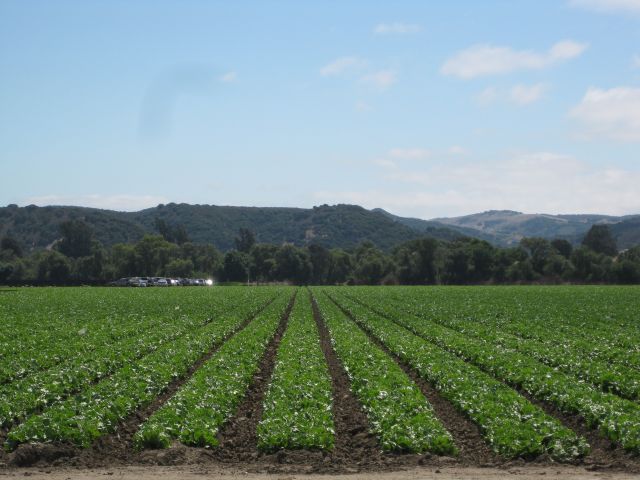
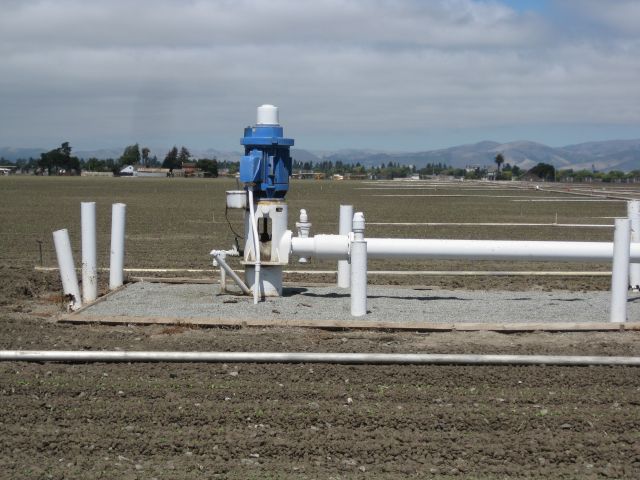
Apparently over 80% of the lettuce grown in the United States is grown in the Salinas Valley. Temperatures are cool and moderate with typical daily highs ranging from around 52 F in the winter to around 72 F in the summer – who could ask for more? Although rainfall is modest, irrigation needs are provided by the Salinas River. Nearby Castroville is known as the artichoke center of the world. Though there may be some puffery in the salad bowl and artichoke claims, the magnificence of these growing locations cannot be refuted.


great growing in Salinas Valley
irrigation infrastructure in Salinas Valley

Monterey and Carmel, CA

It seems to me that the areas north and south of San Francisco are ideally located for organic growing – excellent growing conditions and the wealth of San Francisco provides great consumer demand for the more expensive organic produce.   My son lives and works in the San Francisco area and on previous trips we visited the redwood forests and organic growing areas of Marin county to the north of San Francisco.  This time we headed for Monterey with its striking, natural and unspoiled shoreline.

The Pacific Grove area north of Monterey also known as the Asilomar marine reserve, offers sandy paths for walkers and joggers between the road and the sea, and numerous, convenient parking areas.  The accessibility to the public, the unspoiled surroundings evidenced by seaweed bestrewn beaches and teeming wildlife, including incongruously a party of 5 deer, is reminiscent of a similar stretch between Trigg and Hillary’s in Perth, Australia.   How wonderful as you amble along to see nothing but the restless ocean, its fringes of rock, kelp and spray and immerse in the roar and shush of water and rock accompanied by the shriek of gulls, pelicans and cormorants.  The shoreline may not be as rugged as say the Cape of Good Hope, South Africa, or the cliffs of Tintagel in Cornwall, but to my mind are just as beautiful.

Pacific Grove Asilomar shoreline
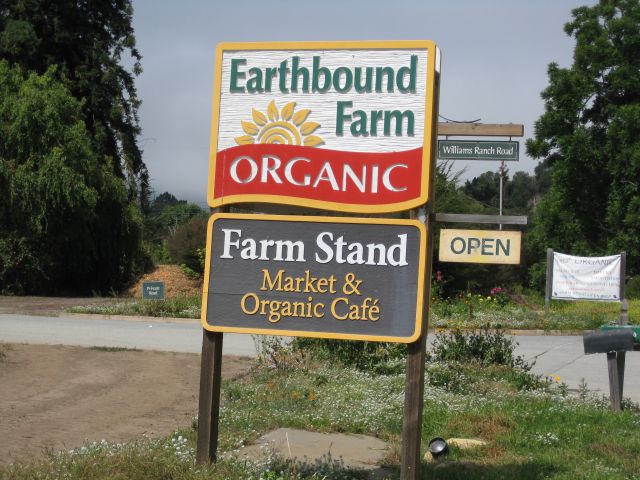
Earthbound Farm stand, Carmel Valley


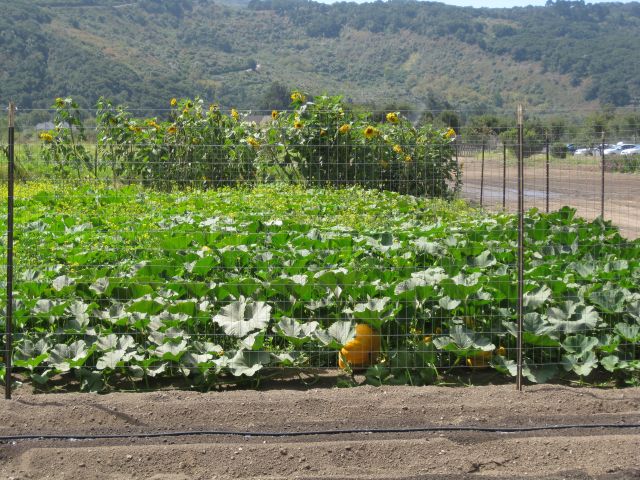
Our first day trip was to the south along “17 mile drive” through the scripted Spanish Bay and Pebble Beach areas to Carmel and then to Carmel Valley to visit the biggest name in organic produce “Earthbound Farm”.  We quickly learned we were visiting not the farm but the farm stand, and that Earthbound Farm certified organic produce is grown by some 150 farmers on farms ranging in size from 5 acres to 680 acres.   My biggest impression was the excellent growing conditions – the soil is rich black, the valley provides level open sun exposed terrain, there is ample water for irrigation and temperatures are mild and consistent.  Nasturtiums proliferated in cultivated and uncultivated areas – in Georgia I struggle to keep them viable.  I was mildly discouraged as I thought of my own plot – the intense heat and humidity, the cycles between drought and heavy rains, the hard Georgian red clay, which becomes so slippery  when wet.  Then I recalled the words of a former defense secretary:  “you go to war with the army you have … not the army you might want” and resolved to keep pressing forward.


lush Carmel Valley growing conditions
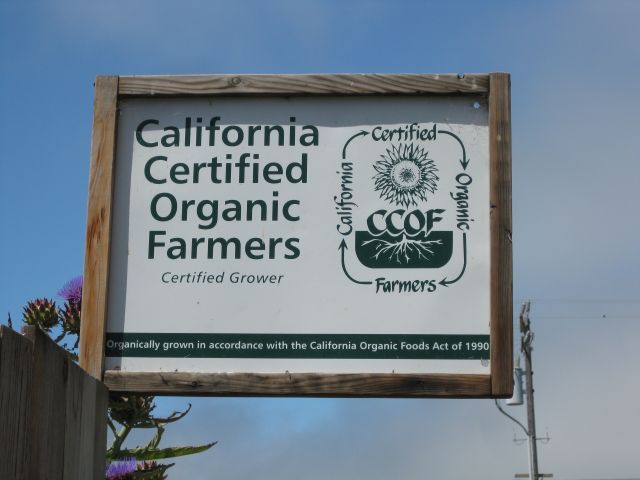
CA organic certification