summerizing the coop

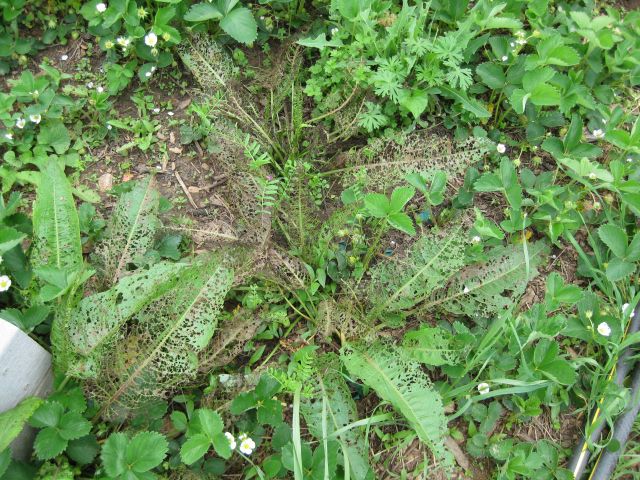
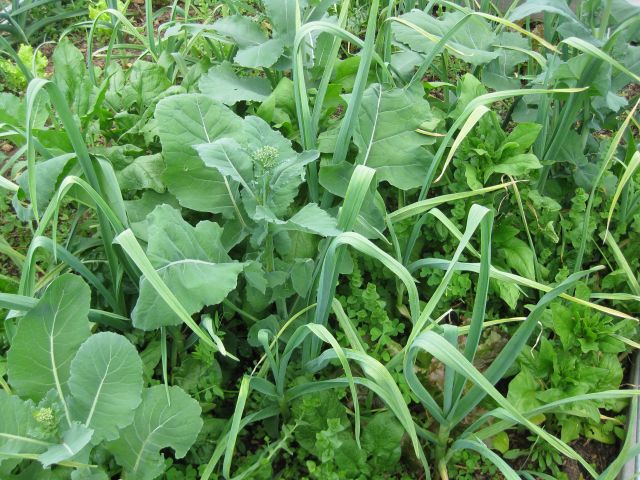
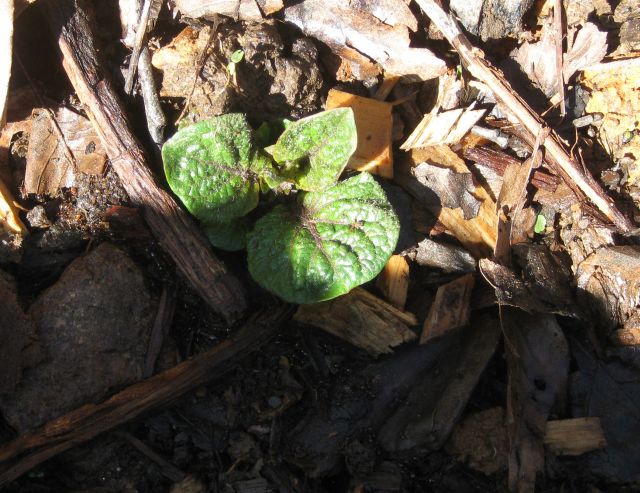
Before I get to the coop, a quick update on my “Spring activity” journal.  I mentioned that pokeweed is an unwelcome visitor, difficult to extricate because of its long thick taproot.  In permaculture “the problem is the solution” and it occurred to me that the taproot, like that of comfrey was performing a valuable function mining minerals two or more feet below the surface.  But this seemed inadequate justification for its presence until I noticed that it, and it alone, has been attacked and eaten by insects, as yet unidentified.  So it is also serving the role of a trap crop and attracting these hungry feasters from my diverse array of vegetables which, so far, are unscathed.

the pokeweed invader is the banquet for hungry feasters

a few feet away the spinach, collard, chard, garlic et al. are unscathed

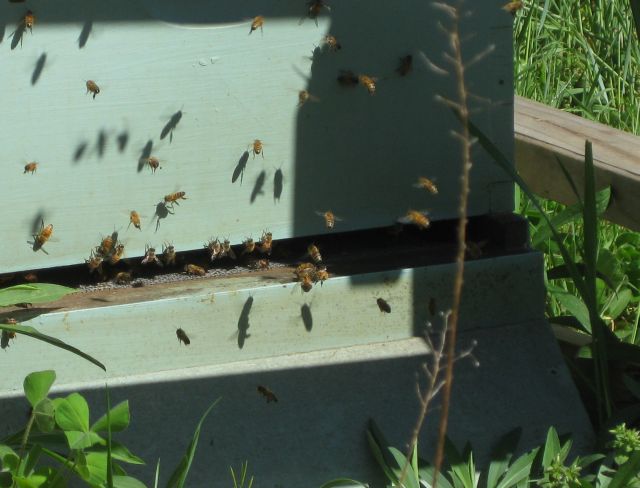
I also mentioned I was leaving the crimson clover to flower to provide succour for the bees and seed for next growing season.  Well the clover is maturing quickly and today the honey bees and bumblebees and others were busy at them, so my next honey harvesting will include some clover honey.
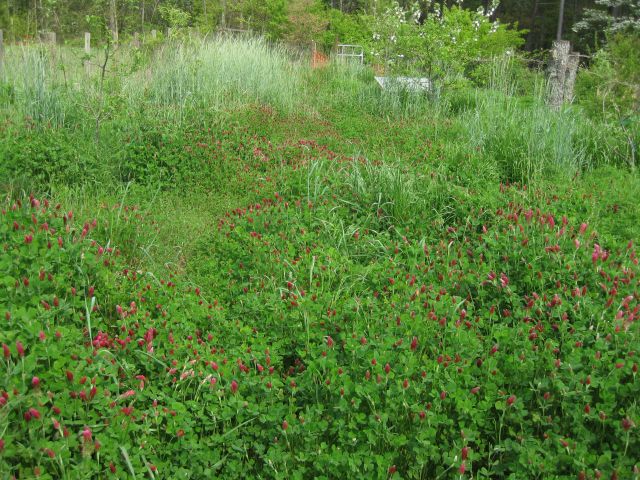
crimson clover in flower with bees in attendance

Now to the chicken coop.

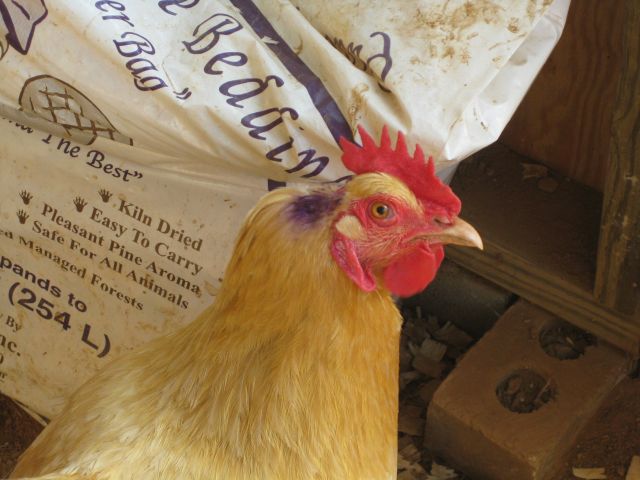
I have 3 coops, two constructed on two sides (north and east) of the barn.  The east coop is well protected from the summer sun and would be good for summer quarters.  Last year, as winter approached, I built a new larger coop (building details elsewhere on this website) which was well exposed to the winter sun and, since there are no neighboring deciduous trees (yet) even better exposed to the summer sun.  I had considered moving the chicken to the east coop for the duration of the hot weather.  And then a development – Buffy, the Buff Orpington rooster, fixated on Lady Macbeth, his sister.  She is the only hen missing feathers on the back of her head and she is vociferous and will have not truck with him, when she can avoid him.  Which is difficult when they share the same coop and so to escape him she immediately goes to the roosting ledge when they are housed for the night and consequently misses the much anticipated evening meal.

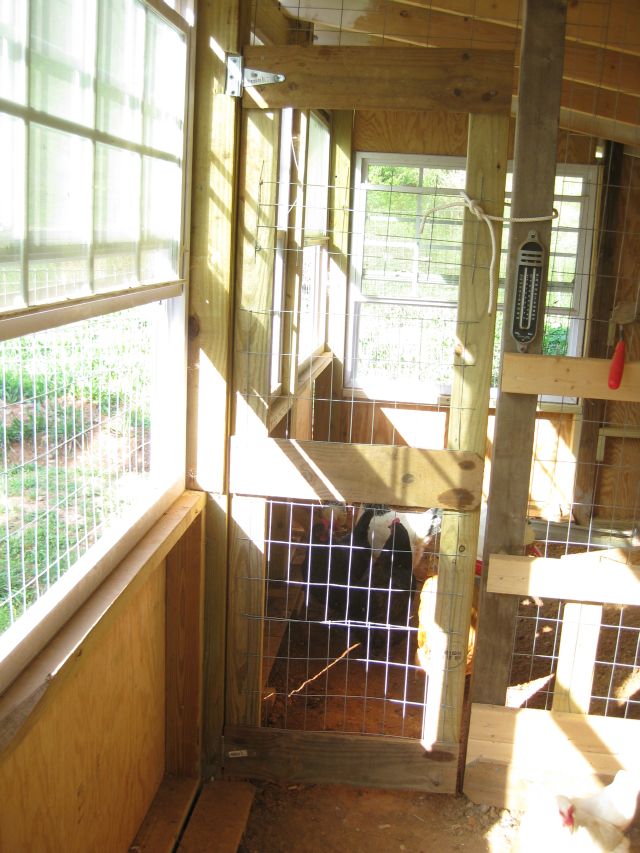
Matters came to a head when she refused to enter the coop one evening and with me trying to coax her in and Buffy charging at her as soon as she crossed the threshold, she became vociferous and agitated, and the two males increasingly frustrated.  The upshot was she spent the night in the north coop with the two comets for companions.  This got me thinking about the wisdom of transferring them all to the east coop.  Their new coop has a partition, all that is missing is a door.  So rather than spring $80 for a gate from HD or Lowes, I constructed a simple door with left over lumber and chicken fencing and two $1.54 hinges from Walmart.

the aggrieved Lady Macbeth

new partition door for coop

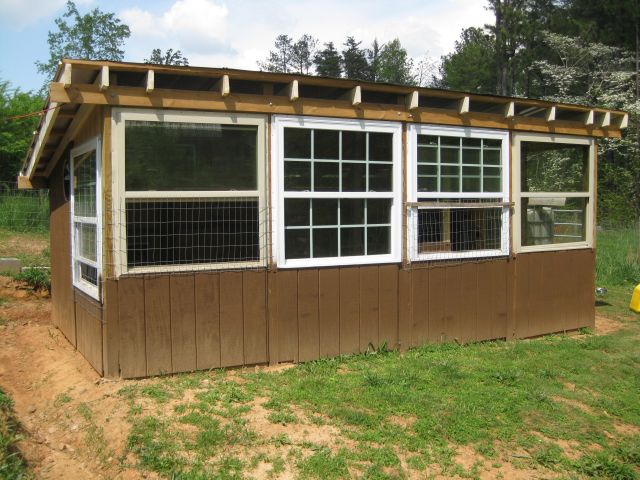
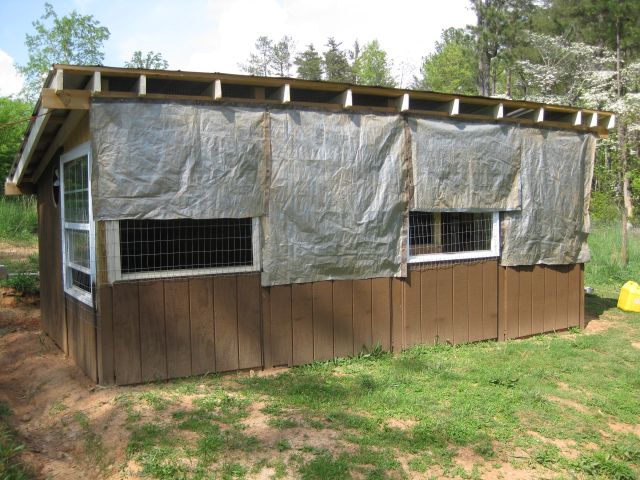
So with the winter coop the designated summer home, next steps were to reduce the heat buildup.  It has four south facing windows and a window each on the east and west sides.  Two of the south facing windows and the east and west windows have been predator proofed (I hope)  with wire fencing material and are left open.  I found an old tarp (8ft by 10ft) with brown colored and silver sides and scrubbed the mud off the silver, soon to be sun facing side.  I cut it into 4 sections – two ‘5 by 5′ and two 5′ by 3’.  The two larger pieces were fitted over the two closed south facing windows and the two smaller pieces over the two open south facing windows.

new coop, south side, before sun covers

new coop after sun covers installed

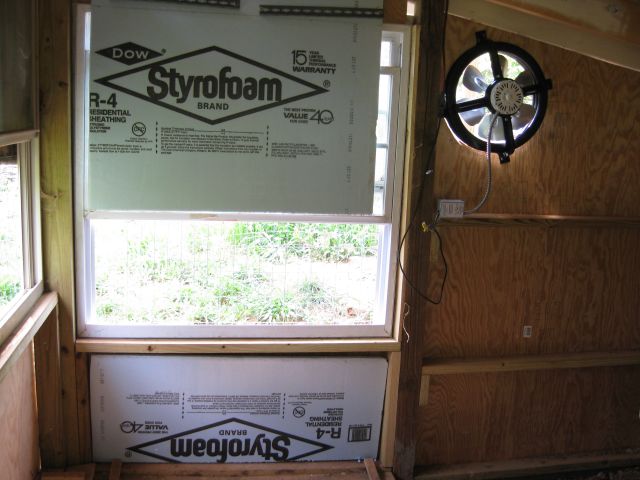
More work remained.  I decided to install a powered attic exhaust fan.  Since in the afternoon and evening the air will be cooler on the east side, I installed the fan on the west facing wall of the coop.  I considered using a roof vent (i.e. one installed on the top of the roof)  which would have therefore been higher up and removed more of the hot air at the higher levels of the coop, but I was unsure where that air would be drawn from.  By installing the exhaust fan on the west side I can ensure that it pulls air from the east window and therefore the air will be moving across the two roosts which are located in between the east window and the installed vent fan.  To power the fan, I installed an exterior power outlet box on the barn wall closest to the coop and led a cable the 100 feet from the barn to the coop.

new power vent and insulation added to west side

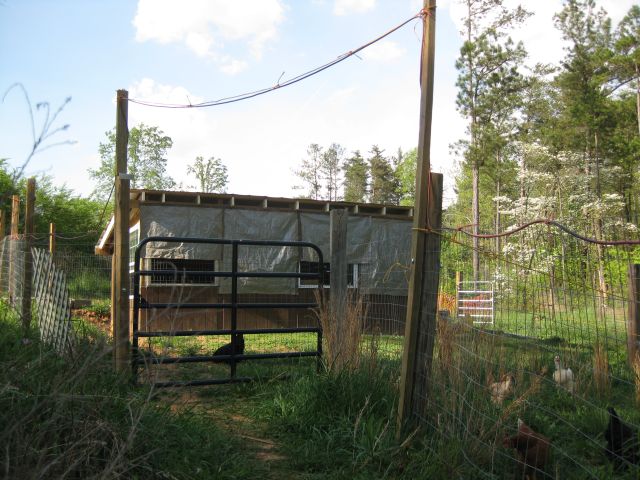
power cable to the coop

Apart from the powered vent and the hinges, all the other items were recycled i.e. lying around unused.  As you can see from the ‘photo, I attached the cable to the top of the chicken paddock fencing and to surmount the gates, I bolted 2×4’s to the gate posts and raised the cable 8’ above the gate entrance.

My next venture, and a new one for me, will be to install solar panels on the barn roof and a battery bank and inverter in the barn and thus power the exhaust fan using the summer sun (as well as a powered timed coop door to let the flock out early in the mornings).  To return to an earlier theme, albeit crudely – in the problem (the summer sun) will be found the solution (solar energy powered fan).
something new every day

I learn new things every day.  If I was an attorney I would be studying up on the impact of new legislation and recently decided cases.  An accountant – the impact of new GAAP and the merging with international standards; a business executive – new moves by competitors as they strive for competitive advantage.  For me, my classroom is observing what’s going on around me.

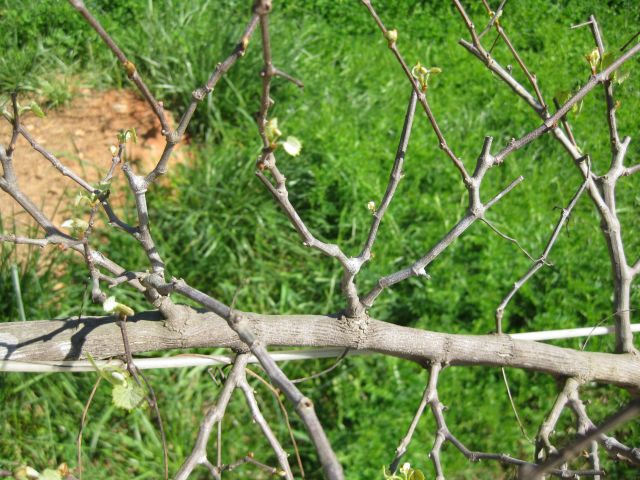
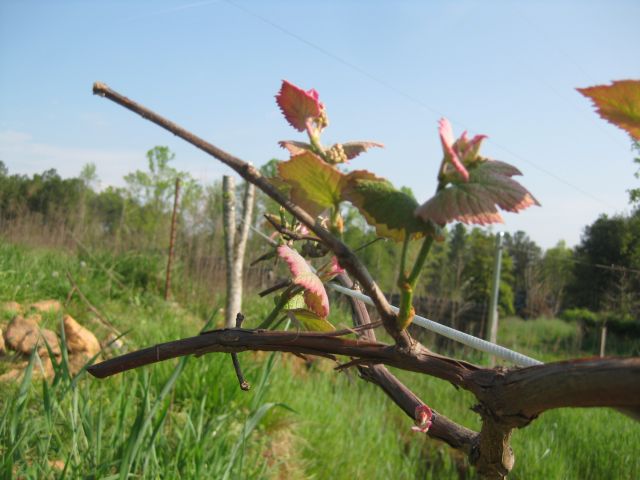
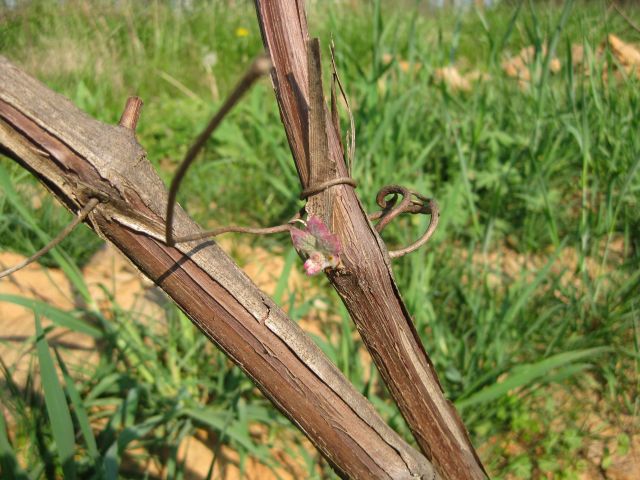
In my post of February 23 I noted that one of twelve muscadines (grape vines) I transplanted did not survive and I provided a sensible (to me) explanation for the failure.  My test for viability (the universal test) is to scrape the trunk and if there is green underneath then it is ok.  Eleven vines had green, this did not and its trunk was peeling and a piece at the end of the vine had broken off.  So it was dead, or so I thought.  This morning as I tended the vines, I noticed it was leafing.

my “dead” muscadine is alive

the trunk certainly appeared dead, but now there is a leaf

So I learn the slow way through trial and observation.

ps – it occurs to me that I planted 11 muscadine and one grape vine and the specimen above is the grape vine, which is why it looked so different/dilapidated compared with the others.  It still failed my scrape test – perhaps I didn’t scrape deep enough or this is a characteristic of grape vines?

I have a constant companion for the ride to the farm and throughout the day – Trudy.  She is a Heinz 57 who awaited us at the dog shelter after trying out and, presumably, rejecting two other families.  A real cutie.  At times I think of the dismissive comment of the Nearings in “Living the Good Life” (1954 page 28, one of my favorite books):”Cats and dogs live dependent subservient lives under the table tops of humans.  Domestic pets kill and drive away wild creatures, whose independent, self-respecting lives seem far more admirable than those of docile, dish-fed retainers.”

Can this be my Trudy they are referring to?  When we return to the house after working the fields she waits patiently for her snack.  I usually hold it in my hand and she gently takes it from me.  Once, being in a rush I dropped it on the floor for her to eat.  She was not happy and ignored it.  On another occasion she waited a bit and then ate it.  And then it occurred to me, my second learning of the day.  When she takes the food from my hand this is not an act of subservience but acceptance of reward for work performed, which in her case involves diligent searching for rabbits and rats and keeping an eye on me at all times.  I think she views it as a fair exchange for services provided.  I could go on about her and I will, together with pictures, at a future date.

spring activity

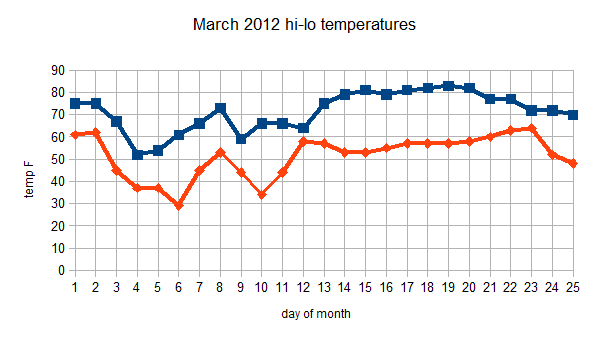
We have had a warm March to date here (latitude N34 22’52”), 50 miles north of Atlanta, with several days breaking 80 F.

Not surprisingly, there is a lot of growing activity.

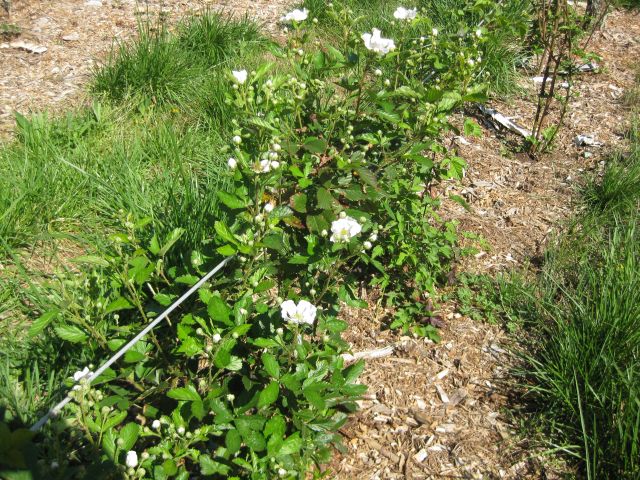
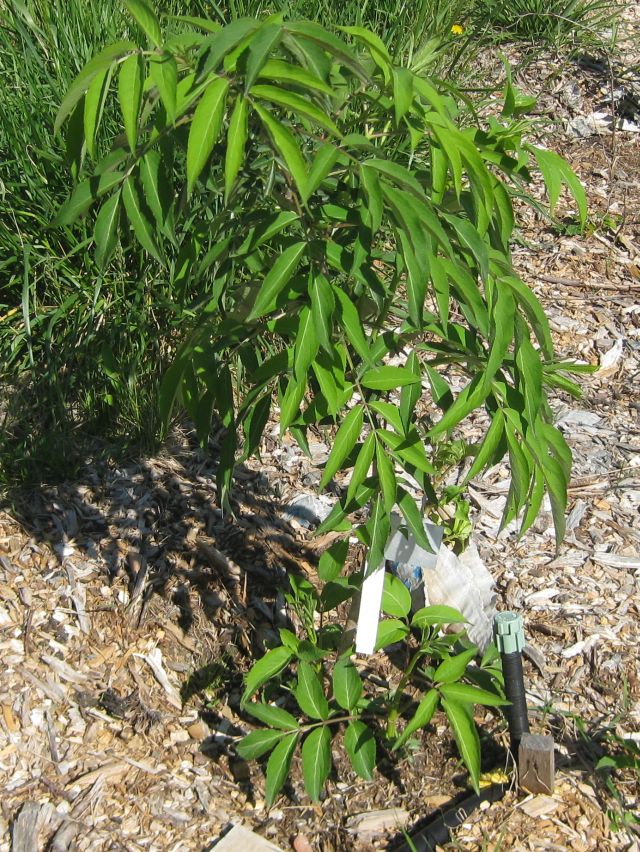
My Kiowa blackberry has begun to flower and the American elderberry I bought last year, which looked anemic throughout the year, is leafing strongly.


Kiowa blackberry in flower


American elderberry looking healthy

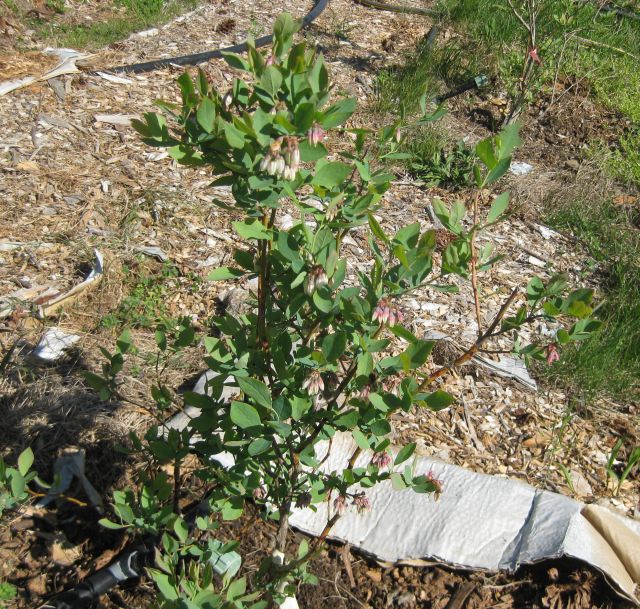
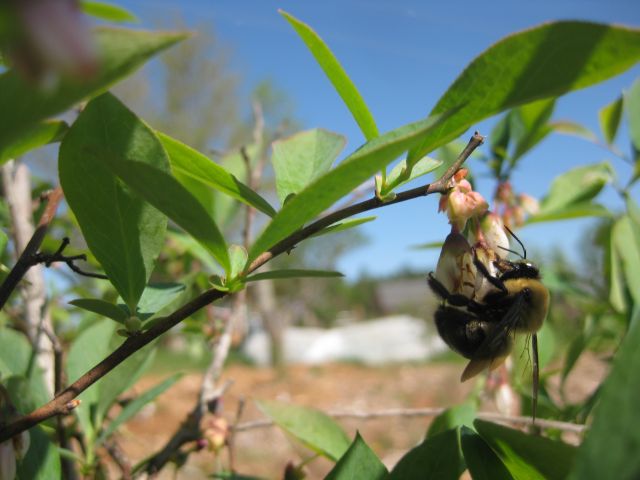
Some of the blueberries are in flower – most of my blueberries are rabbiteyes, which have a lower chill requirement than the highbush variety. I do have a southern highbush, which is in flower, and the bumblebee is busy with a Baldwin rabbiteye.

Southern highbush blueberry in flower
Bumblebee on Baldwin rabbiteye blueberry


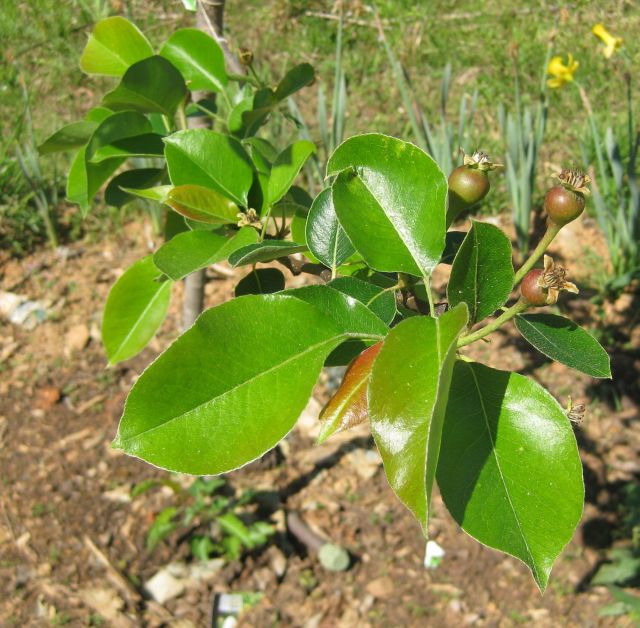
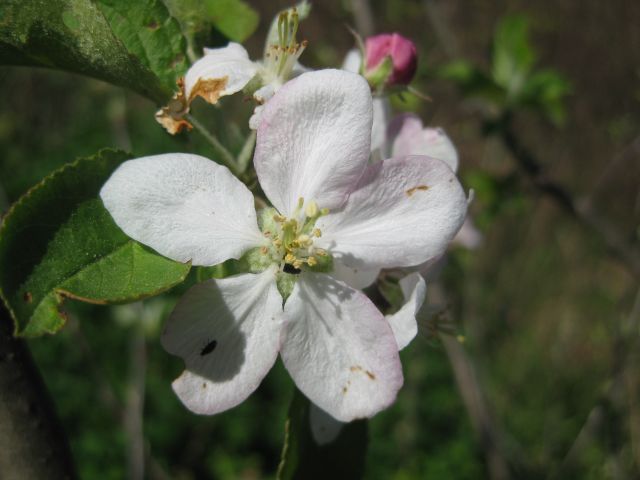
Since our last frost date is mid-April I was concerned that my pears, which blossom early could be frost killed, which happened last year. However, most of my pears have already fruited and the apples are now in flower.

Kieffer pear has already set fruit
Gold Rush apple tree is in blossom


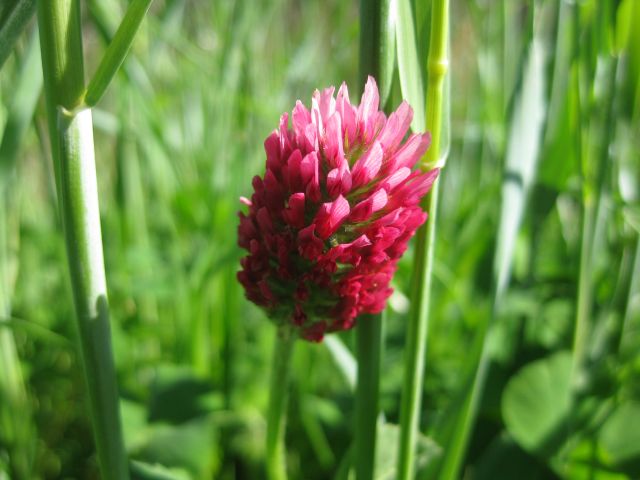
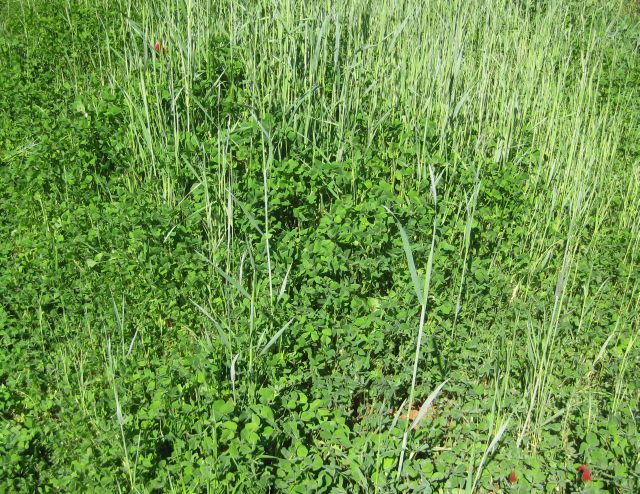
The crimson clover is beginning to flower and, once the bees have had their share and it has seeded, I will level it and the winter rye, which is providing a great scaffold for it.

Crimson clover is in flower
In the orchard a mass of crimson clover climbing winter rye


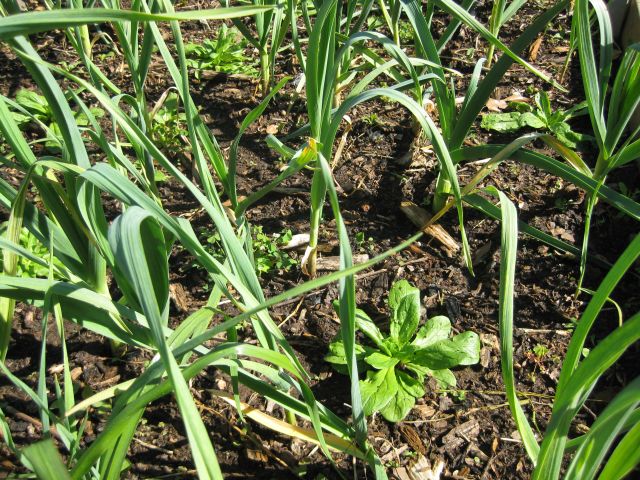
My garlic made it through the winter and is looking good. Less welcome is pokeweed which spreads easily and has a thick long taproot which is difficult to dig out.

Garlic looking good
Pokeweed - an unwelcome visitor, difficult to eject


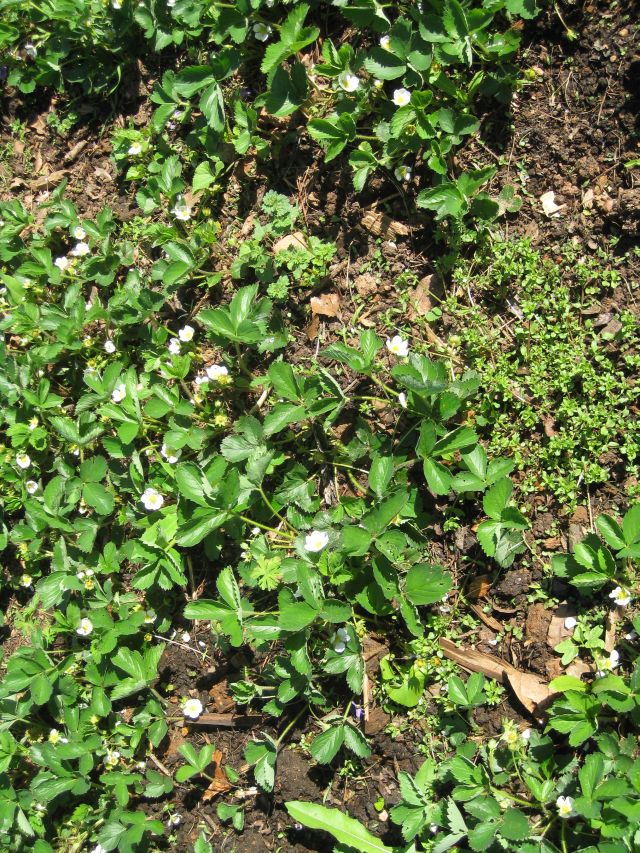
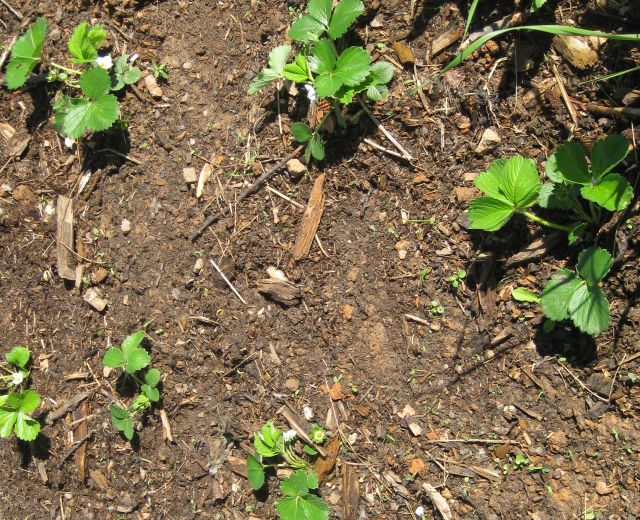
My earliglow strawberries are deliciously sweet, seem invulnerable to diseases and pests and are now in their 4th year in the same spot, which defies conventional wisdom. To extend the picking season I purchased and installed last year an everbearing strawberry variety which survived the winter without any cover and is beginning to spread.

Earliglow early season strawberry, now in its 4th year
Everbearing strawberry, planted last fall, now beginning to spread


The 4 year old muscadines I uprooted and transplanted are coming to life (whew!) and the bees are very active. I really would like to split the hive but no mated queen bees are available for purchase and, unless I do it soon, they will swarm.

Transplanted muscadine showing signs of life
Busy bees


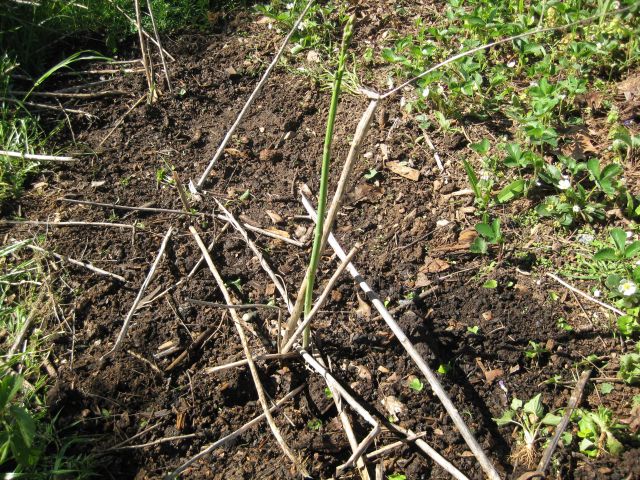
Finally, my first asparagus has emerged and a potato shoot has appeared at the bottom of the trench. When the other potato plants emerge I will begin the process of covering them with soil as they grow higher, until eventually they will flower atop a soil mound.

first asparagus of the season
first potato shoot has emerged

corn origins

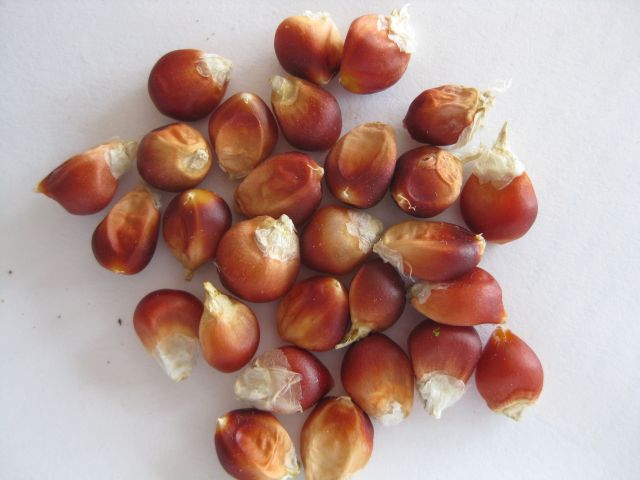
I received a gift from west coast visitors – Floriani Red Flint Corn. The accompanying information mentions it is a staple polenta corn and family heirloom grown for many years in the Valsugana Valley of Italy. The uninitiated would assume this corn originated in Italy, but it did not.

corn
Floriani Red Flint Corn

I am enjoying snippets from “1491” by Charles Mann which describes the Americas before Columbus. As we know, the corn kernels we eat grow on a corn cob. It is also apparent that a corn cob cannot self seed – it has no mechanism to shatter or shake the kernels off the cob/husk and the kernels will not survive a trip through the intestines of a bird or animal. Corn (maize) is entirely dependent on humans to seed it in the fields (unlike wheat, rice, millet and barley, the ancestors of which could self seed). If corn cannot self seed then how did it originate?

A recurring theme in “1491” is that the inhabitants of the Americas prior to Columbus were far more sophisticated than most of us suppose. Mann states that the early inhabitants of Mesoamerica (roughly Central America) developed not only corn but also tomatoes, peppers, most of the squashes and many of the beans. But corn is the most intriguing. Since it cannot reproduce itself the Indians must have developed it from another species. The closest genetic relative is a grass called teosinte, which looks very different. A debate raged amongst scientists as to whether corn developed from a mutation of teosinte or from a now vanished ancestor, Tripsacum, or from repeated mixings of other types of grasses. There appears to be agreement, however, that its development must have required biological manipulation by determined, skilled plant breeders.

There is a wide variety of corn in lots of different colored kernels and sizes with more than 50 genetically distinguishable “landraces”. Because corn is open pollinated and the wind can blow the pollen from field to field, if uncontrolled the result would be an homogeneous entity. But because early farmers sorted their seed and were careful with their plantings, they were able to maintain a large variety of different corn.

Mann also mentions that Indian farmers grown corn in a milpa, or maize field and will plant a dozen crops at once including corn, avocados, multiple varieties of squash and bean, melon, tomatoes, chilis, sweet potato etc. The “three sisters” corn, squash and beans are well known in permaculture but the milpa which Mann refers to is far more extensive. He suggests the milpa is superior not only to monoculture and its dependence on artificial fertilizers, but also to the practice of crop rotation, and that this is evidenced by its continuous cultivation and long term use.

It is corn planting time (advanced by the unseasonal warm weather we are having), the rain has let up, and I am heading for the field.

neem oil – a remedy for chickens

I have been intrigued with neem oil for some time. Something exotic about it. When I first planted tomatoes in north Georgia four years ago, and they were overwhelmed by aphids, neem came to my rescue. Aphids were never a problem again, not because of the neem but my voracious ladybug population. (This week I have been collecting my overwintering ladybug guests and ushering them out to their workplace in my vegetable garden). My second recourse to neem was a couple years ago when the stinkbugs arrived. With my pistol grip sprayer I doused the offenders and they looked dazed and disgusted. Last year I awaited them but they did not arrive, again not due to neem but to some mysterious forces at work. And so my neem oil sat unused in the cool basement for more than a year, until last week when it was recalled to the front line.

But a word about neem. A neat little book by John Conrick titled “Neem The Ultimate Herb” goes into much detail on its origins and uses. He traces its first use as a medical treatment to 4,500 years ago. He states it is a major element in preventing and healing diseases among Ayurvedic practitioners (a system of traditional medicine in India). The neem tree (Azadirachta indica) is a tropical evergreen which grows in much of Southeast Asia, welcomes extreme heat of up to 120 F but will not tolerate hard freezes – so unlikely to call my yard home. My interest is not in its medical properties, or how it is made, but its use for insect control. Unlike synthetic pesticides, most of which have quick acting nerve toxins, neem’s main action is as an anti-feedant, which dissuades pests from eating neem covered plants. It can also reduce an insect’s ability to reproduce. No wonder the stinkbugs looked dazed and disgusted! Conrick also mentions that neem has been found to be beneficial on bees.

So how did I use it as a remedy for my chickens? Our Buff Orpington rooster has a good looking comb but the tips of his comb turned black a few weeks ago from frost bite. He didn’t seem to mind and, as he is becoming more aggressive, I decided to leave him be. Then I noticed black spots at the base of the comb. One of the Golden Comets tried to peck at his comb (for food or as a grooming favor?) and he discouraged her endeavors. But this made me think that this was an insect problem not a frost bite issue. So how to treat it? Diatomaceous earth and Sevin dust have been suggested for mites and lice etc. but I didn’t want to powder a young vigorous rooster near his eyes. I also didn’t want to use a synthetic treatment given my recent success with an organic treatment, psyllium, for chicken crop problems. And then came the idea of neem – I cannot claim credit for this inspiration since I believe it was derived from internet browsing.

Neem is usually mixed with water but I was concerned this mixture could dribble into his eyes. So I took a little dropper bottle and mixed the neem with Johnson’s baby oil at 10% strength i.e. 36 drops of the baby oil and 4 drops of the neem oil (the neem oil is described as having 70% extract of neem oil). Administering the concoction single handed was not as big a challenge as I had thought. I cornered him in the coop, and held him firmly between my knees and then one hand held and pivoted his neck and crown and the other retrieved the pre-charged bulb dropper and doused the infected areas with the mixed oils. After initial hysterical protestations he submitted to the treatment. A day later most of the black infestation was gone and two days later he was cured. Easy enough now but, when his spurs are developed, I do not think this will be a happy experience for either of us.

This winter was very mild and the bugs are out and about and multiplying. I really would like not to use any organic treatments this year. I am hoping that with my expanded beneficial insects army and diverse plantings and good compost and strong plants I will be able to withstand the onslaught. Except in the month of August when we tend to become overwhelmed and then the best is to cut back on the plantings (so as not to subsidize future generations), and look the other way. But if I have to, then neem will be reactivated.

permaculture trending – comfrey

I like the pragmatic and intellectual underpinnings of permaculture. On the intellectual side, I am reading and enjoying Holmgren’s “Principles and Pathways beyond Sustainability”, at the quasi pragmatic/theoretical level I enjoyed Hemenway’s and Whitecraft’s books on permaculture in the United States and the United Kingdom respectively, and for a hands on approach, of course the two books by Holzer. And some of the suggestions have rubbed off.

Polyculture and biodiversity are not new to organic growing. I purchased in the 80’s Riotte’s book “Carrots Love Tomatoes – Secrets of Companion Planting for Successful Gardening” which was first published in 1975. However, the focus on perennial plants and guild’s is new for me.

I have grown Mullein (several varieties), Black Locust and Osange Orange from seed and will be transplanting them soon. My efforts to grow Gumi from seed have not yet succeeded. The plant that fascinates me the most is comfrey. My father-in-law was a serious organic grower in South Africa and he grew comfrey in the 60’s and 70’s. But its controversial history goes much further back in time.

An interesting read, is “Russian Comfrey – A Hundred Tons an Acre of Stock Feed or Compost For Farm, Garden or Smallholding” by Lawrence D. Hills published in London in 1953, which can be freely downloaded. The book begins with a quote: “Russian Comfrey is a weed; no stock will eat it; its yield in dry matter per acre is below that of orthodox fodder crops; it is impossible to get rid of, and fit only for a half-hearted trial on an odd corner of land where nothing else will grow. Its possibilities have been greatly overrated by those who sell it at high prices, and nothing reliable is known about it…..”

The story of Russian Comfrey begins in 1771 when an English gardener living in Hackney, London sold his nursery and became head gardener to the Palace of St. Petersburg for Empress Catherine The Great, of Russia. Between 1790 and 1891 he sent back to England several varieties of comfrey of which S. asperrimum became more highly regarded than S. officinale, the native species to England. Over the past 200 years it has had staunch supporters and harsh critics.

Apparently all species of comfrey require a deep soil, not necessarily a good one, and they have a reputation for growing on land where nothing else will grow because they have long and powerful roots which dive straight down and access subsoil water and minerals. A hard pan will defeat them, they need at least four feet depth, a 6.0 ph is as low as they can go, and they are at their best on clays, loams and sandy loams. They are used to cold winters and are moderately shade tolerant. However, they are unsuitable for planting under fruit trees not only because of the size to which they grow but because they will compete with the tree for nitrogen and potash. Comfrey must be cut frequently (every 4 to 6 weeks) in summer and not allowed to go to flower.

The Russian Comfrey does not spread by seed but by its roots and to prevent it becoming an invasive the ground near it should not be tilled. Since I shall not be using it for fodder, it will be composted. My poultry shall be doing the weeding and providing nitrogen rich droppings.

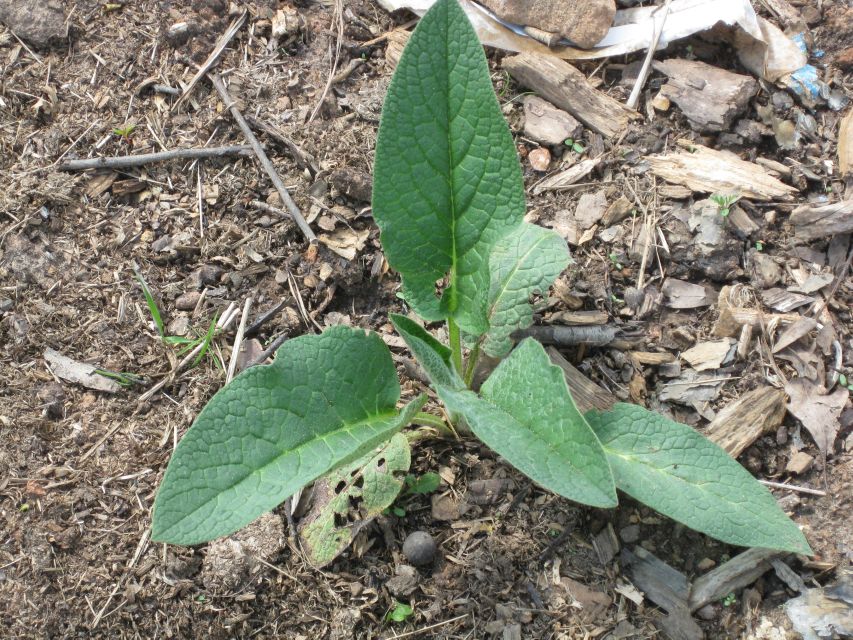
I purchased several Russian Comfrey root cuttings in the fall and they have now surfaced and are growing vigorously.

comfrey
Russian Comfrey growing vigorously, planted in the fall


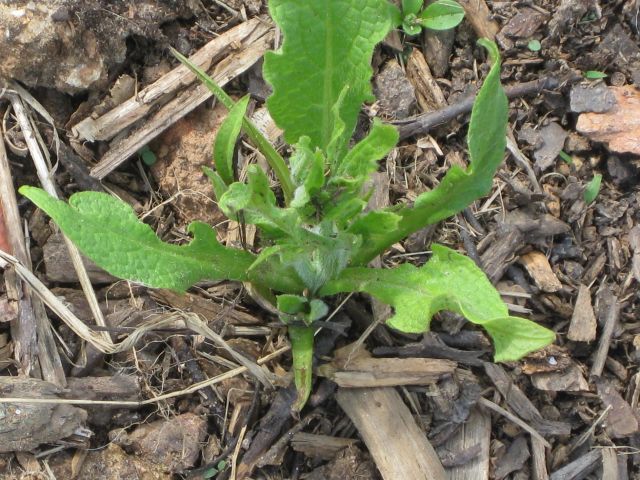
I also installed one cutting of Comfrey officinale, which does spread by seed and must be carefully watched. It has just surfaced and begun growing.

comfrey
Comfrey officinale – just one plant to monitor


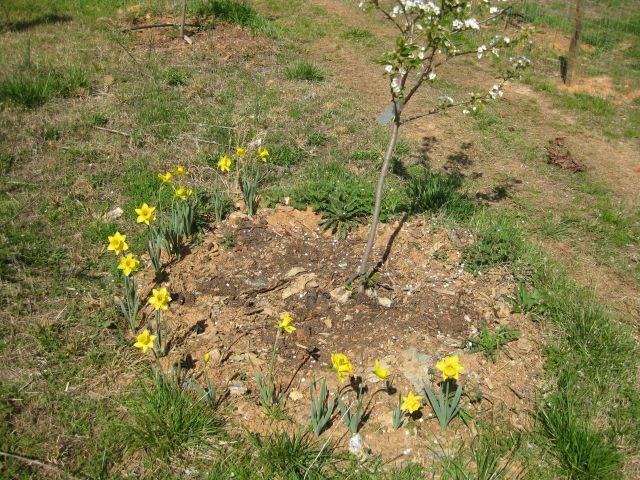
I mentioned my interest in guilds, a frequent permaculture topic. One of Hemenway’s suggestions is to plant daffodils around a fruit tree. They flower early in the season so will not compete for water in the dry months, they are poisonous and may dissuade predators and, they look pretty.

comfrey
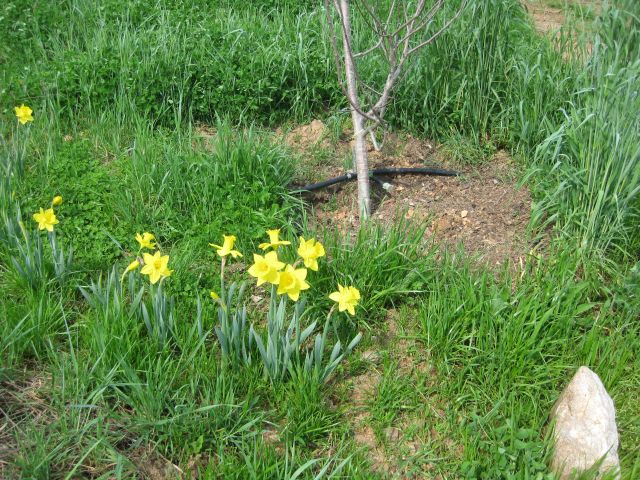
blossoming pear with daffodil companions


Most of my pears are now in blossom. Last year I lost all my pears to a late frost. The average last frost day here is mid-April, so I am watching the weather reports and if frost is imminent I may try wrapping my pear trees to protect them. Below is an apple tree with daffodils and various cover crops which I shall cut down after they have seeded – I know I shall lose the benefit of the nitrogen nodules on the hairy vetch and clover but allowing them to seed gives me more for next year.

comfrey
apple tree with daffodils and cover crops including crimson clover, winter rye and hairy vetch


I am not including a photo of an apple tree with a nearby comfrey since, having now read the book on Russian Comfrey I realize I planted the comfrey too close to the tree and must relocate it – watching out of course that I do not leave any root remnants behind.

horse manure control test

My two main nutrition inputs are leaf bags from my neighbors, which I pick up in the fall, and horse manure (well rotted/decomposed) from the stables.  I have read articles about manure loaded with chemicals which wreaked havoc in growers’ plots.  I have not experienced this problem but, to put this concern behind me, I ran a simple test.

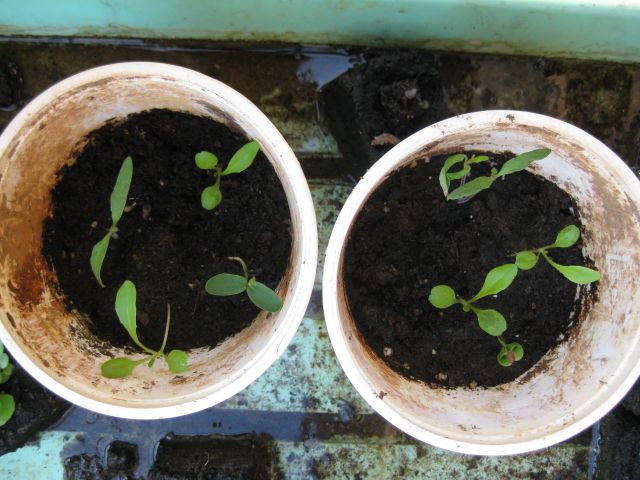
I took two empty 32oz yogurt containers, drilled holes in the bottoms for drainage, and filled one 50% with recently collected manure and the other with compost.  I then added another 30% sphagnum peat to both, so they were both about 80% full.  Into each pot I planted two lettuce seedlings, one tomato seedling and one black locust seedling, all comparably sized.  The compost pot is my control pot.  Watered and left for a week plus in my greenhouse.

The result to date, is that all the seedlings in both pots are doing fine.  Some of the seedlings in the manure pot appear better developed.

manure
container on left has manure and on right has compost

I shall keep an eye on both pots but I do not expect a change in the results.  Which means the manure I collect is ok.  Or is it?  Driving in this morning I listened to a recent Paul Wheaton podcast and he mentioned that wormers used on horses to control gastrointestinal parasites, subsist in the manure and may kill earthworms. I have a well established hardworking earthworm labor force specialized in compost making. So this podcast tidbit gives me something new to think about.  I could add a couple of worms to each pot and lid it (to prevent them from escaping) and see how they are doing in a couple of weeks.

responsibility to animals

I had a good time at the Georgia Organics annual conference – its 15th and my 7th.  The Friday workshops and farm visit and the Saturday educational sessions were excellent and the two keynote speakers have national repute and lived up to expectations.  At my breakfast table on Friday morning was an organic livestock farmer.  I asked him a question which was triggered by the assistance I am providing to two ailing chickens:  “What do you do when one of your animals get sick?”  His answer was simple and to the point:  “If they get sick it means they do not fit in my system and I eliminate them.”

Later that day during the farm visit the same topic came up when the farmer was asked how often he deworms his sheep.  He deworms them all at the beginning of the season and then if one sheep needs deworming he will deworm it a second time and if it is still wormy (if that is the word) he eliminates it – “three strikes and you’re out” he said.  I am interested in dairy goats so I attended a session on keeping goats.  The presenter was from the west coast (interestingly several presenters had moved from the west coast to Georgia or Alabama) and her stance was different.  She stressed the importance of good management practices and prevention but, if a sheep or goat gets ill and is non responsive to organic treatments, she will use conventional medicine.  She felt she has a responsibility to the animal and cannot let it suffer.  The final viewpoint was expressed by a DVM (doctor of veterinary medicine) who said he would cull the animal to avoid the problem spreading and because its genetics were wrong.  His only exception was if the animal was a pet and then he would do whatever to save it.  So four commercial practitioners came to a three to one vote.

Some decisions are not simple.  If you hew to the organic road then conventional treatments should have no place.  I also understand the “genetics” argument – it is no surprise in humid summers that the tomatoes with inbred resistance to the various blights do far better than the regular tomatoes.  So to travel the organic path you must select robust partners.  I would probably have done much better with hybrid chickens than some of the gorgeous looking birds we bought, a few of which are struggling, which also makes me wonder if perhaps there was some inbreeding down the road.   One chicken has a persistent sour crop, which means the food she eats is not being processed properly by her body.  I watch her closely – she is the only one who won’t eat the occasional greens or yogurt which I provide, which would have helped avoid her condition.   After a couple visits to the vet I am now medicating her with nystatin (using a feeding tube down her throat to administer the medicine) and she may (believe it or not) have to wear a bra to help her crop regain its regular shape.  This is going to extremes, I agree, but I am also interested in how it all works – what causes things to go wrong and how you can fix them.

If you have to make a living from organic farming then culling the inferior specimens seems the way to go.  But then it gets back to why you are doing this anyhow – if it is to experience all the manifestations of life it is hard to let one depart when you could (presumably) have saved it, or at least made the attempt.


the beginnings of spring

The next couple of days I shall be at the Georgia Organics annual conference held this year in Columbus GA, south of Atlanta. This shall be my 5th year of attendance – my first few years I learned a lot and with each year there is less new information but I enjoy meeting other growers and learning from them. I was torn between doing a permaculture design course or the conference and have not ruled out a PDC for the future.

Shiitake mushrooms

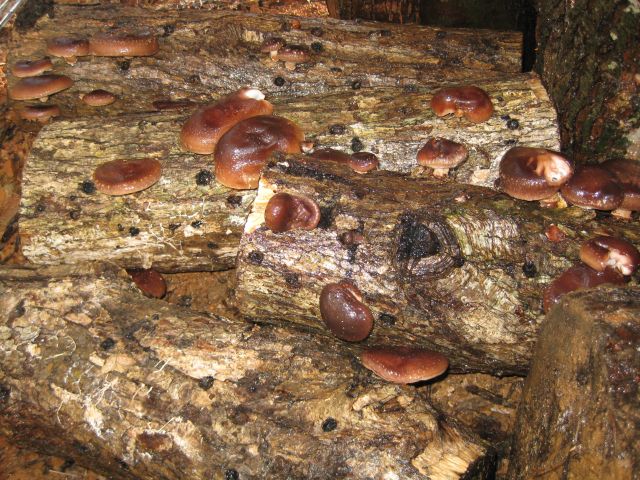
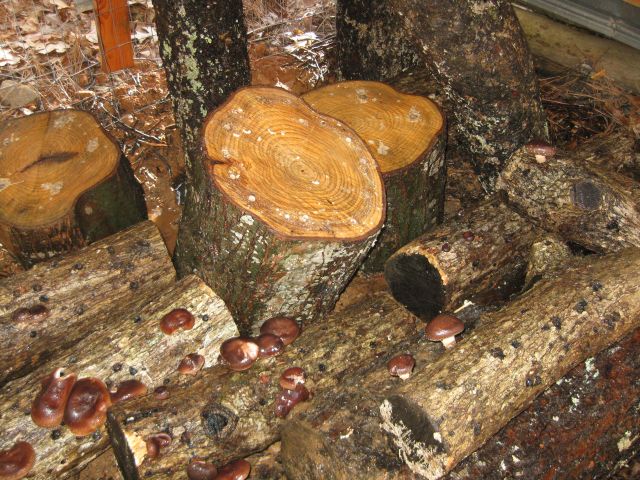
I picked about 15 mushrooms today.  Just as well I enclosed the growing area since, as I approached the shelter, I startled several large white tail deer, which are not usually there and may have been attracted by the smell of the mushrooms.  Notwithstanding my enclosure, someone small, perhaps a squirrel or smaller, did get in and savored a few chunks.

Shiitake mushrooms growing from 5 year logs

Today I also prepared another maple log with oyster mushroom spawn, this time grown on birch dowel plugs.  You can notice, in the photo below, on the center maple log the holes on the face of the log where I inserted the plugs and then covered with melted wax.  I also inserted plugs on the exterior trunk.

maple log with oyster mushroom dowel plugs

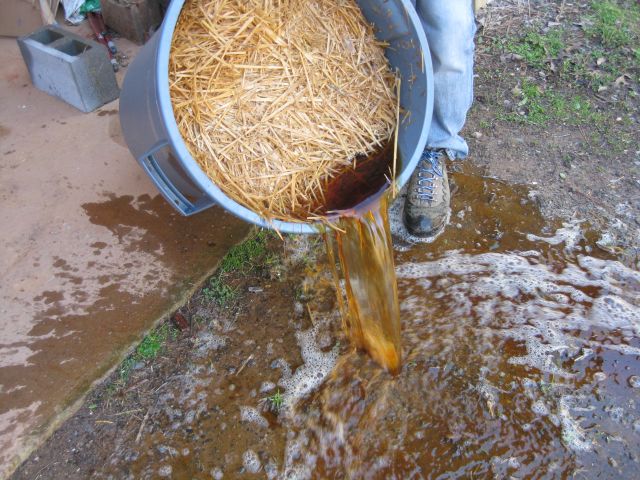
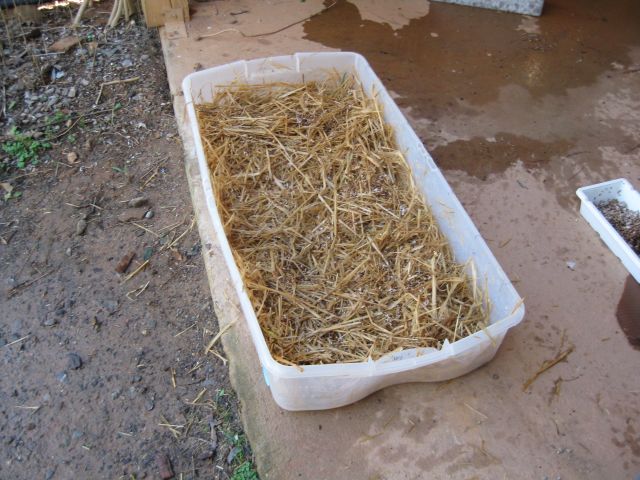
Another mushroom venture earlier this week was to soak straw for 5 days in a large trash bin weighted down with a cement block.  I located an unused plastic container, placed a sheet of wet cardboard (corrugations exposed) on the bottom and built up layers of oyster grain spawn and the wet straw.  I fitted the container with its lid and, since the contents were rather cold, I placed the container in a black trash bag and left it outside in the sun for a few hours to warm up.  Once warm, I transferred the brew indoor to a warmish location and I will leave it (in the black bag with access to some air) for a while until I see results, which I hope will be masses of white mycelium and not green/black bacteria blobs.

straw substrate for mushroom bed

You can see below the container in which the grain spawn and straw was packed.

oyster mushroom growing bed

Cold frame

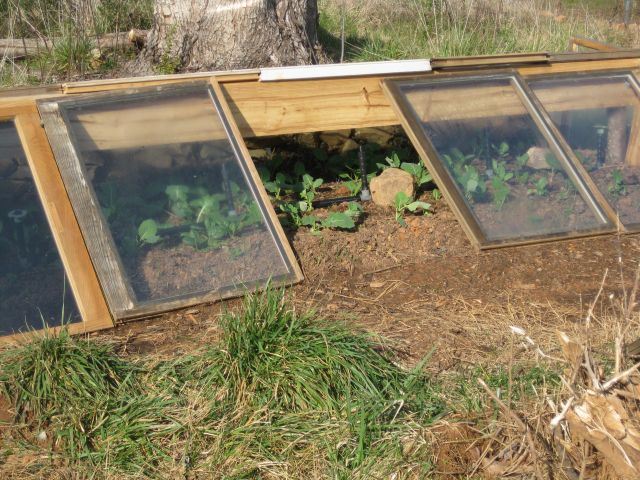
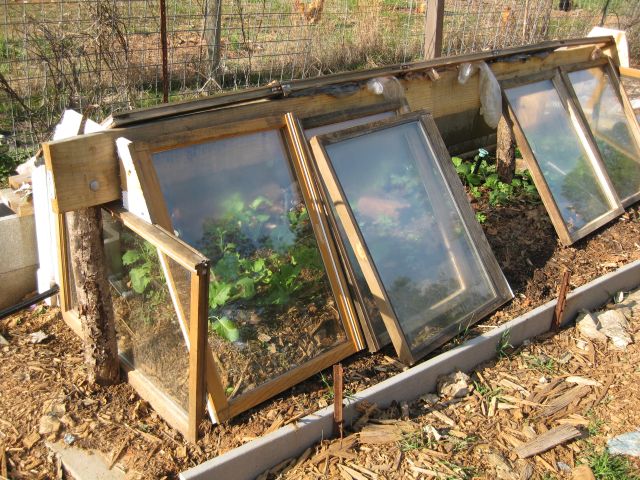
My two cold frames are performing as expected.  My regret is that I did not start them at the beginning of winter.  Had I done so I would have had larger pickings.  On warm days I lift off one of the windows to prevent temperatures rising too high, as you can see in the photo below.

cold frame at top of hill with modest sized vegetables

Both cold frames have internal irrigation (gravity fed from my rainwater tanks) so watering them, which must be done every couple days, is an easy matter.  When spring truly arrives I shall remove the windows and grow squash in the frames protected by row crop covers.  My squash has always been nailed by squash borers and perhaps this year I will be successful.

cold frame at bottom of hill with window temporarily displaced until day's end

Muscadine transplants

It appears that 11 of the 12 muscadine grape vines I transplanted have survived.  I know well why the one muscadine failed.  It takes much effort to relocate a muscadine – their roots travel far and wide and, so long as I limited my efforts to two a day, all went well.  It only takes about an hour to transplant a muscadine but when you are tired and impatient it is easy to tear off the roots.  The one that failed was the third I did in a morning and I rushed it and now it stands there, bark eroding, moistureless, silent fingers pointed at me.  I do not expect to get anything like the grape harvests of previous years when the muscadine roots happily invaded my composted vegetable beds and sucked nutrients wholesomely.  There were so many grapes my bees abandoned pollen gathering to suck their sweetness (as well as all manner of wasps and beetles).  I shall be satisfied with a limited offering and maybe more in future years as their roots go roaming.

6 muscadine vine tranplants, 3 on each side of the contour ditch


chicken synergies

The chicken are still doing well.  Six hens from my former neighbor (4 hybrids, 1 Ameraucana, 1 ISA brown) and 8 youngsters ( 2 Buff Orpingtons (1 of which is a rooster called “Buffy”), 2 Golden Comets, 2 New Jersey Giants and 2 Speckled Sussex).  No casualties, though one of the hybrids walks with a noticeable limp and is now called “Gimpy”.  The two dominant hens are the Ameraucana and the ISA brown, which curiously are also among the smallest.  The two largest hens, the New Jersey Giants, are the most timid and the 2 Speckled Sussex are the most antisocial.  Whenever there is a commotion amongst the hens, Buffy rushes in to settle the dispute.  He also charges out when there is a disturbance or security risk and crows throughout the day.  Notwithstanding shortened daylight hours I am getting 5 to 6 eggs a day.  I have decided against supplementing daylight with artificial lighting on a timer.  The coop I constructed is working well for them – no moisture from outside and inside temperatures have not fallen below 30 F (when the outside has fallen to mid teens).  They seem healthy enough though occasionally there is a soft shelled egg (to my dog’s delight) , so I supplement with yogurt and oyster shells.

I grow organically and my small orchard of 12 apple and assorted fruit trees began bearing fruit last year (actually I also have a 2nd orchard of first year fruit trees some years away from fruit bearing).  With the appearance of fruit there also appeared a variety of bugs, especially on my apple trees.  I know sanitation is important – removing the fallen fruit and wood cuttings because the pests overwinter in the fruit and cuttings.  But how to remove the soil slumberers?

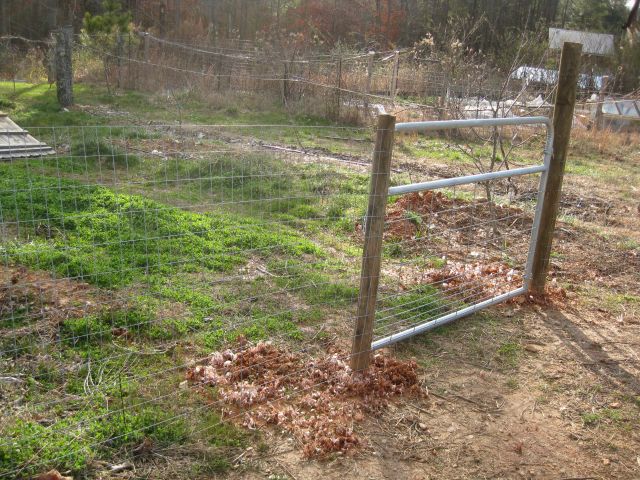
I installed a fence and 2 gates around the orchard and built a chicken day shelter and constructed a passage way to span the 120 ft from the main chicken enclosure to the orchard.  And now my flock are hard at work in the orchard,  removing debris and mulch with vigorous back swipes of their feet and voraciously eating the grubs and other soil dwellers.

a 6 ft galvanized mesh gate installed to the orchard chicken paddock

Fencing is a fairly costly business.  I used welded rather than the more expensive woven wire fences which are necessary for horses and goats, so there is a saving there.  However, the gates cost from $65 to $100 and, if I had welding skills and access to surplus metal, I would make them myself – but I don’t, so I pay – and they should last indefinitely.

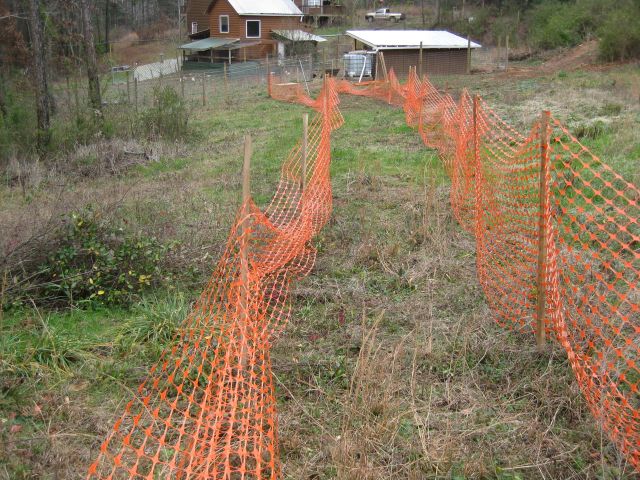
The passage way is temporary and I bought the red plastic material and stakes for about $9 per 100 ft from Lowes – marked down from $30.

passage way from main chicken enclosure to orchard paddock

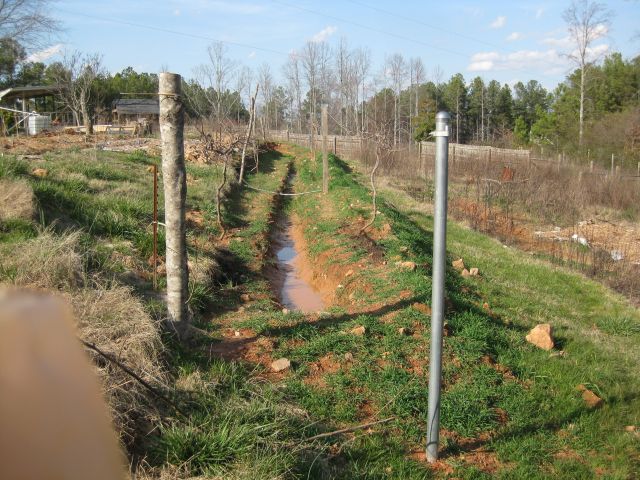
I remedied the problem of the fence slipping down the posts by drilling a hole through each post near the top and tying string through the hole and the top of the fence.

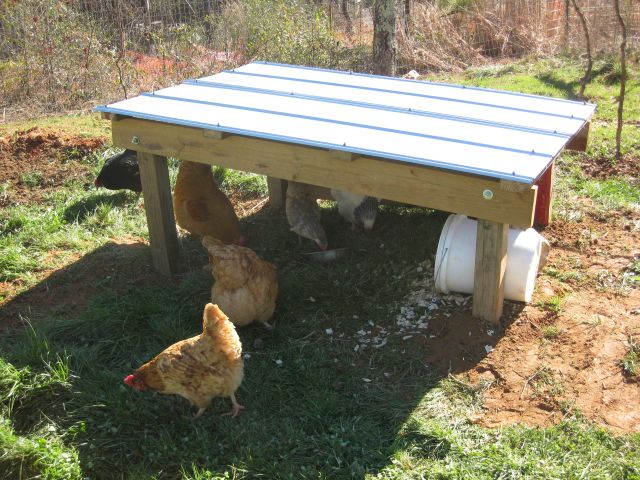
Finally, the day shelter.  I dug 2 ft holes for each of the 4 posts, bolted on 6″ wide planks to the 2 long sides and then 2′ by 4″ purlins and then screwed down galvanized roof sheeting.  The roof sheeting was $20 for a 12ft long 2 ft wide sheet, which I cut in half to fit in my truck and to produce a 6ft by 4ft roof. I will board up the south and west sides to make them feel more secure and sheltered from the sun.  In the shelter I have horizontally placed a 5 gal bucket with straw in the hope the hens will use it for egg laying, and a water container. To alert the flock to the advantages of the shelter I threw in a few handfuls of scratch corn, which immediately got their attention.

chicken day shelter 6 ft by 4 ft, with 5 gal bucket for egg laying

The roof slopes to the west to ensure the rain will run to the west and not over the east entrance.  In addition to reducing orchard pests I expect the flock will enjoy a more varied diet, get more exercise, and consume less of the purchased food I provide.