update

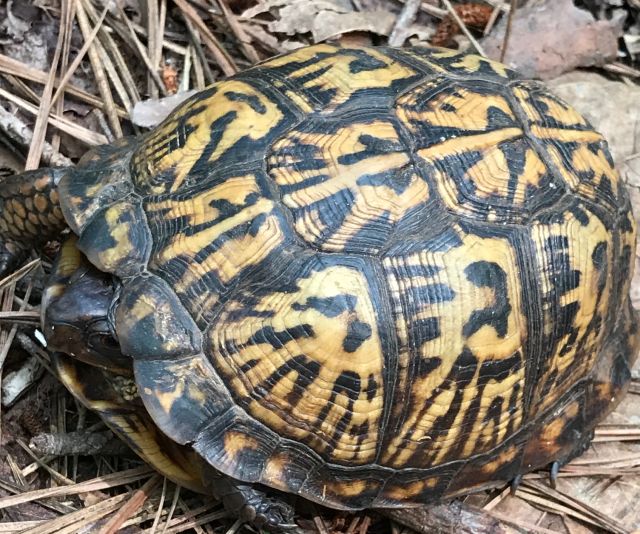
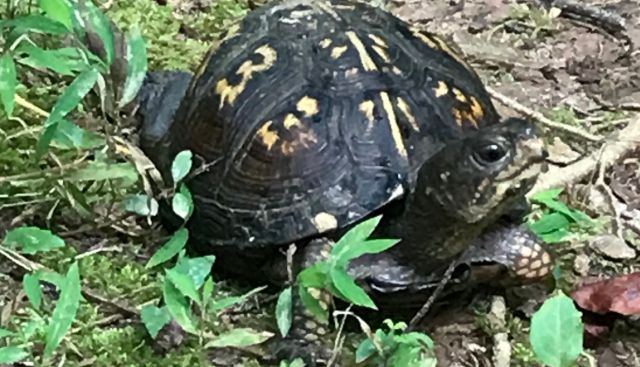
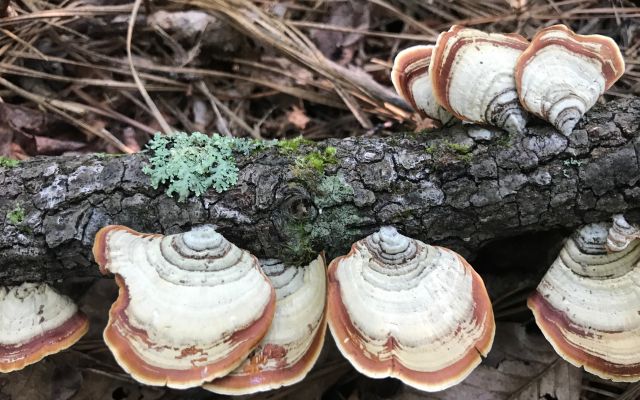
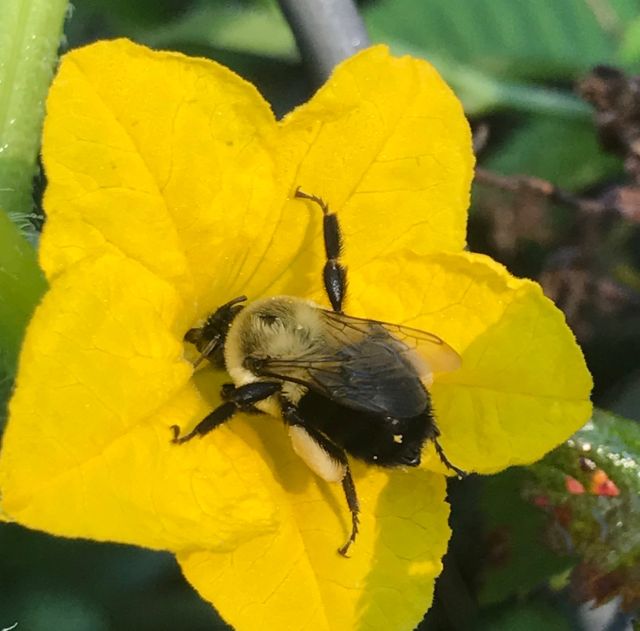
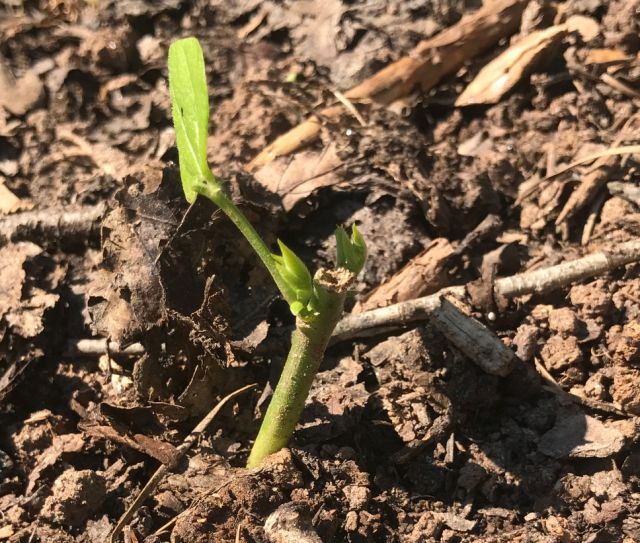
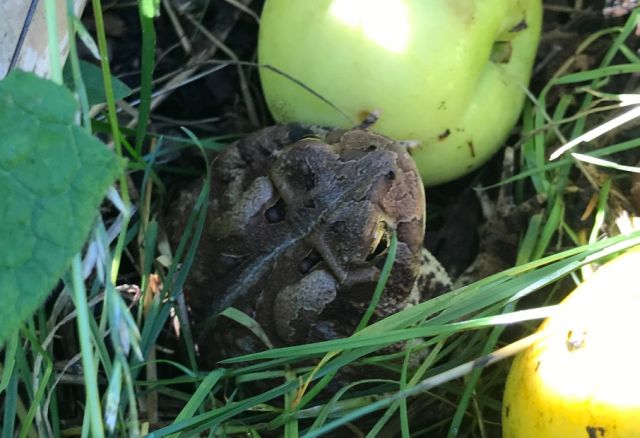
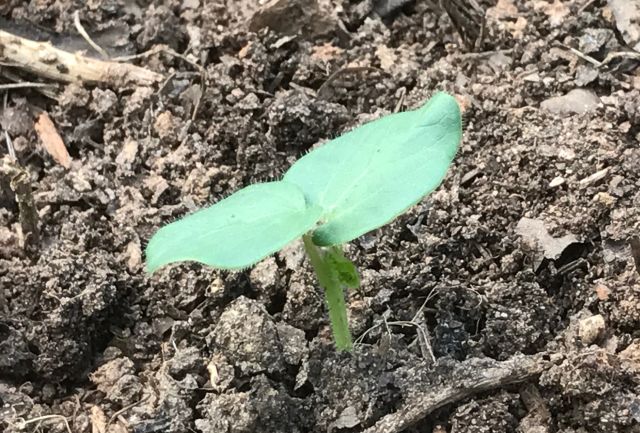
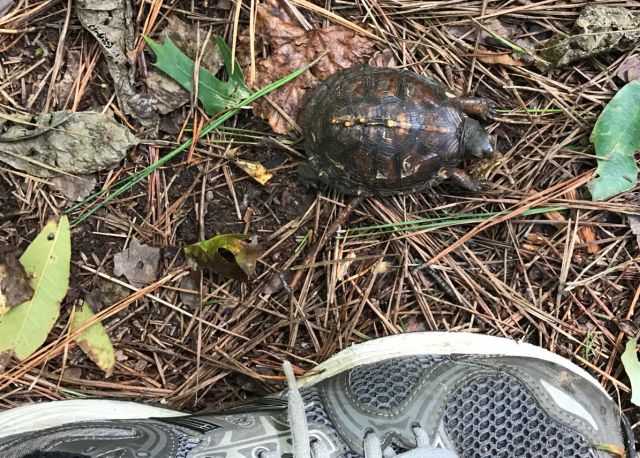
See pic above – when walking in the woods you need to watch where you walk – not only to avoid a copperhead but also to see what is going on down there – the different fungi and this small guy for whom my misstep would have been fatal.

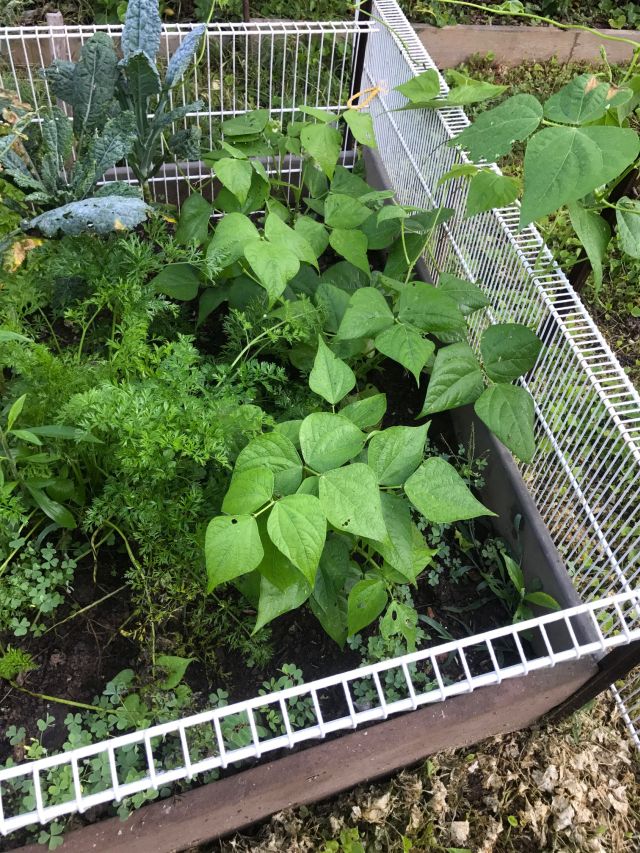
My last post was Aug 28 and since then I unfortunately had to focus on other matters.  The garden has transitioned with the approach of Fall.

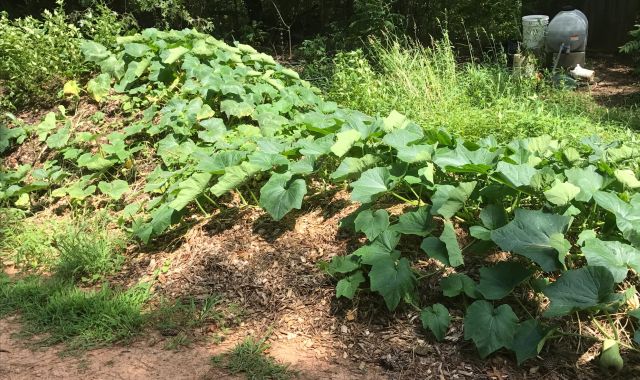
What little time I had for growing I tried to spend wisely.  I pulled the fading squash plants which had done an excellent job shading with their large leaves the raised beds they inhabited.  So, once they were out minimal weeding was required.  I seeded with mixtures of late season greens (collard, kale, mustard, lettuce, chard) – when I say mixture I mean I loaded the different seeds into the hopper of the seed spreader and expelled them all together whereas in the past I seeded different types in straight rows.  My new approach means that if a particular variety does not do well it will be superseded by another green rather than by a weed.  A negative is they will be on top of each other and not realize full growth.  But we will snip frequently for the kitchen and they will cover the beds well and dissuade weeds.
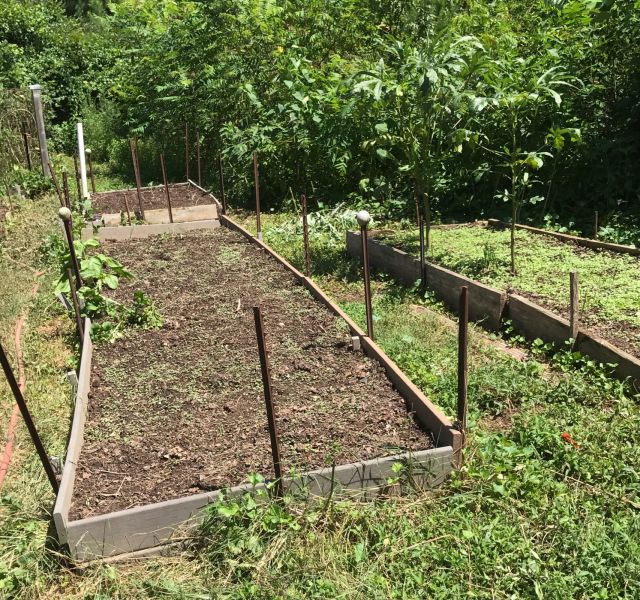
Sept 2, some of the recently seeded beds

Some 4 weeks later the beds had really taken off.
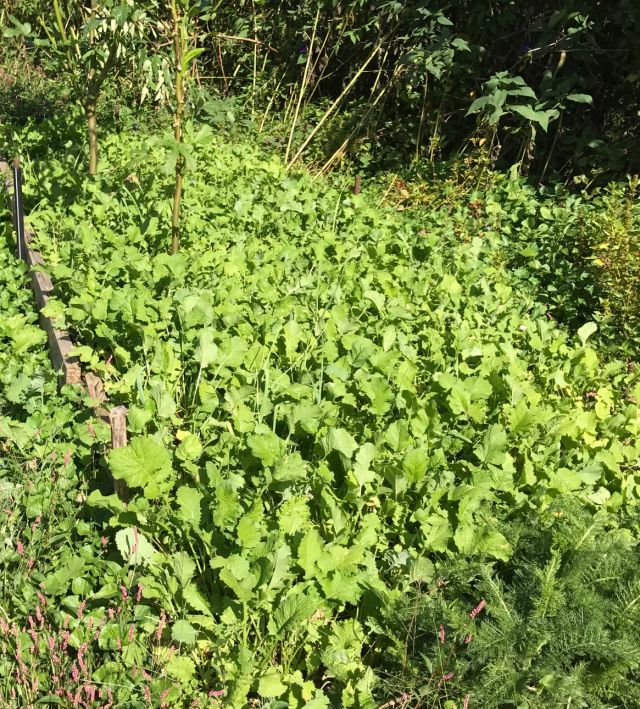
a bustling bed

Some of the beds did not do as well and I surmise 2 reasons – they were planted a few days after the others and missed the rains; and I seeded them with Austrian winter peas and several other peas and I have a rabbit population which preyed on my peas throughout the season and probably nailed these as well.
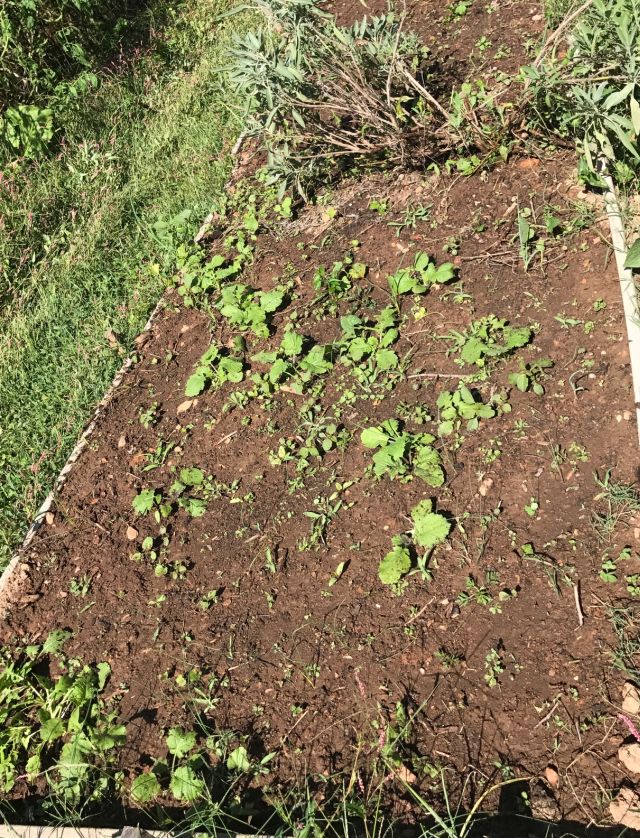
a weak bed. oh well, I will have to pass on peas until I have dealt with the rabbits

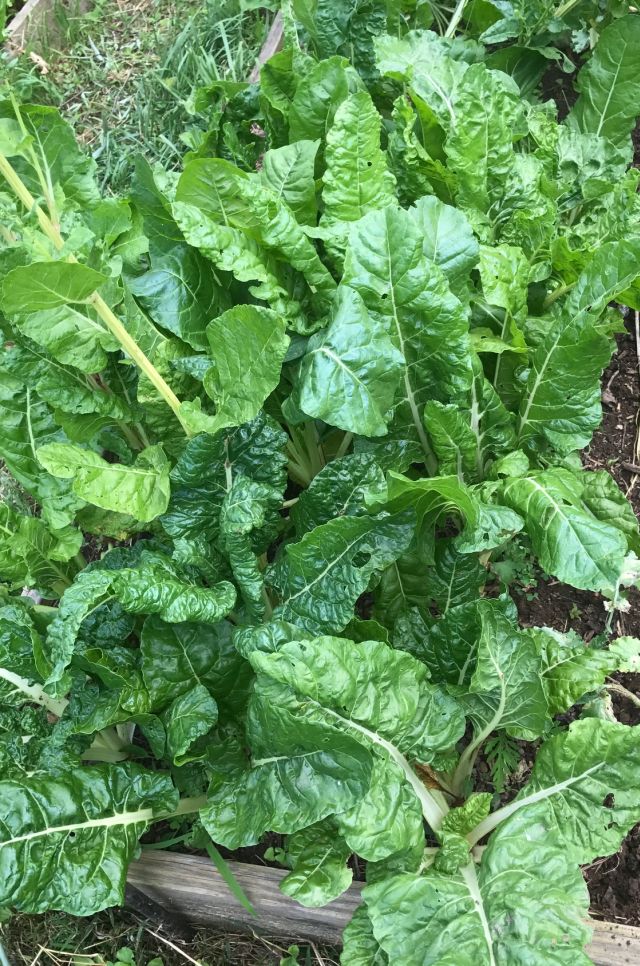
A favorite all rounder is chard – it grows well in spring, somehow survives our summers and comes back strongly in fall.

still looking beat up in early September, but once cooler weather sets in and pests abate it will be vigorous

I previously mentioned a volunteer butternut squash plant which took up residence on the compost head and has done magnificently.  A week ago we picked from this plant 5 butternut and have subsequently picked more.
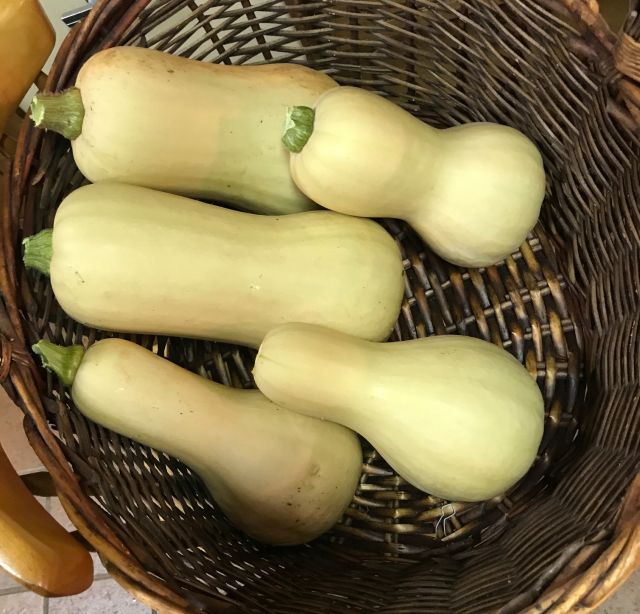
fresh succulent butternut from an unexpected source

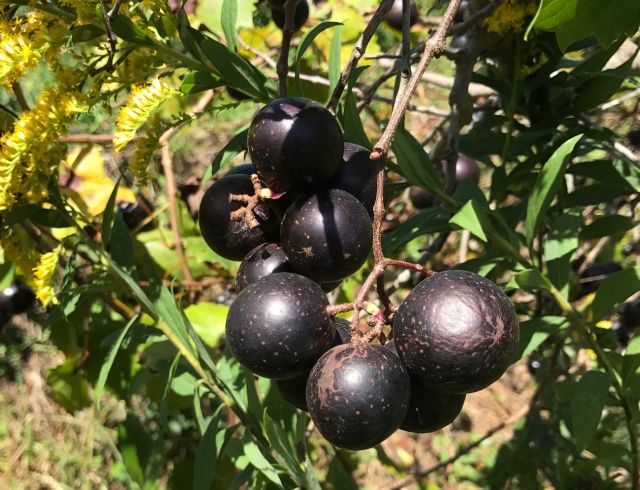
The muscadine at this time of year taste delicious.    I have several varieties and interestingly, different ones perform better each year.  These black muscadine are very sweet.
the trick is to pick the ones which have lost their gloss, such as the ones in front compared with those behind

I have 2 varieties of persimmon – American and Asian and I planted them 4 years ago and they are still not producing.  However at the gate to the woods I noticed some cherry looking fruit on a tree and I think these are self grown American persimmon.  Impossibly bitter to eat until they have matured.
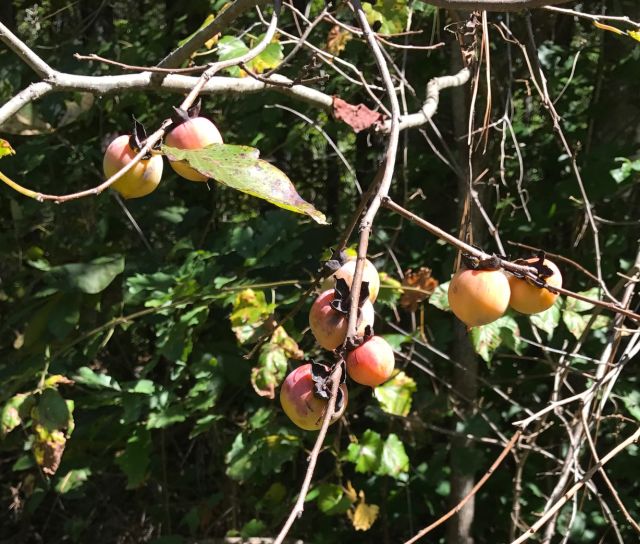
lurking in the woods

Eight years ago when I purchased the woods I decided to grow black walnut.  I ordered 25 at a very reasonable price from the Georgia Forestry Commission and gave some to neighbors in Atlanta and planted 3 at our Atlanta house.  I thought shading from larger trees would be an issue and it sure was.  None of the trees in the woods did well and at the Atlanta house the one which did the very best, unsurprisingly got the most light.  One of my sons visiting from the west coast decided it would be great to eat a black walnut.  The first step is dehusking.
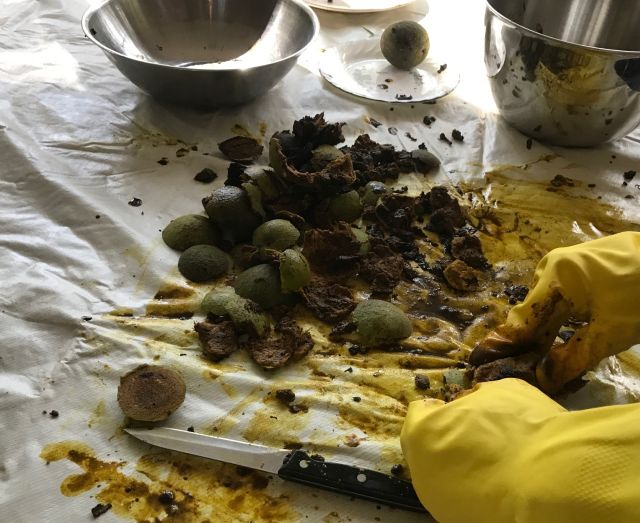
its a messy business and their stain is long lived

Here they are with their husks removed.
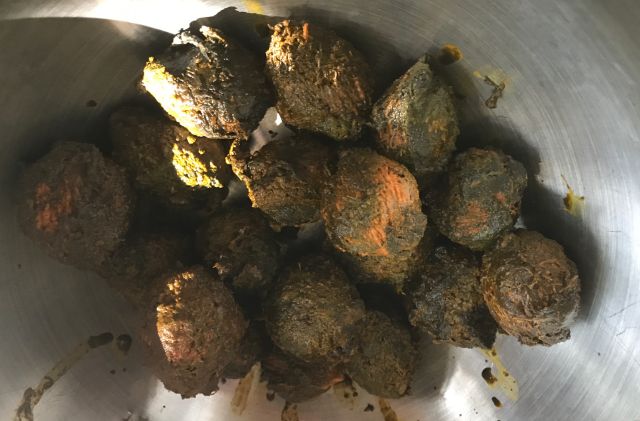
next step is for them to dry. unfortunately he had to leave before they had dried

Finally, goldenrod has flowered to the delight of the bees.
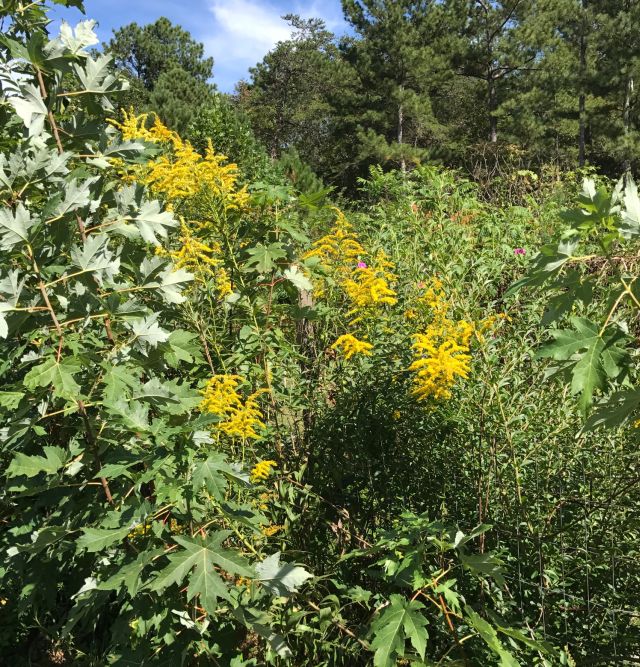
summer nears end

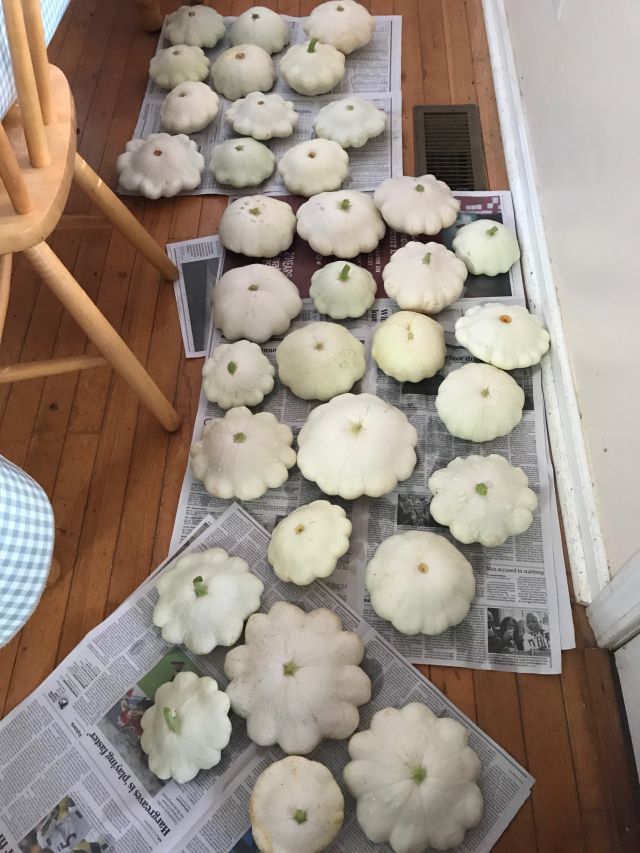
I had large yields of vegetables and fruit this year due primarily to plentiful rains and my slowly improving techniques.  We had so many patty pan squash we gave a 5 gal bucket to the local high end restaurant.

we gave most of these to the Woodbridge Inn, we washed and dried them first. next year, if we go commercial, we will sell them at the market or to the inn
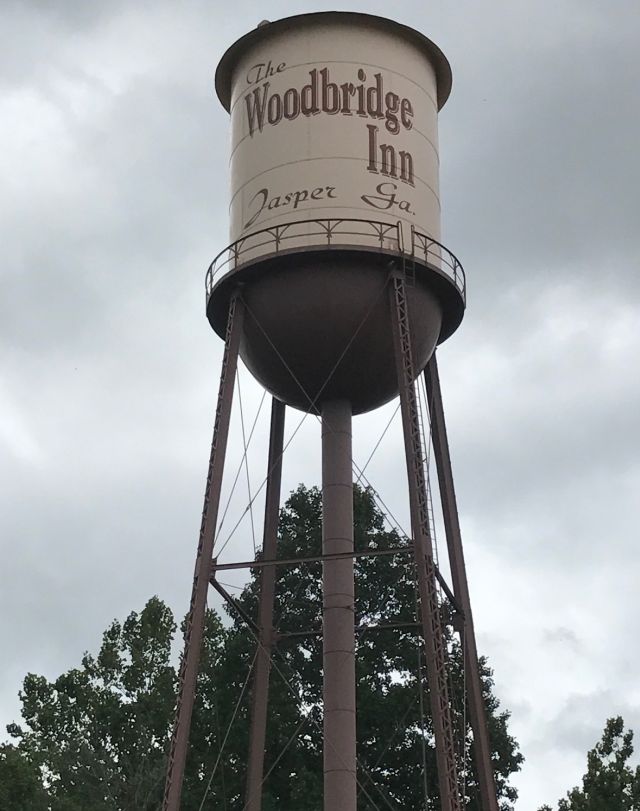
the Woodbridge Inn is a distinctive feature in the town of Jasper, seat of Pickens county
the entrance to the inn is relaxed and inviting
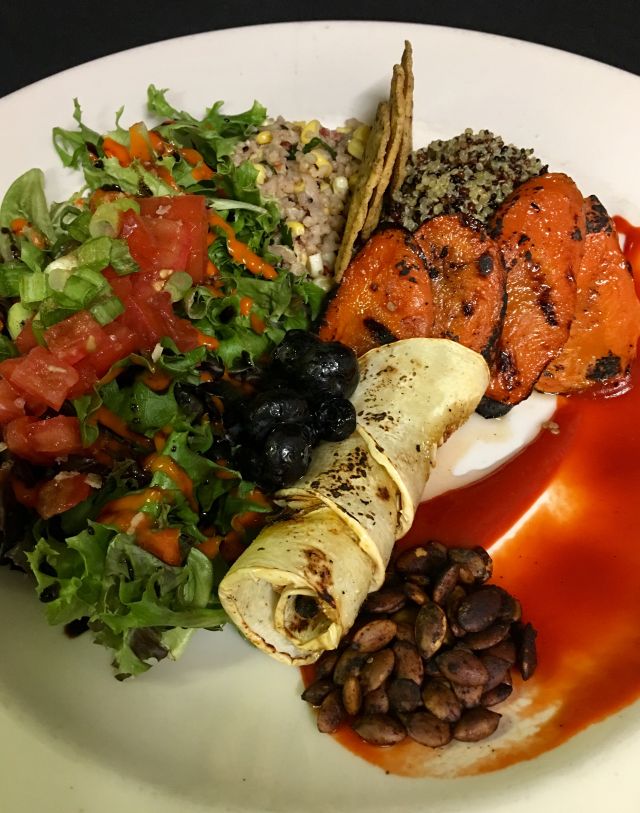
Chef David texted me this pic of a sumptuous plate with my squash centerfold and said they were “Fantastic!!!”

So the squash were great this year but a few days ago I noticed borer holes in some of the new squash, so I yanked out all the squash plants for the compost heap.  They provided such good cover there were very few weeds and it was quick work to mulch the beds and seed with cool season crops – kale, collard, mustard, chard, lettuce, radishes etc.

Cucumbers are nearing their end but sweet peppers are doing fine and some tomato plants are soldiering on.  In the orchard most of the apples are done.  The Arkansas Black was excellent this year – may be due to my venting procedure to remove air bubbles from my gravity feed irrigation system – the water I purged to expel the bubbles was channeled to the Arkansas Black so it received considerably more water than the other trees.  The Gold Rush is the last producing in my main orchard and is ok but significant pest presence.  In my other little orchard the Ein Shemer apple is now producing and tastes delicious.  As previously posted, the Jujube failed this year due to a late frost, I believe, and the figs which grow a bit each year, did not have much to offer.  Perhaps more next year, if they survive the winter.

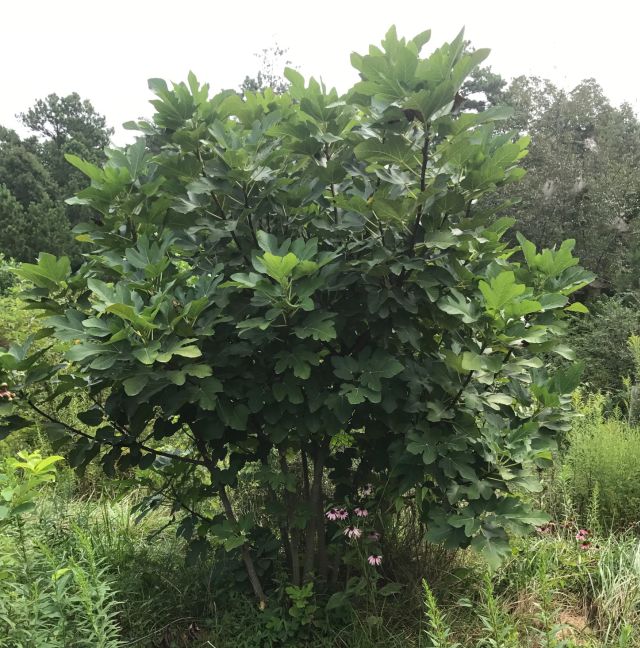
I will prune this fig tree later in the year and hope for figs next year.

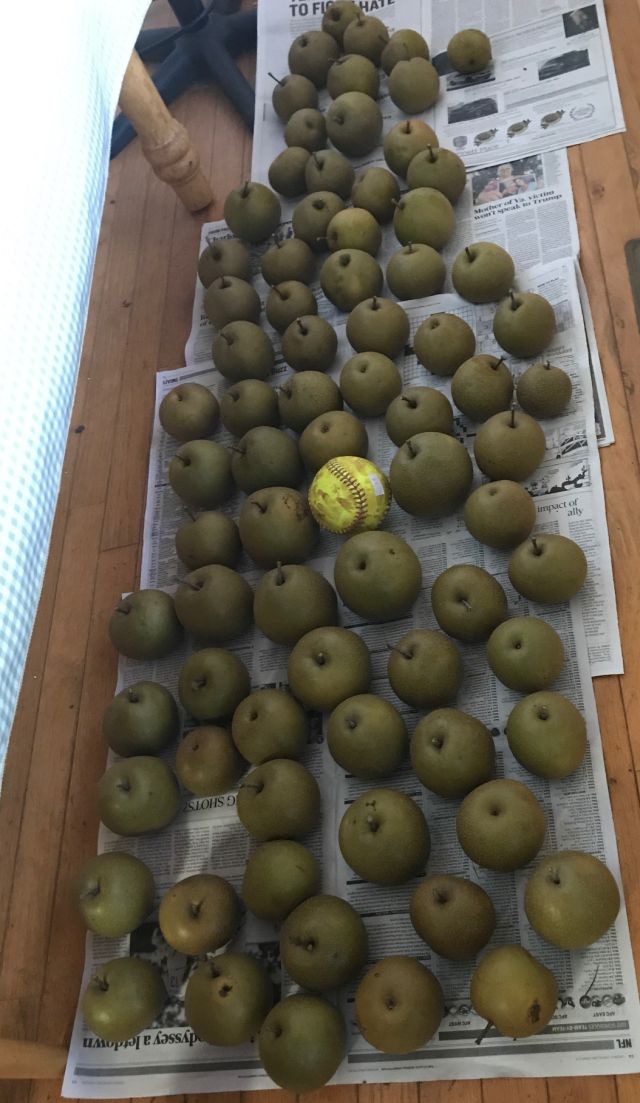
The Giant Korean pear has again been a steller producer – so many delicious, crunchy, pleasantly sweet pears.

here are some of the pears from the one small tree, with a softball in the center for comparison

The pears must be refrigerated otherwise they develop black spots and go bad.  I set out some tables in the basement (my root cellar proxy) and am storing my apples there and they seem to be holding up well.

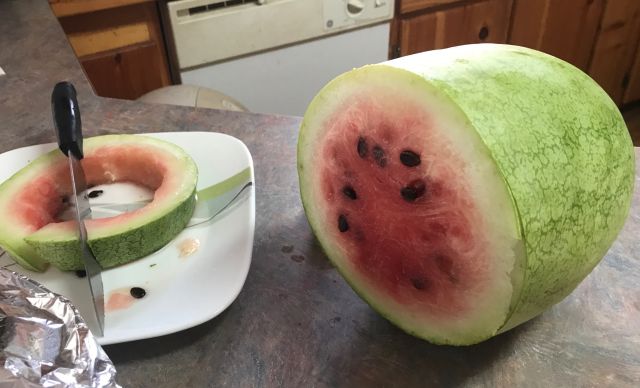
We picked this watermelon too early, though it was sweet enough.

we will probably skip watermelons next year

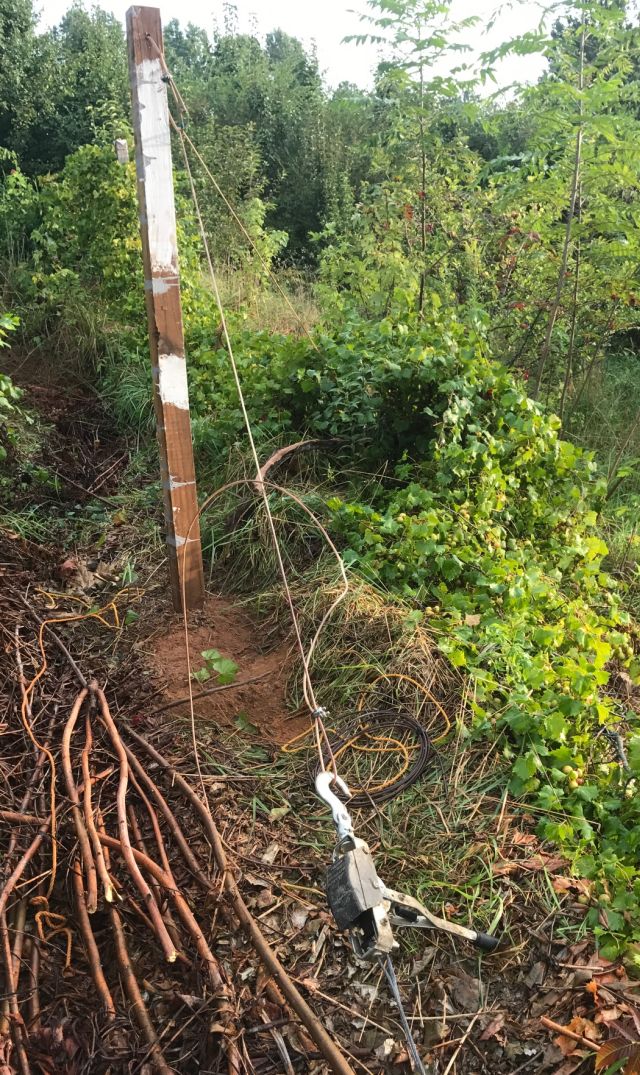
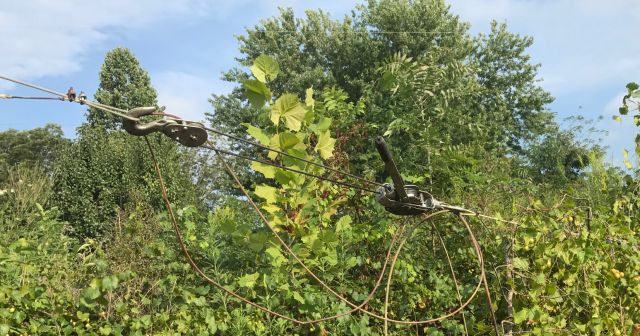
We are now in muscadine season (the southern gardeners’ grape) and I noticed that my cable trellis had broken and several muscadine trunks were on the ground.  The traditional guidance it to set the trellis posts 20 ft apart and center the trunk between the posts.   However I find the weight on the trunk from the fully laden vines is great and causes them to bend and also produces great weight on the cable.  So for my repair I decided to insert posts (4″x4″x8′) next to the two prostrated trunks and winch them up and secure the trunks to the posts and then repair the trellis.

you can see the new post, the cable extending from the come along winch to the top of the post and down to the trunk of the muscadine

I winched up the fallen muscadine trunks and secured them with cable to the top of the posts.  Then with the trunks vertical and secured, I winched the severed ends of the trellis cable together and secured them with a new cable.

it’s so easy to do this when you have a winch, but make sure the cable is adequate to the task and well clamped to avoid injury from  sudden separation

I have held off turning my compost heap because, again, a large butternut squash plant has taken up residence.

the picture does not show the full extent of the plant. bottom right is a small butternut.  the bee watering station and a 35 gal compost tea maker are top right

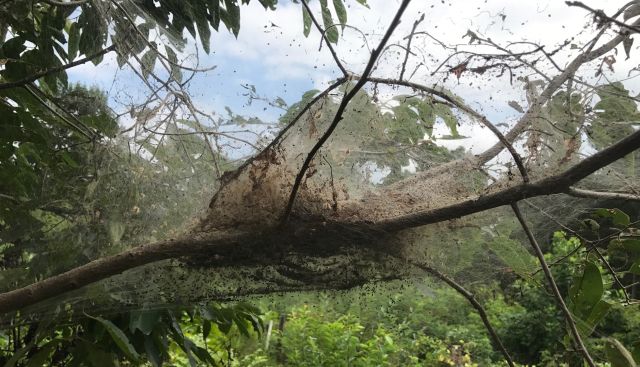
Two seasonal occurrences are the fall webworm which has taken niches in many trees.

a suggestion I read was to poke holes in the web with a stick to allow yellow jackets and other wasps access to the larvae

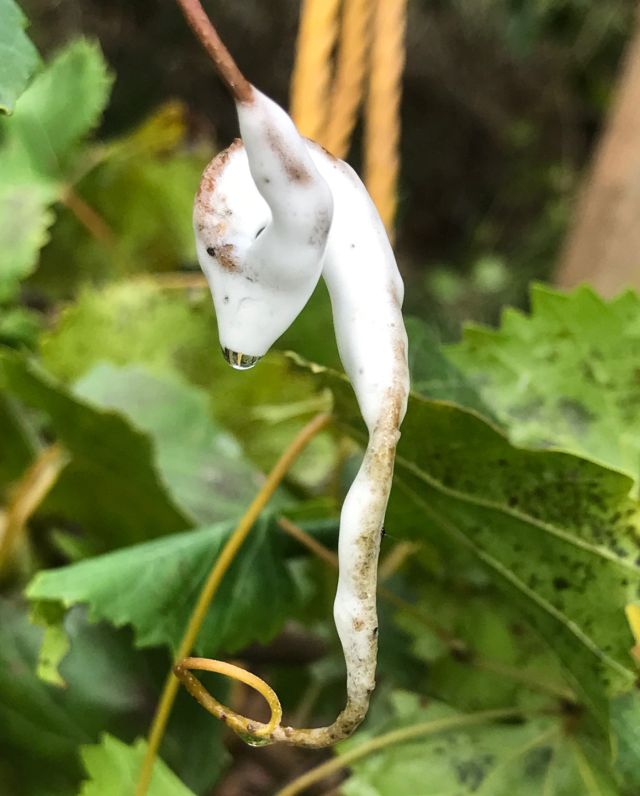
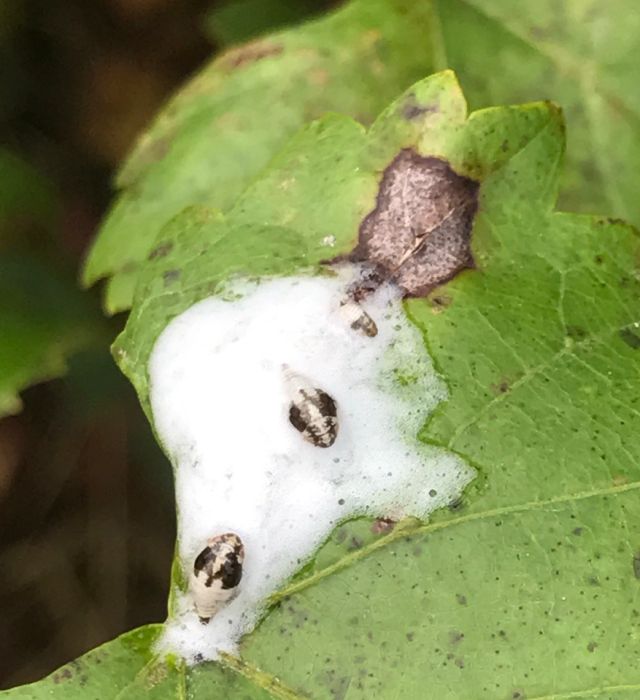
And the spittle bugs.

if you probe with a twig you will find the inhabitant
the 2 surface insects may have come from within

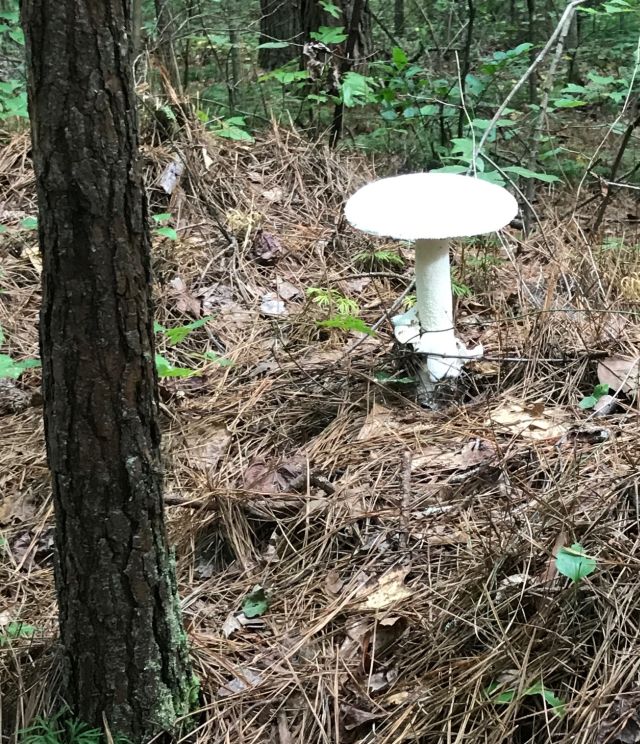
And in the woods, recent rains produced mushrooms.

this mushroom is large and for comparison I show a nearby pine tree

Finally, our walk in the woods includes a visit to a small pond I dug a few years ago.  I heard a sudden rustle at the water edge and saw a slender at least 4ft long snake slide into the water, and weave gracefully into a concealed hole at about water level.  At first I thought Moccasin but I think it may be a non venomous water snake.  I saw it again in the water yesterday and again it bee-lined to its hole.  I will try more circumspect approach and try take a pic next time (it’s active in the afternoon but not the mornings when the water is colder).


what’s growing

After several days in the 90’s this morning was overcast and I began working at 6.30am, so it was pleasant.  With all the recent rains I have 8,000 gallons stored rainwater and can be liberal with its use.

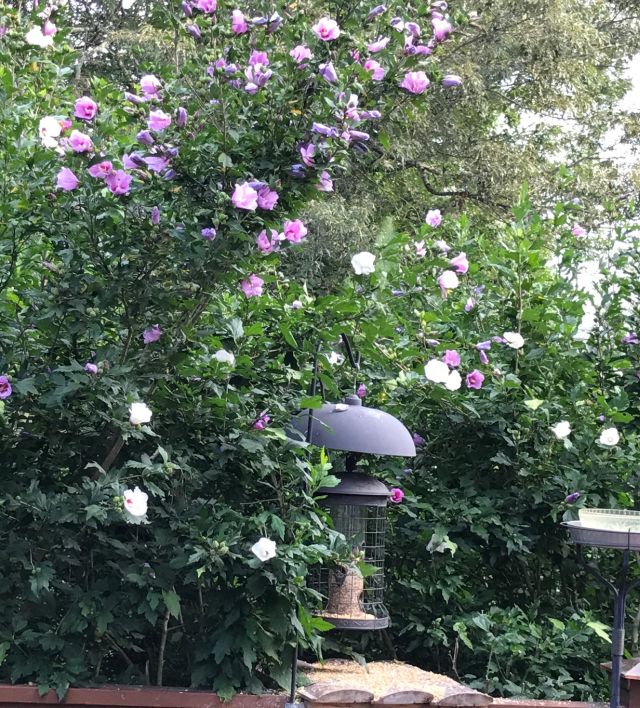
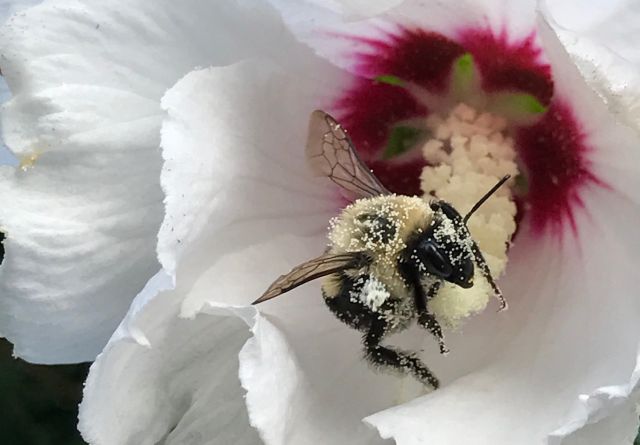
As I stepped outside I heard loud buzzing.  M. had lamented we had not trimmed the Rose of Sharon hibiscus, which overtowers our deck, and it would have fewer flowers this year.  But not this morning – there were flowers enough and many pollinators.

the bird feeder has many visitors but the flowers were the center of attraction this morning

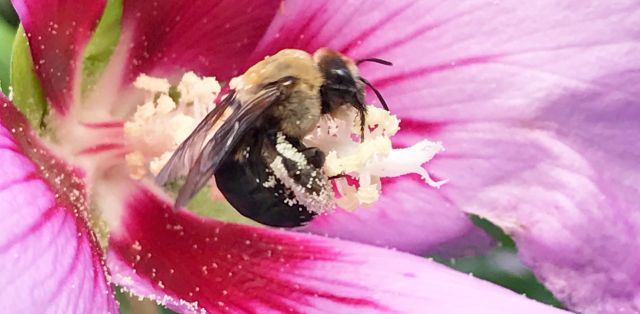
The bumblebee and also the carpenter bee are so industrious and look so cuddly.

this one had gorged and gorged and was covered in pollen when it eventually emerged

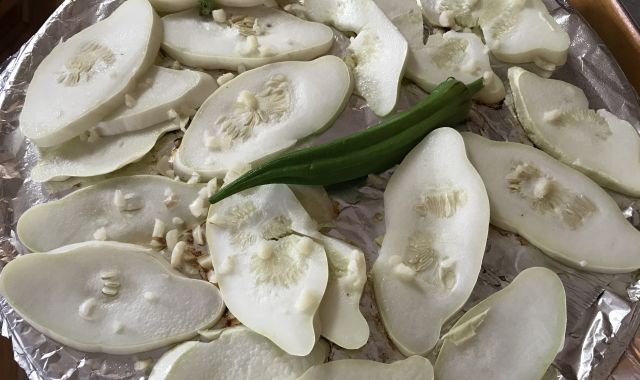
This year I have been lucky with pattypan squash.  The vine borer which usually fells the plant before the first squash has emerged is absent, so far.  Who should I thank – our multivoiced Georgia thrasher which I see so often among the plantings?  So I have lots of squash and it tastes delicious when slow grilled, with a sprinkling of olive oil, until it is tender.

pattypan squash and okra

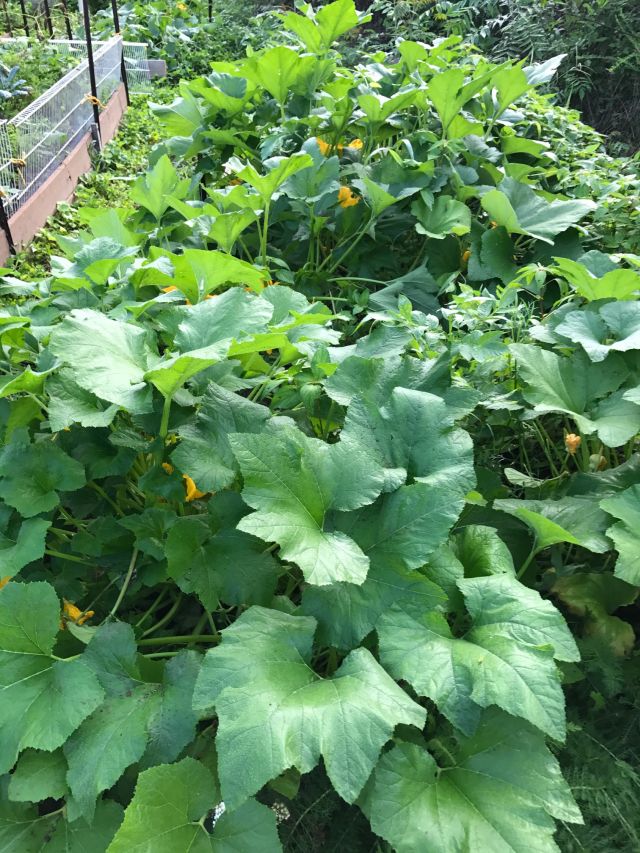
The nice thing about the squash and other large plants is they completely take over the bed and block weeds and retain soil moisture. 

one of several beds inhabited with squash, cucumber and melon plants

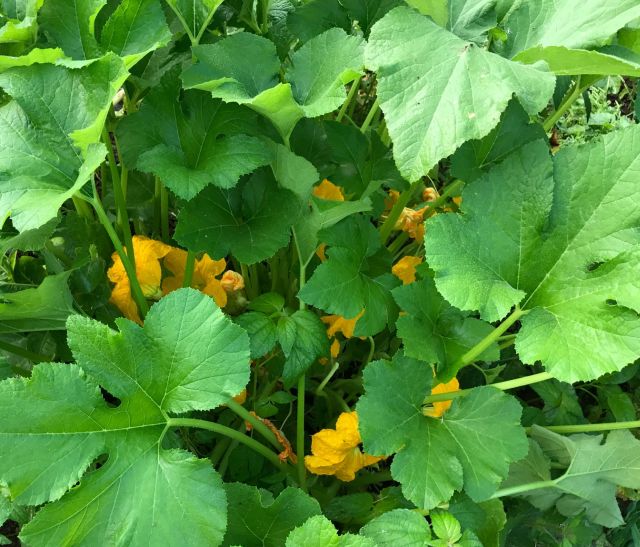
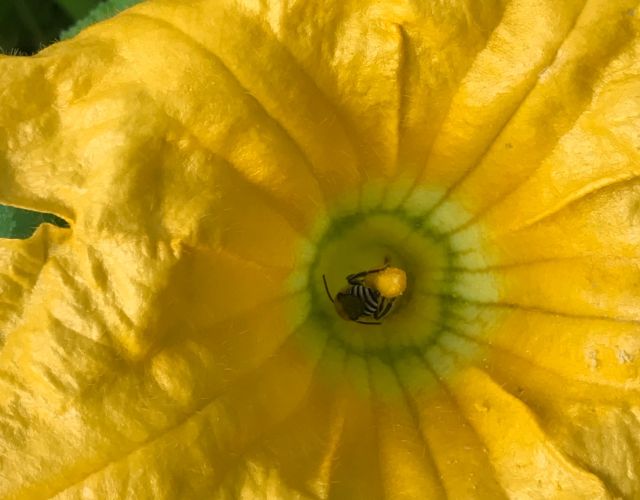
 A natural solution for the hot summer months in the south.  First you notice the yellow flowers and this morning they are filled with yellow jackets, bumble bees and honey bees.
when I water the squash the pollinators pour out of the flowers and cannot wait to get back to work

And then, a few days later the white saucers appear and expand.

the pattypan squash hides at the base of the plant -moonlike orbs

Often when vegetables get large they become vibrous but our experience is this squash, even large, retains its tenderness.  So we allow them to grow a bit.

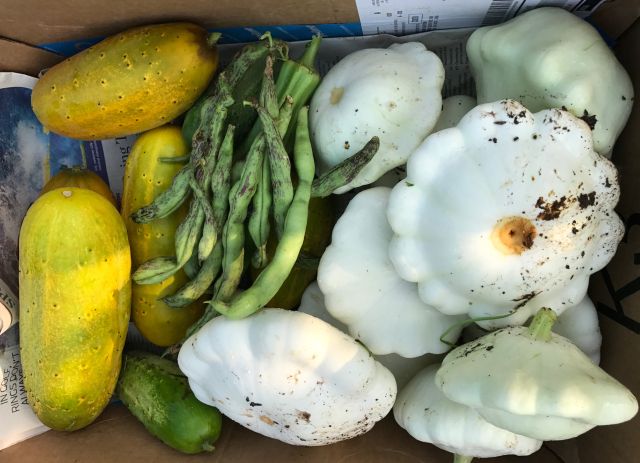
beans are still coming in. cucumbers can be secretive so we sometimes only find them when they are a bit oversized, but still taste good.
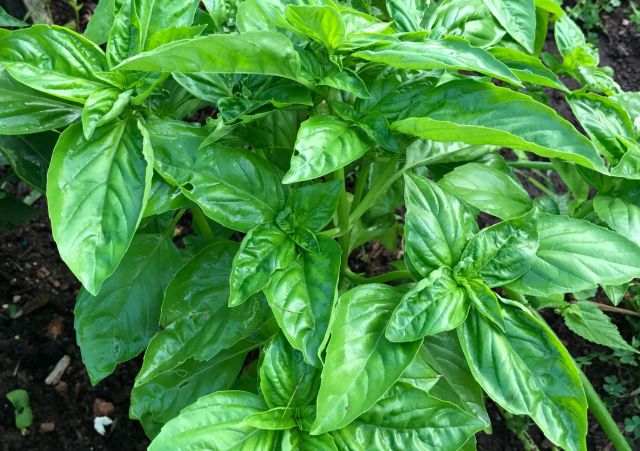
basil is doing well
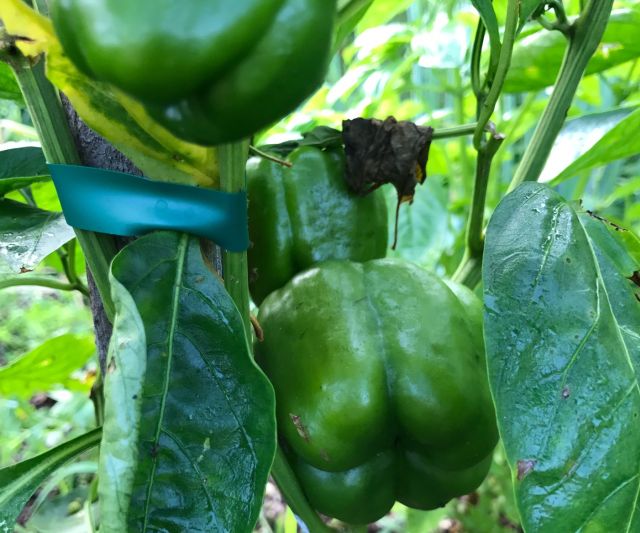
this year several pepper plants were toppled so I staked them to bamboo poles from my bamboo growing area
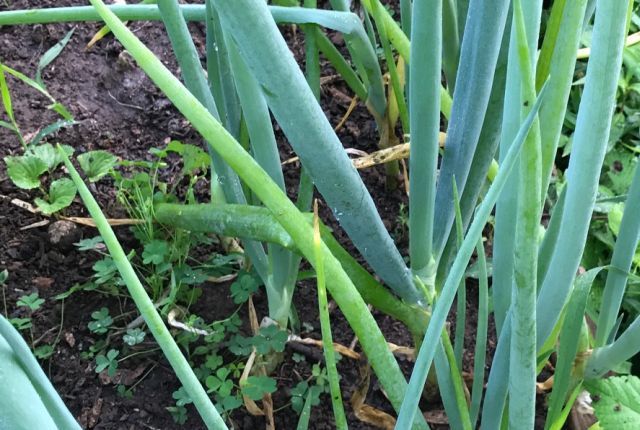
and my self seeded onions are ok but not large

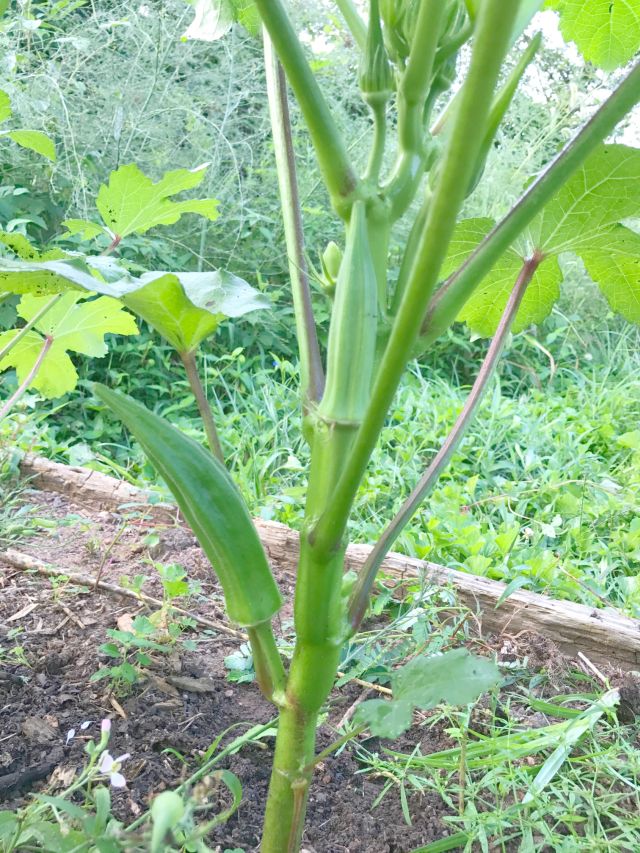
And now, at last, okra is stepping out and we shall grill today our first okra of the season.

okra plant grows easily and well in our area and we can eat the okra raw or grilled, but once it is too large it is fibrous and inedible

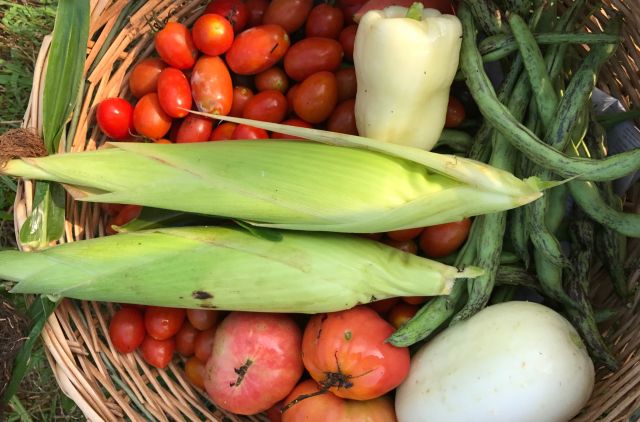
We filled the basket with some corn (very sweet), white cucumbers and the ongoing supply of tomatoes.

in my previous post on what’s growing, I described my diatomaceous earth treatment for insects on my tomatoes. none of those insects have reappeared so the treatment works

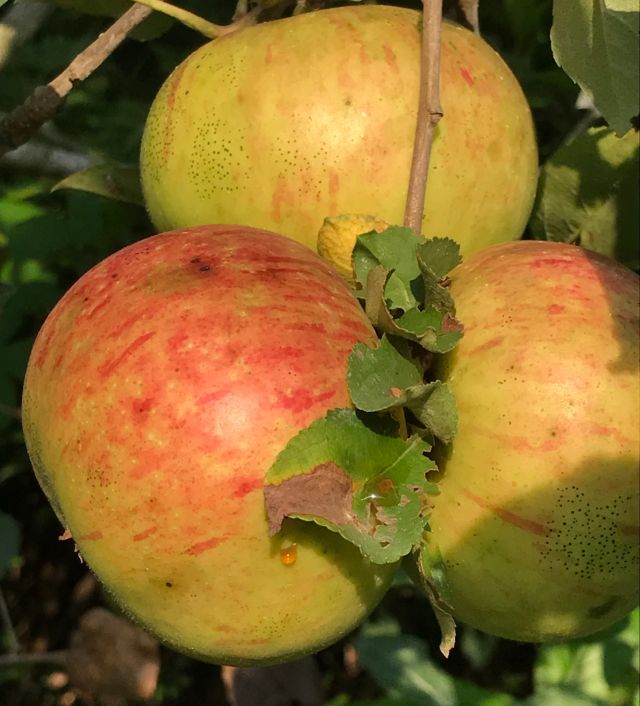
And we selected apples from several different trees all with distinct different tastes to be sliced and added to our breakfast of old fashioned 100% whole raw oats, mixed with sunflower seed, brown flax seed, yogurt and sweetened with our honey.

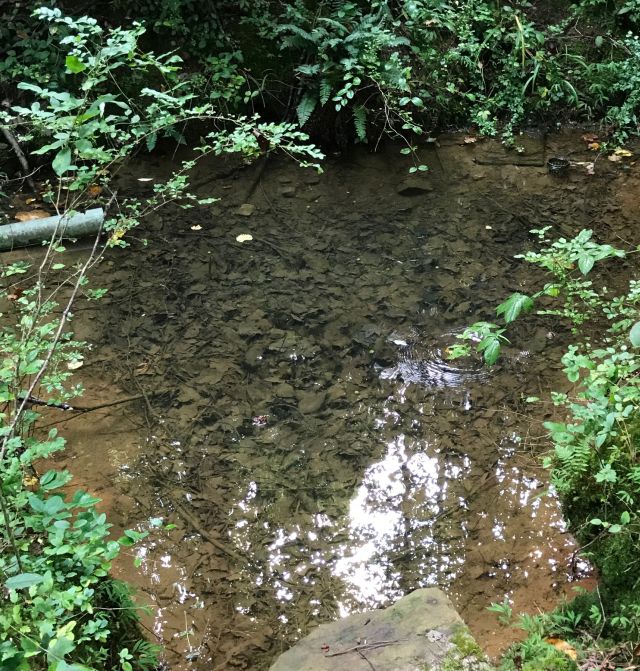
Finally we lathered our 14 year old Trudy with medicated shampoo for her mild  skin infection and walked in the woods and, as we approached the water hole which is fed by a natural intermittent spring ….

the digging of this pond was a saga which I have narrated elsewhere

We noticed a turtle heading up from the pond

this one withdrew into its shelter

and then another more inquisitive turtle

bolder and inquisitive

And on our return we hosed Trudy thoroughly.

what’s growing

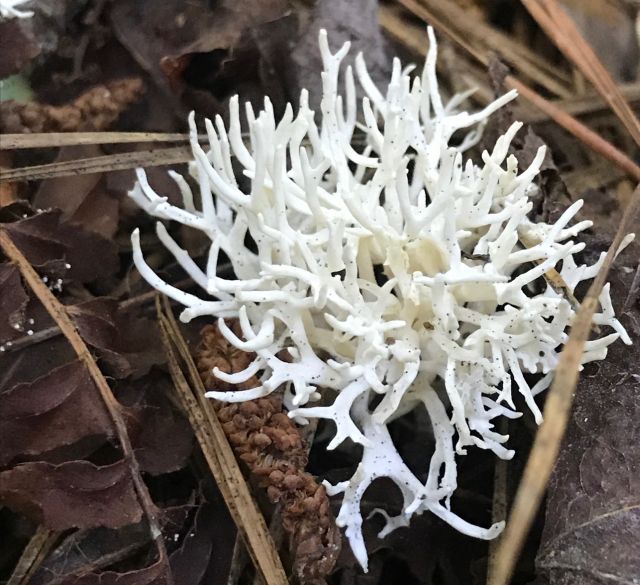
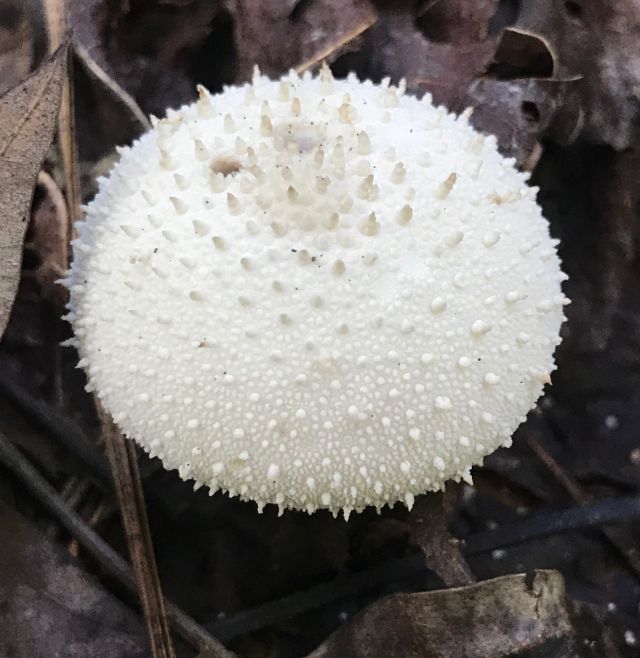
We have had lots of rain and in the woods interesting fungi appear such as above or this unusual specimen below.

The puffballs attract little attention while growing.

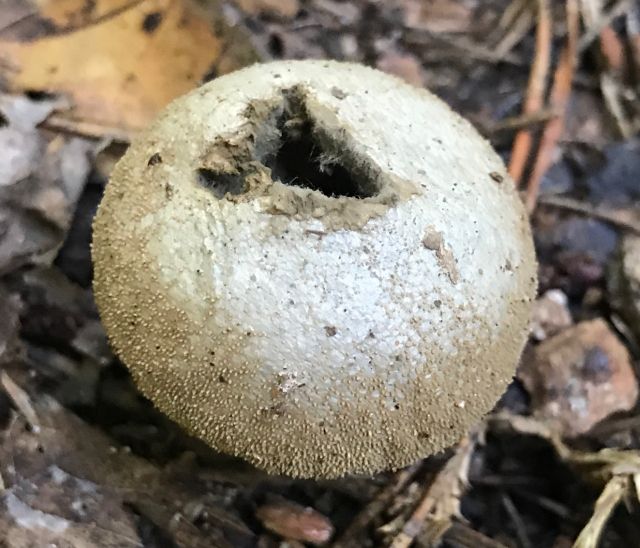
But when it matures a hole appears at the top.

touch the puffball gently and powder puffs out the aperture at the top

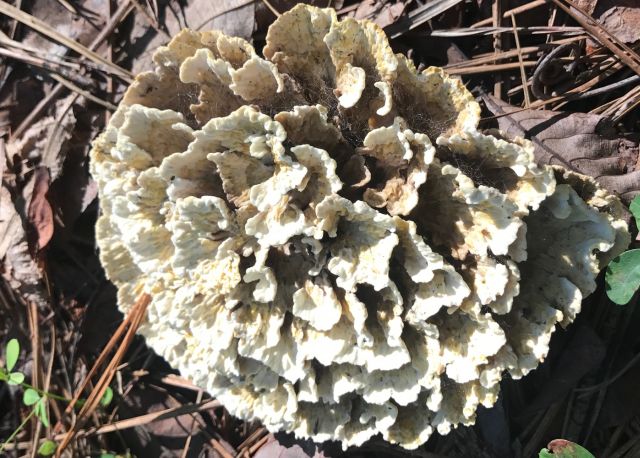
In addition to the regular looking fungi there are other varieties, here is another one.

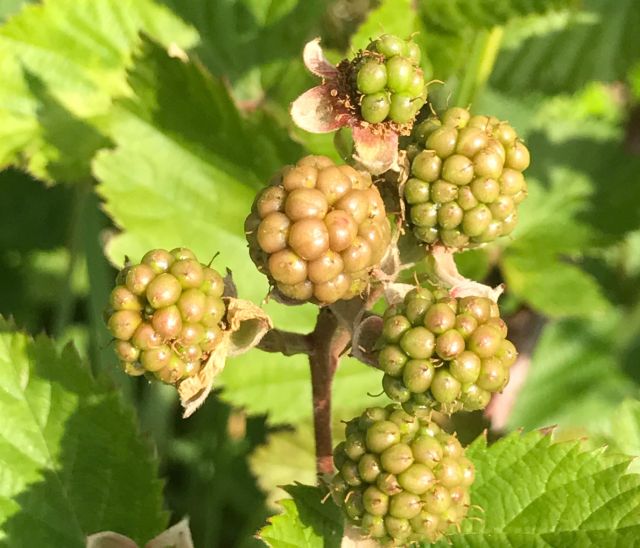
But enough with the fungi, what’s edible that’s growing?  The blueberries and blackberries are done for the season.  And the jujube, such a stellar producer in previous years, has no fruit at all – probably the late freeze.  Although the fig trees were also tripped by the late freeze, there are small figs on a couple of trees which grew back strongly, so figs for the plate later.   The apple trees are producing steadily – the early season is in full production and mid- and late-season species look good.  The one peach tree as always is afflicted by pests and disease, but the little snippet we had was delightful.  Can peach trees be grown organically?  My pears should soon be ready apart from one tree that lost all its blossoms in the late freeze.

The vegetable area is humming with activity.  Too hot for the greens but the squash looks good.

yellow jacket in squash flower

The yellow jackets have not been a problem.  I try to walk carefully in the growth looking out for yellow jacket activity – stand on their underground hive and they will chase.  I also prod ahead with a long stick not wanting to surprise a snake.

I almost stood on this fella, not venomous but there are copperheads around as well.

Cucumbers too are flowering and attracting bumblebees.
very engrossed, I like his right arm acting as a stabilizer as it burrows in

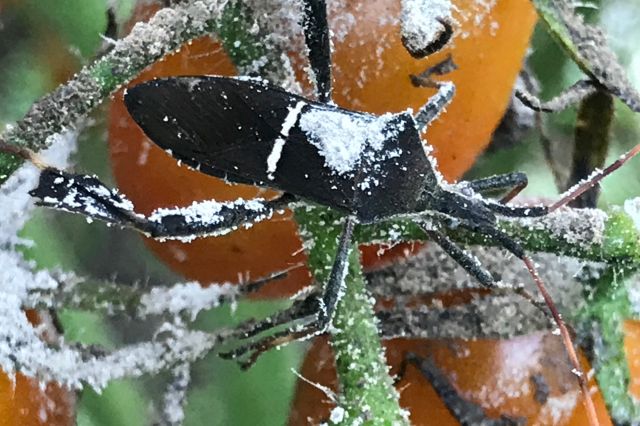
I do have a problem with this insect which started on the blueberries and then relocated down the hill to the vegetable patch and the tomatoes.  Yesterday there were parties (10-20) of them gathered on clutches of cherry tomatoes.  Instead of my regular standby neem spray, I dowsed them with diatomaceous earth powder, which they do not like.  From >100 yesterday, today there were about 20.

coated with diatomaceous earth, an organic insecticide which worked great on the mites on our chickens and is effective here as well.

I apply directly on the insects either trickle onto them from above (they seem not to notice) or with my fingers flick the dust onto them.

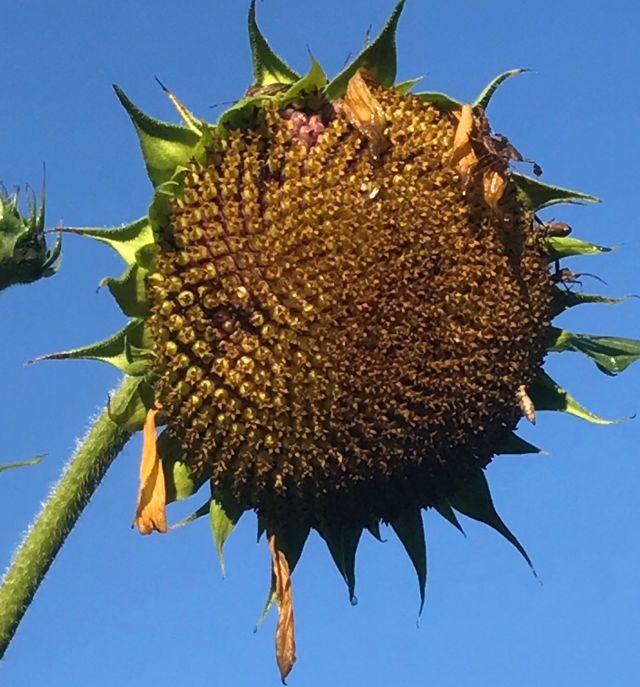
I planted giant sunflowers among my tomatoes, not a good idea, but they sure are striking.

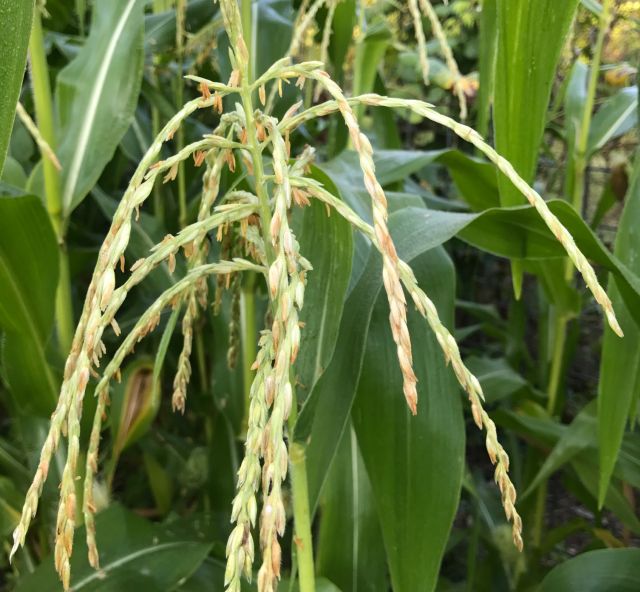
I was paging through “Botany in a Day” by TJ Elpel.  I knew that the tassel of corn contains pollen powder.

tassel of the corn

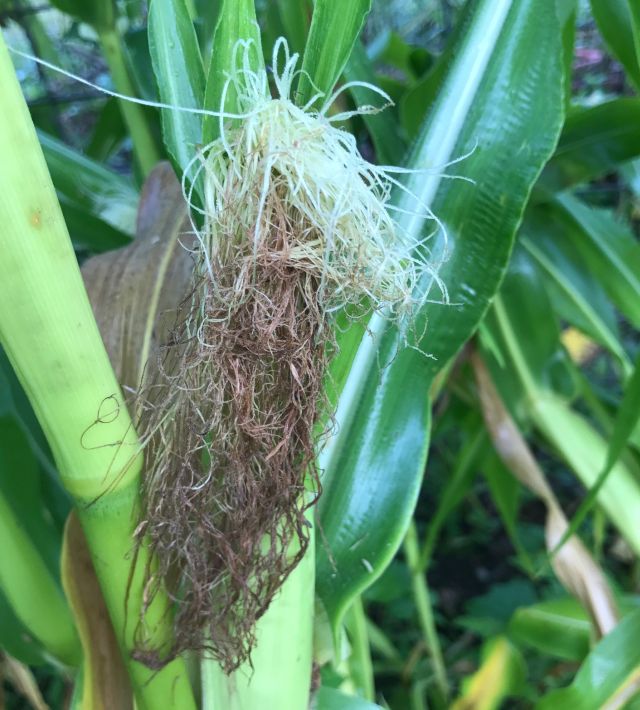
But I was fascinated to learn that corn silk conveys the pollen sperm along its length to impregnate each kernel of corn – therefore every single seed/kernel produced on the cob results from separate impregnation.

I assume the brown silk strands have already fulfilled their function, and work still awaits the white silk strands

It’s difficult to keep rabbits out and they love young bean plants.

bean plants regularly truncated by rabbits

I surrounded a raised bed with surplus shelving and it denies access to rabbits, so far.

soon these transplanted, formerly decapitated bean plants, will be producing

And finally a smaller visitor among fallen apples.


what’s growing

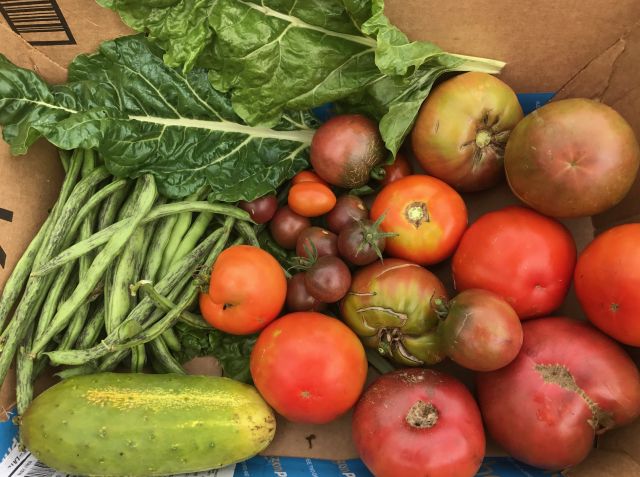
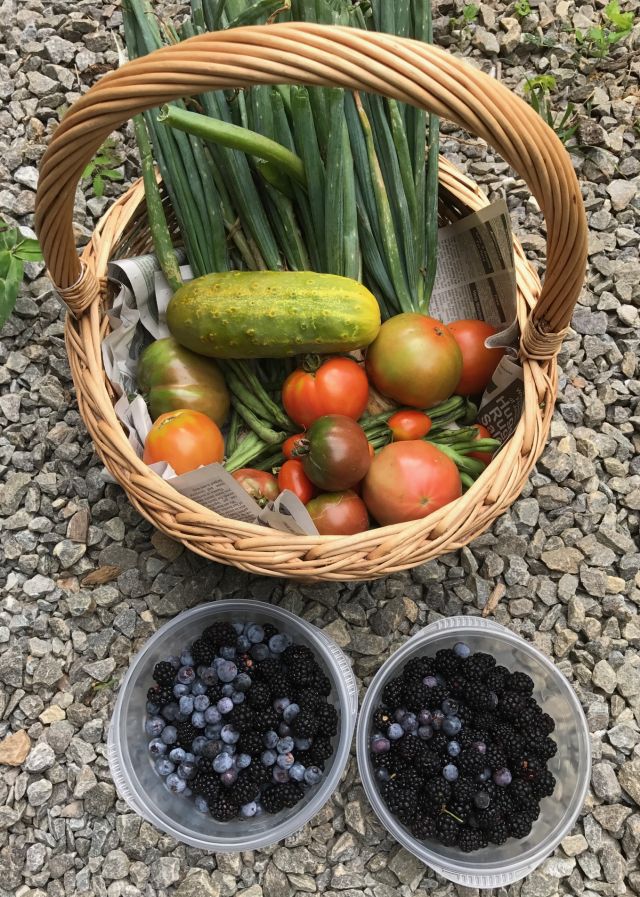
My last growing update was June 2.  Since then ripe tomatoes, blackberries and blueberries have come on stream.  And wild plants such as the pokeweed above, compete for attention.  Yesterday’s basket provided a delicious salad – tasty tomatoes, cucumber, beans plus onions and garlic (not shown).  All freshly picked.

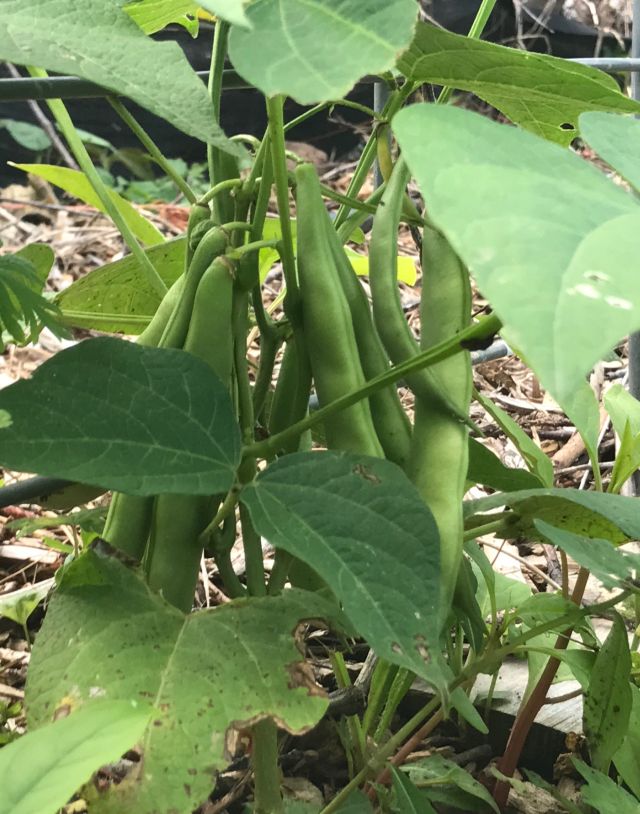
a mix of heirloom and hybrid tomatoes. the rattlesnake beans grow very well. the 2 chard leaves show how well chard is holding up as summer matures
and today’s basket which includes onions and blackberries and blueberries

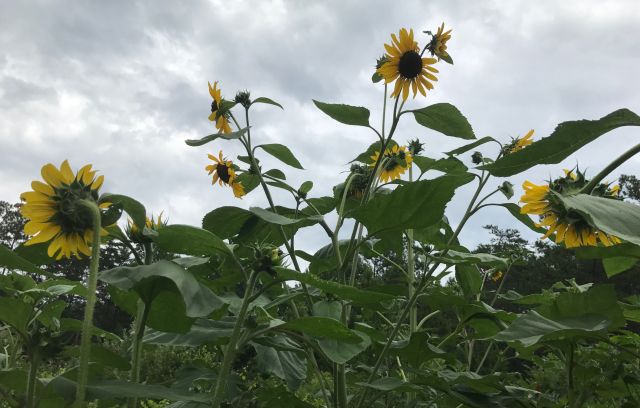
I inter-sprinkled some seeds for large sunflowers in the growing area and the sunflowers are now between 9ft and 10ft tall.

reaching for the sky

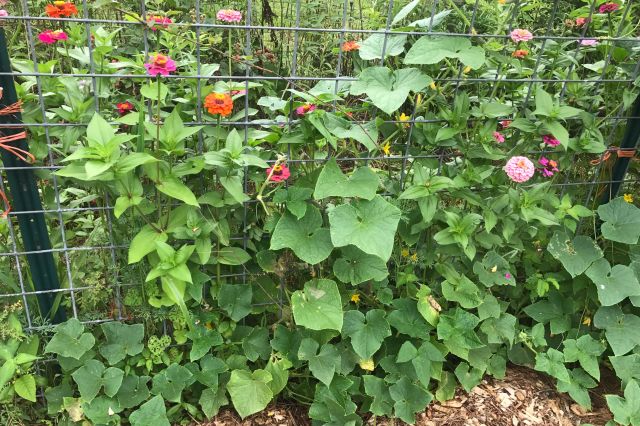
I also added color to a cucumber area by sowing wild flower seed behind the support on which the cucumbers are growing.

just for fun – flowers mixed with cucumbers

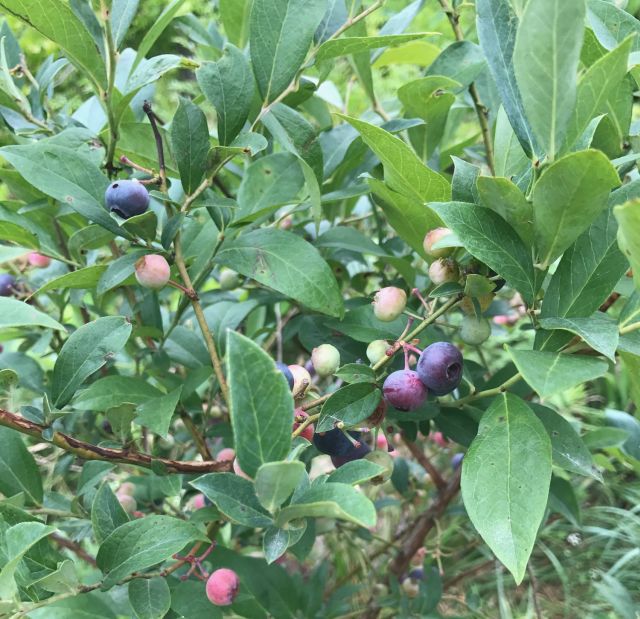
Last year my blueberry leaves were sickly yellow – chlorosis resulting from too high ph, and I added sulphur powder.  This year the leaves look much better.

leaves are better, however because of the drought and reduced watering last summer, the plants suffered and are now slowly coming back

A couple of the weaker blueberry plants had insects on some of the branches.  Initially I sprayed with neem oil but it gives the berries a distinctive smell.  Since their presence is limited, I now gently cut the stem on which they are gathered, lower it onto the ground and grind it (and them) into the soil with my boot.

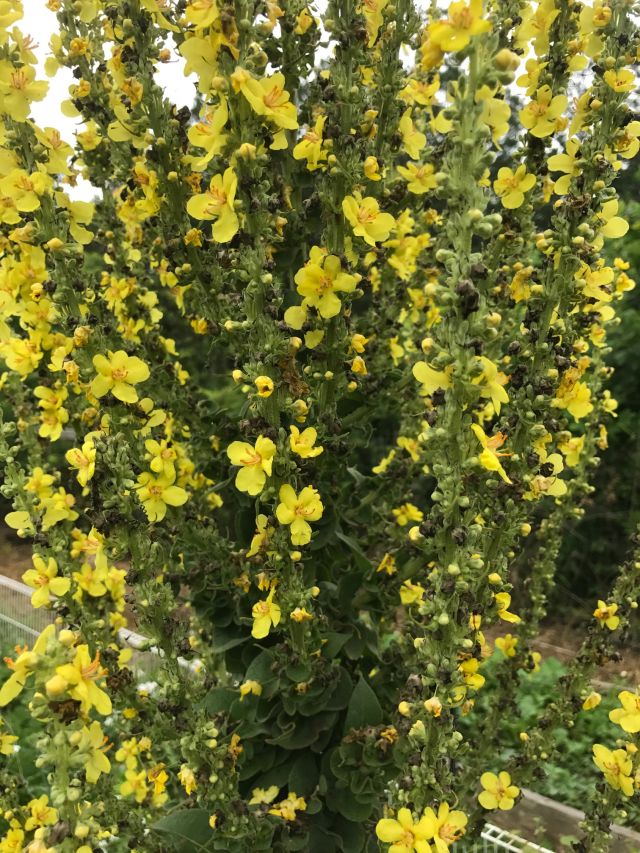
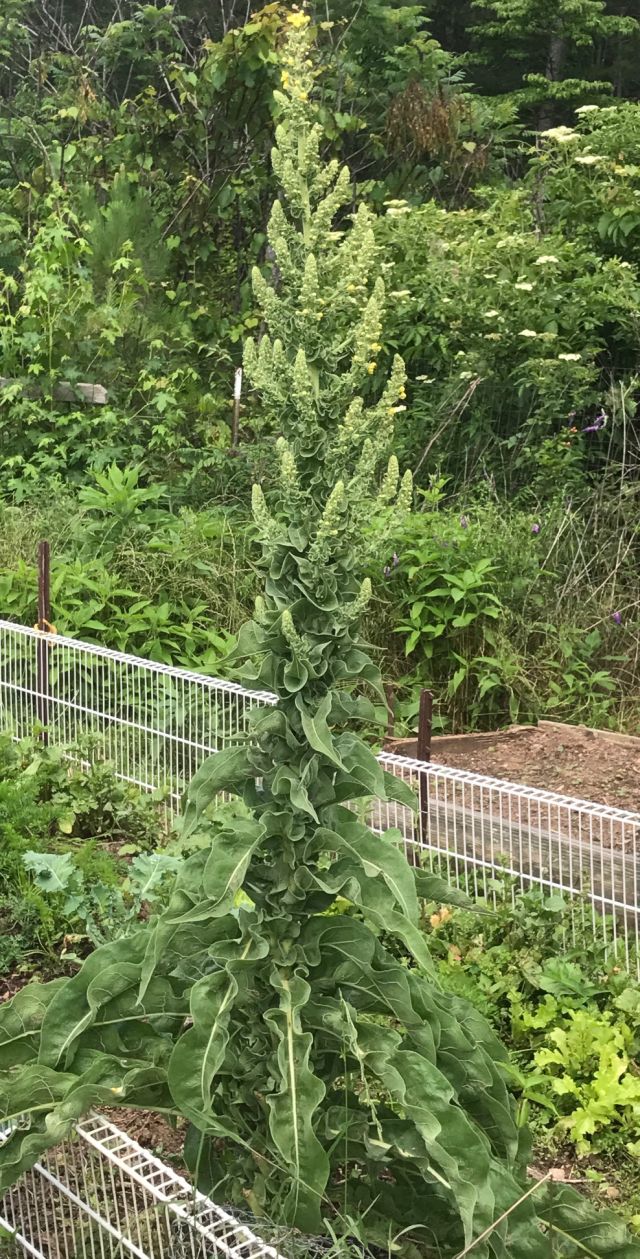
The 6ft mullein is still bearing its lovely yellow flowers and keeping bumble bees busy.

garlands of striking yellow

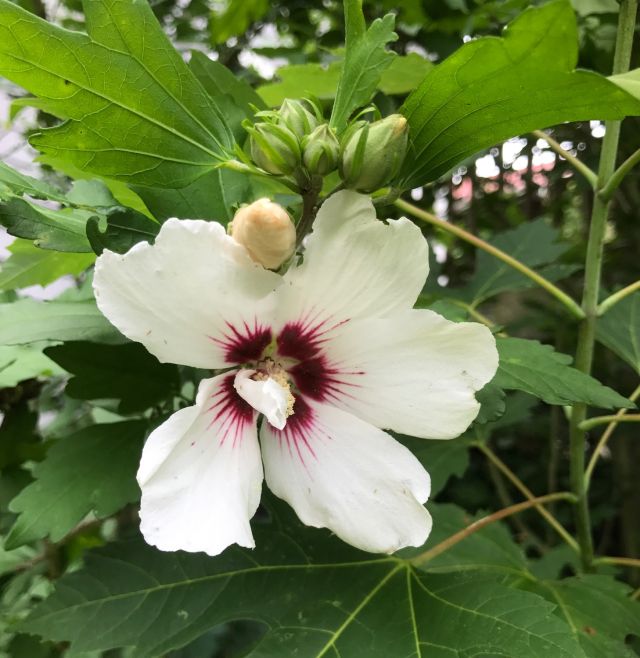
And now the Rose of Sharon which invades our deck area and provides cover for birds at the feeder, has begun producing its distinctive flower – perhaps we will again be visited by hummingbirds.

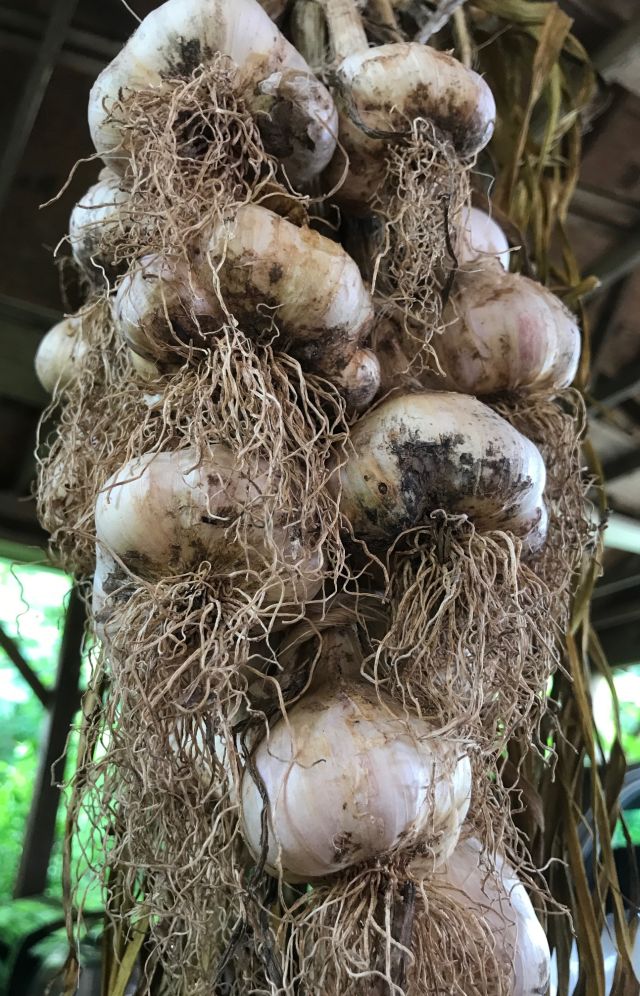
I am gathering in the garlic and onion.  Because of plentiful spring rains, garlic is larger than prior years.

my garlic does best when suspended in the carport. very little rotting and easy to pick for the table

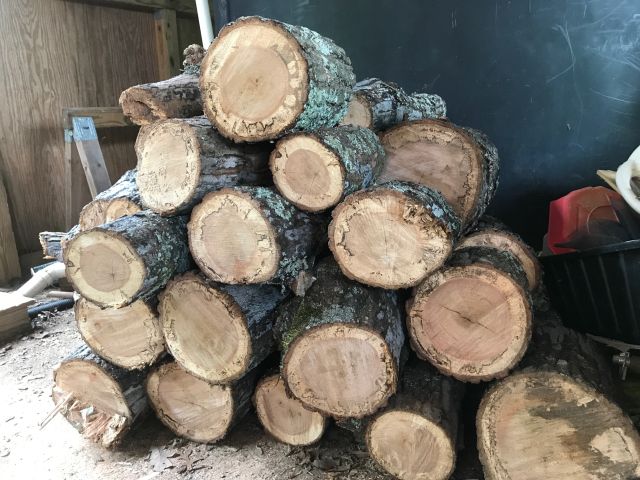
Finally, a friend had to have an oak tree brought down and I visited and collected some firewood – all from the branches.

I cut the wood to fit the length of the wood stove. I will split when needed

what’s growing

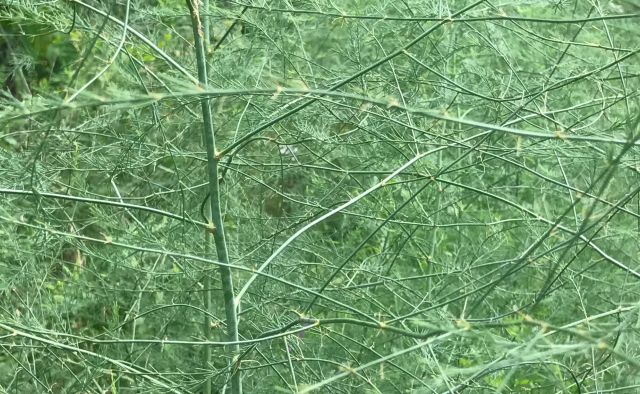
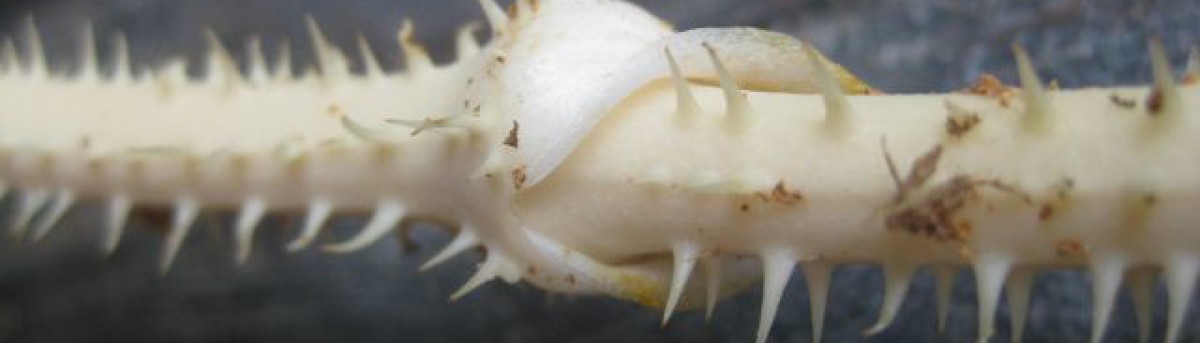
Despite plentiful rains and cooler temperatures, the transition to summer continues and cool season crops yield to Georgia summer varieties.  Asparagus season is over and those which were not harvested have matured and festoon their delicate tracery in the above picture.

I grow for our plate and friends and can indulge allocating growing space to attractive non producers.  The yarrow’s shimmering tapestry attracts visitors.

And mullein thrives where it is allowed.

the lower leaves provide mulch for tomato plants. this specimen >6 feet.  it has grown back in the same spot where it was 4 years ago – see my post dated June 13, 2013

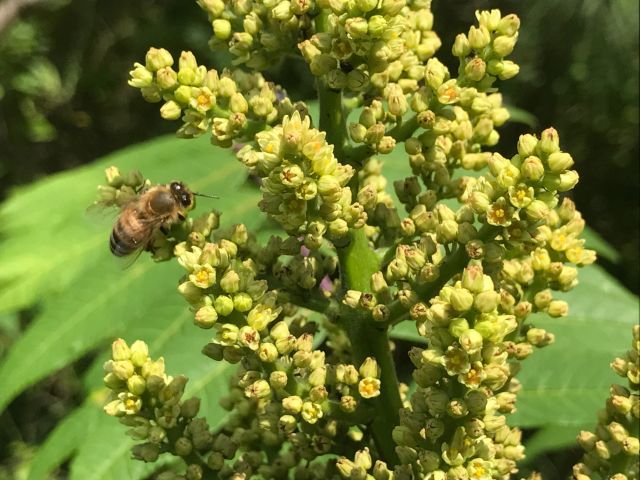
And a nearby sumac is favored by bees and bumblebees.
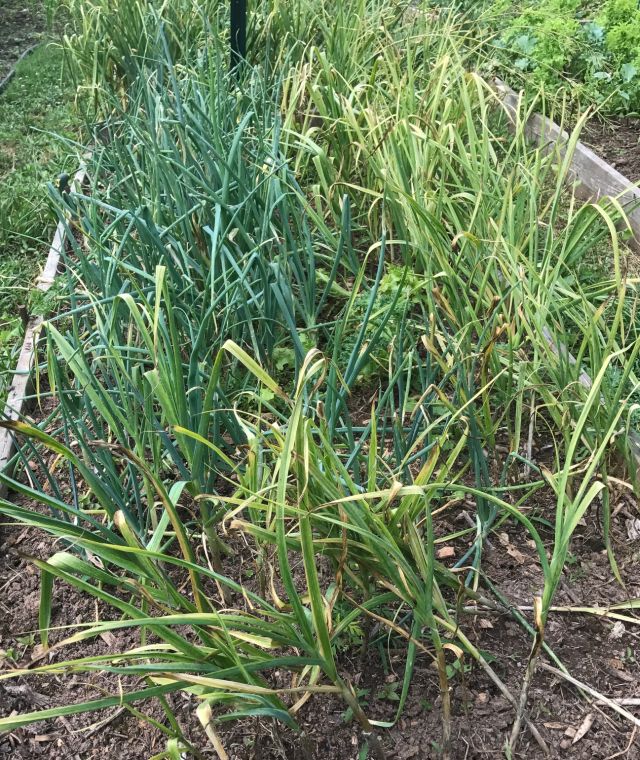
The lettuce is bolting and kale has passed its prime.  Garlic and onions are maturing.

I have several beds of garlic plantings. This bed is almost ready for picking.

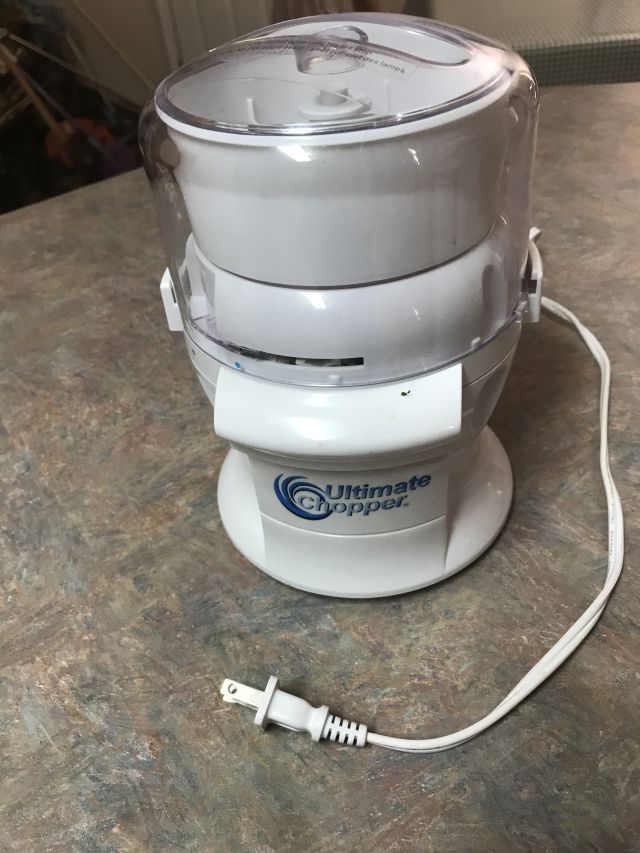
In the past I produced more garlic than we could consume, gift or replant.  M. said preparing garlic was tedious. I found an Ultimate Chopper in v. good condition at the Thrift Store for $3.  The lid was jammed and with the assistance of a helpful shopper we freed it.  And it works great for chopping garlic and we have upped daily garlic consumption.

Apparently there was a 2005 safety recall so we will be mindful of our fingers when operating

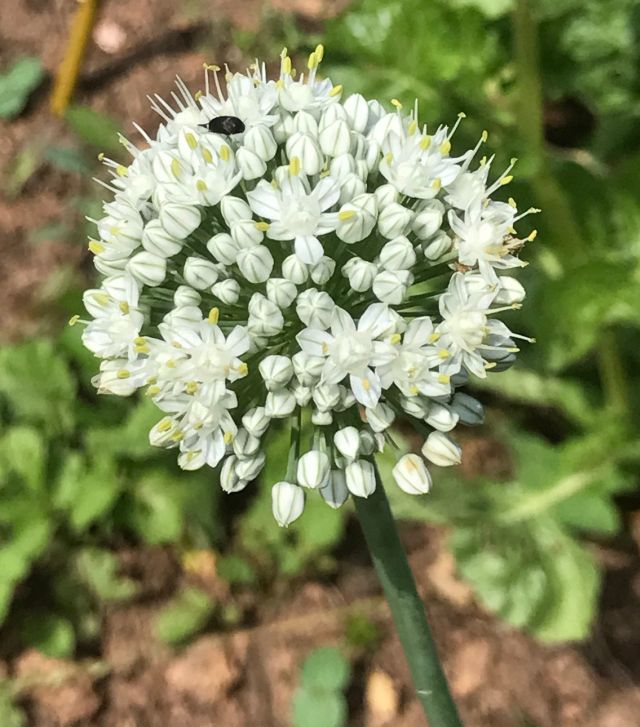
Some of the onion is also going to seed.

the alium flower is attractive

A favorite dish (and healthy too) is a saute of chard, onion and garlic.

the chard seems resistant to pests and luxuriates from recent rain and cooler temps

Beans are growing well but it is disconcerting to see severed stalks which I attribute to mindless foraging of rabbits.

I plant lots of beans and hope enough will escape rabbit predation

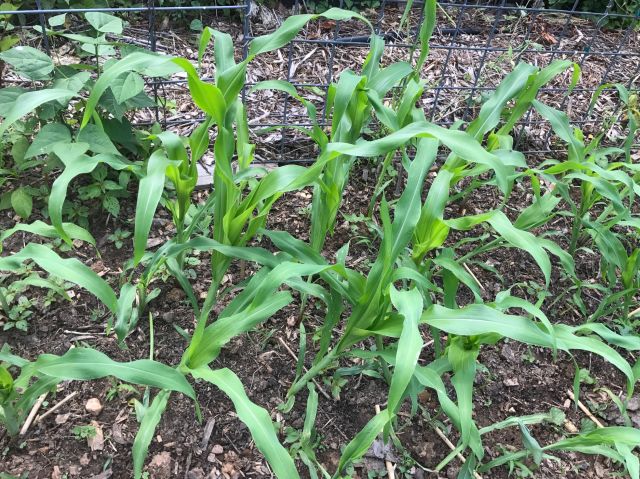
I have not done well with corn so I plant just a few this year and will observe.

a few corn planted and I try steer Trudy and the hose clear of the bed

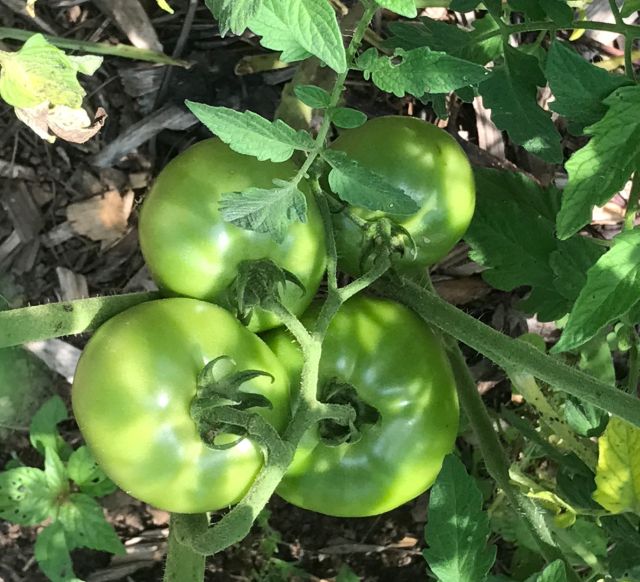
The big summer crops for me are tomato, okra, sweet pepper, squash and melon varieties.  The tomatoes were planted early and are doing well so far with no blossom rot (a problem last year) or pests.
I have >30 plants and should have edible tomatoes before July 4, my annual target

But I probably should have planted okra and squash earlier.  Okra grows prodigiously and this little plant should be robust within a few weeks.
I have some 10 okra plants and if they make it to maturity we will have lots to grill on the Foreman electric grill

Cucumbers are growing well, I neglected the blueberries and we should have some in a few weeks but not prolific, and the blackberries, of which there are many, are still some weeks from maturing.

blackberry plants have some way to go

And, all my rainwater tanks are full including the 2,100 gallon tank I installed a few weeks ago.   Despite a warm winter and late freeze most of the pears and apple trees are bearing well.  And my single peach tree has peaches – we are further north than most of the Georgia peach orchards and my tree must have received its quotient of chill hours.


back from week in San Francisco

Prior to my west coast trip I considered how best protect my plantings.  In my April 12 post I described planting out 33 tomato plants and my concern for frost damage.  There was no frost and my new concern was whether the plants would survive without irrigation for 8 days.   I deposited wood chips round the base of each tomato and watered deeply.  The 12 surplus tomato plants in the greenhouse I moved to the shade of the carport.  And I planted out 8 sweet pepper plants.  And hoped they would survive till my return.

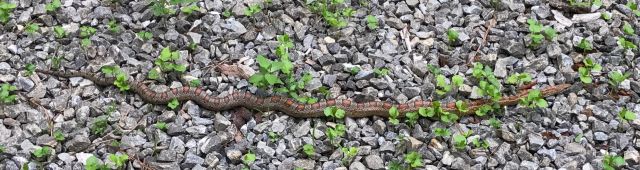
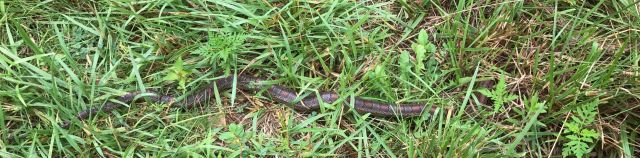
My first greeting as I approached the carport was this long rat snake (see pic above), or at least that’s what I think it is.  M. thought it was a copperhead but I thought not and let it be.  And it was quickly gone.

I noted from upturned containers there must have been at least 3 inches rain during my absence.  Great.  Vegetation was lush and the young planted tomato plants looked vigorous and already had some flowers. 

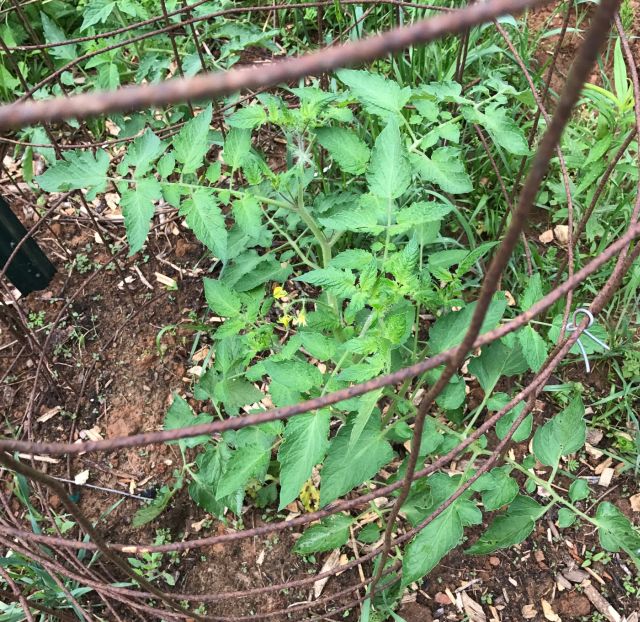
small tomato plant bearing flowers in wire cage. btw the white blotches noted in my 4/12 post have disappeared

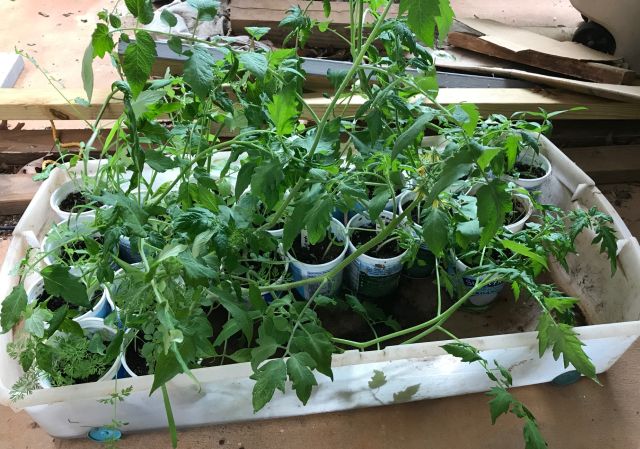
The reserve plant supply under the carport also looked fine. 

these plants did well in the car port

Not surprising they had grown fast and leggy and when I transplant them I shall have to be careful.  But they still had water in the tray in which their pots were placed – water level down from say 3.5″ to 0.75″.

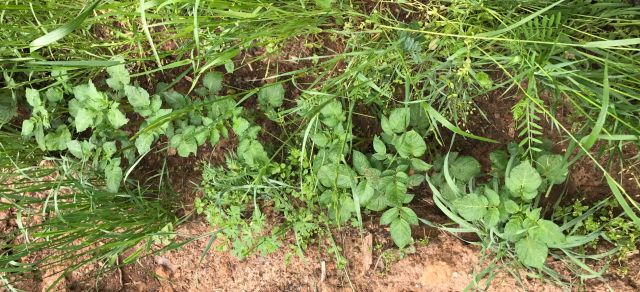
I had planted out potatoes in a trench some while back and  had filled in the trench with soil to the height of the leaves before I left.  During the week there was much more growth. 

I have never done well with potatoes

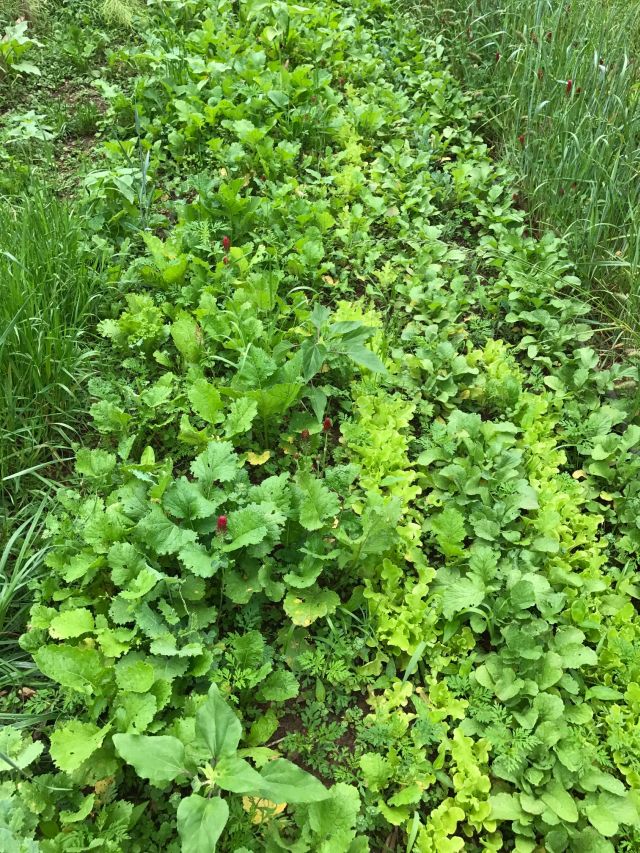
And the greens had filled out.

this bed of radishes, lettuce, kale and other greens accelerated during the week.  Interspersed are some sunflowers and crimson clover.

And my 2 bee hives seem ok, more activity at one.  I should open them and take a look.

growing update – tomatoes and bees

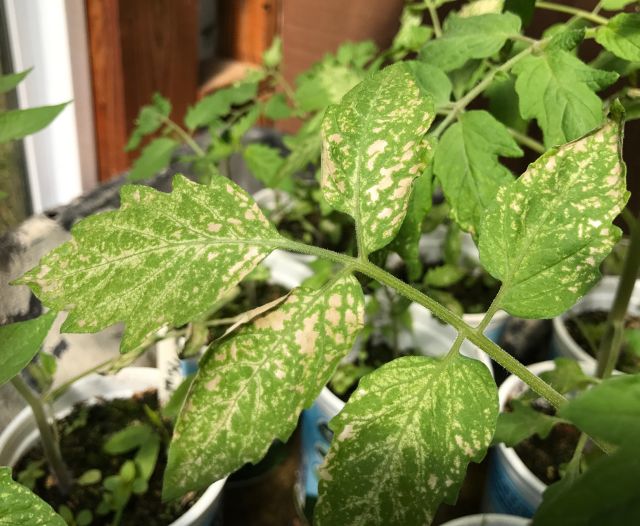
I noticed the leaves of my tomato plants in the greenhouse had white blotches.

white blotches – a fungal attack or too much sun for young plants?

It has warmed up a lot and I suspect greenhouse heat and light is too much for the plants.  I could shade them or plant them.  A quandary is the average last frost day for Canton, a town to the south, is 4/21 to 4/30 and for Jasper, a town to the north, is 5/1 to 5/10.  So on April 10, what should I do?  The forecast anticipates no cold weather for the next 10 days.  I decided to chance it and planted out 33 tomatoes.  If they are not injured by cold them I should have tomatoes before July 4, which is my annual goal.  If some are injured, I have plants in reserve.  The varieties are: Black Krim (4); Black Cherry (3); Whopper (6); Cherokee Purple (8); German Johnson (5); Juliette(5) and Misc – unidentified (2).  So most are heirlooms.  The Whopper is a stalwart hybrid producer which was both the first and last to produce in 2016 and, although not as tasty as the heirlooms, does extend the season.  The Juliette I collected from last year’s seed and will be interesting to see how they do.  The seed for the Black Cherry was purchased in 2015, the remainder in 2016 or 2017.  This will be my first tryout of German Johnson tomatoes.

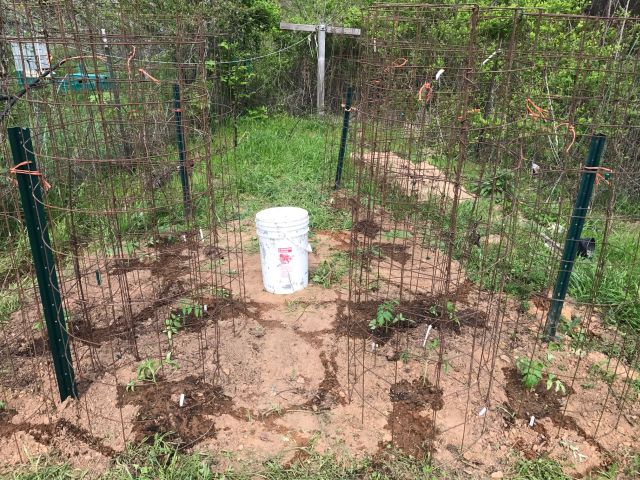
different wire cage configurations

I use different locations each year for the tomatoes and I experiment with different layout techniques.  Last year I spread black plastic and inserted the plants in slits in the plastic.  Now this may work if you have irrigation lines beneath the plastic which enable diffuse watering, but with my method the water inflow was concentrated where the plant slit was and I had problems with blossom rot which occurs with uneven watering.  After introducing additional water inlets the problem was solved.  I previously minimized weeding with use of mulches (especially newspaper), but this year I will weed.  I use wire cages which I made in April 2012 from rolls of wire remesh (5ft by 150ft) – see my post dated 4/12/2012.  They have held up well and this will be my 6th year of use.  In the pic above I formed a half circle with double cages along 2 of the edges.

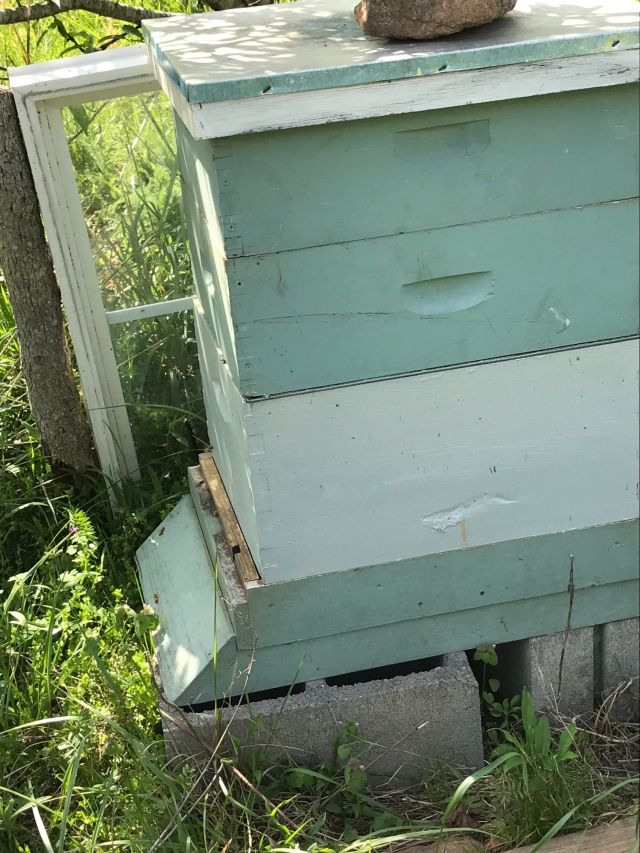
you can see the 2 supers added to the brood box. the entrance is restricted since this hive was previously robbed by bees from the other hive. when numbers build I will remove the entrance restriction

In my March 17, 2017 post I mentioned installing 2 packages of bees.   I opened up the hives a week ago not to look for the queens but to look for evidence that they were functioning ok.  And I was pleased to see bee larvae in the comb of each hive.  Now even worker bees can produce eggs but these will all become drones who do not contribute to the nutrition or maintenance of the hive.   So how to tell if the larvae are produced by a real queen or by worker bees?  The latter do not uniformly fill all the cells with eggs, so if all the adjacent cells are filled with larvae this is a good sign they were deposited by a queen.  And they all were.

With new worker bees on the way it was time to expand the size of the hive from the brood box, where the queen resides, to a couple of added supers where the bees can produce honey, which you can see in the above picture.

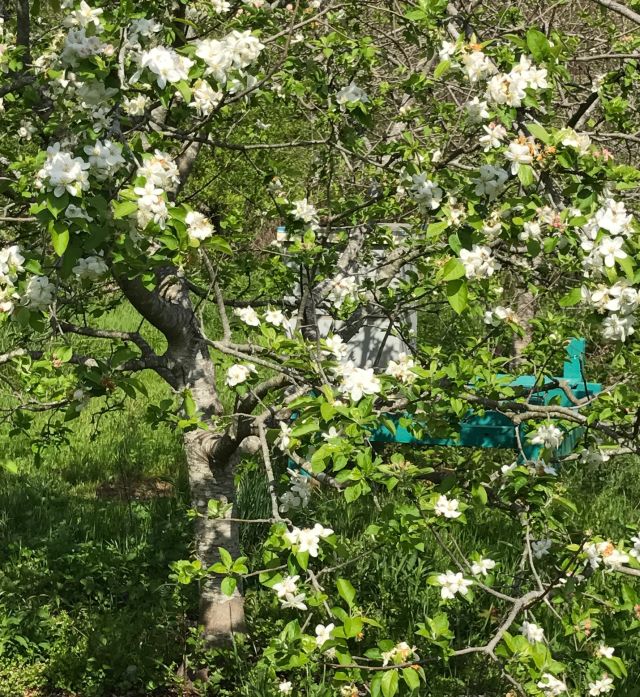
this apple tree is the earliest to bear fruit and its foliage will protect the hive (barely discernible) from the afternoon sun

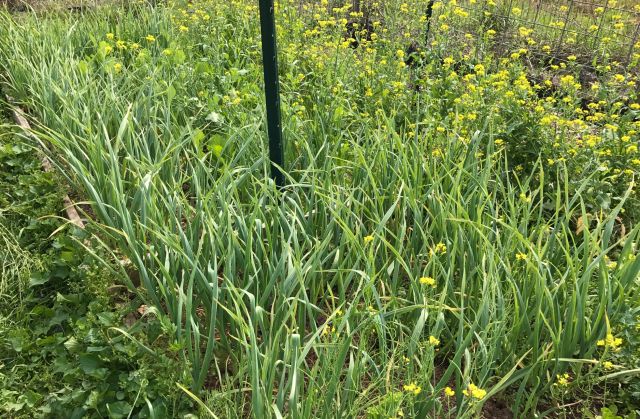
I allowed some of the vegetables to flower and their yellow flowers provide food for the bees and are attractive.

in the foreground garlic is growing well from the recent rains.  I met a well traveled ecologist who makes insect sprays from garlic, hot peppers and wood ash.  I should learn more since I have an abundance of the first and last

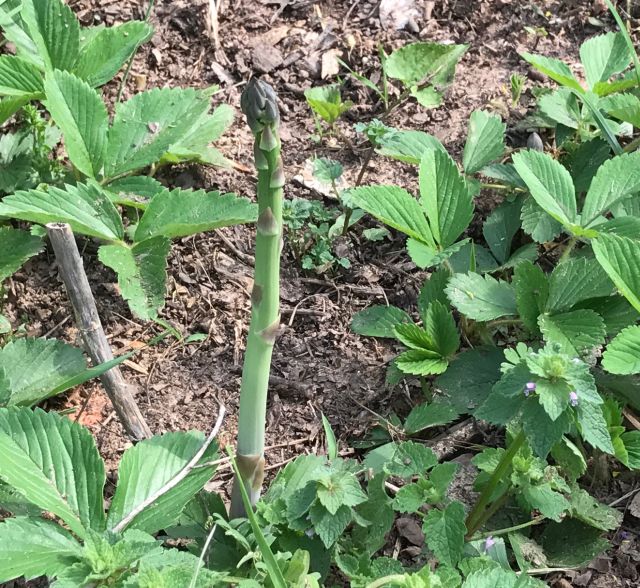
And asparagus are beginning to surface.  As an experiment I have added strawberry plants to the asparagus bed and will see how they do together.

asparagus have been delivering in this bed for 5 years

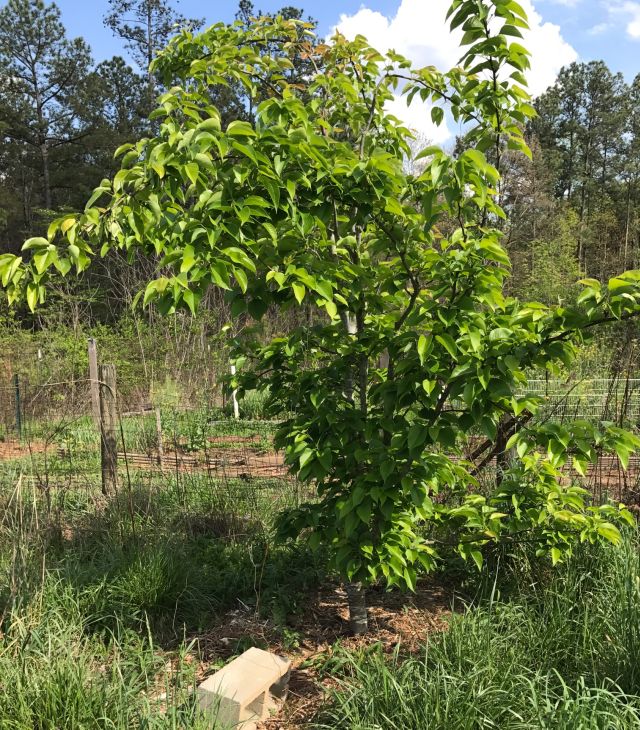
Finally, our most prized fruit tree, the Giant Korean pear which has never disappointed and seems immune to pests.  Since all my pears have an upright habit I train them to horizontal with wires stretched to the ground.

this pear tree is looking good and you may notice some of the wires, which are pulling down on the branches, attached to the cement block

Georgia Organics conference – Feb 17/18 – 2017

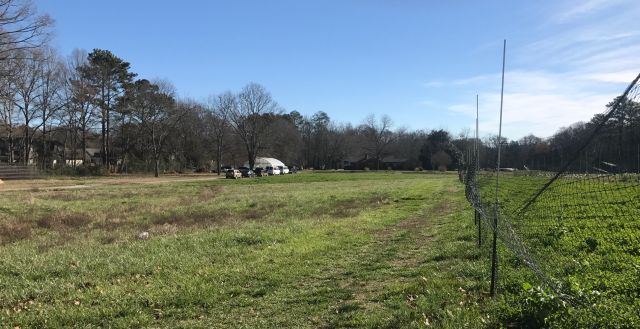
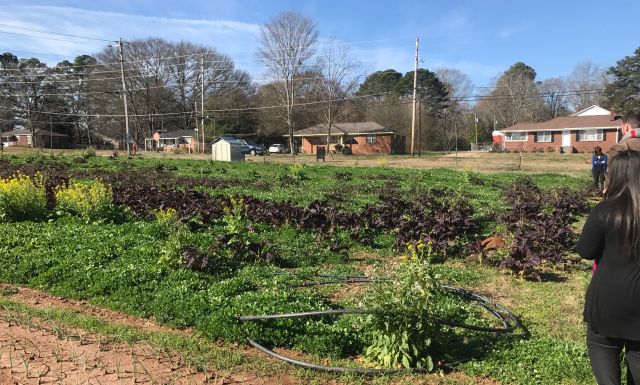
Past Friday and Saturday I was at the GO conference.  Friday morning we visited a farm (Emory Oxford College organic farm) about 20 miles east of Atlanta.  The farm has CSA’s and provides food for the campus.  The 2 managers were friendly and experienced and we also listened to the narratives of college interns and volunteers.  There is an impressive barn building on concrete pad where the harvest is cleaned and refrigerated and tractors and equipment serviced.

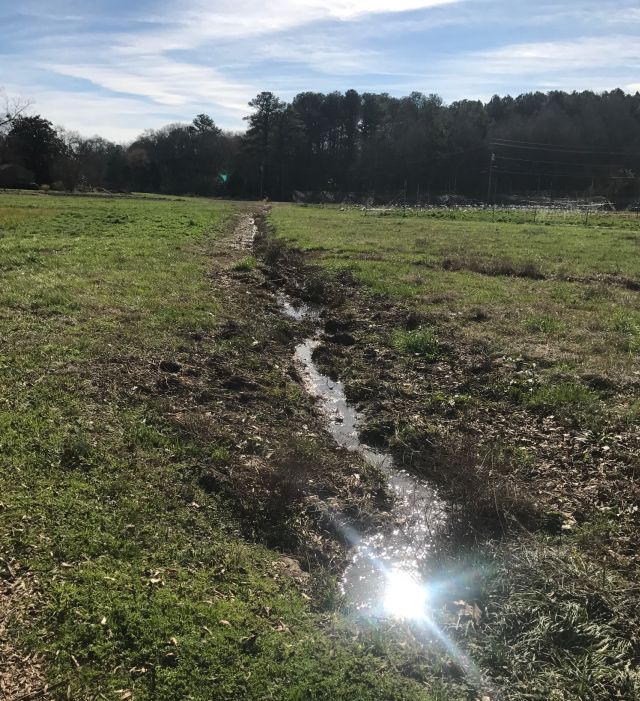
a drainage trench for the clay soil

I learned a little about commercial organic growing – there is no room for error.  A bug in lettuce can lose a customer or a restaurant contract.  Therefore the aphid infestation in the lovely lettuce in the hoop house meant just one thing – into the compost heap.  I would have washed and enjoyed.  As to why the lettuce was infested – the problem wasn’t identified early enough and in warm humid conditions too much nitrogen produces rapid growth and a buffet for insects. 

the 11 acre farm is in a small town. Drip lines are used for irrigation.

That afternoon I attended an excellent workshop on Cool Season Vegetables under High Tunnels.  High tunnels are popular with commercial organic growers and one speaker, whose farm I visited several years ago, now has 28 structures.  Increasing temperatures mean less growing in the hottest months, but the high tunnel extends the season to enable more growing in the other 3 seasons.  Because the crops are not exposed to rain and receive just enough water for their needs there is little leaching which means that too much nitrogen rather than too little, becomes the problem – hence the lettuce infestation.  Constant observation and timely management is essential as is adequate ventilation and shade cloth in the summer.   Most growing is with transplants.  Automated irrigation is used extensively including fertigation where water soluble fertilizers and amendments are passed through the irrigation system.  Solarization with clear plastic, to burn up weed seeds and diseases is often performed followed first with carrots, which take a long time to germinate.  And lots of soil fertility tests or plant tissue tests.  And cover crops when there is a 1-2 month window, which is infrequent.  I do not think I will need a high tunnel for my limited growing needs, especially with milder winters – my turnips and some other greens to date have been unscathed by winter.

A good lecture on the World of Organic Inputs.  Again, need for soil tests stressed.  I was surprised how much the commercial growers buy inputs and even compost.  I try to be self sufficient and rarely buy any inputs for growing – seed starter mix, peat for the pot soil, and sulfur for the blue berries excepted.  However professional farmers focus on growing and depend on other specialists for their inputs.  My growing operation revolves around my compost but most professionals buy their compost.  Apparently a concern that bad compost can jeopardize their organic certification.  Bad such as prohibited drugs in animal manure or cides in grasses used to make compost, or compost not reaching high enough temperatures and therefore carry over problems.  We were told phosphorous would probably be ok but to focus on potassium (for disease resistance and stress) which is mobile and prone to leaching, and also on calcium (for cell walls and root tips).  We should avoid dolomitic lime because it provides magnesium and we may already have too much magnesium.   Soil tests!

Next was Farm Generated Innovations. The 2 speakers described some of their innovations which were imaginative and resourceful.  And they referenced a website farmhack.org which describes itself as  “a community of collaborators interested in developing and sharing open-source tools for a resilient agriculture”.  Well worth visiting.

Then a lecture on trellising – why we do it and different materials and strategies.  And then a sobering lecture on mistakes and challenges.

Followed Saturday evening with the Farmers Feast prepared by top Atlanta chefs and an attention grabbing lyrical overview of the life of the farmer by the guest speaker, BB Taylor.  You can tell an address is good when, without prompting the >1,000 attendees without hushing gradually stop talking among themselves and tune in to the words.  Overall, a most enjoyable 2 day event.

tomato plants

Each year around this time I start my tomato plants.  For germination I use 3/4″ soil blocks (purchased seed starter mix) and incubate, and once germinated I transfer to 2″ soil blocks in my greenhouse and  later into 32 oz bottom drilled yogurt containers.  I have described the procedures in detail elsewhere on this site.  With each passing year I have become more casual with the mix for the 2″ soil blocks and yogurt containers.  I used to carefully measure out the different ingredients.  Now I just sift ground soil, fully broken down compost and peat, and then add some lime to compensate for peat acidity.  And they do well.

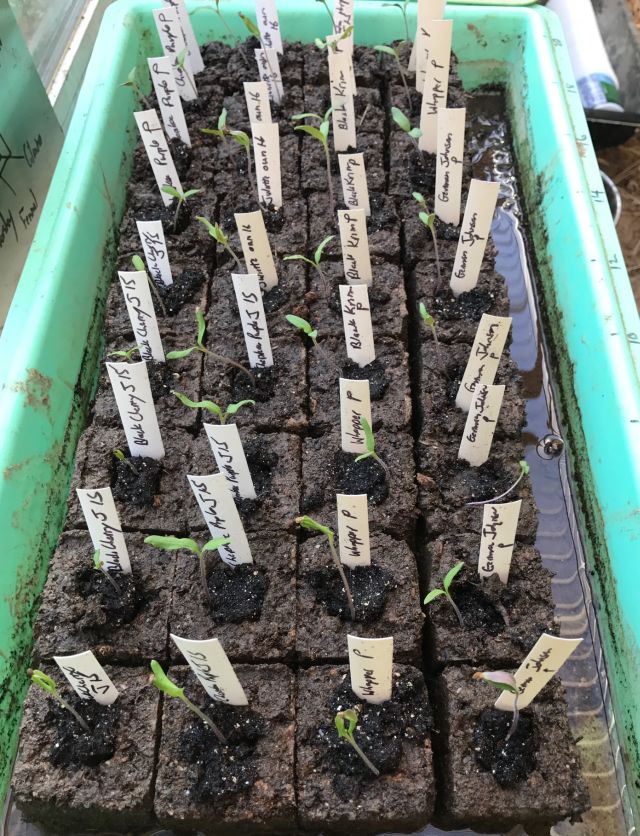
Of more interest is the varieties.  Previously, most of my seed was from Johnny’s but last year I bartered 6 plants for one of my neighbor’s Park’s Whoppers.  This outstanding producer was disease resistant and was the first and last to bear tomatoes.   Taste was not as good as my heirlooms but you can’t have everything!  So I decided to buy more from Park Seed and this January I bought their Whopper; Black Krim Organic; German Johnson; Cherokee Purple Organic and Chocolate Cherry.   I also used Johnny’s Black Cherry and Cherokee Purple purchased Jan ’15.  And also seed collected from my plantings – Oxheart; Sugar Cherry and Juliette.  I seeded Jan 24 and almost all the seed germinated.  My collected seed may have been cross-pollinated and may not run true.  But it’s fun to experiment and see what does well.

The photo above is of one of my 2 seed trays and holds 36 – 2″ seed blocks.  It’s on 3/4″ plywood base which protects the tray when I move it.  Since my greenhouse  is not heated I bring the tray in when temp is projected below 35 degrees, as it is tonight.  I have a min/max thermometer in the greenhouse and I leave the other, less important, tray in the greenhouse so I can observe the effect of sub freezing temps.  It seems when the plant is <1″ high it is unaffected down to the mid 20’s.   I will probably start up another batch of tomatoes in March to see, if by replacing the plants, I can achieve a longer harvest.