feral cat – mauled chicken – and solutions

I may not have mentioned that about 5 weeks ago a hen was taken by a predator, which reduced their number to 10 (1 rooster and 9 hens).   Each morning a timer opens the coop door when the sun is well up and the chickens emerge to a 5ft high wire enclosed paddock.  Except for 2 chickens – Randa and Wanda (from wanderer) who would fly over the fence to the greener grass the other side.  Well 5 weeks ago Wanda was not to be seen except for a scattering of her feathers.  The chickens at the time seemed agitated and I set the timer to open later each morning and for a while Randa stayed in the paddock with the others where they are well protected by the ever vigilant  rooster, Buff of the 2″ spurs.  Last Friday at lockup time I noticed that Randa and another hen, Bonnie (offspring of Buff and New Jersey Giant) were outside the paddock.

When we returned Saturday pm we immediately knew there was a problem.  A pile of black feathers just outside the paddock area and 7 scared hens gathered in the furthest corner of the paddock where they rarely went.  The rooster seemed fine but Randa and Bonnie were missing.  The rest of the afternoon we searched for them.  Unexpectedly Bonnie appeared with her tail feathers gone and, as the sun was sinking, we spotted Randa deep in the bush.  So we had them back, now for a damage assessment.

And it wasn’t pretty – not only were Bonnie’s tail feathers missing but her hind quarters were badly mauled with blood, scabs of loose skin and globules of fatty flesh attached loosely to her rear.  I was too concerned with treatment to take a picture at the time.  So Sat night we swabbed down her rear end with a dilute mixture of H2O2 and then sprayed heavily with Blu-Kote, which is an antiseptic with a blue dye which colors the bloody areas thereby avoiding pecking attraction from the other chickens.
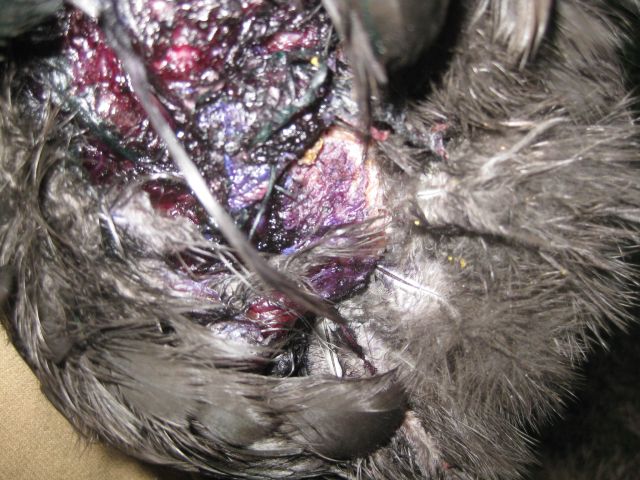
a pic of Bonnie's blu-koted rear end on Sun night
a pic of Bonnie’s blu-koted rear end on Sun night

Sunday we visited the local Tractor Supply where I bought a live animal trap (32″x10″x12″ $40) and two 60 cent tins of cat food.  M. had done research and was very interested in purchasing Vetericyn for $35 but I suggested ($35 seemed a lot to me) it was probably no more effective than Blu-Kote.  I baited and set up the trap in the barn area and it was empty Monday morning.  More research by M. convinced her we really needed Vetericyn and the winning argument which turned me, is that altho it is sprayed on it is a gel and so persists to keep the wound area protected from infection.  Vetericyn was available at a closer, more expensive farm store for $40 (a $5 cost for arguing when I shouldn’t) and Mon evening we applied Vetericyn liberally.
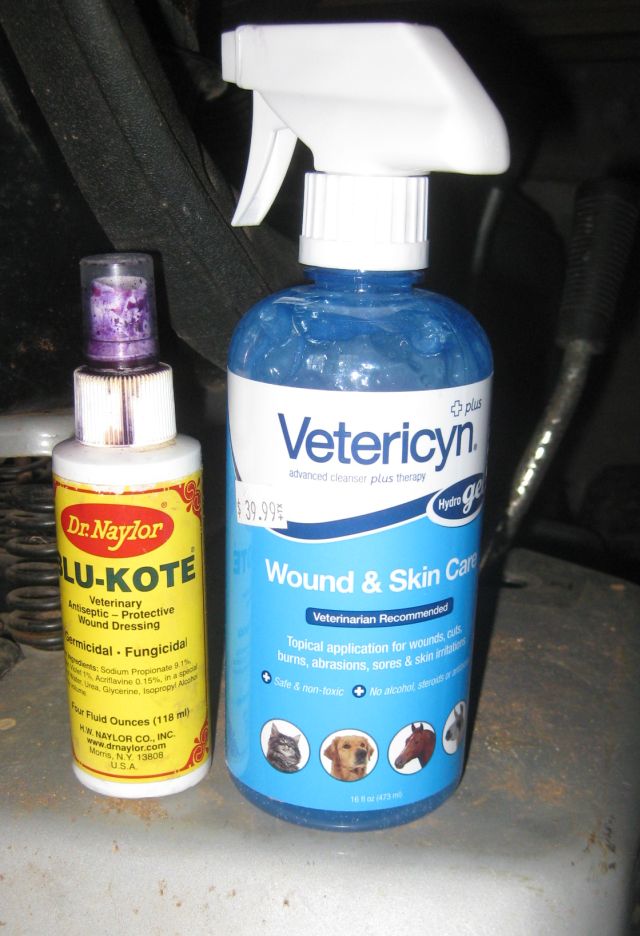
the two medications we used

Tuesday morning the trap, which had been relocated to the greenhouse was empty – a feral cat uses the greenhouse in cold weather but the weather has not been very cold.   Tuesday night I located the trap in the carport where my security camera has shown a cat walking in the early morning hours.  And when I arrived at 9am the cat was in the trap.
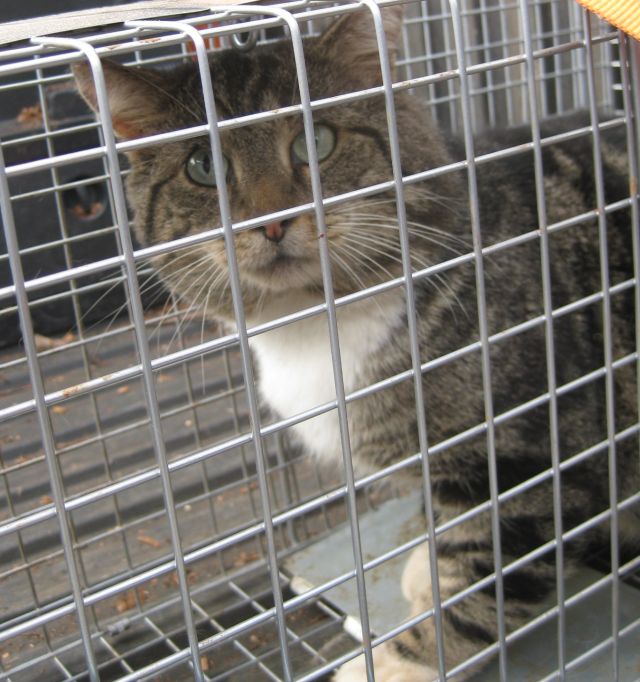
feral cat in cage
feral cat in cage

It may look cute in the cage but it is fearsome.  Not once did it meeow but instead shook the cage back and forth as it tried to claw its way out.  It is larger than it looks and is in good condition and strongly built.  No wonder we have had no rodents or squirrels near the bird feeder this past year.  I previously blogged that the disappearance of rodents in the  chicken coop was due to two  >5ft long snakes which cleared them out.

Now what to do with the cat.  A store attendant said she shot cats with a .22 long gun (I call it a rifle) which was easier than trapping and taking them to a shelter where they would be euthanized.  My neighbor this morning said he had relocated a stray dog more than 2 miles from his house and the next day it was back and he suggested I take the cat to the local shelter.  The animal shelter receptionist said I could relocate the cat or give it to a chicken farm.  I thought she was kidding – what will the chicken farm do with it?  I asked and she said they keep cats to get rid of rodents.  She also offered that I could bring it in and, for a cost of $25, they would neuter it and cut off the tip of one of its ears and give it to a chicken farm.  The clipping of an ear signifies it has been neutered.
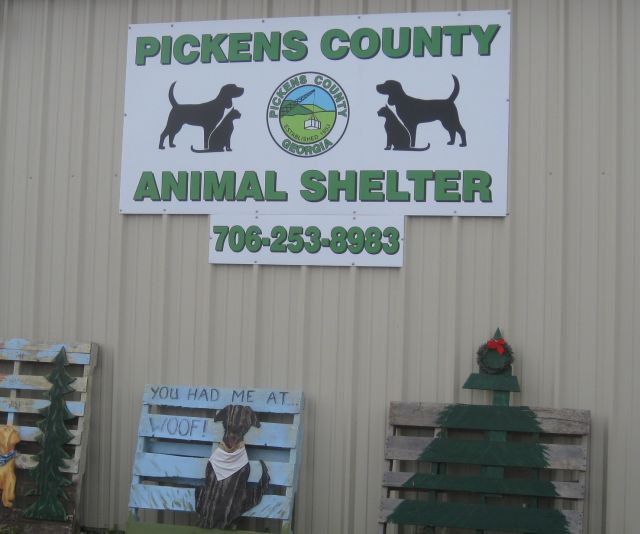
the local animal shelter

So off to the animal shelter where I paid $25 and was directed to a local vet where they said they would perform the procedure later in the day.  They said I should call back for the cage – apparently they anesthetize the cat by injecting it while it is in the cage, which answered a riddle for me – how do you safely get a feral cat out of a cage?

And how is Bonnie doing?  Despite pretty severe wounds  she seems to be doing ok.  Walking normally and eating as usual and no sign of a rampaging infection.  We are hopeful.
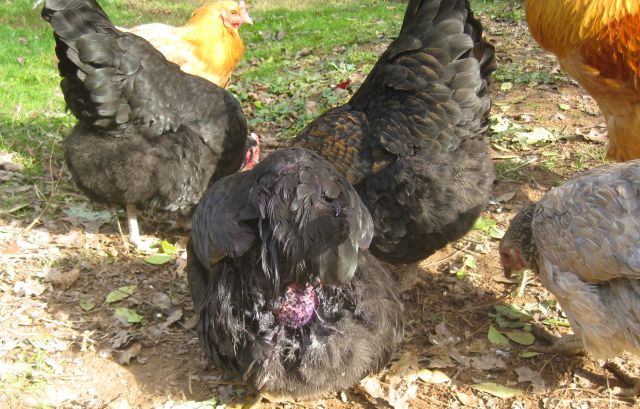
Bonnie with rear end to the camera, her Mom to the left, sister to the right

postcript – I have been asked how do I know I caught the culprit since I never saw the predator which attacked the chickens.  Several factors persuade me – there used to be several feral visitors, a large tawny cat and even a young cat which I once fed (big mistake).  Past 6 weeks they have not been around.  I think the cat in the trap moved into the area and cleared them out (or ate them).  The only cat captured on my surveillance cameras the past week was the one in the trap.  And finally, it was big enough and strong enough to catch and eat a chicken.  Hopefully no more predations.

.
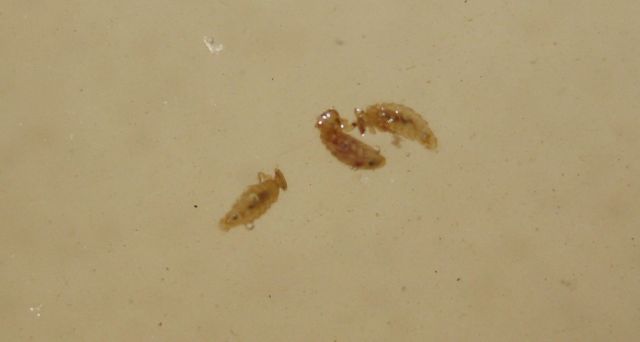
mites on the chicken

The Ameraucana has been less energetic lately.  Though she eats with relish there is little determination and if even a junior hen approaches her bowl she moves away.  Therefore she eats separately from the others.  She has been looking bedraggled and this morning she was in the nest box though she no longer lays eggs nor was she being pestered by the rooster.

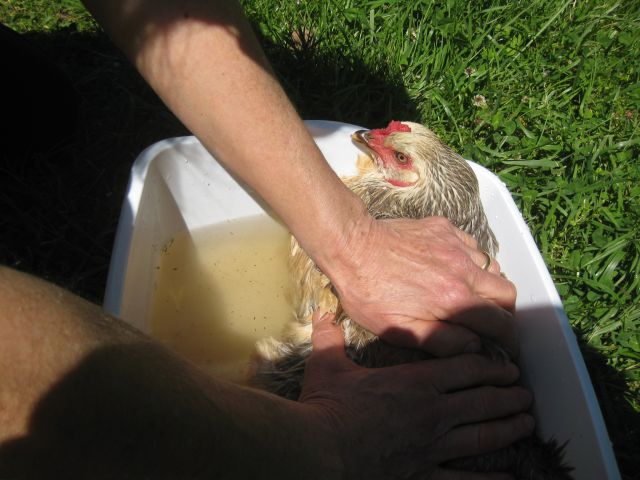
Time for an epsom salt (magnesium sulphate) bath.

a henly treat - warm water, gentle caresses, a time to reflect
a henly treat – warm water, gentle caresses, a time to reflect

But why so many brown flecks of dust in the water?  Or I assumed they were dust since they were not moving.  I snapped with the close up setting and only later did I see what the camera saw.

bath water and brown specs but this picture reveals their identity

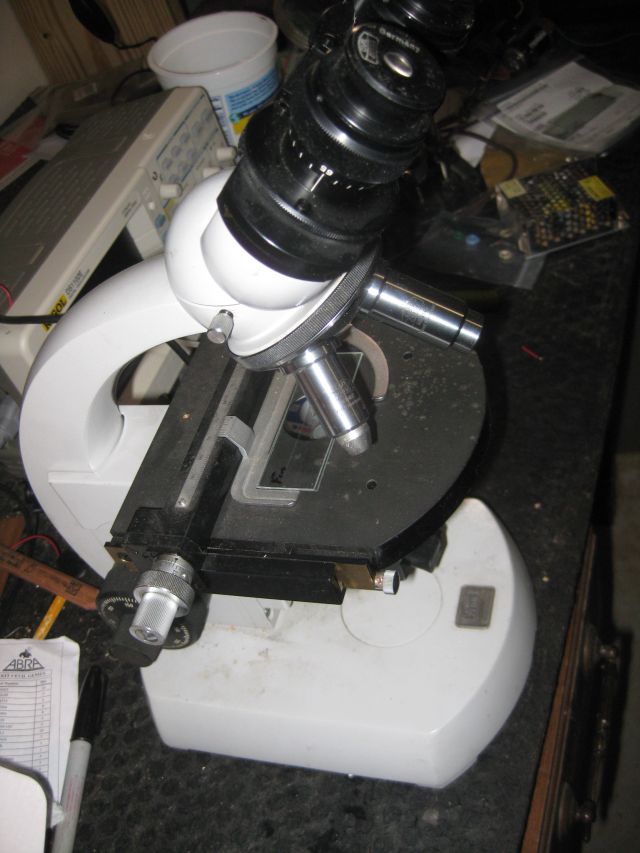
Unaware the camera had solved the mystery I prepared a slide for the old Zeiss microscope.

microscope in our possession for > 40 years

Since the samples were large I used the lowest possible magnification – it was like looking at an extraterrestrial being.  I purchased an electronic magnifier last year when I was recording soil life.  Around $30 and easy to use.

a simple to use microscope imager

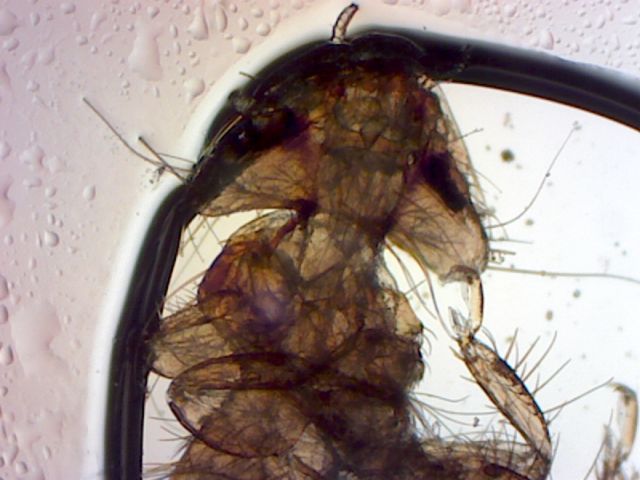
I inserted the sensor in place of one of the two eyepieces and clicked on the screen software.  And had a problem – even with the lowest magnification possible the mite was so large it would take 4 pictures to capture its extent.  Here is the head.

a nasty looking predator

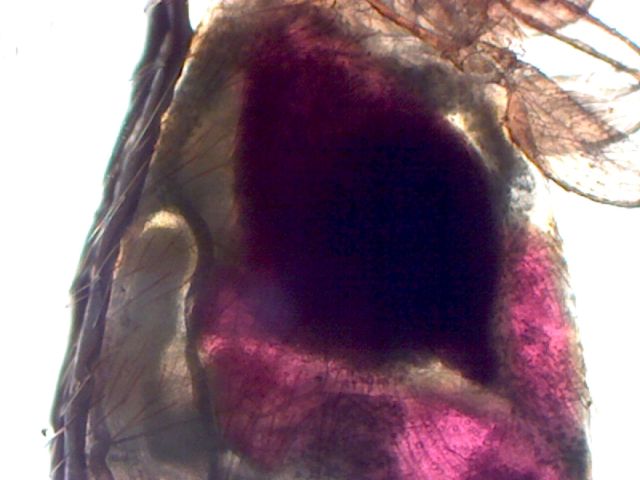
And here is heart/lung/stomach colored with the Ameraucana’s blood.

the mite's body
the mite’s body

And for treatment – our stock remedy, neem oil, may be too irritating for her skin.  Initially we thought dusting with diatomaceous earth but read that wood ash works well.  And I have lots of wood ash in my wood stove from the recent winter.


success with a broody hen

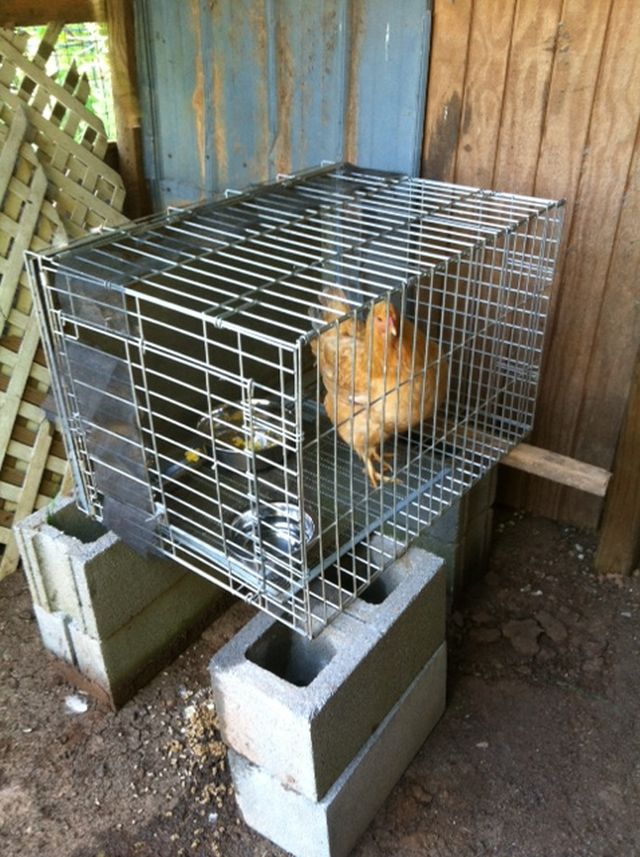
Our broody hen kept brooding.  Each night I would remove her from the eggs she was safeguarding and, after a quick sup, she would go back to the nesting box.  And so it continued night after night for a week.   Our research indicated that if she was kept in a place where her underside was cool, she might desist.  I located and positioned 6 cinder blocks on top of which I placed the wire cage we had used when they were newly born.  Since the bottom of the cage was a solid removable tray, which would block air passage, I rotated the cage so the bottom was on  the side.  And I placed a queen  bee restrictor grill on the bottom of the wire cage for her comfort.

temporary quarter for Yellow Legs
temporary quarters for Yellow Legs

Yellow Legs was very unhappy with imprisonment – she kicked over the water and food dishes which I replaced with receptacles not easily overturned and, whenever I opened the door she made a dash for freedom, sometimes successfully.  After a couple of days of mutual frustration I decided to release her to the flock and resigned myself to the evening turnover routine.  But – to our delight she was cured and now roams with the flock.  Success.

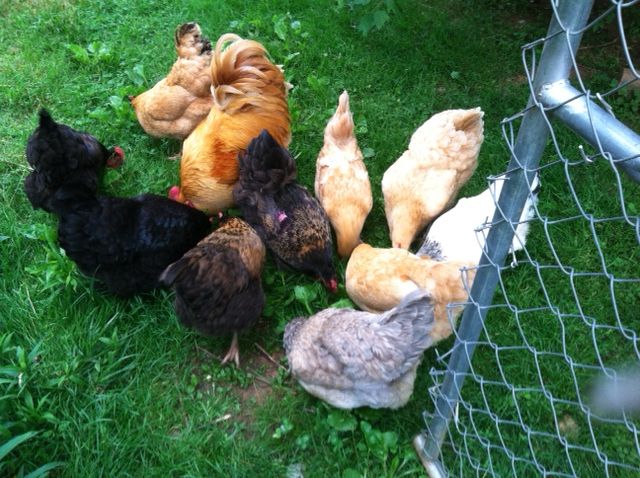
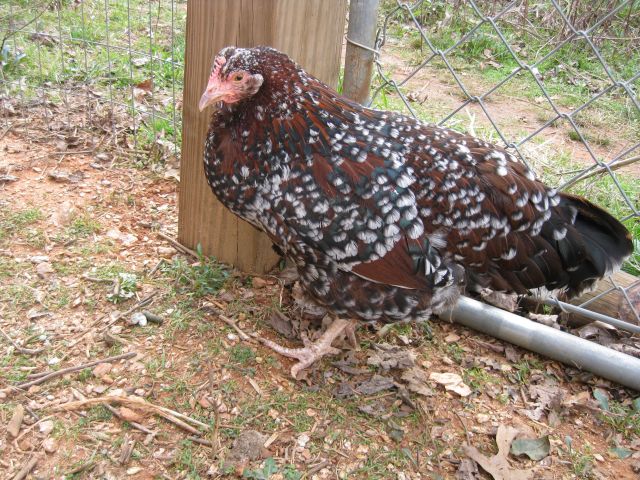
And for some other chicken news.  Our rooster had a black mite infestation on his comb.  I treated with a solution of neem oil mixed with olive oil (I usually use Johnson baby oil but couldn’t find it) and he was cured.  One of the black speckled hens had feathers missing from her wing – feather plucking or maybe a failed predator attack?  I treated with blue kote and it is healing well.  And finally, the next pic shows a celebration of sorts.  Last evening as I was leaving I couldn’t find Randa who is agile, flies easily over the paddock fence and likes to make the most of daylight hours and (it seems) when I am looking for her she hides in the overgrowth.  I wandered around looking, called her and even the sunflower seed trick (rattle the seed in a plastic container) failed.  So I departed not knowing if I would see her again.  This morning there she was as usual in the yard.  To celebrate I got more sunflower seed, had some myself and scattered the rest for the flock.  Randa warily entered the paddock and participated.

10 hens and a rooster enjoying sunflower seed
10 hens and a rooster enjoying sunflower seed.  the hen with the missing feathers is in the middle

So peace for the moment.


“spa treatment” for Red

Of the 6 chickens inherited from my neighbor, Red has always been my favorite.  On one occasion I borrowed them to assist in the new vegetable area.  5 huddled in the furthest corner, Red came up to where I was forking up the soil and she focused on each upturning and snatched any worms or grubs that were unearthed.  I was told she was rescued from a commercial operation and that was why her beak was snipped – to minimize damage amongst stressed confined birds.  The bigger birds respected her and let her alone.

And all was well until last week when her behavior changed – not amongst the birds at the paddock corner scrounging for handfuls of seed, comb faded,  more time in the coop than out.  And last night I was sure she was at her end – standing in the corner with head drooped to the ground.  I separated her from the others and this morning I set out to take her body for burial – I dig a deep hole for the departed and, when covered, mark it with a boulder.  But there she was on her feet!

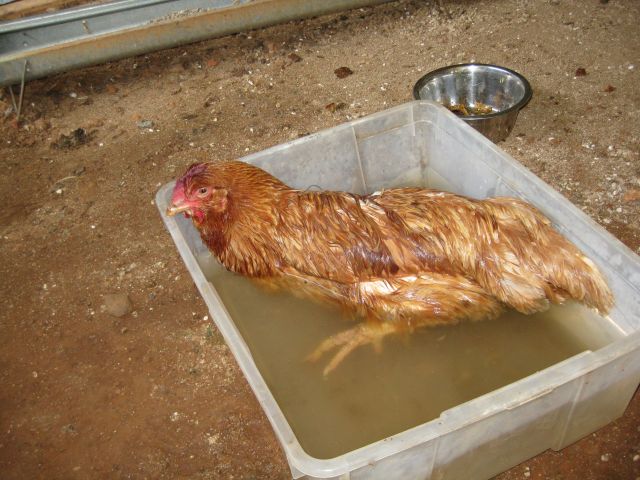
So I rolled out the “spa treatment” recommended at www.hencam.com.  A long soak in an epsom salt bath.  Which she enjoyed as you can see below.

epsom salt bath - warm water and quarter cup epsom salts
epsom salt bath – warm water and quarter cup epsom salts

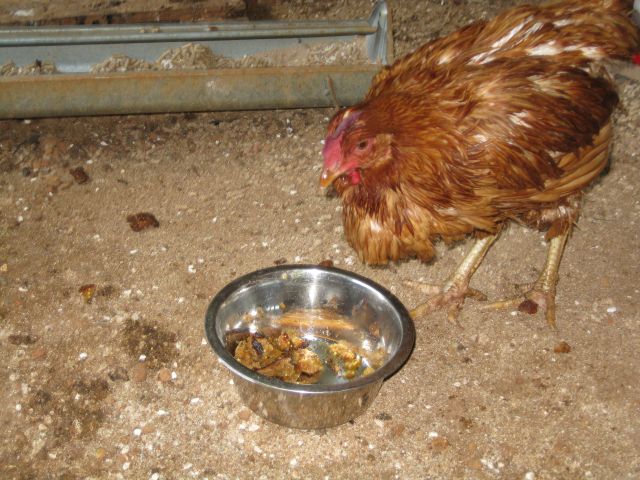
Followed by pieces of whole wheat home made bread doused liberally with olive oil.

Red enjoying whole wheat bread and olive oil

The least I could do for a real character.  So we wait and see.

neem oil – a remedy for chickens

I have been intrigued with neem oil for some time. Something exotic about it. When I first planted tomatoes in north Georgia four years ago, and they were overwhelmed by aphids, neem came to my rescue. Aphids were never a problem again, not because of the neem but my voracious ladybug population. (This week I have been collecting my overwintering ladybug guests and ushering them out to their workplace in my vegetable garden). My second recourse to neem was a couple years ago when the stinkbugs arrived. With my pistol grip sprayer I doused the offenders and they looked dazed and disgusted. Last year I awaited them but they did not arrive, again not due to neem but to some mysterious forces at work. And so my neem oil sat unused in the cool basement for more than a year, until last week when it was recalled to the front line.

But a word about neem. A neat little book by John Conrick titled “Neem The Ultimate Herb” goes into much detail on its origins and uses. He traces its first use as a medical treatment to 4,500 years ago. He states it is a major element in preventing and healing diseases among Ayurvedic practitioners (a system of traditional medicine in India). The neem tree (Azadirachta indica) is a tropical evergreen which grows in much of Southeast Asia, welcomes extreme heat of up to 120 F but will not tolerate hard freezes – so unlikely to call my yard home. My interest is not in its medical properties, or how it is made, but its use for insect control. Unlike synthetic pesticides, most of which have quick acting nerve toxins, neem’s main action is as an anti-feedant, which dissuades pests from eating neem covered plants. It can also reduce an insect’s ability to reproduce. No wonder the stinkbugs looked dazed and disgusted! Conrick also mentions that neem has been found to be beneficial on bees.

So how did I use it as a remedy for my chickens? Our Buff Orpington rooster has a good looking comb but the tips of his comb turned black a few weeks ago from frost bite. He didn’t seem to mind and, as he is becoming more aggressive, I decided to leave him be. Then I noticed black spots at the base of the comb. One of the Golden Comets tried to peck at his comb (for food or as a grooming favor?) and he discouraged her endeavors. But this made me think that this was an insect problem not a frost bite issue. So how to treat it? Diatomaceous earth and Sevin dust have been suggested for mites and lice etc. but I didn’t want to powder a young vigorous rooster near his eyes. I also didn’t want to use a synthetic treatment given my recent success with an organic treatment, psyllium, for chicken crop problems. And then came the idea of neem – I cannot claim credit for this inspiration since I believe it was derived from internet browsing.

Neem is usually mixed with water but I was concerned this mixture could dribble into his eyes. So I took a little dropper bottle and mixed the neem with Johnson’s baby oil at 10% strength i.e. 36 drops of the baby oil and 4 drops of the neem oil (the neem oil is described as having 70% extract of neem oil). Administering the concoction single handed was not as big a challenge as I had thought. I cornered him in the coop, and held him firmly between my knees and then one hand held and pivoted his neck and crown and the other retrieved the pre-charged bulb dropper and doused the infected areas with the mixed oils. After initial hysterical protestations he submitted to the treatment. A day later most of the black infestation was gone and two days later he was cured. Easy enough now but, when his spurs are developed, I do not think this will be a happy experience for either of us.

This winter was very mild and the bugs are out and about and multiplying. I really would like not to use any organic treatments this year. I am hoping that with my expanded beneficial insects army and diverse plantings and good compost and strong plants I will be able to withstand the onslaught. Except in the month of August when we tend to become overwhelmed and then the best is to cut back on the plantings (so as not to subsidize future generations), and look the other way. But if I have to, then neem will be reactivated.

responsibility to animals

I had a good time at the Georgia Organics annual conference – its 15th and my 7th.  The Friday workshops and farm visit and the Saturday educational sessions were excellent and the two keynote speakers have national repute and lived up to expectations.  At my breakfast table on Friday morning was an organic livestock farmer.  I asked him a question which was triggered by the assistance I am providing to two ailing chickens:  “What do you do when one of your animals get sick?”  His answer was simple and to the point:  “If they get sick it means they do not fit in my system and I eliminate them.”

Later that day during the farm visit the same topic came up when the farmer was asked how often he deworms his sheep.  He deworms them all at the beginning of the season and then if one sheep needs deworming he will deworm it a second time and if it is still wormy (if that is the word) he eliminates it – “three strikes and you’re out” he said.  I am interested in dairy goats so I attended a session on keeping goats.  The presenter was from the west coast (interestingly several presenters had moved from the west coast to Georgia or Alabama) and her stance was different.  She stressed the importance of good management practices and prevention but, if a sheep or goat gets ill and is non responsive to organic treatments, she will use conventional medicine.  She felt she has a responsibility to the animal and cannot let it suffer.  The final viewpoint was expressed by a DVM (doctor of veterinary medicine) who said he would cull the animal to avoid the problem spreading and because its genetics were wrong.  His only exception was if the animal was a pet and then he would do whatever to save it.  So four commercial practitioners came to a three to one vote.

Some decisions are not simple.  If you hew to the organic road then conventional treatments should have no place.  I also understand the “genetics” argument – it is no surprise in humid summers that the tomatoes with inbred resistance to the various blights do far better than the regular tomatoes.  So to travel the organic path you must select robust partners.  I would probably have done much better with hybrid chickens than some of the gorgeous looking birds we bought, a few of which are struggling, which also makes me wonder if perhaps there was some inbreeding down the road.   One chicken has a persistent sour crop, which means the food she eats is not being processed properly by her body.  I watch her closely – she is the only one who won’t eat the occasional greens or yogurt which I provide, which would have helped avoid her condition.   After a couple visits to the vet I am now medicating her with nystatin (using a feeding tube down her throat to administer the medicine) and she may (believe it or not) have to wear a bra to help her crop regain its regular shape.  This is going to extremes, I agree, but I am also interested in how it all works – what causes things to go wrong and how you can fix them.

If you have to make a living from organic farming then culling the inferior specimens seems the way to go.  But then it gets back to why you are doing this anyhow – if it is to experience all the manifestations of life it is hard to let one depart when you could (presumably) have saved it, or at least made the attempt.


not always clear sailing

It is good, I suppose, to be reminded occasionally of how fallible we are.

I have, or I should say “had”, a pair of Speckled Sussex hens – acquired with the other 3 different pairs as youngsters and, at the time of writing, less than a year old.  For the past few weeks the Speckled Sussex had been acting out of sorts, not running up to the fence to greet me (in the expectation of handouts) as the others did, and preferring to huddle down next to each other.  I thought this was a temporary malaise, perhaps the shortened daylight hours were depressing them, perhaps they enjoyed their own privacy.  After all they are shorter and more compact than the other taller birds.  Pehaps they were snobs.  I remembered how, when I first brought them and the other 3 pairs of chicken home, they had victimized the two Golden Comets and continuously chased the Comets away from the communal feed tray.  The result was the Comets were ostracized and had to have their own feed tray and keep their own quarters.  This continued until the Comets got bigger, bigger than the Speckled Sussex, and more confident, and then it was no longer a problem.

So all these thoughts went through my mind as I kept an eye of the lonesome pair.  I only realized there was a problem when they wouldn’t move at all when I approached them.  Previously they had always kept their distance from me and rebuked any attempt to pick them up.  Now they wouldn’t move and I was able to easily pick them both up, one in each hand, and carry them to their coop in the evening.  And then it dawned on me that one was weak and sick and the other was loyally staying by its side (I will return to the use of “loyally” later).  The next morning the weak one was clearly exhausted and its one eye was closed.  The farm store manager suggested it had respiratory problems and asked if I heard a “gurgling” in its breathing.  He suggested I dose it with VetRx, which I (and he) thought was an antibiotic.  However, when I examined the package more closely I realized it was not an antibiotic but had natural ingredients to alleviate congestion (I could also have figured this out by reading the label more closely – “based on a formula in use since 1874”).  I administered almost half a cup with a syringe and the hen began breathing much, much better.  However, a few hours later the gurgle returned.  And later that pm it departed – I think it was too weak and I had left intervention until too late.

My initial concern was that the other 13 birds might be affected (in addition to the 8 I purchased as youngsters, I was also gifted 6 older hens by a neighbor).  This does not appear to be the case.  But I have another problem – the remaining Speckled Sussex.  Wikepedia describes “sentience” as “the ability to feel, perceive or be conscious, or to have subjective experiences”.  Are chicken sentient?  Based on my ongoing travails with the remaining Speckled Sussex I answer “definitely”.  As her companion suffered she stopped eating and now her companion is no longer around she has lost all interest in her surroundings and apparently in life itself.  For the past few mornings I have separated her from the others and offered home made whole wheat bread and 4 to 5 worms from the compost heap.  I do not like offering worms on a platter  – they are great workers and it seems unfair, but I feel I let her down and am trying to make amends (and save her).  The worms are irresistible to her and she also enjoys snacking on the bread.  But when I return her to the others she continues to be mournful and will sit alone and make an occasional lament (or so it sounds to me).  There is, of course, the possibility that she is also unwell. I have an antibiotic (Tetracycline) at the ready and I have segregated her from the flock, but since she appears alert, is eating, and is breathing clearly, I am holding off on the antibiotic for now.

I tried to find another Speckled Sussex  and was going to inspect it the next day, when it was sold.  Perhaps this is better since a new hen may have its own problems with the rest of the flock and may not get on all that well anyway with my Speckled Sussex, so buying another one of approximately the same age may be compounding my problems.

lonesome survivor

With the above lesson, or reprimand, taken to heart I now act more quickly on possible problems.  For several weeks one of the Golden Comets made a curious forward backward motion with its neck – not often, but perhaps every five minutes.  Otherwise very active.  On the off chance that there might be some blockage in her crop I dosed her with olive oil using a syringe.  That funny motion seems to have stopped.  But from now on, in addition to observing them, I will also intervene more quickly.  And hopefully, sunny days will return.