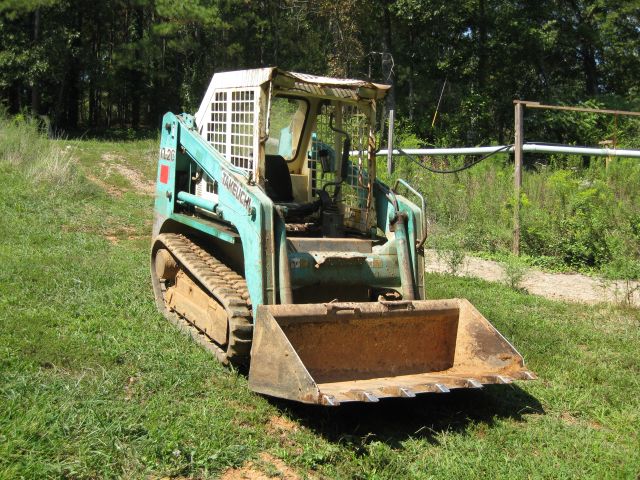
cutting a ramp with Takeuchi

Last year I bought a Takeuchi TL26 track loader.  This machine was made in the 90’s and because it has tracks rather than wheels is ideal for grading or re-shaping the ground surface.  It has 61hp, which makes it a mid-size loader and just right for my limited needs. In the article on the fading battery I mention some of the repairs I have made to it.

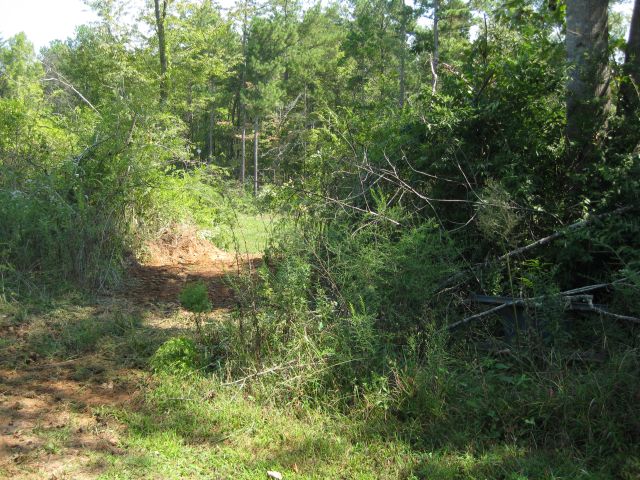
Since the temperature tomorrow is expected to be back in the 90’s and today we are only in the 80’s, I decided to cut a ramp down to the lower field.  My tractor access to the lower field is blocked by the fences I installed for the chicken coop and I figured it would be cheaper to make a new road to the field than to purchase two 10 ft gates for access through the chicken free range.

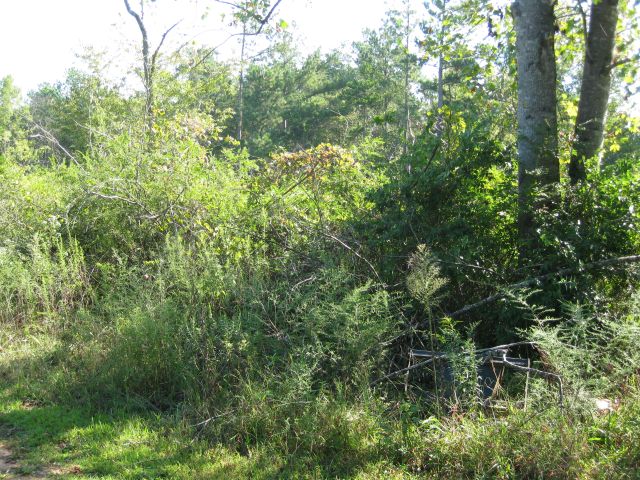
I like thickets for the cover and food they provide to the wildlife.  However, this morning it was necessary to cut a road through vegetation.  The process took less than a couple hours.  I placed the cutting edge of the loader’s tooth bucket a few inches below ground surface and ripped the bushes and small trees out of the ground. Once the roots were free I climbed out of the loader and manually pulled the branches out of the way and stacked them in a pile to be chipped at a later date.  The roots will be stacked in a pile for slow decomposition and to be added to the compost heap.
top of hill before grading
top of hill after grading


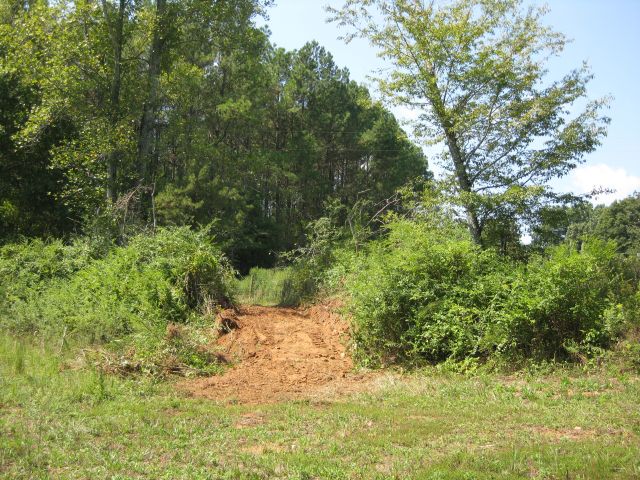
Grading the hill i.e. cutting a ramp down to the lower field was more of a challenge. I work by myself and try to avoid situations where I get into trouble, though I always keep my cell phone at my side in case I have to call for help. So I proceeded with care filling the bucket of the loader with soil as I cut a decline into the ground and then advancing to the edge and dumping the contents down the hill. In this way I fashioned a road down the hill. Then it was a matter of leveling the ramp and removing some of the boulders embedded in the hill. My loader is 5ft wide and the tractor is 7ft wide (it has wide rear wheels which increase the width from 6ft to 7ft), so I widened the ramp a bit for future access by the tractor and pickup truck. After it has rained and the soil re-settled I will smooth out the ramp one more time with the loader and then bring the tractor down to bushog the field, chip the branches and small trees, and augur post holes for the new insulated coop I will be building towards the top of the field where it catches the winter sun.
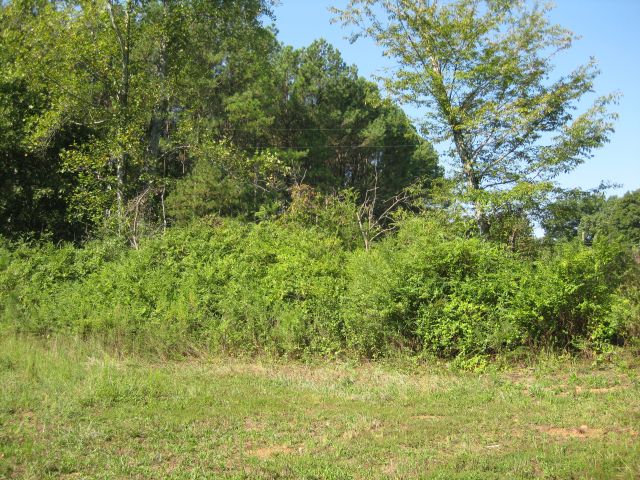
bottom of hill before grading
bottom of hill after grading

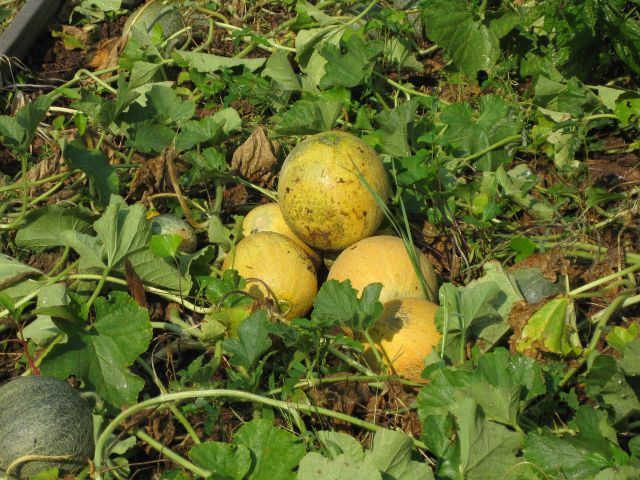
cantaloupe

cantaloupe in raised bed

During the past week the cantaloupe have shown they are ready for picking.  Quite suddenly their color changes from green to yellow, their stem withers and they exude a strong musk aroma.

I planted the seeds directly into a raised bed (8ft x 4ft) on Sunday 6/26.  I had purchased a packet of Burpee’s Ambrosia Hybrid which cost $1.89 (before taxes) and I was disappointed there were only 12 seeds in the packet.  I formed two hills in the bed and placed 6 seed in each hill.  Previously I had harvested my garlic from the bed and I just added some more compost before planting the cantaloupe seed.  I watered well and often with a hose and initially did some light weeding.  All seeds became seedlings and, with watering, developed into strong plants.  Unlike my struggle with squash, the cantaloupe plants were not visibly visited by any pests.

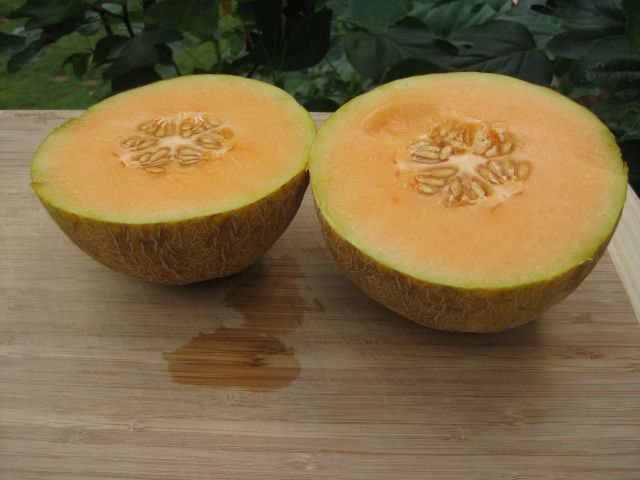
The melons are well formed and look great.  Of course there is usually a snag and it is the taste which is tending to neutral and only slightly sweet.  I wonder if that has to do with their nutrition or growing conditions or perhaps I should have planted them earlier in the season, as suggested by the packet.  However, the most recently picked are sweeter to the extent we are enjoying them ourselves and not giving them to the chicken.  I have decided to save seed from the sweeter melons for next year.

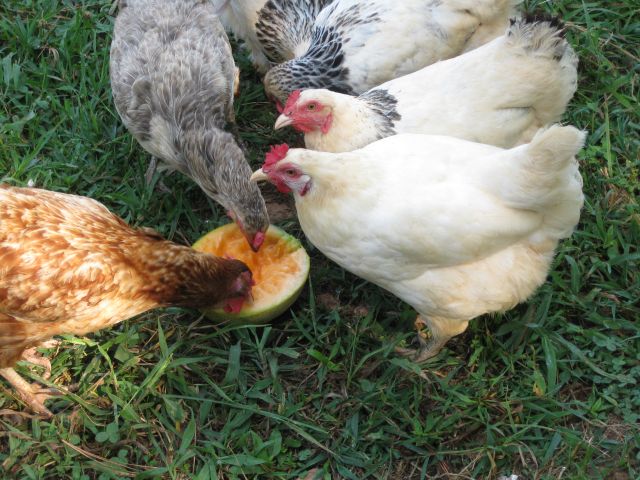
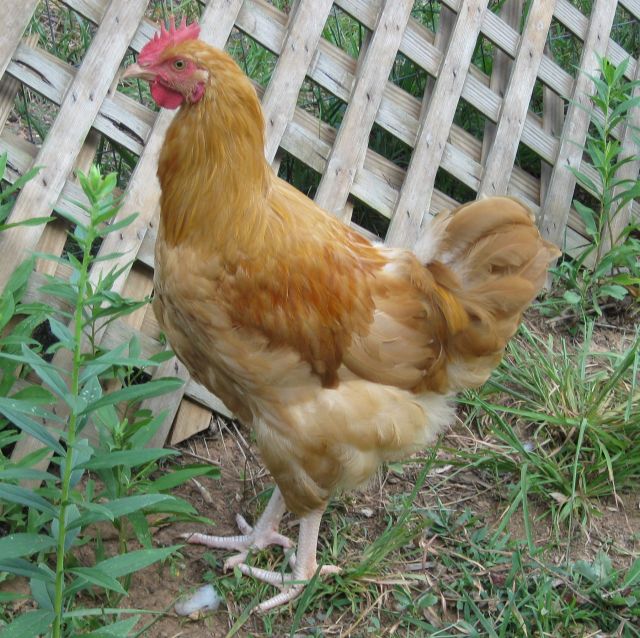
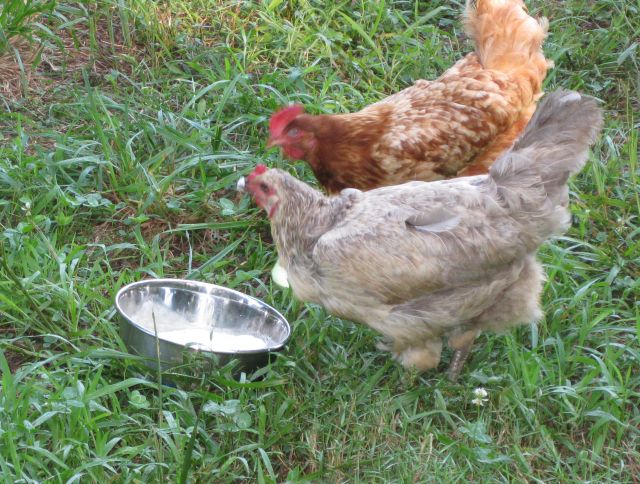
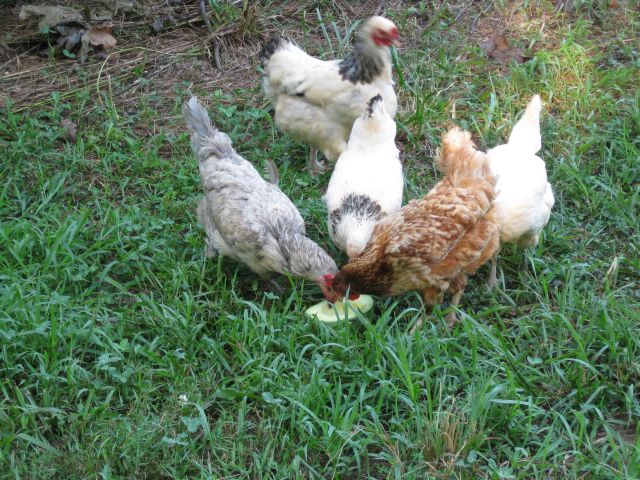
The chicken, both flocks, love the melons which I provide after removing all the seed.  Interestingly, only the older birds like bananas.

cantaloupe
chicken like cantaloupe


chicken dynamics

Eight young chicks arrived as a group
into a shed converted to coop
two Golden Comets who jump on your knees
when sitting you offer some morsels to feed
two Black Giants so skittish and shy
they keep the most distance when friendship you try
two Speckled Sussex the smallest of all
but quickly chase Comets to far away wall
and then the last couple, so striking indeed
a hen and young rooster of Buff Orpington breed

as coop door unshackles
they cluster around
then chortle and hustle
with wide legged bound

first to the weeds for a nibble or peck
then claw in the mulch
and sound a loud cluck
when worm comes to view and
seals their good luck

but Buffy is different
he has just learned to crow
red comb and gold cape
held high and held low
a matador turn, but is he a fake?

while coop mates ignore him
and focus on feed
across the fence barrier the
Rhode Island Red
has heard his first crows and though
twice months in age
is curious to meet the
tenored young sage


will you friend me?


she paces the fenceline and he saunters closer
though pretext is food, a purposeful loiter,
he faces and tip toes, his chest full of swagger
she responds just as quickly with unrestrained vigor
and then he departs and she wistfully eyes
the untutored young rooster and if she could,
sighs,
but tomorrow will come and who knows by then
Buffy be back and gladden the hen.

recycling, scuppernong and the first crow

Recycling

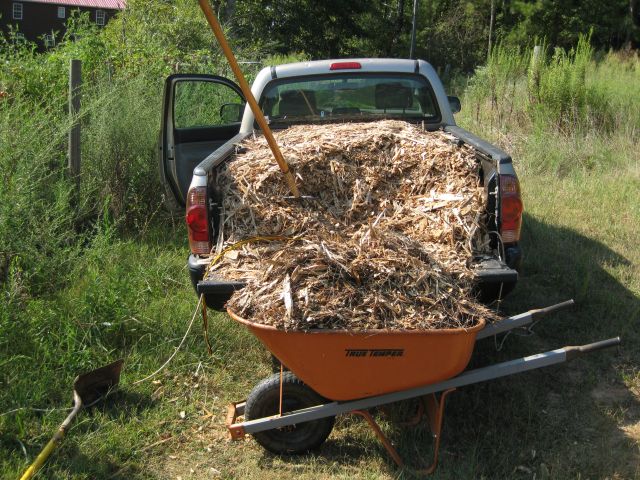
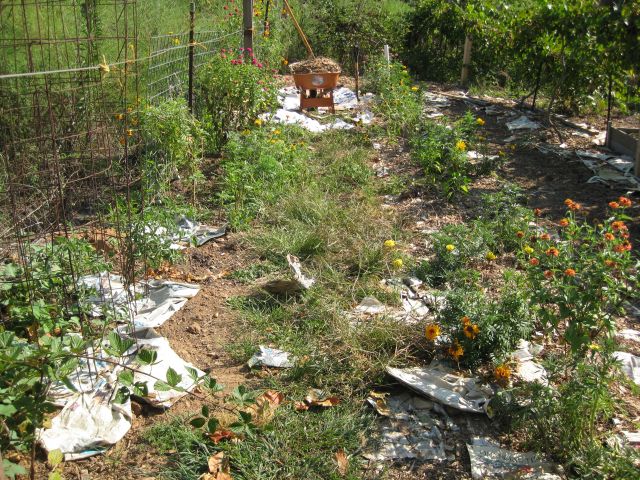
I recycle whenever possible.  Two favorites are newspapers and woodchips.  I was able to twice load my pickup with pine tree woodchips and these, together with bundles of accumulated newspapers, gave me the incentive to weed the overgrown walkways in my vegetable garden.

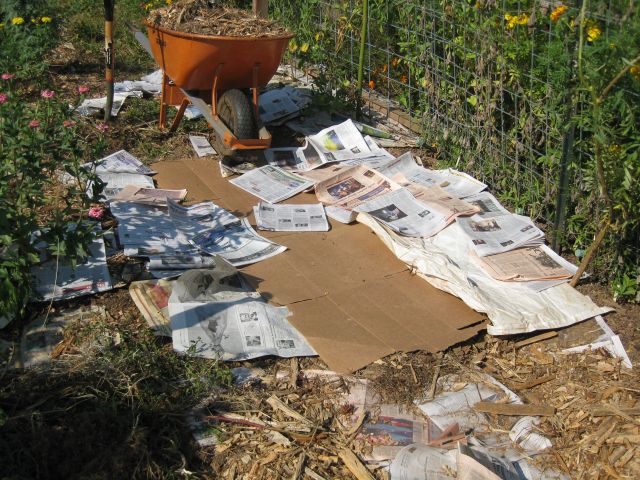
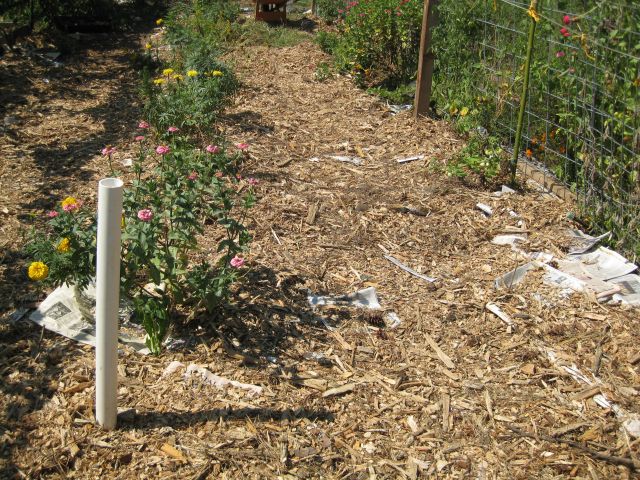
I first remove the weeds, then lay down the newspapers (typically open the newspaper at the middle and ensure plenty of overlap to block the sunlight), and then cover with a thick layer of woodchips.   In addition to newspaper (glossy inserts removed), I also use cardboard and paper sacks provided they do not have a plastic film on any surface. This heavy mulching prevents weeds, conserves moisture in the soil, provides food for the earthworms, and removes competition from weeds for the scarce water.  I think it also removes habitat for some of the pest insects and the bonus is the garden looks more attractive to visitors.

woodchips load easily into wheelbarrow
dishevelled area before the mulching
newspaper, cartons and paper sacks
after the mulching


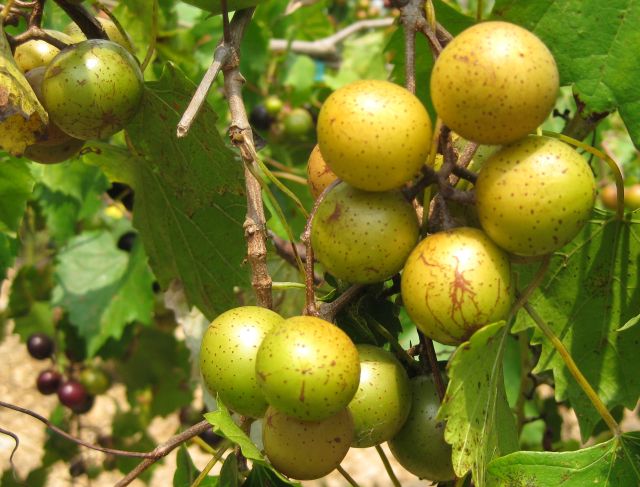
Scuppernong

Scuppernong are my favorite muscadine (a type of grape native to the southeastern United States). When the scuppernong turn a golden bronze color they are ready for the eating – as you bite down on this large grape your mouth is filled with an indescribable sweetness. Since I do not use chemicals there is no need for washing the scuppernong. However, there are many eager consumers and as you reach for the muscadine a large wasp may be disturbed and fly noisily away. Last year there were lots of stink bugs around but, so far, they are not in evidence.


The First Crow
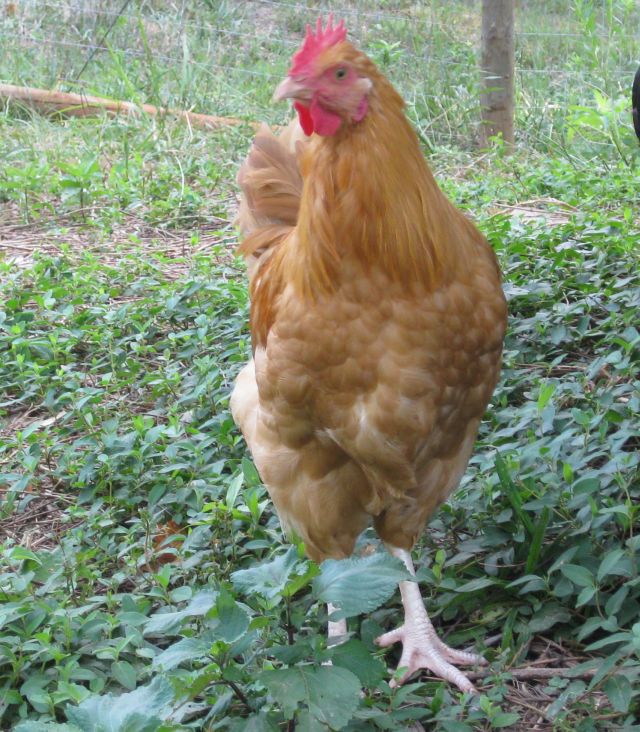
I was surprised this morning, as I approached the hen coops, to hear an unmistakable rooster crow. We have two coops and fenced outdoor areas – one for the 6 older egg laying girls I inherited from my neighbor, and another for the youngsters – 7 hens and a rooster. “Buffy” is a Buff Orpington rooster and he certainly has filled out in recent weeks. He has even taken to trying to intimidate the two Black Jersey Giant hens, who are not sure (yet) what to make of him. Although there was a trifle uncertainty it definitely was a crow, repeated a couple of times as he tuned and validated it.

Buffy - Buff Orpington rooster


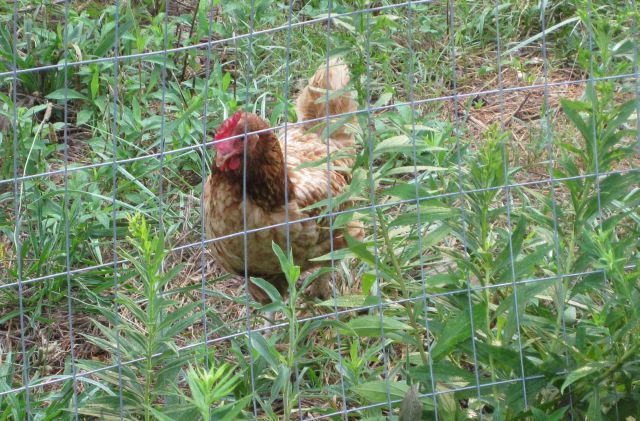
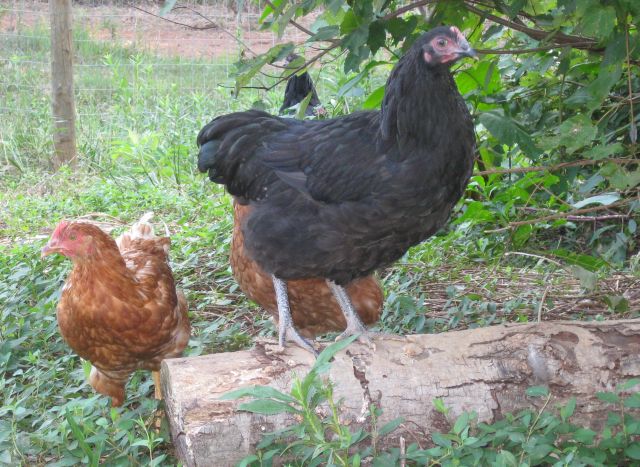
Black Jersey Giant and Golden Comet

2nd chicken coop done

Arrival of the egg laying chicken

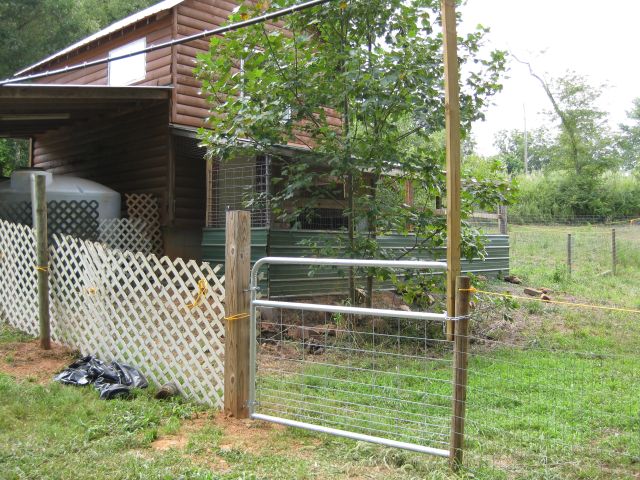
My neighbor offered me her 6 chicken and nesting boxes and metal waterer for a reasonable price and, because of the age and size difference between her mature egg laying chicken and my youngsters, I built a second chicken coop to receive them as well as a separate fenced outdoor exercise and grazing area.

chicken
6ft gate to fenced range with coop at rear

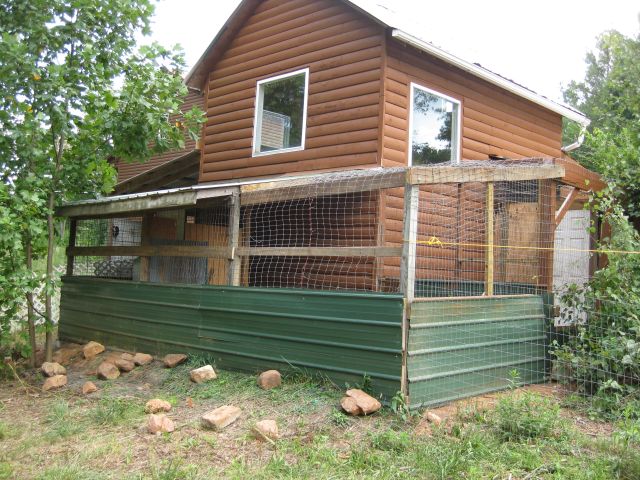
I refurbished a horse stall into a chicken coop using scrap lumber and wire fence leftovers.  I used screws rather than nails since it is easier to undo a mistake with screws and screws, altho’ costlier, hold better than nails.  My preference for the lighter joints was “star drive” screws to “phillips” screws because turning power is better, and for the heavier joints I used hex lag screws and occasional bolts and nuts.  To secure the metal sheeting to the sides I used hex metal roofing/siding screws.

Chicken coop construction

chicken
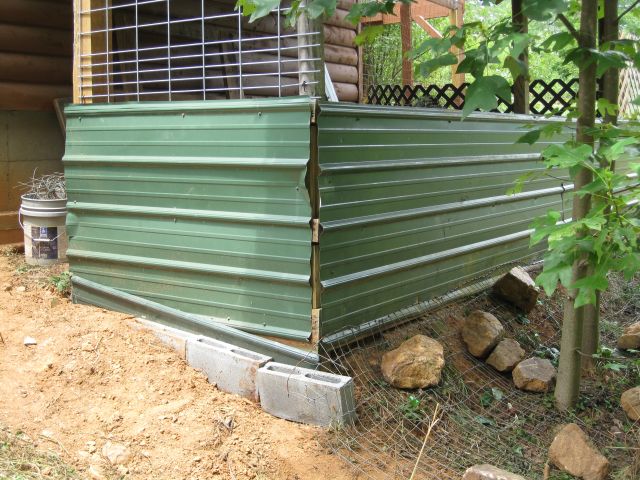
exterior view of coop

I worked from the ground up –

  • first dug trenches for implanting narrow cinder blocks to thwart tunnel attacks;
  • along the downhill sloping side laid surplus 4 ft wire fence on the exterior ground surface anchored by flat rocks and 10″ tent pins to also deter tunnelers;
  • framed the sides and roof with old but solid 2″ x 6″ and 2″ x 4″ lumber assortments;
  • secured surplus green roof sheeting to the sides to waist height;
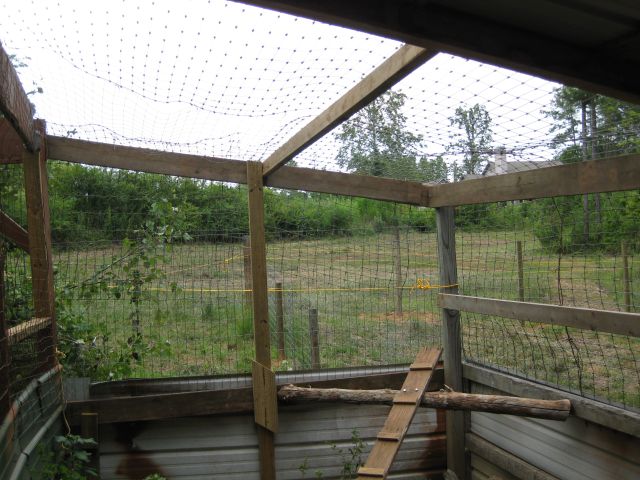
  • used surplus fence wire (welded or woven) to close in the sides and the “courtyard” roof;
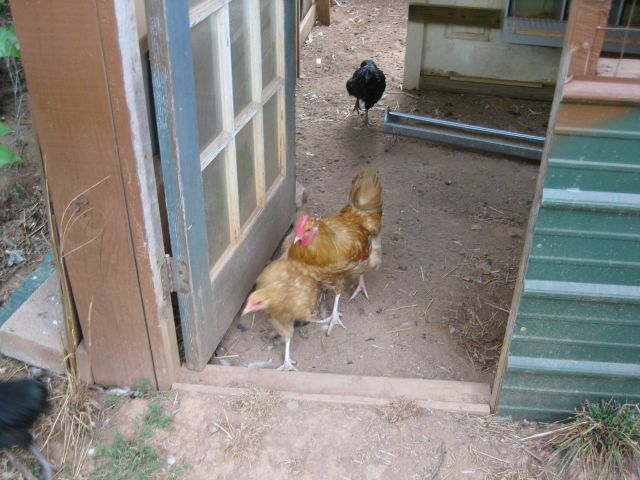
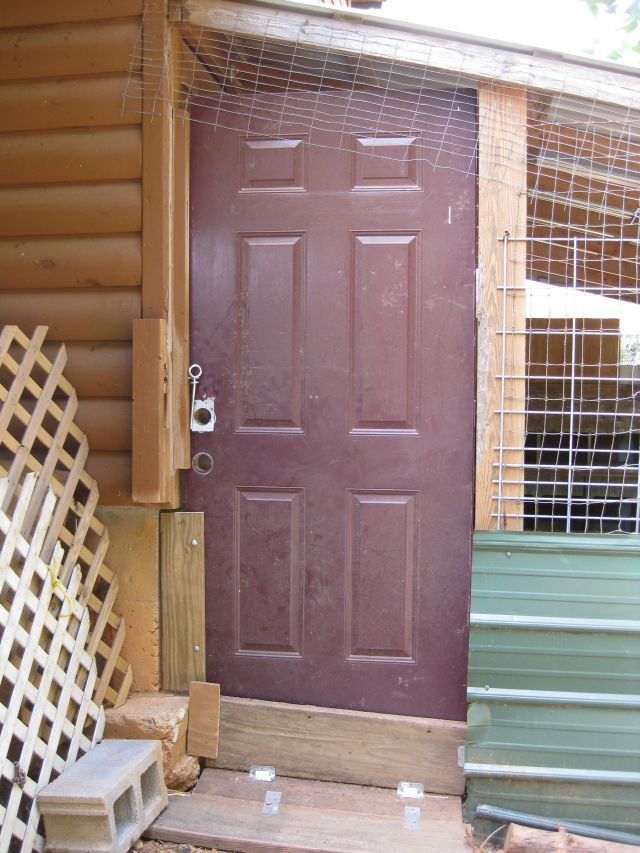
  • a battered front door was recycled to become the chicken coop entrance;
  • a partition using wood and sheet metal scraps was constructed between the roofed in area and the courtyard;
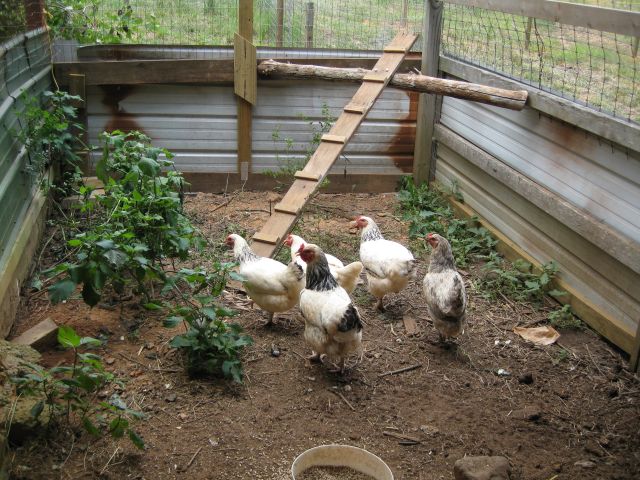
  • a tree limb secured by lag bolts to the sides became a roosting perch;
  • a plank with screwed on footholds became the stairway to the chicken roosting perch; and
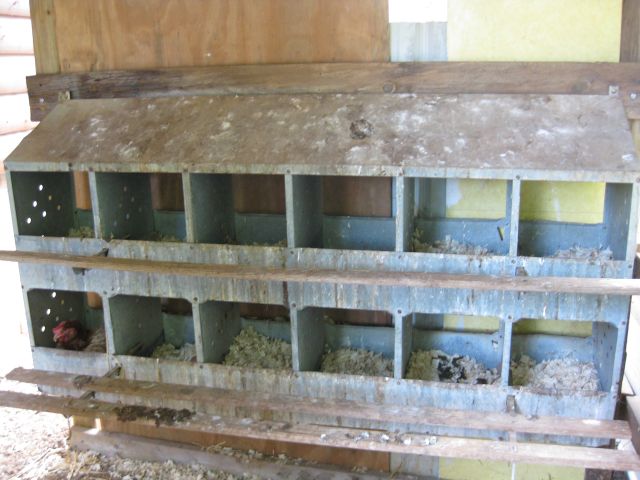
  • finally the nesting box and the metal waterer were installed and thechicken introduced to their new home.
chicken
door entrance to coop

chicken

nesting box secured to partition in coop
chicken
courtyard with roosting perch, stairway and 5 occupants
chicken
view of fully enclosed "courtyard"


To acclimatize the new residents, treats were provided.

chicken
some yogurt for the new occupants
chicken
as well as a melon treat

trying to get smarter

A few evenings ago, after locking the chicks in the pen, I heard an unusual noise and went to investigate.  The coop is divided by an inner partition.  The two Golden Comets were on the one side on the roosting perch, which didn’t surprise me since from the get go they were ostracized and even though now they appear to be accepted, they still act independently.  On the other side of the partition I saw an unusual sight – the other six chicks appeared to be shoving and tugging to get into a corner of the coop.  It appeared each one’s efforts was to get to the bottom of the scrum for even when one climbed on top of the melee it wasn’t satisfied until it had dislodged those below it and was situate on the bottom in the corner.  What was just as interesting was that the two Golden Comets, who had followed me, immediately joined in the proceedings.  It was a continuously revolving spectacle.  I dislodged them momentarily and examined the corner and there was nothing unusual about it, to explain their intense need to access it.

As I pondered, there came to mind a similar event which occurred the previous December.  On a mild winter’s day I had examined the hive to check their food situation and inadvertently dislodged some 40 bees which immediately formed a cluster on a plank.  I placed the plank at the hive entrance and expected them to move the 6 inches or so into the hive.  But they stayed in their cluster, which I saw when I moved closer, was in continuous motion with bees underneath coming to the surface to be replaced by the bees on the surface.  I left them there assuming, when they had concluded their activities, they would move into the hive.  The next morning, the little cluster of bees was still on the plank, frozen in place.  I did not realize they were desperately trying to keep themselves warm, as they do in their hive during the winter, and that what I was watching was desperation and panic.

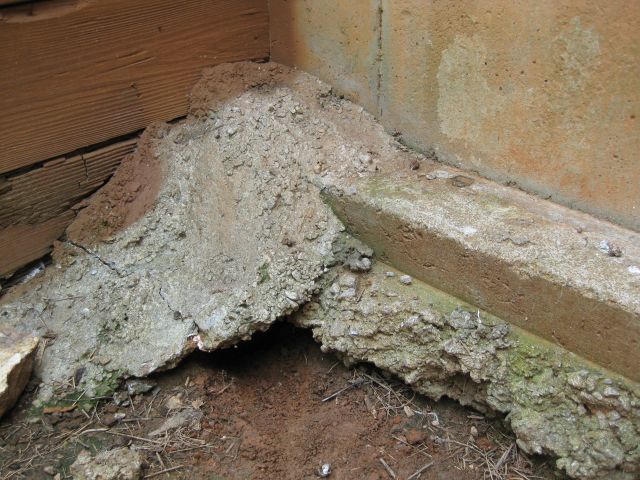
tunnel under concrete layer, into coop


So with this lesson in mind, I continued to study the chicks and came to the conclusion that the reason each one was struggling to get to the bottom of the corner was because this was the safest place to be from a predator.  So something had spooked them.  I reexamined their little fully enclosed courtyard and decided that the hole under a piece of concrete which I had assumed they had made  for sunbathing or dusting purposes, should be more closely examined.  In fact it turned out to be a tunnel and on the outside of the coop I found the entrance hole to the tunnel.  The tunnel was some 4 feet in length and maybe 6″ to 8″ in diameter.  My fortuitous visit had interrupted what may have been a disastrous evening.  I plugged the tunnel and placed cinder blocks all round the coop perimeter.  I had known predators are motivated and can and will dig, but had assumed that the 4″ depth of the perimeter wall/fence would have provided adequate protection.

cinder block and horizontal fencing protection

My neighbor who introduced me to chickens has agreed to give me her 6 mature girls – 4 hybrids, 1 Americauna and 1 Rhode Island Red.  Since her girls, which regularly produce 4 eggs daily, are much larger than my 14 week flock, I must keep them separate, which means building them their own coop and outdoor exercise area. With my enhanced respect for the wiles of predators, I am reinforcing the adjoining woodshed which will become the new coop. Because it is situated on a slope, which means even if I put down a 1 ft vertical barrier the invader could probably tunnel under, I have decided to lay horizontally a 4 ft wire wrought fence, which is held in place by surplus 10″ steel tent stakes and rocks. Much work still remains before the coop is ready for service.

hawk protection?

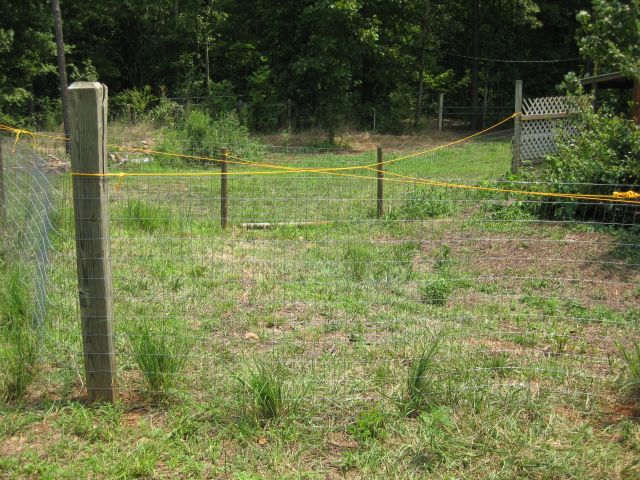
While walking the adjacent woods early in the morning we startled a Great Horned Owl. This got me thinking about the need to protect the chicks from aerial attack by hawks or this big owl. So I cross laced the fenced exercise area with yellow rope which I hope will complicate and deter any aerial strategies.