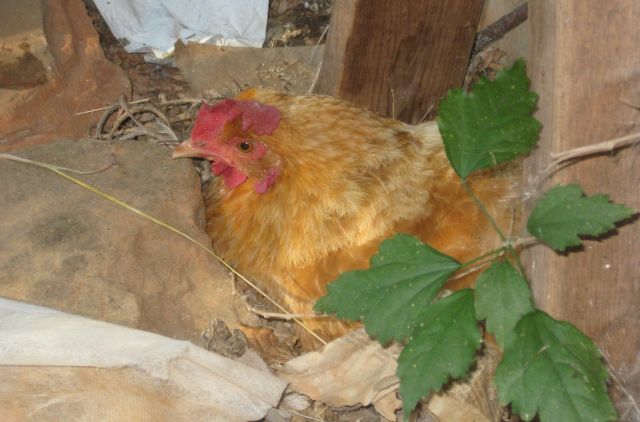
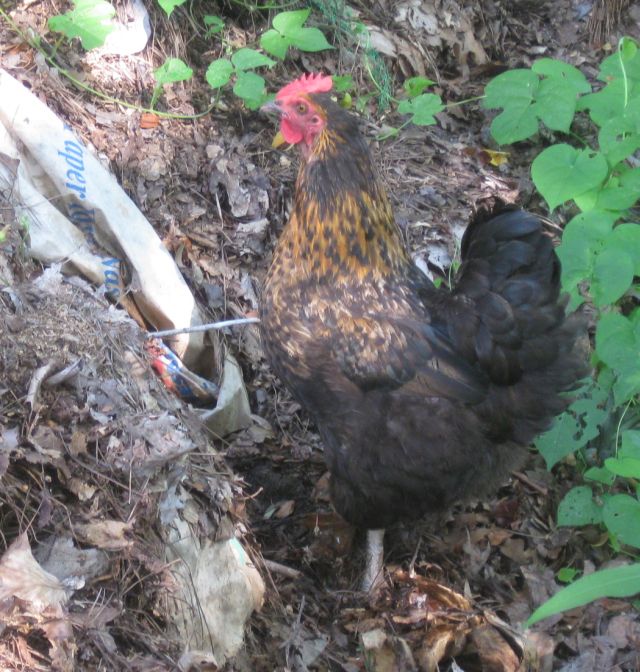
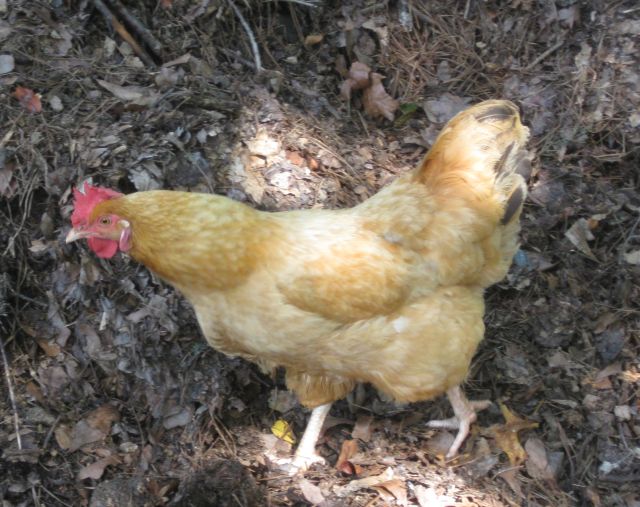
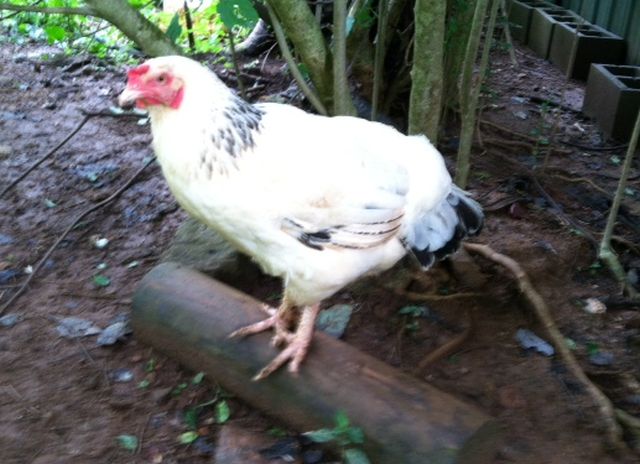
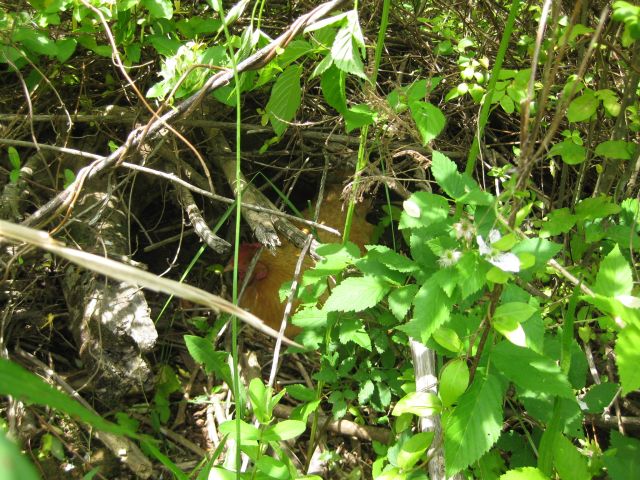
The Ameraucana has been less energetic lately. Though she eats with relish there is little determination and if even a junior hen approaches her bowl she moves away. Therefore she eats separately from the others. She has been looking bedraggled and this morning she was in the nest box though she no longer lays eggs nor was she being pestered by the rooster.
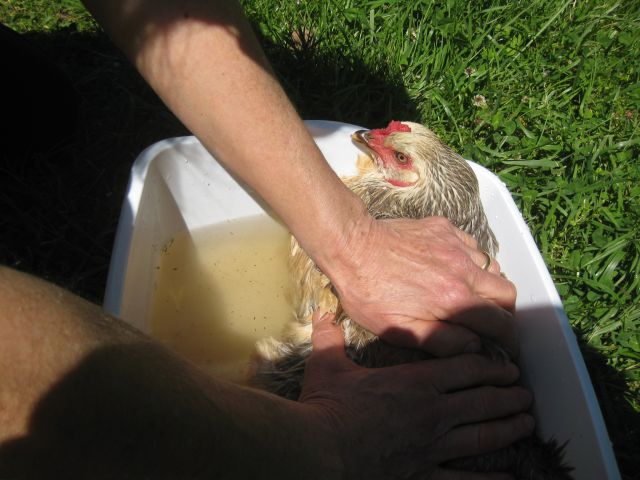
Time for an epsom salt (magnesium sulphate) bath.
a henly treat – warm water, gentle caresses, a time to reflect
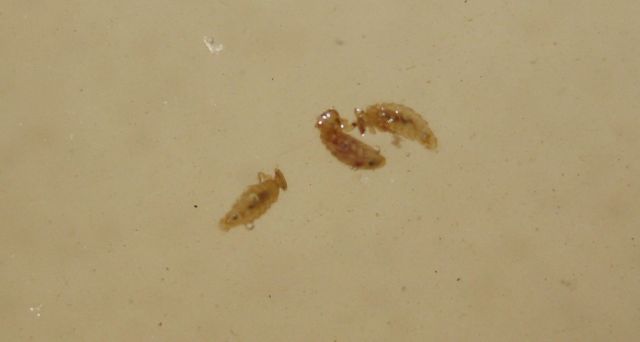
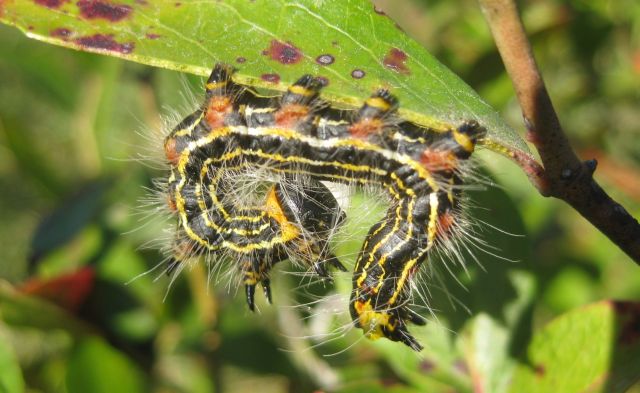
But why so many brown flecks of dust in the water? Or I assumed they were dust since they were not moving. I snapped with the close up setting and only later did I see what the camera saw.
bath water and brown specs but this picture reveals their identity
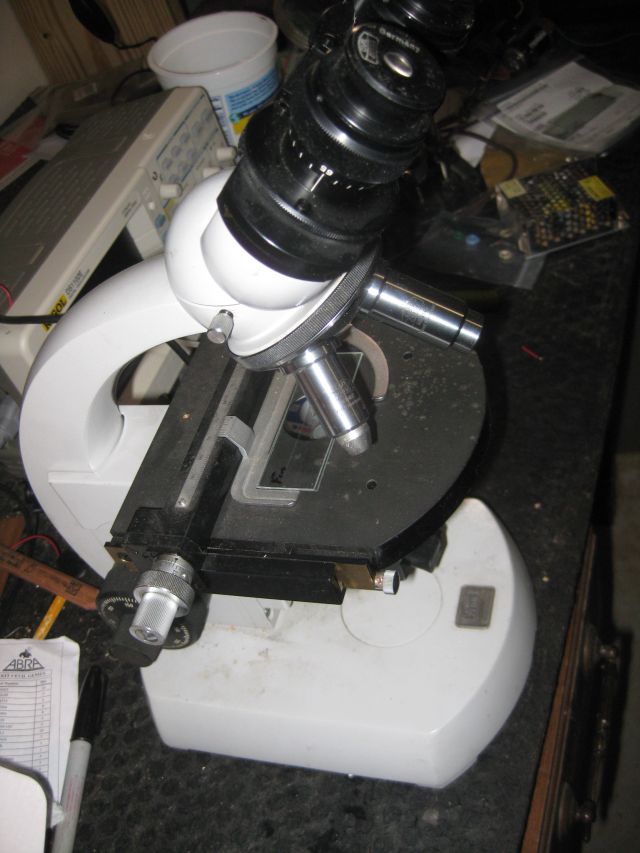
Unaware the camera had solved the mystery I prepared a slide for the old Zeiss microscope.
microscope in our possession for > 40 years
Since the samples were large I used the lowest possible magnification – it was like looking at an extraterrestrial being. I purchased an electronic magnifier last year when I was recording soil life. Around $30 and easy to use.
a simple to use microscope imager
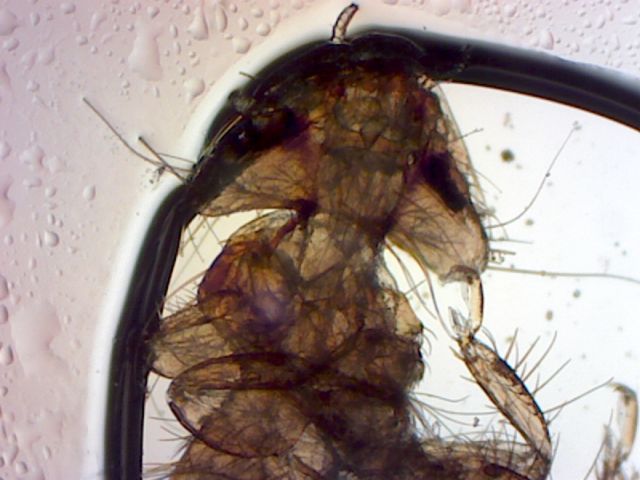
I inserted the sensor in place of one of the two eyepieces and clicked on the screen software. And had a problem – even with the lowest magnification possible the mite was so large it would take 4 pictures to capture its extent. Here is the head.
a nasty looking predator
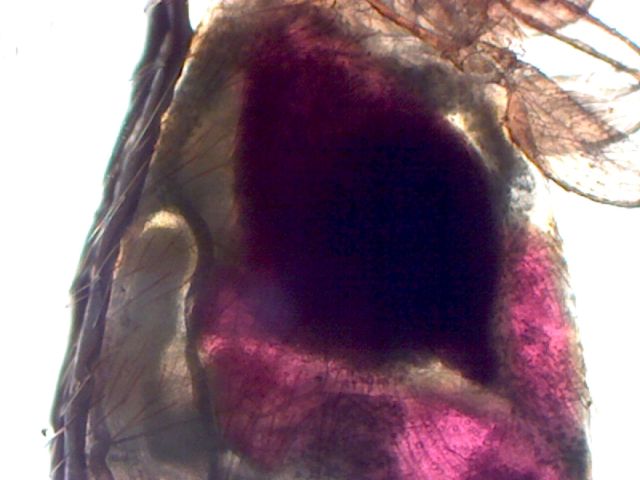
And here is heart/lung/stomach colored with the Ameraucana’s blood.
the mite’s body
And for treatment – our stock remedy, neem oil, may be too irritating for her skin. Initially we thought dusting with diatomaceous earth but read that wood ash works well. And I have lots of wood ash in my wood stove from the recent winter.
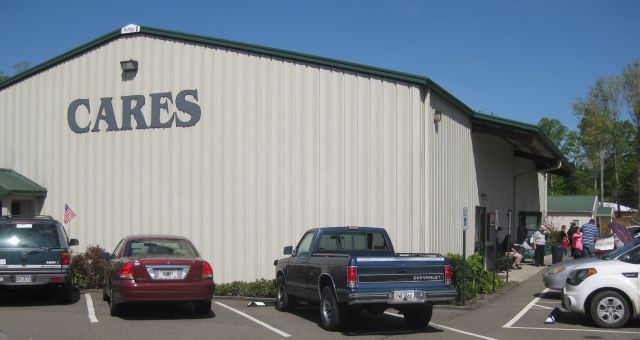
Spring is production season and my hens are producing 6-7 eggs a day. Although there are 10 hens, 2 are retired (Gimpie and Ameracauna) and 2 are matrons (Onyx and Lady MacBeth) so the main producers are the 6 offspring. My running group certainly enjoy the free range eggs with deep orange colored yolks, as do my neighbors who watch out for me when I am elsewhere. But we had 5 dozen extra and this morning we tripped to CARES (Community Assistance Resources and Emergency Services) a local charitable organization, which was happy to receive our contribution.
a local community food bank
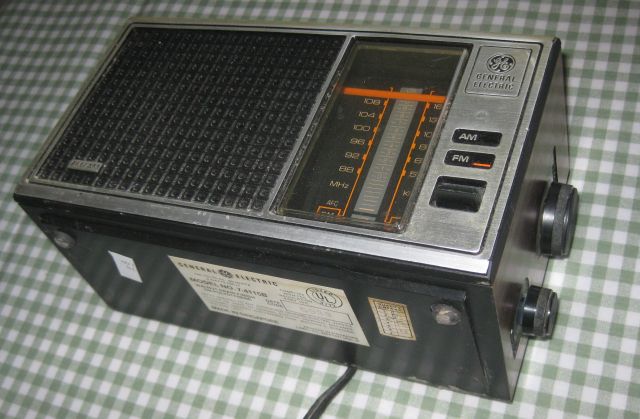
And, whilst in the area why not visit the Thrift Store which has revolving usual and unusual items. Today’s visit resulted in a General Electric FM/AM radio model 7-4115B circa 1981 which cost $1. When I have time on my hands I will explore and test the circuitry and rehabilitate it.
an older radio to tinker with, which will be much easier than today’s devices
I first planted garlic in fall 2010 – 4 varieties 1) organic California Early White – softneck ($4.99 lb); 2) Elephant garlic – very mild like a leek ($4.99 lb); 3) organic Music Garlic – hardneck ($12,99 lb.) – the only reason I bought this more expensive variety is because my family is into music; 4) organic Dujansky – hardneck ($9.99 lb). They grew well, I harvested them and each fall I planted out the cloves for the next year’s harvest. In fall 2014 I must have planted out >200 cloves and they are all doing well. But most of the cloves were small. And then it occurred to me, a sudden insight, that I had been selecting down. During my meal gathering forays I always picked the best looking garlic plants and after the harvest when they were strung up to dry, my better part/chef always picked the biggest garlic because they were “less labor intensive”. This human selection process inevitably resulted in the smallest, least desirable garlic surviving into the fall and becoming the forbears of the next year’s crop. This was real dumbing down.
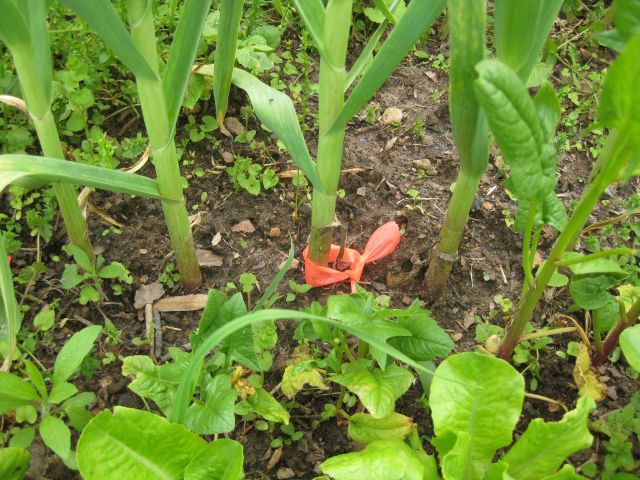
So this spring I made a change. With surveyor’s bright colored tape I made gentle nooses around the best looking biggest garlic. These will not be picked for eating and will be separately stored for next fall planting. Additionally I will intentionally first pick for eating the garlic plants closest to the selected few so they will have access to more light and nutrients and grow even better.
one of 20 garlic selected for special attention
My other lesson pertained to the chicken coop I built in October 2011. If you follow the link and look at the photos of the interior you will see that the wooden walls rested on cinder blocks and to cover the hollow centers I ran wood boards over the exposed blocks with part of the board extending over the dirt floor. My logic at the time was I didn’t want poop falling into the hollow centers or onto any dirt and rocks used to fill the centers. Pity.
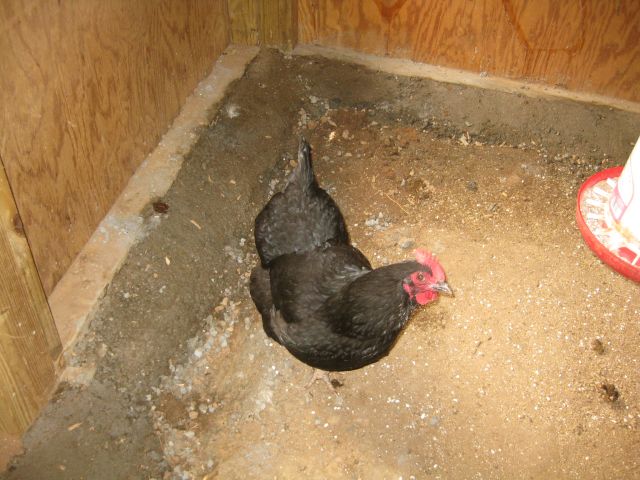
Fast forward a few years and the coop is home not only to a happy rooster and his 10 consorts but to numerous rats which hide under the boards and have built tunnels and chambers under the dirt floor. Initially I tried filling the chambers with stones but these were excavated by the following morning. The only solution I learned was to add concrete mix and then water into the chambers and this solidified mass defied the rats best efforts. And the boards. I decided they had to go. So I unscrewed them, filled the hollow centers with stones and dirt and then applied a thick layer of concrete troweled smooth to enable easy removal of chicken poop. Here is Onyx, a Black Jersey giant and behind her you can see the concrete application. Still a bit rough but as I worked my way round the perimeter I became more adept and the concrete finish on later stages looks almost professional. Another mistake identified, corrected and lesson learned.
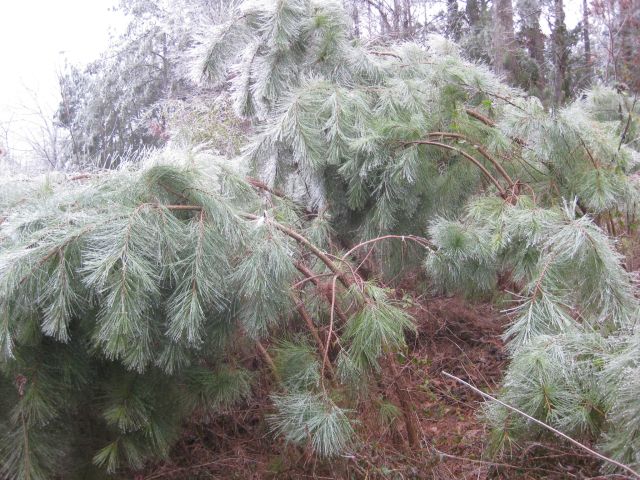
I won’t complain about the cold, not when I know what is going down in the north east, I will just comment on conditions and how I am responding. We had freezing rain 2 days ago and the result was more aggravated where my farm is 50 miles north of Atlanta, than Atlanta itself. The trees off the highway look normal as you head north on the 515 from Atlanta until you pass Canton and then you notice a silvery, icy sheen on the branches. Georgia has lots of pine trees and the pine needles are adapt at catching the freezing drops and making icicles, the weight of which bows down the younger trees and snaps the branches of the older trees.
I wonder if these youngsters will be able to right themselves
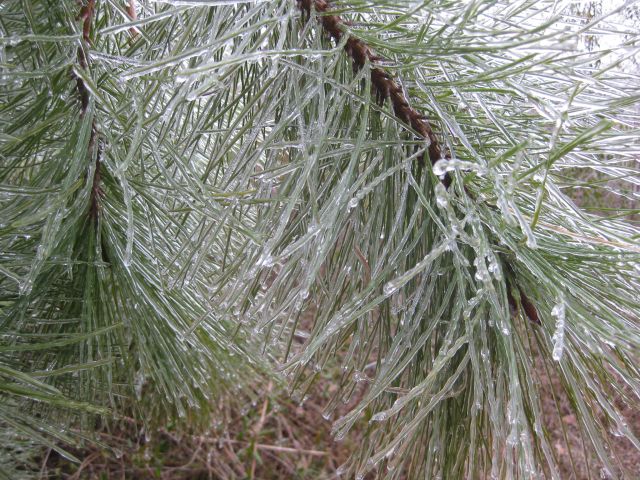
And when you look closer you see the icy fingers.
thoroughly ice coated
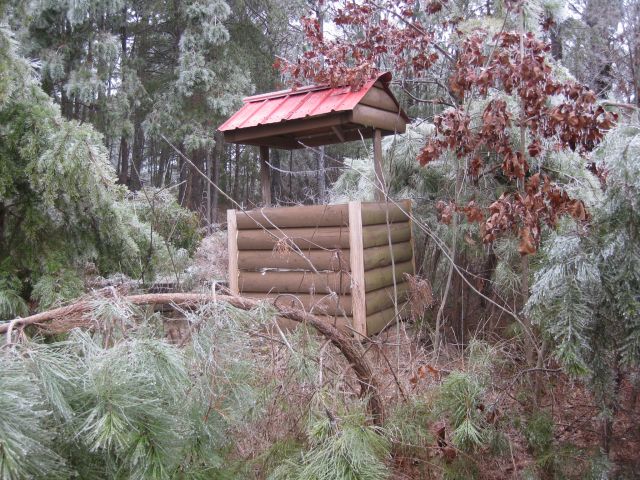
In the coop I have a water heater and each day of freezing temps I have to refill the 2 gal container which sits on a thermostat controlled warming base. Monday night during the freezing rain, the log cabin and surrounding area had an 8 hour power outage. I know the hours because my security system emails and texts me with unusual events such as the dsl modem losing power. Since there was extensive black ice on the hilly road to the farm, I did not visit on Tuesday and my neighbor let the chicken out of the coop and locked them in the evening. A wonderful neighbor. My coop door is set to open automatically at 9am and I texted her in the evening whether she had reset the timer. She had not and went back to the coop and the door had opened after she had cooped the chicken. Whatever can go wrong will go wrong and an open coop door in the night is how I lost my favorite chicken a couple years ago. Another consequence of a power outage is the lamp bulb in the well house no longer warms the well pipes. This is my well house.
well house, you can see the corner uprights I replaced last year
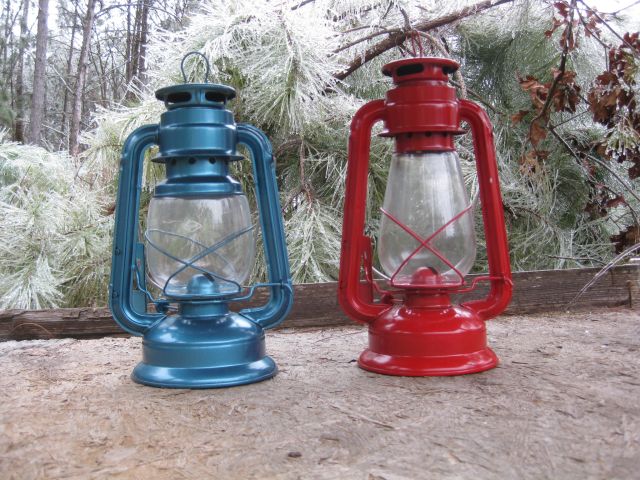
From the inside of the well house I noticed chinks of light and I caulked every occurrence to make the structure more air tight. A savvy neighbor tells me that because of power outages he uses oil lamps for heating his well house. He bought his at an estate sale. I traversed Amazon and found two 12″ lamps, one for $11 (red) and one for $15 (blue).
2 paraffin powered hurricane lamps
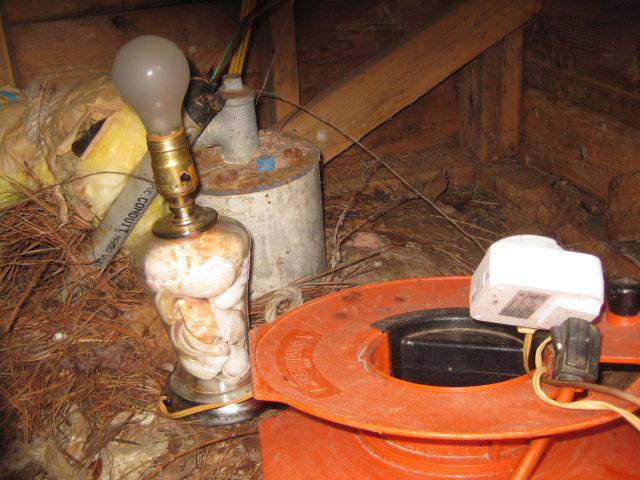
I tried them both out and the blue one was still burning the following morning, the red one was extinguished (there was still oil in the base). So, when I am at the property and the temp will fall below say 15 F the next morning, then I light an oil lamp. If I will be away for several days, then I use a light bulb (base 50c at the Thrift store) and a timer to switch current on during the cold hours.
my electric lamp heater in the well house with timer and cable run from the house
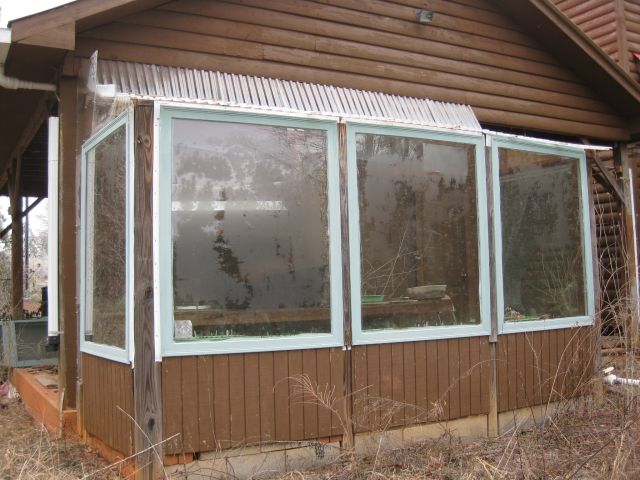
I have a small greenhouse I built on the south side of the carport. It is passive heated (sun only) and the cold temps have hammered some of my seedlings. The warm weather vegetables (pepper, cucumber, eggplant) have been annihilated, but the cool season (kale, collard, lettuce etc.) are holding on. The situation is exacerbated by an uninvited guest, a feral cat which ripped a hold through some sheeting near the top and beds in a pine straw box (I use the pine straw for my bee smoker). I have not the heart to deny the visitor entrance and I do not have a rodent problem (except in the coop), but when the weather improves I will make the greenhouse cat proof.
small greenhouse for developing vegetables,especially later, tomatoes
And finally, my wood stove, which was installed last year, is a boon – it has some mass and really helps out in the living room and keeps my utility bill down.
My last post was November 25. As we moved into winter my growing activities were largely shelved.
In November/December I cleared and weeded some beds and planted out, closely spaced, several 100 garlic cloves. They are all descended from 3 varieties of garlic I purchased from California 4 years ago. After harvesting last year I strung them together and hung them from joists in the carport. Fewer rotted compared with previous years where I had stored them in laundry bags hung in the basement. So this is the way for me to go in the future.
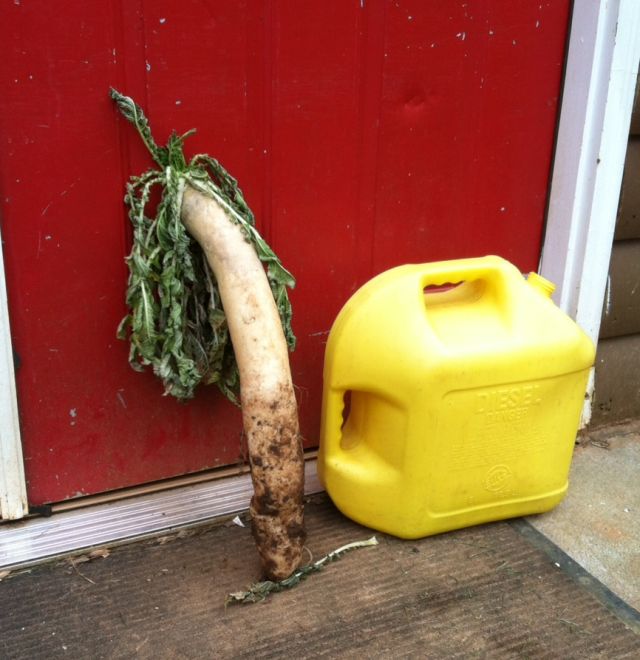
Although I was not actively growing, there was always something to harvest. Initially the radishes did well but as cold weather and rains set in, most became soft and lost their taste. The daikon radish also held up well and then deteriorated with the cold weather (below 15 degrees F). When my family visited over Thanksgiving, I dug up this specimen to show off.
a daikon radish next to a 5 gal container
While we enjoyed eating the small daikon radish we found the big guy above indigestible. What we should have done is pickled or fermented it, but it was Thanksgiving and it went to compost. This year I would like to do fermenting and will be planting out more cabbage for sauer kraut, and more daikon.
Apart from some large carrots I unearthed, the main winter crop was purple top turnips which survived the weather well. Plus, in the leafy greens area, turnip greens, mustard, kale and collard. I planted out the spinach too late in the season but they and lettuce are holding on and should do well in the next few weeks.
In the orchard I have tried new pruning techniques and used wires to train the branches horizontal or downward so the fruit will be easier to reach. There is a theory that when the branches are horizontal or downward sloping, the tree concentrates more on fruit production than vegetative growth.
Past few years I lost my young fig trees to cold weather (below say 12 deg F). Actually I lost only the above ground parts because after each winter the roots, which survived, produced new growth. This year for the few days when it was really cold, I pruned the trees to a few ft and enclosed them in commercial grade large trash bags weighted down with stones at the bottom. I hope the trees survived.
My chicken, 10 hens and a rooster, are all still around. The two oldest require special attention. Gimpie has a bad hip and she struggles out to the paddock in the morning with the others and in the evening she waits for me to carry her back. The Ameracauna, who used to be assertive is now timorous when it comes to eating and so I have a routine where I enclose the others in one section of the coop and allow her to eat undisturbed in the other section until she is done. I think part of the problem is the rooster, who acts aggressively to her, and she often goes into a nest box to avoid him when they are locked up for the night.
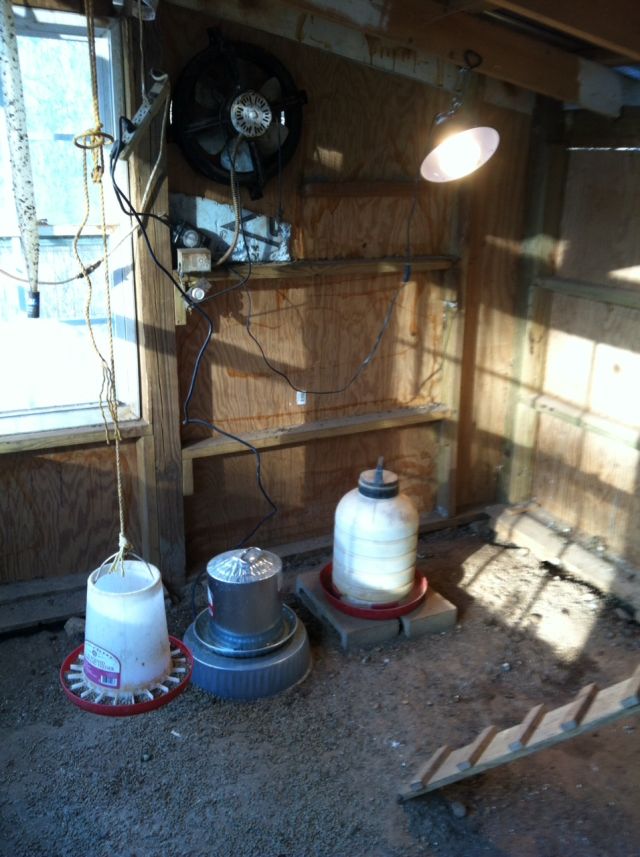
I built the coop a couple years ago and it is robust and immune from drafts. However on the colder nights, of which there were only a few, I treated them to a heat lamp and a water heater.
heat lamp and water heater for the cold nights
The heat lamp is on a timer to operate only in the night. The water heater is on continuously during the cold spells. The summer ventilator has an external cover to prevent drafts and you can see I have raised the feed dispenser fairly high off the ground which reduces the flicking of feed onto the ground. During winter I supplement the pellets with scratch.
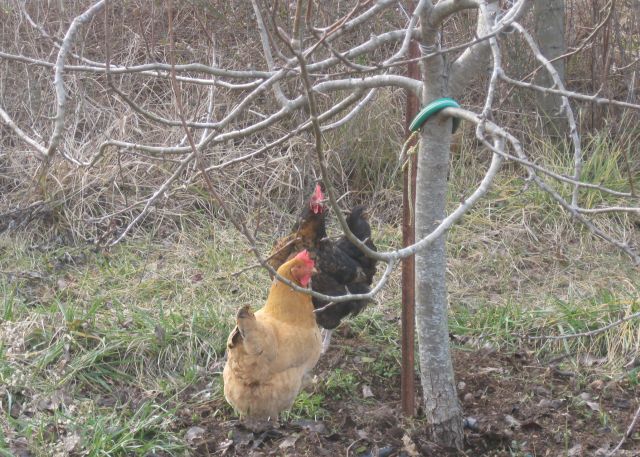
Two of the hens (Wanda and Randa) are fliers and each day they fly over the fence and go everywhere and I will often see them hard at work on the compost heap. I was very happy to see they now visit the base of the fruit trees and dig up the overwintering pests which despoil and then drop off the fruit in the summer, hibernate over the winter in the ground and climb the trunk early spring for the next summer’s feast. I must figure a reliable way to get all the chicken out there.
here are Wanda and Randa at the base of a pear tree
Egg production is recommencing. Apart from the occasional use of the heat lamp I do not use artificial lighting so egg production shuts down for the short days. From the occasional 1 egg a day we are now up to 4 or 5 and I have now begun supplementing their feed with oyster shells.
I spent much time during the winter months working my way through an electronics course provided by Georgia Tech on the Coursera MOOC, which was excellent. In January I began a second course with Georgia Tech and also one on simple robot building offered by Berkeley on Edx. Since I do not have a background in these areas they require much work and focus. And the endgame? I have plans for microprocessors for various of my growing activities. The first one will be using an arduino controller to keep a tally on the chicken during the day so it will know when they have all returned in the evening and will then lower the coop door. Presently, the coop door opens on a timer in the morning and must be human lowered in the evening. Other applications for the future, in addition to enhancing security routines, will be sensors to monitor humidity, temperatures and maybe ph as well. To my mind, all part of becoming more self sufficient and using electrons to simplify daily tasks.
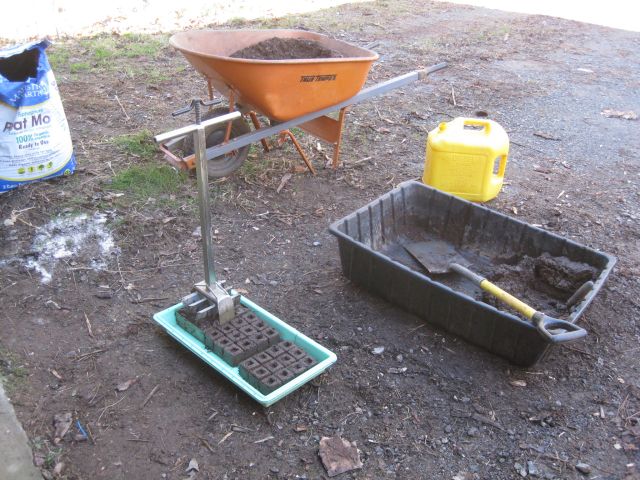
I forgot to mention what transitioned the end of my hibernation. Last week I seeded a germination tray and now a few days later the kale, lettuce and beet have germinated and I needed to get outside and prepare the 2″ soil blocks for the vegetables to continue growing in the greenhouse.
making soil blocks for new vegetables
So making the soil blocks has galvanized me back into the growing mode. Here I mixed my compost with soil, peat, building sand and, because I had no lime, ash from the wood stove. You can see the mold for making the 2″ blocks of which 36 fit in each tray. I bought more seed at the big DIY stores and specialty/glamor/fancy looking vegetable seed from Johnny’s. So I am now switched on and looking forward to spring.
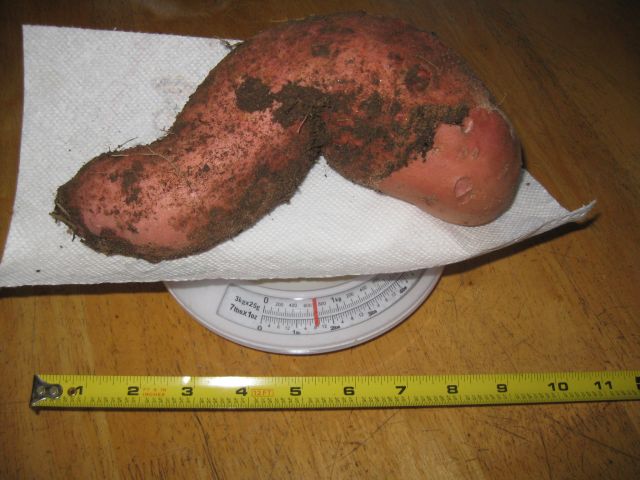
I had my best harvests this year. Everything did well and while the weather, rains and fewer pests all helped, mostly I think is I am getting better at growing. (I mention rains because all my irrigation is with rainwater). Last year, my first with sweet potatoes, I produced finger sized specimens. This year, tho I left it a bit late, they are big.
Sweet potato for lunch today – weighing >1.6 lbs and about 10″ long
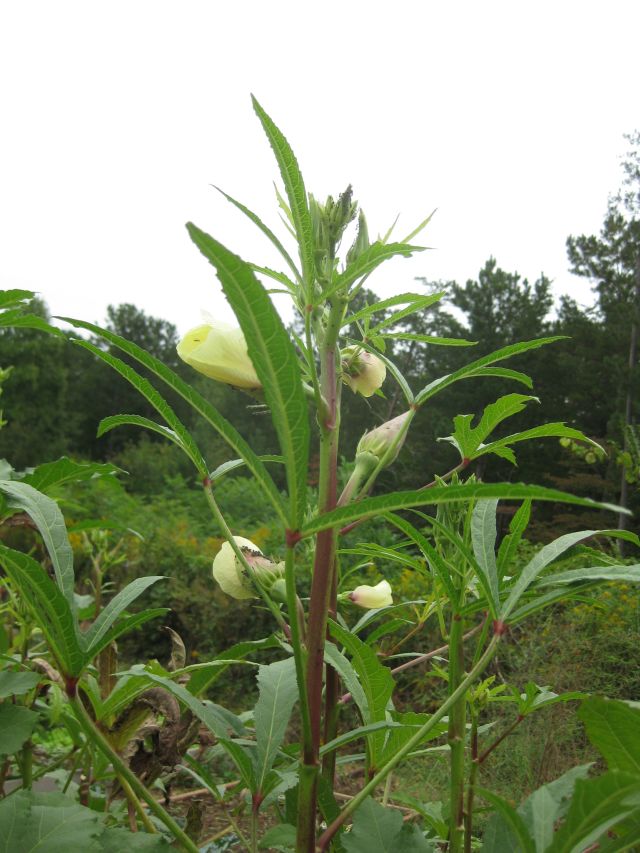
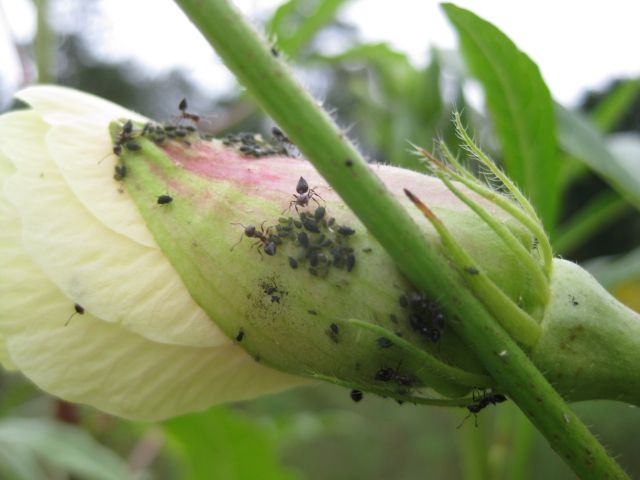
Pest pressure has been minimal which I attribute to increased biodiversity and natural predators etc. tho this week I noticed two instances – aphids on an okra plant and caterpillars on a blueberry bush.
only 1 okra plant was affected and then only at the top and late in the season
The ants guard and farm the aphids zealously and when my finger strayed too close it was promptly nipped.
aphids and a few patrolling ants
I let them be hoping to see natural defenses kick in but over the past few days I only spotted on lady bug. The aphids have not spread and so it is a localized minor issue.
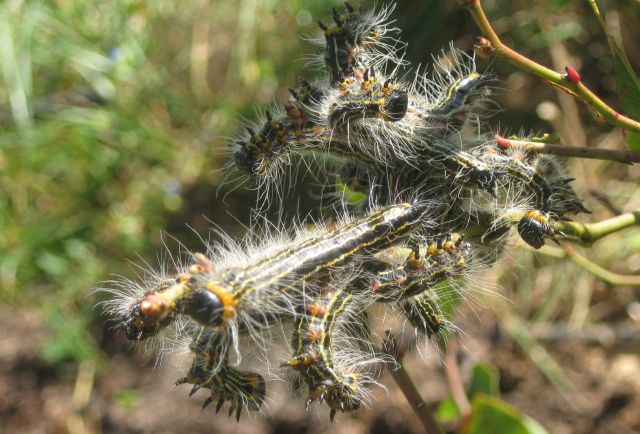
My blueberries produced well and I am motivated to care for them and so I often hand water with a hose. The pressure of the water jiggled the blueberry and a sudden writhing motion on leaves caught my attention.
a cluster of young caterpillars
There were several such clusters and at first I thought I would leave them be and see if birds or other predators would step up. However I noticed an individual hard at work.
a solitary eater, curled up because I disturbed it
So I snipped off the stems and dropped them into a 5 gal bucket partially filled with water and, when they were no more, added them to the compost heap.
At the beginning of the season we had two broody hens. One sat in the nest boxes throughout the day and tho she was partially cured by a few days of solitary, she is back at it again. The other, Randa, is more interesting. She is a flier and is smart. Throughout the year, while the others dig around in the paddocks, Randa flies over the 5ft perimeter fence and works over the compost heap and visits below the deck for bird seed.
In May she disappeared for two weeks and only emerged, briefly, after a weekend of heavy rains, thoroughly bedraggled. I found she had a nest in the brush with 15 eggs. We did not want more chicken specially as half would be roosters and we don’t want to do in young roosters. So we ended that process.
Then a week ago she disappeared and we looked in the brush but no Randa. Where is Randa? Eventually I looked in the greenhouse, and there she was.
Randa in the greenhouse. Being smart she chose this time an indoor location for her nest
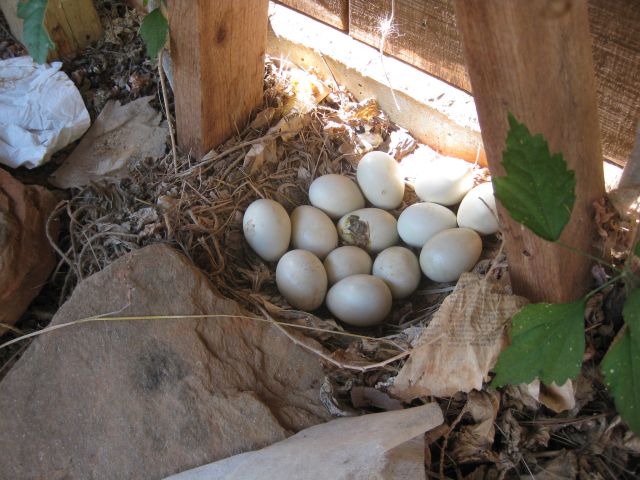
And she was atop 13 eggs, almost as many as her last nest of 15 eggs.
Randa’s nest of 13 eggs which are olive green reflecting her mixed parentage af Americauna mom and Buff Orpington dad
And the same dilemma as last time – she wants to hatch eggs and I do not want any roosters or more hens. So I will probably end this process, for my needs irrespective of hers. I have a neighbor in Atlanta who loves cats and had them declawed and keeps them indoors thus denying them their natural inclinations. But am I any better when I move Randa from her eggs and destroy them and bury the remains in a hole beside a fruit tree?
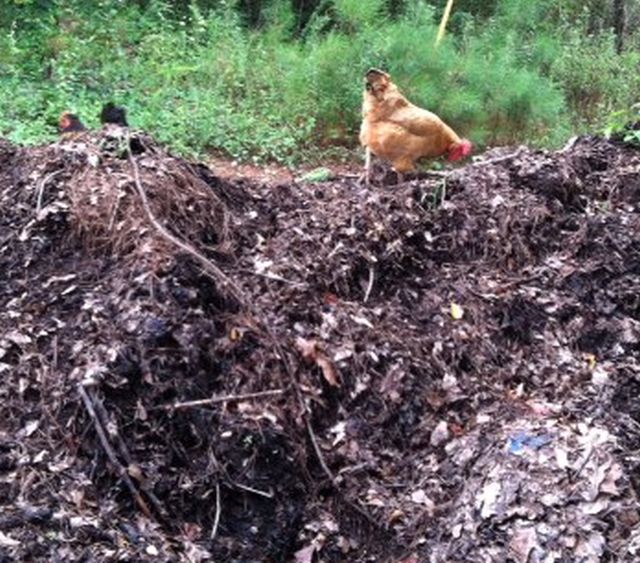
We still have 11 chicken, the ever vigilant rooster and his 10 hens. I may have quipped in the past about putting a chicken in the pot but we do not eat our chicken. Since I began keeping chicken a few years ago I have lost only one to a predator. I would say, comparatively, that they lead a pretty high class life style. In the morning, when the sun has well risen, the automatic door opener hoists up the sliding door and they emerge to range the paddock and hang out under the tree and in the thicket. Gimpie, she with the bad hip, manoeuvers over the door ledge and joins them later in the morning. Wanda and Randa fly over the 5ft fence and head to their two favorite spots – under the deck to snack on birdseed from the deck feeder and now, more commonly, over to the compost heap where many snacks await.
Randa exploring the compost heapWanda working at a slot she has excavated at the base of the heapa better shot of Randa on the prowl
While it is helpful to have the chicken on the compost there is a drawback. I don’t want them on the finished heap which will soon be turned into the vegetable garden, since their poop could present salmonella issues. To date they have focused on the unfinished compost where there are more goodies to eat.
When sunset approaches, Wanda and Randa will usually rejoin the flock when they head to the coop for dinner. Except for Gimpie – she waits patiently for me to pick her up and carry her to the coop – she is our passenger chicken.
Gimpie awaiting her ride – the Passenger pigeon may be extinct, but not the passenger chicken
In my previous two posts I described Randa the flying chicken who established a nest containing 15 eggs in the bush and how, after much debate, I relocated Randa and her eggs to the safety of a spare coop. The dilemma was what would I do if say half of the eggs hatched, since I have chicken enough and would wind down rather than expand my chicken operations.
The potential dilemma dematerialized. Although I had prevailed on Randa to sit on her transferred eggs in the new nest box she quickly abandoned both and stared longingly at the rest of the flock lounging in the tree shade outside. I think of the film cameras we used to use – the unexposed film sits in the dark behind the lens shutter and when you press the button the shutter opens for a period of time and light from the outside reaches the negative, and then it is dark again. For 15 days Randa was in the pull of nature – she was not a domesticated chicken but a wild jungle fowl with an established nest in the wild matching wits with roving predators. But once I caught her and moved her and her eggs to the coop the spell was broken, the shutter closed, and she became an ordinary chicken again. She was still broody but did not recognize her eggs or the nest box I had made.
After two days of coop isolation I released her yesterday to the flock and although she and Wanda, the other flying chicken, quickly overflew the paddock fence to the outside, both came willingly to the coop for shutdown in the evening. And the 15 eggs? They have sat untouched for the past few days in the coop and I will bury them beneath a fruit tree to recycle their nutrients.
All of this instructive for me. When we tinker with nature the processes are more complex than we think and the outcomes can be different than imagined.
In y’days post I outlined the dilemma with Randa, the flying hen who established a nest beyond the pale (paddock) and my provisional decision to leave her there and let nature take its course. Well my better half prevailed with the argument that once we take on pets (or chicken since they are not pets in our case) we assume responsibility for them and when we have domesticated them (select bred for egg productivity) they lose their instincts to survive in the wild. Ergo, we could not leave little Randa on her nest and should bring Randa and her eggs under our protection. A counter argument is that if she could survive for 10+ days out there she was perhaps not as vulnerable as we thought.
So, armed with secateurs to cut through the brambles and leather gloves I approached her hideout.
Randa on her nest as I approached
To my surprise she showed little reaction – did not hightail into the bush as I thought she would, and only protested as I reached out to hold her. I transferred her to a spare coop where she made a lot of noise to the chicken spectators looking in. Then I located a plastic container filled it with pine shavings and transferred the eggs from the nest. How many eggs were there?
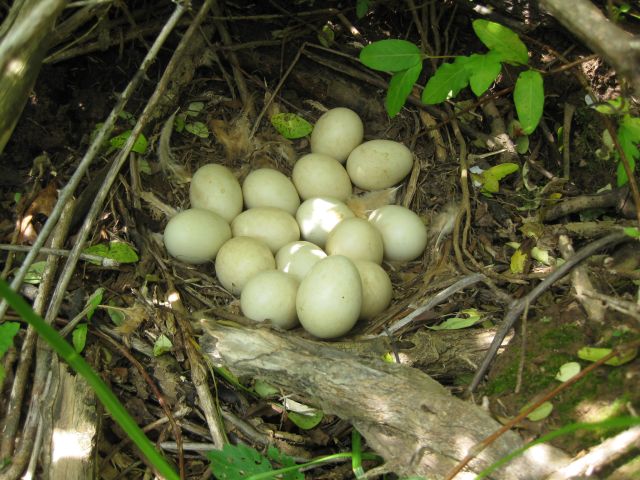
there are 15 eggs, all pale olive green showing mixed line from Ameracauna and Buff Orpington
15 eggs! Wow this means she was accumulating eggs for the past 15 days. She had been awol for 13 days so probably the 1st 2 she laid she did not sit on consistently. Now here is a question – how many of these eggs are fertile. If the rooster did not have contact with her during the 13 days she was gone will the eggs she produced during that period be fertile? Bad news for me – apparently the rooster’s sperm can remain viable in the hen for 3 weeks so it is possible that all her eggs could have been fertilized.
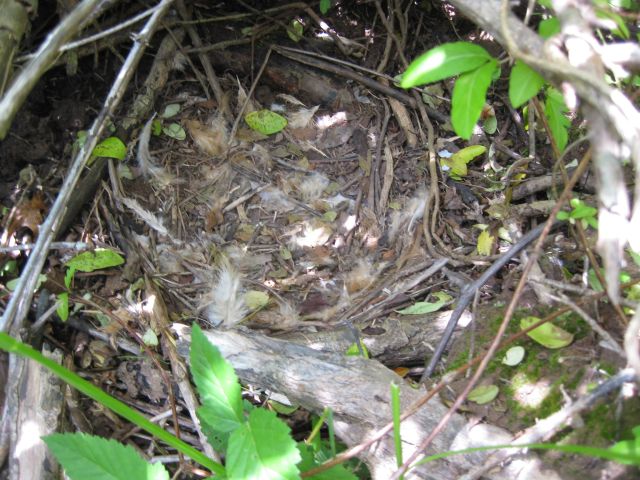
After I removed Randa and her eggs I took a pic of her nest, which is shipshape and furnished with some feathers.
Randa’s nest
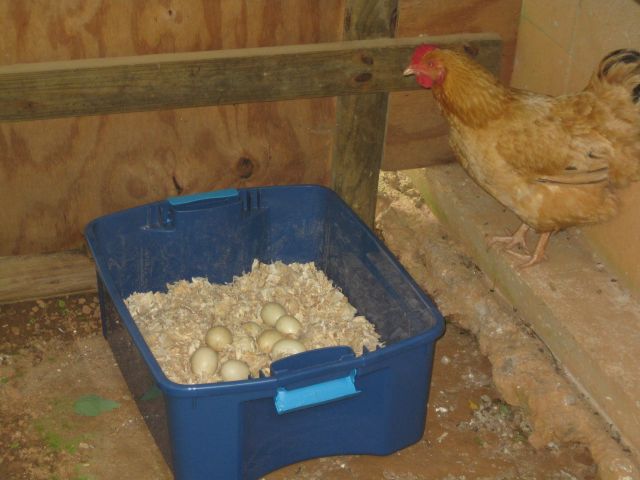
I introduced Randa to the blue plastic container which held the pine shavings and her eggs. She was not happy.
Randa does not take to her new nest
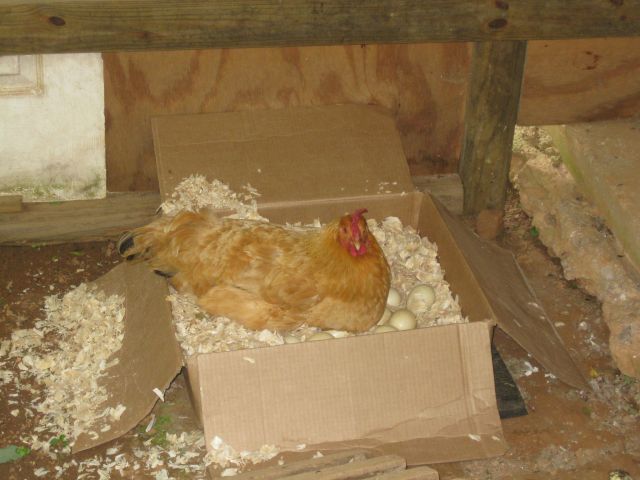
Perhaps the blue color was offputting, or the sides were too high or it was just too synthetic. So I decided to use a low rimmed cardboard box placed on a thick rubber mat to protect it from the damp in the soil. And I placed the aggrieved Randa on the new nest and stroked her for some time and then stepped back and she stayed put.
Randa on the new nest
So for the moment there is peace. But I have a looming dilemma – if a lot of eggs hatch viably what will I do with them?
I have a dilemma. Since I retired I have had few dilemmas – no more the quandary of whether I should attend an important business meeting or pitch, vs a child’s sporting event/concert performance or family function. But now I have a dilemma!
I mentioned in previous posts that we have 2 nimble chicken, Wanda and Randa, who easily fly over the paddock fence and that Randa had disappeared one evening but was there the next morning and we all celebrated with sunflower seeds. But the next night she disappeared again and was not to be seen for the next 9 days.
We searched everywhere – there were no telltale feathers signifying a predator attack but even without the evidence I had concluded she probably had been done in. And then yesterday (Monday) after a rain washed weekend, there she was outside the paddock, very bedraggled. She greedily ate the sunflower seed and chicken feed I offered her. I surmised that she had had a nest, that it had failed and that she had returned to the flock. But a few hours later she was gone again. What was going on?
I decided that she must still have a nest and that it was probably close by. I began looking and there, not to far from where she had appeared on Monday morning, was Randa on a well concealed nest.
Randa on her nest in the bush
The dilemma is what to do. I can leave her be and there is a likelihood some predator (fox, possum, dog etc.) will find her. I can try capture her and relocate her and her eggs to a 2nd coop. Or I can chase her off the eggs, destroy the eggs and she will likely return to the flock. And if she remains broody I can provide the same treatment which worked successfully on Yellow Legs who is cured of her broodiness and is now a regular flock member.
Since I would like to wind down my chicken operations in the near future, the last option seems the most practical and perhaps the kindest since in following her natural impulse she has placed herself in dangers way and if she is not discovered now, then when the chicks hatch and chirp a predator may get to them all before I can relocate them.
Relocating her and the eggs to a coop seems the best compromise but I doubt she will allow herself to be caught and will take off and return to her nest when I have given up and will be more stressed.
Leaving her be could be considered cruel and uncaring. But I am leaving her alone for now. I feel at times that though we may delight in having pets and chicken there is something a little unnatural going on. After all, chicken were once forest birds which we have bred to produce an unnatural large number of eggs, which has stressed them and reduced their lifespan and deprived them of the most natural of events – producing offspring. Though with an incubator we do this for them as I have done a couple of times. Perhaps I am thinking too deeply since this reasoning applies to my Trudy who has been neutered and seems to enjoy being with me and keeps a vigilant eye out for me and barks whenever necessary and keenly undertakes her daily rodent patrols. But still I see nature’s hand here and will leave Randa alone for now, recognizing that each next morning all I may see of her are some scattered feathers.