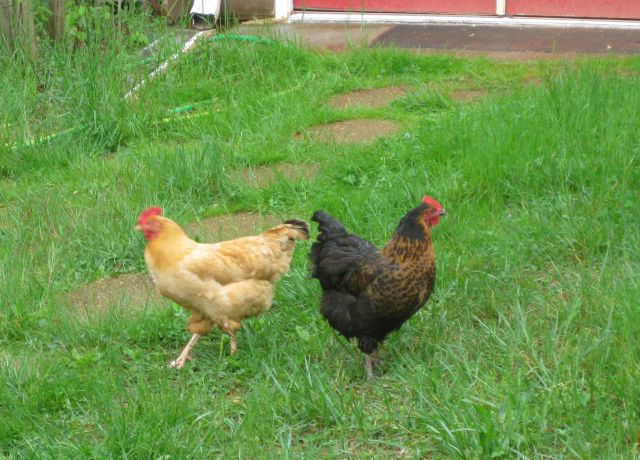
I mentioned in my Jan 20 post the passing of Gimpie. She and the Ameraucana were the two elders in the flock. The Ameraucana observed a period of mourning and then began associating with the flock at a wary distance, cautious always of the rooster who had dispatched her comrade. She is over 5 years old and in her waning years and at feeding time she is driven away by the younger hens, some of whom are her offspring. So much so that I have a routine for her at evening time to eat separated by the interior partition door, which I open afterwards so she can rejoin the flock on the roost.
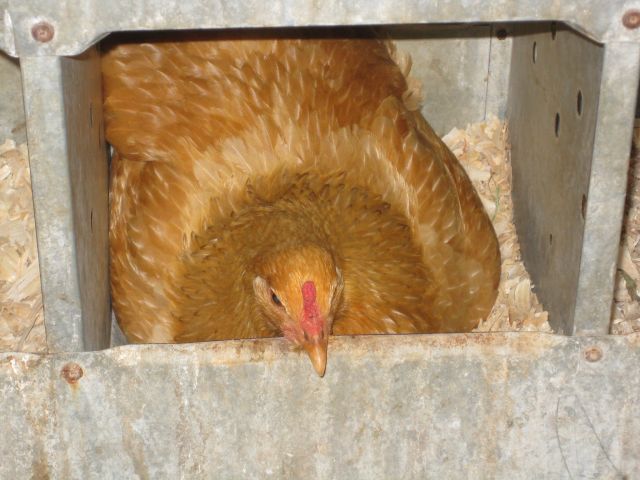
A few days ago she appeared very sluggish, we saw her in the nest box (to escape the rooster we thought) and then slumped in a corner of the paddock. I thought her end was nigh, M. thought it was time for an espsom salts bath. I protested, M. insisted, and there we were me holding the Ameraucana in the bath and M. circulating the warm water around her limbs, her deteriorating feathers, and scaly wrinkled skin. This was followed by olive oil treatment of the legs – the idea is that the oil suffocates residing mites. A bedraggled Ameraucana barely ate her food that evening and we separated her from the flock for the night (perhaps her last).
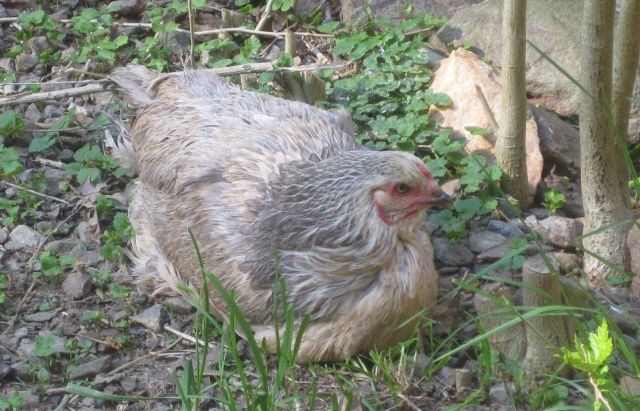
Next morning, M. thinking the bath had been the final straw and “done her in” kept a close watch on the Ameracauna’s activities and then she came in, eyes ablaze, to announce the Ameracauna had laid an egg. Now the Ameracauna was transformed, no longer sluggish and collapsed but wandering around with the flock as she used to do.
M. informs me that magnesium salts relax muscles and that the Ameracauna was egg bound (couldn’t push out the egg) and the spa bath did the trick. And I for once, have little to say.
My recent visit to the west coast set me back on my spring schedule and I have been catching up.
Foremost was to get my tomato seeds going. Last year I collected seed from good heirloom tomato plants and this year, for the first time, I did not purchase any tomato seed. Though I did buy “Surround” (Kaolin clay) which I will spray on my apple trees when the blossoms have set fruit, and the supplier included gratis, seeds for Rainbow and Cherry tomatoes. Plus I had some 2014 and 2015 packets most of which are viable. Although last year I clustered the tomato plants by variety I am sure some were cross pollinated with other varieties so it will be interesting to see what emerges.
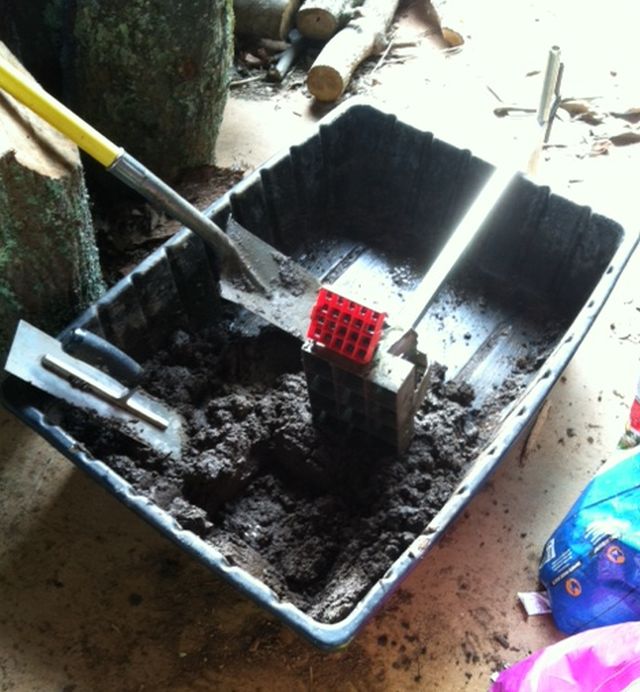
my 2″ and o.5″ soil block moulds
Preparing the 0.5″ soil blocks is quick since I use purchased seed starter mixture. More work is required for the 2″ soil blocks for which I use topsoil, my compost and peat (all manually sieved) and to which I add building sand and lime (to offset the peat ph). When the seeds have germinated and grown about 0.5″ I transplant them to the 2″ soil blocks. And later I will transplant the tomato soil blocks into 32 oz yogurt containers. For maximum sun exposure and monitoring I grow the tomatoes in my greenhouse until they are ready for the outdoor raised beds.
I also germinated from 0.5″ soil blocks lots of other vegetables – the common such as lettuce, broccoli, kale as well as peppers, cucumbers and herbs.
Additionally I have been preparing the raised beds with weeding, composting, dusting with ash from the wood stove and seeding with lettuce, mustard, radish, kale etc. This all takes time and work but the weather is pleasant, I enjoy physical labor and, for the first time, I am using headphones attached to my iPhone and listening to my podcasts.
Each day I carefully collect in a yogurt container the ladybugs which appear in our bathroom and, if the collection exceeds 10 or so, I transport them to the vegetable area where they will work beneficially until again in the fall taking refuge in the bathroom. This they have done consistently for several years, like salmon returning to their breeding grounds.
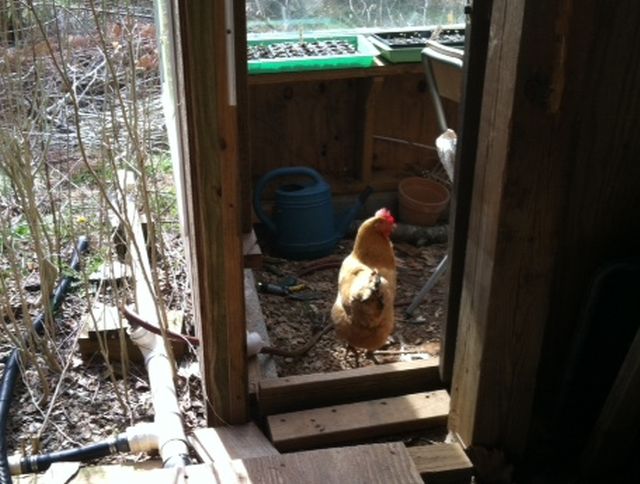
My chickens are free range and I notice Randa (the most intelligent) standing beside the closed greenhouse door. Flashback to when I discovered last year she had made a nest out of sight in the greenhouse with >10 eggs. I open the door for her and when I come back an hour later, she has laid an egg in a little nest she has fashioned. What to do? Initial thought is to keep her out of the greenhouse. On reflection this is not a solution since she will probably then make a nest somewhere hidden in the surrounding growth, as she did 2 years ago and accumulated 16 eggs. So now I leave the door ajar and she lays an egg each day in the green house which I collect at day’s end, together with all the other eggs laid by the normal chickens in the nest box in the coop.
Randa entering the greenhouse
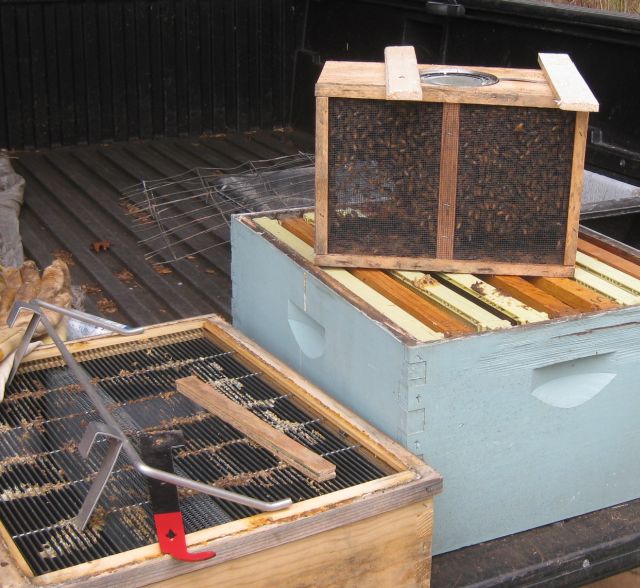
And on Saturday I took delivery and installed 2 packages of bees from our local professional beekeeper who maintains >500 hives and is the oracle of our local bee club.
During the winter, short daylight months, our chickens cease egg production and we work our way through the eggs we saved until, around mid-December we are out of eggs. And then the offerings in the local supermarket become more appealing. Without including photos, since upsetting folks and triggering nastiness is unnecessary, I will describe the tempting labels.
Carton A – “Fresh Eggs, No Antibiotics, Organic, Non-GMO Feed, Pasture Raised, Grade A One Dozen Large Eggs, Level 4 Pasture Raised”
Carton B – “Pasture Raised, 12 Large Grade A, Made with Fresh Air and Sunshine, Happy Hens, Freedom to Forage Outdoors Year Round, Under Open Skies, Tended by Hand Raised with Respect, Certified Humane Raised & Handled etc.”
You get the idea. It is at times like these that M. looks at me with new respect. She cracked 4 eggs from Carton A and said their yolks were insipid and 2 looked approaching albino. M. has a scientific background and not inclined to exaggerate.
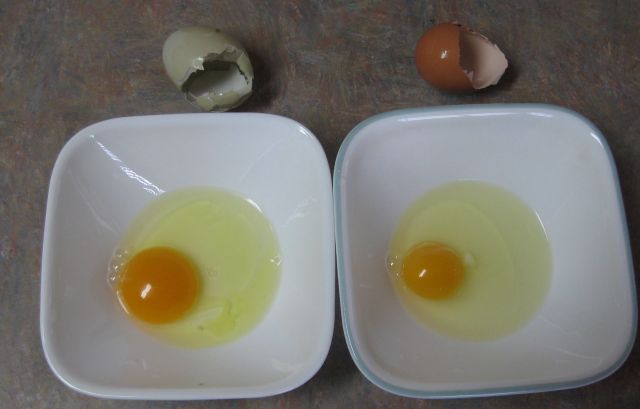
Then good news – Speckles (Buff Orpington dad, Americauna mom) began laying and we have enjoyed 4 good eggs. But not yet enough of them so we are using up the remnants of Carton B. Their yolk color is getting there, but though self-described as “Large Grade A” they appear pitiful against a recent egg from Speckles.
our pasture raised hen’s egg on left and commercial version on right
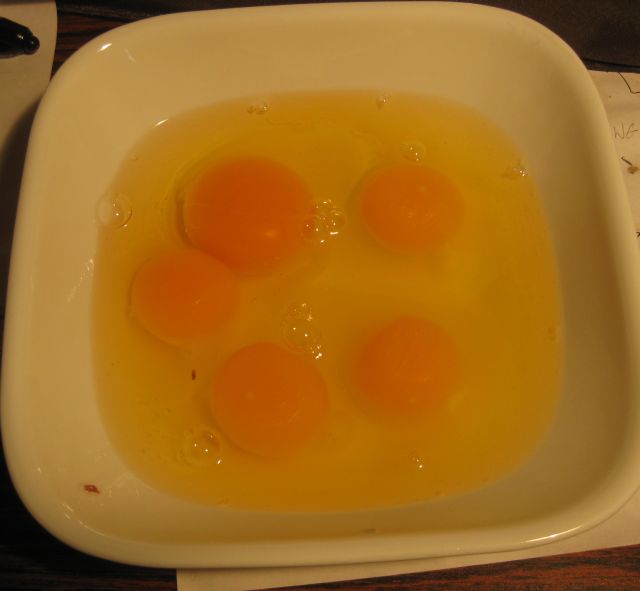
When I compare eggs from our pasture raised hens with commercial eggs I wonder why there is such a difference. I wonder what pasture raised means – does it include not only space to roam but lots of green goodies and insects to eat? Our chicken breeds are nothing special yet their eggs seem so much better. Here is another pic of 5 eggs – can you guess which is ours?
one of thes 5 eggs is ours, the remainder are from carton A
Or if the difference is not the pasture maybe it is organic feed. We use regular non-medicated feed and maybe it has a more complete nutrition profile.
Enough with the speculation – now we have passed the shortest day of the year we are hoping our other hens will begin to mimic Speckles and we can begin eating again their delicious eggs.
Update
My previous post mentioned a close shave between Wanda and a predator. I trapped and relocated a feral cat. There was some concern whether I had trapped the culprit. Since that post the 2 fence flying hens (yes Wanda is fully recovered tho without tail feathers) have resumed escaping the paddock areas and wandering around the yard. And on several days I allowed all the hens to go roaming, especially in the compost area where snacks abound. And there have been no incidents and the squirrels, which were previously not to be seen have returned and chase the birds from their bird seed. So I am hopeful that the problem has been resolved.
My last post was November 25. As we moved into winter my growing activities were largely shelved.
In November/December I cleared and weeded some beds and planted out, closely spaced, several 100 garlic cloves. They are all descended from 3 varieties of garlic I purchased from California 4 years ago. After harvesting last year I strung them together and hung them from joists in the carport. Fewer rotted compared with previous years where I had stored them in laundry bags hung in the basement. So this is the way for me to go in the future.
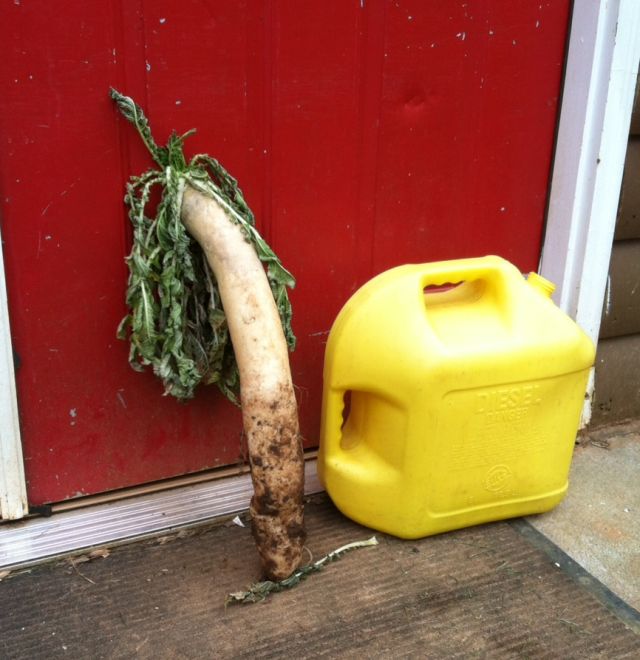
Although I was not actively growing, there was always something to harvest. Initially the radishes did well but as cold weather and rains set in, most became soft and lost their taste. The daikon radish also held up well and then deteriorated with the cold weather (below 15 degrees F). When my family visited over Thanksgiving, I dug up this specimen to show off.
a daikon radish next to a 5 gal container
While we enjoyed eating the small daikon radish we found the big guy above indigestible. What we should have done is pickled or fermented it, but it was Thanksgiving and it went to compost. This year I would like to do fermenting and will be planting out more cabbage for sauer kraut, and more daikon.
Apart from some large carrots I unearthed, the main winter crop was purple top turnips which survived the weather well. Plus, in the leafy greens area, turnip greens, mustard, kale and collard. I planted out the spinach too late in the season but they and lettuce are holding on and should do well in the next few weeks.
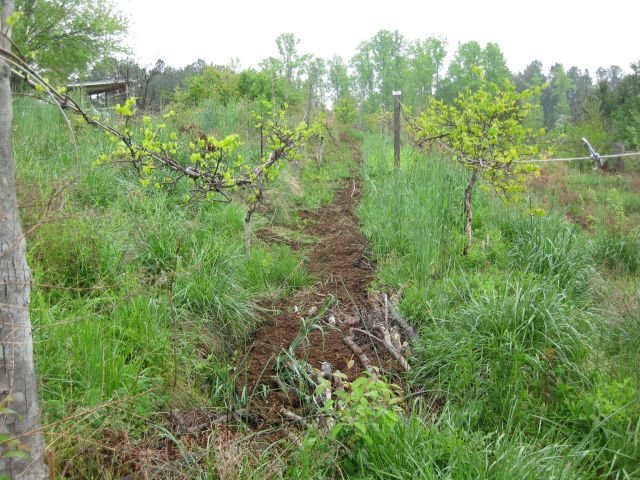
In the orchard I have tried new pruning techniques and used wires to train the branches horizontal or downward so the fruit will be easier to reach. There is a theory that when the branches are horizontal or downward sloping, the tree concentrates more on fruit production than vegetative growth.
Past few years I lost my young fig trees to cold weather (below say 12 deg F). Actually I lost only the above ground parts because after each winter the roots, which survived, produced new growth. This year for the few days when it was really cold, I pruned the trees to a few ft and enclosed them in commercial grade large trash bags weighted down with stones at the bottom. I hope the trees survived.
My chicken, 10 hens and a rooster, are all still around. The two oldest require special attention. Gimpie has a bad hip and she struggles out to the paddock in the morning with the others and in the evening she waits for me to carry her back. The Ameracauna, who used to be assertive is now timorous when it comes to eating and so I have a routine where I enclose the others in one section of the coop and allow her to eat undisturbed in the other section until she is done. I think part of the problem is the rooster, who acts aggressively to her, and she often goes into a nest box to avoid him when they are locked up for the night.
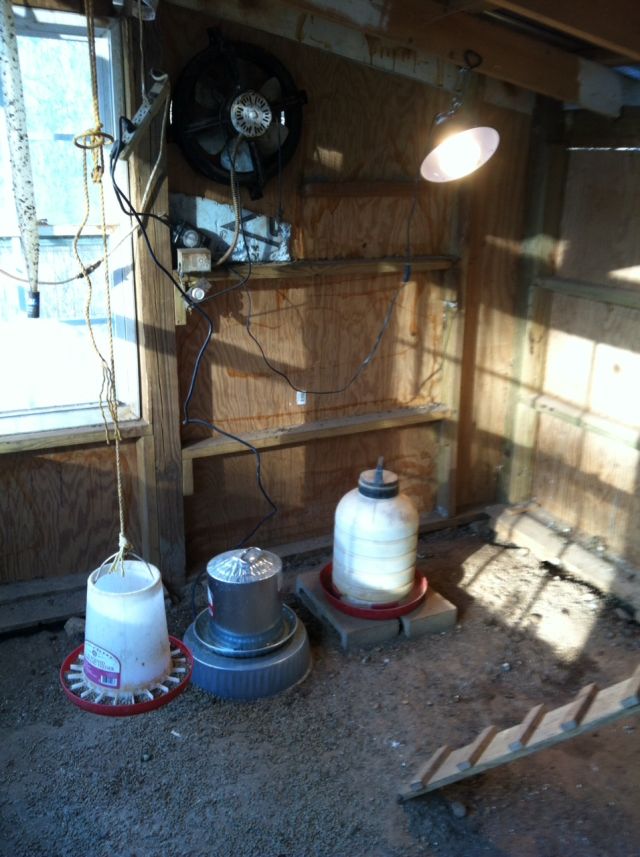
I built the coop a couple years ago and it is robust and immune from drafts. However on the colder nights, of which there were only a few, I treated them to a heat lamp and a water heater.
heat lamp and water heater for the cold nights
The heat lamp is on a timer to operate only in the night. The water heater is on continuously during the cold spells. The summer ventilator has an external cover to prevent drafts and you can see I have raised the feed dispenser fairly high off the ground which reduces the flicking of feed onto the ground. During winter I supplement the pellets with scratch.
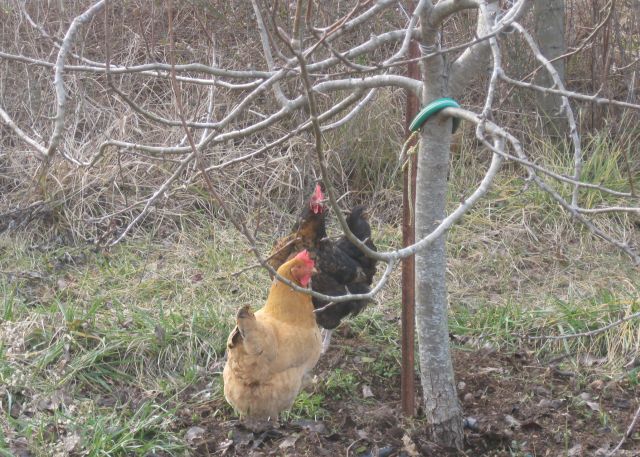
Two of the hens (Wanda and Randa) are fliers and each day they fly over the fence and go everywhere and I will often see them hard at work on the compost heap. I was very happy to see they now visit the base of the fruit trees and dig up the overwintering pests which despoil and then drop off the fruit in the summer, hibernate over the winter in the ground and climb the trunk early spring for the next summer’s feast. I must figure a reliable way to get all the chicken out there.
here are Wanda and Randa at the base of a pear tree
Egg production is recommencing. Apart from the occasional use of the heat lamp I do not use artificial lighting so egg production shuts down for the short days. From the occasional 1 egg a day we are now up to 4 or 5 and I have now begun supplementing their feed with oyster shells.
I spent much time during the winter months working my way through an electronics course provided by Georgia Tech on the Coursera MOOC, which was excellent. In January I began a second course with Georgia Tech and also one on simple robot building offered by Berkeley on Edx. Since I do not have a background in these areas they require much work and focus. And the endgame? I have plans for microprocessors for various of my growing activities. The first one will be using an arduino controller to keep a tally on the chicken during the day so it will know when they have all returned in the evening and will then lower the coop door. Presently, the coop door opens on a timer in the morning and must be human lowered in the evening. Other applications for the future, in addition to enhancing security routines, will be sensors to monitor humidity, temperatures and maybe ph as well. To my mind, all part of becoming more self sufficient and using electrons to simplify daily tasks.
I forgot to mention what transitioned the end of my hibernation. Last week I seeded a germination tray and now a few days later the kale, lettuce and beet have germinated and I needed to get outside and prepare the 2″ soil blocks for the vegetables to continue growing in the greenhouse.
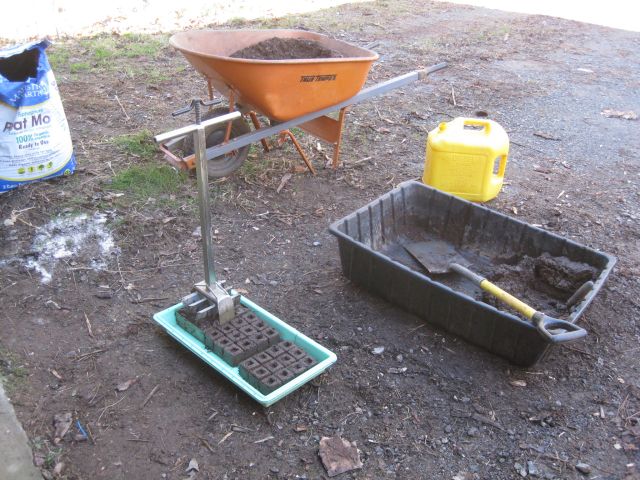
making soil blocks for new vegetables
So making the soil blocks has galvanized me back into the growing mode. Here I mixed my compost with soil, peat, building sand and, because I had no lime, ash from the wood stove. You can see the mold for making the 2″ blocks of which 36 fit in each tray. I bought more seed at the big DIY stores and specialty/glamor/fancy looking vegetable seed from Johnny’s. So I am now switched on and looking forward to spring.
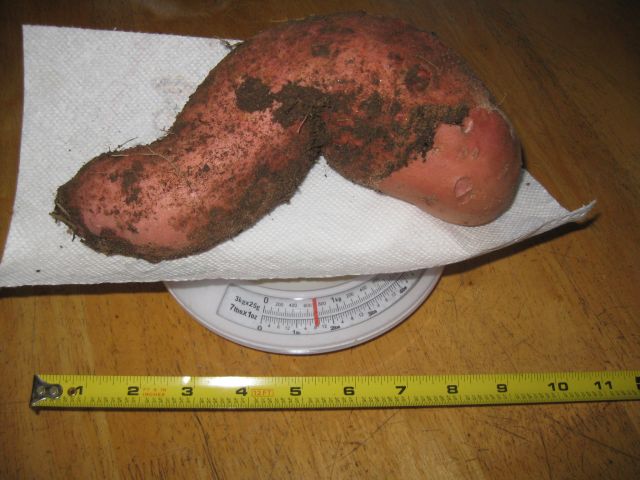
I had my best harvests this year. Everything did well and while the weather, rains and fewer pests all helped, mostly I think is I am getting better at growing. (I mention rains because all my irrigation is with rainwater). Last year, my first with sweet potatoes, I produced finger sized specimens. This year, tho I left it a bit late, they are big.
Sweet potato for lunch today – weighing >1.6 lbs and about 10″ long
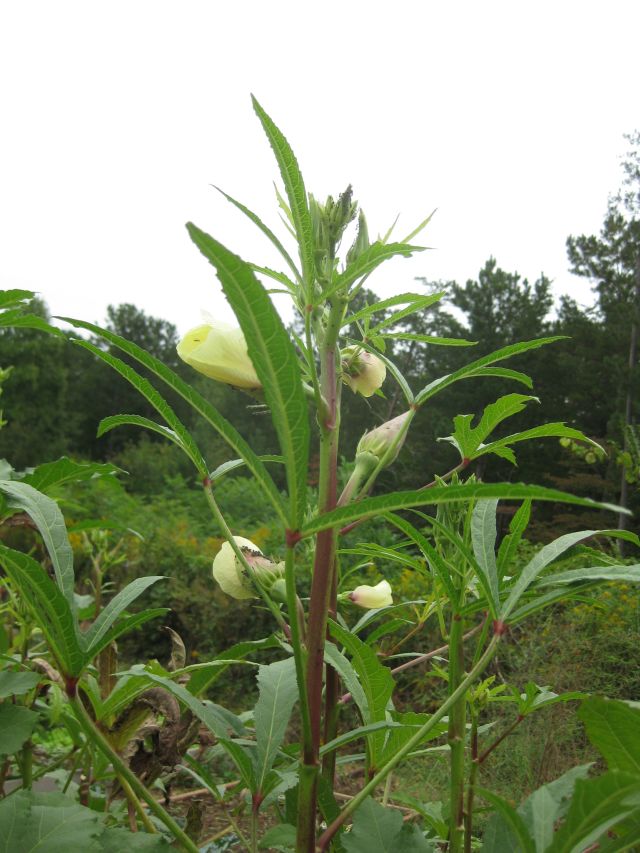
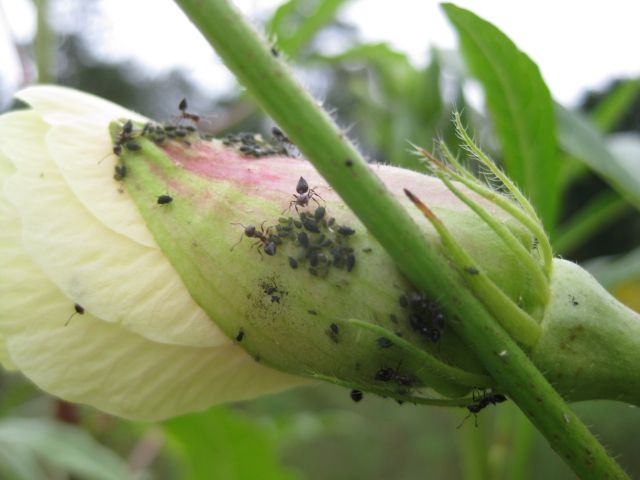
Pest pressure has been minimal which I attribute to increased biodiversity and natural predators etc. tho this week I noticed two instances – aphids on an okra plant and caterpillars on a blueberry bush.
only 1 okra plant was affected and then only at the top and late in the season
The ants guard and farm the aphids zealously and when my finger strayed too close it was promptly nipped.
aphids and a few patrolling ants
I let them be hoping to see natural defenses kick in but over the past few days I only spotted on lady bug. The aphids have not spread and so it is a localized minor issue.
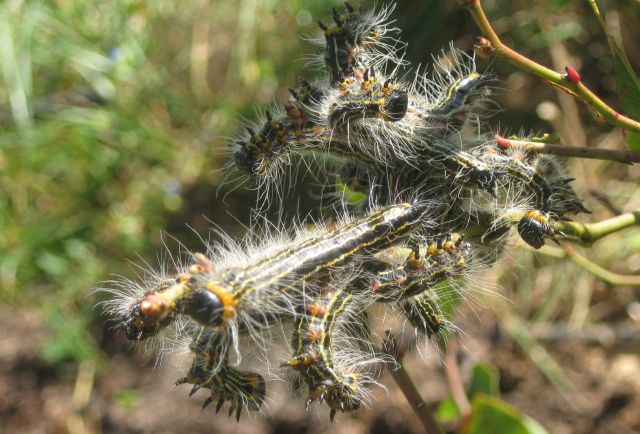
My blueberries produced well and I am motivated to care for them and so I often hand water with a hose. The pressure of the water jiggled the blueberry and a sudden writhing motion on leaves caught my attention.
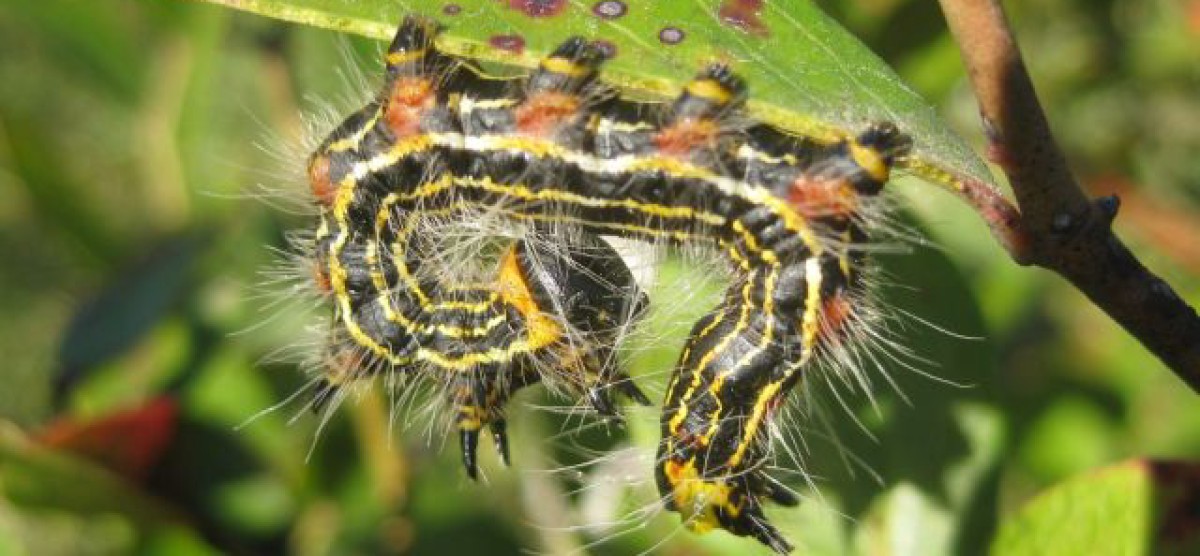
a cluster of young caterpillars
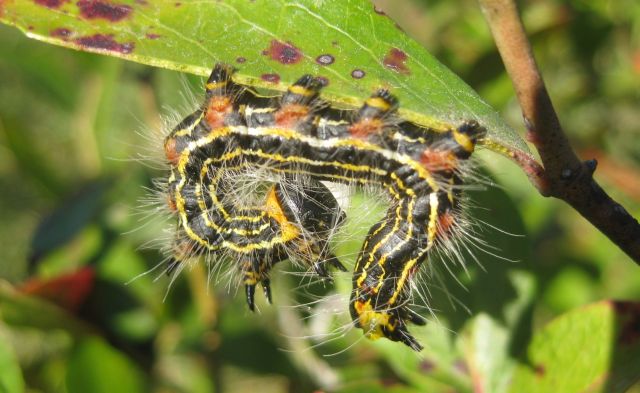
There were several such clusters and at first I thought I would leave them be and see if birds or other predators would step up. However I noticed an individual hard at work.
a solitary eater, curled up because I disturbed it
So I snipped off the stems and dropped them into a 5 gal bucket partially filled with water and, when they were no more, added them to the compost heap.
At the beginning of the season we had two broody hens. One sat in the nest boxes throughout the day and tho she was partially cured by a few days of solitary, she is back at it again. The other, Randa, is more interesting. She is a flier and is smart. Throughout the year, while the others dig around in the paddocks, Randa flies over the 5ft perimeter fence and works over the compost heap and visits below the deck for bird seed.
In May she disappeared for two weeks and only emerged, briefly, after a weekend of heavy rains, thoroughly bedraggled. I found she had a nest in the brush with 15 eggs. We did not want more chicken specially as half would be roosters and we don’t want to do in young roosters. So we ended that process.
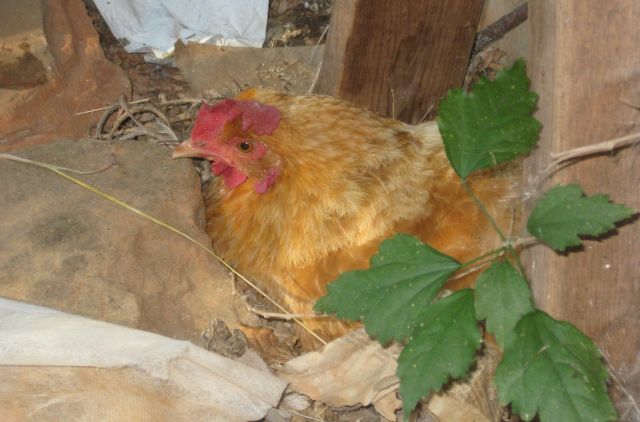
Then a week ago she disappeared and we looked in the brush but no Randa. Where is Randa? Eventually I looked in the greenhouse, and there she was.
Randa in the greenhouse. Being smart she chose this time an indoor location for her nest
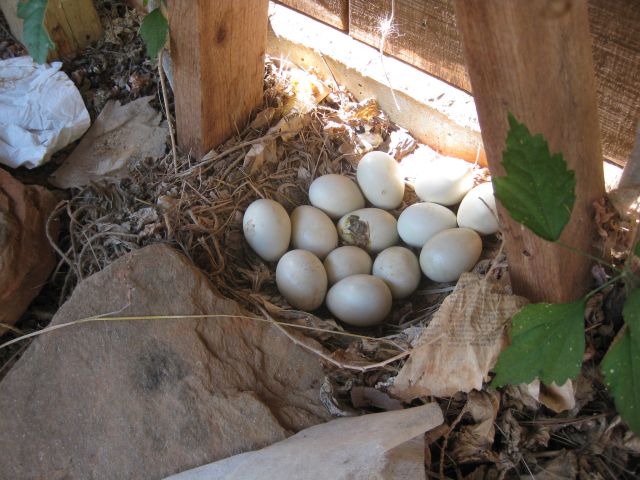
And she was atop 13 eggs, almost as many as her last nest of 15 eggs.
Randa’s nest of 13 eggs which are olive green reflecting her mixed parentage af Americauna mom and Buff Orpington dad
And the same dilemma as last time – she wants to hatch eggs and I do not want any roosters or more hens. So I will probably end this process, for my needs irrespective of hers. I have a neighbor in Atlanta who loves cats and had them declawed and keeps them indoors thus denying them their natural inclinations. But am I any better when I move Randa from her eggs and destroy them and bury the remains in a hole beside a fruit tree?
In my previous two posts I described Randa the flying chicken who established a nest containing 15 eggs in the bush and how, after much debate, I relocated Randa and her eggs to the safety of a spare coop. The dilemma was what would I do if say half of the eggs hatched, since I have chicken enough and would wind down rather than expand my chicken operations.
The potential dilemma dematerialized. Although I had prevailed on Randa to sit on her transferred eggs in the new nest box she quickly abandoned both and stared longingly at the rest of the flock lounging in the tree shade outside. I think of the film cameras we used to use – the unexposed film sits in the dark behind the lens shutter and when you press the button the shutter opens for a period of time and light from the outside reaches the negative, and then it is dark again. For 15 days Randa was in the pull of nature – she was not a domesticated chicken but a wild jungle fowl with an established nest in the wild matching wits with roving predators. But once I caught her and moved her and her eggs to the coop the spell was broken, the shutter closed, and she became an ordinary chicken again. She was still broody but did not recognize her eggs or the nest box I had made.
After two days of coop isolation I released her yesterday to the flock and although she and Wanda, the other flying chicken, quickly overflew the paddock fence to the outside, both came willingly to the coop for shutdown in the evening. And the 15 eggs? They have sat untouched for the past few days in the coop and I will bury them beneath a fruit tree to recycle their nutrients.
All of this instructive for me. When we tinker with nature the processes are more complex than we think and the outcomes can be different than imagined.
In y’days post I outlined the dilemma with Randa, the flying hen who established a nest beyond the pale (paddock) and my provisional decision to leave her there and let nature take its course. Well my better half prevailed with the argument that once we take on pets (or chicken since they are not pets in our case) we assume responsibility for them and when we have domesticated them (select bred for egg productivity) they lose their instincts to survive in the wild. Ergo, we could not leave little Randa on her nest and should bring Randa and her eggs under our protection. A counter argument is that if she could survive for 10+ days out there she was perhaps not as vulnerable as we thought.
So, armed with secateurs to cut through the brambles and leather gloves I approached her hideout.
Randa on her nest as I approached
To my surprise she showed little reaction – did not hightail into the bush as I thought she would, and only protested as I reached out to hold her. I transferred her to a spare coop where she made a lot of noise to the chicken spectators looking in. Then I located a plastic container filled it with pine shavings and transferred the eggs from the nest. How many eggs were there?
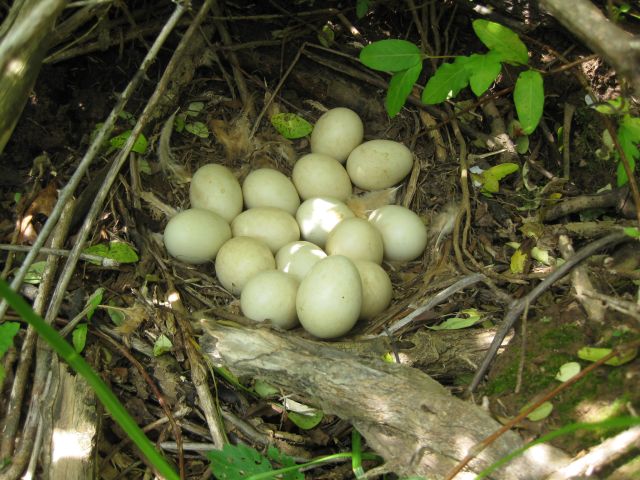
there are 15 eggs, all pale olive green showing mixed line from Ameracauna and Buff Orpington
15 eggs! Wow this means she was accumulating eggs for the past 15 days. She had been awol for 13 days so probably the 1st 2 she laid she did not sit on consistently. Now here is a question – how many of these eggs are fertile. If the rooster did not have contact with her during the 13 days she was gone will the eggs she produced during that period be fertile? Bad news for me – apparently the rooster’s sperm can remain viable in the hen for 3 weeks so it is possible that all her eggs could have been fertilized.
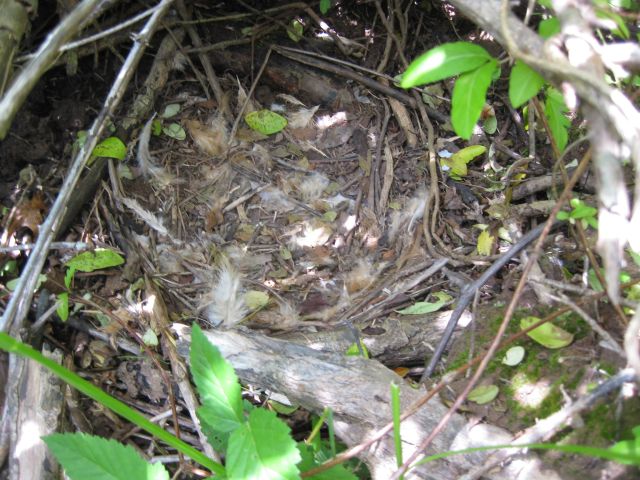
After I removed Randa and her eggs I took a pic of her nest, which is shipshape and furnished with some feathers.
Randa’s nest
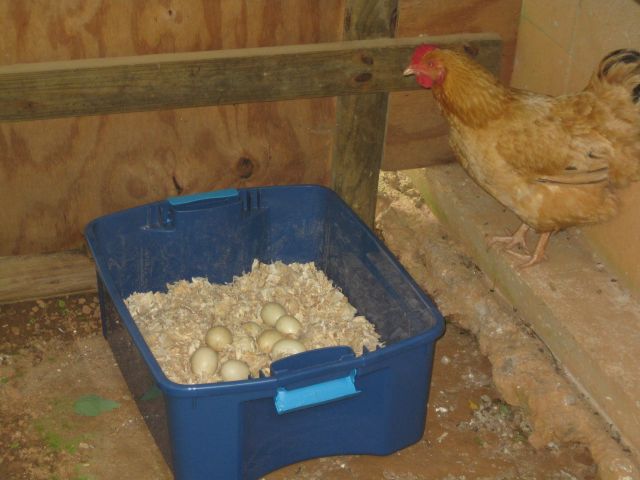
I introduced Randa to the blue plastic container which held the pine shavings and her eggs. She was not happy.
Randa does not take to her new nest
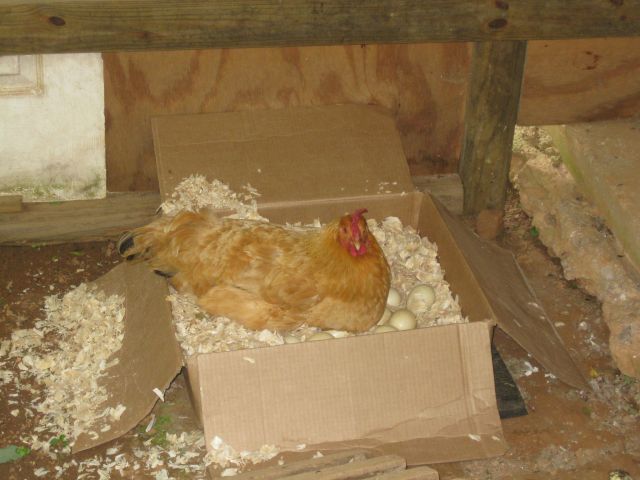
Perhaps the blue color was offputting, or the sides were too high or it was just too synthetic. So I decided to use a low rimmed cardboard box placed on a thick rubber mat to protect it from the damp in the soil. And I placed the aggrieved Randa on the new nest and stroked her for some time and then stepped back and she stayed put.
Randa on the new nest
So for the moment there is peace. But I have a looming dilemma – if a lot of eggs hatch viably what will I do with them?
I have a dilemma. Since I retired I have had few dilemmas – no more the quandary of whether I should attend an important business meeting or pitch, vs a child’s sporting event/concert performance or family function. But now I have a dilemma!
I mentioned in previous posts that we have 2 nimble chicken, Wanda and Randa, who easily fly over the paddock fence and that Randa had disappeared one evening but was there the next morning and we all celebrated with sunflower seeds. But the next night she disappeared again and was not to be seen for the next 9 days.
We searched everywhere – there were no telltale feathers signifying a predator attack but even without the evidence I had concluded she probably had been done in. And then yesterday (Monday) after a rain washed weekend, there she was outside the paddock, very bedraggled. She greedily ate the sunflower seed and chicken feed I offered her. I surmised that she had had a nest, that it had failed and that she had returned to the flock. But a few hours later she was gone again. What was going on?
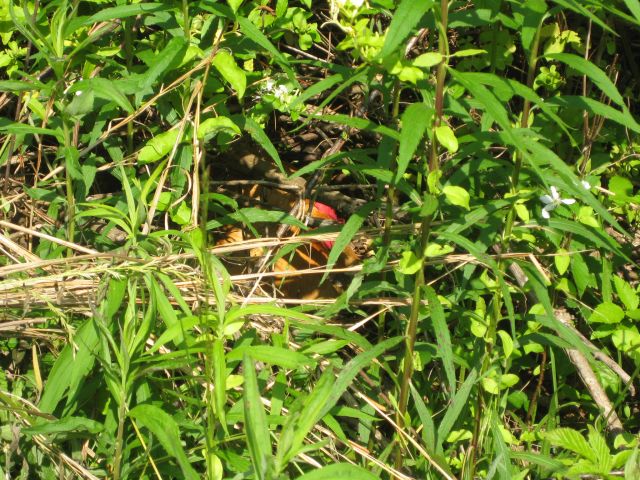
I decided that she must still have a nest and that it was probably close by. I began looking and there, not to far from where she had appeared on Monday morning, was Randa on a well concealed nest.
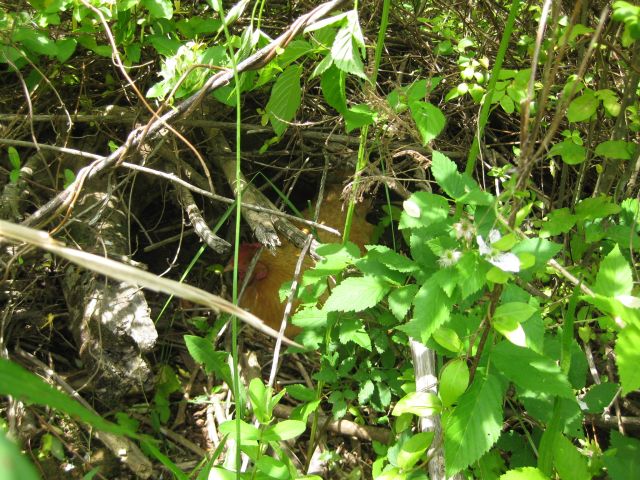
Randa on her nest in the bush
The dilemma is what to do. I can leave her be and there is a likelihood some predator (fox, possum, dog etc.) will find her. I can try capture her and relocate her and her eggs to a 2nd coop. Or I can chase her off the eggs, destroy the eggs and she will likely return to the flock. And if she remains broody I can provide the same treatment which worked successfully on Yellow Legs who is cured of her broodiness and is now a regular flock member.
Since I would like to wind down my chicken operations in the near future, the last option seems the most practical and perhaps the kindest since in following her natural impulse she has placed herself in dangers way and if she is not discovered now, then when the chicks hatch and chirp a predator may get to them all before I can relocate them.
Relocating her and the eggs to a coop seems the best compromise but I doubt she will allow herself to be caught and will take off and return to her nest when I have given up and will be more stressed.
Leaving her be could be considered cruel and uncaring. But I am leaving her alone for now. I feel at times that though we may delight in having pets and chicken there is something a little unnatural going on. After all, chicken were once forest birds which we have bred to produce an unnatural large number of eggs, which has stressed them and reduced their lifespan and deprived them of the most natural of events – producing offspring. Though with an incubator we do this for them as I have done a couple of times. Perhaps I am thinking too deeply since this reasoning applies to my Trudy who has been neutered and seems to enjoy being with me and keeps a vigilant eye out for me and barks whenever necessary and keenly undertakes her daily rodent patrols. But still I see nature’s hand here and will leave Randa alone for now, recognizing that each next morning all I may see of her are some scattered feathers.
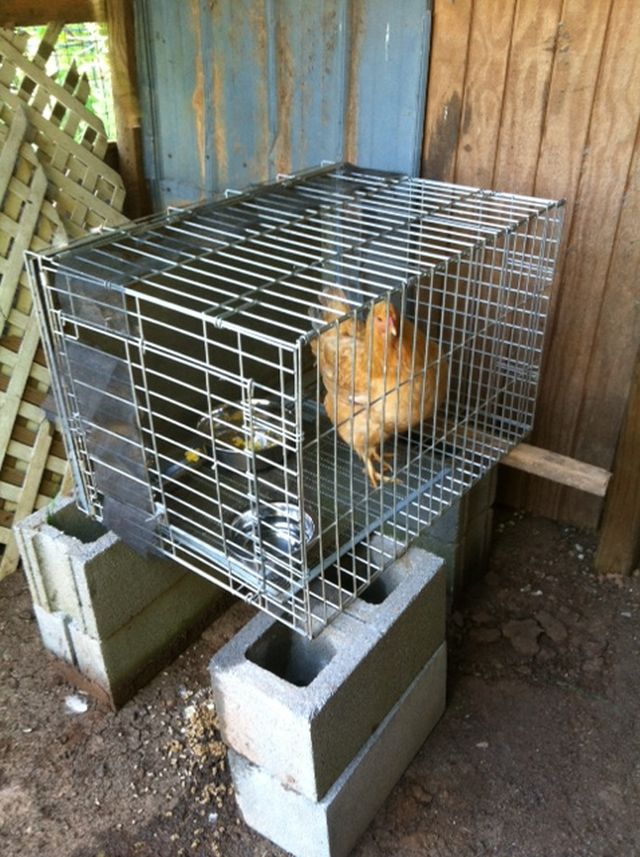
Our broody hen kept brooding. Each night I would remove her from the eggs she was safeguarding and, after a quick sup, she would go back to the nesting box. And so it continued night after night for a week. Our research indicated that if she was kept in a place where her underside was cool, she might desist. I located and positioned 6 cinder blocks on top of which I placed the wire cage we had used when they were newly born. Since the bottom of the cage was a solid removable tray, which would block air passage, I rotated the cage so the bottom was on the side. And I placed a queen bee restrictor grill on the bottom of the wire cage for her comfort.
temporary quarters for Yellow Legs
Yellow Legs was very unhappy with imprisonment – she kicked over the water and food dishes which I replaced with receptacles not easily overturned and, whenever I opened the door she made a dash for freedom, sometimes successfully. After a couple of days of mutual frustration I decided to release her to the flock and resigned myself to the evening turnover routine. But – to our delight she was cured and now roams with the flock. Success.
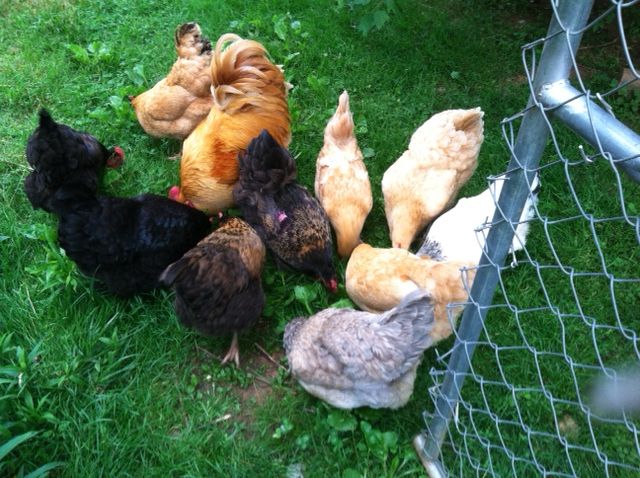
And for some other chicken news. Our rooster had a black mite infestation on his comb. I treated with a solution of neem oil mixed with olive oil (I usually use Johnson baby oil but couldn’t find it) and he was cured. One of the black speckled hens had feathers missing from her wing – feather plucking or maybe a failed predator attack? I treated with blue kote and it is healing well. And finally, the next pic shows a celebration of sorts. Last evening as I was leaving I couldn’t find Randa who is agile, flies easily over the paddock fence and likes to make the most of daylight hours and (it seems) when I am looking for her she hides in the overgrowth. I wandered around looking, called her and even the sunflower seed trick (rattle the seed in a plastic container) failed. So I departed not knowing if I would see her again. This morning there she was as usual in the yard. To celebrate I got more sunflower seed, had some myself and scattered the rest for the flock. Randa warily entered the paddock and participated.
10 hens and a rooster enjoying sunflower seed. the hen with the missing feathers is in the middle
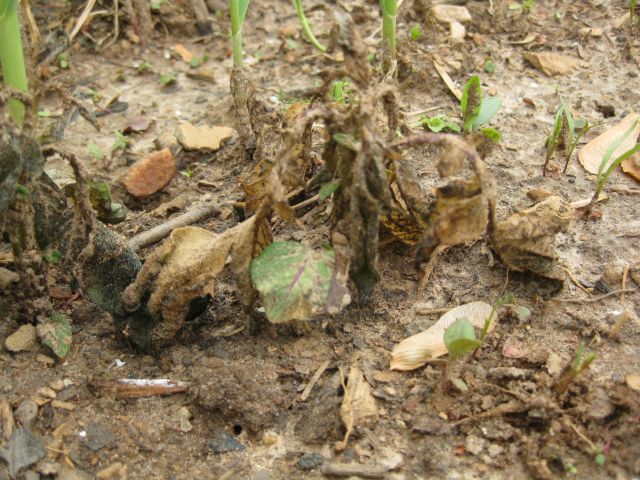
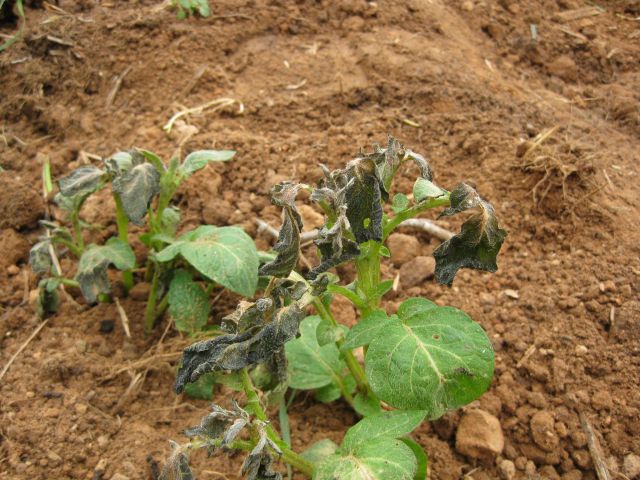
The average date for last spring freeze where I grow should be after March 30 and before April 10 based on a map provided by the National Weather Service. On April 16 the temperature in our area fell to 30 deg F and caused some damage. The potato plants suffered – the volunteers on the ground surface were almost wiped out –
freeze damaged potato plant
While the potatoes I had planted in a trench had less extensive damage –
potato plant in trench showing some freeze damage
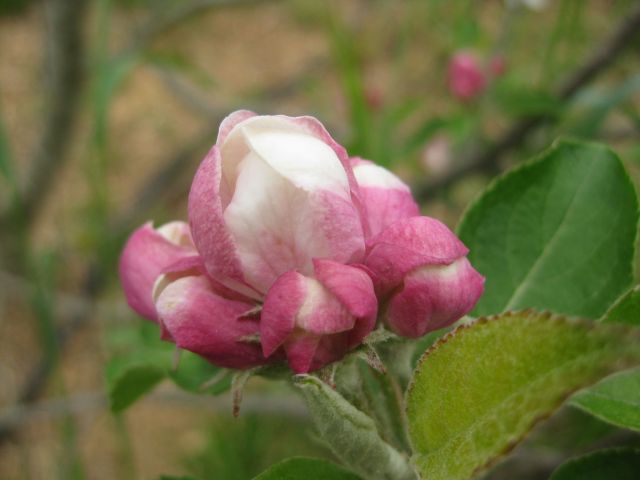
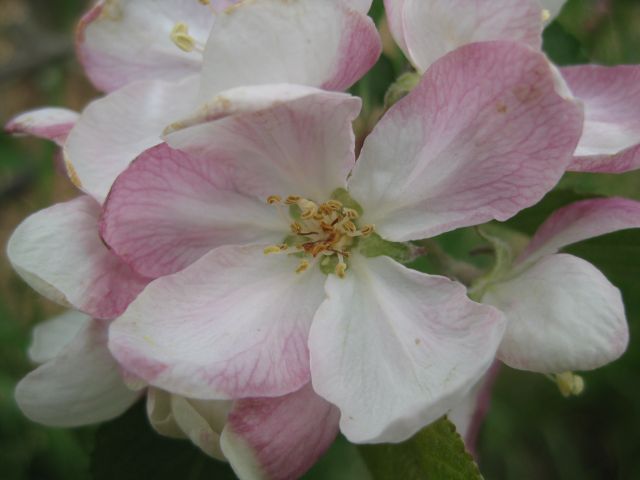
I was concerned about my apple trees some of which are in blossom but they seem fine –
this apple blossom a couple of days after the freeze was unaffectedand this apple blossom seems happy too
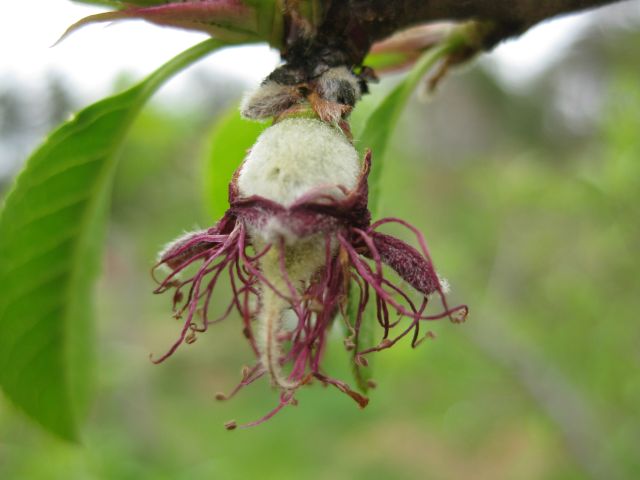
But there were many signs elsewhere of freeze damage such as kale plants showing whitened or yellowed leaves. My pears and peach had already blossomed and set so they were past danger.
usually my peaches are nailed by late frosts/freezes but this time the freeze was too late and this will be a peach in the summer
And my blueberries appear unaffected, tho some gardeners in Atlanta complained of damage. And my muscadine are now accelerating growth.
muscadine are hardy, greening well and with long growing horizontal roots seem to do well anywhere in this area
Black locust
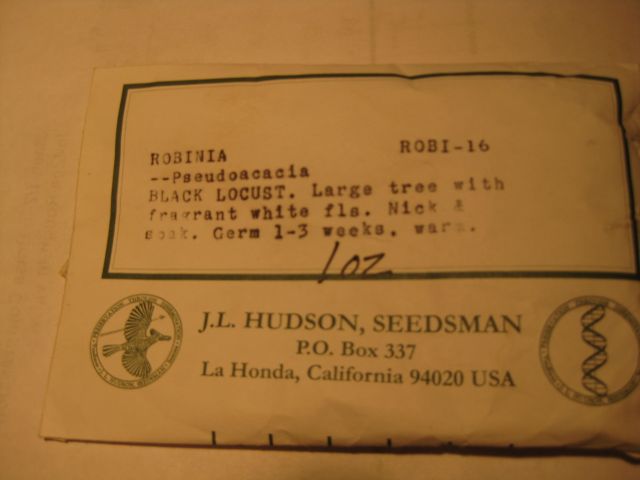
A couple years ago I bought Black Locust seed and germinated 10 seeds. I decided a few weeks ago to transplant the saplings to my orchard where I am increasing the diversity. The roots fix nitrogen and the tree is popular with bees. There must have been 100 seeds in the packet I received.
my source for unusual seeds including recently quinoa, stinging nettle, epizote and 3 varieties of Amarinthe
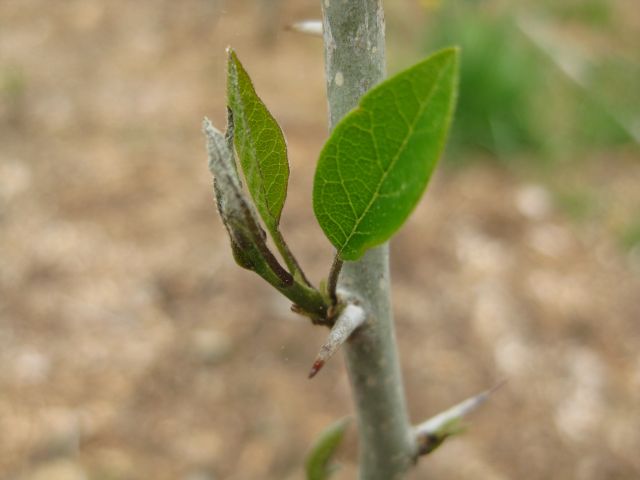
I decided to try germinating more black locust since I have spots on the hill which I seldom visit where they will thrive. The “seldom visit” caveat is important – they have nasty thorns as you can see on this young specimen.
Young black locust with thorny protection
Broody hen
I have kept chicken for several years but this was my first encounter with a broody hen.
broody hen
She refused to leave the eggs she was guarding, pecked sharply, fluffed out her feathers and made an unusual warning sound. I was undecided what to do. Part of me recognized this is natural and far more natural than incubating the eggs which I have done successfully on two occasions. But there were other considerations. When I incubated the eggs four viable chicken of which one was a rooster, were produced each time. I was lucky there were only two roosters and doubly lucky that a nearby farm agreed to take them both and I now see them in the field whenever I drive past the farm. But what to do with more roosters? Our one rooster takes good care of his 10 hens and a 2nd rooster will create considerable stress as occurred previously. A second factor is the hen is the daughter of the rooster and the eggs she was sitting on were hers or her sisters so with this inbreeding there is an increased likelihood of non viable chicken. In the end I removed the broody hen from the 5 eggs she was guarding and cracked them open over the compost heap. Four of the 5 eggs would have produced chicken – my bad – I should not have waited as long as I did. I temporarily separated the broody hen but as soon as I released her she gobbled down some food and headed to the nest box to sit on more eggs. I shall have to keep an eye on her and remove her from the eggs each day until the habit is broken.
Other hen news
Two of the hens are fliers and wanderers. They have discovered the grass is greener on the other side and they regularly fly over the 5ft fence. The first to do so was the black hen who we call Wanda being a wanderer and the second is named Randa.
Wanda and Randa
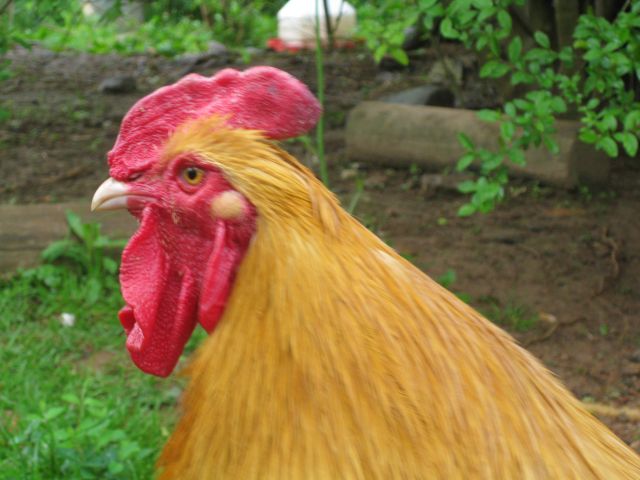
The cold weather did not affect the chicken except that the points of the rooster’s comb turned black. I massaged them with vaseline – since he has fierce spurs you have to grab him quickly when he is eating and grip him between the knees – he seemed to appreciate the ministrations and quickly forgot the indignity when released. When spring arrived the black tips either fell off or were removed by one of the hens. He now has a rounded comb.
rooster with rounded comb
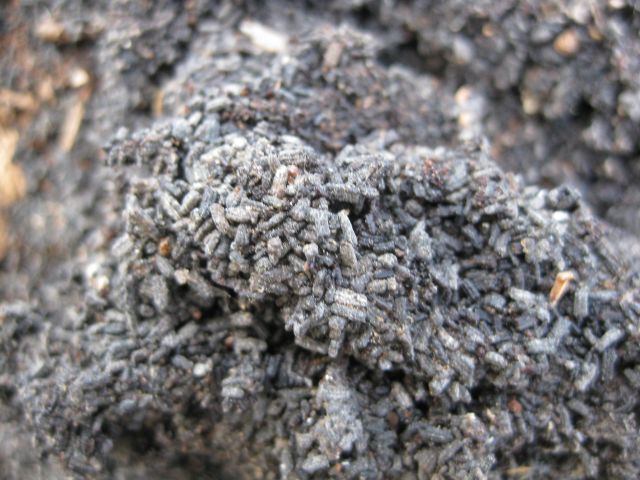
Frass
Frass is poop of insects. In this case the larva of the wax moths which colonized the honey frames I put into storage. I had placed the honey frames in contractor grade black bags securely tied. Didn’t help. What I should have done was to freeze the frames and then place in storage – next time. The black bags were ripped in many places and the wax on the frames mainly gone and replaced with black frass on the lowest surface. The frass I collected and added to the compost heap, maybe it will do some good there.
frass derived from wax and honey
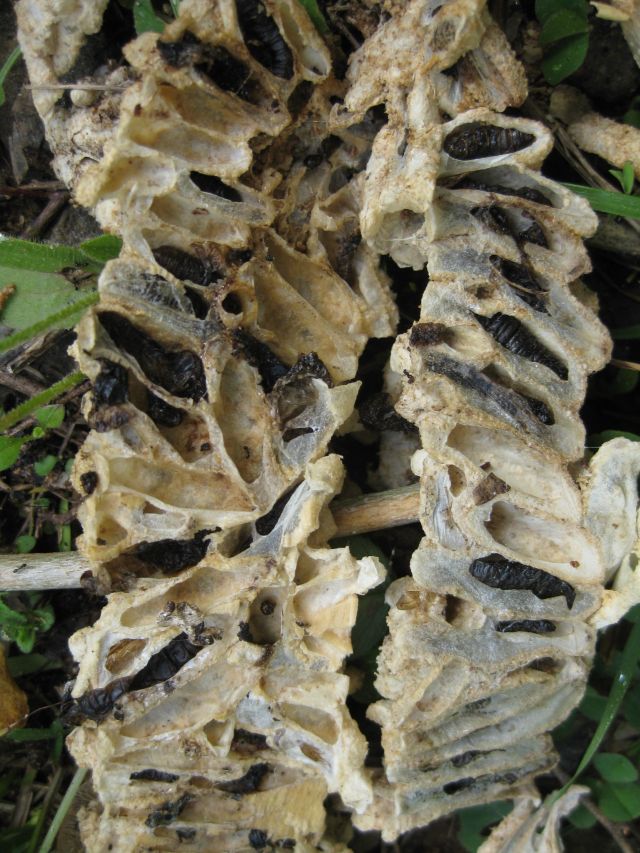
The frames were covered with cocoons and in each one there was a black slug, maybe from the larva as it grew – reminded me of a belt for machine gun bullets.
underside of larva cocoons scraped off my honey frames
I removed the plastic foundation from the frames and spent considerable time scraping and scrubbing them clean. I decided to discard some of the badly damaged wood frames.
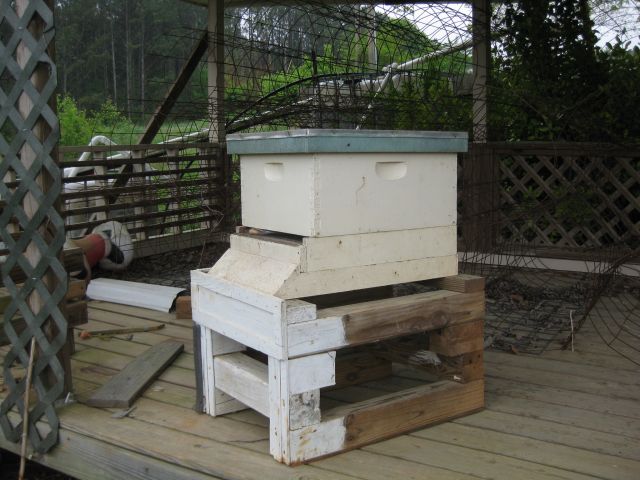
I used a salvaged deep, 9 frames and foundation to make a swarm lure hive. I bought swarm lure last year and had a couple surplus refrigerated vials. I added the contents of one vial to a small piece of paper towel inserted in a small ziplock bag held open by a stone at one end. Hopefully this hive will attract a swarm.