goodbye Gus!

I have mentioned that Buffy, our Buff Orpington rooster, takes good care of his girls and that on two occasions I incubated eggs successfully.  The incubator takes 7 eggs and each time there were 4 viable chicken and each time it was 3 hens and one rooster.  And each time, as the young rooster grew up, friction developed between dad and son, and son and all the hens.

We are very lucky to have a chicken enthusiast down the road from us who happily took Buff, the first young rooster and we see him most every time we drive to our farm.  He is inevitably surrounded by his girls and also seems to get on well with the turkeys since he is fairly large, aggressive and undaunted.

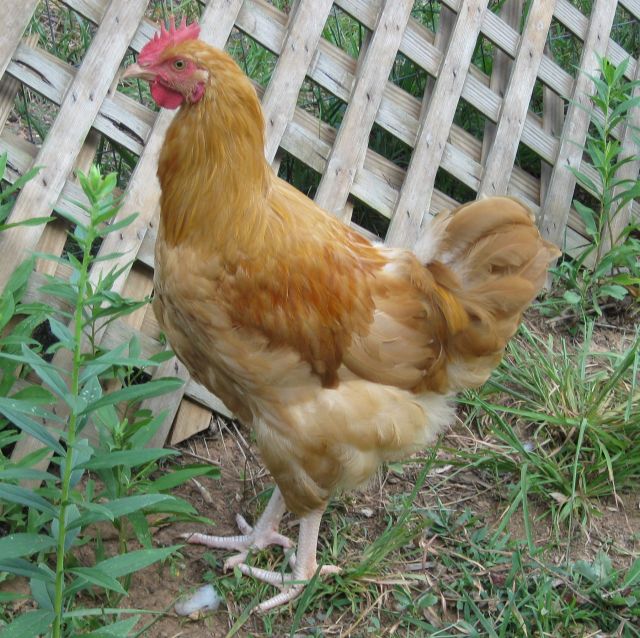
We had wanted to keep the second young rooster who is named Gus after his mom Gimpie but concluded it wouldn’t work out.  Gimpie is the senior hen (in pecking order) and has a bad hip which makes it difficult to walk, hence her name.  On sunny days she gets out of the coop and in the evening the routine now is she waits for me to pick her up and carry her back to the coop.  I always deposit her just before the door so Buffy does not see me carrying her.  It is a practice with Buffy that if anyone has contact with one of his hens he has to immediately mount the hen and this is one more ordeal Gimpie would rather avoid.  So Gimpie is a toughie and yesterday she laid her first egg of the year and Gus inherited her good genes and most of her coloring with just some gold around the neck from his dad.
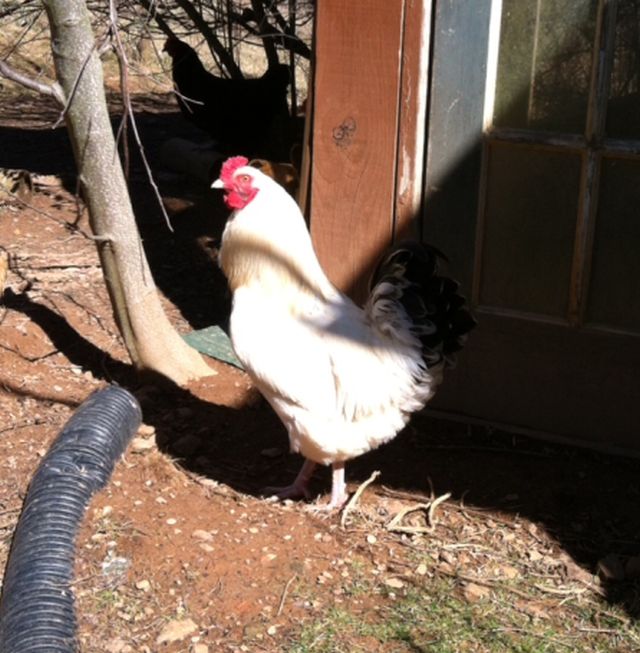
our young rooster Gus before he moved to a new home down the road

I contacted the chicken enthusiast about Gus and to our delight she said she was so happy with Buff (our first young rooster) that she offered to take Gus as well, which she did last weekend.  And now order is restored and the Americauna who is first generation like Gimpie and who had sat in the nest box the past month to avoid the attentions of Gus, is going out of the coop every day and is also back in egg production.  Goodbye Gus and hope to see you when we drive by your new home.
goodbye Red

I inherited Red from departing neighbors.  She had been rescued from a commercial hatchery and came with a snipped beak.  She was the smartest of them all.  In the early days I borrowed her and some of her companions to help prepare the vegetable growing area and she would hover close to my digging implements to examine and gulp down whatever edibles I unearthed – whilst the other chicken stayed as far away from me as possible.  And when she and the others were given to me, it was Red who first identified the presence of a young rooster (Buffy) in my second flock, as I wrote in September 2011:

“she paces the fenceline and he saunters closer
though pretext is food, a purposeful loiter,
he faces and tip toes, his chest full of swagger
she responds just as quickly with unrestrained vigor
and then he departs and she wistfully eyes
the untutored young rooster and if she could,
sighs,
but tomorrow will come and who knows by then
Buffy be back and gladden the hen”

She had been ailing for some time and seemed to recover after I administered some antibiotics and gave her a spa bath with epsom salts.  But the past week was tough and she got weaker and weaker and today she was gone.

What to do with the body?  I remember when I was caring for my neighbors’ chicken while they were away and one died and I buried it.  When I told them they were incredulous so, not understanding their response, I asked if they would have liked me to freeze the body for their later digestion, which provoked a similar response.  So I asked what they did with their  chicken and they said they tossed them into the garbage bag,  which to me is wasteful of recyclable nutrients and somewhat discourteous of a loyal retainer.  In fairness I should mention that my neighbors used to slaughter, process and eat healthy chicken, they drew the line with a chicken dying of unknown causes.

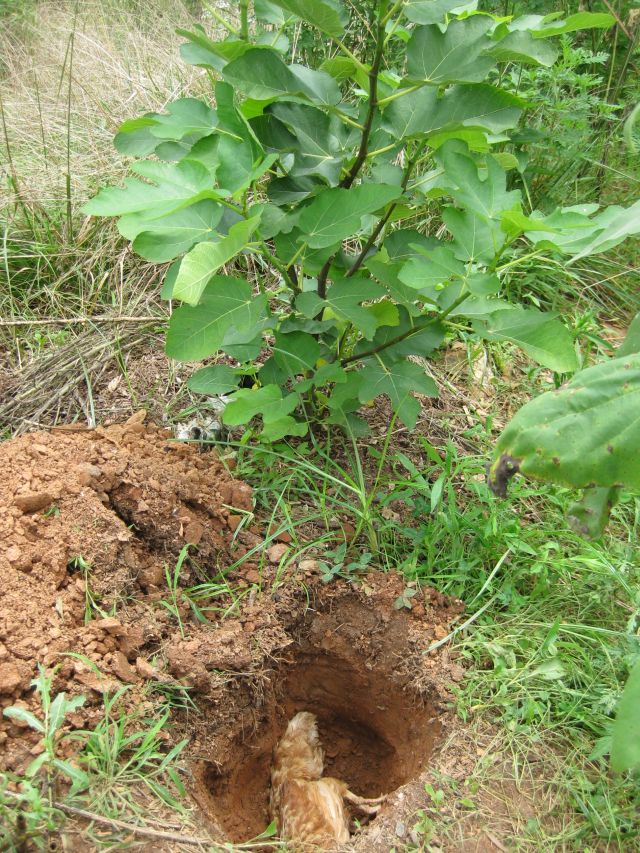
A number of chicken have died over the past 2 years and I have an area where I buried them side by side under biggish stones to deter scavengers.  But I decided today that Red would be better honored if she were buried amongst my fruit trees – perhaps I am thinking of a tradition where a dead fish was buried at the bottom of a hole dug for new fruit trees.

Red about to be buried in a hole alongside a young fig tree

So she has moved on but her remains will contribute to the soil and its inhabitants, the small fig tree and to the fruit it will bear one day.

while walking

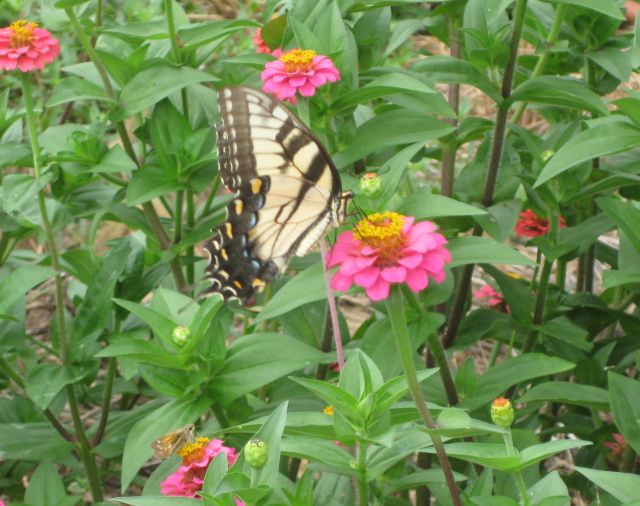
I notice the butterflies love the zinnia plantings in the vegetable patch.

butterfly on zinnia
this large butterfly flies away when I approach but then returns

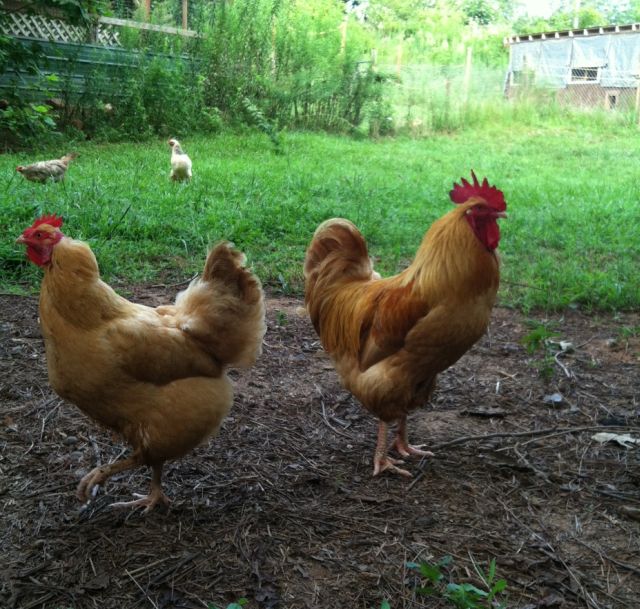
I have  not lost any more chicken to predators, for which I thank my handsome rooster.  His aggressiveness to some of the chickens seems to have abated.  Here he is with Lady Macbeth, who is still missing feathers from the back of her head, but they now seem on cordial terms.

buff orpington rooster and hen
Buffy the rooster and his sister and fellow Buff Orpington, the Lady Macbeth

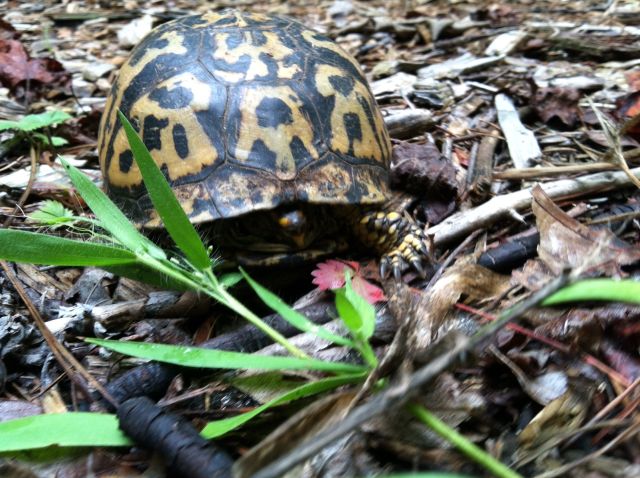
And the rains we have fortunately received have promoted sprinklings of mushrooms throughout the woods and perhaps encouraged the turtles to explore their surroundings.

turtle on the move
yet another turtle on the footpath

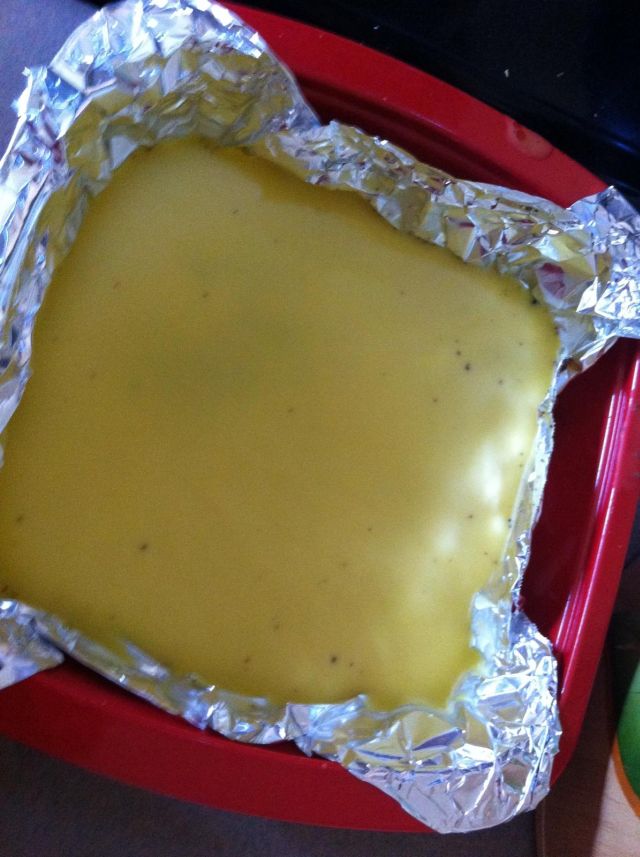
Finally, I gave some of the wax collected from the last honey harvesting session to my neighbor and she worked some magic and produced a wax cake (or so it looks).  She said she will melt and strain it one more time, perhaps with cheesecloth.

wax from the bees
wax from the bees

it’s off to work we go

So its off to work we go
now the night long roost is done
and the fledgling sun
brings cheer and early crow

we hear the padlock click
the stay bolt undone
we gather at the coop door
and here’s our keeper Rick

he points out the way
a 50 yard jog
across a field and up a hill
its the fruit trees turn today

a 50 yard jog

he is deep into organics
no sprays at all
munchies abounding
for us his soil mechanics

he wants the bad bugs gone
we’re happy to oblige
we eat them all both good and bad
and give our chicken song

we eat them all both good and bad

some say its like a squawk
or shriek to pierce the ears
our cries and clucks and tuck tuck tucks
that is music and our talk

the paddock has a shelter
with water for our thirst
and egg boxes provided
to cushion the ejector

its fenced to show the playground
we could easily fly above
but grass is greener this side
and grubs to be found

we feel with out splayed feet
the bugs beyond our view
a quick back swipe with claw
finds a wriggle for the beak

a quick back swipe with claw

they visit in the night
the possum, fox and coons
and then we’re in our coop home
secure and snuggled tight

there is a local hawk
we used to duck for cover
but now we’re twice its size
and he can only gawk

as we continue at our play
or should I say its work
the scoot and scratch and eat
a day long happy treat.

chicken synergies

The chicken are still doing well.  Six hens from my former neighbor (4 hybrids, 1 Ameraucana, 1 ISA brown) and 8 youngsters ( 2 Buff Orpingtons (1 of which is a rooster called “Buffy”), 2 Golden Comets, 2 New Jersey Giants and 2 Speckled Sussex).  No casualties, though one of the hybrids walks with a noticeable limp and is now called “Gimpy”.  The two dominant hens are the Ameraucana and the ISA brown, which curiously are also among the smallest.  The two largest hens, the New Jersey Giants, are the most timid and the 2 Speckled Sussex are the most antisocial.  Whenever there is a commotion amongst the hens, Buffy rushes in to settle the dispute.  He also charges out when there is a disturbance or security risk and crows throughout the day.  Notwithstanding shortened daylight hours I am getting 5 to 6 eggs a day.  I have decided against supplementing daylight with artificial lighting on a timer.  The coop I constructed is working well for them – no moisture from outside and inside temperatures have not fallen below 30 F (when the outside has fallen to mid teens).  They seem healthy enough though occasionally there is a soft shelled egg (to my dog’s delight) , so I supplement with yogurt and oyster shells.

I grow organically and my small orchard of 12 apple and assorted fruit trees began bearing fruit last year (actually I also have a 2nd orchard of first year fruit trees some years away from fruit bearing).  With the appearance of fruit there also appeared a variety of bugs, especially on my apple trees.  I know sanitation is important – removing the fallen fruit and wood cuttings because the pests overwinter in the fruit and cuttings.  But how to remove the soil slumberers?

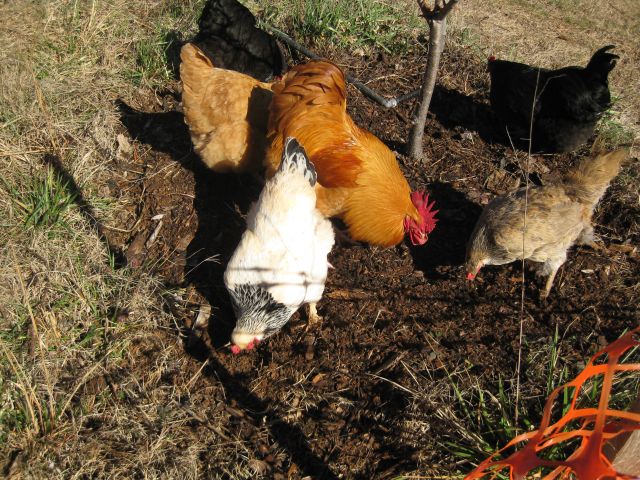
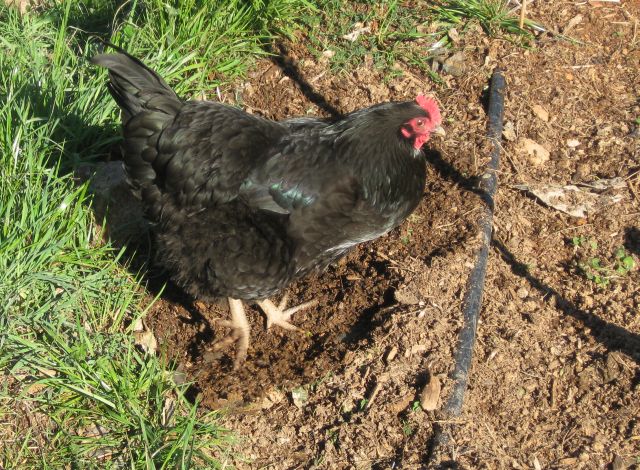
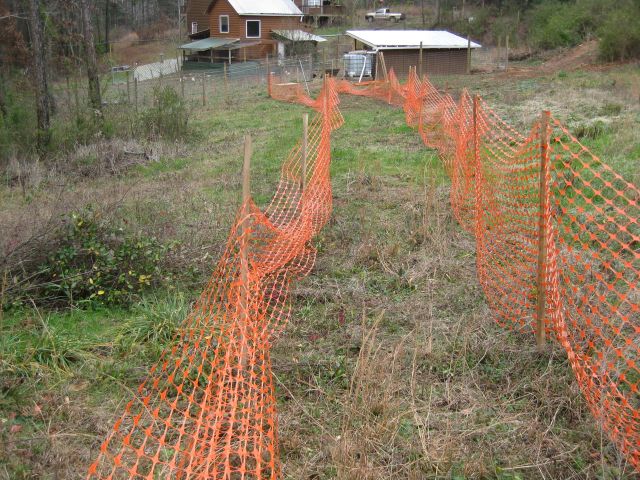
I installed a fence and 2 gates around the orchard and built a chicken day shelter and constructed a passage way to span the 120 ft from the main chicken enclosure to the orchard.  And now my flock are hard at work in the orchard,  removing debris and mulch with vigorous back swipes of their feet and voraciously eating the grubs and other soil dwellers.

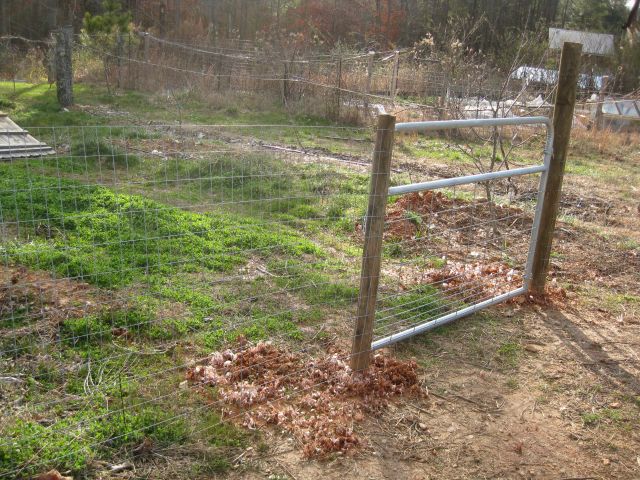
a 6 ft galvanized mesh gate installed to the orchard chicken paddock

Fencing is a fairly costly business.  I used welded rather than the more expensive woven wire fences which are necessary for horses and goats, so there is a saving there.  However, the gates cost from $65 to $100 and, if I had welding skills and access to surplus metal, I would make them myself – but I don’t, so I pay – and they should last indefinitely.

The passage way is temporary and I bought the red plastic material and stakes for about $9 per 100 ft from Lowes – marked down from $30.

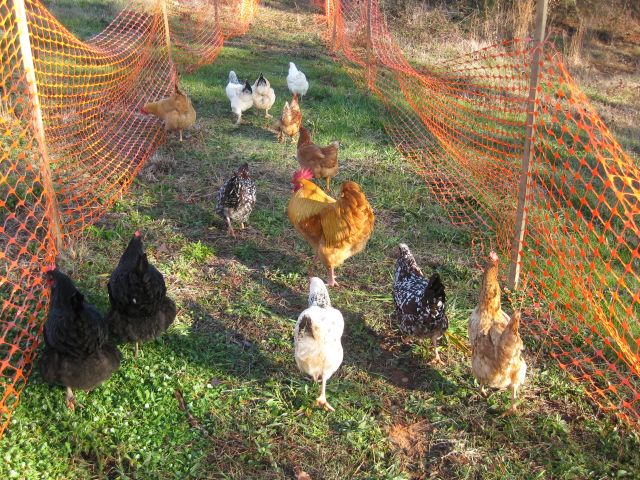
passage way from main chicken enclosure to orchard paddock

I remedied the problem of the fence slipping down the posts by drilling a hole through each post near the top and tying string through the hole and the top of the fence.

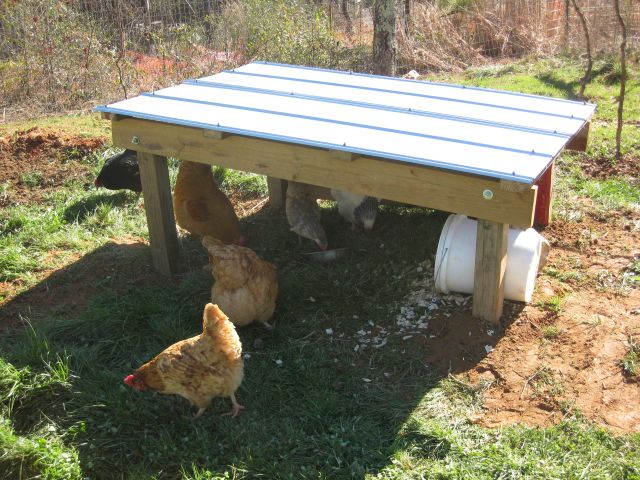
Finally, the day shelter.  I dug 2 ft holes for each of the 4 posts, bolted on 6″ wide planks to the 2 long sides and then 2′ by 4″ purlins and then screwed down galvanized roof sheeting.  The roof sheeting was $20 for a 12ft long 2 ft wide sheet, which I cut in half to fit in my truck and to produce a 6ft by 4ft roof. I will board up the south and west sides to make them feel more secure and sheltered from the sun.  In the shelter I have horizontally placed a 5 gal bucket with straw in the hope the hens will use it for egg laying, and a water container. To alert the flock to the advantages of the shelter I threw in a few handfuls of scratch corn, which immediately got their attention.

chicken day shelter 6 ft by 4 ft, with 5 gal bucket for egg laying

The roof slopes to the west to ensure the rain will run to the west and not over the east entrance.  In addition to reducing orchard pests I expect the flock will enjoy a more varied diet, get more exercise, and consume less of the purchased food I provide.


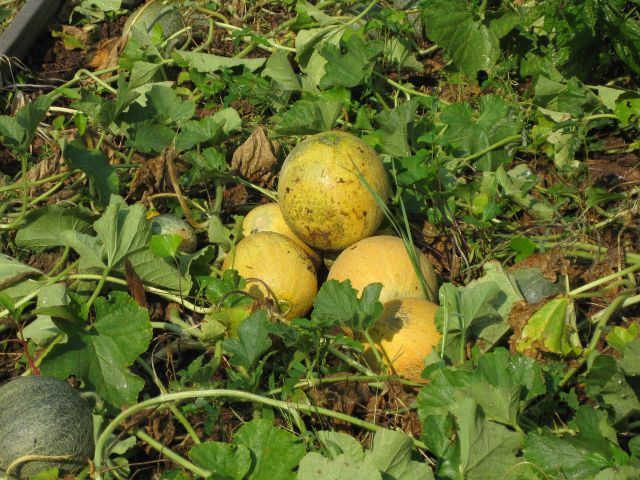
cantaloupe

cantaloupe in raised bed

During the past week the cantaloupe have shown they are ready for picking.  Quite suddenly their color changes from green to yellow, their stem withers and they exude a strong musk aroma.

I planted the seeds directly into a raised bed (8ft x 4ft) on Sunday 6/26.  I had purchased a packet of Burpee’s Ambrosia Hybrid which cost $1.89 (before taxes) and I was disappointed there were only 12 seeds in the packet.  I formed two hills in the bed and placed 6 seed in each hill.  Previously I had harvested my garlic from the bed and I just added some more compost before planting the cantaloupe seed.  I watered well and often with a hose and initially did some light weeding.  All seeds became seedlings and, with watering, developed into strong plants.  Unlike my struggle with squash, the cantaloupe plants were not visibly visited by any pests.

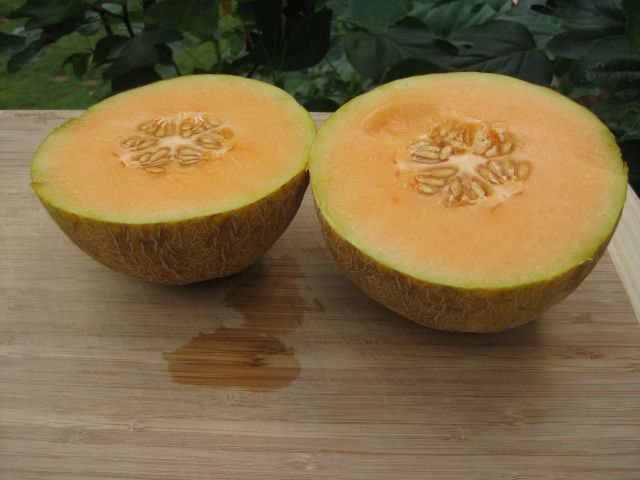
The melons are well formed and look great.  Of course there is usually a snag and it is the taste which is tending to neutral and only slightly sweet.  I wonder if that has to do with their nutrition or growing conditions or perhaps I should have planted them earlier in the season, as suggested by the packet.  However, the most recently picked are sweeter to the extent we are enjoying them ourselves and not giving them to the chicken.  I have decided to save seed from the sweeter melons for next year.

The chicken, both flocks, love the melons which I provide after removing all the seed.  Interestingly, only the older birds like bananas.

cantaloupe
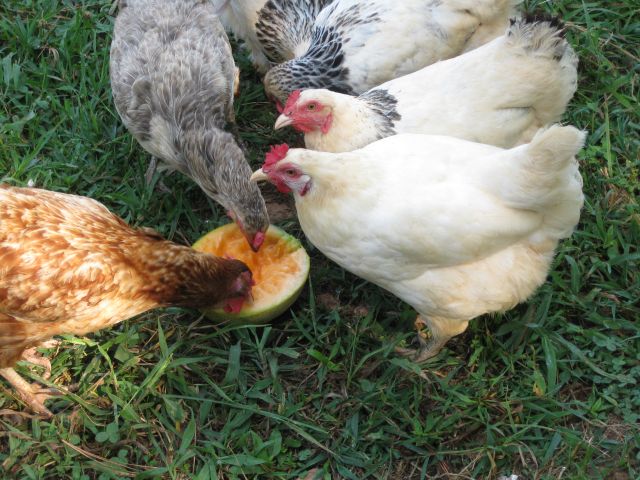
chicken like cantaloupe


chicken dynamics

Eight young chicks arrived as a group
into a shed converted to coop
two Golden Comets who jump on your knees
when sitting you offer some morsels to feed
two Black Giants so skittish and shy
they keep the most distance when friendship you try
two Speckled Sussex the smallest of all
but quickly chase Comets to far away wall
and then the last couple, so striking indeed
a hen and young rooster of Buff Orpington breed

as coop door unshackles
they cluster around
then chortle and hustle
with wide legged bound

first to the weeds for a nibble or peck
then claw in the mulch
and sound a loud cluck
when worm comes to view and
seals their good luck

but Buffy is different
he has just learned to crow
red comb and gold cape
held high and held low
a matador turn, but is he a fake?

while coop mates ignore him
and focus on feed
across the fence barrier the
Rhode Island Red
has heard his first crows and though
twice months in age
is curious to meet the
tenored young sage


will you friend me?


she paces the fenceline and he saunters closer
though pretext is food, a purposeful loiter,
he faces and tip toes, his chest full of swagger
she responds just as quickly with unrestrained vigor
and then he departs and she wistfully eyes
the untutored young rooster and if she could,
sighs,
but tomorrow will come and who knows by then
Buffy be back and gladden the hen.

recycling, scuppernong and the first crow

Recycling

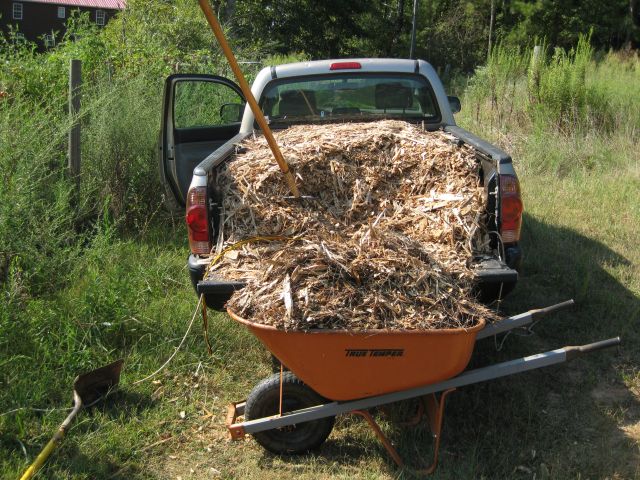
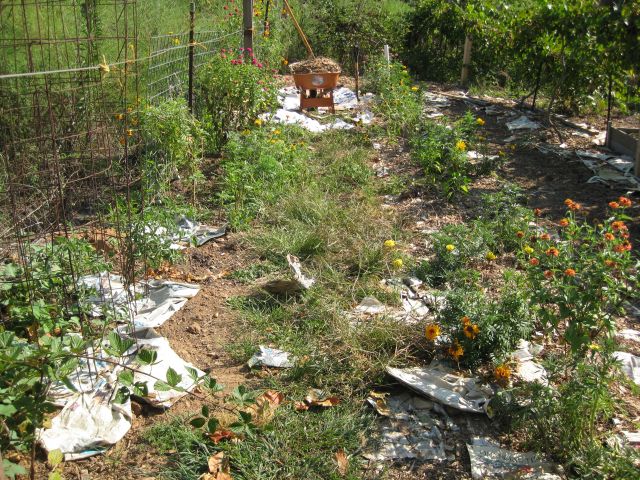
I recycle whenever possible.  Two favorites are newspapers and woodchips.  I was able to twice load my pickup with pine tree woodchips and these, together with bundles of accumulated newspapers, gave me the incentive to weed the overgrown walkways in my vegetable garden.

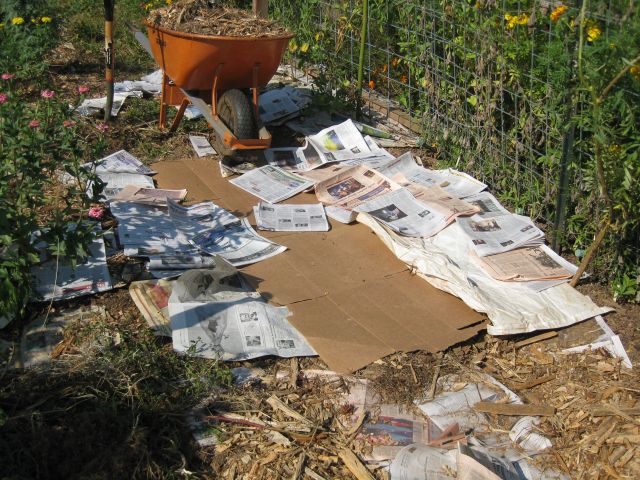
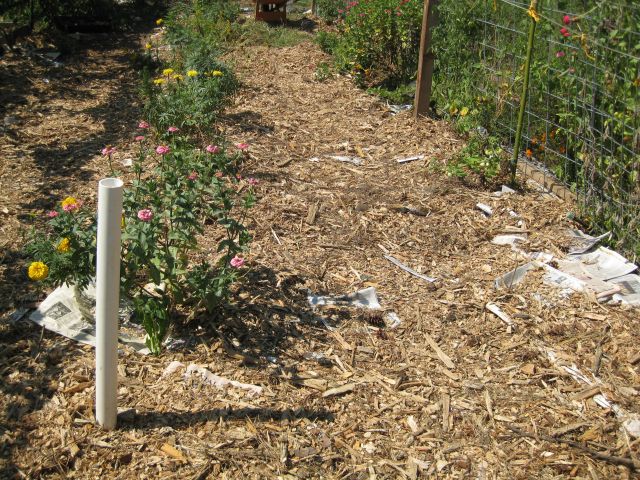
I first remove the weeds, then lay down the newspapers (typically open the newspaper at the middle and ensure plenty of overlap to block the sunlight), and then cover with a thick layer of woodchips.   In addition to newspaper (glossy inserts removed), I also use cardboard and paper sacks provided they do not have a plastic film on any surface. This heavy mulching prevents weeds, conserves moisture in the soil, provides food for the earthworms, and removes competition from weeds for the scarce water.  I think it also removes habitat for some of the pest insects and the bonus is the garden looks more attractive to visitors.

woodchips load easily into wheelbarrow
dishevelled area before the mulching
newspaper, cartons and paper sacks
after the mulching


Scuppernong

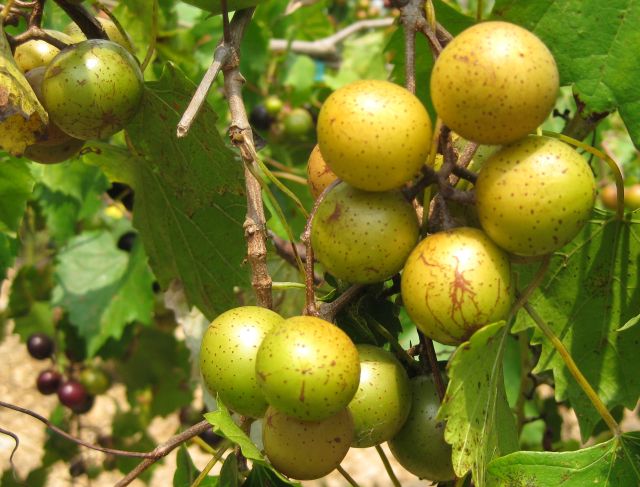
Scuppernong are my favorite muscadine (a type of grape native to the southeastern United States). When the scuppernong turn a golden bronze color they are ready for the eating – as you bite down on this large grape your mouth is filled with an indescribable sweetness. Since I do not use chemicals there is no need for washing the scuppernong. However, there are many eager consumers and as you reach for the muscadine a large wasp may be disturbed and fly noisily away. Last year there were lots of stink bugs around but, so far, they are not in evidence.


The First Crow
I was surprised this morning, as I approached the hen coops, to hear an unmistakable rooster crow. We have two coops and fenced outdoor areas – one for the 6 older egg laying girls I inherited from my neighbor, and another for the youngsters – 7 hens and a rooster. “Buffy” is a Buff Orpington rooster and he certainly has filled out in recent weeks. He has even taken to trying to intimidate the two Black Jersey Giant hens, who are not sure (yet) what to make of him. Although there was a trifle uncertainty it definitely was a crow, repeated a couple of times as he tuned and validated it.

Buffy - Buff Orpington rooster


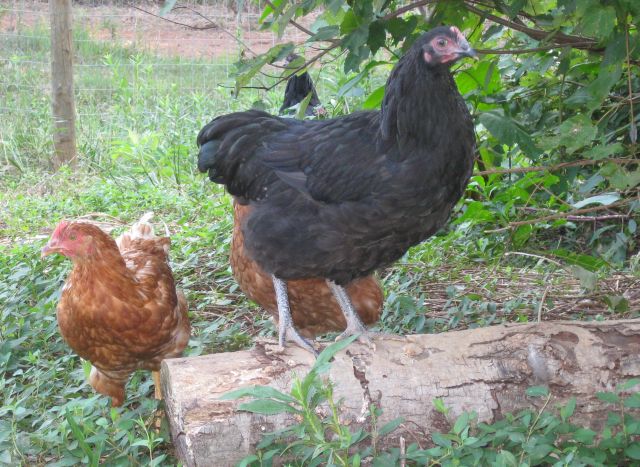
Black Jersey Giant and Golden Comet