This is a post I have been delaying. And if sad topics upset you, read no further.
We cooped the chickens Monday evening 6pm and left the property. At 9.45 am Tues morning (April 12) the coop door opened automatically. When I later reviewed the security cameras I saw Wanda (one of the two hens which can fly over the paddock fences) pass the security camera at 10am and head for the compost heap. So all was normal at 10am.
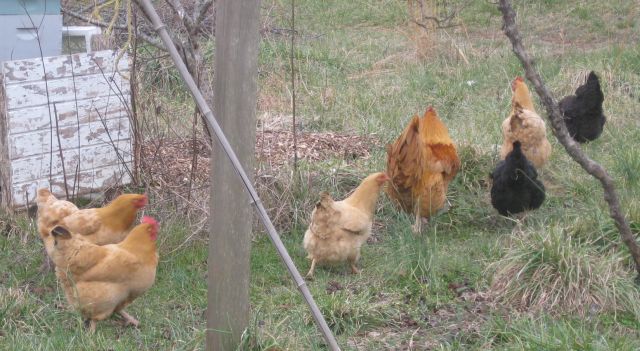
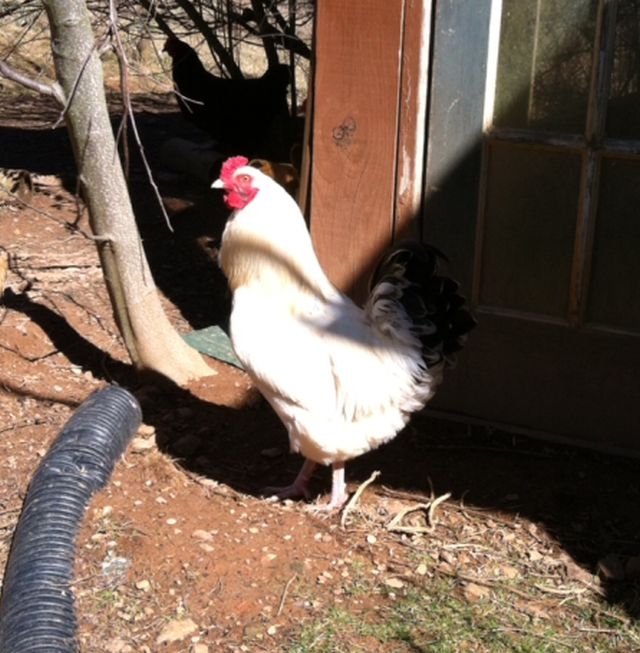
We returned at 12.20pm and the place was quiet. Normally Buffy, the rooster, crows. Silence. And from the deck M. looked toward the coop and paddock areas and said “something is wrong”. We approached the paddock area and there were feathers everywhere. Then we saw the first body, and then another, and another. With feathers ripped off, bodies savaged, a few missing heads. We were quiet as we walked and counted and I took pictures. But where was Buffy? #1 paddock leads to #2 paddock which leads to #3 paddock and the coop. The hens were in #2 and #3 paddocks. I eventually found Buffy in #1 paddock by himself. I thought that’s odd, since it appeared the intruders may have first entered through #3 paddock. And then I saw in the corner of #1 paddock where the fence attaches to the barn that the fencing and 3 stacked concrete blocks had been forced aside and I realized that Buffy had been in #2 paddock and had rushed to #1 paddock to confront the intruders and defend his hens.
Sorry Buffy, I should never have doubted you!
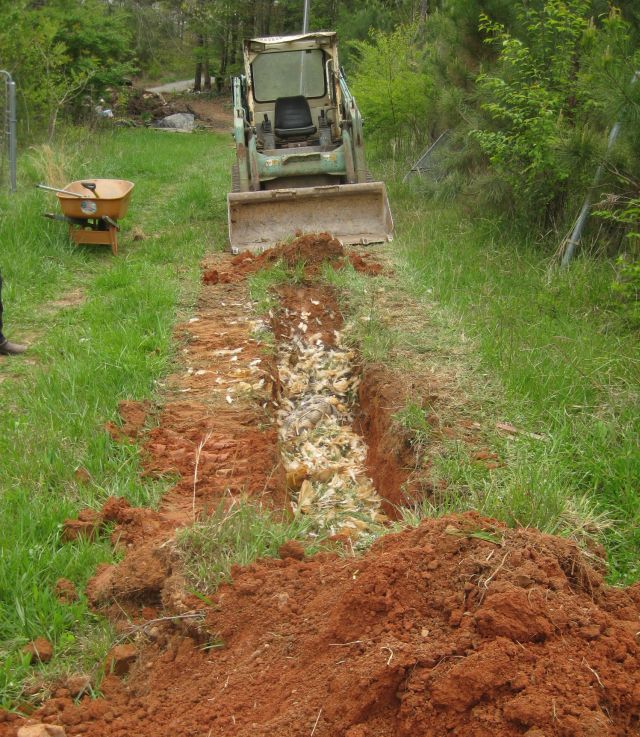
I dug a trench with the bobcat and we placed the bodies alongside each other and I covered them and planted some wildflowers and crimson clover. Of the 9 chickens Wanda was the only one missing and her remains were deposited by a predator near the coop a few days later.
bodies at rest, a chapter closed
I was given the Ameraucana by a neighbor in July 2011 and we acquired Buffy and the older hens in September 2011 The younger hens were offspring of Buffy and his hens. So we kept them safe, except for 2 lost to predators, for more than 4.5 years. And now its over. We had really good times with them and we learned a lot, they entertained us and we enjoyed their excellent eggs. And now its over.
The security cameras caught a glimpse of 2 largish dogs leaving through a perimeter fence at 11.30am. And who is to blame – the dogs? the dogs’ owners? or me? I am still thinking that one out.
I mentioned in my Jan 20 post the passing of Gimpie. She and the Ameraucana were the two elders in the flock. The Ameraucana observed a period of mourning and then began associating with the flock at a wary distance, cautious always of the rooster who had dispatched her comrade. She is over 5 years old and in her waning years and at feeding time she is driven away by the younger hens, some of whom are her offspring. So much so that I have a routine for her at evening time to eat separated by the interior partition door, which I open afterwards so she can rejoin the flock on the roost.
A few days ago she appeared very sluggish, we saw her in the nest box (to escape the rooster we thought) and then slumped in a corner of the paddock. I thought her end was nigh, M. thought it was time for an espsom salts bath. I protested, M. insisted, and there we were me holding the Ameraucana in the bath and M. circulating the warm water around her limbs, her deteriorating feathers, and scaly wrinkled skin. This was followed by olive oil treatment of the legs – the idea is that the oil suffocates residing mites. A bedraggled Ameraucana barely ate her food that evening and we separated her from the flock for the night (perhaps her last).
Next morning, M. thinking the bath had been the final straw and “done her in” kept a close watch on the Ameracauna’s activities and then she came in, eyes ablaze, to announce the Ameracauna had laid an egg. Now the Ameracauna was transformed, no longer sluggish and collapsed but wandering around with the flock as she used to do.
M. informs me that magnesium salts relax muscles and that the Ameracauna was egg bound (couldn’t push out the egg) and the spa bath did the trick. And I for once, have little to say.
My recent visit to the west coast set me back on my spring schedule and I have been catching up.
Foremost was to get my tomato seeds going. Last year I collected seed from good heirloom tomato plants and this year, for the first time, I did not purchase any tomato seed. Though I did buy “Surround” (Kaolin clay) which I will spray on my apple trees when the blossoms have set fruit, and the supplier included gratis, seeds for Rainbow and Cherry tomatoes. Plus I had some 2014 and 2015 packets most of which are viable. Although last year I clustered the tomato plants by variety I am sure some were cross pollinated with other varieties so it will be interesting to see what emerges.
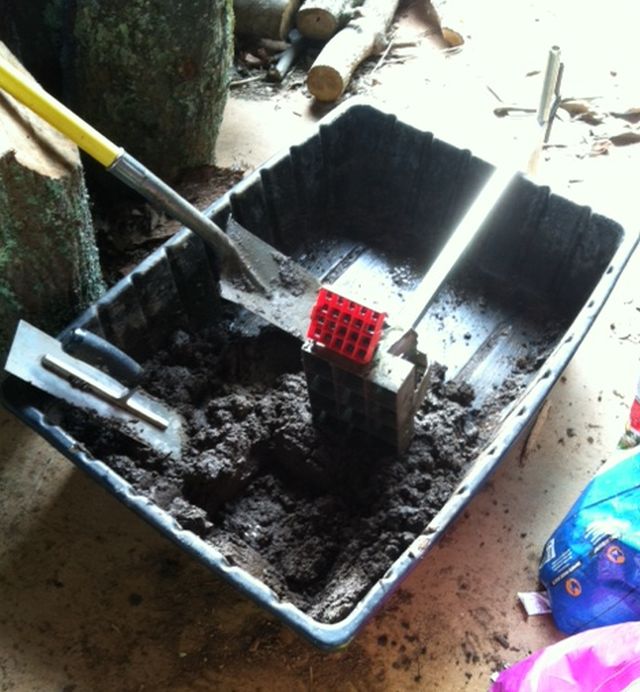
my 2″ and o.5″ soil block moulds
Preparing the 0.5″ soil blocks is quick since I use purchased seed starter mixture. More work is required for the 2″ soil blocks for which I use topsoil, my compost and peat (all manually sieved) and to which I add building sand and lime (to offset the peat ph). When the seeds have germinated and grown about 0.5″ I transplant them to the 2″ soil blocks. And later I will transplant the tomato soil blocks into 32 oz yogurt containers. For maximum sun exposure and monitoring I grow the tomatoes in my greenhouse until they are ready for the outdoor raised beds.
I also germinated from 0.5″ soil blocks lots of other vegetables – the common such as lettuce, broccoli, kale as well as peppers, cucumbers and herbs.
Additionally I have been preparing the raised beds with weeding, composting, dusting with ash from the wood stove and seeding with lettuce, mustard, radish, kale etc. This all takes time and work but the weather is pleasant, I enjoy physical labor and, for the first time, I am using headphones attached to my iPhone and listening to my podcasts.
Each day I carefully collect in a yogurt container the ladybugs which appear in our bathroom and, if the collection exceeds 10 or so, I transport them to the vegetable area where they will work beneficially until again in the fall taking refuge in the bathroom. This they have done consistently for several years, like salmon returning to their breeding grounds.
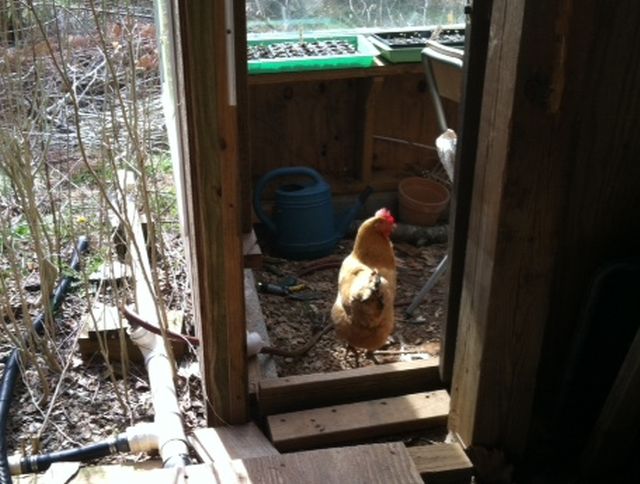
My chickens are free range and I notice Randa (the most intelligent) standing beside the closed greenhouse door. Flashback to when I discovered last year she had made a nest out of sight in the greenhouse with >10 eggs. I open the door for her and when I come back an hour later, she has laid an egg in a little nest she has fashioned. What to do? Initial thought is to keep her out of the greenhouse. On reflection this is not a solution since she will probably then make a nest somewhere hidden in the surrounding growth, as she did 2 years ago and accumulated 16 eggs. So now I leave the door ajar and she lays an egg each day in the green house which I collect at day’s end, together with all the other eggs laid by the normal chickens in the nest box in the coop.
Randa entering the greenhouse
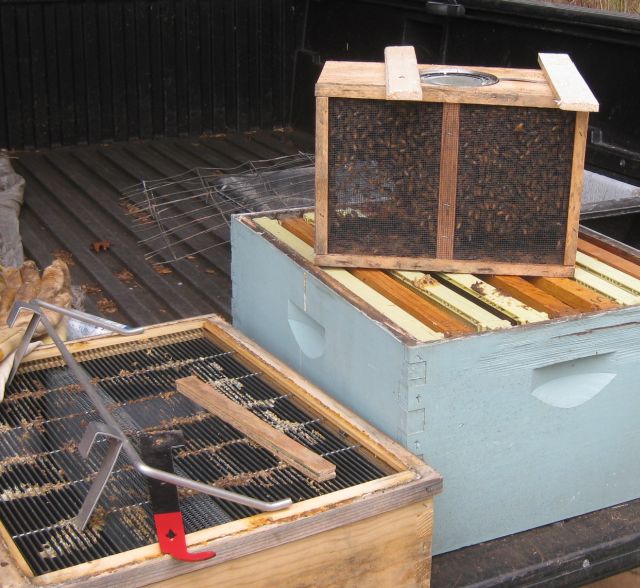
And on Saturday I took delivery and installed 2 packages of bees from our local professional beekeeper who maintains >500 hives and is the oracle of our local bee club.
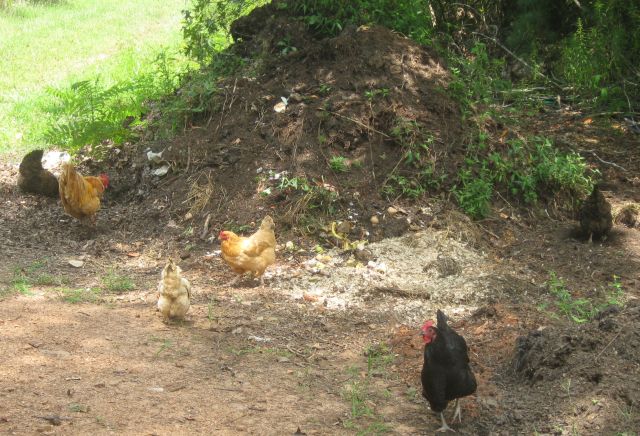
Ever since I trapped and relocated a feral cat (see post 12/9/2015) which I believe killed one hen and mauled another, confidence has returned – to the flock and me. They now are truly free roaming – after the coop door opens in the morning and they spend awhile in the paddocks, I release them to roam the yard. First stop for them is below the deck to gather seed scattered from the bird feeder, then a visit to the compost heaps and then hang out in the woodland area.
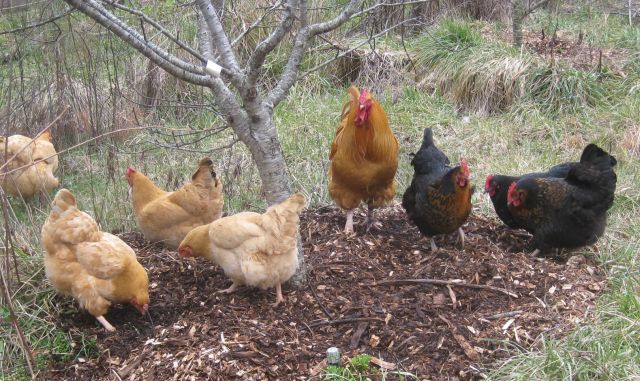
Except today with temps above freezing for the first time in a week, when the rooster and 7 hens pressed on beyond the compost heaps and the vegetable growing area (from which they are fenced out) to the orchard. I had composted and thickly mulched all the fruit trees and they visited almost all the trees scattering the mulch and swallowing down worms and, I hope, slumbering fruit tree pests.
Great for my organic growing efforts and great for their diet. One caveat – I leave the door open alert for a distress call from the rooster. But the yard is fenced in and just up the road a neighbor’s flock of hens peck along the road and visit various yards and so far appear unscathed. So maybe too will be mine.
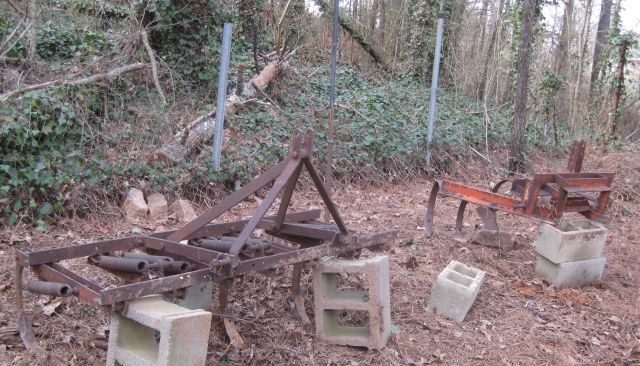
We had some cold days (for Georgia) with temps in mid teens, but that is past and I am emerging from my winter funk. Friday I cranked up the bobcat and worked it a couple hours – moved pine and other logs up the hill to the contour ditches where they will decompose with time; moved two old tractor cultivators from alongside the drive, where they could snag an unwary driver, to a show off location; and turned >150 leaf bags collected in the fall into a semblance of a compost heap.
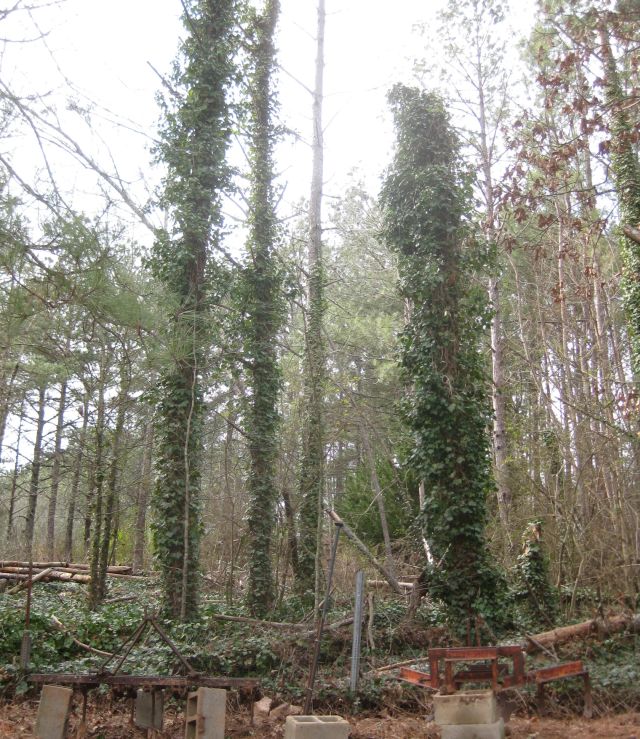
these tractor implements were given to me. the closest weighs >400lbs and would have been hard work for me to move without the bobcata snap of my neighbor’s yard where the pines are strangled by ivy and have succumbed to borers. when they fall into my yard I chainsaw the trunks and add them to my contour ditches
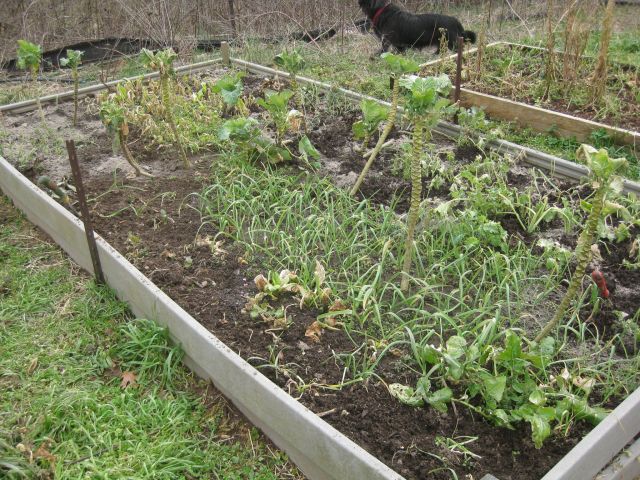
Saturday I weeded my first of 15 raised beds and added wood ash and finished compost.
90% weeded bed, the light patches are the wood ash, more compost to be added
The turnips survived the cold temps and are edible, not so the radishes. The greens were set back by the cold but will recover, all the more quickly without weed competition.
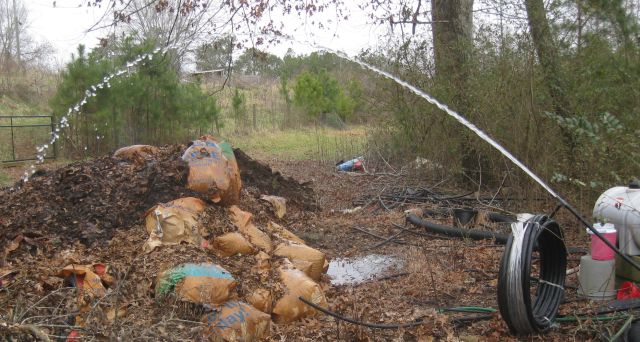
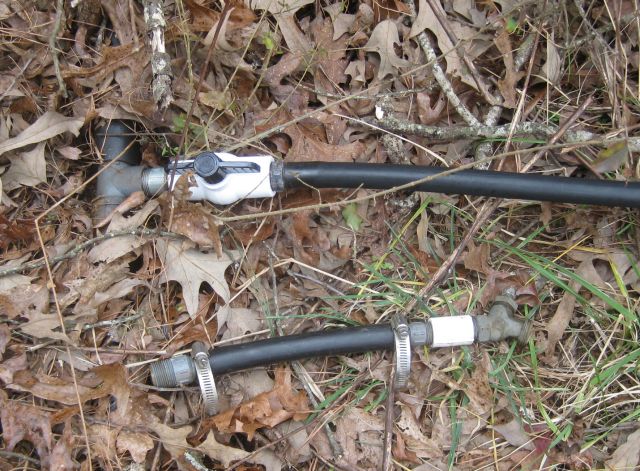
And today, I decided to water the compost heap. I have described my rainwater collection system and tanks holding about 6,000 gallons. All the tanks are full and winter rains go to waste. So why not use some of the water now, not only for irrigating the fruit trees, but also to fire up the compost. Though I added finished compost to the leaf heap nothing happens without moisture. I use 1.25″ pipes to move water and to this is connected a regular hose for watering the compost. This is inefficient – the hose is 5/8″ diameter 100 ft long and connects via a faucet – three negatives right there a) diameter too small; b) length too long; and c) faucet configuration disturbs water flow. I have two 3/4″ diameter 100 ft hoses but they are used elsewhere and are also too long. It took just 10 minutes to make some big improvements. I replaced the faucet with 3/4″ in line PVC valve, and I selected 2 – 20 foot lengths of 3/4″ plastic coil pipe which I connected.
the 2 connections compared – above is the new connection with straight water flow valve connected to 3/4″ black plastic pipe; and below is the traditional water faucet which connects to a hose
Water flow was much better than with the garden hose.
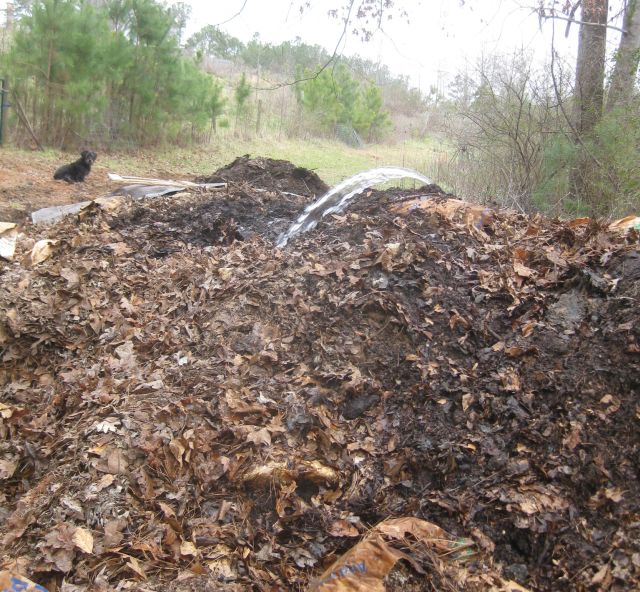
watering the heap with 3/4″diameter 40 foot length pipe connected to 1.25″ diameter pipe, Trudy observing
As I moved the pipe to water different parts of the heap, the connection between the 2 lengths separated. I was impressed with the vigor of the water jetting from the shortened pipe and it occurred to me, why not just use a 20 foot length and the increased water pressure will get the water to where it is needed. The image at the head of this post, also below, shows the increased pressure when just a 20 foot length is used (similar dynamics to the flow of electrical current through a cable, the calculations for which I have included elsewhere on this site).
considerably greater pressure when the pipe length is halved. bottom right -red container is liquid nutrient collection station and 30 gal white container is compost tea maker
So I was able to quickly water the heap, and then I covered with a tarp the northern end (winter gusts come from the northwest). When the heap is compacted I will dispense with the tarp. I know tarps conserve heat in the heap which accelerates the action, but then you need to remove it for the rains and, since I am in no rush and have an ample supply of finished compost, I will let the heap proceed at its own pace.
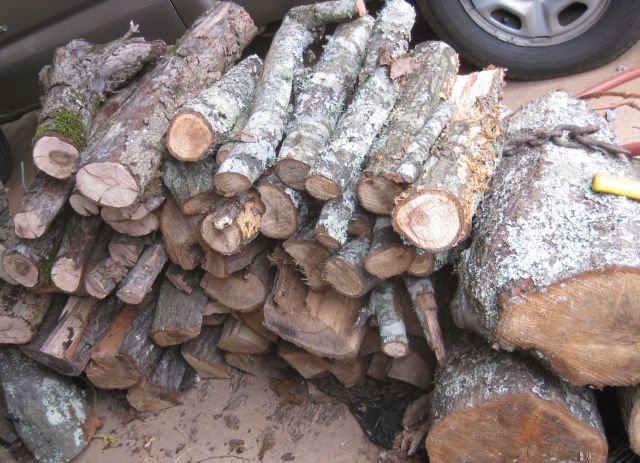
This morning was productive – I also chainsawed an oak and dogwood which had fallen down – though there limbs are small diameter, I added them to the firewood pile.
the small sized diameters were taken this morning. The dogwood is hard and heavy and should make good firewood
And I weeded another bed and picked turnips which we enjoyed in our lunch salad.
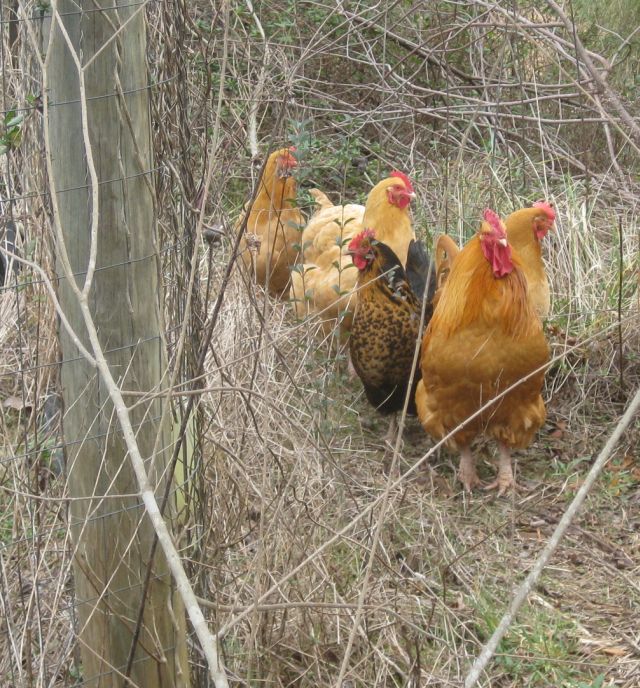
woodland foragers circling the vegetable growing area. Though I would appreciate their work turning the raised beds I cannot risk contamination. Since I trapped and removed a feral cat in December, we have not had predator problems and the chickens are confident exploring the yard.
And there were 5 eggs today and 3 yesterday – the longer days are moving the hens back to production. A productive morning.
I said goodbye to Gimpie today. She was one of 6 hens given us by our neighbor some 4 years ago, and only one is now left, the Ameracauna. Gimpie had a bad hip which may be because our neighbor would carry her birds by their feet, upside down. She said they went to sleep and wouldn’t struggle that way. Her son objected that it was bad for them and I guess Gimpie was the result. Anyhow Gimpie was a real trooper – with her bad hip she would struggle out of the coop down to the second paddock where they congregated for the day. And in the evenings she would wait for me to pick her up and carry her back to the coop – a passenger chicken I called her, thinking of the Passenger pigeons which we exterminated. And though handicapped she was first in pecking order and last year, I don’t know how, she would manage to get into the nesting boxes and lay eggs. An indomitable spirit.
Gimpie had one offspring, Gus, a handsome rooster whom we gave to a nearby farm where we saw him for several years in the field alongside the road.
Gus, the young rooster, was adopted by a local farm
Yesterday was cold (16 deg F in the night, 25 deg F in the day) and Gimpie emerged from the coop but did not go down to the second paddock and stayed near the coop where the sun caught the base. I decided to replace the infrared heating lamp in the coop and so, as is his wont, the rooster came to investigate my doings and one of the younger hens came along as well. I had finished in the coop and had left paddock when I paused to watch the rooster trying to ingratiate himself with the young hen. He sidled alongside her bowing his head and making, I suppose, romantic clucks. She would have none of it and promptly headed into the coop. He was angry and then he saw Gimpie by herself and went for her, like a hawk striking a small bird. She crumpled and lay there. I thought she was dazed.
When I came back to lock them up, a couple hours later, I saw she had moved about 10 feet and was motionless, eyes closed. I brought a cage into the coop, placed it near the heating lamp, filled it with pine shavings and provisioned it with water and food and settled her there for the night. As I left I heard her eating vigorously. This morning the Gimpie we knew was gone and I buried the rigid body in a deep hole near the pear tree.
During the winter, short daylight months, our chickens cease egg production and we work our way through the eggs we saved until, around mid-December we are out of eggs. And then the offerings in the local supermarket become more appealing. Without including photos, since upsetting folks and triggering nastiness is unnecessary, I will describe the tempting labels.
Carton A – “Fresh Eggs, No Antibiotics, Organic, Non-GMO Feed, Pasture Raised, Grade A One Dozen Large Eggs, Level 4 Pasture Raised”
Carton B – “Pasture Raised, 12 Large Grade A, Made with Fresh Air and Sunshine, Happy Hens, Freedom to Forage Outdoors Year Round, Under Open Skies, Tended by Hand Raised with Respect, Certified Humane Raised & Handled etc.”
You get the idea. It is at times like these that M. looks at me with new respect. She cracked 4 eggs from Carton A and said their yolks were insipid and 2 looked approaching albino. M. has a scientific background and not inclined to exaggerate.
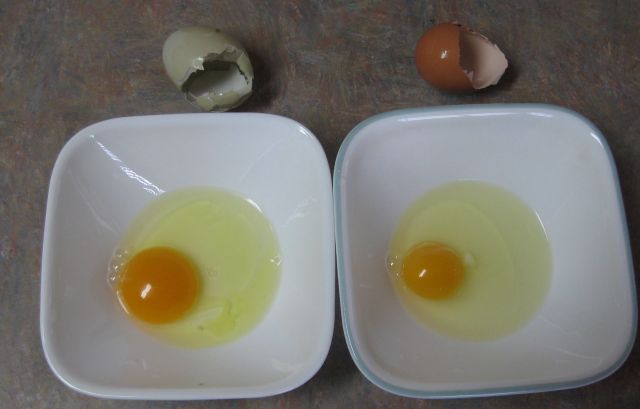
Then good news – Speckles (Buff Orpington dad, Americauna mom) began laying and we have enjoyed 4 good eggs. But not yet enough of them so we are using up the remnants of Carton B. Their yolk color is getting there, but though self-described as “Large Grade A” they appear pitiful against a recent egg from Speckles.
our pasture raised hen’s egg on left and commercial version on right
When I compare eggs from our pasture raised hens with commercial eggs I wonder why there is such a difference. I wonder what pasture raised means – does it include not only space to roam but lots of green goodies and insects to eat? Our chicken breeds are nothing special yet their eggs seem so much better. Here is another pic of 5 eggs – can you guess which is ours?
one of thes 5 eggs is ours, the remainder are from carton A
Or if the difference is not the pasture maybe it is organic feed. We use regular non-medicated feed and maybe it has a more complete nutrition profile.
Enough with the speculation – now we have passed the shortest day of the year we are hoping our other hens will begin to mimic Speckles and we can begin eating again their delicious eggs.
Update
My previous post mentioned a close shave between Wanda and a predator. I trapped and relocated a feral cat. There was some concern whether I had trapped the culprit. Since that post the 2 fence flying hens (yes Wanda is fully recovered tho without tail feathers) have resumed escaping the paddock areas and wandering around the yard. And on several days I allowed all the hens to go roaming, especially in the compost area where snacks abound. And there have been no incidents and the squirrels, which were previously not to be seen have returned and chase the birds from their bird seed. So I am hopeful that the problem has been resolved.
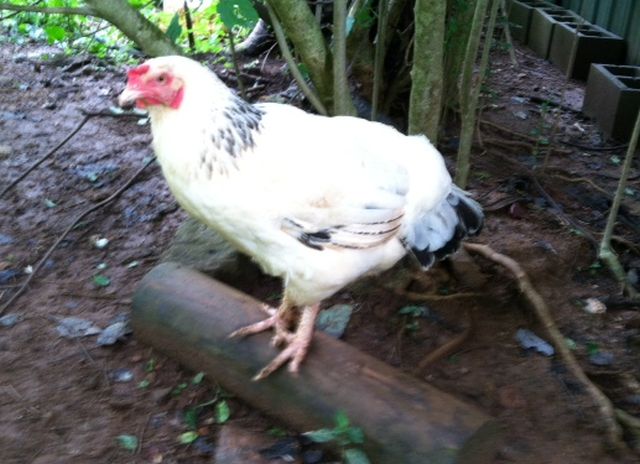
I may not have mentioned that about 5 weeks ago a hen was taken by a predator, which reduced their number to 10 (1 rooster and 9 hens). Each morning a timer opens the coop door when the sun is well up and the chickens emerge to a 5ft high wire enclosed paddock. Except for 2 chickens – Randa and Wanda (from wanderer) who would fly over the fence to the greener grass the other side. Well 5 weeks ago Wanda was not to be seen except for a scattering of her feathers. The chickens at the time seemed agitated and I set the timer to open later each morning and for a while Randa stayed in the paddock with the others where they are well protected by the ever vigilant rooster, Buff of the 2″ spurs. Last Friday at lockup time I noticed that Randa and another hen, Bonnie (offspring of Buff and New Jersey Giant) were outside the paddock.
When we returned Saturday pm we immediately knew there was a problem. A pile of black feathers just outside the paddock area and 7 scared hens gathered in the furthest corner of the paddock where they rarely went. The rooster seemed fine but Randa and Bonnie were missing. The rest of the afternoon we searched for them. Unexpectedly Bonnie appeared with her tail feathers gone and, as the sun was sinking, we spotted Randa deep in the bush. So we had them back, now for a damage assessment.
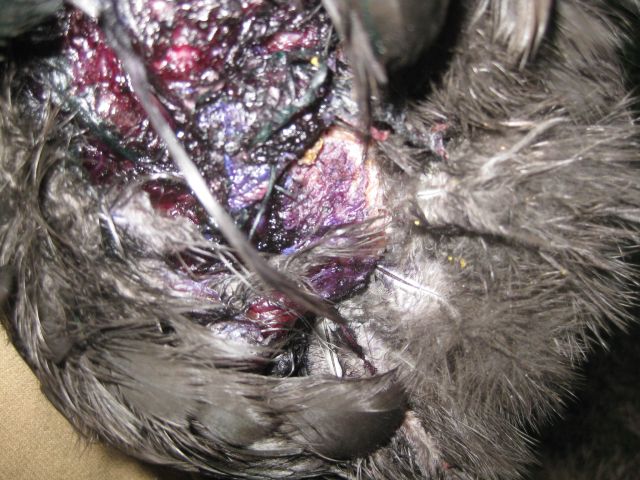
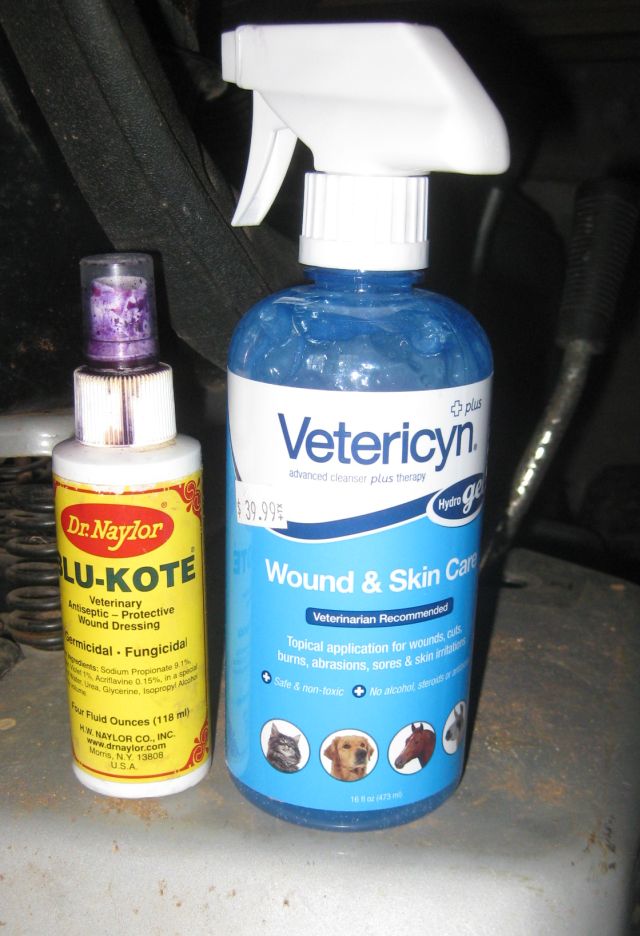
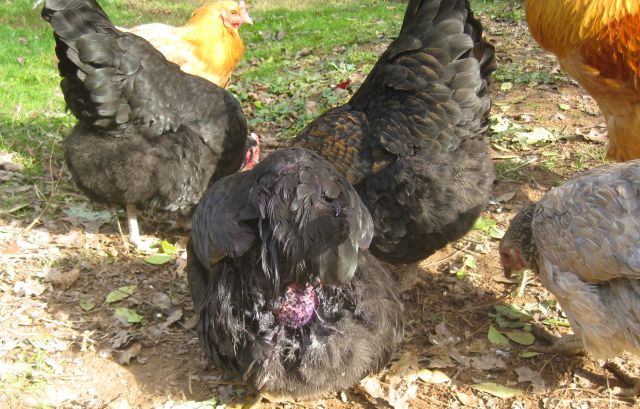
And it wasn’t pretty – not only were Bonnie’s tail feathers missing but her hind quarters were badly mauled with blood, scabs of loose skin and globules of fatty flesh attached loosely to her rear. I was too concerned with treatment to take a picture at the time. So Sat night we swabbed down her rear end with a dilute mixture of H2O2 and then sprayed heavily with Blu-Kote, which is an antiseptic with a blue dye which colors the bloody areas thereby avoiding pecking attraction from the other chickens.
a pic of Bonnie’s blu-koted rear end on Sun night
Sunday we visited the local Tractor Supply where I bought a live animal trap (32″x10″x12″ $40) and two 60 cent tins of cat food. M. had done research and was very interested in purchasing Vetericyn for $35 but I suggested ($35 seemed a lot to me) it was probably no more effective than Blu-Kote. I baited and set up the trap in the barn area and it was empty Monday morning. More research by M. convinced her we really needed Vetericyn and the winning argument which turned me, is that altho it is sprayed on it is a gel and so persists to keep the wound area protected from infection. Vetericyn was available at a closer, more expensive farm store for $40 (a $5 cost for arguing when I shouldn’t) and Mon evening we applied Vetericyn liberally.
the two medications we used
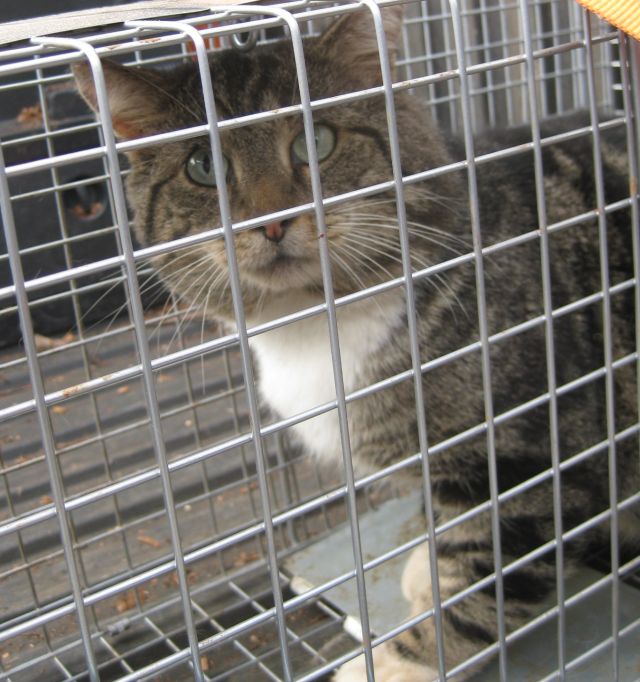
Tuesday morning the trap, which had been relocated to the greenhouse was empty – a feral cat uses the greenhouse in cold weather but the weather has not been very cold. Tuesday night I located the trap in the carport where my security camera has shown a cat walking in the early morning hours. And when I arrived at 9am the cat was in the trap.
feral cat in cage
It may look cute in the cage but it is fearsome. Not once did it meeow but instead shook the cage back and forth as it tried to claw its way out. It is larger than it looks and is in good condition and strongly built. No wonder we have had no rodents or squirrels near the bird feeder this past year. I previously blogged that the disappearance of rodents in the chicken coop was due to two >5ft long snakes which cleared them out.
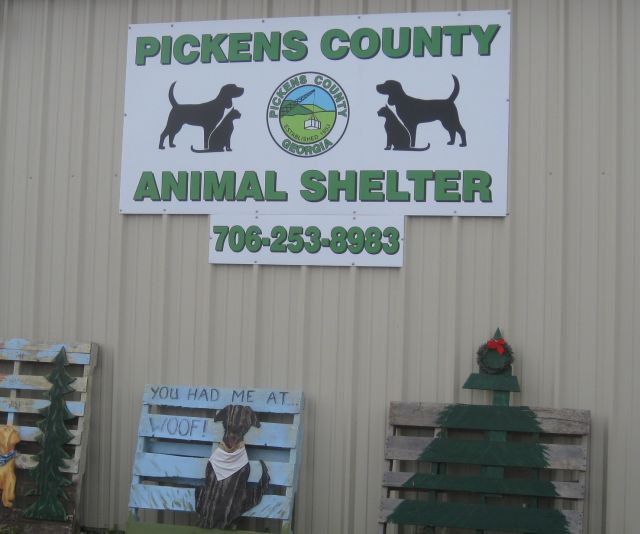
Now what to do with the cat. A store attendant said she shot cats with a .22 long gun (I call it a rifle) which was easier than trapping and taking them to a shelter where they would be euthanized. My neighbor this morning said he had relocated a stray dog more than 2 miles from his house and the next day it was back and he suggested I take the cat to the local shelter. The animal shelter receptionist said I could relocate the cat or give it to a chicken farm. I thought she was kidding – what will the chicken farm do with it? I asked and she said they keep cats to get rid of rodents. She also offered that I could bring it in and, for a cost of $25, they would neuter it and cut off the tip of one of its ears and give it to a chicken farm. The clipping of an ear signifies it has been neutered.
the local animal shelter
So off to the animal shelter where I paid $25 and was directed to a local vet where they said they would perform the procedure later in the day. They said I should call back for the cage – apparently they anesthetize the cat by injecting it while it is in the cage, which answered a riddle for me – how do you safely get a feral cat out of a cage?
And how is Bonnie doing? Despite pretty severe wounds she seems to be doing ok. Walking normally and eating as usual and no sign of a rampaging infection. We are hopeful.
Bonnie with rear end to the camera, her Mom to the left, sister to the right
postcript – I have been asked how do I know I caught the culprit since I never saw the predator which attacked the chickens. Several factors persuade me – there used to be several feral visitors, a large tawny cat and even a young cat which I once fed (big mistake). Past 6 weeks they have not been around. I think the cat in the trap moved into the area and cleared them out (or ate them). The only cat captured on my surveillance cameras the past week was the one in the trap. And finally, it was big enough and strong enough to catch and eat a chicken. Hopefully no more predations.
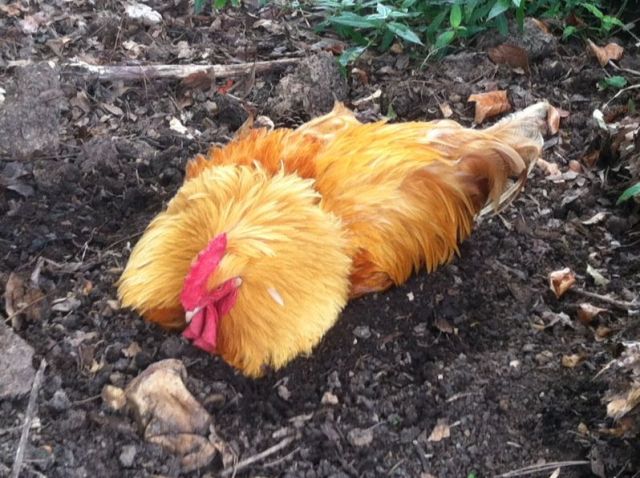
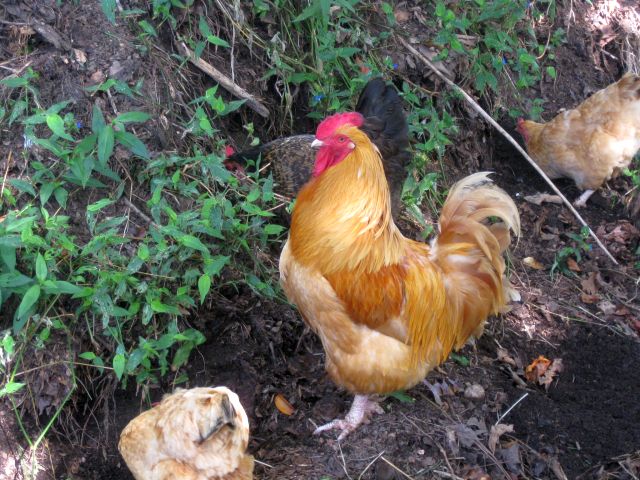
Our rooster and 10 hens have access to 3 paddocks. 2 of the hens regularly fly over the 6′ fence to the greener grass on the other side. Recently I have allowed all of them to go wandering around the yard beyond the paddocks. And they love it. Initially they focused on the area below the deck where seed from the bird feeders had fallen and because it is surrounded by Rose of Sharon hibiscus which provides excellent cover. Then last week I shepherded the rooster and a hen to the compost heap and the fruit orchard. The vegetable growing area is entirely fenced in and not accessible to them. The rooster inspected the orchard and then headed back to the compost where he dug a shallow hole and spread out reaching with his beak to snack.
compost delights
Now a few days later he and some of the hens are back at the heap.
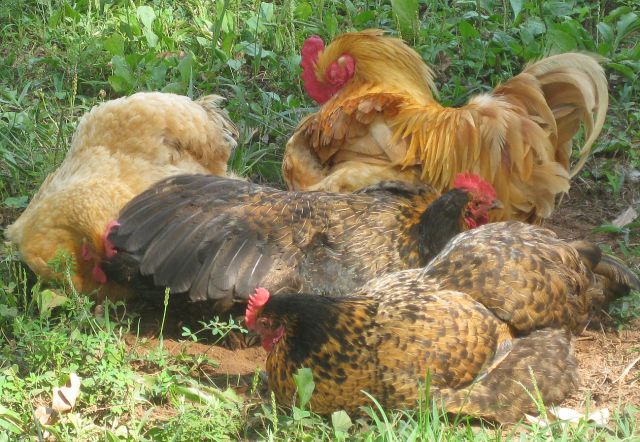
working the base of the heapinvestigating the side of the compost heap
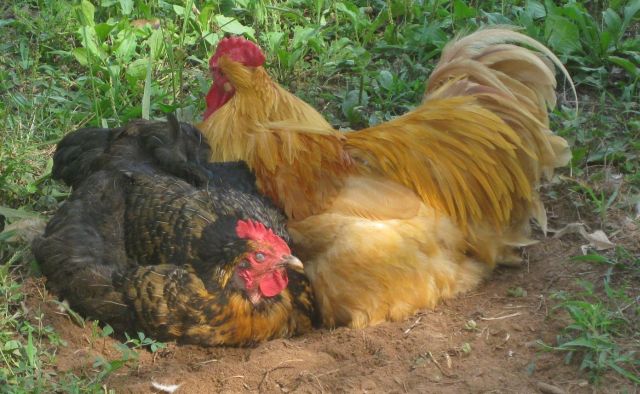
And near the heap they dug a sand pit where they shower themselves with kicked up dust to deter mites.
initially just 2 at the dust bath
And then a few more arrived.
now it’s a group dust bath
Now they are truly free ranging. And I have noticed they eat less feed in the coop since, at the end of the day they have well feasted. Only negative is to watch where you walk but since I remove my outdoor shoes when entering the house this, for now, is not an issue.
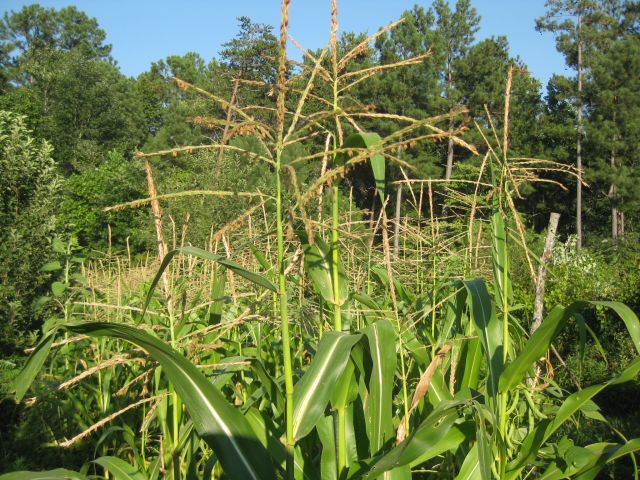
3 sisters refers to the practice of growing corn, climbing beans and squash closely together with the corn providing scaffolding for the beans, the beans providing nitrogen fixing and their hairy stems dissuading insects, and the squash shading out weeds and enabling water retention by the soil. My 3 sisters appear to be doing ok, though I now realize some fine tuning is needed for next year.
corn reaching for the sky
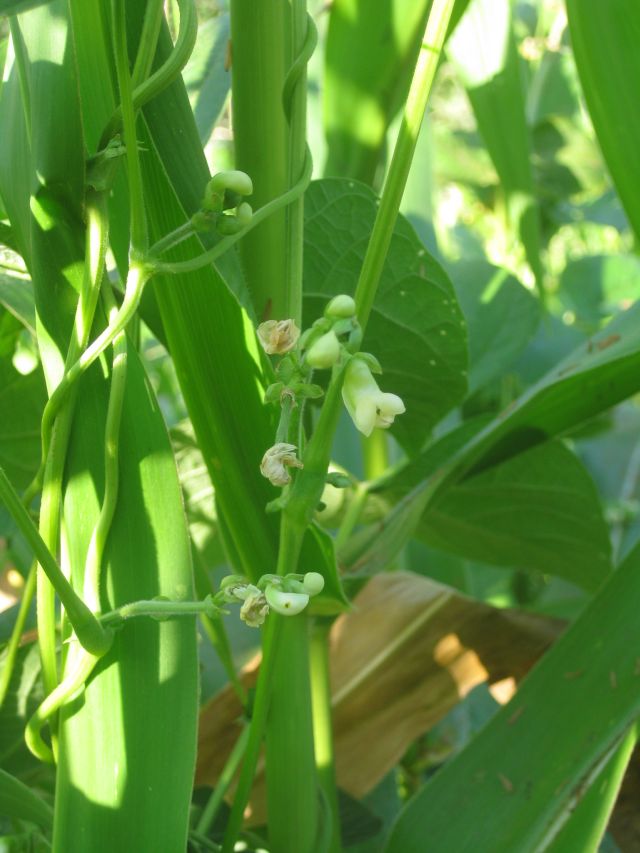
You can see the beans wrapping round the stalks.
bean vines growing on the corn
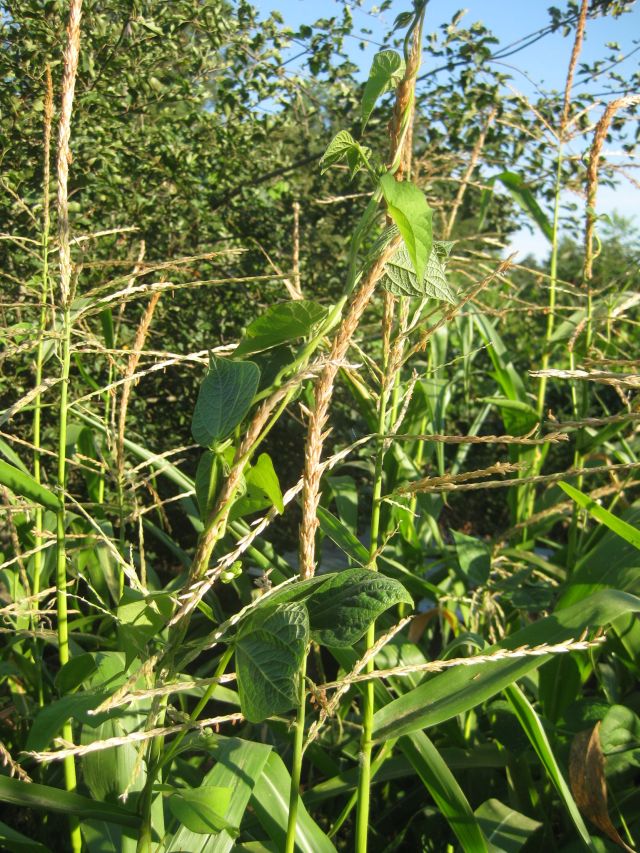
But is the corn handy scaffolding, or are the beans strangling the corn?
in some cases the aggressive been runners have encircled the corn tassels and pulled them down, hampering corn pollination
Next year I will give the corn a head start rather than plant the beans simultaneously with the corn.
a new brush
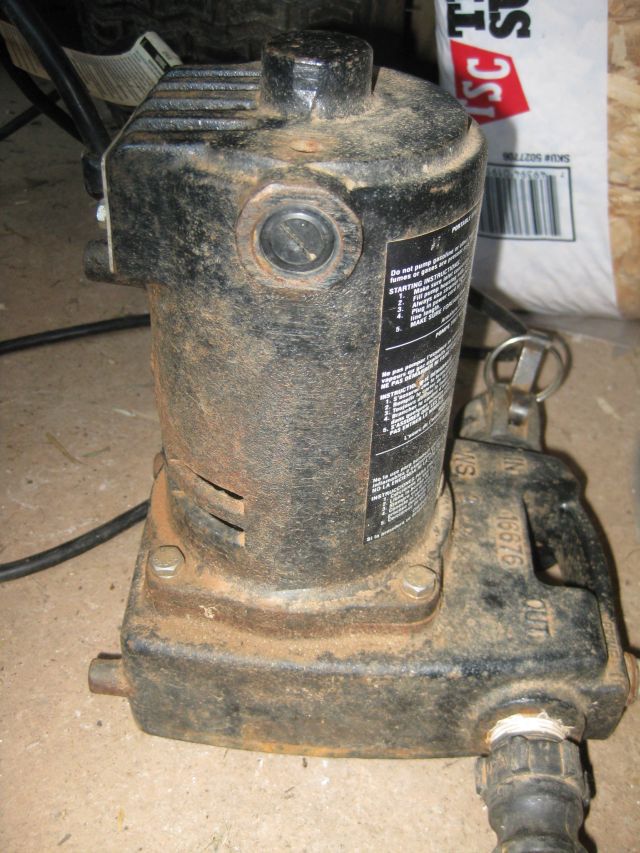
I have 2 water pumps for my rainwater harvesting operations and a couple days ago the one pump was very hesitant on the first go round and refused to start when I needed it a second time. I remember in South Africa how it was well known that women could fix electrical appliances by giving them a kick – the floor polisher doesn’t work, kick it. A well aimed kick could even start a car. So I thought what the heck and I kicked the pump and it started up and ran for a bit. And then stopped. Must be the brushes I thought. There are 2 brushes to a motor and they are easily replaced.
towards the top of the pic in the middle you can see the plug, easily undone with a screwdriver, behind which a brush resides
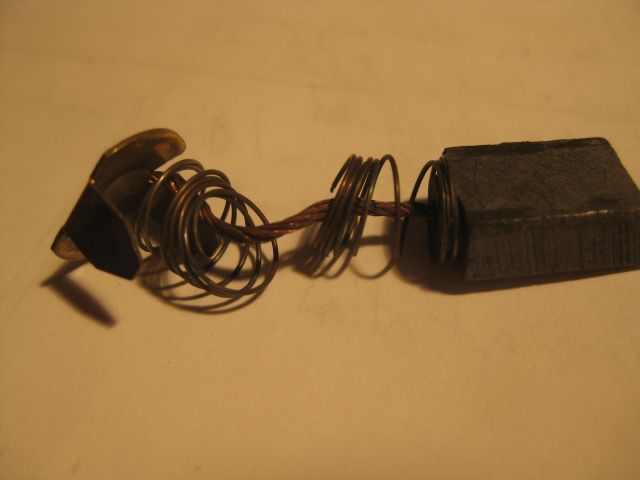
The first brush appeared fine with much remaining life. Could it really be the brushes I thought since the 2nd brush presumably replicated the condition of the first.
But the 2nd brush it was, u can see the broken spring which disabled the brush
I cannibalized a disabled pump (see previous posts on ice damage to water pumps) and the pump started easily. A quick inexpensive repair.
problem = solution
Transforming the problem into the solution is a permaculture mantra and discovering instances are pleasing to the audience and more so the discoverer. I have a problem with rats and mice in my coop. They are experienced tunnelers and prefer to live in chambers below the dirt floor because they are there protected from the elements, have easy access to food and water, less threatened by snakes and lots of bedding material like pine shavings and snips of plastic bags. They are fastidious home proud family members and unfairly branded rodents and vermin. However they are unwelcome in my coop and I tire of their telltale poop strewn on ledges and even in the chicken feed, so I want them out.
In the beginning I refilled their holes with excavated dirt; then I hammered stones into the hole entrances; then I bought sacks of concrete and concreted the holes. In 1 week I used the entire contents of a 60 lb bag of concrete. I then became a bit more creative. I poured water into their holes and once, a bedraggled rat charged out the hole. On other occasions, who knows, an inhabitant may have been trapped inside to a watery end. Some chambers were large and absorbed 4 gallons of water before the entrance brimmed. I know moth balls would have been effective, or so I have been told, but I did not want anything noxious in the coop. And then as I was shoveling chicken poop into a bucket – a brain wave. Save the haul to the fruit tree and just slide it into the hole. Followed by a good water drenching and a concrete cap. Maybe it will work and the labor of chicken poop disposal engineered into a triumph over the inveterate tunnelers.
food from the garden
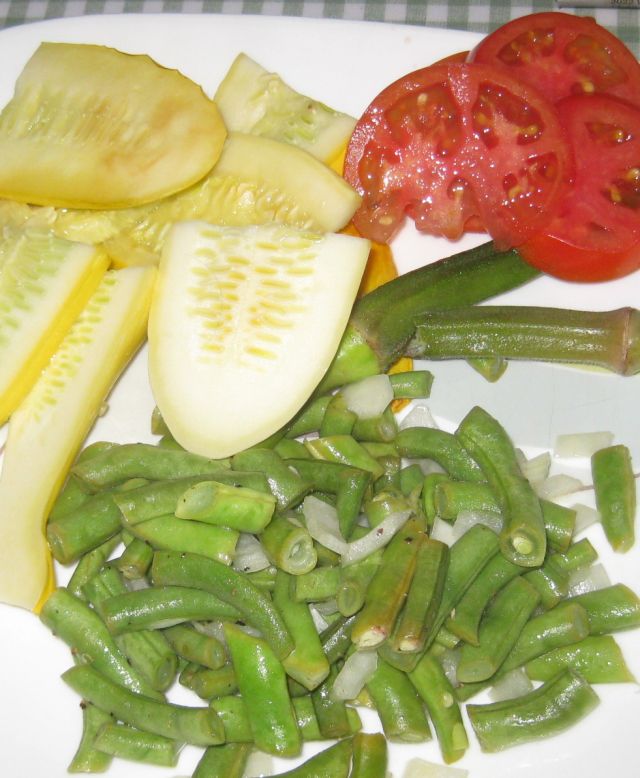
Lots to eat these days.
here squash, beans, onions, okra and tomatoes
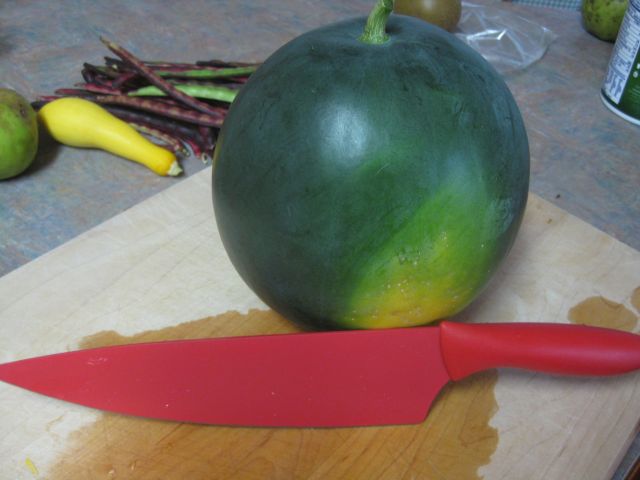
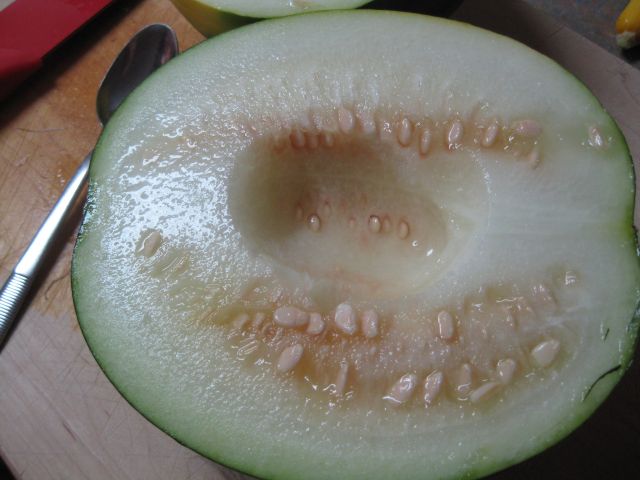
Supplemented with soy patties, mango chutney and sweet potato. And several glasses of zin. However, the melon which looked promising on the outside.
water melon looks promising
Was picked too early.
was picked too early. soft and nice texture but not sweet enough