compost watering & other post winter-funk tasks

We had some cold days (for Georgia) with temps in mid teens, but that is past and I am emerging from my winter funk.  Friday I cranked up the bobcat and worked it a couple hours – moved pine and other logs up the hill to the contour ditches where they will decompose with time; moved two old tractor cultivators from alongside the drive, where they could snag an unwary driver,  to a show off location; and turned >150 leaf bags collected in the fall into a semblance of a compost heap.
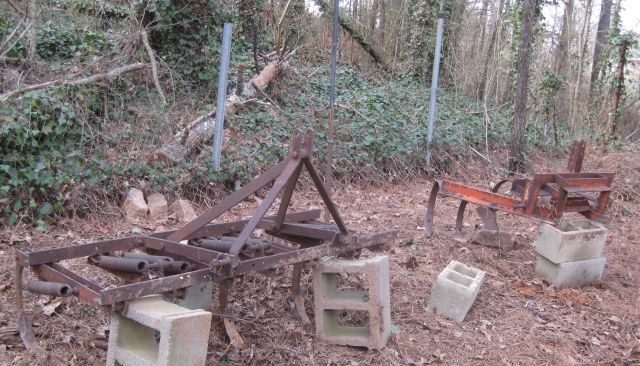
these tractor implements were given to me. the closest weighs >400lbs and would have been hard work to move without the bobcat
these tractor implements were given to me. the closest weighs >400lbs and would have been hard work for me to move without the bobcat
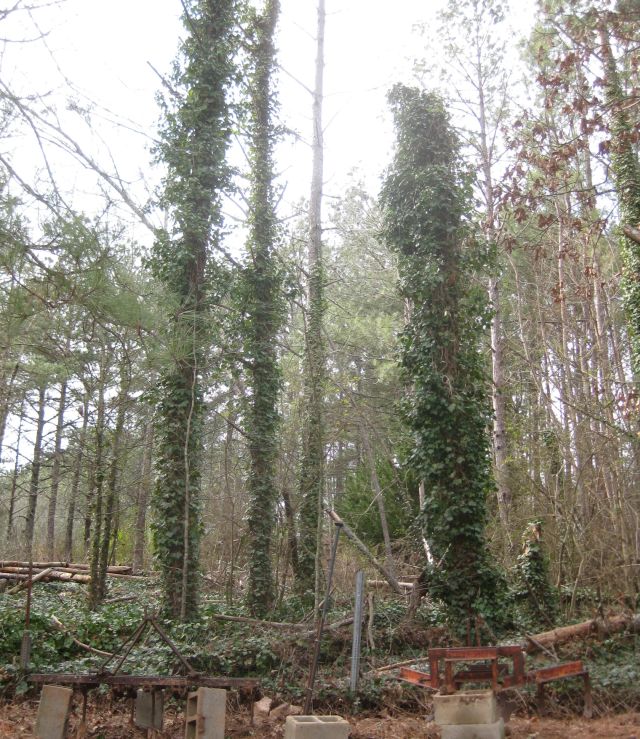
a snap of my neighbor's yard where the pines are strangled by ivy and have succumbed to borers. when they fall into my yard I chainsaw the trunks and add them to my contour ditches
a snap of my neighbor’s yard where the pines are strangled by ivy and have succumbed to borers. when they fall into my yard I chainsaw the trunks and add them to my contour ditches

Saturday I weeded my first of 15 raised beds and added wood ash and finished compost.
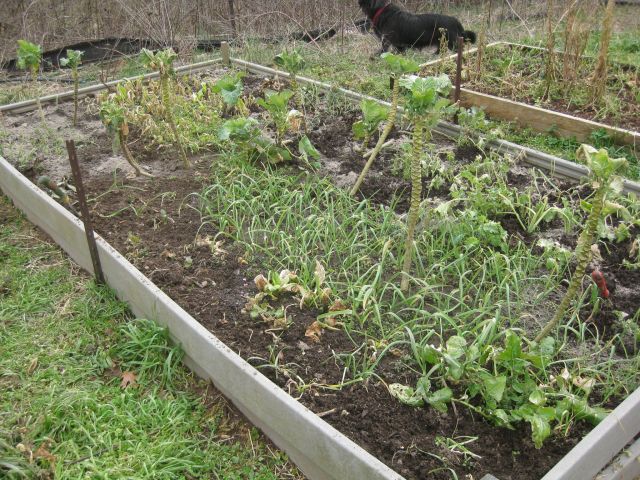
90% weeded bed, the light patches are the wood ash, more compost to be added

The turnips survived the cold temps and are edible, not so the radishes.  The greens were set back by the cold but will recover, all the more quickly without weed competition.

And today, I decided to water the compost heap.  I have described my rainwater collection system and tanks holding about 6,000 gallons.  All the tanks are full and winter rains go to waste.  So why not use some of the water now, not only for irrigating the fruit trees, but also to fire up the compost.  Though I added finished compost to the leaf heap nothing happens without moisture.  I use 1.25″ pipes to move water and to this is connected a regular hose for watering the compost.  This is inefficient – the hose is 5/8″ diameter 100 ft long and connects via a faucet – three negatives right there a) diameter too small; b) length too long; and c) faucet configuration disturbs water flow.  I have two 3/4″ diameter 100 ft hoses but they are used elsewhere and are also too long.  It took just 10 minutes to make some big improvements.  I replaced the faucet with 3/4″ in line PVC valve, and I selected 2 – 20 foot lengths of 3/4″ plastic coil pipe which I connected.
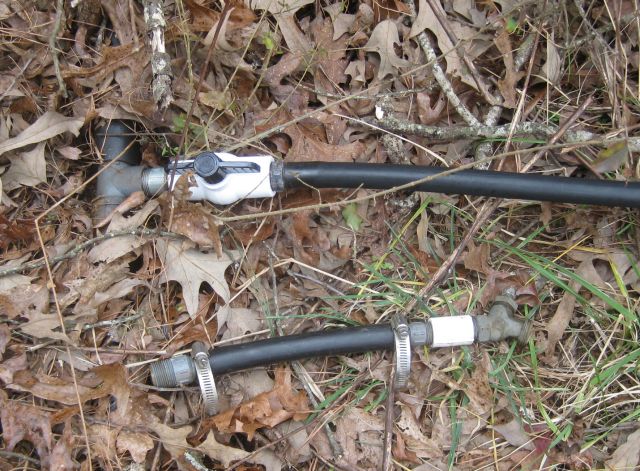
the 2 connections compared - above is the new connection with straight water flow valve connected to 3/4" black plastic pipe; and below is the traditional water faucet which connects to a hose
the 2 connections compared – above is the new connection with straight water flow valve connected to 3/4″ black plastic pipe; and below is the traditional water faucet which connects to a hose

Water flow was much better than with the garden hose.
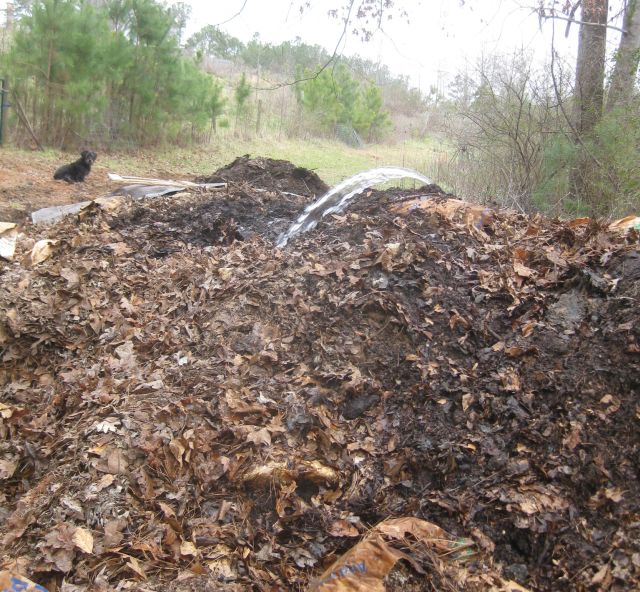
watering the heap with 3/4"diameter 40 foot length pipe connected to 1.25" diameter pipe
watering the heap with 3/4″diameter 40 foot length pipe connected to 1.25″ diameter pipe, Trudy observing

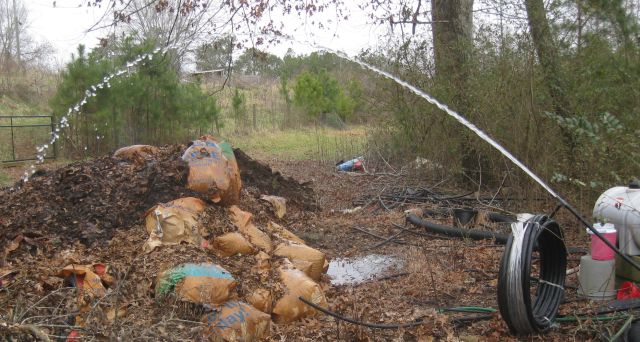
As I moved the pipe to water different parts of the heap, the connection between the 2 lengths separated.  I was impressed with the vigor of the water jetting from the shortened pipe and it occurred to me, why not just use a 20 foot length and the increased water pressure will get the water to where it is needed.  The image at the head of this post, also below, shows the increased pressure when just a 20 foot length is used (similar dynamics to the flow of electrical current through a cable, the calculations for which I have included elsewhere on this site).

considerably greater pressure when the pipe length is halved
considerably greater pressure when the pipe length is halved. bottom right -red container is liquid nutrient collection station and 30 gal white container is compost tea maker

So I was able to quickly water the heap, and then I covered with a tarp the northern end (winter gusts come from the northwest).  When the heap is compacted I will dispense with the tarp.  I know tarps conserve heat in the heap which accelerates the action, but then you need to remove it for the rains and, since I am in no rush and have an ample supply of finished compost, I will let the heap proceed at its own pace.

This morning was productive – I also chainsawed an oak and dogwood which had fallen down – though there limbs are small diameter, I added them to the firewood pile.
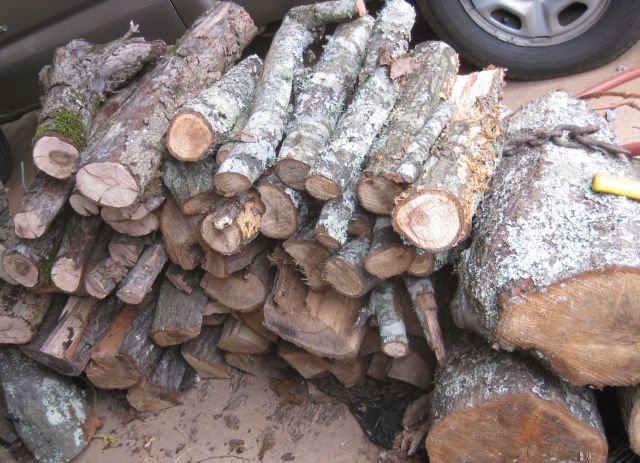
the small sized diameters were taken this morning. The dogwood is hard and heavy and should make good firewood

And I weeded another bed and picked turnips which we enjoyed in our lunch salad.
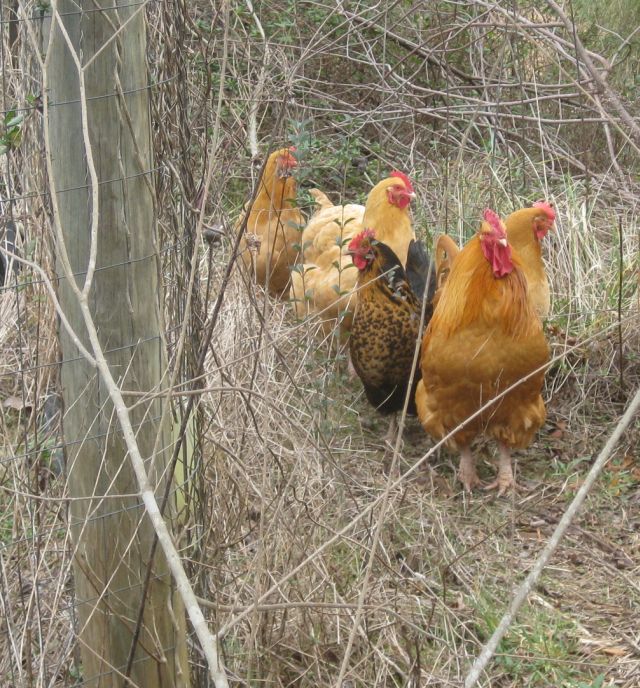
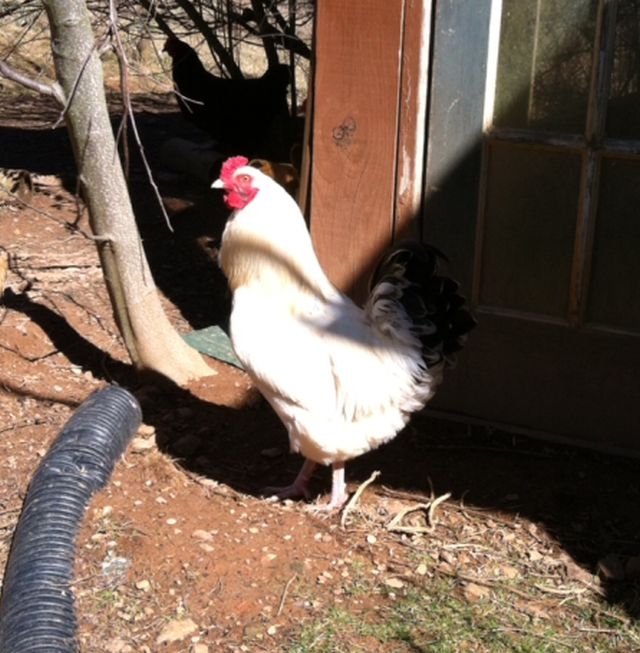
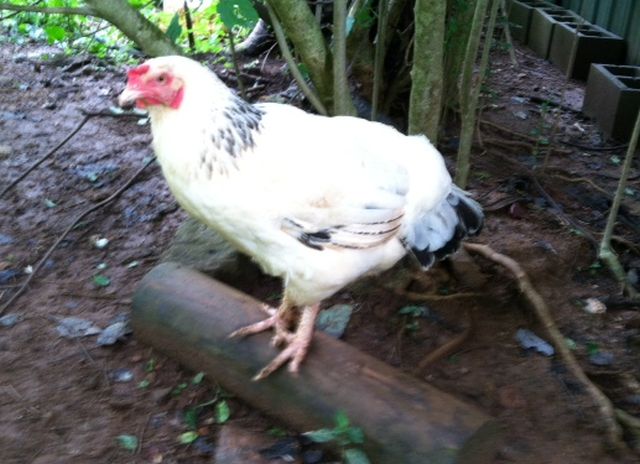
woodland foragers circling the vegetable growing area. Though I would appreciate their work turning the raised beds I cannot risk contamination.
woodland foragers circling the vegetable growing area. Though I would appreciate their work turning the raised beds I cannot risk contamination.  Since I trapped and removed a feral cat in December, we have not had predator problems and the chickens are confident exploring the yard.

And there were 5 eggs today and 3 yesterday – the longer days are moving the hens back to production.  A productive morning.
goodbye Gimpie

I said goodbye to Gimpie today.  She was one of 6 hens given us by our neighbor some 4 years ago, and only one is now left, the Ameracauna.  Gimpie had a bad hip which may be because our neighbor would carry her birds by their feet, upside down.  She said they went to sleep and wouldn’t struggle that way.  Her son objected that it was bad for them and I guess Gimpie was the result.  Anyhow Gimpie was a real trooper –  with her bad hip she would struggle out of the coop down to the second paddock where they congregated for the day.  And in the evenings she would wait for me to pick her up and carry her back to the coop – a passenger chicken I called her, thinking of the Passenger pigeons which we exterminated.  And though handicapped she was first in pecking order and last year, I don’t know how, she would manage to get into the nesting boxes and lay eggs.  An indomitable spirit.

Gimpie had one offspring, Gus, a handsome rooster whom we gave to a nearby farm where we saw him for several years in the field alongside the road.

Gus, the young rooster, was adopted by a local farm

Yesterday was cold (16 deg F in the night, 25 deg F in the day) and Gimpie emerged from the coop but did not go down to the second paddock and stayed near the coop where the sun caught the base.  I decided to replace the infrared heating lamp in the coop and so, as is his wont, the rooster came to investigate my doings and one of the younger hens came along as well.  I had finished in the coop and had left paddock when I paused to watch the rooster trying to ingratiate himself with the young hen.  He sidled alongside her bowing his head and making, I suppose, romantic clucks. She would have none of it and promptly headed into the coop.  He was angry and then he saw Gimpie by herself and went for her, like a hawk striking a small bird. She crumpled and lay there.  I thought she was dazed.

When I came back to lock them up, a couple hours later, I saw she had moved about 10 feet and was motionless, eyes closed.  I brought a cage into the coop, placed it near the heating lamp, filled it with pine shavings and provisioned it with water and food and settled her there for the night.  As I left I heard her eating vigorously.  This morning the Gimpie we knew was gone and I buried the rigid body in a deep hole near the pear tree.

Goodbye Gimpie!

cold hardiness

With temperatures for several consecutive days falling below 25 deg F (excluding wind chill) I decided to see which vegetables in the open raised beds were doing well.

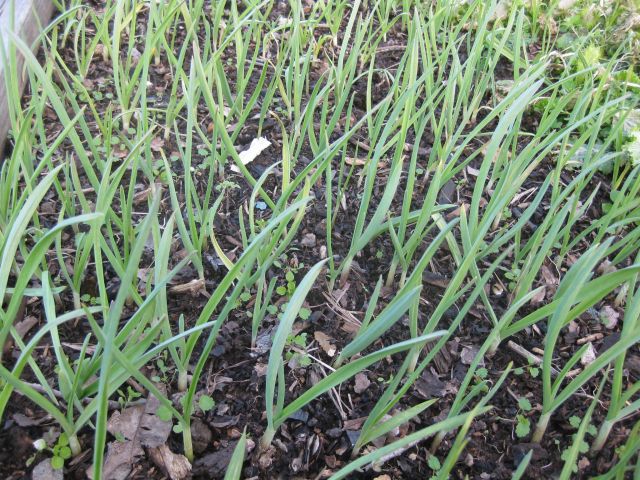
Garlic of course relishes winter but it is not for eating now:

small garlic which will only mature in 3 or 4 month's time
small garlic which will only mature in 3 or 4 month’s time

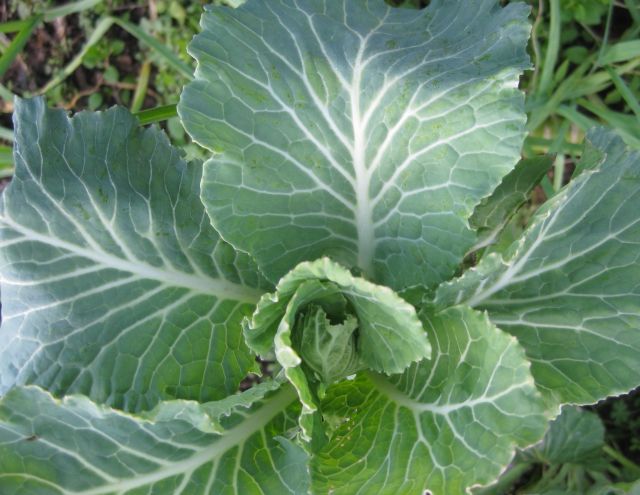
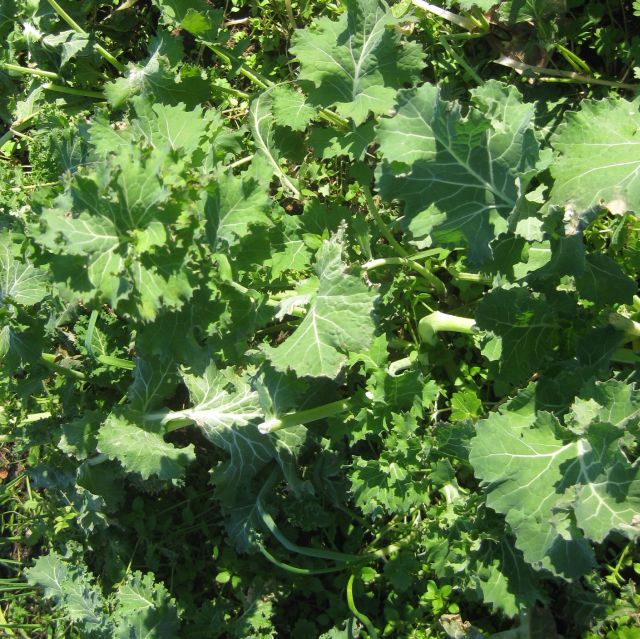
Collard, kale and turnip greens are doing fine.  Here is a collard:

bursting with health and no sign of cold (or insect) damage
bursting with health and no sign of cold (or insect) damage – this collard was planted last spring and made it through the summer

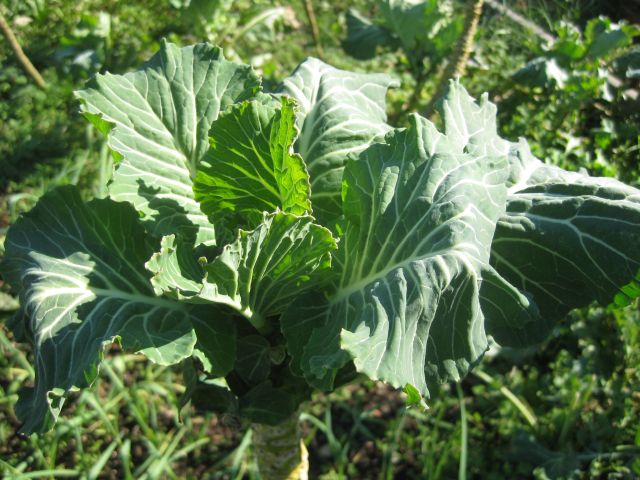
And here is some kale:

this kale looks similar to collard. my dwarf kale is also doing well

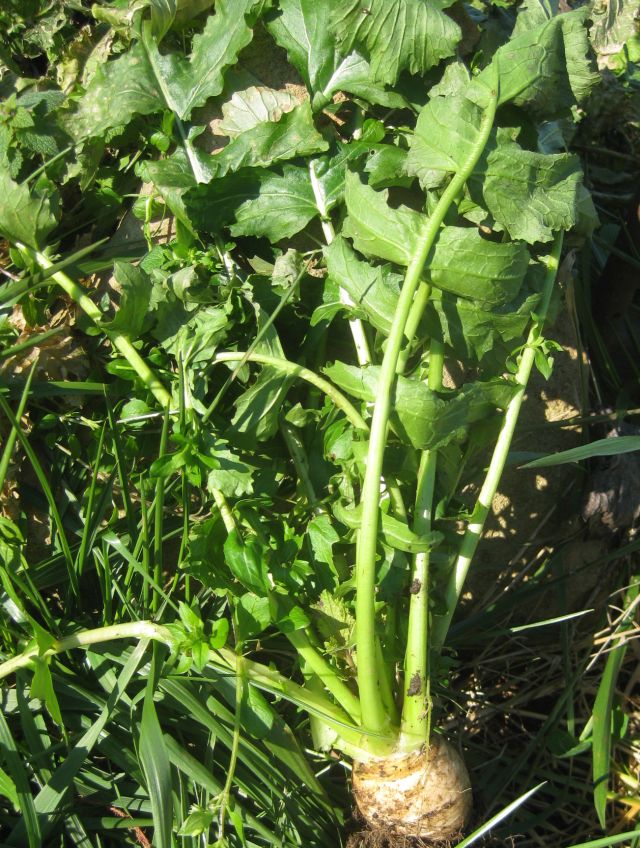
When it comes to turnip greens, it appears there are two kinds – the true turnip greens with very large leaves and a sturdy white base:

This bunch is for the chicken - they find it easier to tear off the leaves when the leaves are attached to the root base
This bunch is for the chicken – they find it easier to tear off the leaves when the leaves are attached to the root base

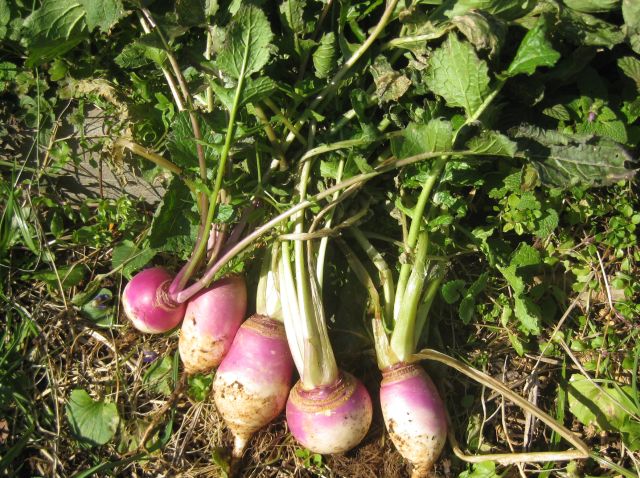
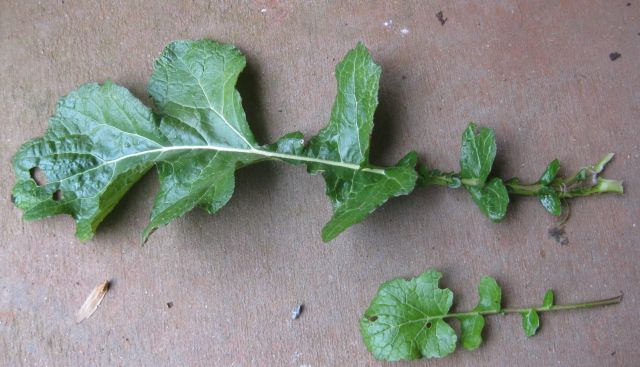
And the other type is the regular turnip which tastes fine despite low 20 temperatures, though its leaves are not as nice as the bona fide turnip greens:

regular turnips we eat raw or sauteed with potatoes and onions

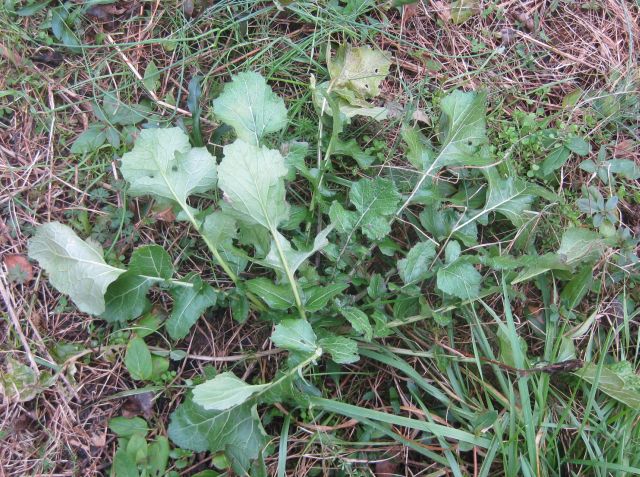
The anomalies make growing interesting.  I scattered turnip greens and turnip seed in a planting area between the apple trees and some of the seed scattered too far and those individual seeds, now plants, are very large, perhaps because there was no crowding so they could really spread their leaves; or different nutrients in the soil.  Or some other reason.  As I was mulching the tree beds I stumbled over one turnip and its size approximated a baseball – I gave it to my neighbor and wish I had snapped a pic.

the seed for this plant strayed far to settle among the orchard grasses

And here is a comparison of a leaf of the above plant with the leaf from a densely sown patch:

the large leaf has at least 4 times the area of the smaller leaf

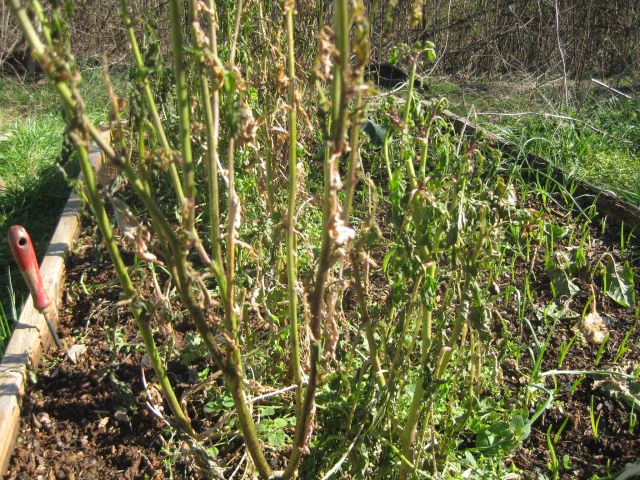
Now for the vegetables which have done poorly.  No surprise that arugula is stunted:

the arugula stands stunted stripped of its foliage

And the chard took a beating:

chard leaves blanched white though I am sure it will recover

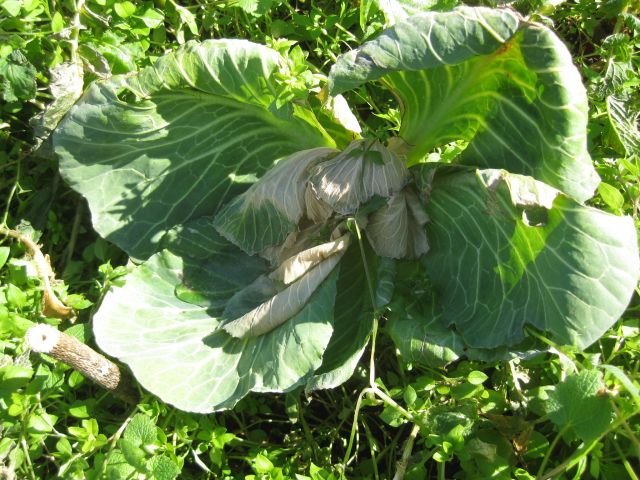
And the cabbage too, did not get off lightly:

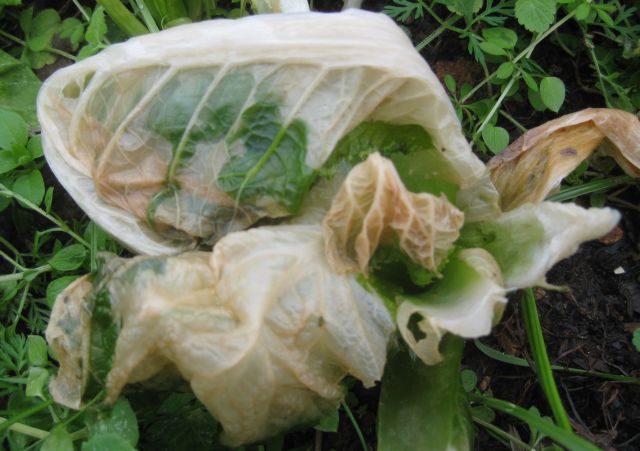
cabbageI noticed that the larger plants suffered more than the smaller ones – so the large mustard leaves looked as white as the chard but the smaller mustard plants were relatively unscathed.  Similarly, radishes become spongy in freezing temps but the smaller radishes fared better.

Next week we expect sub 20 temps and I will be waiting to see how the survivors fare then.


well, that was not difficult – alternator replacement

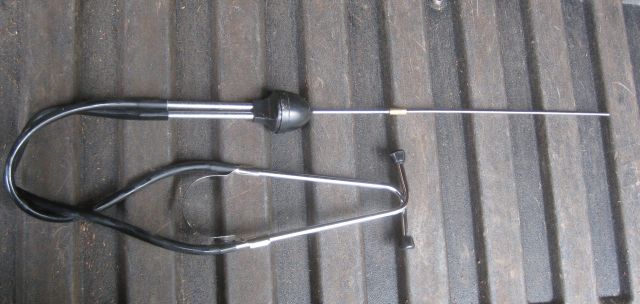
My trusty Toyota Tacoma 2005 2.7L at 218k miles was doing fine, until recently I noticed a high pitched whine from the engine area, even when the truck was not moving.  The whine was pronounced some days, less so others.  It did not seem to come from the engine block (good) but one of the accessories.  The serpentine belt is a long belt driven by the engine crankshaft which turns the alternator (charges the battery), the power steering pump, the water pump and the A/C compressor and is held under constant pressure by a tensioner.  I found lots of guidance on the internet and, as suggested in one blog, my first stop was at Harbor Freight for a stethoscope ($5).

stethoscope for locating unusual engine noises

As luck would have it, when I reached my destination the whine had almost disappeared – isn’t this always the case when you go to the mechanic and the noise cannot be replicated?  However  when I listened carefully I could just discern it.  With the engine running and with care to avoid the spinning radiator fan and the serpentine belt, I carefully probed the reachable accessories and determined the offending noise was loudest with the probe on the alternator.

I had two ways forward – I could replace the bearings on the old alternator or buy a replacement alternator.  I watched an excellent youtube video on how to replace the bearings and it seemed well within my abilities.  However, I have spent very little to date on repairs and decided to buy a new unit.  And “new” could mean OEM reconditioned or non OEM new.  I wanted a good quality replacement.   Now for some research.  Usually Amazon or eBay have the best prices but not this time.  In addition to price you need to figure shipping and tax and website probity.  I located what appeared a good site for a highish price.  And then I thought, why not check out O’Reilly.  It would be quicker to pick up the part, easier to return the old part for a core credit and, if a problem with the part, easier to rectify with a visit.  They had the part for a competitive price with pulley attached and proposed shipping to my home because their closest store did not carry it.  However, most days I drive from Atlanta to the farm and one of their other stores en route carried it.  So I ordered it online yesterday and this morning I picked it up  and the manager told me it has a lifetime warranty – great.

At the store was a younger guy looking for new lights for his ’08 Tundra.  I asked him how many miles he had on it and he said 360k – put my 218k in the shade.  He needs to replace his automatic transmission but his engine goes fine.  Which is good news and I hope my engine can achieve a similar life.  My truck has a manual transmission and no clutch work has been needed to date.

Though my serpentine belt looks fine it is 10 years old and I decided to replace it as well.

Removing the old and installing the new alternator was fairly easy.  I first used my voltmeter to read the charging volts i.e. how much electricity the old alternator was producing, which was 14.16 volts.

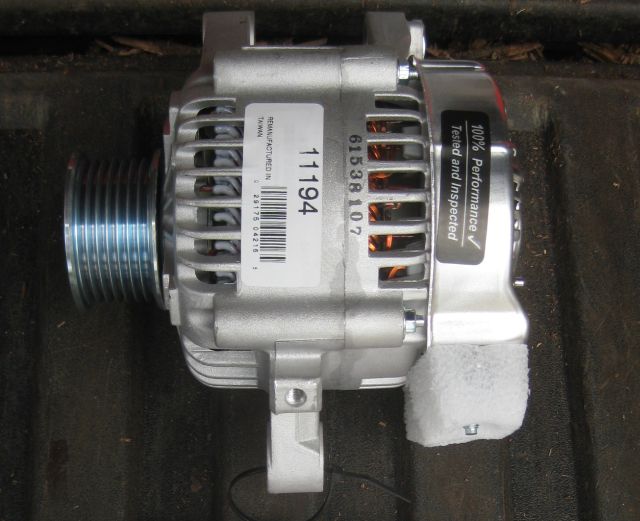
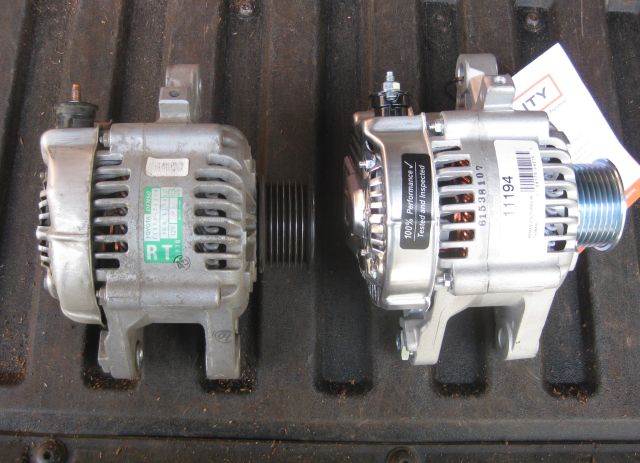
Then I followed Haynes Manual instructions – disconnect negative cable from battery, remove the serpentine belt, remove the wires connected to the terminal and then remove the 2 securing bolts.  I compared the old and the new alternators and they appeared identical.

new and old alternators, side by side

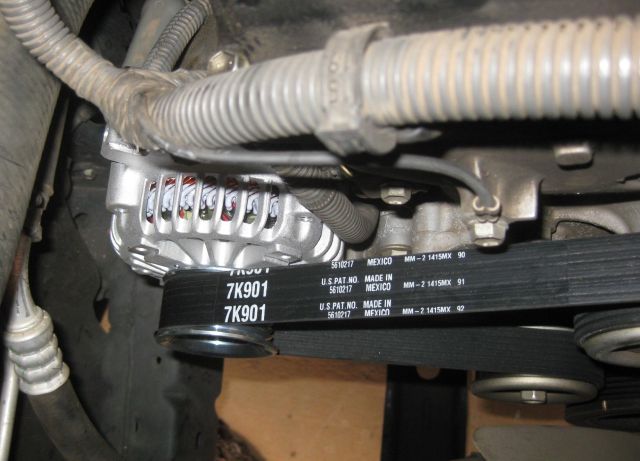
Installing the new alternator followed the above in reverse.  Removing and replacing the belt takes some manipulation and co-ordination.  I checked the charging voltage and it was 14.29 – great.

new alternator and new drive belt in situ

And, most important of all, the whining noise has gone.

update

After I replaced the alternator the car idled poorly.  I suspected this was because I had disconnected the battery and recalled that when we had the battery in M.’s car replaced, the auto store assistant connected a small battery to the car (either via OBD or cigarette lighter, I forget) before disconnecting the battery.  This also maintains the radio settings and keeps the clock time current.  Apparently the problem is more pronounced with older cars and it occurs because the car’s computer makes adjustments for the car’s inefficiencies (throttle body deposits?) as it ages and when the battery is disconnected the computer’s memory is wiped clean and it has to relearn the adjustments.  My car is relearning quickly and the idle is almost back to normal.

When I returned the old alternator for the $35 core credit I noticed there is a $20 rebate coupon for the purchase, so I am even happier with the purchase.

“choose your parents wisely” he said

This Monday morning it was colder than it had been for weeks and the breeze along the river trail was chilling, inside and out.  I was therefore happy to see Bill walking toward me – a good reason to stop running and chat.  Bill began his morning river walks when he was diagnosed as pre-diabetic and now he is out all mornings.

Bill  (a former surgeon) informs me that since more heart attacks occur on Mondays than on any other day he, that morning, tripled his daily aspirin intake.    We enjoy ribbing each other and I suggest a morning walk is more helpful than aspirin.  He counters he will leave  a book, “The Sports Gene”, in my mailbox.    I vaguely recall “it’s about slow-twitch and fast-twitch muscles and, at the top of the game, a slow twitch athlete will do better at distance running and never outperform a fast twitch sprinter?”  He nods.  “But we can influence our outcomes – what about epigenetics, the way our genes are expressed, and now we have crispr to edit them?”I ask.  He understands epigenetics and knows little about crispr (nor do I) and sums up “It all about your genes, the best thing you can do is choose your parents wisely”.  I have now recovered my breath and it’s  time to try catch M. who had sailed past Bill with a friendly smile,  so we adjourn.

With the closing of the local Einstein’s Bagels and Bruegger’s Bagels, M. and I read our morning papers at McDonald’s where the coffee is good  and no sugar added oatmeal acceptable.  With me as the interlocutor, she and Bill have waged several offstage debates.  I remember the one with Bill stating that, as a surgeon, he wanted his patients happy both before and after the surgery since this helped for a quicker recovery, and if hospital provided sodas and fried foods did the trick, he was fully supportive.  To which M., RD, throws up her arms in frustration.  Now, as to Bill’s insight of choosing your parents wisely, her quick response is “too late” (wish I had thought of that).  Her  measured comment – “80% of chronic disease (heart attack, diabetes, cancer, stroke etc.) is caused by avoidable factors such as environment, the food we eat, inadequate exercise and stress – and less than 20% is attributable to genes.  And Bill accepts this, to some degree, hence his early morning walks.

But, notwithstanding some conciliation, two different cliff views and no bridge between.

blackberries

In 2011 I planted an assortment of raspberries and blackberries.  The raspberries failed (high heat and humidity?) the blackberries thrived.  Collectively known as brambles, raspberries can be easily identified because they have a hollow center where picked.   2015 was a good year for blackberries – I picked many and froze the surplus and now enjoy them with  oatmeal breakfasts.

Blackberries propagate by tip rooting – where their long canes come down to the ground they form roots and new plants grow.  Although thick grass is supposedly bad for berries, I notice the canes root easily in grass – they descend and snake along for a foot or more before establishing roots.  With the plentiful rains and warm weather I have been working the berry trellises – relocating rooted canes to new areas, weeding and fertilizing (chicken manure and compost), and mulching with cardboard and newspapers, and then adding thick layers of oak mulch.

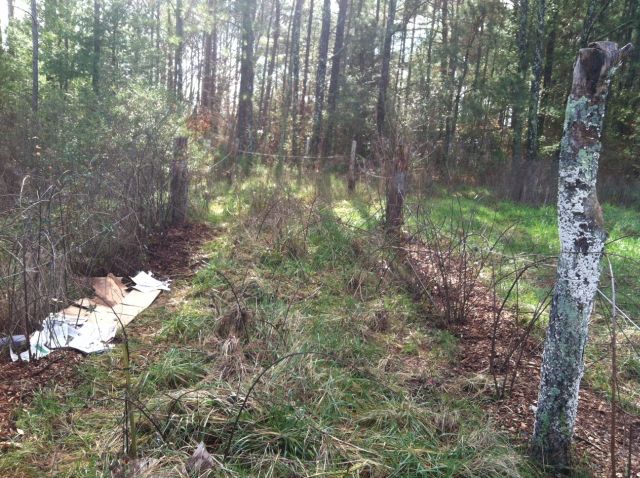
a blackberry location - cardboard on left soon to be mulched
a blackberry location – cardboard on left soon to be mulched

Between the 2 rows of blackberries is a trench (2ft by 3ft) filled with  large decomposing logs designed to snare and infiltrate rainwater.  The blackberry canes have discovered the trench and are establishing themselves.

I have thorn and thornless blackberries.  The thornless Navaho is very tasty, easy to pick and grows prolifically.

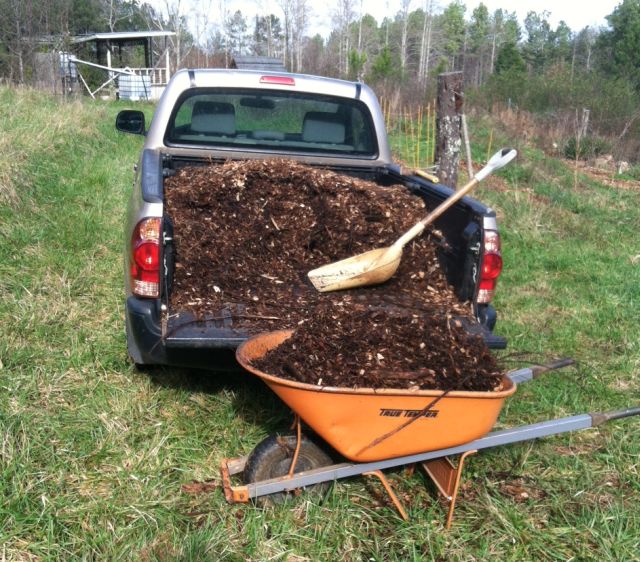
my truck and a large barrow and snow shovel make mulching quick and easy
my truck, a large barrow and snow shovel make mulching quick and easy

“how’s your oatmeal?” he asked

“How’s your oatmeal?” he asked and his face broadened to his ever friendly, genial grin.  Too friendly, considering he asks this question every Saturday morning when our run/walk group concludes the exercise phase and relocates to the breakfast restaurant.  This is “Bob” who recently survived a pulmonary embolism, whose specialists never raised the diet topic, and for whom a good meal is one of his life joys.  And a good meal does not include oatmeal – rather fried eggs and rashers of bacon.  I once asked him if he knew the Hippocrates quote “let food be thy medicine and medicine thy food” and he grinned and ducked and weaved like Muhammad Ali, and my question sailed away.

So today I quickly acknowledge Bob and focus on “Pete” (early seventies) who  is describing his first week on anti-hypertensive medication and, though his blood pressure has not yet come down, it surely will.  I ask Pete why  the sudden rise in blood pressure and he says “aging” and tucks into his eggs and bacon.

Now I really like these guys, and they are pretty knowledgeable and smart, and Pete in his younger days ran sub 40 minute 10k’s, which is good going by my book.  I am not after converts and so I enjoy the oatmeal (not comparable with my home brew – see pic below) and every so often one of the group (usually after a visit to his physician) will have oatmeal for a few weeks too.  And then it’s back to traditional breakfasts, all part of living the good life.  Safe in the knowledge that conventional medicine and an arsenal of medications are on standby for when the music slows down.

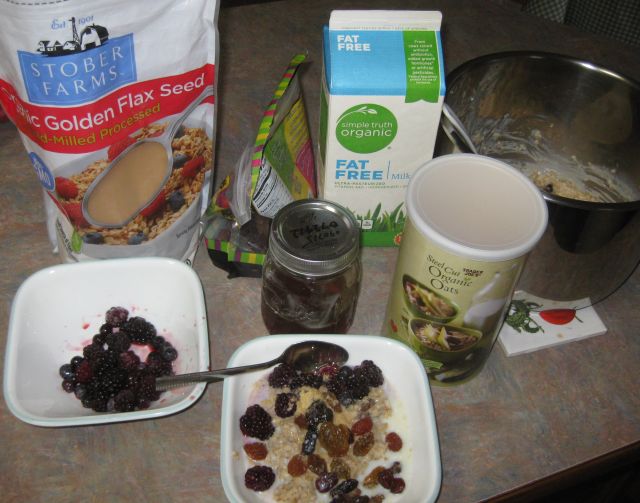
a tasty start to the day with home grown blackberries, blue berries and honey

crazy weather

Now, 2 days after Christmas, the bees are out scavenging.  M. says wouldn’t it be nice if they could find food.  I say bad idea – if they return with food to the hive, just as a dove returned to Noah’s ark, it will signify good times have returned and the queen will be stimulated to egg bearing.  And with no food outside, the new bees will consume the hive’s food supplies and threaten its survival.

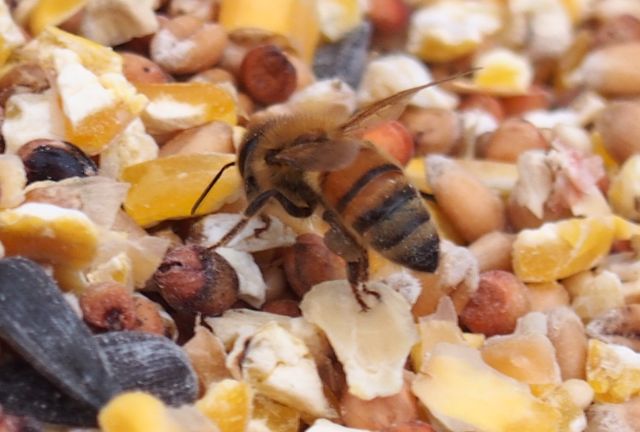
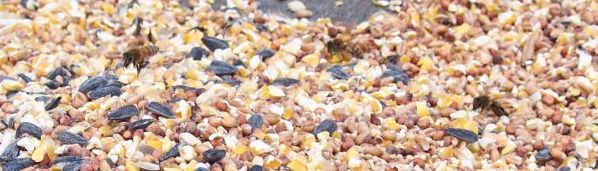
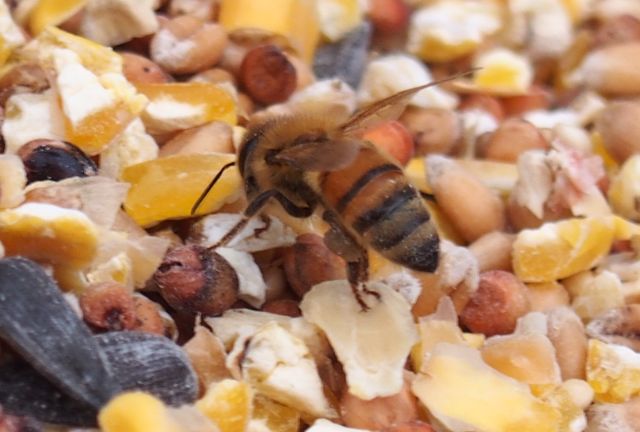
But the foraging bees have found food – the birdseed we provide for our winter dwellers (this morning – blue jay, house finch, chickadee, brown thrasher, tufted titmouse and a solitary woodpecker).

bees foraging birdseed

Perhaps the moisture has produced some fermentation breaking down the starch to release some sugar. A close up

there's something about birdseed
there’s something about birdseed

And with the moisture and warmth more fungi.  The uncovered raised beds keep pumping out greens (collard, kale, mustard, chard, turnip greens) and root crops as well.

additions to the salad - turnips, radishes and scallions
additions to the salad – turnips, radishes and scallions

After several days rain the sun has appeared, the birds are sounding and Trudy (yes we all age) waits patiently.

time for a walk
time for a walk


what are “pasture raised” eggs, also chicken update

During the winter, short daylight months, our chickens cease egg production and we work our way through the eggs we saved until, around mid-December we are out of eggs.  And then the offerings in the local supermarket become more appealing.  Without including photos, since upsetting folks and triggering nastiness is unnecessary, I will describe the tempting labels.

Carton A – “Fresh Eggs, No Antibiotics, Organic, Non-GMO Feed, Pasture Raised, Grade A One Dozen Large Eggs, Level 4 Pasture Raised”

Carton B – “Pasture Raised, 12 Large Grade A, Made with Fresh Air and Sunshine, Happy Hens, Freedom to Forage Outdoors Year Round, Under Open Skies, Tended by Hand Raised with Respect, Certified Humane Raised & Handled etc.”

You get the idea.  It is at times like these that M.  looks at me with new respect.  She cracked 4 eggs from Carton A and said their yolks were insipid  and 2 looked approaching albino.  M. has a scientific background and not inclined to exaggerate.

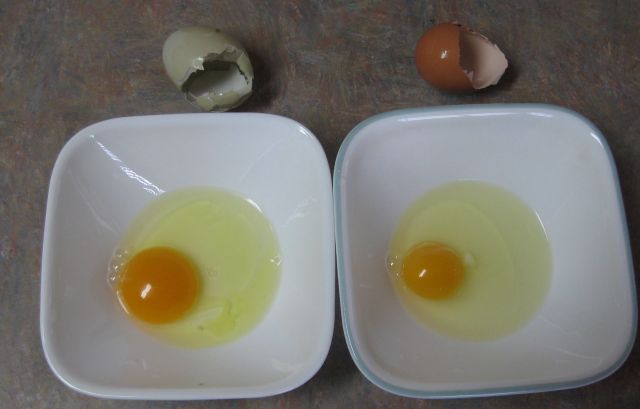
Then good news – Speckles (Buff Orpington dad, Americauna mom) began laying and we have  enjoyed 4 good eggs.  But not yet enough of them so we are using up the remnants of Carton B.  Their yolk color is getting there, but though self-described as “Large Grade A” they appear pitiful against a recent egg from Speckles.

our pasture raised hen's egg on left and commercial version on right
our pasture raised hen’s egg on left and commercial version on right

When I compare eggs from our pasture raised hens with commercial eggs I wonder why there is such a difference.  I wonder what pasture raised means – does it include not only space to roam but lots of green goodies and insects to eat?  Our chicken breeds are nothing special yet their eggs seem so much better.  Here is another pic of 5 eggs – can you guess which is ours?

one of thes 5 eggs is ours, the remainder are from carton A

Or if the difference is not the pasture maybe it is organic feed.  We use regular non-medicated feed and maybe it has a more complete nutrition profile.

Enough with the speculation – now we have passed the shortest day of the year we are hoping our other hens will begin to mimic Speckles and we can begin eating again their delicious eggs.

Update

My previous post mentioned a close shave between Wanda and a predator.  I trapped and relocated a feral cat.  There was some concern whether I had trapped the culprit.  Since that post the 2 fence flying hens (yes Wanda is fully recovered tho without tail feathers) have resumed escaping the paddock areas and wandering around the yard.  And on several days I allowed all the hens to go roaming, especially in the compost area where snacks abound.  And there have been no incidents and the squirrels, which were previously not to be seen have returned and chase the birds from their bird seed.  So I am hopeful that the problem has been resolved.

feral cat – mauled chicken – and solutions

I may not have mentioned that about 5 weeks ago a hen was taken by a predator, which reduced their number to 10 (1 rooster and 9 hens).   Each morning a timer opens the coop door when the sun is well up and the chickens emerge to a 5ft high wire enclosed paddock.  Except for 2 chickens – Randa and Wanda (from wanderer) who would fly over the fence to the greener grass the other side.  Well 5 weeks ago Wanda was not to be seen except for a scattering of her feathers.  The chickens at the time seemed agitated and I set the timer to open later each morning and for a while Randa stayed in the paddock with the others where they are well protected by the ever vigilant  rooster, Buff of the 2″ spurs.  Last Friday at lockup time I noticed that Randa and another hen, Bonnie (offspring of Buff and New Jersey Giant) were outside the paddock.

When we returned Saturday pm we immediately knew there was a problem.  A pile of black feathers just outside the paddock area and 7 scared hens gathered in the furthest corner of the paddock where they rarely went.  The rooster seemed fine but Randa and Bonnie were missing.  The rest of the afternoon we searched for them.  Unexpectedly Bonnie appeared with her tail feathers gone and, as the sun was sinking, we spotted Randa deep in the bush.  So we had them back, now for a damage assessment.

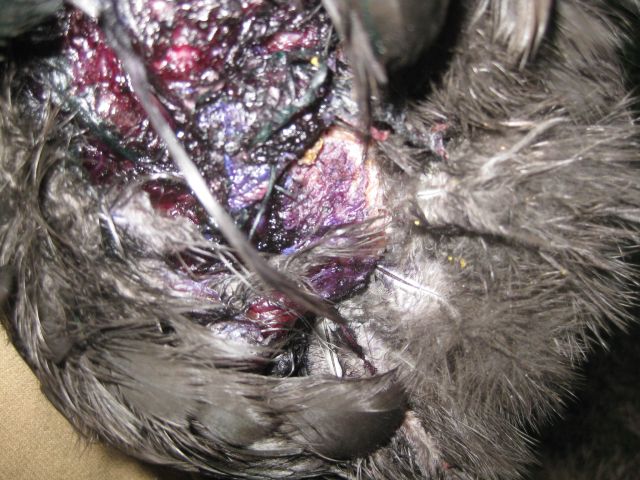
And it wasn’t pretty – not only were Bonnie’s tail feathers missing but her hind quarters were badly mauled with blood, scabs of loose skin and globules of fatty flesh attached loosely to her rear.  I was too concerned with treatment to take a picture at the time.  So Sat night we swabbed down her rear end with a dilute mixture of H2O2 and then sprayed heavily with Blu-Kote, which is an antiseptic with a blue dye which colors the bloody areas thereby avoiding pecking attraction from the other chickens.

a pic of Bonnie's blu-koted rear end on Sun night
a pic of Bonnie’s blu-koted rear end on Sun night

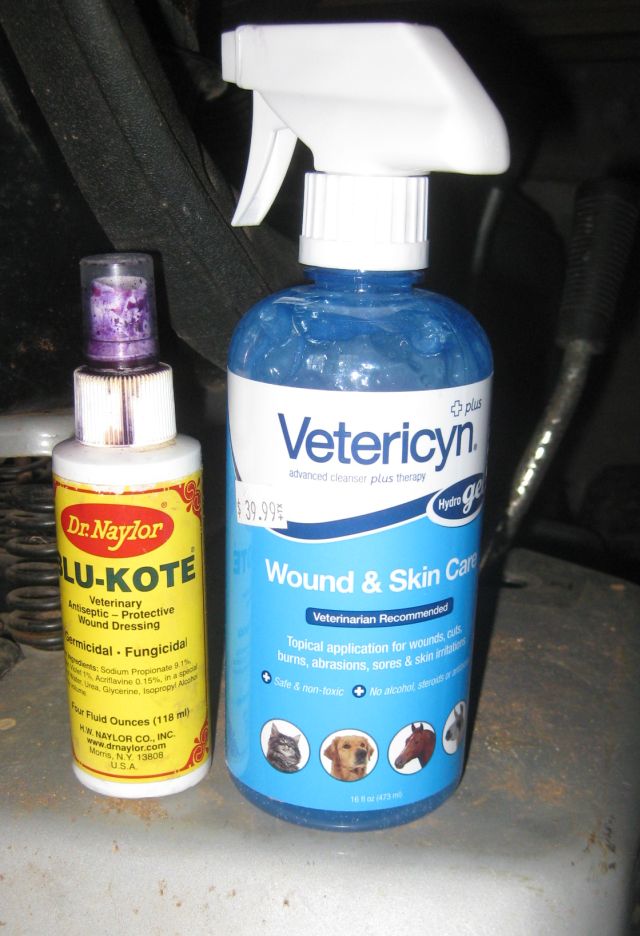
Sunday we visited the local Tractor Supply where I bought a live animal trap (32″x10″x12″ $40) and two 60 cent tins of cat food.  M. had done research and was very interested in purchasing Vetericyn for $35 but I suggested ($35 seemed a lot to me) it was probably no more effective than Blu-Kote.  I baited and set up the trap in the barn area and it was empty Monday morning.  More research by M. convinced her we really needed Vetericyn and the winning argument which turned me, is that altho it is sprayed on it is a gel and so persists to keep the wound area protected from infection.  Vetericyn was available at a closer, more expensive farm store for $40 (a $5 cost for arguing when I shouldn’t) and Mon evening we applied Vetericyn liberally.
the two medications we used

Tuesday morning the trap, which had been relocated to the greenhouse was empty – a feral cat uses the greenhouse in cold weather but the weather has not been very cold.   Tuesday night I located the trap in the carport where my security camera has shown a cat walking in the early morning hours.  And when I arrived at 9am the cat was in the trap.

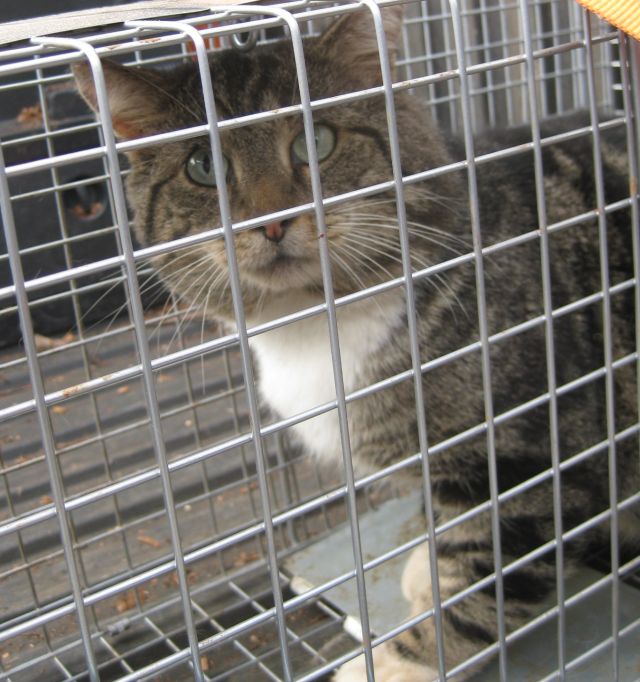
feral cat in cage
feral cat in cage

It may look cute in the cage but it is fearsome.  Not once did it meeow but instead shook the cage back and forth as it tried to claw its way out.  It is larger than it looks and is in good condition and strongly built.  No wonder we have had no rodents or squirrels near the bird feeder this past year.  I previously blogged that the disappearance of rodents in the  chicken coop was due to two  >5ft long snakes which cleared them out.

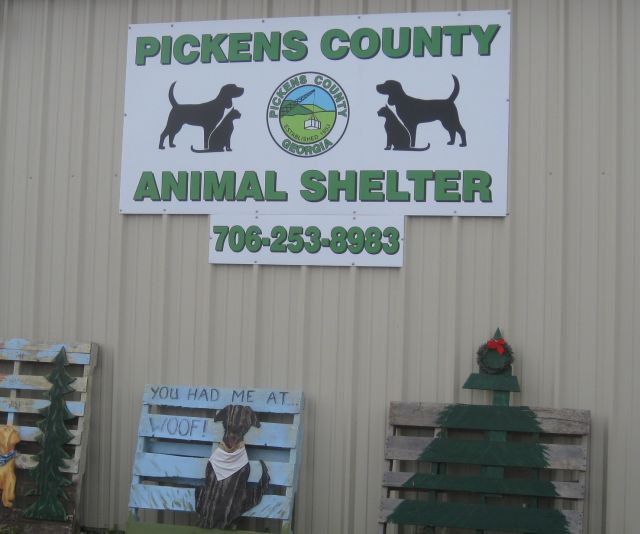
Now what to do with the cat.  A store attendant said she shot cats with a .22 long gun (I call it a rifle) which was easier than trapping and taking them to a shelter where they would be euthanized.  My neighbor this morning said he had relocated a stray dog more than 2 miles from his house and the next day it was back and he suggested I take the cat to the local shelter.  The animal shelter receptionist said I could relocate the cat or give it to a chicken farm.  I thought she was kidding – what will the chicken farm do with it?  I asked and she said they keep cats to get rid of rodents.  She also offered that I could bring it in and, for a cost of $25, they would neuter it and cut off the tip of one of its ears and give it to a chicken farm.  The clipping of an ear signifies it has been neutered.

the local animal shelter

So off to the animal shelter where I paid $25 and was directed to a local vet where they said they would perform the procedure later in the day.  They said I should call back for the cage – apparently they anesthetize the cat by injecting it while it is in the cage, which answered a riddle for me – how do you safely get a feral cat out of a cage?

And how is Bonnie doing?  Despite pretty severe wounds  she seems to be doing ok.  Walking normally and eating as usual and no sign of a rampaging infection.  We are hopeful.

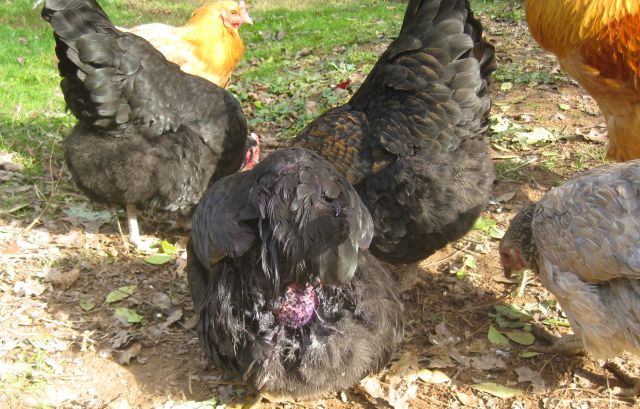
Bonnie with rear end to the camera, her Mom to the left, sister to the right

postcript – I have been asked how do I know I caught the culprit since I never saw the predator which attacked the chickens.  Several factors persuade me – there used to be several feral visitors, a large tawny cat and even a young cat which I once fed (big mistake).  Past 6 weeks they have not been around.  I think the cat in the trap moved into the area and cleared them out (or ate them).  The only cat captured on my surveillance cameras the past week was the one in the trap.  And finally, it was big enough and strong enough to catch and eat a chicken.  Hopefully no more predations.

.