Eight young chicks arrived as a group
into a shed converted to coop
two Golden Comets who jump on your knees
when sitting you offer some morsels to feed
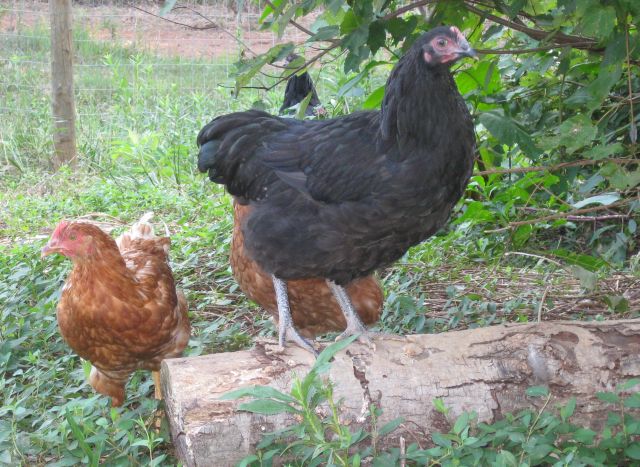
two Black Giants so skittish and shy
they keep the most distance when friendship you try
two Speckled Sussex the smallest of all
but quickly chase Comets to far away wall
and then the last couple, so striking indeed
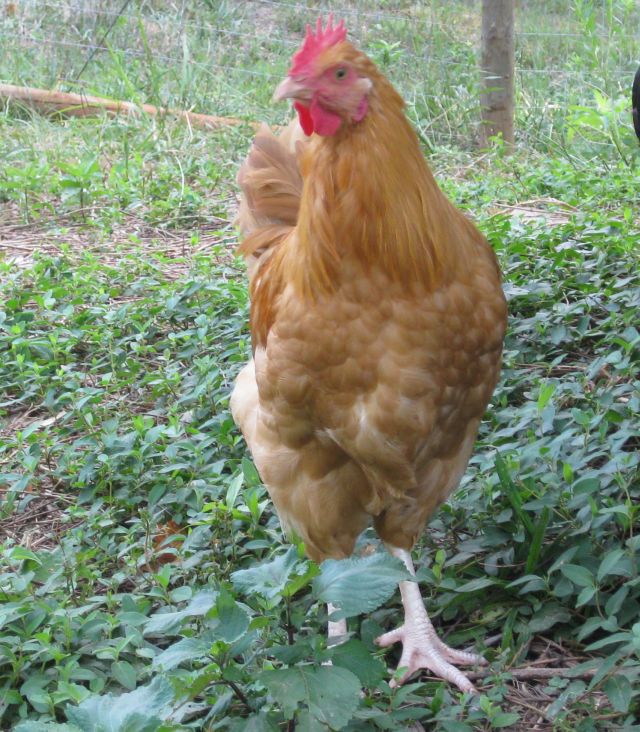
a hen and young rooster of Buff Orpington breed
as coop door unshackles
they cluster around
then chortle and hustle
with wide legged bound
first to the weeds for a nibble or peck
then claw in the mulch
and sound a loud cluck
when worm comes to view and
seals their good luck
but Buffy is different
he has just learned to crow
red comb and gold cape
held high and held low
a matador turn, but is he a fake?
while coop mates ignore him
and focus on feed
across the fence barrier the
Rhode Island Red
has heard his first crows and though
twice months in age
is curious to meet the
tenored young sage
will you friend me?
she paces the fenceline and he saunters closer
though pretext is food, a purposeful loiter,
he faces and tip toes, his chest full of swagger
she responds just as quickly with unrestrained vigor
and then he departs and she wistfully eyes
the untutored young rooster and if she could,
sighs,
but tomorrow will come and who knows by then
Buffy be back and gladden the hen.
I had a lot (for me) of visits to my site yesterday but not many comments – if you visit and would like to add or question, please do. I think a number of visitors were interested in rainwater harvesting and this is one of my passions.
I read a review in the FT (Financial Times) for Wednesday August 31 titled “Water is the new weapon in Beijing’s armoury”. Apparently China is the source of cross-border river flows to the largest number of countries in the world, including Russia and India, and is rapidly building mega-dams to control this water. The Amazon description of this new book by Brahma Chellaney says: “The battles of yesterday were fought over land. Those of today are over energy. But the battles of tomorrow may be over water.”
Our local paper (the AJC) reports this morning that most of Georgia south of the mountains is now in “extreme drought”. This may change, and hopefully it will change for Texas too (otherwise our food prices will continue to escalate) but who can tell the future. So I conserve whenever I can.
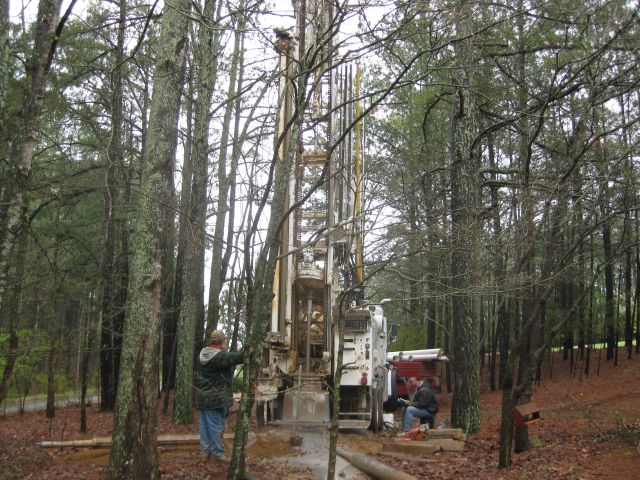
All the houses around my property use well water. The precariousness of this supply was brought home to me in 2009 when my next door neighbor’s well ran dry. They told me their well was 600 ft deep so all the more surprising it should fail and all the more concern for me since my well is less than 600 ft. I took some ‘photos of the equipment for drilling their new well.
Their new well was drilled a couple of hundred feet distance from their old well. The new well was also 600 ft which, at a cost of $10 for each foot, came to $6,000. There was insufficient water at the bottom so plus $3,000 was incurred to hydraulic fracture the bottom of the well, then an additional plus $3,000 for the pump, wiring and piping.
Interestingly, the drillers used rolls of poly pipe. Another driller told me that if the well is more than 300ft you have to use rigid 20ft pipe lengths (threaded pvc drop pipe) since the poly pipe stretches each time it is removed. It costs much more to replace a well pump if you have rigid pvc pipes since each has to be lifted out of the well and uncoupled, whilst with poly pipe you thread the pipe over a pulley, attach it to a pickup and drive down the road a couple of hundred yards and the pipe, cable and pump are quickly pulled to the surface.
I digress, the point is that the new well cost my neighbors in excess of $11,000. For this reason as well, I use my well water sparingly and try squeeze every drop I can out of my rainwater harvesting system.
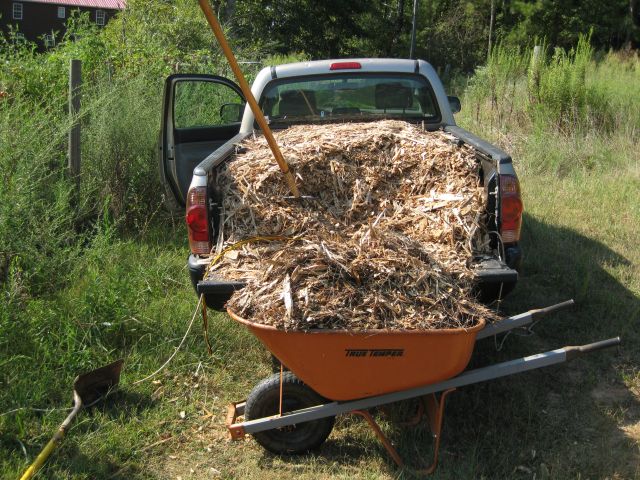
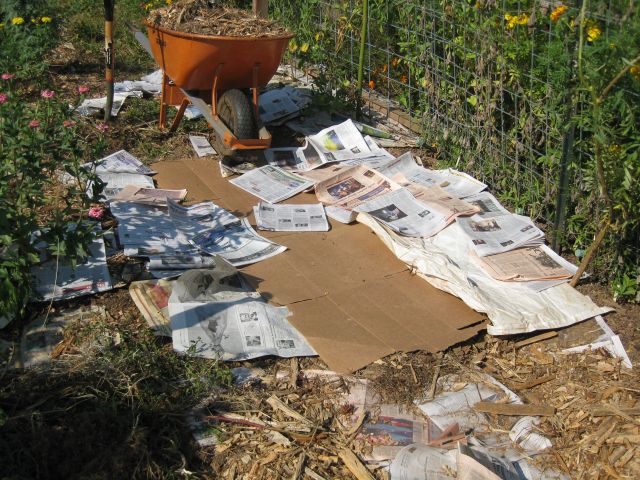
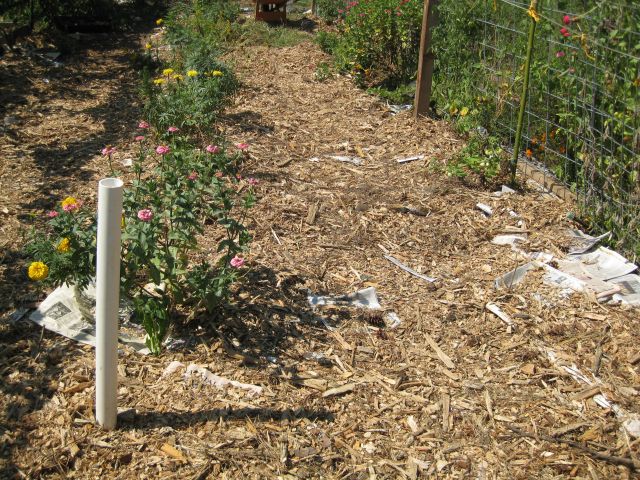
I recycle whenever possible. Two favorites are newspapers and woodchips. I was able to twice load my pickup with pine tree woodchips and these, together with bundles of accumulated newspapers, gave me the incentive to weed the overgrown walkways in my vegetable garden.
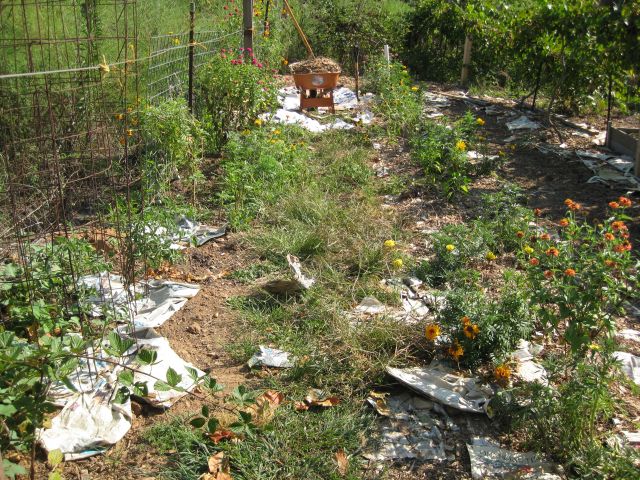
I first remove the weeds, then lay down the newspapers (typically open the newspaper at the middle and ensure plenty of overlap to block the sunlight), and then cover with a thick layer of woodchips. In addition to newspaper (glossy inserts removed), I also use cardboard and paper sacks provided they do not have a plastic film on any surface. This heavy mulching prevents weeds, conserves moisture in the soil, provides food for the earthworms, and removes competition from weeds for the scarce water. I think it also removes habitat for some of the pest insects and the bonus is the garden looks more attractive to visitors.
woodchips load easily into wheelbarrowdishevelled area before the mulchingnewspaper, cartons and paper sacksafter the mulching
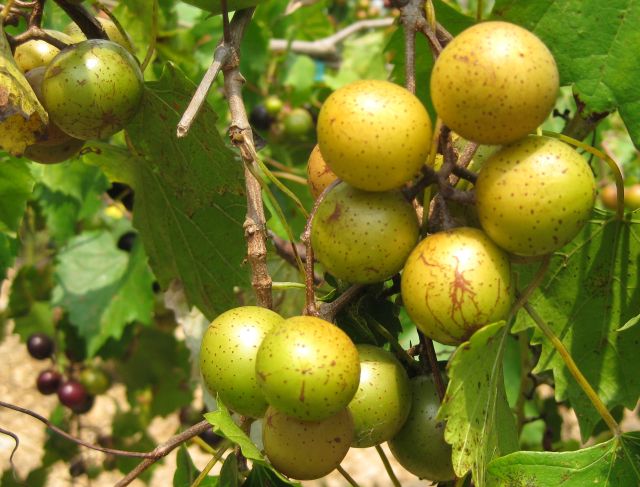
Scuppernong
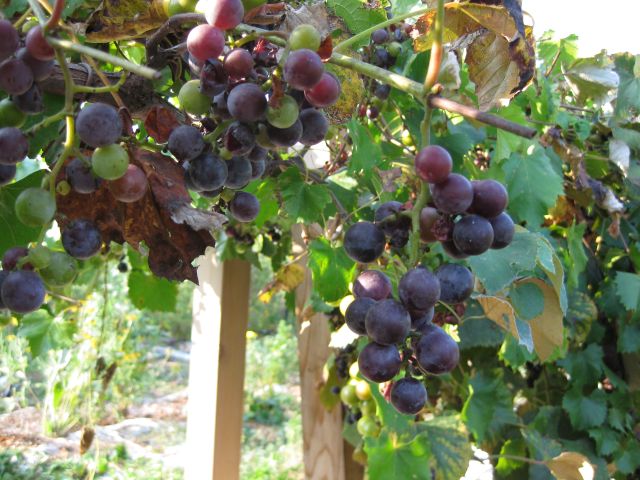
Scuppernong are my favorite muscadine (a type of grape native to the southeastern United States). When the scuppernong turn a golden bronze color they are ready for the eating – as you bite down on this large grape your mouth is filled with an indescribable sweetness. Since I do not use chemicals there is no need for washing the scuppernong. However, there are many eager consumers and as you reach for the muscadine a large wasp may be disturbed and fly noisily away. Last year there were lots of stink bugs around but, so far, they are not in evidence.
The First Crow
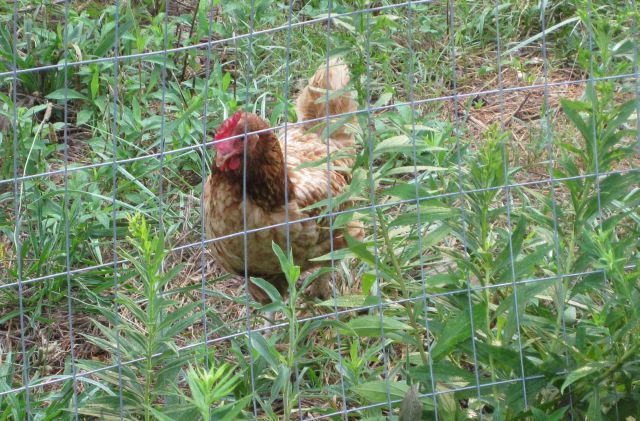
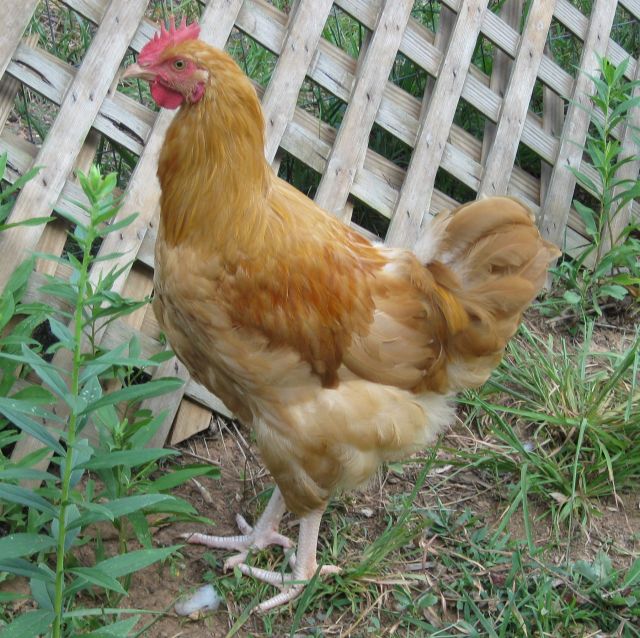
I was surprised this morning, as I approached the hen coops, to hear an unmistakable rooster crow. We have two coops and fenced outdoor areas – one for the 6 older egg laying girls I inherited from my neighbor, and another for the youngsters – 7 hens and a rooster. “Buffy” is a Buff Orpington rooster and he certainly has filled out in recent weeks. He has even taken to trying to intimidate the two Black Jersey Giant hens, who are not sure (yet) what to make of him. Although there was a trifle uncertainty it definitely was a crow, repeated a couple of times as he tuned and validated it.
The past few days I’ve noticed fewer bees at the hive entrance than a couple of weeks ago. I’m still a rank amateur at beekeeping so the explanations/fears that came to mind were somewhat exaggerated and untempered by experience: a) half the hive had swarmed; b) worse still, the hive had swarmed and the new queen bee had not returned from her mating flight and the hive was queenless; c) my obstinance against using chemicals had caught up with me and the hive was in collapse from disease, mites etc.; d) there was nothing wrong with the hive and although the temperature was still in the 90’s there was much less humidity and therefore less need for the bees to escape the internal hive heat by clustering the entrance, and they were all still around and industriously at work.
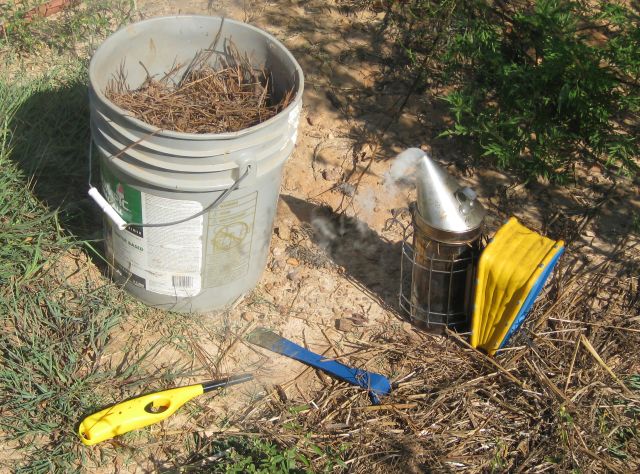
So this morning I gathered dry pine needles, lit the smoker and opened the hive and ….. everything seemed ok. The configuration from bottom up is two deep supers and one shallow super, which I added 7 weeks ago. All the supers hold 10 frames. The bottom super is the brood nest area and the deep super above it is where I harvest my honey. On 5/28/11 I harvested 3 frames, which produced about 1.1 gallons of honey, on 7/10/11 I harvested another 3 frames which produced almost 1.5 gallons of honey. Today I decided to remove another 3 frames. All 10 frames in the super held honey and I could have taken nine frames (my extractor handles 3 frames at a time, so the # of frames taken should be divisible by 3) since in north Georgia there are a lot of wildflowers which will still bloom and provide nectar for the bees. However, I do not sell my honey, so robbing just 3 frames together with my inventory from previous takings is more than enough for gifts to friends and for our own needs through next spring. And I want the bees to have adequate reserves going into winter so there will be less need for me to feed them sugared water.
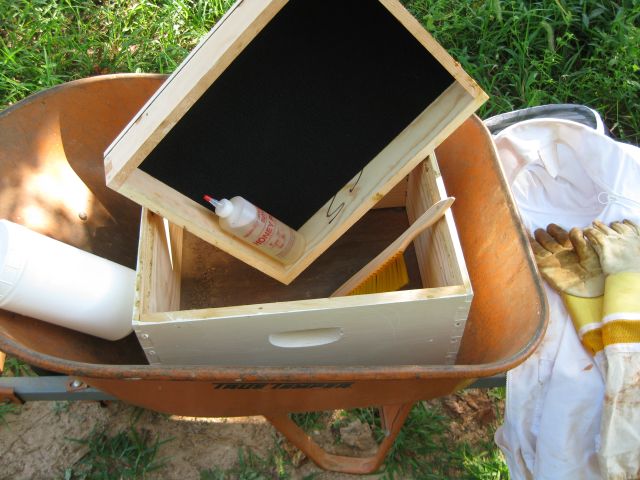
pine needles, smoker, bee hive tool and gas lighterbarrow, super, fume board, butyric acid & container, bee gloves and jacket
I was asked how I rob the honey. It is really quite simple. I trundle my wheelbarrow and equipment to the hive including a fume board, an extra deep super, a container of butyric acid and my bee brush. I open the hive and select the three heaviest most capped frames. The way it works is the bees add nectar to the honey cells and when sufficient moisture has evaporated from the cells, the bees cap the cells. Ideally, all the cells should be capped. When I first harvested honey earlier this year, about 30% of the cells were not capped and the honey was too fluid and tasted of nectar, which some of my friends liked, but the more knowledgeable bit their tongues. So today I was lucky and all the cells on the 6 sides of the 3 frames were honey cells and were capped.
I place the three frames in the extra super I brought along and place it on top of the open hive. I sprinkle the vile smelling butyric acid on the felt inner cover of the fume board and place the fume board on top of the upper super (the one containing the 3 frames). The fumes drive most of the bees from the upper super to the lower supers. I then pick up the super (containing the three frames) with the fume board on top, load them in the barrow and head for the kitchen. I stop a couple of times to encourage the remaining bees to depart with gentle upward sweeps with the bee brush. By the time I reach the house I have 3 honey laden frames and no bees.
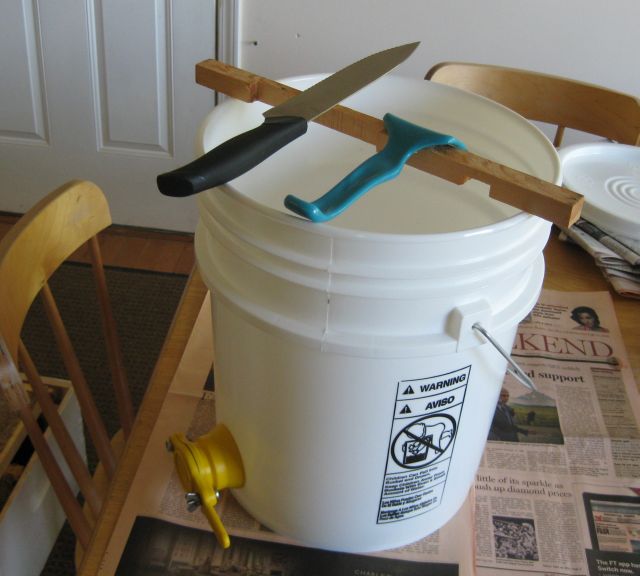
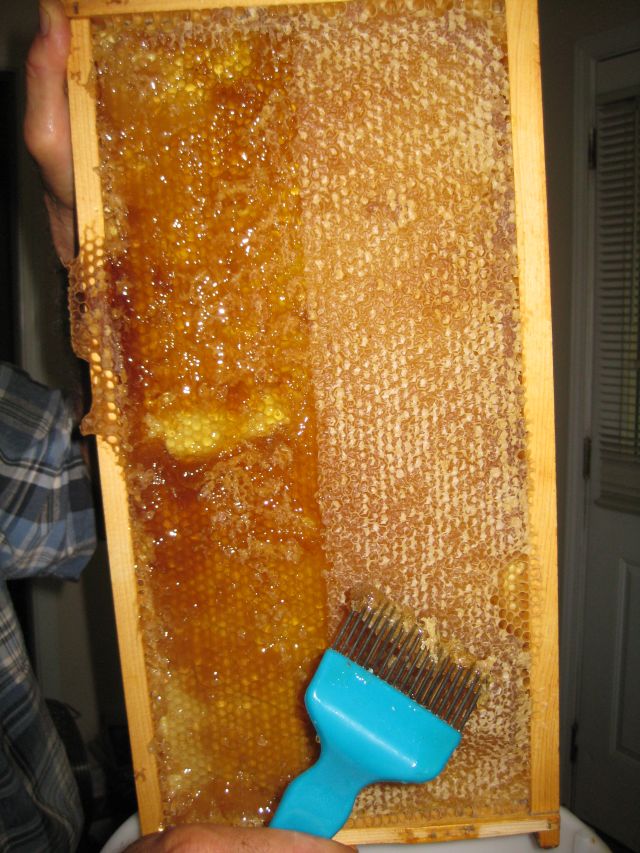
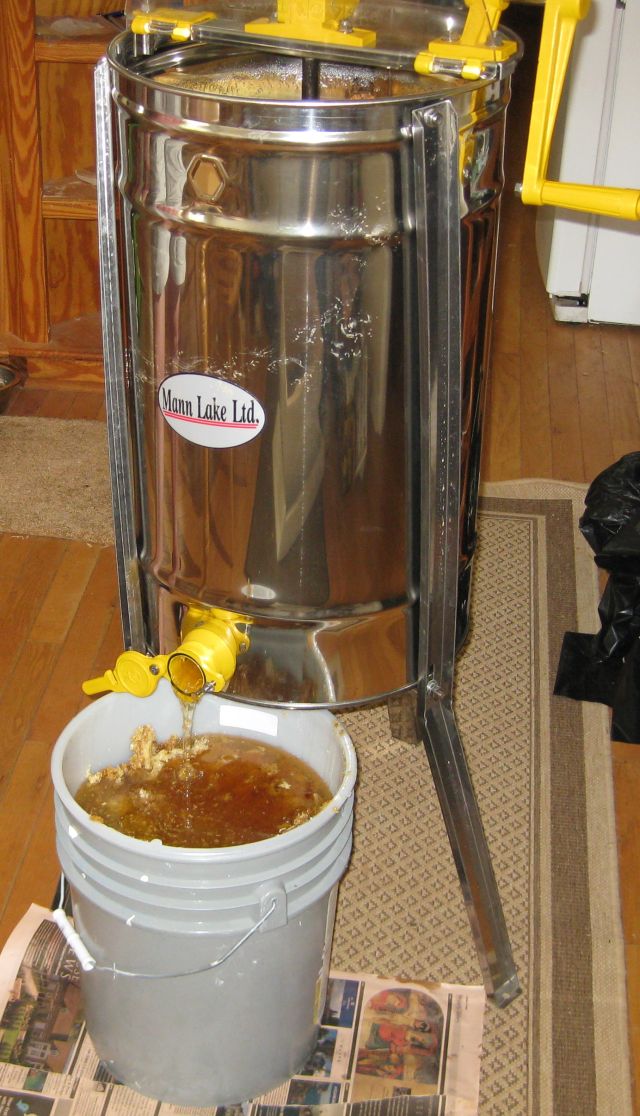
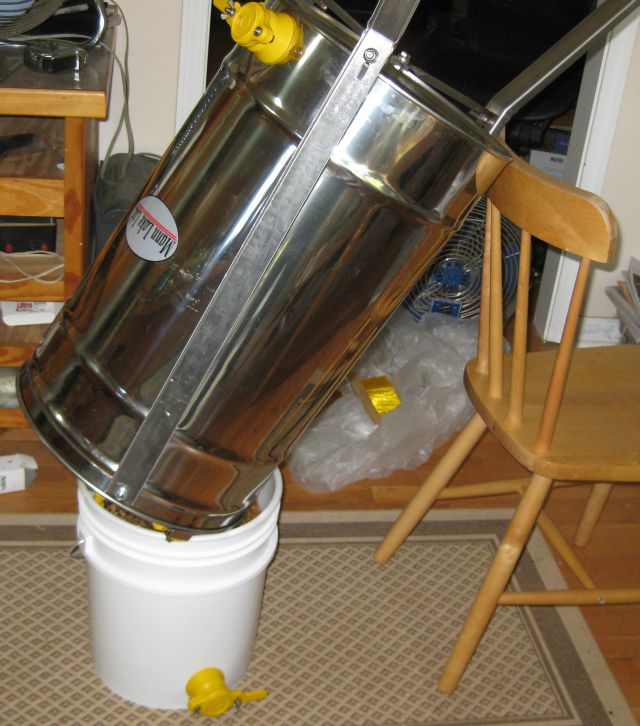
The frames are individually placed on a piece of wood located above a medium filter inserted in the top of a 5 gallon pail. I use a bread knife or, more often, an uncapping scratcher to remove the capping layer on the honey cells. Because the temperature is high the wax is soft and the scratcher works effortlessly and efficiently. I then load the frames individually into the 3 frame hand crank extractor and give them a hard whirl. The centrifugal motion of the extractor flings the honey contents of the frames onto the sides of the extractor and the honey slides to the bottom. I then reverse the position of the frames, so their other side is facing outwards, and give them also a fast spin.
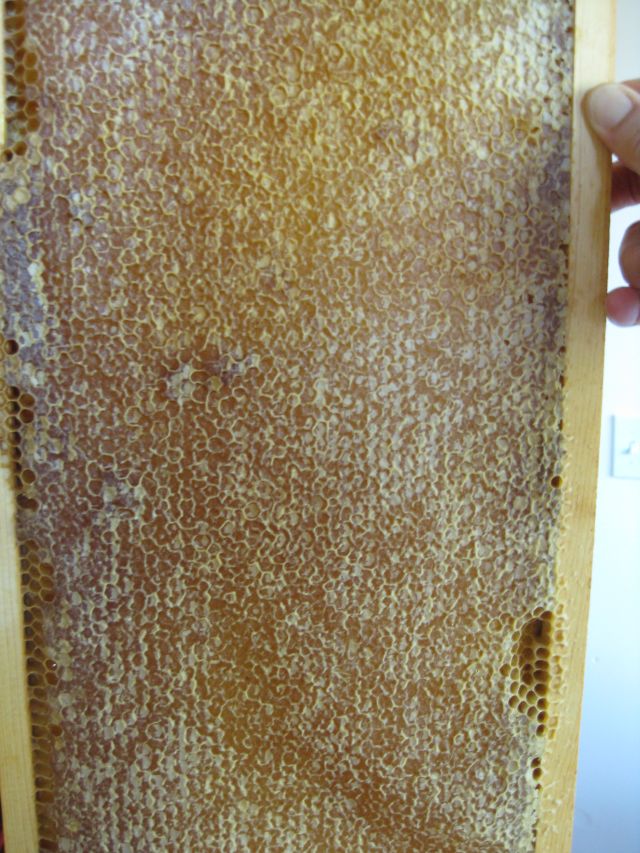
awaiting uncapping, 5 gal pail with filter, bread knife, scratcher, wood for framesa frame of capped honey about to be openedhoney frame, left side scratched, right side still cappedhoney from extractor to filter
I return the 3 frames to the hive, place the wax remnants in a container in front of the hive, bottle the honey and clean and store the equipment. The bees readily reclaim their honey remnants and continue with their honey making. The procedures entail a lot of work for just 3 frames and without much more effort I could easily do 6 or 9 frames. Just like with making a loaf of whole wheat bread – a lot of work but a very satisfying result.
When I first began using my tractor I did not appreciate the importance of shear bolts or patience.
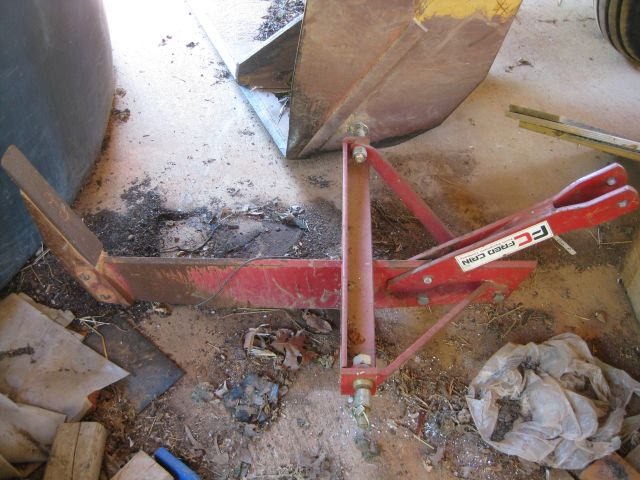
I have a Case 585 tractor, which was built in the late eighties and has a 60hp 4 cylinder diesel engine. I needed to dig a small rain catchment ditch along the gravel driveway to catch rainwater as it streamed down the hill. Georgia clay in summer is difficult to work, even with a pickaxe. I decided to facilitate the job with a subsoiler (sometimes also called a chisel plow) attached to the rear of the tractor. Problem was I went too fast and too deep and I heard a wrangled snap. The flanges of the subsoiler which attached to the tractor were twisted. My sledgehammer made no impression on straightening the metal so, reluctantly, I took the subsoiler to the local tractor dealer (where I had purchased it), and within a few minutes all was straightened out (for no charge and probably with the help of a machine press) and I more cautiously completed the job at hand. The point about this incident is that the subsoiler should not have been damaged, the shear bolt should have snapped first.
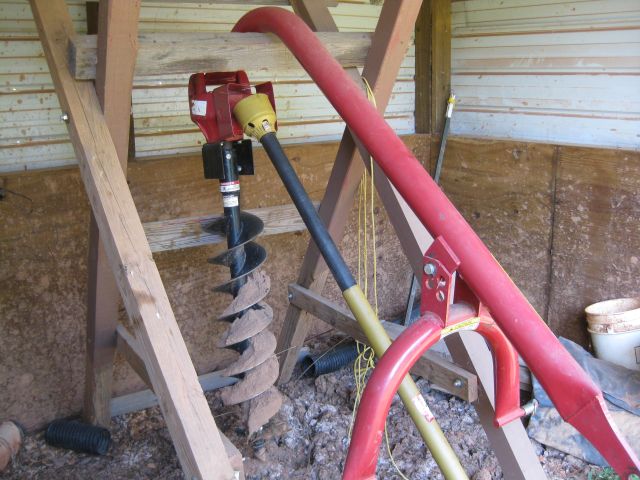
post-hole auger in home made frame
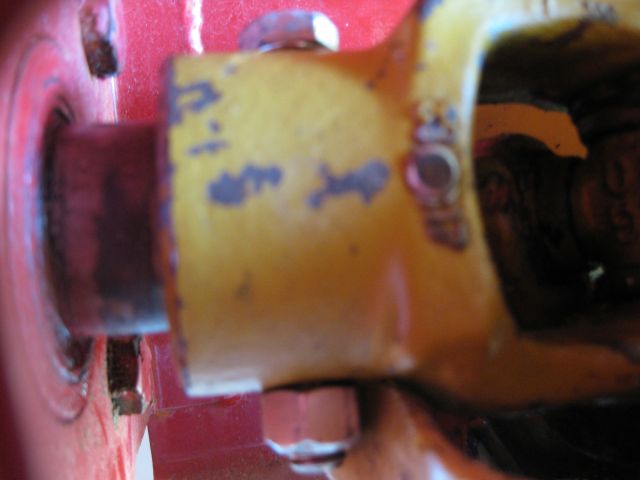
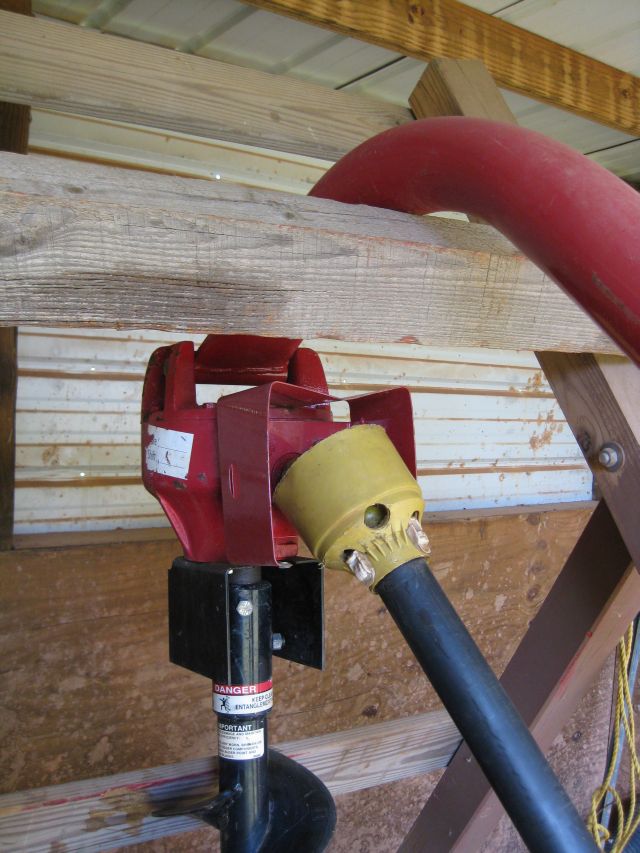
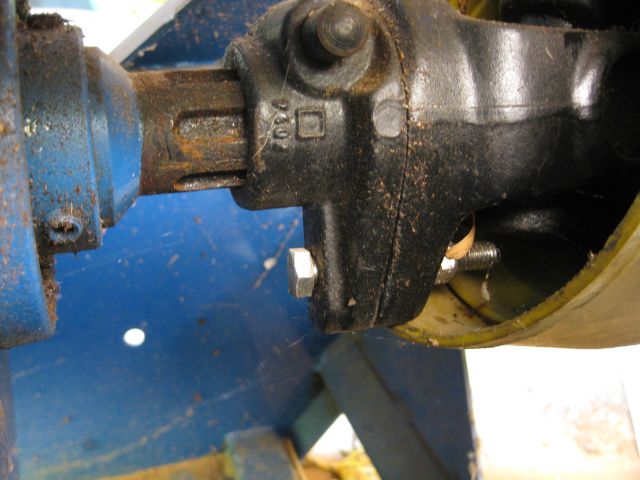
The shear bolt is the safety mechanism, like the safety valve on a pressure cooker, which releases the pressure before any real damage is done. I have a Bush Hog auger which I regularly use for drilling holes for posts (9″ auger) or tree plantings (19″ auger). When the cutting edge hits a large rock the sudden impact causes the shear bolt to snap. This is cheaper to replace than fixing a stripped gear box or damaged drive line. The shear bolts for this auger are tapered (one hole in the yoke is 3/8 and the opposing hole is slightly narrower) which presented a problem a few weeks ago, when I needed a replacement shear bolt and my usual source, the local tractor dealer just a 4 mile drive, had gone out of business. The next closest dealer is about 30 miles away and instead of making the drive, I wandered fruitlessly around the local and big box hardware stores as well as an autoparts store looking for tapered 3/8 bolts which would fit the yoke. My solution was to purchase a 3/8 drill bit intended for hard steel and I drilled out the hole in the yoke so that it could accommodate a 3/8 bolt. Having sidestepped an intended safety feature, this got me wondering whether I could be facing a bigger repair bill than a shear bolt further down the road, when I hit the next big rock.
auger shear bolt in placepto shaft (black with yellow guard) attached to gear box
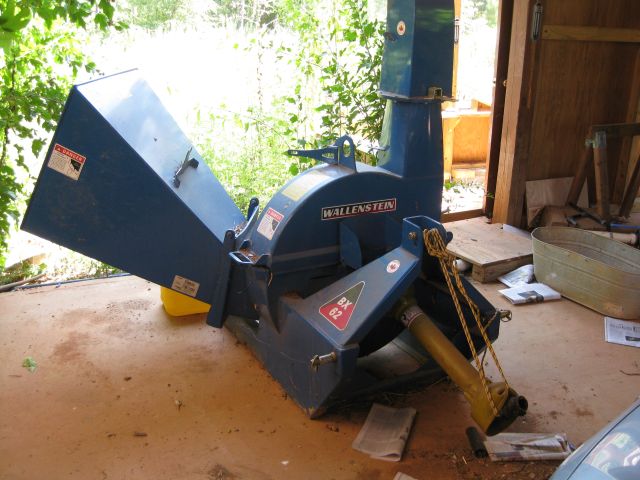
I have read the online manuals for the various implements I use and although they refer to shear bolts or shear pins, they don’t specify the grade you should use. Perhaps the intention is you should buy your shear bolts from the dealer instead of from a cheaper source. Anyhow, the word on the online blogs is to use grade 2 or grade 5. The higher the grade the tougher the bolt. I suppose start off with grade 2 and, if it keeps snapping when the equipment is used prudently, then migrate to grade 5. You can tell the grade of the bolt from the markings on the head of the bolt. No markings indicate grade 2 and 3 radial lines indicates grade 5. I shall apply this advice next time I use the auger or my Wallenstein chipper. My Bush Hog rotary mower has not had a shear bolt snap and this may be because it has a slip clutch which cushions the gearbox and driveline from sudden impacts.
With rainwater harvesting whatever can go wrong does. After fall I cleared my gutter of leaf debris and left it at that. Silly me! I didn’t consider that the 2″ pipe from the downspout outlet to the storage tank might be clogged with leaves. It was only when rainwater collection by the one tank was less than expected and when, during a downfall, I saw rainwater cascading over the gutter, that I figured I had a problem.
Clearing the blockage was not too difficult. I removed what I could by hand and then expelled the rest with water pressure from the hose. I decided in future to use a mesh screen in the outlet to catch leaves before they enter the pipe. However, I also needed a simple means for identifying and preventing the recurrence of future blockages.
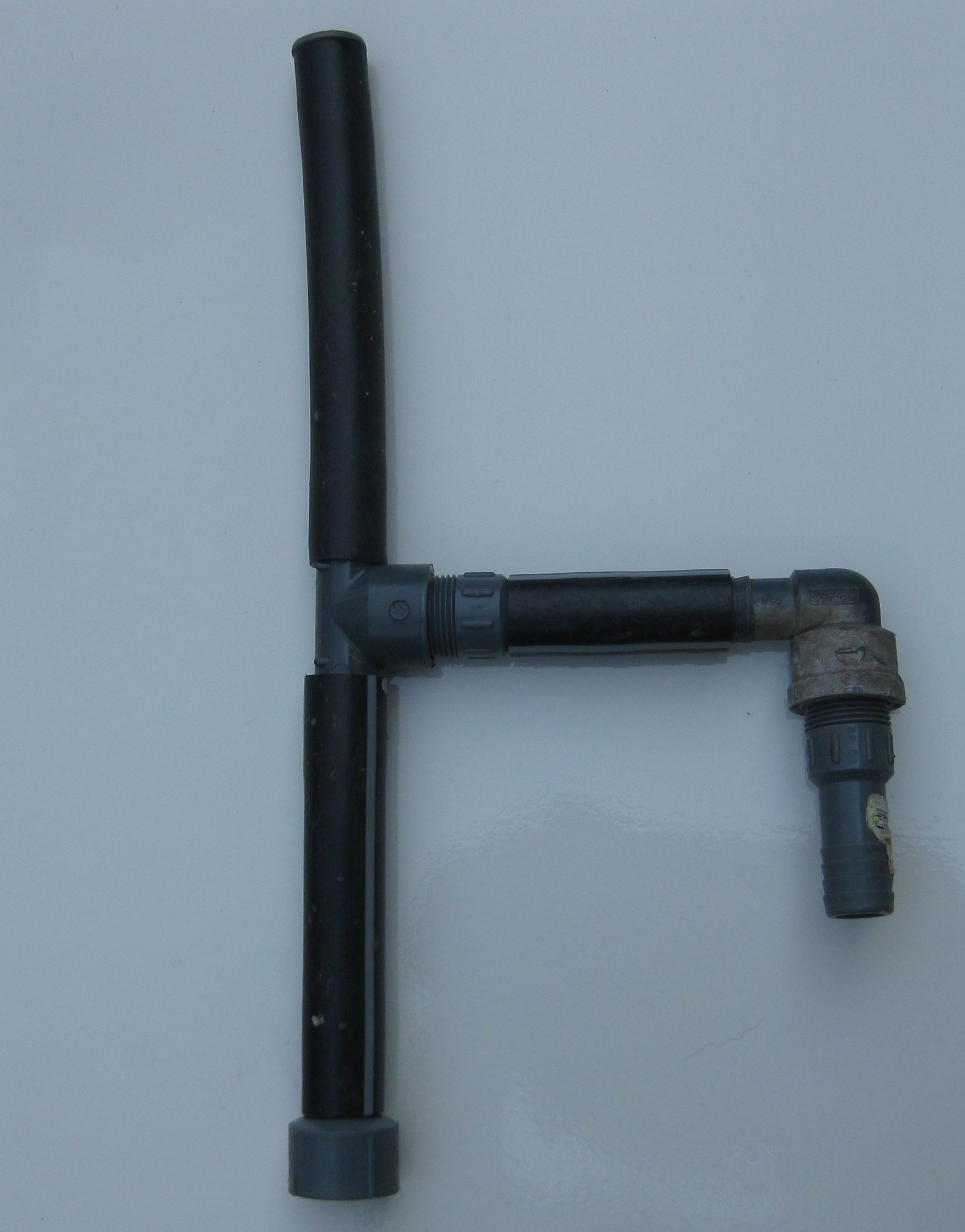
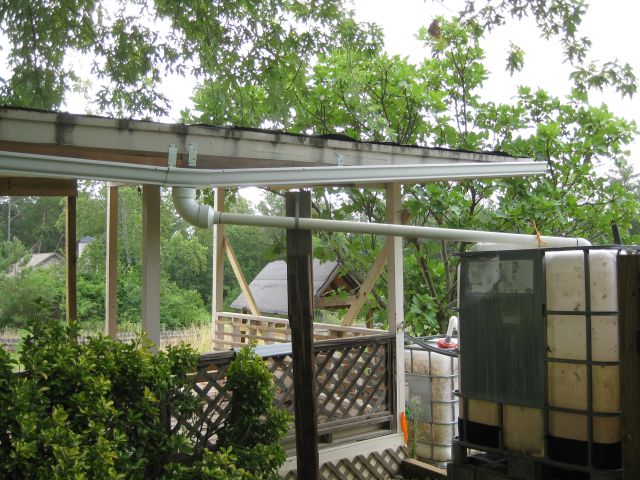
Rather than spray water from the hose onto the roof and let it dribble into the gutter I cobbled together a simple fixture which is attached to a hose and, with the aid of a long stick (or broom), hoisted in place over the gutter. The hose is switched on and water enters the gutter, the downspout and then (audibly) the tank. The bottom left link (in the picture) is attached to the hose. The top left link is sealed and its purpose is probably redundant. Water enters from the bottom left, veers right at the tee and then down at the elbow into the gutter.
How a drip of rainwater produces a flood
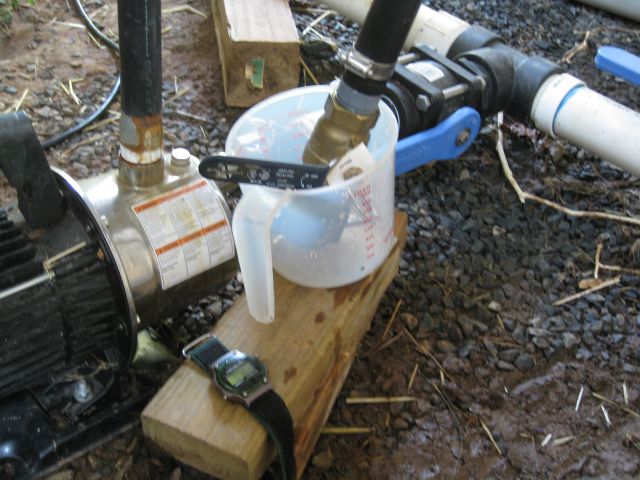
The other problem I encountered with my rainwater harvesting was unexpected rainwater loss. During my 7 day vacation to the West Coast there was 0.5″ of rain. I expected all my catchment tanks to rise. However, the carport tank level did not go up, in fact it fell. I did not give this too much thought until I noticed how wet the gravel was around the lower level storage tanks and I then noticed that a connector at the lower level was copiously leaking rainwater from the higher level carport tank. I measured the rainwater loss and it was 250ml in 1 minute (metric is so much easier to use). Which equates to 1 litre in a 4 minutes and therefore 15 litres in an hour. I was gone 7 days which is 168 hours (7×24) which is 2,520 litres (168×15) which is 665 gallons (2,520x.264). So in 1 week I lost approximately 670 gallons of rainwater.
The carport has a length of 27 ft and a width of 24 ft. So the capture/catchment area is 648 sq. ft (27×24). There are 7.48 gallons of water per cubic ft. The recent 0.5″ of rainfall on the carport produced 27 cubic ft of rainwater (648 sq ft x 0.5″/12) which equates to 202 gallons (27 cu ft x 7.48 gal/cubic ft). When I left on vacation I had approximately 500 gals and with the rainfall there should have been say 700 gals and when I returned there was barely any water because I had lost almost 700 gals from leakage.
measuring water loss with graduated beaker + stopwatchnew valve components before ptfe tape assembly
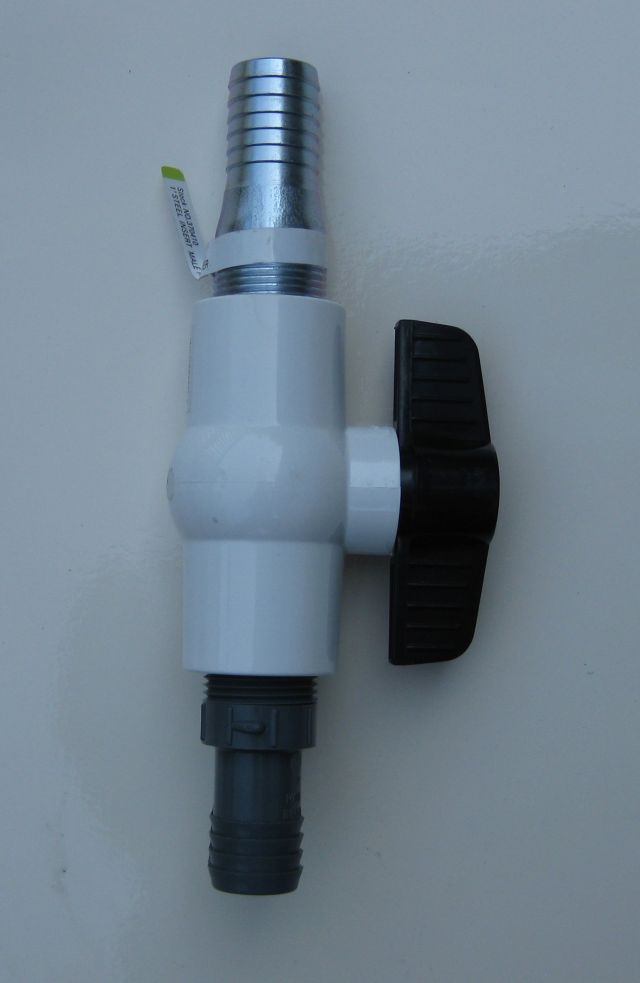
My solution was two fold: 1) tighten the clamp at the fitting; 2) since the fitting was at the bottom of the hill where water pressure is greatest, I inserted a second valve at the top of the hill where psi is less and therefore there is less pressure to force a leak. For the second valve I used a steel insert into the high pressure end rather than a plastic insert since steel inserts are longer and provide a tighter fit. Hopefully this ends my rainwater losses and my rainwater harvesting will be more efficient.
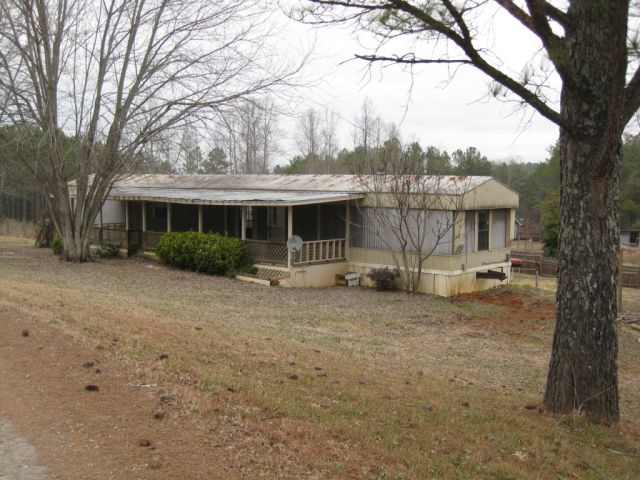
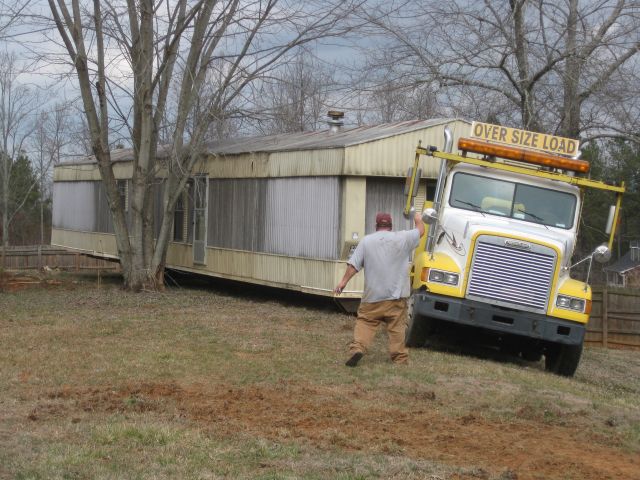
I acquired an adjoining piece of land which had an old mobile home and, attached to it, an old deck. The land was uphill of my property with full sun exposure and well suited for growing and rainwater harvesting. The timbers of the deck were protected from the rain by the roof of the deck and from the sun by an overtowering maple and were therefore in good condition. I decided to sell the mobile home and keep the deck, though for what purpose was unclear to me at the time.
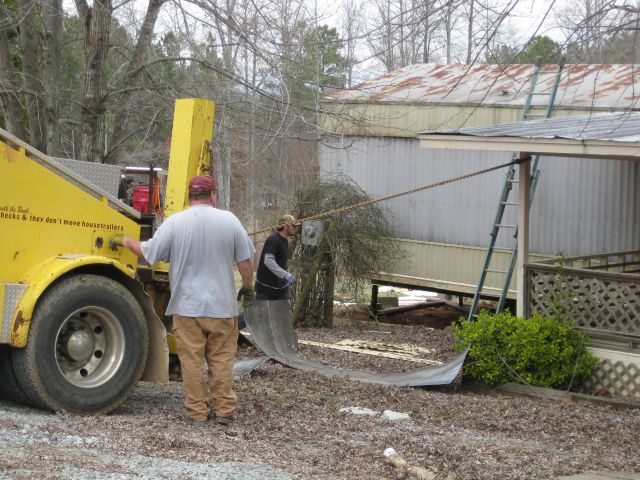
The purchaser of the mobile home sent a professional crew to move it. Since the deck was not self standing and was attached to the mobile home, it was necessary to separate the two.
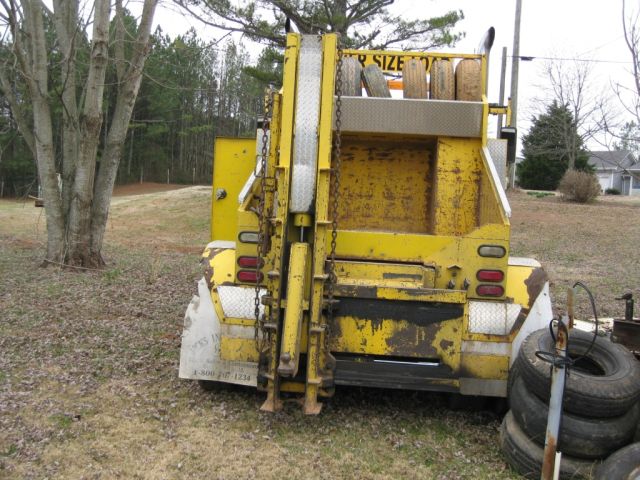
The moving truck has a powered hitch and when this was attached via chain to the deck uprights, it was easy for the crew to pull the deck away from the mobile. Then, after narrowly sliding past another maple tree, the truck and the mobile were on the road and gone.
mobile home and attached deckrear of moving truck showing adj. hitchhitch with chain separates deck from mobileafter bypassing a tree, the mobile was on its way
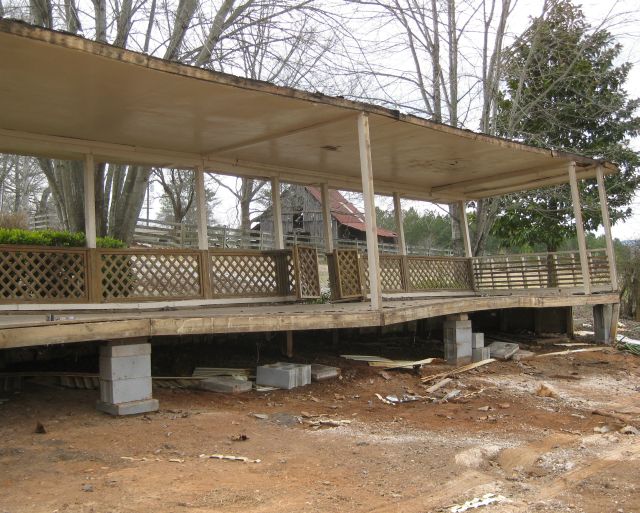
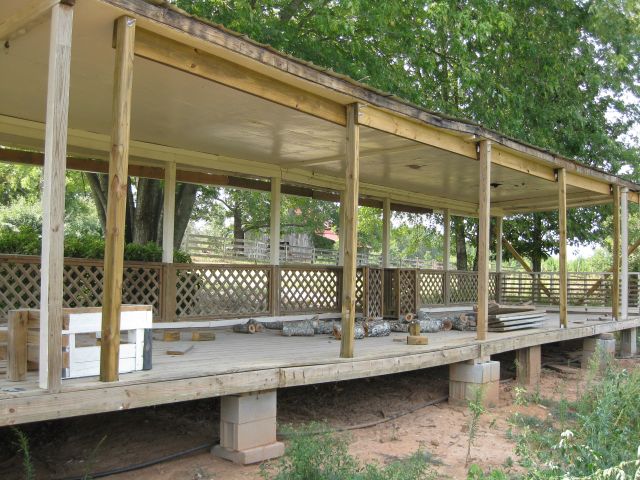
My next steps were to repair the deck. The flooring sagged in the middle as did the roof. With the assistance of a bottlejack and odd lengths of 4×4 the base was levelled and supported with cinder blocks. Similarly, after the base was stabilized, the roof was jacked up and secured horizontally with 2×6’s and vertically with 4×4 posts, all bolted together. To keep the structure upright the ends were buttressed with diagonal 2×4’s.
deck before repairsdeck after repairs
Finally to the rain capture system. Although the east facing roof was horizontal as a result of the repairs, the west facing roof which was lower and to which the water drained, sagged in the middle. Since the storage tank was at the south end, the question was how to move all the rainwater to the storage tank. I decided to attach a lower fascia board (cedar fence plank) to the existing fascia boards and this enabled me to slant the gutters to a common low point from which I ran the downpipe to the storage tank.
gutter attached to extended fascia boardsdownpipe with reducers to sloping pipe to storage tank
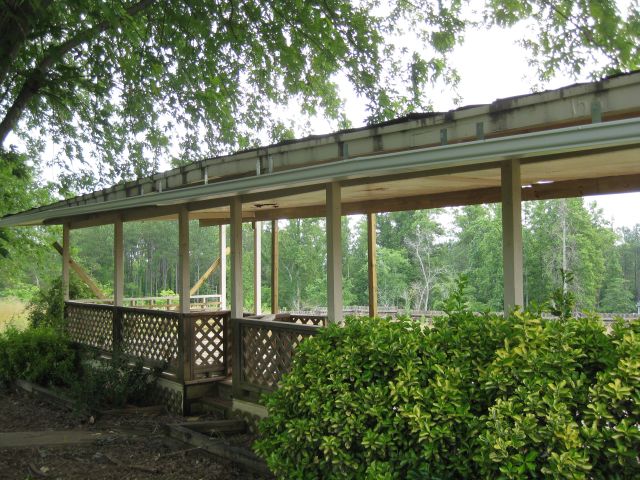
The rainwater harvesting system works well and, since it is at the top of the hill, no pumping is required for irrigation. Now I have a use for the roof of the deck I must still find one for the deck itself. Perhaps a chicken coop?
Just returned from a 7 day vacation on the west coast. My neighbor’s daughter cared for the two flocks in my absence – released at 7.30am each morning from the coop and re-cooped at 5pm each evening with plenty of food and water. All 14 were in great spirits when I greeted them this morning and enthusiastically beaked down their yogurt probiotics. My rain gauge said 0.5″ of rain during the past 7 days, so nothing had died off and I gave a good watering (500 gals) to the vegs, berries and fruit tree saplings.
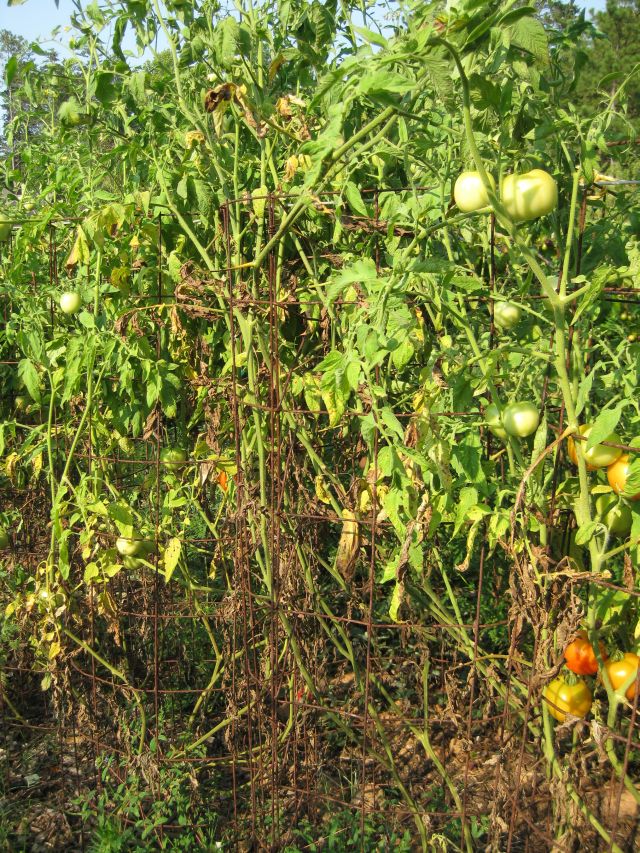
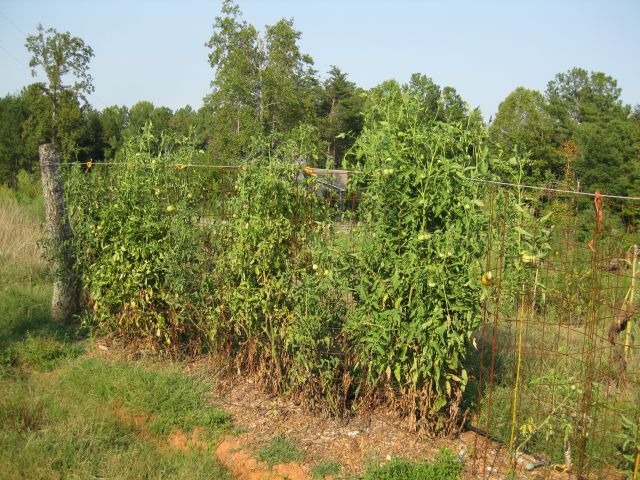
tomato wilt
tomatoes at top of hill with some wilt
My tomatoes are doing poorly. Each year I rotate the tomato growing area and during the past 3 years my tomatoes have been excellent – strong plants, plentiful, good looking, good tasting tomatoes. This year not so. The 20+ plantings close to the muscadines struggled with yellowing leaves and poor growth and poor fruit (fusarium wilt?). The 18 plantings outside the vegetable enclosure did better but because the area was not enclosed, they were attacked by squirrels and other animals. The 10 plantings at the top of the hill did best and are producing well but the wilt is attacking the lower levels. Interestingly, a batch of younger plants are not yet affected by the wilt, so a contributing factor could be the growing conditions earlier in the season.
My conclusions: 1) More than 50% of my plants were heirloom tomatoes – I just got carried away with heirlooms. The hybrids with disease resistance have done much better than the heirlooms and next year I will grow fewer heirlooms: 2) planting close to the muscadines was not a good idea. Although I dug a trench to amputate the muscadine roots which grow vigorously and long, I probably missed a few. Also the muscadines, which are to the east of the tomatoes, deprived them of some sun exposure; 3) drainage may also have been a problem at the main location, which is at the foot of the hill; and 4) I may have contaminated the compost heap with last years wilted tomatoes – so must improve hygienic practices, and when I clear this year’s tomatoes at the end of the season, I must compost them separately.
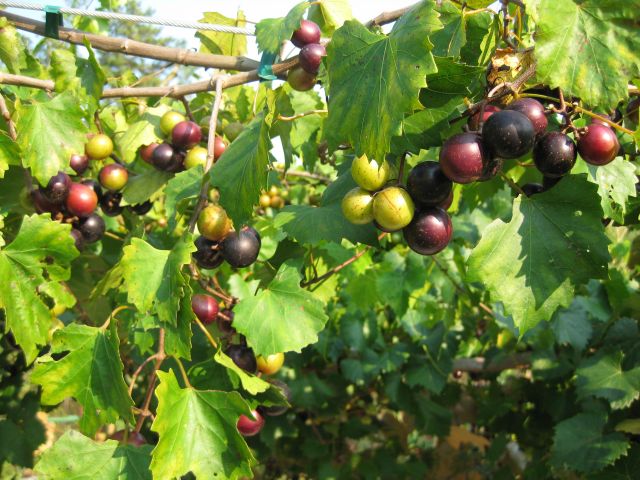
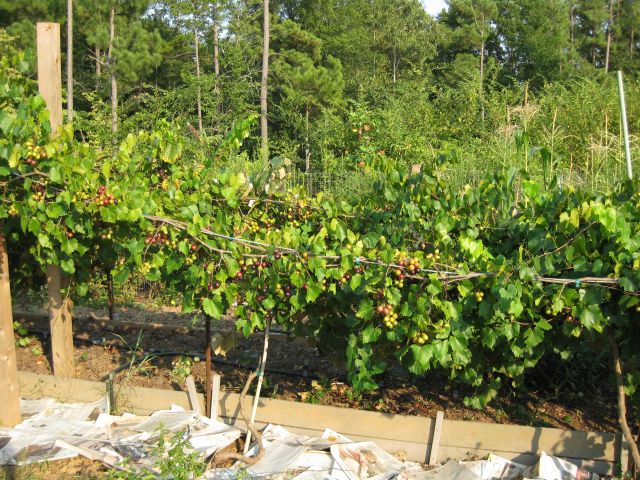
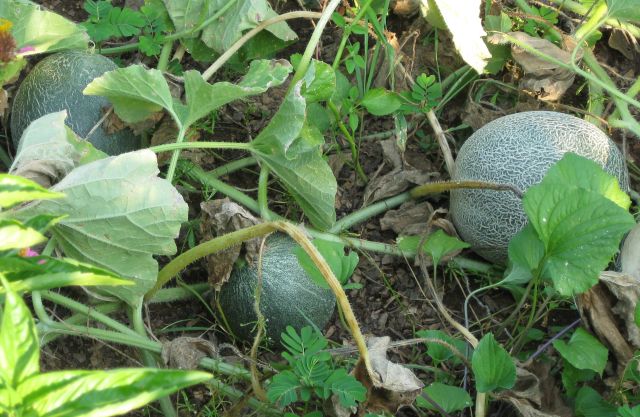
My muscadine are doing very well, as they did last year, and the scuppernong should be ready soon. I also have a good patch of healthy looking melons which should be ripe in the next week or so.
ripening muscadineeven the grapes were sweeter this year
The weather is less oppressive though still in the low 90’s – probably due to less humidity, some cooling breezes and intermittent cloud cover, which means I am tackling long neglected weeding. There appeared to be much less activity at the bee hive. Could be the cooler weather means less congregating at the entrance. However, could also be the case that they may have swarmed. I will open up the hive and investigate and see if there are 3 full frames for one last harvesting for the season.
muscadine and scuppernongthe melons should be ripe soon
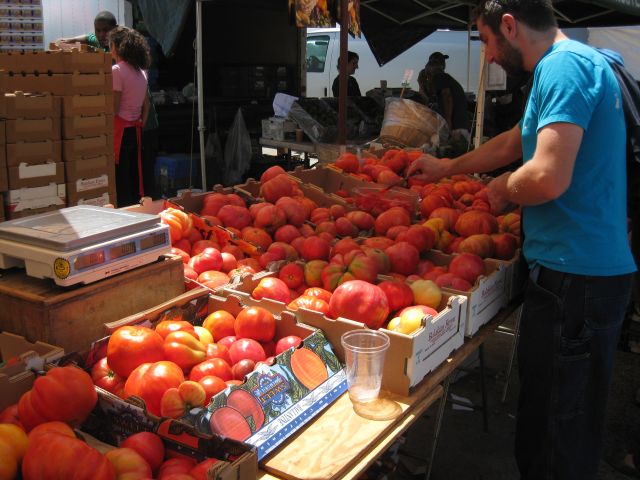
Saturday, August 20, was a good day to visit San Francisco foodwise – first a visit to the Ferry Plaza Farmers’ Market and then the 3rd annual La Cocina Food Festival in the Mission District. The Ferry Plaza market is considered one of the top farmers’ markets in the country.
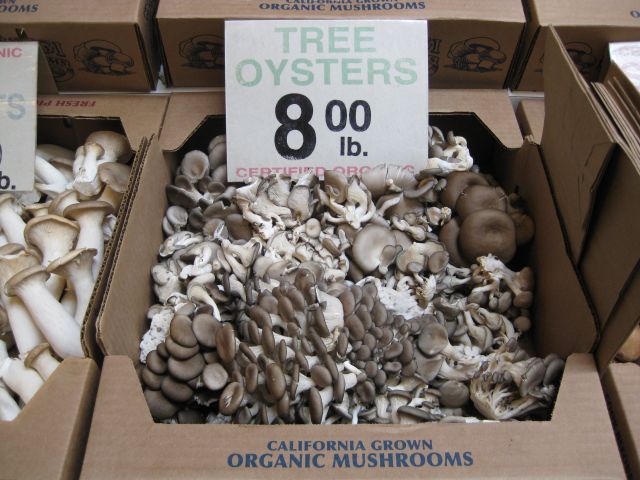
The market is organized by CUESA (the Center for Urban Education about Sustainable Agriculture) which envisions a food system that is environmentally sound; socially just; humane; and, economically viable. Large educational posters inform passersby on the issues at stake. On Saturday’s the market is held both in the front of the ferry building and on the rear plaza overlooking the Bay. There are fruits, vegetables, herbs, flowers, meats and eggs from small regional farmers and ranchers, many of whom are certified organic, as well as breads, cheeses, honey and more. An extensive array with lots of samples to whet the appetite. The produce seemed unusually large and wholesome and pricey too. The technology industry has made San Francisco a wealthy city well able to lap up the organic offerings.
the Ferry Plaza food marketmushrooms for saletomatoes galoreat the Ferry Plaza market
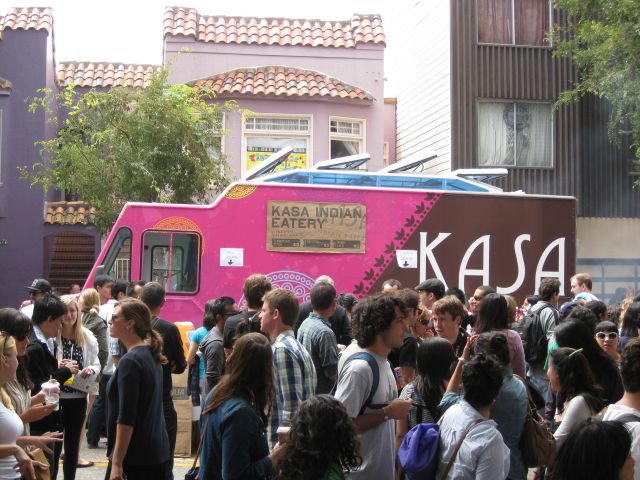
A different ensemble was available in the Mission District and we were introduced to the food truck revolution. These mobile trucks offer entrepreneurs a way to get started in the restaurant business. The food is varied, relatively inexpensive and convenient if you don’t mind lines and eating from a paper plate. TRUX is a website which provides information on the routes and includes twitters from the operators on when they will hit a street intersection. Other websites provide a top ten food truck listing. Conventional restaurateurs are uniting against their mobile competitors.
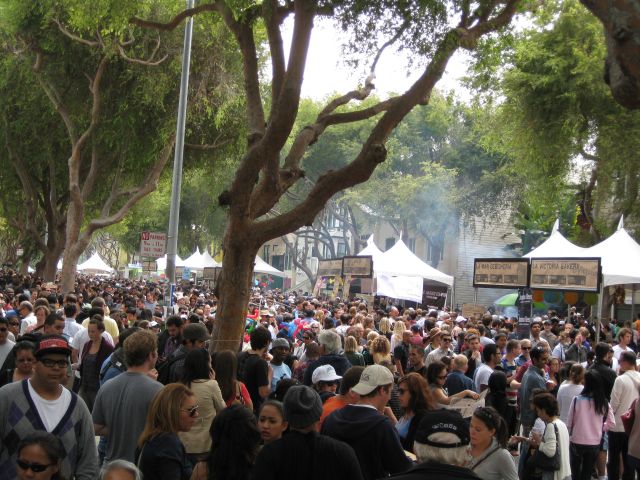
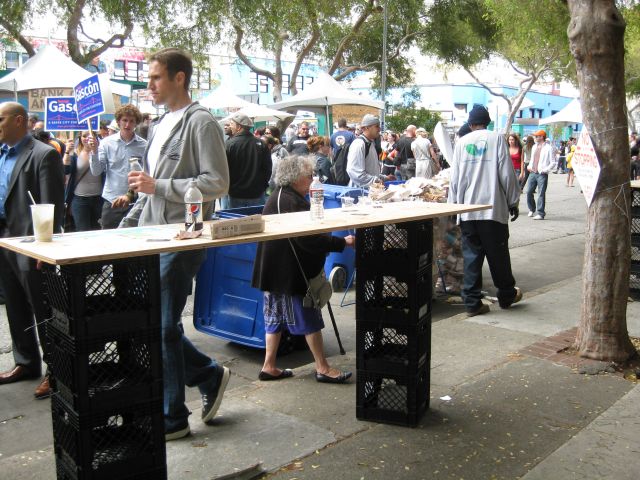
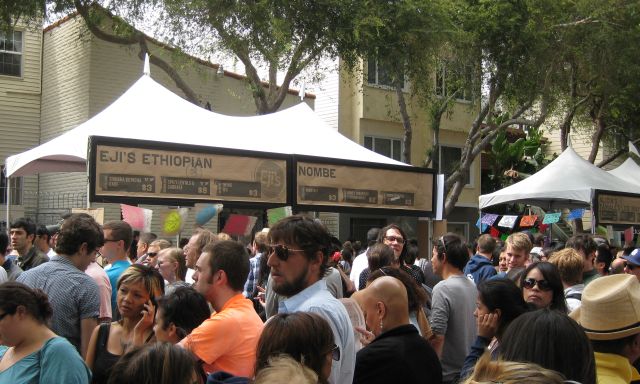
La Cocina, which assists low-income food entrepreneurs, organized the street food festival we attended. Folsom Street was cordoned off for several blocks and an alley of food stalls and food trucks was thronged by long lines of hungry consumers. Planks across stacked crates were the tables and continually emptying garbage sacks handled the trash. A roped in biergarten kept spirits high. A fun event.
the La Cocina street food festivala falafel food truckan Indian food truckwell attended festivalmakeshift tables for the hungrystreet cart vendors
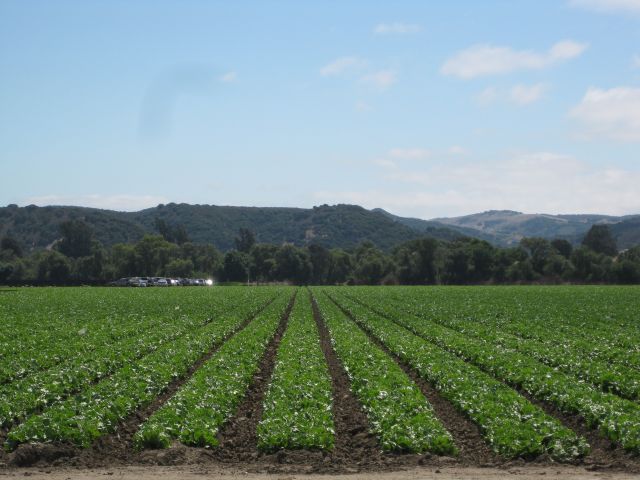
On the way from Monterey to San Francisco we paused in the Salinas Valley. If anything can trump Carmel Valley it is this valley, known as “the salad bowl of the United States”. Salinas was the hometown of John Steinbeck and the national John Steinbeck museum brings to life his books on the region. I chuckled on his comments when he revisited Carmel later in life: “And Carmel, begun by starveling writers and unwanted painters, is now a community of the well-to-do and the retired. If Carmel’s founders should return, they could not afford to live there, but it wouldn’t go that far. They would be instantly picked up as suspicious characters and deported over the city line.” (Travels with Charley: in search of America circa 1960). Little has changed during the intervening past 50 years.
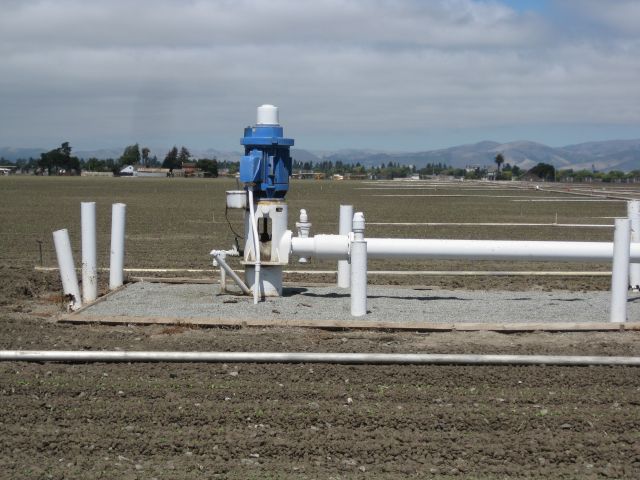
Apparently over 80% of the lettuce grown in the United States is grown in the Salinas Valley. Temperatures are cool and moderate with typical daily highs ranging from around 52 F in the winter to around 72 F in the summer – who could ask for more? Although rainfall is modest, irrigation needs are provided by the Salinas River. Nearby Castroville is known as the artichoke center of the world. Though there may be some puffery in the salad bowl and artichoke claims, the magnificence of these growing locations cannot be refuted.
great growing in Salinas Valleyirrigation infrastructure in Salinas Valley

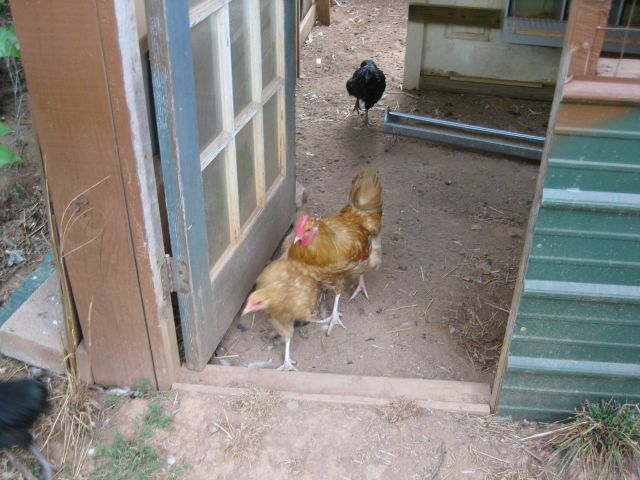 Eight young chicks arrived as a group
 but Buffy is different