5 steps to conversion and organized skepticism

The nice thing about engaging in politics while running is you work out your anger quickly and without upset.  If you engage too loudly or passionately, your companion/opponent may edge away or pick up speed or become distracted by the passing natural attractions.  In the event, no harm is done, and you both feel better for the exercise and the ridded emotions.

On the topic of global warming, Bob has made some progress over the past 5 years and is now at level three of the five step climb which are 1) the climate is not warming; 2) even if it is warming this may be good not bad since we now have access to the mineral resources of the Arctic, etc.; 3) it is warming, I agree this is probably not good, but there is no reliable evidence it is caused by humans; 4) it is warming, it is bad, it is caused by humans but there is nothing we can do about it or we will become non-competitive if we try fix the problem; 5) I agree, let’s try fix it but isn’t it too late?

A frequent rejoinder by Bob is that the scientific community is in cahoots and cannot be trusted.

And this is where “organized skepticism” enters the picture.  My current MOOC ( massive open online course) at Coursera is titled “Science from Superheroes to Global Warming” and intends to make the layperson (me) knowledgeable about the scientific process.  Organized skepticism is the process where the scientific community aggressively reviews each other’s work to find errors.  This may be done in the pursuit of a higher truth or simply because we are human, competitive and egoistic and if someone else claims to have taken a big step forward our first instincts may not be to congratulate but to find fault.  I hate having to say to myself “now why didn’t I think of that?”

The laws of the universe apply everywhere the same (uniform), are unchanging (invariant), are measurable (discoverable) and, most importantly, experiments demonstrating these laws must be repeatable both by the person doing the experiment and others (reproducible, replicable).  So, unlike the social sciences, scientific evidence must be provided to support a theory and the community will challenge the data and the theory.  This rigorous process ensures that fraud cannot be perpetrated.

So when the scientific community agrees that global warming is occurring and is caused by humans, it is unlikely that it is in “cahoots”.

At this critical point in my narration to Bob he exclaimed “did you see that?” and, as our heads simultaneously swivelled, I realized once again how hard it is to make progress on global warming.

a black powder event

Now for something different!

The Remington Model 1858 was a 6 shot revolver patented in 1858.  My buddy Mike has an Italian made replica with an 8″ barrel in .44 caliber and he, and I, were keen to try it out on my range in the valley of the woods.

the case contains the revolver, a powder flask, a mould for making your own bullets, the bullets (top right) and the caps (in the tin next the bullets)

The firearm is called a revolver because it has a cylinder, which is removable, and contains 6 chambers. The procedure is you fill the 6 chambers with powder from the powder flask.  The flask has a manual valve which you open, place you finger on the end of the flask tube, invert the flask and, when the flask is full, close the valve.  The tube of the flask now has the required amount of powder and you invert the tube into a chamber in the cylinder.

 filling the cylinder
a chamber is filled with powder from the flask

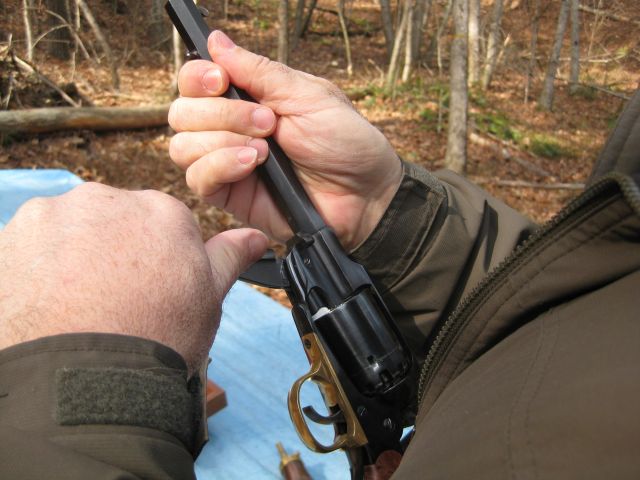
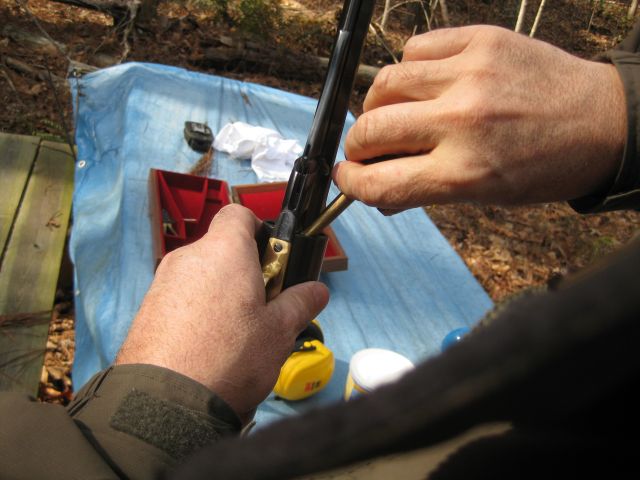
After all 6 chambers are filled with powder you then insert a bullet into each chamber.  The caliber of the revolver is .44 which means the diameter of each bullet is .44 of an inch.  The diameter of the bullet, which is made of lead, is slightly larger than the diameter of the chamber so the bullet has to be compressed into the chamber, which is done with the loading lever of the revolver.

022013 compressing the bullet
pulling down on the loading lever compresses the bullet into the chamber

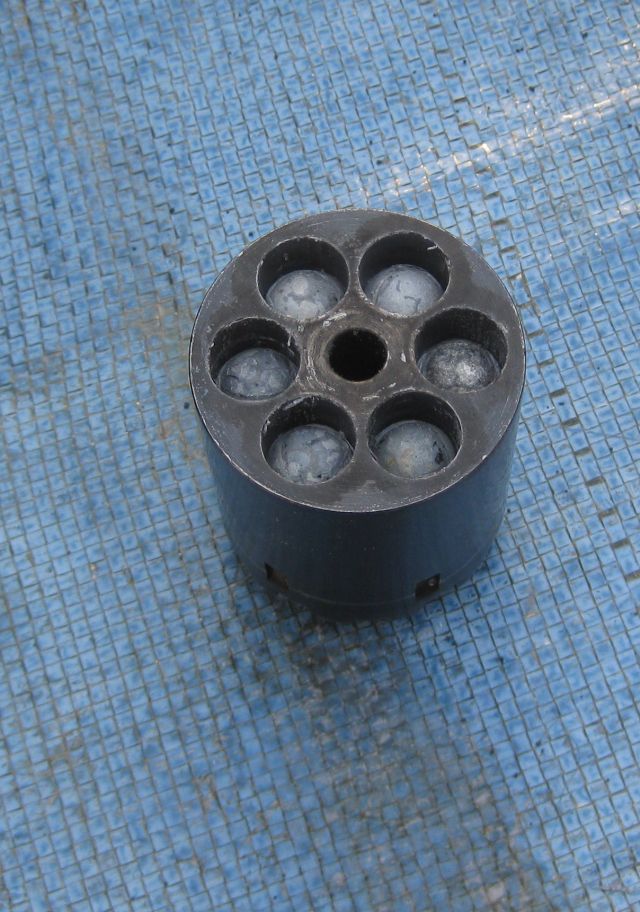
After loading the powder and the bullets into the 6 chambers we removed the cylinder for the last two steps.

022013 cylinder
the cylinder removed from the frame showing the 6 loaded bullets

A safety concern is cross fire which could occur when you fire one chamber and the ignition triggers the other chambers.  To avoid this we purchased a tin of Cresco.

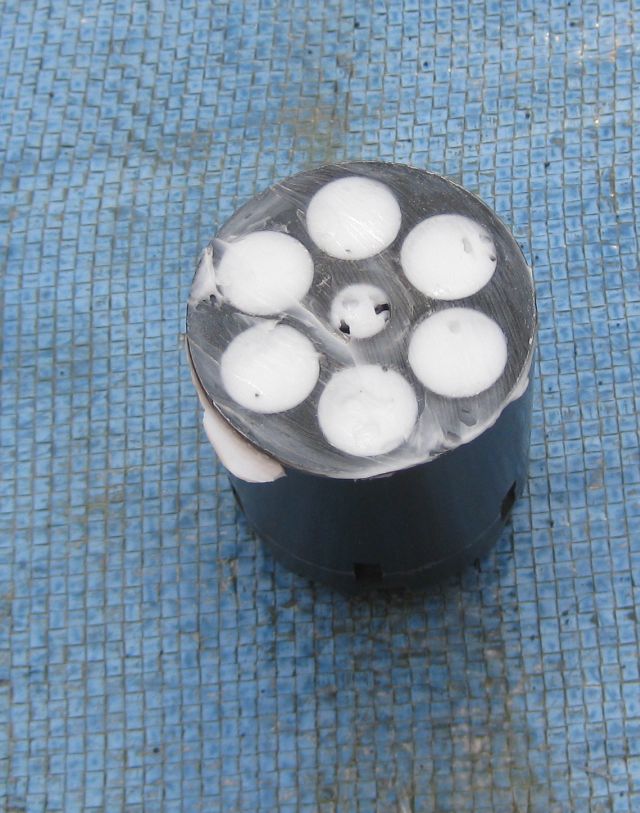
a tin of Crisco some of which was placed in each cylinder on top of the bullet

And here is the Criscoed cylinder.

cylinder with each of the 6 chambers covered with Crisco

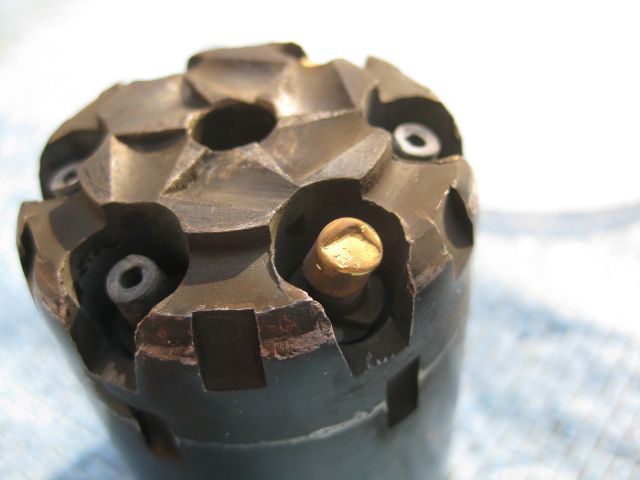
The final step was to place a percussion cap on each of the 6 nipples which are at the rear of the cylinder.

you can see the nipples and a cap which was fired, hence the indentation in the cap
you can see three nipples and a cap which was fired, hence the indentation in the cap

Then, with the cylinder in the frame, it was time to fire.

IMG_0135

Oh, by the way, a confession.  The gun store did not have black powder so we purchased a substitute which was also a black powder and worked just as well as the real thing.

the black powder substitute which we used

update – Mike was unhappy with the inaccuracy of the revolver.  I thought the 2ft grouping at 50ft was ok for first time firing of this weapon.  He says with its 8″ barrel and grooving this is a very accurate weapon and should have produced a tighter 6″ cluster.  He studied the photos on this site and identified several reasons.  First, the bullets should be close to the cylinder face – the reason they are so deeply seated is because we didn’t use wads, which we will use next time.  His reasoning is that it is important the bullet be close to the grooving in the barrel so it starts rotating immediately.  Seated deep in the cylinder means it will travel a short distance without rotation and this will adversely affect its subsequent rotation.  He also noted that some bullets were more depressed in the cylinder than others which means the powder charge was inconsistent and this will affect accuracy.  Finally, not all the trigger pulls fired first time and the reason we surmised was because the caps were not properly seated on the nipples and with the first trigger pull the hammer seated the cap on the nipple and then it fired on the second hammer pull.  Mike notes from the picture that some of the nipples are deformed from dry firing and he will investigate acquiring a nipple remover tool and new nipples to correct this problem.  Finally, Mike says black powder is more accurate than the powder we used.  It is like diagnosing intermittent firing on an older vehicle – so many things to consider and skills to acquire, now redundant from modern technology.

signs of spring

In the pond in the woods I noticed a big bubble containing lots of smaller bubbles each with a black object – frogspawn with the black dots growing daily larger into tadpoles.

frogspawn containing tadpoles

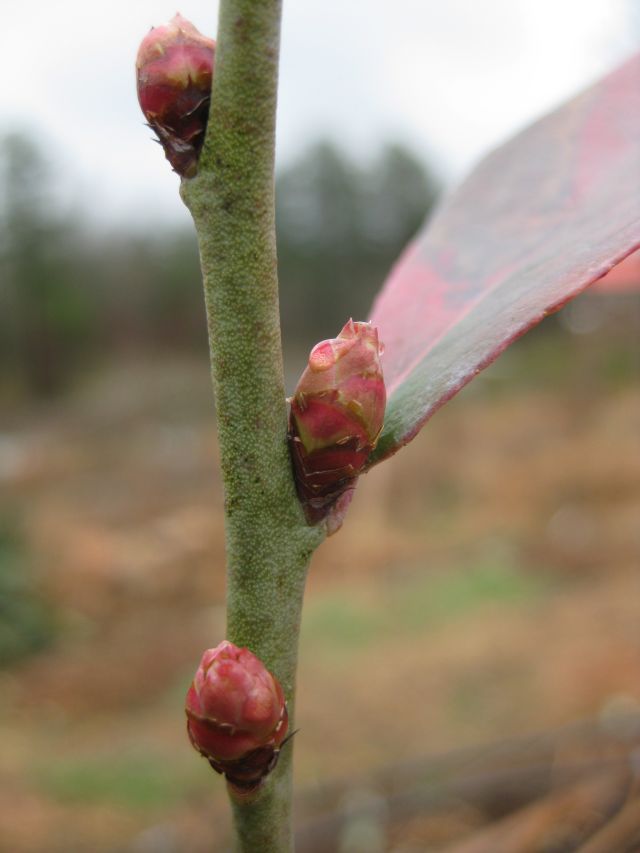
The bouts of warm weather interspersed with freeze spells have stimulated budding on several plants.

a blueberry plant anticipating spring

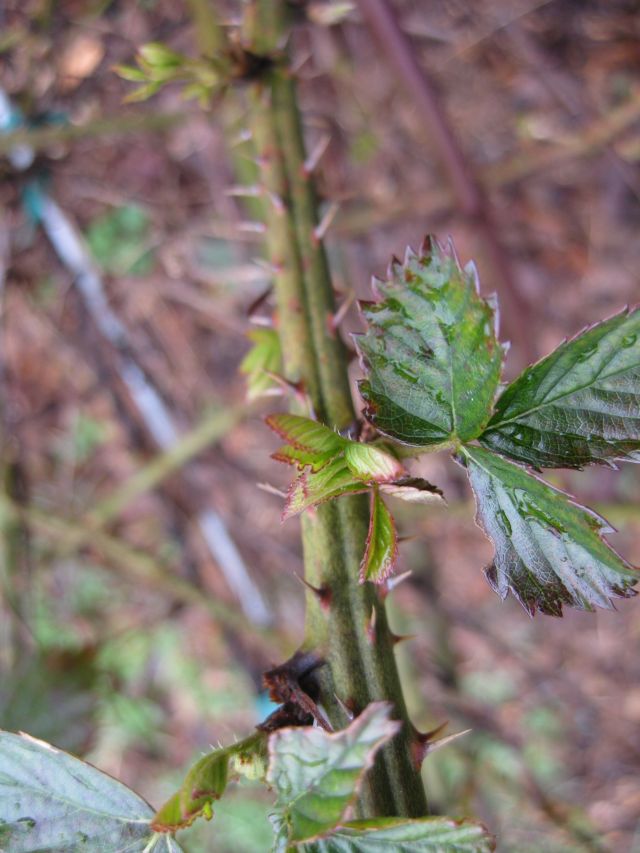
Similarly my raspberries and elderberries.

raspberry plants readying for the new season

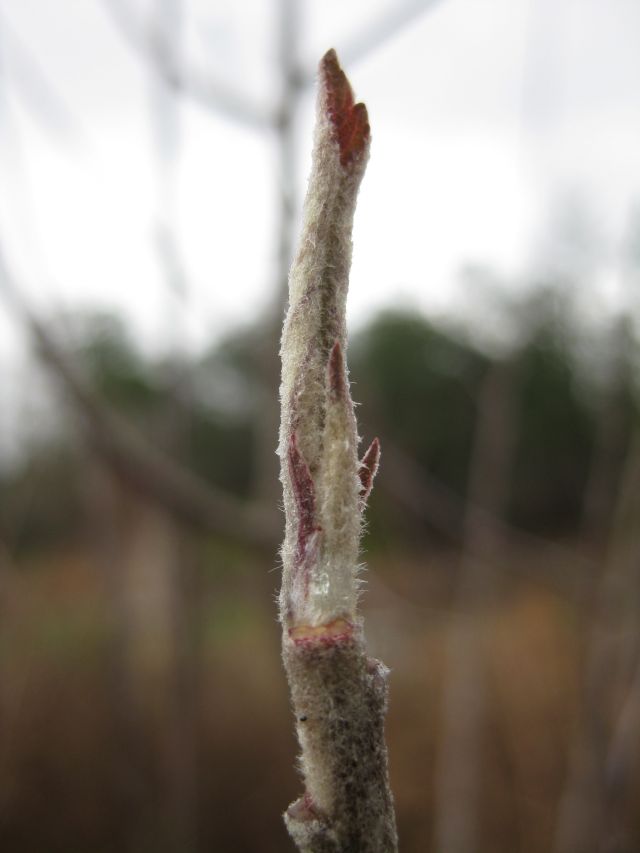
And at the tips of the branches of my apple trees, young leaves begin to unfurl.

in spring the early leaves of the apple tree stretch up and uncurl
ein shemer apple tree leaf

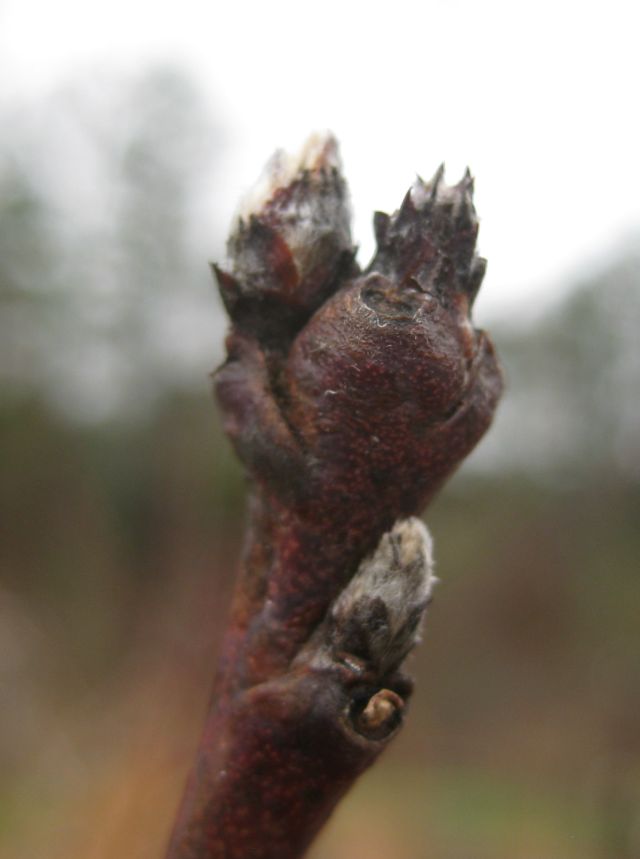
Of concern, as in previous years, is the proclivity of the peach trees to blossom too early and then be frost killed. And here, true to habit, is a peach bud preparing to launch.

bulging peach bud
bulging peach bud

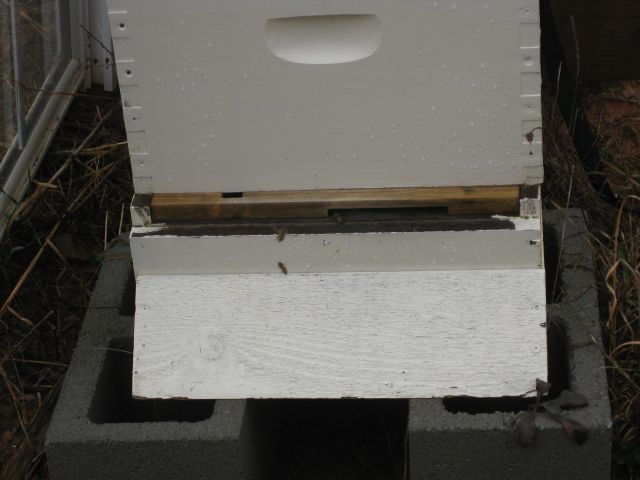
Today is in the 50’s so a few hardy bees are reconnoitering.  Both hives show signs of life.

some bee activity
some bee activity

And last week, with the gradual lengthening of the days, the hens are returning to egg laying activities.  Right now 2 eggs a day but 5 eggs a few days ago.

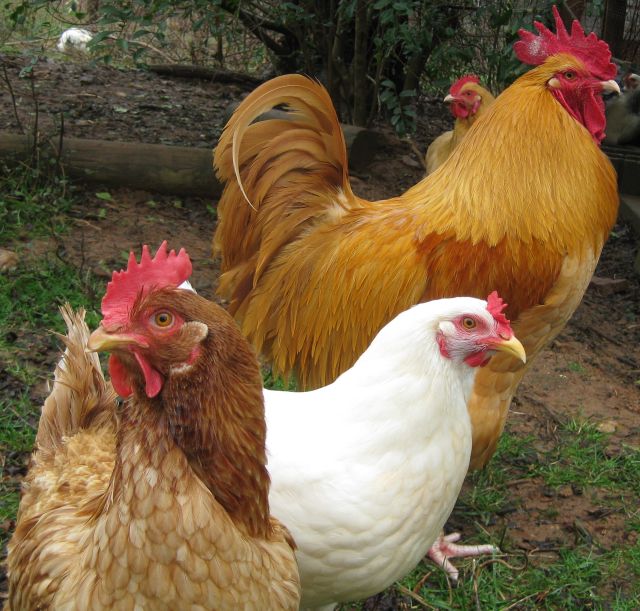
in order from front: Red, Pearl, Buffy the Rooster, and Lady Macbeth peaking from the back

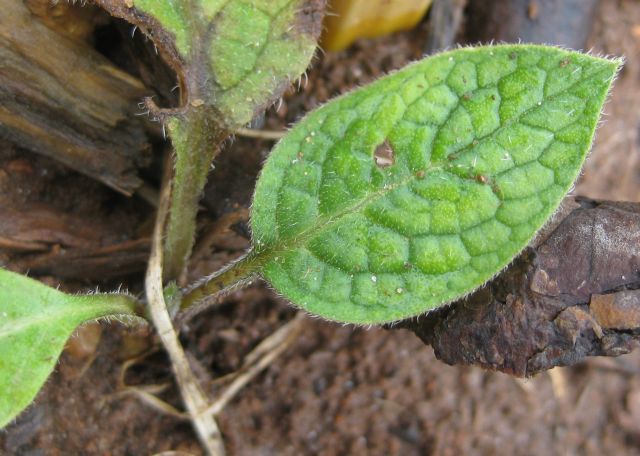
The young garlic plants are looking good, the chard into its second season is fresh and tempting and where I had planted a few severed roots, comfrey plants with their distinguished leaf pattern have emerged from the soil.

young comfrey plant offspring from a root fragment, with its patterned memorable leaf

Another growing season is on its way!


horse manure control test

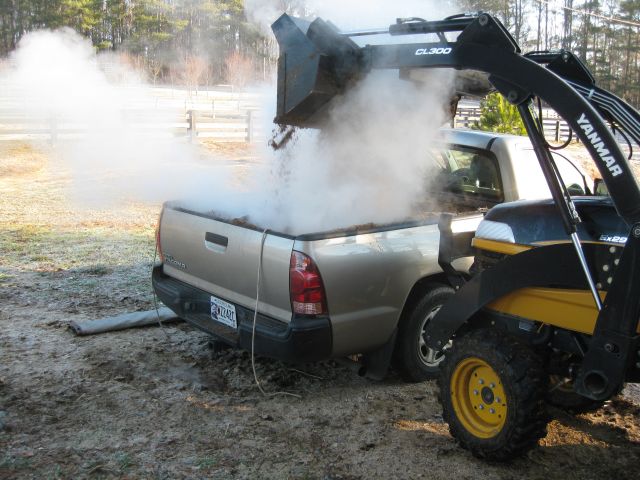
In March 2012 I performed a simple test to get some confidence that the horse manure I was collecting was not harmful to my plants.  The test indicated that my plants would not be harmed but the effect on worms was undetermined.  I had not visited the stables for some time until early this January I headed their way.  One of the immediate changes was the password controlled electric gate.  The new owners, a husband and wife team were welcoming, and when I mentioned I usually paid $20 per load of horse manure, the husband fired up his Yanmar tractor and we together headed for the manuring area.  The  previous owners used a John Deere tractor (30hp) which was occasionally  aggravating.  Kenny says he is very happy with his Yanmar.  Coincidentally, my Takeuichi bobcat has a Yanmar engine with untold hours (the hour gauge stopped working at 2,500 hours) and it works very well.

steaming horse manure nutrition from the stables
steaming horse manure from the stables

As the manure was being dumped into the pickup bed I noticed that they now use shavings in the stalls instead of straw/hay.  I preferred the latter though I am sure the shavings are cheaper.

a simple control test for horse manure
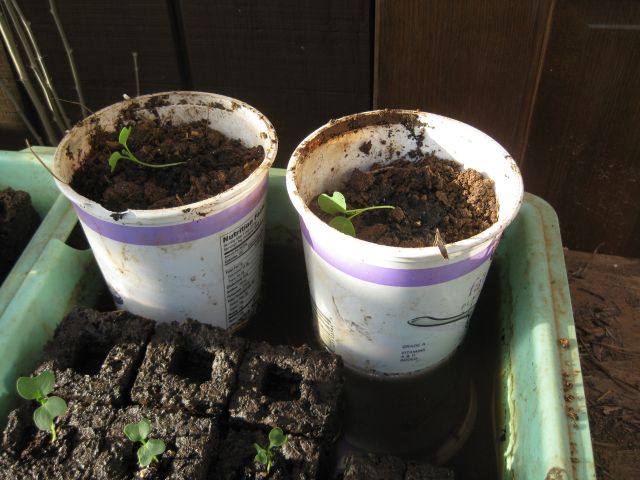
my simple test – a kale seedling planted in horse manure vs. compost

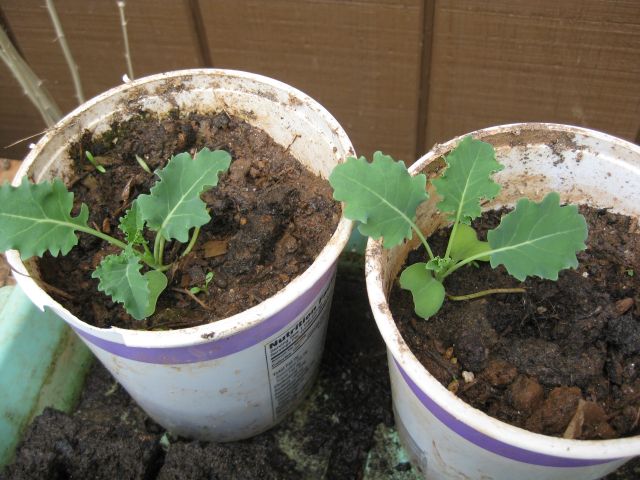
I decided to again test the manure.  I filled one yoghurt container with manure and the other with compost and inserted a 2″ soil block containing a  kale seedling into each, plus a 3″ worm.  And waited about a month.  And then examined the contents.  Both seedlings had grown at about the same rate and I was pleased to see their roots had extended well beyond the soil block so they had sampled their surroundings.

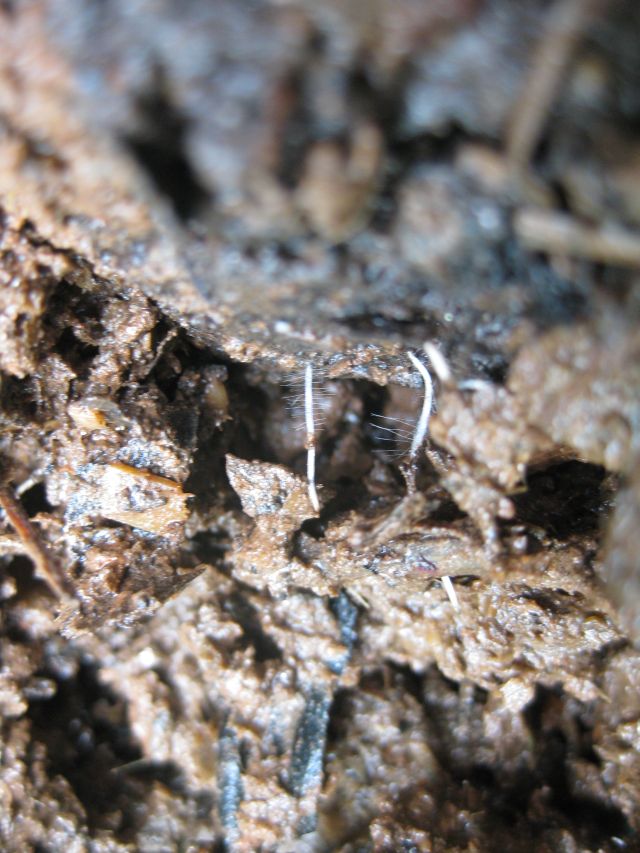
seedling roots in horse manure
white roots of seedling extending into the horse manure. note the fine horizontal roots I had not noticed until this photo

And as for the worms – both had disappeared.  I should have learned my lesson and included other soil life such as centipedes and millipedes.  Worms do tend to wander.

similarly sized seedlings a month later alternatively in horse manure and compost

So where does this leave me.  The Feb/Mar 2013 issue of Mother Earth News has an article “Killer Compost Update Herbicide Damage Still a Major Problem”.  The gist is that  persistent herbicides remain potent in composted manures and will damage crops to which they are applied.  The article did not focus on insecticides applied to pastures or dewormers or other chemicals given to livestock.

I recently read “Bringing Nature Home” by D Tellamy who makes a compelling case that we should protect and sustain all insects, including herbivore insects which are the ones which eat my vegetables.  His view is that these insects and particularly their larvae, provide food to predator insects and birds and thereby promote diversity of these species.  The book is very well written and castigates alien plants not only because they are invasive but also because it takes a long time for native insects to adapt to eating them and so they provide little nutrition and without natural enemies become more invasive.  To  test whether the horse manure is safe for insects I will now add centipedes and millipedes of which I have an abundance to the two containers and see how they fare.

truck maintenance – changing the spark plugs

I have a  base model, no frills, manual transmission wind up window 2005 Toyota Tacoma pickup purchased new in 2005 for approximately $14k.  It now has 160k miles and, apart from replacing the tires, I have done all the maintenance work.  Which has been minimal – such as oil and filter (I always include a qt of fully synthetic oil), new battery, windshield wipers.  Because the miles are highway miles, the brakes have been rarely tapped and therefore have not required replacement.  And, these being truck tires, tire replacement is after more than 60k miles.  A very economical vehicle with good mileage per gallon.

The recommendation is to replace the spark plugs every 90k and I bought 4 new spark plugs as the mileage approached that mark.  The replacement procedures seemed complicated and, since the truck went fine and I was lazy, I deferred the moment.  Recently the truck has lugged while going up hills  and seemed to need more gas pedal encouragement than usual.  So yesterday with the mileage gauge almost on 160k miles,  I decided to get on with the job.

I used the Haynes Repair Manual for my vehicle and followed the step by step illustrated procedures.  In the past I did not need a repair manual – simply follow the spark wire to the plug, carefully pull the wire connector from the plug, remove and replace the plug (after gapping) and reattach the wire.  Problem with modern vehicles is they do not have spark wires but ignition coils and above the ignition coils there is superstructure which must first be removed.

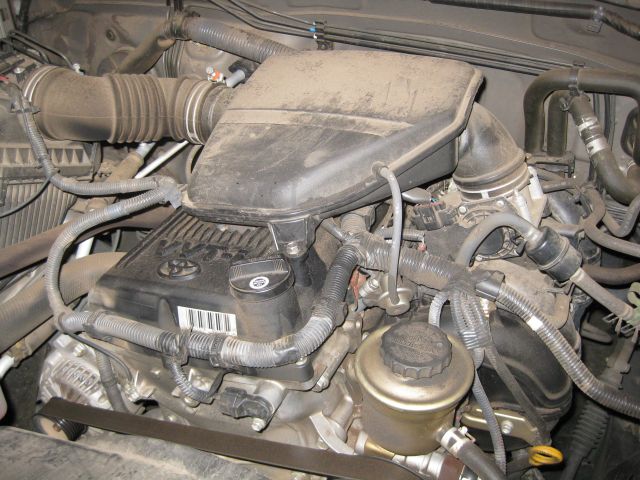
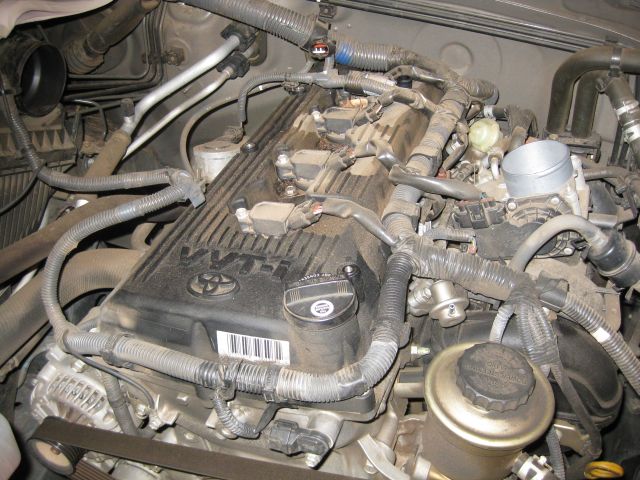
engine before removal of any components

So the first steps (after disconnecting the negative lead to the battery) were to remove the air intake duct or large pipe which connects the air filter housing on the left to the intake air connector, which sits above the engine.  Then numerous electrical connections, a vacuum hose and a fresh air inlet hose had to be carefully disconnected from the intake air connector, which was then itself removed.  I have learned that the key with removing all these items (apart from not losing them or forgetting how to connect them back again) is to use gentle and intelligent force. And also to have the right tools at hand.  It is so easy to break a connector especially after it has been in use for more than 7 years and has become somewhat brittle.

the engine with the intake air connector removed and the wires leading to the ignition coils exposed

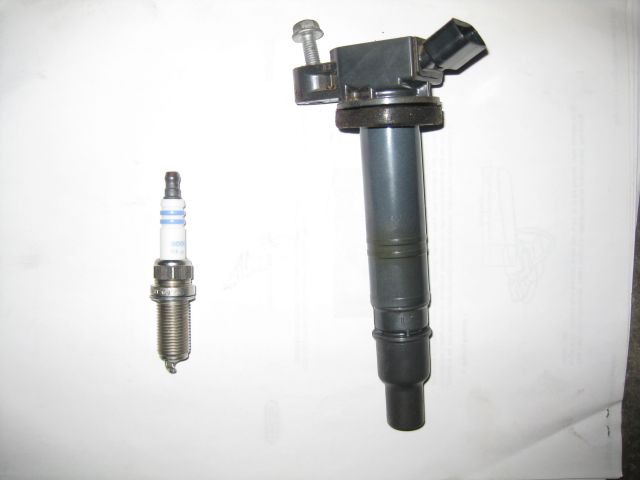
Next steps were, to remove the ignition coil starting with the easiest most accessible ignition coil and using a lot of care not to damage anything. Not having done this before, I had thought the ignition coil sat just above the spark plug.  As the photo below shows, where it is compared to a spark plug, it is actually a long tube.

ignition coil on right which fits over and onto the spark plug

Once I got the knack for disconnecting the electrical connector it was quick work to remove and replace all 4 spark plugs.  I was relieved to see that all the plugs were in good condition with no signs of oil, carbon, or ash deposits or anything untoward, except for electrode wear.  Then I followed the disassembly instructions in reverse (my memory which was never that great could not be trusted to locate and connect all the fittings), re-connected the battery and started the motor.  And it goes great – takes the hills with gusto and requiring little encouragement.

Inspired by my success I also tackled the task of adjusting the parking brake.  With time the cable had stretched and the parking brake could not be relied upon to hold the truck in place on even gentle slopes.  This task took almost as long as replacing the plugs.  To adjust the brake you have to remove the center console (where the manual shift lever is) and slide the bench seat back.  Clearing the center console of its accumulated contents took time enough.  More time was needed to remove all the equipment (chain saw, machete, crowbar, tools, kits, straps etc.) and debris, accumulated over 7 years, behind the bench seat.  The center console removed easily, the carpet was shifted aside, a cover plate unscrewed and it was quick work to adjust the parking brake cable.

A dealer had quoted either $120 or $180, I forget which, to adjust the parking brake – it was an unsolicited quote provided when I took the vehicle in for a minor recall (why are there so many recalls?).  I have no ideal how much replacing the spark plugs would cost – the spark plugs (platinum or iridium) are not cheap and I suppose this would also have been in the hundreds.  I felt good doing this myself with no complications – feels good to be self sufficient and also to save money.

2 good talks – EpiPen and chestnuts

Bee Stings & Allergic Reactions

Last Thursday was the monthly meeting of the Cherokee Beekeepers’ Club meeting and the speaker was a MD who specializes in medical emergencies and is also a beekeeper.  Well qualified in all respects.  He outlined the differences between a local reaction to a bee sting (swelling, pain, redness) which is normal; a large local reaction where the symptoms persist for up to a week; and an allergic reaction of which anaphylaxis  is the most serious and is life threatening.  He said less than 5% of allergic reactions are anaphylaxis, that less than 50 people die each year from bee stings and for most this occurs within 30 minutes of being stung and usually from asphyxiation from swelling of the breathing passages.  He outlined symptons and treatments and when and how to use epipen.  Cost without insurance exceeds $300 and with the right insurance may cost approximately $30, it requires a prescription and expires after 1 year but has some efficacy thereafter.  There were a lot of cautions and good advice including the difficulty of distinguishing between a panic attack and a serious allergic reaction. This for me was the most interesting part and he brought a practice epipen syringe which I tried out and heard the click as it pressed into my thigh.  His key take aways were to remove the bee stinger as soon as possible by scraping not gripping, to stay calm and not panic, and to get to the emergency room as soon as possible.

the American Chestnut

Friday evening was a cocktail reception and talk by the southern science coordinator of the American Chestnut Foundation (“TACF”).  I arrived early at the Kendeda Center HQ of Trees Atlanta, which is south of downtown in an area which during my London accommodation hunting days would have been described as “not salubrious”.  The premises however are impressive – about 30 varieties of trees planted around the car park which you are challenged to identify, large rainwater collection tanks, water infiltration techniques and a large well equipped building.  I found some like minded guys and had good discussions.  A spirited anti-exotic animus prevailed and I was encouraged, and have now ordered, the book by Tellamy “Bringing Nature Home”.  After the reception we settled in the auditorium where the speaker passionately outlined the history and attributes of the American chestnut and the program the past 30 years to develop a blight resistant American chestnut.

Until 100 years ago the American chestnut dominated the eastern forests and accounted for up to 40% of the canopy.  Fast growing up to 100ft high and 5 ft diameter (though up to 10ft diameter could be achieved), a straight, rot resistant, light weight valuable timber trees for siding, split rails, shingles and furniture.  It was a large annual producer of chestnuts (mast) for wildlife and humans.  with apparently three times the mast of oak trees.  Plus the chestnuts could be ground to flour for bread making.  The iconic chestnut was to the east as the redwood is to the west.  The blight from Chinese chestnuts arrived in NYC in 1904 and by 1940 in Georgia, and wiped out about 4 billion chestnut trees.  Because the wood is rot resistant the stumps persisted and continue to produce sprouts, which die after a few years when attacked by the blight.

The TACF was founded in 1983 and the approach is to transfer the blight resistance of Chinese chestnuts to American chestnut trees by using the backcross breeding technique where you keep the American chestnut phenotype (physical characteristics) but breed in the blight resistance of the Chinese chestnut.  An objective is to have diversity in blight resistance strains so as the blight changes the trees can respond.  The Chinese chestnut is low and sprawling like an apple tree and quite unlike the tall straight limbed American chestnut.  The speaker showed a picture of himself in a bucket truck manually pollinating trees.  There are TACF chapters in 21 states and trees are grown in 300 orchards.  The “Restoration Chestnut 1.0” has at least moderate blight resistance and is being planted out in national forests and strip mined areas.  The hope is it will have enough resistance and sexually reproduce.  Work is continuing to develop an even better chestnut.  8,000 trees have been planted out which is a significant but small step to achieving their goal of re-establishing the 4 billion trees which once existed.  The speaker now works in Georgia which he says is one of the best chapters (maybe this was a comment just for our ears only) and he said an additional challenge in GA is developing chestnut resistance not only to Chinese blight but also to a root rot (phytophthora ) which occurs in clay soils such as found in middle and south Georgia.

If one joins TACF and makes a $300 donation you receive 5 Restoration Chestnut 1.0 seeds/seedlings.  For successful growing the site must be well drained, good sun, a deer fence and you must irrigate, monitor for beetles and voles and manage weeds.  And with some luck you may have an American chestnut.

taking a chance with citrus

My zip code says I am in plant hardiness zone 7 (0 to 10 deg F) .  With ongoing climate change and with use of micro climates, I coax myself that I am in zone 8.  Which means I can try my hand  at cold hardy citrus grown outdoors.  It’s a novel idea to think of growing citrus where I live.  But I love citrus, even lemons.  I used to chew on lemons until my dentist observed significant enamel erosion and presciently asked if I ate lemons.  End of my lemon eating, but oranges and grapefruit are high on my list and now I will try grow some citrus varieties.

I stumbled on the McKenzie farm’s website, which has a citrus grove in South Carolina .  Their latitude is 33.9N which is the same as Atlanta and is 0.5 degrees or about 35 miles south of my location.  Stan, the citrusman, was very helpful on the ‘phone and I decided to purchase 2 trees which he shipped in 1 gal pots (unlike all my other internet purchases, which are shipped bare root).  They arrived quickly with detailed and helpful suggestions on location and protection from the cold – such as wrapping the tree with Christmas lights and lighting them (the lights) if there is danger of a hard freeze and, if severe cold, throwing a blanket or plastic sheet over the lights.  Or using a passive solar heating system of 5 gal buckets of water around the trees, etc.

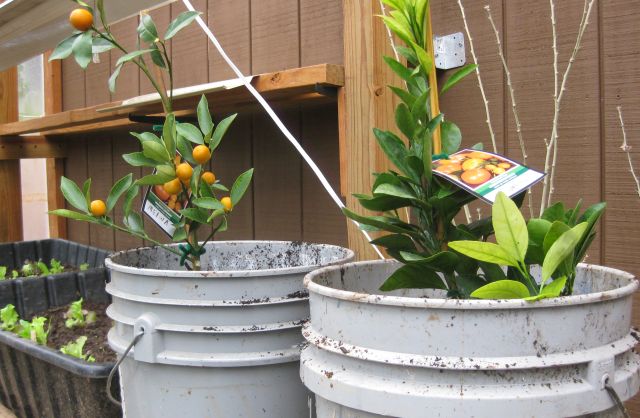
I ordered a Meiwa Kumquat and Owari Satsuma.  According to the website, the Meiwa, once dormant, can withstand temps in the mid teens and the Owari is very cold hardy down to 12F.

two cold hardy citrus
new arrivals, Meiwa and Owari citrus overwintering in the greenhouse

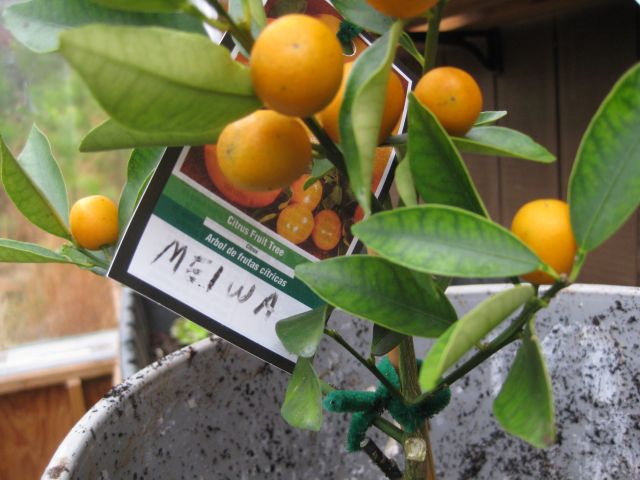
As can be seen above, the Meiwa had some small fruit attached which are delicious.  Rather than plant them in the ground now, I repotted them into 5 gallon former paint containers and have stationed them in my greenhouse and will plant them out in the spring.  The probable site will be on the top  of the hill which has excellent sun exposure and drains well and I will erect solid protection to the north and when next winter approaches, will use some of my surplus windows to protect from westerly winds.  There is a big windbreak to the south and I don’t get winds from the east.  I will also add boulders to sink heat and watch over them until they mature.  As the notes state: “Small trees will not tolerate freezes as well as larger, mature trees will.  Getting them to maturity is a challenge but it’s one that will reward you greatly.”  And then, perhaps, I may enjoy my own citrus grown fruit in upper Georgia.

delicious sweet Meiwa citrus

when it rains incessantly – then build a bat house

Rain has been unrelenting in the Atlanta area.  I have captured all I can in my storage tanks and contour ditches and I hope most of the surplus is recharging the underground reservoirs and not running for the Gulf.  So, with little to do outside, I decided to build a bat house.

I am increasingly relying on natural predators to combat pests.  Because the weather has been unusually warm, a number of pest families are happily populating themselves on my lettuce in my cold frames.  So I was pleased to see that the ladybugs, which overwinter in the logcabin, have also turned their thoughts to population expansion.  I captured several preoccupied couples and gently deposited them on the lettuce plants in the cold frame and hope, when their immediate priorities have been satisfied, they will turn their attentions to food snacking and find something worth eating.  My biggest challenge will be towards the end of summer when the BMSB (brown marmorated stink bug) returns.  Neighbors suggested using a nicotine spray (cigarette contents liquified) to fight them but yesterday a visitor, who is a local master gardener, was surprised with this concept and said I could be turning tobacco mosaic virus loose on my tomatoes.  Some research is needed here.  But, back to the bats which are great predators of night insects (moths) and are surely, a more natural and effective solution than using red light traps and lures.

I recently replaced 23/32 plywood sheathing on the Atlanta house with hardiplank cement siding (a much better long term solution) and the weathered plywood sheathing has waited patiently for a new use – why not, for starters, a one chamber bat house.  Several websites offer finished models or books (thin books <60 pages >$8) but with little effort I found a great conservation website with free instructions for my bat house:  http://www.batcon.org/pdfs/bathouses/SingleChamberBHPlans.pdf.

I shall be attaching the bat house high up on the east side of my barn where I know there is bat activity.  My  raw materials outlay has been modest – just a 1″x 2″- 8ft length of cedar for $2.47.  The cedar is a compromise since I did not want to use treated wood and untreated pine wood will not endure.  I hope bats do not have an issue with cedar.  All the other materials were either left overs or recycled from disassembled structures.  I also decided, when I saw the price, to buy a second circular saw.  I have a heavy duty professional model which I keep in Atlanta and am using to cut the hardiplank.  Lowe’s was selling a light duty Blue Hawk saw for $30 and I decided to splurge and will keep it at my log cabin and, if it should be stolen, it will be an easier loss to bear (by the way it works fine).

The one chamber bat house is simple to construct – you just follow the plan provided by the website.  The plan suggested applying 2 coats of dark, water-based stain to interior surfaces.  I skipped this step.  Not sure of the logic here.  If the intention is to reduce wood deterioration then the stain should be an exterior stain which has all types of nasties to prevent mildew etc.  Interior stains make the wood look nice and I am sure this is not high on the bats’ preferences.  Even linseed oil has inorganic components.  So I skipped the interior decoration but I did roughen the backboard as recommended by cutting horizontal grooves with the circular saw.

bat house
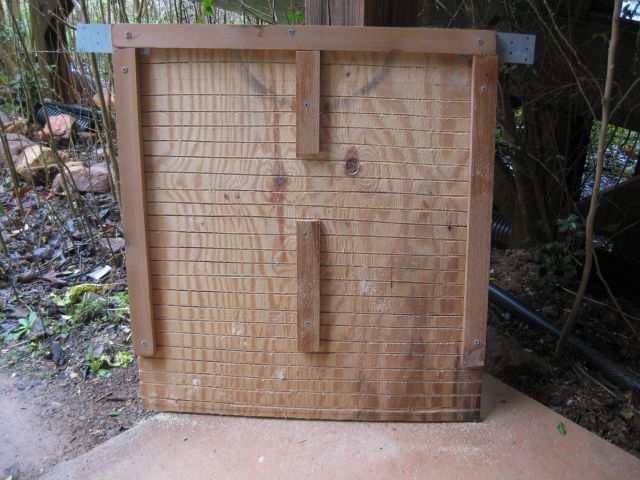
the bat house backboard with horizontal scored grooves and central support spacers to minimize warping

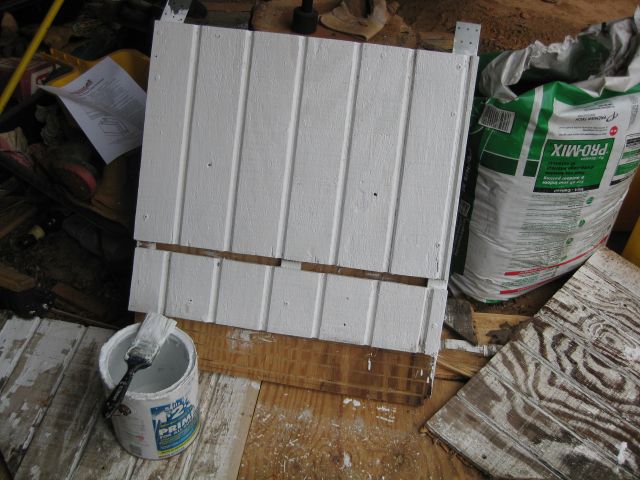
For the exterior, I first applied a good primer.  The unpainted area at the bottom is the landing board from which the bats enter the chamber.  The width between the front board (facing the photo) and the backboard is only 0.75″.  I would have made it wider but those who produced the plan know better than me.

bat house with landing strip
bat house with white primer and 0.5″ vent space and landing area at the bottom

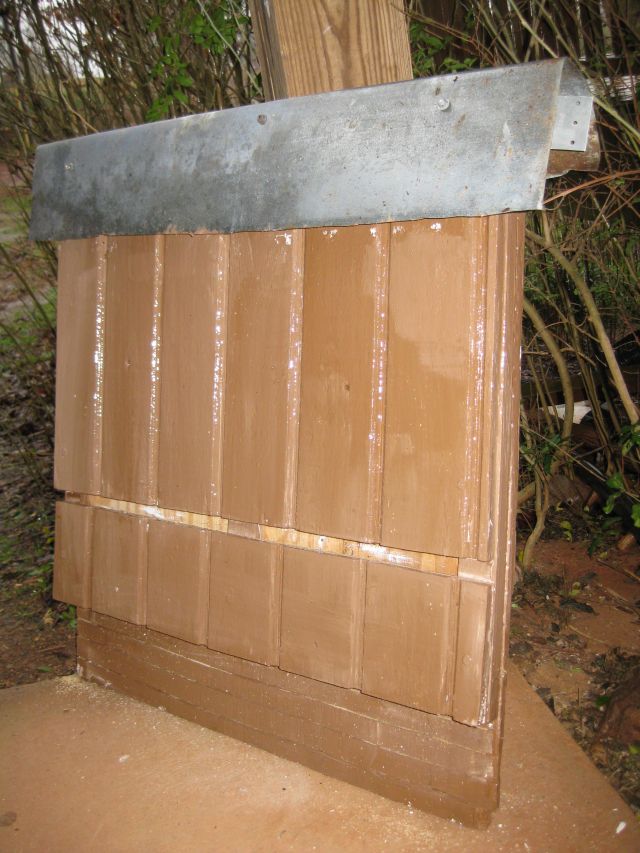
I assume self-respecting bats prefer natural wood colored habitats for their bat house and not a glossy white exterior and so I added an exterior solid brown stain.  I also cut out a piece of surplus roof sheeting and folded it over the top to provide a roof for the dwelling.

bat house with roofing material
the bat house – finished product

Now all I have to do is wait for the rain to stop as it eventually must and then I will attach the bat house to the barn and await the new occupants.

short-night veggies

I was aware of but didn’t not pay much attention to the long-day and short-day preferences of certain vegetables.  I knew that with onions, since I live in the south, I needed to grow the short-day variety.  But that was it – until recently.  In spring last year I had a lot of success with radishes and beets and so this past fall I seeded the ground again with  radishes, beets and, for good measure, turnips.  Only the turnips grew, excepting a couple of sorry looking beets.  Got me wondering.  The seed was purchased this year, so it was good, so why were the radishes and beets so reluctant?

I am studying a couple of biology textbooks and reached the chapter on plant sensory systems and “photoperiodism”, which is the response of an organism to the relative lengths of day and night (the “photoperiod”).  Radishes, beets, spinach and lettuce are called long-day plants but this is confusing, they are really short-night plants.  The distinction is important – the plant is concerned with the length of the night not the length of the day.  It would seem this is a distinction of little importance but it does have significance.  A short-night plant monitors the length of the night so if sun down is 5pm and sunrise is 8pm producing a night of 15 hours (9 daylight hours), a short-night plant which requires a short night of 10 hours, will not be motivated to germinate, grow or flower.  However, if the night is interrupted by a short period of bright light, the plant concludes that this is a short-night, even if darkness returns when the light is snuffed.  So, theoretically, half an hour of light interrupting 15 hours of darkness can convince a short-day plant that the time has arrived to grow.  If, instead, the plant monitored the length of the day and required say 14 hours of daylight (the converse of 10 hours of night) and there are only 9 daylight hours, I would have to provide an additional 5 hours of light instead of the 0.5 hour of light calculated above.

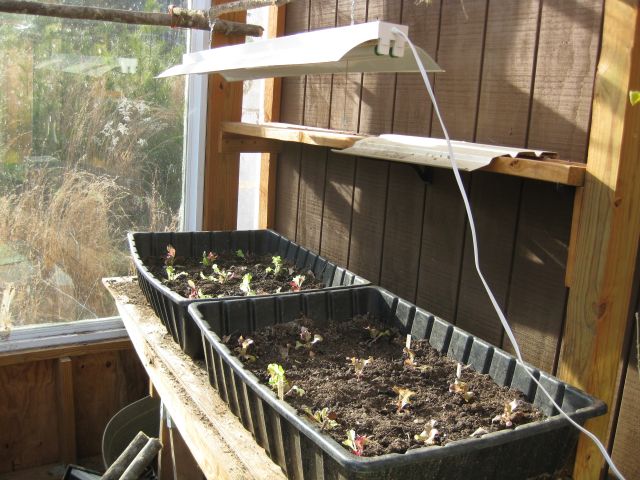
I have given up on the radishes and beets – hopefully they will get going in spring.  But I seeded lettuce indoors (initially 0.75″ seedblocks transferred to 2″ seedblocks) and I germinated spinach seed in the refrigerator, and I would like to get some lettuce and spinach this winter.  I have a simple unheated, good sun exposed, greenhouse and I prepared a growing medium of soil and compost and planted out the lettuce soilblocks and germinated spinach seed.  To make the long nights short, I decided to use the flourescent lights which I had installed for a neighbor to encourage her chicken to lay eggs in winter.  (My chicken keeping days began when my neighbor headed north and gave me her chicken).  Chicken need 14 to 16 hours of daylight to be stimulated to lay eggs.  I have discontinued this practice for my chicken.  To my mind it requires a big effort for a chicken to produce eggs every day or so and I have given my chicken the winter off to recuperate.  They have filled out and look good during their wintry vacation.

So, I had available flourescent lighting and an external use 3 prong timer and all that was required was to position the lights and set them to switch on from 12am to 12.30am.  Initially I thought I would lay the light holder a few inches above the grow trays thus giving the plants maximum exposure.  After pondering this simple solution I realized that if I did this the light holder would block the sunlight and make watering difficult.

short-night vegetables
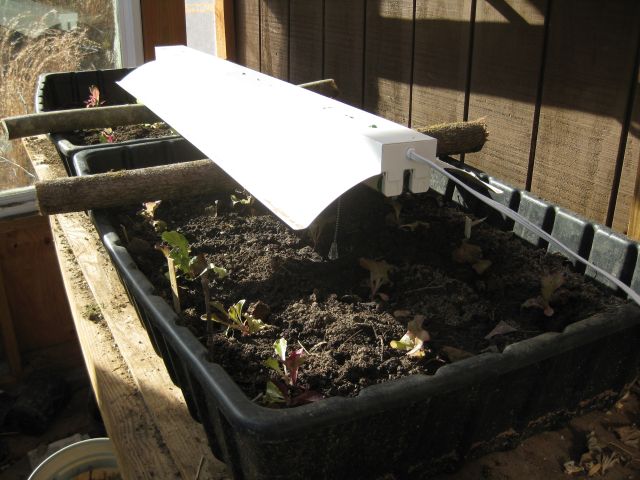
initially the fluorescent lighting, for interrupting the night for short-night vegetables, was located just above the grow bed

So I screwed together a simple beam structure using oak sapling trunks, which was cheaper and more green than buying 2 by 4’s, and it was done.  Now I will monitor the growth of the lettuce below the fluorescent tubes compared with lettuce in the cold frame outside and see if there is a difference.  A concern I have is that plants respond best to certain light wave-lengths (red light at 660nm) and the flourescent lighting is not the ideal wave-length (500nm – 600nm).   Although, importantly it is not the far red spectrum (735 nm) which actually switches off the growth response.  So, wait and see if interrupting the night will dupe the short-night vegetables.

short-night vegetables
the lights are now high enough above the growing bed of short-night vegetables to not interfere with daylight or watering

wood ash and the van Helmont experiment

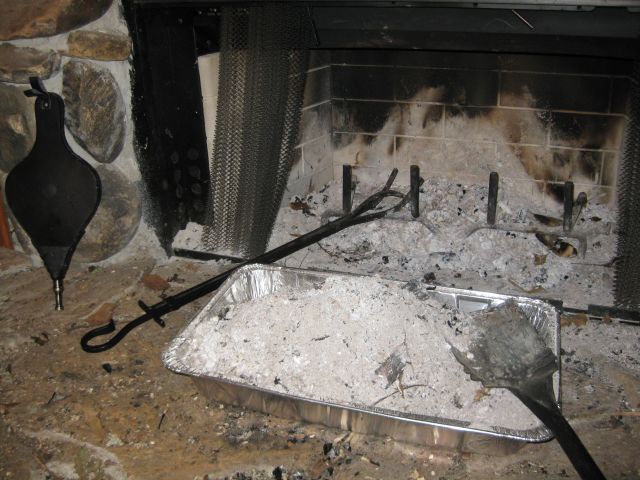
On cold nights I burn wood in the hearth.  Really inefficient with most of the heat going up the chimney and I am resolved to install, some time, a good wood stove.  However, what puzzles me as I stare at the burning embers is why there is so little residue from the logs.  The amount of ash remaining depends on several factors such as type of wood, moisture content and heat of combustion.  Seasoned wood has a moisture content of say 20% (water represents 20% of the total weight).  The ash remaining has a weight equal to say 1% of the weight of the wood logs.   So, after excluding the weight of the water (20%) and the ash (1%) almost all of the dry weight of the wood (79/80) goes up in the air.  And yet I thought that much of the weight of plants and trees came from soil ingredients, which I supposed were inflammable and had mass commensurate with the weight of the vegetables harvested.  And so, after big food harvests, I diligently supplemented the growing areas with compost.

wood ash after hours of burning
little ash remaining after much log burning

In 1600 before the advent of classical science and fancy measuring instruments, van Helmont conducted the famous willow tree experiment.  In his own words:

“I took an earthen pot and in it placed 200 pounds of earth which had been dried out in an oven. This I moistened with rain water, and in it planted a shoot of willow which weighed five pounds. When five years had passed the tree which grew from it weighed 169 pounds and about three ounces. The earthen pot was wetted whenever it was necessary with rain or distilled water only. It was very large, and was sunk in the ground, and had a tin plated iron lid with many holes punched in it, which covered the edge of the pot to keep air-borne dust from mixing with the earth. I did not keep track of the weight of the leaves which fell in each of the four autumns. Finally, I dried out the earth in the pot once more, and found the same 200 pounds, less about 2 ounces. Thus, 164 pounds of wood, bark, and roots had arisen from water alone.” (Howe 1965)

van Helmont believed that the 2 ounces loss in soil weight was a measuring mistake and that all the additional weight of the tree came from water.  We now understand photosynthesis where water and carbon dioxide are transformed into sugar (glucose) and that typically, 96% of the dry weight of plants is made up of carbon, hydrogen and oxygen which are obtained from water or carbon dioxide.   And the 2 ounces of soil missing in the van Helmont experiment represented vital macro- and micro-nutrients which are critical for the health of the soil.

So, I now realize that my challenge is not to replace soil consumed by my plants but to ensure my soil stays in balance and that I maintain an adequate supply of essential nutrients – light in weight but heavy in importance.  And I carefully save and disburse the wood ash as part of the recycling process, except to my acid loving blueberries and other low ph plants.