Some repairs are straightforward, others frustrating and now there is one I began and backed off – it was a Bridge Too Far. An instantaneously rewarding repair was replacing the gasket on the cappuccino maker – immediately thereafter we were again enjoying our once a day treat and this time without spluttering plumes of hot water.
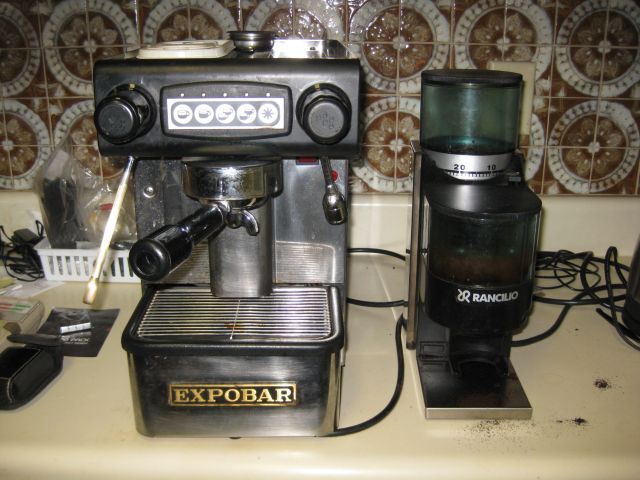
About 14 years ago I bit the bullet and purchased a good cappuccino maker (Expobar) and a coffee bean grinder. (Rancilio nicknamed Rocky). We have enjoyed cappuccino at least 5 days a week ever since – a gratifying investment.
Expobar and Rocky
Expobar needed a new gasket. I shopped and found a modestly priced E61 which arrived timely. The trick was removing the old gasket – not easy at all.
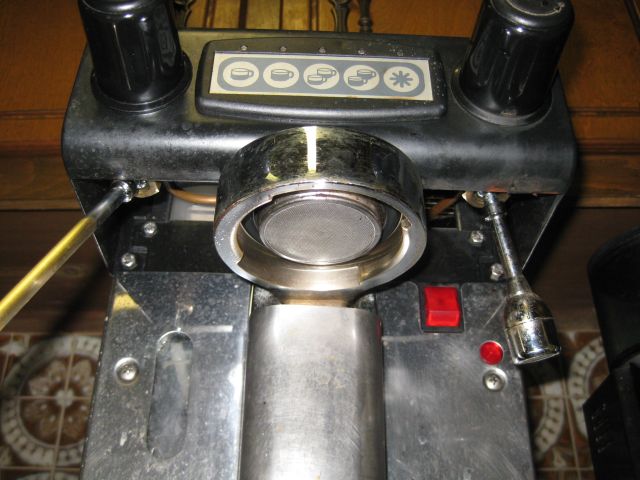
you can see the black circular gasket and the dispersion screen it embraces
I removed the movable parts of the maker and inverted the machine. The gasket holds the dispersion screen in place and there are various suggestions for removing the dispersion screen or the gasket – none worked for me. So with my portable electric drill and an appropriately sized drill bit I drilled holes into the gasket taking care that the drill only entered the gasket. It was then easy to pry out the gasket. I removed and cleaned the screen and re-assembled with the new gasket and it worked fine.
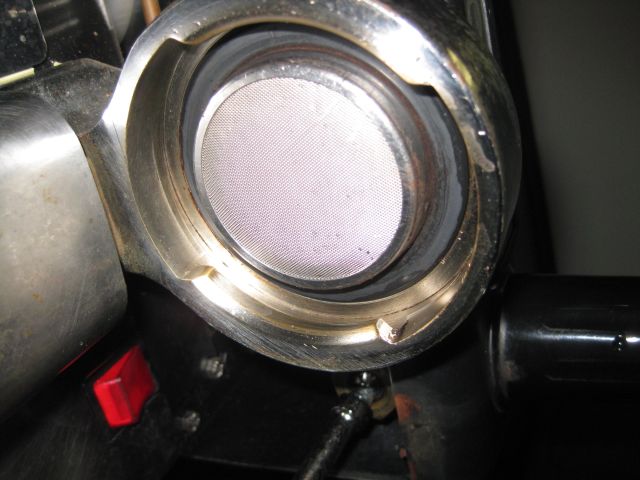
another view of the gasket and dispersion screen
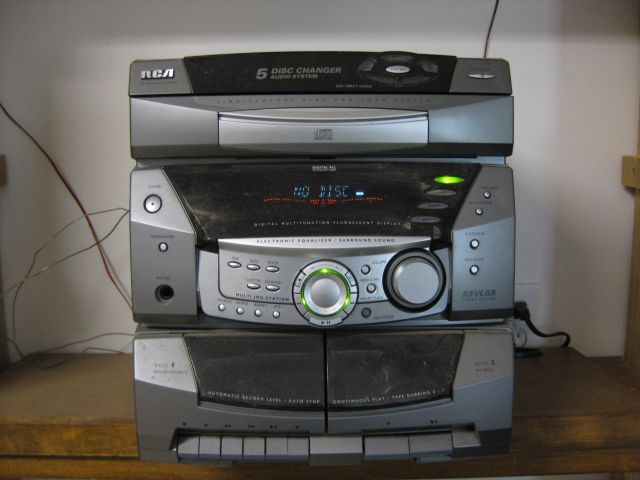
The repair I abandoned was attempting to fix the CD player on my RCA (RS 2502) stereo system.
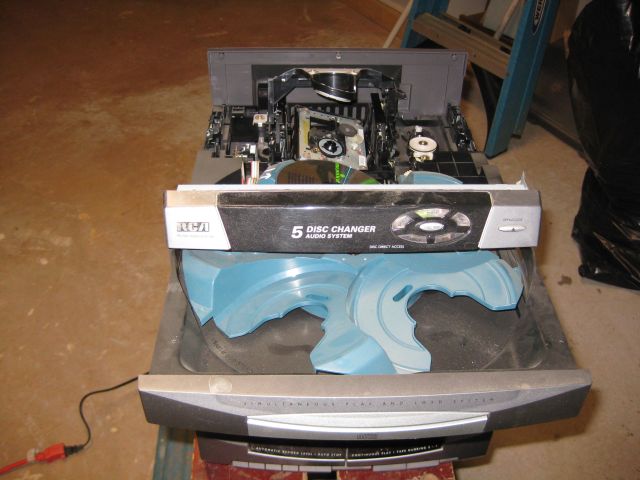
my old(ish) RCA stereo system with the 5 CD player at top incorrectly advising there is no CD
The 5 CD player opened fine and rotated among CD’s fine but when it came to playing a track it gave an error message that it could not read the CD. I opened it up which was easy enough – just remove a few screws and take off the cover.
a view of the inside of the CD player with CD drawer open
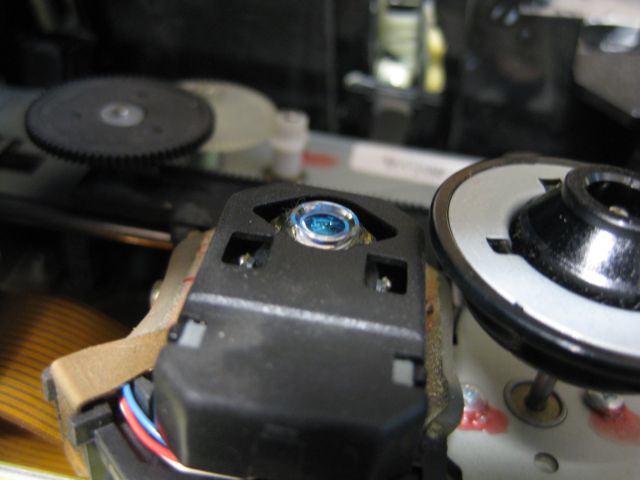
I studied and tested and concluded that the problem was the spindle motor – this is the motor which spins the CD around, and the reason for the error message was that the laser disc reader did not recognize the CD because it was not being spun around. I tried lubricating the motor to no avail.
you can see the shaft of the spindle motor on the right below the platter
Perhaps I should have ordered a new motor (they are less than $10 on eBay) and tried to install it. My hesitation was because I was not sure which motor I needed – I could have disassembled further and identified the motor but the bad weather had turned to good and I was losing patience), and because new systems come with blue tooth and I am using blue tooth extensively in my car trips to hear podcasts and so, to my mind the RCA had become somewhat technologically obsolete. Lots of rationalizations. I put it all together again, donated it since everything else worked fine, and upgraded to a nifty blue tooth Sony system.
I have mentioned that Buffy, our Buff Orpington rooster, takes good care of his girls and that on two occasions I incubated eggs successfully. The incubator takes 7 eggs and each time there were 4 viable chicken and each time it was 3 hens and one rooster. And each time, as the young rooster grew up, friction developed between dad and son, and son and all the hens.
We are very lucky to have a chicken enthusiast down the road from us who happily took Buff, the first young rooster and we see him most every time we drive to our farm. He is inevitably surrounded by his girls and also seems to get on well with the turkeys since he is fairly large, aggressive and undaunted.
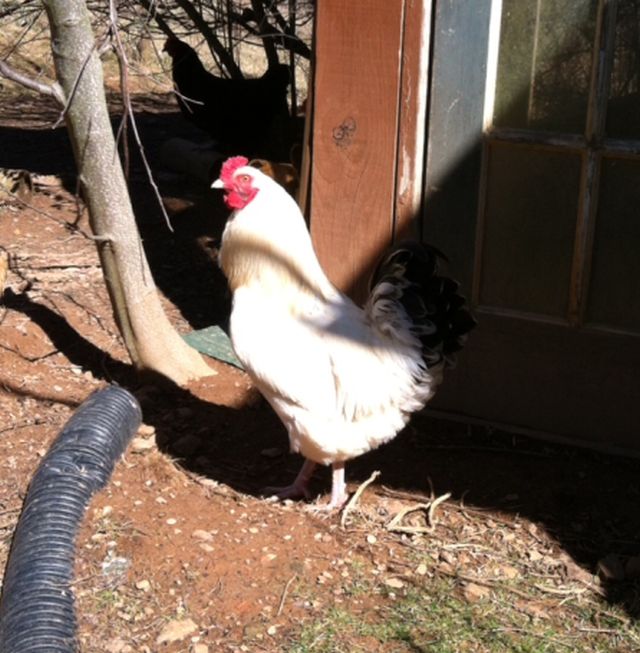
We had wanted to keep the second young rooster who is named Gus after his mom Gimpie but concluded it wouldn’t work out. Gimpie is the senior hen (in pecking order) and has a bad hip which makes it difficult to walk, hence her name. On sunny days she gets out of the coop and in the evening the routine now is she waits for me to pick her up and carry her back to the coop. I always deposit her just before the door so Buffy does not see me carrying her. It is a practice with Buffy that if anyone has contact with one of his hens he has to immediately mount the hen and this is one more ordeal Gimpie would rather avoid. So Gimpie is a toughie and yesterday she laid her first egg of the year and Gus inherited her good genes and most of her coloring with just some gold around the neck from his dad.
our young rooster Gus before he moved to a new home down the road
I contacted the chicken enthusiast about Gus and to our delight she said she was so happy with Buff (our first young rooster) that she offered to take Gus as well, which she did last weekend. And now order is restored and the Americauna who is first generation like Gimpie and who had sat in the nest box the past month to avoid the attentions of Gus, is going out of the coop every day and is also back in egg production. Goodbye Gus and hope to see you when we drive by your new home.
A couple weeks ago one of my running/walking buddies mentioned he had to replace the ignition lock of his Honda minivan. He is handy and used to enjoy tackling projects but now, some 10 years older than me, he will have others do the work. At a cost! He said the bill was close to $1,000. I was surprised but since I persist in doing things myself I am out of touch with rates.
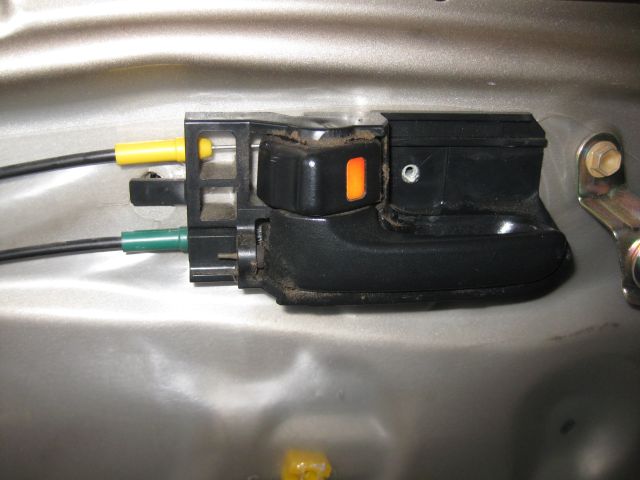
My problems was different – I have a basic Toyota Tacoma truck and could not open the driver’s door from the inside. When I pulled on the handle nothing happened, so the routine was to lower the window with the crank and with my hand pull on the outside handle. And it worked. I assumed the handle which connected to a cable which connected to the latch was defective. I studied a couple utube videos (very helpful) on how to remove the interior panel and replace the handle. Since removing the interior door panel is a pain and I only wanted to do so once, I ordered a replacement handle.
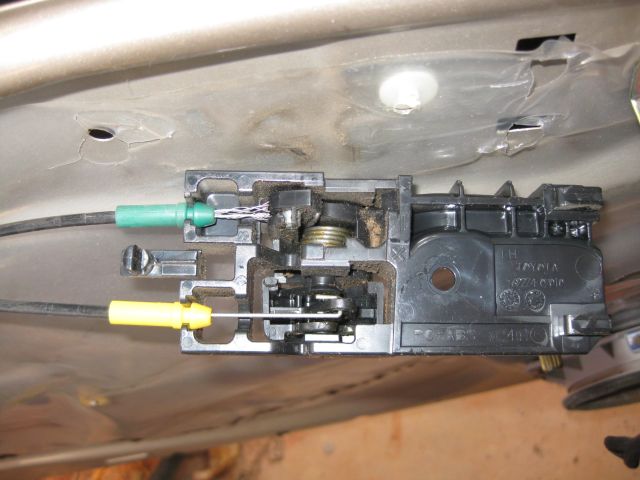
the door handle with 2 cables, the top yellow one is for locking the door, the lower green one is for operating the latch
Now the logic for making a repair is fairly simple: 1) diagnose the problem; 2) get the parts; 3) dismantle with care so you know how to reassemble’ 4) execute the repair. In my haste I did step (2) before step (1). After I removed the interior panel I saw that the problem was not the handle but the cable that the handle connected to.
the green cable which worked the latch is broken
So I had purchased the wrong part. A little frustrated, I went online to order a replacement cable. When the replacement arrived I again removed the interior panel to fit the new cable and discovered, incredibly, that I had ordered the wrong cable. I couldn’t believe it. So a week later the correct cable arrived and I removed the interior panel and then discovered I had a new problem. Attaching the cable to the handle is relatively easy but connecting the cable to the latch is a puzzle. The latching mechanism is out of sight and has to be unscrewed from the door jamb and disconnected from the outside handle mechanism. And the window guides block access as well. And to unscrew the latch from the door required a driver I did not have handy. I put the interior panel back in place for the third time.
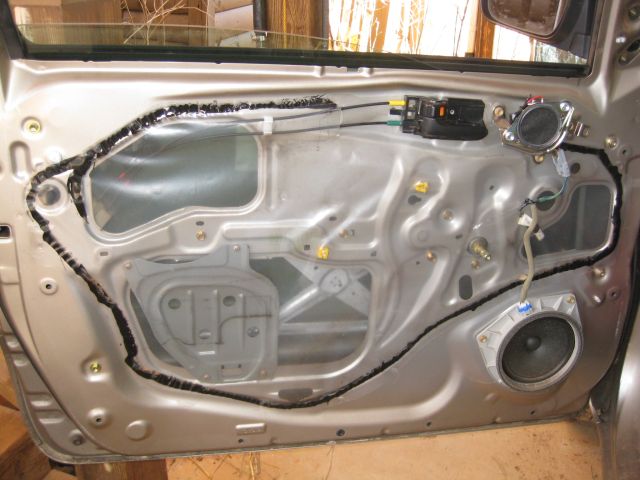
a view of the door with panel removed, to attach the cable to the handle requires working through the large top left hole!)
When I located the driver a few days later I made a fourth attempt. And working with the latch partly disassembled and rotated for easier access I was able to attach the cable to the latch (phew!) and also the cable to the new handle (the old one was fine but rather use the new) and I reassembled the panel and the window cranking handle. And, finally, I was done and had learned a couple useful lessons along the way.
I use two water pumps – a 1HP Water Ace (cost circa $150) with handy carrying handle which I move to various rainwater collection tanks and then pump to the larger storage tanks (2,800 gallons) and thence to the top of the hill; and a Wayne PC4 0.5HP pump (cost $130) whose sole purpose is to pump from my 2,400 gallon carport tank to the top of the hill. At the top of the hill I have tanks which gravity feed the rainwater to the plantings. The Wayne worked fine until a couple years ago when I forgot to disconnect it in winter and the internal membrane (called the backhead) was shattered by ice. I did a cursory examination for parts on the internet, couldn’t find any, and replaced it. This past January, can you believe it, I again neglected to remove all the water from the pump (it was disconnected from the tanks but had water in it) and the backhead of the second pump also shattered. I googled and found on eBay a backhead replacement kit for $15 plus $3 for shipping. It made sense to self repair since if the repair worked I could also repair the previously damaged pump (I keep everything).
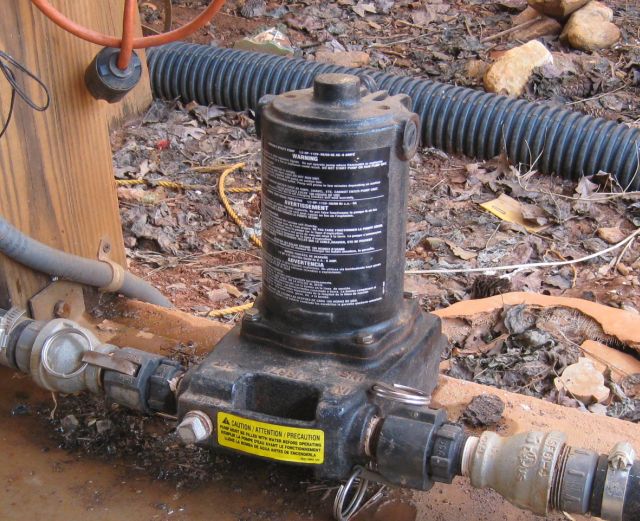
my Wayne workhorse – never let me down until I let it down
It is easy to dismantle, just remove 4 screws at the base of the motor housing which secures it to the pump housing, and the ice damage is easy to see.
the broken backhead can be clearly seen
First time round it is always difficult – how do I remove the backhead. Fortunately the manual is easily accessible on the internet and it suggested smashing the ceramic seal with a hammer driven screwdriver. I tried this at first but the concept did not appeal. So I found a puller I used for automotive work.
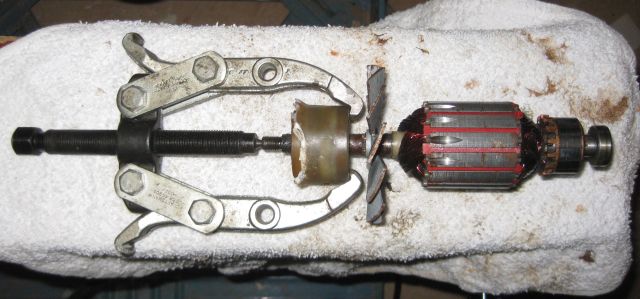
with the right tools everything becomes much easier and less dangerous
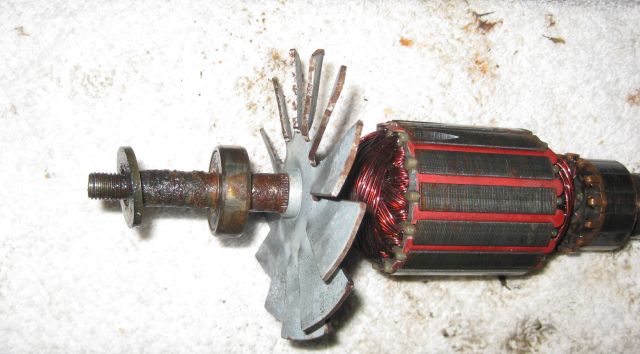
And with a few turns of the wrench the backhead was off, leaving behind the bearing to which it had been press fitted.
after removing the backhead the bearing and a water seal remain
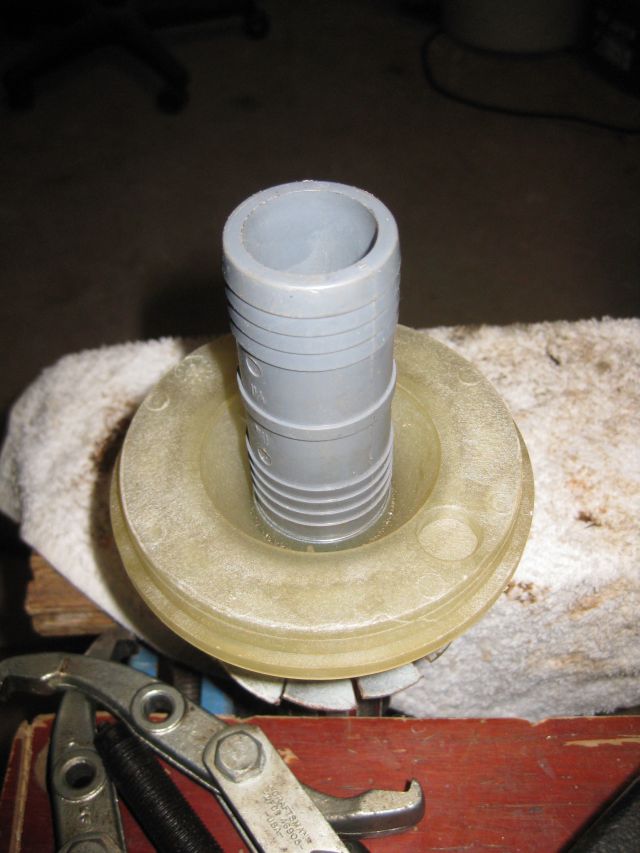
From here it was relatively simple to re-assemble the motor following the manual’s instructions and taking care, as I press fit parts together, to tap gently with a hammer and use improvised tactics, like this water pipe connector to ensure pressure is applied evenly to the part being fitted.
a plastic water pipe connector with ideal dimensions is used with gentle hammer taps to press fit a part
When all was assembled I decided to test the repair, and it works perfectly.
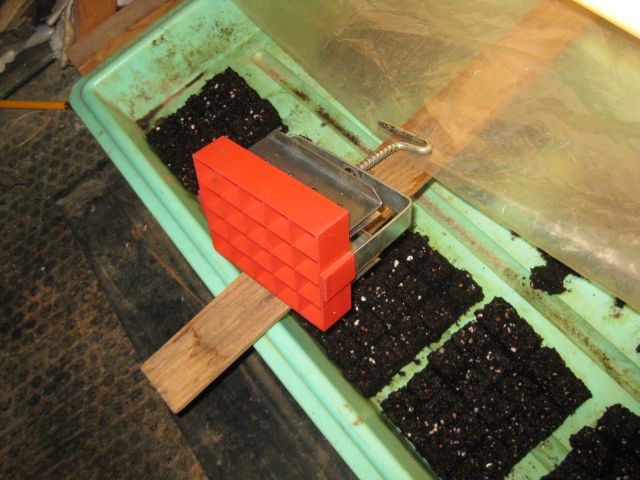
The annual ritual commences – germinating tomato seeds for the summer. I have a number of varieties stored in their original paper packets in a ziplock bag (but not zipped) in the basement. And each year I select 4 of each variety for growing. I moisten commercial seed starter mix and with my mould produce a 20 block rectangle of 0.75″ individual soil blocks.
the mould for producing the rectangle of 20 .75″ soil blocks,
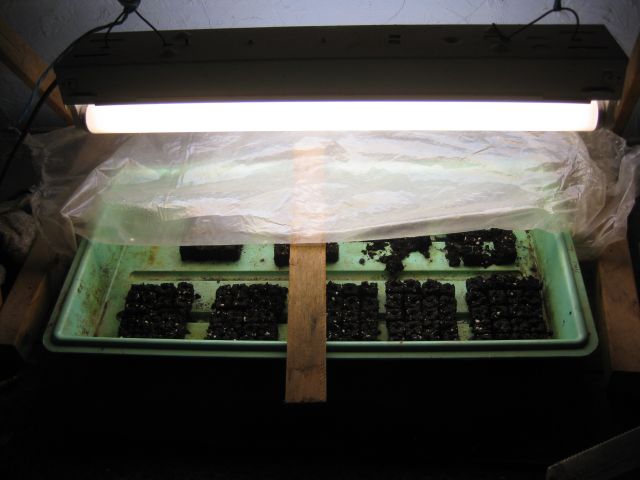
Into each block I insert a single tomato seed on the tip of a moistened pencil. The seedling tray sits on a heating pad below a timed fluorescent light in the basement.
the germinating set up – a tray with seeded soil blocks; a plastic sheet to maintain humidity, a heating pad below the seed tray, and a timed fluorescent light started about 4 days after seeding
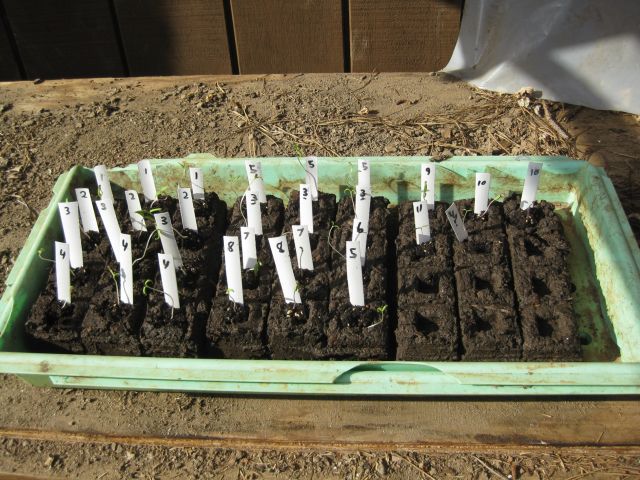
On 1/13/14 I seeded the blocks and by 1/22/14 the seedlings were ready for relocation to 2″ soil blocks made from my compost, play sand and other additives. Now the cold has departed (for the time being) I locate the 2″ blocks in the greenhouse where they benefit from real sunlight and where they will develop to be transplanted later to pots and then to the growing areas.
2 inch soil blocks in the greenhouse. rather than naming each variety I provide the # I assigned to each variety
All my varieties germinated with at least 3 out of every 4 seeds (75%) except for Big Beef and Brandy Wine, and the Sugar Cherry only has 1 germination tho more are indicated. Here are the vital stats:
Good germination: Beefsteak – American Meadows purchased Jan ’10; Mortgage Lifter – Southern Exposure Seed Exchange Feb ’12; Jelly Bean Hybrid – Ferry-Morse Mar ’13; Yellow Pear – Burpee Signature Mar ’13; Black Prince – Johnny’s Feb ’11; Cherokee Purple – Johnny’s Feb ’11; Rutgers – Ferry-Morse ’10; Georgia Streak – Southern Expos Seed Exchange Feb ’12; Siletz – Peaceful Valley Sep ’10; Sweet Olive – Johnny’s Feb ’11; Cherokee Purple – Botanical Interests Feb ’10.
I notice that the Big Beef which did not germinate is a pelleted seed and this is probably too large for starting in a 0.75″ block. It was purchased in Mar ’13 and I will try again and bury it in a small pot. The Brandywine was purchased in Dec ’08 more than 5 years ago, so the seed is probably no longer viable. The Sugar Cherry was purchased in Feb ’12. Gratifying that tomato seed purchased in 2010 is still viable.
In addition to the old tomato seed, I made 4 acquisitions. I googled tomatoes for the southeast (heat and humidity) and, of the varieties recommended 3 stocked by Johnny’s caught my interest – all are hybrids – Juliet, Big Beef and Mountain Fresh Plus.
My 4th acquisition was Ukranian Purple – I took a pinch from a packet on a table at a seed exchange day hosted by the town of Decatur on National Seed Swap Day on Jan 25. We had a representative from the Seed Exchange present who provided useful tips on saving seed, with a focus on tomatoes. Apparently tomato is largely self pollinating and so long as the varieties are 15 ft apart, the seed saved should be true to variety. The gift of Ukranian Purple,the advice proffered and the challenge, have now resolved me to save heirloom seed this year. And so, instead of a my usual mass tomato planting I will plant the heirlooms in separate groups by variety. The hybrids can be planted together since I will not bother with their seed or, maybe I will.
I have been thinking of the different manifestations of life and their relative value. Triggered by a recent local report of a man who had two dogs and had to relocate and could not take his dogs with him. He approached neighbors to take his dogs and when no one was interested he shot them. And was arrested. I cannot locate the news article and there may be more to it than I recall, but I can only speculate – maybe he didn’t take them to a shelter because they would be separated and maybe he thought it was better they were dead than lead a miserable life. I don’t know. But if he had killed a couple of chicken he would not have been charged. And so, is the life of a dog worth more than the life of a chicken?
And what is life anyway? There was a recent debate ( Intelligence Squared 120413 ) titled “Don’t Eat Anything with a Face” which included Joel Salatin, a well known grass fed cattle farmer, who argued against the motion, and Neal Barnard an equally well known vegan who argued for the emotion. The debate turned on both the health aspects and the morality of eating anything with a face. Salatin became frustrated with the emotional appeal of the proposition and argued that not only animals but even plants and “every tablespoon of soil……has a million living organisms that are communicating, reacting, exuding auxins, creating DNA memories…,” and therefore if we think it is ethically wrong to eat animals we also shouldn’t eat plants and bacteria. In similar vein a recent article by Michael Pollan (The Intelligent Plant – The New Yorker 122313) describes the new field of plant neurobiology and the view that plants have intelligence and consciousness (much turns on definition of these words), can communicate with each other and do things humans can’t. So are they also a form of life?
Is the life of a big thing (elephant, giraffe, whale) worth more than the life of a small thing like a squirrel or mouse or insect? We view human life as different from and more valuable than animal life so therefore a human life is of higher value than the life of a chimpanzee.
Is “value” the right word to use since it connotes $ value and then you have to think of the Davos forum report this week that the world’s 85 richest people have as much $ wealth as the poorest 3.5 billion – in simpler terms on average one of the 85 richest has as much wealth as +40 million of the poorest. But we ignore wealth when we value human life and say all human life is equally valuable and stick with this convention, though an argument could be made about the relative merits of an infant vs. a geriatric and the fact is the wealthy through good eating, good healthcare and costly new life enhancing procedures can overcome genetic deficiencies and extend the duration and quality of their lives compared with a poor person. But all human lives are treated as equally valuable and we hew that road – to do otherwise would result in an arbiter and the hysterically titled “death panels”.
We only value what we cannot get enough of – good air and water were previously not highly valued but in China good air in the cities is increasingly a critical concern and water in drought ravaged California could be a big issue in 2014. So as we become more aware of our environment and why it makes sense to be good custodians, I predict we will expand our horizons to accept animals as sentient beings, stall the continuing extinction of species and extend a considerate hand to fellow sojourners on our earth.
I have family in Perth, Australia which is a long way to go when you depart from Atlanta. On previous visits I travelled via Los Angeles and then Sydney or Melbourne to Perth. I had never been to Bangkok and decided to include Bangkok en route which meant Atlanta to Tokyo to Bangkok to Singapore to Perth. A longer travel time but an opportunity to explore Bangkok and Thailand en route. I abandoned plans to spend a week in Thailand because the protests which started in December seemed unending and so I truncated the visit to a few days in Bangkok and departed the day before the protests gathered momentum and shut down the city center. My visit to both countries was during the first two weeks of January 2014 and following are some observations.
Australia was named the gold country last year and for good reason. It has a treasure trove of minerals, which it is mining and selling to China, and mining revenues have made it financially strong and financed the development of its infrastructure. Some negatives are that its strong dollar has hampered other exports, and made it an expensive place for tourists and for local manufacturing. Ford is ceasing car manufacture as is Holden, and other big employers are looking for government handouts.
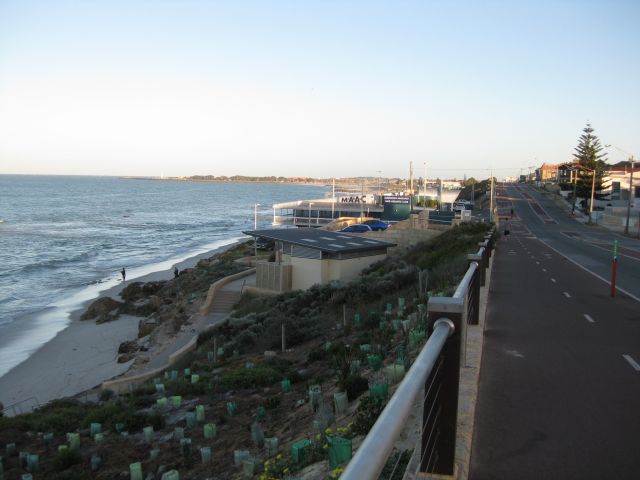
An anomaly for me is the cost of a cup of coffee. This must be a cultural thing – the only coffee you can buy for consumption comes out of a espresso machine and is variously styled cappucino, espresso, latte or flat white and costs at least A$4. Drip coffee in a carafe is non existent though I vaguely recall I spotted and nabbed a cup in an out of the way gas station several years ago. The coastline is beautiful
coast line at Trigg a northern suburb of Perth
and I approve the practice of keeping the shore and adjacent land open to the public with the nearest private residences on the other side of the coastal road.
in order of priority from left to right is the sea; shore; plant preservation project; public vantage points; walker, jogger cyclist path; the road; and then private residences
They have a practice of “cutting down the tall poppies” which can manifest itself in locating government funded housing adjacent to expensive suburbs – I am no populist but an occasional dose of reality is healthy for turbocharged egos. Finally, before I leave the golden shores, a thought on what I think, but no one I spoke to accepted, is the biggest problem facing Australia. And it is not the drought or the fires or the unwanted immigrants. It is the escalating problem in the South China sea where Japan and South Korea and other small countries are confronting a rising giant. And at some point in the next few years Australia will have to decide whether to continue its fence sitting policy which does not incur the giant’s wrath, or join with the smaller countries and incur the anger and economic retaliation from its biggest customer.
En route to Bangkok a 4 hour stopover at Changi Singapore, which must be the nicest airport in the world for a stopover. I am not referring to the stores nor the m&m store which beckons the sugar addict :
for those with a sweet tooth
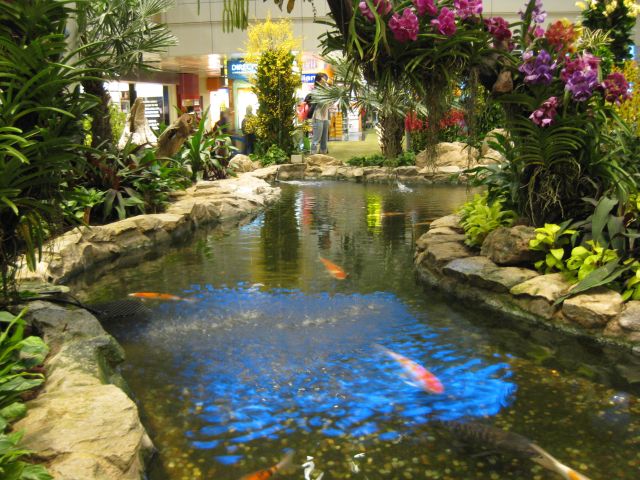
No, what sets Changi apart are the numerous quiet natural oases where you can escape the hustle and charge of an international airport.
one of several natural hide outs in Changi
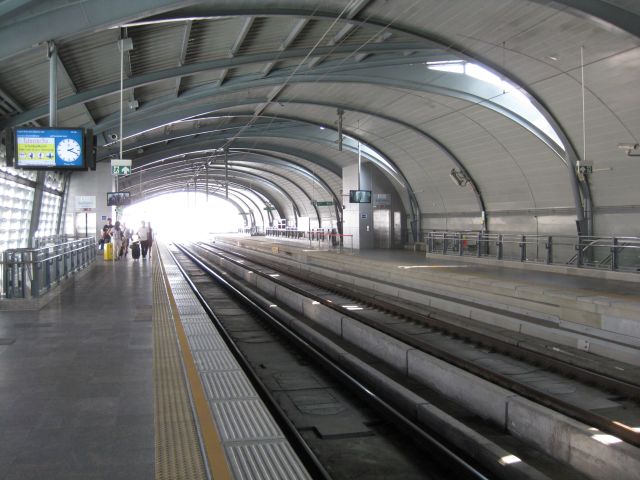
Bangkok is very cheap and the people are friendly and helpful. However the signs are indecipherable and English, when provided, is in smaller print and sparse. But not a problem and passers by will stop and help. I say it is cheap but that is if you buy as the locals do. If you wish to stay at an American brand hotel or have coffee at Starbucks the prices are similar to the United States. Although Bangkok has a big population exceeding 10 million and is notorious for major traffic congestion, it has excellent rail services with air conditioned coaches and it costs just a few dollars for example to get from the huge modern airport to the city center.
quick cheap transport from the airport to the city
The only negative on arrival in Thailand and on departure is the immigration line – they really should staff more positions so that after a long flight in the delay is minimal.
I won’t describe the many temples visited,
the reclining Buddha at Wat Pho 15m (49ft) high, 43m (149 ft long) – one of many splendid sights
the excitement and convenience of the river ferries,
a river taxi – I marvel at the huge engine engine which propels it quickly amongst the ferries and large barges
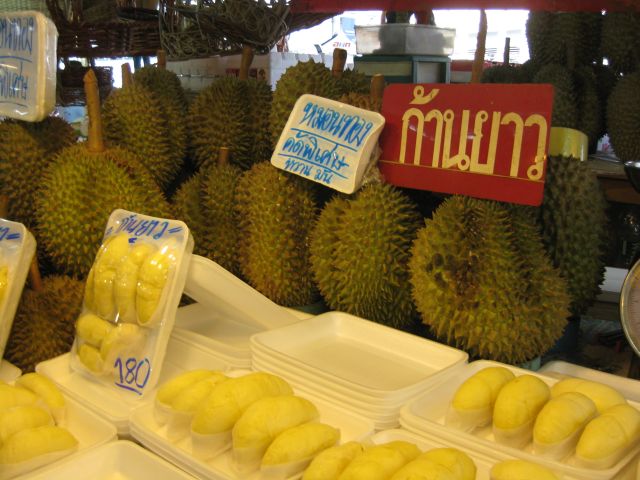
or my first experience eating a durian fruit which smells absolutely awful, tastes ok and is banned from the railways.
the durian fruit with snack sized slices for the curious
The interesting item for me is the protests. Usually the downtrodden are protesting against the power, influence and wealth of the upper classes. Here it is the other way round – the middle and wealthy classes are protesting against the government which has been in power for about 10 years voted in by elections which were fairly held. So here is democracy and it is working and yet there are ongoing wrenching protests. The prime minister offered to hold new elections in February and this threw the protesters into a tizzy – they don’t want elections – they want to select an unelected committee to run the country. Their complaint it seems is that the government bought the vote of the poor rural majority by providing gifts such as free universal health care. (There were some reports that the wealthy were funding the protesters, so what’s new). We think democracy is a goal to which all countries should strive and we have even tried to help countries like Iraq get there, though without much success. Perhaps democracy is not the universal gold standard, and perhaps capitalism our other western accomplishment, does not have the legs for an unremitting slugfest with a centrally controlled country such as China.
Our Carrier gas furnaces are relatively new – installed January 2001, so that’s 13 years. I read that the furnace should last beyond 20 years but repair costs become crippling and many throw in the towel and simply buy a new furnace after 15 years.
Some 5 years after installation one of the furnaces would not fire up, I called the installer, the serviceman came by and said it needed a new igniter which he installed for a cost of about $190 made up of $120 for the igniter and $70 for the visit. The googled cost of a new igniter was about $35, so the installer made a very hefty markup. I called the boss man, the conversation got a bit tense and I resolved henceforth to do my own repairs. The repairs involve working with electricity and gas and can be dangerous and should not be undertaken by unqualified or inexperienced individuals.
Another cautionary tale – just before the polar vortex my neighbors moved into a foreclosure they had purchased, the furnace malfunctioned, they called in an HVAC “friend of the family” who diagnosed a defective circuit board which he replaced for $500 and did not respond to frantic calls during the vortex when the furnace went into hibernation. Upshot was a new HVAC specialist “friend of the family” was contacted who advised that the furnace and a/c compressor had been bastardized by diy’ers and all had to be replaced for $4k. Their heating now functions and their savings are torpedoed. Now these are isolated bad experiences and not reflective on the integrity of most HVAC specialists – the main reason I go down the self repair road is I enjoy my independence and a sense of self sufficiency.
Over the years I replaced igniters without much ado. So when our main furnace recently failed to start I assumed it needed a new igniter and installed a replacement (I keep them handy) but it still would not start. The igniter glows reds when powered and ignites the gas and then switches off. The igniter in the furnace did not glow red. I tested the new igniter with an ohmeter and it was fine. The wiring to the igniter was fine. I was stumped. Then I recalled that before a furnace fires up it runs through several test procedures and so maybe something else was defective and because of this the furnace was shutting down without powering the igniter.
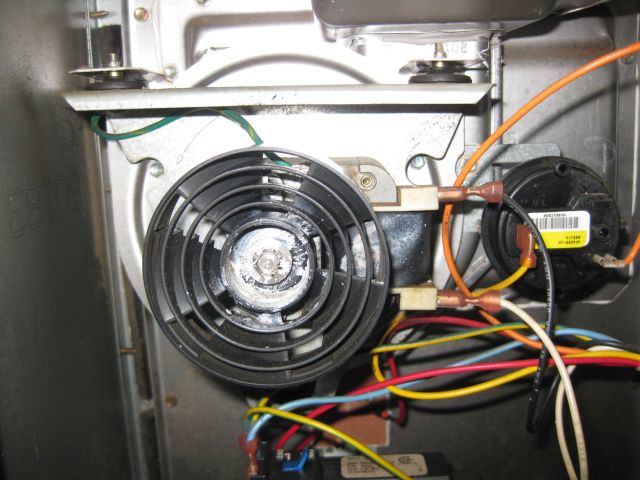
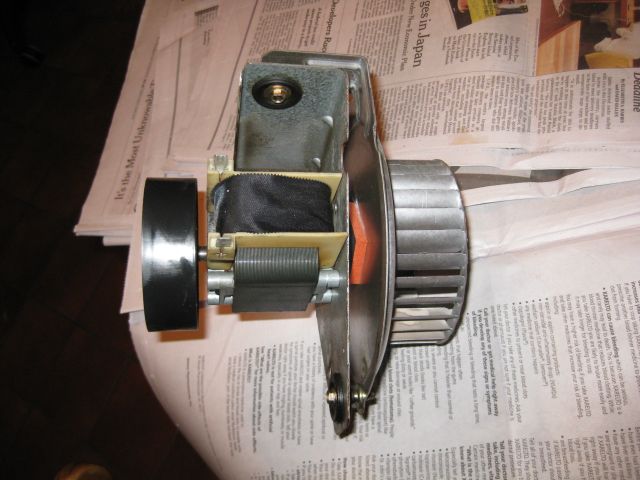
I performed what is called a component test where the furnace tests each of the components and during this test the igniter glowed red but another component, the inducer motor did not start up. I then remembered that for several weeks prior to the problem the inducer motor had a high pitched whine like a jet engine. So I concluded I needed a new inducer motor. The inducer motor has a separate blower wheel and new gaskets are recommended when the motor is replaced. My first instincts were that I would use the existing blower wheel and skip on new gaskets. How helpful the internet is – several commentators said they had thought similarly but were unable to remove the blower wheel, and I found that I also could not loosen the blower wheel. So I bit the bullet and ordered a new inducer motor, new blower wheel and new set of gaskets from three different suppliers for a total cost including shipping of about $130. Of interest is that the package consisting of all 3 components is available from another supplier for $214 – go figure.
the inducer motor in situ in the furnace before removal. the white goo on the cooler is lubricant I sprayed to lubricate the bearing and silence the high pitched whine – it worked for a week until the motor failed.
I took photos of the setup before dismantling the housing and replacing the parts and just as well since re-assembly is not intuitive.
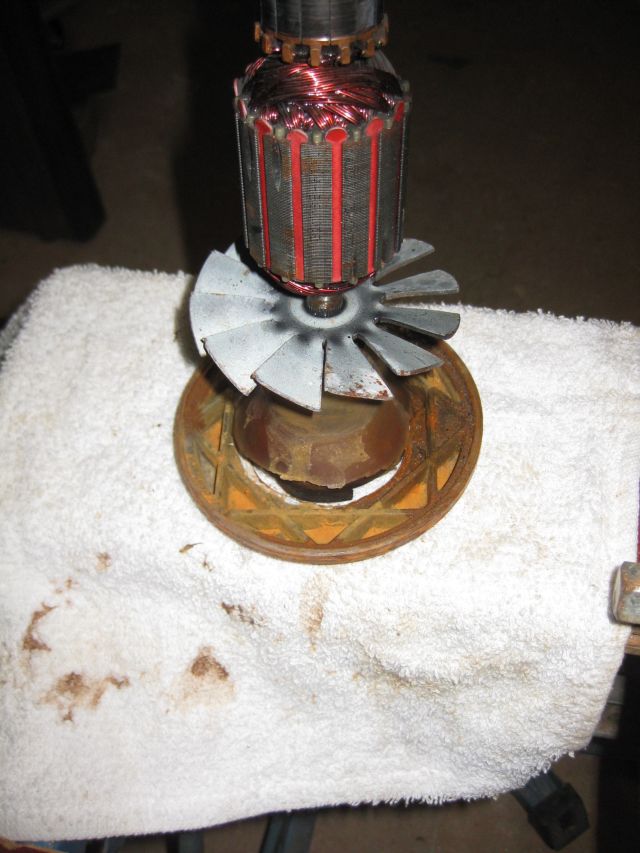
you can see the new assembled components – the cooler wheel on the left which cools the motor, the motor, the housing to which it is attached and the blower wheel on the right which fits into the furnace and circulates the gas
Finally the new parts were assembled, I flipped the switch and after what seemed interminable checking by the circuit board the furnace fired up and heat was restored. Yay!
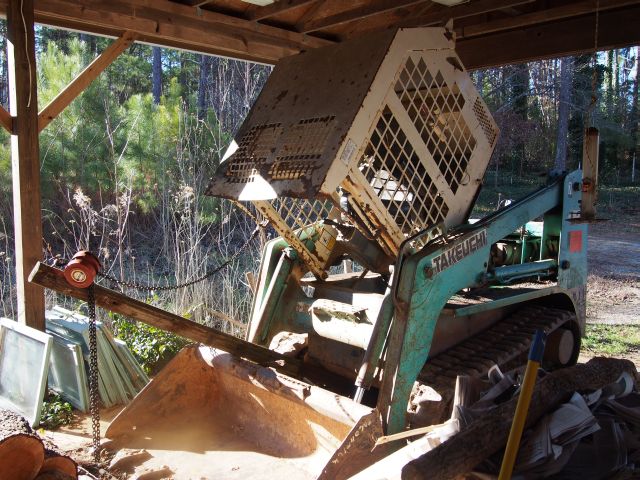
After some cold nights (12 below freezing) my Takeuchi bobcat refused to start. Cold and tired battery. The best way to charge the battery is to pull the cab forward on its hinges and then you have direct access to the battery. It is heavy and best done with an assistant. In the past I had an anchor point in front of the Take and winched the cab forward. However, there was no anchor point for the Take this time just a 2,400 gal rainwater tank. The last time I had no anchor point I attached the negative charging wire to the body and the positive to a nail which I inserted into a slot in the fusebox. I really didn’t want to do this again. So I pondered and created my own anchor point. I found an 8ft fence post, located it between the loader and the body of the Take, attached a hook and winched the cab up. Effortless and the charging was uneventful.
raising the cab of the Take
work in the orchard
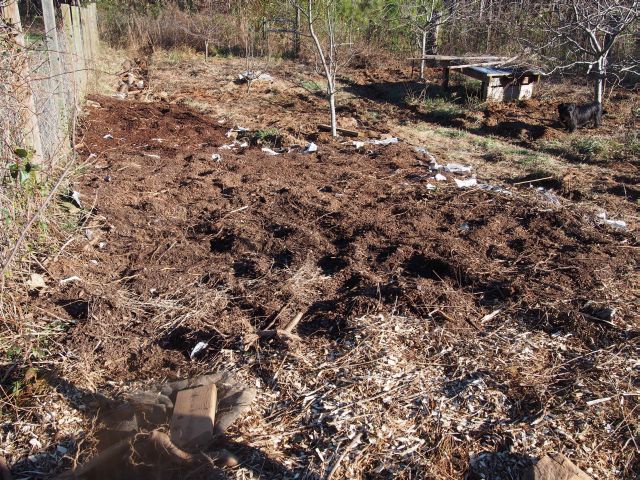
This year, for the first time, my first row of apple trees produced apples but the second row which is nearest my neighbor’s fence did not, and the trees appeared lackluster. I diagnosed this to competition from vines, shrubs and small trees, some of which have thick roots 10ft long which have been out competing my apple trees for compost nutrients. I am avidly reading The Holistic Orchard by Michael Phillips in order to thwart the pests that nourished on many of my apples. He makes the interesting point that wood chips from hardwood trees create beneficial fungus for fruit trees. So I have worked hard to clear the growth between my trees with an eyehoe (what a wonderful invention). I then spread manure from the stables, layer newspapers thickly and now, with my Take recharged I ferry loads of woodchips and dump and spread over the newspapers.
mulching the orchard
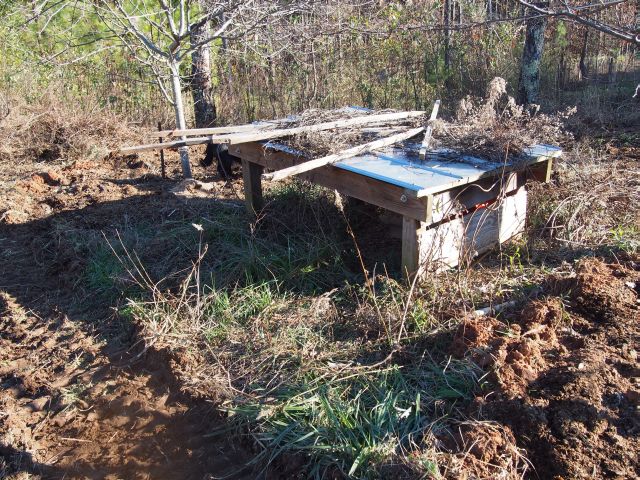
When the orchard is respectable I will bring in a flock of helpers to scratch and turn up over wintering pests. A couple years ago I improvised a simple chicken shelter which has a couple of nestboxes and I will clean it up for my chickens.
simple chicken shelter in the orchard
water and nutrient infiltration
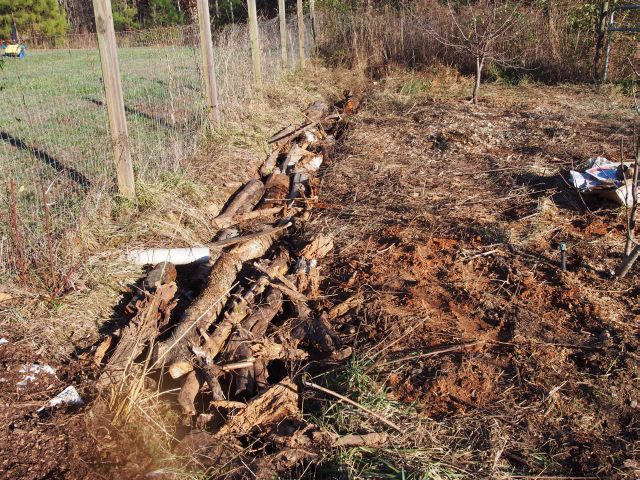
I dug a trench alongside part of the orchard to capture and infiltrate rainwater run off. I am now filling it with hardwood (mainly) logs, the idea is that the wood will decompose and the nutrients and fungi will benefit my fruit trees along the lines suggested in The Holistic Orchard book (and will also physically block the growth of tall weeds in the ditch).
various logs stacked in the rainwater ditch
clearing the slope bordering the vegetable growing area
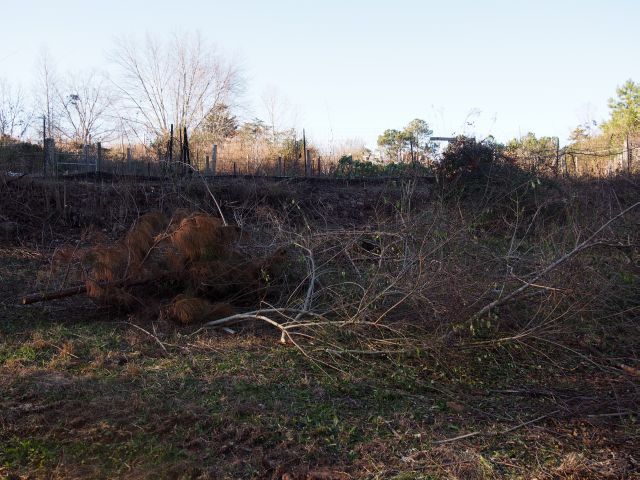
My main vegetable growing area is fenced in and along the southeast border a thicket of privet and briar sprung up over the past several years. I tolerated the growth since I reasoned it provided vantage points and shelter for insect loving birds which were helping me control pests in the vegetables. However there were two problems – a) the roots invaded my raised beds – there is one type of small tree which has very long wily roots which evaded all my attempts to obstruct it; b) in the winter, when sunlight is dear, the wild hedge blocked the sun from my frost ridden beds. So I worked hard to cut down and remove the growth and have been chipping away with the chipper, carried and powered by my tractor. This mulch I have also been adding to the orchard. Some chipping remains and when the clay soil has dried I will bring out the tractor again and chip away.
some of the small trees awaiting chipping in the foreground and the fenced growing area at the top of the slope
winter hive protection
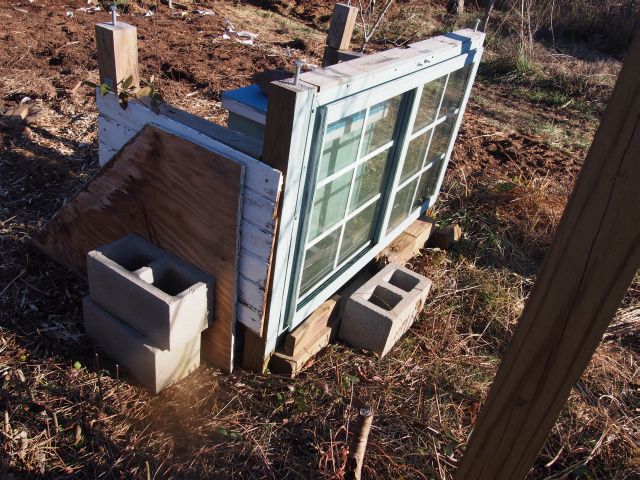
My bee hive faces south. Chilling winds tend to come from the west and north. On the west side I have a window which allows the sun but not the wind access to the hive, and on the north side I have plywood protection.
the sheltered winter protected bee hive
how the clover fares
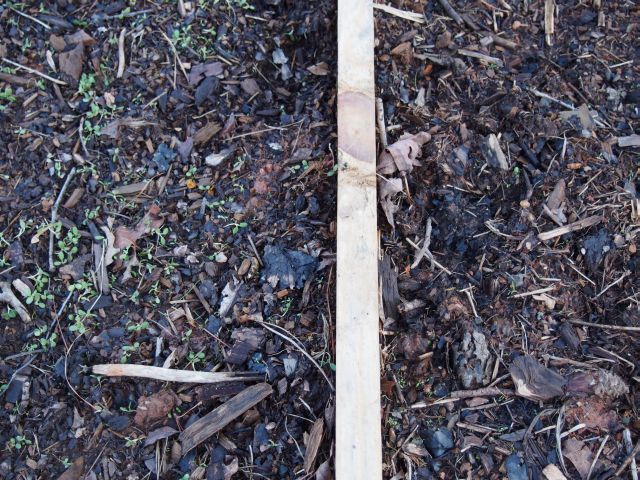
I recently installed a 20ft by 4ft raised bed and sowed half of it with crimson clover and the other half with white (ladino) clover. The crimson clover is larger but both seemed to germinate equally well. However, following the recent cold, the ladino clover almost disappeared while the crimson is holding on well. Will be interesting to see how they comparatively perform in the spring.
the crimson clover is on the left of the divider and the barely surviving ladino clover is on the right
veggies for eating
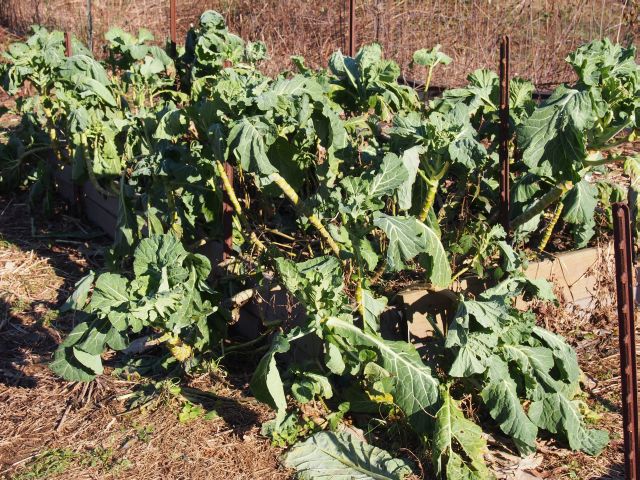
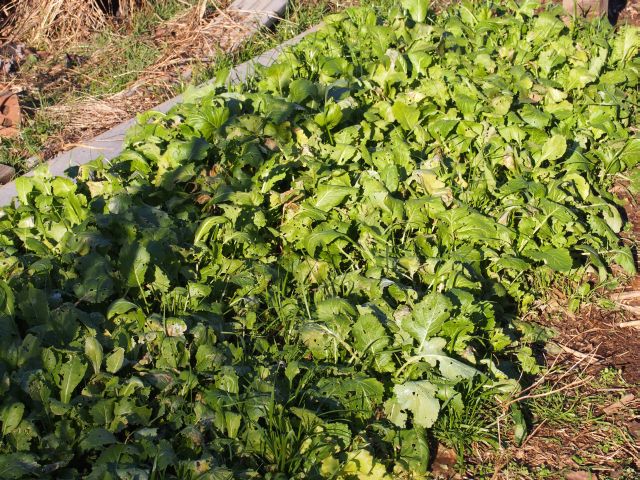
.I am not using crop covers right now and my collard and turnip and mustard greens are surviving, tho at time the collard looks a little bedraggled.
tasty collard for the picking
A tasty (and healthy) dish is newly hatched eggs (yes my younger hens are laying in the winter without artificial lighting), collard, greens and garlic stir heated, eaten with home made whole wheat bread.
lots of winter greens which keep growing in the winter
So these are some of my winter tasks. And on the inclement days, Coursera, the free online college course compendium, awaits. I just completed calculus, precalculus and a fascinating history on mankind from 250,000 years ago to the present.
I recently attended an open house event at a local organic farm trending to permaculture. I wandered the fields with the manager and we discussed many topics. It was only later when I was by myself and walking his rows that I noticed how perfect his vegetables looked. No weeds – well I could manage that too if I was doing an open house, but not a single insect chewed leaf! By that time the manager was busy with other visitors and not accessible.
I thought long on what I had seen. Their compost heap was far from humming which made me think their organic growing skills were still on the uptake. Now when I build a new compost heap it also looks pretty rough but I always keep finished compost on the side to provide a bio-organic boost. They did not have any finished compost in sight and their heap didn’t look that new either. So it seemed to me unlikely that they could have mastered pest free organic growing, which incidentally if you use a tight definition for “organic” , I regard as an impossible goal. I mean think about it – if your system is in balance with well nourished high immune level plants and beneficials on the standby to consume pests as soon as they appear, then yes, the pests will not get to first base on the first leaf. But this is an improbable assumption – the beneficials depend on pests for sustenance (that’s why pests precede beneficials in the march of Spring) and cannot survive and be on red alert if there is not a continuous supply of pests and for pests to be around they have to snack and so you gotta have chewed leaves.
So how could this relatively new farm have perfect looking vegetables? Yesterday the manager visited my outpost and I casually raised the topic and the answer – a well known pyrethrin spray. It is an effective and expensive knock down spray and is OMRI approved which means you can use it and say you are organic growing. I suppose because it is derived from natural ingredients (chrysanthemum) this means it is natural. It will take out all insects including honey bees and beneficials, so as for honey bees you spray when they are not around and as for beneficials, since your spraying killed the lot of them, then per the instructions “plan to reapply them” 1 to 2 days after the spraying. We have reached the stage where beneficials are applied just like a chemical! It seems that once you go down this route you probably going to end up doing a lot of spraying.
So is this really organic growing? Depends on how tight your definition is. Are natural ingredients empowered by human ingenuity that much different from synthetic ingredients? Are pesticide sprays from natural ingredients less toxic to humans than synthetic sprays? For me, growing organic is assisting but not enforcing – I encourage beneficials, I make compost, I want nature to run its course and I am perfectly happy with sharing some veggies with pests. And my take away is that with the exception of some veggies which seem to grow perfectly with little pest pressure (lettuce, radish and garlic come to mind) the next time I see perfect looking organic vegetables I will wonder if spraying was used.