a silver lining to faltering memory, also BMSB and IPM

I find that my memory does not work as well as in the past.  As a student I could easily memorize hundreds of law cases, now the labels I read one day are gone the next.  So where is the silver lining consolation?

I believe we have different skill sets and we compensate for those we lack.  The kid who can analytically unravel and reassemble complicated concepts  tends to be independent and does not require and consequently does not develop, good social skills.  The ambitious kid, who does not have this intellectual firepower, develops intuitive and empathy skills and thus can effectively recruit others to assist with or perform the tasks he/she finds difficult.  Perhaps it is our innate intellectual and physical abilities that fashion to a large extent our personalities?

So I am now more interested in how and why things happen than in the fact of their happening.  If I can link causation with result then my mind can re-navigate the route without having to remember the start or end point or even the directions taken.  An example from the recent GO conference (see previous post) was the excellent session on organic insect control by two entomologists from Auburn university.  I was particularly interested in their comments on the BMSB (brown marmorated stink bug) which is becoming the organic growers nightmare.  Not all stink bugs are pests and there are predatory stink bugs which are beneficial and whose prey are the pests we wish to eliminate.  You can google and find descriptions of the difference between the good and the bad stink bugs perhaps the shape of their shield or certain colorations.  But these are facts which must be memorized, not my strong point.  Much more helpful was the comment by one of the entomologists – look at their jaws/mandibles.  A powerful apparatus is for munching prey, a pointed beak type is for piercing and sucking out plant nutrients.  Now that logic I can recall without having to memorize.  As for eliminating this pesky pest they advocate trap crops and perhaps a vacuuming device tonguetwister titled “backpac bug vac”.  Worth pondering as I await the onslaught in late summer.

IPM (integrated pest management) was mentioned in several sessions and I found the schematic in the session on organic management of diseases easy to follow and remember.  At the base of the triangle are “preplant considerations” which includes soil fertility; site selection (for sun exposure, soil drainage); site preparation; rotation; using disease free seed and disease free planting material, timing of planting, spacing of plantings, plant selection (if a disease is blighting your crops then choose a disease resistant variety) and diversity of plantings. These are all logical first steps for before and at the time of planting.

Next level up are the biological controls which includes beneficials (this pm I transferred more lady beetles from the bathroom to the cold frames), Bt, and other ecologically sustainable techniques.

Another level includes physical and cultural controls such as row covers, lure traps, cultivation of weeds, sanitation,  and adequate irrigation (but not overhead spraying because of  foliar disease, especially in the hot humid Southeast).

And all the while observing and monitoring and if a certain threshold of pest/disease invasion is reached, then resorting as a last resort to nastier remedies which, while organic, will impact not only the bad guys but the good guys as well.  The basic premise is that healthy strong plants, which are not stressed (lack of watering is a big culprit) or injured, will be able to resist pests and diseases adequately.  If you grow organic you should be prepared to share, but not too much.

So this is all logical and dovetails with my growing experiences and this is one reason why I enjoy growing.  I sense that among sports enthusiasts recalling and recounting the details of past games and greats and scores is part of the pleasure.  Or the opera enthusiast who happily describes to those unfortunates within earshot how this particular aria though well delivered, does not compare with soprano A, in opera house B, in year C.  These feats are beyond me and I settle for the simple pleasure of trying to better understand, without committing labels to memory, what is going on in the outside spaces.
Georgia Organics conference – importance of nutrition

This weekend (Fed 22 -23) I attended the 15th annual conference of Georgia Organics (“GO”), which emphasized the importance of nutrition.  This was my 8th conference and each time I wonder if I will learn anything new and the result is always a resounding “yes”.  The organization has grown robustly.  Lots of young food activists.  I asked one last evening at the concluding Farmers Feast dinner why Atlanta has such a strong movement and he said “leadership”.  Atlanta has growing ethnic populations such as its Korean community but they are not active in GO.  Atlanta is relatively liberal, the rest of Georgia less so, but the support for GO is not confined to Atlanta.  Maybe it is economics and the growing realization that small farmers can only compete against the distant large scale farms with local niche products and that the label “organic” makes a very big difference.  And, of course, there is growing awareness of importance of good food and nutrition.  But give big credit to the leadership.  Certainly it was poor leadership in several large (supposedly top) companies I invested in which resulted in their disastrous outcomes so it is only fair to credit the leaders when the results are great.

The title of this year’s GO was “Farm Rx” with “Rx” being the abbreviation for a medical prescription and this represented a pivot (an increasingly overused term following our President’s pivot to the East) to the medical community.  Makes a lot of sense – if the influential medical community recognizes the importance of good food and nutrition to good health outcomes, what a big step this will be.  A key sponsor was Kaiser Permanente, a mainly west coast organization, and this will hopefully galvanize interest from the large local hospital groups (Emory, Wellstar and Piedmont).

The keynote speakers were very good especially Robyn O’ Brien who linked the food we eat to allergies and many of the serious illnesses we suffer, and gave her presentation a patriotic bent by asserting that bad food weakens our standing as a nation.  It is all about good nutrition.   I do not blame the food companies because I believe a company’s first duty is to its shareholder owners, which it fulfills by effectively and legally promoting and selling its products, thereby increasing its profits and their return.  Loyalty to employees and the community are, at best, secondary.  It is the government and the regulators and the practitioners and the consuming public who bear the responsibility for avoiding bad outcomes.

Another keynote speaker was Dr. Sanjay Gupta of CNN who interspersed his talk with a physical demonstration of the recommended and actual amounts of sugar we consume daily – mind boggling.  He included extracts from his one hour documentary “The Last Heart Attack” (easily googled).  Well presented with interviews with President Clinton and the outspoken Dr Ellestyn and his vegan diet.  I am focusing more now on the quality of my nutrition – I eat a lot of nuts and cheese and, following the documentary, I am resolved to cut back on, but not eliminate, oils (nuts) and anything which has a mother (meat, fish, chicken) and dairy.  My daily home machined cappucino treat will now use soy milk.

In my next post I include some insights from the workshops and lectures I attended.

——————–

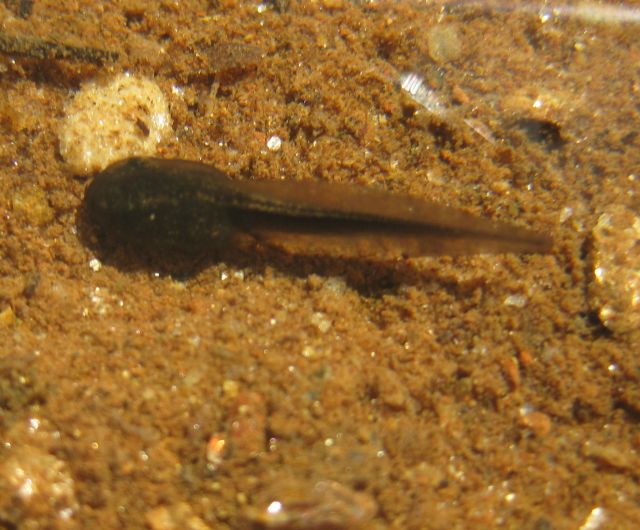
Tadpole update – the tadpole bubble in the pond in the woods now only contains a few tadpoles.  Where are the others – eaten or surviving?  And then I noticed in the far corner, which catches the afternoon sun, several motionless below the water and only bestirring themselves when I got too close.

one of the tadpoles emerged from the bubble sunning in the shallow water
one of the tadpoles, now emerged from the bubble, sunning in the shallow water

Chicken update – the hens returned to egg laying duties a couple of weeks ago, except for the Ameraucana.  I assumed she might be too old.  And then this week – 3 dark green eggs!

5 steps to conversion and organized skepticism

The nice thing about engaging in politics while running is you work out your anger quickly and without upset.  If you engage too loudly or passionately, your companion/opponent may edge away or pick up speed or become distracted by the passing natural attractions.  In the event, no harm is done, and you both feel better for the exercise and the ridded emotions.

On the topic of global warming, Bob has made some progress over the past 5 years and is now at level three of the five step climb which are 1) the climate is not warming; 2) even if it is warming this may be good not bad since we now have access to the mineral resources of the Arctic, etc.; 3) it is warming, I agree this is probably not good, but there is no reliable evidence it is caused by humans; 4) it is warming, it is bad, it is caused by humans but there is nothing we can do about it or we will become non-competitive if we try fix the problem; 5) I agree, let’s try fix it but isn’t it too late?

A frequent rejoinder by Bob is that the scientific community is in cahoots and cannot be trusted.

And this is where “organized skepticism” enters the picture.  My current MOOC ( massive open online course) at Coursera is titled “Science from Superheroes to Global Warming” and intends to make the layperson (me) knowledgeable about the scientific process.  Organized skepticism is the process where the scientific community aggressively reviews each other’s work to find errors.  This may be done in the pursuit of a higher truth or simply because we are human, competitive and egoistic and if someone else claims to have taken a big step forward our first instincts may not be to congratulate but to find fault.  I hate having to say to myself “now why didn’t I think of that?”

The laws of the universe apply everywhere the same (uniform), are unchanging (invariant), are measurable (discoverable) and, most importantly, experiments demonstrating these laws must be repeatable both by the person doing the experiment and others (reproducible, replicable).  So, unlike the social sciences, scientific evidence must be provided to support a theory and the community will challenge the data and the theory.  This rigorous process ensures that fraud cannot be perpetrated.

So when the scientific community agrees that global warming is occurring and is caused by humans, it is unlikely that it is in “cahoots”.

At this critical point in my narration to Bob he exclaimed “did you see that?” and, as our heads simultaneously swivelled, I realized once again how hard it is to make progress on global warming.

a black powder event

Now for something different!

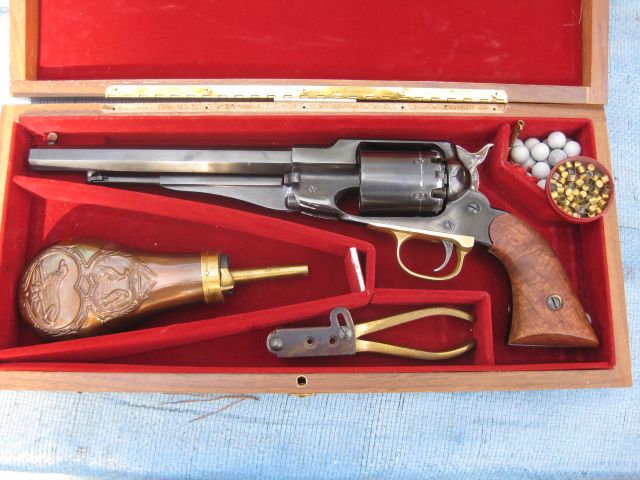
The Remington Model 1858 was a 6 shot revolver patented in 1858.  My buddy Mike has an Italian made replica with an 8″ barrel in .44 caliber and he, and I, were keen to try it out on my range in the valley of the woods.

the case contains the revolver, a powder flask, a mould for making your own bullets, the bullets (top right) and the caps (in the tin next the bullets)

The firearm is called a revolver because it has a cylinder, which is removable, and contains 6 chambers. The procedure is you fill the 6 chambers with powder from the powder flask.  The flask has a manual valve which you open, place you finger on the end of the flask tube, invert the flask and, when the flask is full, close the valve.  The tube of the flask now has the required amount of powder and you invert the tube into a chamber in the cylinder.

 filling the cylinder
a chamber is filled with powder from the flask

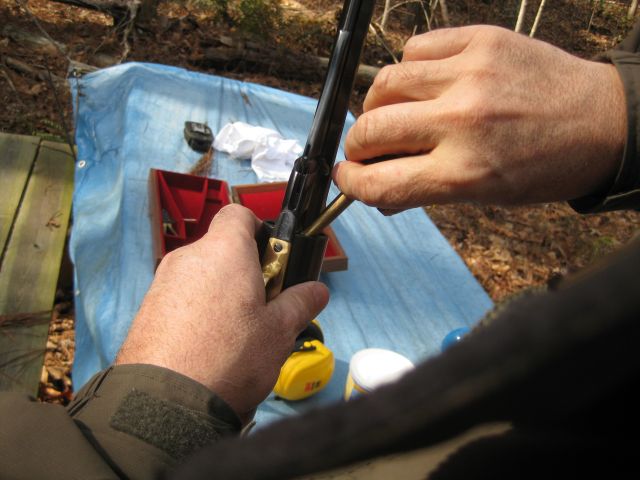
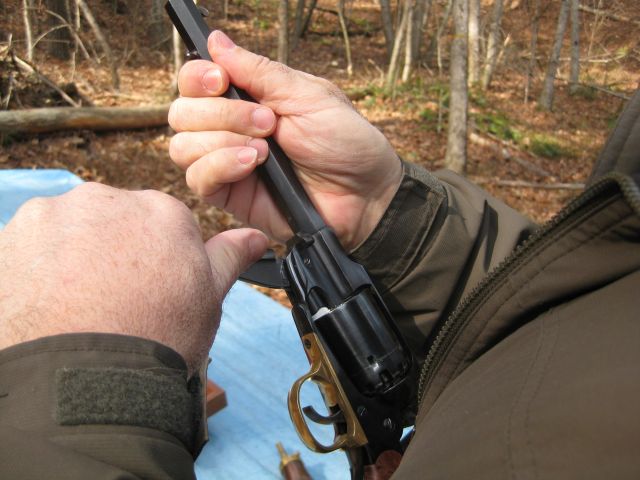
After all 6 chambers are filled with powder you then insert a bullet into each chamber.  The caliber of the revolver is .44 which means the diameter of each bullet is .44 of an inch.  The diameter of the bullet, which is made of lead, is slightly larger than the diameter of the chamber so the bullet has to be compressed into the chamber, which is done with the loading lever of the revolver.

022013 compressing the bullet
pulling down on the loading lever compresses the bullet into the chamber

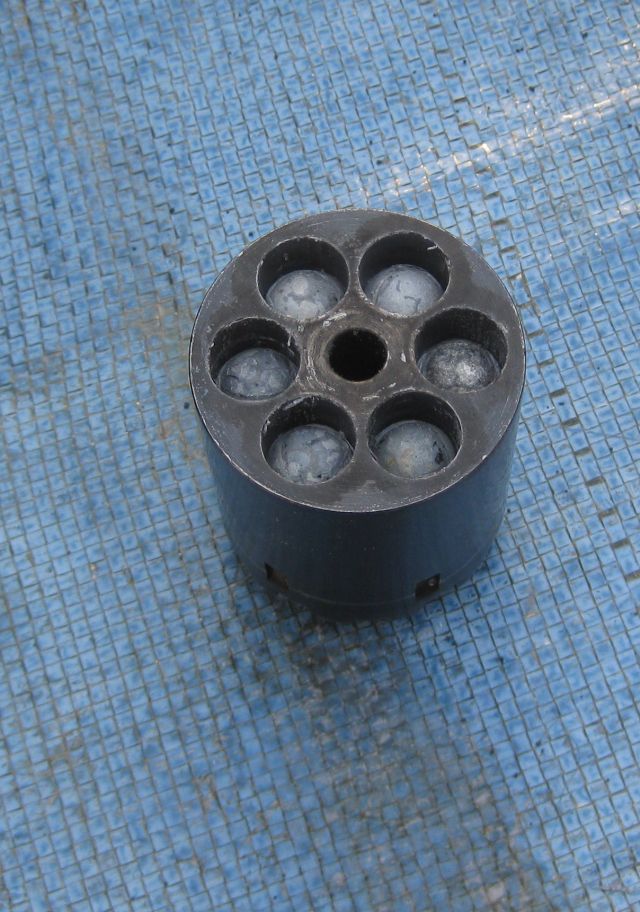
After loading the powder and the bullets into the 6 chambers we removed the cylinder for the last two steps.

022013 cylinder
the cylinder removed from the frame showing the 6 loaded bullets

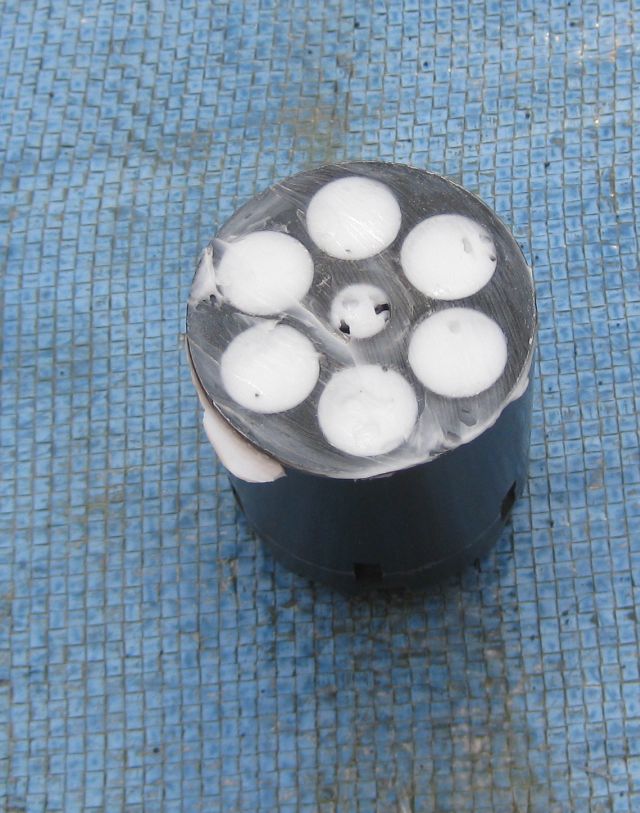
A safety concern is cross fire which could occur when you fire one chamber and the ignition triggers the other chambers.  To avoid this we purchased a tin of Cresco.

a tin of Crisco some of which was placed in each cylinder on top of the bullet

And here is the Criscoed cylinder.

cylinder with each of the 6 chambers covered with Crisco

The final step was to place a percussion cap on each of the 6 nipples which are at the rear of the cylinder.

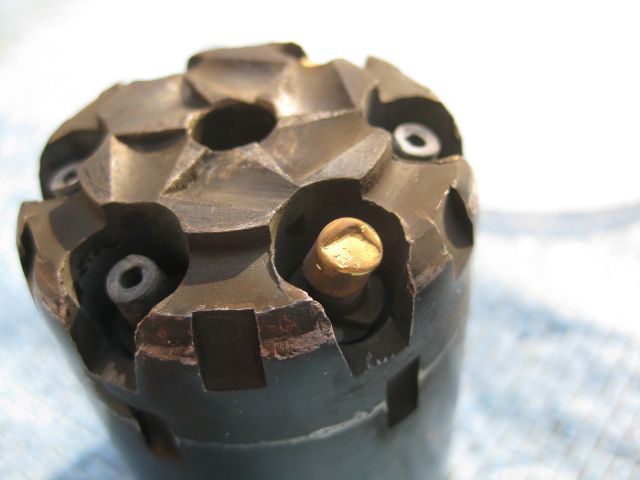
you can see the nipples and a cap which was fired, hence the indentation in the cap
you can see three nipples and a cap which was fired, hence the indentation in the cap

Then, with the cylinder in the frame, it was time to fire.

IMG_0135

Oh, by the way, a confession.  The gun store did not have black powder so we purchased a substitute which was also a black powder and worked just as well as the real thing.

the black powder substitute which we used

update – Mike was unhappy with the inaccuracy of the revolver.  I thought the 2ft grouping at 50ft was ok for first time firing of this weapon.  He says with its 8″ barrel and grooving this is a very accurate weapon and should have produced a tighter 6″ cluster.  He studied the photos on this site and identified several reasons.  First, the bullets should be close to the cylinder face – the reason they are so deeply seated is because we didn’t use wads, which we will use next time.  His reasoning is that it is important the bullet be close to the grooving in the barrel so it starts rotating immediately.  Seated deep in the cylinder means it will travel a short distance without rotation and this will adversely affect its subsequent rotation.  He also noted that some bullets were more depressed in the cylinder than others which means the powder charge was inconsistent and this will affect accuracy.  Finally, not all the trigger pulls fired first time and the reason we surmised was because the caps were not properly seated on the nipples and with the first trigger pull the hammer seated the cap on the nipple and then it fired on the second hammer pull.  Mike notes from the picture that some of the nipples are deformed from dry firing and he will investigate acquiring a nipple remover tool and new nipples to correct this problem.  Finally, Mike says black powder is more accurate than the powder we used.  It is like diagnosing intermittent firing on an older vehicle – so many things to consider and skills to acquire, now redundant from modern technology.

signs of spring

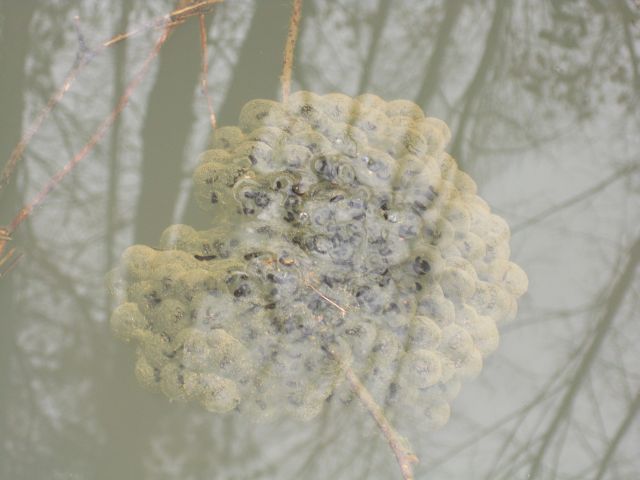
In the pond in the woods I noticed a big bubble containing lots of smaller bubbles each with a black object – frogspawn with the black dots growing daily larger into tadpoles.

frogspawn containing tadpoles

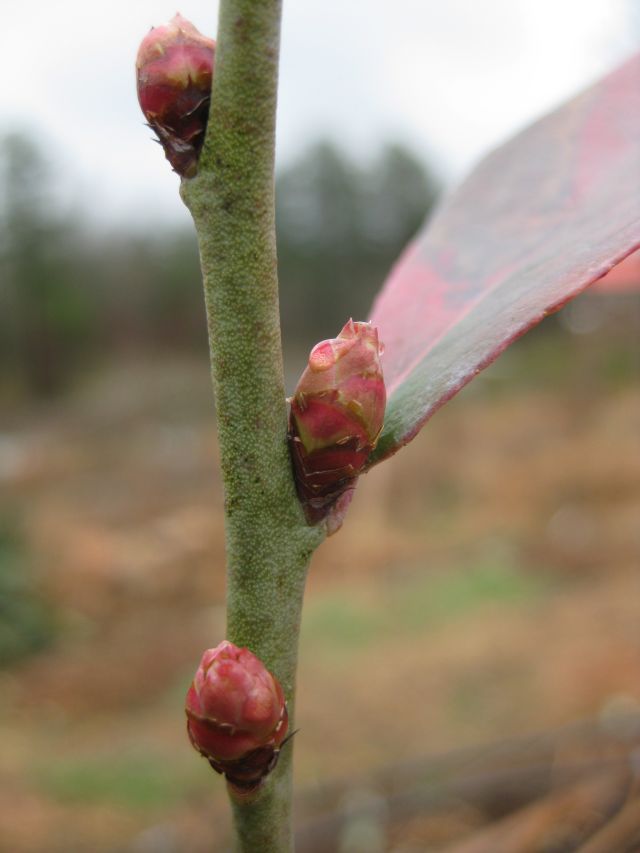
The bouts of warm weather interspersed with freeze spells have stimulated budding on several plants.

a blueberry plant anticipating spring

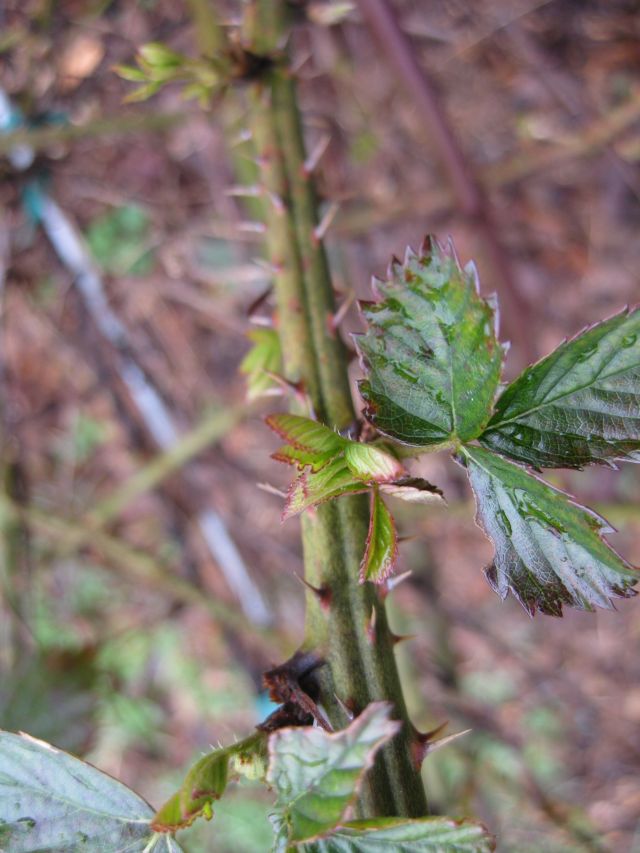
Similarly my raspberries and elderberries.

raspberry plants readying for the new season

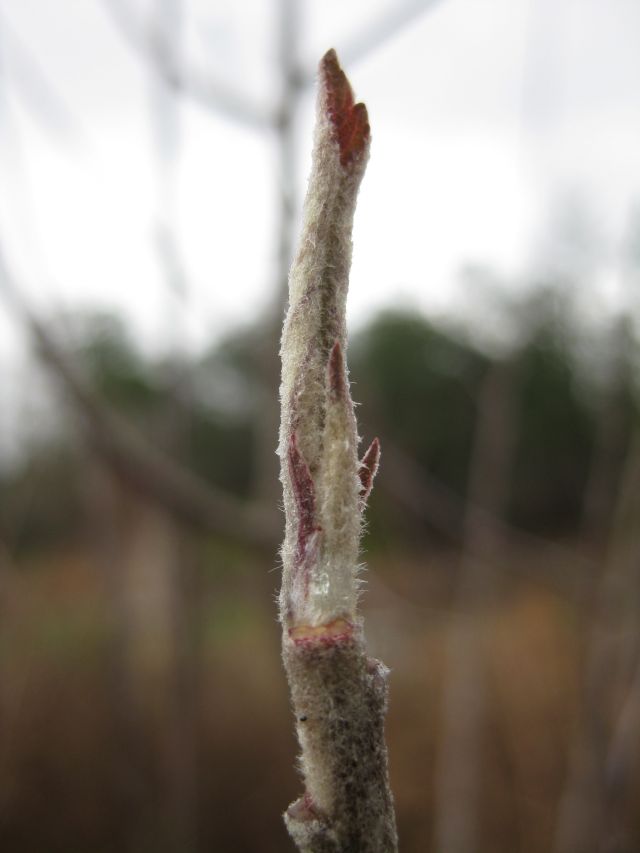
And at the tips of the branches of my apple trees, young leaves begin to unfurl.

in spring the early leaves of the apple tree stretch up and uncurl
ein shemer apple tree leaf

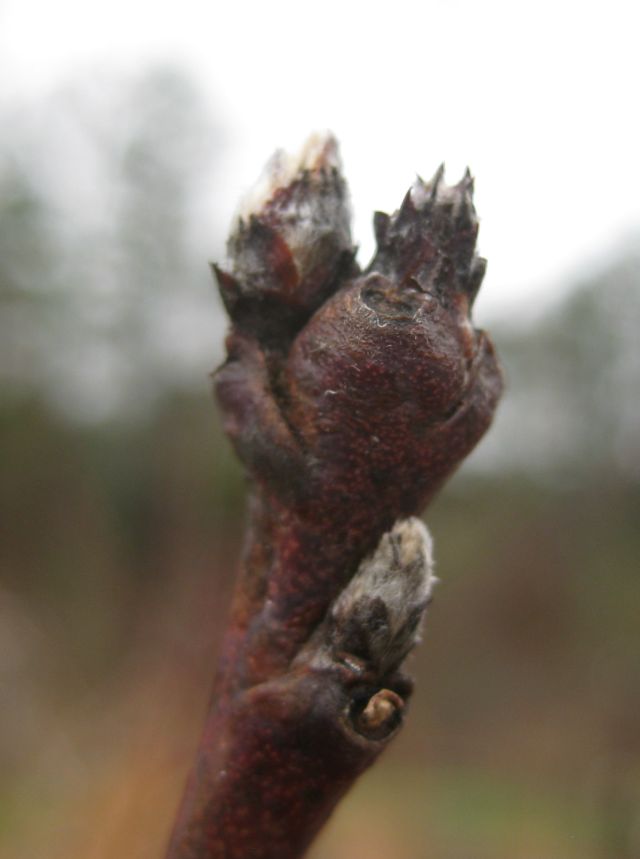
Of concern, as in previous years, is the proclivity of the peach trees to blossom too early and then be frost killed. And here, true to habit, is a peach bud preparing to launch.

bulging peach bud
bulging peach bud

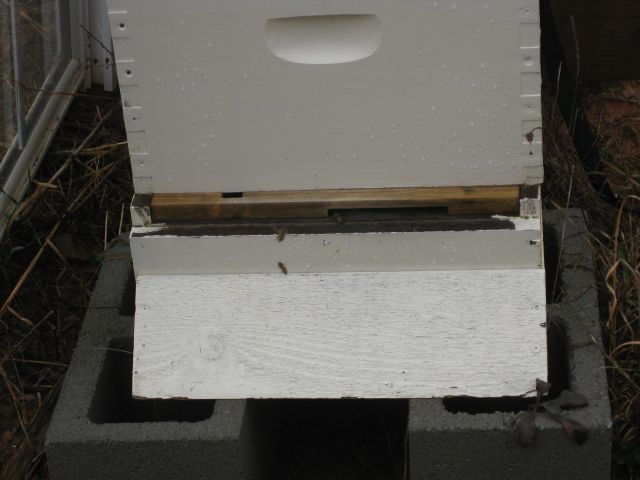
Today is in the 50’s so a few hardy bees are reconnoitering.  Both hives show signs of life.

some bee activity
some bee activity

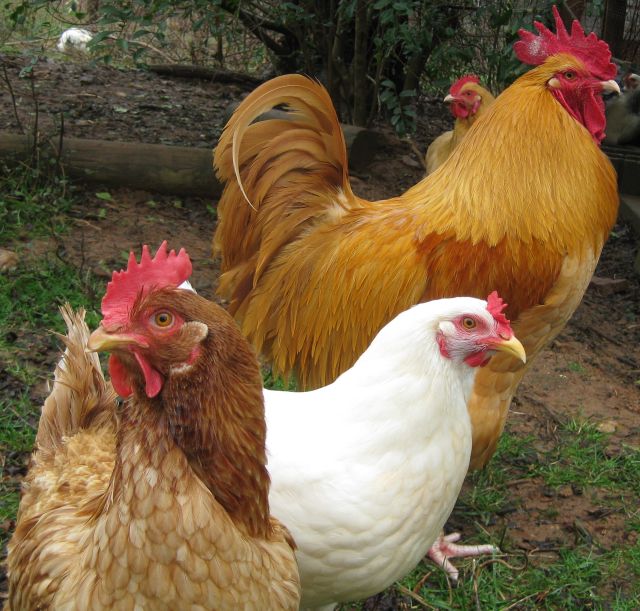
And last week, with the gradual lengthening of the days, the hens are returning to egg laying activities.  Right now 2 eggs a day but 5 eggs a few days ago.

in order from front: Red, Pearl, Buffy the Rooster, and Lady Macbeth peaking from the back

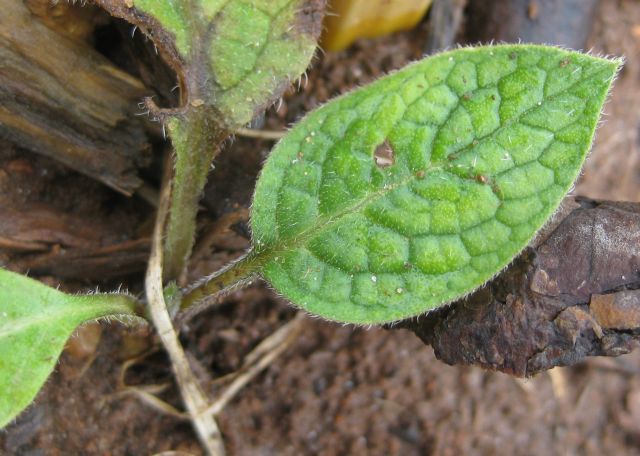
The young garlic plants are looking good, the chard into its second season is fresh and tempting and where I had planted a few severed roots, comfrey plants with their distinguished leaf pattern have emerged from the soil.

young comfrey plant offspring from a root fragment, with its patterned memorable leaf

Another growing season is on its way!


horse manure control test

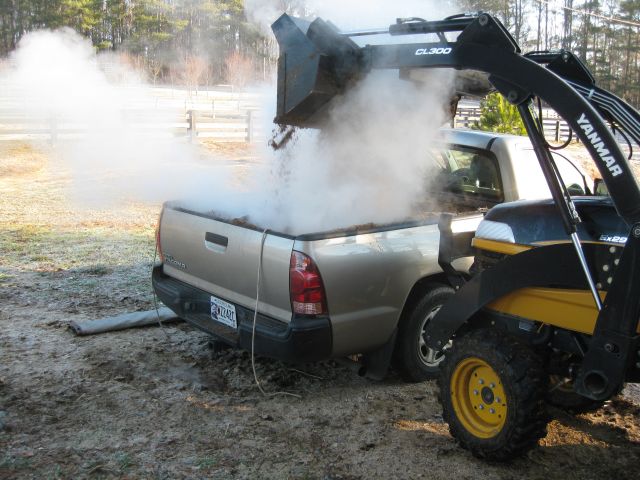
In March 2012 I performed a simple test to get some confidence that the horse manure I was collecting was not harmful to my plants.  The test indicated that my plants would not be harmed but the effect on worms was undetermined.  I had not visited the stables for some time until early this January I headed their way.  One of the immediate changes was the password controlled electric gate.  The new owners, a husband and wife team were welcoming, and when I mentioned I usually paid $20 per load of horse manure, the husband fired up his Yanmar tractor and we together headed for the manuring area.  The  previous owners used a John Deere tractor (30hp) which was occasionally  aggravating.  Kenny says he is very happy with his Yanmar.  Coincidentally, my Takeuichi bobcat has a Yanmar engine with untold hours (the hour gauge stopped working at 2,500 hours) and it works very well.

steaming horse manure nutrition from the stables
steaming horse manure from the stables

As the manure was being dumped into the pickup bed I noticed that they now use shavings in the stalls instead of straw/hay.  I preferred the latter though I am sure the shavings are cheaper.

a simple control test for horse manure
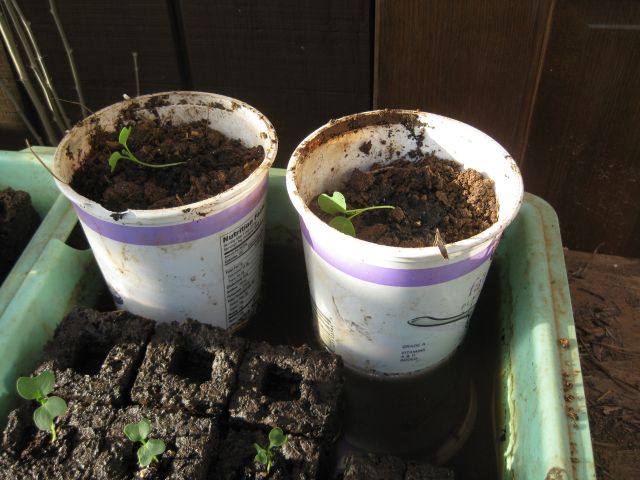
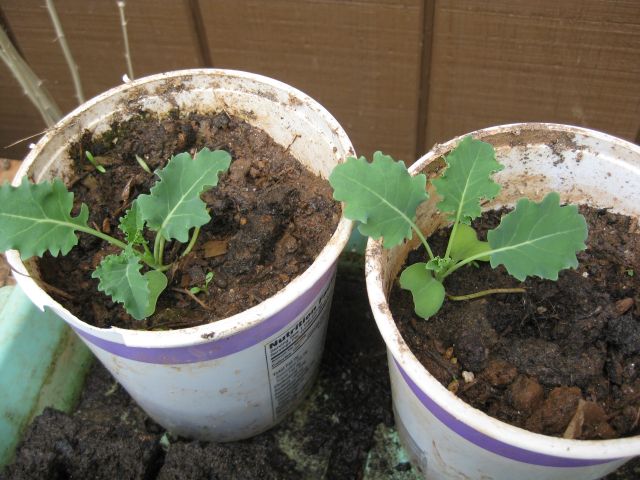
my simple test – a kale seedling planted in horse manure vs. compost

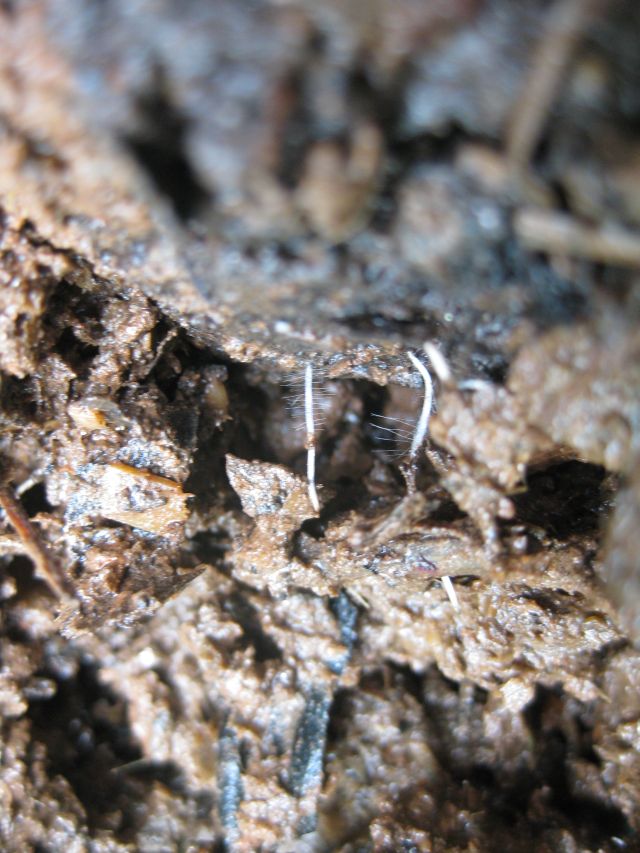
I decided to again test the manure.  I filled one yoghurt container with manure and the other with compost and inserted a 2″ soil block containing a  kale seedling into each, plus a 3″ worm.  And waited about a month.  And then examined the contents.  Both seedlings had grown at about the same rate and I was pleased to see their roots had extended well beyond the soil block so they had sampled their surroundings.

seedling roots in horse manure
white roots of seedling extending into the horse manure. note the fine horizontal roots I had not noticed until this photo

And as for the worms – both had disappeared.  I should have learned my lesson and included other soil life such as centipedes and millipedes.  Worms do tend to wander.

similarly sized seedlings a month later alternatively in horse manure and compost

So where does this leave me.  The Feb/Mar 2013 issue of Mother Earth News has an article “Killer Compost Update Herbicide Damage Still a Major Problem”.  The gist is that  persistent herbicides remain potent in composted manures and will damage crops to which they are applied.  The article did not focus on insecticides applied to pastures or dewormers or other chemicals given to livestock.

I recently read “Bringing Nature Home” by D Tellamy who makes a compelling case that we should protect and sustain all insects, including herbivore insects which are the ones which eat my vegetables.  His view is that these insects and particularly their larvae, provide food to predator insects and birds and thereby promote diversity of these species.  The book is very well written and castigates alien plants not only because they are invasive but also because it takes a long time for native insects to adapt to eating them and so they provide little nutrition and without natural enemies become more invasive.  To  test whether the horse manure is safe for insects I will now add centipedes and millipedes of which I have an abundance to the two containers and see how they fare.