cold frame building

On a recent visit to the thrift store, where there are often solid wood furniture and country painting bargains, I noticed about 50 double insulated small windows each 2 ft wide and  31″ high.  Available for $1 each.  I bought 22.  And have spent a lot of time figuring how to use them effectively in a cold frame.
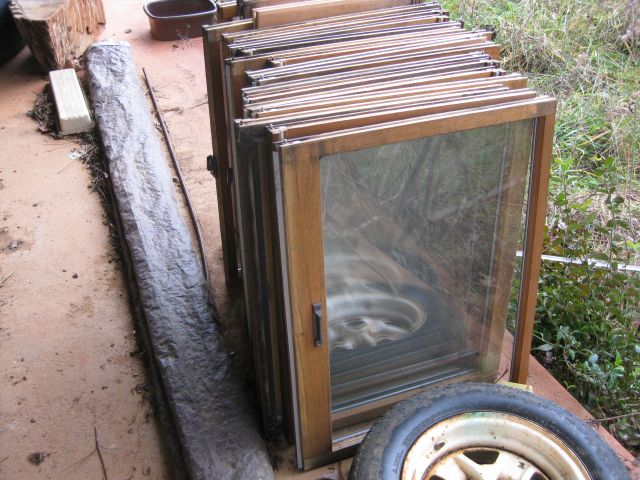
double insulated, same sized $1 windows from thrift store

My greens are growing very well under an Agripon row cover – it allows air and rain through, protects against frost, keeps the temperature higher inside than out and allows some light through.  However, as with most all solutions, there are negatives.  The cover allows light through, but not all the light and it keeps temperatures higher than ambient temperatures, but not that much higher.  This has worked fine up to now since temperatures have been mild.  Temperatures in January and February will be much lower.  A cold frame using glass windows will let much more light through and will keep temperatures much higher.  Negatives are more labor intensive and costly to construct, does not allow rain to penetrate therefore more supplemental watering required and, on warm days, the temperature will rise too high so I shall have to be watchful to allow ventilation.  An advantage of a cold frame over my greenhouse is the plants will be growing in the ground and their roots will penetrate further than in greenhouse pots.

So having rationalized the need for a cold frame I developed a simple construction plan requiring minimal additional expenditures.
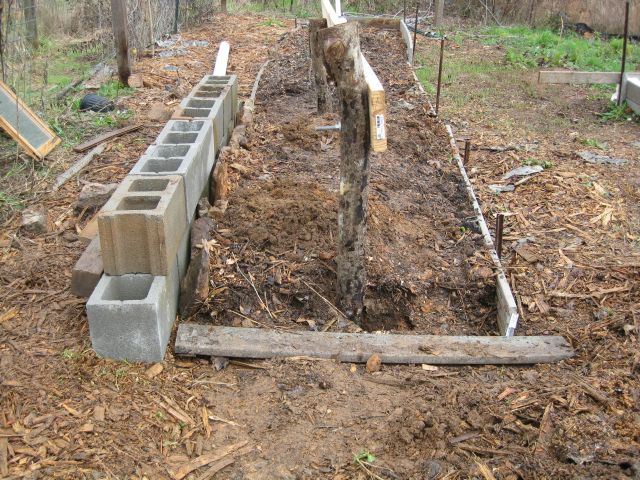
skeleton of cold frame, cement blocks on north side of raised bed, ridgeline down center

I appropriated a section of a newly built raised bed, which has stones on the north side to store heat.  I assembled a two level wall of cement blocks (8″x8″x16″ –  $1.25 each).  9 blocks on the ground and 8 above them (not mortared).  Most of the construction time was ensuring the bottom blocks were level.  I recycled two cherry branches for my uprights to which I bolted a 2″x8″x10ft untreated plank ($5.85) which acts as the ridge on which the windows will rest.
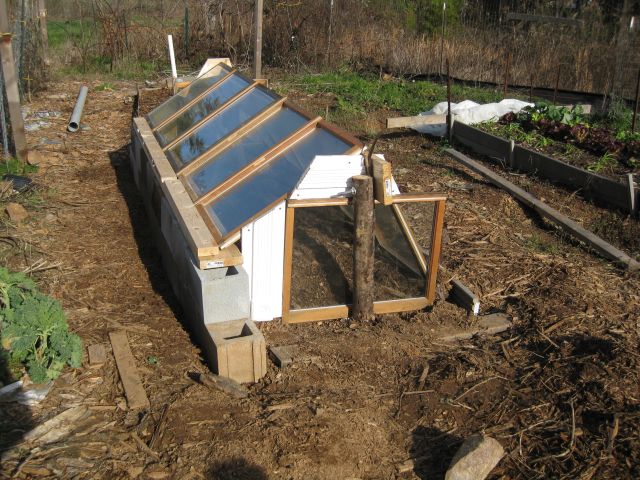
cold frame showing 2nd plank on cement blocks and windows in place

Since cement blocks have cavities, I aligned a second 2″x8″x10ft plank along the top of the second block layer to which I screwed 5 right angle brackets which grip the inside face of the cement blocks to prevent the plank sliding off the blocks.  Additionally I screwed a 2″x4″ plank along the left side of the plank as a step to prevent the windows sliding off the plank.
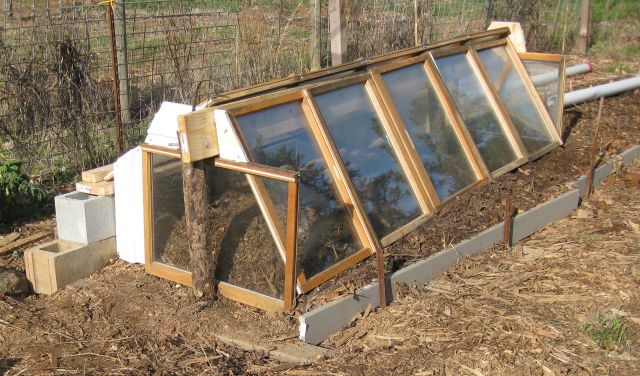
a view of the south side of the cold frame

On the south side of the cold frame I have the 5 windows with bottom edges resting on the ground and top edge resting on the ridge line.  A total of 12 windows were used, 5 facing up and north, 5 facing south and 1 on each end.  By having the south windows and the end windows resting on the ground this will maximize exposure to the low southern sun (also, unfortunately, accelerate moisture penetration and wood rot).  The areas not enclosed by the windows were filled with sized surplus lumber.  For access and ventilation I remove the south facing windows.  I placed an electronic min/max thermometer in the cold frame and tomorrow, hopefully, I will find there was reasonable heat retention.  The ground should also have warmed up and I will plant out more of my kale, collard, mache, broccoli raab, and turnip greens seedlings.
some winter tasks

Vegetable growing in winter

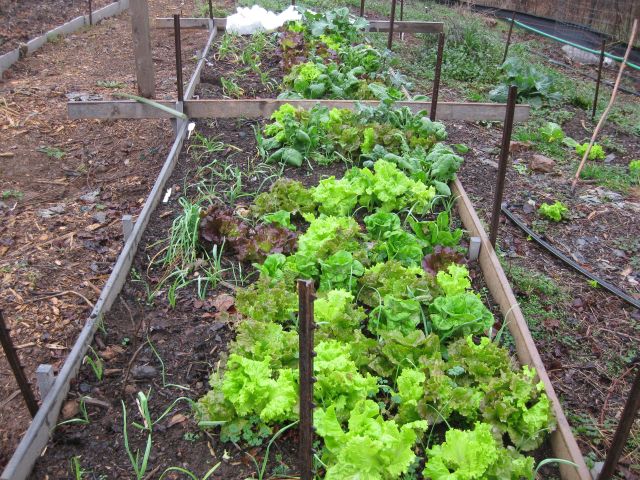
I know it is still early days and we may yet have blizzards and really low temperatures, but I am much encouraged with the growth of my greens (lettuce, spinach, kale, collards) and the protection provided by my row covers, so I have been growing more vegetables for transplanting in a few weeks. I googled winter hardy vegetables and bought Rapini Broccoli Raab seeds and Mache Corn Salad seeds – very reasonably priced and very quick delivery from Hirt’s Gardens.  They germinated in my 3/4″ blocks quickly and are now in the greenhouse in 2″ soil blocks growing well and will be transplanted soon, together with my regulars – I really like kale and have several varieties going.  Below is a snapshot of one of my raised beds – with temps>40 for next several days, I am trying one bed without covers and the other with, and will see if it makes any difference.

Dec 22 raised veg bed, garlic on left, greens on right

Composting

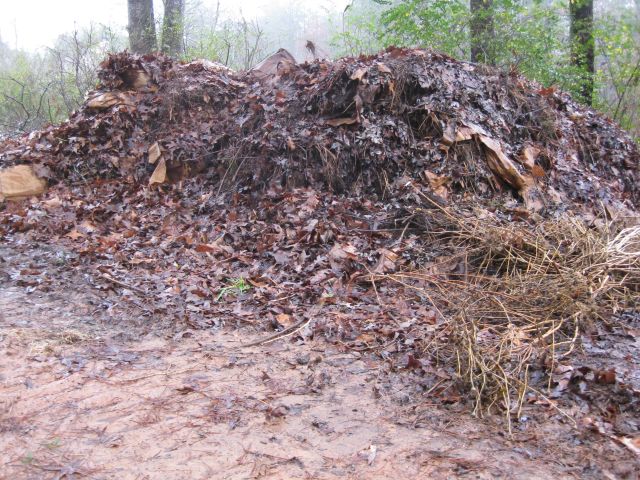
My new heap has more than 60 leaf bags.  It is too much leaf and too little green.  Every other day, when I clean out the coop, I toss the chickens’ contribution on the top and have also contributed some of the horse manure I picked up from the stables.  I have a continuing reservation about the horse manure – don’t know what ‘cides were used to produce the hay or what chems the horses may have received – but I hope the composting process and all my soil workers will break down whatever is  there that shouldn’t be.  The heap is self standing and for turning it, my bobcat is invaluable.  It is breaking down well, evidenced by wisps of steam and diminishing size.

Dec 22 - compost heap


Transplanted muscadines

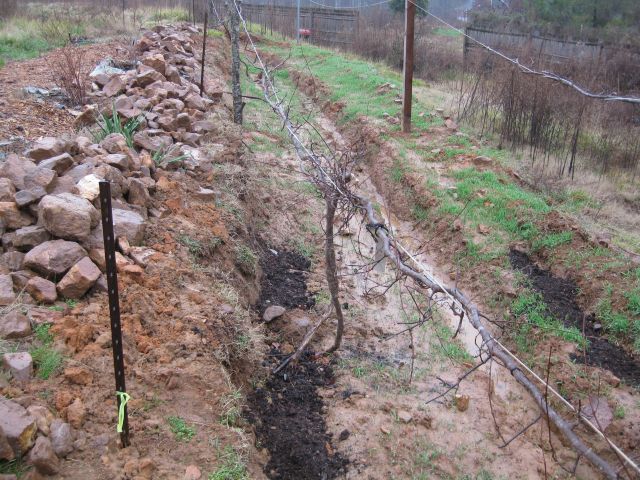
I completed transplanting the muscadines.  I have real concerns about the outcome.  Their roots had extended everywhere and I doubt that I saved even 20% of the roots.  I cut back the vines by 80% and placed the roots in trenches covered with compost (compost is my universal remedy) and spring will tell how well I succeeded.  To stabilize the terrace from wintry rains I seeded with winter rye and it is growing nicely as can be seen below, together with the truncated muscadines.

new muscadine terrace with winter rye, contour ditch and lots of excavated stones

I intend to put the stones to use building stone walls – to be described in a later post.

New raised bed

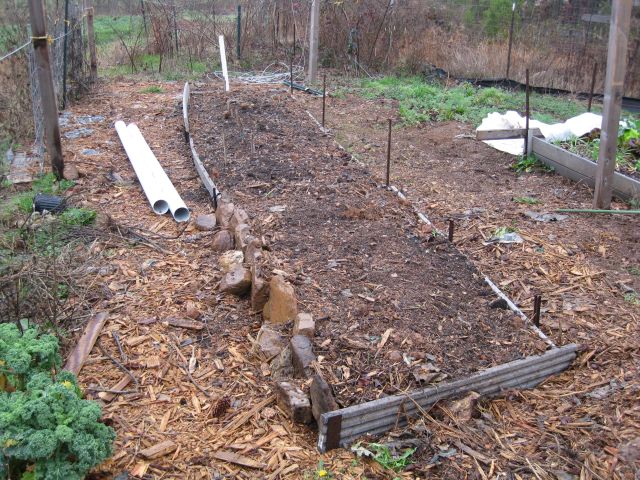
With the muscadines out of the way, I decided to make a third raised bed – this is 4 ft wide and 24 ft long and is awaiting residents.  As an experiment I used a few of the stones as a north border for the bed, the idea being they will act as a heat sink – absorb the heat of the winter son and create a micro climate ( I noticed that my strawberry plants which abut the south side of one of the raised bed i.e. the raised bed side is to the north of it, have produced strawberries in the middle of December!). The two 4″wide 10 ft long pipes will be positioned in the middle and above the bed for the purpose of keeping the winter cover off the vegs.

Dec 22 - new raised veg bed, with heat sink rocks on north border

 Apple tree restoration

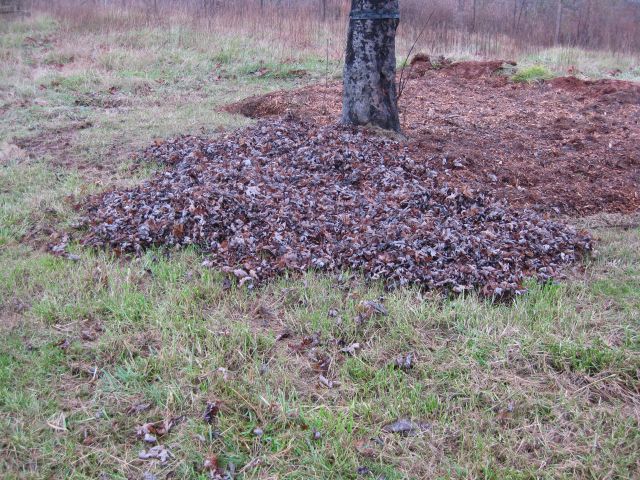
There is a large apple tree on the hill property I recently acquired which did poorly this past year.  One reason, I surmised, is that its roots tapped into a septic system which has been decommissioned and therefore it was deprived of valuable nutrients on which it had become dependent.  Or it could have been the weather, or it may only bear well every other year.  It is surrounded by a vigorous tough grass which competes with its roots for food.  I decided to get rid of the grass.  Imagine a circle with the tree in the center.  I mowed all the grass in the circle.  Then for 50% of the circle I spread horse manure and then wads of newspapers and then covered the lot with a generous load of wood chips.  For the other half I decided on a different approach.  Adjacent trees shed lots of leaves and I gathered these leaves and spread them out on the grass.  Next step will be to add the wood chips.  My reasoning is the leaves will block the light on which grass depends to grow, more effectively than spread newspapers.  And it is quicker to spread the leaves than the paper and the leaves, being more natural than paper will probably contribute better to the health life of the soil.  I am hoping the wood chips will promote growth of fungi which is better for the trees than the grass bacteria.

mulching the apple tree, wood chips on newspaper at rear, leaves in front (in progress)

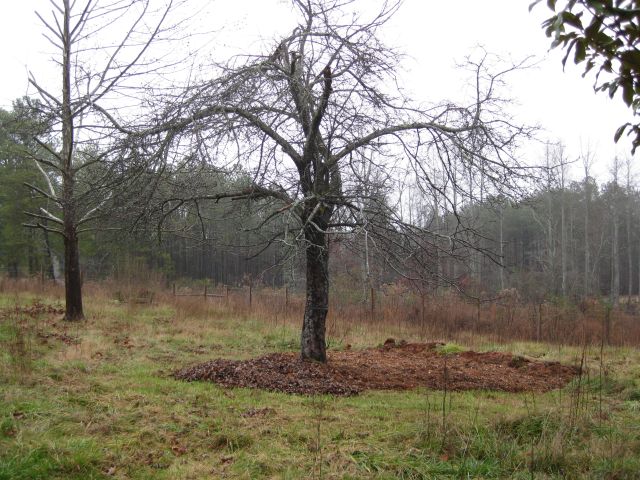
The apple tree itself does not look too impressive right now.  The top half was sheared by a storm and I still have to do more pruning.  Time will tell. By the way the sweet gum behind it fell victim to shearing by the local utility which has a right of way which extends to within a few feet of the trunk of the sweet gum.  So the utility religiously protects its right of way with no favoritism extended.  The one benefit is I received a truck load of wood chips.

Dec 22 - apple tree


Lots of pipes

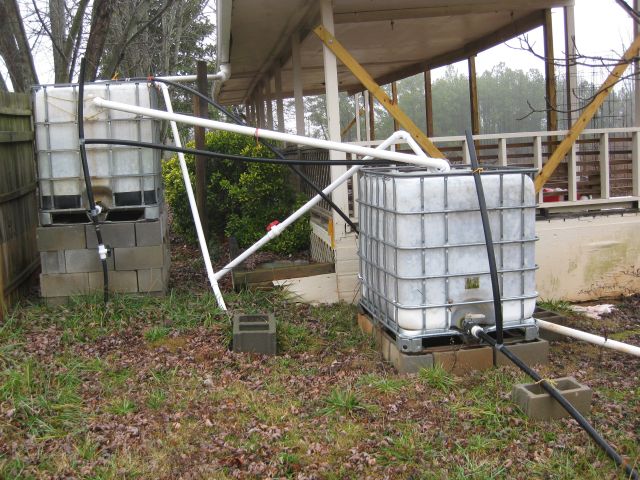
Finally a snapshot of my two gravity feed irrigation tanks. I just added the last and final pipe.  Each of the pipes serves a purpose.

gravity feed irrigation tanks with related necessary pipes

The “Y” brings the rainwater from the storage tanks. If the red valve on the lower limb is open the water goes to the right tank, if closed to the left tank.  The two vertical black pipes are to facilitate bleeding out air bubbles when the valves below them are opened and water runs to the crops.  The left, raised tank, irrigates hill crops, the right tank the crops at the bottom of the hill. You can spot at the top of the left tank the horizontal white pipe bringing rainwater from the roof of the deck and the diagonal black pipe bringing water from a well (only as a last resort and only pumped 3 times this past year).  There are two overflow pipes from the left tank – the lower overflow is if I want the left tank to be half filled before the lower tank is filled, the upper overflow is if I want the left tank to be completely filled before the lower tank is filled.  Finally, the pipe I just added is the overflow from the lower tank – you can see it is directed to the right where the fig tree resides and whichas a berm to capture as much water as possible.

propagation

Winter is a good time to turn my thoughts to propagating plants.  Although I live in the south (Georgia) some days are really miserably cold, windy and rainy.  What better time to learn up on new propagation techniques.

Oaks

Oaks do not transplant easily.  Even young oaks seem to have interminably long tap roots.  And it is difficult to tell a small sapling young oak from a 5 or 10 year old sapling old oak since oaks are content to bide their time in the shade of larger trees until the umbrella is pierced and growth giving light encourages them to get going.  I walked the woodland yesterday looking for acorns and found none though there are many >20 year old white and red oaks.  At first I thought they may not be producing acorns since they are hemmed in on all sides by pines and tulip poplars.  But then I remembered all the oak saplings surrounding these trees and concluded that squirrel or deer had been feasting on the mast (as it is called).  Too late to the party.  However, in Sandy Springs, Atlanta near our suburban home there is a huge oak tree which has littered the sidewalk with thousands of acorns.  I collected 100 this morning and seeded them 25 rows, 4 each, 1″ depth, in a new long raised bed I have built.  I shall water, keep an eye on them and, with some luck in early summer there may be signs of life.

Fruit tree cuttings

I mentioned in an earlier blog that I am new to cuttings and a reader gently nudged me to a better understanding of the mechanics, for which I am thankful.  You have to establish first if you are dealing with hardwood or softwood cuttings.  Hardwood is not necessarily harder than softwood and an example frequently quoted is balsa wood, which is a very light wood but is classified as a hardwood.  The distinction is based on the seed and the seed of hardwoods has a covering, such as fruit or the hard shell of an acorn.  For hardwood cuttings you take the samples in fall or early winter.

My neighbor agreed that I could take cuttings from her many fruit trees, so this morning, with my alcohol sterilized secateurs, I took snips from a number of her trees which include mulberry, cherry, pear and apple.  From these snips I prepared >20 cuttings and rather than using a heated tray and remembering to water and bothering the cuttings with weekly inspections to see if the roots had arrived, I simply prepared a V trench in my outdoor raised bed (which has frost cover protection) and planted them and watered them.  And I will look for buds in the spring.

I know that apple trees should be grafted on appropriate stock but what I want to achieve, rather than a formal orchard, which I already have, is an informal association of fruit trees interspersed with edible or useful perennials.  Since the cuttings are from trees which have thrived in this area, they should be able to take good care of themselves.

Seed germination

My real pursuit has been learning more about seed germination.  Through the comments of MikeH on this website I learned of “Seed Germination Theory and Practice” second edition by Professor Norman Deno (“Deno”) published in 1993 and available for free download. For anyone interested in this topic, this book is great.

Previously I didn’t understand why, although most seed germinated in warm moist conditions, other seed needed cold to germinate and some seed seemed completely indifferent to my efforts.

Deno germinated nearly 2,500 species and the processes he used were relatively simple – he did not use pots and growing media, instead paper towels and polyethylene sandwich bags (thin bags not sealed too tightly so as to maintain aerobic conditions). For some species he used gibberillic acid. He conducted his germination tests at just two temperatures 40 or 70 deg F. Based on the results of his research he developed a number of principles such as all species have mechanisms to delay germination until the seed has been dispersed.  There can be multiple mechanisms such as required sequences of hot and cold temperatures, or cold and hot temperatures, or oscillating temperatures as well as a time clock and/or the need for light or dark etc.

I find interesting why species have particular delay mechanisms and it seems the mechanisms are about ensuring survival of the species. If seed dropped in summer were to germinate in summer, the tender offspring would be killed by winter, hence a programmed requirement that there must be cold (i.e. winter) before the seed can germinate. Apparently for plants growing in swamps or woodland, where having enough light is a bigger problem than having sufficient water, the seeds require light to germinate. Apparently for plants in cold desert areas where moisture is only available in the spring, the seed will germinate at low temperatures in order to be sufficiently developed to benefit from the spring rains. Some species produce quantities of seed coats which are empty and Deno speculates that this is also a survival mechanism – predators which exert themselves to open the seed coats and then find nothing there will lose interest in that particular seed. Some seed require cold then warmth then cold i.e. two winters. The survival mechanism here could be that if all the seed germinated the following year and conditions were bad – drought, fire etc, then the entire species could be destroyed. So requiring two winters appears to double the chances that the species will survive. Fascinating!

I now understand why if you cut a flower before it has seeded, taking care to leave buds on the stalk, the plant will flower again, and if cut, again.  A survival mechanism requires the plant to keep trying to flower so that it will be pollinated and produce seed.  Once it has produced seed it has achieved its mission.  Not to say plants are indifferent to human desires.  Another survival mechanism could be to look beautiful to humans (in addition to the pollinating insects) so that humans will favor them and propagate them.