succession

“Succession” has been in the news, more so in England than the United States, when last week (October 28) the rules for succession to the British throne were amended to ensure that the first born of any future monarch, whether male or female will inherit the crown. However, though related, this is not the succession I have in mind when I look at my yard, which previously was regularly scalped by a lawn mower, now transforming itself into an impenetrable mass of “weeds”.

When we selected a house in the suburbs of Atlanta I wisely ensured there were no neighborhood covenants requiring all houses conform to a manicured appearance. I guess my priorities are different from most homeowners who stress curbside appearance by which is meant that the house should look good to passersby. For me this entails a loss of privacy – I would rather my dwelling be obscured to passing traffic. So I displaced the rolling lawn between the house and the street with many tree plantings. There still is some lawn and, yes I do mow it, especially when the weeds are about to seed since it would be unfair for my neighbors’ yards to become infested with my “weeds”. These changes did not pass without comment from the subdivision and I became aware of the common sentiment when a visiting teenager said she loved the wildflowers and I should not be influenced by what everyone was saying about my yard (up till that time I didn’t know that anyone was saying anything). I heard more directly when, at a neighborly New Year’s party, after some quaffing of the spirits, and when everyone was encouraged to make a new year wish, someone said they hoped Disney would use our yard as their site for the next Tarzan movie – the guffaws, in which I participated, showed that most everyone knew about our yard.

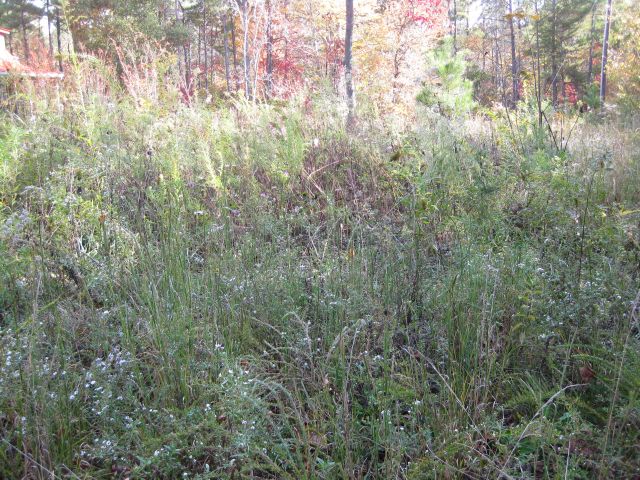
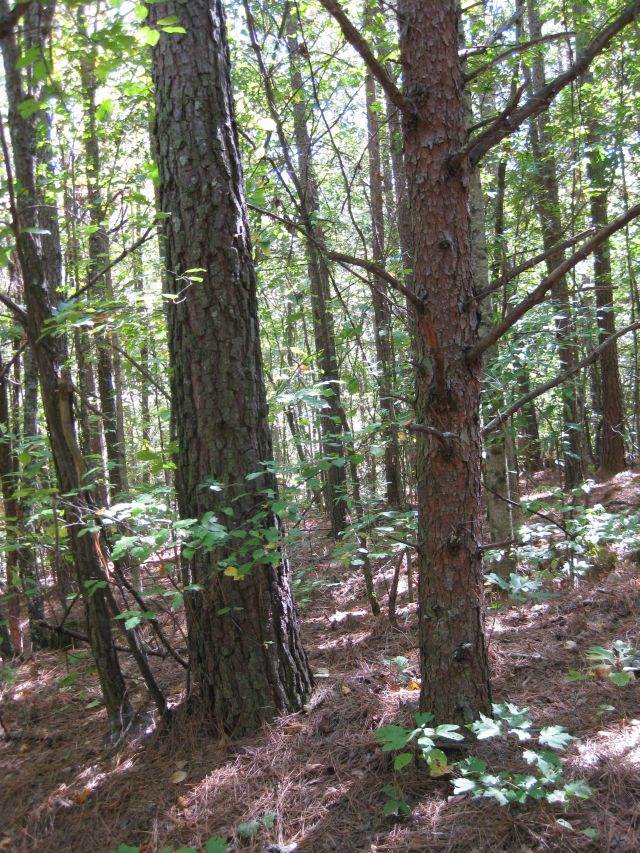
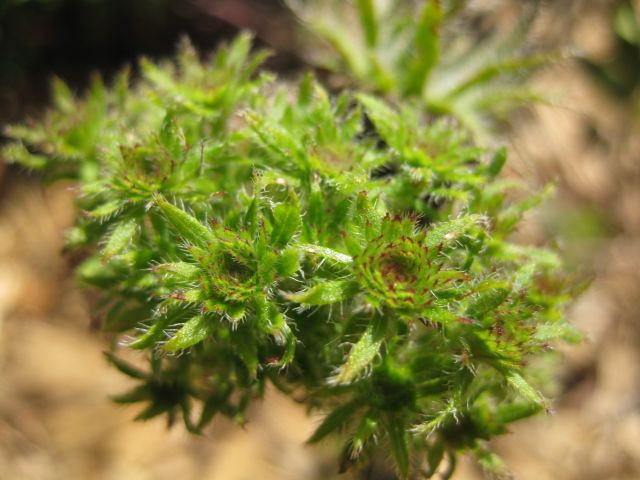
Succession doesn’t really work in a suburban setting because at some point the local authorities will become involved as complaints escalate. But it is great for my rural property. Basically, succession means stepping back and doing nothing and letting nature take over the yard. The grasses which used to be mowed are taken over by more aggressive annuals (pioneer plants) which thrive in an untended natural setting. In time the annuals will be shaded out and displaced by larger perennials, which in turn, some years later, will be displaced by natural seeded trees (in my case pine trees and tulip poplars). Succession is a natural process and maintaining an immaculate lawn is an unnatural process i.e. we are going against nature, which is why so much effort and dollars are expended on herbicides (pre-emergent, post-emergent), pesticides, fertilizer, mowing, spiking, irrigating and leaf clearing operations – we are trying to hold the lawn at an early stage of development while nature is trying to progress matters (my neighbors will quibble with the word “progress”).

So I am allowing succession to occur on my rural property in the areas where I am not growing food. Actually, in some cases I am doing accelerated succession, which means that in addition to allowing the pines and poplars, maples et al. to seed and grow, I visit the woods and extricate white and red oak seedlings and plant them amidst the growing host. Oaks are very difficult to transplant – they send down long tap roots and success is only possible if you select a seedling which means some trial and error since what may appear to be a small oak seedling could be a specimen which has been waiting in the understory for 5 or more years and has a 4 ft taproot. However success is possible.

Perhaps my succession is not that different from the new rules for the British monarchy – whoever arrives first rules (for the time being).
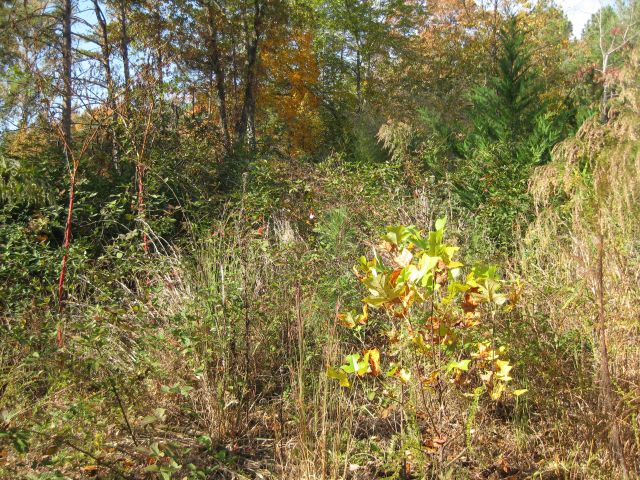
succession
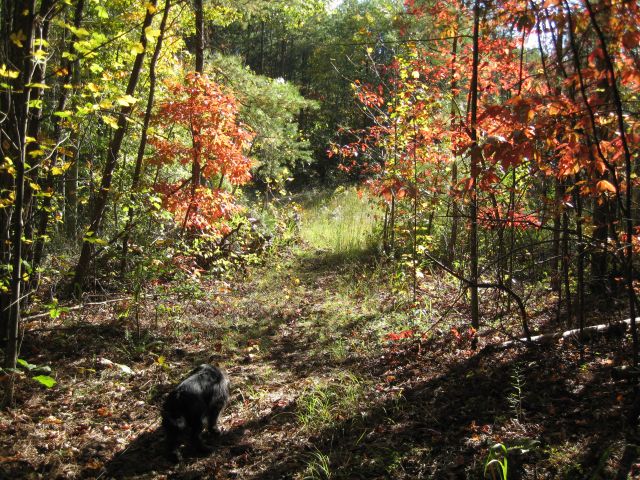
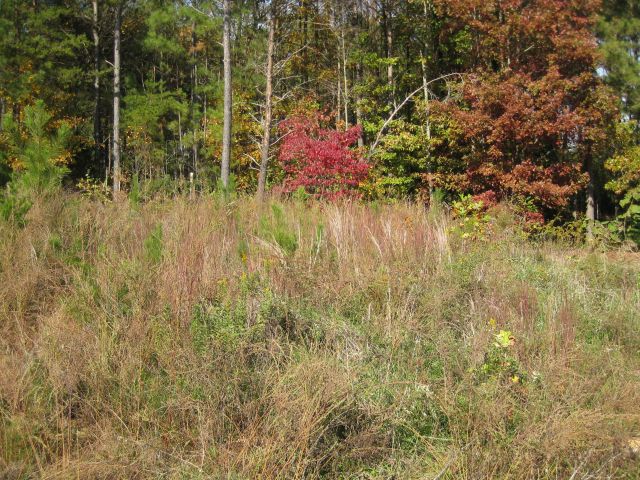
previously mowed area - you can spot pine, tulip poplar and a transplanted oak
succession
previously mowed area, now pine, tulip poplar, and perennials including pokeberry
succession
this looks a mess, but within various saplings are growing and will one day take over

new chicken coop – completed

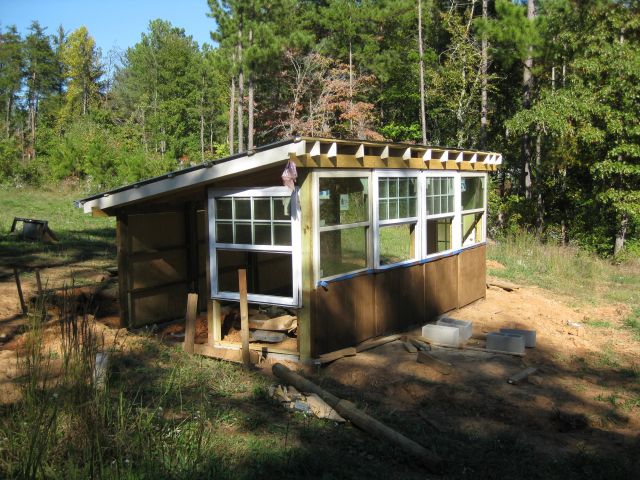
I completed the chicken coop project over the past weekend. I did all the work myself except for the assistance of a friend who helped me hoist 5 of the 6 windows into place and fit the entrance door. In previous posts I mentioned my progress on its construction. It is built on sloping ground so I started by using my bobcat to build a level pad, half of which was cut into the slope and the other half was infill from soil removed from the slope. Then with my trencher/stump remover attached to the bobcat I dug drainage trenches on the two sides of the pad which cut into the slope. The building is 18 ft by 10 ft and secured by posts concreted into the ground. Digging the post holes took a lot more time than anticipated since there were a number of largish stones (boulders) which had to be removed and this resulted in some cases in very wide holes. With the posts finally in place, construction went quickly. A time consuming task was digging the trenches between the posts for the cement blocks which I lined up 8″ deep to form my barrier against predator tunnels. I am concerned that predators can dig deeper than 8″ tunnels and will keep a lookout for perimeter activity.

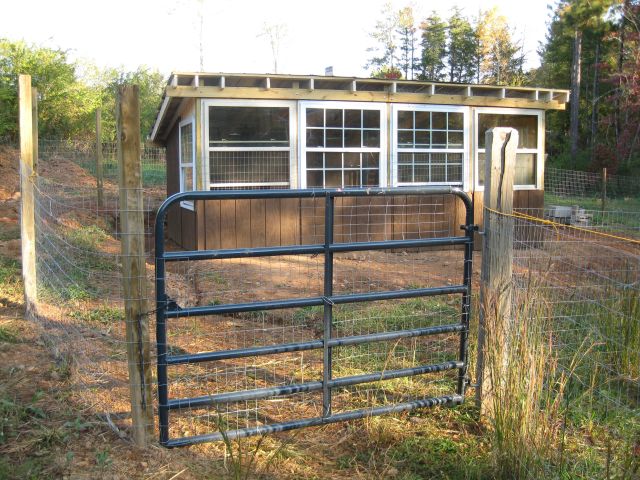
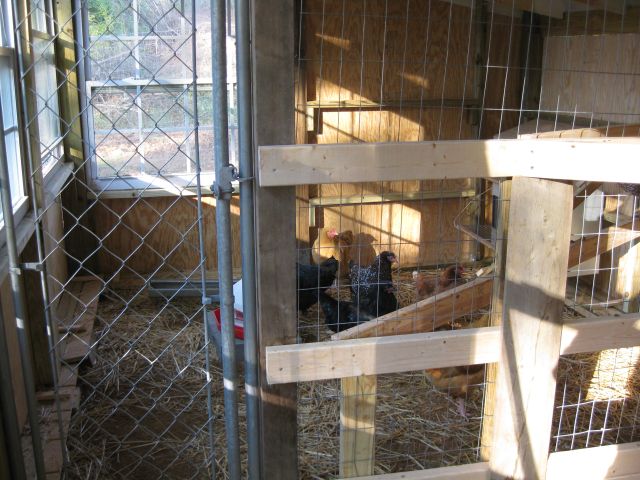
The first photo is the entrance. The only 6ft wide gate available at the time of purchase is for larger animals rather than chicken, so I used some of my fence wire to cover the gaps between the horizontal bars.


coop
coop seen from entrance gate

I screened all openings which remained after construction with hardware cloth. I also added the hardware cloth to two of the windows (lower half which opens) so that I can leave the windows ajar during the nights. To attach the cloth to the timber I used a pneumatic stapler (and safety glasses) and this sped up the work considerably.

coop
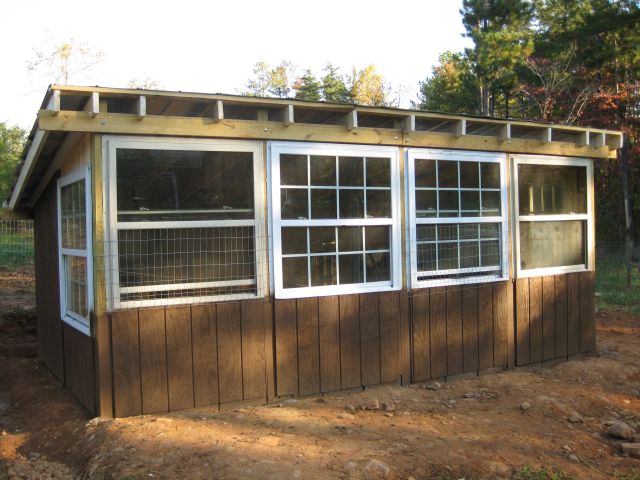
coop south facing side with four 4 ft windows

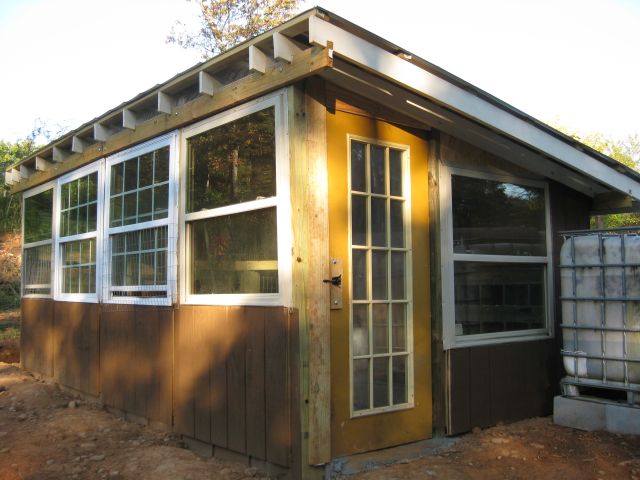
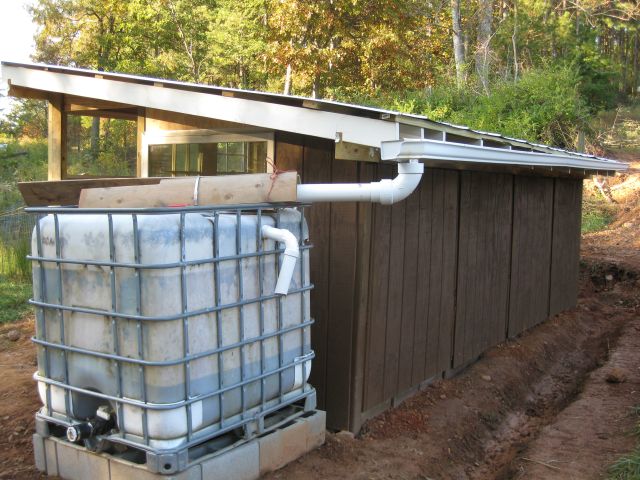
There are a total of 6 windows, four in the front and one on each side. This photo shows the entrance, with my $8 front door purchased from the thrift store and my rainwater storage tank. I will use the rainwater to irrigate the tree and shrub plantings I am installing in the chicken range areas.

coop
coop front entrance at rainwater storage tank

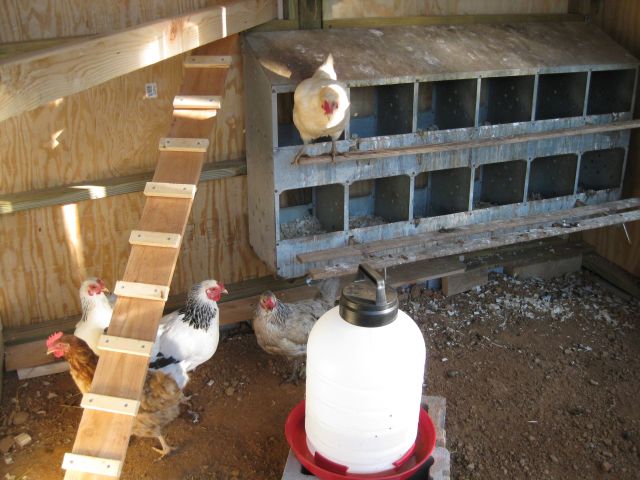
The coop is divided into two halves – one for the 8 younger chicken and the other for the 6 older hens. I intended to keep them all in the one half and use the other for growing and other activities. However, it appeared too cramped and there is still some friction between the two flocks. Each half has its own water container, food container, perches and nesting box. This photo shows the half closest to the entrance in which the 6 older girls now live, and the large nesting box inherited from my neighbor as well as the steps (4.5″ spacing) on the inclined plank to facilitate accessing the perch (horizontal, non pressure treated 2×4 at top left).

coop
coop area for older hens

The two areas are separated by fencing material and a gate I salvaged.

coop
coop partition

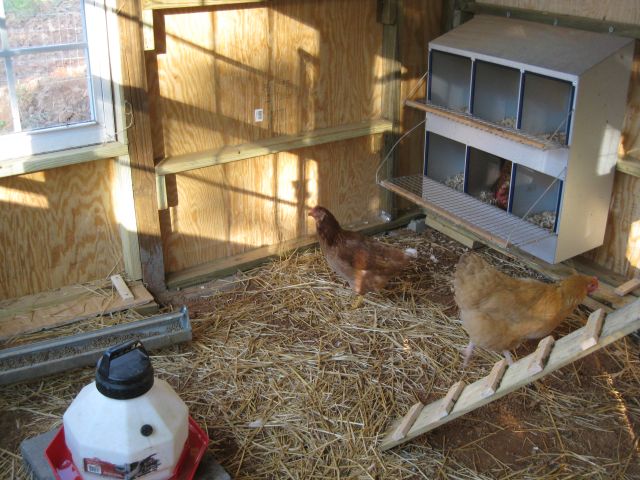
The other half is outfitted much as the first. Incidentally, in one of the nest boxes is a Golden Comet and, I discovered later, she is in the process of laying her first egg. Maybe living in close quarters with the older egg laying hens accelerated the process.  The step spacing in this coop is 6″ which I think is a bit too far apart – you can see Lady Macbeth on her way up to the perch.

coop
coop for younger hens

I spray painted the exterior with a block stain. This photo of the rear of the coop shows the slanting gutter leading to the storage tank and the drainage ditch on the north, slope side, of the coop.

coop

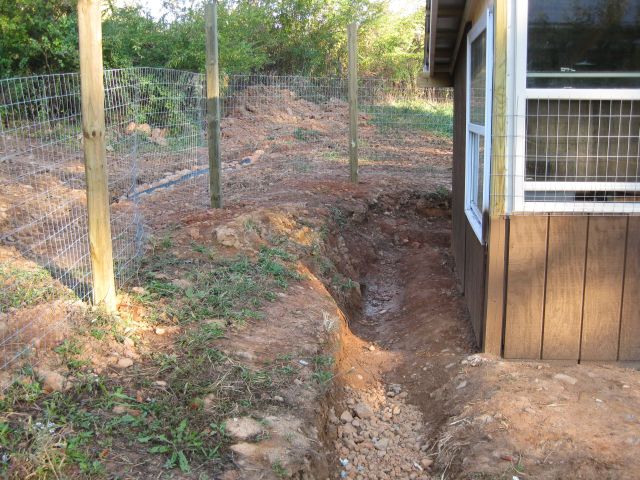
And, finally, this photo shows the west side with the drainage ditch between the slope and the pad on which the coop is built.  I have used 4 ft fencing which a number of the birds can easily fly over, but as longer as there is habitat and things to scrounge for they appear content to stay within the fenced areas.

coop
coop west side, showing drainage ditch

Finally, I must plant up the soil which surrounds the coop before it is eroded by the rains. I may transplant sod from the hill or try seeding it. With temperatures beginning to fall, it may be too late for seeding.

progress on the coop and a simple replacement fix

The future chicken coop

Chicken coop

The future chicken coop is progressing. I installed the windows and door with the help of a friend. Just outside of Atlanta there is a large employee owned window manufacturer and they custom manufacture windows which are occasionally returned because of wrong specs, finish, customer couldn’t pay etc. Nothing actually wrong with the windows. These returned windows are stored separately and are advertised on Craig’s list. I bought 6 of these windows (dimensions 4 ft by 4 ft) for about $50 to $60 each, and now I am putting them to use.

Incidentally, the coop building will be used for more than just the chickens. I intend this year to propagate cuttings of various fruit trees and berries and a ledge along the south facing windows will be a good spot for the cuttings, once they have rooted. I read in a permaculture book that CO2 from the chickens will also help plants stored in this area. However, no vegetables for concern of contamination – they will be grown under cover or in the greenhouse.

I found the exterior door for the coop at the local thrift store for $8. It really didn’t make sense buying an exterior door for >$100 from one of the big box DIY stores.

Click to see details of the finished coop.


A simple fix
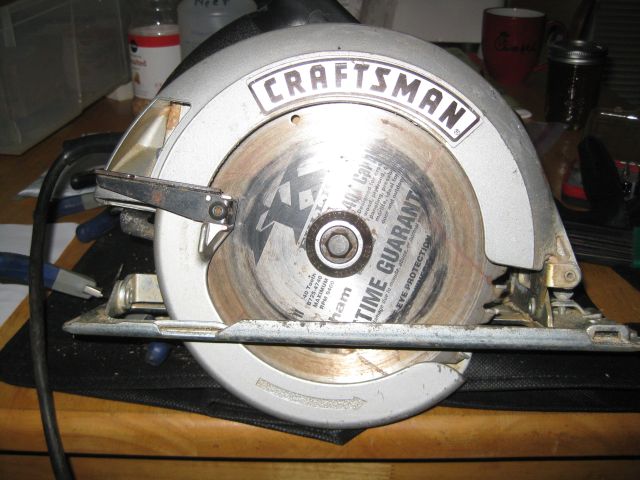
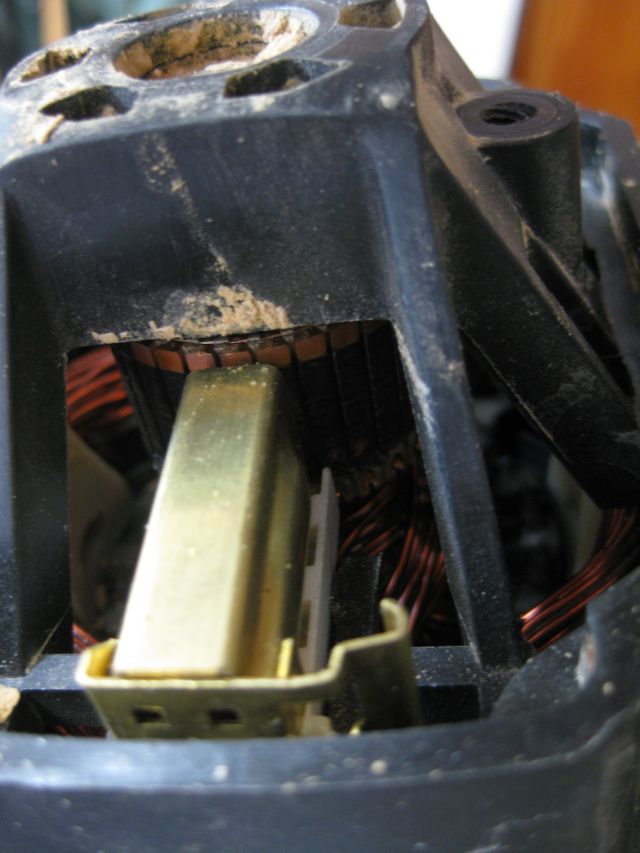
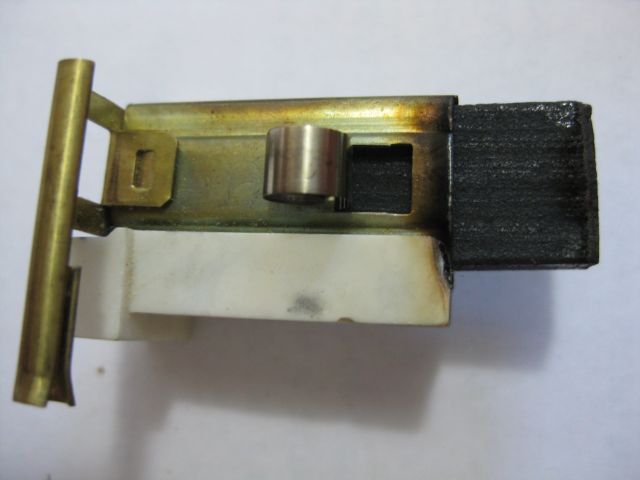
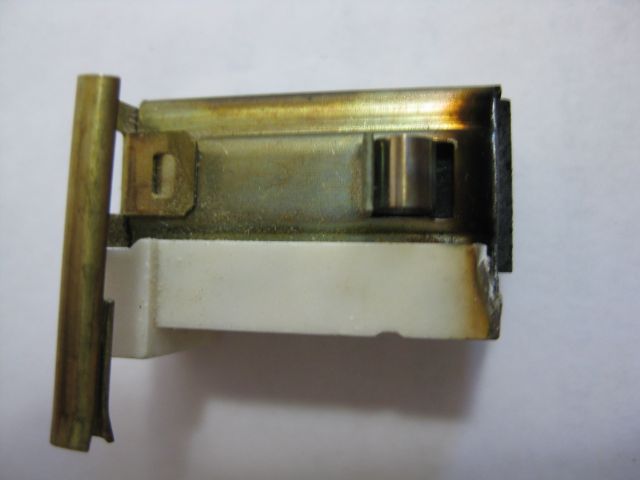
I have a Sears industrial circular saw purchased in the 80’s which has provided excellent service. Recently it would fail to start and I overcame this by turning the saw blade a few inches. Eventually it wouldn’t start at all and I figured it was time to replace the brushes. This usually is the problem when a motor won’t start initially but then starts after you slightly turn the part driven by the motor (or at least in my experience this has been the case). I downloaded the parts diagram, found the part #, found the cheapest supplier (you have to combine part price with shipping cost since the latter can vary greatly) and ordered the part. Except, a few days later the supplier fessed up they didn’t have the part and credited me (they shouldn’t have charged me until they had shipped, but I got the credit). So I paid more, got the part, opened up the saw and replaced the brushes – the whole procedure took less than 10 minutes. There are two brushes and when I removed the first it looked fine and I had real misgivings about my diagnosis. However, as you can see from the photo the second brush was completely worn. And – the saw now works fine and just in time, since I needed it to cut the 4 ft by 8 ft sheathing.

my trusty circular saw
shows brush in holder pressing on commutator
there are 2 brushes, the first looks ok
however, the 2nd brush is completely worn down


Mushrooms

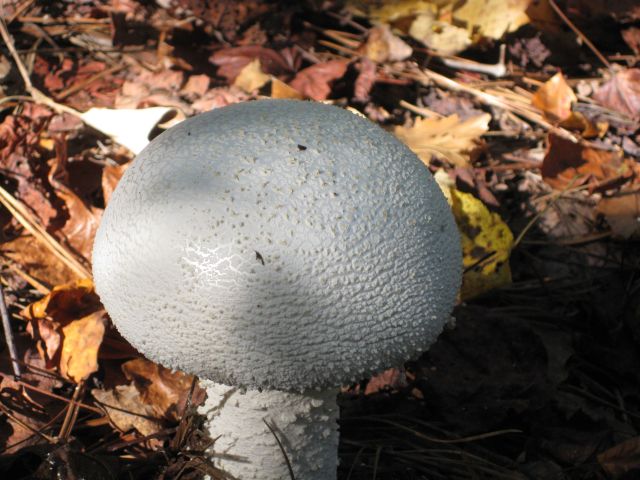
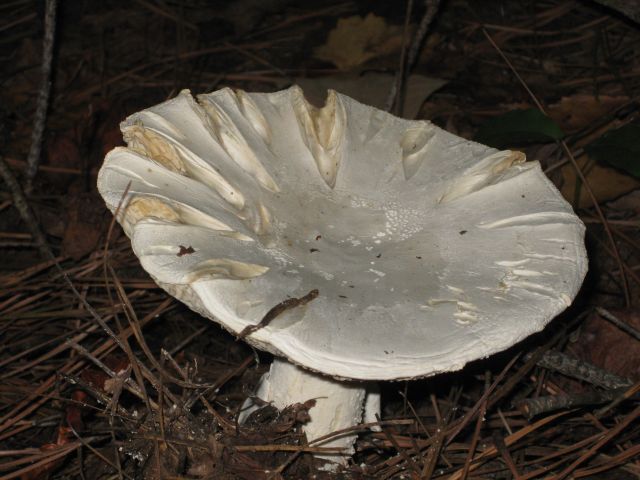
I am seeing more and more mushrooms in the woods following the recent rains. The young mushrooms are rounded at the top and then, when they release their spores they open up and become flat at the top.

a young mushroom
an older mushroom which has released its spores


Permaculture

I am becoming increasing interested in permaculture. A few years ago I read the book by Bill Mollison but, though I understood the concepts, they did not resonate with me. Last year I read The One Straw Revolution by Fukuoka and I just finished the permaculture book by Sepp Holzer and am working my way through Gaia’s Garden by Hemenway, which is excellently written. Since I acquired the property I have been doing more than just organic gardening – my contour ditches, my allowing natural growth to overtake the mown areas, my working in the woods – these various projects are neatly encompassed by the permaculture approach. Next step is for me to go on a PDC (permaculture design course). Below is a photo showing fall colors in the opening I cleared in the woods (the “edge” in permaculture):

sourwood fall colors and opening in woods

support the little guy!

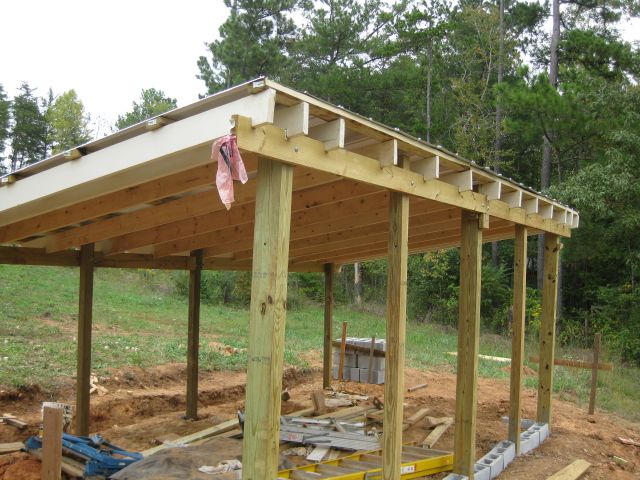
the roof is on the future coop - underside view showing rafters and purlins
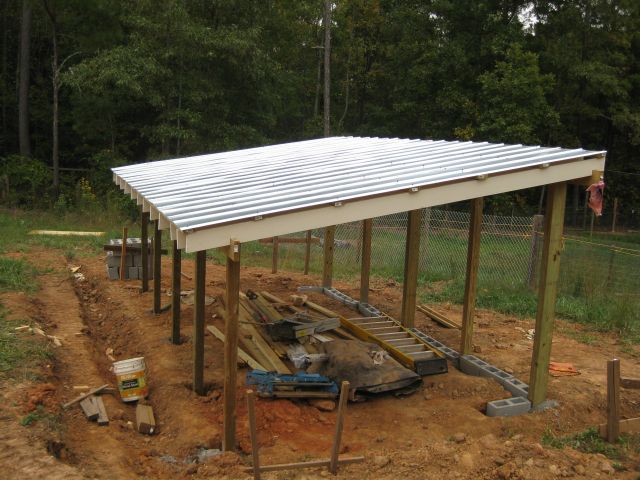
topside view of future coop

Today I finished installing the roof of the future coop.  For the rafters I used 2″x6″x12 ft kiln dried wood, not pressure treated; for the purlins I used 2″x4″ pressure treated, and for the roofing 2ft x12ft galvanized steel crimp roof panels.  I painted with exterior enamel paint those parts of the rafters which would be exposed to either rain or carpenter bees.

I deliberated long on how to transport the 12 ft lengths of wood and roof panels.  My pickup has a 6 ft bed so either I would have had 6 ft hanging out the back of the truck, or I could have slanted it over the cab, but I was concerned I would further scratch and dent the cab roof (not the first time I have transported 12 ft lengths of material) and that the roof panels could buckle from wind pressure as I was driving.  So I thought I might rent a truck from one of the two big box DIY chains.

I priced the materials at both chains and they were identical and, to my mind, expensive.  So I thought I would visit a local family owned builder supply store.  There used to be two such stores within 15 miles of my property and both were dependent on building contractors for their business.  And then one, which have been operating for over 80 years, closed down in 2009.  So I visited the remaining store.  They were very friendly and said they would ship the lumber and roof panels to my property for a $20 delivery charge.  An even bigger surprise was their prices – the lumber was about 3% less than the price at the big chains and the roof panels were 20% less.  And they were so knowledgeable and helpful!  I decided to make additional purchases at their store and all the prices were competitive. 

Which brings me back to my heading – where possible we should support the little guys, not because we want to be nice or considerate but because it is in our own self interest to do so.  We benefit from the price competition which whittles out the independents but, once they are gone through either liquidation or consolidation, and there are just a few big operators left, as is happening with the airlines, the telecom industry, the banks, the consumer retail stores etc. etc. then we become the victims as the few remaining competitors abandon price competition and gradually price up.  So, support the little guy when you can.

new chicken coop

I am making slow progress with construction of the new chicken coop.  The present coops are well located for summer weather since they are at the bottom of the hill with large trees to the east and west and well screened from the sun, except when it is overhead.  The coops are enclosed by walls on two sides and netting/fencing on two sides, so cold winter winds will easily find the residents.  I considered closing in the remaining sides, but decided an extra coop will be handy in the future and, since it will have many windows,  a portion may be hived off and pressed into service as a greenhouse.  My new location is on slightly higher ground and has much better sun exposure.  Since it is on a slope my first task was to level the ground  with my bobcat and create a level pad.  I dug a perimeter trench between the pad and the two higher sides of the slope so the rain water coming down the hill will be diverted around the pad.

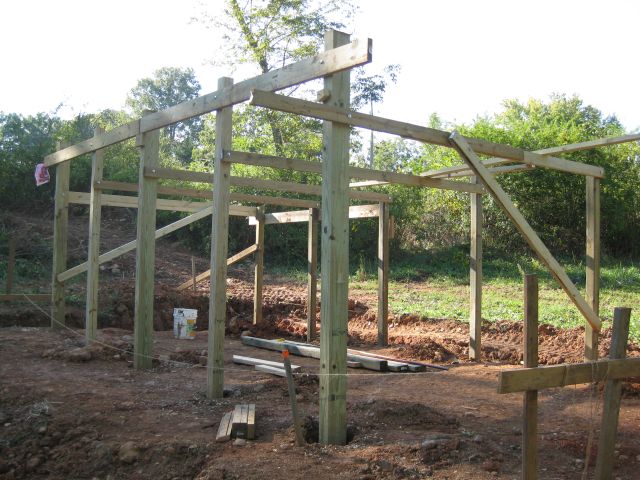
I determined the width by examining roofing materials and noting that most are either 8ft or 12 ft long.  Since I would like an overhang of approximately 1 ft on each side, I decided to use 12 ft long roofing over a 10 ft wide coop.  The coop is on an east-west axis and the higher side faces south.   The most difficult part was digging some of the post holes since there were large rocks in the ground, some bigger than a foot wide, which had to be removed.   Below is a photo of the framing which I installed.  The horizontal braces between the high side and the lower side are to hold them in place until I can install the roof rafters at which time they will be removed.

Click on these links to follow progress:  roof installation and final completion.

framing for new chicken coop

walk in the woods

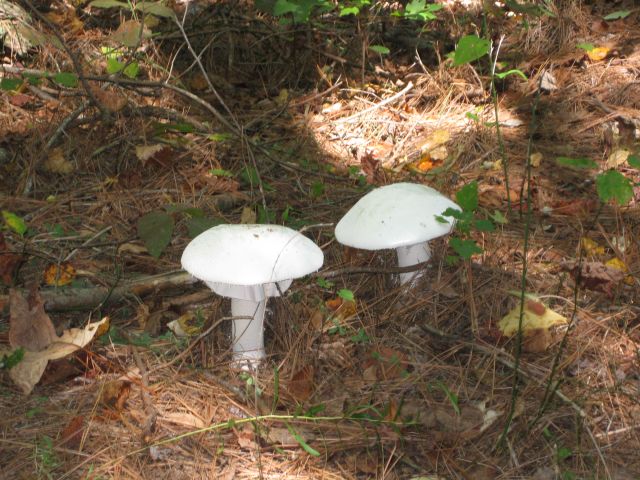
two large mushrooms suddenly appeared in the woods
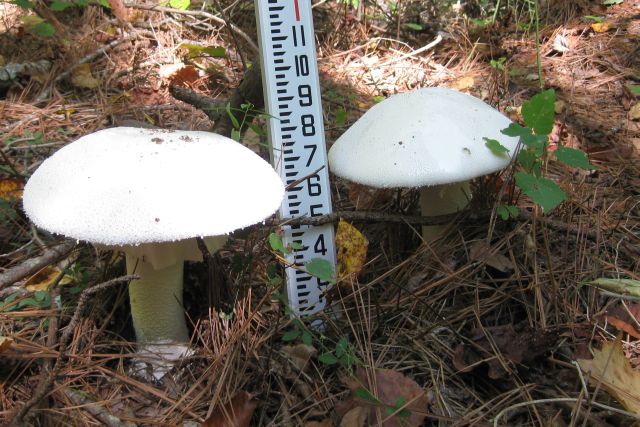
the mushrooms have a height >8"


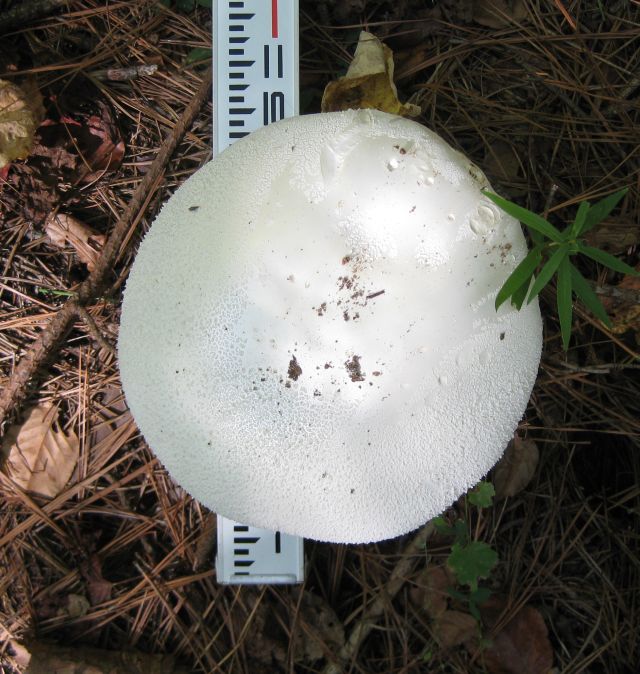
the mushrooms have a diameter >8"

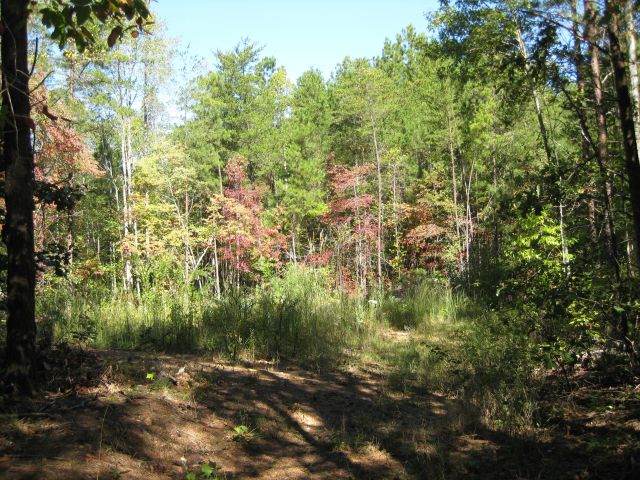
During fall the woods provide different spectacles.  This morning I came across two large mushrooms.  I have placed a ruler alongside them and it appears their diameter exceeds 8″ and likewise their height.  Not sure what type they are and am not planning to eat them.


In previous posts I included photos of the lovely goldenrod and horseweed, which are all strikingly now in bloom.  A small but pretty flower when closeup is the blazing star Liatris pilosa (I am no flower expert and for identification I use Forest Plants of the Southeast by Miller & Miller, which was recommended me by several experts).

the purple shaggy blazing star

The blazing star and many other wildflowers arrived under their own steam to an area in the middle of the woods which used to be populated with pine trees. The southern pine beetle destroyed the trees and I chainsawed and moved the trunks to the sides and with my bobcat cleared the stumps and leveled it. I installed a few lespedeza but otherwise left it to its own devices and each year more and more wildflowers and forest vegetation appear. Wild turkey and deer like to visit, especially when I leave some corn for them. Below is a ‘photo of the opening.

opening in the woods


Loblolly pine on left and Virginia pine on right

I have previously mentioned some of the trees in the woods.  There are two main types of pine, Virginia pine and Loblolly and it is very easy to distinguish them.  The Loblolly is self pruning, which means that as it grows the lower branches fall off and are covered by bark so that you cannot tell where the branches were.  The Virginia pine retains its branch stubs and its wood is inferior to Loblolly and is used mainly for pulp.  The advice I received from the Georgia forestry adviser was to cut down the Virginia pine to allow the Loblolly to grow better. I have let them be.


I am collecting seeds from Black Eyed Susan and Zinnia and I noticed seeds germinating in the Black Eyed Susan pods – quite unusual.

Black Eyed Susan seed pod
germinating seeds in Black Eyed Susan seed pod

pine beetles

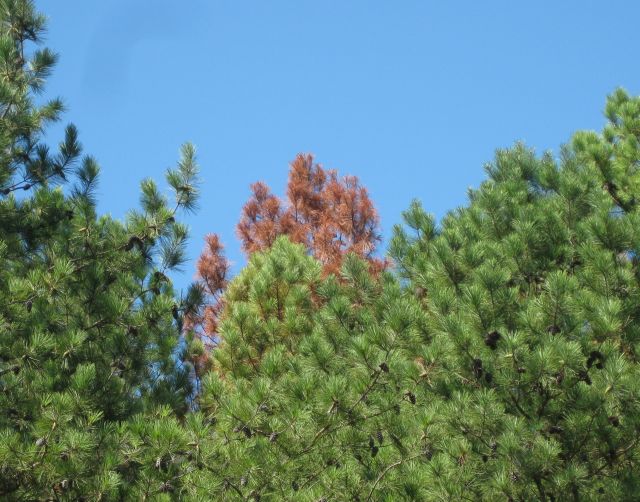
dead pine tree from a distance
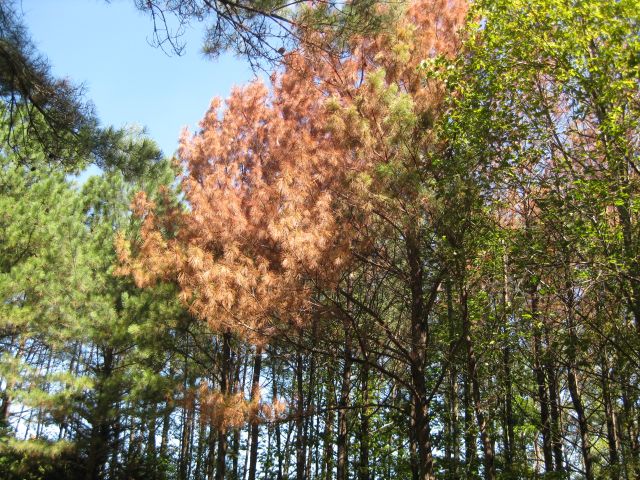
dead pine tree
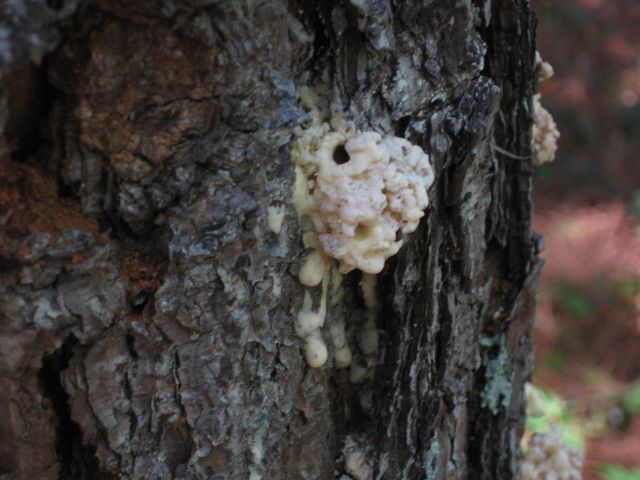
white mounds can be seen on the bark
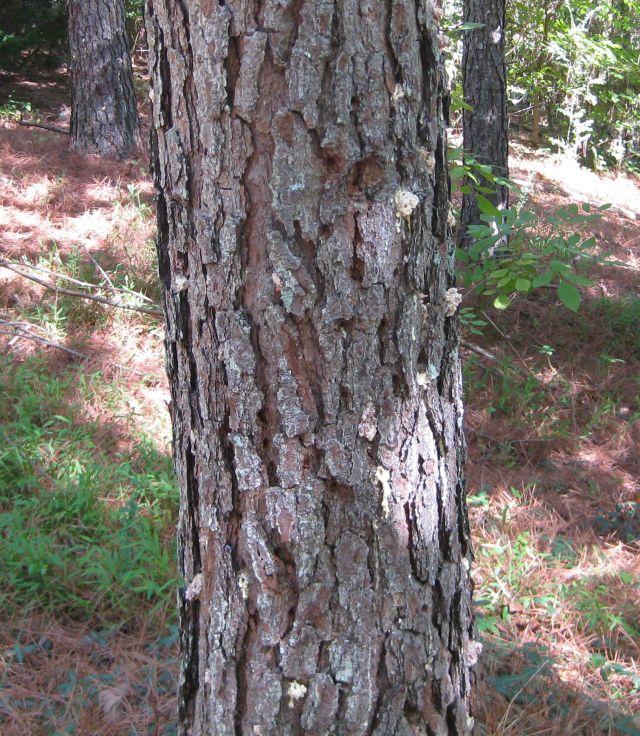
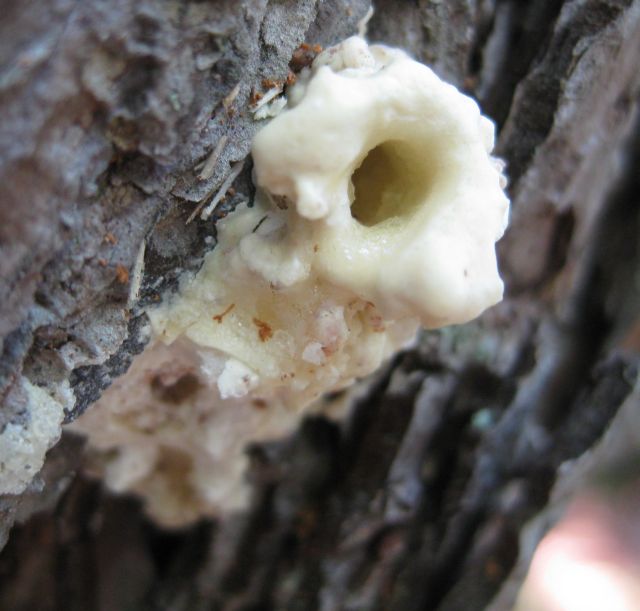
close up of white glob of gum from black terpentine beetle
white glob of gum from beetle

A few days ago my neighbor mentioned to me that several of her pine trees were dying and she thought this was due to pine beetles.  We looked at the trees – their foliage had turned red as you would expect from deciduous trees in the fall, but these are evergreen trees.  Even at a distance we could spot white blobs on the trunk, which from a closer position, appeared to be a crusty excrescence.  This was a pine beetle attack.  There are two main types of pine beetle in Georgia – the southern pine beetle and the black turpentine beetle and the culprits in this case are probably the black turpentine beetle since the infestation does not seem to extend above 8 ft and the white gum blob is typical for this beetle.  With my neighbor’s consent, I will ask the forestry commission for their suggestions as to what we should do to prevent this problem spreading.

The reason I mention all this is the front page (and succeeding two full pages) article titled “The Threats to a Crucial Canopy” which appeared in today’s (10/1/11) New York Times.  An excellent article on how trees are being impacted by rising temperatures and/or lack of water. Shortage of water stresses trees and makes them more vulnerable to beetle attacks and warmer temperatures are enabling beetles to survive winters, which previously would have killed them off.  An interesting offset is that trees are apparently growing more vigorously as a result of increased carbon emissions, since trees and other vegetation depend on carbon as a food supply.  So increased growth on the one hand and increased vulnerability from rising temperatures and water shortages.  The article is well worth reading – http://www.nytimes.com/2011/10/01/science/earth/01forest.html?_r=1&ref=todayspaper